
Vang Vieng: Karst Mountains, River Tubing & Laos’s Adventure Playground Grown Up
What You’ll Discover
- The Transformation Story: From Party Town to Prestige
- Conquering the Iconic Tubing Adventure
- Rock Climbing Heaven
- Exploring the Caves & Underground Worlds
- Hiking Trails Through Karst Landscapes
- Local Food & Night Markets
- Sleeping in the Mountains
- Planning Your Perfect Vang Vieng Adventure
The Transformation Story: From Party Town to Prestige
Vang Vieng’s reputation has undergone a dramatic transformation. In the early 2000s, the town became notorious as a backpacker party destination, with a reputation that overshadowed its natural wonders. But over the past decade, local authorities and tourism boards worked to rebrand the destination, emphasizing adventure activities, eco-tourism, and cultural preservation. Today, Vang Vieng attracts serious adventurers, outdoor enthusiasts, and travelers seeking authentic experiences rather than just a party.

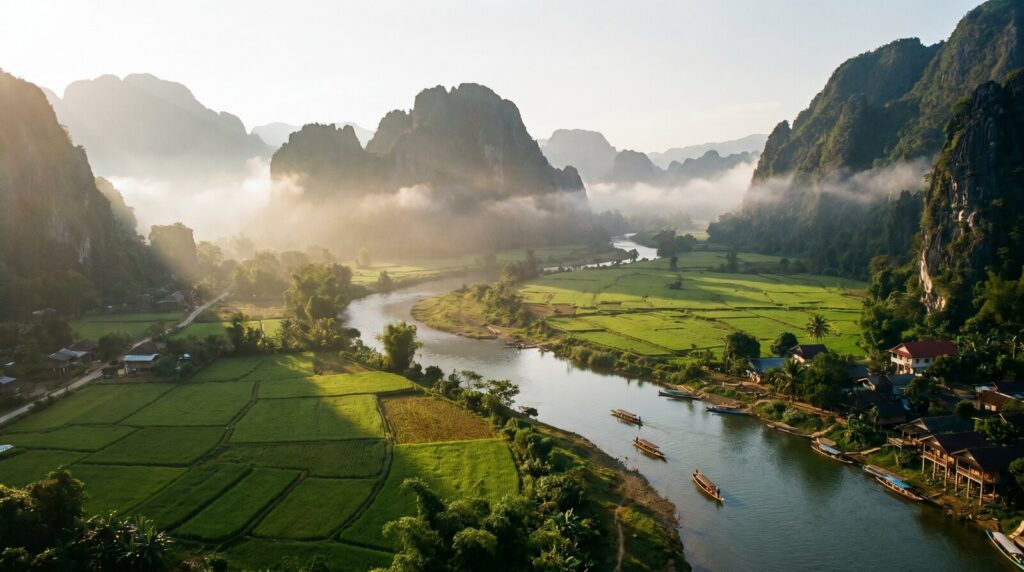
The town itself sits in a spectacular valley surrounded by dramatic limestone karsts—towering rock formations that create an otherworldly landscape. These aren’t random geological formations; they’re the result of millions of years of erosion, creating a landscape that rivals famous karst regions in Thailand and Vietnam. For adventure seekers, this setting is paradise.
Conquering the Iconic Tubing Adventure
River tubing is still the quintessential Vang Vieng experience, but it’s evolved significantly. Rather than the bacchanalian parties of the past, tubing today is about experiencing the natural beauty of the Nam Song River as it flows through the karst valley. The journey downriver offers stunning views of limestone cliffs, emerald forests, and peaceful water scenes that change with the light throughout the day.
Most tours take 2-4 hours depending on water levels and the specific route. You’ll be provided with an inner tube and typically join a group with a guide. The experience is now focused on the spectacular scenery, with stops at limestone cliffs for swimming, cave explorations, and encounters with local villages. Several companies offer tubing tours that emphasize safety and environmental responsibility.
Rock Climbing Heaven
For rock climbers, Vang Vieng is one of Southeast Asia’s premier destinations. The dramatic limestone karsts offer hundreds of climbing routes ranging from beginner-friendly to expert-level challenges. The rock is surprisingly good quality despite its karst nature, and the variety of climbing styles—from vertical faces to overhanging routes—appeals to climbers of all skill levels.
Several climbing companies offer instruction for beginners as well as guides for experienced climbers wanting to explore new routes. The views while climbing are spectacular—you’re ascending while surrounded by emerald valleys, forested slopes, and other dramatic rock formations. Morning climbing is best to avoid the afternoon heat and maximize light for safety.
Multi-day climbing expeditions are available for those wanting to deeply explore the region’s climbing potential. These trips often include camping in scenic locations and exploring less-visited climbing areas that offer solitude and pristine natural beauty.
Exploring the Caves & Underground Worlds
Vang Vieng’s karst formations contain numerous caves, from massive cathedral-like caverns to tiny hidden grottos. Cave exploration is one of the most magical activities the region offers. Tham Jang (Chang Cave) is one of the largest and most impressive—a cathedral-like chamber with dramatic stalactite and stalagmite formations that have grown for millennia. The cave has historical significance as well; during the Vietnam War, it served as a sanctuary for villagers.
Tham Vang Vieng (the Blue Lagoon Cave) is another popular exploration, featuring a stunning underground lagoon with luminous blue water. Swimming in this subterranean pool is surreal—the cave ceiling towers overhead as you float on water so clear you can see the limestone floor beneath. Various tour companies offer guided cave explorations suitable for different comfort levels with tight spaces and darkness.
Hiking Trails Through Karst Landscapes
Beyond the main tourist activities, Vang Vieng offers incredible hiking opportunities through landscapes that range from dense jungle to open mountainous terrain. The Pha Pok Hill hike is accessible and rewards you with panoramic views of the valley and surrounding karsts. The trail is moderate, taking about 2-3 hours round trip, and passes through local villages where you can experience authentic Lao rural life.
For more serious hikers, multi-day treks venture into the surrounding mountains, passing through ethnic minority villages and remote nature reserves. These treks offer opportunities to see wildlife including gibbons, hornbills, and various deer species. You’ll also experience traditional Lao hospitality, staying overnight in village homestays where meals are prepared from local ingredients.
Local Food & Night Markets
Lao cuisine is Southeast Asia’s most underrated culinary tradition. Vang Vieng’s food scene centers around fresh local ingredients—sticky rice (the staple), grilled fish from the Nam Song River, fresh vegetables, and herbs that infuse every dish with incredible flavor. Laab, a spiced minced meat salad, is a must-try—it’s served with fresh lime, fish sauce, and chilies that create a perfectly balanced explosion of flavors.
The night markets come alive after dark, with vendors setting up stalls serving everything from grilled skewers of meat and vegetables to noodle soups, fresh fruit juices, and sweets. The atmosphere is festive and social—locals and tourists mingle, and you can watch food being prepared right in front of you. Prices are incredibly reasonable—expect to find substantial meals for $1-3 USD.
For a more refined dining experience, several restaurants have opened that honor Lao culinary traditions while presenting dishes in more upscale settings. These establishments often feature local art on the walls and create a cultural experience alongside the meal.
Sleeping in the Mountains
Accommodation in Vang Vieng ranges from budget guesthouses to luxury eco-lodges. For the full Vang Vieng adventure, consider staying at a mountain resort or riverside lodge that puts you close to the landscape you’re exploring. Several luxury properties have opened that combine upscale amenities with authentic local design and views of the dramatic karsts.
Riverside bungalows offer a more rustic, intimate experience. Falling asleep to the sound of the Nam Song River and waking to mist rising off the water creates a connection to the landscape that feels genuinely restorative. Many of these properties include natural elements like outdoor showers with jungle views and open-air common areas for connecting with other travelers.
Planning Your Perfect Vang Vieng Adventure
Best Time to Visit
October through March offers the best weather—cool, dry days with clear skies for climbing and hiking. April and May are hot and dry, which is okay for water activities but challenging for land-based adventures. June through September is rainy season, when the landscape is lushest and rivers run strong, but activities can be disrupted by weather.
Getting There
Vang Vieng sits about 150 kilometers north of Vientiane (Laos’s capital). The bus journey takes 3-4 hours on decent roads. Flying into Vientiane and taking the bus is the most common route for international travelers. Several airlines operate daily flights to Vientiane from Bangkok, Hanoi, and other Southeast Asian hubs.
Money & Costs
Laos uses the Lao Kip (LAK). Exchange rates fluctuate but are generally favorable for Western travelers. Vang Vieng is cheap—expect to spend $15-25 daily for budget accommodation and food. Even upscale resorts rarely exceed $100 per night. Activities are reasonable: tubing tours cost $8-15, climbing lessons $30-50, and cave explorations $15-20.
Safety & Considerations
Vang Vieng is generally safe. Use common sense regarding valuables and avoid walking alone late at night. For adventure activities, use established tour companies with good safety records. Make sure any climbing or caving operator is certified and has proper safety equipment. Bring comprehensive travel insurance that covers adventure activities.
Facts About Vang Vieng
Karst Wonder
Vang Vieng’s dramatic limestone formations were created by millions of years of erosion, resulting in one of Southeast Asia’s most stunning natural landscapes.
Adventure Hub
From rock climbing and caving to hiking and river tubing, Vang Vieng offers more outdoor activities per square kilometer than almost anywhere in the region.
Cultural Authenticity
Despite tourism growth, Vang Vieng has maintained strong Lao cultural traditions and offers genuine interactions with local communities.
Wildlife Sanctuary
The surrounding mountains protect endangered species including Indochinese gibbons, hornbills, and several endemic bird species found nowhere else on Earth.
Ready for Your Vang Vieng Adventure?
Whether you’re seeking limestone climbing challenges, mystical cave explorations, or peaceful riverside experiences, Vang Vieng delivers authentic Southeast Asian adventure. This is where sophisticated travelers come to reconnect with nature and push their boundaries in one of the world’s most beautiful settings.