
Salzburg, Austria: Mozart’s Birthplace, Baroque Splendor & Alpine Views
Mozart’s Birthplace, Baroque Splendor & Alpine Views Where Music and Mountains Meet
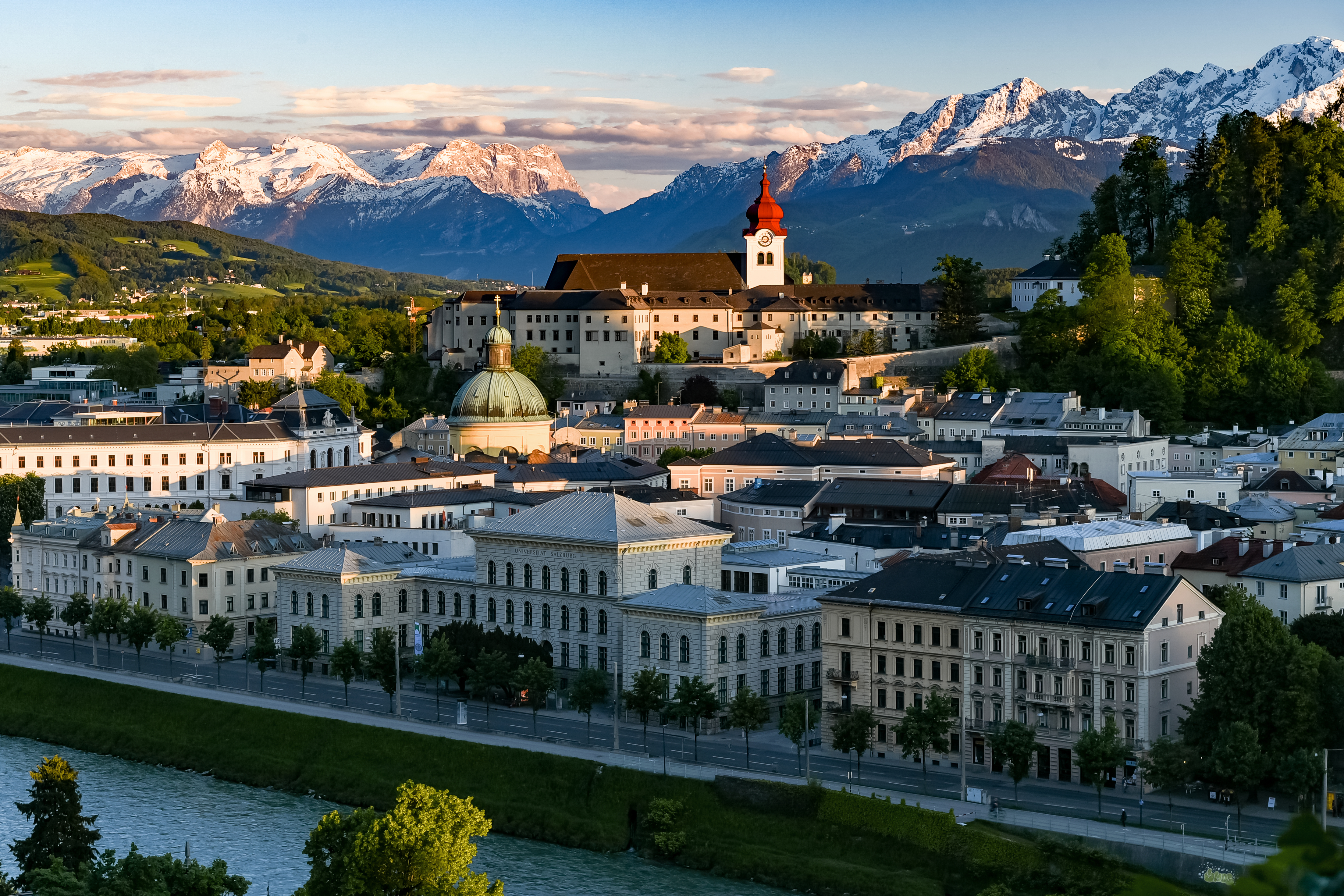
Salzburg represents Alpine perfection—a baroque city balanced between mountains and rivers, where architectural elegance coexists with natural splendor. The Salzach River divides the city into old town and new town, with both sections showcasing distinctive baroque urban planning.
Beyond architectural appreciation, Salzburg’s identity derives fundamentally from Wolfgang Amadeus Mozart, born here in 1756 and composing some of music’s greatest works before relocating to Vienna. This musical heritage permeates culture.
Table of Contents
Baroque Splendor & Urban Architecture
Salzburg’s architecture reflects baroque aesthetic—dramatic curved facades, ornamental details, and dynamic spatial compositions creating cities designed for visual impact. This baroque character derives from prince-bishop patronage.
Walking through Salzburg’s old town reveals continuous architectural interest—baroque mansions with decorated facades, passages connecting narrow streets, squares opening unexpectedly.
The Mirabell Palace demonstrates baroque secular ambition—created as summer residence for prince-bishop, the palace displays architectural confidence and aesthetic refinement. Contemporary usage as concert venue and tourist attraction enables cultural importance.
Mozart’s Legacy & Musical Heritage
Mozart shaped Salzburg’s cultural identity as profoundly as any person shapes a place. Born in the city in 1756, Mozart composed during childhood, gained recognition across Europe.
Mozart’s Birthplace Museum attracts hundreds of thousands of annual visitors to Getreidegasse 9, displaying instruments, documents, and family artifacts. The museum experience reveals Mozart as person rather than abstraction.
Birthplace Museum
Mozart’s apartment displaying childhood instruments and family documents.
Salzburg Museum
City history from medieval period through contemporary, revealing Mozart contextually.
Mozarteum
International Mozart institution housing archive, library, and performance spaces.
Salzburg Festival
Annual celebration of Mozart and classical music held each summer.
Hohensalzburg Fortress & Alpine Views
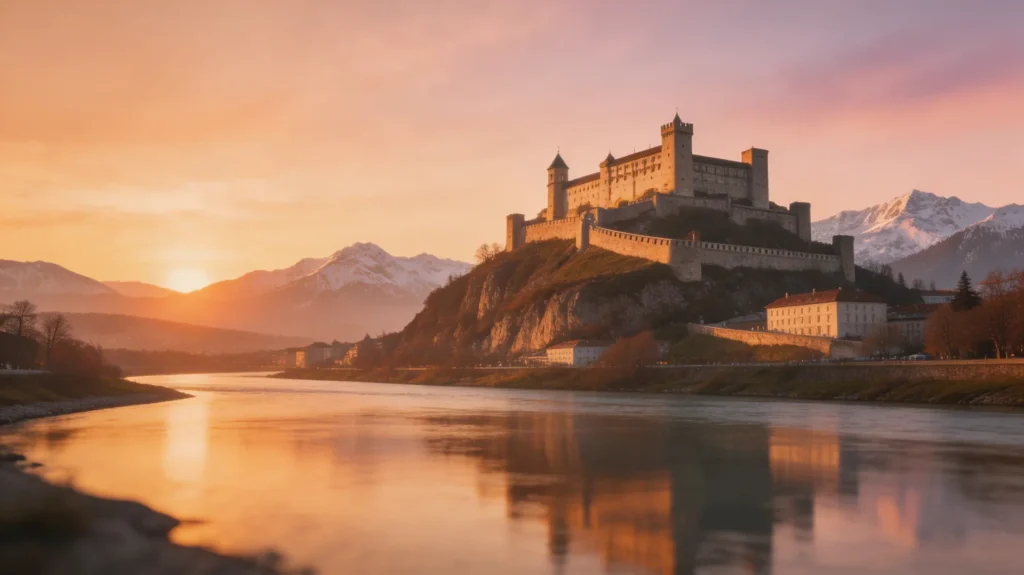
Hohensalzburg Fortress dominates Salzburg’s visual landscape, its massive stone structure perched atop 500-meter elevation overlooking the city. Constructed during medieval period and continuously expanded through baroque era.
From fortress elevation, Salzburg’s urban geography becomes comprehensible—the Salzach River division, baroque architecture spreading through valleys, mountain ranges extending toward distant horizons.
Fortress interior displays medieval armor, torture devices, and artistic collections accumulated by prince-bishops. The Golden Hall features intricate wooden ceiling and decoration.
Mountain Activities & Alpine Landscape
Salzburg’s geographic location within alpine valley creates immediate access to mountain activities unavailable in most European cities. Hiking trails accessible from the city range from casual walks through foothills to serious mountain trekking.
Day trips to Lake District resorts like Hallstatt (one hour away) provide alpine village experiences within mountain landscapes. These villages maintain traditional Austrian alpine culture.
Untersberg Mountain
5 kilometers away with cable car access and panoramic views.
Hellbrunn Palace
Summer residence with gardens, trick fountains, and baroque splendor.
Hallstatt Village
Alpine village with mountain scenery and traditional Austrian culture.
Eisriesenwelt Caves
Largest ice cave system open to tourists with unique underground formations.
Exploring Salzburg
Salzburg remains accessible from major European destinations—Munich is 90 minutes away by train, Vienna is 2.5 hours by train. The city hosts extensive tourism infrastructure.
May through September represents optimal visiting season with warm weather and maximum daylight. Winter brings snow and skiing opportunities in surrounding mountains.
Austrian currency is Euro, widely accepted in establishments. Credit cards work throughout the city. Prices remain reasonable—quality meals 12-20 EUR, accommodations 80-150 EUR.
Language barriers exist outside tourism sectors with English proficiency limited in smaller establishments. Learning basic German phrases dramatically improves interactions.
Mozart’s City Awaits
Salzburg combines baroque architectural splendor with immediate alpine access, creating destination appealing to culture enthusiasts, mountain adventurers, and music lovers.
Start planning your Salzburg adventure today with Facts From Upstairs.