
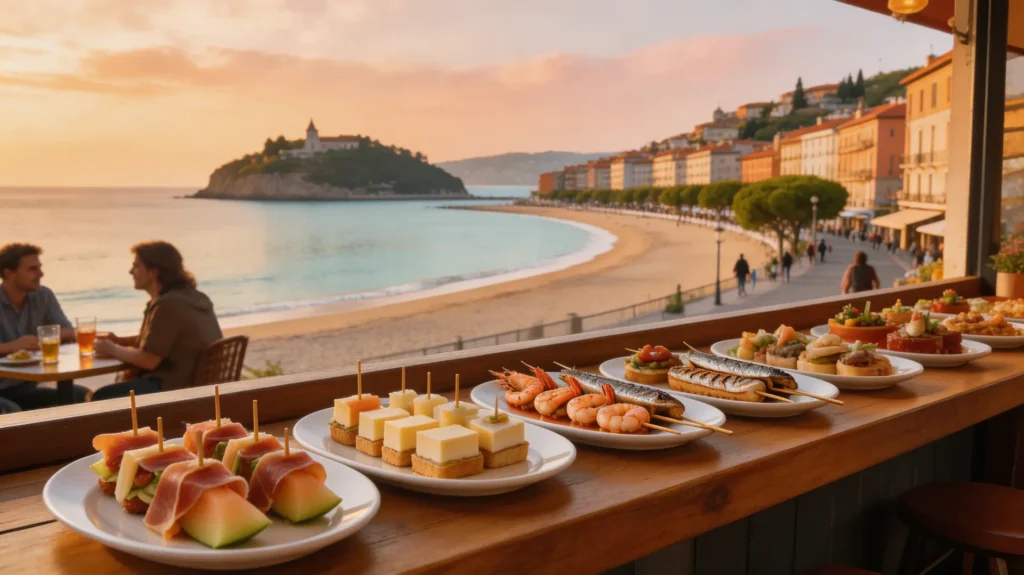
San Sebastián, Spain: Pintxos Bars, Surf Culture & Basque Cuisine Capital
Spain’s gastronomic jewel where Michelin-starred excellence meets authentic beach town energy
San Sebastián is where Spain’s food obsession reaches fever pitch. Located in the Spanish Basque Country along the Atlantic coast, this elegant city combines world-class gastronomy, vibrant nightlife, exceptional beaches, and a distinctive cultural identity that sets it apart from the rest of Spain. With more Michelin stars per capita than anywhere except Kyoto, Japan, San Sebastián has become a pilgrimage destination for serious food lovers. But the city’s character extends far beyond restaurants—it’s a place where surfers paddle out at dawn, fishermen still work traditional boats, and locals gather nightly to socialize over pintxos and wine in some of Europe’s most convivial bar culture.

The Basque Country maintains its own language, traditions, and cultural identity distinct from Spain’s mainstream culture. In San Sebastián, this manifests in the fierce pride locals take in their food traditions, the prevalence of the Euskera language alongside Spanish, and the specific way of life organized around gastronomic societies (txoko clubs) where members cook and dine together. Understanding and respecting this cultural distinction enriches any visit tremendously.
What You’ll Find Here
The Pintxo Crawl Ritual
A pintxo (pronounced “peen-cho”) is a small bite-sized food item served on a slice of bread, typically topped with something more elaborate. The word comes from “pincho” (spike), referring to the toothpick often used to hold it together. In San Sebastián, the pintxo tradition has evolved into an entire cultural practice. Every evening around 7 PM, locals emerge from their homes and workplaces to spend 2-3 hours moving between pintxo bars, eating a few bites at each, drinking txakoli wine or beer, and catching up with friends and colleagues.
The unwritten rules matter: enter a bar, stand at the counter, order a drink, eat what’s displayed on the bar, and move to the next place. Eat standing up, not sitting at a table (that’s for tourists). Move with purpose and genuine social intention, not as a “tourist activity.” The bars vary wildly in character—some are tiny holes in the wall operated by one person, others seat forty. Some focus on seafood, others on jamón ibérico and cheese, others on avant-garde preparations. The average pintxo costs 2-4 euros; a night of serious eating and drinking might involve 8-10 bars and cost 30-40 euros.
Best pintxo zones cluster in the Old Town (Parte Vieja) around streets like Calle 31 de Agosto, and in the Gros neighborhood across the Urumea river. The most famous establishments include Gros Txoko (a private club that occasionally opens for special events) and various bars whose owners have created almost sculptural food preparations. What makes San Sebastián different from Madrid’s pintxo culture is the obsessive attention to quality—every ingredient is considered, every preparation refined. This is pintxos as high art in bite-sized form.
Michelin Dining: The Obsessive Pursuit of Perfection
San Sebastián contains a density of Michelin-starred restaurants matched nowhere else in Spain. Famous establishments like Akelarre, Martín Berasategui, and Arzak have shaped modern Spanish cuisine. These aren’t stuffy fine dining experiences where you whisper and feel out of place; they’re passionate explorations of flavor where chefs obsess over technique, ingredients, and presentation with genuine intensity.
One-Michelin-star restaurants offer exceptional quality at more reasonable pricing (expect 50-80 euros for a set menu). Two-star establishments command higher prices but represent career-defining cooking experiences. Three-star restaurants function almost as shrines to culinary excellence. Importantly, San Sebastián’s elevated cuisine maintains a distinctly Basque character—it’s not French-influenced fine dining, but rather Spanish, particularly Basque, traditions elevated through modern techniques.
The Basque culinary philosophy centers on respecting raw ingredients and simple preparations that showcase their essential qualities. Fish, seafood, peppers, tomatoes, and locally-raised meat form the foundation. The revolution that created modern Spanish cuisine originated here—chefs like Juan Mari Arzak pioneered techniques in the 1970s-80s that influenced Spanish cooking globally. Dining in San Sebastián connects you to this influential culinary history.
Restaurant Booking
Reserve starred restaurants weeks or months ahead. Many offer set menus that change seasonally. Lunch menus typically cost less than dinner. Many top restaurants close Sundays and Mondays.
Gastronomic Societies
Txoko clubs are private member-based gastronomic organizations where locals cook together. Some accept tourists for special events—ask at your hotel about access.
Beaches & Surf Culture
San Sebastián sits on one of Spain’s best-developed coastlines, with several exceptional beaches within walking distance. Playa de la Concha, the city’s primary beach, ranks among Europe’s finest urban beaches—a perfect horseshoe curve of golden sand flanked by elegant belle époque buildings. Locals swim here year-round, though water temperatures hover around 15°C in winter and 20°C in summer. The beach offers facilities, rental equipment, and lifeguard supervision, making it accessible for casual swimmers.
Ondarreta Beach extends Playa de la Concha eastward and connects via the scenic coastal promenade. The Zurriola Beach on the opposite side of the river features a younger, more bohemian vibe and excellent surf conditions. Zarautz, a small beach town 30 kilometers west, has become the region’s primary surf destination with consistent Atlantic swells, while the Basque coast between San Sebastián and Bilbao offers numerous powerful beach breaks.
Surf culture here carries genuine local roots—this isn’t a tourist overlay but rather an integral part of coastal Basque identity. Locals surf before work, after school, and whenever conditions permit. Several excellent surf schools operate along the beaches, and rentals cost 15-20 euros daily. The best conditions occur September through March when Atlantic storms generate the most consistent swells. Summer offers calmer conditions suitable for beginners.
Old Town: A Maze of Character & History
The Parte Vieja (Old Town) compresses centuries of Basque history into narrow winding streets clustered around the Cathedral of the Good Shepherd (Catedral del Buen Pastor). Rebuilt several times after devastating fires (most catastrophically in 1813), the neighborhood maintains medieval street patterns while featuring restoration work that dates back centuries. Every few meters you’ll find a church, a historic building, or a plaza worth exploring.
The physical character reflects working-class history more than aristocratic grandeur. These tight streets originally housed fishermen, traders, and dock workers. Many ground floors remain occupied by locals’ homes and businesses rather than tourist shops, which keeps the neighborhood authentic. The Constitución Square served as the Old Town’s main plaza where officials announced laws and inhabitants gathered for important announcements.
Wander without specific destination—the appeal lies in discovering small plazas, hidden churches, antique shops, and unmarked pintxo bars. Stop for coffee at a local café, sit in a plaza and observe, listen to conversations in Euskera (the Basque language), and absorb the neighborhood’s unpretentious authenticity. This is where San Sebastián’s character reveals itself most genuinely.
Basque Identity & Cultural Pride
The Basque Country occupies a unique position within Spain. The region maintains its own language (Euskera), distinct cultural traditions, and political semi-autonomy. This autonomy reflects centuries of distinct identity and centuries-long resistance to central Spanish control. In San Sebastián, Basque identity feels palpable in everyday life—street signs appear in Euskera before Spanish, locals speak both languages interchangeably, and cultural pride manifests in everything from food traditions to sports preferences.
The San Sebastián International Film Festival (held annually in September) ranks among Europe’s most prestigious cinema events and reflects the city’s cultural sophistication. The Kursaal Concert Hall, an architectural landmark designed by Rafael Moneo, hosts world-class performances and conferences. Multiple museums explore Basque history and culture. The city invests in maintaining its character and identity intentionally, resisting the homogenizing pressure that transforms many European cities into tourism monocultures.
Visiting respectfully means learning basic Euskera phrases, showing genuine interest in Basque traditions rather than treating them as cultural curiosities, and recognizing that locals have organized their lives and values around this distinct identity for centuries. The more you understand Basque culture, the more San Sebastián reveals itself as something far richer than a merely excellent food destination.
Practical Essentials
San Sebastián is easily accessed via rail—high-speed trains arrive from Madrid, Barcelona, and Bilbao. The city is compact and walkable, with excellent public transportation connecting neighborhoods. The Basque region experiences significant rainfall, so pack layers and waterproof jackets year-round. Winter months (November-February) bring grey skies and cold temperatures but also smaller crowds and lower accommodation prices.
Accommodation clusters in neighborhoods around Playa de la Concha, the Old Town, and the newer Gros neighborhood. Expect higher prices than inland Spain—this is an affluent city catering to well-heeled tourists. Budget-conscious travelers can stay in nearby towns and day-trip, but the full experience requires spending evening and night hours in the pintxo crawl culture, which means staying in the city.
The best time to visit is May-June or September-October when weather cooperates, crowds moderate, and food traditions run at full intensity. August brings peak summer crowds and heat. The annual festivals (particularly San Fermín in nearby Pamplona in July) draw massive crowds. March-April and November-December are quieter, though weather becomes less cooperative.
Food Budget
Pintxo crawls: 30-40 euros/evening. Budget restaurants: 12-20 euros/meal. Michelin-starred: 50-300+ euros. Local markets (Mercado de la Bretxa) offer excellent produce and prepared foods affordably.
Language
Spanish is widely understood. English is moderate in tourist areas, limited elsewhere. Euskera appears on signs and in conversation. Learning a few phrases greatly enhances interactions with locals.
Plan Your San Sebastián Experience
Spend minimum four days to experience the pintxo culture properly, enjoy at least one exceptional meal, explore beaches and old town, and understand the Basque cultural context. The city rewards longer stays—the best experiences come from returning to bars and neighborhoods, building familiarity, and experiencing the rhythm of local life rather than hitting tourist highlights.