Languages of Spain
All languages of Southern Europe →fluent beta classical · classes by phone with Maya at ranas.ai/maya
Spain Travel Guide — Moorish Palaces, Pintxo Bars & 48 Million Stories
Spain Travel Guide
📋 In This Guide
- Overview — Why Spain Belongs on Every Bucket List
- 🐂 San Fermín 2026 — Running of the Bulls
- Best Time to Visit Spain (Season by Season)
- Getting There — Flights & Arrival
- Getting Around — AVE, Iryo & the World’s 2nd-Longest High-Speed Network
- Top Cities & Regions
- Spanish Culture & Etiquette
- A Food Lover’s Guide to Spain
- Off the Beaten Path
- Practical Information
- Budget Breakdown
- Planning Your First Trip to Spain
- Frequently Asked Questions
Overview — Why Spain Belongs on Every Bucket List
Spain is the country that taught the rest of Europe how to take its time. Roughly 49.1 million people share 505,990 square kilometres of Iberia with orange groves, bullrings, Romanesque cathedrals, Moorish palaces, seven working Michelin-three-star kitchens, and a shoreline that runs from the grey Atlantic of Galicia to the glittering Mediterranean of the Costa Brava. Two archipelagos — the Balearic Islands in the Mediterranean and the Canary Islands off the African coast — extend the country south to within sight of Morocco.
Geographically, Spain is a federation of 17 autonomous communities plus the North African cities of Ceuta and Melilla, and each community acts like its own small country. A morning in Donostia–San Sebastián (Basque, green, drizzly, pintxo-fuelled) has almost nothing in common with an afternoon in Sevilla (Andalusian, dry-heat, orange-blossom, flamenco) — and the highest point in the country is not on the mainland at all but the volcanic Teide on Tenerife, which crests at 3,718 metres. The inland Meseta plateau sits at 600–800 metres, giving Madrid Europe’s highest capital-city altitude.
Culturally, Spain is a country of four co-official languages — Castilian Spanish, Catalan, Galician and Basque (Euskara) — and a single shared rhythm that defies the national stereotype. The cliché of endless siestas is mostly mythology: most urban Spaniards work a normal European schedule, though small shops in smaller towns still close from roughly 14:00 to 17:00, and dinner genuinely does not begin in most restaurants before 20:30. The country runs on late evenings, long Sunday lunches, and the national concept of sobremesa — the conversation that continues at the table after the plates are cleared, often longer than the meal itself.
Practically, Spain is one of the easiest countries in Europe to travel. AVE high-speed trains connect every major city in under 3 hours, English is widely spoken in tourist zones, euros work everywhere, and the country is genuinely safe — violent crime against visitors is rare and tap water is excellent. The catch is that Spain is Europe’s 2nd-most-visited country in the world after France, drawing 94 million international visitors in 2024 against a resident population of under 50 million. Pickpockets are the real threat; the Alhambra is the real reason you came.
🐂 San Fermín 2026 — Running of the Bulls in Pamplona
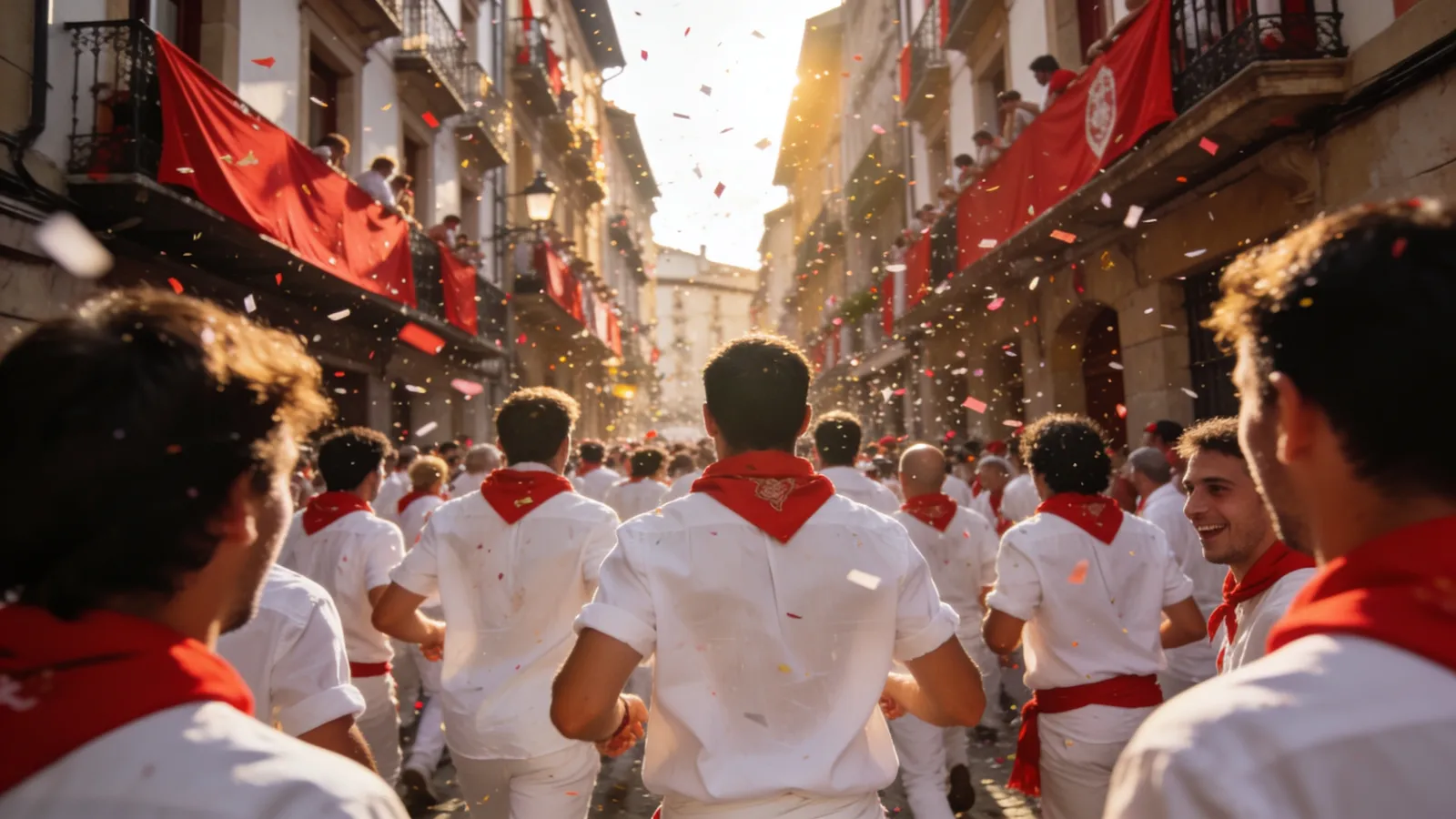
Pamplona’s week-long Fiesta de San Fermín is the most famous Spanish festival abroad, and 2026 marks the full post-pandemic return of a festival that draws around a million visitors to a city of under 205,000. From 6 through 14 July 2026, the Navarran capital is given over to red-and-white-clad crowds, brass bands, fireworks, and the daily encierro — the 875-metre bull run at 08:00 that sends six fighting bulls and six steers charging from the Cuesta de Santo Domingo through cobbled streets into the Plaza de Toros.
- Opening ceremony (Chupinazo): Monday, 6 July 2026 at 12:00 from the Plaza Consistorial balcony
- Encierro (Running of the Bulls): 08:00 every morning from 7 to 14 July 2026 — approx. 2–3 minutes per run
- Peak window: 7–9 July draw the biggest crowds; 13–14 July close with the Pobre de Mí ceremony and the final bullfight
- Fallas de Valencia: 15–19 March 2026 — giant satirical sculptures burned in the streets on the last night
- Semana Santa (Holy Week): 29 March – 5 April 2026 — Seville, Málaga, Valladolid and Zamora run centuries-old processions
- La Tomatina: 26 August 2026 — the Buñol tomato fight, ticketed entry only
Best Time to Visit Spain (Season by Season)
For the months that beat peak summer, see our full guide to the best time to visit Spain.
Spring (Mar–May)
The sweet spot. Madrid climbs from 10°C to 22°C; Seville and the Andalusian south hit 25°C by late April and the orange trees in Plaza de España are in full bloom. Semana Santa (29 March–5 April 2026) brings Spain’s most spectacular religious processions to Seville, Málaga, Valladolid and Zamora, followed a week later by Seville’s Feria de Abril fairground (12–18 April 2026). Madrid’s San Isidro festival runs mid-May. Rainfall is moderate, daylight stretches past 21:00 by May, and hotel rates are still well below summer peak — the single best overall window to visit Spain.
Summer (Jun–Aug)
Long light and serious heat. Madrid and Seville regularly hit 35–40°C in July and August, while the northern Cantabrian and Basque coasts stay at 18–25°C and fill with domestic beach tourism. San Fermín dominates 6–14 July in Pamplona, Festa Major de Gràcia (mid-August) lights up Barcelona neighbourhoods, and the Balearics peak. Warnings: interior Spain from 14:00 to 18:00 in July is genuinely inhospitable — locals do not shop, eat or move during the hottest hours. Book AVE tickets and coastal hotels 2+ months out; La Tomatina (26 August 2026) requires advance ticket purchase.
Autumn (Sep–Nov)
The underrated season. Temperatures drop from late-summer 28°C to a crisp 12°C by late November, Rioja and Ribera del Duero harvest their wine, and Andalusia is still beach-warm through mid-October. Sevilla’s Bienal de Flamenco runs every even-numbered September and Madrid’s gallery season (ARCO preview week) begins. Hotel rates fall 30–40% from August peaks, museums empty, and the light in Granada at sunset during October is arguably the best in the Iberian calendar.
Winter (Dec–Feb)
Mild by northern-European standards and a secret high season in the south. Madrid and Castile drop to 0–10°C with Sierra de Guadarrama skiing on weekends; Seville, Málaga and the Canaries stay 12–22°C all winter. Navidad brings Madrid’s Plaza Mayor market, 5 January’s Cabalgata de Reyes (Three Kings parade), and the 12 midnight grapes of Puerta del Sol on New Year’s Eve. Costa del Sol and Tenerife fill with northern European sun-seekers; La Palma astronomy peaks in clear winter skies. Rainiest in Galicia and Asturias.
Shoulder-season tip: Mid-April (post-Semana Santa, pre-Feria), late September (harvest festivals, warm sea, no heatwaves), and the first half of October are the three windows most travellers overlook — cheaper hotels, lighter crowds at the Alhambra and Sagrada Família, and Spain at its most photogenic.
Getting There — Flights & Arrival
Spain has two intercontinental gateways (Madrid and Barcelona) plus large international hubs at Palma, Málaga, Alicante and Valencia. Aena, the state airport operator, runs all of them.
- Adolfo Suárez Madrid–Barajas (MAD) — Spain’s main intercontinental hub, handling 66.2 million passengers in 2024. Metro Line 8 reaches Nuevos Ministerios in 12 minutes for €4.50–5.00; Cercanías C-1 reaches Atocha in 25 minutes.
- Barcelona–El Prat Josep Tarradellas (BCN) — 55.0 million passengers in 2024, the EU’s 6th-busiest. Aerobús to Plaça Catalunya 35 minutes (€7.25); Metro L9 Sud to city centre 32 minutes; R2 Nord to Sants 25 minutes.
- Málaga–Costa del Sol (AGP) — 25.3 million passengers in 2024, the Andalusian gateway. Cercanías C-1 to Málaga centre 12 minutes (€1.80).
Flight times: New York–Madrid 7h 30m; London–Madrid 2h 30m; Dubai–Madrid 8h; Toronto–Madrid 7h 45m.
Flag carriers: Iberia (Oneworld; founded 1927), Vueling, Air Europa, plus low-cost Ryanair and easyJet across domestic and European routes.
Visa / entry: Schengen rules apply — citizens of the US, UK, Canada, Australia, Japan, South Korea and 60+ other countries enter visa-free for up to 90 days in any 180-day window. Beginning late 2026, visa-exempt travellers will need a €7 ETIAS pre-authorisation applied online and valid 3 years.
Getting Around — AVE, Iryo & the World’s 2nd-Longest High-Speed Network
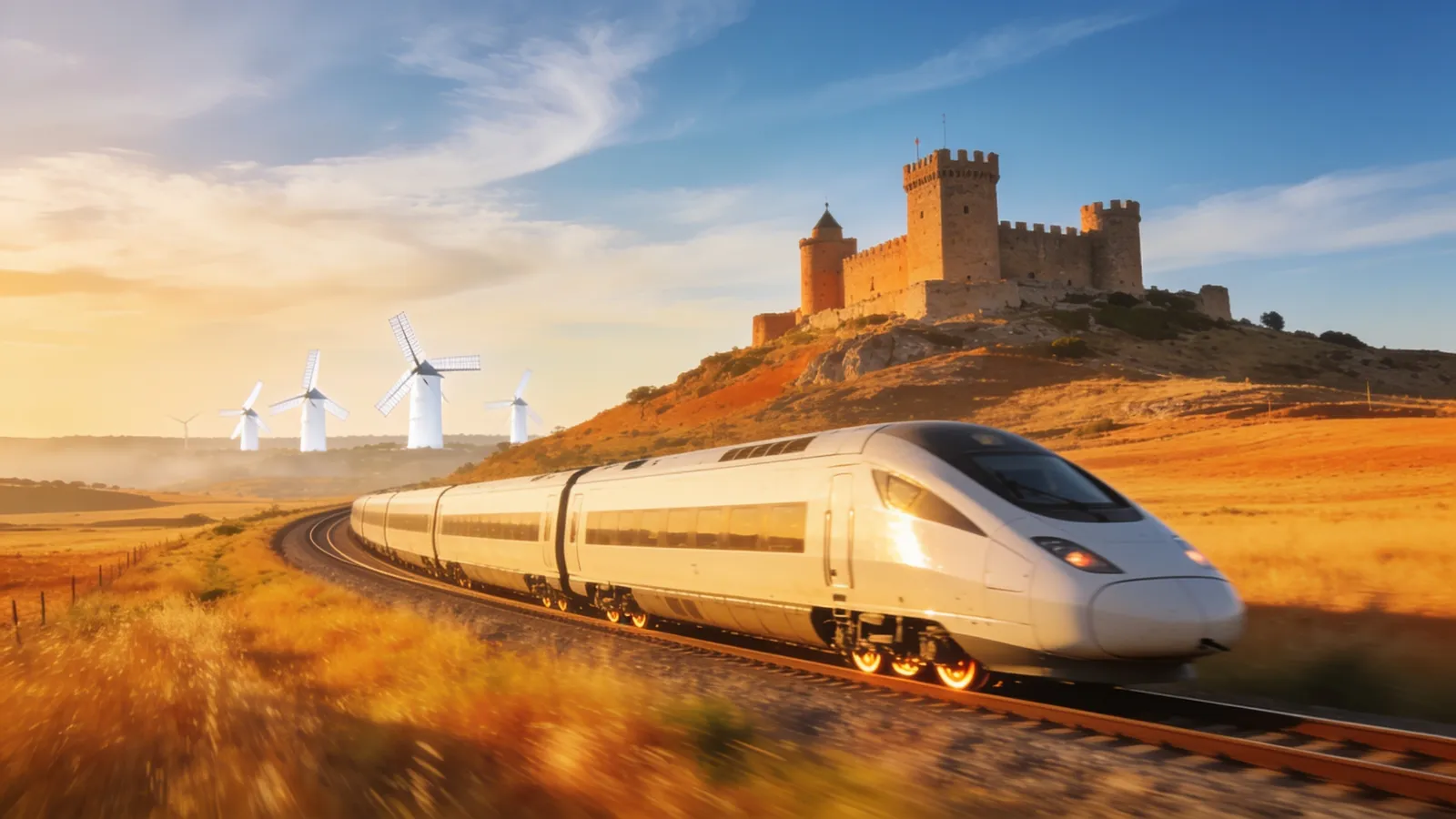
Spain’s 4,000+ kilometres of high-speed rail is second only to China’s, and inside the country the train beats the plane almost every time. Renfe’s AVE is the incumbent, while Iryo (a Trenitalia–Air Nostrum joint venture) and Ouigo España (SNCF’s low-cost brand) now compete on the core routes — giving most major-city pairs three operators, frequent departures and walk-up fares from €19.
- Renfe AVE: top speed 310 km/h on dedicated tracks.
- Madrid → Barcelona: 2h 30m (621 km).
- Madrid → Seville: 2h 30m direct.
- Madrid → Valencia: 1h 55m.
- Madrid → Málaga: 2h 30m.
Tickets: Book directly at renfe.com, iryo.eu or ouigo.com 60+ days out for the cheapest fares. Same-day walk-up AVE fares can run €120+, but advance-purchase Promo tickets start at €19 on competitive routes. Seat reservations are mandatory on all high-speed trains.
Urban transit: Madrid, Barcelona, Valencia, Bilbao, Sevilla and Málaga run modern metros with contactless credit-card tap-to-enter gates. Madrid and Barcelona also issue reloadable cards (Multi and T-casual) for 10-trip discounts. Buses fill in where metros do not reach, and ALSA runs the national intercity coach network.
Driving: Excellent motorway network; Spain drives on the right and manual transmission is default on rentals (request automatic explicitly). Many motorways (AP-prefixed) are tolled — budget €30–40 in tolls for a Madrid–Barcelona drive. City driving is discouraged — Madrid Central and Barcelona’s ZBE low-emission zones restrict non-resident vehicles.
Apps: Renfe (trains), Moovit (door-to-door).
Top Cities & Regions
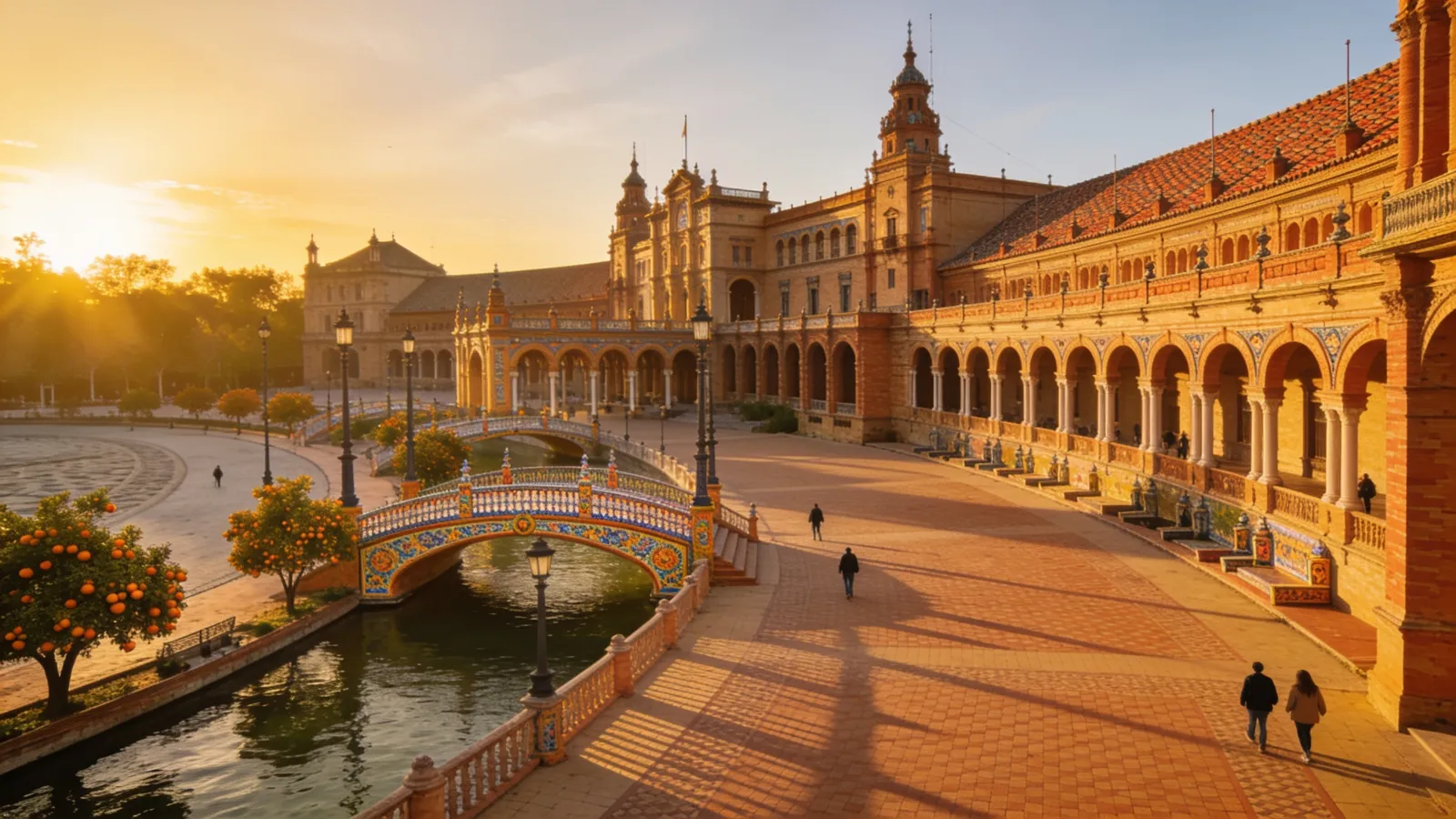
Picking a base? Our guide to where to stay in Spain compares Madrid, Barcelona, Seville and Granada neighbourhood by neighbourhood.
📍 Map of Spain: Every Place in This Guide
👑 Madrid
Spain’s capital and largest city — Habsburg palaces, Golden-Triangle museums and the world’s densest tapas grid. Europe’s highest capital-city altitude at 667 metres gives Madrid its dazzling light and its famously late nights. The historic centre walks across in 45 minutes; a €12.20 Tourist Travel Pass covers Metro, bus and Cercanías for 24 hours.
- Museo del Prado — Velázquez’s Las Meninas and Goya’s Black Paintings
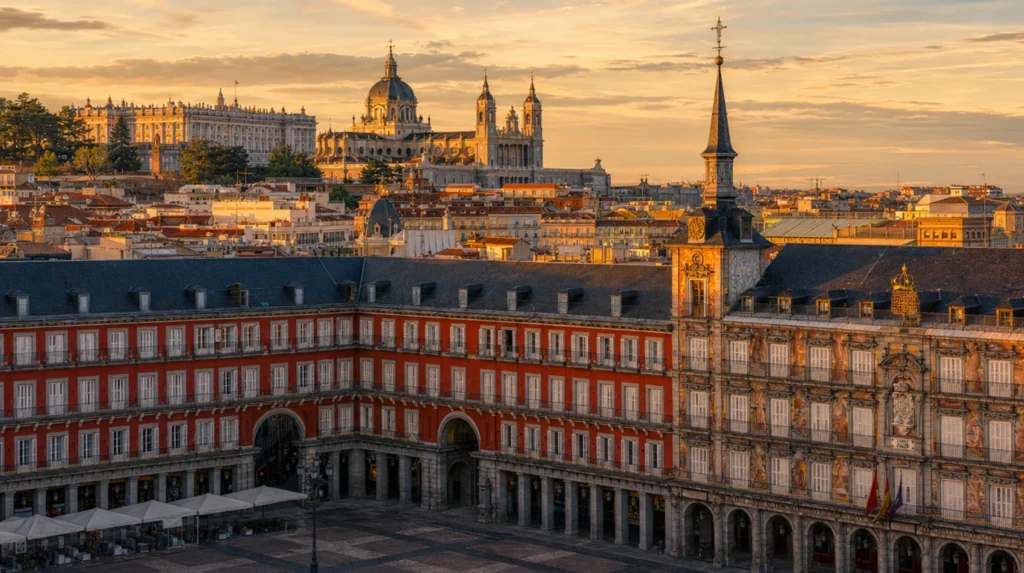
- Palacio Real, Plaza Mayor and the Puerta del Sol
- Retiro Park, Gran Vía nightlife, Mercado de San Miguel and the Reina Sofía (Picasso’s Guernica)
Signature eats: cocido madrileño at Malacatín, bocadillo de calamares on Plaza Mayor, churros con chocolate at Chocolatería San Ginés (est. 1894), tapas crawl in La Latina.
🏗️ Barcelona
Catalonia’s Mediterranean capital — Gaudí’s modernist skyline meets an 18-kilometre beach that runs through the city. Six of Gaudí’s buildings are UNESCO-listed, and the Sagrada Família’s central Jesus tower is scheduled to top out in 2026, completing the exterior after 144 years of construction.
- Sagrada Família (under construction since 1882)
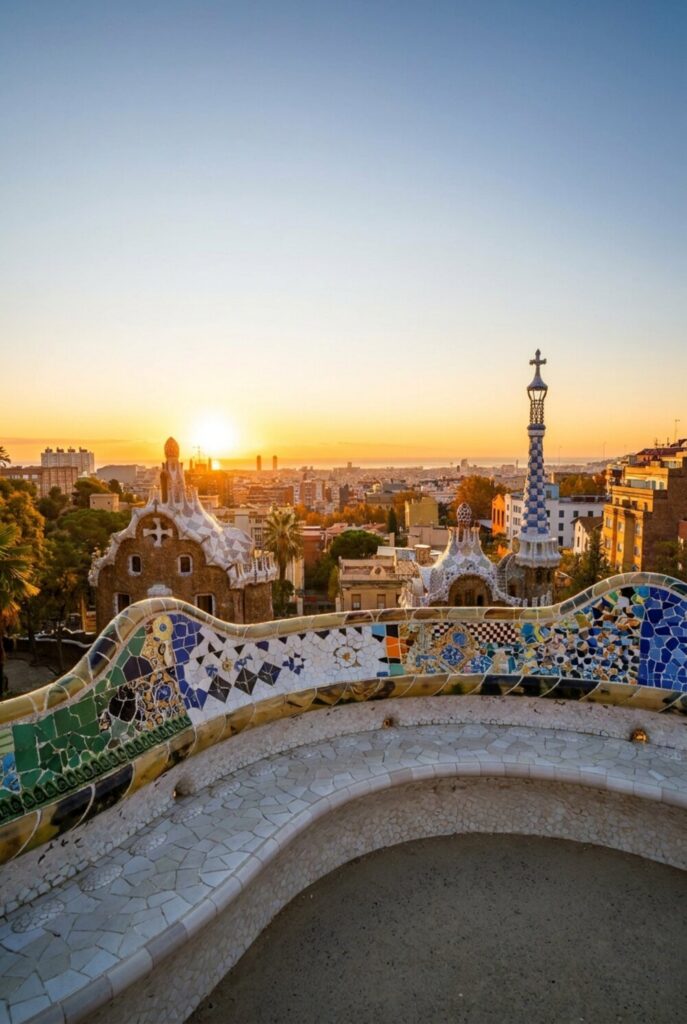
- Park Güell and Casa Batlló on Passeig de Gràcia
- Gothic Quarter, La Boqueria market and Barceloneta beach
Signature eats: pa amb tomàquet, fideuà, paella at 7 Portes (est. 1836), montaditos at Quimet & Quimet in Poble-sec, crema catalana.
🌹 Seville
Andalucía’s sun-drenched capital of flamenco, orange-tree plazas and Mudéjar palaces. The Real Alcázar and the Cathedral (with Columbus’s tomb) anchor the old town; Triana across the Guadalquivir is the historic flamenco quarter. Summer heat frequently tops 40°C, so spring and late autumn are the prime visiting windows.
- Real Alcázar (UNESCO, founded in the 10th century)
- Catedral de Sevilla and the Giralda bell tower
- Plaza de España, Triana flamenco bars, Metropol Parasol
Signature eats: gazpacho and salmorejo, pescaíto frito, rabo de toro, sherry-and-tapas at El Rinconcillo (est. 1670).
🥘 Valencia
Birthplace of paella, avant-garde architecture by Santiago Calatrava, and Europe’s most spectacular Fallas festival (15–19 March 2026). The old Turia river was diverted after the 1957 flood and turned into a 9-km landscaped park that curves through the city.
- Ciudad de las Artes y las Ciencias (City of Arts and Sciences)
- La Lonja de la Seda (UNESCO silk exchange, 1482)
- Albufera lagoon, Turia Gardens, Central Market
Signature eats: paella valenciana (rabbit, chicken, snails — not seafood), all i pebre from Albufera, horchata and fartons.
🍷 Bilbao
The Basque Country’s reinvented industrial port. Frank Gehry’s titanium Guggenheim (opened 1997) sparked a civic reinvention now taught in urban-planning courses worldwide; the Casco Viejo old town runs one of the world’s densest pintxo bar scenes.
- Guggenheim Museum Bilbao
- Casco Viejo old town and its Siete Calles
- Mercado de la Ribera and the ferry to Getxo on the Abra
Signature eats: pintxos on Calle del Laurel, bacalao al pil-pil, txangurro (stuffed crab), Rioja Alavesa wines, kalimotxo.
🕌 Granada
The last Moorish stronghold in Iberia — the Alhambra rises above the Albaicín and free tapas still arrive with every drink. The Nasrid Palaces, Generalife gardens and Alcazaba span the 9th through 14th centuries; advance tickets are essential.
- Alhambra and Generalife gardens (UNESCO)
- Albaicín and Sacromonte cave flamenco
- Capilla Real with the tombs of Ferdinand and Isabella
Signature eats: free tapas with every caña (Granada tradition), piononos from Santa Fe, habas con jamón, remojón granadino.
Spanish Culture & Etiquette — What to Know Before You Go
Spanish culture runs on long lunches, later dinners, strong regional identity and warmth toward strangers. Cafés and bars are the social living room; spending three hours over one coffee is not rudeness, it is the point. Regional pride is serious — Catalonia, the Basque Country and Galicia each have their own language, flag and sense of distinctness, and treating Spain as monolithic misses half of what makes it interesting.
The Essentials
- Eat on Spanish time. Lunch 14:00–16:00; dinner rarely before 20:30, peaking at 22:00. Most restaurant kitchens are closed between 16:00 and 20:30 — tapas bars bridge the gap.
- The siesta is mostly mythology. Most urban Spaniards work a normal European schedule; what survives is midday shop closure (roughly 14:00–17:00) in smaller towns and non-chain local businesses.
- Greet with two cheek kisses (right first) among friends; handshakes for business and strangers. Say “hola” and “buenos días” on entering a small shop.
- Tipping is not expected. Round up or leave €1–2 per person at a nice restaurant; no tipping on tapas.
- Beachwear stays at the beach — walking into a Barcelona city-centre shop in a swimsuit can draw a municipal fine.
Regional Identity & Language
- Spain has four co-official languages. Castilian is universal; Catalan is co-official in Catalonia, the Balearics and Valencia; Galician in Galicia; Basque (Euskara) in the Basque Country and parts of Navarre.
- Catalan and Basque are distinct languages, not dialects. Calling them dialects of Spanish is both inaccurate and commonly resented.
- In the Basque Country, Euskadi (land) and Euskara (language) are used alongside País Vasco. In Catalonia, bilingual signs and Catalan menus are standard — a polite “bon dia” or “moltes gràcies” goes a long way.
- Civil War (1936–1939) and the Franco dictatorship (1939–1975) remain sensitive. Many Spanish families lost people on one side or the other; memorials like the Valle de los Caídos carry very different meanings to different generations.
- Bullfighting is legal and televised in most of Spain; it is banned in Catalonia and the Canary Islands. Opinions differ sharply — it is not a neutral topic.
A Food Lover’s Guide to Spain
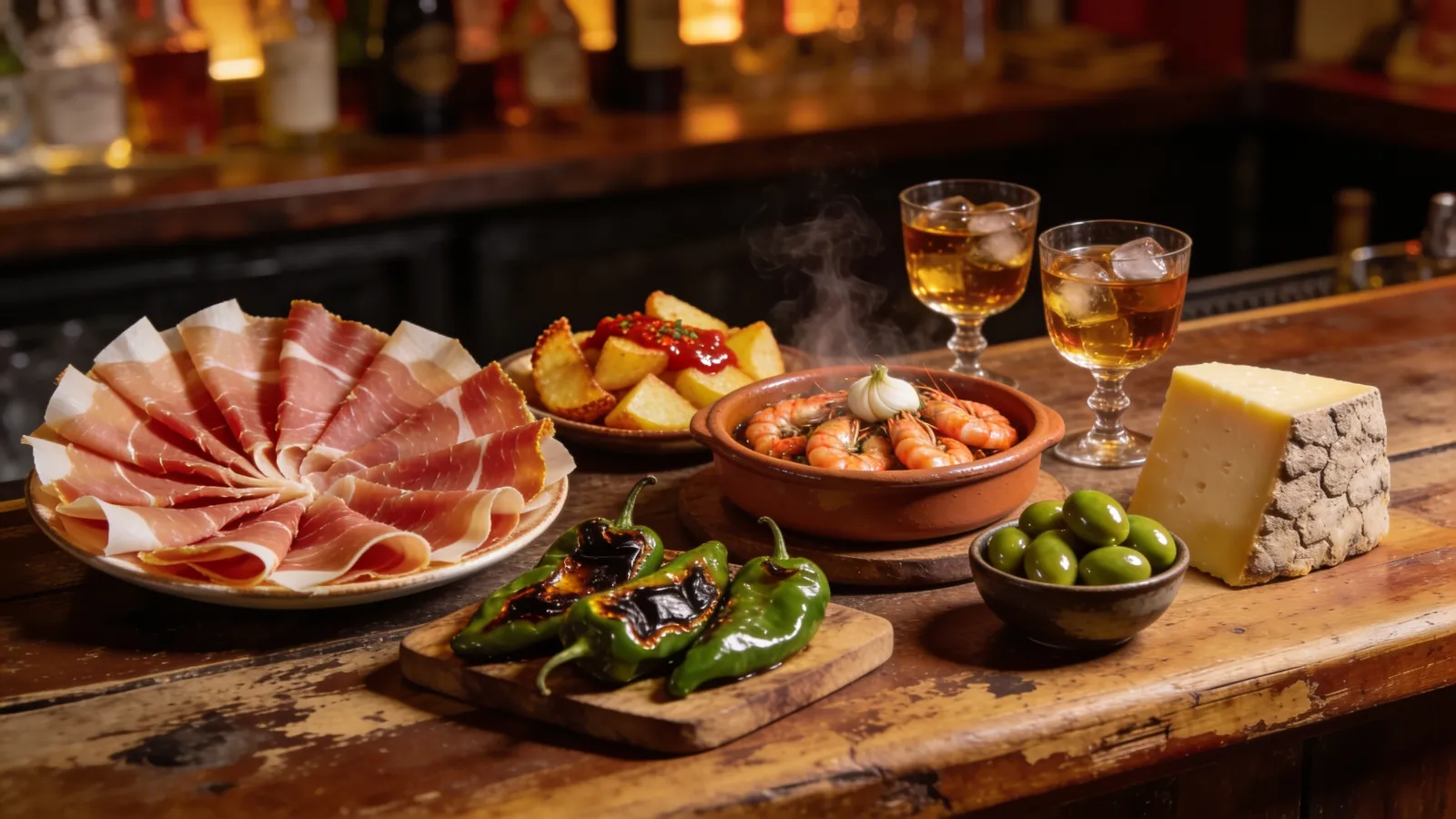
Spanish food is regional before it is national. A paella in Valencia uses rabbit, chicken and snails; a gazpacho in Seville in August is a religious experience; a txuleta steak in Tolosa is a Basque argument settled. The country holds 260+ Michelin stars and seven three-star restaurants — DiverXO (Madrid), Disfrutar (Barcelona), Atrio (Cáceres), Azurmendi, Lasarte, Cenador de Amós and Aponiente — but the heart of Spanish eating is still the neighbourhood bar, and the menú del día at €12–16.
Must-Try Dishes
| Dish | Description |
|---|---|
| Paella valenciana | Spain’s national rice dish originated in 18th-century Valencia. The authentic version uses rabbit, chicken, snails, green beans and garrofón beans over saffron rice in a flat wide paellera; seafood paella (paella de marisco) is the coastal variant. The prized caramelised crust on the bottom is called socarrat. Eaten at lunch, never dinner. |
| Tapas | Small plates served in bars across Spain — the word means “cover” (originally a slice of bread placed over a sherry glass). Classic tapas include patatas bravas, gambas al ajillo, croquetas, tortilla española, boquerones en vinagre and jamón ibérico. Granada, Almería and León still serve a free tapa with every drink ordered; Madrid and Seville now charge per plate but throw in the first. |
| Gazpacho & Salmorejo | Two Andalusian cold tomato soups. Gazpacho is thinner, blended with cucumber, green pepper, garlic, bread and olive oil; salmorejo (Córdoba) is thicker and fork-eaten, topped with chopped hard-boiled egg and jamón. Both are essentials from June through September and sold chilled in every Andalusian supermarket. |
| Pintxos | The Basque answer to tapas — bite-sized snacks skewered with a toothpick and displayed on the bar in San Sebastián, Bilbao and Logroño. Grab a plate, help yourself, pay on the toothpicks at the end. Classics: the Gilda (anchovy–olive–guindilla, named after the 1946 Rita Hayworth film), txangurro, tortilla, bacalao. San Sebastián’s Parte Vieja has 100+ pintxo bars on four streets. |
| Jamón ibérico | Spain’s most prized cured ham — from black-footed Iberian pigs fed on acorns (bellota) in the dehesa woodlands of Extremadura, Andalusia and Salamanca. A full leg of jamón ibérico de bellota 100% (cured 36–48 months) can exceed €600; slices are sold by weight everywhere. |
| Churros con chocolate | Ribbed deep-fried dough dipped into a cup of impossibly thick drinking chocolate. The definitive version is at Chocolatería San Ginés in Madrid (est. 1894), open 24 hours and famous as the post-nightclub breakfast. A portion of six churros with chocolate runs €4.50–6. |
| Cocido madrileño | Madrid’s winter chickpea stew, served in three vuelcos (turns): the broth with fine noodles first, then chickpeas and vegetables, finally the meats (chorizo, morcilla, beef, chicken, tocino). A two-hour lunch at Malacatín (est. 1895) or Lhardy (est. 1839); lunch only, never dinner. |
Mercado & Bar Culture
Spain’s municipal food markets are half grocery, half restaurant. The Mercado de San Miguel in Madrid (1916), La Boqueria in Barcelona (1840), the Mercado Central in Valencia (1928) and the Mercado de la Ribera in Bilbao are all working markets by day and tapas circuits by evening, with dozens of counter-stalls where you eat standing up with a glass of vermut or txakoli.
- Chains: 100 Montaditos (tiny sandwiches for €1–2), Mesón Cinco Jotas (jamón ibérico specialist), VIPS (US-style diner and bookshop).
- Signature items: jamón ibérico, patatas bravas, croquetas, tortilla española, pulpo a la gallega, bocadillo de calamares, churros, pan con tomate, Manchego cheese, Rioja wine, Cava from Penedès, sherry from Jerez.
Off the Beaten Path — Spain Beyond the Guidebook
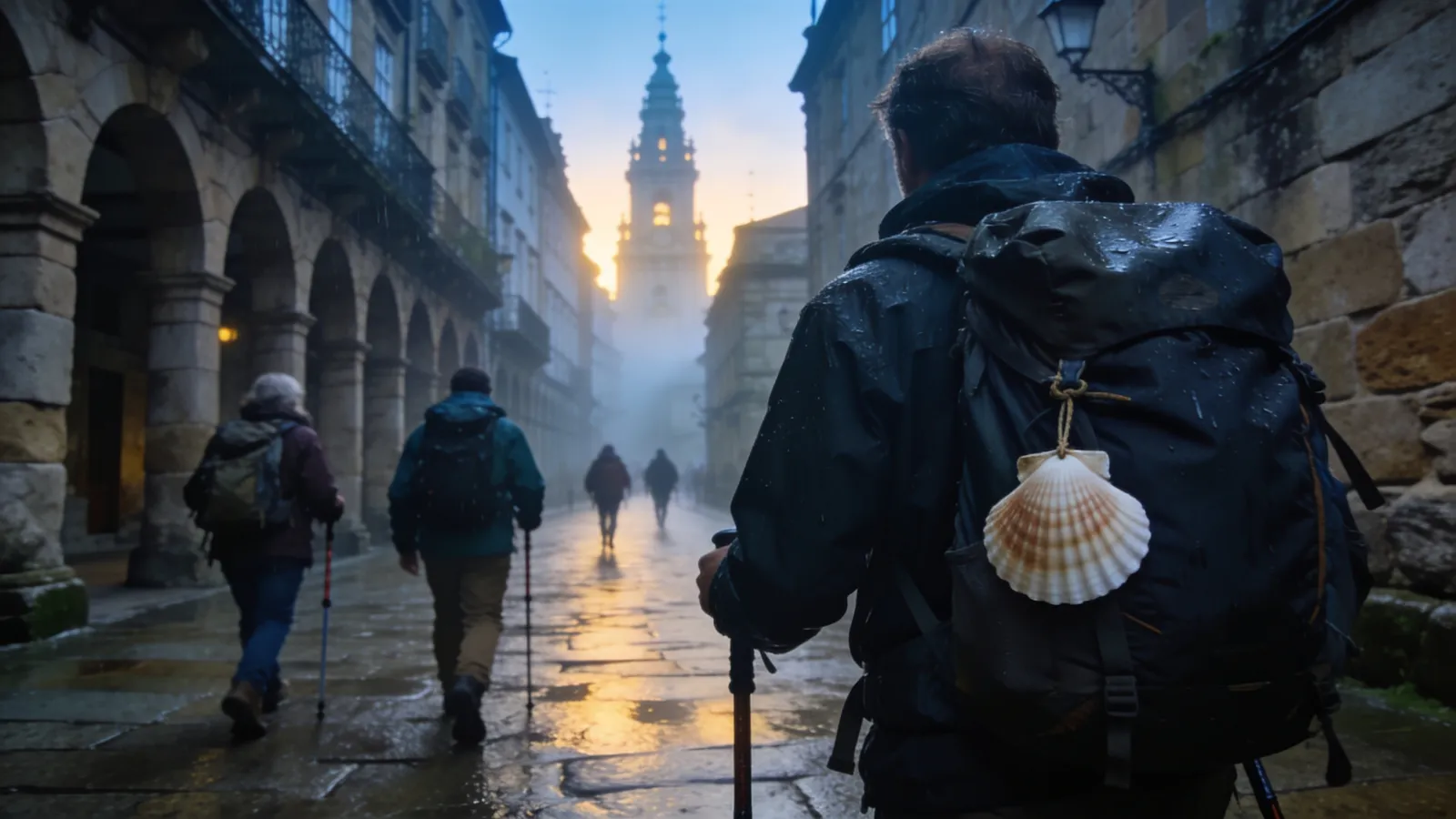
Santiago de Compostela, Galicia
Galicia’s UNESCO-listed medieval pilgrim capital — the endpoint of the 800-kilometre Camino Francés. The cathedral granted 499,239 pilgrim certificates (Compostelas) in 2024, the highest figure on record, and the city’s stone arcades, queimada (flaming spirit), Galician seafood and Celtic bagpipes are a rewarding trip even without walking a step of the route. Reached in 3 hours from Madrid on the Renfe Alvia.
Ronda, Andalucía
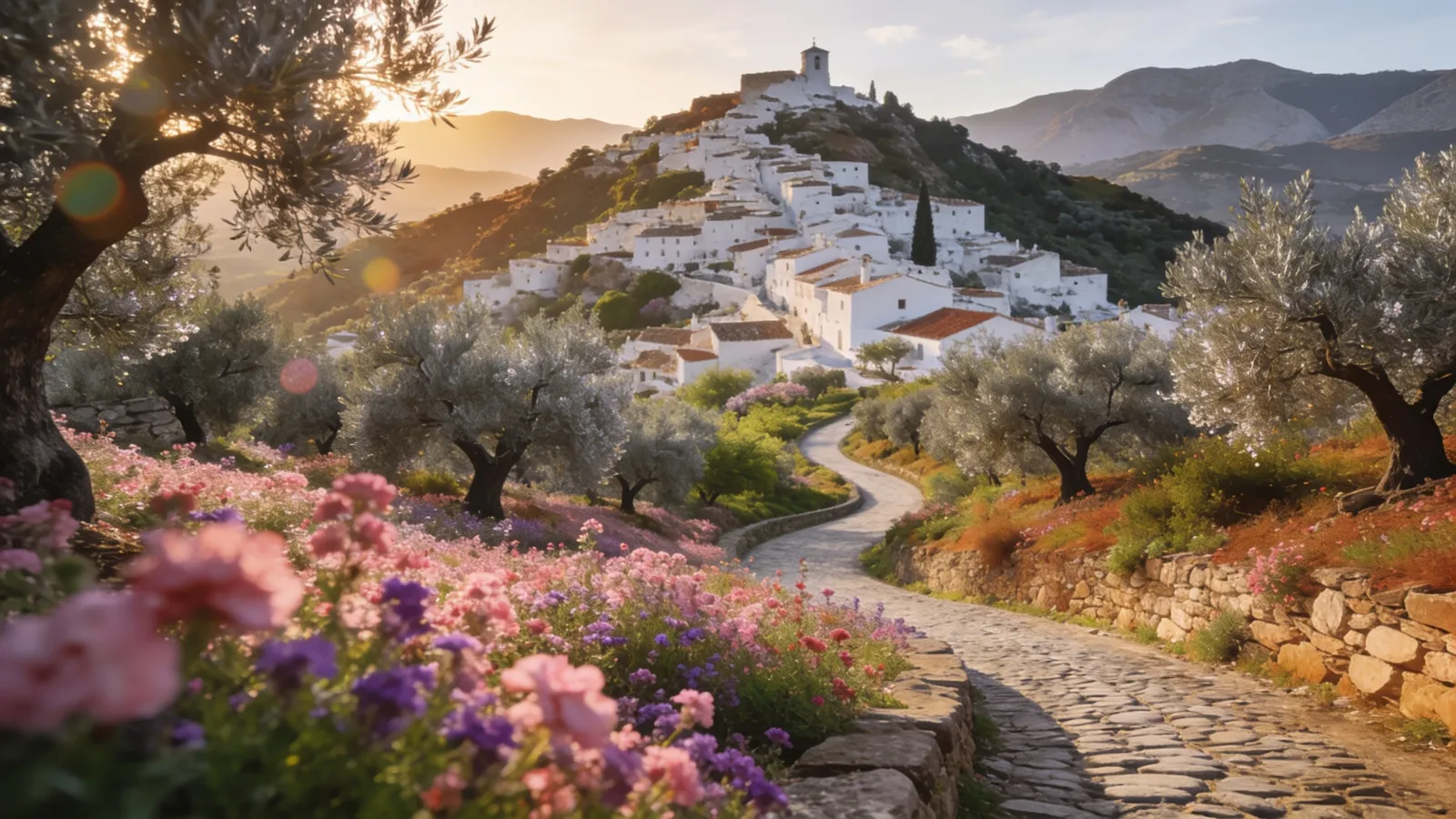
A whitewashed clifftop town split by the 120-metre El Tajo gorge and joined by the 18th-century Puente Nuevo bridge. Ronda hosts Spain’s oldest surviving bullring (1785), dramatic switchback hikes down into the gorge, and a gateway to the quietest of the Andalusian white villages (pueblos blancos) — Setenil de las Bodegas, Grazalema, Zahara de la Sierra. A 2-hour drive or bus from Málaga.
Cuenca, Castilla–La Mancha
A UNESCO-listed medieval hill town famous for its Casas Colgadas — the 14th-century “Hanging Houses” suspended over the Huécar gorge and now home to the Museo de Arte Abstracto Español. Two hours from Madrid on the AVE; most travellers skip straight to Valencia and miss the best-preserved medieval hill town in the centre of Spain.
Picos de Europa, Northern Spain
A 647-square-kilometre limestone massif straddling Asturias, Cantabria and León — Spain’s first national park, founded in 1918. The Cares Gorge trail is one of Europe’s great day hikes (12 kilometres one-way carved through vertical rock), and Cabrales blue cheese is aged in the region’s natural caves. Rainy, green and utterly unlike the dry-heat Spain most visitors picture.
Menorca, Balearic Islands
Mallorca’s quieter sibling — a UNESCO Biosphere Reserve with more than 75 beaches, prehistoric taulas and talaiots scattered across the interior, and the 185-kilometre Camí de Cavalls coastal trail that circles the whole island on old bridle paths. Reached by ferry from Barcelona (7 hours) or a 1-hour flight from Madrid, Palma or Barcelona. Go before July and after September to avoid the Mediterranean-peak crowds entirely; the prehistoric talayotic sites were added to the UNESCO World Heritage List in 2023 and almost no coach tour has caught up yet.
Practical Information
| Currency | Euro (€ / EUR); 1 USD ≈ 0.94 EUR (April 19, 2026) |
| Cash needs | Low. Cards are accepted everywhere in cities, including most tapas bars and taxis. Carry €30–50 in small notes and coins for rural bars, open-air markets and small-town bakeries. |
| ATMs | Widely available at Santander, BBVA, CaixaBank, ING and Bankinter branches. Avoid Euronet standalone ATMs (high surcharge, poor exchange rate). |
| Tipping | Not expected. Round the bill or leave €1–2 per person. 5–10% at a top restaurant is generous; no tipping on tapas rounds. |
| Language | Castilian Spanish is the state language; Catalan, Galician and Basque are co-official in their regions. English is widely spoken in major cities and tourist areas, less so inland. |
| Safety | Spain ranked 32nd in the 2024 Global Peace Index — very safe overall; violent crime against visitors is rare. The genuine threat is pickpocketing in Barcelona and Madrid. |
| Connectivity | Nationwide 5G on Movistar, Vodafone and Orange. eSIMs (Airalo, Holafly) work from landing; free WiFi in most cafés and at all AVE stations. |
| Power | Type C and Type F (Schuko) plugs; 230V / 50 Hz |
| Tap water | Safe to drink nationwide and excellent in Madrid (Sierra de Guadarrama source). Some travellers prefer bottled on the Costa Brava, Balearics and Canaries for taste rather than safety. |
| Healthcare | EU-standard public hospitals; EHIC works for EU residents, others need travel insurance. Emergency number 112 (nationwide, multilingual). |
Budget Breakdown — What Spain Actually Costs
💚 Budget Traveller
Hostels (Generator Madrid/Barcelona, TOC chain, Rodamón), supermarket breakfasts from Mercadona or Carrefour, AVE off-peak Promo fares booked 60 days out, and the €12–16 weekday menú del día as lunch anchor. Doable at €60–95 per day (~US$65–100), with Seville, Valencia and Granada the strongest-value bases. A café con leche runs €1.50, a caña €2.50, and a Museo del Prado ticket is €15.
💙 Mid-Range
3-star hotel or paradore in a historic building, one sit-down dinner and one tapas crawl a day, AVE tickets booked 2–4 weeks out, and two to three paid sights daily (Alhambra €20, Sagrada Família €26, Real Alcázar €15.50). Plan €150–240 per day (~US$160–255). Madrid and Barcelona push the top of that range — Andalusian cities and Valencia settle closer to €150.
💜 Luxury
5-star hotels (Four Seasons Madrid, Hotel Alfonso XIII Seville, Mandarin Oriental Ritz, Hotel María Cristina San Sebastián), AVE Preferente or Sala Club lounges, Michelin-starred tasting menus (Spain has 260+ Michelin restaurants, seven of them three-star), and private drivers between cities. Plan €450+ per day (~US$480+). A three-star tasting at DiverXO in Madrid or Disfrutar in Barcelona runs €250–295 per person, with wine pairings a further €150–250. Helicopter transfers to Mallorca and private yachts along the Costa Brava are widely available through concierge services in Barcelona.
| Tier | Daily (USD) | Accommodation | Food | Transport |
|---|---|---|---|---|
| Budget | $65–100 | Hostel €25–40 / budget hotel €70–110 | €20–35/day (menú del día + tapas) | Metro + advance AVE Promo €10–15/day |
| Mid-Range | $160–255 | 3-star hotel €120–210 | €50–85/day | AVE standard €30–60 intercity |
| Luxury | $480+ | 5-star hotel €350–800+ | €150–300/day | AVE Preferente / private transfers €150–300/day |
Planning Your First Trip to Spain
For a ready-made route, follow our 10-day Madrid–Andalusia itinerary.
- Pick your season. April to early June and mid-September through October are Spain’s sweet spots — pleasant temperatures, lower rates, and none of the July–August interior heat-dome.
- Fly into one hub and AVE out. Madrid is the cleanest entry — a central base, 2h 30m to Barcelona, 2h 30m to Seville, 1h 55m to Valencia. Don’t hire a car until Andalucía or the north.
- Book Alhambra and Sagrada Família six weeks ahead. Both sell out and both run timed-entry. The Real Alcázar of Seville and Park Güell also use timed-entry ticketing.
- Carry a contactless bank card. Madrid Metro, Barcelona TMB, Renfe AVE gates and most tapas bars accept Visa, Mastercard, Apple Pay and Google Pay — no paper tickets, no top-ups.
- Eat late. Lunch at 14:00, dinner after 21:00 — restaurants do not serve dinner before 20:30. Ordering a cappuccino after 11:00 is not a crime, but eating dinner at 18:00 is a tell.
Classic 10-Day Itinerary: Days 1–3 Madrid (Prado, Retiro, La Latina tapas) · Day 4 AVE to Córdoba (Mezquita day stop) then on to Seville · Days 5–6 Seville (Alcázar, Triana flamenco, cathedral) · Day 7 day-trip to Granada for the Alhambra · Day 8 AVE north to Barcelona (Sagrada Família, Gothic Quarter) · Days 9–10 Barcelona and Montserrat day trip before flying home from BCN.
Frequently Asked Questions
Is Spain expensive to visit?
Cheaper than France or Italy; roughly on par with Portugal. Budget travellers manage €60–95/day with hostels and the menú del día; mid-range travellers plan €150–240/day. Madrid and Barcelona run 20–30% higher than the national average, while Seville, Valencia and Granada are among Europe’s best-value major-city bases.
Do I need to speak Spanish?
No, but a little goes a long way. English is widely spoken in major cities and tourist areas, less so in inland Andalusia, rural Galicia and the Basque interior. Learn “hola”, “gracias”, “por favor”, “la cuenta, por favor” (the bill) and “una caña” (a small draft beer) and you will be fine. In Catalonia, Galicia and the Basque Country, a greeting in the local language (“bon dia”, “bo día”, “kaixo”) is warmly received.
Is the AVE high-speed train worth it?
Yes — the AVE beats flying on every major-city pair once airport time is added. Madrid–Barcelona is 2h 30m city-centre to city-centre, Madrid–Seville 2h 30m, Madrid–Valencia 1h 55m. Book 60+ days ahead on renfe.com, iryo.eu or ouigo.com for fares from €19; walk-up prices are triple that. Spain does not sell a Eurail-style national pass worth buying for most short trips.
Is Spain safe for solo travellers?
Yes — Spain ranked 32nd in the 2024 Global Peace Index and violent crime against visitors is rare. Solo women report feeling comfortable on public transit and in central neighbourhoods late at night. The single real threat is pickpocketing: La Rambla in Barcelona, Madrid Metro L3/L5 and Puerta del Sol are Europe’s worst corridors. Bags zipped, phones out of back pockets, wallets in front pockets.
When is the best time to visit Spain?
April–early June and mid-September–October — warm but not extreme, lower hotel rates, and major festivals (Semana Santa, Feria de Abril, harvest). Summer is peak and hot; winter is mild on the coast and Canaries.
Can I get by as a vegetarian or vegan?
Easily in major cities; trickier in small towns. Madrid, Barcelona and Valencia have flourishing vegan scenes; menús del día in rural Castile still default to jamón, chorizo or a meat stew. Useful phrases: “soy vegetariano/a” or “soy vegano/a” — and be aware that “sin carne” (without meat) does not always mean without jamón, which many Spaniards do not classify as meat.
Are Catalonia and the Basque Country really different from the rest of Spain?
Yes. Catalonia (capital Barcelona) and the Basque Country (capital Vitoria-Gasteiz, largest city Bilbao) each have their own co-official language, distinct cuisine, flag and long histories of political autonomy movements. Both are integral parts of Spain, but treat them as distinct — Catalan and Basque (Euskara) are separate languages, not dialects of Spanish, and regional pride runs deep.
Ready to Explore Spain?
Spain rewards travellers who slow down to Spanish time — eat late, sleep late, book the Alhambra six weeks out, and let the AVE do the heavy lifting between cities. Start in Madrid for the museums, Barcelona for Gaudí, Seville for Andalucía, or San Sebastián for pintxos. Whichever you choose, the sobremesa after lunch is the best part of the day.
Explore More
Cities we cover in Spain
Cities to explore in Spain
Deep-dive guides to specific cities, neighbourhoods, and food scenes — written with the same magazine voice.
More country guides you might like
Plan your trip to Spain
The booking tools we use ourselves. FFU may earn a commission at no extra cost to you.
Plan & book your trip to Spain
Booking through these searches supports our guides at no extra cost to you.