
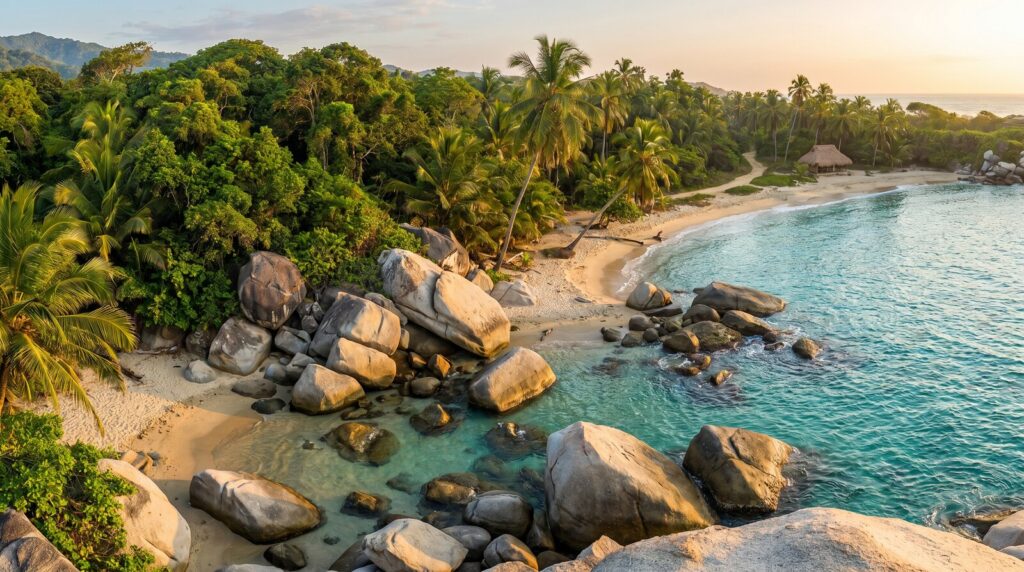
Tayrona National Park: Where Caribbean Beaches Meet Ancient Jungle in Colombia
Colombia’s most dramatic coastal wilderness combines pristine beaches, hidden lagoons, and jungle mysteries
In This Guide:
- The Lost World: Why Tayrona Is Unforgettable
- Getting There: Santa Marta as Your Gateway
- Playa Arrecifes: The Main Beach & Park Entrance
- Jungle Trails: Lost Cities & Hidden Beaches
- La Ciudad Perdida: The Trek Every Adventurer Dreams Of
- Wildlife & Biodiversity: What You’ll Encounter
- Camping & Accommodation: Staying in Paradise
- Practical Tips & Safety Considerations
The Lost World: Why Tayrona Is Unforgettable
Tayrona National Park sits where three ecosystems converge: the Caribbean Sea, the Sierra Nevada mountains, and dense jungle. The result is a landscape so biodiverse and visually stunning that it seems almost fabricated. Within hours you can swim in turquoise Caribbean waters, hike through jungle so thick sunlight barely penetrates, and camp on beaches where the Andes loom in the distance.

The park protects what locals call “the transition zone”—where ancient cultures met the Spanish conquest, where jaguars share territory with caimans, where pink river dolphins occasionally appear. It’s a place where nature feels genuinely wild and untamed despite being accessible by road.
Getting There: Santa Marta as Your Gateway
You’ll fly into Cartagena (the Caribbean’s most romantic city) or Santa Marta (the workmanlike port town that serves as Tayrona’s gateway). Santa Marta is less than an hour from the park. The town itself is gritty but improving—recent infrastructure investments have made it safer and more traveler-friendly. Most visitors spend one night in Santa Marta before heading into the park.
Skip downtown Santa Marta and stay in Tayrona or along the coast. The coastal towns offer better views, fresher air, and easier access to the park. Budget 5,000-8,000 COP per person for a private van transfer to Tayrona entrance.
Highway infrastructure has improved significantly. The drive from Santa Marta follows the Caribbean coast, offering stunning ocean views. Vendors at roadside stops sell fresh juices, empanadas, and dried fruit—perfect snacks for the journey.
Playa Arrecifes: The Main Beach & Park Entrance
Most visitors begin at Playa Arrecifes, the park’s main beach and entrance hub. A long stretch of sand bordered by jungle, Arrecifes offers everything from beach lounging to snorkeling to hiking trails. The water is warm year-round (about 28°C) and surprisingly clear given the river mouth nearby.
The park’s main facilities cluster here: restaurants, beach bars, and the ranger station where you pay entry fees. From Arrecifes, longer trails branch toward Playa Brava, Pozo Azul, and deeper jungle sites. The beach vendors sell fresh fish, coconuts, and ceviche—support local businesses and enjoy authentic Colombian coast food.
Arrive early to claim beach spots and start hiking while temperatures remain manageable. Afternoon heat and humidity become oppressive by midday. Most hikes are best done in early morning before the park fills with day-trippers.
Jungle Trails: Lost Cities & Hidden Beaches
From Arrecifes, trails penetrate deep into jungle. The Camino Indígena (Indigenous Trail) follows ancient pathways used for centuries. The route climbs dramatically into cloud forest where mosses hang thick and birds unknown to northern travelers appear. After two hours you reach Pozo Azul, a freshwater pool surrounded by jungle where locals and tourists cool off under a waterfall.
Longer trails lead to abandoned archaeological sites where pre-Columbian cultures built stone structures that still baffle researchers. The jungle has reclaimed much—walls are overtaken by roots, and staircases crumble—but walking through these sites creates an eerie sense of stepping through time.
Beach trails offer gentler walking. Playa Brava lies about 45 minutes east along the coast—a rocky cove backed by jungle where few tourists venture. It’s stunning at sunrise when the light hits the rock formations at perfect angles. Bring your own supplies as no vendors operate there.
La Ciudad Perdida: The Trek Every Adventurer Dreams Of
While technically not inside the park (it requires a separate trek with guides), La Ciudad Perdida (Lost City) is accessible from Santa Marta and represents the pinnacle of jungle adventure. This multi-day trek follows steep stone staircases carved by the Tayrona civilization through jungle so thick you’ll need machetes to navigate. At 1,300 meters elevation, the archaeological site rivals Machu Picchu for majesty and surpasses it for raw adventure and solitude.
The trek takes 4-6 days and requires a licensed guide (non-negotiable for safety and cultural respect). You’ll sleep in local homestays, cross rivers, and climb 1,200+ stone steps. The reward is standing alone (or nearly alone) at sunrise among reconstructed pre-Columbian structures with jungle stretching to the horizon.
Book your Lost City trek through reputable operators in Santa Marta. Tours average $250-400 USD including meals, accommodation, and guide. The 4-day trek is more intense but more rewarding than the 5-6 day version. Your knees will suffer on the descent, but your soul will soar.
Wildlife & Biodiversity: What You’ll Encounter
Tayrona protects an astonishing array of life. The park contains 200+ bird species—toucans, macaws, parrots, raptors. Mammals include jaguars (rarely seen), pumas, ocelots, sloths, and howler monkeys (heard constantly at dawn and dusk). Reptiles are abundant: iguanas, caimans, and various snake species. Aquatic life includes tarpon, snappers, and groupers.
Most wildlife is active at dawn and dusk. Bring binoculars and hire a naturalist guide if you’re serious about wildlife photography or observation. The early morning bird watching sessions (5-7 AM) are exceptional.
Camping & Accommodation: Staying in Paradise
Tayrona offers everything from basic camping (bring your own tent) to comfortable bungalows. The park’s sanctioned accommodations are rustic but clean. Most visitors camp at designated areas near Arrecifes or stay in nearby towns and day-trip. Eco-lodges outside the park (near Tayrona but not inside) offer comfortable alternatives with direct beach access.
In-park camping runs 15,000-25,000 COP per person nightly. Bungalows run 80,000-150,000 COP. Outside the park, lodges range from 50,000 COP (basic) to 200,000+ COP (upscale). All accommodations fill quickly during December-January and July-August. Book ahead during high season.
Tayrona closes Tuesdays and Wednesdays. If you want to camp multiple nights, plan accordingly. During off-season (May-July, September-October), fewer tourists mean better wildlife viewing and emptier beaches.
Facts About Tayrona
The Green Season
Tayrona’s wet season (July-August, November-December) floods trails but creates lush, verdant landscapes. Fewer tourists arrive during rains, but the jungle comes alive with sounds and scents.
Marine Protection
The park extends underwater—coral reefs and seagrass beds are protected marine zones. Fishing is prohibited, allowing fish populations to recover and supporting healthy, diverse ecosystems.
Cultural Significance
The park sits on ancestral indigenous lands. The Arhuaco, Kogi, and Wiwa peoples still inhabit the Sierra Nevada and maintain strong cultural ties to Tayrona. Visiting respectfully means understanding this deeper context.
Conservation Challenges
Climate change, illegal fishing, and tourism pressure threaten Tayrona’s delicate ecosystems. The park is simultaneously celebrating its natural beauty and fighting to protect it for future generations.
Ready to experience where jungle meets Caribbean? Plan your Tayrona adventure now and discover Colombia’s most magnificent natural wonder.