
Languages of Colombia
All languages of South America →fluent beta classical · classes by phone with Maya at ranas.ai/maya
Colombia Travel Guide — Caribbean Coast, Andean Peaks & Coffee Country
Colombia Travel Guide
📋 In This Guide
- Overview — Why Colombia Belongs on Every Bucket List
- 🎭 Barranquilla Carnival 2026
- Best Time to Visit Colombia (Season by Season)
- Getting There — Flights & Arrival
- Getting Around
- Top Cities & Regions
- Colombian Culture & Etiquette
- A Food Lover’s Guide to Colombia
- Off the Beaten Path
- Practical Information
- Budget Breakdown
- Planning Your First Trip to Colombia
- Frequently Asked Questions
Overview — Why Colombia Belongs on Every Bucket List
Colombia is the country that rewrote its own story. A generation ago it was a place most travellers crossed off the map; today it is one of South America’s most confident, rewarding and rhythmically charged destinations — a country where Caribbean breezes, Andean peaks, Amazon rainforest and Pacific surf all share a border with each other and, at some point, with you.
The geography alone is staggering. Colombia stretches 1,138,910 km² across the northwestern corner of South America and is the only country on the continent with coastlines on both the Caribbean and Pacific oceans. The Andes split into three parallel cordilleras as they enter Colombia, carving the country into discrete climates stacked on top of each other. You can wake up in cool Bogotá at 2,640 m, land in tropical Cartagena before lunch, and be drinking a hilltop tinto in the Coffee Triangle by sunset — all in the same day, all in the same country.
Culturally, Colombia is three countries in one. The Caribbean coast — Cartagena, Santa Marta, Barranquilla — pulses with Afro-Colombian rhythms, coconut rice and vallenato accordion, and runs at a slower, hotter, louder register. The Andean interior — Bogotá, Medellín, the Coffee Triangle — is cooler, richer, more European-leaning, a place of museums, ruanas and long family almuerzos. The Pacific coast and the southern Amazon remain genuinely off-grid, reachable only by light aircraft or boat, and home to Indigenous Wayuu, Emberá and Ticuna communities who have lived there for millennia. No two weeks in Colombia look the same, and most travellers leave planning a second trip before they have unpacked the first.
The superlative that keeps surprising visitors: Colombia is the second most biodiverse country on earth by most measures, behind only Brazil, despite occupying a fraction of the Amazon basin. It holds more bird species than any other country, more orchid species than any other country, and nine UNESCO World Heritage sites spanning colonial Cartagena, the Coffee Cultural Landscape, Tierradentro’s underground tombs and Los Katíos rainforest. Expect to eat a proper bandeja paisa for around 25,000 pesos (around six US dollars), drink a world-class cortado for 7,000 pesos (under two dollars), and dance badly to salsa at midnight in Cali without anyone minding. The country earns its place on any serious traveller’s bucket list — and then quietly jumps to the top of it.
🎭 Barranquilla Carnival 2026 — Four Days the Caribbean Coast Doesn’t Sleep
If you are in Colombia between February 14 and February 17, 2026, drop everything and get to Barranquilla. The Carnaval de Barranquilla is the second-largest carnival in the world after Rio de Janeiro, and unlike Rio it has been recognised by UNESCO as a Masterpiece of the Oral and Intangible Heritage of Humanity since 2003 — a distinction earned from four centuries of blending Indigenous, African and Spanish traditions into something uniquely Colombian. The city of 1.2 million people swells by roughly 30% as Colombians and visitors pour in for four days of round-the-clock street parties, costumed comparsas, and some of the best cumbia, porro and champeta music you will ever hear live.
- Saturday Feb 14: Batalla de Flores — the opening Battle of the Flowers parade rolls floats, queens and costumed dance troupes down Vía 40 for six hours.
- Sunday Feb 15: Gran Parada de Tradición y Folclor — the purest folkloric day, featuring cumbia, garabato, mapalé and congo comparsas.
- Monday Feb 16: Festival de Orquestas — non-stop salsa, vallenato and champeta concerts across the city’s plazas.
- Tuesday Feb 17: Joselito Carnaval funeral — the ritual mock burial that closes the party exactly as Ash Wednesday begins.
- Beyond Barranquilla: the Caribbean coast (Santa Marta, Cartagena) also fills with pre-Lent parties from Feb 12 onward.
Best Time to Visit Colombia (Season by Season)
Colombia lies almost entirely within the tropics, so there is no conventional four-season calendar. What matters is altitude and the two rainy bands — one between April and May, another between September and November.
Dry High Season (Dec–Mar)
The flagship window. Caribbean coast is reliably sunny (24–32 °C in Cartagena), Andean cities are clear and cool, and the Coffee Triangle hits peak photogenic conditions. Hoy en día this is also peak domestic holiday season around Christmas and Semana Santa — book flights and Cartagena hotels two to three months ahead. Carnaval de Barranquilla (Feb 14–17 2026) falls squarely in this window and is the single biggest draw of the Colombian year.
First Rains (Apr–May)
The shoulder. Afternoon downpours return to the highlands, though mornings are usually clear and the countryside turns a vivid green. The Pacific coast stays reliably wet. Crowds thin, prices ease, and the Cocora Valley in the Coffee Triangle looks its most cinematic under shifting cloud cover. Watch for Semana Santa — in 2026, March 29 to April 5 — when Popayán’s UNESCO-recognised Holy Week processions fill the city and hotels vanish.
Mid-Year Dry (Jun–Aug)
The second dry window and the best weather overall on the Caribbean coast. Medellín celebrates Feria de las Flores during the first week of August — a ten-day explosion of flower parades, horse processions and silleteros culminating on Flower Saturday. From July through October, humpback whales migrate up the Pacific coast to calve off Nuquí and Bahía Solano, the single best wildlife event in the country.
Second Rains (Sep–Nov)
The wettest and quietest period. Heavy rain in the Andes can disrupt mountain roads and the Ciudad Perdida trek occasionally closes for maintenance. The trade-off: this is when Caño Cristales in La Macarena turns its famous crimson — Macarenia clavigera blooms only from July through November, peaking in September and October. Fly in, skip the coasts.
Shoulder-season tip: Late June and early September are the sweet spots — prices lower than high season, reliably sunny in Medellín and the Coffee Triangle, and no school-holiday surcharges on domestic flights.
Getting There — Flights & Arrival
Colombia is the most connected gateway in northern South America. El Dorado in Bogotá is Latin America’s third-busiest airport and receives direct flights from 20-plus US cities, Madrid, London, Frankfurt, Amsterdam, Istanbul, Toronto and most South American capitals.
- El Dorado International Airport, Bogotá (BOG) — primary hub, 15 km from central Bogotá; TransMilenio bus or taxi in 25–45 minutes.
- Rafael Núñez International Airport, Cartagena (CTG) — 3 km from the walled city, about 10–15 minutes by taxi.
- José María Córdova International Airport, Medellín (MDE) — 35 km from Medellín in Rionegro; 40–60 minutes by taxi or shared van.
- Alfonso Bonilla Aragón International Airport, Cali (CLO) — 20 km from central Cali.
Flight times: Miami to Bogotá is roughly 3h 30m; New York 5h 30m; Madrid 10h 30m; London 11h with one connection; São Paulo 6h 15m.
Flag carriers: Avianca (Colombia’s national airline) and LATAM Colombia dominate, with Wingo and Clic handling budget routes.
Visa / entry: Citizens of the US, Canada, UK, EU, Australia and over 100 other nationalities enter Colombia visa-free for up to 90 days, extendable to 180 per calendar year at Migración Colombia. All arrivals must complete the free Check-MIG electronic form 1–72 hours before their flight.
Getting Around — Flights, BRT & the Medellín Metro
Colombia has no intercity passenger rail. The country is too mountainous, the cities are too far apart, and the road network spent decades tangled with armed-conflict-era checkpoints, so the standard contemporary formula is: fly between the big four (Bogotá, Medellín, Cartagena, Cali), bus for the short Caribbean coast and Coffee Triangle hops, and use the BRT or metro once in each city.
- Bogotá → Medellín: 1h by flight (8–10 h by bus).
- Bogotá → Cartagena: 1h 25m by flight.
- Medellín → Cartagena: 1h 5m by flight.
- Cartagena → Santa Marta: 4h by bus or shared van along the Caribbean highway.
- Pereira → Salento (Coffee Triangle): 1h by local bus from Pereira’s La Pola terminal.
Domestic airlines: Avianca, LATAM, Wingo and Clic compete hard — one-way fares between major cities often sit at $40–90 if booked a fortnight out.
Medellín Metro & Metrocable: Colombia’s only metro. Six cable-car lines (Metrocable) climb the hillside comunas and count as regular metro fares — the ride up to Parque Arví on Line K/L is a sightseeing experience in itself.
Bogotá TransMilenio: a 114 km-plus BRT network with dedicated busways; fast, cheap (~3,200 COP), and crowded at peak. The first Bogotá Metro line is under construction and scheduled for 2028.
Apps: Rappi (ride-hail + food delivery, Latin America’s super-app), DiDi, Uber (still a legal grey area but widely used across all major cities), Cabify, and Moovit for city transit routing.
Buses between cities: Expreso Brasilia, Bolivariano, Rápido Ochoa and Copetran run modern, air-conditioned coaches with reserved seats and onboard wifi — book through the TerminalesMedellin or similar terminal apps a day ahead.
Top Cities & Regions
📍 Map of Colombia: Every Place in This Guide
🏔️ Bogotá
The high-altitude capital sits at 2,640 m on a sabana plateau between Andean ridges — the third-highest capital city in the world. Expect cool days (15–19 °C year-round), sudden afternoon clouds, and a grown-up cultural scene of museums, bookshops, graffiti tours and serious coffee bars stacked around the colonial core of La Candelaria.
- Museo del Oro — over 55,000 pieces of pre-Hispanic gold, the best single museum in the Andes
- La Candelaria colonial quarter and Plaza de Bolívar (presidential palace, cathedral, congress)
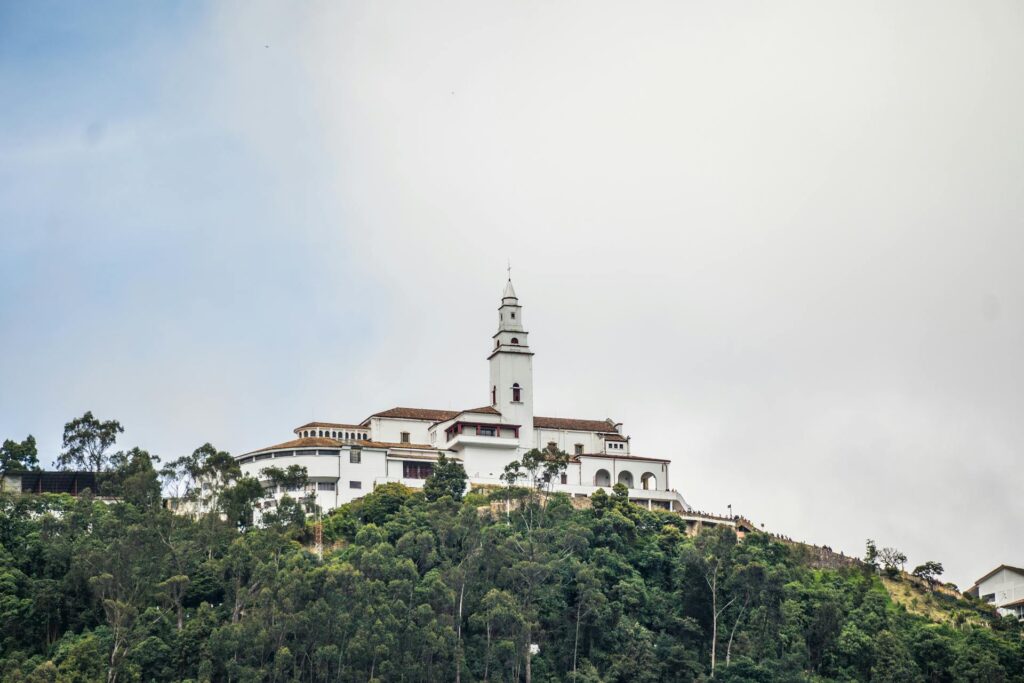
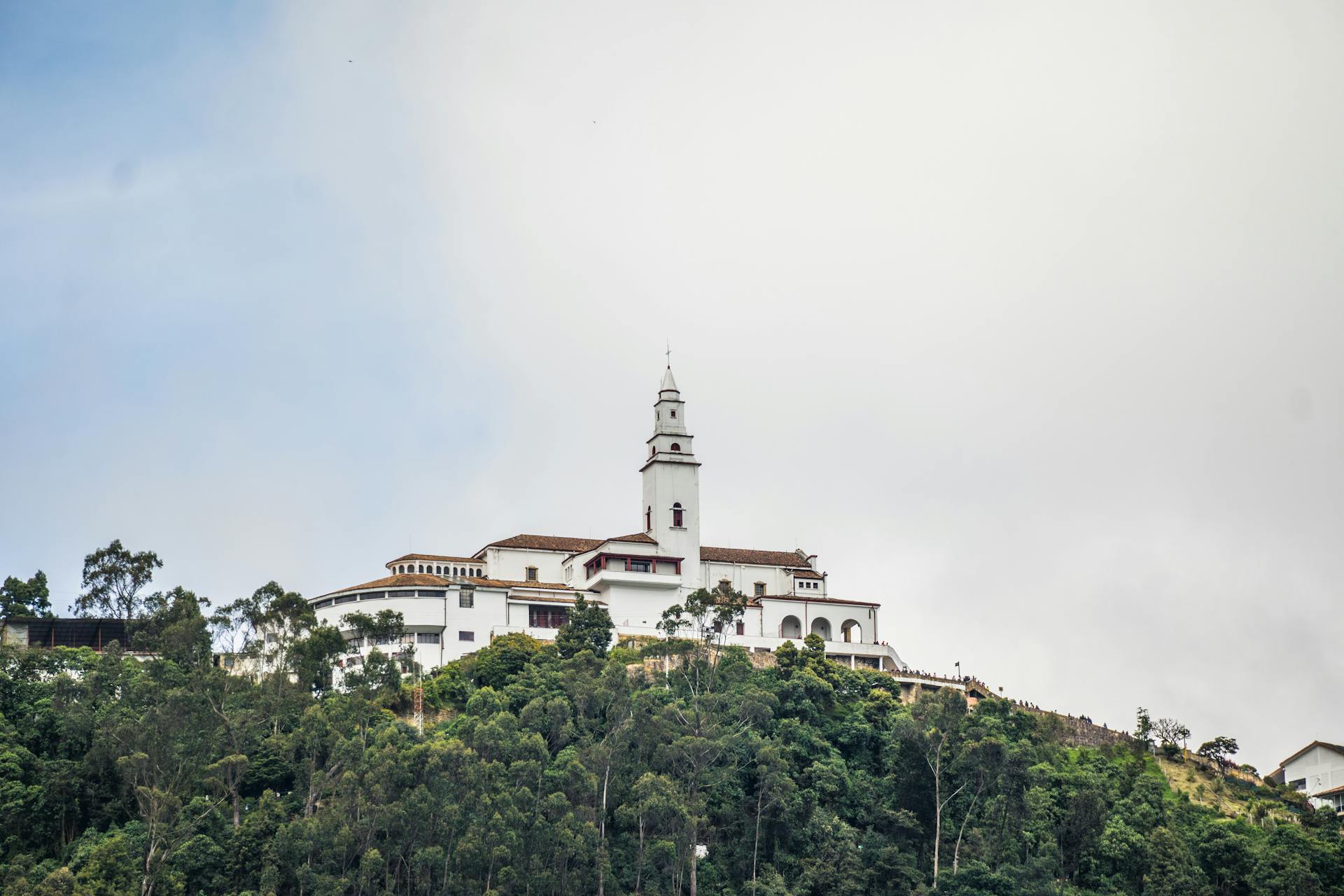
- Monserrate sanctuary at 3,152 m — funicular or cable car up for panoramic sunsets
Eat: ajiaco santafereño, tamales bogotanos, hot chocolate with cheese dropped in.
🏰 Cartagena
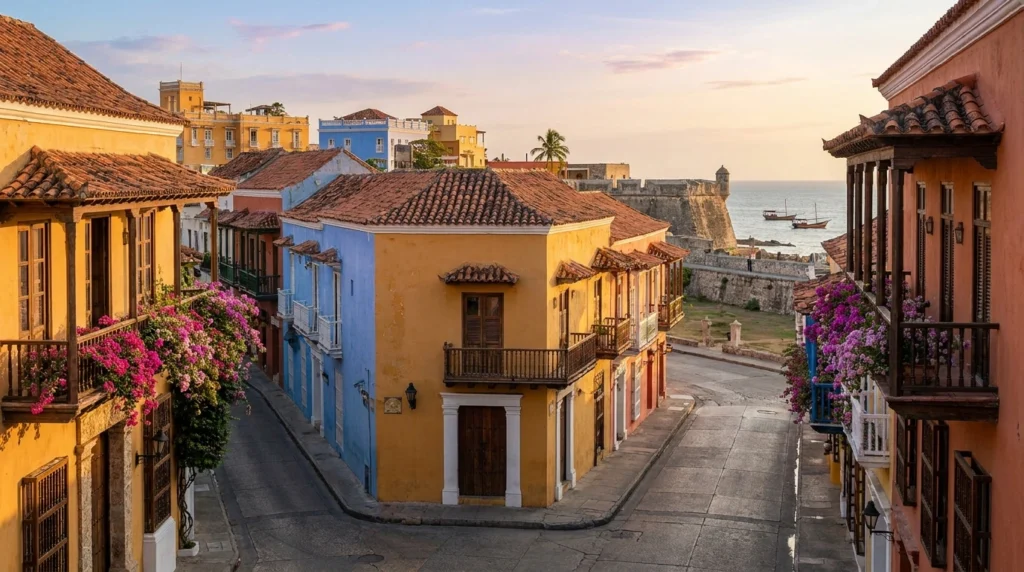
The UNESCO-listed walled city on the Caribbean — pastel façades, flower-draped balconies, Spanish fortresses, and five centuries of history facing directly onto the sea. The undisputed romantic capital of Colombia and the most photographed skyline in the country.
- Ciudad Amurallada (walled city) and Las Bóvedas — Spanish colonial dungeons turned artisan market
- Castillo de San Felipe de Barajas — the largest Spanish fortress in the Americas
- Rosario Islands — boat day trip to white-sand cays 45 minutes offshore
Eat: arepa de huevo, shrimp ceviche in plastic cups on Playa Blanca, cazuela de mariscos, coconut rice with fried red snapper.
🌸 Medellín
The “City of Eternal Spring” (15–27 °C year-round) is Colombia’s comeback poster child — a once-dangerous Aburrá Valley metropolis now famous for its Metrocable cable cars, Botero’s generous-bodied bronze sculptures, and the extraordinary regeneration of Comuna 13’s hillside barrios into a street-art destination.
- Comuna 13 street-art tour, with outdoor escalators and graffiti wall murals
- Plaza Botero — 23 Fernando Botero bronze sculptures outside the Museo de Antioquia
- Parque Arví — 1,760-hectare highland nature reserve accessed by Metrocable Line L
Eat: bandeja paisa, mondongo tripe stew, buñuelos, fresh lulo juice.
💃 Cali
The self-declared world capital of salsa — a hot, green, working-class Valle del Cauca city where dance academies outnumber gyms and the bass kicks in around 9 pm every night of the week. Less polished than Medellín, more rhythmically alive than Bogotá.
- Barrio San Antonio’s artsy hillside streets and viewpoint at sunset
- Salsa clubs in Juanchito and the Zona Rosa — Tin Tin Deo, La Topa Tolondra, Zaperoco
- Cristo Rey hilltop statue overlooking the Cauca Valley
Eat: sancocho de gallina, pandebono cheese bread, lulada, chontaduro palm fruit with salt and honey.
🌴 Santa Marta & Tayrona
Colombia’s oldest Spanish city (founded 1525) and the launchpad to Tayrona National Park’s jungle-backed coves and the four-day Ciudad Perdida trek through Sierra Nevada rainforest — a pre-Columbian Tayrona stone city 650 years older than Machu Picchu.
- Tayrona National Park — Cabo San Juan and La Piscina beaches, jungle hikes
- Ciudad Perdida trek — 44 km, 4 days, 1,200 stone steps to the summit city
- Minca mountain village — birding, waterfalls, sunset at Casa Elemento
☕ Coffee Triangle (Eje Cafetero — Salento & Manizales)
UNESCO’s Coffee Cultural Landscape spans the departments of Quindío, Risaralda, Caldas and Valle del Cauca — a rolling, impossibly green highland of finca coffee farms and the world’s tallest palm trees.
- Valle de Cocora — hike past 60 m-tall wax palms, Colombia’s national tree
- Finca coffee tour near Salento (Don Elías, El Ocaso, Ocaso)
- Termales de Santa Rosa — thermal springs near Manizales
Colombian Culture & Etiquette — What to Know Before You Go
Colombian culture is warm, expressive, loud in the best sense, and strikingly regional. The coastal costeños are gregarious and musical; paisas in Antioquia are proud, hard-working and direct; rolos in Bogotá are more reserved and formal. Reading the room matters.
The Essentials
- Greet every time. Say buenos días, buenas tardes or buenas noches when entering a shop, taxi, lift or restaurant. Walking in silently reads as rude.
- Physical greetings. A handshake with a new acquaintance; one cheek kiss (right side) between women, and between a man and a woman who already know each other. Men shake hands or give a back-pat hug.
- Don’t bring up “the bad years” casually. Colombians are intensely proud of their country’s transformation and tired of Narcos references. Ask about coffee, food and Colombian music instead.
- Tip modestly. Restaurants add a 10% propina voluntaria to the bill, which is legal to decline but customary to accept. A few thousand pesos extra for exceptional service is appreciated; taxis are not tipped.
- Punctuality is flexible. Show up on time yourself — social events typically run 30–60 minutes behind the stated start.
Coast & Andes — Regional Etiquette
- On the Caribbean coast, expect to be spoken to loudly, touched on the shoulder, and called mi amor by complete strangers — it is friendliness, not flirtation.
- In the Andes, conversation is gentler, forms of address more formal. Usted is often used even between close friends in Bogotá.
- Dress up. Colombians present themselves well in public — shorts and flip-flops signal tourist in Bogotá and Medellín. Smart casual blends in.
- Dance when invited. Declining an invitation to dance salsa in Cali is considered genuinely impolite. You do not need to be good — you need to be willing.
A Food Lover’s Guide to Colombia
Colombian cooking is one of Latin America’s most underrated cuisines. Built on corn, beans, plantain, yuca and fire-grilled meats, it varies wildly by region — the Antioquian paisa highlands go heavy and meat-forward, the Caribbean coast leans on coconut, lime and seafood, and the Andean interior specialises in hearty soups engineered for cool 2,000 m altitudes. The new-wave Bogotá and Cartagena fine-dining scene — led by Leo Espinosa, Harry Sasson and Jaime Rodríguez — has turned native ingredients like copoazú, mambe and Amazonian ants into Latin America’s 50 Best Restaurants list regulars.
Must-Try Dishes
| Dish | Description |
|---|---|
| Bandeja paisa | Antioquia’s hearty farmer’s platter — red beans, white rice, chicharrón, chorizo, fried egg, ripe plantain, avocado and an arepa on one enormous plate. |
| Ajiaco santafereño | Bogotá’s chicken-and-potato soup with three distinct potato varieties, corn on the cob, the Andean herb guascas, and a swirl of cream and capers on top. |
| Arepa | The daily corn cake. Arepa de huevo (deep-fried with a whole egg inside, Caribbean), arepa paisa (thin and grilled, Antioquia) and arepa boyacense (sweet, with cheese) are the big three. |
| Ceviche de camarón | Cartagena-style shrimp ceviche with lime, onion, cilantro, salsa rosada and saltines — sold in plastic cups on Caribbean beaches and at Getsemaní street carts. |
| Lechona | A Tolima-region whole suckling pig stuffed with rice, peas and spices, then slow-roasted for 10–12 hours until the skin shatters. Served on banana leaves at weekend markets. |
| Sancocho | A weekend family stew. Sancocho de gallina (chicken) in the interior, sancocho trifásico (three meats) in Valle del Cauca, sancocho de pescado on the coast — always with yuca, plantain and cilantro. |
Coffee & Street Culture
Colombia is the world’s third-largest coffee producer — but you won’t find the best beans in supermarkets, because the top-grade harvest is almost entirely exported. The new wave of third-wave cafés in Bogotá, Medellín and Salento now roasts and serves single-origin beans in-country. A tinto (small black coffee from a street cart) still costs 2,000 COP and is the universal welcome. Beyond coffee, quick-snack culture is dominated by bakeries (panaderías) and convenience-store chains expanding fast since 2020.
- Chains: OXXO (Mexican chain expanding fast), Éxito Express, Justo y Bueno
- Signature items: empanadas (fried corn turnovers), pandebono and pandeyuca cheese breads, aguapanela (hot cane-sugar water) with cheese, Bon Bon Bum lollipops, Alpina drinkable oatmeal, obleas cream-filled wafer discs
- Pay with Nequi or Daviplata. Mobile money via these two apps is now the default for tiendas de barrio and street food — ask if you can pay por Nequi if you’re running low on cash.
Off the Beaten Path — Colombia Beyond the Guidebook
Caño Cristales
The “river of five colours” sits inside Serranía de la Macarena National Park in Meta department, where the endemic aquatic plant Macarenia clavigera carpets the riverbed in vivid crimson, ochre, green and yellow between July and November each year. Access is strictly controlled — fly from Villavicencio to La Macarena village on a small aircraft, then continue with a licensed guide on foot and by boat. Peak colour is September and October; outside those months the river is just a pretty stream.
Guatapé & El Peñol
Two hours east of Medellín, the lakeside town of Guatapé is painted in the most intricate house-front murals (zócalos) in Colombia and sits beside El Peñol — a 200 m-tall granite monolith with 740 concrete stairs zig-zagging up one flank to a panoramic viewpoint over an artificial reservoir that drowned the old village in 1970. Doable as a long day trip from Medellín; better with an overnight at a lakeside boutique hotel.
San Andrés & Providencia
A Colombian Caribbean archipelago geographically closer to Nicaragua than to mainland Colombia, populated by English-and-Creole-speaking Raizal people of Afro-Caribbean descent. The “sea of seven colours” (mar de siete colores) stretches between San Andrés and tiny Providencia to the north, which is reached only by small aircraft. Duty-free status keeps prices low on rum, perfume and electronics.
Desierto de la Tatacoa
Four hours south of Bogotá by car, the Tatacoa Desert is not technically a desert but a tropical dry forest eroded into red (Cusco) and grey (Los Hoyos) labyrinthine canyons. Colombia’s second-largest arid zone and one of South America’s best stargazing spots thanks to near-zero light pollution — three small astronomical observatories host public viewing nights.
Chocó Pacific Coast — Nuquí & Bahía Solano
The wildest corner of Colombia. Afro-Colombian fishing villages on the Pacific, reached only by prop plane from Medellín or Quibdó, facing an ocean that measures among the rainiest on earth (9,000+ mm per year). From July through October, humpback whales arrive from Antarctica to calve in warm coastal waters — the single best marine-wildlife experience in the country, with surfing, waterfall hikes and jungle eco-lodges thrown in.
Practical Information
Colombia runs on a mix of modern infrastructure and improvisation. Expect smooth airport immigration and tap-to-pay cards in Bogotá cafés alongside cash-only tiendas, rural gravel roads and signal black spots in the mountains. The table below is the first-timer cheat sheet; most travellers reach for it in the taxi line at El Dorado.
| Currency | Colombian Peso (COP$); 1 USD ≈ 4,100 COP (2026-04-19) |
| Cash needs | Cards accepted in cities and hotels; keep small-denomination cash (10,000 / 20,000 COP notes) for taxis, corner shops and rural areas. |
| ATMs | Bancolombia, Davivienda and BBVA ATMs widely available; withdraw inside bank lobbies in daylight. Fees typically 10,000–18,000 COP per withdrawal. |
| Tipping | 10% service charge (propina voluntaria) commonly added to restaurant bills — legal to decline but customarily accepted. No tipping expected in taxis. |
| Language | Spanish (sole national official language); 65 Indigenous languages also recognised. Limited English outside tourist zones — Google Translate offline is your friend. |
| Safety | US State Department rating Level 2 overall, Level 4 (‘Do Not Travel’) for Arauca, Cauca (outside Popayán), Norte de Santander (outside Cúcuta) and the Venezuelan border. |
| Connectivity | 4G coverage strong in cities; Claro / Movistar / Tigo SIMs cost 10,000–20,000 COP. Airalo and Holafly eSIMs work on arrival. |
| Power | Type A/B plugs, 110V |
| Tap water | Potable in Bogotá, Medellín and most Andean cities; bottled water recommended in Cartagena, Santa Marta and rural zones. |
| Healthcare | Private hospitals in Bogotá, Medellín and Cali rank among Latin America’s best and are a medical-tourism hub. Travel insurance strongly recommended. |
Budget Breakdown — What Colombia Actually Costs
Colombia is one of the cheapest serious destinations in South America — not quite at Bolivia levels, but dramatically better value than Argentina, Chile or Brazil. A favourable exchange rate (hovering around 4,100 COP per USD in 2026) means even mid-range travel costs roughly 40–50% of a comparable trip to Mexico.
💚 Budget Traveller
Hostel dorms in Cartagena’s Getsemaní or Medellín’s Poblado run 40,000–80,000 COP a night ($10–20). Lunch at a menú del día (set-price midday meal) is 15,000–25,000 COP ($4–6) for soup, main and juice. Long-distance buses between Cartagena and Santa Marta cost 35,000 COP ($9). Plan $30–55 per day.
💙 Mid-Range
A boutique room in Cartagena’s walled city or Medellín’s Laureles sits at 300,000–600,000 COP ($75–150). Restaurant dinners, craft-coffee brunches and occasional cocktails at W or Click Clack push daily spend to $80–160. One-way domestic flights between major cities run $40–90 if booked a fortnight ahead.
💜 Luxury
Sofitel Legend Santa Clara and Casa San Agustín in Cartagena start at 1,500,000 COP ($375) a night and climb past $800. Leo, Carmen, Celele and Harry Sasson tasting menus cost $80–180 per person. Private drivers run $150–250 a day; chartered flights to Nuquí or Providencia $400+ one way.
| Tier | Daily (USD) | Accommodation | Food | Transport |
|---|---|---|---|---|
| Budget | $30–55 | Hostel dorm / simple hotel ($10–30) | Menú del día, empanadas ($3–8) | TransMilenio, Medellín Metro, buses ($1–9) |
| Mid-Range | $80–160 | Boutique hotel ($75–150) | Restaurant dinner, cocktails ($12–30) | Domestic flights, taxis ($40–90 per leg) |
| Luxury | $280+ | Sofitel Legend Santa Clara, Casa San Agustín ($375+) | Tasting menus at Leo, Celele ($80–180) | Private driver, charter flights ($200+/day) |
Planning Your First Trip to Colombia
- Decide on the Big Four. A first Colombia trip should hit at least three of Cartagena, Medellín, Bogotá and the Coffee Triangle — they genuinely feel like four different countries. Add Santa Marta / Tayrona if you want beach and trek.
- Fly between cities. Avianca, LATAM and Wingo fares between major hubs average $40–90 one way if booked two weeks out. Don’t waste a 10-day trip on 10-hour overnight buses.
- Start at altitude, not sea level. Bogotá’s 2,640 m can cause mild altitude symptoms. Land there first, give yourself a day or two, then descend to the Caribbean — not the other way around.
- Complete Check-MIG online. Every arriving passenger must submit the free Check-MIG form 1–72 hours before the flight.
- Learn 20 Spanish phrases. English outside tourist zones is limited. Buenos días, gracias, la cuenta por favor, ¿cuánto vale? and sin picante will carry you a long way.
Classic 10-Day Itinerary: Days 1–2 Bogotá (La Candelaria, Museo del Oro, Monserrate). Day 3 fly to Pereira → Salento (Coffee Triangle). Days 4–5 Cocora Valley hike, coffee finca tour. Day 6 fly to Medellín (Comuna 13, Plaza Botero, Guatapé day trip). Day 7 fly to Cartagena. Days 8–9 walled city, Rosario Islands, Getsemaní. Day 10 fly home from Cartagena.
Cities & Regions to Explore
Frequently Asked Questions
Is Colombia expensive to visit?
No — Colombia is one of South America’s best value destinations. A mid-range traveller spends $80–160 per day including a boutique hotel, restaurant meals and domestic flights. Budget travellers get by on $30–55 with hostel dorms, menús del día and buses. Coastal Cartagena is the one noticeable outlier, where walled-city hotels cost 30–40% more than comparable rooms in Medellín.
Do I need to speak Spanish?
You need a little. English is widely spoken in Cartagena’s tourist core, Medellín’s Poblado and Bogotá’s Zona G restaurant scene, but limited elsewhere — and almost absent in buses, taxis and rural areas. Twenty essential phrases plus Google Translate offline will carry a first-time traveller comfortably. A week of Duolingo before the trip pays off dramatically.
Is domestic flying worth it over buses?
Almost always yes. Colombia’s mountainous geography turns a 400 km journey into a 10-hour bus ride, while Avianca, LATAM and Wingo flights between Bogotá, Medellín, Cartagena and Cali take roughly an hour and cost $40–90 one way if booked two weeks ahead. Save the buses for the short Caribbean hop between Cartagena and Santa Marta, or Pereira to Salento.
Is Colombia safe for solo travellers?
Yes, with region-by-region care. Cartagena, Medellín (Poblado, Laureles), Bogotá (Chapinero, Usaquén), Salento and Santa Marta are well-trodden and safe in daylight. The US State Department places Colombia at Level 2 overall but Level 4 (‘Do Not Travel’) for Arauca, Cauca outside Popayán, Norte de Santander outside Cúcuta, and the Venezuela border — stay out of those zones. Use Uber or Rappi rather than flagging street taxis at night, and don’t dar papaya (show valuables).
When is the best time for the Coffee Triangle?
December through March. The dry window gives clear mornings in Cocora Valley for the wax-palm hike. July and August also work. Avoid April–May and October–November, when afternoon rain swallows the mountains.
Can I get by as a vegetarian or vegan?
Easier than ten years ago. Bogotá, Medellín and Cartagena all have strong vegan restaurant scenes (Quinua y Amaranto, Verdeo, Girasoles). Traditional menú del día lunches default to meat; say sin carne, sin pollo. Arepas, tamales de vegetales and empanadas de papa are quietly vegetarian-friendly.
Do I really need to worry about altitude in Bogotá?
A little. Bogotá sits at 2,640 metres — lower than Cusco, but still high enough to produce headaches and shortness of breath for some arriving visitors. Hydrate hard the first 24 hours, skip alcohol the first evening, go easy on exercise, and try mate de coca if you feel sluggish.
Ready to Explore Colombia?
Colombia is the country that reintroduced itself to the world — Caribbean beaches, Andean capitals, coffee highlands and salsa nights all within a single domestic flight. Get the Check-MIG form sorted, book Cartagena three months out, and come ready to be welcomed.
Explore More
Cities we cover in Colombia
Cities to explore in Colombia
Deep-dive guides to specific cities, neighbourhoods, and food scenes — written with the same magazine voice.
More country guides you might like
Plan your trip to Colombia
The booking tools we use ourselves. FFU may earn a commission at no extra cost to you.
Plan & book your trip to Colombia
Booking through these searches supports our guides at no extra cost to you.