
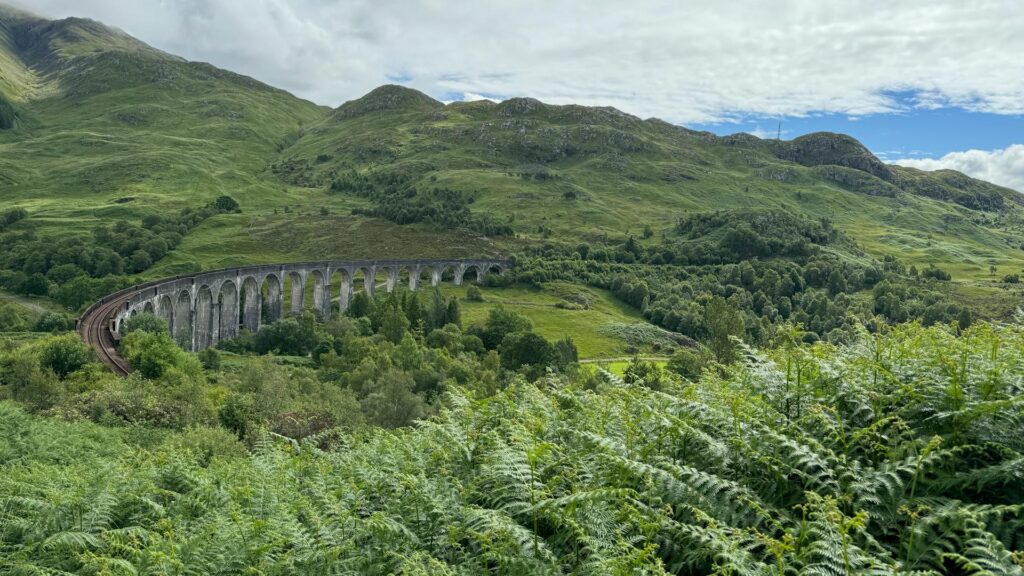
Scotland Travel Guide — Castles, Cliffs & 790 Inhabited Islands
Scotland Travel Guide
📋 In This Guide
- Overview — Why Scotland Belongs on Every Bucket List
- 🎭 Edinburgh Festival Fringe 2026
- Best Time to Visit Scotland (Season by Season)
- Getting There — Flights & Arrival
- Getting Around — ScotRail, Sleeper & the A9
- Top Cities & Regions
- Scottish Culture & Etiquette
- A Food Lover’s Guide to Scotland
- Off the Beaten Path
- Practical Information
- Budget Breakdown
- Planning Your First Trip to Scotland
- Frequently Asked Questions
Overview — Why Scotland Belongs on Every Bucket List
Scotland is the northern third of the island of Great Britain — 77,933 square kilometres of Highland ridges, Lowland farmland and a coastline so folded it stretches over 18,600 km when every sea loch and island shore is measured. Administratively it is one of the four nations of the United Kingdom, with its own parliament at Holyrood, its own legal and education systems, and its own £5 and £10 banknotes — printed by Bank of Scotland, Royal Bank of Scotland and Clydesdale Bank, legal tender across the UK although English shopkeepers sometimes frown when they appear.
The country is improbably island-rich. There are around 790 offshore islands — 93 of them inhabited — split into the big archipelago groupings of the Hebrides (Inner and Outer), Orkney, and Shetland, plus a scatter in the Firth of Clyde and the Firth of Forth. On the mainland, the Highland Boundary Fault cuts a diagonal line from Stonehaven on the east coast to Helensburgh on the west; south of it lies the Lowlands — Edinburgh, Glasgow and most of the population — and north of it, the Highlands proper, all the way up to Cape Wrath. Ben Nevis, 1,345 m above sea level, is the highest point in the British Isles.
Scotland’s population is roughly 5.55 million, a record high as of mid-2024, concentrated in the central belt between Edinburgh and Glasgow where more than 3.5 million people live within 80 km of each other. The country has seven UNESCO World Heritage Sites — the Old and New Towns of Edinburgh, Heart of Neolithic Orkney, St Kilda, the Forth Bridge, the Antonine Wall, New Lanark and the Flow Country — a remarkable density for a country smaller than South Carolina. Scots Gaelic is spoken by about 57,000 people today, mostly in the Outer Hebrides; Scots (the Germanic cousin of English) is used by roughly 1.5 million as an everyday language, on top of the standard English everyone shares.
What you come for is the combination. Edinburgh in August holds the world’s largest arts festival — over 3,500 shows across 25 days — and the whole country becomes a stage. A dram of single malt in a back-street Edinburgh pub costs £4–6. A pint is £5–6 in Glasgow, £5.50–6.50 in Edinburgh. Fish and chips from a seaside chippy on the Fife coast is £9. The signature experience — standing on a Highland ridge with nothing between you and the Arctic — is still free.
🎭 Edinburgh Festival Fringe 2026 — The World’s Largest Arts Festival
If you have one window to book Scotland, book 7–31 August 2026. The Edinburgh Festival Fringe returns for its 79th edition with over 3,500 shows across comedy, theatre, dance, cabaret, circus and spoken word — the single largest arts festival on earth, run on a completely open-access model where anyone can register a show. Edinburgh’s population roughly doubles during the Fringe, and that sits alongside four other concurrent festivals — the Edinburgh International Festival, the International Book Festival, the Royal Edinburgh Military Tattoo at the Castle, and the Art Festival — making August Scotland’s single biggest travel pull. Hotels in the Old and New Towns routinely sell out by April; short-term lets in Marchmont and Stockbridge go by May. Book at least four months ahead for the full Fringe month, or settle for the quieter first or last week.
- First performance: 7 August 2026 (preview shows from 5–6 August across several venues)
- Peak window: 14–24 August 2026 — middle weekends always draw the largest crowds
- Closing night: 31 August 2026 — 25-day run, the programme launches online on 4 June 2026
- Royal Mile: free flyering and street performance from 11:00 am daily — the Fringe’s busiest single street
- Pleasance Courtyard, Underbelly Cowgate, Assembly George Square: the ‘Big Four’ ticketed venue clusters — most buzzed shows land here
- Royal Edinburgh Military Tattoo: 7–29 August 2026 on the Castle Esplanade — separate ticket, books out months ahead
Best Time to Visit Scotland (Season by Season)
Spring (Mar–May)
Spring is the quiet sweet spot before the coaches arrive. Edinburgh temperatures climb from a raw 3–8°C in March to a pleasant 6–13°C by late May, daylight stretches past 9:30 pm by mid-May, and the daffodils in Princes Street Gardens open under the Castle. The Highlands stay snow-capped into April. Beltane Fire Festival on Calton Hill (30 April), Whisky Month across Speyside (May), and the Spirit of Speyside Festival (early May) are the cultural anchors. Midges haven’t woken yet — the single best reason to come now.
Summer (Jun–Aug)
Summer is festival season and the only period with real heat. Edinburgh averages 11–19°C with the occasional 25°C day; the west coast often hits the low 20s. In Shetland the summer sun sets after 10:30 pm and the ‘simmer dim’ never fully dims. August is the Edinburgh Fringe, International Festival, Book Festival and Tattoo stacked on top of each other — book early or expect city rates to treble. Highland Games run from May into September (Braemar Gathering, 1st Saturday in September, is the one the Royal Family attends). Downside: Highland midges (Culicoides impunctatus) peak from mid-June to mid-August, brutal at dawn and dusk on the west coast — carry a head-net if you’re camping.
Autumn (Sep–Nov)
Autumn is the photographer’s season. September holds 9–16°C and long light, the coach season winds down mid-month, and the Cairngorms turn copper and red from late September. The midges are gone by the second week of September, the stag rut fills Glen Etive and the Isle of Rum from mid-September, and Speyside hosts the Autumn Whisky Festival in October. Sunset in Inverness on 1 November is 4:30 pm — daylight drops fast. Strong aurora chances appear from late September onward on clear nights north of the Great Glen.
Winter (Dec–Feb)
Winter is cold, dark and atmospheric. Edinburgh sits 1–7°C; the Highlands routinely drop below freezing with 150+ skiable days across Cairngorm, Glencoe, Glenshee, The Lecht and Nevis Range. Edinburgh’s Hogmanay (29 December 2026 – 1 January 2027) runs a four-day street-party programme with a Torchlight Procession on 29 December and 45,000 tickets for the Princes Street party on 31 December. Shetland’s Up Helly Aa fire festival burns on the last Tuesday of January. Aurora displays are routine on clear nights in Shetland and the far north.
Shoulder-season tip: Mid-May and mid-September deliver the best ratio of light, warmth, dry days and low crowds — you can drive the North Coast 500 in late September with the single-track passing places genuinely quiet and the pubs still full.
Getting There — Flights & Arrival
Scotland has four international airports — Edinburgh and Glasgow handle the volume, Aberdeen and Inverness cover the north. Edinburgh is the largest, handling 15.77 million passengers in 2024. All four have direct rail, tram or bus links to their city centres.
- Edinburgh Airport (EDI) — 15.77M passengers in 2024; Edinburgh Trams to Princes Street in 35 minutes for £7.50, Airlink 100 bus in ~30 minutes for £5.50
- Glasgow Airport (GLA) — 8.07M passengers in 2024; Glasgow Airport Express (bus 500) to Buchanan in ~15 minutes for £10.50
- Aberdeen Airport (ABZ) — northern gateway and North Sea energy hub; Jet bus to Union Square in ~35 minutes for £3.50
- Inverness Airport (INV) — Highland entry point; Jet 11 bus to Inverness centre in ~25 minutes for £5
Flight times: New York–Edinburgh ~7h, Toronto–Edinburgh ~6h 30m, Dublin–Edinburgh ~1h 15m, London–Edinburgh ~1h 25m.
Flag carriers: British Airways and Virgin Atlantic via London; Loganair runs the Highlands and Islands network.
Visa / entry: Around 90 nationalities (US, Canada, EU/EEA, Australia, New Zealand, Japan, South Korea) are visa-free for up to 6 months. Since April 2025 all visa-exempt visitors (Irish citizens excepted) need a UK Electronic Travel Authorisation (ETA) — £20, valid two years.
Getting Around — ScotRail, the Sleeper & the A9
Scotland’s public transport is excellent between the big cities and thin on the ground in the Highlands and Islands. ScotRail runs the domestic network, Caledonian Sleeper covers the overnight London run, and Caledonian MacBrayne (CalMac) sails 29 ferry routes to 24 destinations on the west coast and Hebrides. Above Inverness and west of Fort William, a rental car is effectively mandatory.
- ScotRail InterCity: max speed 125 mph (200 km/h) on the Edinburgh–Glasgow and Highland Main Line routes
- Edinburgh Waverley → Glasgow Queen Street: ~51 minutes, up to 90 services daily — every 15 minutes at peak
- Edinburgh → Inverness (Highland Main Line): ~3h 30m by ScotRail InterCity, 11 services daily through Perth and Aviemore
- London Euston → Inverness (Caledonian Sleeper, Highland): departs 21:15, arrives 08:45 — 11h 30m overnight berth
- Glasgow Queen Street → Fort William → Mallaig (West Highland Line): ~5h 30m end-to-end on one of the world’s great scenic railways
Rail / transit pass: Spirit of Scotland Travelpass — 4 days in 8 is £149, 8 days in 15 is £189 (~$190–$240); covers all ScotRail, most CalMac ferries, Glasgow Subway and most Edinburgh buses.
Smart cards: contactless debit/credit is universal on Edinburgh Trams, Lothian Buses, Glasgow Subway and ScotRail. There is no single equivalent of London’s Oyster — tap a bank card or buy a paper day ticket.
Apps: ScotRail, Traveline Scotland.
Top Cities & Regions
📍 Map of Scotland: Every Place in This Guide
🏰 Edinburgh
Scotland’s capital and second-most-populous city — a UNESCO World Heritage Site where a medieval Old Town of closes and wynds sits across a drained loch from an 18th-century Georgian New Town, both still functioning as a living city of roughly 520,000.
- Edinburgh Castle and the 12th-century St Margaret’s Chapel (the oldest surviving building in Edinburgh), plus the One O’Clock Gun fired daily except Sundays
- Royal Mile from the Castle to Holyrood Palace — a kilometre of medieval spine with St Giles’ Cathedral, Real Mary King’s Close and the Scottish Parliament
- Arthur’s Seat (251 m extinct volcano inside the city) ; Calton Hill for the best skyline photo; Stockbridge and Dean Village for independent shops
Signature experiences: haggis, neeps & tatties in a wood-panelled pub, a tasting flight at the Scotch Whisky Experience, and Oyster Bar in the Kitchin (Michelin-starred) for a modern Scottish tasting menu.
⚓ Glasgow
Scotland’s largest city and its industrial and cultural heavyweight — a 600,000-person conurbation on the River Clyde that gave the world the steam engine, tenement architecture and a music scene that punches far above its weight.
- Kelvingrove Art Gallery and Museum (free entry, over 8,000 objects including Dalí’s ‘Christ of St John of the Cross’) — one of the most visited museums in the UK outside London
- Glasgow School of Art by Charles Rennie Mackintosh (1899, being rebuilt after the 2018 fire) and the Mackintosh at the Willow tearooms on Sauchiehall Street
- West End student district, Merchant City, the Barrowland Ballroom for live music, and the Riverside Museum (Zaha Hadid, 2011) for transport history
Signature experiences: a curry in the ‘Curry Capital of the UK’ on Sauchiehall Street, Tennent’s lager on tap, and a gig at King Tut’s Wah Wah Hut — the pub where Oasis was signed in 1993.
🎻 Inverness & the Highlands
Capital of the Highlands and the natural launching point for the North Coast 500, Loch Ness, Culloden and the Cairngorms. Compact, walkable, with the River Ness cutting through the middle and pine-forested hills within ten minutes of the high street.
- Loch Ness & Urquhart Castle — 37 km long, 230 m deep ; ruins on the southern shore are the most-photographed Highland site
- Culloden Battlefield (1746) — final defeat of the Jacobite rising; National Trust visitor centre runs an immersive retelling
- Cairngorms National Park (4,528 km², the UK’s largest) and Cairngorm Mountain funicular to 1,097 m ; Aviemore’s ski resort in winter
Signature experiences: Cullen skink at a Moray Firth chippy, a Speyside distillery tour (Glenfiddich, Aberlour, Strathisla), Highland Games at Braemar in September.
🏝️ Isle of Skye & the Inner Hebrides
Scotland’s most-visited island, reached by the Skye Bridge from Kyle of Lochalsh or the CalMac ferry from Mallaig to Armadale. The Cuillin ridge, the Old Man of Storr and the Quiraing define the modern image of the Highlands.
- Quiraing landslip, Old Man of Storr pinnacle, Fairy Pools waterfall swim below the Cuillin
- Dunvegan Castle (seat of the Clan MacLeod for 800 years) and the Talisker distillery at Carbost
🪨 Orkney & Shetland
Scotland’s two northern archipelagos — Orkney 16 km off the mainland at the Pentland Firth, Shetland a further 200 km north, halfway to Norway. Both culturally closer to Scandinavia than the Highlands.
- Heart of Neolithic Orkney UNESCO site: Skara Brae (3180 BC village, older than the pyramids), Ring of Brodgar, Stones of Stenness, Maeshowe chambered cairn
- Up Helly Aa fire festival in Lerwick, last Tuesday of January — 1,000 torch-bearing guizers burn a Viking galley in the town centre
🏞️ Argyll & the West Highlands
The green, sea-lochy western flank of the Highlands — the shortest route from Glasgow to genuinely remote landscape. Oban is the gateway port for ferries to Mull, Iona and the Outer Hebrides.
- Glen Coe (1692 Massacre of Glencoe and the scene for countless films, from Skyfall to Harry Potter) and the Three Sisters viewpoint
- Oban → Craignure ferry to the Isle of Mull (45–60 minutes, up to 10 sailings a day in summer) and the onward road to Fionnphort for Iona
Scottish Culture & Etiquette — What to Know Before You Go
The Essentials
- Scotland is not England. Call a Scot ‘English’ or refer to Scotland as ‘part of England’ and the conversation will go quiet. Scotland is one of the four nations of the United Kingdom, and most Scots fly the Saltire (blue and white) more readily than the Union Jack.
- ‘Cheers’ works for thank-you, goodbye, and toasts — widely used and never wrong. ‘Aye’ means yes, ‘nae’ means no, ‘wee’ means small. Scots vocabulary is lively but English is universally understood.
- Tipping is optional but 10% is standard in table-service restaurants; not expected at bars for drinks, round up taxi fares. Service charge is sometimes added to the bill — if so, no extra is required.
- Rounds still run the pub. If your new friend buys you a pint, you return the favour before the next one. Skipping your turn is noticed.
- Scottish banknotes (Bank of Scotland, RBS, Clydesdale) are legal across the UK but some English shops refuse them out of unfamiliarity. Don’t worry — spend them before you cross the border or swap at any Scottish bank.
Pub & Whisky Etiquette
- Order at the bar, not at the table. Pay when the drink is poured; the barman will remember your face if you’re running a tab.
- A ‘dram’ is a single measure of whisky — traditionally 35 ml in a Scottish pub, 25 ml in England. Ask how the distillery takes it (‘neat, a drop of water, or on ice’) rather than defaulting to cola.
- Never ask for ‘Scotch’ in Scotland — just ask for whisky, or name the distillery. ‘Scotch’ is the export-market label; locally, whisky is the default.
- Sláinte (pronounced ‘slawn-cha’) is the Gaelic toast: ‘health’. Clink glasses at eye level, make eye contact, drink.
A Food Lover’s Guide to Scotland
Scottish food has spent the last twenty years rebuilding its reputation. The old jokes — deep-fried Mars bars, salty porridge, grey mince — have given way to a serious farm-and-sea cuisine built around grass-fed Aberdeen Angus beef, Orkney scallops, West Coast langoustines, Shetland salmon and an artisan bakery scene spread from Borders sourdough to Hebridean oatcakes. Edinburgh has six Michelin-starred restaurants across the city; Glasgow adds three more; and every market town from Kirkcudbright to Tain now fields a credible bistro. At the same time, the fish-and-chip supper, the square sausage roll and a bowl of Cullen skink remain the daily bread of Scottish eating.
Must-Try Dishes
| Dish | Description |
|---|---|
| Haggis, neeps & tatties | Scotland’s national dish — a savoury pudding of sheep’s pluck (heart, liver, lungs), oatmeal, onion and spice, traditionally simmered in a sheep’s stomach. Served with ‘neeps’ (mashed swede, called turnip here) and ‘tatties’ (mashed potato), plus a whisky cream sauce. Every pub in Edinburgh serves a version; vegetarian haggis is widely available. |
| Cullen skink | Thick smoked-haddock chowder from the Moray Firth fishing village of Cullen — milk, potato, onion and undyed smoked haddock, finished with butter and parsley. The test of any east-coast kitchen. Served with oatcakes or a wedge of plain loaf for dunking. |
| Scotch pie | A small double-crust mutton pie with a distinctive raised-pastry wall, traditionally eaten at football grounds. The World Scotch Pie Championship (yes, really) has been running since 1999 — winners from Aberfeldy, Dunfermline and Newarthill are the ones to seek out. |
| Cranachan | Scotland’s summer dessert — whipped cream folded with toasted oatmeal, fresh raspberries, honey and a splash of whisky. Served in a tall glass in July and August when the Perthshire raspberries are in. Ancient harvest-festival origins; now on every upmarket menu. |
| Shortbread | Pure butter, sugar, flour (and sometimes rice flour or cornflour for crumb). Traditionally Scottish, legally protected when called ‘Scottish Shortbread’. Walkers of Aberlour is the export brand; Dean’s of Huntly and Paterson’s are the supermarket staples; any rural bakery does it better. |
| Arbroath smokies | Whole haddock, hot-smoked over hardwood in pairs tied by the tail — PGI-protected since 2004, produced only within an 8 km radius of Arbroath in Angus. Split, buttered, eaten hot at the smokehouse door. The Spink family on the harbour front has been making them since 1965. |
| Full Scottish breakfast | Bacon, Lorne (square) sausage, black pudding, haggis, tattie scone, fried egg, mushrooms, tomato and baked beans. The tattie scone and square sausage are the Scottish-specific elements; an Ulster-style soda farl is sometimes added. |
Chippers, Bakeries & Supermarket Meal Deals
Scotland’s most reliable cheap meal is the chippy — a chip-shop supper of battered haddock (or ‘suppers’ of haggis, white pudding, pie or sausage) with chips and salt-and-vinegar, £9–12. Aberdeen’s Ashvale, Anstruther Fish Bar in Fife (a three-time Chippy of the Year winner) and L’Alba D’Oro in Edinburgh are the reference points. Bakeries are a second pillar — the Aulds, Dowies and Greggs of the world sell the square sausage roll, the macaroni pie and the Scotch pie for £1.80–3.
- Chains: Greggs (UK-wide but strongest in Scotland), Tesco Meal Deal, Sainsbury’s On The Go — £4 gets you sandwich, snack, drink
- Signature items: square sausage roll, macaroni pie, Tunnock’s Teacake (chocolate-dome marshmallow biscuit, Uddingston-made since 1956), Irn-Bru (Scotland’s ‘other national drink’ — fluorescent-orange, outsold Coca-Cola in Scotland until 2005)
Off the Beaten Path — Scotland Beyond the Guidebook
St Kilda, Outer Hebrides
The UK’s only dual UNESCO World Heritage Site — inscribed for both natural and cultural significance — a collapsed volcano 66 km west of the Outer Hebrides. The permanent human population of Hirta was evacuated at their own request in 1930; today it holds the largest seabird colony in Europe (Atlantic puffins, gannets, fulmars) and a National Trust ranger team. Day trips run from Leverburgh on Harris in a 12-seat RIB — sailings are weather-dependent.
The Flow Country, Caithness & Sutherland
Scotland’s seventh and newest UNESCO World Heritage Site (inscribed July 2024) — and the first ever inscribed purely as a peatland ecosystem. Over 4,000 km² of blanket bog stretch across the far north, a Carboniferous carbon store holding more carbon than all UK forests combined. The Forsinard Flows RSPB reserve has a flagstone boardwalk over the bog and a visitor centre in the old railway station. Quieter than Skye by three orders of magnitude.
North Coast 500, Highlands
Scotland’s answer to Route 66 — a 830 km loop from Inverness along the north and west Highland coasts, back through Ullapool and Dingwall. Launched in 2015, it concentrates the best of the Highlands in a single week of driving. Key stops: Dunnet Head (mainland Britain’s northernmost point), Duncansby Head sea stacks, Smoo Cave at Durness, Sandwood Bay beach walk, the Applecross Pass (Bealach na Bà, 626 m, the steepest public road in Britain at a 1:5 gradient) and Torridon’s 500-million-year-old red sandstone mountains. Book accommodation on the NC500 at least three months ahead in summer.
Isle of Iona, Inner Hebrides
A 6 km by 2 km island off the south-west corner of Mull, reached by a ten-minute foot-ferry from Fionnphort. St Columba landed here in AD 563 and founded the monastery that converted Scotland and much of northern England to Christianity. The rebuilt Iona Abbey is run by the ecumenical Iona Community; 48 Scottish kings and four Irish ones are buried in the Reilig Odhráin graveyard next to it. Walk the island corner-to-corner in a day. Stay a night at the St Columba Hotel to see it without the day-trippers.
Galloway Forest Park, Dumfries & Galloway
The UK’s first Dark Sky Park (designated 2009), 780 km² of hills and forest in Scotland’s south-west — and, by a long way, the least-visited major natural area in the country. Bortle Class 2 skies, Dark Sky Observatory at Scottish Dark Sky Observatory near Dalmellington, and the drive over the Queen’s Way passes Loch Trool and the Glen Trool Bruce Stone. The 2,000-year-old Pictish Trusty’s Hill carvings are a short drive south at Gatehouse of Fleet. Come for late September and October when skies are darkest and driest.
Practical Information
| Currency | Pound sterling (£, GBP). 1 USD ≈ £0.78 (XE, April 2026) . Scottish banknotes (BoS, RBS, Clydesdale) are legal UK-wide. |
| Cash needs | Contactless is universal. Carry £20–40 for rural pubs and island cafés that keep a £5 card minimum. £20 is the default ATM note. |
| ATMs | Abundant in cities, sparse on the islands. Bank ATMs don’t charge foreign cards; independent machines charge £1.99–2.95. |
| Tipping | 10% in table-service restaurants, no tipping at bars, round up taxi fares. Many restaurants add an optional 10–12.5% service charge. |
| Language | English universal. Scots used by ~1.5 million everyday; Scottish Gaelic by ~57,000 in the Outer Hebrides. Highland signs are bilingual. |
| Safety | UK ranked 34th on the 2024 Global Peace Index. Rural Scotland is one of the safest travel environments in Europe. |
| Connectivity | 4G/5G excellent in the central belt, patchy on Skye, the Outer Hebrides and Shetland. Three, EE, Vodafone tourist SIMs ~£15 / 30GB / 30 days. |
| Power | Type G plugs (three rectangular pins), 230V / 50Hz. |
| Tap water | Safe and soft. Loch Katrine supplies Glasgow; Talla and Megget supply Edinburgh. Highland water is often peat-tinged but drinkable. |
| Healthcare | NHS A&E is free at point of use; follow-up care is charged. Carry travel insurance. EU visitors can use GHIC / EHIC. |
| Driving side | Left-hand side, right-hand-drive vehicles. Roundabouts clockwise. Book rental-car automatics early. |
Budget Breakdown — What Scotland Actually Costs
💚 Budget Traveller
Budget travel in Scotland runs roughly $100–$145 a day outside the Edinburgh Fringe. A hostel dorm in Edinburgh or Glasgow runs £28–40 a night; a rural B&B outside the tourist spine is £55–75 with a full Scottish breakfast included. Eat one pub lunch (£10–14), grocery-shop dinner at a Tesco or Co-op, and nurse a pint for £5–6. ScotRail off-peak advance singles between the big cities cost £12–22 — Glasgow–Edinburgh is £14.80 anytime day return.
💙 Mid-Range
Mid-range Scotland runs $200–$290 a day. Expect a 3-star hotel or boutique B&B at £100–160 a night, two sit-down meals (£25–40 per person with a glass of wine at £6–8), and a half-rental, half-rail transport mix. A hire car runs £40–55 a day from EDI; fuel is around £1.45/litre (petrol) in 2026. This is the natural tier for most North American first-time visitors.
💜 Luxury
Luxury Scotland is world-class. Gleneagles in Perthshire, the Balmoral and the Waldorf Astoria Edinburgh run £450–1,400 a night in peak season. Michelin tasting menus at The Kitchin, Restaurant Martin Wishart or Unalome by Graeme Cheevers run £120–190 a head before wine. A private driver-guide in an S-Class is £400–500 a day; a Highland lodge with stalking or fishing package runs £2,000–4,000 a week.
| Tier | Daily (USD) | Accommodation | Food | Transport |
|---|---|---|---|---|
| Budget | $100–$145 | Hostel £28–40 / rural B&B £55–75 | Pub lunch £10–14, pint £5–6 | ScotRail advance £12–22 |
| Mid-Range | $200–$290 | 3-star hotel or boutique B&B £100–160 | Sit-down dinner £25–40, wine £6–8/glass | Rail return £30–50, car £40–55/day |
| Luxury | $600+ | Gleneagles / Balmoral £450–1,400 | Michelin tasting £120–190 | Private driver £400–500/day |
Planning Your First Trip to Scotland
- Decide whether to fly into Edinburgh or Glasgow — Edinburgh is better for tourism and Old Town access; Glasgow is cheaper and better-connected to the west Highlands and the Isle of Arran.
- Book flights into EDI or GLA 10–12 weeks out. Delta, United, American, Air Canada and JetBlue fly direct from North America to Edinburgh; British Airways and Virgin Atlantic via London hubs.
- Rent a car if you’re leaving the central belt. Public transport thins dramatically north of Inverness and west of Fort William. Book an automatic early — they sell out first, especially in July–August.
- Build the classic 10–14 day loop: Edinburgh (3 nights) → Glasgow (1) → Loch Lomond / Glen Coe (1) → Isle of Skye (2) → Inverness / Loch Ness (1) → Cairngorms (2) → St Andrews / Fife coast (1) → Edinburgh. NC500 adds 5 days.
- Pack layers, a rainshell, sturdy walking shoes, and a head-net for midges if you’re travelling June–August in the Highlands. Bring a UK-style (Type G) adapter for North American electronics.
Classic 10-Day Itinerary: Edinburgh 3 / Glasgow 1 / Glen Coe 1 / Skye 2 / Inverness 1 / Cairngorms 1 / St Andrews 1. NC500 adds 5.
Frequently Asked Questions
Is Scotland expensive to visit?
Mid-range for Europe — cheaper than Iceland, Norway or Switzerland, more expensive than Portugal or Poland. Expect $200–$290 a day mid-range in Edinburgh, slightly less in Glasgow and the Highlands. A pub lunch is £10–14, a pint £5–6, and a ScotRail off-peak advance between major cities is £12–22. August Fringe rates triple Edinburgh hotel prices — base in Glasgow and commute.
Do I need to speak Scots or Gaelic?
No. English is universal across Scotland. Gaelic is spoken by around 57,000 people in the Outer Hebrides; Scots is widely used as an everyday register but is mutually intelligible with English. Learning ‘cheers’, ‘aye’ (yes) and ‘sláinte’ (slawn-cha, a toast) covers the essential social ground.
Is the Spirit of Scotland Travelpass worth it?
Only for a specific trip shape. The 4-days-in-8 pass (£149) pays off if you’re doing Edinburgh → Glasgow → Inverness → Mallaig → ferry to Skye in a week. For anything concentrated on the central belt, buy individual off-peak day returns; for the North Coast 500 or the far Highlands, rent a car — the pass doesn’t cover the empty stretches.
Is Scotland safe for solo travellers?
Yes — one of the safest destinations for solo and female travellers in Europe. The UK ranked 34th on the 2024 Global Peace Index; Scotland is consistently safer than England. Standard late-night awareness applies in central Glasgow on a Saturday night and Edinburgh’s Cowgate after 1:00 am; rural and Highland Scotland is genuinely one of the safest travel environments you will find anywhere.
When is the best time to visit?
Mid-May through June and the first three weeks of September offer the best balance — long daylight (sunset 10:00 pm in June), modest crowds, and the midges either not yet awake (May) or gone (late September). August stacks Edinburgh’s five festivals but triples city-centre accommodation rates. December–February is cold, dark and dramatic with Hogmanay and Up Helly Aa as the anchors.
Can I get by as a vegetarian or vegan?
Easily in cities, fine on the tourist spine. Edinburgh’s Henderson’s (est. 1962, Scotland’s oldest vegetarian restaurant), Harmonium in Leith and the Glasgow Vegan Collective run full plant-based menus; every pub offers at least a vegetarian haggis and a veggie burger. Rural pubs default to a mushroom stroganoff or a vegetable soup — check Happy Cow before committing to a small island.
What about Scottish banknotes in England?
Scottish notes (Bank of Scotland, RBS, Clydesdale) are legal tender across the UK but some English shops refuse them out of unfamiliarity rather than law. If you’re heading south, spend them in Scotland first or swap at a Scottish bank branch. In Scotland, both Scottish and Bank of England notes are accepted everywhere.
Ready to Explore Scotland?
Book your flights, pack a rainshell, and practise saying ‘sláinte’. Scotland rewards slow travel — a single evening in a Highland bothy, a wet morning on the Old Man of Storr, or a late-night Fringe show on the Royal Mile will stay with you longer than any checklist version.
Explore More
Cities we cover in Scotland
More country guides you might like
Plan your trip to Scotland
The booking tools we use ourselves. FFU may earn a commission at no extra cost to you.
Plan & book your trip to Scotland
Booking through these searches supports our guides at no extra cost to you.