
Languages of Chile
All languages of South America →fluent beta classical · classes by phone with Maya at ranas.ai/maya
Chile Travel Guide — Atacama Skies, Patagonia Peaks & Pacific Vineyards
Chile Travel Guide
📋 In This Guide
- Overview — Why Chile Belongs on Every Bucket List
- 🏔️ Torres del Paine Trekking Season 2026
- Best Time to Visit Chile (Season by Season)
- Getting There — Flights & Arrival
- Getting Around — Flights, Buses & the Bip! Card
- Top Cities & Regions
- Chilean Culture & Etiquette
- A Food Lover’s Guide to Chile
- Off the Beaten Path
- Practical Information
- Budget Breakdown
- Planning Your First Trip to Chile
- Frequently Asked Questions
Overview — Why Chile Belongs on Every Bucket List
Chile is a country stretched like a thin ribbon along the western edge of South America — roughly 4,300 kilometres from the driest non-polar desert on Earth to the calving tidewater glaciers of Patagonia, and never more than about 180 kilometres wide . It is a geography that makes no sense on paper and total sense on the road, where a single trip can swing you from flamingo salt flats at 2,400 metres to fjord-threaded rainforest at 51 degrees south, from the moai of Easter Island in the middle of the Pacific to the carménère vineyards of Colchagua an hour south of the capital.
Chile’s territory spans 4,300 km north to south, a length greater than the distance from London to Baghdad, and its narrow waist pins it between the Andes and the Pacific. The INE projects the 2024 population at over 19.5 million , with roughly 40% clustered in Greater Santiago and another 10% in the Valparaíso conurbation. The Atacama Desert in the north averages less than 15 mm of rain a year in places; Patagonia in the south takes more than 4,000 mm. Chile hosts 7 UNESCO World Heritage Sites — the moai landscape of Rapa Nui, Valparaíso’s painted hillside quarters, the Sewell copper town, Chiloé’s wooden churches, the Humberstone saltpeter works, the Qhapaq Ñan Inca road, and the Atacama’s pre-Columbian settlement of Tulor.
What travellers come for is the contrast inside one passport. Santiago is an Andean capital with craft coffee, a world-class metro, and Nobel-laureate literature (Pablo Neruda and Gabriela Mistral). A ninety-minute bus west drops you into Valparaíso’s UNESCO funiculars and street-art maze. A two-hour flight north lands you in the Atacama, where the skies are so dark that Chile hosts more than 70% of the world’s astronomical observation capacity . A three-and-a-half-hour flight south reaches Punta Arenas and the Torres del Paine trailheads. The country is Catholic by census, German-Mapuche-Croatian-Palestinian by immigration wave, and football-and-rodeo by Sunday afternoon — and the flag is hoisted in every plaza for Fiestas Patrias on 18 September.
Chile is the most expensive country in Latin America for international visitors, but also the easiest. The peso trades in a predictable band, the infrastructure is OECD-grade, public safety outranks regional neighbours, and visa-free access for most Western passports makes arrival frictionless. A typical two-week trip threads Santiago with a Colchagua wine-country day, a Valparaíso overnight, an Atacama stargazing three-nighter, and a Torres del Paine W Circuit — with pisco sour, empanadas de pino, and a carménère folded in between.
🏔️ Torres del Paine Trekking Season 2026 — The Patagonia Window
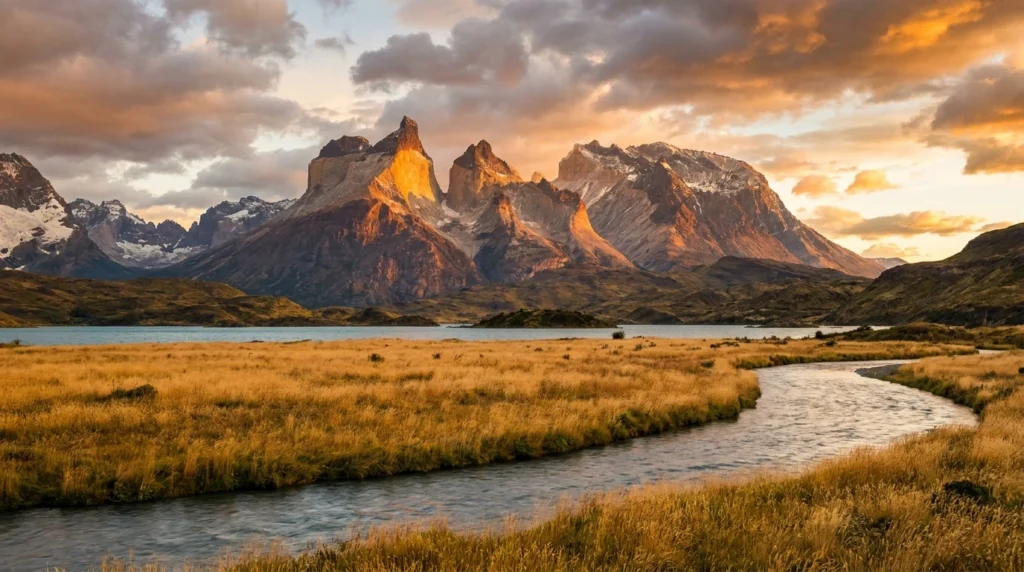
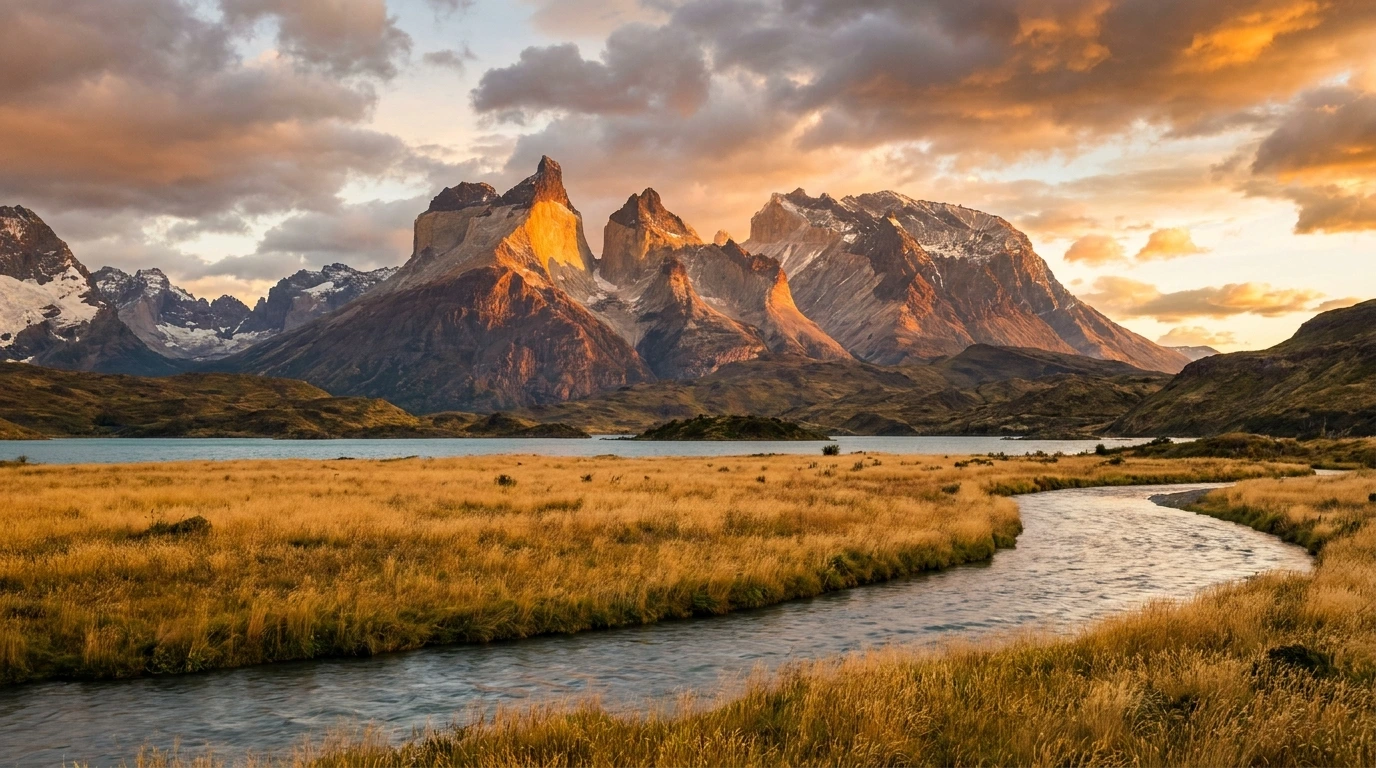
Chilean Patagonia has a sharp, short season. Torres del Paine National Park is technically open year-round, but the reliable trekking window runs from November 2025 through late March 2026, with peak daylight and the most workable weather between mid-December and late February . After March, refugios close, ferries cut back, and the catabatic winds off the Southern Patagonian Ice Field pick up to the point that the W and O circuits become serious mountaineering. If your 2026 dream is the Mirador Las Torres at sunrise or the Grey Glacier catamaran, booking by mid-year is the difference between a circuit and a regret.
- Peak window: mid-December 2025 through late February 2026 — longest daylight (over 16 hours at 51°S) and the driest stretch on the steppe.
- Shoulder windows: early November and March — cooler, fewer crowds, but some refugios still opening or already closing and more weather days.
- Torres del Paine core: W Circuit (4-5 days), O Circuit (8-10 days), and the Mirador Las Torres day hike from Camp Chileno.
- Puerto Natales: gateway town on Seno Última Esperanza for bus transfers, equipment rental, and the Milodón Cave detour.
- Punta Arenas: air gateway from Santiago (3h 30m) plus the Magdalena Island Magellanic penguin colony.
- Carretera Austral: the 1,240-km Route 7 through Aysén — ferries, fjords, and the Marble Caves on Lago General Carrera.
Best Time to Visit Chile (Season by Season)
Summer (Dec–Feb)
Southern-Hemisphere high season — and the only reliable window for Patagonia. Santiago runs hot and dry at 14–30°C , with late-afternoon smog hazing the Andes; santiaguinos decamp to the coast for Reñaca, Zapallar, and Cachagua. Torres del Paine, Puerto Natales, and the Carretera Austral hit their trekking peak with up to 16 hours of daylight. The downsides: Patagonia wind regularly gusts over 100 km/h on the steppe, January prices spike across the board, and Atacama nights are mild but daytime UV at 2,400 m is ferocious . Valparaíso’s New Year fireworks over the bay are Chile’s biggest summer spectacle.
Autumn (Mar–May)
Arguably the best all-purpose shoulder. The Colchagua and Casablanca wine harvest (vendimia) runs late February through April and crowns with the Fiesta de la Vendimia in Santa Cruz. Santiago cools into crisp 10–22°C days and the Andes foothills turn amber with lenga and ñirre. Patagonia trekking is still viable through mid-March, then refugios start to close. The Atacama stabilises into some of the clearest skies of the year. For a first-time visitor, late March is the sweet-spot month — post-holiday prices, reliable central-valley weather, and one last Patagonia window.
Winter (Jun–Aug)
Southern-Hemisphere winter flips the map. Santiago is chilly and frequently smoggy at 3–14°C — umbrella-and-mask weather — but the Andes resorts Valle Nevado, Portillo, and Farellones open one of the longest ski seasons in the world (mid-June through early October). Atacama is dry, cold at night, and astronomically spectacular. Easter Island is at its coolest but quietest. The Patagonian south largely closes except for curanto-and-hearth tourism in Chiloé and Puerto Varas; Torres del Paine’s O Circuit is effectively shut and the W Circuit is a mountaineering proposition only.
Spring (Sep–Nov)
Chile’s most underrated shoulder. Fiestas Patrias on 18-19 September — the national independence holiday — fills every plaza with cueca dancing, empanadas de pino, and chicha-fuelled asados. Santiago warms into bright 8–22°C days , the Atacama’s flowering desert (desierto florido) blooms in pink mallow after a wet winter, and the Colchagua vineyards bud green. Patagonia begins its trekking season in November as the refugios reopen. Spring is the best window to thread Santiago, the central valley, the Atacama, and the opening of Patagonia in a single three-week trip without the January crush.
Shoulder-season tip: mid-March and mid-November are Chile’s twin sweet spots — manageable crowds, stable central-valley weather, and either the end or the start of the Patagonia trekking window depending on your direction of travel.
Getting There — Flights & Arrival
Chile’s long-haul gateway is Santiago’s Arturo Merino Benítez International (SCL), 20 km northwest of the capital . Overnight flights from North America and Europe land early morning, with onward LATAM, Sky, and JetSmart connections to Calama, Puerto Montt, and Punta Arenas.
- Arturo Merino Benítez (SCL) — Santiago’s international hub; Centropuerto bus, Turbus Aeropuerto, and taxis reach the centre in 30-45 min.
- El Loa (CJC) — Calama airport, with a 1h 30m shuttle to San Pedro de Atacama.
- El Tepual (PMC) — Puerto Montt, gateway to the Lake District, Chiloé, and the Carretera Austral.
- Presidente Ibáñez (PUQ) — Punta Arenas, the Patagonia air gateway; 3h road to Puerto Natales.
- Mataveri (IPC) — Easter Island, served exclusively by LATAM from Santiago.
Flight times: New York → SCL ~10h 30m non-stop, Miami → SCL ~8h 30m, Los Angeles → SCL ~12h 30m, Madrid → SCL ~13h 30m.
Flag carrier: LATAM Chile, with Sky Airline and JetSmart on domestic routes.
Visa / entry: 90+ countries (US, Canada, UK, EU, Australia, NZ, Japan) enter visa-free for up to 90 days. US, Canadian, and Australian reciprocity fees were eliminated in 2014 and have not been reinstated.
Getting Around — Flights, Buses & the Bip! Card
Chile has no nationwide high-speed rail. EFE runs regional and suburban trains — the Alameda-Chillán TerraSur south of Santiago and the Biotrén in Concepción are the best-known — but the country’s 4,300-kilometre spine is crossed mostly by domestic flight and by Chile’s excellent long-distance coach network . LATAM operates the widest air network; Sky Airline and JetSmart compete hard on price on the main trunk routes.
- Santiago → Valparaíso (coach): 1h 30m on Turbus or Pullman from Terminal Pajaritos.
- Santiago → Calama (air): 2h non-stop + 1h 30m shuttle to San Pedro de Atacama.
- Santiago → Puerto Montt (air): around 1h 50m non-stop on LATAM or Sky.
- Santiago → Punta Arenas (air): 3h 30m non-stop — the Patagonia workhorse.
- Santiago → Easter Island (air): 5h 20m non-stop on LATAM, 5-7 weekly frequencies.
City transit: the Metro de Santiago runs 7 lines across 143 stations and uses the contactless Bip! card, which also works on Red (Transantiago) buses and on Merval between Valparaíso and Viña del Mar.
Rideshare: Uber, Cabify, and DiDi operate across Santiago, Valparaíso, Viña del Mar, Concepción, and Puerto Montt. Fares run 25-40% below a metered taxi in peak hours.
Apps: Red Micro and Metro Santiago for routing, Moovit for bus and train nationwide, Google Maps for walking, and Uber / Cabify for door-to-door.
Top Cities & Regions
📍 Map of Chile: Every Place in This Guide
🏔️ Santiago
Chile’s capital at 520 m in the central valley , framed by the snow-capped Andes — the financial, cultural, and wine-country hub with roughly 6.9 million people in Greater Santiago. An Andean capital with craft coffee, a seven-line metro, Nobel-laureate literature, and a skyline pinned between smog and the Cordillera.
- Cerro San Cristóbal and the Parque Metropolitano funicular above Bellavista
- Barrio Lastarria and Bellavista for café, mural, and Neruda-house culture
- Plaza de Armas, Catedral Metropolitana, and the Museum of Memory and Human Rights
Signature dishes: pastel de choclo at a classic picada, empanadas de pino from Emporio Zunino, the completo italiano hot dog, and a pisco sour at a Lastarria terrace.
🎨 Valparaíso & Viña del Mar
UNESCO-listed Pacific port city of painted hillside houses and 19th-century ascensores , paired with neighbouring Viña del Mar’s beach-resort promenade — the twin capitals of Chile’s central coast and the best day-or-overnight escape from Santiago.
- Ascensores El Peral, Reina Victoria, and Concepción linking the harbour to the hills
- La Sebastiana — Pablo Neruda’s home-museum above Cerro Bellavista
- Viña del Mar’s Reloj de Flores, Sunday fish market, and the Casino Municipal
Signature dishes: chorrillana, caldillo de congrio (Neruda’s ode-worthy conger chowder), pastel de jaiba crab casserole, and ceviche de reineta.
🌋 Atacama Desert (San Pedro)
The world’s driest non-polar desert at 2,400 m elevation — flamingo salt flats, geyser fields, Martian valleys, and the clearest astronomical skies on Earth. San Pedro de Atacama is the 5,000-person pueblo at the centre of it all, a base for day-trip loops across the altiplano.
- Valle de la Luna at sunset and the red-rock Valle de Marte sandboarding dunes
- El Tatio geysers at dawn (4,320 m altitude) and Salar de Atacama flamingo reserves
- Observatory stargazing at SPACE Obs, plus Saturday public visits to the ALMA facility
Signature dishes: llama steak, quinoa risotto, empanadas de queso de cabra, and the altiplano calapurka stone-soup.
🏔️ Patagonia (Torres del Paine / Puerto Natales)
The three granite spires of Torres del Paine National Park and its 227,000 hectares of glaciers, fjords, and wind-carved steppe . Puerto Natales is the 20,000-person gateway town on Seno Última Esperanza — CONAF park entry, refugio logistics, and the Milodón Cave detour all run from here.
- Mirador Las Torres day hike from Camp Chileno (about 19 km round trip)
- W Circuit (4-5 days) and O Circuit (8-10 days) with CONAF and Vertice refugios
- Grey Glacier catamaran, Milodón Cave, and Seno Última Esperanza fjord sailing
Signature dishes: cordero al palo (spit-roast Patagonian lamb), centolla king crab, curanto magellánico, and a Patagonia IPA from Cervecería Austral.
🗿 Easter Island (Rapa Nui)
A 164 km² Polynesian-Chilean island 3,500 km west of the mainland — home to over 900 moai statues and a UNESCO World Heritage cultural landscape . Reached by a 5h 20m LATAM flight from Santiago and unlike anywhere else in the country.
- Ahu Tongariki — 15 restored moai facing the sunrise on the island’s east coast
- Rano Raraku quarry where nearly all 900 moai were carved from the volcanic tuff
- Orongo ceremonial village on the Rano Kau crater rim and the Anakena beach palms
Signature dishes: tunu ahi earth-oven tuna, curanto rapanui, po’e banana-and-pumpkin cake, and the umu pae feast.
🌋 Chilean Lake District (Puerto Varas)
German-immigrant Andean town on the shore of Lago Llanquihue with the perfect cone of Volcán Osorno rising behind — the gateway to the Lake District, Chiloé, and the northern Carretera Austral. Chile’s oldest national park, Vicente Pérez Rosales (1926), sits on its doorstep.
- Volcán Osorno ski centre and summit chairlift views to Lago Todos los Santos
- Petrohué Waterfalls and Vicente Pérez Rosales National Park kayaking
- Chiloé Island day trip for the 16 UNESCO wooden churches and curanto al hoyo
Signature dishes: curanto en hoyo, German kuchen, salmón a la parrilla, and milcao potato cakes.
Chilean Culture & Etiquette — What to Know Before You Go
Chile’s cultural fabric is stitched from Mapuche, Aymara, and Rapa Nui indigenous roots, a colonial Spanish overlay, and waves of German, Italian, Croatian, and Palestinian immigration. The Mapuche — concentrated in Araucanía — have kept their language Mapudungun and a vigorous cultural revival alive. The Pinochet military dictatorship (1973-1990) and the 2019-2022 social unrest are still living history; travellers should listen first, ask second, and not project foreign politics onto local wounds.
The Essentials
- Greetings are warm. Women cheek-kiss once (right to right) with women and mixed company; men default to a handshake and move to a one-cheek-kiss with close friends.
- Meal times run late. Lunch 13:30-15:00, once tea 18:30-20:00, late dinner 21:00-22:30. Restaurants rarely fill before 21:00 outside tourist zones.
- Tipping is 10% (propina). Usually added as a ‘sugerencia’ line — confirm before adding cash. Round up taxi fares; CLP$1,000-2,000 per bag for porters.
- Addressing people. Usted is the default for strangers, service staff, and anyone over 40; tú only after invitation.
- Chilean Spanish is fast. Chilenismos like cachai (you get it?), bacán (cool), po (sentence-ender), and fome (boring) appear in every other sentence. Outsiders struggle; don’t panic.
Asado & Once Etiquette
- The asador commands the parrilla. Wait for cuts to be served in sequence — chorizo and prieta (blood sausage) first, then prime cuts. Don’t reach in for the grill.
- Never arrive empty-handed. Bring wine or dessert if invited — a bottle of Colchagua carménère is always correct. Showing up with nothing is a minor social miss.
- Once is not dinner. Chile’s 17:00-20:00 tea-and-bread ritual means avocado-and-tomato sandwiches, hallullas, kuchen, and tea. Don’t expect an evening main course on an ‘once’ invitation.
- Don’t conflate Chile with its neighbours. Never assume Chilean cuisine, currency, or slang is interchangeable with Argentine, Peruvian, or Bolivian. The pisco dispute with Peru is unresolved; tread lightly.
A Food Lover’s Guide to Chile
Chilean food is a grafting. Indigenous Mapuche, Aymara, Rapa Nui, and Huilliche staples — potato, corn, quinoa, merkén smoked chili — lie under a colonial Spanish layer of wheat, beef, and onion, with waves of German baking, Italian pasta, Croatian seafood, and Palestinian spice shaping the plate. The through-line is the Pacific and the fire: Humboldt-cold ceviches of Valparaíso, wood-fired asados of Colchagua, curantos of Chiloé, quinoa risottos of San Pedro.
Must-Try Dishes
| Dish | Description |
|---|---|
| Empanadas de Pino | Chile’s national turnover — baked pastry stuffed with beef, onion, a hard-boiled egg, a black olive, and a single raisin. Served at every Fiestas Patrias table, highway rest stop, and kiosk, and defended fiercely against the Argentine and Bolivian versions. |
| Pastel de Choclo | A summer corn-and-beef casserole — sweet ground corn baked into a golden crust over pino (ground beef with onion), olive, hard-boiled egg, and chicken. Served in a clay bowl; Chile’s answer to shepherd’s pie. |
| Curanto | A Chilote earth-oven feast of shellfish, smoked pork, sausage, chicken, potatoes, and milcao potato cakes steamed over nalca leaves and hot stones — Chiloé’s signature communal meal since pre-Columbian Huilliche times. |
| Asado | The Chilean long weekend — lamb, chicken, chorizo, and prime beef cuts slow-grilled over Patagonia lenga wood or lump charcoal; served with pebre salsa, pan amasado, and a carménère-heavy red blend. |
| Ceviche Chileno | Humboldt Current seafood cured in lime with red onion and cilantro — reineta, corvina, or shellfish — milder and sweeter than its Peruvian counterpart, often served with a pisco sour alongside. |
| Completo Italiano | Chile’s beloved hot dog loaded with diced tomato, mashed avocado, and mayonnaise layered to mimic the Italian flag — invented in 1920s Santiago and sold at every schopería, fuente de soda, and football stadium in the country. |
| Chorrillana | A Valparaíso classic — a mountain of French fries crowned with sautéed onion, thin strips of beef, and one or two fried eggs, shared in the middle of the table with pisco sour or a cold schop. |
Café, Schopería & Wine-Country Culture
If the parrilla is how Chileans celebrate, the café and the schopería are how they live. Santiago’s Café Haití and Café Caribe are mid-century fuentes de soda where a cortado and a marraqueta pass for breakfast; Valparaíso’s waterfront schoperías pour craft pilsner.
- Chains & icons: Café Haití and Café Caribe (Santiago’s standing-room espresso counters), and bakery chains Castaño and Emporio La Rosa.
- Signature items: cortado, marraqueta and hallulla (daily breads), completo italiano, the schop (Chilean draft lager), and mote con huesillos (dried peach and husked wheat in sweet syrup).
- Pisco sour & wine: the pisco sour is the national cocktail; Chile’s wine regions — Maipo (cabernet), Colchagua (carménère), Casablanca (sauvignon blanc), Limarí, and Itata — are world-class.
Between an empanada breakfast, a late parrilla dinner, and a pisco sour nightcap, most travellers find Chile quietly undoes their schedule — and that is the point.
Off the Beaten Path — Chile Beyond the Guidebook
Chiloé Archipelago
A 42-island archipelago off the Lake District’s western coast, draped in Pacific fog and famous for its 16 UNESCO-listed wooden churches built by Jesuit missionaries between the 17th and 19th centuries . The island capital Castro is recognisable from kilometres away by its candy-coloured palafitos — stilt houses leaning over the Fiordo de Castro. Local dishes include curanto al hoyo (earth-oven seafood feast) and milcao potato cakes; local music fuses Spanish, Mapuche-Huilliche, and German influences. Ferries from Pargua run every 30 minutes in summer.
Carretera Austral
The 1,240-kilometre Route 7 punched through the fjords and rainforests of Aysén by the Chilean military between 1976 and 2000. It links Puerto Montt to Villa O’Higgins across ferries, gravel stretches, and cathedral-like temperate forests. Side trips reach the Marble Caves on Lago General Carrera (Chile’s largest lake and South America’s second-deepest), the hanging glacier at Queulat National Park, and the cypress forests of Pumalín Douglas Tompkins National Park — a 403,000-hectare park donated to Chile by the Tompkins Foundation in 2018.
Elqui Valley
A green agricultural rift in the Coquimbo Region, 500 km north of Santiago , where Chilean pisco is distilled and Nobel laureate Gabriela Mistral grew up. Vicuña hosts the Museo Gabriela Mistral, the Capel and Mistral distilleries offer tastings, and the valley’s dry, dark skies host tourist-friendly observatories at Mamalluca and Cruz del Sur — an accessible alternative to Atacama stargazing for travellers on a compact Santiago swing, and arguably the single best place to pair a pisco tasting with a telescope evening.
Chilean Fjords & Laguna San Rafael
A roadless glacier coast stretching from Puerto Montt to Cape Horn — navigable only by expedition cruise, Navimag ferry, or chartered motor yacht. The centrepiece is the Laguna San Rafael National Park, a UNESCO Biosphere Reserve where the San Rafael Glacier calves tabular icebergs into a brackish lagoon. Skorpios and Australis run multi-day cruises; the 4-day Navimag Puerto Montt-Puerto Natales voyage is the backpacker classic, and one of the best-value ways to see the fjords.
Colchagua Wine Country
The Chilean Napa Valley — a two-hour drive south of Santiago and centred on Santa Cruz. More than 40 wineries (Viu Manent, Montes, Lapostolle Clos Apalta, Casa Silva) release carménère, Chile’s signature red grape, rescued in 1994 when it was identified hiding among the Merlot vines. The Colchagua Wine Train and the Museo de Colchagua round out a two-day trip; pair tastings with pastel de choclo at Fuegos de Apalta and a glass of late-harvest moscatel at sunset.
Practical Information
| Currency | Chilean Peso (CLP$, CLP); 1 USD ≈ CLP$950 (April 2026). The peso has traded in a 900-1,000 per USD band through early 2026. |
| Cash needs | Cards dominate Santiago, Valparaíso, Viña del Mar, San Pedro, Puerto Varas, and Punta Arenas. Keep CLP$30,000-50,000 in small bills for rural bus fares, artisan markets, and Patagonia refugios. |
| ATMs | Banco de Chile, BancoEstado, Santander, and Itaú accept foreign cards; per-transaction limits around CLP$200,000 and flat fees of CLP$5,000-8,000 per withdrawal. Wise / Revolut accounts save money. |
| Tipping | 10% at restaurants (propina), usually added as a ‘sugerencia’ line — confirm before adding cash. Round up taxis; CLP$1,000-2,000 per bag for porters. |
| Language | Spanish (Chilean dialect is the fastest and most slang-heavy in Latin America). English in hotel chains and Santiago business districts only. Google Translate offline. |
| Safety | Ranked 63 of 163 on the 2024 Global Peace Index — safer than most South American peers. Phone-snatching is the main urban risk in central Santiago (Plaza Italia / Baquedano) after dark. |
| Connectivity | Entel, Movistar, Claro, and WOM sell tourist SIMs at SCL arrivals. 4G is strong everywhere; 5G is live in Santiago and Valparaíso as of 2024. |
| Power | Type C and Type L (Italian-style 3-pin) plugs, 220V 50 Hz — bring a multi-adapter. |
| Tap water | Potable in Santiago, Valparaíso, Viña, Puerto Varas, and most Lake District towns. Bottled recommended in San Pedro and parts of the far north due to mineral content. |
| Healthcare | Excellent private care in Santiago (Clínica Alemana, Las Condes, Santa María). SAPU walk-in clinics for public care. Insurance essential for Patagonia and Atacama altitude evacuation. |
Budget Breakdown — What Chile Actually Costs
💚 Budget Traveller
A careful backpacker can travel Chile on USD $50-90 per day outside Patagonia peak season. Hostel dorms in Santiago and Valparaíso run CLP$14,000-22,000 (~USD $15-23); a menú del día lunch (soup, main, dessert, drink) at a neighbourhood picada sits under USD $12; Metro de Santiago fares with a Bip! card are CLP$770 and long-distance coche cama overnight buses save a hotel night. The real budget-killers are Easter Island flights, Patagonia refugio beds, and Atacama day-trip fleets.
💙 Mid-Range
Most independent travellers land at USD $120-220 per day. A boutique hotel in Lastarria or Bellavista or a 4-star in Providencia runs CLP$110,000-180,000 a night (~USD $115-190); a parrilla dinner with carménère at Liguria, Bocanariz, or Peumayen runs USD $35-70; domestic flights booked ahead on LATAM or Sky average USD $90-220 return. Mid-range covers Uber instead of colectivos, a Colchagua wine-country day, and a Torres del Paine W Circuit in refugios.
💜 Luxury
Luxury Chile starts around USD $350 per day and scales sharply in Patagonia and Atacama. The Singular Santiago, Mandarin Oriental, and W Santiago run USD $450+ a night; tasting menus at Boragó, 99, and Ambrosía run USD $120-180. Tierra Atacama, Awasi, and Explora’s all-inclusive lodges in the Atacama and Torres del Paine top USD $1,200 per person per night, and Explora Rapa Nui and The Singular Patagonia are in the same tier. A two-week top-tier trip runs USD $14,000-28,000 per person.
| Tier | Daily (USD) | Accommodation | Food | Transport |
|---|---|---|---|---|
| Budget | $50-90 | Hostel dorm CLP$14,000-22,000 | Menú del día $8-15 | Bip! metro + coche cama $1-3/ride |
| Mid-Range | $120-220 | 3-4★ hotel / Lastarria boutique CLP$110,000-180,000 | Parrilla mid-range $25-55 | Uber/Cabify + domestic flights $30-80/day |
| Luxury | $350+ | Singular / Mandarin / Tierra / Explora USD $450-1,200+ | Tasting $100-180 (Boragó) | Private driver + business class $300+/day |
Planning Your First Trip to Chile
- Book Patagonia and Easter Island flights 8-12 weeks ahead. Santiago → Punta Arenas, Balmaceda, and IPC spike for December-February; Easter Island has only one airline.
- Reserve Torres del Paine refugios and CONAF permits early. Vertice and Las Torres beds on the W and O circuits sell out six months ahead; CONAF entry is bought online before the trailhead.
- Acclimatise in Atacama. San Pedro sits at 2,400 m and day trips climb to 4,000-5,000 m. Spend 48 hours slow, hydrate, and ask your doctor about acetazolamide.
- Set up Wise or Revolut before you fly. ATM fees are meaningful; a multi-currency account with a no-FX-fee card saves hundreds. Keep USD $100-200 in crisp small bills as fallback.
- Download offline Spanish (Google Translate), install Red Micro and Uber, and screenshot accommodation addresses — rural WiFi is thin.
Classic 14-Day Itinerary: Santiago (3 days) → Valparaíso & Viña (2) → Atacama / San Pedro (4) → Torres del Paine & Puerto Natales (4) → Puerto Varas (1). Swap Puerto Varas for Easter Island if your total length is 18+ days.
Frequently Asked Questions
Is Chile expensive to visit?
Chile is the most expensive country in Latin America for international travellers — closer to Portugal or Spain than to its Andean neighbours. A mid-range budget of USD $120-220 per day covers a comfortable hotel, two restaurant meals, and intercity transport. Patagonia is the budget-buster: Torres del Paine refugio beds run USD $60-120 per night and meals top USD $35 on the W Circuit, and a week in the park can add USD $500-800 to a base Santiago budget.
Do I need to speak Spanish?
It helps more than English-first travellers expect. Chilean Spanish is notoriously fast and slang-heavy — chilenismos like cachai, bacán, and po appear everywhere. English is reliable only in international hotel chains, Santiago business districts, and premium tour operators in San Pedro and Puerto Natales. Learn gracias, por favor, ¿cuánto sale?, and download Google Translate offline Spanish before you fly.
Do I need a visa for Chile?
Probably not. Over 90 countries — including the US, Canada, UK, EU, Australia, New Zealand, and Japan — enter visa-free for up to 90 days. The old US ($160), Canadian ($132), and Australian ($117) reciprocity fees were eliminated in 2014 and have not been reinstated through early 2026. Always check the current status on chileatiende.gob.cl before you fly.
Is Chile safe for solo travellers?
Relatively, yes. Chile ranked 63 of 163 on the 2024 Global Peace Index — safer than most of South America. Central Santiago around Plaza Italia / Baquedano saw 2019-2022 social unrest and occasional flare-ups; phone-snatching is the main urban risk. Patagonia, the Lake District, Atacama, and Easter Island feel very safe and see high rates of solo and female-solo travel.
When is the best time to visit Patagonia and Atacama?
Patagonia is a Southern-Hemisphere summer game: mid-December to late February with 16+ hour daylight . Atacama is year-round but clearest and coolest April through November; summer brings surprise altiplano thunderstorms. Easter Island is warmest December-March. Santiago is great any month except smoggy July-August.
Can I get by as a vegetarian or vegan?
Easier in Santiago than the empanada-and-asado stereotype suggests. El Huerto, La Rosa, and Quinoa are veteran vegetarian institutions, and supermarkets stock plant-based alternatives. Outside the capital, porotos granados (bean stew), humitas (fresh-corn tamales), pastel de choclo (ask sin carne), and ensalada chilena are the reliables.
Is the tap water safe to drink?
Tap water is potable in Santiago, Valparaíso, Viña del Mar, Puerto Varas, and most Lake District towns — Chile’s urban water infrastructure is OECD-grade. Bottled water is recommended in San Pedro de Atacama and parts of the far north because of high mineral content (not contamination), and in some Patagonia small towns where supply is seasonal.
Ready to Explore Chile?
From the moai of Rapa Nui to the geysers of El Tatio, the Torres del Paine skyline, and the painted funiculars of Valparaíso, Chile is built for travellers willing to cover distance — two weeks is a minimum and three is the real thing. Book Patagonia flights early, acclimatise slowly in Atacama, and let the country’s 4,300-kilometre spine unfold one pisco sour, one empanada, and one carménère at a time.
Explore More
Cities we cover in Chile
More country guides you might like
Plan your trip to Chile
The booking tools we use ourselves. FFU may earn a commission at no extra cost to you.
Plan & book your trip to Chile
Booking through these searches supports our guides at no extra cost to you.