
FFU Editorial Note: Site information cross-checked against UNESCO World Heritage Centre, Visit Portugal, and regional tourism boards (Lisbon, Porto, Algarve, Madeira). Operator pricing and opening hours verified May 2026. Last verified: 8 May 2026.
Portugal punches well above its weight. The country is small enough to drive from Porto to Faro in one day, but it contains four distinct travel countries: Lisbon-and-Sintra cosmopolitan Portugal, Porto-and-Douro wine Portugal, Algarve-and-Alentejo coastal Portugal, and the Atlantic-island Portugal of Madeira and the Azores. Below: 30 things worth structuring a trip around, organized by region with the practical detail you’d want before booking.
Part of the FFU Portugal cluster: Portugal overview · Best time to visit · 10-day itinerary · Where to stay
Lisbon & Sintra (7)
1. Tram 28 through Alfama, Graça, and Bairro Alto
The yellow tram that climbs Lisbon’s seven hills, threading the medieval Alfama, the working-class Graça, and the bohemian Bairro Alto. Board at Martim Moniz at 7:30 a.m. for an empty ride and the best window seats; by 10 a.m. you queue 30 min and stand. Single ride €3, but a 24-hour Carris pass (€6.80) covers it plus the funiculars. Pickpockets are real on this route — front pocket, hand on your phone.
2. Pastéis de nata at Pastéis de Belém
The original 1837 bakery that supplies the recipe every other shop is approximating. Three pastéis warm from the oven, dusted with cinnamon and powdered sugar, with a small espresso. The sit-down room avoids the takeaway queue (which can hit 30 min). €1.40 per nata. Combine with the Mosteiro dos Jerónimos two minutes’ walk away — the 16th-century monastery where the recipe was reportedly invented.
3. Mosteiro dos Jerónimos + Belém Tower
Two UNESCO sites within 500 metres of each other, the architectural masterpieces of Portugal’s Age of Discoveries. Jerónimos is a Manueline-style cloister and church (the king commissioned it after Vasco da Gama returned from India). Belém Tower (1519) was the fortified gateway to Lisbon’s harbour. €12 combo ticket; book online to skip the queue. Vasco da Gama’s tomb is in Jerónimos. Plan 2.5 hours total.
4. Sunset at Miradouro da Senhora do Monte
The highest of Lisbon’s seven hills, in the Graça neighbourhood. Best sunset view in the city — out over the Castelo de São Jorge, the Tagus river, and the 25 de Abril bridge. Free, no ticket. Arrive 30 min before sunset for a wall spot. Skip the more famous Santa Luzia (which fills up early); this one stays uncrowded outside high summer.
5. Fado night in Mouraria or Alfama
Lisbon’s mournful, soulful folk music — a UNESCO Intangible Heritage. The touristy spots in Bairro Alto are watered-down. Go instead to: Tasca do Chico (small, intimate, no reservations — queue 30 min before opening), A Tasca do Jaime (Mouraria, locals’ favourite), or Mesa de Frades (Alfama, refined, reservation required). €25–€60 with dinner. Two sets per evening; the second set tends to be more emotional.
6. The Pena Palace + Quinta da Regaleira in Sintra
The 19th-century Pena Palace is candy-coloured, hilltop, fairy-tale absurd, and one of the most-photographed buildings in Portugal. €14 to the palace + €7 to the gardens; book online. Quinta da Regaleira is the secret-society neogothic estate down the hill — initiation wells, hidden passages, gardens designed for symbolic processions. €15. Both in one day requires an early start (Pena 9:30 a.m. opening) and good shoes.
7. The Cabo da Roca cliff at Europe’s western edge
The westernmost point of mainland Europe — a 140-metre cliff over the Atlantic, with a lighthouse and a stone cross marking it. 30 minutes from Sintra by car, an hour from Lisbon. Wind-blown, dramatic, often empty in shoulder seasons. Bring a layer — the temperature drops 5–10°C from inland. Combine with Praia da Adraga (a hidden beach 10 min north — locals’ Sintra coast pick).
Porto & the Douro Valley (6)
8. Port wine cellar tour in Vila Nova de Gaia
Cross the Dom Luís I bridge (an Eiffel-pupil 1886 design) from Porto’s Ribeira to Vila Nova de Gaia, where the major port wine houses age their barrels. Book one of: Taylor’s (oldest, classic), Graham’s (highest-quality tour, panoramic terrace), Sandeman (the gowned-host theatrics), or Cálem (most touristy but cheapest). €15–€25 with three-tasting flight. Allow 2 hours.
9. Livraria Lello — the bookshop that inspired Hogwarts
The 1906 art-nouveau bookshop with its red staircase that J.K. Rowling reportedly used as Harry Potter inspiration when she lived in Porto. €5 entry redeemable against any book purchase. Queue 20–40 min in shoulder season; book a timed entry online. The interior is beautiful but small — 15 minutes is plenty unless you’re book-shopping.
10. Sé do Porto cathedral + the riverside Ribeira
The 12th-century Romanesque cathedral on Porto’s highest point. Free entry; €3 for the cloister. The view from the cathedral’s terrace over the city’s red-tiled roofs is the postcard. From there, walk down the medieval steps to the Ribeira — UNESCO-listed riverside neighbourhood — for a fish lunch at one of the dozen waterfront tascas.
11. Douro Valley wine cruise
The Douro is the world’s oldest demarcated wine region. The terraced hillsides above the river produce both port and dry table wines. From Porto, you have three options: a one-day cruise upriver and back (touristy but easy, €60), an overnight on a 2-night cruise to Régua and back (€350+), or — the writer’s pick — a self-drive day to Pinhão with a quinta visit + lunch + train back to Porto (€80, more authentic). Spring and harvest (September) are the magical seasons.
12. The Capela das Almas blue-tile facade
Porto’s azulejos (blue-tile murals) are everywhere — the São Bento train station’s hall has 20,000 of them — but the Capela das Almas chapel exterior on Rua de Santa Catarina is the photographable street-level masterpiece. Free, you don’t even need to enter. Best photos late afternoon when the western sun lights the facade. Combine with the Mercado do Bolhão (recently restored) two minutes away.
13. Francesinha — the only sandwich Porto invented
A Porto-only sandwich: ham, sausage, steak, melted cheese, smothered in a beer-and-tomato sauce, often topped with a fried egg. Best at: Café Santiago (downtown, large portions, €12), Lado B (creative variations, €13), Bufete Fase (locals’ choice, €11). One per person is plenty for two. Pair with a Super Bock beer; resist the wine pairing — this is a beer dish.
Algarve & the south (6)
14. Praia da Marinha — Portugal’s most-photographed beach
The cliff-and-arch beach in Lagoa parish that’s on every “Best Beaches in Europe” list. Limestone formations, golden cliffs, turquoise water. Park free in the upper lot; descend the wooden staircase. The Seven Hanging Valleys hike (Sete Vales Suspensos) starts here and runs 6 km along the clifftops — one of the great walks in Europe. Two hours one-way; doable as out-and-back or with a taxi pickup at the other end.
15. Benagil Sea Cave
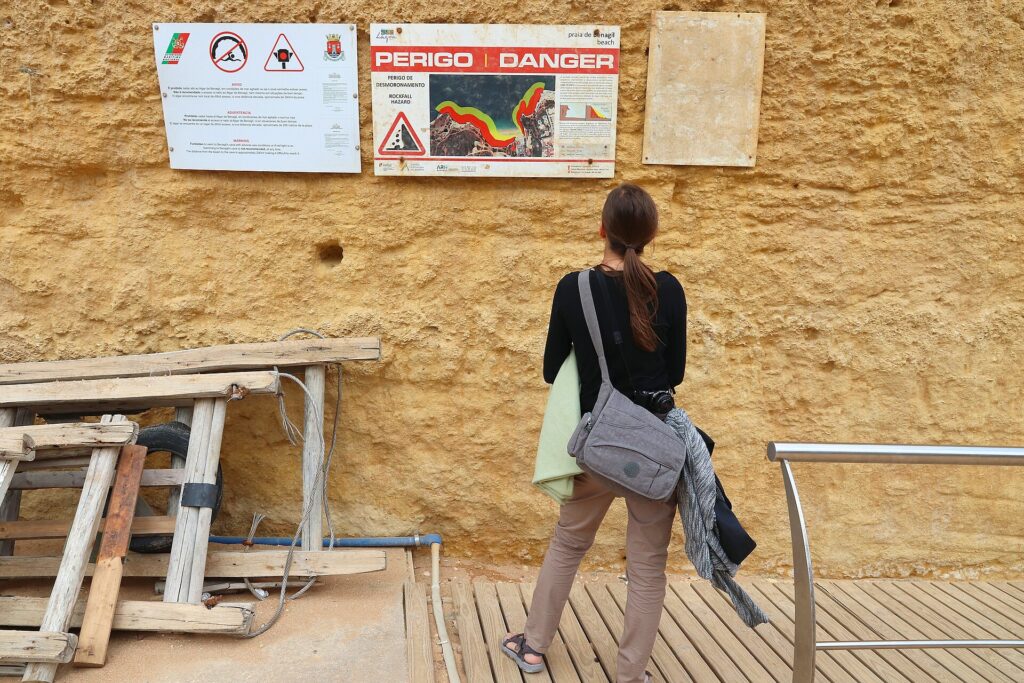
The sea cave with the famous “eye” hole in the ceiling. You can’t access it by land. Three options: kayak (€25, 2 hours, you control timing — go at 9 a.m. for empty cave), SUP, or boat tour (€20, 90 minutes, faster but you don’t get out of the boat). Boat tours from Marinha or Carvoeiro. Avoid midday in summer; the cave fills with 50+ tour boats and the magic dies.
16. Tavira’s eastern Algarve charm
Skip the main Algarve resort strip and head east to Tavira — the prettier, quieter, locals-still-live-here Algarve town. Whitewashed houses, Roman bridge, salt pans for the famous Tavira sea salt, and offshore island beaches reachable by 5-minute ferry. Stay 2 nights, day-trip to Cacela Velha (clifftop village, lagoon beach) and the Spanish-border town of Castro Marim.
17. Sagres + Cabo de São Vicente
The southwestern tip of Portugal — and Europe. Wild Atlantic cliffs, Henry the Navigator’s 15th-century maritime school (the fortress is open €3), and the Cabo de São Vicente lighthouse standing at the literal “end of the world” as Romans called it. Surfing in winter, sunset photographs in summer. The beach restaurants in Sagres town are honest seafood — Restaurante A Eira and Vila Velha are the picks.
18. The Évora bone chapel + Megalithic sites
The Capela dos Ossos in Évora — the bone chapel decorated with 5,000 monk skeletons by 16th-century Franciscans, with the famous inscription “Nós ossos que aqui estamos pelos vossos esperamos” (“We bones that are here, for yours we wait”). €5. Combine with the prehistoric Almendres Cromlech 12 km west — Iberia’s largest megalithic stone circle, older than Stonehenge. Free, signposted. The best Alentejo wine country surrounds you.
19. Costa Vicentina — Portugal’s wild west coast
The Atlantic coast between Sines and Sagres — a protected national park, wild beaches, almost no resort development. Aljezur, Carrapateira, Arrifana, Praia do Amado for surfing. Stay in Vila Nova de Milfontes for a charming base. The Rota Vicentina hiking route runs 230 km along this coast — sections of the Fishermen’s Trail (Trilho dos Pescadores) are some of Europe’s best coastal walks.
Madeira & the Azores (5)
20. Levada hiking in Madeira
Madeira’s centuries-old irrigation channels (levadas) cross the entire island; alongside them run flat, photogenic walking trails. Easy: Levada do Caldeirão Verde (6 km return, waterfall destination). Moderate: 25 Fontes (10 km, 25 hidden springs in laurel forest). Iconic: Pico do Arieiro to Pico Ruivo (peaks-to-peaks ridge, 11 km, the photogenic above-the-clouds walk). Free — guided tours from Funchal €30–€60.
21. Funchal Old Town + the Monte cable car + wicker toboggan
Take the cable car (€18 round trip) up from Funchal to Monte (550m elevation, panoramic). Visit the Monte Palace Tropical Garden. Then descend the way Madeirans have for 200 years: by wicker toboggan, two straw-hatted carreiros pushing you down a 2-km road in a sled (€30 for two passengers, 10 minutes of mild thrill). Touristy, yes, but a Madeira institution. Funchal old town (Zona Velha) below has the famous painted-doors street and the city’s best fish restaurants.
22. Whale-watching in São Miguel, Azores
The Azores are one of the world’s best whale-watching grounds — sperm whales year-round, blue whales and fin whales in spring (April–June). Boat trips from Ponta Delgada €60–€80, 3 hours, multiple species typical. Combine with the Sete Cidades twin lakes (the photogenic green-and-blue volcanic crater) and Furnas thermal valley.
23. Pico volcano summit (Azores)
Portugal’s highest peak — 2,351m on Pico Island. Climbable in a single (long) day if you’re fit. Start before dawn from Casa da Montanha; 4–5 hours up, 3–4 down. Mandatory guide registration; €10 + guide costs €40–€60. The summit view of neighbouring islands above the clouds is one of the great Atlantic experiences.
24. Diving with mantas + dolphins (Madeira / Azores)
Both archipelagos offer world-class diving in clear Atlantic water. Madeira’s Garajau Marine Reserve hosts 2-metre groupers that approach divers. The Azores (Santa Maria, Pico) have manta rays in summer. Snorkel-with-dolphins programs run in São Miguel from May–October. PADI-certified operators in Funchal and Ponta Delgada; €60 for a single dive, €80 for snorkel-with-dolphins.
Detours, road trips, and one-offs (6)
25. Big-wave watching at Nazaré
The Praia do Norte break that produces the largest ride-able waves on earth — Garrett McNamara’s 78-foot record was set here. Big-wave season runs October–February. The lighthouse cliff (free) is the viewpoint. On a big day, you’ll see jet-ski tow-in surfers riding 30–60-foot faces. Spectacular even if you don’t surf. Combine with Nazaré town’s seafood and the elderly black-clothed fisherwomen drying salted fish on the beach.
26. The medieval village of Óbidos
The walled medieval village 80 km north of Lisbon. White-washed houses, bougainvillea, a 13th-century castle (now a parador-style hotel). Famous for ginjinha — sour cherry liqueur served in chocolate cups. The annual Chocolate Festival (mid-March) and Christmas Village (December) are the two must-time-it visits. Day-trip from Lisbon by bus or stay one night for the empty-village evening.
27. The Schist Villages of central Portugal
27 stone villages built entirely of schist (the local slate-like stone), nestled in the central Portuguese forests. Piódão is the most photographable — its houses cascade down a hillside in tight terraces. Many have been restored as boutique guesthouses. Renting a car is essential — they’re 2.5 hours northeast of Lisbon, in countryside Portuguese travelers know but tourists rarely reach.
28. Coimbra’s medieval university
Portugal’s oldest university (1290), and the third-oldest continuously-operating in Europe. The Joanina Library is breathtaking — 18th-century baroque, with bats living in the rafters that emerge nightly to eat insects that would otherwise damage the books. €10 for the timed library entry; book ahead. Coimbra also has its own fado tradition (different from Lisbon’s — sung exclusively by men, traditionally students).
29. Surf-school week in Ericeira
UNESCO-listed World Surfing Reserve, 40 minutes from Lisbon. Seven world-class breaks within 4 km. The reform-friendly Ribeira d’Ilhas hosts WSL competitions. Surf schools cluster around São Lourenço beach — a beginner’s week (5 mornings of lessons, board + wetsuit rental, mid-range surf hostel) runs €350 in shoulder season. Best surfing weather: April–June, September–November.
30. Take a Lisbon-to-Algarve coastal slow drive
Skip the A2 toll motorway. Drive the N120 down the Costa Vicentina (the Atlantic-facing west coast). The route hits Sines, Vila Nova de Milfontes, Zambujeira do Mar, and Aljezur before reaching the Algarve. 4 hours of driving spread across 2 days, with Atlantic-coast stops, fishermen’s trail walks, and uncrowded beaches. The slow alternative to the typical Lisbon → Faro corridor.
Continue planning: Portugal overview · Best time to visit · 10-day itinerary · Where to stay
FFU contains affiliate links. We earn a commission when you book through them — at no extra cost to you.
Plan your trip
- Tours & experiences: browse Portugal tours and experiences on Klook.
- Airport pickup: pre-book an airport transfer with GetTransfer.
- Car hire: compare rental cars on GetRentacar.
- Bag storage: store your bags with RadicalStorage.
Disclosure: some links above are affiliate links — booking through them supports Facts From Upstairs at no extra cost to you.