
Languages of Zimbabwe
All languages of Eastern Africa →fluent beta classical · classes by phone with Maya at ranas.ai/maya
Zimbabwe Travel Guide — Victoria Falls, Elephant-Filled Hwange & an Ancient Stone City
Zimbabwe holds the grandest panorama of Victoria Falls, one of Africa’s greatest elephant parks at Hwange, walking-safari wilderness on the Zambezi at Mana Pools, and the haunting medieval stone city that gave the nation its name. Add warm, English-speaking hospitality and a US-dollar economy that makes budgeting simple, and you have one of southern Africa’s most rewarding — and underrated — safari destinations.
📋 In This Guide
- Overview — Falls, wildlife & ancient stone
- Victoria Falls — the grand panorama
- Best time to visit (season by season)
- Getting there & visas
- Getting around
- Where to go — Vic Falls, Hwange, Mana Pools & Great Zimbabwe
- Culture & people
- A food lover’s guide to Zimbabwe
- Off the beaten path
- Practical information
- Budget breakdown — what Zimbabwe costs in 2026
- Planning your first trip
- Frequently asked questions
Overview — Falls, Wildlife & Ancient Stone
Landlocked in southern Africa between Zambia, Mozambique, South Africa and Botswana, Zimbabwe pairs world-famous highlights with genuine wilderness. The Zimbabwean side of Victoria Falls delivers the broad, head-on panorama of the world’s greatest waterfall, with a buzzing adventure town beside it. Inland, Hwange shelters one of Africa’s largest elephant populations, while Mana Pools offers the continent’s most thrilling walking and canoe safaris along the Zambezi.
Beyond the wildlife lies deep history: Great Zimbabwe, the medieval dry-stone city that the country is named after, and the balancing-rock kopjes and rock art of the Matobo Hills. Tourism here is well established and welcoming, English is universal, and the widespread use of US dollars makes it one of the easier African countries to navigate — with a measured eye on the practicalities.
Victoria Falls — The Grand Panorama
If Zambia gives you the closest, most adventurous angle on Victoria Falls, Zimbabwe gives you the full picture: the majority of the 1.7-km curtain of water faces the Zimbabwean rainforest path, so you walk a series of viewpoints staring straight into the spray. The Falls peak from February to June after the rains, when the “smoke that thunders” can be seen for miles, and run lower and clearer from August into the year’s end. Victoria Falls town is the adventure capital — rafting, bungee, helicopter flips and sunset Zambezi cruises — and the perfect launchpad for a safari.
Best Time to Visit Zimbabwe (Season by Season)
June–October — Dry (best for wildlife)
The prime safari window: as waterholes shrink, wildlife concentrates and viewing in Hwange and Mana Pools is superb, peaking with the great elephant gatherings of September and October. Warm days, cool nights and minimal rain.
February–June — The Falls at full power
Victoria Falls is at its most dramatic after the rains, thundering with spray (March–May is peak). The bush is green and birdlife excellent, though some safari areas are wetter and harder to access.
November–January — Green season
Hot, with afternoon storms, newborn animals and the lowest prices — rewarding for birders and budget travellers who don’t mind the rain.
Getting There & Visas
Victoria Falls Airport (VFA) is the easiest entry for the Falls and western safaris, while Robert Gabriel Mugabe International (HRE) in Harare serves the capital and east. Connections come via Johannesburg, Addis Ababa, Nairobi and Dubai.
- Visa: US citizens can buy a visa on arrival (USD cash) or apply online for the e-Visa at evisa.gov.zw — a single-entry visa is $30 (30 days), double-entry $55. The KAZA UniVisa ($50) covers Zimbabwe and Zambia, handy for crossing at the Falls.
- Passport: valid at least six months with blank pages.
- Health: a yellow fever certificate is required if arriving from a risk country; malaria precautions apply in low-lying parks.
Getting Around
- Fly-in safaris: light aircraft connect Victoria Falls with Hwange and Mana Pools airstrips — the quickest way between the big parks.
- Guided transfers & tours: most visitors travel on arranged itineraries; day trips from Victoria Falls reach Hwange easily.
- Self-drive: feasible on main routes with a 4×4 for the parks, but fuel and road conditions need planning.
- In Vic Falls town: compact and walkable, with taxis and tour shuttles to activities and the Zambian border.
Where to Go — Vic Falls, Hwange, Mana Pools & Great Zimbabwe
Victoria Falls
The panoramic rainforest viewpoints, the adventure menu (rafting, bungee, gorge swings, scenic flights), sunset Zambezi cruises, and an easy base with hotels for every budget.
Hwange National Park
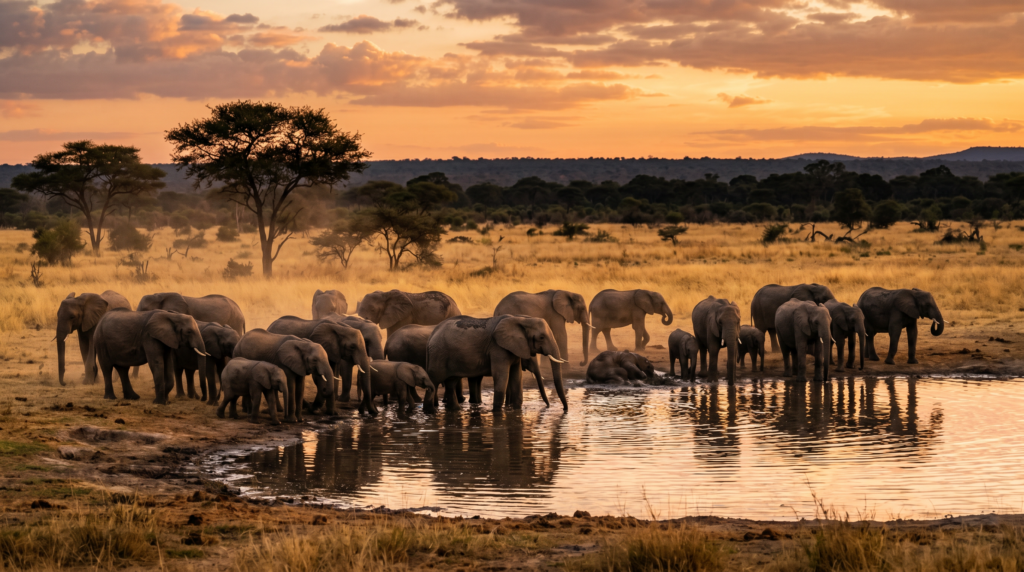
Zimbabwe’s flagship park and one of Africa’s great elephant strongholds, with lions, painted dogs and huge dry-season herds at the waterholes — superb value and easily reached from the Falls.
Mana Pools National Park
A UNESCO wilderness on the Zambezi, famous for walking and canoe safaris that bring you close to elephants, lions and wild dogs — the choice of safari connoisseurs.
Great Zimbabwe & the Matobo Hills
The medieval stone city of Great Zimbabwe near Masvingo, and the balancing granite kopjes, San rock art and rhino tracking of the Matobo (Matopos) Hills near Bulawayo — the country’s cultural and historic heart.
Culture & People
Zimbabwe is a warm, resourceful, English-speaking nation built mainly on the Shona and Ndebele peoples, with a rich heritage of stone-carving, mbira (thumb-piano) music and Sungura rhythms. Despite years of economic hardship, the welcome to visitors is genuinely friendly, and tourism communities around Victoria Falls and the parks are well versed in hosting travellers.
Great Zimbabwe stands as a powerful symbol of pre-colonial African achievement, and the soapstone Zimbabwe Bird from its ruins appears on the national flag. Family, community and faith are central; the pace outside the cities is relaxed, and a respectful, curious traveller is met with real hospitality.
A Food Lover’s Guide to Zimbabwe
- Sadza — the national staple: a thick maize-meal porridge eaten by hand with relishes of meat, greens or beans.
- Nyama & relishes — grilled or stewed beef and goat, with covo and muriwo (greens) and groundnut-rich sauces.
- Kapenta & bream — tiny dried fish and fresh bream from Lake Kariba and the rivers.
- Maheu & seasonal treats — a fermented maize drink, plus mopane worms for the adventurous and superb seasonal fruit.
Off the Beaten Path
- Matobo Hills — otherworldly balancing rocks, ancient San paintings and some of Africa’s best on-foot rhino tracking.
- Lake Kariba — houseboat safaris, tiger-fishing and flaming sunsets on the world’s largest man-made lake.
- Eastern Highlands — cool, green mountains around Nyanga and Chimanimani, with waterfalls and hiking — a different Zimbabwe entirely.
- Gonarezhou National Park — remote, red-cliffed wilderness in the southeast, part of a vast transfrontier park.
- Painted dog tracking, Hwange — seek out Africa’s endangered wild dogs with specialist guides.
Practical Information
- Money: US dollars are used for most tourism transactions and are the simplest option — carry plenty of clean USD cash in small bills; the local ZiG also circulates. Cards work at established hotels but can be unreliable.
- Safety: the U.S. advisory is Level 2 (exercise increased caution), mainly for opportunistic crime — keep valuables low-profile, avoid displaying cash, and use arranged transport at night. Tourist areas and parks are well managed.
- Health: malaria precautions in the parks; drink bottled or filtered water; carry comprehensive travel insurance with evacuation cover.
- Power: 220–240V, mostly UK-style three-pin plugs — US travellers need an adapter; pack a torch as outages occur.
- Connectivity: reasonable in towns; patchy in remote camps.
- Walking/canoe safaris: always follow your guide’s instructions precisely.
Budget Breakdown — What Zimbabwe Costs in 2026
Victoria Falls can be done affordably; classic fly-in safaris are premium. Rough per-person estimates in USD:
| Style | Lodging / night | Notes |
|---|---|---|
| Vic Falls budget | $25–80 | guesthouses/hostels; Falls entry ~$50, activities extra |
| Mid-range safari | $150–400 | often all-inclusive (meals, drives, park fees) |
| Luxury safari | $500–1,500+ | fly-in camps, all-inclusive |
Park fees are modest (Hwange around $20/day for day visitors), and a Vic-Falls-only trip is very doable on a budget. Combining the Falls with a few nights in Hwange offers the best value-to-wow ratio.
Planning Your First Trip
A classic week starts at Victoria Falls (two or three nights for the Falls and activities), then adds Hwange (three or four nights of safari), an easy pairing by road or short flight. With more time, add Mana Pools for walking safaris or Great Zimbabwe and the Matobo Hills for culture. Travel in the dry season (June–October) for the best wildlife, sort your e-Visa or KAZA UniVisa, carry clean USD cash, and book reputable operators ahead.
Frequently Asked Questions
Do US citizens need a visa for Zimbabwe?
Yes — buy a visa on arrival in USD cash or apply online for the e-Visa (single-entry $30 for 30 days, double-entry $55). The KAZA UniVisa ($50) covers Zimbabwe and Zambia, ideal if you’ll cross at the Falls.
Is Zimbabwe safe to visit?
The tourist areas and parks are well managed and welcoming. The U.S. advisory is Level 2 (exercise increased caution), mostly for opportunistic crime — keep valuables discreet, avoid flashing cash, and use arranged transport at night.
Zimbabwe or Zambia for Victoria Falls?
Zimbabwe gives the broad, head-on panorama (most of the falls face this side); Zambia offers the closest, most adventurous angle and the Devil’s Pool. With the KAZA UniVisa you can do both.
What currency should I bring?
US dollars — they’re used for most tourism and are the simplest option. Bring clean notes in a range of small bills; cards can be unreliable, and the local ZiG is secondary for visitors.
When is the best time to visit?
June–October for the best wildlife; February–June for Victoria Falls at full flow. Many travellers combine the two interests across the shoulder months.
Ready to Explore Zimbabwe?
The grandest face of Victoria Falls, elephant-filled Hwange and an ancient stone city — Zimbabwe is southern Africa’s underrated all-rounder. Tell us your dates and travel style and we’ll help you plan it. Plan your trip →
Explore More
How This Guide Was Built
Researched and written by the Facts From Upstairs team, last updated . Prices, visa rules and advisories change — always confirm current details with official sources before you travel.
More country guides you might like
Plan your trip to Zimbabwe
The booking tools we use ourselves. FFU may earn a commission at no extra cost to you.
Plan & book your trip to Zimbabwe
Booking through these searches supports our guides at no extra cost to you.