
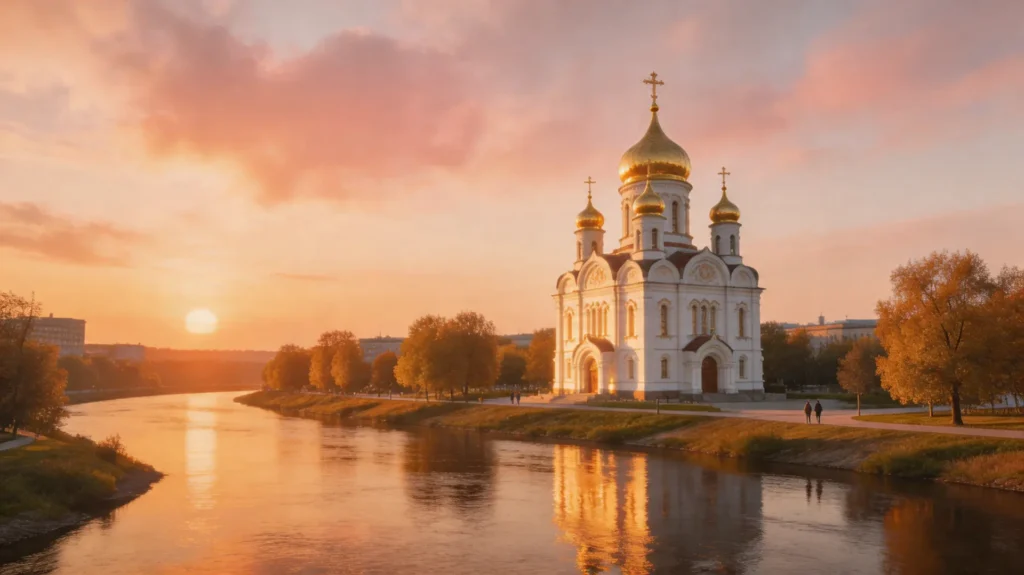
Yekaterinburg: Gateway to Russia’s Heritage
If you’re planning a trip to the Urals, this Yekaterinburg travel guide will help you discover one of Russia’s most captivating cities. Perched on the border between Europe and Asia in the heart of the Ural Mountains, Yekaterinburg is Russia’s fourth-largest city and the administrative center of Sverdlovsk Oblast—a vibrant cultural hub where Soviet history meets modern innovation and travelers experience authentic Russian hospitality away from the Moscow crowds. Founded in 1723 by Peter the Great as an iron-smelting works, Yekaterinburg has evolved into a thriving metropolis that played crucial roles in Russian history, including the execution of the imperial family during the revolutionary era. Today, it’s a dynamic destination that reveals the soul of Russia’s vast Ural region.
In This Guide
- Best Time to Visit
- Getting There & Getting Around
- Top Things to Do
- Where to Stay
- Local Food & Culture
- Travel Tips & Practical Info
- Budget Breakdown
- Frequently Asked Questions
Best Time to Visit Yekaterinburg
The Urals experience dramatic seasonal changes, and choosing when to visit significantly impacts your experience. Winter in Yekaterinburg is long, cold, and beautiful—temperatures plunge to −15°C to −25°C from December through February. If you embrace the cold, you’ll find a magical snow-covered landscape and authentic Russian winter traditions including ice fishing and cross-country skiing.
I recommend visiting during late spring (May to early June) or early autumn (September to early October). During these shoulder seasons, temperatures hover comfortably between 15–20°C, the long daylight hours let you maximize sightseeing, and the parks burst with activity. Summer (June to August) brings temperatures of 20–25°C and extended daylight—the sun rises around 4:30 AM and sets after 9 PM.
Getting There & Getting Around
Yekaterinburg is well-connected via Koltsovo International Airport, about 18 kilometers southeast of the city center. Aeroflot, Ural Airlines, and S7 Airlines operate regular flights from Moscow (approximately 2 hours) and St. Petersburg (3 hours). Taxis from the airport cost 400–600 rubles (about $4–6 USD).
The Trans-Siberian Railway connects Yekaterinburg with Moscow in 27–32 hours—an iconic journey through changing landscapes. Train tickets range from budget compartment berths to comfortable sleeper cars.
Within the city, the metro and tram system provides affordable transportation at around 40 rubles per ride (approximately $0.40 USD). Apps like Yandex.Go are more reliable than street hails for taxis. Walking is viable in central districts around 1905 Square, though the city sprawls considerably.
Top Things to Do
The Europe-Asia Border Monument on the city’s outskirts marks where the two continents meet—one of the world’s most accessible continental divides. Visitors straddle the obelisk for photos, symbolically standing on two continents simultaneously. The surrounding park offers pleasant walking paths and small cafés.
The Church on the Blood (Khram na Krovi) stands as Yekaterinburg’s most emotionally significant landmark. Built on the site where Tsar Nicholas II, his wife Alexandra, their five children, and four servants were executed in 1918, this ornate Orthodox church serves as both memorial and place of worship with detailed mosaics depicting the imperial family.
Ganina Yama, about 20 kilometers north, marks the initial burial location of the imperial family’s remains. Today it’s home to a wooden monastery complex—a contemplative destination for understanding Russia’s religious and political transformations.
The Yeltsin Center, dedicated to Russia’s first post-Soviet president, offers an interactive museum exploring modern Russian history through multimedia displays, documents, and personal artifacts. It’s essential viewing for understanding contemporary Russia’s political evolution.
1905 Square (Ploshchad 1905 Goda) is the heart of Yekaterinburg’s cultural life. This expansive plaza hosts concerts, festivals, and markets, with outdoor cafés lining the square during spring and summer.
Plotinka, the dam area along the Iset River, provides the city’s most scenic waterfront. Originally built in 1723 to power the ironworks, the dam and surrounding gardens create a peaceful retreat that transforms during summer with outdoor concerts.
The Vysotsky Observation Deck crowns the city’s tallest building, offering 360-degree panoramic views across Yekaterinburg and the surrounding Urals. On clear days, the vistas stretch far beyond city limits.
Where to Stay
City Center
Dense district with easy access to museums, restaurants, and nightlife. Hotels range from budget hostels ($6–8/night) to mid-range properties ($25–45/night). Best for walkability.
Plotinka Area
Quieter, more residential neighborhoods near the riverside. More affordable than downtown with a local atmosphere. Great for travelers seeking tranquility.
Budget travelers find excellent hostels with dorm beds from 600–800 rubles ($6–8) per night. Mid-range hotels around 1905 Square offer comfortable rooms for 2,500–4,500 rubles ($25–45). Luxury options charge 6,000–10,000+ rubles ($60–100+) per night.
Local Food & Culture
The most iconic Ural dish is pelmeni—small meat dumplings filled with pork, beef, or a mixture—served in hot broth or with sour cream and vinegar. I recommend ordering these at traditional Russian cafés where generations of recipes still guide preparation. They’re inexpensive, filling, and authentically Ural in origin.
Other regional specialties include Ural pies filled with cabbage, potatoes, or mushrooms, and pastillas—preserved fruit confections dating back centuries. Fresh berries from surrounding forests (lingonberries, cloudberries, wild blueberries) feature prominently in seasonal desserts.
Visit traditional stolovayas (Russian canteens) for authentic meals at minimal cost—main courses average 300–500 rubles ($3–5). For cultural experiences, the Yekaterinburg State Academic Theatre of Opera and Ballet stages classical productions, while the State Circus performs traditional Russian circus arts.
The Sverdlovsk Regional Museum of Local Lore chronicles the region’s development from indigenous peoples through Soviet industrialization. The Museum of Photography offers compelling visual narratives of Yekaterinburg’s transformation across centuries.
Travel Tips & Practical Information
Visas: Most Western travelers require visas for Russia, obtainable through Russian embassies. Standard tourist visas are valid for 30 days with 7–10 business day processing. Check current requirements before traveling.
Language: English is less widely spoken than in Moscow or St. Petersburg. Download translation apps and learn basic Cyrillic—it takes only a few hours and dramatically improves navigation.
Currency: The Russian Ruble (RUB) is the official currency. ATMs are abundant; withdraw from Visa/Mastercard-affiliated machines. Credit cards work at major establishments but cash remains essential for small shops and markets. Expect approximately 100 rubles per 1 USD.
Safety: Generally good by Russian standards. Exercise standard urban precautions. Most travelers experience safe, problem-free visits.
Budget Breakdown for Yekaterinburg
Budget Traveler: $25–35/day
Hostel dorm: $6–8 • Street food/canteen meals: $3–5 • Metro/tram: $2–3 • Attractions: $3–5 • Coffee/snacks: $2–3
Mid-Range: $50–80/day
Hotel room: $25–45 • Restaurant meals: $15–20 • Taxis: $5–10 • Activities/tours: $10–15 • Miscellaneous: $5–10
Frequently Asked Questions
How many days should I spend in Yekaterinburg?
Three to four days provides adequate time for major attractions and cultural experiences. A week allows deeper exploration of surrounding nature and day trips.
Is Yekaterinburg safe for solo travelers?
Yes. Exercise typical urban precautions—avoid isolated areas late at night and trust your instincts. Join organized tours or meet travelers in hostels.
Can I visit the Europe-Asia border easily?
Absolutely. The monument is accessible by metro/bus (30–40 minutes from downtown) or taxi. Many tours include it.
What’s the best way to experience authentic Russian culture?
Eat in local stolovayas, attend performances at the opera house or circus, and explore residential neighborhoods where daily life unfolds authentically.
Should I hire a guide?
A guide adds historical context at Church on the Blood and Ganina Yama. English-speaking guides start at approximately $50–80 USD for half-day tours, bookable through hotels.
Ready to Experience Yekaterinburg?
This Yekaterinburg travel guide merely scratches the surface. From the emotional weight of Church on the Blood to pelmeni shared with locals to festivals filling 1905 Square, Yekaterinburg invites you to experience Russia beyond its capital cities. Start planning your journey today.
You Might Also Like
- Moscow, Russia – Facts From Upstairs Travel Guide
- St. Petersburg, Russia: Venice of the North
- Kazan, Russia: Tatar Capital, Kremlin Mosques & Volga Crossroads
FFU contains affiliate links. We earn a commission when you book through them — at no extra cost to you.
Plan your trip
- Tours & experiences: browse tours and experiences on Klook.
- Airport pickup: pre-book an airport transfer with GetTransfer.
- Car hire: compare rental cars on GetRentacar.
- Bag storage: store your bags with RadicalStorage.
Disclosure: some links above are affiliate links — booking through them supports Facts From Upstairs at no extra cost to you.