
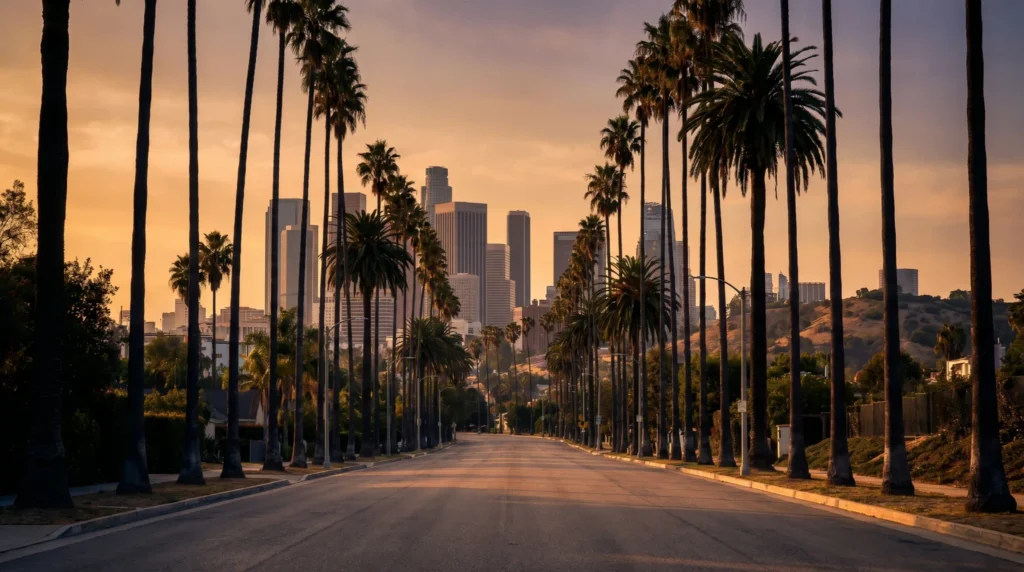
City Guide · Southern California
Los Angeles, United States: Eighty-Eight Cities, Two Mountain Ranges, and a Beach at the End of Every Freeway
I have driven Los Angeles end to end more times than I can count, and the first thing I tell anyone landing at LAX is that this is not one city — it is a 1,300-square-kilometre county of roughly 3.8 million people inside the city limits and almost 9.7 million across the surrounding county, draped over a coastal basin between the Pacific and the San Gabriel Mountains . My favourite LA ritual is the 7 a.m. coffee-and-canyon drive — a flat white from a Highland Park roaster, then up Mount Hollywood with the marine layer still burning off the Griffith Observatory dome before the freeways clog. We tell first-timers to stop trying to “do” all of it: pick two or three districts, accept that you will spend time in a car or on a slowly improving Metro, and let the city reveal itself one neighbourhood at a time. Treat this guide as the brief I would hand my own family before they picked up the rental car — the beaches, the taco trucks, the Olympics build-out before 2028, the freeway logic, and everything else .

Table of Contents
Why Los Angeles?
Los Angeles is the rare megacity that refuses to be summarised by a single skyline, a single downtown, or a single way of living — and that refusal is the whole point. The city proper holds roughly 3.8 million people across 1,300 square kilometres, while Los Angeles County packs almost 9.7 million residents into 88 separate incorporated cities, from beach towns like Santa Monica to mountain suburbs in the San Gabriel foothills . It is a horizontal city in a country of vertical ones, and learning to read it horizontally — by neighbourhood, by canyon, by beach — is the single skill that turns a frustrating LA trip into a great one.
The city reads as a series of productive contradictions. It is the global capital of the film and television industry, home to the major studios and the Academy of Motion Picture Arts and Sciences, yet daily life happens in strip-mall taquerias, Persian bakeries, Koreatown barbecue houses, and Thai-town noodle counters — the most linguistically diverse county in the United States, where more than 200 languages are spoken and roughly half of residents speak a language other than English at home . It is famous for car culture and gridlock, yet it is also building out one of the fastest-growing urban rail systems in North America ahead of the 2028 Summer Olympics .
The geography is the secret engine. You can surf at Malibu in the morning, hike to the Hollywood Sign at midday, and watch a basketball game Downtown at night — all within a single county that runs from sea level to the 3,000-metre San Gabriel peaks. The Pacific edge gives the city 120 km of coastline; Griffith Park, at over 17 square kilometres, is one of the largest urban parks in North America, and the Santa Monica Mountains thread a genuine wilderness right through the metropolitan core . What makes the sprawl feel navigable instead of overwhelming is accepting its logic: most of what you want sits within a handful of districts strung along a few key corridors.
This guide covers the neighbourhoods you will actually spend time in, the taco trucks and tasting menus worth the drive, the museum-and-landmark tier (Getty, LACMA, Griffith Observatory, the Walt Disney Concert Hall), the five day trips Angelenos themselves take on weekends, and the practical realities of ESTA, freeway timing, marine-layer mornings, and the pre-Olympics build-out. The 2028 Games are already reshaping transit and the airport; everything else flows from there.

Neighborhoods: Finding Your Los Angeles
📍 Los Angeles Map: Every Place in This Guide


Los Angeles is best understood as a string of distinct districts along a few corridors rather than a single centre. The basin runs roughly west to east — the beach cities (Santa Monica, Venice, Malibu) on the Pacific edge, the Westside (Westwood, Brentwood, Culver City) inland from there, the central spine of Hollywood, Mid-City, and Koreatown, then Downtown (DTLA) and the eastside neighbourhoods of Echo Park, Silver Lake, and Highland Park — with the San Fernando Valley over the hills to the north. Most first-time visitors over-schedule, hopping between districts that are 30–60 minutes apart by car; returning visitors pick two or three adjacent neighbourhoods and go deep. Staying near a Metro rail line — the E Line to Santa Monica, the B/D Lines through Hollywood and DTLA — sharply reduces the freeway penalty .
This section walks the eight neighbourhoods you will actually use, grouped by character: the beach edge (Santa Monica, Venice), the entertainment core (Hollywood, West Hollywood), the cultural and downtown centre (DTLA, Koreatown), and the creative eastside (Silver Lake / Echo Park, Highland Park), with notes on access and who each district suits best.
Santa Monica
The polished face of LA’s coast — a self-contained beach city with a pedestrian Third Street Promenade, the landmark pier, and a walkable, bike-friendly grid that feels nothing like the rest of the sprawl. It is the western terminus of the Metro E Line, which means you can reach Downtown without a car in roughly fifty minutes .
- Santa Monica Pier and Pacific Park’s solar-powered Ferris wheel
- Third Street Promenade — open-air pedestrian shopping street
- The Marvin Braude Bike Trail (the “Strand”) south to Venice
Best for: first-time visitors, beach mornings, car-free travellers. Access: Metro E Line to Downtown Santa Monica station.
Santa Monica is the one part of Los Angeles that genuinely works without a car, and that makes it the smart base for a first trip. You can wake up to the marine layer burning off over the Pacific, walk to breakfast, rent a bike on the Strand, and be on a train to Downtown’s museums by lunch without ever touching a freeway. The catch is price: hotels here run noticeably higher than equivalent rooms in Koreatown or Downtown, and the Promenade’s chain stores can feel sanitised compared with the grittier energy a few miles south. Spend your mornings on the sand north of the pier, where the crowds thin, and save the pier itself — Pacific Park’s solar-powered Ferris wheel and the original 1909 carousel — for the golden hour, when the light off the water is at its best and the day-trippers have started to drift home.
Venice
Bohemian, scruffy, and endlessly photogenic — the canals dug in 1905 by developer Abbot Kinney to mimic Venice, Italy, sit a few blocks from the muscle-beach boardwalk and the skate park. Abbot Kinney Boulevard is the neighbourhood’s design-and-dining spine, repeatedly named one of America’s “coolest” streets.
- Venice Canals Historic District — footbridges and 1905 waterways
- Venice Beach Boardwalk, Muscle Beach, and the skate park
- Abbot Kinney Boulevard — boutiques, coffee, and restaurants
Best for: people-watching, design-and-coffee strolls, beach culture. Access: Metro E Line to Downtown Santa Monica, then a short rideshare; or the Strand bike path from Santa Monica.
Venice rewards visitors who treat it as two neighbourhoods stitched together. The boardwalk is pure spectacle — bodybuilders at Muscle Beach, street performers, henna artists, and a skate park that has produced a generation of professional skaters — and it is best experienced early or late, because the midday crush can tip from lively into overwhelming. A few blocks inland, the canals are a different world entirely: silent, residential, and lined with footbridges and kayaks, a pocket of calm that most first-timers miss. Abbot Kinney Boulevard bridges the two moods with its independent boutiques, third-wave coffee, and some of the city’s better casual restaurants. Be candid with yourself about belongings here — this is one of the neighbourhoods where car break-ins are most common, so park clean and carry little.
Hollywood
More working district than glamour — the Walk of Fame’s brass stars, the TCL Chinese Theatre forecourt of handprints, and the Dolby Theatre (the Academy Awards venue) sit alongside everyday strip malls. It is the closest base for the Hollywood Sign and the Griffith Observatory, and the Metro B Line stops right at Hollywood/Highland.
- Hollywood Walk of Fame and the TCL Chinese Theatre forecourt
- Dolby Theatre — home of the Academy Awards
- Trailheads up to the Hollywood Sign and Griffith Observatory
Best for: first-timers ticking off icons, nightlife on the Sunset Strip nearby. Access: Metro B Line to Hollywood/Highland station.
It is worth managing expectations about Hollywood Boulevard itself: the Walk of Fame is a working commercial street with costumed characters and souvenir shops, not a glamorous film-industry enclave, and many visitors come away faintly underwhelmed if they expected the latter. Treat it as a checklist morning — the stars, the Chinese Theatre forecourt, a look at the Dolby — then climb. The neighbourhood’s real value is its position as a launchpad: the trailheads up to the Hollywood Sign and the Griffith Observatory begin minutes away, and the views back over the basin from those slopes are the ones you will actually remember. Stay here if your priority is ticking off the icons and being close to the Sunset Strip’s clubs, but expect grit at street level, especially after dark.
West Hollywood
A separately incorporated city wedged between Hollywood and Beverly Hills, and the heart of LGBTQ+ Los Angeles since the 1970s. The Sunset Strip’s billboards, music venues, and hotels run along its northern edge; the Pacific Design Center anchors its design district. Compact and genuinely walkable by LA standards.
- The Sunset Strip — the Whisky a Go Go, the Roxy, the Comedy Store
- Santa Monica Boulevard’s nightlife and Pride corridor
- Melrose Avenue shopping and the Pacific Design Center
Best for: nightlife, LGBTQ+ travellers, music and comedy. Access: Metro bus along Santa Monica Blvd; rideshare from Hollywood.
West Hollywood punches far above its 1.9-square-mile footprint. By day it is a design-and-shopping district — the Pacific Design Center, the showrooms of Melrose Avenue, and the boutiques of the Sunset Plaza; by night it splits into two scenes that rarely overlap, the rock-and-roll history of the Sunset Strip to the north and the bars and clubs of the Santa Monica Boulevard Pride corridor to the south. It is also one of the few LA neighbourhoods where you can leave the car parked and walk between dinner, a show, and a nightcap. For travellers who want a central, walkable base with a genuine after-dark pulse, WeHo is hard to beat — just budget for higher hotel rates and the reality that street parking is scarce and aggressively enforced.
Downtown LA (DTLA)
The closest thing LA has to a traditional dense core, and the most rail-connected part of the county — the meeting point of nearly every Metro line at the 7th Street/Metro Center and Union Station hubs. Bunker Hill holds the marquee architecture (Disney Concert Hall, The Broad, MOCA); the Historic Core, Arts District, and Grand Central Market sit a short walk south and east.
- Walt Disney Concert Hall and The Broad contemporary-art museum
- Grand Central Market — a 1917 food hall of 30+ stalls
- The Arts District’s breweries, galleries, and converted warehouses
Best for: car-free travellers, architecture and museums, food-hall grazing. Access: Metro A/B/D/E Lines converge at 7th St/Metro Center and Union Station.
Downtown has reinvented itself dramatically over the past two decades, from a 9-to-5 business district that emptied at dusk into a genuine neighbourhood with residents, rooftop bars, and a museum row that rivals any in the country. For a car-free trip it is the single best base in the city — nearly every Metro line meets here, the 1939 Union Station is a destination in its own right, and you can walk from a Yayoi Kusama Infinity Room at The Broad to a 1917 food hall at Grand Central Market in fifteen minutes. The contrasts are sharp and worth understanding before you arrive: the polished blocks of Bunker Hill sit close to Skid Row, one of the largest concentrations of unhoused people in the US, and the two can be a single street apart. Stay alert, keep to the well-trafficked corridors after dark, and DTLA rewards you with the most layered, walkable stretch of the whole basin.
Koreatown
The densest neighbourhood in Los Angeles and the centre of one of the largest Korean communities outside Korea — a 24-hour district of barbecue houses, karaoke (noraebang), Korean spas (jjimjilbang), and the Art Deco towers of old Wilshire Boulevard. The Metro B and D Lines both serve it.
- Korean barbecue and 24-hour tofu-house dining
- Wiltern Theatre — 1931 Art Deco landmark and music venue
- Jjimjilbang spas and rooftop bars along Wilshire
Best for: food obsessives, late-night travellers, value dining. Access: Metro B/D Lines to Wilshire/Vermont or Wilshire/Western.
Koreatown is the neighbourhood that converts visitors into return travellers. It is the densest district in the city, served by two subway lines, and almost nothing closes early — which makes it the rare LA base where you can land jet-lagged at midnight and still find a tofu house or a barbecue counter doing brisk business. The layers run deep: beneath the neon of the Korean signage sit the Art Deco bones of 1920s Wilshire Boulevard, when this was the city’s most fashionable address, preserved in landmarks like the Wiltern Theatre and the old Bullocks Wilshire building. Hotel value is excellent here relative to the Westside, and the transit access is among the best in the city. The trade-off is that Koreatown is residential and workmanlike rather than scenic — you come for the food, the late nights, and the spas, not for postcard views.
Silver Lake & Echo Park
The hilly, creative eastside — vintage-modernist houses on winding streets, a reservoir-turned-lake with paddleboats at Echo Park, and a dense run of independent coffee roasters, record shops, and natural-wine bars along Sunset Boulevard. This is where returning visitors who want the “neighbourhood” LA tend to base.
- Echo Park Lake — paddleboats, lotus blooms, downtown skyline view
- Sunset Boulevard’s indie coffee, vinyl, and wine bars
- The Silver Lake Reservoir loop and Music Box Steps
Best for: slow-travel, coffee-and-vinyl strolls, second-trip visitors. Access: Metro bus on Sunset Blvd; rideshare from DTLA in about fifteen minutes.
Silver Lake and the adjacent Echo Park are where you go to understand why people actually live in Los Angeles rather than just visit it. The streets climb into hills studded with mid-century-modernist houses — this is Richard Neutra and Rudolph Schindler country — and the flats along Sunset Boulevard hold the kind of independent coffee roasters, record stores, bookshops, and natural-wine bars that reward an aimless afternoon. Echo Park Lake, with its paddleboats, lotus blooms, and a clear view of the downtown skyline rising behind the fountain, is one of the most photogenic free attractions in the city. There is little in the way of marquee sights here, which is exactly the point: this is a neighbourhood for walking, eating, and watching the city be itself, and it is where second- and third-time visitors increasingly choose to base.
Highland Park
Northeast LA’s historic heart along York Boulevard and Figueroa Street — Craftsman bungalows, a Latino cultural backbone, and one of the city’s liveliest taco-and-cocktail corridors. The Metro L Line runs through it, making it the most transit-accessible of the eastside neighbourhoods.
- York Boulevard and Figueroa Street’s taquerias and bars
- The Highland Park Bowl — a restored 1927 bowling alley
- The Lummis Home and Heritage Square Museum nearby
Best for: food crawls, music and bars, design-conscious travellers. Access: Metro L Line to Highland Park station.
Highland Park is the eastside neighbourhood that arrived most recently on visitors’ radar, and it remains the most rewarding to walk. The twin spines of York Boulevard and Figueroa Street carry a tight run of taquerias, mezcal bars, vintage shops, and the restored 1927 Highland Park Bowl — a Prohibition-era bowling alley turned cocktail venue that is worth a stop even if you never pick up a ball. What sets the neighbourhood apart is its Latino cultural backbone, which has held through the changes and still defines its food and street life. Architecturally it is a trove of California Craftsman bungalows, and the nearby Lummis Home and Heritage Square Museum preserve the area’s turn-of-the-century roots. Crucially for a car-free trip, the Metro L Line runs straight through it, making Highland Park the most transit-accessible of all the eastside districts and an easy half-day from Downtown or Pasadena.
The Food

Los Angeles is, by a wide margin, the most exciting eating city in the United States — not because of its fine dining (though it has plenty) but because its immigrant communities run the best restaurants in their respective cuisines anywhere in the country. As the most diverse county in the US and a port of entry for waves of migration from Mexico, Central America, Korea, Thailand, Armenia, Iran, the Philippines, China, and beyond, the city has absorbed those cuisines whole rather than diluting them, and the result is a food culture with extraordinary range and almost no pretension. The food here is street-level, strip-mall, and cash-friendly as often as it is white-tablecloth, and some of the most revered meals in the city are served from trucks and counters. Approach it the way Angelenos do: chase the specific dish, not the neighbourhood, accept that the best version of almost anything will be in a place with fluorescent lighting and a line out the door, and never judge a restaurant by the strip mall it sits in. If you organise even one day of your trip around eating — a taco crawl, a Koreatown night, a market grazing session — it will likely be the day you remember most.
Tacos & Mexican
This is the city’s defining food, and the one you should organise at least one day around. Los Angeles sits a short drive from the Mexican border and has been shaped by waves of immigration from across Mexico, which is why its taco culture is not a single style but a dozen regional ones layered on top of each other. You will find Mexico City–style al pastor carved off a spinning vertical trompo; Sonoran-style flour-tortilla tacos and bacon-wrapped hot dogs from the north; Tijuana-influenced birria, the stewed-beef taco served with a cup of consommé for dipping that became a national craze; and the more complex moles and tlayudas of Oaxaca in the city’s Oaxacan enclaves. The best are very often trucks and stands rather than sit-down restaurants — frequently the same corner, the same family, the same recipe for a decade or more — and prices stay remarkably low for the quality. A genuinely transcendent meal of three or four tacos costs less than a chain sandwich.
- Leo’s Tacos Truck — al pastor carved off a spinning trompo with a slice of grilled pineapple ($2.25/taco)
- Guisados — braised-meat tacos (cochinita pibil, chiles toreados) on hand-pressed tortillas, with a sampler plate that lets you try six (~$3.75 each)
- Sonoratown — Sonoran flour-tortilla tacos and chivichangas off a mesquite grill ($4–$8)
Approach tacos the way locals do: chase the specific stand, not the neighbourhood. Many trucks post their nightly corners on Instagram, run cash-only, and only fire up the trompo properly after 8 p.m. once the crust has built. A breakfast burrito from a taco truck before a canyon hike, and a late-night al pastor run to close out an evening, are two of the most authentic things you can do in this city.
Korean BBQ & Koreatown
Koreatown is the densest restaurant district in the city and home to arguably the best Korean food outside Seoul. The format that draws first-timers is tabletop-grill barbecue, where you cook marinated short rib (galbi), pork belly, and prime beef over a grill set into your own table, working through an array of free banchan side dishes — but the neighbourhood’s depth goes far beyond the grill. There are 24-hour soft-tofu (sundubu) houses serving bubbling stone bowls of stew, late-night Korean fried-chicken-and-beer spots, naengmyeon noodle counters, and the noraebang (private karaoke rooms) and jjimjilbang (24-hour Korean spas) that turn a dinner into an all-night itinerary. The single best thing you can do here is stay out late: many kitchens run until 2 a.m. or later, and Koreatown after midnight is one of the liveliest stretches of the entire county. If you want the full arc, do it the local way — start with a barbecue dinner, move on to a noraebang for an hour of karaoke, recover with a bowl of soft-tofu stew, and finish with a soak at a 24-hour jjimjilbang spa as the sun comes up.
- Park’s BBQ — the K-Town benchmark, premium Wagyu and prime cuts with impeccable banchan ($40–$70/person)
- Quarters BBQ — a younger-crowd grill with generous combo sets and a buzzy room ($35–$55)
- BCD Tofu House — 24-hour soft-tofu soup (sundubu) with a fried croaker and endless banchan ($14–$18)
Beyond Tacos and Korean BBQ
To stop at Mexican and Korean would be to miss the point of eating in Los Angeles, which is that nearly every immigrant community in the city runs the best restaurants in its cuisine anywhere in the country. Thai Town along Hollywood Boulevard is the largest Thai community in the US and the birthplace of much of America’s serious northern-Thai cooking; Little Armenia and neighbouring Glendale serve some of the best Armenian food outside Yerevan; the large Persian community on the Westside earned the affectionate nickname “Tehrangeles” and the kebab houses to match; Sawtelle Boulevard (“Little Osaka”) is a dense block of Japanese ramen, izakaya, and dessert shops; Historic Filipinotown and the San Gabriel Valley’s Filipino enclaves are having a moment; and Chinatown and the wider San Gabriel Valley just east of the city hold a Chinese-food scene — Sichuan, Cantonese dim sum, Taiwanese, hand-pulled noodles — widely considered the best in North America. The genius of the city is that all of this sits within a short drive of everything else, so a single ambitious day can range from a Thai Town lunch to a Sawtelle ramen dinner. Anchoring it all downtown is Grand Central Market, the 1917 food hall where you can graze across a dozen cuisines in a single sitting.
- Night + Market — fiery northern-Thai drinking food in WeHo, built for sharing over beer ($12–$22/plate)
- Howlin’ Ray’s — Nashville hot chicken in Chinatown with a famously long but fast-moving line ($10–$16)
- Republique — French bakery-bistro in a 1928 building Charlie Chaplin commissioned, superb for breakfast pastries ($15–$45)
- Grand Central Market — 30+ stalls, from egg sandwiches at Eggslut to Oaxacan tostadas and craft coffee ($6–$18)
Fine Dining & the Restaurant Scene
For all its strip-mall greatness, Los Angeles also runs a serious high-end restaurant scene, and it has reshaped how America eats over the past two decades. This is the city that mainstreamed farm-to-table cooking, vegetable-forward menus, and the casual-but-ambitious tasting menu, drawing on the year-round bounty of California produce and the seafood of the Pacific. Reservation-only rooms cluster in the Arts District, on the Westside, and in Hollywood, and they range from multi-course tasting menus in the $150–$295 range to chef-driven bistros where $45 buys a memorable dinner. The local style is deliberately unstuffy — you can eat brilliantly in a T-shirt — and the best kitchens lean on the same immigrant traditions that power the street food, so a “fine dining” meal here might be modern Korean, elevated Mexican, or coastal Italian rather than the European canon. Book the marquee rooms weeks ahead; many release tables on a rolling basis online.
Coffee, Bakeries & the Café Scene
Los Angeles has quietly become one of the best coffee cities in America, and its café culture is woven into the eastside neighbourhoods in particular. Silver Lake, Echo Park, and Highland Park overflow with independent roasters pulling careful pour-overs and espresso; the city also drove the rise of fusion bakeries, from Cambodian-French croissants to the modernist pastry counters of Downtown and the conchas and pan dulce of its Mexican panaderías. Spend a slow morning the way locals do — a pour-over and a laminated pastry on a sunny patio, then an aimless walk through the neighbourhood — and you will see a side of the city the tour buses never reach. The café is also where LA’s much-discussed health-and-wellness streak shows up most charmingly, in smoothie bowls, oat-milk everything, and juice bars that are somehow never quite a parody of themselves.
Markets, Stands & Where to Drink
Beyond the sit-down meal, two LA institutions deserve a place on any itinerary. The first is the farmers’ market: the Original Farmers Market at Third and Fairfax has run since 1934, and weekly neighbourhood markets — the Hollywood Sunday market chief among them — are where chefs and locals shop, graze, and people-watch. The second is the city’s drinking culture, which has matured into one of the country’s best cocktail scenes, from speakeasy-style bars Downtown to the natural-wine spots of the eastside and the rooftop bars of Hollywood and K-Town, where a cocktail runs $16–$22 and the view is often the main event. California’s wine country is also close enough that local lists run deep in Central Coast and Santa Barbara bottles. Pair a market morning with a sundowner cocktail and you have bookended an LA day the way the city itself would. One last institution deserves mention: the all-American diner and the late-night burger stand, immortalised by In-N-Out Burger, the beloved California chain whose “Double-Double” and “Animal Style” off-menu order are a rite of passage for first-time visitors. It is cheap, fast, fresh, and open late, and a stop after a night out is as much a part of the LA experience as anything with a tasting menu. Between the trucks, the markets, the fine-dining rooms, and the burger stands, the through-line is the same: in Los Angeles, the quality of a meal has almost nothing to do with the price of it.
Food Experiences You Can’t Miss
- A late-night Koreatown crawl — barbecue, then noraebang karaoke, then a 24-hour tofu soup to recover
- The Smorgasburg LA open-air food market at ROW DTLA on Sundays, with dozens of rotating vendors
- An early-morning taco-truck breakfast burrito before a canyon hike above the city
- A grazing lunch through Grand Central Market, sampling three or four stalls in one go
Cultural Sights

For a city that built its identity on screens, Los Angeles is unexpectedly rich in serious, world-class cultural institutions — and a striking number of the best are free. The cluster on Bunker Hill in Downtown, the museums along Wilshire’s Museum Row, and the hilltop Getty give the city a museum density that rivals any in the country, while landmarks like Griffith Observatory and the Hollywood Sign anchor it to the popular imagination. The practical headache is geography: these sights are scattered across the basin, so it pays to group them by area — Bunker Hill museums together, Wilshire’s Museum Row together, the Griffith Park and Hollywood icons together — rather than crisscrossing the city in a single day.
Griffith Observatory
The city’s free public observatory, perched on the south slope of Mount Hollywood with the definitive view of the basin and the Hollywood Sign, opened in 1935 as a gift to the public from mining magnate Griffith J. Griffith. Admission to the building and grounds is free; the Samuel Oschin Planetarium show costs around $10 for adults. It is best at dusk, when the city lights flicker on below the Art Deco dome and the public telescopes open for stargazing — but parking is limited, so arrive early, take the DASH Observatory shuttle, or hike up from Fern Dell to avoid circling for a space .
The Getty Center
Richard Meier’s gleaming travertine museum sits atop a ridge above Brentwood and is reached by a free electric tram that climbs the hillside — a small piece of theatre before you even enter. Inside is a superb collection of European paintings, drawings, sculpture, and decorative arts, including work by Van Gogh, Monet, and Rembrandt; outside are Robert Irwin’s Central Garden and some of the best views in the city. Admission is free and only parking carries a charge (around $25, less in late afternoon). It opens Tuesday to Sunday and closes Mondays. Set aside half a day, and do not confuse it with the separate Getty Villa on the coast in Malibu, which houses the foundation’s Greek and Roman antiquities .
LACMA & Museum Row
The Los Angeles County Museum of Art is the largest art museum in the western United States, instantly recognisable from Chris Burden’s “Urban Light,” the dense forest of restored 1920s-30s street lamps out front that has become one of the city’s most photographed spots. General admission runs around $20 for adults, with the encyclopaedic collection spanning ancient to contemporary art across a campus mid-way through a major Peter Zumthor–designed rebuild. Crucially, LACMA anchors Museum Row on Wilshire Boulevard, so a single trip can also take in the La Brea Tar Pits — active Ice Age fossil excavations in the middle of the city, where mammoths and sabre-tooth cats are still being pulled from the asphalt — and the Petersen Automotive Museum next door .
The Broad
Eli and Edythe Broad’s free contemporary-art museum sits directly across the street from the Disney Concert Hall on Bunker Hill, wrapped in a striking perforated “veil” facade. Inside is one of the most important postwar and contemporary collections in the country — deep holdings of Warhol, Koons, Basquiat, and Cindy Sherman — but the runaway draw is Yayoi Kusama’s mirrored Infinity Rooms, which generate queues of their own. General admission is free, but timed-entry reservations are essential and release in advance online; the most coveted Infinity Room slots are distributed same-day in the standby line, so arrive early if that is your priority .
Walt Disney Concert Hall
Frank Gehry’s 2003 stainless-steel landmark, home of the LA Philharmonic. Free self-guided audio tours of the public spaces run most days; the rooftop garden is open to the public. Concert tickets vary widely .
Hollywood Walk of Fame & TCL Chinese Theatre
The 2,700-plus brass-and-terrazzo stars run for about 2.5 km along Hollywood Boulevard and Vine Street, honouring figures from film, television, music, radio, and theatre — and new stars are still being added at ceremonies throughout the year. At the heart of it, the 1927 TCL (formerly Grauman’s) Chinese Theatre is the more genuinely atmospheric stop: its ornate forecourt holds nearly 200 sets of celebrity hand- and footprints pressed into the concrete, a tradition dating back to the silent era. It is free to walk the boulevard and the forecourt; paid tours of the theatre’s auditorium run around $18. Set realistic expectations for the street itself — it is busy, commercial, and lined with costumed characters angling for tips — and treat it as a quick icon-ticking stop rather than a destination in its own right .
The Hollywood Sign
Erected in 1923 as a real-estate advertisement reading “HOLLYWOODLAND,” the 14-metre-tall letters are best reached on foot via the Brush Canyon or Cahuenga Peak trails from Griffith Park. There is no public road to the sign itself; viewing is free .
Entertainment

Entertainment is the city’s home industry, and it shows in the sheer depth and range of what you can do after dark — far more than any single trip can cover. Los Angeles invented the modern blockbuster, hosts the densest comedy scene in the country, fields more professional sports teams than almost any city in the world, and runs a live-music circuit with genuine history baked into its venues. The trick, as ever, is geography and timing: cluster your nights by area — the Sunset Strip and WeHo for music and comedy, Downtown for arenas and rooftops, the Hollywood Hills for the Bowl — and book the marquee acts well ahead, because the best nights sell out and the worst part of any LA evening is the drive home.
Live Music — the Sunset Strip and beyond
The Sunset Strip’s historic clubs are living rock-and-roll landmarks: the Whisky a Go Go, where The Doors were the house band and the American go-go-dancing craze began; the Roxy; and the Troubadour just down in West Hollywood, which launched Elton John’s US career and gave early stages to Guns N’ Roses, the Eagles, and countless others. Beyond the Strip, the city’s live-music map runs deep — from the intimate Hotel Café in Hollywood to the historic Mayan and the Wiltern in K-Town. Cover charges for club shows typically run $15–$40. Book ahead for any name act; weeknight bills of local bands are usually walk-up, and a cheap night discovering an unknown band on the Strip is one of the more authentic LA evenings going.
Comedy
Los Angeles has the deepest comedy scene on the planet, simply because so many working comedians live here. The Comedy Store on Sunset, the Laugh Factory, the Improv, and Largo at the Coronet all host nightly line-ups, and because the city is the industry’s home base, unannounced drop-in sets from major names — the kind of comedians who headline arenas elsewhere — are genuinely common, often workshopping new material for a fraction of the price. Tickets run roughly $20–$45 with a typical two-drink minimum; reservations are strongly advised, and the late shows tend to draw the bigger surprise guests. For many visitors a night at the Comedy Store ends up being the most quintessentially Hollywood thing they do.
Pro Sports
Los Angeles fields one of the deepest rosters of professional teams of any city in the world, and catching a game is one of the most enjoyable — and surprisingly affordable — ways to spend an evening. The Lakers and Clippers (NBA), the Kings (NHL), and big-ticket concerts share the Crypto.com Arena Downtown; the Dodgers (MLB) play in the 1962 Dodger Stadium, a beloved ballpark perched in a ravine with a skyline-and-mountains backdrop; and the Rams and Chargers (NFL) share the spectacular SoFi Stadium out in Inglewood, which also hosts the 2028 Olympic ceremonies. Tickets span an enormous range, from $20 bleacher and upper-deck seats to $300-plus courtside, and a summer Dodgers game with a Dodger Dog in hand is about as classic an LA night as it gets .
Theme Parks
Universal Studios Hollywood sits in the Valley with its working-backlot Studio Tour; Disneyland is an hour south in Anaheim. Universal single-day tickets start around $109; expect $130+ on peak days .
Rooftop Bars & Nightlife
Downtown and Hollywood hold the city’s rooftop scene — the Perch, Mama Shelter’s rooftop, and the bars atop K-Town’s hotels. Cocktails run $16–$22; many require a reservation or a dinner spend on weekends.
The Hollywood Bowl
The Hollywood Bowl is the city’s great summer ritual and, for many, the single best night out in Los Angeles. The 17,500-seat outdoor amphitheatre nestled into the Hollywood Hills hosts the LA Philharmonic’s summer season alongside pop headliners, jazz nights, and live film-score screenings from roughly June through September. Cheap bench seats high in the bowl start near $15, and the Bowl famously allows you to bring your own picnic and wine to most concerts — so the done thing is to pack a hamper, arrive early, and eat under the stars before the music starts. Skip the gridlocked on-site parking in favour of a Park & Ride shuttle, and you have the rare LA evening that ends without a stressful drive .
Day Trips

One of the quiet joys of Los Angeles is that almost every freeway out of the basin ends at something worth the drive — a beach, a desert, a mountain range, or a theme park — usually within two hours. That makes day trips an essential part of any trip longer than a few days, and it is where having a car genuinely pays off. The golden rule is to plan around the traffic rather than against it: head out early, return by mid-afternoon, and never try to combine destinations that pull you in opposite directions across the basin on the same day. Below are the five that consistently reward the effort, from a coastline drive to a national park.
Malibu (about 40 minutes by car)
The Pacific Coast Highway north of Santa Monica unspools along roughly 34 km of Malibu coastline, one of the great American beach drives . The highlights string out along the road: Surfrider Beach, the legendary right-hand point break beside the Malibu Pier; broad, sandy Zuma further north; and the Getty Villa, J. Paul Getty’s recreated Roman country house holding the foundation’s Greek and Roman antiquities (free, but a timed reservation is required). Pull off at one of the seafood shacks on the sand for lunch. Go early — the PCH chokes badly in the afternoon, especially on summer weekends, and the drive back into the city can erase the whole point of the trip if you misjudge the timing.
Pasadena & the San Gabriel Foothills (about 30 minutes by Metro A Line)
Pasadena is the genteel, old-money counterpoint to LA’s beach-and-Hollywood image — leafy, architecturally rich, and the easiest car-free day trip from Downtown, since the Metro A Line runs straight there . The marquee draw is the Huntington, a railroad fortune’s worth of formal gardens (a Japanese garden, a desert garden, a Chinese garden) wrapped around a library and an art collection that includes Gainsborough’s “Blue Boy.” Add the Norton Simon Museum, the Gamble House (a masterpiece of Craftsman architecture), the Rose Bowl, and the antique shops and restaurants of Old Town Pasadena, and the foothill town easily fills a full, relaxed day away from the basin’s bustle.
Disneyland / Anaheim (about 60 minutes by car)
The original Disneyland — the park Walt Disney himself opened in 1955 — sits in Orange County south of the city, roughly an hour’s drive in light traffic, and for families with children it is often the centrepiece of the whole trip . The resort is two parks, Disneyland and Disney California Adventure, and doing it well takes planning: arrive at opening to bank rides before the lines build, pre-buy a dated ticket, and consider the paid Lightning Lane skip-the-queue option for the headline attractions. Expect a full, long, and expensive day. If theme parks are your priority, you can pair it conceptually with Universal Studios Hollywood (covered above) closer in, but doing both in one trip means two separate full days.
Joshua Tree National Park (about 2.5 hours by car)
Joshua Tree is the high-desert national park where the Mojave and Colorado deserts collide, famous for its surreal namesake trees, monumental boulder fields beloved by rock climbers, and some of the darkest, most spectacular night skies within reach of the city. Entry is around $30 per vehicle and valid for seven days . It is a long but rewarding day trip, and an even better overnight if you can swing it — sunset and the post-dark stargazing are the whole point. Bring far more water than you think you need, fill the tank before you arrive, and do not rely on a phone signal once you are inside the park.
Santa Catalina Island (about 1 hour by ferry from Long Beach)
Catalina is the car-free, Mediterranean-feeling island about 22 miles off the coast, reached in roughly an hour by the Catalina Express ferry to the little harbour town of Avalon (roughly $75 and up round-trip) . Once there you get around on foot, by golf cart, or by bike, and the draws are gentle and analogue: snorkelling and glass-bottom-boat tours in the clear coves, hiking into the island interior, and the landmark 1929 Casino — never a gambling hall, but a circular Art Deco ballroom and theatre on the waterfront. Book the ferry ahead on summer weekends, when day-trippers fill the early sailings, and consider an overnight to have Avalon to yourself once the last boat leaves.
Seasonal Guide
Los Angeles has a Mediterranean climate that makes it a genuinely year-round destination — there is no truly bad time to come — but the seasons do shape the experience in ways worth planning around, chiefly through the coastal marine layer in late spring, the inland heat of summer, and the Santa Ana winds of autumn. The single most useful thing to understand is that the coast and the inland basin can feel like different climates on the same day, the ocean keeping the beach cities cool and grey while Silver Lake, Pasadena, and the Valley bake in full sun.
Spring (March – May)
One of the best windows to visit — daytime highs climb from around 19°C in March to 23°C by May, wildflowers bloom across the canyons and hillsides, and the crowds stay manageable before the summer surge. The one catch is “May Gray,” the coastal marine layer that can keep beach mornings overcast until midday before burning off . Plan around it: spend grey coastal mornings inland in Silver Lake, Pasadena, or the museums, and head to the beach in the brighter afternoons.
Summer (June – August)
Peak tourist season and peak inland heat — the San Fernando Valley regularly tops 35°C while the coast stays a comfortable 24–26°C thanks to the ocean breeze . “June Gloom” extends the marine-layer mornings into early summer, so the beaches are not always the bluebird postcards visitors expect at the start of the season. This is Hollywood Bowl season and the busiest stretch for beaches and theme parks, so book accommodation, the Bowl, and Universal Studios well ahead, and budget for higher hotel rates across the board.
Autumn (September – November)
Arguably the best travel season of all — September and October deliver the warmest, clearest beach weather of the year, with highs of 25–28°C and almost none of the marine layer that clouds the spring mornings . Crowds also thin noticeably after the Labor Day holiday in early September. The one caveat is that this is Santa Ana wind season, when hot, dry winds blow off the desert and raise wildfire risk in the surrounding hills; keep an eye on air-quality alerts, which can occasionally affect the haze and the views.
Winter (December – February)
Mild and the only genuinely wet season — daytime highs hover around 18–20°C, nights drop to about 9°C, and most of the year’s modest 38 cm of rain falls between December and March . Rain comes in short bursts rather than dreary spells, and the clear, washed days that follow a storm deliver the sharpest skyline-and-snow-capped-mountain views of the year. This is also the season for the city’s signature stunt: skiing the San Gabriel Mountains in the morning and surfing a mild Santa Monica break the same afternoon.
Getting Around
Metro Rail
LA’s Metro rail network has grown to six lines — the A and E (light rail, the longest in the US), the B and D (subway, through Hollywood and Wilshire), and the C and K serving the airport corridor — with major extensions opening before the 2028 Olympics, including the Purple (D) Line to Westwood and an LAX automated people-mover connection . A single ride is $1.75 with free transfers within two hours on a TAP card, and daily fares cap at $5.
Freeways & Driving
For most itineraries that range across the basin, a rental car is still the default, and understanding the freeway network is half the battle. The I-405 (the “405”), US-101 (the “Hollywood” and “Ventura”), I-10 (the “Santa Monica”), and I-110 (the “Harbor”) form the backbone, and locals refer to them by number with a definite article. Traffic peaks roughly 7–10 a.m. and 3–7 p.m. on weekdays and can be brutal, so budget 30–60 minutes between districts off-peak and far more in rush hour — a trip that takes 25 minutes at 10 a.m. can take well over an hour at 6 p.m. Street parking is metered and the signage is notoriously, almost comically strict, with different rules by hour and street-cleaning day; read every sign top to bottom before you walk away, because tickets and tows are aggressive.
TAP Cards / Prepaid Transit
The reusable TAP card (about $2 for the card itself) holds stored value or day passes and works seamlessly across Metro rail, Metro buses, and many of the municipal bus lines run by individual cities, making it the single piece of kit worth buying if you plan to use transit at all. Tap-to-pay with a contactless bank card or phone is being rolled out at fare gates, which will eventually make the physical card optional. The pricing is traveller-friendly: a 1-day pass is around $5 and a 7-day pass around $18, and fare-capping means the system automatically stops charging you once you have hit the pass price across the day or week, so you can simply tap and never worry about over-paying for individual rides .
Airport Access
- LAX FlyAway bus to Union Station — 45–60 min, $9.75
- LAX-it shuttle to the rideshare/taxi lot, then Uber/Lyft to Downtown — 30–50 min, $30–$55
Taxis & Rideshare
Flag-fall in a licensed LA taxi is around $3.10 plus a similar amount per mile, and there is a flat fare of roughly $51 from LAX to Downtown. In practice, though, Uber and Lyft dominate the city and are how most visitors and locals get around when they are not driving themselves — a Downtown-to-Santa Monica ride runs $35–$55 depending on surge pricing, which spikes hard during rush hour, after big events, and late at night. The one place to plan ahead is the airport: rather than being collected at the terminal, you take the free LAX-it shuttle to a dedicated rideshare-and-taxi lot, which adds time, so factor that in when judging your arrival logistics against the cheaper FlyAway bus.
Navigation Tips
Two apps cover almost everything: Waze is the local standard for routing around real-time freeway jams, rerouting you down surface streets when the highway seizes up, while Google Maps gives the best coverage of the growing Metro rail network and walking directions. Whichever you use, the cardinal rule is to check live traffic before committing to any cross-town drive and to let the app pick your departure time, not just your route — in Los Angeles, leaving thirty minutes earlier or later can change a journey more than the route ever will. For transit, the TAP app and Transit app both handle real-time arrivals and mobile fares.
Budget Breakdown: Making Your Dollars Count
| Tier | Daily | Sleep | Eat | Transport | Activities | Extras |
|---|---|---|---|---|---|---|
| Budget | $90–$140 (~£72–£112) | Hostel dorm $45–$70 | Taco truck $12, food-hall lunch $15 | Metro day pass $5 | Griffith Observatory free, The Broad free | Coffee $5 |
| Mid-Range | $200–$350 (~£160–£280) | 3-star hotel $160–$260 | Sit-down dinner $35–$60 | Rental car $55/day + gas + parking | LACMA $20, Universal $109 | Cocktails $16–$22 |
| Luxury | $600+ (~£480+) | 4–5-star $400+ (Beverly Hills $700+) | Tasting menu $150–$295 | Private transfer $120, Uber Black | Dodgers field seats $150, helicopter tour $250 | Spa / cabana $200–$400 |
Where Your Money Goes
Accommodation and transport are the two big levers in Los Angeles, and how you pull them decides whether the city is expensive or surprisingly affordable. Hotel rates swing hard by district — a 3-star on the Westside or in Beverly Hills runs 30–50% more than an equivalent room in Koreatown or near Downtown, often for similar or better transit access — so neighbourhood choice is the single biggest cost decision you will make. Food, by contrast, can be a bargain: while the tasting-menu scene climbs into the hundreds, the city’s defining meals are taco-truck and food-hall plates that rarely top $15, so you can eat extraordinarily well on very little if you follow the locals. Many of the marquee attractions are free outright — Griffith Observatory, The Broad, the Getty, and the Hollywood Sign hike all cost nothing — which means activities can be the cheapest line item on the whole trip if you skip the theme parks.
The hidden cost, and the one that catches first-timers, is the car. A rental at around $55 a day is only the start: add gas at several dollars a gallon, and the real killer, hotel parking at $30–$45 a night, and a vehicle you barely use because you based centrally can quietly become your single largest expense. The corollary is the city’s best money-saving move — base near a Metro line, lean on rideshare for the gaps, and skip the rental entirely if your itinerary stays coastal or central.
Money-Saving Tips
None of these requires sacrificing the things that make Los Angeles worth visiting — the food, the beaches, the views, and the museums are largely cheap or free already. The savings come almost entirely from where you sleep and how you move, so once those two big decisions are made, the rest of a trip can run on a surprisingly modest daily budget. A few specific habits add up fast:
- Lean on the free museums — Getty, The Broad, Griffith Observatory, and California Science Center cost nothing
- Eat at taco trucks and food halls; a great meal rarely tops $15
- Base near a Metro line and skip the rental car if you are staying coastal or central
- Buy a $5 Metro day pass instead of single $1.75 rides once you take three trips
- Hit the Hollywood Bowl Park & Ride ($7) instead of $30 on-site parking
Practical Tips
Language
English is the working language, but LA County is the most linguistically diverse in the country — Spanish is near-universal in many neighbourhoods, and you will hear Korean, Armenian, Farsi, Tagalog, and Mandarin daily. No language prep is needed for tourists, but a few words of Spanish are warmly received at taquerias and markets.
Cash vs. Cards
Cards (and Apple/Google Pay) are accepted nearly everywhere — hotels, restaurants, Metro fare gates, rideshare. The exception is taco trucks, some street vendors, and small markets, which are frequently cash-only. Carry $30–$50 in small bills for those.
Safety
Los Angeles is generally safe for tourists in the districts they actually visit, provided you take normal big-city precautions. By far the most common crime against visitors is the car break-in — the “smash-and-grab,” where a window is shattered for a bag left in plain sight — so the single most important rule is to never leave anything visible in a parked car, even for a few minutes, and to travel with the boot empty. Beyond that, the usual sense applies: avoid walking alone late at night through Skid Row, the area of concentrated homelessness east of Downtown, stay aware on the Metro after dark, and keep your phone pocketed rather than out on crowded boardwalks. The all-purpose emergency number is 911 .
What to Wear
Casual is the default — LA is famously dressed-down, and smart-casual covers all but the highest-end restaurants. Layers matter because of the marine layer and big day-to-night temperature swings; pack a light jacket even in summer. Comfortable shoes for canyon hikes and beach sandals both earn their place.
Cultural Etiquette
Tipping is not optional in the US and it is more significant than most overseas visitors expect, because service-worker base wages assume it: budget 18–22% at sit-down restaurants, $1–$2 per drink at a bar, 15–20% for rideshare and taxi drivers, and a few dollars per night for hotel housekeeping. Many card terminals now prompt you for a tip even at counters; a tip there is appreciated but optional. Socially, Californians are friendly, informal, and chatty — casual small talk with strangers, servers, and shop staff is completely normal and not intrusive, and a relaxed, easy-going manner goes a long way. Punctuality is valued for reservations and tours but treated loosely for social plans.
Connectivity
4G/5G coverage is excellent across the basin, with reliable signal almost everywhere a visitor will go — the rare exceptions being the deeper canyons and the desert day-trip parks. Visitors from abroad can buy a US prepaid SIM (T-Mobile, AT&T, and Mint or Mingle resellers) at airport kiosks and phone shops, but the easiest option by far is an eSIM from Airalo or Holafly starting around $9, which you set up before you fly and which activates the moment you land . Free Wi-Fi is widespread in cafés, hotels, shopping centres, and throughout LAX, so even without a local plan you are rarely offline for long. If you are driving, downloading offline maps for the day’s route is a sensible hedge against canyon dead-zones.
Health & Medications
The US has no national health service and medical care is expensive — travel insurance with medical coverage is essential. Pharmacies (CVS, Walgreens, Rite Aid) are everywhere and many run 24 hours; common medications are sold over the counter. Tap water is safe and drinkable citywide .
Luggage & Storage
Union Station and LAX both have luggage-storage options, and the Bounce and Radical Storage networks place drop points at shops and hotels across the city from $6–$10 per bag per day. Most hotels will hold bags on check-out day for free.
Frequently Asked Questions
How many days do I need in Los Angeles?
Four full days is the honest minimum for a first visit — one for the beaches (Santa Monica, Venice), one for Hollywood and Griffith, one for Downtown’s museums and food halls, and one for a day trip or a deeper neighbourhood. Three days forces hard cuts; five to seven days lets you add Malibu, Pasadena, a theme park, or slow time in Silver Lake and Highland Park without feeling rushed across the basin.
Is Los Angeles good for solo travellers?
Yes, with the usual big-city awareness. The walkable districts (Santa Monica, Downtown, Silver Lake) and the growing Metro make solo logistics manageable without a car, and hostels cluster in Hollywood and Venice. The main caveats are car break-ins and staying alert on the Metro after dark. Solo dining is completely normal at the city’s many counter-service and food-hall spots .
Do I need a car, or can I use the Metro?
It genuinely depends on your plan, and this is the most important logistical decision of an LA trip. If you base coastally in Santa Monica or centrally in Downtown, Hollywood, or Koreatown and stick to those corridors, the Metro rail network plus rideshare can comfortably cover most of a trip — the E Line runs from Downtown straight to the Santa Monica beach, and the B and D subway lines reach Hollywood and Wilshire . That combination is cheaper, less stressful, and spares you LA’s parking headaches. The flip side: if your wish list includes Malibu, several far-flung neighbourhoods in a single day, or the desert and island day trips, a rental car will save real time despite the traffic and the parking costs. A common, sensible compromise is to spend the first few central days car-free and rent a vehicle only for the days you head out of the basin.
What about the language barrier?
There is essentially none for tourists — English is universal in every visitor-facing situation, from hotels and restaurants to museums, transit, and rideshare. Los Angeles County is the most linguistically diverse in the United States, so you will also hear Spanish, Korean, Armenian, Farsi, Tagalog, and dozens of other languages depending on the neighbourhood, and signage in areas like Koreatown is often bilingual. None of this creates a barrier — it is simply part of the texture of the city — though a few words of Spanish at a taqueria or market are always warmly received.
When is the best time to visit?
September and October are the peak-quality months — the warmest, clearest beach weather of the year, almost no marine layer, and thinner crowds after Labor Day. March to May is a close second, with the caveat of “May Gray” coastal cloud in the mornings. Summer is hottest and busiest inland; winter is mild but the only wet season .
Can I use credit cards everywhere?
Almost everywhere. Cards and mobile wallets (Apple Pay, Google Pay) work at hotels, restaurants, shops, Metro fare gates, and in every rideshare across the city, and contactless is the norm. The reliable exceptions are the taco trucks, some street vendors, weekend swap meets, and small neighbourhood markets, which are frequently cash-only — and they happen to be where some of the city’s best food is. Carry $30–$50 in small bills to cover those, plus a little extra for cash tips, and you will rarely be caught short. ATMs are plentiful, though those inside shops and bars often levy a fee, so withdraw from a bank machine when you can.
Is it true you can ski and surf in the same day?
Yes — it is an LA cliché precisely because it is genuinely possible, at least for a few months of the year. In winter and early spring, the San Gabriel Mountains (resorts like Mountain High or Snow Valley, about 90 minutes northeast of Downtown) hold enough snow to ski or board, while the beaches at Santa Monica or Malibu, under an hour to the west, stay mild enough to paddle out for a surf . Pull the day off and you have a story; the catch, as always in this city, is the traffic between the two, which is why anyone who actually attempts it starts before dawn. For most visitors the appeal is simply knowing the contrast exists — that a single metropolitan area reaches from surf breaks to ski runs — which captures something essential about how improbably varied the landscape around Los Angeles really is.
Is Los Angeles family-friendly?
Very. Beyond the obvious magnet of Disneyland and Universal Studios, the city is full of attractions that work for all ages and many that are free — the California Science Center (home of the Space Shuttle Endeavour), the Natural History Museum, the La Brea Tar Pits with their active fossil digs, the Griffith Observatory’s planetarium, and the wide, gentle sands of Santa Monica with its pier amusement park. Distances and traffic are the main challenge with children, so the same advice applies doubly: base centrally, plan one major thing per day, and build in beach or park downtime rather than racing across the basin.
Ready to Experience Los Angeles?
Los Angeles rewards the traveller who slows down — a morning taco-truck breakfast, a canyon hike before the heat, a golden-hour drive with the windows down, a late Koreatown dinner. Pick two neighbourhoods, accept the geography, and let the city stop feeling like a freeway map and start feeling like a place. For the full national context and a route that pairs LA with the wider American road trip, read the United States Travel Guide.
Explore More City Guides
Where to Stay
- New York City Guide — the East Coast counterweight
- Toronto City Guide — Canada’s most diverse metropolis
- Vancouver City Guide — the Pacific Northwest’s coast-and-mountain capital
- United States Country Guide
- All City Guides
Alex the Travel Guru
Alex has spent the better part of two decades turning a battered notebook and a tolerance for long drives into the FFU city guide archive. In Los Angeles specifically, he has hiked to the Hollywood Sign at dawn, eaten his way through three Koreatown barbecue houses in one night, surfed badly at Malibu, and learned the hard way that a left turn across Sunset at 6 p.m. can cost you twenty minutes. He writes these guides to answer the questions he needed answered the first time — where to base, what to skip, where Angelenos actually eat, and how to make peace with a city that refuses to fit on a single map.
More city guides you might like

Plan your trip to Los Angeles
The booking tools we use ourselves. FFU may earn a commission at no extra cost to you.
Plan & book your trip to Los Angeles
Booking through these searches supports our guides at no extra cost to you.