
Languages of Cameroon
All languages of Middle Africa →fluent beta classical · classes by phone with Maya at ranas.ai/maya
Cameroon Travel Guide — Rainforest, Ring Road & “Africa in Miniature”
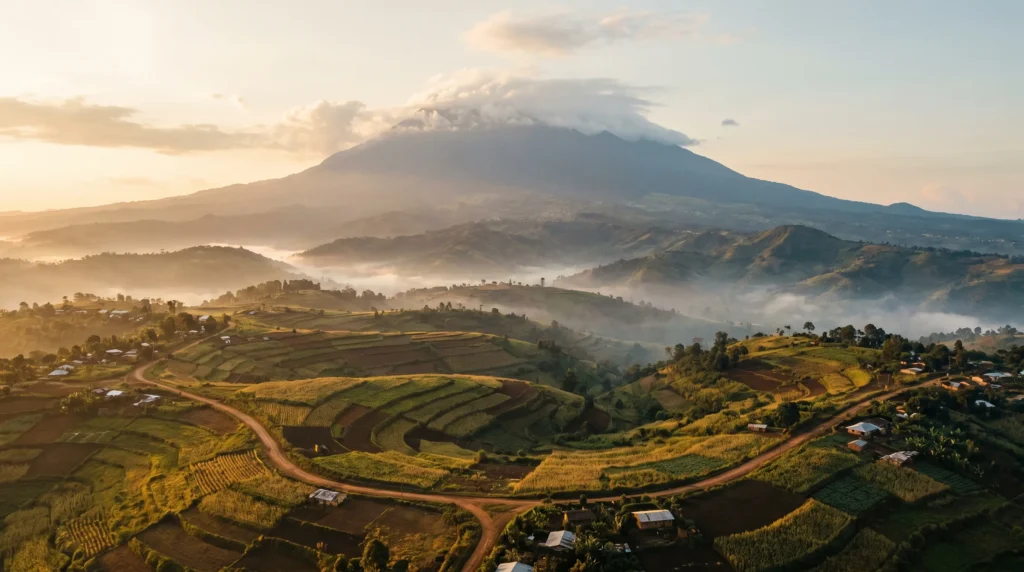
People call Cameroon “Africa in miniature” so often it sounds like a slogan someone invented for a brochure, but I said it myself the first time I drove out of Douala’s humid coastal sprawl and into the Bamileke highlands and watched the landscape turn to rolling green farmland within about three hours. This is a country with a rainforest holding forest elephants and lowland gorillas, a nearly 4,100-metre active volcano you can actually climb, Sahelian savanna in the far north, and a coastline of black-sand beaches and waterfalls that spill straight into the Atlantic. It is also, I’ll say plainly up front, a harder country to visit than most on this site — the visa takes real effort, parts of the north and far north are currently off-limits for safety reasons, and tourism infrastructure outside a few towns is thin. None of that makes it any less extraordinary for travelers willing to go in with a plan, a good local fixer, and realistic expectations.
In This Guide
- Overview — Why Cameroon Earns the “Miniature Continent” Tag
- The Ngondo Festival — Douala’s Sacred Water Ceremony
- Best Time to Visit Cameroon (Season by Season)
- Getting There — Douala, Yaoundé & the Visa Process
- Getting Around — Bush Taxis, Buses & Domestic Flights
- Top Regions — Coast, Highlands, Rainforest & the North
- Culture & People — 250 Languages, One Country
- A Food Lover’s Guide to Cameroon
- Off the Beaten Path
- Practical Information
- Budget Breakdown — What Cameroon Actually Costs in 2026
- Planning Your First Trip
- Frequently Asked Questions
Overview — Why Cameroon Earns the “Miniature Continent” Tag
Cameroon sits at the hinge between West and Central Africa, bordering Nigeria, Chad, the Central African Republic, the Republic of the Congo, Gabon and Equatorial Guinea, with a short Atlantic coastline on the Gulf of Guinea. It was split between French and British colonial administration after the First World War, which is the reason it now has two official languages — French and English — layered on top of roughly 250 indigenous languages spoken across more than 200 ethnic groups, from the Bamileke and Bamun of the western highlands to the Fulani cattle herders of the north and the Baka forest peoples of the southeast.
The geography does the rest of the selling. Mount Cameroon, at roughly 4,095 metres, is the highest point in West Africa and the tallest active volcano in sub-Saharan Africa, still capable of eruption — its last was in 2012. South of it lies genuine Congo Basin rainforest, protected in the Dja Faunal Reserve, a UNESCO World Heritage site since 1987 covering more than 5,000 square kilometres of near-untouched forest with gorillas, chimpanzees and forest elephants. Cameroon also shares the transboundary Sangha Trinational site with the Central African Republic and Congo, inscribed in 2012 for the same dense, wildlife-rich lowland forest.
What Cameroon doesn’t have is a developed tourism machine. There’s no beach-resort strip, no well-worn backpacker trail, and — as of 2026 — real security restrictions across the far north and the two Anglophone regions in the southwest and northwest that keep large parts of the country off the map for now. What’s left is still remarkably large: the coast, the western highlands, the capital region, and the southeastern rainforest cover a huge amount of what makes Cameroon interesting, and none of it currently carries a do-not-travel advisory.
The Ngondo Festival — Douala’s Sacred Water Ceremony
If you can time a trip for the first two weeks of December, head to Douala for the Ngondo Festival, the most important traditional celebration of the Sawa coastal peoples, held along the banks of the Wouri River with its sacred core on the first Sunday of the month. The festival centers on a ceremony honoring the jengu, water spirits believed to inhabit the river, alongside pirogue races, traditional wrestling and music that turn the riverbank into the country’s biggest cultural gathering of the year. UNESCO inscribed Ngondo on its Representative List of the Intangible Cultural Heritage of Humanity in December 2024, and Douala marked the first anniversary of that listing in 2025.
It’s a genuinely rare thing to watch as an outsider: a living ritual, not a staged show for visitors, since almost nobody outside Central Africa has heard of it yet. Book accommodation in Douala well ahead of the first weekend in December, and ask a local guide about respectful ways to observe the water ceremony itself.
Best Time to Visit Cameroon (Season by Season)
November – February · Main dry season
The most reliable window for most of the country: clearer skies, passable roads, and the Ngondo Festival in early December. This is also the easiest stretch for hiking Mount Cameroon or visiting the western highlands, when trails aren’t a mudslide.
March – June · Building rains
Showers become more frequent as the year goes on, heaviest in the southwest and around Mount Cameroon, one of the wettest places in Africa. The highlands and drier north stay more manageable later into this window than the coast does.
July – October · Peak rains in the south, dry season up north
The coast and rainforest south see their heaviest rainfall of the year, while the Sahelian far north is at its driest and hottest — the two halves of the country are essentially on opposite calendars. Rainforest trekking around the Dja Faunal Reserve is toughest now; road travel anywhere unpaved gets slow and occasionally impassable.
A safety note that affects timing more than weather does: as of 2026, the Far North Region and the Northwest and Southwest Regions carry “do not travel” advisories from both the US State Department and UK FCDO due to Boko Haram-linked activity in the north and an ongoing Anglophone crisis in the west. Check current advisories close to departure regardless of season — this has been a persistent situation for several years, not a one-off spike.
Getting There — Douala, Yaoundé & the Visa Process
Douala International Airport is Cameroon’s main gateway and busiest cargo/passenger hub on the coast, while Yaoundé Nsimalen International Airport serves the capital inland; both take a handful of long-haul connections from Paris, Brussels, Istanbul, Addis Ababa and other African hubs, with most travelers from North America connecting through Europe.
The visa is the part that actually requires planning. Almost every nationality needs a visa arranged before arrival through the official government portal, evisacam.cm — budget around $164 USD, a passport valid at least six months beyond your stay, a return ticket, proof of accommodation, and proof of funds. Standard processing runs about three business days, so apply well before you book non-refundable flights, and use only the official portal — plenty of unofficial sites charge inflated “service fees” for the same application. Yellow fever vaccination is mandatory for entry for all travelers over one year old, and you’ll need to show the certificate.
Getting Around — Bush Taxis, Buses & Domestic Flights
Cameroon is a big country — around 475,000 square kilometres, roughly the size of Sweden — and road quality varies enormously by region and season. Paved highways connect Douala, Yaoundé and the western highlands reasonably well; intercity buses (Guaranty Express, Central Voyages and similar operators) run these main routes with assigned seats and are the standard way to travel between major towns.
Shared “bush taxis” — usually battered sedans packed well past comfortable capacity — cover routes buses don’t, and are a genuine part of the experience if you have patience and low expectations for legroom. Domestic flights connect Douala and Yaoundé to a few regional airports and are worth the modest cost to skip long, rough road stretches, especially toward the accessible parts of the north. Self-driving is uncommon for visitors; hiring a car with a driver is the practical option outside the two big cities, and essential for anything involving unpaved rainforest or highland roads.
Top Regions — Coast, Highlands, Rainforest & the North
Douala & the Wouri Estuary
Cameroon’s largest city and commercial capital, hot and humid, with the country’s busiest port and airport. Most visitors pass through rather than linger — except in early December, when the Ngondo Festival makes it the place to be.
Yaoundé
The political capital, built across seven hills, calmer and greener than Douala, with national museums, markets and a cooler climate thanks to its elevation. A natural first or last stop for onward road or air travel.
Limbe & Mount Cameroon
A relaxed coastal town in the Southwest Region with black volcanic-sand beaches and the Limbe Wildlife Centre, a rescue and rehabilitation sanctuary founded in 1993 that’s home to fifteen primate species native to Cameroon, including gorillas, chimpanzees, drills and mandrills — an excellent, ethical way to see primates up close if a Dja Faunal Reserve expedition isn’t in the cards. Limbe is also the standard base for climbing Mount Cameroon, whose summit trek typically takes two to three days.
Kribi & the South Coast
A laid-back beach town on the Gulf of Guinea known for golden sand and calm water, with the Lobé Waterfalls just outside town — one of the world’s few places where a river tumbles directly into the ocean. It’s the easiest, most straightforward beach stop in the country.
The Western Highlands & Foumban
Cooler, greener, and dotted with volcanic crater lakes, this is Bamileke and Bamun country. Foumban is the standout: the royal palace of the Bamun kings, still home to their traditional ruler, dates to 1917 and sits beside a palace museum housing more than 10,000 artefacts spanning the dynasty’s history back to 1394. Bamenda and the surrounding Northwest Region hold the famous “Ring Road” loop through highland scenery — currently inadvisable to drive given the region’s advisory status, so treat Foumban and the western highlands as the accessible edge of this cultural zone rather than a route into Bamenda itself.
The Southeast Rainforest
Deep Congo Basin territory: the Dja Faunal Reserve and the Cameroonian portion of the Sangha Trinational site (Lobéké National Park) protect gorillas, forest elephants and chimpanzees across dense, humid forest home to Baka communities. This is expedition territory — remote, permit-gated, and best arranged through a specialist operator rather than attempted independently.
The North (currently restricted)
Waza National Park, one of West Africa’s last strongholds for lions alongside large elephant herds and more than 379 recorded bird species, sits in the Far North Region — which both the US and UK currently advise against traveling to entirely, due to Boko Haram/ISWAP-linked activity. I’m including it here because it’s a genuine highlight worth knowing about for when the situation changes — not as a current recommendation. Check the latest advisories before even considering it.
Culture & People — 250 Languages, One Country
Cameroon counts more than 200 ethnic groups and around 250 living languages, layered under French and English as co-official languages — a colonial-era split that still shapes politics, education and daily life today. The Bamileke and Bamun dominate the western highlands with strong chiefdom traditions still centered on living royal courts, as at Foumban; the Fulani (Peul) are historically pastoralist and Muslim, concentrated in the north; the Sawa peoples of the Douala coast keep the Ngondo water-spirit tradition alive; and Baka communities in the southeastern rainforest maintain a semi-nomadic forest life recognized within the Dja Faunal Reserve’s own management.
Greetings matter everywhere — take the time for them before getting to business, even a simple transaction. Dress modestly outside beach towns, ask before photographing people or ceremonies, and expect French to get you further than English outside the two Anglophone regions.
A Food Lover’s Guide to Cameroon
Ndolé is the closest thing to a national dish: a bitter-leaf stew (traditionally bitterleaf vegetable, sometimes swapped for spinach) cooked with peanuts, fish or beef, usually served with plantain, rice or the pounded-tuber staple called fufu (also known as water fufu or garri depending on the region). Suya — spiced, skewer-grilled beef — is the classic street-food grab in cities, sold hot off charcoal grills after dark.
On the coast around Douala, Limbe and Kribi, expect fresh grilled fish and prawns, often with a fiery pepper sauce called pilipili. In the west, koki (steamed bean pudding wrapped in leaves) and eru (a leafy stew similar to ndolé) show up on Bamileke tables. Palm wine is the traditional drink in the south and west, tapped fresh and mildly fermented; 33 Export is the ubiquitous national beer. Cameroonian coffee and cacao, both grown in the western highlands and southern forest zones, are worth seeking out directly from producers where you can.
Off the Beaten Path
Lobé Waterfalls, Kribi
A river tumbling straight into the Atlantic just outside Kribi — pirogue trips run right up to the falls, and it’s one of very few “waterfall meets ocean” sites anywhere in the world.
Dja Faunal Reserve
Guided, permit-based visits into more than 5,000 square kilometres of near-pristine rainforest, with lowland gorillas, chimpanzees, forest elephants and over 1,500 recorded plant species. Not a casual day trip — arrange it through a specialist operator with realistic timelines and expectations about comfort levels.
Foumban’s palace workshops
Beyond the royal palace museum itself, Foumban’s surrounding artisan quarter is full of bronze-casting, weaving and woodcarving workshops connected to the same Bamun royal tradition.
Limbe Botanic Garden & Wildlife Centre
One of Africa’s oldest botanic gardens sits right beside the wildlife centre, an easy pairing for a slow coastal day that also directly supports primate conservation.
Practical Information
Money. The Central African CFA franc (XAF) is fixed at 655.957 to the euro and used across six Central African countries; it’s a hard currency to source before arrival, so plan to withdraw or exchange after landing. Cards work at upscale hotels in Douala and Yaoundé; cash is essential everywhere else, including most bush taxis and markets.
Safety. The coast, western highlands, Yaoundé and Douala are the areas where most travel currently happens without an active government advisory against it. The Far North Region and the Northwest and Southwest Regions carry “do not travel” warnings from both the US and UK, and border zones within roughly 20–40km of the Central African Republic, Chad and Nigeria carry the same warning. Petty crime and occasional urban crime hotspots exist in both big cities; use registered taxis and avoid displaying valuables. Check current advisories close to your travel dates — this is not a static list.
Health. Yellow fever vaccination is mandatory for entry; malaria risk is present countrywide and prescription prophylaxis is recommended by the CDC. Hepatitis A and typhoid vaccination are strongly advised, along with routine vaccines and up-to-date polio boosters given recent poliovirus detections in the region. Drink bottled or filtered water, and see a travel clinic at least a month before departure.
Connectivity. A local SIM or regional eSIM is cheap and easy in Douala or Yaoundé; coverage thins out fast in rural and forest regions. Plugs: European-style two-pin, 220V. Time zone: UTC+1, no daylight saving.
Budget Breakdown — What Cameroon Actually Costs in 2026
Cameroon is inexpensive by Western standards but not a bargain-basement destination once you factor in the visa, guides and the cost of covering long distances.
Budget (US$40–70/day): Simple guesthouses, street food and local restaurant meals, shared bush taxis and intercity buses, self-guided city time in Douala or Yaoundé.
Mid-range (US$100–200/day): Comfortable hotels in Douala, Yaoundé, Limbe or Kribi, a private driver for highland or coastal touring, the Limbe Wildlife Centre and Foumban’s palace museum, occasional domestic flights.
Expedition tier (US$300+/day): Guided multi-day trips into the Dja Faunal Reserve or Sangha Trinational rainforest with specialist operators, Mount Cameroon summit treks with full logistics support, and any itinerary requiring a fixer for permits and security coordination.
Fixed costs to budget for regardless of tier: the roughly $164 e-visa fee per person, yellow fever vaccination if you don’t already have it, and comprehensive travel insurance that explicitly covers medical evacuation — genuinely non-negotiable here given how limited hospital care is outside the two biggest cities.
Planning Your First Trip to Cameroon
A realistic first-timer route sticks to the accessible south and west: fly into Douala, spend a day or two there (timed for the Ngondo Festival in early December if you can), head to Limbe for the wildlife centre and a Mount Cameroon attempt, continue to Kribi for a couple of beach days at the Lobé Falls, then loop up into the western highlands to Foumban before returning via Yaoundé. Ten to fourteen days covers that comfortably without touching the currently restricted north or Anglophone regions. If Central African rainforest and gorilla trekking genuinely interest you, pair Cameroon’s Dja Faunal Reserve with a same-region trip to Rwanda, which has a far more developed (and better-tested) gorilla-trekking industry. For a wider West Africa itinerary, our Ghana guide and Accra city guide cover an easier, English-speaking coastal counterpart, and Chad is the neighboring option for travelers looking to go deeper into the Sahel.
Frequently Asked Questions
Is Cameroon safe for tourists in 2026?
The coast, Yaoundé, Douala, the western highlands and southern rainforest areas covered in this guide are where most travel currently happens without an active “do not travel” warning. The Far North Region and the Northwest/Southwest (Anglophone) Regions are advised against entirely by both the US State Department and UK FCDO, along with strips of land near the CAR, Chad and Nigeria borders. Check current advisories close to your trip — this situation has held for several years but conditions can shift.
Do I need a visa, and how hard is it to get?
Yes — nearly every nationality needs a visa arranged before arrival via the official evisacam.cm portal, budgeting roughly $164 USD and about three business days of processing, plus a valid passport, return ticket, accommodation proof and yellow fever certificate. Apply well ahead of booking non-refundable flights, and use only the official government site.
Can I see gorillas in Cameroon?
Yes, in principle — western lowland gorillas live in the Dja Faunal Reserve and the Sangha Trinational forest — but this is expedition-level travel through remote, permit-gated rainforest, not a drive-up safari. If reliable, well-organized gorilla trekking is your priority, Rwanda’s industry is far more mature.
What vaccinations do I need before going?
Yellow fever vaccination is mandatory for entry. The CDC also recommends malaria prophylaxis, hepatitis A and B, typhoid, routine vaccines, and a polio booster given recent regional poliovirus detections — see a travel clinic at least a month out.
What’s the biggest catch first-timers underestimate?
The visa effort and the country’s size combined with patchy roads — distances that look short on a map can be full-day drives. Build slack into any itinerary and don’t try to cover the coast, highlands and rainforest in under ten days.
Cameroon or Ghana for a first West/Central Africa trip?
Choose Ghana for an easier first-timer’s introduction — better tourism infrastructure, English throughout, and a simpler entry process. Choose Cameroon if you specifically want the volcano-to-rainforest range and don’t mind more logistics and a tougher visa for it.
Ready to Explore Cameroon?
A live volcano you can climb, gorillas hiding in genuine Congo Basin rainforest, a coastline where waterfalls meet the ocean, and a sacred river festival most travelers have never heard of — Cameroon rewards the effort the visa and the logistics ask of you. Go with a plan, a good local guide, and current advisories checked, and you’ll come home having seen a version of Africa most people only read about.
Explore More
- Chad Travel Guide — Cameroon’s Sahelian neighbor to the northeast
- Rwanda Travel Guide — Central Africa’s far more developed gorilla-trekking industry
- Ghana Travel Guide — an easier, English-speaking West African counterpart
- Accra City Guide — a well-connected West African hub for a wider regional itinerary
How this guide was built
Published as part of Facts From Upstairs’ country guide series. Built from authoritative sources — UNESCO’s World Heritage listings for the Dja Faunal Reserve and Sangha Trinational, the official Cameroon e-visa portal (evisacam.cm), the US State Department and UK FCDO Cameroon advisory pages, the US CDC traveler page for Cameroon, the Limbe Wildlife Centre’s own site, and Wikipedia entity pages for Cameroon’s geography, Mount Cameroon, the Ngondo Festival, Foumban Royal Palace, Kribi, Waza National Park and the CFA franc. Numeric and checkable claims carry inline citations.
Sources cited on this page
- Wikipedia — Cameroon
- UNESCO — Dja Faunal Reserve
- Wikipedia — Dja Faunal Reserve
- UNESCO — Sangha Trinational
- Wikipedia — Sangha Trinational
- US State Department — Cameroon
- UK FCDO — Cameroon
- US CDC — Cameroon traveler page
- Official Cameroon e-Visa portal
- Wikipedia — Mount Cameroon
- Wikipedia — Waza National Park
- Wikipedia — CFA franc
- Wikipedia — Foumban Royal Palace
- Wikipedia — Kribi
- Limbe Wildlife Centre — About
- Wikipedia — Ngondo
More country guides you might like
Plan your trip to Cameroon
The booking tools we use ourselves. FFU may earn a commission at no extra cost to you.
Plan & book your trip to Cameroon
Booking through these searches supports our guides at no extra cost to you.