
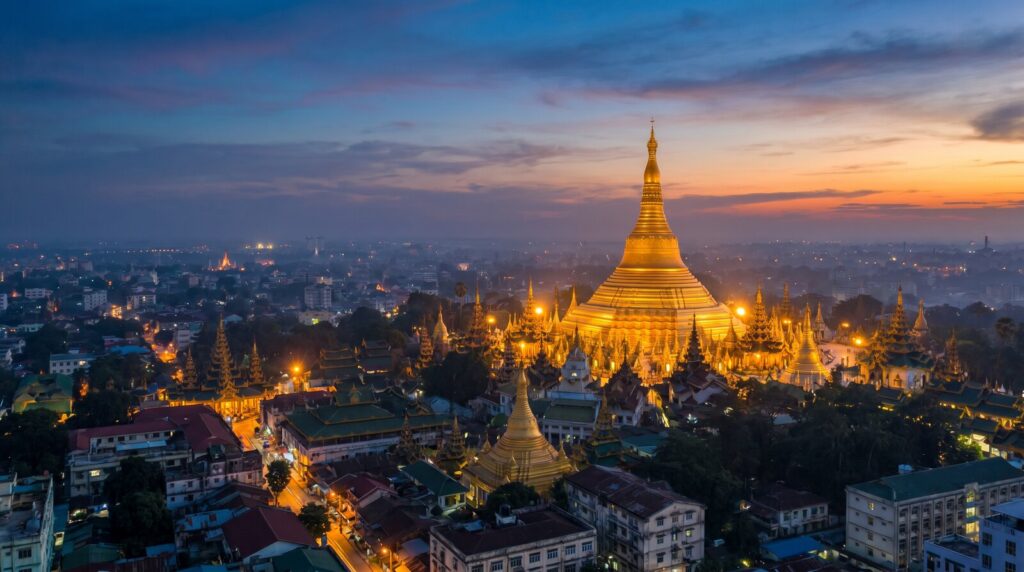
Yangon, Myanmar: Shwedagon Pagoda, Colonial Heritage & Golden Temples
Your Complete Guide to Yangon, Myanmar
📍 In This Guide
- When to Visit Yangon ☀️
- Shwedagon Pagoda 🕌
- Colonial Downtown 🏛️
- Markets & Street Food 🍜
- Kandawgyi & Lakes 🌳
- Buddhist Culture 🙏
- Budget & Practical Tips 💰
When to Visit Yangon ☀️
Yangon has three seasons and none of them are cold. The cool season (November-February) is the most comfortable, with temperatures around 25-32°C and minimal rain. The hot season (March-May) is brutal — 37°C+ with suffocating humidity. The monsoon (June-October) brings daily torrential rain that floods streets within minutes, though mornings are often dry. Visit in November-February if possible, and always carry water regardless of season.
❄️ Cool Season
November-February. 25-32°C, low humidity. Peak tourist season. Pagodas and markets most comfortable.
🔥 Hot Season
March-May. 35-37°C. Exhausting. Visit Shwedagon at dawn or dusk to avoid the worst heat.
🌧️ Monsoon
June-October. Heavy daily rain. Streets flood. But Shwedagon in the rain is atmospheric and empty.
🎉 Festivals
Thingyan (Water Festival) in April — the entire country has a water fight for 4 days. Chaotic and joyful.
Shwedagon Pagoda 🕌
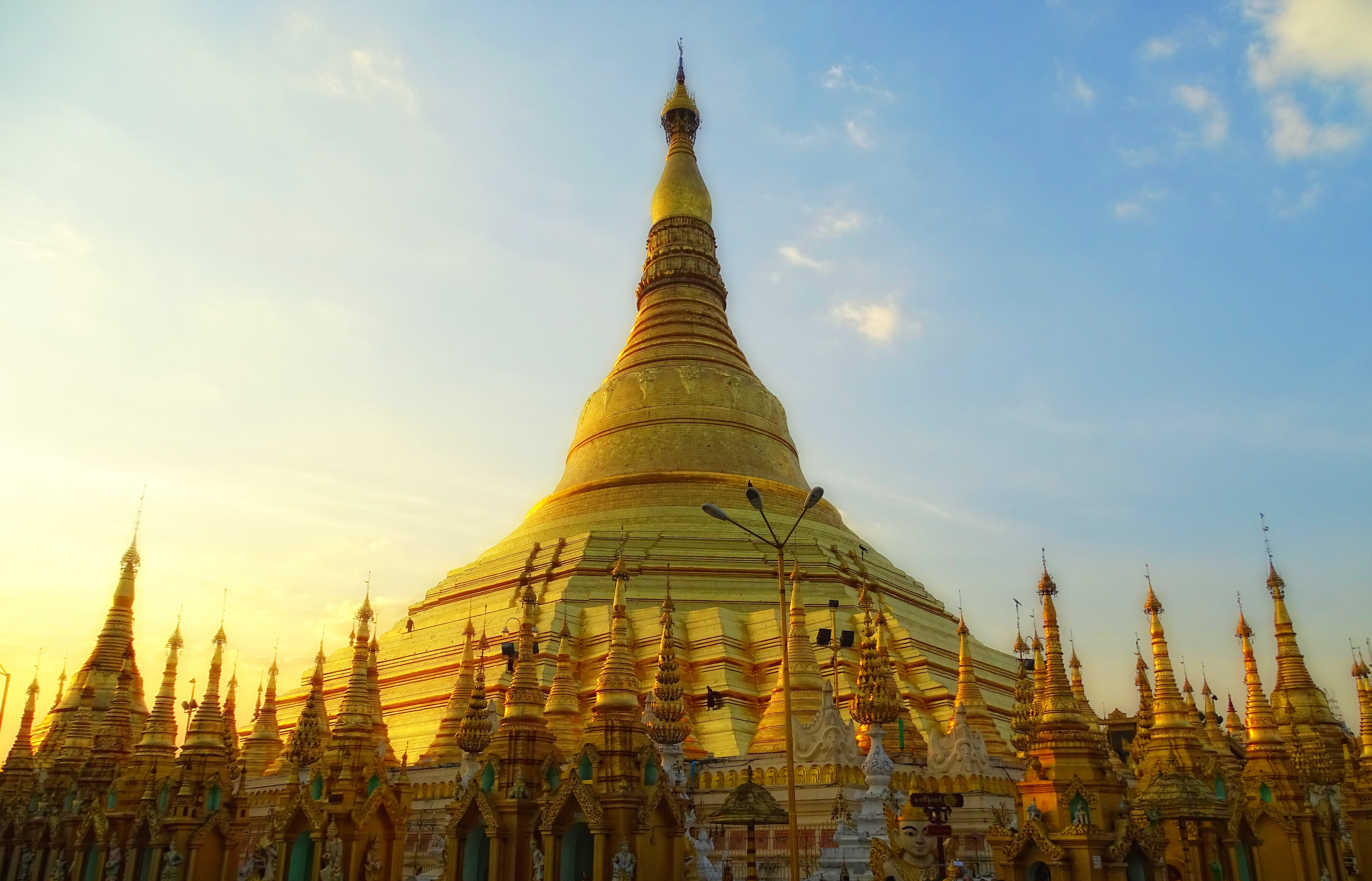
Shwedagon is the most sacred Buddhist site in Myanmar and arguably the most visually stunning religious monument in Southeast Asia. The main stupa is covered in real gold plates and topped with a diamond-encrusted spire — over 7,000 diamonds, rubies, and sapphires. The best times to visit are sunrise (when monks chant and devotees pray) and sunset (when the gold glows impossibly warm). Remove shoes, dress modestly (cover knees and shoulders), and walk clockwise around the stupa — always clockwise.
🌅 Sunrise Visit
Arrive at 5:30am. Watch monks pray as the first light hits the gold. Deeply spiritual, few tourists.
🌇 Sunset Visit
The gold changes color minute by minute. Stay until dark when the pagoda is illuminated. Magical.
💎 The Crown
The tip holds a 76-carat diamond and thousands of gems. Visible through binoculars at certain angles.
🙏 Etiquette
Remove shoes, cover knees and shoulders, walk clockwise. Photography OK outside. Respectful silence inside.
Colonial Downtown 🏛️
Yangon has the largest collection of colonial-era buildings in Southeast Asia, a legacy of its role as capital of British Burma. Many are in various states of dramatic decay — crumbling facades draped in tropical vegetation, grand staircases leading to abandoned upper floors. The Secretariat (where independence hero Aung San was assassinated in 1947) is being carefully restored. The Strand Hotel, City Hall, and the High Court are architectural gems. Yangon Heritage Trust runs excellent guided walking tours.
🏛️ The Secretariat
Massive colonial complex, partly restored. Where Myanmar’s independence story was shaped. Tours available.
🏨 The Strand Hotel
Grand colonial hotel from 1901. Even if you can’t afford a room ($300+), have a gin and tonic at the bar.
🏛️ Walking Tours
Yangon Heritage Trust runs 2.5-hour walks through downtown. Excellent guides. Book online, $25.
📸 Decay & Beauty
Just wandering downtown reveals stunning crumbling architecture at every corner. Photographer’s paradise.
Markets & Street Food 🍜
Bogyoke Aung San Market (formerly Scott Market) is the main tourist market — good for lacquerware, gems, textiles, and longyis (the sarong-like garment everyone wears). For food, hit the street stalls around 19th Street in Chinatown, where barbecued skewers, mohinga (fish noodle soup), and cold Myanmar Beer flow freely. Mohinga is the national dish — a rich, fragrant fish soup with rice noodles, typically eaten for breakfast but available all day.
🍜 Mohinga
Fish noodle soup. Myanmar’s national dish. Eaten for breakfast. Available at every street stall for $0.50.
🍢 19th Street
Chinatown’s beer-and-barbecue alley. Sit on tiny plastic stools, eat skewers, drink cheap beer. The real Yangon.
🛍️ Bogyoke Market
The main shopping market. Gems, textiles, art, souvenirs. Closed Mondays and public holidays.
🍵 Tea Shops
Myanmar’s social institution. Milky sweet tea, samosas, and gossip. Sit and watch the world go by. $0.30/cup.
Budget & Practical Tips 💰
Myanmar is one of Southeast Asia’s cheapest destinations. Street food meals cost under $1, local restaurants $2-4, and guesthouses start from $10-15 for a private room. Yangon’s traffic is terrible — allow extra time for everything. The circular train that loops the city is a fascinating 3-hour journey through Yangon’s neighborhoods for $0.20. ATMs are now plentiful but carry some US dollars as backup. The political situation is complex — check travel advisories before booking.
🏨 Accommodation
Guesthouses from $10/room. Mid-range hotels $25-40. Downtown location saves transport hassle.
🚂 Circular Train
3-hour loop around Yangon for $0.20. Not a transit tool — it’s a journey through the city’s soul.
💰 Costs
Street food $0.50-1. Local restaurant $2-4. Shwedagon entry $8. Budget travelers: $20-30/day easily.
⚠️ Current Situation
Check travel advisories before visiting. The political situation has been unstable since 2021.
Where gold touches the sky.
2,600 years of gold leaf, crumbling colonial grandeur, $0.50 noodle soup, and a city finding its way forward. Yangon rewards those who look beyond the surface.
Getting Around Yangon
Yangon’s traffic is notoriously congested, but navigating the city is part of its chaotic charm. The Yangon Circular Railway is an iconic experience — a 46-km loop that takes about three hours to complete the full circle. It costs just 200 kyat (a few cents) and offers a window into daily life as vendors hop on and off selling everything from boiled corn to flower garlands. Board at Yangon Central Station for the full loop, or ride just a portion for a shorter commute through the suburbs.
Taxis are the most convenient way to get around the city proper. Yangon has no metered taxis, so negotiate the fare before getting in — most trips within the city center cost 2,000-4,000 kyat. Grab is available in Yangon and offers the most transparent pricing. City buses are extremely cheap (100-300 kyat) but routes are complicated and signage is in Myanmar script. The YBS (Yangon Bus Service) has modernized many routes with air-conditioned buses — Google Maps now covers most bus routes and is your best friend for navigation. Walking is pleasant in the cooler morning hours, especially around the downtown colonial district, but the tropical heat and broken sidewalks make long walks exhausting by midday.
Yangon’s Food Scene
Myanmar’s cuisine is one of Southeast Asia’s most underrated, and Yangon is the best place to discover it. Mohinga, a fragrant fish-based noodle soup seasoned with lemongrass, ginger, and banana stem, is the national dish and the definitive Yangon breakfast. You’ll find it at street stalls throughout the city from dawn onwards — look for the biggest crowd and join the queue. A bowl costs 500-1,500 kyat depending on the neighborhood.
Yangon’s tea shop culture is central to daily life. These open-front establishments serve impossibly sweet milk tea alongside samosas, naan with dhal, and paratha — reflecting the deep Indian influence on Myanmar’s food. 999 Shan Noodle House is a local legend for its dry or soup-based Shan noodles, and Aung Thukha on Anawrahta Road draws long lines for its curries served with a parade of small side dishes. The 19th Street food strip in Chinatown is Yangon’s most electrifying evening food scene — plastic stools line the street as vendors grill skewers of every imaginable meat and seafood over charcoal, and cold Myanmar Beer flows freely. For a splurge, Rangoon Tea House reimagines traditional Burmese dishes with a modern twist in a gorgeous colonial setting — their laphet thoke (fermented tea leaf salad) is exceptional.
Frequently Asked Questions About Yangon
Do I need a visa to visit Myanmar?
Most visitors need a visa. Myanmar offers an e-Visa for tourism (50 USD) that can be applied for online and is typically approved within 3 business days. The e-Visa is valid for single entry and allows a stay of up to 28 days. Check the latest travel advisories before planning your trip, as Myanmar’s political situation has been fluid. Some nationalities may qualify for visa-on-arrival at Yangon International Airport.
What is the best time to visit Yangon?
November to February is the cool, dry season with comfortable temperatures of 25-32°C and minimal rain — this is peak tourist season. March to May is intensely hot, with temperatures regularly exceeding 38°C. The monsoon (June-October) brings heavy daily rainfall that can flood streets, but the city is lush and atmospheric, and prices drop significantly. The Thingyan Water Festival in April (Myanmar New Year) is a unique spectacle if you can handle the heat.
Is Yangon safe for tourists?
Yangon city itself is generally safe for tourists, with locals being warm and helpful toward visitors. Petty crime exists but is uncommon compared to other Southeast Asian cities. The main practical challenges are uneven sidewalks (watch your step, especially at night), stray dogs, and extreme heat. Stay informed about the broader political situation in Myanmar and register with your embassy. Most tourist activities in Yangon operate normally.
How do I visit Shwedagon Pagoda?
Shwedagon Pagoda, Yangon’s crown jewel, is open daily from 4 AM to 10 PM. Entry costs 10,000 kyat for foreigners. Visit at sunrise for the softest light and thinnest crowds, or at sunset when the gold-plated stupa blazes against the darkening sky. Remove shoes and socks before entering (there are shoe storage areas at each entrance). Dress modestly with covered shoulders and knees. Walk clockwise around the main platform, following the Myanmar tradition. Budget at least 2 hours to take in the dozens of smaller shrines, temples, and prayer halls that surround the main stupa.
What currency should I bring to Yangon?
The Myanmar Kyat (MMK) is the local currency. ATMs are widely available in Yangon and dispense kyat — your international bank card will work at most machines. US dollars are widely accepted at hotels and tour operators but should be in pristine condition (no tears, marks, or folds — this is strictly enforced). Credit cards are accepted at upscale hotels and some restaurants, but cash is king for most daily transactions. Mobile payment via KBZPay and Wave Money is increasingly common among locals.