
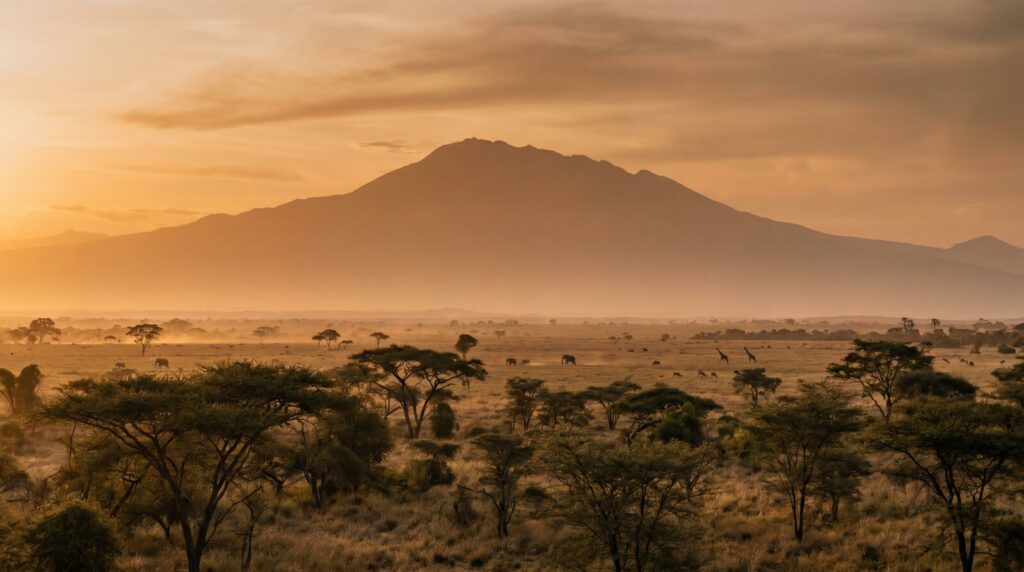
Arusha, Tanzania: Serengeti Gateway, Kilimanjaro Views & Safari Capital
The gateway to Africa’s most legendary safaris and views of the world’s tallest free-standing mountain
Arusha isn’t the destination itself—it’s the launchpad. Nestled in northern Tanzania between Mount Meru and the legendary Kilimanjaro, this vibrant highland city of nearly 500,000 people serves as the operational heart for Safari-bound travelers and Kilimanjaro climbers. The Serengeti starts just hours away. Kilimanjaro’s snow-capped peaks loom on the horizon. Every dusty street corner thrums with safari guides, tour operators, and adventurers comparing notes about the big five they’ve spotted or plotting their ascent to Africa’s highest point.

What makes Arusha genuinely compelling isn’t just its strategic location—it’s how the city has grown into its role. Coffee plantations blanket the surrounding volcanic slopes. The city itself blends Tanzanian energy with cosmopolitan infrastructure. You’ll find excellent restaurants, capable tour operators, and a fascinating cultural mix that reflects Tanzania’s trading heritage. This is where the real Africa experience begins, in a city that’s evolved specifically to support adventurers while maintaining authentic local character.
Navigate This Guide
The Safari & Mountain Gateway
Arusha’s elevation at 1,500 meters creates a mild, temperate climate that feels refreshingly different from Tanzania’s lower regions. The surrounding highlands receive abundant rainfall, creating lush vegetation that contrasts sharply with the golden savanna plains visible from the city’s higher vantage points. This natural setting isn’t accidental—it’s why early colonial administrators chose this location, and it remains why modern safari operators headquarter here.
The city has evolved into East Africa’s safari capital over the past few decades. More tour operators maintain offices in Arusha than anywhere else in Tanzania, creating intense competition that benefits travelers through better services and reasonable pricing. You can book everything from budget camping safaris to luxury lodge experiences, often saving 20-30% compared to booking from your home country. The infrastructure supports this: quality hotels, reliable internet, money exchanges, and pharmacies dot the city center.
Beyond the obvious business function, Arusha has developed a genuine tourist culture. The Arusha Declaration of 1967 proclaimed the city as the headquarters of the East African Community, giving it historical significance beyond its natural advantages. Today, the city honors this heritage while pushing forward as a modern East African hub with aspirations beyond tourism.
Serengeti National Park Magic
The Serengeti, meaning “the place where the land runs on forever” in Maasai, encompasses 14,750 square kilometers of pristine wilderness. Only a few hours from Arusha, it ranks among Earth’s greatest natural wonders. The park protects an ecosystem that has remained essentially unchanged for millennia, supporting concentrations of wildlife unmatched anywhere else on the continent.
The Great Migration dominates the Serengeti calendar. Between July and October, roughly 1.5 million wildebeest, zebras, and gazelles move north from the southern Serengeti into Kenya’s Masai Mara in search of fresh grazing. By November, they begin the return journey south. This cyclical movement creates some of Earth’s most dramatic wildlife spectacles—river crossings where Nile crocodiles wait, predator-prey encounters captured in real-time, and dust clouds visible from aircraft.
But the Serengeti offers much more than the migration. Year-round, you’ll encounter the big five: lions, elephants, buffalo, leopards, and rhinoceros. The park’s diverse habitats range from riverine forest to grassy plains to acacia woodlands, each supporting distinct animal communities. Predator density here is extraordinarily high—some areas maintain one lion per five square kilometers, compared to global averages of one per 100 square kilometers.
Safari experiences from Arusha range from three-day park tours to extended expeditions combining Serengeti, Ngorongoro Crater, and Tarangire. Most guides base themselves in Arusha specifically because it’s the most practical hub for these experiences. The city’s proximity means you maximize park time rather than spending days traveling.
Kilimanjaro Climbing Routes
Kilimanjaro climbs depart from Arusha daily during the dry seasons (June-October and January-February). The mountain offers six established routes, each with distinct characteristics. The Marangu route is the most popular and arguably most dangerous due to its quick ascent profile that doesn’t allow sufficient acclimatization. The Machame route, nicknamed the “Whiskey route,” has become increasingly popular due to better acclimatization pacing across seven days.
Summit success depends primarily on acclimatization, not fitness. The Uhuru Peak sits at 5,895 meters in the Earth’s stratosphere, where oxygen levels are 45% of what they are at sea level. Climbers face altitude sickness risks regardless of physical conditioning. The most successful expeditions use longer routes that climb gradually, allowing bodies to adjust. A seven or eight-day climb statistically succeeds at higher rates than a five-day push.
Guides and porters in Arusha are accustomed to managing climbers from any fitness level. A basic fitness level—the ability to walk for six hours continuously—suffices for most climbers. The mountain’s success isn’t about being an athlete; it’s about patience, determination, and choosing appropriate route timing. Most climbers summit between midnight and dawn, taking 5-7 hours from the last camp.
Climate zones stack upon Kilimanjaro’s slopes like a vertical world tour. You’ll trek through rainforest, alpine meadow, alpine desert, and arctic summit zones within days. The environmental transition is remarkable: lush vegetation gives way to volcanic rock and ice fields as elevation increases.
Coffee Culture & Local Flavors
The volcanic slopes surrounding Arusha produce some of Africa’s finest coffee. The region’s altitude, volcanic soil, and climate create ideal conditions for specialty arabica coffee cultivation. Small farms—many family-owned for generations—grow beans that rival those from Kenya and Ethiopia. Walking through Arusha’s markets, you’ll encounter fresh coffee everywhere, from roadside vendors to quality cafes that emphasize single-origin lots and proper brewing methods.
Many tour operators include farm visits as part of longer itineraries. You’ll see how coffee is grown, harvested, dried, and roasted. The entire process fascinates travelers who’ve only ever bought pre-packaged coffee. Tastings reveal flavor profiles that range from fruity to nutty depending on altitude and processing methods. Several farms now welcome day visitors, allowing you to tour operations and purchase directly from producers.
Beyond coffee, Arusha’s food scene reflects Tanzanian diversity. Street food culture thrives—chapati (unleavened flatbread), mandazi (fried dough), and grilled meats are ubiquitous and excellent. For sit-down dining, the city offers everything from casual local restaurants serving ugali and stews to international options catering to tourists. The Arusha Food Court and various restaurants in the city center showcase authentic Tanzanian cuisine without the tourist markup found in some locations.
Tanzanian coffee ceremonies, though less formalized than Ethiopian versions, still carry cultural significance. The ritualistic aspects of coffee preparation and sharing reflect hospitality values central to Tanzanian society. Asking your guide about local coffee rituals often leads to invitations to share coffee with guides’ families or village hosts—simple moments that reveal genuine cultural connection.
Cultural Experiences & Villages
The Maasai people inhabit the regions surrounding Arusha. Traditional Maasai villages, called manyattas, dot the landscape. Many now welcome visitors, offering cultural education and opportunities to engage with Maasai traditions directly. These interactions range from photograph-friendly visits where locals perform dances to genuinely educational experiences where you learn about pastoralist life, traditional medicine, and daily routines.
When visiting villages, approach with respect and curiosity rather than expectation of spectacle. The best village experiences occur when visitors ask genuine questions and listen to answers. Many Maasai guides speak extensively about how modern life is changing traditional culture—young people pursuing education in Arusha rather than herding cattle, young women gaining choices about marriage, and traditional practices adapting to modern reality. These conversations reveal complexity that goes beyond cultural stereotypes.
Arusha itself has a substantial Tanzanian population beyond tourism infrastructure. The city’s markets, schools, and residential areas reveal everyday life disconnected from safari business. Visiting local neighborhoods, eating at family-run restaurants, and interacting with shopkeepers provides cultural immersion that organized tours can’t duplicate. Many travelers stay several days in Arusha specifically to experience the city beyond its tour operator function.
The Arusha Declaration site and memorial represent significant historical and political importance. Tanzania’s founding principles of self-reliance and socialism were proclaimed here, shaping the nation’s development trajectory. The location, while not monumentally grand, holds meaning for understanding modern East Africa.
Best Time to Visit
June-October offers the best overall conditions: mild temperatures, clear views of Kilimanjaro, and optimal conditions for Serengeti migration viewing. January-February provides a secondary season with longer days, lower prices, and fewer crowds.
Accommodation Range
Budget hostels cost $10-20 nightly. Mid-range hotels run $50-120. Luxury lodges start at $200+ nightly. Many safari tour prices include accommodation, which often works out more economical than booking separately.
Safari Costs
Three-day Serengeti safaris cost $1,200-2,000 for mid-range operations, covering transport, guide, and camping. Premium lodge safaris run $3,500+. Budget camping safaris start around $800 but require more tolerance for basic conditions.
Kilimanjaro Prices
Seven-day climbs typically cost $1,800-3,000 including guide, porters, permits, and camping. Premium guided climbs with smaller groups run $4,000+. Budget climbs cost as little as $1,200 but may sacrifice guide quality and porter treatment standards.
Planning Your Arusha Adventure
Most international travelers arrive through Julius Nyerere International Airport in Dar es Salaam or Kilimanjaro International Airport (KLM), located 50 kilometers east of Arusha. KLM is closer and more convenient, though flights through Dar es Salaam often offer better international connections and sometimes lower fares. From the airport, drivers typically collect guests for the hourlong drive to Arusha.
Visas for Tanzania are obtainable on arrival for many nationalities, though pre-arranged e-visas expedite the process. Vaccinations against yellow fever and malaria prophylaxis are recommended for Arusha’s lower elevation regions, though the city itself sits high enough to be outside the primary malaria transmission zone. Consult current health advisories before traveling.
Allow at least three days in Arusha specifically—more if you’re planning a Kilimanjaro climb or multi-day safari. One day handles arrival, acclimatization, and safari preparation. Two days minimum provide time to actually explore the city and its surroundings. Many travelers spend 2-3 days in Arusha before or after longer adventures, using it as both logistics hub and genuine destination.
Currency is the Tanzanian Shilling (TZS). ATMs are widespread throughout Arusha. Haggling is expected in markets but not in established shops or restaurants. English is widely spoken in Arusha’s tourism sector, though learning basic Swahili greetings enhances interactions immensely. “Jambo” (hello), “Asante” (thank you), and “Habari” (how are you) go far in gaining goodwill.
Logistics & Getting Around
Within Arusha, taxis are inexpensive and readily available, though ride-sharing apps like Uber aren’t available in most regions. Negotiating taxi fares before entering vehicles prevents surcharges. For longer journeys to Serengeti or Ngorongoro, booking through established tour operators provides safety, proper vehicle maintenance, and knowledgeable guides. Many travelers underestimate the value of experienced guides—the difference between seeing ten animals and fifty on a safari comes down to guide expertise.
Public transportation exists via buses connecting Arusha to other Tanzanian cities, but these aren’t ideal for tourists carrying luggage. For extended exploration, booking multi-day safari packages through Arusha operators provides efficient logistics. These packages typically handle all transportation, guide services, camping equipment, and meals—simplifying the experience considerably.
Safety in Arusha is generally reasonable, though standard urban precautions apply. Avoid displaying expensive jewelry or electronics. Don’t walk alone after dark in unfamiliar areas. Travel with guides when exploring beyond the tourist district. Petty theft occurs, particularly in crowded markets, so maintain awareness of belongings. Arusha’s reputation is far safer than some African cities, but reasonable vigilance remains essential.
Internet connectivity is reliable throughout Arusha’s hotels and many cafes. Mobile networks are excellent—SIM cards cost just a few dollars and provide affordable data for navigation and communication. Registering your phone with the network is required but straightforward. This infrastructure enables independent exploration while maintaining connectivity to home.
Experience Africa’s Greatest Wonders
Arusha isn’t just a logistics point—it’s where African adventure begins. Whether you’re climbing Kilimanjaro, tracking the Great Migration, or learning about Maasai culture, this highland city serves as your gateway. The Serengeti is waiting. Kilimanjaro’s peak is calling. Your African adventure starts in Arusha.