
Iguazu Falls, Argentina/Brazil: Devil’s Throat, Jungle Walks & World’s Widest Waterfall
Stand beneath one of Earth’s most powerful natural phenomena where water, jungle, and primal energy converge
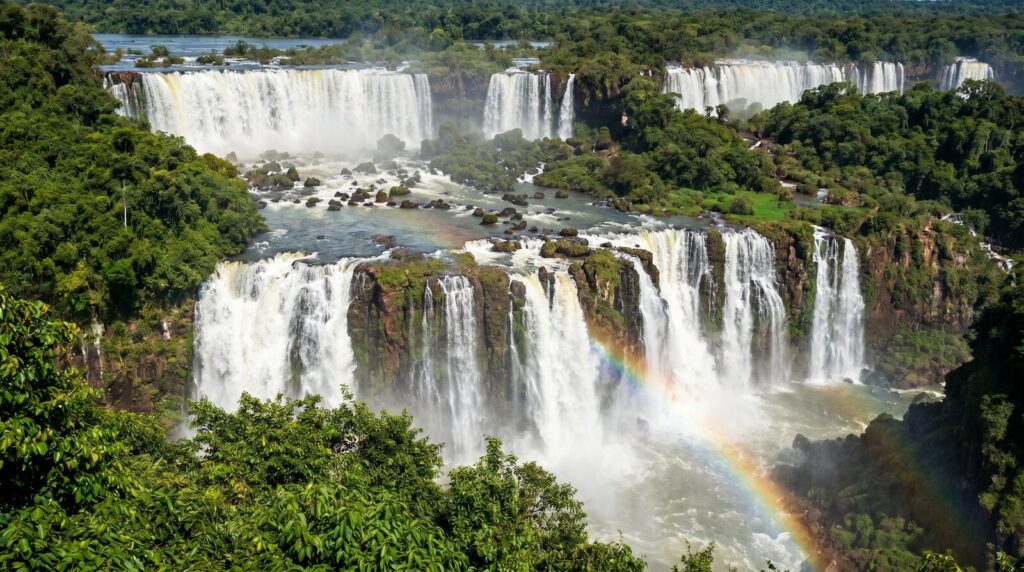
Iguazu Falls exists at the edge of the conceivable. A waterfall system so vast, so thunderous, so visually overwhelming that photographs cannot capture it. Video cannot convey it. Only standing there—feeling the mist coat your face, hearing the roar vibrate through your body, watching water equivalent to 1.5 million gallons per second plunge into a canyon below—can begin to communicate what Iguazu represents. This is nature at its most dramatic and powerful. Located at the border of Argentina and Brazil in a jungle rainforest, Iguazu comprises 275 individual cascades that together form the world’s widest waterfall system. It’s not the tallest waterfall, but the volume and spectacle have led many to call it the world’s most impressive.

What You’ll Discover
Devil’s Throat: The Most Powerful Experience
Garganta del Diablo—Devil’s Throat—represents the climactic visual and auditory experience of Iguazu. This semicircular chasm where 14 falls converge creates a roaring, mist-filled amphitheater that exceeds superlatives. A walkway extends to a platform suspended above the convergence point. Standing there, you’re at the edge of a 262-foot drop where water hammers down with such force that the entire platform vibrates. Mist rises so thick that vision extends barely 20 feet. The noise—not just loud, but physically palpable—becomes overwhelming. Your senses struggle to process the scale and power.
The experience of standing at Devil’s Throat is almost transcendent. The noise is so overwhelming that thought becomes difficult. The mist means you can’t see clearly but can feel the spray. The vibration of the platform connects you physically to the waterfall’s power. Some visitors describe it as spiritual. Others find it overwhelming and leave quickly. Either way, it creates a memory that doesn’t fade. This is where Iguazu becomes more than a natural wonder—it becomes an experience that fundamentally alters perception.
Visiting Devil’s Throat
Located on the Argentina side. Requires separate ticket and approximately 3-4 hour round trip time. Train takes visitors partway; then boardwalk extends to platform. Best visited early morning before crowds. Wear waterproof clothing—the mist will soak you.
The Science: Geology & Hydrology
Iguazu’s formation tells a geological story spanning millions of years. The Paraná Plateau is a massive basalt formation created by volcanic activity around 130 million years ago. As rivers carved through this basalt, the Paraná and Iguazu rivers created valleys. At one point, the Iguazu River encounters the edge of the plateau—where the landscape drops 210-262 feet depending on the specific cascades. This elevation change and the volume of water create the waterfall system.
The water volume is staggering. The Iguazu River contributes 1.5 million gallons per second during normal flow. During flood season (summer in Southern Hemisphere, particularly January-February), volume can increase fivefold. Conversely, during dry season, volume can drop to 500,000 gallons per second. This variation affects the falls’ appearance—flood season creates more dramatic power but also more mist limiting visibility. Dry season creates clearer views but less impressive spectacle. The balance between these seasons makes the experience variable depending on when you visit.
Flood Season
December-March. Maximum water volume, more power, more mist. Limited visibility but most dramatic. Fewer tourists permits issued. More unpredictable weather.
Dry Season
July-September. Lower water volume, clearer visibility, more stable weather. Tourist capacity higher. Some smaller cascades may cease flowing.
Argentina Side: Superior Vantage Points
Most visitors spend the majority of time on the Argentina side, where the national park provides closer, more intimate vantage points. The park includes numerous trails providing different perspectives—upper walkway platforms let you look across the falls at eye level, lower platforms put you below the falls looking up, and various jungle trails wind through the surrounding rainforest. Argentina’s Iguazu National Park is more extensive than Brazil’s, offering more trail options and more gradated experience.
Paseo Inferior (Lower Trail)
Boardwalk descending to platform directly below the falls. Water spray, mist, and sound envelope you. Dramatic close-up perspective. Approximately 1.5 hours.
Paseo Superior (Upper Trail)
Elevated boardwalk viewing falls from above. Less mist, clearer views across the canyon. Better for photography. Approximately 1.5 hours.
Jungle Trail
Through rainforest interior, away from falls but revealing jungle ecosystem. Wildlife observation, bird watching, vegetation. Quieter, less touristy experience.
Boat Tour
Motorized boats approach the falls from water level, bringing you directly beneath the cascades. Thrilling, soaking, unforgettable perspective. Best during dry season.
Brazil Side: Panoramic Perspective
While Argentina provides intimate, close-up views, Brazil provides the opposite—panoramic vistas where you see the entire falls system from across the canyon. The Brazil side national park is smaller, featuring primarily one extensive viewing platform positioned across from the falls. This location provides the most photographed perspective of Iguazu—the full arc of cascades visible simultaneously. If Argentina shows you the waterfall’s texture and power, Brazil shows you its scale and grandeur.
Main Platform
The primary viewing area offering panoramic views across to Argentina side. Excellent for photographs, orientation, and understanding the full system’s scale.
Helicopter Tours
The ultimate aerial perspective showing surrounding jungle and the full waterfall system from above. Expensive but provides unique view unavailable from ground. Booked separately from park entrance.
Jungle Ecosystems & Wildlife
Iguazu exists within Atlantic rainforest—one of the world’s most biodiverse regions and one of the most endangered. This jungle is older than the Amazonian rainforest and contains species found nowhere else. The microclimate created by the waterfall’s mist supports specialized vegetation and wildlife. Walking the jungle trails, you’re moving through a living ecosystem that has existed for millennia.
The mist from the falls creates a unique microclimate where specific plants thrive. Ferns, orchids, and epiphytic plants coat trees. The combination of constant moisture and subtropical location creates a botanical paradise. Walking jungle trails, you’ll notice the vertical structure—massive trees, intermediate layer vegetation, ground cover, and the soil layer teeming with life. It’s worth moving slowly through these areas, allowing your eyes to adjust and wildlife to reveal itself. Birds are more abundant in early morning and late afternoon. Monkeys are active throughout the day if you’re patient.
Wildlife Viewing Tips
Move slowly and quietly. Use binoculars or zoom telephoto. Early morning (before 8 AM) is best for wildlife activity. Listen—many animals signal presence through sound before appearing visually.
Photography Guide
Hire a naturalist guide for wildlife photography. Guides know where to find specific species, best vantage points, and animal behavior patterns. This transforms casual wildlife observation into meaningful photography.
Guided Jungle Walks
Park-affiliated guides provide ecological context, species identification, and safety supervision. Three-hour guided walks reveal jungle details invisible to casual visitors.
Night Walks
Nocturnal animals emerge after sunset. Some tour operators offer night walks revealing insects, frogs, and nocturnal mammals. Unique ecosystem perspective.
Practical Guide: How to Experience Iguazu
Recommended Itinerary
- Day 1: Brazil side panoramic views, orientation to the falls system
- Day 2 AM: Argentina side lower trails, Devil’s Throat
- Day 2 PM: Argentina side upper trails and jungle walks
- Day 3: Boat tour, helicopter tour (optional), final photography
Physical Preparation
Park experience involves significant walking on uneven terrain. Bring adequate water—you’ll dehydrate quickly in tropical climate. Waterproof jacket is essential, not optional. Proper footwear with good grip prevents slips on wet surfaces. Sunscreen is critical (water reflection intensifies UV). Insects are present—appropriate repellent recommended.
Stand Before Earth’s Power
Iguazu Falls transcends the category of “scenic attraction.” It’s a primal encounter with natural power that shifts perspective. Standing at Devil’s Throat listening to millions of gallons crash beneath you, or viewing the entire system from Brazil’s panoramic platform, or walking jungle trails where jaguars hunt and toucans call—these experiences connect you to something beyond human scale. Plan adequately, move mindfully, and let Iguazu impress itself upon your understanding of what nature can create.