
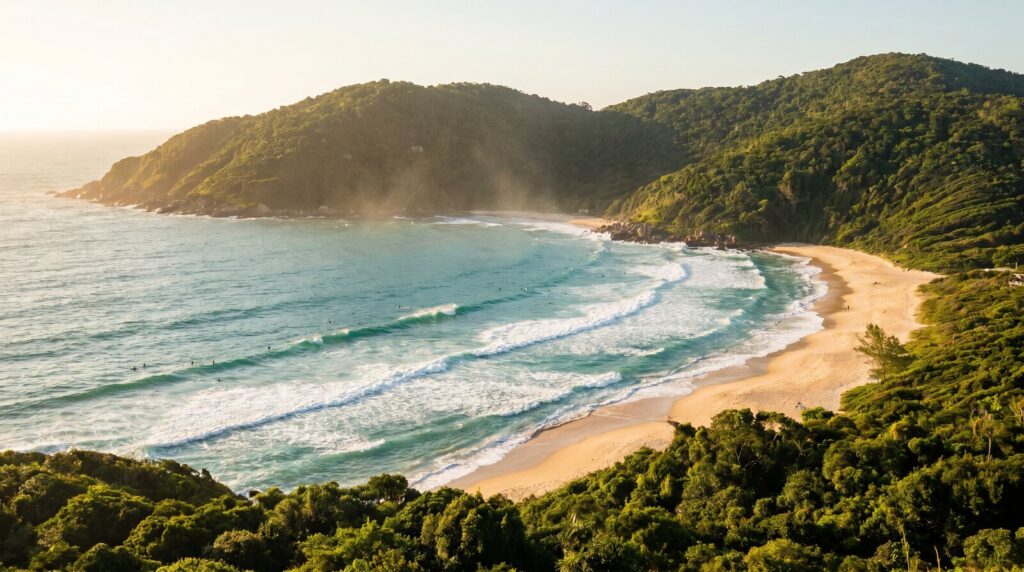
Florianópolis, Brazil: Magic Island, Surf Paradise & Beach Culture Capital
Your Complete Guide to Florianópolis, Brazil
📍 In This Guide
- When to Visit Floripa ☀️
- North Beaches & Nightlife 🎉
- East Coast Surf 🏄
- South Island & Trails 🥾
- Lagoa da Conceição 🎶
- Food & Seafood 🦐
- Budget & Getting Around 💰
When to Visit Floripa ☀️
Summer (December-March) is peak season when the island’s population triples with Brazilian and Argentine tourists. The water is warmest, the nightlife peaks, but prices soar and traffic becomes brutal on the single bridge connecting the island. Shoulder season (October-November, April) offers warm water, empty beaches, and half-price accommodation. Winter (June-August) is quiet with cool-ish temps around 15-20°C, but dedicated surfers love the swells.

☀️ Peak Summer
December-March. Hot, packed, expensive. Carnivalesque energy. Book 2+ months ahead for accommodation.
🏄 Surf Season
April-September. Bigger swells, fewer crowds, water still swimmable. Best for surfers and budget travelers.
🌸 Spring
October-November. Warm days, empty beaches, jacaranda blooms. The sweet spot.
❄️ Winter
June-August. Cool but pleasant. Great for hiking the trails and eating at seafood shacks without queues.
North Beaches & Nightlife 🎉
The north end of the island is where the party lives. Jurerê Internacional is Brazil’s answer to Ibiza — think beach clubs with DJs, champagne poolsides, and beautiful people in very little clothing. Ingleses and Canasvieiras are more family-friendly, with calm warm water and a boardwalk vibe. Praia Brava sits between the two worlds — a beautiful beach with good surf and a more laid-back atmosphere than Jurerê.
🎉 Jurerê Internacional
The famous party beach. Beach clubs like Café de la Musique host international DJs. Dress code: expensive swimwear.
🏖️ Ingleses
Longest beach in the north. Warm, calm water, family-friendly. Dozens of restaurants along the beachfront.
🏄 Praia Brava
Rougher surf, dramatic cliffs. Less developed, more authentic. Good intermediate surfing.
🌅 Ponta das Canas
Quiet northern tip with fishing boats and stunning sunsets. The antidote to Jurerê’s excess.
East Coast Surf 🏄
The east coast catches the open Atlantic swell and delivers some of the best surfing in southern Brazil. Praia Mole is the surfers’ social hub — consistent waves, a young crowd, and beach bars that turn into impromptu parties. Joaquina is more serious, hosting international competitions on its powerful beach break. The Joaquina Dunes are a landscape unto themselves — massive sand hills where you can sandboard down slopes that rival small ski runs.
🏄 Praia Mole
The social surf beach. Consistent 3-5 foot waves, surf schools, beach volleyball, LGBTQ+ friendly.
🏄 Joaquina
Competition-grade beach break. Powerful waves best for intermediate-advanced surfers. The dunes behind are epic.
🏜️ Joaquina Dunes
Rent a sandboard ($5) and slide down massive sand dunes. Weirdly exhausting, deeply fun.
🐚 Praia da Galheta
Clothing-optional beach between Mole and Joaquina. Accessible only by trail. Wild and beautiful.
Lagoa da Conceição 🎶
The Lagoa (lagoon) is the heart of Floripa’s alternative culture. This inland lagoon is surrounded by restaurants, bars, art galleries, and live music venues. The centrinho (little center) buzzes every night with a mix of surfers, students, artists, and travelers. It’s where you eat fresh oysters for $1 each, listen to live forró music, and watch paragliders land on the beach across the road. The lagoon itself offers windsurfing, stand-up paddling, and kayaking.
🎶 Live Music Scene
Almost every restaurant has live music. Forró, samba, MPB — the soundtrack of Brazilian nights.
🦪 Oyster Bars
Floripa produces 80% of Brazil’s oysters. Eat them fresh from $1 each at shacks along the lagoon.
🪂 Paragliding
Tandem flights launch from Morro da Lagoa. 15-minute flight over the lagoon and beaches, ~$50.
🛶 Water Sports
Rent SUP boards and kayaks on the lagoon. Calmer water than the ocean beaches — great for beginners.
Food & Seafood 🦐
Floripa’s food scene revolves around the ocean. Sequência de camarão (shrimp sequence) is the island’s signature meal — an endless parade of shrimp dishes prepared every way imaginable, from grilled to stuffed to deep-fried in coconut. The fishing villages of Ribeirão da Ilha and Santo Antônio de Lisboa serve some of the freshest seafood in Brazil, often at waterfront tables where fishing boats bob right in front of you.
🦐 Sequência de Camarão
The island’s must-eat experience. 7+ shrimp courses for around R$80-120 per person. Come hungry.
🦪 Ribeirão da Ilha
Historic Azorean fishing village on the west coast. Oyster farms, colonial architecture, sunset views.
🐟 Santo Antônio de Lisboa
Another beautiful fishing village. Try the tainha (mullet) when in season — it’s a local obsession.
🍹 Açaí
This is Brazil — açaí bowls are everywhere and massive. Post-beach fuel of champions.
42 beaches and counting.
Surf at dawn, eat oysters at noon, paraglide at sunset, and dance forró until the sun comes up again. Florianópolis does island life differently.
❓ Frequently Asked Questions
What is the best time to visit Florianópolis?
The best time to visit is from December through March, when summer temperatures reach 77–86°F (25–30°C) and the beaches are at their liveliest. For fewer crowds and lower prices, consider visiting in November or April.
What are the best beaches in Florianópolis?
Top beaches include Joaquina for surfing, Lagoinha do Leste for a wild hiking-and-beach combo, Campeche for its long sandy stretch, and Praia Mole for its social atmosphere and beachside bars.
How do you get around Florianópolis?
Renting a car is the best way to explore the island’s 42+ beaches spread across its coastline. Public buses connect major beaches to the city center, but service can be infrequent to remote areas. Ride-hailing apps also operate throughout the island.
Is Florianópolis expensive?
Florianópolis is moderately priced by Brazilian standards. Budget travelers can find hostels and simple meals affordably, while mid-range hotels and seafood restaurants offer good value. Prices rise sharply during the peak summer season in January and February.