
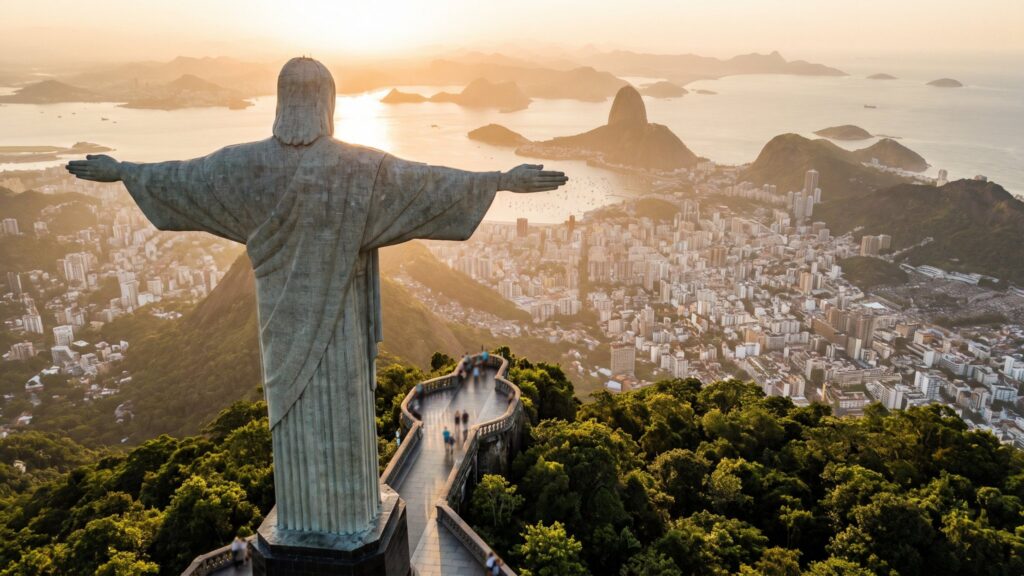
Languages of Brazil
All languages of South America →fluent beta classical · classes by phone with Maya at ranas.ai/maya
Brazil Travel Guide — 8.5 Million km², 9.3 Million Visitors & One Language Across Four Time Zones
The first thing Brazil does to you is recalibrate your sense of distance. I once booked what looked on the map like a modest hop from Salvador up to São Luís and discovered it was further than London to Rome. Then it recalibrates your sense of time: lunch at a comida-a-quilo counter takes eleven minutes, a Sunday feijoada takes four hours, and nobody can tell you which one is the real Brazil because both are. This is the brief I wish I’d had before my first flight into Guarulhos — where the e-visa rules actually stand in 2026, which three regions to pick from a country the size of a continent, how to pay when even the coconut vendor wants Pix, and how to keep your phone.

In This Guide
- Overview — Why Brazil Belongs on Every Bucket List
- Gold, Emperors & a Capital Built in 41 Months — A Pocket History
- Brazil September–December 2026 — Spring Prices, Pantanal Jaguars & Réveillon
- Best Time to Visit Brazil (Season by Season)
- Getting There — Flights, GRU & GIG, the e-Visa
- Getting Around — Flights, Buses & the Lack of a Bullet Train
- Top Cities & Regions
- Brazilian Culture & Etiquette
- A Food Lover’s Guide to Brazil
- Off the Beaten Path — Dunes, Diamonds & Islands
- Practical Information
- Budget Breakdown
- Planning Your First Trip — 5, 7 & 10-Day Itineraries
- Frequently Asked Questions
Overview — Why Brazil Belongs on Every Bucket List
Brazil is not a destination so much as a continent with one passport. At 8,515,770 km² it is the fifth-largest country on Earth — bigger than the contiguous United States, bigger than Australia — and it spans four time zones while speaking a single language from the equatorial mangroves of Amapá to the pampas grasslands on the Uruguayan border. The 2022 IBGE census counted 203,080,756 Brazilians, which makes it the seventh most populous country in the world and by a wide margin the largest Portuguese-speaking nation. Its 7,491 km of Atlantic coastline is the longest in the Southern Hemisphere, and its interior holds roughly 60% of the Amazon basin, the Pantanal wetland and the cerrado savanna — three of the planet’s great biomes inside one set of borders.
What travellers actually come for is contrast. Rio de Janeiro’s granite peaks rise straight from the surf; São Paulo, four hundred kilometres inland, has quietly become the most serious restaurant city in the Americas south of Mexico; the Amazon discharges about a fifth of all the river water that reaches the world’s oceans; and the Northeast sits in a trade-wind belt where the water is warm and clear for nine months of the year. The country is Catholic by census and candomblé by temple, evangelical by growth curve, the home of bossa nova and the birthplace of Oscar Niemeyer’s concrete curves, and the stage for the largest Carnival on Earth — the 2024 Rio edition alone generated more than R$5 billion in tourism revenue for the city.
Tourism is on a steep climb. Embratur logged a record 6.65 million international visitors in 2024, then blew through it with 9.3 million in 2025 — up 37% in a single year and 30% past the target in the National Tourism Plan. Foreign visitors spent roughly US$7.8 billion inside the country, and the growth was driven overwhelmingly by the neighbours: Argentina sent about 3.4 million people, up nearly 73%, and Chile around 802,000. Practically, that means the Argentine and Chilean holidays (January, July) now fill Floripa, Rio and the Northeast harder than the North American calendar does — and a September or October visit sidesteps most of it.
The economy — GDP about US$2.17 trillion in 2024 — shows in the infrastructure you’ll use: three competitive domestic airlines, a free instant-payment system that beach vendors run on their phones, private hospitals that rival Europe’s, and roads that remind you why everyone flies. Prices, in September 2026, are forgiving: with the real at roughly R$5.10 to the dollar, a plate of feijoada in a neighbourhood botequim is about R$40 (USD $8), a 300 ml chopp draft R$10–12, and an inexpensive restaurant meal averages R$33 nationally on Numbeo’s September 2026 index.
The catches are real and I will not soft-pedal them. Brazil ranked 130th of 163 countries on the 2025 Global Peace Index, and phone-snatching on the Copacabana–Ipanema strip after 10 p.m. is a pattern, not a rumour. Dengue is endemic and 2025 was a heavy year. Americans, Canadians and Australians need an e-visa again and airlines will now refuse to board you without one. And the distances are brutal: Rio to Manaus is a four-hour flight, longer than New York to Mexico City. None of that should stop you. It should shape you into the kind of traveller Brazil rewards — one who picks three regions, books domestic flights early, learns to say bom dia with feeling, and lets the country’s gravity do the rest.

Gold, Emperors & a Capital Built in 41 Months — A Pocket History of Brazil
Brazil’s modern story starts with a navigational accident. Pedro Álvares Cabral, sailing for India in April 1500, swung wide into the Atlantic and made landfall on the coast of what is now southern Bahia; Portugal claimed the land under the 1494 Treaty of Tordesillas, which had already drawn a line through an ocean nobody had crossed. The name came from pau-brasil, the red dyewood that was the colony’s first export, and the first capital was Salvador, founded in 1549 as the seat of a sugar economy that would make Bahia one of the richest places in the Portuguese world.
Sugar needed labour, and Brazil became the largest destination of the Atlantic slave trade — somewhere around four million enslaved Africans were shipped here, roughly ten times the number taken to North America — which is why Salvador today is the most African city outside Africa, and why candomblé, capoeira and the cooking of Bahia are not exotica but the country’s foundation. Then, in the 1690s, prospectors found gold in the hills of what became Minas Gerais. The rush that followed built Vila Rica — today’s Ouro Preto — into the largest city in the Americas for a spell, and paid for the baroque churches that the mixed-race sculptor Antônio Francisco Lisboa, known as Aleijadinho, filled with soapstone prophets and gilded saints. The capital shifted from Salvador to Rio in 1763 to be closer to the gold.
The next twist is one no other colony can claim: the mother country moved in. Fleeing Napoleon in 1807–08, the Portuguese royal court sailed to Rio de Janeiro with some 10,000 courtiers and made the colony the seat of the empire. When King João VI returned to Lisbon in 1821, his son stayed behind, and on 7 September 1822 — the date now marked as Independence Day — Prince Pedro declared Brazil independent and crowned himself Emperor Pedro I. Brazil spent the 19th century as the Americas’ only monarchy, was the last country in the Western world to abolish slavery (13 May 1888), and the monarchy fell to a bloodless military coup eighteen months later, on 15 November 1889.
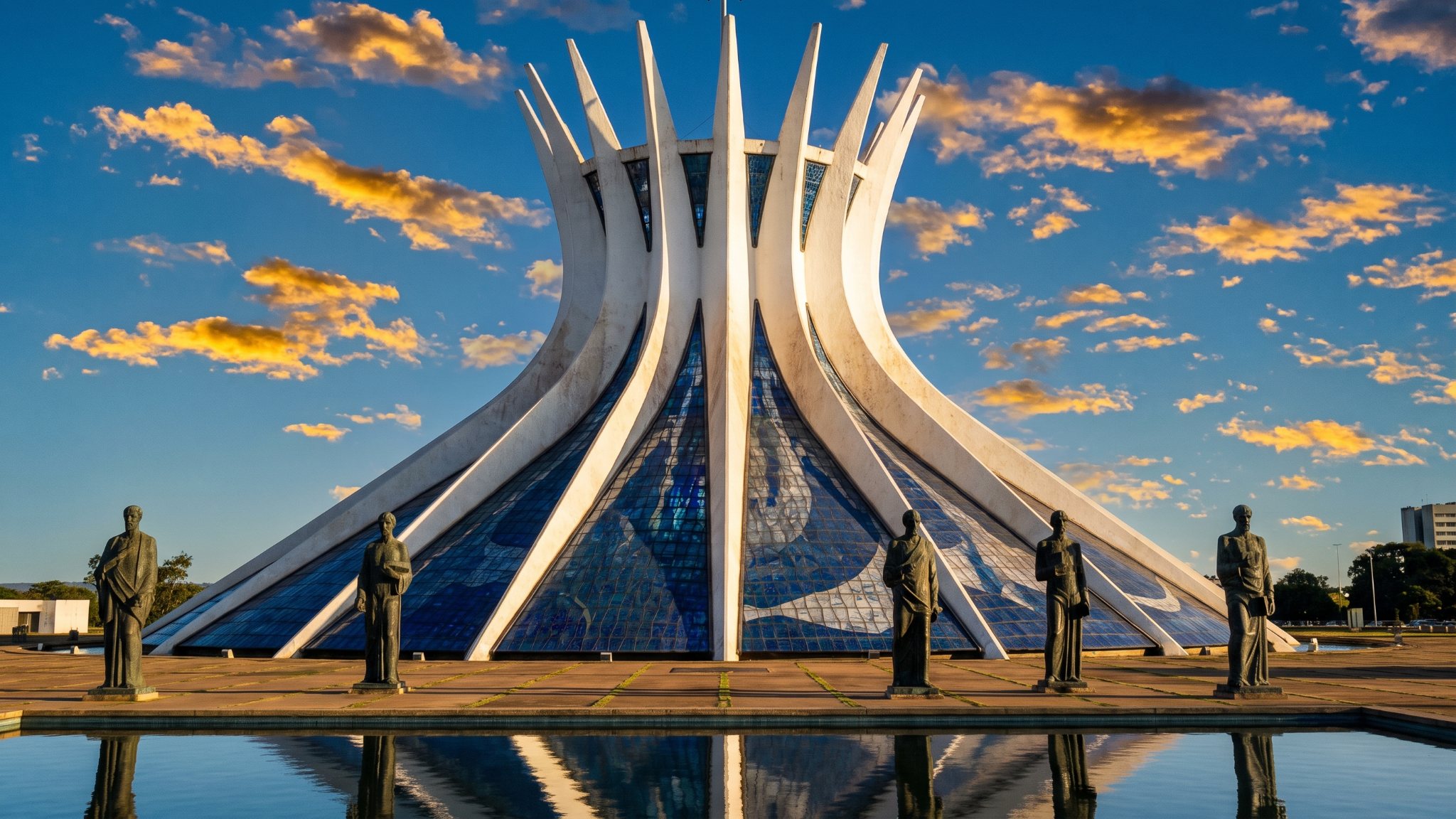
The 20th century was a sequence of strongmen and builders. Getúlio Vargas ruled for most of 1930–54 and gave Brazil its labour laws, its state oil company and samba as national symbol. Juscelino Kubitschek promised “fifty years of progress in five” and delivered the most audacious piece of it: Brasília, a brand-new capital on the empty central plateau, laid out as an aeroplane by Lúcio Costa, clad in Oscar Niemeyer’s curves, and inaugurated on 21 April 1960 after just 41 months of construction. Four years later the generals took over, and Brazil lived under military rule from the 1964 coup until 1985 — the source of the censorship-era songs of Chico Buarque and Caetano Veloso that you will still hear in every bar.
Democracy returned with the 1988 Constitution, hyperinflation was tamed by the Plano Real in 1994 (hence the currency’s name), and the country has since hosted a World Cup and an Olympics and swung between left and right with a vigour that fills every hotel breakfast room. You land in an election year — the presidential vote is in October 2026 — so bring opinions, but wait to be asked.

Brazil September–December 2026 — Spring Prices, Pantanal Jaguars & Réveillon on Copacabana
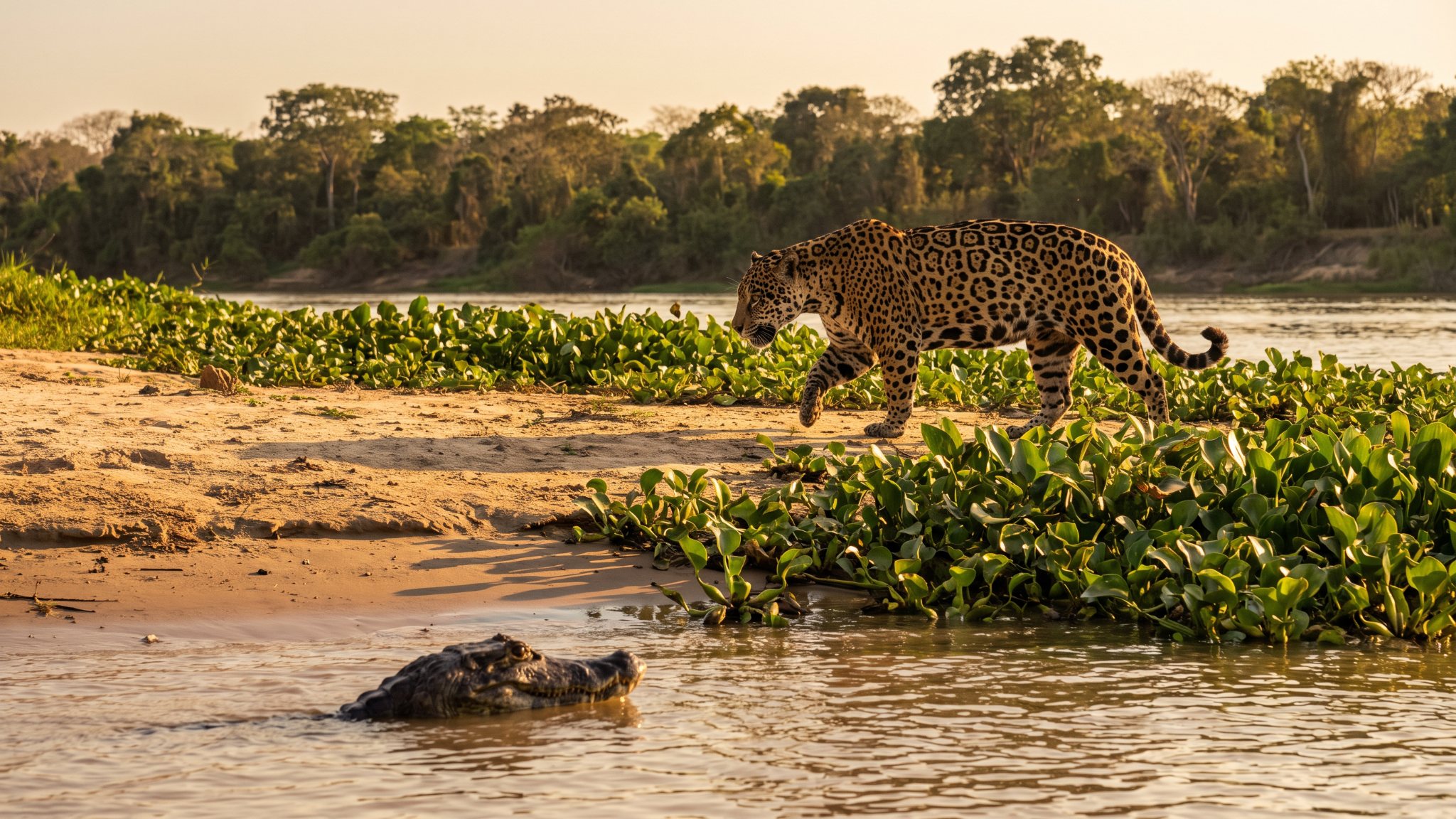
If you are reading this in September 2026, you have landed in the sweet spot. Brazilian spring — September to November — is the second shoulder season: the Argentine winter-holiday crowds have gone home, the Réveillon and Carnival price surge hasn’t started, and the weather is doing three good things at once. The Northeast coast has its clearest sky and steadiest wind; the Pantanal dry season is peaking, which is when jaguars come down to the riverbanks; and the Amazon has dropped far enough to expose Rio Negro beaches and shorten the walk into the forest.
- 7 September — Independence Day: a Monday in 2026, so a long weekend; military parades on the Esplanada in Brasília and along Rio’s Avenida Presidente Vargas, and domestic flights sell out.
- 4–13 September — Bienal Internacional do Livro, São Paulo: the 28th edition of Latin America’s biggest book fair at the Distrito Anhembi.
- September–October — Pantanal peak: Porto Jofre boat safaris report an 80–90% chance of a jaguar sighting between July and October; October is hot (35 °C+) but the sightings are the year’s densest.
- 7–25 October — Oktoberfest Blumenau: the 41st edition of the largest Oktoberfest in the Americas, in a Santa Catarina town founded by Germans in 1850; eight street parades this year.
- 12 October — Nossa Senhora Aparecida: patron-saint holiday and a long weekend; the same month brings the presidential election (first Sunday, run-off at month end), rallies and a very talkative country.
- 2, 15 and 20 November: All Souls’, Republic Day and — since 2024 a federal holiday — Black Consciousness Day, a Friday in 2026. Salvador’s November is the run-up to its summer festival calendar; Rio empties toward the beaches on each long weekend.
- 31 December — Réveillon, Copacabana: the biggest New Year’s Eve party on the planet by Guinness’s reckoning. Rio’s City Hall counted more than five million people across the city for the 2025 turn of the year, with about 2.5 million on Copacabana itself; the 2026 edition fired twelve minutes of fireworks from 19 barges plus a drone show.
Réveillon deserves its own briefing because it is both magical and logistically savage. Everyone wears white — for peace, and for Iemanjá, the Afro-Brazilian sea goddess to whom people push little boats of flowers into the surf at midnight. Hotels on Avenida Atlântica sell out by October at three to five times normal rates with four-night minimums; the metro runs all night but the beach exits are one-way funnels; and phones vanish from back pockets at an industrial rate. My rules: stay in Ipanema or Leme, walk onto the sand by 9 p.m. with a card and a phone on a lanyard, watch from the Leme end where the crowd thins, and let the party carry you to sunrise. Guinness World Records has certified Rio’s as the largest New Year celebration in the world.
Then look ahead. Carnival 2027 is early — Friday 5 February through Ash Wednesday 10 February, with the Special Group Sambadrome parades on Sunday 7 and Monday 8 February and the Champions’ Parade the following Saturday, 13 February. An early Carnival compresses the summer high season, which means Rio and Salvador rooms for that week are being booked right now, in the spring — if February 2027 is your target, the reservation belongs in this month’s to-do list, not next year’s.

Best Time to Visit Brazil (Season by Season)
There is no single best time, because a country spanning 39 degrees of latitude doesn’t have a single climate. The trick is to decide which Brazil you want — beach, jungle, wetland, city — and let that pick the month. Southern-Hemisphere seasons apply: summer is December to February, winter June to August.
Summer (December–February)
High season and hot season. Rio sits at 23–30 °C with humidity near 80% and late-afternoon thunderstorms that clear the air for the evening; the Northeast is drier and windier, the South (Florianópolis, Porto Alegre) is at its beach best. Réveillon on 31 December and Carnival (5–10 February 2027) bracket the season and drive its prices: expect Rio, Búzios, Florianópolis and the Northeast coast from Recife to Jericoacoara to double their rates, with hotels selling out three to four months ahead. The Amazon is entering its rainy season — daily downpours, rising rivers — and the Pantanal is flooding, which scatters the wildlife and closes the Transpantaneira’s far end. Go for the beaches and the parties; skip the interior.
Autumn (March–May)
Post-Carnival shoulder season and, for most travellers, the best value window on the coast. Crowds thin by mid-March, beach weather holds in Rio and the Northeast at 25–29 °C, and prices drop by a third. The Amazon reaches its high-water peak around June — the Rio Negro at Manaus rises 10–15 m in a typical year, and reached a record 30.02 m in June 2021 — which turns the forest into the flooded igapó, when you canoe between the treetops and watch pink dolphins hunt under the branches. Holy Week (28 March–4 April 2027) is a domestic peak for Ouro Preto’s processions. The catch: autumn rain in the Southeast can be intense for days — keep museum days in reserve.
Winter (June–August)
Dry season across most of the interior, and the best window for wildlife and hiking. The Pantanal shrinks from June, concentrating caimans, capybaras, giant otters and jaguars along the remaining rivers; Iguaçu runs strong but the sky is clearer; Chapada Diamantina’s waterfalls and cave pools are at their most transparent; and Lençóis Maranhenses’ lagoons are full from the January–June rains. São Paulo is 12–22 °C and wants a jacket; Rio is 17–25 °C and blissfully quiet outside July, when Argentine school holidays and the Rio Book Biennial fill it up. June belongs to Festa Junina: the Northeast honours Santo Antônio, São João and São Pedro with forró, quadrilha square dancing, corn everything and bonfires, and Campina Grande and Caruaru each claim the biggest São João on Earth. Late June is also Parintins, the Amazon’s Boi-Bumbá spectacle downriver from Manaus.
Spring (September–November)
My pick, and the season you are in. Humidity starts to climb in Rio and São Paulo but stays tolerable; the Northeast coast — Porto de Galinhas, Maragogi, Praia do Forte, Jericoacoara — has its clearest water of the year and the kitesurfing wind is on; the Pantanal dry season is at its peak and hottest; the Amazon is at low water, which means river beaches, easier forest walks and more concentrated fishing birds. Oktoberfest Blumenau (7–25 October 2026) is the big festival; the Lençóis lagoons are draining but still swimmable through September. Prices are at their annual low outside the three long weekends, and by late November the first Réveillon bookings start to bite — book December accommodation now if it isn’t already done.
Shoulder-season tip: the second half of October and the first half of May are Brazil’s two sweet spots — warm, dry-ish, uncrowded, and with domestic fares at 30–40% of Carnival rates. If you can only manage one fortnight in the next twelve months, take October.
Getting There — Flights, GRU & GIG, the e-Visa
Brazil’s two long-haul front doors are São Paulo–Guarulhos (GRU) and Rio de Janeiro–Galeão (GIG), with Brasília, Fortaleza, Recife, Salvador and Belo Horizonte taking a growing share of direct flights from Europe and the eastern United States. Overnight flights from North America and Europe land in the morning, and thanks to three competitive domestic carriers you can usually be in Iguaçu, Salvador or Manaus the same evening.
- São Paulo–Guarulhos (GRU) — the busiest airport in South America, with a record 47.19 million passengers in 2025, up about 8% on the previous high; 25 km northeast of the centre. Connect by the Airport Bus Service to Paulista/Congonhas, by the CPTM Line 13 train to Engenheiro Goulart, or by Uber/99 (R$90–140 to Jardins, 45–90 minutes depending on the traffic gods).
- Rio de Janeiro–Galeão (GIG) — Rio’s long-haul gateway on Ilha do Governador, 20 km from Copacabana; the BRT TransCarioca links to the metro at Vicente de Carvalho, but at night take a pre-paid taxi from the official desk or a rideshare (R$70–100 to the Zona Sul).
- Brasília (BSB) — the central hub, 12 km from the Esplanada; the smart connection point for the Pantanal (Cuiabá) and the Amazon (Manaus), and increasingly served nonstop from Lisbon and Miami.
- Northeast gateways — Fortaleza (FOR), Recife (REC) and Salvador (SSA) have direct flights from Lisbon, Madrid and Miami; landing in the Northeast and flying out of São Paulo or Rio is the cleanest way to do the country north-to-south without backtracking.
Flight times (nonstop): New York → GRU about 9h 45m · Miami → GRU 8h 30m · Toronto → GRU 10h 15m · London → GRU 11h 45m · Lisbon → GRU 10h · Paris → GRU 11h 30m · Johannesburg → GRU 9h 30m · Buenos Aires → GRU 2h 45m. There are no nonstops from Australia; Sydney routes via Santiago (LATAM, about 14h to SCL plus 4h to GRU) or via Dubai/Doha.
Carriers: LATAM Brasil is the biggest airline in the country — 40.75% of the domestic market in November 2025, its 34th consecutive month on top — with GOL at 32.6% and Azul at 26.6%. Long-haul, LATAM, American, United and Delta cover the US gateways; TAP via Lisbon is Europe’s great connector, with nonstops to nine Brazilian cities; Azul flies Florida, Lisbon and Paris into its Campinas (VCP) hub, 100 km from São Paulo — cheap fares, awkward transfer.
Visa / entry — read this twice. Since 10 April 2025, ordinary-passport holders from the United States, Canada and Australia need an electronic visa before boarding a flight to Brazil. The e-Visa costs US$80.90, is applied for online through the government’s VFS-run portal, and is normally issued within five working days — allow two weeks in case of a document request. It is valid for ten years (US) or five years (Canada, Australia), multiple-entry, with a maximum stay of 90 days per visit and 180 days in any twelve months. Since early 2026 the e-Visa is tied into airline departure-control systems, so a check-in agent without a valid visa code on file will not print your boarding pass. EU, UK, Japanese, New Zealand and Mercosur passport holders remain visa-free for 90 days, extendable once. Passports must be valid for six months on arrival; the yellow-fever certificate is not checked at the border but is required for onward travel to several countries if you have been in Brazil.
Getting Around — Flights, Buses & the Lack of a Bullet Train
Brazil has no national passenger rail network to speak of — the Rio–São Paulo high-speed line has been announced and shelved so many times that cariocas use it as a punchline — so a country the size of Europe moves by air and by bus. The good news is that three big airlines fight for every route, and fares booked three weeks ahead routinely come in under R$400 (USD $80) one-way on the trunk routes. The bad news is that anything less than a week out, or across a holiday, can triple.
📍 Map of Brazil: Every Place in This Guide
Flying
- Rio → São Paulo: the Ponte Aérea shuttle between Santos Dumont (SDU, on the bay downtown) and Congonhas (CGH, in the city) runs every 15–30 minutes from dawn to 10 p.m.; 55 minutes in the air, from R$250 booked ahead. Both airports are inside the cities, which saves you two hours versus GRU/GIG.
- Rio → Salvador: 2h 15m nonstop · São Paulo → Foz do Iguaçu: 1h 50m · São Paulo → Manaus: 3h 50m · Rio → Recife: 3h · Salvador → Fernando de Noronha: 1h 40m on Azul, a monopoly route that prices accordingly (R$1,500–3,000 return).
- Air passes: LATAM, GOL and Azul all sell multi-flight passes to foreign residents; they beat walk-up fares but rarely beat three-weeks-out bookings. Azul reaches the small cities (Barreirinhas for Lençóis, Bonito, Vale do Capão’s nearest strip at Lençóis-Bahia) that the other two skip.
Buses
Long-distance coaches (ônibus rodoviário) are the country’s circulatory system — safe, punctual, air-conditioned to Arctic levels, and sold online through ClickBus or the operators themselves. Classes run from convencional through executivo to leito, a fully reclining sleeper with blankets and a pillow that costs a fraction of a hotel night. Rio → São Paulo is six hours and R$120–200; Salvador → Lençóis (Chapada Diamantina) is six hours and the only sensible way in. Bring a fleece and your passport, which is checked at boarding.
Riverboats
In the Amazon the river is the road. The classic slow-travel run is Manaus → Belém, about four days downstream on a three-deck gaiola with a hammock slung on the open deck (R$300–450 including basic meals) or a cabin for double; Manaus → Tabatinga at the Colombian border takes six or seven days upstream. Buy your hammock in Manaus’s market, board early to claim a spot away from the engine, and treat it as the trip, not the transfer.
Cities
São Paulo’s Metrô is clean, cold and the fastest thing in the city at rush hour — six lines plus the CPTM suburban trains, R$5.20 a ride on a rechargeable Bilhete Único. Rio’s MetrôRio Lines 1 and 4 run the length of the Zona Sul from Centro through Copacabana and Ipanema to Barra, R$7.50 a ride on a RioCard, and are the single safest way to move around the city after dark. Uber and 99 work nationwide, are tracked, take cards and undercut metered taxis — 99 is often cheaper outside Rio and São Paulo. Moovit beats Google Maps for buses. Rental cars make sense in three places — the Minas circuit, the Santa Catarina coast, Chapada Diamantina — and nowhere else on a first trip.

Top Cities & Regions
Brazil has five personalities — Southeast, Northeast, North, Centre-West and South — and a two-week first trip realistically covers three. Here are the eight places I would choose from.
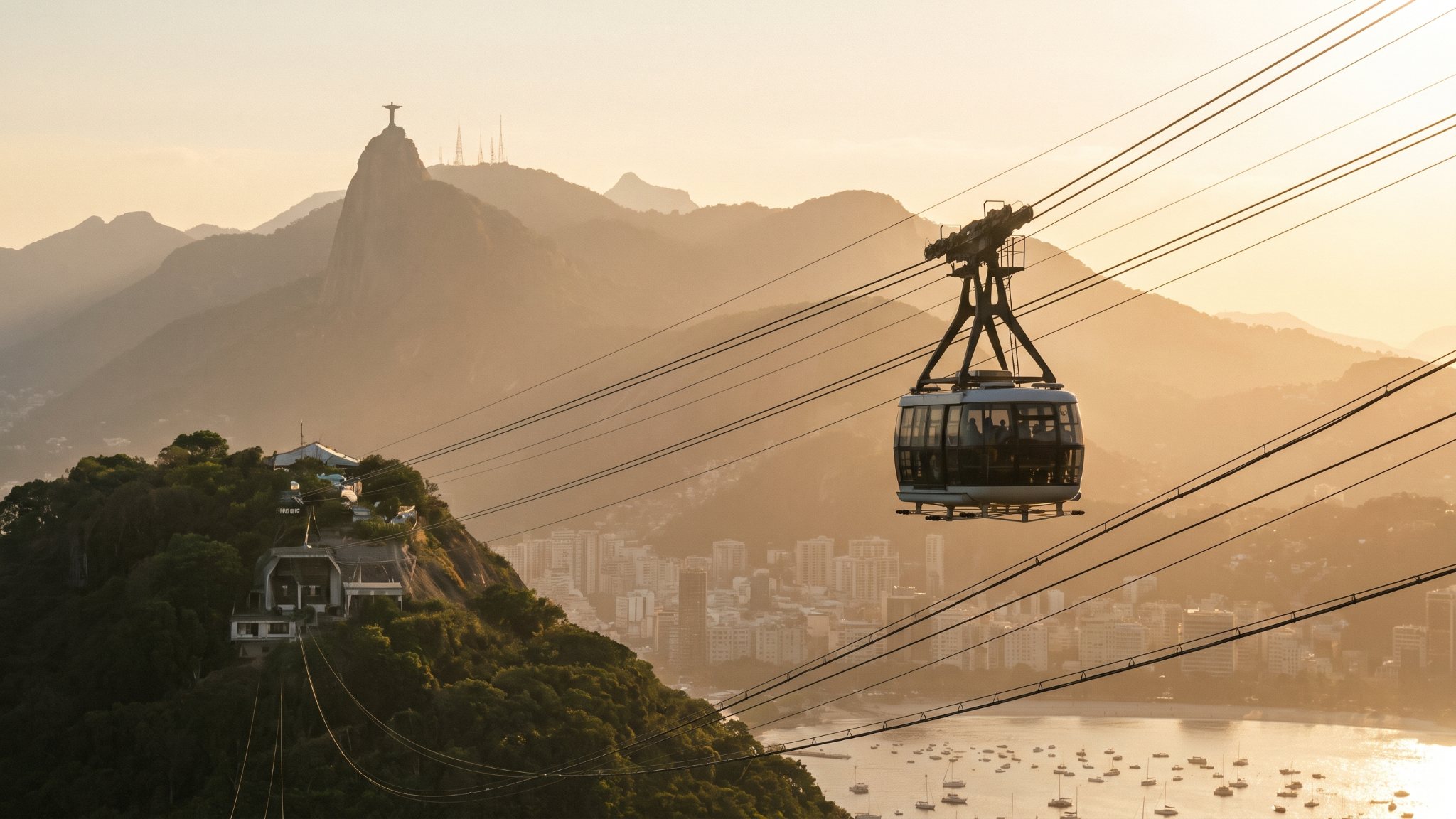
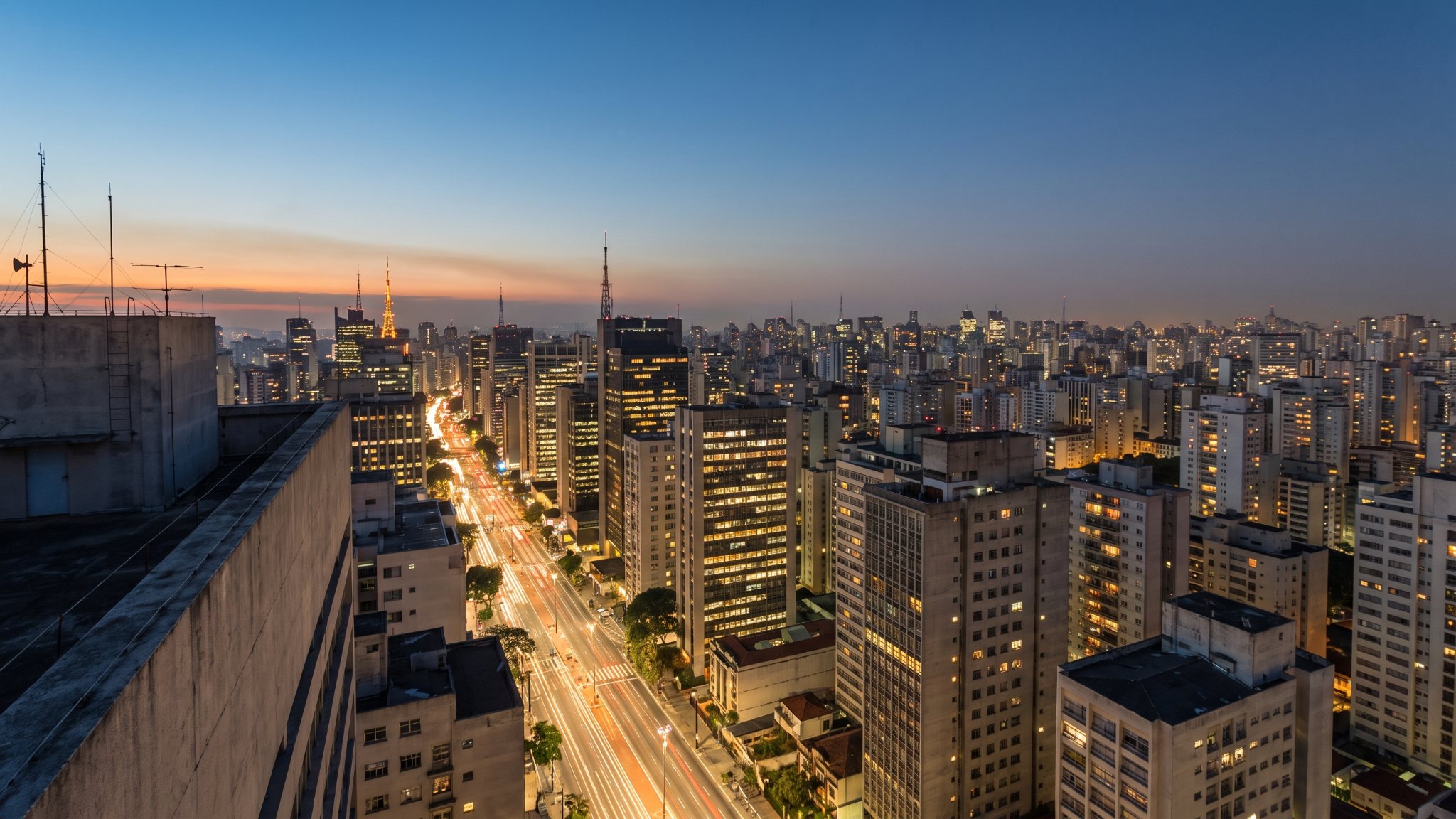
Rio de Janeiro
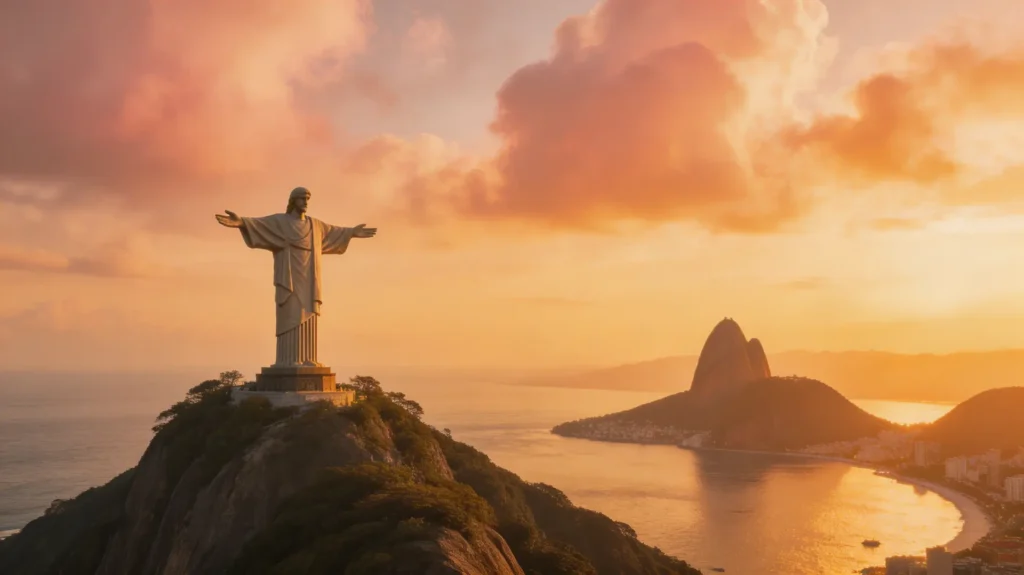
The postcard, and it earns it. The 2022 census counted 6,211,423 cariocas in the gap between granite and Atlantic, and UNESCO listed the whole landscape — Corcovado, Tijuca, Sugarloaf, the beach arc — as a World Heritage cultural landscape in 2012. Our Rio de Janeiro city guide has the neighbourhood-by-neighbourhood version.
- Christ the Redeemer — 30 m of soapstone Art Deco on the 700 m Corcovado summit; ride the 1884 cog railway (R$128–134, timed slot booked online) at opening or after 4 p.m. — midday is a cloud-and-selfie scrum.
- Sugarloaf (Pão de Açúcar) — two cable-car stages to the 396 m summit, about R$120 return, and the city’s finest golden-hour view.
- Santa Teresa & Lapa — the yellow bonde tram (since 1896, restored after 2011, R$20) climbs across the Arcos da Lapa to the bohemian hilltop; walk down Selarón’s 215 tiled steps into Lapa’s Friday-night samba.
Signature dishes: Saturday feijoada at Casa da Feijoada, bolinho de bacalhau at Bar Urca on the sea wall, and a caipirinha at Garota de Ipanema, where the song was written.
São Paulo
South America’s economic and cultural engine — 11,451,245 people in the city proper at the 2022 census, around 22 million in the metro, and the largest Japanese community outside Japan, centred on Liberdade. Ugly from the air, magnetic on the ground: the 2025 Michelin Guide lists 149 restaurants across Rio and São Paulo, and the 2026 selection gave Brazil its first two three-star restaurants. Our São Paulo city guide has the bairro breakdown.
- MASP — Lina Bo Bardi’s 1968 glass box hung from red portals on Avenida Paulista; free on Tuesdays.
- Mercado Municipal & Liberdade — the Mercadão’s absurd mortadella sandwich, then the Sunday fair under Liberdade’s red torii gates.
- Ibirapuera Park — Niemeyer pavilions, Burle Marx gardens, the city’s Sunday living room.
Signature dishes: pastel de feira at a Saturday street market, a Bixiga cantina on Sunday, and lunch at A Casa do Porco (Michelin Green Star and Bib Gourmand), the hardest table in the city.
Salvador
Brazil’s first capital (1549–1763) and the heart of Afro-Brazil, where capoeira, candomblé and dendê-oil cooking were forged; 2,418,005 soteropolitanos at the 2022 census, most of African descent. The Pelourinho — the pastel baroque upper town named for the whipping post that stood in its square — was UNESCO-listed in 1985. See our Salvador city guide for the full Bahian brief.
- Pelourinho — Olodum drum rehearsals on Tuesday nights and the Igreja de São Francisco, its interior said to carry 800 kg of gold leaf.
- Elevador Lacerda — the 1873 public lift dropping 72 m from the upper town to the Mercado Modelo, for a few centavos.
- Capoeira — UNESCO Intangible Heritage since 2014; the rodas at Forte de Santo Antônio are the real thing.
Signature dishes: moqueca baiana in a clay pot, acarajé from a Baiana in white lace in Rio Vermelho, and a cold Bohemia on the Pelourinho steps.
Brasília
The planned modernist capital, inaugurated 21 April 1960 after 41 months of construction and UNESCO-listed in 1987 — the only 20th-century city on the list; 2,817,381 people in the Federal District at the 2022 census, most of them outside Lúcio Costa’s aeroplane-shaped plan. A day for architecture pilgrims; rent a bike and don’t try to walk it.
- Praça dos Três Poderes — Congress, Supreme Court and Planalto Palace, all Niemeyer, in one square.
- Catedral Metropolitana — sixteen curved columns forming a crown; you enter through a dark tunnel and emerge under Marianne Peretti’s blue glass.
- Itamaraty Palace & the JK Memorial — reflecting pools and Kubitschek’s tomb.
Signature dishes: rice with pequi (the fruit you must not bite), galinhada, and Sunday feijoada on the closed Eixão.
Foz do Iguaçu
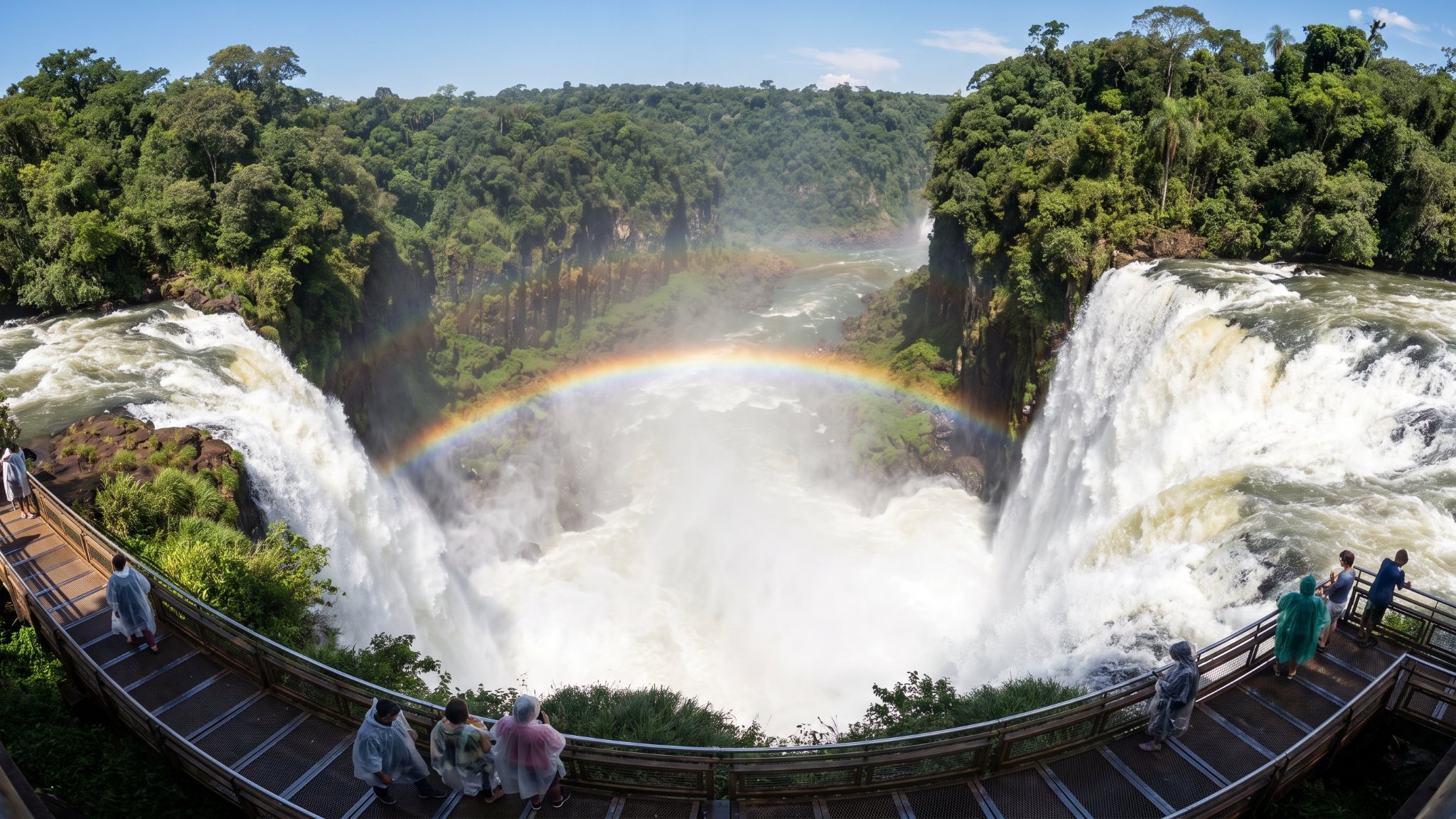
A border city built around the largest waterfall system on Earth — 275 falls along a 2.7 km basalt edge where Brazil, Argentina and Paraguay meet, UNESCO-listed on the Brazilian side in 1986. The Brazilian park gives you the panorama and a catwalk into the Devil’s Throat spray for R$134 (international rate since December 2025); the Argentine side gives you the top-down closeness and takes a second day. Our Iguazu Falls guide walks both sides.
- Macuco Safari — the boat that drives you into the falls; you will be soaked and you will pay extra.
- Parque das Aves — a rescue aviary at the park gate where toucans land on you; the best R$90 in town.
- Itaipu Dam — the binational plant supplying most of Paraguay’s power and about a tenth of Brazil’s.
Signature dishes: wood-fire churrasco, Paraguayan chipa from the border stalls, river dorado.
Manaus & the Amazon
The rubber-boom capital, 1,500 km upriver and two million strong, is the gateway to the largest rainforest on Earth and the UNESCO-listed Central Amazon Conservation Complex. Read our Manaus and the Meeting of Waters guide before you book a lodge.
- Meeting of Waters — the black Rio Negro and sandy Solimões run side by side for about 6 km without mixing.
- Teatro Amazonas — the 1896 opera house of Italian marble and French tiles; Amazonas Philharmonic rehearsals are free.
- Jungle lodges — Anavilhanas up the Rio Negro (blackwater, fewer mosquitoes) or Mamirauá near Tefé for serious wildlife; three nights minimum.
Signature dishes: grilled tambaqui ribs, tacacá with lip-numbing jambu, tucumã in your breakfast sandwich.
Ouro Preto & the Minas Gerais Colonial Circuit
Two hours south of Belo Horizonte, the gold-rush towns of Minas are the most under-visited world-class thing in Brazil. Ouro Preto — Vila Rica when it was the richest city in the Americas — was the country’s first UNESCO site in 1980, with thirteen baroque churches on a hillside so steep the cobbles are stepped. Add Tiradentes (the prettiest, the foodiest), Congonhas, where Aleijadinho’s twelve soapstone prophets guard the UNESCO-listed Bom Jesus sanctuary, and Inhotim, the 140-hectare open-air art park. Eat: pão de queijo, feijão tropeiro, farm-stall doce de leite.
Florianópolis & the South
Santa Catarina’s island capital — “Floripa” — has 42 beaches on one island, the national surf scene, the hip Lagoa da Conceição district and a reputation as one of Brazil’s safest big cities; packed with Argentines in January, warm and half-price in October. Inland, Blumenau’s Oktoberfest and the Serra Gaúcha wine towns show you the German and Italian Brazil most visitors never see. Eat: sequência de camarão at the Lagoa, Ribeirão da Ilha oysters.
Brazilian Culture & Etiquette — What to Know Before You Go

Brazil is one of the most physically warm, socially open cultures on the planet, and also one with sharp class lines and a real anxiety about crime. The rules are simple, and Brazilians forgive foreigners almost anything as long as they smile and try the Portuguese.
The Essentials
- Greetings are warm and physical. Two cheek-kisses among women and mixed company in Rio, Minas and Bahia; São Paulo defaults to one; men shake hands then hug or back-slap once they know you. Bom dia (until noon), boa tarde and boa noite are not optional — you say them walking into a shop, a lift, a bus.
- Time is elastic, socially. Arriving twenty minutes late for a dinner is polite; arriving on time can catch your host in the shower. Business and medical appointments run to the clock.
- Tipping is built in. A 10% taxa de serviço is added to almost every restaurant bill — legally optional, universally paid. Taxi and rideshare drivers are not tipped beyond rounding up; hotel porters get R$5–10; a tour guide R$50–100 for a full day.
- Beachwear belongs on the beach. Brazilians wear less on the sand than almost anyone and cover up completely to cross the road; walking into a padaria or church in swim shorts is a real faux pas. Topless is illegal in Rio.
- Personal questions are friendship. Are you married? How much is your rent? Why don’t you have children? These arrive in the first ten minutes and are meant kindly. Ask back.
- Football is not a hobby. Pick a club when asked, and never mention the 7–1 unless a Brazilian does first.
Language
- Portuguese, not Spanish. Brazilians understand a fair bit of Spanish and may resent being addressed in it. Twenty words go a long way: obrigado/obrigada (thanks — gendered by the speaker), por favor, com licença (excuse me), quanto custa?, a conta, por favor, tudo bem? (the universal how-are-you, answered with tudo bem).
- English is patchy — fine in Rio and São Paulo hotels and museums, rare in Brasília, the Northeast interior, the Amazon and every bus station. Download Google Translate’s offline Portuguese pack.
- The diminutive is love. A cafezinho is a small coffee, a cervejinha a quick beer, and um minutinho is anything from one minute to forty.
Religion, Race & Identity
The 2022 census found Brazil is still majority Catholic but shrinking fast toward the evangelical churches, which now claim close to a third of the population; alongside both run the Afro-Brazilian religions — candomblé in Bahia, umbanda in Rio — whose orixás you will see honoured at the Iemanjá festival on 2 February and at every Réveillon. Race is the country’s deepest conversation: Brazil has the largest Black population outside Africa, and the 20 November Black Consciousness holiday — federal only since 2024 — marks the death of Zumbi, leader of the 17th-century Palmares maroon state. Ask, listen, and don’t import your own country’s framework wholesale.
Safety Etiquette in Cities
- Minimise the target. No visible jewellery or camera, phone out only when needed and never on a Copacabana sidewalk at night; carry a decoy wallet with R$100 and an expired card. Canada’s advisory puts it bluntly: thieves target people who look wealthy and people using their phones.
- Rideshare after dark. Uber and 99 are cheap and tracked. Do not walk the beachfront between 10 p.m. and dawn; that is exactly when the arrastão — a group sweep down a stretch of sand grabbing phones — happens.
- Favelas only with a community guide. Rocinha and Vidigal run respectful resident-led walks; freelancing is not brave, just foolish.
- If it happens, hand it over. Nobody in Brazil resists a mugging. Phones are replaceable.
A Food Lover’s Guide to Brazil

Brazilian food is regional before it is national. The Northeast leans on coconut milk, dendê palm oil and Afro-Atlantic technique; Minas Gerais grounds everything in corn, pork and cheese; the South grills beef the gaúcho way; the Amazon turns river fish and jungle fruit into a cuisine like nowhere else; and São Paulo, which imported half of Italy and a slice of Japan, cooks everything. The dish that binds them is feijoada — black beans slow-cooked with smoked pork, descended from Portuguese bean stews and the improvisations of enslaved cooks — eaten nationwide on Wednesdays and Saturdays.
Must-Try Dishes
| Dish | Description |
|---|---|
| Feijoada | The national dish — black beans stewed with pork ears, tail, sausage and smoked cuts, served with rice, couve, farofa, orange and a caipirinha. Best on a Saturday in Rio, from R$40 at a botequim to R$120 at a white-tablecloth buffet. |
| Pão de queijo | Chewy tapioca-flour cheese puffs from Minas Gerais, naturally gluten-free and ubiquitous at every padaria breakfast for R$3–6 apiece. |
| Moqueca | Fish or seafood stew in a clay pot — the Bahian version with coconut milk and dendê, the Capixaba version from Espírito Santo with annatto and no coconut. Order for two; it comes with pirão fish porridge. |
| Churrasco | Southern barbecue: picanha (rump cap), costela (beef rib), cupim (hump) and linguiça on skewers, served rodízio-style at a churrascaria until you flip the card to red. R$150–250 with drinks at a good one. |
| Acarajé | Black-eyed-pea fritter fried in palm oil, split and stuffed with vatapá, caruru and shrimp — Salvador’s street icon, sold by Baianas in white lace and inscribed as Brazilian intangible heritage. |
| Coxinha | The teardrop-shaped shredded-chicken croquette that fuels every bus station and bar in the country; the São Paulo standard is judged on the crunch. |
| Tacacá | Amazonian street soup of tucupi (fermented cassava juice), jambu leaves that numb your mouth, and dried shrimp, served scalding in a gourd at dusk in Belém and Manaus. |
| Brigadeiro | Chocolate-and-condensed-milk truffle rolled in sprinkles — the birthday-party sweet in every Brazilian home, now gourmet-ised in Rio’s and São Paulo’s brigaderias. |
Padaria & Botequim Culture
If restaurants are how Brazilians celebrate, padarias and botequins are how they live. Nearly every urban block has a padaria — part bakery, part counter café, part lunch spot — where a cafezinho and a pão na chapa (a griddled buttered roll) or a misto quente make the default breakfast for under R$15. The botequim is the corner bar: plastic chairs on the pavement, chopp in 300 ml glasses so it never gets warm, and a menu of petiscos — bolinho de bacalhau, pastel, carne seca with pumpkin — that is the true national cuisine. Rio’s classics are Jobi in Leblon and Bar Urca with the sea wall for a table.
- Comida a quilo: the pay-by-weight buffet is the smartest lunch in Brazil — R$60–90 per kilo (about USD $12–18), so a big plate of rice, beans, grilled meat and salad runs R$30–40. Look for one busy with office workers at 12:30.
- Prato feito (PF): the fixed plate at a lunch counter — rice, beans, a protein, salad, farofa — for R$20–30. Unbeatable value.
- Açaí: a savoury purée with fish in the Amazon, a frozen sweetened bowl with granola everywhere else. Both are correct.
- Chopp etiquette: order a second before you finish the first, and let the bartender leave a thick foam collar — it keeps the beer cold.
Drinks & the Top End
Cachaça is the spirit — distilled sugarcane, from R$15 supermarket bottles to aged Minas releases that stand beside good rum — and the caipirinha (cachaça, lime, sugar, ice) is its vehicle; ask for a caipifruta with maracujá or cajú. Beer is light lager served closer to freezing than anywhere on earth; the everyday cafezinho is sweet, short and cheap despite Brazil growing more coffee than any other country; and Guaraná Antarctica is the taste of every Brazilian childhood. At the top, São Paulo’s tasting menus — D.O.M. (two stars, Alex Atala’s Amazonian pantry), Maní, Evvai and the three-star newcomers — run R$600–1,200 a head, with Rio’s Oteque, Lasai and newly starred Oseille a little lower; reservations open thirty to sixty days out.
Off the Beaten Path — Dunes, Diamonds & Islands Beyond the Guidebook

Lençóis Maranhenses (Maranhão)
A 1,550 km² “desert” of blinding white dunes on the Maranhão coast that is not a desert at all: it rains 1,600 mm a year here, and between January and June the water collects in the troughs to form tens of thousands of freshwater lagoons the colour of a swimming pool. UNESCO inscribed it in July 2024. The lagoons are fullest from late May through August and still swimmable into September; by November most are gone and the dunes are just dunes. Fly to São Luís (itself UNESCO-listed), drive four hours to Barreirinhas, then 4×4 to Lagoa Azul for sunset — or base yourself in Atins on the far side and walk into the dunes from the village.
Chapada Diamantina (Bahia)
A 1,520 km² national park of table mountains, canyons and cave systems in the Bahian interior, six hours by road from Salvador, that a century ago drew diamond prospectors to the now-pretty town of Lençóis. The 340 m Cachoeira da Fumaça — the “smoke waterfall,” because the wind atomises the water before it lands — is among the tallest in Brazil, reached by a four-hour round-trip hike from Vale do Capão with a mandatory local guide. The Poço Azul and Poço Encantado cave pools turn electric blue at midday from roughly April to September; Morro do Pai Inácio is the sunset. Budget three nights, a week for the Vale do Pati traverse.
Fernando de Noronha (Pernambuco)
A 21-island volcanic archipelago 354 km off the Northeast coast, UNESCO-listed in 2001 with the Rocas Atoll as the Brazilian Atlantic Islands, and quite deliberately expensive. Every visitor pays the daily environmental preservation tax (TPA) — R$105.79 a day in 2026, rising steeply for longer stays — plus a separate marine-park ticket of R$384 for foreigners (half for Brazilians), valid ten days. What it buys: spinner dolphins in Baía dos Golfinhos at dawn, turtles nesting on Praia do Leão, and Praia do Sancho — reached by ladder through a cliff crack — which keeps winning “world’s best beach” polls. Fly from Recife or Natal; visibility is best August to January.
The Pantanal (Mato Grosso & Mato Grosso do Sul)
The largest tropical wetland on Earth — roughly 150,000 km² spilling into Bolivia and Paraguay — and the best place in the Americas to see big animals, because unlike the Amazon it is open country. Jaguars, giant otters, capybaras, caimans, hyacinth macaws, tapirs; in the northern Pantanal, boat trips out of Porto Jofre at the end of the 147 km Transpantaneira dirt road claim an 80–90% chance of a jaguar sighting between July and October. Fly into Cuiabá (north) or Campo Grande (south), stay at a working fazenda lodge, and go now — September and October are peak season and the last months before the rains scatter everything.
Jericoacoara (Ceará)
A former fishing village inside a national park on the Ceará coast, 300 km west of Fortaleza, with sand streets, no streetlights and a nightly ritual of climbing the Sunset Dune to watch the sun drop into the sea. Buggies reach the Lagoa do Paraíso and its hammocks-in-the-water, and steady trade winds from July to January make it a world kitesurfing capital. Arrive by 4×4 along the beach from Jijoca, or via the small Cruz airport.
Paraty & the Costa Verde (Rio de Janeiro)
Four hours down the coast from Rio, Paraty is a whitewashed 18th-century port frozen when the gold road moved and now UNESCO-listed, with Ilha Grande, as a joint cultural-natural site since 2019. Cobbles that flood at spring tide, schooner trips to nameless islands, cachaça distilleries in the hills; combine with car-free Ilha Grande and the Lopes Mendes walk for the best week within reach of Rio.
Bonito (Mato Grosso do Sul)
Limestone country where the rivers run so clear you can count the fish from the bank — snorkel-floats down the Rio da Prata, the Gruta do Lago Azul cave, a rappel into the Abismo Anhumas sinkhole. Every attraction is capped and booked by voucher, which keeps it pristine and means reserving a week ahead in July and September; it pairs naturally with the southern Pantanal.
Practical Information
| Currency | Brazilian real (R$, BRL). 1 USD ≈ R$5.10 on 3 September 2026, after a year in which the real strengthened about 6%; 1 EUR ≈ R$5.90. |
| Cash needs | Cards and Pix cover most transactions, but cash still matters for beach vendors without a QR code, small-town buses, buggy drivers and tips. Carry R$150–250 in R$20 and R$50 notes; R$100 notes get side-eye. |
| ATMs | Banco do Brasil, Bradesco, Itaú, Santander and Banco24Horas take foreign cards; airports and malls are safest, and many street ATMs shut to foreign cards 22:00–06:00. Withdraw R$1,000 at a time and decline the machine’s conversion. |
| Pix | Instant, free, universal. Foreigners can pay via Wise’s Pix-enabled account details or PagBrasil’s Pix Roaming partners. Ask “tem Pix?”. |
| Tipping | 10% service is on the bill; add nothing. Round up taxis. R$5–10 porters and housekeeping; R$50–100 a day for a guide. |
| Language | Portuguese only. English in Rio/São Paulo tourist zones and upscale hotels; elsewhere use Google Translate offline and a smile. |
| Safety | 130th of 163 on the 2025 Global Peace Index, down from 103rd a decade earlier. Petty theft and phone-snatching are the realistic risk; violent crime against tourists is rare. Rio’s violent crime fell about 4% in 2025 but Copacabana thefts rose — the pattern is the beachfront after 10 p.m. Emergency: 190 police, 192 ambulance. |
| Connectivity | 4G everywhere populated, 5G in the capitals. Claro, Vivo and TIM tourist SIMs at GRU/GIG with passport scan; eSIMs from Airalo/Holafly work on all three networks. Free Wi-Fi in most cafés and every padaria. |
| Power | Type N plug (IEC 60906-1, two round pins plus earth; Type C fits). Voltage varies by city: 127 V in Rio, São Paulo, Belo Horizonte and Manaus; 220 V in Brasília, Salvador, Recife, Fortaleza and Florianópolis. Modern chargers are dual-voltage; hair dryers often are not. |
| Tap water | Not recommended for drinking anywhere; fine for teeth in the big cities. Hotels leave sealed bottles; carry a filter bottle for the Amazon and Chapada. |
| Healthcare | Excellent private hospitals — Albert Einstein and Sírio-Libanês in São Paulo, Copa Star in Rio — that expect a card upfront; SUS public hospitals treat emergencies free but slowly. Insurance with evacuation cover is essential for the Amazon and Pantanal. |
Health: Yellow Fever, Dengue & the Rest
Yellow fever. After the 2016–18 outbreaks the recommended-vaccination zone expanded, and the CDC now advises the vaccine for travellers aged nine months and up to almost the whole country — including the cities and states of Rio de Janeiro and São Paulo, Minas Gerais, the Federal District, the Amazon, the Pantanal states and Paraná (Iguaçu). The only major tourist zones outside the recommendation are the Northeast coastal cities — Fortaleza, Recife, Salvador city, Natal — and Noronha. Brazil does not demand the certificate to enter, but several countries you may go on to (and some airlines) ask for it if you’ve been here. One dose, at least ten days before travel, lasts for life.
Dengue. Endemic and seasonal, peaking in the wet summer (January–May) in the Southeast and Centre-West. Brazil recorded about 5.9 million probable cases in 2025 after a record 2024, and case counts have fallen sharply since; the CDC dropped its Brazil dengue notice in mid-2026, but the mosquito hasn’t gone anywhere. The Aedes mosquito bites by day, so DEET or icaridin repellent, long sleeves at dusk and screened rooms are your defence; there is no traveller vaccine in general use. Malaria is a risk only in the Amazon basin; Zika remains a consideration for pregnant travellers; hepatitis A, typhoid and tetanus are the baseline shots.
Sustainability & Responsible Travel
Brazil’s wild places run on permits, caps and taxes for a reason. Choose lodges run by local families, refuse the pink-dolphin feeding shows around Manaus, pay the park fees without grumbling — they fund the rangers — and remember that the cheapest picanha probably came off cleared Amazon pasture. Embratur’s parks portal lists the licensed operators in each national park.
Budget Breakdown — What Brazil Actually Costs
With the real around R$5.10 to the dollar in September 2026, Brazil is cheaper than the United States or Western Europe on food, drink, transport and mid-range beds, comparable on domestic flights, and expensive at the top end and during Réveillon and Carnival. Numbeo’s September 2026 index puts a meal at an inexpensive restaurant at R$33 nationally and R$40 in Rio, a pint of draft at R$12, and a one-way transit ticket at R$5–7.50.
💚 Budget Traveller
A careful backpacker travels Brazil on USD $40–70 a day outside the festival peaks. Hostel dorms in Rio, Salvador and Floripa run R$80–150 (USD $16–30); padaria breakfasts and comida-a-quilo lunches keep food under USD $12 a day; metro and buses cost R$5–7.50 a ride; overnight leito buses save a hotel night. The two budget-killers are domestic flights (book three weeks out, fly Tuesday–Thursday) and Carnival or New Year accommodation, which can quadruple. Pantanal, Amazon and Noronha are not budget destinations at any time of year; a jungle lodge is R$600+ a night even at the modest end.
💙 Mid-Range
Most independent travellers land at USD $100–180 a day. A boutique pousada in Ipanema, Santa Teresa or the Pelourinho, or a 4-star in São Paulo’s Jardins, runs R$400–800 a night; a churrascaria rodízio is R$150–250 with drinks; a moqueca for two R$180; domestic flights booked ahead R$350–600 one-way; a full-day Iguaçu with both sides and the Macuco boat about R$700. That budget comfortably covers Uber/99 instead of night buses, two good dinners a week, and one splurge — a Pantanal fazenda or a Rio Negro lodge — per fortnight.
💜 Luxury
Luxury Brazil starts around USD $300 a day and scales fast. Copacabana Palace and Fasano in Rio, Rosewood São Paulo, and the Anavilhanas Jungle Lodge run R$2,000–4,500 a night; tasting menus at D.O.M. or Oteque are R$600–1,200 a head; a private Iguaçu helicopter flight adds R$1,500; a Noronha week with the best pousada and a private dive boat is USD $6,000+. A two-week high-end trip — Rio, Paraty, Iguaçu, a jungle lodge — typically lands at USD $9,000–16,000 per person before Carnival premiums.
| Tier | Daily (USD) | Accommodation | Food | Transport |
|---|---|---|---|---|
| Budget | $40–70 | Hostel dorm / simple pousada R$80–150 | Padaria + comida a quilo + PF $8–12 | Metro/bus R$5–7.50 a ride + overnight leito buses |
| Mid-Range | $100–180 | Boutique pousada / 4★ hotel R$400–800 | Botequim lunch + churrascaria or moqueca dinner $25–50 | Uber/99 + domestic flights averaged $25–60/day |
| Luxury | $300+ | Copacabana Palace / Fasano / jungle lodge R$2,000–4,500 | Tasting menus $120–240 | Private driver + business class $200+/day |
Sample three-region fortnight, mid-range, two people: international flights excluded; 4 nights Rio (R$2,800), 3 nights Salvador (R$1,500), 3 nights Pantanal fazenda full-board with safaris (R$7,500), 2 nights São Paulo (R$1,400), four domestic flights (R$4,400), food and drink (R$5,000), attractions and transfers (R$2,400) — about R$25,000, or roughly USD $4,900 for two, USD $175 per person per day. Shift the Pantanal to Iguaçu and it drops by a third.
Planning Your First Trip to Brazil — 5, 7 & 10-Day Itineraries
- Apply for the e-Visa the week you book flights (US, Canada, Australia). US$80.90, online, usually five working days — but the portal wants a passport scan, photo, proof of funds and a return ticket, and any rejection resets the clock.
- Get the yellow-fever shot at least ten days before you fly if your route touches Rio, São Paulo, Minas, Brasília, Iguaçu, the Pantanal or the Amazon — which is to say almost every route. Carry the yellow ICVP card.
- Book domestic flights before you finalise international ones. Brazil’s three airlines price like ride-share surge: the Rio→Manaus, São Paulo→Iguaçu, Salvador→Noronha and Cuiabá routes are the ones to lock three to six weeks out.
- Lock Réveillon and Carnival beds four to six months ahead. Copacabana and Ipanema sell out first, then Salvador’s Barra, then Olinda. Carnival 2027 is 5–10 February — early — so those bookings belong in September and October 2026. Outside the two peaks, three weeks’ notice is plenty.
- Sort your money before you land. A Wise or Revolut card for fee-free ATM withdrawals and card payments; Wise’s Brazilian account details for Pix; R$200 in small notes changed at the airport for the first day.
- Install the stack: 99 and Uber, Moovit, offline Google Translate, and WhatsApp — every pousada, guide and restaurant in Brazil runs on it.
5 days — Rio & a taste of the coast
Day 1: land at GIG, check into Ipanema, sunset at Arpoador, dinner at a Leblon botequim. Day 2: Corcovado at opening on the first cog train, Santa Teresa by bonde, down Selarón’s steps to Lapa for samba. Day 3: beach morning on Ipanema (posto 9), Sugarloaf for golden hour, Bar Urca for bolinhos. Day 4: Petrópolis and the imperial palace, or a schooner from Angra. Day 5: Saturday feijoada, the Museu do Amanhã, evening flight. Five days is enough for Rio to break your heart, not enough to add a second region.
7 days — Rio + Iguaçu + São Paulo
Days 1–3: Rio as above. Day 4: morning flight Rio→Foz do Iguaçu (2h), afternoon on the Brazilian walkway to the Devil’s Throat, Parque das Aves before it closes. Day 5: Argentine side — the Upper and Lower circuits and the Garganta train — back across the bridge for dinner (passport, no visa for the day trip). Day 6: fly Foz→São Paulo Congonhas, Avenida Paulista and MASP, dinner in Pinheiros or Vila Madalena. Day 7: Mercadão, Liberdade, a last pastel, and out through GRU. This is the classic triangle for a reason.
10 days — Rio + Salvador + the Pantanal (or the Amazon)
Days 1–3: Rio. Day 4: fly to Salvador (2h 15m); Pelourinho at dusk, Olodum if it’s Tuesday. Day 5: the Bonfim church and its ribbons, the Mercado Modelo, moqueca in Rio Vermelho, acarajé from Dinha or Cira. Day 6: Praia do Forte and the Tamar turtle project up the coast, or a Bahia de Todos os Santos schooner to Itaparica. Day 7: fly Salvador→Cuiabá via Brasília, transfer down the Transpantaneira to a lodge. Days 8–9: Porto Jofre boat safaris for jaguars and giant otters, night drives, dawn birding. Day 10: Cuiabá→São Paulo for the long-haul home. Swap the Pantanal for a Manaus jungle lodge (Anavilhanas, three nights) between November and June, when the Pantanal is flooding and the Amazon is at high water.
With two weeks or more: add Minas Gerais (Ouro Preto and Inhotim, three days out of Belo Horizonte) between Rio and Salvador, or run the Northeast coast north to Jericoacoara with a Lençóis detour. Three weeks covers Rio, Minas, Salvador, Chapada, the Amazon and Iguaçu without rushing — the trip that shows you Brazil rather than a corner of it.
Frequently Asked Questions
Is Brazil expensive to visit?
Mid-priced by North American and European standards and a bargain on food and drink. A mid-range traveller averages USD $100–180 a day; a beer is USD $2–3, a comida-a-quilo lunch USD $6–8, a metro ride USD $1–1.50, a boutique pousada USD $80–160. What costs real money is distance — budget USD $350–700 for three domestic flights booked three weeks ahead — plus the wildlife destinations (Pantanal, Amazon, Noronha) and the two festival peaks, when Rio beds triple to quintuple.
Do I need a visa for Brazil in 2026?
If you hold a US, Canadian or Australian passport, yes: an e-Visa, required since 10 April 2025, costing US$80.90, issued online through the government’s VFS portal in about five working days and valid for ten years (US) or five (Canada, Australia), 90 days per visit. Since early 2026 airlines verify the visa at check-in. EU, UK, Irish, Japanese, New Zealand and most Latin American passports enter visa-free for 90 days. Passports need six months’ validity.
Do I need to speak Portuguese?
More than in most of Latin America. English is common in Rio, São Paulo and Salvador’s tourist cores and rare beyond them. Spanish gets you halfway and occasionally annoys people. Learn the greetings, obrigado/a, por favor, quanto custa and a conta, download the offline Portuguese pack, and expect Brazilians to meet you more than halfway.
Is Brazil safe for tourists and solo travellers?
Manageable with habits. Brazil sits 130th of 163 on the 2025 Global Peace Index, and phone theft on the Rio beachfront after 10 p.m., pickpocketing in São Paulo’s Centro and Salvador’s Pelourinho fringes are real patterns. Solo travellers, including women, do fine by using Uber/99 at night, keeping phones and jewellery out of sight, never walking the sand after dark, and not resisting if it happens. Rio’s South Zone has heavy police presence; small-town Brazil — Paraty, Jericoacoara, Noronha, the Minas towns, Florianópolis — feels safer than most European cities.
When is Rio Carnival 2027, and how early should I book?
Carnival 2027 runs Friday 5 February to Ash Wednesday 10 February, with the Special Group Sambadrome parades on the nights of Sunday 7 and Monday 8 February and the Champions’ Parade on Saturday 13 February; street blocos start the weekend before and run through Tuesday. Book Rio or Salvador accommodation four to six months ahead — that is now — and Sambadrome tickets when Riotur releases them in the autumn. Olinda and Recife are the cheaper, arguably more photogenic alternatives.
Do I need a yellow-fever vaccination for Brazil?
For nearly all itineraries, yes. The CDC recommends it for travellers to the states and cities of Rio de Janeiro and São Paulo, Minas Gerais, the Federal District, Paraná (Iguaçu), the Pantanal states and the whole Amazon — everything except the Northeast coastal cities and Noronha. Brazil doesn’t check the certificate at the border, but neighbouring countries may ask for it when you arrive from Brazil. One dose ten days before travel is lifelong. Add daytime mosquito repellent for dengue, which is endemic and peaks in the January–May wet season.
Can tourists use Pix, and do I need cash?
Yes to both. Pix is Brazil’s free instant-payment system and accepted almost everywhere, from beach vendors to taxi drivers; since 2025, foreigners can pay through Wise’s Pix-enabled Brazilian account details or PagBrasil’s Pix Roaming partner wallets, no CPF required. Foreign cards fail at plenty of small vendors, so carry R$150–250 in small notes and withdraw at airport or mall ATMs, declining the machine’s conversion.
Amazon or Pantanal — which should I choose?
For wildlife, the Pantanal: open wetland, dense animal populations, and jaguars at an 80–90% sighting rate from Porto Jofre between July and October. For the rainforest itself — the scale, the flooded-forest canoeing, the river culture of Manaus — the Amazon, at high water (March–July) for igapó paddling or low water (September–November) for beaches and walks. Between September and December both work; in the wet summer the Pantanal floods and scatters its animals — take the Amazon.
Ready to Explore Brazil?
From the Sambadrome to the Solimões, Brazil asks you to settle in — two weeks is a starter, three is a proper trip. Apply for the e-Visa the week you book, get the yellow-fever shot, lock the domestic flights, and let the rest of the country unfold one cafezinho at a time. Spring 2026 is the moment: the Pantanal at its peak, the Northeast at its clearest, and Réveillon on Copacabana at the end of it all.
Explore More
Brazil city guides
- Rio de Janeiro City Guide
- São Paulo City Guide
- Salvador City Guide
- Iguazu Falls — Devil’s Throat & Jungle Walks
- Manaus — Amazon Gateway, Meeting of Waters & the Opera House
South America neighbours
- Argentina Travel Guide — the other side of Iguazú
- Uruguay Travel Guide
- Colombia Travel Guide — the Amazon’s other gateway
- Peru Travel Guide
- Chile Travel Guide — the Santiago connection from Australia
- Buenos Aires City Guide
- Cartagena City Guide
- All Country Guides
Cities to explore in Brazil
Deep-dive guides to specific cities, neighbourhoods, and food scenes — written with the same magazine voice.
More country guides you might like
Plan your trip to Brazil
The booking tools we use ourselves. FFU may earn a commission at no extra cost to you.
Plan & book your trip to Brazil
Booking through these searches supports our guides at no extra cost to you.