
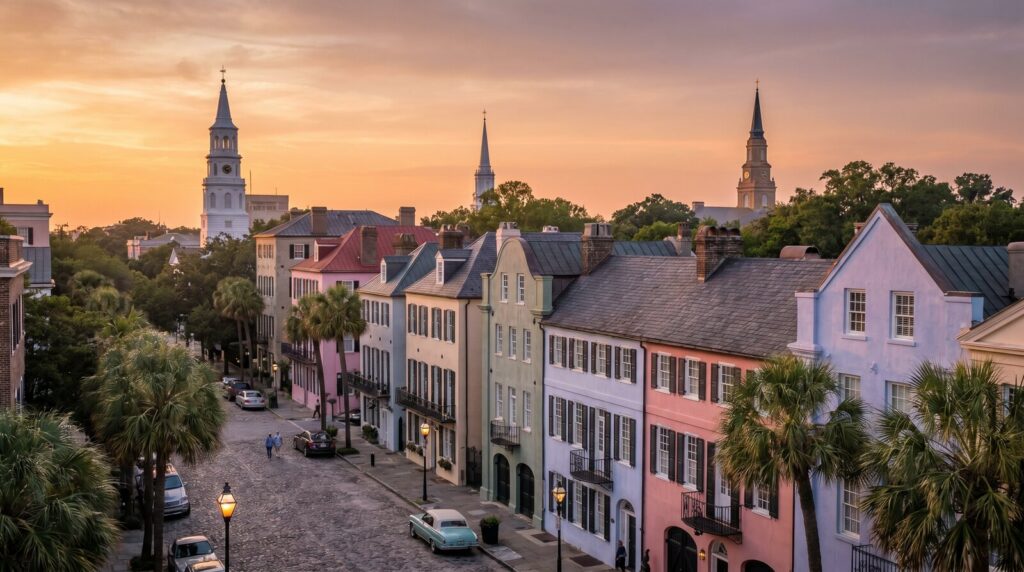
Charleston, USA: Holy City, Rainbow Row & Lowcountry Cuisine
Holy City with rainbow rowhouses, Lowcountry cuisine, and 350 years of American history
Charleston, South Carolina stands as one of America’s most historically significant and architecturally beautiful cities, shaped by centuries of commerce, conflict, slavery, and cultural evolution. Founded in 1670 as a colonial trading post, the city developed into one of the wealthiest ports in colonial America through rice and indigo plantations worked by enslaved Africans whose forced labor created the wealth visible in Charleston’s historic architecture and institutions.

The city earned the nickname “Holy City” for its numerous churches and steeples dominating the skyline, which are visible from approaching ships and create an iconic silhouette. Charleston’s historic district contains the largest concentration of pre-Revolutionary and antebellum architecture in the United States, with approximately 3,000 structures built before the Civil War surviving to present day. These buildings represent architectural styles evolving from early colonial through neoclassical periods.
Contemporary Charleston functions as a living heritage destination where tourism supports preservation of historic properties while raising complex questions about gentrification and who benefits from heritage tourism economics. The city’s cuisine, known as Lowcountry cuisine, celebrates African, European, and Native American culinary traditions melded through centuries of cultural interaction and adaptation to local ingredients.
Table of Contents
Historic Architecture & Holy City
Charleston’s historic district occupies 60 square blocks containing the densest concentration of pre-1840 architecture in America. Walking through the district reveals layers of architectural styles—Queen Anne, Federal, Greek Revival, Victorian—each reflecting historical periods and aesthetic preferences. Many buildings have been adapted as museums, restaurants, galleries, and residences, maintaining active use rather than museum preservation.
Rainbow Row represents a series of colorful historic townhouses painted in vibrant pastels—pinks, yellows, blues, and greens—creating the world’s most photographed row of historic houses. The colors originated in colonial period when sailors identified homes by color rather than address in the dense port city. The row has become iconic symbol of Charleston’s character and charm.
The Old Exchange and Provost Dungeon, built in 1771, served as the colonial customs house and later as a political prison. The dungeon housed prisoners of war during the Revolutionary War. The building represents Georgian architecture adapted to Charleston’s climate and functions as museum documenting Charleston’s commercial and political history.
Rainbow Row
Iconic row of colorfully painted historic townhouses, world’s most photographed
St. Michael’s Church
1761 church with navigational spire, witness to American Revolution
Old Exchange
1771 Georgian customs house and historic prison, now functioning as museum
Historic District
60 square blocks with densest concentration of pre-1840 American architecture
Plantation Heritage & Slavery History
Charleston’s wealth during the colonial and antebellum periods derived almost entirely from slavery. Rice and indigo plantations surrounding the city were worked by enslaved Africans and African Americans who suffered tremendous mortality rates from disease, overwork, and violent treatment. Acknowledging this historical reality is essential to understanding Charleston’s architecture, wealth, and contemporary character.
The International African American Museum, opened in 2023, documents African and African American experience in Charleston from colonial period through present day. The museum occupies a restored building on the waterfront near the landing point where enslaved people arrived in chains. The museum provides essential historical context for understanding Charleston’s prosperity and complicity in slavery systems.
The Slave Auction House, where enslaved people were bought and sold in colonial and antebellum Charleston, still stands as sobering reminder of the city’s complicity in human trafficking. The building documents the mechanics of slavery through exhibits and historical information. Visiting this site provides essential understanding of how Charleston’s architectural beauty was purchased through human suffering.
Magnolia Plantation
Oldest plantation (1676) notable for centuries-developed gardens
African American Museum
Documents African diaspora from colonial period to present
Slave Auction House
Historic site documenting buying and selling of enslaved people
Middleton Place
Plantation gardens and historic house documenting slavery-based wealth
Lowcountry Cuisine & Food Culture
Lowcountry cuisine represents synthesis of African, European, and Indigenous American culinary traditions adapted to coastal South Carolina and Georgia ingredients and climate. Rice cultivation dominated the regional economy and cuisine, while fresh seafood, okra, and produce from coastal marshes provided essential ingredients. Contemporary Lowcountry cuisine has gained national recognition and respect.
She-crab soup, a signature Charleston dish, uses female crabs with roe (eggs), creating delicate flavor and distinctive appearance. The soup exemplifies Lowcountry cuisine’s connection to seasonal availability and local knowledge. Contemporary chefs throughout Charleston feature she-crab soup variations on their menus.
Frogmore Stew or Low Country Boil combines shrimp, corn, potatoes, and sausage cooked together in single pot, creating communal meal suitable for gatherings. The one-pot nature makes it ideal for outdoor entertaining and reflects the region’s social traditions of gathering and celebration.
Shrimp & Grits
Gulf shrimp with creamy grits, iconic Lowcountry dish
She-Crab Soup
Female crab soup with roe, signature Charleston dish
Frogmore Stew
One-pot meal: shrimp, corn, potatoes, sausage
Oyster Roasts
Winter tradition of roasting fresh local oysters
Harbor, Waterfront & Coastal Beauty
Charleston’s harbor, where the Ashley and Cooper rivers converge, provided the geographic rationale for the city’s founding and economic significance. The waterfront remains the city’s most dynamic area, with restaurants, galleries, and historic buildings creating tourism-oriented environment. Views from the waterfront extend to Fort Sumter, where the American Civil War began in 1861.
The historic waterfront district, known as The Waterfront or Historic District Waterfront, preserves nineteenth-century warehouses and commercial buildings now housing restaurants, shops, galleries, and hotels. Walking along the waterfront provides views of historic architecture, harbor activity, and distant views of Fort Sumter and surrounding islands.
Folly Beach, a barrier island accessible by bridge from downtown, features a historic amusement park pier, beach recreation, and relaxed coastal atmosphere contrasting with downtown’s historic preservation focus. The pier extends into the Atlantic and represents twentieth-century amusement infrastructure distinct from colonial and antebellum architecture.
Fort Sumter
Civil War starting point in harbor, accessible by ferry with museum
Historic Waterfront
Nineteenth-century warehouses now restaurants, shops, galleries
Folly Beach Pier
Historic amusement pier extending into Atlantic
Harbor Views
Waterfront walking providing views of historic architecture and islands
Planning Your Visit
Charleston International Airport serves the city with flights from major American destinations. The airport is located approximately 20 kilometers north of downtown with taxis, ride-sharing services, and rental cars providing transportation. Train service via Amtrak connects Charleston to other major cities. The drive from Savannah (approximately 2 hours) passes through coastal South Carolina landscapes.
Charleston’s historic district is highly walkable with downtown streets forming manageable grid and most attractions within two kilometers. Walking tours, carriage tours, trolley tours, and boat tours provide alternative transportation and guided experiences. Parking in the historic district is limited and paid, making walking preferable to driving.
Accommodations range from luxury historic properties to budget hotels, with mid-range options providing good value and comfort. Many historic inns occupy converted antebellum mansions and buildings, providing authentic period experience. Reservations during peak seasons and special events are essential, with prices increasing substantially.
Folly Beach
Barrier island with amusement pier and beach recreation
nearby Beaufort
Historic coastal town 50km south with Spanish moss architecture
Kiawah Island
Barrier island with championship golf courses and beaches
Cypress Gardens
Historic swamp garden with kayaking and boardwalk trails
Discover Charleston’s Living History
Charleston invites you to walk through 350 years of American history preserved in architecture and landscape, taste Lowcountry cuisine celebrating regional ingredients, explore waterfront vistas across historic harbor, and confront the complex heritage of a city built on both beauty and human suffering.
Start planning your Charleston adventure today with Facts From Upstairs.
Getting Around Charleston
Charleston’s historic downtown is wonderfully walkable — the entire peninsula from The Battery to the Market spans about 2 miles. But between the heat, the cobblestones, and attractions spread across the wider metro, you’ll want to know your options.
Walking and Biking
Walking is the best way to experience the historic district. The narrow streets, hidden alleyways, and sudden garden views reward slow exploration. Holy Spokes, Charleston’s bike-share system, has stations throughout the peninsula — perfect for covering more ground or riding to the growing Upper King Street restaurant district. Rental bikes are also available from several shops on King Street.
CARTA Bus and Trolley
The free DASH trolley loops through the historic district with stops at major attractions including the Visitor Center, City Market, the Waterfront, and the College of Charleston. The broader CARTA bus network connects downtown with Mount Pleasant, James Island, and West Ashley. A single ride costs $2 in 2026.
Getting to the Beaches
Folly Beach (the laid-back surfer vibe) is about 25 minutes south. Sullivan’s Island and Isle of Palms (family-friendly, calmer water) are 20-30 minutes east across the Arthur Ravenel Jr. Bridge. You’ll need a car or rideshare for the beaches — Uber and Lyft operate throughout the metro area.
Where to Eat & Drink in Charleston
Charleston consistently ranks among America’s top food cities, and the Lowcountry cuisine here — rooted in Gullah-Geechee traditions, African ingredients, and coastal abundance — can’t be replicated anywhere else.
Must-Try Lowcountry Dishes
Shrimp and grits is the quintessential Charleston dish — stone-ground grits topped with sautéed shrimp, andouille sausage, and tasso gravy. She-crab soup, a creamy concoction made with blue crab meat and roe, is served at nearly every white-tablecloth restaurant in town. Lowcountry boil (shrimp, corn, sausage, and potatoes dumped onto newspaper) is the communal feast you’re looking for. And don’t skip benne wafers — sesame seed cookies with roots in West African Gullah-Geechee foodways.
Best Spots
Husk by Sean Brock put Charleston’s food revival on the national map — the menu changes daily and sources everything from the South. FIG (Food Is Good) is the locals’ favorite fine dining spot, known for its inventive seasonal menu. For more casual excellence, Rodney Scott’s BBQ serves whole-hog barbecue that won a James Beard Award. 167 Raw has lines out the door for its lobster rolls and poke bowls — get there before 5 PM or prepare to wait.
Cocktail Culture
Charleston has a thriving cocktail scene. The Gin Joint crafts bespoke drinks based on your flavor preferences. The Rooftop at Vendue serves sunset cocktails with harbor views. For craft beer, Edmund’s Oast brews excellent IPAs and sours in a gorgeous space on upper Morrison Drive. Bourbon N’ Bubbles on King Street has 200+ bourbon selections.
Frequently Asked Questions About Charleston
What is the best time to visit Charleston in 2026?
March through May and September through November are ideal — pleasant temperatures (65-80°F), blooming gardens, and manageable humidity. April 2026 is perfect: azaleas and wisteria are in full bloom, the Spoleto Festival is approaching, and it’s warm enough for beach days without the summer steam. Summer (June-August) brings oppressive heat and humidity (90°F+ with 80%+ humidity) plus afternoon thunderstorms. Hurricane season runs June through November, peaking in September.
Is Charleston walkable?
Extremely. The historic peninsula is one of America’s most walkable neighborhoods, though be prepared for uneven cobblestone streets and sidewalks. Wear comfortable shoes — heels are a bad idea on Charleston’s centuries-old streets. Most major attractions, restaurants, and shops are within a 1.5-mile radius of City Market.
How many days do I need in Charleston?
Three to four days is the sweet spot: one day for the historic district walking tour, one for plantation visits and gardens (Middleton Place or Magnolia Plantation), one for food exploration and shopping on King Street, and an optional beach day. Two days works but you’ll miss the deeper layers. Many visitors pair Charleston with Savannah (2 hours south) for a Southern road trip.
What’s the Gullah-Geechee connection?
The Gullah-Geechee are descendants of enslaved West Africans who developed a distinct culture, language, and cuisine along the Southeast coast. Their influence is woven throughout Charleston’s food (benne seeds, okra, rice culture), art (sweetgrass baskets sold at City Market), and traditions. The International African American Museum, opened on the historic Gadsden’s Wharf, provides essential context for understanding this heritage.
Are plantation tours worth visiting?
Charleston’s plantations are worth visiting for their gardens and architecture, but choose ones that honestly address the history of slavery. McLeod Plantation on James Island focuses specifically on the enslaved people’s experience. Middleton Place and Drayton Hall both include substantive narratives about slavery alongside their stunning grounds. The experience is enriched by understanding the full history.
Explore More Southern USA Destinations
The American South has so much more to discover: