
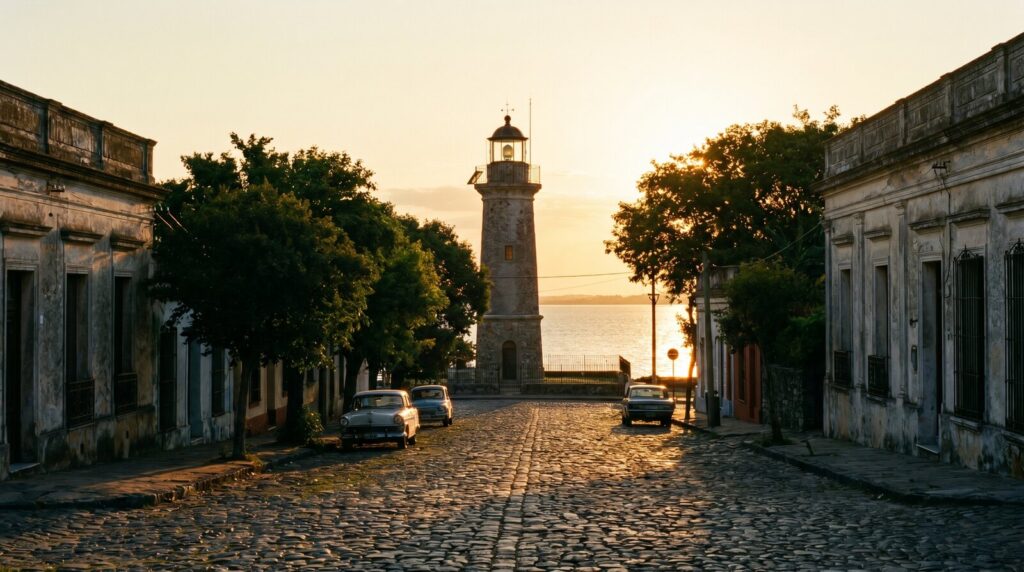
Colonia del Sacramento, Uruguay: Portuguese Quarter, Rio de la Plata & Time-Capsule Streets
UNESCO time-capsule town where Portuguese heritage meets Rio de la Plata
Colonia del Sacramento, Uruguay’s oldest settlement, preserves seventeenth-century Portuguese colonial town planning with remarkable integrity. Founded in 1680, the town functioned as Portuguese outpost competing with Spanish colonial settlements. The town’s compact layout and architectural heritage earned UNESCO designation, recognizing exceptional preservation of colonial urbanism.

Walking through Colonia’s streets creates sensory immersion—cobblestones, whitewashed buildings, tile roofs, wooden shutters, intimate plazas reflecting Portuguese aesthetics. The town maintains 22,000 residents, with tourism coexisting with residential and commercial functions. This living heritage quality distinguishes Colonia from heavily touristed sites.
The town’s Rio de la Plata location, directly across from Buenos Aires, creates positioning between Portuguese and Spanish colonial traditions. Borderland position shaped historical development, with colonial rivalries giving way to contemporary tourism. The nearby estuary provides natural beauty and recreational opportunities complementing architectural heritage.
Table of Contents
Colonial Architecture & Heritage
The old city preserves architecture through whitewashed buildings featuring Portuguese design—clay tile roofs, small windows, wooden shutters, narrow streets optimizing shade and ventilation. Buildings reflect practical responses to subtropical climate while maintaining aesthetic preferences developed across Portuguese colonial experience.
The Plaza Mayor anchors the colonial town with surrounding buildings showcasing Portuguese architecture. The plaza functioned as colonial administrative center, marketplace, and social gathering space—core to colonial urbanism.
Leon’s Cathedral, one of Central America’s largest, showcases neoclassical architecture. The cathedral remains active religious institution while functioning as historical landmark.
Portuguese Heritage & Conflicts
Colonia’s 1680 founding represented Portuguese colonial strategy competing with Spanish dominance. Strategic location allowed Portuguese traders establishing commercial networks challenging Spanish monopolies.
The Musco del Cabildo documents colonial administrative functions through artifacts and documents. The building served as colonial town hall, illustrating institutional structures.
Portuguese Influence
Language, architecture persist from colonial period
Spanish Occupation
Periods of Spanish control introduced visible elements
British Presence
Brief occupation left minimal architectural impact
Independence Era
Uruguay’s independence created new national identity
Museums & Cultural Institutions
Colonia’s museums collectively document colonial history and artistic heritage. The Museo Portugues showcases Portuguese influence. The Museo de Azulejos displays Portuguese tile work.
The Museo del Gaucho presents Uruguayan gaucho culture through artifacts and documentation. Contemporary galleries showcase contemporary Uruguayan and international art.
Artist studios throughout the town showcase contemporary creations engaging with colonial heritage. Many artists explicitly address colonial legacies and contemporary identity.
Local Cuisine & Dining
Colonia’s waterfront location enables fresh seafood complementing traditional Uruguayan beef. Restaurants emphasize local ingredients and simple preparations highlighting flavors.
Asado, Uruguay’s iconic grilled meat tradition, appears throughout restaurants. The tradition reflects gaucho heritage and contemporary culinary identity.
Fresh Seafood
Mussels, oysters, fish with natural flavors
Beef Specialties
Asado and grilled meats
Empanadas
Pastry pockets with fillings
Dulce de Leche
Caramel sweetened milk spread
Planning Your Visit
Colonia functions as day-trip from Buenos Aires for many visitors, though overnight stays enable deeper exploration. The town remains small with pedestrian-accessible layout.
Bus transportation from Montevideo requires approximately three hours. The route traverses Uruguayan countryside with scenic views.
The town maintains temperate climate with seasonal variations. Summer (December-March) brings warmth with occasional rain. Winter (June-August) remains mild with occasional cool days.
Step Into Colonia’s Colonial Time Capsule
Colonia del Sacramento invites exploration of UNESCO-protected colonial urbanism, Portuguese heritage, and one of South America’s most charming historic towns.
Start planning your Colonia del Sacramento adventure today with Facts From Upstairs.
Getting Around Colonia del Sacramento
Colonia’s Barrio Histórico is tiny — you can walk the entire UNESCO-listed quarter in under an hour. That’s the beauty of this place: it’s designed for slow wandering.
On Foot
Walking is the only way to properly experience Colonia. The cobblestone streets of the historic quarter are too narrow for cars in most places, and every turn reveals another crumbling colonial façade, bougainvillea-draped wall, or river view. Pick up a map at the tourist office near the port or just get pleasantly lost — the peninsula is small enough that you’ll always find your way back.
Vintage Cars and Golf Carts
For a fun twist, rent one of Colonia’s vintage cars — several agencies rent classic 1950s-60s vehicles for about $30-40/hour to cruise around town (yes, they actually run). Electric golf carts ($15-20/hour) are another popular option for covering the wider city area, including the bullring ruins and the Real de San Carlos district.
Buenos Aires Ferry
Most visitors arrive via the Buquebus or Colonia Express ferry from Buenos Aires — the crossing takes 1-3 hours depending on the vessel (the fast catamaran does it in about an hour). Round-trip tickets cost $80-120 USD in 2026. Book in advance during holidays and weekends. The ferry terminal is a 5-minute walk from the historic quarter, making Colonia an effortless day trip or weekend escape from Buenos Aires.
Getting to Montevideo
Regular buses connect Colonia to Montevideo (2.5-3 hours, about 500-700 UYU). The coastal Route 1 drive is scenic and straightforward if you have a rental car. Many travelers visit Colonia as a stop between Buenos Aires and Montevideo.
Where to Eat & Drink in Colonia del Sacramento
Colonia’s food scene is intimate and unpretentious — a handful of excellent restaurants that make the most of Uruguay’s famous beef, river fish, and wine.
Must-Try Dishes
Chivito — Uruguay’s national sandwich — is a towering stack of steak, ham, mozzarella, lettuce, tomato, olives, and egg on a bun. It’s the Uruguayan answer to the burger, and Colonia’s riverfront restaurants all serve excellent versions. Asado (grilled beef) is best experienced at a parrilla, where cuts are slow-cooked over wood coals. For something lighter, river fish like boga and pejerrey are grilled simply and served with lemon.
Best Spots
El Drugstore on the main plaza is Colonia’s most iconic restaurant — part café, part antique shop, part eccentric museum. The food is solid and the atmosphere unmatched. Charco Bistró overlooking the river serves contemporary Uruguayan cuisine with excellent Tannat wine pairings and possibly the best sunset views in town. La Florida does traditional Uruguayan parrilla at honest prices. For breakfast and coffee, Café de la Misericordia in a restored colonial building is a lovely start to the day.
Wine and Mate
Tannat is Uruguay’s signature grape — bold, tannic red wines that pair beautifully with grilled meat. Several restaurants in Colonia offer local Tannat by the glass for 200-350 UYU. And you’ll notice locals everywhere carrying thermoses and mate gourds — this shared herbal tea ritual is central to Uruguayan social life. Don’t be surprised if someone offers you a sip; accepting is a sign of friendship.
Frequently Asked Questions About Colonia del Sacramento
What is the best time to visit Colonia in 2026?
October through April (Southern Hemisphere spring and summer) brings warm weather and long days perfect for wandering the streets and eating outdoors. April 2026 catches the pleasant autumn — temperatures around 18-22°C, golden light that photographers love, and thinner crowds than the January-February peak. Winter (June-August) is mild but grey, with temperatures around 8-15°C. Weekdays are always quieter than weekends when Buenos Aires day-trippers flood in.
Is Colonia just a day trip or worth an overnight?
Many visitors come for the day from Buenos Aires, but spending at least one night transforms the experience. After the day-trippers leave on the afternoon ferry, the historic quarter becomes almost eerily peaceful — you’ll have the sunset views and cobblestone streets largely to yourself. A two-night stay lets you slow down to Colonia’s proper pace, explore beyond the historic center, and enjoy a leisurely dinner without watching the clock.
What currency should I bring?
The Uruguayan peso (UYU) is the official currency. Many tourist-facing businesses also accept Argentine pesos and US dollars, though you’ll get better rates paying in pesos. ATMs are available near the port and on Avenida General Flores. Credit cards are accepted at most restaurants and hotels but carry some cash for smaller shops. The exchange rate between Argentine pesos and Uruguayan pesos fluctuates — check current rates before crossing.
What’s the history of the town?
Founded by the Portuguese in 1680, Colonia changed hands between Portugal and Spain multiple times over the following century — which is why the architecture mixes Portuguese and Spanish colonial styles. The Barrio Histórico earned UNESCO World Heritage status in 1995. The town’s strategic location at the narrowest point of the Rio de la Plata made it a constant prize in colonial power struggles, and bullet-scarred walls still bear witness to those conflicts.
Is Colonia safe?
Very safe. Uruguay is generally one of South America’s safest countries, and Colonia — as a small, tourist-oriented town — has virtually no crime issues beyond the occasional pickpocket during peak season. You can walk the streets at any hour without concern. The biggest “danger” is the uneven cobblestones in the historic quarter after a glass of Tannat.
Explore More South American Destinations
Uruguay is a perfect gateway to South America’s diverse treasures: