
Sedona, USA: Red Rock Country, Vortex Energy & Desert Stargazing
Red rock country with spiritual vortex energy, desert stargazing, and artistic communities
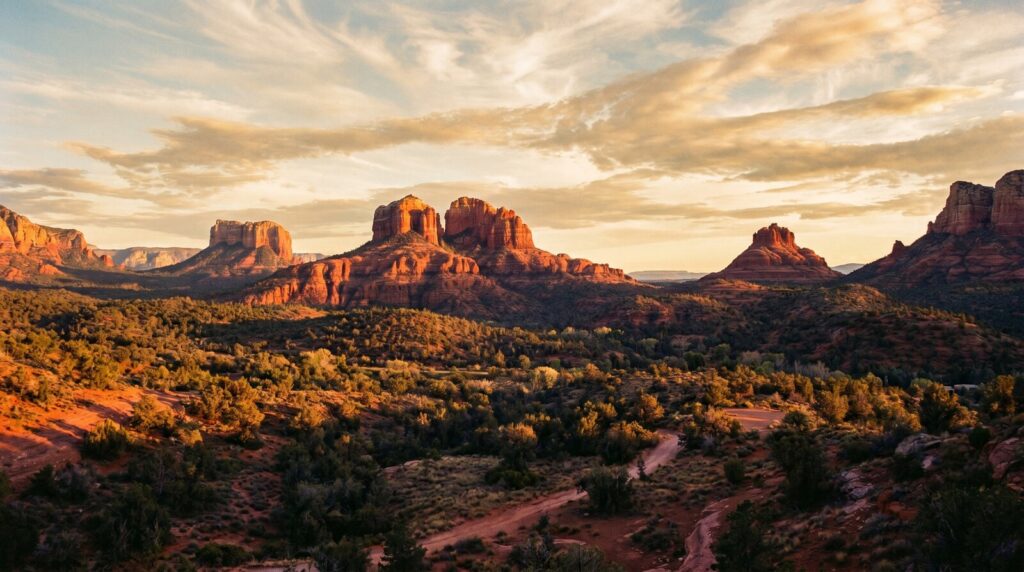
Sedona, Arizona represents one of America’s most visually stunning natural settings, where massive red sandstone formations rise dramatically from desert floor creating landscape of surreal beauty. The geological formations, shaped by millions of years of erosion and geological processes, display colors ranging from deep crimson to orange, varying throughout day as light shifts across rock surfaces. The natural landscape has inspired artists, spiritual seekers, and nature lovers for decades.

The city emerged from small artist community in the early twentieth century into a destination attracting hundreds of thousands of annual visitors seeking natural beauty, spiritual experiences, and artistic engagement. Upscale galleries, restaurants, and resorts now coexist with outdoor recreation infrastructure and spiritual retreat centers. This mix creates distinctive destination blending natural wonder with human culture and commerce.
Sedona gained popularity through associations with spiritual vortexes—locations where earth’s energy is theorized to be concentrated and conducive to meditation, healing, and spiritual experiences. While vortex claims lack scientific evidence, the locations undeniably provide visually stunning settings for contemplation and outdoor recreation. The vortex concept has shaped tourism, community identity, and real estate marketing throughout Sedona.
Table of Contents
Red Rock Geology & Landscape
Sedona’s distinctive red color derives from iron oxide (rust) present in the sandstone formations. The rocks display hundreds of millions of years of geological history through layered deposits, erosion patterns, and color variations. Sunset light transforms the rocks into brilliant hues of orange, red, and purple, creating visual drama intensifying the already spectacular natural landscape. The geological formations represent one of Earth’s most visually compelling displays of natural processes.
The colors of Sedona’s rocks result from geological layering and mineral composition. The Schnebly Hill Formation creates the primary red rock formations, while Coconino Sandstone forms white and cream-colored layers visible in many formations. Supai Group rocks create dark red and purple layers visible in upper rock faces. Understanding this geological composition enhances appreciation of the landscape’s visual complexity.
Coconino National Forest surrounds Sedona, providing additional recreational opportunities beyond the primary red rock formations. The forest includes ponderosa pine, oak, and aspen forests at higher elevations. The forested areas near Flagstaff (approximately 30 kilometers north) provide cooler summer alternatives and different ecological communities.
Bell Rock
Most photographed formation, primary vortex site with hiking trail
Cathedral Rock
Distinctive formation resembling gothic cathedral, popular hiking destination
Devil’s Bridge
Largest natural sandstone arch in Arizona, accessible by moderate hiking
Coconino National Forest
Surrounding forest with pines, oaks, and cooler elevation zones
Vortex Sites & Spiritual Sedona
Sedona’s association with spiritual vortexes—locations where earth’s energy is theorized to be concentrated—gained prominence in the 1980s and 1990s. Four primary vortex sites (Bell Rock, Cathedral Rock, Boynton Canyon, Airport Mesa) have become pilgrimage destinations for individuals seeking spiritual experiences, healing, and meditation. Scientific evidence for vortex energy remains absent, yet the locations undeniably provide visually stunning settings for contemplative experiences.
New Age spirituality, crystal shops, energy healers, and meditation centers proliferate throughout Sedona, reflecting the city’s embrace of spiritual tourism and alternative spirituality movements. This spiritual dimension distinguishes Sedona from typical scenic destinations and attracts seekers alongside nature enthusiasts. The vortex concept has become central to Sedona’s identity and marketing.
Boynton Canyon, located in the northern part of Sedona, contains multiple vortex sites and provides hiking opportunities with spectacular views. The canyon features red rock formations creating distinctive visual landscape and providing settings for spiritual practices. The Enchantment Resort occupies part of the canyon, providing luxury spa and retreat facilities.
Bell Rock Vortex
Primary vortex site with hiking trail and meditation areas
Cathedral Rock Vortex
Second major vortex site with moderate hiking and panoramic views
Boynton Canyon Vortex
Multiple vortex locations in canyon setting with luxury resort facility
Airport Mesa Vortex
Energy vortex accessible by short hiking trail with city views
Hiking, Recreation & Outdoor Adventure
Sedona’s landscape offers exceptional hiking opportunities with trails ranging from easy strolls to challenging technical climbs. The variety of trails accommodates hikers of all ability levels and fitness. Desert conditions require attention to water intake, sun protection, and awareness of high temperatures, particularly during summer months. The surrounding Coconino National Forest provides additional hiking opportunities beyond primary red rock formations.
Devil’s Bridge, Arizona’s largest natural sandstone arch spanning over 50 meters, is accessible by moderate hiking trail. The location provides outstanding photographic opportunities and represents remarkable geological achievement. The bridge location offers shaded areas providing respite from desert heat.
Mountain biking, horseback riding, jeep tours, and scenic drives provide additional recreational options. The Oak Creek Canyon drive south of Sedona provides scenic canyon views and outdoor recreation access. Jeep tours navigate rough terrain inaccessible by standard vehicles, providing backcountry access.
Cathedral Rock Trail
Easy-moderate hike with hand-using rock scrambling section
Bell Rock Trail
Easy loop around iconic formation with multiple difficulty options
Devil’s Bridge Trail
Moderate hike to largest natural arch in Arizona
Oak Creek Canyon
Scenic drive with pullouts and hiking trail access
Art Galleries & Creative Community
Sedona developed reputation as artistic community with hundreds of galleries, studios, and art venues throughout the city. The visual landscape inspiring artists for decades combined with tourism creating market for artistic work. Galleries feature paintings, sculptures, photography, jewelry, pottery, and other mediums. The artistic community ranges from serious fine artists to tourist-oriented commercial operations.
Gallery concentration in downtown Sedona and along Tlaquepaque Arts and Crafts Village creates pedestrian-friendly artistic shopping districts. Tlaquepaque, located south of downtown, recreates colonial Mexican village architecture housing galleries, studios, restaurants, and shops. The architecture combines Mexican aesthetics with contemporary commercial functions.
Art classes and workshops for visitors range from single sessions to week-long intensives. Instruction in painting, drawing, sculpture, jewelry, and other mediums accommodates varying skill levels. These classes provide creative engagement while learning from experienced instructors.
Sedona Arts Center
Exhibition, studios, classes, and cultural programming
Tlaquepaque Village
Mexican-style village with galleries, studios, restaurants
Downtown Galleries
Hundreds of galleries featuring fine art and commercial work
Artist Studios
Private studios open to visitors offering direct artist engagement
Planning Your Visit
Sedona is located approximately 140 kilometers north of Phoenix in central Arizona’s high desert. Phoenix Sky Harbor International Airport serves as the primary gateway with flights from major North American cities. The drive from Phoenix takes approximately two hours passing through diverse landscapes. Sedona is accessible by car from the north via scenic Oak Creek Canyon route.
Sedona’s downtown and major attractions are reasonably walkable, though extensive driving may be necessary for accessing trailheads and some galleries. Free shuttle bus service operates within town during peak seasons. The surrounding area benefits from car access for exploring varying scenic drives and trail locations.
Accommodations range from luxury resorts with spas to modest motels, with options at all price points. Many properties emphasize spiritual wellness and retreat functions. Vacation rentals provide alternative to hotels for longer stays. Reservations recommended during peak seasons (October-April), as popular properties book weeks in advance.
Oak Creek Canyon
Scenic drive south of Sedona through red rock formations and forest
Coconino National Forest
Surrounding forest with additional hiking and recreation
Flagstaff
Mountain town 30km north with cooler climate and cultural attractions
Phoenix
Metropolitan area 140km south with museums, restaurants, and cultural institutions
Discover Sedona’s Red Rock Magic
Sedona invites you to stand before towering red rock formations shaped by millions of years of geological processes, hike through visually stunning landscapes offering solitude and natural beauty, explore galleries and artistic communities, and experience the spiritual energy that draws seekers worldwide.
Start planning your Sedona adventure today with Facts From Upstairs.
Getting Around Sedona
Sedona sits at the junction of State Routes 89A and 179, about two hours north of Phoenix. A rental car is essentially mandatory here — this is the American Southwest, and distances between trailheads, vortex sites, and scenic viewpoints make walking impractical.
Driving Tips
Traffic through the 89A/179 roundabout (locally called the “Y”) gets congested, especially between 10 AM and 4 PM from March through May and September through November. Start your hikes early to beat both the crowds and the heat. Parking at popular trailheads like Devil’s Bridge and Cathedral Rock fills by 8 AM on weekends — the Red Rock Pass ($5/day or $15/week in 2026) is required at most Forest Service trailheads.
Sedona Shuttle and Trolley
The free Sedona Shuttle runs seasonally to popular trailheads, reducing parking headaches. The Sedona Trolley offers narrated open-air tours through both uptown and the Chapel Road area — a good orientation on your first day. Several Jeep tour companies also provide transportation to backcountry areas you can’t reach in a standard vehicle.
Day Trip Access
From Sedona, the drive to the Grand Canyon’s South Rim takes about two hours via Flagstaff. Jerome, the quirky copper-mining ghost town turned artist colony, is a winding 45-minute drive southwest. Montezuma Castle and the Verde Valley wine trail are both under 30 minutes away.
Where to Eat & Drink in Sedona
Sedona’s dining scene has matured well beyond basic tourist fare, with restaurants that match the scenery in quality.
Fine Dining with Views
Mariposa Latin Inspired Grill perches on a hillside with panoramic red rock views — the Argentine-inspired menu and sunset cocktails make it worth the splurge. Elote Café is the reservation you need to make weeks in advance: their smoked brisket enchiladas and fire-roasted corn with cotija cheese have cult followings. For Mediterranean-meets-Southwest cuisine, Cress on Oak Creek at L’Auberge de Sedona offers creekside dining that feels genuinely magical at dusk.
Casual and Local Favorites
The Hudson serves elevated American comfort food with a patio overlooking the red rocks. For breakfast, Red Rock Café has been packing in locals with massive omelets and prickly pear pancakes since the 1990s. Sedona Memories Bakery Café does sandwiches on fresh-baked bread that are perfect for packing on a hike.
Craft Beverages
The Verde Valley has emerged as Arizona’s wine country — Page Springs Cellars and Alcantara Vineyards are both short drives from town. Oak Creek Brewery & Grill in uptown brews solid IPAs and ambers. For coffee, Creekside Coffee & Bakery in the Tlaquepaque Arts Village combines excellent espresso with one of Sedona’s most charming settings.
Frequently Asked Questions About Sedona
What is the best time to visit Sedona in 2026?
March through May and September through November are the sweet spots — mild temperatures (65-85°F), clear skies, and the red rocks at their most photogenic. April 2026 is ideal with wildflowers in bloom and comfortable hiking conditions. Summer (June-August) brings 100°F+ temperatures and afternoon monsoon thunderstorms. Winter is mild by northern standards (40-60°F days) with occasional dustings of snow on the red rocks — dramatic and crowd-free.
What exactly are the vortex sites?
Sedona’s four main vortex sites — Airport Mesa, Cathedral Rock, Bell Rock, and Boynton Canyon — are locations believed to emanate concentrated earth energy. Whether or not you subscribe to the spiritual aspect, these are objectively four of the most stunning hiking locations in the Southwest. Each offers a different character: Airport Mesa for sunsets, Cathedral Rock for the iconic climb, Bell Rock for easy access, and Boynton Canyon for a longer immersive hike.
How many days do I need in Sedona?
Three to four days lets you hike the major trails, visit a vortex or two, explore the arts scene, and take a day trip to Jerome or Verde Valley wineries. Two days works if you’re focused on hiking, but you’ll feel rushed. Many visitors building a Southwest road trip pair Sedona with the Grand Canyon (2 hours north) and Monument Valley (3.5 hours northeast).
Is Sedona expensive?
Sedona is a premium destination. Hotel rates average $200-400/night for mid-range options in 2026, with luxury resorts exceeding $600. Dining out runs $15-25 for casual and $40-80 for fine dining per person. That said, the hiking and scenery — the main attractions — are essentially free beyond the $5 Red Rock Pass. Budget travelers can stay in Cottonwood or Camp Verde (20-30 minutes away) for significant savings.
Can I visit the Grand Canyon as a day trip from Sedona?
Absolutely. The South Rim is about 115 miles north, roughly a 2-hour drive through Oak Creek Canyon and Flagstaff. Leave early, spend 4-6 hours at the rim, and you’re back in Sedona for a late dinner. Several tour companies also run guided day trips if you prefer not to drive.
Explore More American Southwest Destinations
The red rocks are just the beginning. Keep exploring: