
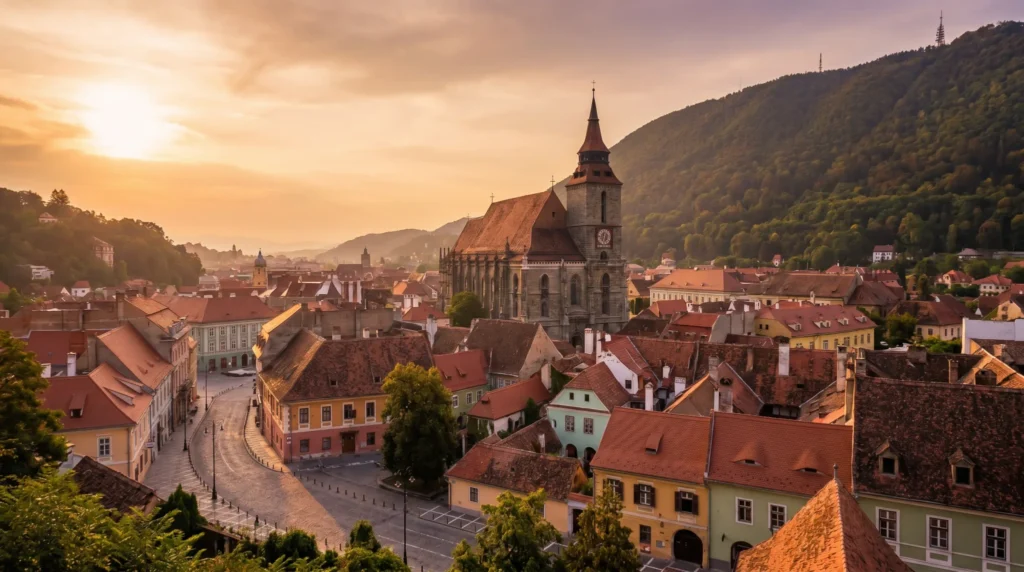
Brașov, Romania: The Saxon Crown of the Carpathians
I have lost whole afternoons in Brașov, and I would lose them again. We came expecting a quick base for Bran Castle and stayed because the old town itself refused to let us leave — Gothic spires, pastel guild houses, a mountain that rises straight out of the main square, and a cable car that drops you into pine forest in under three minutes. This is the city the Saxons called Kronstadt, fortified against the Carpathian frontier and still wrapped in its medieval walls. For the wider Romania context — Schengen status, the leu, the mountain frame this city sits inside — read our Romania travel guide. What follows is everything I wish someone had handed me before my first morning in Piața Sfatului.

Table of Contents
Why Brașov?
Brașov is the rare medieval town that still feels like a working city rather than a museum diorama. Tucked into a bowl of the southern Carpathians and overlooked by the forested wall of Mount Tâmpa, it was founded by the Teutonic Knights in 1211 and grew into the richest of the seven Saxon walled towns — the Siebenbürgen “seven fortresses” that gave Transylvania its German name. Germans called it Kronstadt, the crown city; Hungarians knew it as Brassó. That triple identity is stamped on every façade.
It is also a city of contrasts. Today around 237,589 people live within the city limits and roughly 371,802 in the wider metropolitan area , making it Romania’s sixth-largest urban centre, yet the historic core you actually walk feels village-small — you can cross it in fifteen minutes. The Gothic bulk of the Black Church looms over pastel Baroque shopfronts; communist-era apartment blocks sit a tram ride from a 13th-century citadel; and a ski resort at Poiana Brașov is closer to the main square than many suburbs of a normal city.
What pulls travellers back, though, is geography. Brașov sits about 166 km north of Bucharest at the exact hinge of Romania, which means three of the country’s headline sights — Bran Castle, Râșnov Citadel and Peleș Castle — are all comfortable day trips, while the Saxon UNESCO villages and the high Bucegi plateau are within an hour or two. Add the Black Church, the impossibly thin Strada Sforii and the Tâmpa cable car, and you have a base that earns several days rather than the single afternoon most itineraries grant it.
History runs deep and visible here. As one of the seven fortified Saxon towns, medieval Kronstadt grew rich on the trade routes between Western Europe and the Ottoman lands beyond the Carpathian passes; its guilds — the tailors, the weavers, the goldsmiths — each maintained a tower or bastion on the city walls, and many of those defences still stand. The humanist Johannes Honterus set up a printing press in the town in 1535 , made Brașov a centre of the Reformation, and turned its great church Lutheran — which is why a Protestant Gothic monument dominates a city in an overwhelmingly Orthodox country. That layered past is exactly what makes the place feel unlike anywhere else in Romania.
And it works as a city, not a stage set. Students fill the cafés, the markets sell mountain cheese and plum brandy, and the ski lifts of Poiana Brașov run within sight of communist-era housing blocks. You can spend a morning among 15th-century guild towers and an afternoon on a chairlift; eat shepherd’s polenta for lunch and Hungarian chimney cake for dessert. By the time you’ve climbed Tâmpa for the sunset view over the red rooftops, the question stops being “why Brașov” and becomes “how did I not come here sooner.”

Neighborhoods: Finding Your Brașov
📍 Brașov Map: Every Place in This Guide
Brașov is small enough that “neighbourhoods” is almost a generous word — the entire historic core fits inside a fifteen-minute walk. But the city does split into distinct characters, and where you base yourself shapes the trip. The walled old town and Piața Sfatului are the obvious choice for a short stay; the Romanian quarter of Schei, the citadel hill to the north and the residential slopes of Răcădău each offer a different angle; and the mountain resort of Poiana Brașov functions as a high-altitude annex for skiers and hikers. Here’s how to read them.
Old Town & Piața Sfatului
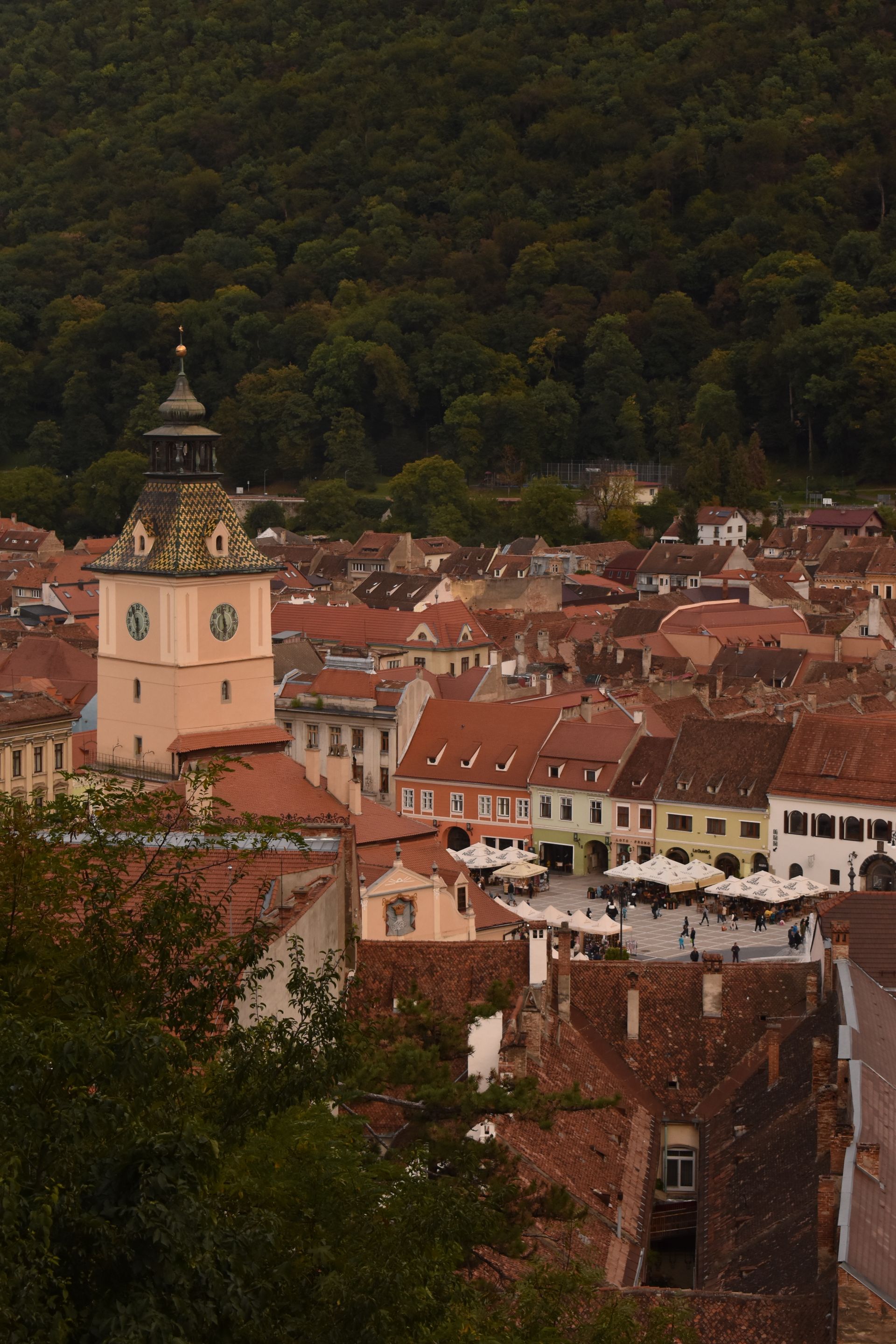
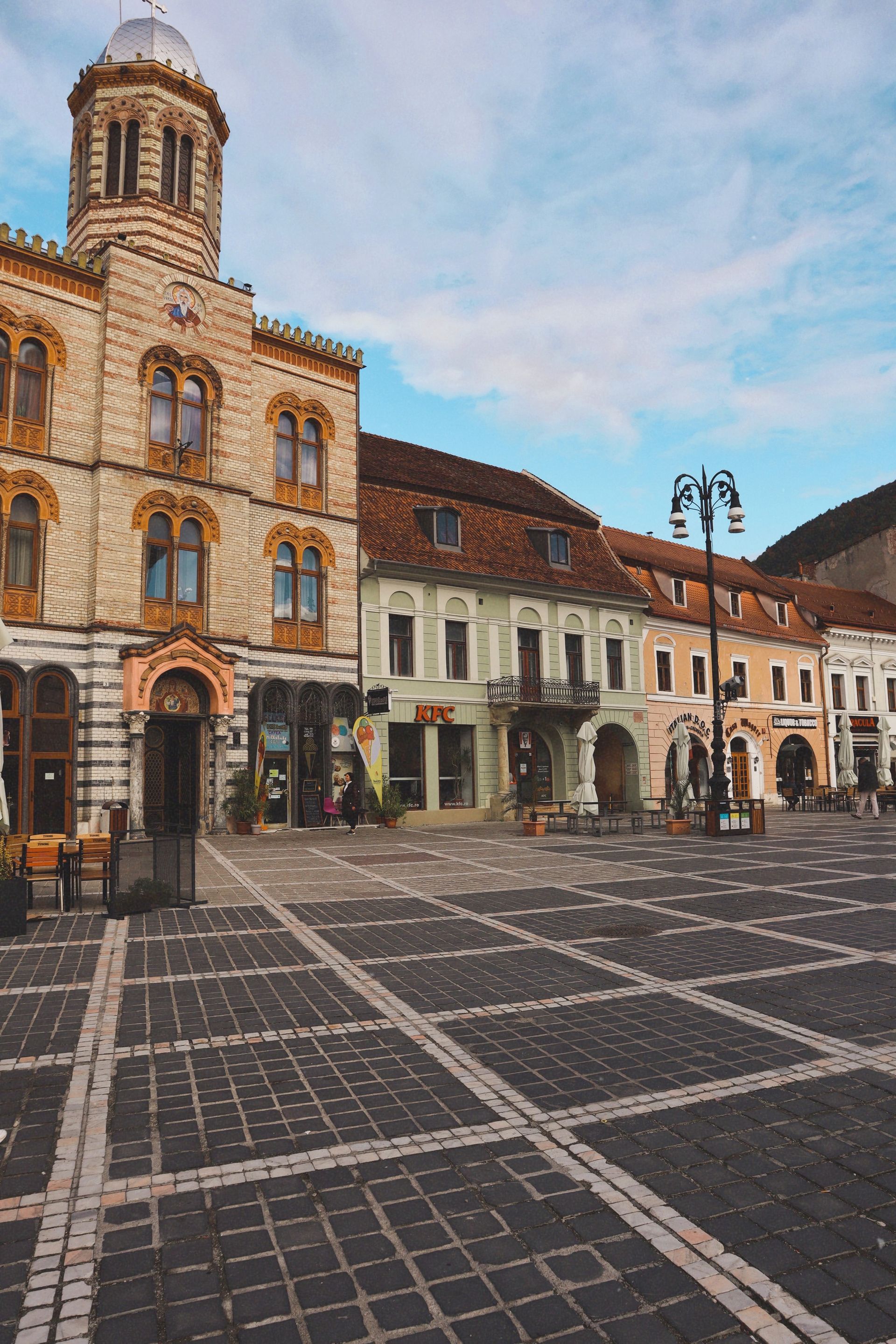
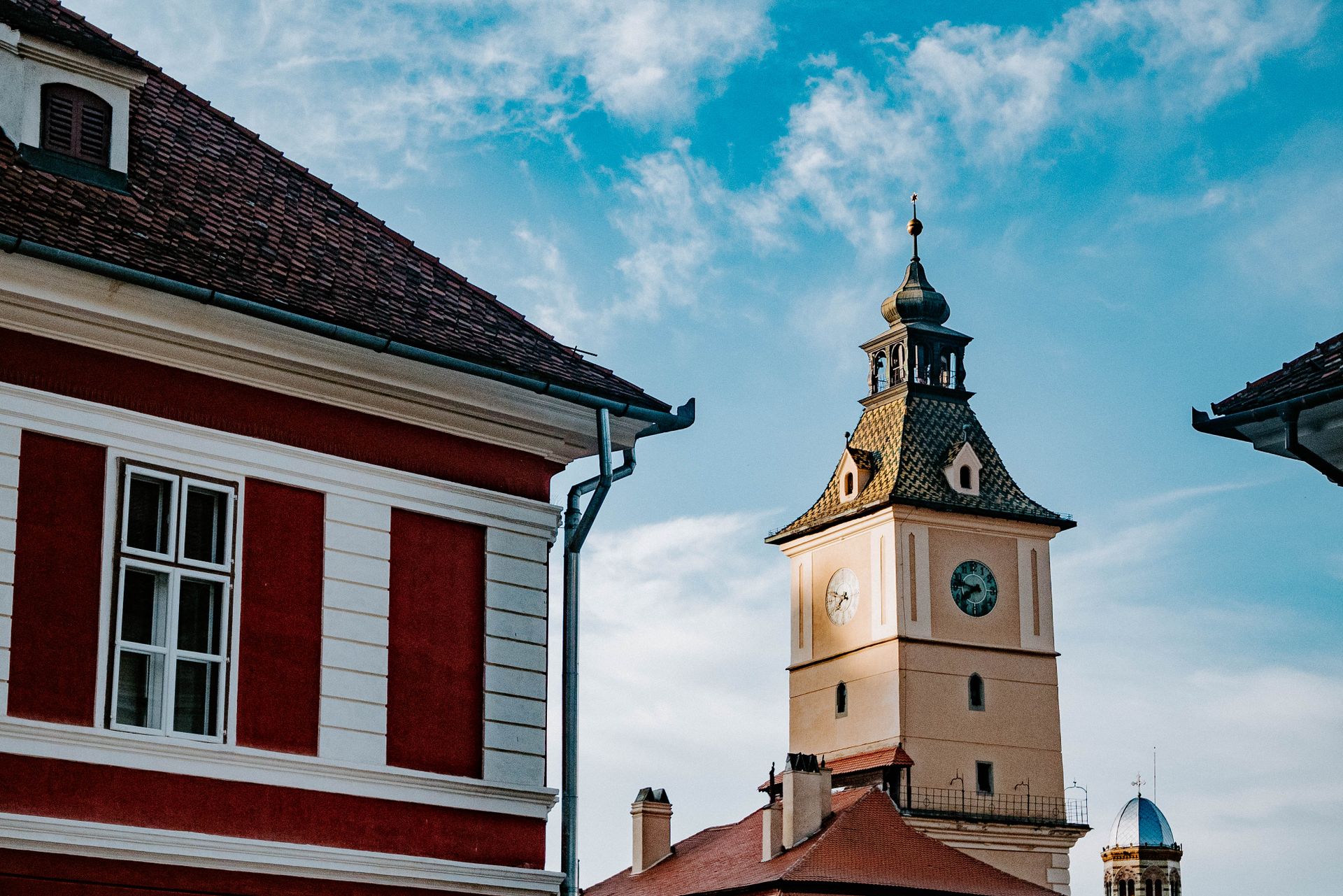
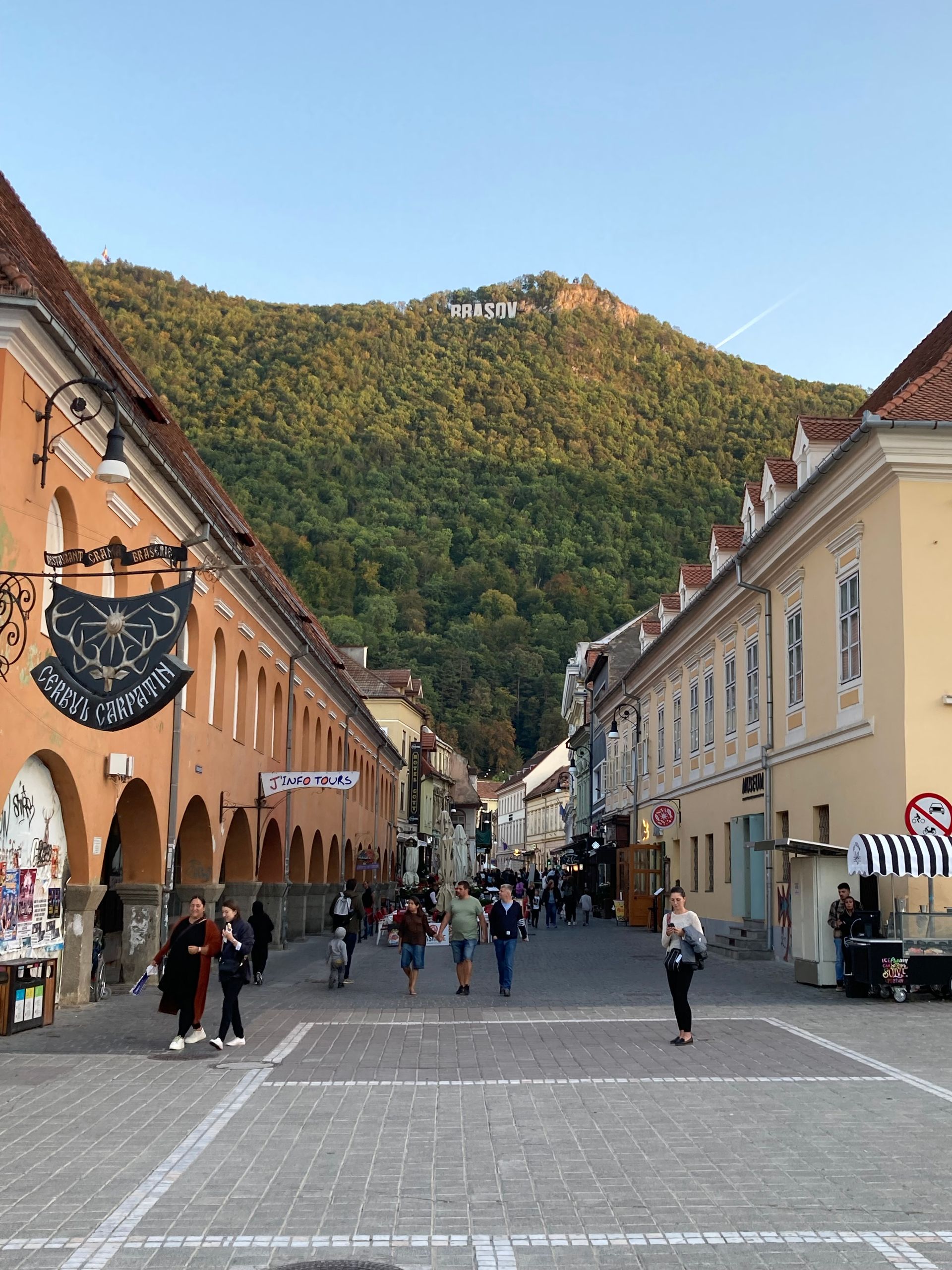
The historic heart radiates from Piața Sfatului (Council Square), a vast cobbled plaza that has hosted a marketplace since 1364 and held formal market rights from 1520 . At its centre stands the ochre Council House (Casa Sfatului), built in 1420 and now home to the Brașov County Museum of History . This is where you orient yourself, drink your first coffee and watch the light move across the surrounding guild houses. Ringed by pastel Baroque merchant houses and anchored by the Council House’s clock tower, the square is the city’s living room — buskers in summer, the Christmas market in winter, and a steady drift of locals crossing it at all hours. Almost everything else worth seeing is a five- to ten-minute walk from this spot, which makes it the natural pin to drop for your first hotel and your first morning’s bearings.
- Piața Sfatului and the Council House clock tower
- Strada Republicii — the main pedestrian promenade of cafés and shops
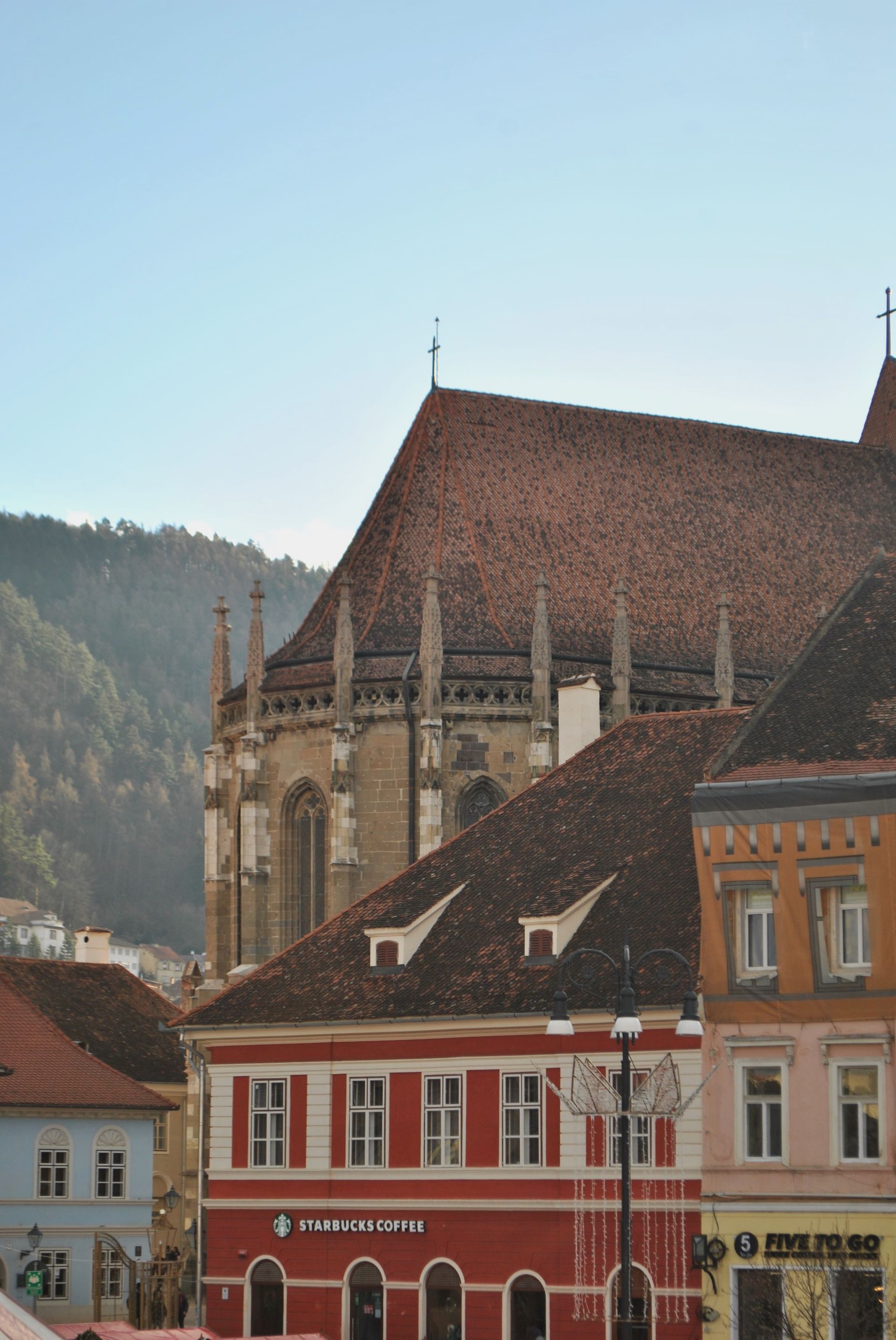
- The Black Church, two minutes south of the square
Best for: first-timers who want everything within a short walk. Access: 10-minute walk from the train station by taxi/bus to the centre, then entirely on foot.
Staying in or beside the old town is the right call for any visit of a few days: you’ll wake up minutes from the Black Church, you can come back to drop bags between sights, and the square’s evening atmosphere — buskers in summer, mulled wine in winter — is best enjoyed when you’re staying close enough to linger. Hotels here range from boutique conversions of merchant houses to comfortable mid-range options, and the premium over the residential districts buys you the single most convenient location in the city.
Strada Sforii & the Lanes
Threading between the old-town blocks is Strada Sforii (Rope Street), at 80 m long and between 111 and 135 cm wide one of the narrowest streets in Europe . First documented in 1674, it began life as a corridor for firefighters to reach blazes quickly . Today it is a graffiti-scrawled rite of passage and Brașov’s most-photographed lane. But the lane is only the headline act of a whole quarter of crooked side streets worth losing an hour in. Strada Cerbului and Strada Castelului are lined with restored Saxon merchant houses, their inner courtyards now hiding wine bars and craft studios. Wander away from the main promenade in any direction and you’ll trade the crowds for quiet façades, the odd cat on a windowsill, and the kind of accidental discoveries — a tucked-away bakery, a tiny gallery — that make a city feel like yours.
- Strada Sforii, linking Cerbului and Poarta Schei streets
- Strada Cerbului — Saxon merchant houses with inner courtyards
- Hidden café terraces tucked behind the main drag
Best for: photographers and wanderers. Access: a two-minute walk west of Piața Sfatului.
Schei (Șchei)
Beyond Catherine’s Gate lies Schei, the historic Romanian quarter built outside the Saxon walls when ethnic Romanians were barred from living inside the citadel. It is the most atmospheric corner of the city: steep cobbled streets climbing toward the hills, and St Nicholas Church at its heart, a Romanian Orthodox church built in stone between 1495 and 1519 . Schei feels older and gentler than the polished centre — washing strung between houses, vegetable gardens, churches with onion domes — and it carries real historical weight as the cradle of Romanian-language education and culture in a city the Saxons ran for centuries. The walk up through Poarta Schei into the quarter is one of my favourite in any European city: cross the threshold of the old gate and the architecture, the religion and the entire mood shift in the space of a few metres.
- St Nicholas Church and its churchyard
- The First Romanian School museum next door
- Piața Unirii, the quarter’s quiet little square
Best for: history travellers and slow mornings. Access: walk through Catherine’s Gate from the old town.
Give Schei an unhurried half-day. Beyond St Nicholas and the First Romanian School, the pleasure is simply in the climb — narrow streets that twist uphill between modest houses, churchyards, and viewpoints back over the red roofs to Tâmpa. It’s residential and lived-in rather than touristy, which is exactly why it feels like the real Brașov, and a coffee at one of its tiny cafés is one of the city’s quietest pleasures.
Cetățuia / Citadel Hill
North of the centre, the Cetățuia fortress crowns its own hill, a 16th-century stronghold that once guarded the city’s northern approach. The climb rewards you with the classic postcard panorama — the whole red-roofed old town spread out beneath Tâmpa. It’s a short but steep walk and best at golden hour. This is not the same as the Tâmpa summit on the south side; Citadel Hill sits to the north and gives you the reverse angle, looking back across the rooftops to the wooded ridge with its giant BRAȘOV sign. The fortress itself has had many lives — garrison, prison, and now an events venue — but most people come simply for the view and the grassy slopes below, which double as the city’s best free picnic spot on a warm evening.
- The Cetățuia fortress walls and viewpoint
- Wraparound views of the old town and Tâmpa
- Picnic spots on the grassy slopes below
Best for: sunset views and easy hiking. Access: 15-minute uphill walk from the centre.
Răcădău & Astra
These leafy residential districts on the southern slopes are where locals actually live, threaded with parks and apartment blocks and offering a glimpse of everyday Brașov away from the tourist core. Răcădău climbs toward Tâmpa’s forests, while Astra spreads along the valley with markets, schools and the city’s larger supermarkets. Staying out here can cut your accommodation costs sharply while keeping you a 15-minute bus or Bolt ride from Piața Sfatului, and the trade — fewer cobbles and Gothic spires, more parks and ordinary neighbourhood life — suits travellers settling in for a week. Răcădău in particular puts forest trailheads almost on your doorstep, so you can be among the trees within minutes of leaving your apartment.
- Parks and forest trailheads at the foot of Tâmpa
- Local markets and bakeries away from the centre
- Quieter, cheaper accommodation options
Best for: longer stays and budget travellers. Access: RATBV city buses from the centre.
Bartolomeu
The oldest documented part of the settlement, Bartolomeu sits to the northwest around the 13th-century Bartholomew Church, the city’s earliest surviving building. It’s a calm, low-rise neighbourhood that most visitors skip, which is precisely its charm, and it lies on the route toward the new Brașov-Ghimbav airport. Practically, that makes it a smart place to stay the night before an early flight, or the night you arrive late and don’t want to drag bags across the old town. The Romanesque-Gothic Bartholomew Church is worth the short detour even if you don’t stay here: as the settlement’s earliest church it predates almost everything in the famous centre, and standing beside it you get a sense of just how far back Brașov’s story runs before the Saxon golden age ever began.
- The Romanesque-Gothic Bartholomew Church
- Quiet streets and a slower pace
- Handy for early flights from Ghimbav
Best for: travellers with an early flight. Access: bus or a short taxi from the centre.
Poiana Brașov
Technically a mountain resort rather than a neighbourhood, Poiana Brașov sits 12 km from the city at around 1,020 m elevation and is reachable by RATBV bus . In winter it’s Romania’s flagship ski village; in summer it’s a cool-air base for hiking, with chalets, hotels and the cable cars that lift you onto the Postăvarul massif. Plenty of winter visitors choose to base themselves up here entirely, ski-in-ski-out, and dip into the city for an evening; others stay in Brașov and ride up for the day. Either way it functions as the city’s high-altitude back garden — pine forest, alpine meadows, traditional cabin restaurants serving grilled meat and mulled wine — and the half-hour bus ride up through the trees is half the pleasure of going.
- Ski lifts and 23.9 km of pistes
- Cable car and gondola to Postăvarul
- Alpine restaurants and après-ski
Best for: skiers and mountain lovers. Access: RATBV bus line from the centre, about 30 minutes.
The choice of where to stay ultimately comes down to the kind of trip you want. If this is a first visit of two or three nights, base yourself in or beside the old town and accept the small premium for the convenience — you’ll save it back in taxi fares and recovered time. If you’re here for a week, a slow stay in Schei or a quieter apartment in Răcădău gives you a more local rhythm and a lower nightly rate, with the centre still a short walk or bus ride away. Winter sports travellers should weigh staying up in Poiana Brașov against the city: the resort is more convenient for the slopes but pricier and quieter after dark, while Brașov gives you restaurants, bars and a proper old-town evening at the cost of a half-hour bus each way. Whichever district you choose, distances here are forgiving — even the “far” neighbourhoods are minutes from the medieval core, and you can switch your base mid-trip without losing a day to the move.
The Food

Brașov’s kitchen is Transylvanian, which means it borrows happily from Romanian, Saxon-German and Hungarian traditions — hearty, meat-forward, mountain food built for cold winters. Prices are gentle: a meal at an inexpensive restaurant runs around 60 RON (about €12) , and a cappuccino about 16.4 RON . That combination — genuine regional cooking at prices that feel like a mistake to Western European visitors — is one of the underrated joys of the city. You can eat very well here for very little, whether that’s a bowl of sour soup at a no-frills lunch spot or a tasting menu at one of the old town’s ambitious newer restaurants.
The flavours sit at a cultural crossroads. Centuries of Saxon and Hungarian settlement left their mark alongside the Romanian base, so a single menu might run from Wiener-schnitzel-style breaded cutlets to Hungarian-influenced stews to thoroughly Romanian sour soups and polenta. The mountains supply the rest: sheep’s cheese, smoked meats, forest mushrooms and the plums that become țuică. Eat seasonally and locally and you’ll taste the whole region in a few days.
Brașov’s dining scene has matured fast in recent years, too. Alongside the traditional cellar restaurants you’ll now find ambitious modern bistros plating Transylvanian ingredients in contemporary ways, speciality coffee shops to rival any European city, and a growing number of vegetarian and vegan spots — useful, since traditional Romanian cooking is heavily meat-based. The old town is where most of the well-known names cluster, but some of the most rewarding meals are in unglamorous neighbourhood spots where a fixed-price lunch feeds you for the cost of a coffee elsewhere.
Romanian Classics
Start with the dishes that define the country. Sarmale — minced pork, rice, onion and dill rolled in cabbage or vine leaves — is the cornerstone of Romanian cuisine and the centrepiece of every Christmas and Easter table . Pair them with mămăligă (polenta) and a dollop of sour cream. Then work through the country’s other staples: ciorbă, the family of sour soups soured with borș (fermented wheat bran) or lemon and served scaldingly hot; mititei or “mici,” skinless grilled minced-meat rolls that are Romania’s barbecue obsession; and a fried-cheese-and-polenta plate that turns up in some form on nearly every traditional menu. None of it is delicate, all of it is satisfying, and it pairs beautifully with the cold mountain air.
- Sergiana — a Brașov institution for sarmale with mămăligă and smântână, served in a wood-panelled cellar (around 35 RON, ~€7)
- La Ceaun — hearty ciorbă de burtă (tripe soup) and stews in a bread bowl, a no-frills local favourite (around 25 RON, ~€5)
- Casa Românească — a generous mixed grill platter of mici, sausages and pork (around 55 RON, ~€11)
For the full experience, order a ciorbă to start — the sour, herby broth is the heart of Romanian home cooking — and ask for a side of hot peppers and the country’s ubiquitous ardei (pickled vegetables). A glass of house wine from one of Romania’s underrated cellars or a small țuică to finish rounds it out for the price of a coffee back home. Among the soups, try ciorbă de perișoare (meatball), ciorbă de fasole (bean, often served in a hollowed loaf) and the creamy ciorbă rădăuțeană; among the mains, look for the slow-cooked pork dishes and the cabbage-and-meat varză à la Cluj that show Transylvania’s Hungarian heritage. Vegetarians are well served by the Lenten tradition of “de post” dishes — bean stews, stuffed peppers and mushroom plates that observant Romanians eat during fasting periods.
Mountain & Shepherd Fare
The Carpathians give Brașov its most distinctive plates. Bulz — balls of polenta stuffed with sheep’s cheese and baked until golden, often topped with a fried egg and bacon — is shepherd food turned comfort classic, and it’s exactly what you want after a day on the trails. Look too for tochitură, a rich pork stew served with polenta and cheese, and for the smoked sheep’s cheeses (cașcaval and the sharper, brined telemea) that come down from the high pastures. This is genuinely regional eating: dishes the shepherds of the Bârsa and Bucegi developed to be hearty, portable and warming, now plated up in old-town restaurants with a craft beer alongside. If you only try one mountain dish, make it bulz.
- Sub Tâmpa — beef cheek with truffles, a refined take on local produce that National Geographic singled out (around 70 RON, ~€14)
- Bistro de l’Arte — a beloved bohemian spot for bulz and seasonal mountain dishes down a quiet old-town lane (around 45 RON, ~€9)
- Prato — tochitură with mămăligă and a fried egg, comfort cooking done properly (around 40 RON, ~€8)
Up at Poiana Brașov, the cabin restaurants lean into the theme with whole grilled trout, sheep’s-cheese platters and slow-cooked stews eaten beside a wood fire — the perfect reward after a day on the slopes or the trails, and a meal as much about the setting as the plate, and well worth the trip up even if you are not skiing.
Beyond Sarmale and Bulz
Save room for the sweets and the Hungarian-Saxon crossovers that thrive in Transylvania. Dessert here is taken seriously, and the street snacks are an attraction in their own right — Brașov is one of the best places in the country to eat a chimney cake fresh off the coals or a plate of papanași still steaming. The savoury street food deserves a mention too: covrigi (warm pretzels), plăcintă (flaky filled pastries) and langoș (deep-fried Hungarian flatbread) are everywhere and cost a euro or two.
- Kürtőskalács — Székely “chimney cake,” a 25–30 cm spit cake first written down in 1679, rolled in sugar that caramelises over coals (around 15 RON, ~€3)
- Papanași — fried cheese doughnuts topped with sour cream and sour-cherry jam (around 22 RON, ~€4.4)
- Ciorbă rădăuțeană — a creamy, garlicky chicken sour soup (around 20 RON, ~€4)
- Covrigi — warm pretzels from street kiosks (around 4 RON, ~€0.80)
- Cozonac — a rich, sweet braided bread swirled with walnut and cocoa, a holiday favourite (around 18 RON, ~€3.6)
- Clătite — thin Romanian crêpes filled with jam, cheese or chocolate (around 16 RON, ~€3.2)
The Saxon and Hungarian threads run strongest in the baking. Strudels, gulyás (goulash) and paprika-rich stews appear on menus around the city, and the Christmas market is the place to taste them at their seasonal best, washed down with mulled wine. Don’t leave Transylvania without trying a proper papanași, which arrives as a pair of soft fried-dough rounds crowned with cold sour cream and warm cherry jam — comfort food with a national following.
What to Drink
Romanian wine deserves far more attention than it gets abroad: indigenous grapes like Fetească Neagră (red) and Fetească Albă and Tămâioasă Românească (white) make distinctive bottles, and Transylvanian whites in particular are crisp and aromatic. On the spirits side, țuică (plum brandy) and the stronger pălincă are the local firewater, traditionally drunk as a warming aperitif — Romania’s plum harvest, the EU’s largest, feeds the entire tradition . Romania’s craft-beer scene has also exploded over the past decade, and Brașov has several taprooms pouring local IPAs and lagers. For something soft, look for socată (elderflower fizz) in summer and, of course, the strong, sweet coffee served everywhere.
A word on how Romanians drink these things, because the etiquette is half the fun. Țuică is an aperitif, not a digestif: it arrives before the meal, often homemade and proudly poured by the host, and the toast is “noroc” (cheers, literally “luck”). Wine is the everyday table drink, and ordering a carafe of house red or white is both cheap and reliably good. The speciality-coffee wave has reached Brașov in force — Strada Republicii and the lanes off it hide several serious roasteries pulling flat whites that would hold their own in Vienna or Berlin — so coffee lovers are well looked after between sights. And if you want the full local ritual, end a long dinner with a small pălincă and let the warmth do its work as you walk the cobbles home. One practical note: many traditional places pour generous, often homemade measures, so the țuică you’re handed may be considerably stronger than a bar measure back home — sip it slowly, eat alongside it, and you’ll enjoy the ritual rather than regret it the next morning.
Food Experiences You Can’t Miss
Some of the best eating in Brașov isn’t a dish but a ritual — a slow tasting, a market browse, a snack tied to a season. Build at least one of these into your stay. Half the pleasure of Transylvanian food is the setting: a cellar dining room under stone vaults, a mountain cabin with a wood fire, a market square at dusk with a chimney cake in hand. Don’t rush your meals here; the rhythm is unhurried, the portions are generous, and lingering over a glass of țuică or local wine while the old town goes quiet is exactly what the city is for.
- A țuică tasting — Romania’s plum brandy runs 24–86% ABV, usually 40–55%, and Romania is the EU’s largest plum producer with some 65,000 ha under cultivation
- A craft-beer flight at a local microbrewery on or near Strada Republicii
- A kürtőskalács straight off the coals at a Piața Sfatului stall, especially during the Christmas market
- A morning at a neighbourhood market for mountain cheese, smoked sausage, honey and seasonal fruit
- A long terrace lunch on the square, watching the city go by over sarmale and a glass of Transylvanian wine
Cultural Sights

The Black Church (Biserica Neagră)
Brașov’s defining monument is a Gothic giant built between 1383 and 1476 . It measures roughly 89 m long and 38 m wide, with a 65 m bell tower and a 6.3-tonne bell . It earned its name after a great fire in 1689 blackened the walls, and the soot-stained stone still gives it a brooding presence over the old town. Inside hangs the largest collection of Anatolian and Transylvanian rugs in any European church — gifts brought home by Saxon merchants trading with the Ottoman world — and a Buchholz organ with around 4,000 pipes that is played at regular summer recitals . Time your visit for one of those concerts if you can. It remains a working Lutheran church, a legacy of the Honterus reform, which makes it doubly unusual in Orthodox Romania. From April to October it opens Tuesday–Saturday 10:00–19:00 ; arrive early to have the cool, vast interior to yourself.
Council Square & the Council House
The Casa Sfatului, built in 1420, anchors Piața Sfatului and now houses the County Museum of History . Climb the Trumpeter’s Tower for the view, and look for the museum’s exhibits on the Saxon guilds that ran the medieval town. The square has been the city’s commercial and civic heart for centuries — a market operated here from 1364 and the town held formal market rights from 1520 — and standing in the middle of it, ringed by the colour-washed houses of the old merchant families, is the single best way to understand how wealthy medieval Kronstadt became. Best in early morning before tour groups arrive.
Catherine’s Gate
Built in 1559 by the Tailors’ Guild, Catherine’s Gate is the only original medieval city gate that survives in Brașov . Its four little corner turrets weren’t decorative — they signalled the town’s jus gladii, the legal right to pass and carry out capital sentences, a privilege only the most important towns held. The gate marks the threshold between the Saxon-walled citadel and the Romanian quarter of Schei beyond, so it’s also a piece of social history written in stone: the point where one community ended and another, for centuries, was made to begin. Free to view from outside.
Strada Sforii (Rope Street)
One of Europe’s narrowest streets at 111–135 cm wide and 80 m long, first recorded in 1674 as a firefighters’ access corridor . Free, always open, two minutes from the square — bring a camera.
The First Romanian School
Erected in 1495 beside St Nicholas Church, this is where the first classes in the Romanian language were taught in 1583 . The museum holds the first Romanian printing press and an early collection of Romanian-printed books . For a city long dominated by its Saxon and Hungarian communities, this modest building carries outsized significance as the birthplace of Romanian-language education and literacy — a reminder that the Schei quarter outside the walls was the cradle of Romanian culture in Brașov. Best paired with a visit to St Nicholas Church next door and the rest of Schei.
The Medieval Walls & Bastions
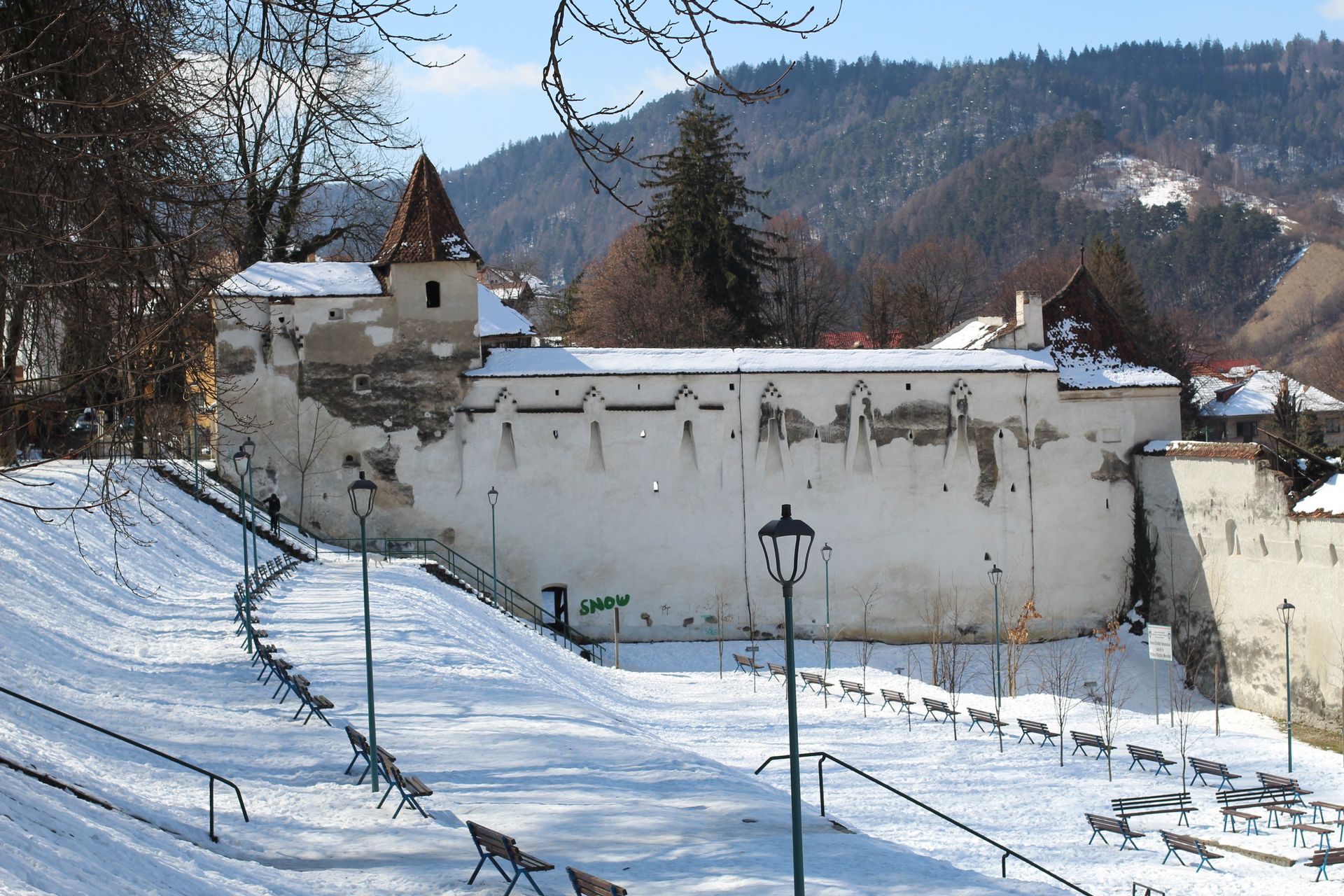
Stretches of Brașov’s defensive walls survive, anchored by the White Tower, the Black Tower and the photogenic Weaver’s Bastion, which guild members maintained and defended. Each of the city’s craft guilds was assigned a section of wall or a tower to garrison and keep in repair, so the surviving defences are effectively a map of the medieval economy — the weavers’ bastion, the blacksmiths’ and so on. The Cetățuia fortress on its hill completes the ring. A walk along the surviving ramparts, especially the wooded stretch beneath Tâmpa, gives you the fortified Saxon town in miniature. Free to walk; the Weaver’s Bastion sometimes houses small exhibits on the city’s defensive history.
Mount Tâmpa & the Cable Car
The forested peak that rises straight out of the old town is itself a sight. A cable car climbs to the 960 m summit in under three minutes , where the giant white BRAȘOV sign and a 1.5 km² nature reserve await; the reserve alone is home to around 35% of all Romania’s butterfly species . Walk up or down on the marked trail if you have the legs and the time. Best at sunset for the light across the rooftops.
St Nicholas Church
At the heart of the Schei quarter stands St Nicholas Church, a Romanian Orthodox church first recorded in wood in 1392 and rebuilt in stone between 1495 and 1519, later given Baroque additions . For centuries it was the spiritual centre of Brașov’s Romanian community, barred from the Saxon citadel, and its churchyard holds the graves of notable figures from Romanian Transylvania. The interior frescoes and the quiet, gently sloping square in front of it make it the natural pairing with the First Romanian School next door — together they tell the story of how Romanian language, faith and learning survived and grew just outside the German-run walls. Modest entry; combine it with an unhurried wander through Schei’s cobbled lanes.
Entertainment & Things to Do

The Tâmpa Cable Car
The single best thing to do in the city itself: a cable car that climbs from the edge of the old town to the 960 m summit of Mount Tâmpa in under three minutes . At the top is the giant Hollywood-style BRAȘOV sign and a 1.5 km² nature reserve that hosts around 35% of Romania’s butterfly species . Typical cost is modest, a few euros return. Go for sunset, when the low light rakes across the red rooftops and the whole medieval core glows beneath you. The cabins are small and the ride brief, but the payoff is the best panorama in the city: the entire walled town laid out below, the Carpathian ridges rolling away to the south, and on a clear day views stretching far across the Bârsa plain. Bring a layer even in summer — it’s noticeably cooler at the top — and consider riding up and walking the marked forest trail back down for the views without the return-ticket queue.
Skiing at Poiana Brașov
Romania’s premier ski resort sits 12 km away with 12 trails totalling 23.9 km, snow cover of 50–60 cm from mid-November to mid-March across roughly 120 ski days, and it hosted the 2013 European Youth Olympic Winter Festival . It’s not the Alps in scale, but it’s perfect for beginners and intermediates, with gentle blues, well-run ski schools and a gondola onto the Postăvarul massif for the longer runs. Lift passes, lessons and rentals are a fraction of Alpine prices, which makes Poiana one of the best-value places in Europe to learn to ski. Book ski school in advance for the December peak, and don’t overlook the resort’s summer life — the same slopes and lifts open up for hiking and mountain biking once the snow melts.
Hiking & the Outdoors
Trails fan out from Tâmpa and Postăvarul straight from the city, and the Bucegi plateau is an easy excursion. In summer this is some of the best-value mountain walking in Europe, with marked routes for every level — from the gentle hour down Tâmpa to full-day traverses on the high plateau. The Carpathians around Brașov also hold one of Europe’s largest brown-bear populations, and responsible guided bear-watching hides run roughly February to November . Typical cost is free for self-guided hikes; book bear-watching and mountain guides ahead in season.
Bars, Cafés & Live Music
Strada Republicii and the square fill with terrace cafés by day and bars by night; the scene is relaxed rather than raucous. Expect craft beer, wine bars, speciality coffee roasters and the occasional live set in a cellar bar or jazz spot. This is a student city as well as a tourist one, so there’s a genuine local nightlife behind the postcard façades — you just have to step off the main promenade to find it. Typical cost: a local beer runs a few euros, well below Western European prices, and a cocktail in even the smartest bar rarely stings.
Festivals & the Christmas Market
The winter highlight is the Brașov Christmas market in Piața Sfatului, which in the 2025–26 season ran from 30 November 2025 to 11 January 2026 across three locations with more than 50 stalls and a New Year’s Eve concert in the square . With the Council House lit up, the smell of mulled wine and chimney cake, and snow on the surrounding peaks, it’s one of the most atmospheric Christmas markets in Eastern Europe and reason enough to brave the cold. Free to wander; arrive early evening for the lights.
The rest of the calendar has plenty too. Summer brings open-air concerts, film screenings on the square, and the Golden Stag (Cerbul de Aur) international music festival, a long-running event that has drawn major names to Brașov; spring and autumn add food, craft and folk festivals. Whenever you visit, it’s worth a quick check of what’s on — the square is almost always hosting something. Outside the headline events, simply spending an evening on Piața Sfatului — a drink on a terrace, buskers in the warm months, the lit Council House behind you — is the entertainment locals enjoy most, and it costs nothing but the price of a coffee.
Day Trips
Bran Castle (40 minutes by car or bus)
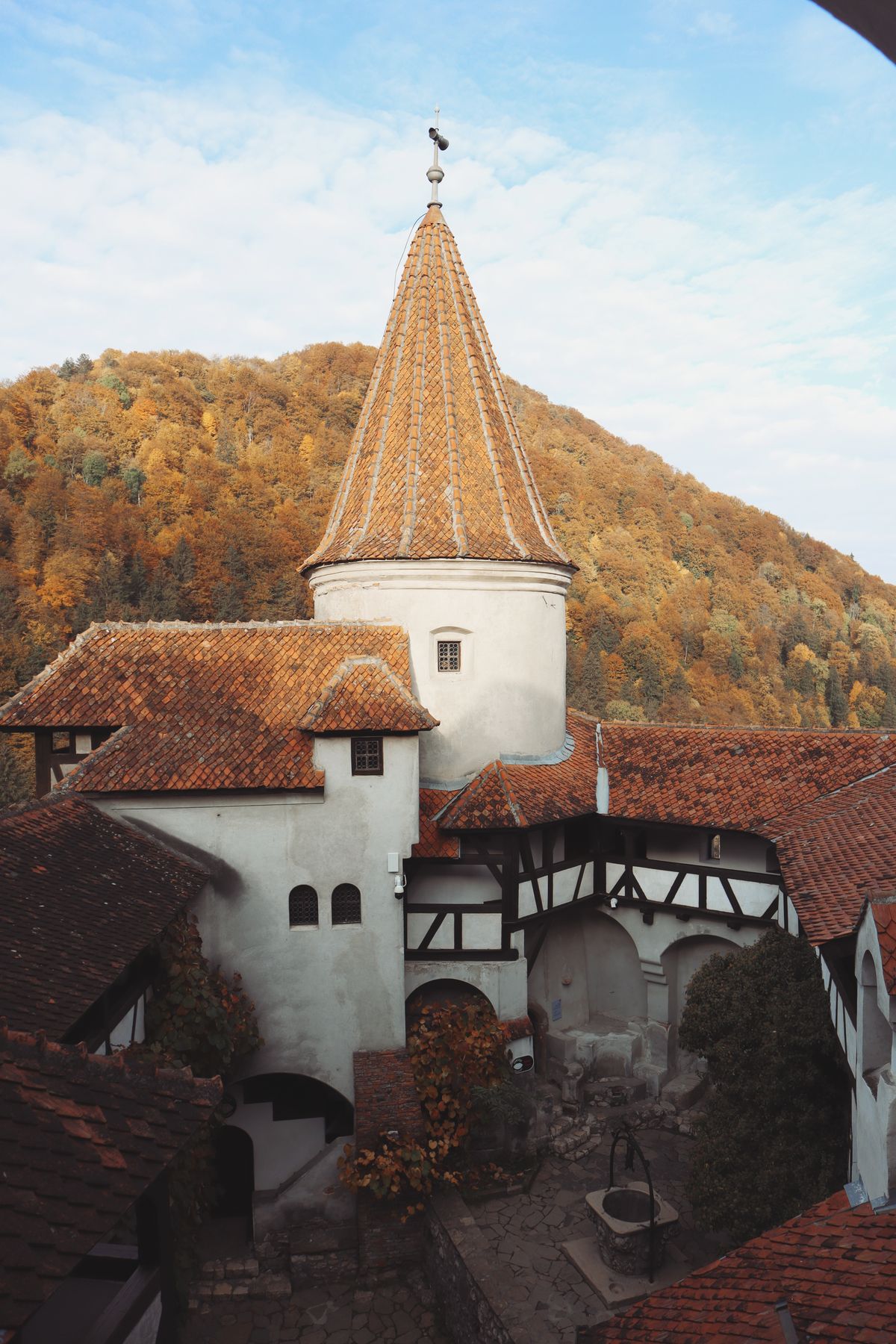
The region’s most famous fortress sits 25 km southwest of Brașov, built from 1377 by the Saxons of Kronstadt with the permission of Louis I of Hungary . It is heavily marketed as “Dracula’s castle,” but be clear-eyed: Vlad III the Impaler — the historical figure behind Bram Stoker’s character — almost certainly never lived here, and the Dracula association is largely a 20th-century tourism invention . The castle’s real story is more interesting: it became Queen Marie of Romania’s beloved residence after 1920 and is run as a private museum today . It opens daily 09:00–18:00 from April to October . Go at opening to beat the coaches.
Râșnov Citadel (30 minutes by car)
A hilltop peasant-refuge fortress built, by local tradition, between 1211 and 1225, where villagers and a mixed Romanian-Saxon garrison sheltered during raids — more than 30 houses once stood inside its walls . Unlike a lordly castle, this was a communal stronghold: ordinary villagers built and maintained it as a place to hide their families, livestock and grain when invaders came over the mountains, and the little streets of houses, a school and a chapel inside the walls reflect that. It’s far less crowded than Bran, sits only minutes away, and the ramparts give sweeping views over the Bârsa plain toward the peaks. Easy to combine with Bran on the same loop.
Peleș Castle, Sinaia (1 hour by train)
A neo-Renaissance fantasy 48 km from Brașov, built 1873–1914 and inaugurated in 1883 as the world’s first castle fully powered by locally produced electricity . Commissioned by King Carol I as the Romanian royal summer residence, it is the opposite of Bran’s stark border fort: a riot of carved wood, stained glass, armour halls and lavishly themed rooms set against a forested mountain backdrop in the resort town of Sinaia. Many visitors rate it the most beautiful castle in the country. It opens Wednesday–Sunday 09:00–17:00 and uses timed-entry tickets via bilete.peles.ro . Reachable directly by train to Sinaia, then a short walk or taxi uphill — easily done as its own day from Brașov.
Bucegi Mountains & the Sphinx (1.5 hours)
The high plateau above Bușteni holds the wind-carved Sphinx and Babele rock formations and tops out at Omu, 2,505 m . A cable car from Bușteni lifts you straight onto the plateau, where easy walks lead to the Sphinx — a rock weathered into an uncanny human profile — and the mushroom-shaped Babele formations, both wrapped in Romanian folklore. The protected Bucegi Natural Park covers more than 32,000 hectares of alpine meadow and forest . Best in summer for the wildflowers and clear views; check the mountain weather first, as cloud and wind can shut the cable car and erase the panorama in minutes.
Saxon Villages — Viscri & Prejmer (1–1.5 hours)
Seven fortified-church villages were inscribed by UNESCO in 1993 and extended in 1999 . Prejmer’s fortress has walls 5 m thick and 12 m high that once sheltered around 1,600 villagers ; Viscri, where King Charles III bought two 18th-century Saxon houses in 2006, lies 82.7 km away via a 7 km unpaved road . These villages are the antidote to the castle crowds: time-capsule hamlets of pastel houses, fortified churches and cobbled lanes where horse-drawn carts still outnumber cars and the rhythm of life has barely changed in centuries. Prejmer is the easiest to reach and the most complete of the fortifications, with its honeycomb of 272 little cells built into the inner wall, one for each family. Viscri rewards the longer, bumpier drive with a near-perfect Saxon streetscape and a small but thriving craft economy in wool and felt. Either makes a gentle, deeply atmospheric half-day, ideally with lunch at a village guesthouse serving home cooking from the family’s own garden.
Seasonal Guide
Spring (March – May)
Snow lingers on the peaks into April while the old town greens up below. Daytime highs climb from the single digits in March to the high teens Celsius by May. Easter brings sarmale and church processions in Schei, and the city’s parks and surrounding meadows burst into colour. Crowds are thin and prices low — late May is arguably the sweet spot of the whole year for hiking weather without the summer rush, though pack for changeable mountain conditions, since a warm afternoon can still turn cold and wet within the hour up high. Spring is also when the surrounding orchards blossom and the rivers run full with snowmelt, adding to the scenery on any day trip.
Summer (June – August)
The city’s busiest and warmest stretch, with highs in the mid-to-high 20s Celsius and cool mountain evenings that make Brașov a welcome escape from the heat of Bucharest and the coast. This is peak hiking and day-trip season; Bran and Peleș fill with coaches, so go at opening or late in the afternoon. Terrace cafés on Republicii run late, open-air concerts and film screenings dot the calendar, and the long days are perfect for chaining sights. Book accommodation well ahead for July and August, when the city is at its liveliest and its fullest.
Autumn (September – November)
My favourite season. September keeps the warmth, the Bucegi and Tâmpa forests turn gold, and the crowds evaporate. October is crisp and photogenic — Bran Castle against fall foliage is the postcard, and the light on the old town’s rooftops is at its best. Mushroom and wine season brings the markets to life. By November the first snows dust the peaks and prices drop to their lowest of the year before the Christmas market arrives. If you want the scenery without the queues, this is the window to aim for.
Winter (December – February)
Brașov is magical under snow. The Christmas market lights up Piața Sfatului from late November, Poiana Brașov’s ski season runs with reliable 50–60 cm cover from mid-November , and the old town looks straight off a greetings card. Pack serious layers — January nights are bitterly cold, and snow underfoot makes the cobbles slick, so bring grippy boots. Daylight is short, so plan sights for the middle of the day and save the evenings for the market, a cellar restaurant or a mug of mulled wine. The trade-off for the cold is real magic: fewer tourists, snow-frosted spires, the ski slopes a half-hour away, and a Christmas market that ranks among the most atmospheric in Eastern Europe.
Getting Around
Getting to and around Brașov is refreshingly simple. The city is small enough to cover on foot, the train link to Bucharest is one of Europe’s great scenic rides, and ride-hailing fills every gap cheaply. You will not need a car for the city itself, and even most day trips are reachable by public transport — so here is how each piece fits together.
Trains from Bucharest
Brașov sits on the main Bucharest–Cluj-Napoca rail corridor operated by CFR Călători, the Romanian state passenger railway . Fast InterRegio and InterCity services from Bucharest’s Gara de Nord take roughly 2.5 to 3 hours through the dramatic Prahova Valley — one of Europe’s most scenic rail journeys. InterCity service on the corridor was reintroduced in December 2023 .
The journey itself is part of the appeal: the line threads up the Prahova Valley past Sinaia and Bușteni, with the Bucegi peaks rising on one side, so grab a window seat. Trains also run onward from Brașov to Sighișoara, Sibiu and Cluj, making the city a natural hub for a wider Transylvania rail loop without ever touching a car.
City Buses (RATBV)
Brașov’s buses and trolleybuses are run by RATBV and reach every neighbourhood plus Poiana Brașov. A single local ticket costs 5 RON and a monthly pass 110 RON . Buy and validate on board or via the app. The most useful route for visitors is the one up to Poiana Brașov, which takes about 30 minutes and saves you a pricey taxi; buses to Bran also leave from the city, making the headline castle reachable on public transport for a few lei.
Ride-Hailing & Prepaid Transit
Bolt and Uber both operate in Brașov and are cheap, reliable and the easiest way to reach the airport or outlying neighbourhoods. There’s no metro — the city is too small — so a transit card isn’t necessary; load the Bolt app instead and pay by card.
Airport Access
The new Brașov-Ghimbav Airport (IATA code GHV) opened in June 2023, 15 km northwest of the centre, served by Wizz Air, Animawings and HiSky . It transformed access to the region: before it opened, every visitor flew into Bucharest’s Otopeni (OTP) and faced a three-hour transfer. Many still do, since Otopeni has far more routes, but a growing list of direct flights now lands you a 20-minute drive from the old town. Check both airports when booking — Otopeni for choice, Ghimbav for convenience.
- Wizz Air from London Luton — launched 2 August 2023, three times weekly
- Bolt or taxi from GHV to the old town — about 20 minutes, roughly 40–50 RON
Taxis
Metered taxis are inexpensive, but use the apps to avoid the occasional overcharge near the station, which is the one spot where opportunistic drivers operate. Flag-fall is low and a cross-town ride rarely exceeds a few euros. Confirm the meter is running before you set off, or simply default to Bolt, where the price is agreed up front and you pay by card.
Navigation Tips
Apps: Google Maps, Bolt. The old town is compact and flat enough to cover entirely on foot, so you’ll rarely need transport within the historic core — distances that look significant on a map are usually a five-minute stroll. Use buses or Bolt only for Poiana Brașov, the airport and the residential districts, and download an offline map before you head into the mountains, where signal can drop on the trails and in the higher valleys.
Budget Breakdown: Making Your Lei Count
| Tier | Daily | Sleep | Eat | Transport | Activities | Extras |
|---|---|---|---|---|---|---|
| Budget | €35–55 | Hostel dorm €12–18 | €10–15 | €2–4 buses | €5–10 | €5 |
| Mid-Range | €70–110 | 3-star double €45–70 | €20–30 | €8–12 Bolt | €15–25 | €10 |
| Luxury | €180+ | 4–5 star €120+ | €50+ | €25 private car | €40+ tours | €20+ |
Where Your Money Goes
Brașov is one of Europe’s genuine bargains, and understanding where the money goes makes it easy to travel here well on almost any budget. Brașov is materially cheaper than Bucharest and dramatically cheaper than Western Europe — one of the reasons it punches so far above its weight as a destination. Sleeping and eating are the bargains: an inexpensive restaurant meal is around 60 RON and a local beer or coffee just a few lei , while a comfortable mid-range double in the old town often costs less than a budget chain room in a Western capital. Local transport is almost trivial — a single bus ticket is 5 RON and a monthly pass 110 RON — so your daily spend is driven almost entirely by how you eat and how you do day trips.
Your biggest variable cost is exactly those excursions. A private driver for a Bran–Râșnov–Peleș itinerary is where a budget stretches, but the alternatives are easy: a shared organised group tour brings the per-person price down sharply, and the public bus to Bran plus the train to Sinaia for Peleș cost only a handful of euros each. Castle admissions and the Tâmpa cable car are modest individually but add up over several days, so factor them in. The good news is that many of the city’s best experiences — the squares, the walls, the Schei lanes, the mountain trails — are completely free, which means even a tight budget never feels like it’s missing the point of Brașov.
To put real numbers on it: a frugal backpacker sleeping in a hostel dorm, eating fixed-price lunches and street food, using buses and sticking to free sights can have a full day for €35–45. A mid-range couple in a central three-star hotel, eating two restaurant meals and doing a paid day trip, will spend somewhere around €80–110 each. Even at the luxury end — a four-star room, fine dining and a private driver — Brașov costs a fraction of what the equivalent would in Western Europe. The currency is the Romanian leu (RON), and although Romania has set a long-term euro-adoption target, for now you’ll budget, pay and tip in lei. As a rough rule of thumb, whatever a comparable trip would cost in Western Europe, expect Brașov to come in at roughly half — and the savings are largest on exactly the things that make a holiday: eating out, drinks and guided experiences.
Money-Saving Tips
- Eat your main meal at lunch from the fixed “meniul zilei” menus, which can cost a third of the equivalent dinner
- Take the public RATBV bus to Bran and the train to Sinaia rather than a private transfer
- Visit free sights — Catherine’s Gate, the walls, Strada Sforii and the Cetățuia viewpoint cost nothing
- Stay in Răcădău or Astra for cheaper rooms a short bus ride from the centre
- Pay by card with a fee-free travel account to dodge poor airport exchange rates
Practical Tips
Language
The language is Romanian, a Romance language closer to Italian than to its Slavic neighbours. Brașov’s Saxon-German and Hungarian heritage means you’ll see trilingual place names, and English is widely understood across the old town’s cafés, hotels and sights. A few words of Romanian — “mulțumesc” for thank you — go a long way outside the tourist core.
Cash vs. Cards
Cards are accepted almost everywhere in the centre, including contactless, but carry some lei for market stalls, small bakeries, public-bus tickets and rural day-trip stops where card machines are scarce. Withdraw from a bank ATM rather than the standalone “Euronet”-style machines, which push poor conversion rates, and always choose to be charged in lei (RON), not your home currency, when a terminal offers the choice — declining the “dynamic currency conversion” saves you a hidden markup every time.
Safety
Romania carries a US State Department Travel Advisory Level 1 — the lowest — though it also has the highest per-vehicle road-death rate in the EU, so take care as a pedestrian and on mountain roads . Brașov itself is very safe; the usual care with pickpockets in crowds is enough.
What to Wear
Layers, always. The mountains make weather change fast, and even summer evenings are cool enough for a jacket. Bring proper footwear for cobbles and trails — the old town’s stones are slick after rain and the hill climbs to the Cetățuia and Tâmpa are steep — and serious winter gear, including grippy boots, from December to February, when snow and ice are the norm rather than the exception.
Cultural Etiquette
Dress modestly in churches — shoulders and knees covered — and remember the Black Church and St Nicholas are working places of worship rather than mere monuments. Romanians are warm and direct; a handshake and a greeting open most doors, and a few words of Romanian are appreciated even when English would do. Tipping around 10% in restaurants is normal and welcome, and Brașov’s mixed Romanian, Saxon and Hungarian heritage means a little curiosity about which community built what will earn you genuine, often proud, explanations from locals.
Connectivity
Romania has some of the fastest, cheapest mobile internet in Europe. EU roaming applies for EU SIMs; others can buy an inexpensive local prepaid SIM or eSIM. Wi-Fi is standard in cafés and hotels, and connection speeds across the city are genuinely excellent — comfortably fast enough to work remotely, stream films or video-call home without a second thought. The one caveat is the mountains: signal can drop on the higher trails around Tâmpa, Postăvarul and the Bucegi plateau, so download offline maps and any trail notes before you set out and don’t rely on live data once you’re above the treeline.
Health & Medications
The CDC recommends Hepatitis A vaccination, and tick-borne encephalitis cover plus 20%+ DEET repellent if you’ll hike extensively in the surrounding forests . Pharmacies (“farmacie”) are plentiful in the centre and well stocked, with English often spoken; some open late or 24 hours. Bring any prescription medication in its original packaging with a copy of the prescription, and check tap water is fine to drink throughout the city — it is. EU visitors should carry their EHIC/GHIC card; everyone else should travel with insurance that covers mountain activities if they plan to hike or ski.
Luggage & Storage
Brașov’s train station has left-luggage options, and most old-town hotels will hold bags before check-in or after check-out — useful if you’re squeezing in a Bran trip on your arrival or departure day. There are also a handful of self-service luggage lockers near the centre. Since the old town is so walkable, dropping your bags first thing and exploring on foot until your room is ready is an easy way to gain half a day at either end of your stay.
Frequently Asked Questions
How many days do I need in Brașov?
Two full days covers the old town and one castle loop, but I’d argue for three or four. That lets you do Bran and Râșnov on one day, Peleș on another, ride the Tâmpa cable car, wander Schei, and still have an unhurried morning in Piața Sfatului. Add a fifth day if you want to ski or hike Poiana Brașov, or chase the Saxon villages out toward Viscri. Brașov rewards a slower pace than its “day trip from Bucharest” reputation suggests, and using it as a base — rather than a stop — is the single best decision you can make on a Transylvania trip.
Is Brașov good for solo travellers?
Excellent. It’s compact, very safe, walkable and full of hostels and cafés where solo visitors meet others, plus easy group day tours to the castles that take the logistics off your hands. The mix of old-town wandering and mountain access suits independent travellers especially well, and English will get you through with no trouble. As a solo woman traveller you’ll find Brașov among the more relaxed cities in the region; standard common sense after dark is enough, and the well-lit, busy old town feels comfortable to walk in the evening.
Do I need a car, or can I rely on trains and buses?
You don’t need a car. Trains link Brașov to Bucharest, Sinaia (for Peleș) and beyond, RATBV buses reach Bran and Poiana Brașov, and Bolt covers the rest cheaply. A car helps only if you want to chain remote Saxon villages like Viscri in a single day — otherwise public transport and the odd organised tour are plenty.
What about the language barrier?
Minimal in Brașov. Romanian is the language, but English is widely spoken in the tourist centre, and the city’s German and Hungarian heritage means signage is often multilingual. Learn a couple of polite phrases and you’ll be more than fine; menus usually carry English translations.
When is the best time to visit?
Late May to June and September to October give the best balance of warm hiking weather and manageable crowds, and the autumn light on the forests around Bran is hard to beat. December is magical for the Christmas market and skiing, but expect cold and crowds in equal measure. July and August are warmest and liveliest, but the castles fill with coaches, so visit them early in the day or late in the afternoon during summer. Whenever you come, pack layers — the mountain setting means the temperature can swing a long way between a sunny square and a windy ridge.
Can I use credit cards everywhere?
In the centre, almost — cards and contactless are accepted at most restaurants, hotels and shops. Keep some lei for public-bus tickets, market stalls, small bakeries and rural day-trip stops, where cash is still king and card readers can be hit or miss.
Is Bran really “Dracula’s Castle”?
Not really. Bran is marketed as Dracula’s castle, but Vlad III the Impaler — Stoker’s loose inspiration — almost certainly never lived there, and the association is a modern tourism creation. Visit it for its genuine history as a Saxon border fort and Queen Marie’s interwar residence, not for vampires.
How does Brașov compare to Bucharest?
They’re complementary opposites. Bucharest is a big, buzzing capital of grand boulevards, museums and nightlife, the country’s economic and cultural engine; Brașov is a small, walkable medieval town in the mountains. Brașov is calmer, cheaper and more scenic, and makes the far better base for Transylvania’s castles and villages. Most travellers shouldn’t choose between them: fly into Bucharest, give it a day or two, then take the scenic train up to Brașov and use it as your mountain base. The two cities together tell a much fuller story of Romania than either does alone.
Is Brașov worth visiting just for Bran Castle?
Bran is the reason many people first hear of the area, but it would be a shame to treat Brașov as a mere staging post. The city’s own old town, Black Church, Strada Sforii, Tâmpa cable car and Schei quarter easily justify two or three days, and from that base Bran becomes one stop among several — Râșnov, Peleș, the Bucegi plateau and the Saxon villages all within reach. Come for the castle if you must, but stay for the city.
Is Brașov suitable for families with children?
Very much so. The car-free old town is easy with a pushchair on the main squares and streets, the Tâmpa cable car is a guaranteed hit, and the castles — Bran in particular — fire kids’ imaginations with their towers, turrets and trapdoors. Add the ski slopes and easy mountain walks at Poiana Brașov, plus reliably child-friendly restaurants and gentle prices, and Brașov makes a relaxed family base. Bring grippy footwear for the cobbles, and a carrier rather than a pushchair if you plan to climb to the Cetățuia viewpoint or up the steeper lanes of Schei.
Ready to Experience Brașov?
Pick your two or three days, book a fast train through the Prahova Valley, and let the Saxon crown of the Carpathians do the rest. For the full country context, read the Romania Travel Guide.
Explore More City Guides
- Bucharest City Guide
- Sibiu City Guide
- Sighișoara City Guide
- Romania Country Guide
- Romania Travel Guide (full)
- All City Guides
Alex the Travel Guru
Alex has spent two decades turning long, messy trips into guides you can actually use — testing the trains, eating the sarmale, climbing the towers and checking the opening hours so you don’t have to. Brașov is one of Alex’s favourite small cities anywhere, and this guide is the one he wishes existed before his first visit.
More city guides you might like
Plan your trip to Brașov
The booking tools we use ourselves. FFU may earn a commission at no extra cost to you.
Plan & book your trip to Brașov
Booking through these searches supports our guides at no extra cost to you.