
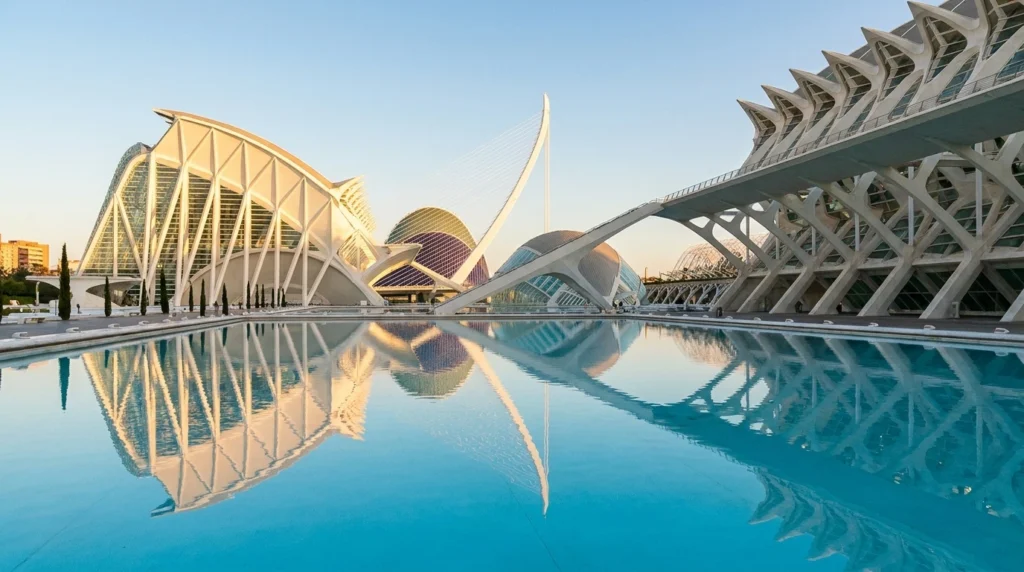
City Guide · Comunitat Valenciana
Valencia, Spain: Calatrava’s Future-City, the Birthplace of Paella, and Spain’s Most Liveable Mediterranean Capital
I have arrived in Valencia by the high-speed AVE from Madrid in well under two hours, by a budget flight into little Manises airport, and once on a slow coastal train down from Barcelona, and the first thing I always do is rent a bike and ride the old Turia riverbed from end to end. We tell first-time travellers that Valencia is the most underrated big city in Spain — about 825,000 people inside the city, the country’s third-largest, yet a place that still feels like a relaxed Mediterranean town rather than a capital . My favourite Valencia ritual is a Sunday lunchtime paella eaten beside the Albufera rice paddies where the dish was actually born, with the late-summer light turning the water gold. Treat this guide as the brief I would hand my own family the day before they flew in — the Calatrava-designed City of Arts and Sciences, the UNESCO silk exchange, the medieval Barrio del Carmen, the nine-kilometre Jardín del Turia, the Malvarrosa beach a tram ride from the centre, and the day trips that make Valencia worth a full week rather than a stopover .

Table of Contents
Why Valencia?
Valencia is the rare big city that works as a genuine base rather than a checklist — Spain’s third-largest city with roughly 825,000 residents inside its limits, yet small and flat enough that you can cycle from the medieval old town to the beach in twenty minutes . It sits on the Mediterranean at the mouth of the Turia, with a climate so mild that the city averages well over 300 days of sunshine a year and rarely sees a truly cold day . For a long time it was overshadowed by Madrid and Barcelona; lately it has become the city Spaniards themselves quietly recommend, precisely because it offers most of what those two have at noticeably lower prices and a slower pace.
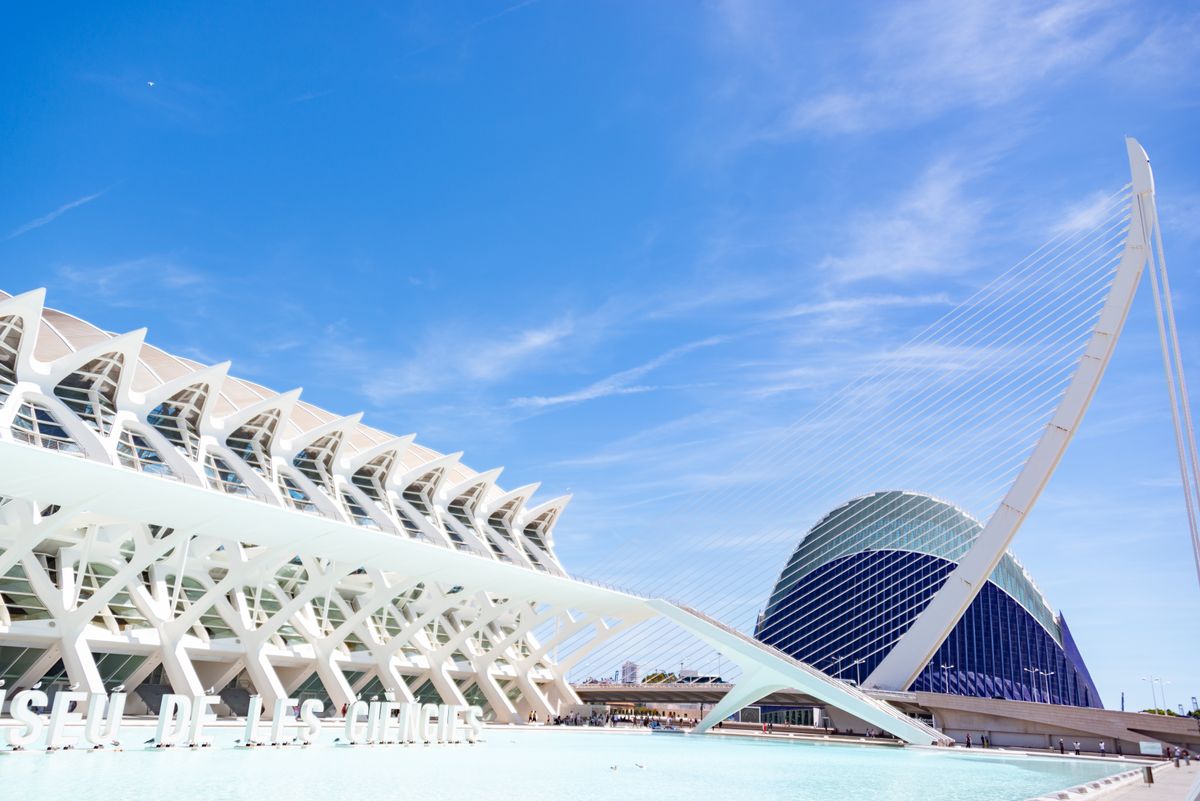
The city reads as a layered contradiction in the best way. Its founding is Roman, its golden age medieval — the 15th-century silk boom that built the UNESCO-listed Lonja and made Valencia one of the Mediterranean’s great trading ports — and its most famous face is resolutely futuristic, the white sculptural City of Arts and Sciences that the local architect Santiago Calatrava raised along the old riverbed . In between sits one of Europe’s strangest and best urban parks: after a catastrophic 1957 flood, the Turia river was diverted around the city, and the old bed was turned into a nine-kilometre ribbon of gardens, sports courts, and cycle paths that threads the whole city from end to end.
What makes Valencia worth a full week rather than a stopover is its range within a small footprint. This is the birthplace of paella, cooked over orange-wood fires in the rice paddies of the nearby Albufera lagoon; it has a genuine sandy city beach, the Malvarrosa; it throws the fire-and-gunpowder Fallas festival each March; and it is now under two hours from Madrid by high-speed AVE train . This guide covers the neighbourhoods you will walk, the distinct Valencian food, the Calatrava complex and medieval monuments, the day trips locals take, and the practical realities of the airport metro and the Fallas crowds. Everything else flows from the river that is no longer there.
Neighborhoods: Finding Your Valencia
📍 Valencia Map: Every Place in This Guide
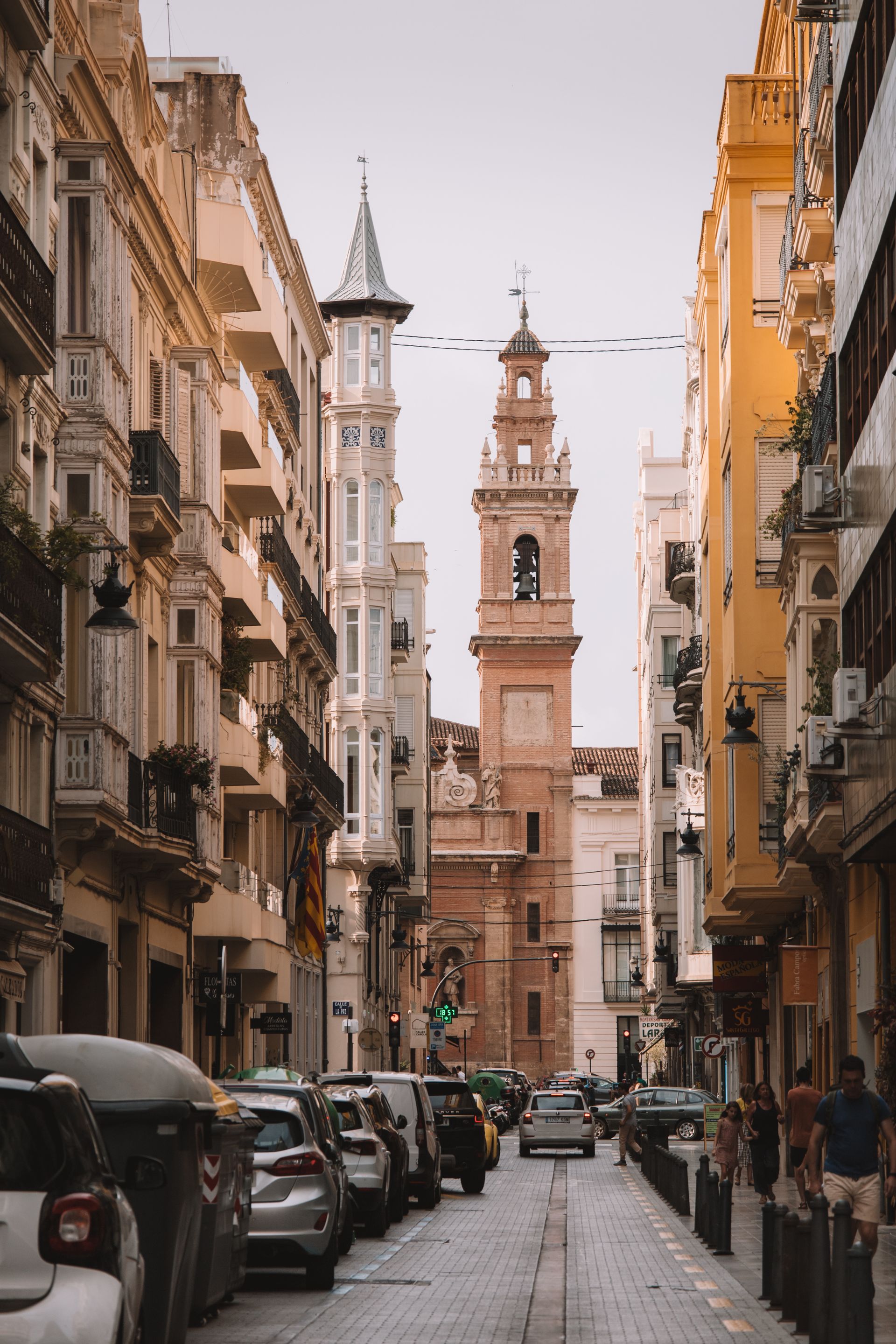
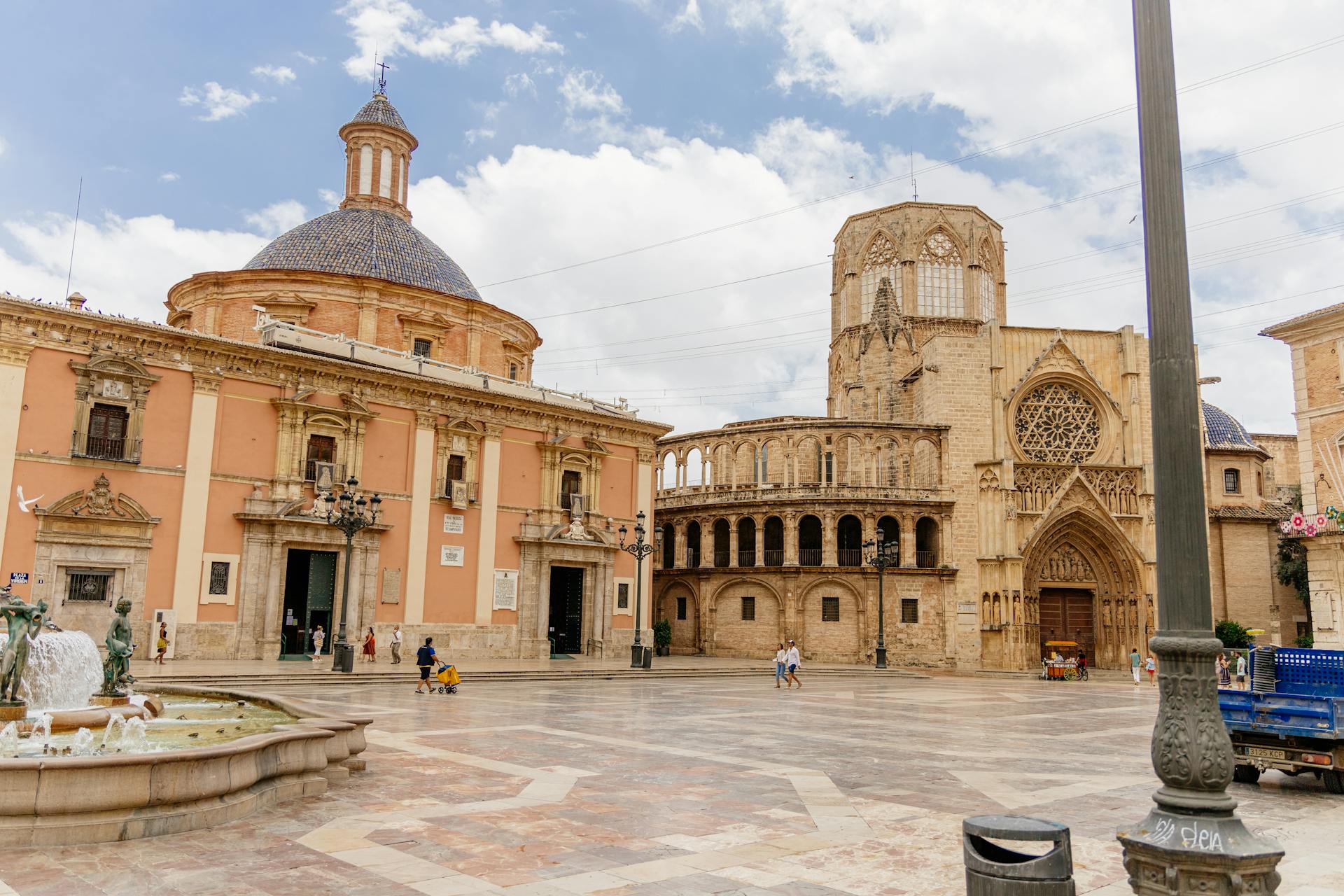
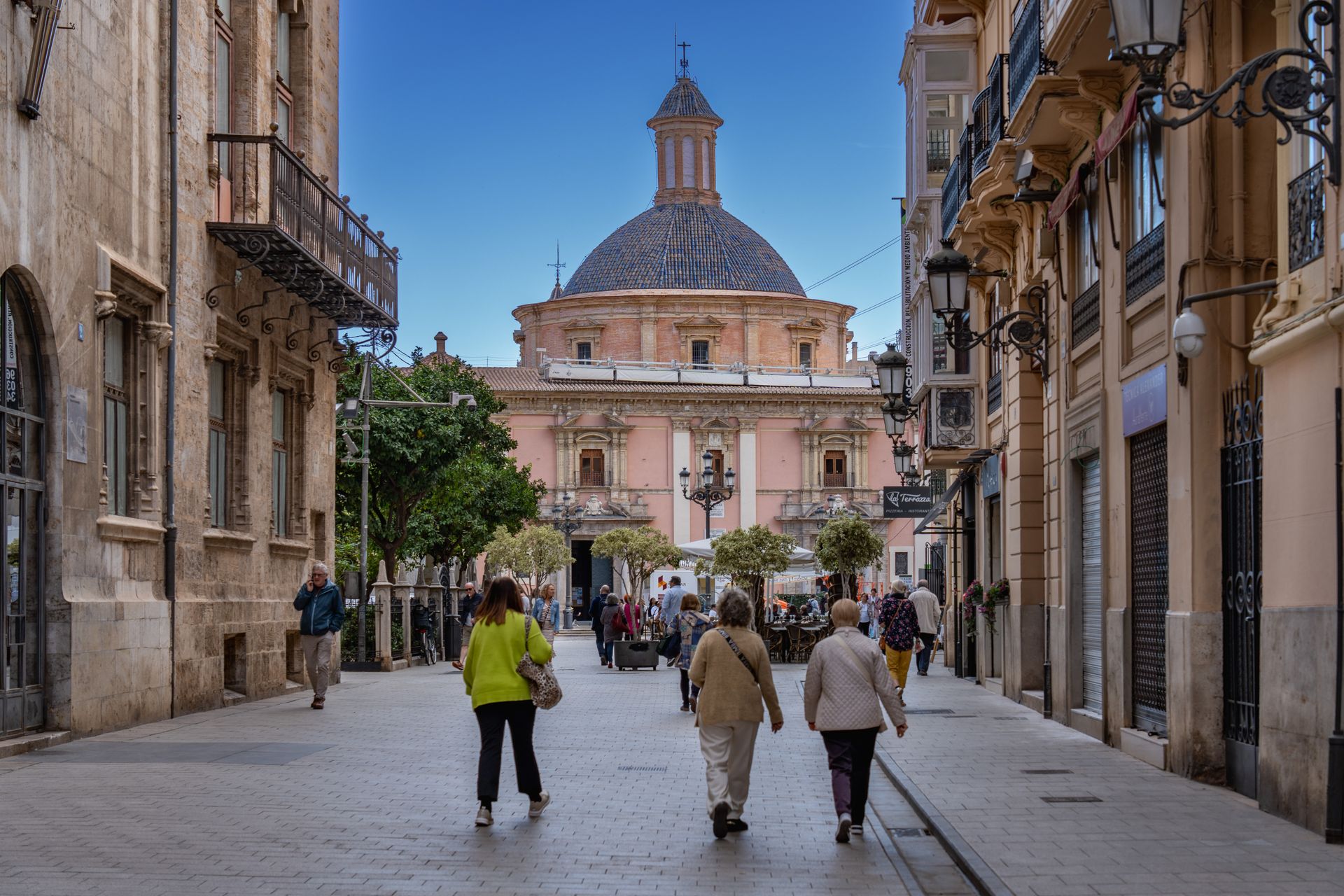
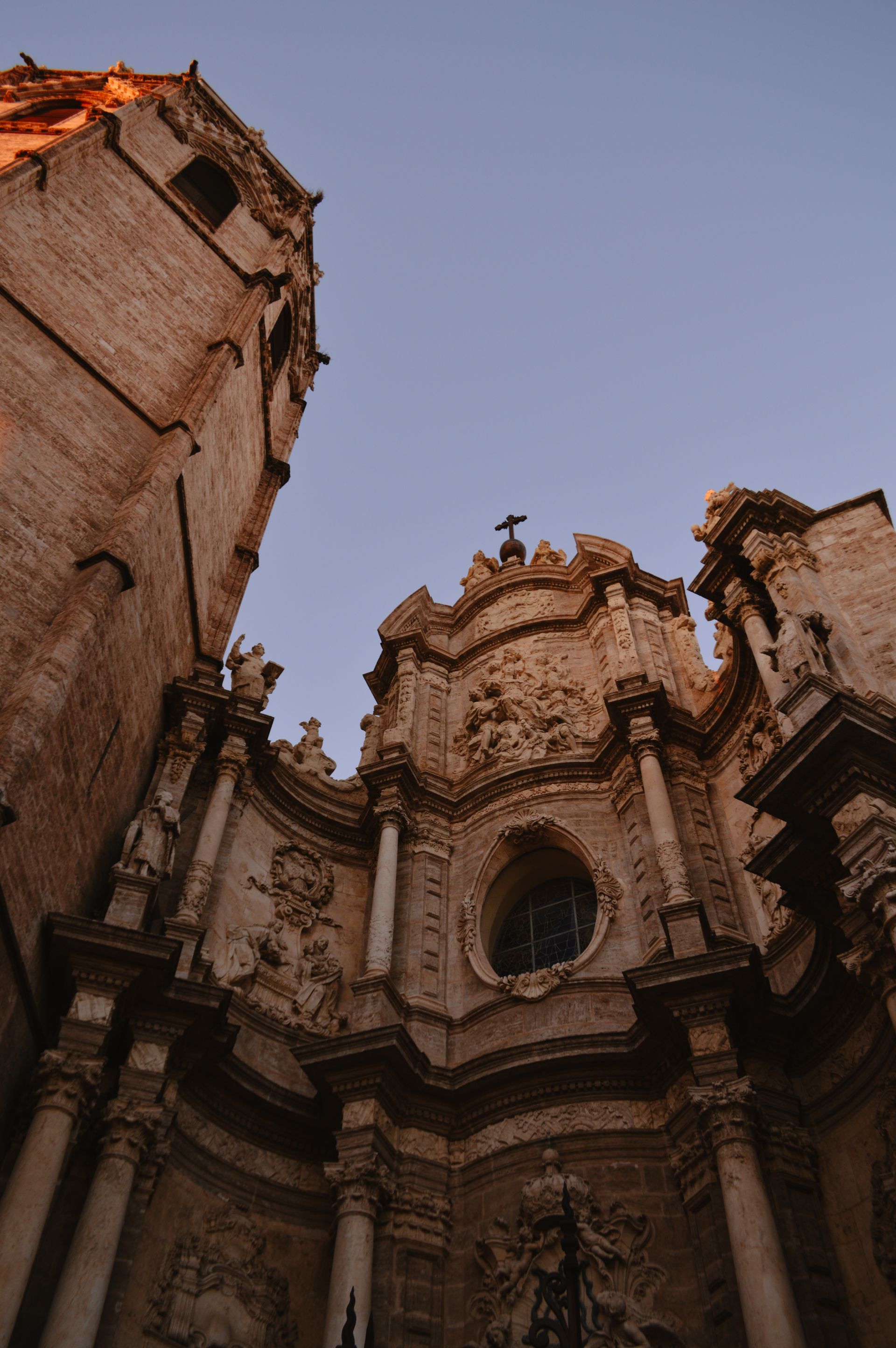
Valencia is compact and almost entirely flat, so no neighbourhood is more than a short bike ride or a couple of metro stops from another, and you do not choose a base to be near one thing — you choose it for the rhythm you want at night. The broad layout is easy to read: the medieval old town (Ciutat Vella) sits in the centre inside the curve of the old riverbed; the green Jardín del Turia loops around its northern and eastern edges; the City of Arts and Sciences anchors the southeastern end of that park; the bohemian Ruzafa lies just south of the centre; and the old fishermen’s quarters of El Cabanyal run along the beach to the east. Staying anywhere inside or just beside the Ciutat Vella puts you within a 15-minute walk of the market, the cathedral, and the river park . The single most useful orientation fact is that the green ribbon of the Turia threads the entire city, so wherever you sleep, a flat cycle path connects you to almost everything worth seeing.
The character shift across those districts is real and worth planning around. The old town is dense, atmospheric, and the most central; Ruzafa is the hip, restaurant-heavy quarter where younger Valencians go out; the Eixample and the streets near the train station are grand, quiet, and convenient; El Cabanyal by the beach is a low-rise, tiled-house neighbourhood with a salty, village feel; and the streets around the City of Arts are modern and spread out. Returning visitors almost always trade a first-trip old-town hotel for a Ruzafa or Cabanyal apartment on later trips — the prices ease, the food is better, and you feel less surrounded by other tourists. This section walks the seven districts you will actually use, with the access notes that matter.
One practical note on choosing where to stay: because the city is so flat and the bike network so good, the difference between neighbourhoods here is far more about atmosphere than convenience. Almost nowhere central is genuinely “far” from the sights once you have a bike or a metro ticket. So decide first what you want your evenings to feel like — the buzz of the Carmen lanes, the restaurant energy of Ruzafa, the beach calm of El Cabanyal, or the quiet grandeur of the Eixample — and let that drive the choice. The one real trade-off is noise against quiet: the most central old-town rooms can be the loudest at night, especially on festival weekends.
A useful mental map for first-timers: picture the city as a medieval core wrapped in a green crescent. The Ciutat Vella is the historic heart you arrive in; the Turia gardens curl around it like a moat turned into a park; the beach and the old fishing quarters lie to the east where the river once met the sea; and the futuristic Calatrava complex sits at the southern end of the park, the clearest sign of the modern city. The metro and tram do the longer hops — line 5 and the tram reach the beach, lines 3 and 5 reach the airport — but for everything inside the centre, a city bike on the flat Turia paths is genuinely all the transport most visitors need . Below are the seven districts you will actually choose between, with the trade-offs that matter for each.
Barrio del Carmen (El Carme)
The medieval heart of the old town — a maze of narrow lanes, ochre façades, and street art that is where most first-time visitors want to be, and for good reason. The streets follow their pre-modern layout, stay shaded and cool in summer, and hold the city’s densest concentration of bars, bodegas, and small restaurants. Mornings belong to the nearby Central Market, afternoons to the cathedral and the towers, and evenings to the busiest nightlife in the city. The trade-off is noise: rooms facing the lanes can be loud past midnight on weekends, so ask for a courtyard side if you are a light sleeper. It is also one of the cheapest places to eat well, with horchata counters and tapas bars on almost every corner.
- The two surviving medieval city gates, the Torres de Serranos and the Torres de Quart
- The Plaza del Carmen and the dense street-art lanes around Calle Caballeros
- The Institut Valencià d’Art Modern (IVAM) on the quarter’s northern edge
- The late-night bar scene around Plaza del Tossal and Calle Alta
Best for: first-time visitors, nightlife, walkable sightseeing. Access: Metro Túria or a short walk from Plaza del Ayuntamiento.
La Seu & the Cathedral quarter
The civic-religious core around the cathedral, the Plaza de la Virgen, and the Plaza de la Reina is the monumental heart of the Ciutat Vella, and where the city’s founding layers — Roman, Moorish, medieval — are stacked most densely. This is the grand-architecture quarter: the cathedral with its octagonal Micalet bell tower, the Basílica de la Virgen, and the recently renovated Plaza de la Reina with its café terraces. Hotels here run mid-range to upscale, and you are within a five-minute walk of the market, the Lonja, and the Carmen lanes. It suits travellers who want to be in the absolute centre of the historic city.
- Valencia Cathedral and the climbable Micalet (El Miguelete) bell tower
- The Basílica de la Mare de Déu dels Desemparats on the Plaza de la Virgen
- The Plaza de la Reina and its renovated pedestrian café terraces
- The Almoina archaeological centre over the Roman and Visigothic ruins
Best for: central hotels, monument lovers, first trips. Access: Metro Colón or Xàtiva, then a short walk.
Ruzafa (Russafa)
The city’s hippest quarter, just south of the old town, is a former working-class barrio turned restaurant-and-gallery district — the closest thing Valencia has to a Brooklyn or a Berlin Kreuzberg. Tile-fronted houses now hold third-wave coffee bars, natural-wine spots, vintage shops, and some of the best modern cooking in the city, all anchored by the lovely Mercado de Ruzafa. It is residential and lower-key by day, then comes alive at night. The metro and the train station are a short walk away, making it a convenient as well as fashionable base. It suits travellers who want good food and a local, design-led atmosphere over old-town crowds.
- The Mercado de Ruzafa, a genuine neighbourhood produce market
- The restaurant and natural-wine streets around Calle Cuba and Calle Literato Azorín
- The Bancaja and other small galleries, plus a dense café-terrace scene
- The starting point of the Las Fallas celebrations, which are huge here
Best for: food lovers, nightlife, design-led stays. Access: Metro Bailén or Xàtiva, or a 10-minute walk from the centre.
El Cabanyal & the beach
The old fishermen’s quarter along the seafront has quietly become the city’s most characterful district, a grid of low, brightly tiled houses between the old town and the broad sandy Malvarrosa beach. Long neglected and once slated for demolition, it has been revived by artists and young families, and now mixes traditional casas with new restaurants and surf-shop energy. It is a tram ride or a flat cycle from the centre, so it makes an excellent quieter base for travellers who want the beach and a village feel without giving up city access. The seafood restaurants along the Paseo Marítimo serve some of the best rice dishes in Valencia.
- The Malvarrosa and Las Arenas beaches, broad, sandy, and tram-connected
- The tiled modernista fishermen’s houses on the Cabanyal grid
- The seafront paella and rice restaurants along the Paseo Marítimo
- The restored Mercat del Cabanyal neighbourhood market
Best for: beach stays, seafood, a quieter village base. Access: Tram lines 4, 6, or 8 to the beach, or Metro Marítim.
L’Eixample & Colón
The grand 19th-century grid south and east of the old town is Valencia’s elegant, bourgeois quarter — wide avenues, modernista façades, and the city’s smartest shopping along Calle Colón and the surrounding streets. The jewel here is the Mercado de Colón, a restored 1916 iron-and-glass market hall now full of cafés and horchata counters. It is quieter at night than the Carmen, well-connected by metro, and a short walk from both the old town and Ruzafa, which makes it a comfortable, central base for travellers who want grandeur without clamour. Hotels run mid-range to upscale.
- The restored Mercado de Colón, a 1916 modernista iron-and-glass hall
- The smart shopping streets around Calle Colón and Calle Jorge Juan
- The modernista architecture of the Gran Vía Marqués del Túria
- Easy metro access at Colón and a quiet residential feel by night
Best for: shopping, quiet central hotels, easy metro access. Access: Metro Colón.
Ciutat de les Arts & the southern park
The modern district at the southeastern end of the Turia gardens is built around the City of Arts and Sciences and the surrounding new development. It is spacious, modern, and a little spread out, with newer apartment buildings, the Calatrava complex, and the green river park on the doorstep. It suits visitors who want a quiet, modern base with the gardens and the science museums within walking distance, or families using the Oceanogràfic and the science museum as anchors. The trade-off is distance from the old-town nightlife, though the flat cycle path along the Turia closes the gap quickly.
- The City of Arts and Sciences — the Hemisfèric, Science Museum, and Oceanogràfic
- The southern reaches of the Jardín del Turia, with sports courts and play areas
- Modern apartment rentals at lower rates than the old town
- The Gulliver park playground, a giant climbable sculpture in the riverbed
Best for: families, modern stays, museum-focused trips. Access: Metro Alameda, then a walk along the park, or bus.
El Pla del Real & the northern gardens
The leafy residential district north of the river park, around the university and the Jardines del Real (Viveros), is the quiet, green, slightly upscale quarter that suits longer or family stays. Tree-lined streets, the botanical-style Viveros gardens, and the city’s main university campus give it a calm, local rhythm well away from the tourist crush. It is a short hop across the Turia park into the old town, and the gardens themselves are among the prettiest green spaces in the city. It rewards visitors who prioritise quiet and space over being in the thick of the action.
- The Jardines del Real (Viveros), the city’s largest historic gardens
- The Museo de Bellas Artes, one of Spain’s best provincial fine-art museums
- The leafy university streets and a calm, residential evening atmosphere
- Quick footbridge access across the Turia park into the old town
Best for: families, longer stays, quiet green surroundings. Access: Metro Aragón or Facultats, or a walk across the river park.
If you are weighing one district against another for a first trip, the honest shortlist is short. Choose the Carmen or the cathedral quarter if you want to step out of the door into the monuments and the nightlife and do not mind some street noise; choose Ruzafa if your trip is built around eating well and a younger, design-led scene; and choose El Cabanyal if the beach and a quieter village rhythm matter more than being in the historic core. The Eixample and El Pla del Real are the safe choices for families and light sleepers who want calm and space. Whatever you pick, the flat geography and the Turia cycle path mean you are never really cut off from the rest — so book on atmosphere and price rather than fretting over distance, and plan to wander well beyond your own neighbourhood each day.
The Food
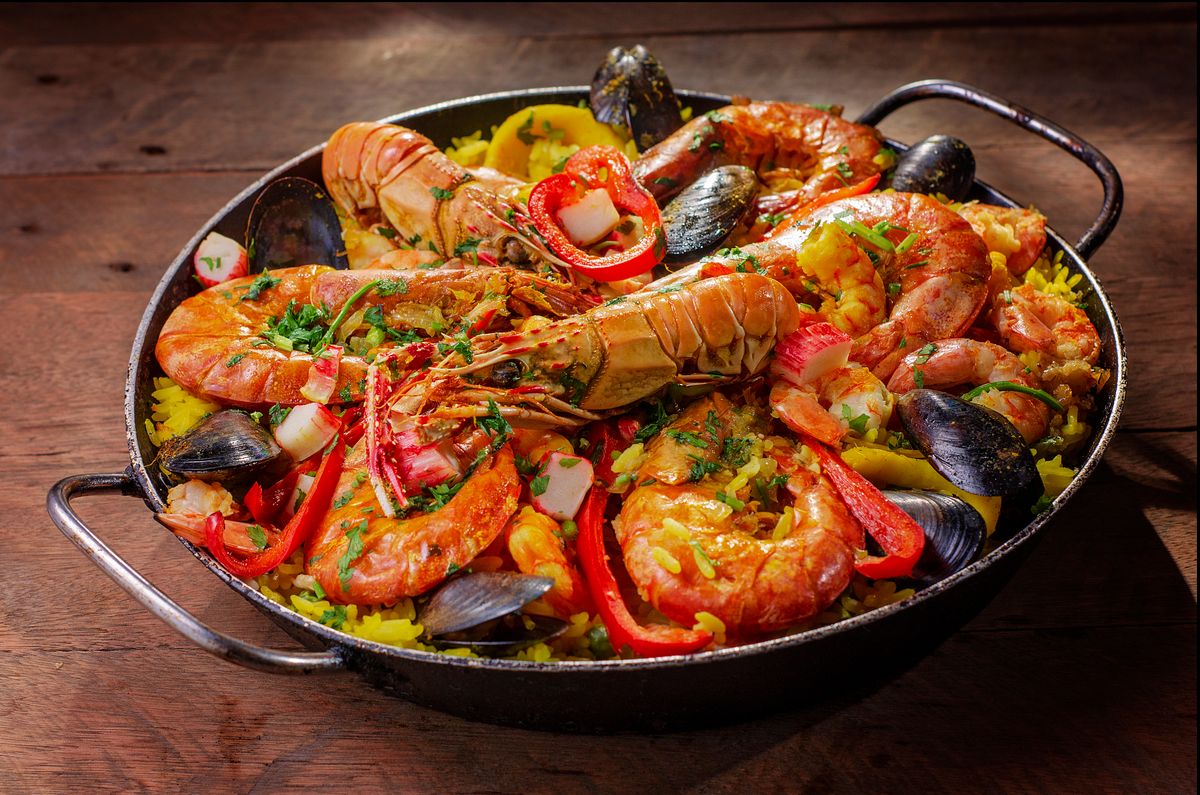
Valencia is the birthplace of paella, and that single fact shapes the whole food culture of the city. The dish was born in the 19th century in the rice paddies of the Albufera lagoon just south of the city, cooked over orange-wood fires by farm labourers from whatever was to hand — rabbit, chicken, snails, and the local beans, never seafood and emphatically never chorizo . The rice itself has been grown in the wetlands since the Moors introduced it over a thousand years ago, and the genuine paella valenciana is a Sunday lunch dish, eaten at midday, never at night, and traditionally straight from the pan with a wooden spoon. Knowing this saves you from the tourist-trap versions on the main squares and points you toward the real thing in the rice restaurants of El Palmar and El Cabanyal.
What makes eating in Valencia so rewarding is that the food is genuinely distinct from the rest of Spain and the prices are noticeably gentler than in Madrid or Barcelona. Beyond paella there is a whole family of arroces — rice dishes cooked dry, soupy, or with a crisp socarrat crust — alongside the city’s own street food, its iconic horchata-and-fartons, and a deep seafood tradition from the working port. The market culture is the spine of it all: the Modernista Central Market is one of the largest fresh-produce markets in Europe, and the smaller neighbourhood markets in Ruzafa, Colón, and the Cabanyal are where the city actually shops. The huerta — the fertile market-garden belt that rings the city — supplies the vegetables, the Albufera supplies the rice and the eel, and the Mediterranean supplies the fish, so almost everything on a Valencian plate is grown or caught within an hour of where you eat it.
It helps to understand the geography of eating here. The main tourist squares and the streets right around the cathedral hold the most paella tourist traps — the giveaway is a photo menu and a paella “ready in ten minutes,” which a real one never is. The Albufera villages of El Palmar are where Valencians drive on Sundays for the genuine article cooked over wood. El Cabanyal and the seafront serve the best seafood rices, often with the freshest catch of the day. And Ruzafa is the city’s modern dining heart, where young chefs reinterpret the regional repertoire with natural wines and small plates. Knowing which is which saves both money and disappointment, and the simplest filter of all is to eat where you can see Valencians eating rather than where the menu is translated into six languages and posted with photographs at the door.
The other thing to understand is the rhythm of the Valencian eating day, which runs later than most visitors expect. Breakfast is light — a coffee and a pastry, or the working-class almuerzo of a stuffed baguette and a small beer taken mid-morning around 10:30. Lunch, the main meal, runs from around 14:00, and a paella is always a lunchtime affair. Dinner rarely starts before 21:00 and can run very late in summer, when the heat keeps everyone out until the small hours. Build your days around those windows — arrive at a restaurant when it opens rather than when you are hungry, and you will eat better and cheaper than the visitors who turn up at 19:00 to find the kitchen closed.
Rice Dishes & Where to Eat Them
The genuine paella valenciana uses chicken, rabbit, sometimes snails, flat green garrofó and ferradura beans, tomato, saffron, and the short-grain bomba rice that soaks up flavour without turning sticky — and it is cooked over wood, ideally orange wood, for the faint smoke that defines it. The seafood version (paella de marisco) and the squid-ink arròs negre are coastal variations, delicious but not the original. The single most important rule is timing: a real paella takes the better part of an hour, is eaten at lunch, and the prized bit is the socarrat, the caramelised crust at the bottom of the pan. Book ahead for the Albufera restaurants on a Sunday.
- Casa Carmela — a wood-fired institution near the Malvarrosa beach since 1922, famous for orange-wood paella (around €22–28 a head)
- La Pepica — the historic seafront rice house once frequented by Hemingway, on the Paseo Marítimo (mains around €20–26)
- Restaurants of El Palmar — the Albufera village where Valencians eat genuine wood-fired paella by the rice paddies (set menus €25–35)
Tapas, Street Food & the Markets
Away from the rice, Valencia has a deep everyday repertoire best grazed across the markets and tapas bars. The city’s own bites include esgarraet (roasted pepper and salt cod), titaina (a Cabanyal tuna-and-pepper stew), all i pebre (eel in garlic and paprika from the Albufera), and the ubiquitous bravas and clóchinas (the small local mussels, in season May to August). The Central Market is the place to start — over a thousand stalls under a Modernista dome — and the bars inside and around it serve the produce straight off the counter. Most of these are sold cheaply by the plate, so a tapas crawl easily becomes a full meal for a fraction of a restaurant bill.
- Central Market bars — eat oysters, jamón, and seasonal produce straight off the stalls (small plates €3–8)
- Clóchinas valencianas — the small, intense local mussels, in season roughly May–August (a plate around €6–9)
- All i pebre — the Albufera’s eel-and-garlic stew, best in the lagoon villages (around €12–16)
Beyond Paella and Horchata
Valencia’s other great export is horchata (orxata), a sweet, milky cold drink pressed from chufa tiger nuts grown in the nearby town of Alboraya, served ice-cold with sugary fartons for dipping — a summer ritual, not a novelty. Beyond it the everyday repertoire is deep and rewards exploration, much of it sold by the slice or the glass so you can graze your way through over a couple of days. Look out too for the agua de Valencia, a deceptively strong cava-and-orange-juice cocktail invented in the city, and the famous Valencian oranges that perfume the region’s groves.
- Horchata & fartons — tiger-nut milk with sugary pastry sticks, best at a historic horchatería (around €4–6)
- Esgarraet — roasted red pepper and salt cod in olive oil, a classic tapa (€5–7)
- Agua de Valencia — the local cava, orange juice, gin and vodka cocktail, ordered by the jug (€12–18 a jug)
- Buñuelos de calabaza — pumpkin fritters, a Fallas-season street sweet (€3–4)
- Almuerzo bocadillo — the hearty mid-morning stuffed baguette of the Valencian working day (€4–7)
Markets & Where to Shop for Food
The Central Market (Mercat Central) is the beating heart of eating in Valencia, a 1928 Modernista hall of iron, glass, and ceramic tile with around a thousand stalls of fish, meat, produce, spices, and local specialities. It is both a working market where Valencians genuinely shop and a sight in its own right, and the bars tucked among the stalls serve oysters, jamón, and seasonal tapas straight off the counter — the best cheap breakfast or lunch in the centre. Go in the morning when the stalls are full and the fishmongers are at their busiest; by early afternoon the best produce is gone and many stalls are packing up.
Beyond the Central Market, the neighbourhood markets are where you see how the city really eats. The Mercado de Colón, a beautifully restored 1916 iron-and-glass hall in the Eixample, is now more café and horchatería than produce market, perfect for a mid-morning orxata. The Mercado de Ruzafa anchors the hip southern barrio with excellent produce and a younger crowd, and the restored Mercat del Cabanyal serves the beach district. If you are self-catering, the markets are also the cheapest and most rewarding way to eat in Valencia — a few euros buys ripe huerta tomatoes, a wedge of tortilla, a slice of jamón, and a handful of olives that together make a better lunch than most tourist-square restaurants, and the stallholders will happily tell you what is in season and how to cook it.
Sweets, Pastries & What to Drink
Valencia has a distinct sweet tooth and a drinking culture built around its own produce. Horchata is the headline — that ice-cold tiger-nut milk from Alboraya, dipped with sugary fartons on a hot afternoon — but the region also gives its name to the Valencian orange, and freshly squeezed juice is everywhere. To drink with food, the local Valencia DO and the inland Utiel-Requena region (famous for its bobal grape) produce honest, well-priced reds and whites, while a jug of agua de Valencia — cava, orange juice, gin, and vodka — is the city’s signature cocktail and far stronger than it tastes. For something non-alcoholic, the cafés of the Mercado de Colón pour the best horchata in the centre. Sweet specialities to look for include the Fallas-season buñuelos and the almond-rich turrón and pastries of the wider region, easy edible souvenirs alongside jars of the local olive oil and saffron.
Eating Out: Dietary Needs & Practicalities
Valencia is an easy city for most diets. Vegetarians do well on the huerta’s produce — grilled vegetables, escalivada, esgarraet without the cod, pumpkin fritters, and a growing crop of dedicated vegetarian and vegan kitchens in Ruzafa — though be aware that the classic paella is built on meat or seafood stock, so a true vegetable arroz needs to be ordered specifically. Gluten-free diners are well catered for, since rice rather than wheat is the regional staple, and most restaurants understand sin gluten requests. Coeliacs should still flag the all-important stock and the fried tapas. The bigger adjustment for most visitors is simply the timing: kitchens close between lunch and dinner, dinner starts late, and turning up at a restaurant the moment it opens for service gets you both a table and the freshest cooking. Reservations are wise for the well-known rice houses and for any Sunday paella in the Albufera, but the markets and tapas bars rarely need booking.
A final word on value: the single best-value meal in the city is the weekday menú del día, the set three-course lunch with bread and a drink that almost every neighbourhood restaurant serves for a fixed, low price. Eating your main meal at midday in the Spanish way, then grazing tapas or a light supper in the evening, is both how the locals eat and the cheapest way to eat well here. Combine that with a market breakfast and the occasional splurge on a proper wood-fired paella, and you can eat superbly in Valencia on a budget that would barely cover a single tourist-square dinner in Barcelona. It is one of the genuine pleasures of the city, and a large part of why so many visitors come back for a second and third trip.
Food Experiences You Can’t Miss
- A genuine wood-fired Sunday paella in an Albufera village like El Palmar, beside the rice paddies where the dish was born
- A morning grazing the Modernista Central Market, one of the largest fresh-produce markets in Europe
- A cold horchata and fartons at a historic horchatería on a hot afternoon
- A plate of clóchinas, the small local mussels, in their short May-to-August season
- A jug of agua de Valencia on a Ruzafa terrace as the evening cools
Cultural Sights

Valencia packs an unusual range of sights into a small, walkable centre — and they span a remarkable sweep of history, from Roman foundations and a Gothic silk exchange to the most famous modern architecture in Spain. The great advantage of sightseeing here is geography: the medieval monuments cluster tightly in the Ciutat Vella within a few minutes’ walk of one another, while the futuristic City of Arts sits at the end of a flat, traffic-free cycle path along the Turia gardens, so you can pair an old-town morning with a riverside-park afternoon without ever needing a taxi. The other advantage is price — most of the historic monuments cost only a couple of euros, and many are free on Sundays. Below are the sights worth building your days around, roughly in the order most visitors tackle them.
City of Arts and Sciences (Ciutat de les Arts i les Ciències)
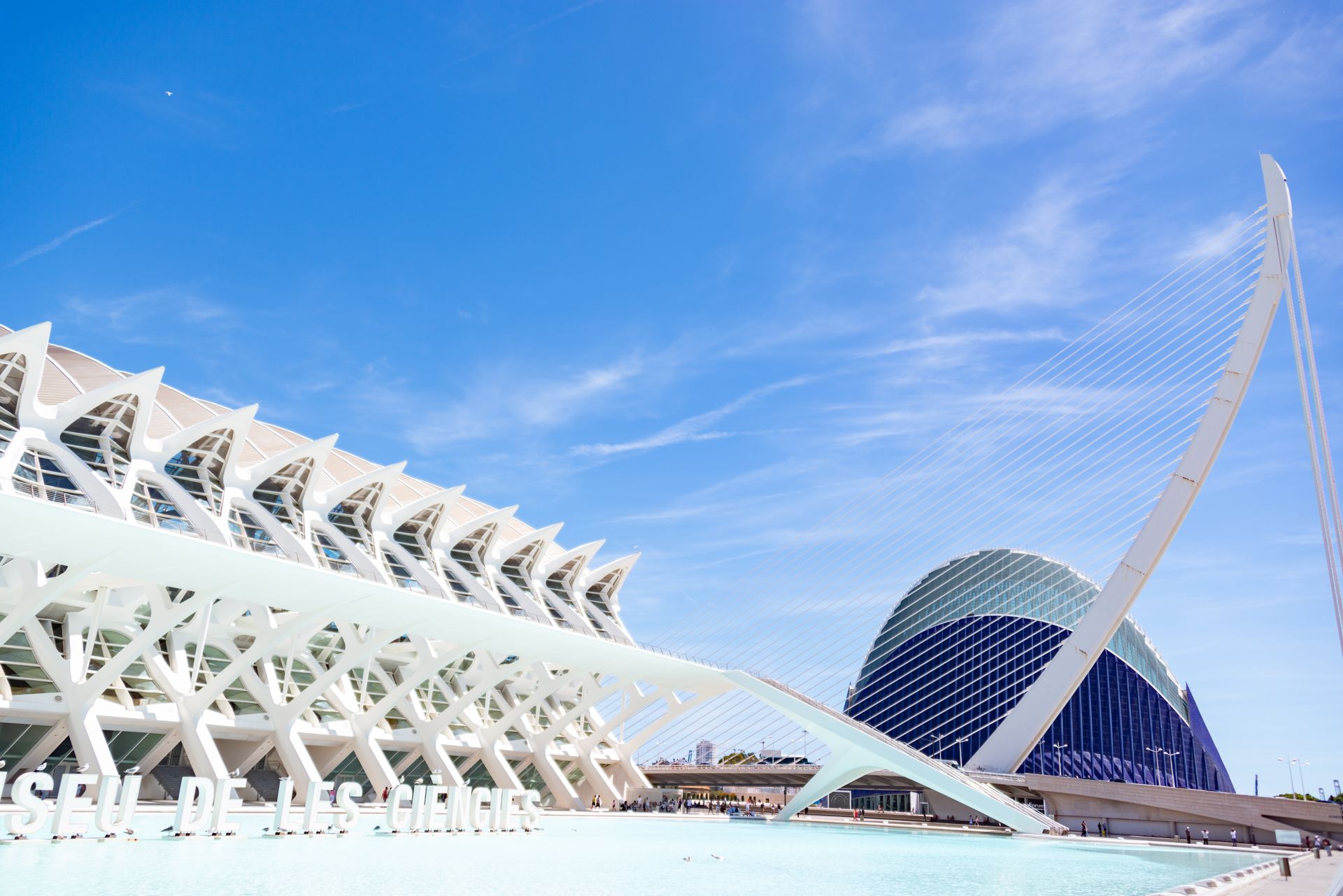
The single most famous sight in Valencia is Santiago Calatrava and Félix Candela’s white sculptural complex, built from 1998 along nearly two kilometres of the old Turia riverbed. It gathers six structures — the eye-shaped Hemisfèric IMAX cinema, the dinosaur-skeleton Príncipe Felipe Science Museum, the palm-house Umbracle walkway, the Palau de les Arts opera house, the Ágora event space, and the Oceanogràfic, the largest aquarium in Europe. The grounds are free to wander and stunning at dusk; individual venues are ticketed, with the Oceanogràfic the priciest at around €35 and combined tickets offering savings. Allow a full day if you want to go inside the museums and aquarium.
La Lonja de la Seda (the Silk Exchange)
The masterpiece of Valencian civil Gothic architecture, the Lonja was built between 1482 and 1548 as a silk-and-commodity exchange at the height of the city’s mercantile golden age, and UNESCO inscribed it on the World Heritage List in 1996. Its great Contract Hall, with spiralling palm-like columns soaring to a vaulted ceiling, is one of the most beautiful interiors in Spain, and the building stands as a monument to a time when Valencia was one of the Mediterranean’s leading trading cities. Look for the orange-tree courtyard, the gargoyles carved with deliberately grotesque and even bawdy figures, and the inscription around the hall warning merchants to trade honestly. Admission is modest (around €2, free on Sundays), and it sits directly opposite the Central Market, so the two pair naturally into a single morning.
Valencia Cathedral & the Micalet
Built from the 13th century on the site of a former mosque, the cathedral is a layered mix of Romanesque, Gothic, and Baroque, and it claims to hold the Holy Chalice — a relic some traditions identify as the Holy Grail. Its octagonal Gothic bell tower, the Micalet (El Miguelete), can be climbed via 207 steps for the best rooftop view over the old town. Admission to the cathedral and its museum runs around €9, with the tower a few euros more, and it stands on the Plaza de la Reina at the very heart of the Ciutat Vella.
Central Market (Mercat Central)
One of the largest fresh-produce markets in Europe, the Central Market is a 1928 Modernista masterpiece of iron, glass, tile, and a soaring dome, with around a thousand stalls of fish, meat, produce, and local specialities. It is both a working market where Valencians shop and a sight in its own right, best visited in the morning when the stalls are full. Entry is free; the tapas bars inside and around it make it the best cheap breakfast or lunch in the centre. It faces the Lonja across a small square, so the two pair naturally.
Torres de Serranos & Torres de Quart
The two surviving medieval gates of the old city walls bookend the historic centre. The Torres de Serranos, built around 1392 as the grand ceremonial entrance, can be climbed for views over the river park and the rooftops; the Torres de Quart, slightly later, still bear the pockmarks of Napoleonic cannon fire. Both are inexpensive to climb (around €2, free on Sundays) and give a vivid sense of the fortified medieval city. The Serranos towers are also the dramatic stage for the opening crida of Las Fallas each March.
Jardín del Turia & the Bioparc
The nine-kilometre garden in the drained riverbed is the city’s defining open space — a continuous ribbon of lawns, fountains, sports courts, orange trees, and the giant Gulliver playground, crossed by historic stone bridges and best explored by bike. At its western end sits the Bioparc, an immersive zoo built around African habitats with no visible cages. The gardens are free and open at all hours, and renting a bike to ride their full length from the Serranos towers to the City of Arts is one of the great Valencia experiences — a flat, shaded, traffic-free ride past joggers, footballers, and families that gives you the whole shape of the city in under an hour. Each stretch has its own character, from the formal gardens near the old town to the sports zone in the middle and the dramatic Calatrava finale at the southern end.
L’Oceanogràfic
The largest aquarium in Europe, designed by Félix Candela as part of the City of Arts complex, recreates the world’s main marine ecosystems across a series of futuristic pavilions, including an Arctic zone with beluga whales and a walk-through ocean tunnel. It is the city’s top family attraction and the priciest of the Calatrava venues at around €35, with combined tickets bringing the cost down if paired with the science museum. Allow at least half a day, and book online in high season to skip the queues.
Entertainment

Malvarrosa Beach & the Seafront
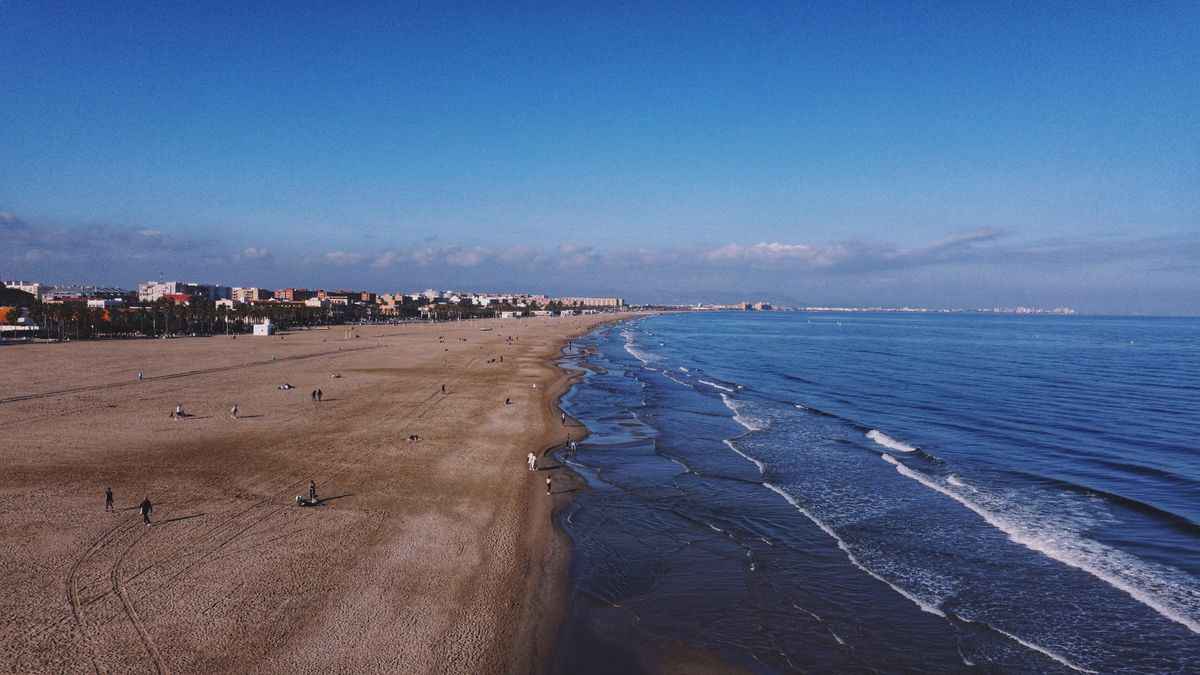
Unlike most Spanish cities, Valencia has a genuine wide, sandy city beach — the Malvarrosa and its neighbour Las Arenas — backed by a long palm-lined promenade of seafood restaurants and reachable from the centre by tram in about 20 minutes . The sand is broad and clean, the swimming season runs roughly June to October, and the beachfront paella houses are an institution. Typical cost is free to use, with a lounger-and-parasol rental around €10–15. It is the cheapest entertainment in the city and the natural place to end a hot day, with the Cabanyal’s seafood restaurants a short walk inland. The promenade itself is a destination in the evening, when families, joggers, and cyclists fill it for the cooler hours, and the beach bars (chiringuitos) pour drinks until late in summer. Unlike many city beaches, the Malvarrosa is genuinely broad and clean, with lifeguards and showers in season, so it works as a real day out rather than a token strip of sand.
Palau de les Arts (Opera)
The Calatrava-designed opera house anchors the City of Arts complex and runs a full season of opera, ballet, and orchestral concerts in a dramatic curved auditorium; tickets start around €20 and climb for premieres and big names. It is the most striking venue in the city and a memorable night out even for the architecture alone. Typical cost runs €20–90 depending on the production and seat. Book ahead for opening nights and headline operas, though weeknight and matinee seats are often available last-minute.
Nightlife in El Carmen & Ruzafa
The old town’s Barrio del Carmen and the hip Ruzafa quarter hold the densest nightlife in the city, with drinks running €4–9 — far cheaper than Barcelona. The Carmen lanes around Plaza del Tossal buzz with bars and bodegas until late, while Ruzafa is the more design-led, restaurant-and-cocktail crowd. In summer the action spills onto beachfront clubs near the Malvarrosa. The scene is compact and walkable, so you can hop between a dozen venues on foot without ever needing a taxi, and Valencians eat and go out notably later than northern Europe.
Las Fallas Festival
Valencia’s defining event is Las Fallas, a riotous week of fire, gunpowder, and satire each March, recognised by UNESCO as Intangible Cultural Heritage in 2016. Hundreds of giant papier-mâché monuments (fallas) rise across the city, the daily mascletà rattles the main square with synchronised firecrackers at 14:00, and on the final night, the Nit de la Cremà (19 March), almost every monument is burned in spectacular bonfires. It is free to experience on the streets, draws crowds back to the city in huge numbers, and is the single biggest reason to visit in March.
Football & Live Sport
Valencia CF, one of Spain’s historic La Liga clubs, plays at the atmospheric Mestalla stadium in the heart of the city, and a matchday is a memorable, affordable spectacle with tickets often from around €30. Levante UD, the city’s second club, and the Valencia Open tennis and other events round out the sporting calendar. The Mestalla is easily reached by metro and sits within the urban grid rather than out of town, so it is simple to combine with a normal day’s sightseeing. Buy tickets online in advance for the bigger fixtures, and note that the club has long planned a move to a new stadium, so check the current venue before you go.
Live Music, Theatre & Bullring Events
Beyond the opera house, the city’s cultural calendar runs deep. The Palau de la Música on the edge of the Turia gardens programmes classical concerts in a glass-domed hall, while smaller venues across El Carmen and Ruzafa host jazz, flamenco, and indie gigs most nights of the week. The handsome nineteenth-century Plaza de Toros, beside the Estació del Nord, hosts concerts and fairs as well as bullfighting during the Fallas season, and its arcaded brick interior is worth a look in its own right. Many of these events are inexpensive and rarely sell out outside festival weeks, so it is easy to fold a concert or a flamenco night into a normal evening without booking far ahead, and the compact centre means most venues are an easy walk from wherever you are staying.
Family & Daytime Activities
For families and slower days, the city is unusually well-equipped. The Oceanogràfic aquarium and the hands-on Science Museum anchor the City of Arts; the giant Gulliver playground in the riverbed lets children clamber over a 70-metre reclining sculpture; the Bioparc is a cageless immersive zoo; and the Turia gardens are full of play areas, fountains, and flat cycle paths ideal for kids on bikes. A boat trip on the Albufera lagoon at sunset is a gentle, cheap outing the whole family enjoys. Most of these cost little or nothing, making them an easy way to break up museum-and-restaurant days with children in tow.
Day Trips
Albufera Natural Park (about 25 min by bus)
The freshwater lagoon and rice paddies just south of the city are where paella was born, and a boat trip across the Albufera at sunset is one of the most atmospheric half-days in the region. The village of El Palmar is the place for a genuine wood-fired Sunday paella by the water, and the park’s birdlife and orange-gold light at dusk are unforgettable. Reachable by city bus 25 in around 25 minutes, it makes the easiest and most rewarding trip from Valencia — combine a lagoon boat ride with a long lunch.
Sagunto (about 30 min by train)
The ancient town north of the city holds a dramatic hilltop castle stretching nearly a kilometre along the ridge, a restored Roman theatre still used for performances, and a compact old Jewish quarter. The Cercanías commuter train reaches it in about half an hour, making it an easy half-day of Roman and medieval history with sweeping views over the coastal plain and its orange groves. It is far quieter than the city and rewards a morning’s wander before a late lunch back in Valencia.
Xàtiva (about 40 min by train)
The historic inland town of Xàtiva, birthplace of two Borgia popes, is crowned by an immense twin castle running along a mountain ridge, reached by a walk or a small road up from the handsome old town below. The Cercanías and regional trains reach it in around 40 minutes , and the castle, the medieval streets, and the views over the surrounding huerta make it one of the best inland day trips. It is also famous for its association with paper-making and the medieval Mediterranean silk trade.
Peñíscola (about 1 hr 30 by train + bus)
The dramatic walled sea-town to the north, with its Templar castle on a rocky promontory jutting into the Mediterranean, is one of the most photogenic spots on the Valencian coast and a filming location for Game of Thrones. It takes around 90 minutes by train to Benicarló-Peñíscola and then a short bus or taxi , so it suits a full day rather than a quick hop. The old town’s white lanes climbing to the castle and the long sandy beach below make it well worth the journey in good weather.
Requena & the wine country (about 1 hr by train)
Inland to the west, the medieval town of Requena sits at the heart of the Utiel-Requena wine region, famous for its bobal grape and a warren of historic underground wine cellars beneath the old quarter. The high-speed and regional trains reach it in about an hour, and a day here combines a walled medieval centre, cave-cellar tastings, and a cooler, greener landscape than the coast. It is the best choice when you want a rural, gastronomic contrast to the city and the beach. The regional trains inland are less frequent than the coastal Cercanías, so check the return times before you set out.
Gandía & the southern beaches (about 1 hr by train)
South down the coast, the Cercanías line runs straight to Gandía in about an hour , where a long, broad, blue-flag beach and a handsome ducal palace — the Renaissance seat of the Borgia family — make an easy, relaxed beach day with a dose of history. The wide promenade, the calm shallow water, and the line of seafood restaurants make it a favourite summer escape for Valencians themselves, and because the train runs directly from the central Estació del Nord it is one of the simplest day trips of all, needing no advance booking. Pair the beach in the morning with the Palau Ducal dels Borja in the old town inland before the train back.
The Calderona hills & the huerta (varies)
For a green, rural contrast, the Serra Calderona natural park rises just inland to the north-west, a range of pine-clad sandstone hills laced with walking trails and dotted with monasteries and small villages, while the surrounding huerta — the historic market-garden plain that has fed the city for a thousand years — is crossed by flat cycle routes out from the Turia park. Neither needs a full day or a car for a taster: a morning’s ride into the huerta or a half-day hike in the Calderona shows a side of the region most beach-bound visitors miss, and both sit within easy reach of the city.
Seasonal Guide
Spring (March – May)
Arguably the best window of the year, and the season of the city’s biggest event. Daytime highs climb from the high teens in March to the mid-20s by late May, the orange trees blossom, and the café terraces are fully open . The headline is Las Fallas in mid-March — five days of fire, gunpowder, and crowds that fill every hotel in the city, so book months ahead or deliberately avoid that week if crowds are not your thing. Outside the festival, April and May offer warm sun, manageable crowds, and pre-summer prices, making spring the ideal time for a first visit. The sea is still a touch cool for long swims until late May, but the city’s terraces, gardens, and day trips are at their best in this window.
Summer (June – August)
High season on the coast, and genuinely hot — daytime highs of 30°C and warm, humid nights, with the beach at its busiest and the sea warm enough for long swims . The city itself empties a little in August as locals head for the coast, and some restaurants close for holidays, but the beach life, the night terraces, and the long evenings are at their peak. Start sightseeing early to beat the heat, save the museums and the aquarium for the hottest midday hours, and build the day around an afternoon swim and a late dinner. Book accommodation well ahead for July and August, when both the city’s own holidaymakers and foreign visitors compete for beach-area rooms and prices reach their annual peak.
Autumn (September – November)
A superb and underrated window. September keeps the summer’s warm sea while the beach crowds thin, October stays mild and golden, and prices ease back from the August peak . The catch is the autumn gota fría — the region’s tendency to sudden, intense downpours in late autumn, which can drop a remarkable amount of rain in a day, so pack a waterproof for any October or November trip. Early autumn is close to ideal; by late November the city tips into its quiet, mild low season, and hotel rates ease back accordingly, making it a smart value window for a sightseeing trip when the beach is no longer the main draw.
Winter (December – February)
Mild, quiet, and far gentler than most of Europe. Daytime highs hold around 16–18°C, the famous sunshine largely continues, frost is essentially unheard of, and hotel rates drop well below the spring and summer peaks . The sea is too cold to swim, but the Turia gardens are still perfect for cycling in a light jacket and the museums are blissfully uncrowded. It is the cheapest and calmest time to have the city largely to yourself — ideal for a sightseeing-and-food trip if beach swimming is not the point of your visit, and the orange harvest perfumes the surrounding groves.
Getting Around
High-Speed & Regional Rail
Valencia is connected to Madrid by the high-speed AVE in well under two hours, arriving at the Joaquín Sorolla station just south of the centre, which makes the city an easy add-on to a Madrid trip . The historic Estació del Nord in the centre handles the regional Cercanías commuter trains that reach the day-trip towns of Sagunto, Xàtiva, and Gandía cheaply and frequently. No advance booking is needed for the Cercanías; the AVE and long-distance trains are cheaper booked ahead. The two stations are a short walk apart near the Plaza del Ayuntamiento.
Metro & Tram (Metrovalencia)
Metrovalencia runs the city’s metro and tram network, with several underground lines crossing the centre and tram lines reaching the beach and the university. The most useful for visitors are lines 3 and 5, which connect the airport, the centre, and the port, and the tram lines 4, 6, and 8 out to the Malvarrosa beach . A single zone-A ticket is inexpensive, and the rechargeable SUMA card or a tourist travel card covers unlimited rides across metro, tram, and bus. The system is clean, modern, and the simplest way to reach the beach and the airport.
City Bikes & the Turia Cycle Network
Valencia is flat, compact, and laced with dedicated cycle lanes, with the nine-kilometre Turia garden forming a car-free green spine across the whole city — which makes cycling the single best way to get around. The Valenbisi public bike-share scheme has hundreds of docking stations, and a short-term tourist subscription is cheap; private rental shops also abound. A single rechargeable Valenbisi pass or a day’s rental covers most of a visitor’s needs, and the flat terrain means even casual cyclists can ride from the old town to the beach or the City of Arts with ease. It is genuinely the local way to move.
Airport Access
Valencia’s airport sits just 8 km west of the city at Manises, so the transfer into the centre is short and cheap .
- Metro lines 3 and 5 — airport to the centre, about 20–25 minutes, a low single fare
- Taxi — around €20–25 to the centre, roughly 15–20 minutes
Buses
The EMT municipal bus network fills the gaps the metro and tram leave, most usefully line 25 out to the Albufera natural park and El Palmar for the Sunday paella run, and a clutch of routes along the seafront. Fares match the metro’s low single-ticket price, the same SUMA card works across bus, metro, and tram, and night buses cover the small hours after the metro closes. For visitors, though, the bus is mainly worth knowing for the Albufera trip; almost everything else is quicker on foot, by bike, or on the tram.
Taxis
Licensed white taxis use regulated, metered fares within the city, with reasonable flag-fall; insist on the meter for in-town rides and confirm the approximate fare to the airport in advance. Taxis are most useful late at night after the metro stops running, since ride-hailing coverage is thinner here than in Madrid. Ranks sit outside the stations, the airport, and the main squares. For the airport run specifically, the metro fare is so much cheaper than the roughly €20–25 taxi that most visitors without heavy luggage simply take the metro, which reaches the centre in about 20 minutes .
Navigation Tips
The essential apps are Metrovalencia for the metro and tram, Valenbisi for the bike-share, and Renfe Cercanías for the day-trip trains; all work in English. The compact, flat centre is genuinely walkable end to end, so most visitors only use transit for the airport run, the beach, and day trips. A good rule of thumb is to walk or cycle anything inside the centre and the Turia park, take the metro or tram for the airport and the beach, and save the Cercanías train for the day-trip towns; that simple split covers almost every journey a visitor needs and keeps transport costs to a handful of euros across a whole trip.
Budget Breakdown: Making Your Euro Count
| Tier | Daily | Sleep | Eat | Transport | Activities | Extras |
|---|---|---|---|---|---|---|
| Budget | €70–110 | €25–50 hostel/budget | €18–28 | €4 day ticket | €8–18 | €10 |
| Mid-Range | €150–250 | €90–150 hotel | €40–65 | €5–10 | €20–40 | €20 |
| Luxury | €400+ | €250+ design hotel | €110+ | €25 taxis | €60+ | €40+ |
Where Your Money Goes
Valencia is meaningfully cheaper than Madrid or Barcelona — accommodation is by far the swing cost, peaking sharply during Las Fallas in March and through July and August, and dropping noticeably in the November-to-February low season . Food can be very cheap if you lean on the markets and the tapas repertoire: a Central Market breakfast, a menu del día lunch, and market produce keep a day’s eating well under €25, while a beachfront paella with wine runs €30–45 a head. The bike-and-metro combination means transport is a rounding error, and the best sights — the Turia gardens, the Lonja, the markets, the beach, the City of Arts grounds — are free or nearly so. A realistic budget trip leans hard on the free sights, the cheap menus del día, a Valenbisi bike, and a low-season hotel, which together can keep a comfortable day well under €100 a head; the same trip during Fallas, with a central room and the Oceanogràfic, easily doubles that. The single biggest lever on the total is therefore when you come and where you sleep, not what you do once you arrive — get those two right and Valencia is one of the best-value city breaks in Spain.
Tipping is modest and optional in the Spanish way — service is included in the bill, and locals simply round up or leave small change for good service, so the menu price is essentially what you pay. The midday menú del día, a set three-course lunch with a drink for a fixed low price, is the single best-value meal in the city and a Spanish institution worth building your days around. Museum and attraction prices are generally low, many monuments are free on Sundays, and the Valencia Tourist Card bundles transport and museum entries for visitors planning to see several paid sights.
The one genuinely expensive ticket is the Oceanogràfic aquarium, the headline paid attraction at the City of Arts, where adult entry runs to the high tens of euros; bundling it with the Science Museum and the Hemisfèric on a combined ticket softens the blow if you plan to see all three. Everything else in the visitor’s day — the markets, a menú del día, a Valenbisi bike, an evening on the beach, and a wander through the free Turia gardens and the Lonja — is cheap by Western European standards, which is precisely why Valencia consistently undercuts Madrid and Barcelona on a like-for-like trip. For travellers watching every euro, the combination of free sights, cheap set lunches, and a bike pass makes it one of the most affordable major cities to visit in western Europe today.
Money-Saving Tips
- Eat the midday menú del día rather than à la carte dinner — three courses and a drink for a fixed low price
- Rent a Valenbisi bike instead of relying on taxis or the metro — the flat city and the Turia park make it the cheapest and best way around
- Visit monuments like the Lonja and the cathedral towers on Sundays, when many are free or reduced
- Avoid the paella restaurants on the tourist squares and eat the real thing cheaper in El Palmar or El Cabanyal
- Travel in April–June or September–October, when rates fall well below the Fallas and high-summer peaks but the weather stays warm
Practical Tips
Language
Both Spanish (Castilian) and Valencian — a variety of Catalan — are official, and you will see both on signage, street names, and menus, often side by side . Everyone speaks Castilian Spanish, so there is no practical need to learn Valencian, though locals appreciate a few words. English is widely spoken across hotels, restaurants, the metro, and the tourist office, so the practical language barrier is low. Even so, opening with “hola” and “gracias” in Spanish is genuinely appreciated and changes the tone of the service you get.
Cash vs. Cards
Cards are accepted almost everywhere, including contactless tap-to-pay in the great majority of shops, restaurants, and on the metro. The exceptions are some small market stalls, the smallest tapas bars, and a few traditional horchaterías, so it is worth carrying €30–40 in small notes and coins. ATMs are plentiful in the centre; use bank-branded machines rather than the standalone “Euronet” boxes, which charge poor exchange rates.
Safety
Valencia is generally a safe city, but pickpocketing and bag-snatching occur on the beach, on crowded metros, and in busy tourist areas, particularly during Las Fallas; the official advisories rate Spain as low-risk overall while consistently flagging petty theft in tourist hotspots . Keep valuables zipped and out of sight, never leave a bag unattended on the sand while you swim, and be alert in festival crowds. Violent crime against visitors is rare. The old town and the beachfront stay busy and well-lit late into the evening, so walking back from dinner is comfortable.
What to Wear
Light, breathable clothing in summer with sandals and a hat for the strong coastal sun; a light jacket or layer for spring and autumn evenings, which can cool by the sea. Winters are mild but can be wet during the autumn and early-winter downpours, so a waterproof is worth packing from October. Modest dress — covered shoulders and knees — is required to enter the cathedral and churches. Valencia is relaxed, so smart-casual is fine almost everywhere, including dinner.
Cultural Etiquette
A simple “hola” before any request is expected in shops and cafés, and Spanish meal times run late: lunch from around 14:00 and dinner rarely before 21:00, with many kitchens closed between services. The long midday meal and the menú del día are central to the day’s rhythm, and the afternoon lull, while less rigid than the old siesta, still slows many smaller shops. A slower, more relaxed pace at the table is the norm rather than the exception.
Connectivity
EU roaming rules apply for European SIMs, so most European visitors use their home plans at no extra cost, and 4G/5G coverage is strong across the city and the coastal rail corridor. Free public Wi-Fi is common in cafés, the tourist office, and many public spaces; non-EU visitors staying a while may find a local prepaid eSIM cheaper than international roaming. The main transit, bike-share, and rail apps all work in English and are worth installing on arrival, since they handle tickets, timetables, and bike docks far more smoothly than queuing at a machine.
Getting Oriented
The compact historic centre sits inside the great curve of the old riverbed, now the Turia gardens, with the Plaza del Ayuntamiento and the cathedral as the two natural landmarks to navigate by. The beach and the City of Arts both lie to the east, and the airport to the west, so a single mental map of “old town in the middle, beach and science complex east, airport west” covers almost everything. Pick up a free map at the tourist office on the Plaza del Ayuntamiento, where multilingual staff can advise on tickets, tours, and the day-trip trains.
Health & Medications
EU and UK travellers should carry the EHIC or GHIC card for reciprocal care; everyone else needs travel insurance, since Spanish healthcare is excellent but not free to non-residents. Pharmacies, marked by green crosses, are plentiful and the pharmacists can advise on minor ailments; a rota keeps some open at night and on Sundays. The tap water is safe to drink, though some locals prefer bottled for taste .
Luggage & Storage
Both main train stations and several private bag-storage services near the centre and the beach hold luggage by the hour or day — useful for day-trippers and for the common gap between an early hotel checkout and a late flight from Manises. Booking a storage slot online in advance is worth it during Las Fallas and in high summer, when the busiest near-station services can fill up. The compact centre means a storage drop is rarely more than a short walk from wherever you are headed next.
Frequently Asked Questions
How many days do I need in Valencia?
Three to four nights is the practical minimum for the city itself plus a day trip or two, and a full week lets you add the Albufera, the beach, and the inland towns of Xàtiva and Sagunto without ever feeling rushed. Valencia works beautifully as a slow base from which you cycle the Turia gardens, eat your way through the markets, and take cheap trains to the surrounding towns. Even a long weekend covers the old town, the City of Arts, the Central Market, and a beach afternoon, but you will leave wanting more time. If your trip is built around eastern Spain generally, Valencia is the obvious base to sleep in, since its rail links beat the smaller coastal towns.
Is Valencia good for solo travellers?
Yes — it is one of the easiest cities in Spain for solo travel. It is compact, flat, and exceptionally cyclable, well-connected by metro and train, generally safe, and has a sociable old-town and Ruzafa scene where eating or drinking alone is completely normal. The tapas and menú-del-día culture makes cheap solo meals effortless, and day trips are simple to do independently on the frequent Cercanías trains. The walkable, well-lit centre is comfortable to wander in the evening. Apply the usual city precautions against pickpockets on the beach and crowded metros, and you will find Valencia one of the most relaxed and welcoming cities in Spain for travelling alone.
Is the metro and travel card worth it?
For most visitors, it depends on how you plan to move. A rechargeable SUMA card or a Valencia Tourist Card covers unlimited metro, tram, and bus, and the tourist card adds free or discounted museum entries — worth it if you will use the airport metro and visit several paid sights. But the city is so flat and cyclable that many visitors get far more value from a Valenbisi bike pass, using transit only for the airport and the beach. Work out roughly how much you will ride the metro versus cycle, and let that decide; for a sightseeing-heavy trip the tourist card usually wins, while for a relaxed, bike-led trip a few single tickets plus a bike pass is cheaper.
What about the language barrier?
It is minimal in practice. Everyone speaks Castilian Spanish alongside the regional Valencian, English is widely spoken across hotels, restaurants, the metro, and the tourist office, and the transit apps work in English. A polite “hola” on entering and “gracias” on leaving go a long way socially. You will manage entirely in English, but a handful of Spanish courtesies noticeably improves the warmth of the welcome, and you do not need any Valencian.
When is the best time to visit and avoid crowds?
Late spring (April–June) and early autumn (September–October) are the sweet spots — warm weather, a swimmable sea (especially in September), and far thinner crowds than the July–August beach peak. Winter is mild, quiet, and cheap. The one date to plan around is Las Fallas in mid-March: it is spectacular but fills every hotel in the city and pushes prices up sharply, so either book months ahead to experience it or deliberately avoid that week if crowds and noise are not for you.
Can I use credit cards everywhere?
Almost everywhere, including contactless tap-to-pay on the metro and in the great majority of shops, restaurants, and museums. The exceptions worth knowing are some small market stalls, the smallest tapas bars, and a few traditional horchaterías, so carry €30–40 in small notes and coins as a backup. Use bank-branded ATMs rather than the standalone currency boxes, which give noticeably worse exchange rates.
Where do I eat real paella in Valencia?
Not on the tourist squares. Genuine paella is a lunch dish that takes the best part of an hour, so walk away from anywhere offering it “in ten minutes” or with a laminated photo menu. For the real thing, head to the Albufera village of El Palmar, where Valencians drive on Sundays for wood-fired paella by the rice paddies, or to a historic seafront rice house in El Cabanyal like Casa Carmela or La Pepica. Order it at midday, ask for the socarrat (the prized crust), and remember the original Valencian version uses chicken, rabbit, and beans — never chorizo.
Is Valencia good for families with children?
Exceptionally so. The City of Arts and Sciences alone could fill a family’s day with the Oceanogràfic aquarium, the hands-on Science Museum, and the Hemisfèric cinema, while the giant Gulliver playground in the riverbed, the cageless Bioparc zoo, and the flat, traffic-free Turia gardens give younger children space to run and cycle safely. The broad, clean Malvarrosa beach has lifeguards and showers in season, and a gentle sunset boat trip on the Albufera lagoon suits all ages. Distances are short, the centre is pram- and bike-friendly, and most of the best outdoor activities cost little or nothing.
How do I get from the airport to the city centre?
The simplest and cheapest option is the metro: lines 3 and 5 run from Manises airport into the centre in about 20–25 minutes for a single low fare, with no need to book ahead. A taxi costs roughly €20–25 and takes 15–20 minutes, which is worth it with heavy luggage or a very early flight, but for most visitors the metro is the obvious choice. The airport sits just 8 km west of the city, so whichever you choose, the transfer is short and painless.
Ready to Experience Valencia?
Rent a bike, learn that real paella is a Sunday lunch, and give yourself a week so the Albufera and the day trips don’t feel rushed. For the full country context, read the Spain Travel Guide.
Explore More City Guides
- Madrid City Guide
- Barcelona City Guide
- Seville City Guide
- Spain Country Guide
- Spain travel guide overview
- All City Guides
Alex the Travel Guru
Alex has spent two decades writing field-tested travel guides from the road, arriving in Valencia by high-speed AVE, by budget flight into Manises, and once on the slow coastal train down from Barcelona. Every figure in this guide is paired with an authoritative source, and every photo and video is verified before it ships.
More city guides you might like
Plan your trip to Valencia
The booking tools we use ourselves. FFU may earn a commission at no extra cost to you.
Plan & book your trip to Valencia
Booking through these searches supports our guides at no extra cost to you.