
City Guide · Muntenia · Bucharest–Ilfov
Bucharest, Romania: Belle Époque Boulevards, Communist Monumentalism, and the Most Underrated Capital in Eastern Europe
I came to Bucharest expecting a grey post-communist capital and left arguing it is the best-value city break in Europe. We tell first-time travellers the same thing every time: the city wears two faces at once — the “Little Paris of the East” of pastel Belle Époque villas and the brutal megalomania of Nicolae Ceaușescu’s Palace of the Parliament, the second-largest administrative building on Earth . About 1.7 million people live inside the city proper and roughly 2.3 million across the Bucharest–Ilfov metropolitan region, packed into six pie-slice sectors that all converge on Piața Universității . My favourite Bucharest ritual is a 9 a.m. coffee in the cobbled Old Town before the bar crowds wake, then the short walk to the Stavropoleos Monastery courtyard where the traffic noise simply stops. Treat this guide as the brief I would hand my own family the night before they flew into Henri Coandă — the Old Town, the Athenaeum, the leu, the metro, the day trips to Peleș, and everything in between .

Table of Contents
Why Bucharest?
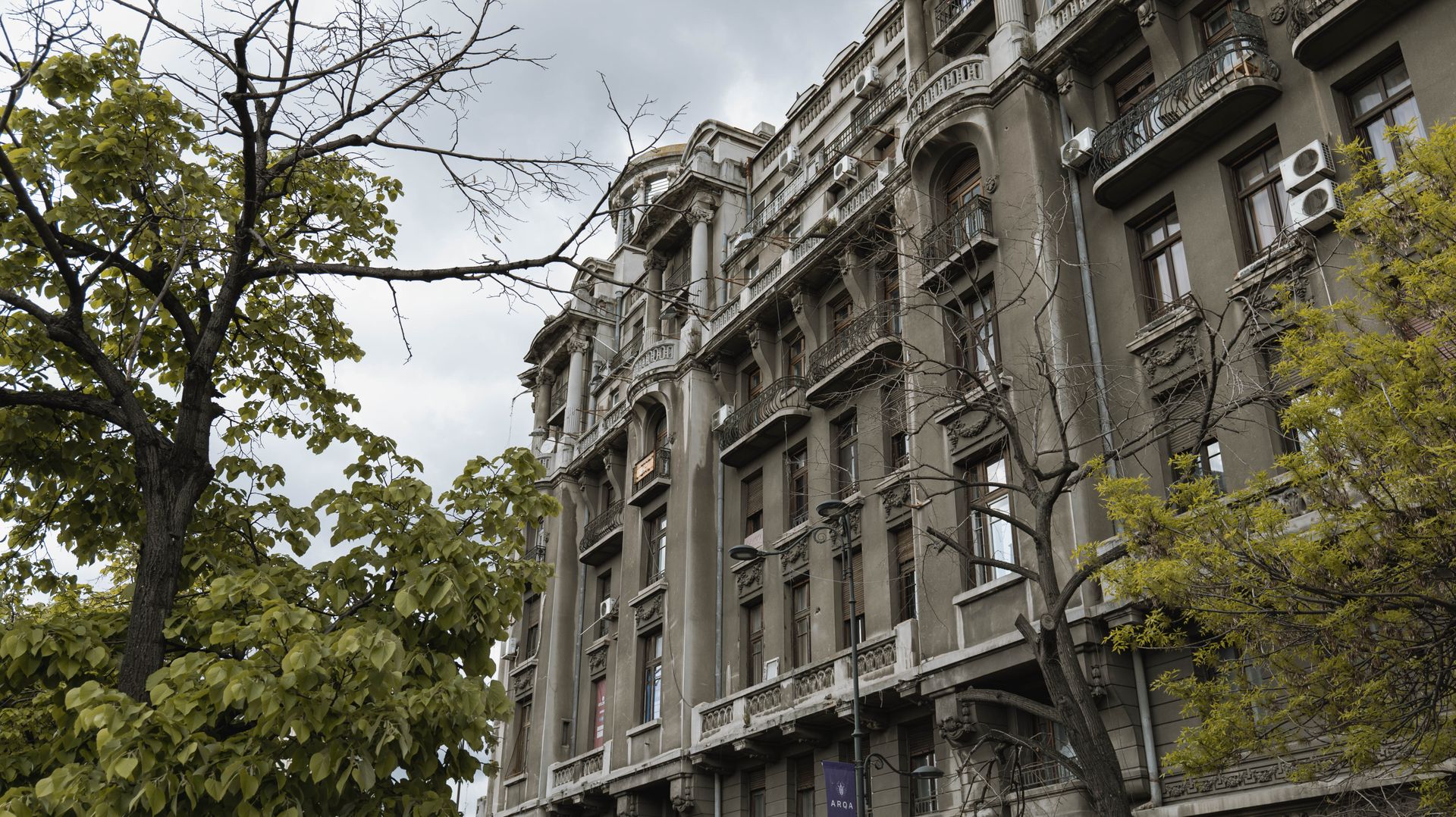
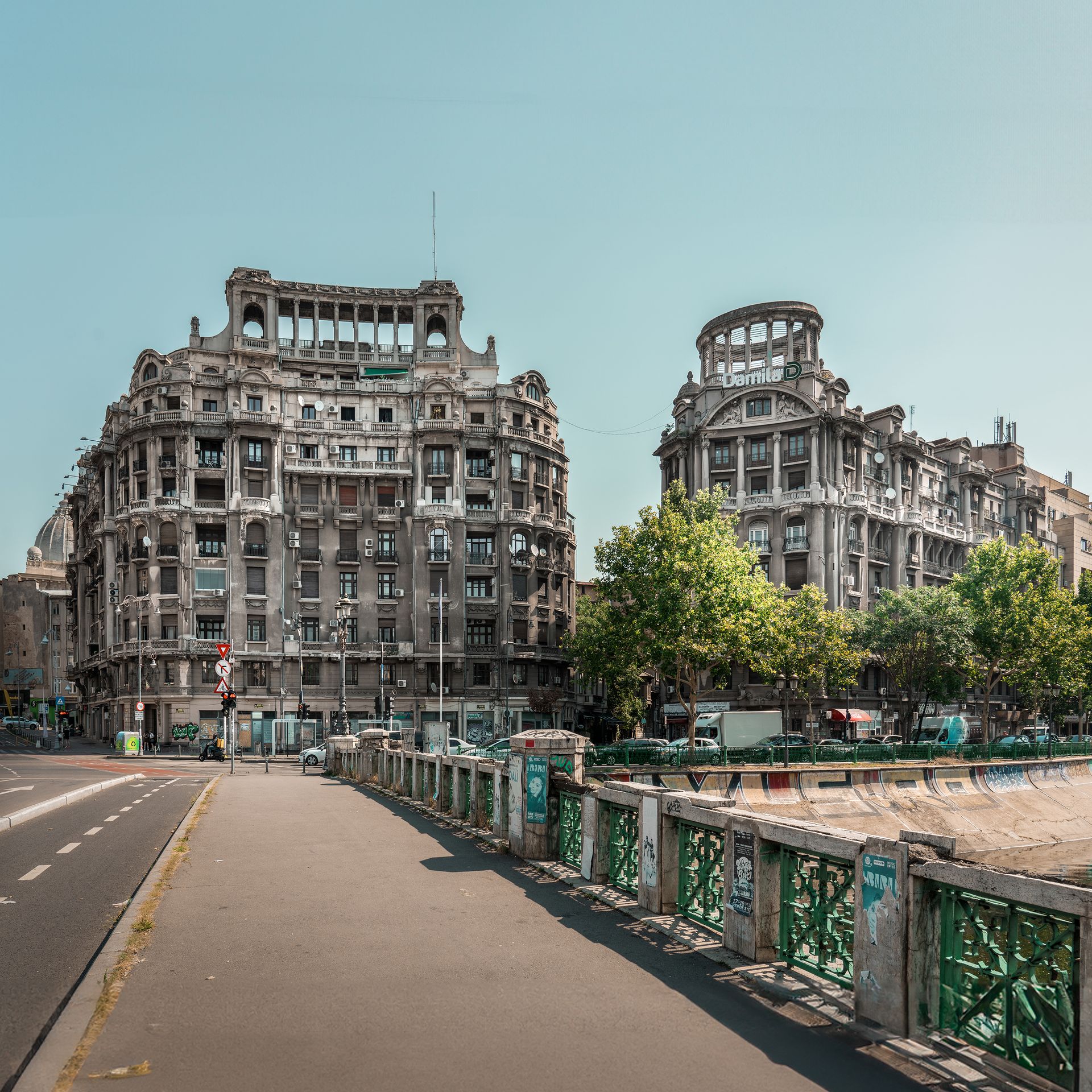
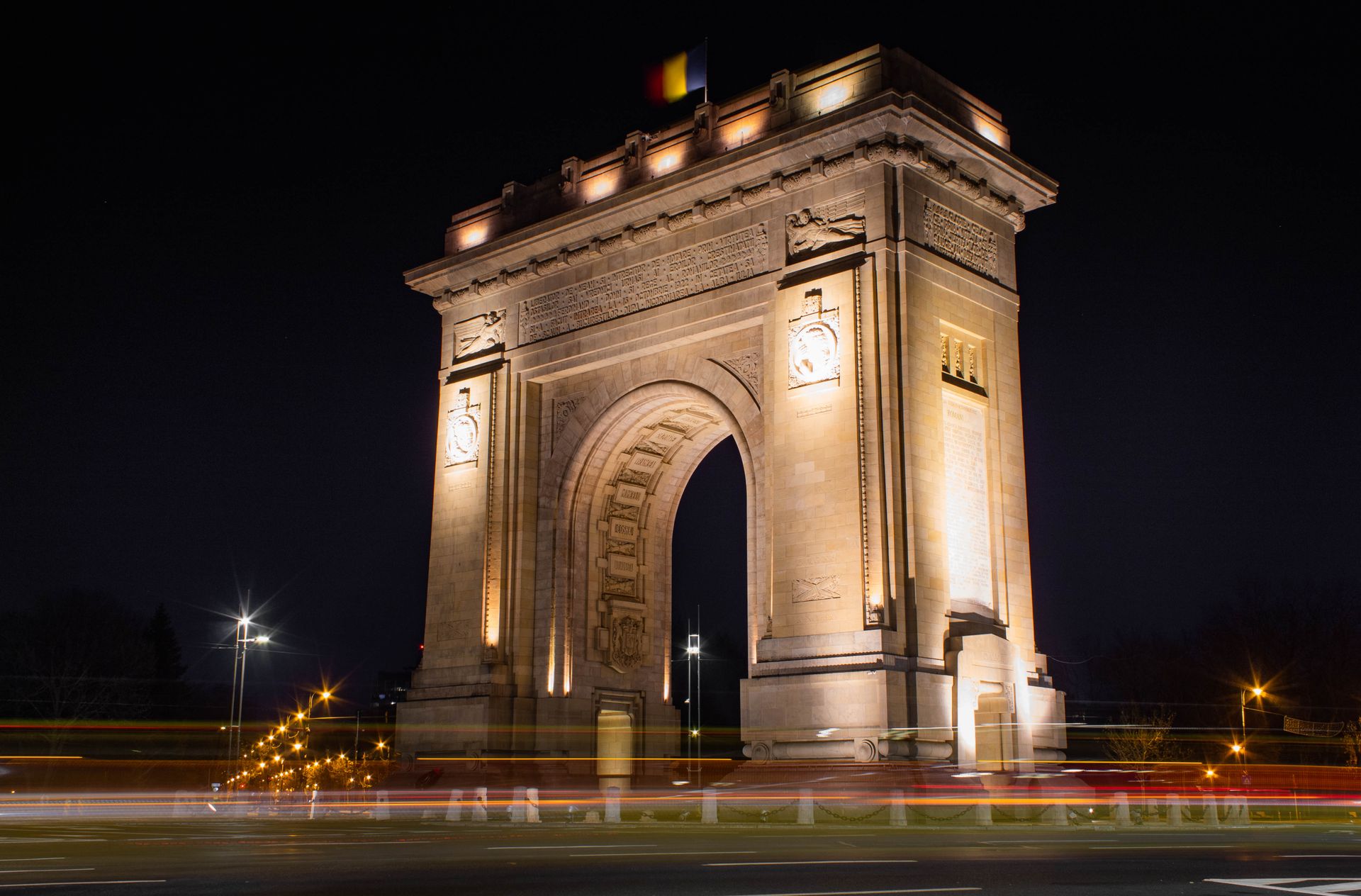
Bucharest is the rare European capital that almost everyone underestimates, and that is precisely why it rewards you. It is a city of roughly 1.7 million residents — about 2.3 million across the Bucharest–Ilfov metropolitan region — that earned the nickname “Little Paris of the East” in the interwar years, when French-trained architects lined its boulevards with Belle Époque villas, and even built a triumphal arch, the Arcul de Triumf, deliberately echoing the one in Paris . Then the 20th century happened to it twice over.
The city reads as a collision of eras laid down street by street. Belle Époque mansions sit beside Stalinist apartment blocks, and both are dwarfed by the single most divisive building in the country: the Palace of the Parliament, ordered by Nicolae Ceaușescu in the 1980s, which is the heaviest building on Earth and the second-largest administrative building after the Pentagon, with 1,100 rooms across 365,000 square metres . To raise it, the regime demolished roughly a fifth of the historic centre, including churches and thousands of homes — a wound the city is still processing. Yet a five-minute walk from that megalith drops you into the cobbled Lipscani lanes of the Old Town, where 15th-century merchant streets now buzz with terrace bars until 2 a.m.
What makes Bucharest genuinely compelling is the value-to-experience ratio. A sit-down dinner of sarmale and mici with a beer at the legendary 1879 Caru’ cu Bere costs a fraction of its Western equivalent, museum admissions run 15–60 lei (roughly €3–€12), and the metro will carry you across the city for 3 lei . Few European capitals deliver this much history, architecture, and nightlife at this price, and even fewer are this easy to reach now that Romania sits inside the Schengen Area. The result is a city that feels like a discovery rather than a checklist — somewhere you can still wander into a courtyard café or a backstreet grill without a reservation or a queue.
The Bucharest most visitors miss is the human-scale one between the monuments: the leafy residential streets of Cotroceni, the lakeside calm of Herăstrău, the student energy of Piața Romană, and the long Sunday lunches that anchor Romanian family life. Spend more than a day here and the early shock of the Stalinist boulevards gives way to genuine affection. This guide covers the neighborhoods you will actually walk, the Romanian dishes worth crossing town for, the cathedral-and-concert-hall tier of sights from the Athenaeum to Stavropoleos, the five day trips Bucharest locals take on weekends — Peleș Castle, Sinaia, Brașov among them — and the practical realities of the leu, the metro, and Romania’s brand-new Schengen membership.
Neighborhoods: Finding Your Bucharest
📍 Bucharest Map: Every Place in This Guide
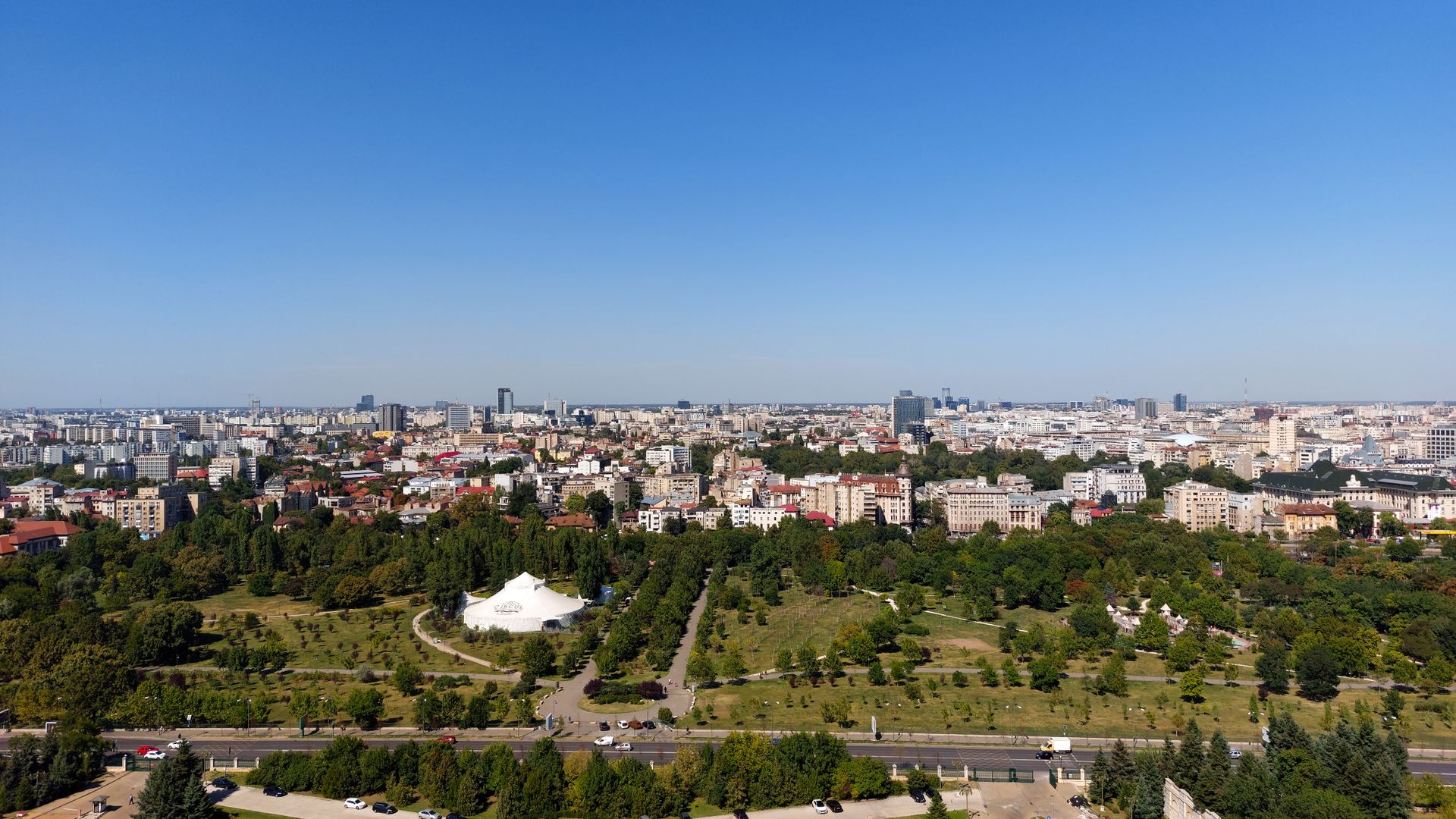
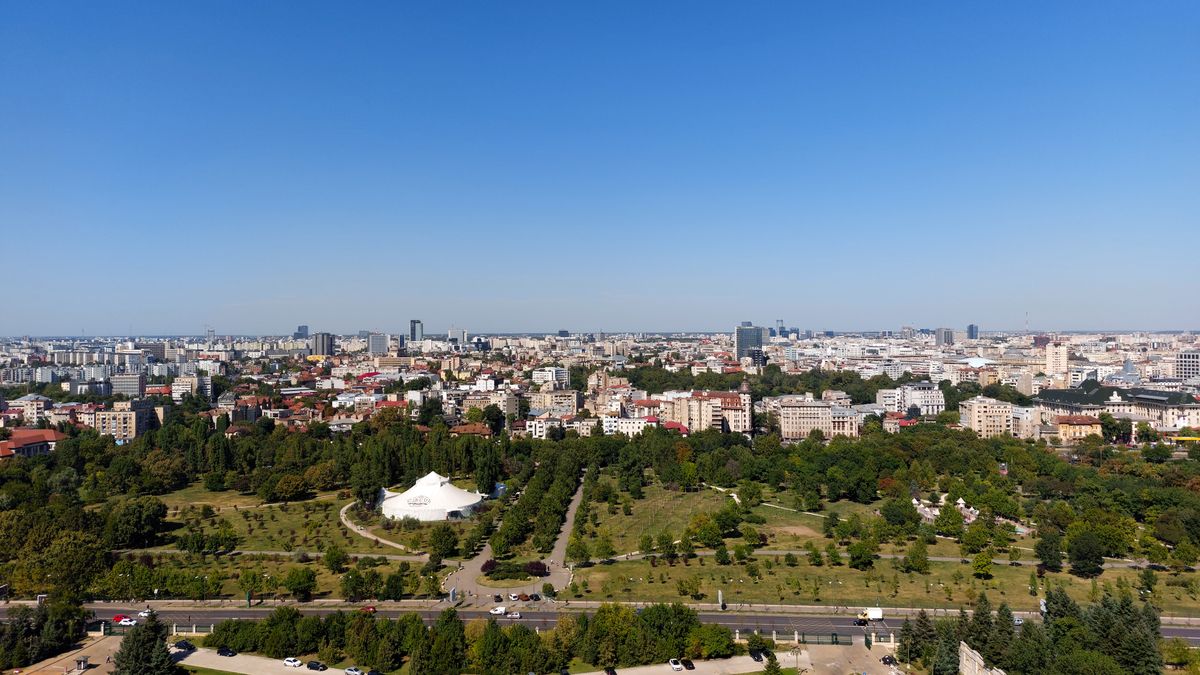
Bucharest is administratively divided into six sectors that fan out like pie slices from the centre, all meeting at Piața Universității and Piața Unirii . For a visitor, though, the useful map is by character, not by sector number. The historic core and the boulevards around it hold almost everything you came to see; the leafy north (Sector 1) is the moneyed, embassy-and-villa Bucharest; the residential mid-rings are where locals actually live and eat well for less. Staying within a 20-minute metro ride of Piața Universității puts every sight on your list within easy reach, and because the centre is compact and flat, most days you will move on foot far more than you expect.
The thing to understand about Bucharest’s geography is that it grew in rings and was then violently re-cut. The medieval town clustered around the princely court near the river; the 19th-century “Little Paris” boulevards radiated outward from it; and in the 1980s Ceaușescu drove the vast Centrul Civic axis straight through the middle, bulldozing whole quarters to build the Palace of the Parliament and the parade boulevard leading to it. The upshot is that two adjacent streets can belong to completely different centuries, and the most rewarding way to read the city is to walk those seams deliberately rather than to tick off sights.
This section walks the neighborhoods you will actually use, grouped by what they feel like on the ground: the cobbled Old Town nightlife core, the grand civic boulevards, the genteel north, the bohemian university quarter, and the authentic residential pockets returning visitors gravitate toward. For a first visit, base yourself in or beside the Old Town; on a second trip, consider the calmer, more local feel of Cotroceni or the park-side north, which trade a little walking distance for a great deal of charm.
Old Town / Lipscani (Centrul Vechi)
The medieval merchant heart of Bucharest, a pedestrianised maze of cobbled lanes named after the trades that once filled them — Lipscani for the merchants who traded with Leipzig. Today it is the city’s nightlife and dining engine, dense with terrace bars, restaurants, and the grand Caru’ cu Bere beer hall, all wrapped around the surviving 15th–19th-century architecture and the courtyard quiet of the Stavropoleos Monastery . By day it is a pleasant, slightly faded warren of bookshops, antique dealers, and coffee houses; by night it transforms into the loudest, most concentrated party district in the country, which is both its great appeal and its one drawback — light sleepers should book a room a street or two back from the busiest lanes.
Layered into the nightlife are some of the city’s oldest and most atmospheric corners: the ruins of the Old Princely Court where Vlad the Impaler once held sway, the spectacular Cărturești Carusel bookshop in a restored 19th-century building, and a clutch of tiny Orthodox churches that survived the wrecking ball. Spend a morning here before the bars open and you get the history without the crowds, then return after dark to see why every Bucharest local has an Old Town story.
- Caru’ cu Bere — the 1879 neo-Gothic beer hall, the city’s most famous restaurant
- Stavropoleos Monastery — a tiny 1724 Brâncovenesc-style church with a serene courtyard
- Curtea Veche (Old Princely Court) — ruins of Vlad the Impaler’s 15th-century court
Best for: first-timers, nightlife, walkers who want everything in one zone. Access: Metro M2 Universitate or Piața Unirii, then a five-minute walk.
Centru / Calea Victoriei (Civic Boulevards)
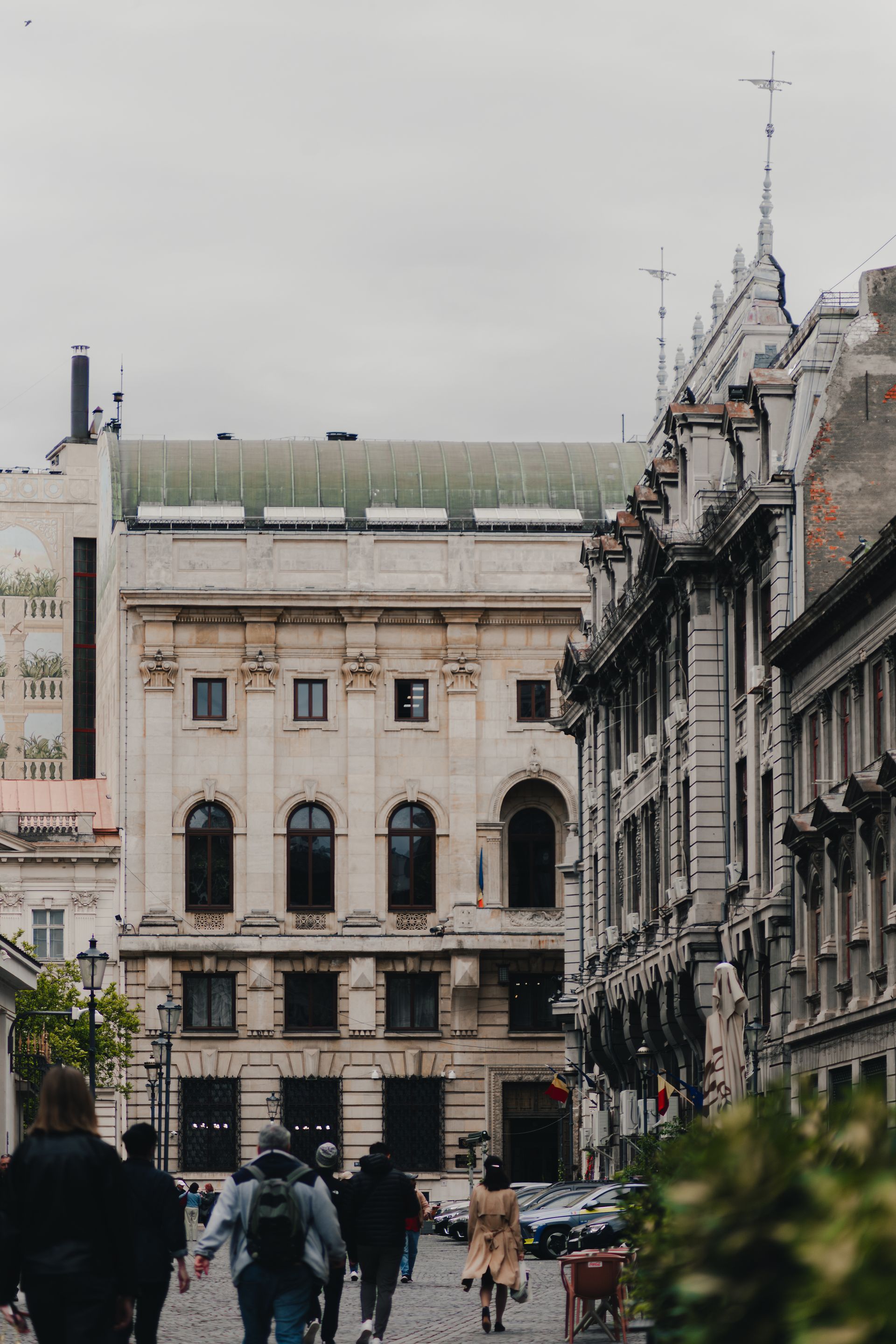
The grand spine of the “Little Paris” era. Calea Victoriei runs north from the river past the Romanian Athenaeum, the former Royal Palace (now the National Art Museum), and a parade of Belle Époque hotels and façades. This is the dress-up Bucharest of concert halls and boutiques, and it sits a few minutes’ walk from the Old Town. The street is the city’s living museum of architecture, where ornate French-influenced palaces stand beside elegant interwar modernist blocks and the occasional brutalist intrusion — a single walk down its length is a crash course in the last 150 years of Romanian history.
This is also the ceremonial heart of the city: Revolution Square, where the 1989 uprising came to a head, sits halfway along it, and the boulevard remains the route for national parades and protests alike. By day it rewards slow window-shopping and museum-hopping; by evening it is the natural approach to a concert at the Athenaeum, with smart cafés and the grand Athénée Palace hotel for a pre-show drink.
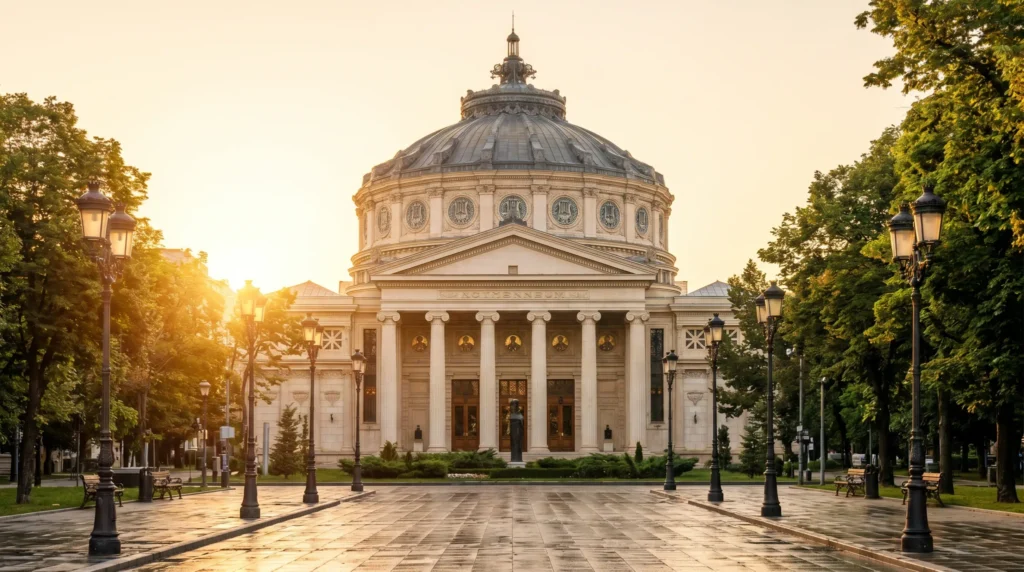
- Romanian Athenaeum — the 1888 domed concert hall, home of the George Enescu Philharmonic
- National Museum of Art of Romania — in the former Royal Palace on Calea Victoriei
- Revolution Square (Piața Revoluției) — where the 1989 revolution turned
Best for: architecture lovers, concert-goers, museum-heavy itineraries. Access: Metro M2 Universitate; walkable from the Old Town.
Cotroceni
Perhaps the most authentic quarter in Bucharest, largely spared the worst of the communist demolitions — tree-lined streets of art deco, Neo-Romanian, and modernist villas radiating from the Cotroceni Palace, the official residence of Romania’s president, which is open for guided visits. The adjacent Botanical Garden and the National Opera House anchor the neighbourhood’s gentle, residential pace . Walking its streets is the closest you can get to the interwar “Little Paris” the city’s nostalgists pine for — intact, lived-in, and refreshingly free of nightlife crowds.
It is a quieter base than the centre but still well connected by metro, and it pairs naturally with the museums and gardens nearby for a slow, civilised day. Architecture enthusiasts could spend hours here simply reading the façades, while families appreciate the calm, leafy streets and the green space of the Botanical Garden.
- Cotroceni Palace and its museum (guided visits, advance booking)
- Dimitrie Brândză Botanical Garden — one of the oldest in Romania
- National Opera House (Opera Națională București)
Best for: slow walkers, architecture nerds, a quieter base. Access: Metro M1 Politehnica or Eroilor.
Dorobanți / Floreasca (The Genteel North)
Sophisticated Sector 1 Bucharest — upscale restaurants, chic boutiques, and embassy villas, sliding north into the lakeside Floreasca district. This is where the city’s professional class and expats live, eat, and meet for long lunches, and where the design-forward cafés and natural-wine bars cluster. If the Old Town is where Bucharest goes out, Dorobanți is where it brunches; the area’s restaurant scene is the most ambitious in the city, and the people-watching from a Piața Dorobanți terrace is half the point.
Floreasca’s lakes give the district an unexpectedly green, almost suburban edge just minutes from the centre — joggers and rowers in the morning, lakeside aperitifs in the evening. It suits travellers who want polish and calm over cobblestones and noise, and who do not mind a short tram or metro hop into the historic core.
- Piața Dorobanți — café-and-boutique hub
- Floreasca and Herăstrău lakes — joggers, rowboats, lakeside terraces
- Calea Dorobanți restaurant row
Best for: upscale travellers, foodies, families wanting calm. Access: Metro M2 Aviatorilor; trams along Ștefan cel Mare.
University Quarter / Piața Romană (Bohemian Centre)
The young, studenty heart of the city around the University of Bucharest and the Academy of Economic Studies — bookshops, cheap eats, indie cafés, and the densest concentration of bars that aren’t aimed only at tourists. Piața Romană and the streets toward Calea Victoriei are the everyday Bucharest most visitors never slow down for. This is where you find the city’s best-value plates, its third-wave coffee, and a more local, less performative version of the nightlife two streets south in the Old Town.
It is also one of the easiest areas to feel the rhythm of ordinary Bucharest life — markets, terraces full of students and office workers, and small parks tucked between the boulevards. Budget travellers and solo visitors gravitate here for the price, the energy, and the central location within a short walk of nearly everything.
- University of Bucharest and the central campus square
- Cărturești Carusel — the spectacular six-floor white bookshop on Lipscani’s edge
- Grădina Icoanei and the small parks east of the centre
Best for: budget travellers, solo walkers, café culture. Access: Metro M2 Universitate or Piața Romană.
Primăverii & Herăstrău (Park-Side North)
The greenest, most exclusive corner of the city, wrapped around the 187-hectare King Michael I Park (Herăstrău) and the lake at its centre . The neighbourhood holds the open-air Village Museum, embassy mansions, and the former Ceaușescu residence (the Primăverii Palace, now a museum). It is the best place in Bucharest for a long lakeside walk, and on a fine weekend it fills with families, joggers, and couples renting rowboats — the closest thing the capital has to a communal back garden.
Because it sits at the northern end of the M2 metro line, it is an easy excursion from the centre even if you are not staying here, and a half-day combining the Village Museum, a lakeside lunch, and the Primăverii Palace makes one of the most relaxed itineraries in the city. Photographers love the early light over the water and the autumn colour through the park.
Whichever base you choose, the practical rule for Bucharest is the same: pick a neighbourhood for its character, not its postcode, and lean on the metro and ride-hailing to stitch the rest together. First-timers rarely regret the buzz and convenience of the Old Town; returning visitors almost always trade up to the calm of Cotroceni or the green edges of the north. None of these areas is more than a short, cheap hop from the others, so even a single base puts the whole city within comfortable reach.
- “Dimitrie Gusti” National Village Museum — 123 authentic relocated peasant houses
- King Michael I Park (Herăstrău) and its lake
- Primăverii Palace — the Ceaușescu family residence, now open to visitors
Best for: families, park lovers, photographers. Access: Metro M2 Aviatorilor.
The Food

Romanian food is hearty, Balkan-meets-Central-European comfort cooking, and Bucharest does it at every register — from a 1.50-lei grilled sausage at a corner stand to a tasting menu in a restored villa. The headline trio you will meet everywhere is sarmale (minced-meat-and-rice rolls in soured cabbage leaves), mici or mititei (skinless grilled minced-meat sausages), and ciorbă (a sour soup, most classically ciorbă de burtă, tripe soup, or the gentler ciorbă de fasole bean soup). Prices below are in lei with an approximate USD conversion at roughly 4.6 lei to the dollar.
What surprises first-time visitors is how cheaply you can eat genuinely well here. Romania sat at the crossroads of the Ottoman, Habsburg, and Slavic worlds for centuries, and its cooking absorbed all three: the stuffed-vegetable and grilled-meat traditions of the Balkans, the soups and pastries of Central Europe, and the soured-and-pickled larder of a country with hard winters. Add a serious, under-the-radar wine industry and a deep bench of dairy and preserves, and you have a food culture that punishes nobody’s budget while rewarding the curious. Bucharest, as the capital, concentrates the best of every region in one place.
The other thing to understand is the rhythm of the Romanian table. Lunch is the main meal, often a multi-course affair on weekends; an aperitif of țuică plum brandy opens proceedings; bread, soured-cream-topped soups, and a grilled-meat main anchor the middle; and something sweet and dairy-rich — papanași, most likely — closes it. Eat the way locals do and you will spend less, eat better, and understand the place faster than any sight will teach you. Below, the food is grouped the way you will actually encounter it: the grand traditional halls, the cheap-and-glorious grills and street food, the dishes beyond the famous trio, and the experiences worth planning a meal around.
Traditional Romanian Halls
The grand old beer halls and tavern restaurants are where you eat the canon — sarmale, mici, and ciorbă — in rooms that are sights in their own right. These are not tourist traps so much as living institutions; locals celebrate name-days and anniversaries in them, and the cooking holds up to the surroundings. Expect generous portions, brisk service, and house wine or beer by the carafe; a proper sit-down lunch in one of these halls is one of the best-value cultural experiences in the city.
- Caru’ cu Bere — sarmale with mămăligă (40–55 lei, ~$10) in the 1879 neo-Gothic beer hall
- Hanu’ lui Manuc — mixed grill in a restored 1808 caravanserai courtyard (45–70 lei, ~$13)
- Lacrimi și Sfinți — refined village cooking, ciorbă de burtă (30–45 lei, ~$8)
A word on the soured-soup tradition that runs through this cooking: the “ciorbă” prefix marks a soup made sour, traditionally with fermented wheat bran (borș) or with lemon or vinegar, and it is the dish Romanians miss most when abroad. The tripe version, ciorbă de burtă, is the cult classic — rich, garlicky, finished with sour cream and a hit of vinegar — but the bean, vegetable, and meatball (perișoare) versions are gentler entry points. Order one as a starter in any traditional hall and you have understood half of Romanian home cooking in a single bowl.
Grills & Street Food
The everyday Bucharest meal is mici off a charcoal grill with mustard, fresh bread, and a beer — eaten standing or at plastic tables, and gloriously cheap. This is the food of football matches, market mornings, and summer evenings, and the best version is found not in a restaurant but at a no-frills grill where the smoke and the queue tell you everything. A plate of five mici with mustard and a hunk of bread is the canonical cheap lunch, and it rarely costs more than a few euros.
Beyond the mici grill, Bucharest’s street food leans on the bakery: warm covrigi (pretzels) studded with poppy or sesame, flaky plăcintă pastries filled with cheese or apple, and gogoși (doughnuts) from corner stands. Markets like Obor double as open-air canteens where you can graze your way through a morning for the price of a single sit-down dish elsewhere.
- Terasa Obor — legendary mici by Obor market, a plate of five (25–30 lei, ~$6)
- Mărgăritar / corner grills — a single mic (2–3 lei, ~$0.55) with mustard
- Covrigărie stands — fresh covrigi (Romanian pretzels) (3–5 lei, ~$0.90)
Beyond Sarmale and Mici
The Romanian table runs far deeper than the headline dishes, drawing on Ottoman, Hungarian, and Saxon influences across the regions. Spend a few days eating widely and you will meet a cuisine built on dairy, preserves, and slow-cooked comfort — sheep’s cheese folded into polenta, roasted-pepper spreads put up by the jar each autumn, and braided sweet breads that appear at every celebration. These are the dishes that turn a quick visit into an appetite for the whole country.
Vegetarians do better here than the meat-heavy reputation suggests: fasole bătută (mashed bean paste), zacuscă, polenta-and-cheese plates, and the lighter ciorbă de legume vegetable soups are all traditional and widely available, and Orthodox fasting periods mean most kitchens know how to cook without meat or dairy entirely. Ask for mâncare de post and you will be pointed to a surprisingly deep set of options.
The sweet course deserves its own attention. Romanian desserts are dairy-rich and unfussy: papanași, the fried cheese-dumpling crowned with sour cream and forest-fruit jam, is the one everyone remembers, but you will also meet clătite (thin pancakes filled with sweet cheese or jam), plăcintă cu mere (apple pastry), and the festive walnut-cocoa swirl of cozonac. Coffee culture has surged in the last decade too, so the modern Bucharest meal increasingly ends not with a heavy dessert but with a good flat white in one of the design-led cafés that have colonised the Old Town and the university quarter. Either way, you will rarely spend more than a few euros to finish well.
One last practical note on eating here: portions are generous, service is friendly but unhurried, and a 10% tip is appreciated rather than expected. Lunch specials — the meniul zilei — are the single best value in the city, often pairing a soup, a main, and sometimes a dessert for the price of a single dish at dinner. Eat your big meal in the middle of the day, graze on grills and bakery snacks in the evening, and you will eat better for less than almost anywhere else in Europe.
If you want to dig deeper, build a meal or two around the markets and the small producers. Obor and the smaller neighbourhood piețe sell the pickles, cured meats, sheep’s cheeses, and seasonal fruit that underpin home cooking, and many traders are happy to let you taste before you buy. A picnic assembled from a Romanian market — bread, telemea cheese, tomatoes, a jar of zacuscă, and a bottle of local wine — is one of the cheapest and most satisfying lunches in the city, and a direct line to how Romanians actually eat at home. It is also a reminder that the best of Bucharest’s food culture is not found in any single famous restaurant but spread across its grills, bakeries, markets, and family tables.
- Papanași — fried doughnut-cheese dumplings with sour cream and jam (20–28 lei, ~$5)
- Mămăligă cu brânză — polenta with sheep’s cheese and sour cream (18–25 lei, ~$4.50)
- Zacuscă — roasted-vegetable and aubergine spread, an autumn staple (sold by the jar)
- Cozonac — a sweet braided walnut-and-cocoa bread, festive but year-round
- Salată de boeuf — a dense, beloved potato-and-vegetable-and-meat salad bound with mayonnaise, a fixture of every celebration table
- Drob — a spiced lamb-offal terrine eaten at Easter, a measure of how little Romanian cooking wastes
If you want to taste the regions without leaving the capital, look for Transylvanian Saxon influences in the smoked meats and hearty stews, Moldavian touches in the sourer soups and stuffed cabbage, and Dobrogea’s Black Sea coast in the occasional fish dish and the Turkish-leaning sweets. Bucharest’s better traditional restaurants increasingly flag these regional origins on the menu, turning a single dinner into a tour of the country.
Food Experiences You Can’t Miss
Some meals in Bucharest are less about a single dish than about the setting and the ritual around it. Build at least one of these into your trip and the food becomes a memory rather than a refuelling stop.
- A weekend morning at Obor Market — the city’s biggest food market — for mici, produce, and pickles
- A house-beer-and-sarmale lunch under the stained glass at Caru’ cu Bere
- A glass of Romanian wine (Fetească Neagră or Fetească Albă) at an Old Town wine bar — the country is a serious, underrated wine producer
- An afternoon plate of papanași with sour cream and forest-fruit jam, the city’s signature dessert
- A late-night covrig from a bakery stand on the walk home through the Old Town
Romanian wine deserves a special mention: the country is among Europe’s larger producers, with indigenous grapes like the inky Fetească Neagră and the floral Fetească Albă that you will rarely encounter at home. A glass costs a fraction of a comparable French or Italian pour, and Old Town wine bars are happy to walk you through a flight. Pair it with a sheep’s-cheese-and-cured-meat board and you have a perfect, inexpensive evening.
Cultural Sights

Palace of the Parliament (Palatul Parlamentului)
The colossus that defines the city’s skyline and its history. Built from 1984 under Ceaușescu, it has 1,100 rooms across 365,000 square metres and is the second-largest administrative building in the world. Founded as the “House of the People,” it now houses Romania’s parliament and a contemporary art museum. Admission for the standard tour is 60 lei (~$13) for adults, 30 lei for students. Open daily 9 a.m.–5 p.m. (March–October), 10 a.m.–4 p.m. (November–February); pre-book at least 24 hours ahead and bring a passport.
No photograph prepares you for the scale. The guided tour covers only a fraction of the building yet still takes you through ballrooms the size of football pitches, marble staircases rebuilt to suit the dictator’s stride, and chandeliers weighing several tonnes — all built with Romanian materials by a workforce of tens of thousands while the country queued for bread. It is a deeply uncomfortable monument, and that discomfort is precisely why it belongs at the top of any itinerary: it is the clearest physical lesson in what the Ceaușescu years cost. Go early in the day, allow ninety minutes, and read a little of the history before you arrive.
Romanian Athenaeum (Ateneul Român)
The city’s most beautiful building and its premier concert hall, opened in 1888 with a domed, columned façade and a frescoed circular auditorium. It is the home of the George Enescu Philharmonic and the headline venue of the George Enescu Festival. Daytime visits cost 15 lei (~$3.25); a concert ticket is the better experience if the schedule allows.
If the Palace shows the city at its most monstrous, the Athenaeum shows it at its most graceful. Built by public subscription — the slogan “Give a leu for the Athenaeum” raised much of the cost — it is the emotional heart of Bucharest’s “Little Paris” self-image, its great circular fresco tracing Romanian history around the auditorium. Hearing the Philharmonic here, under that dome, for the price of a cinema ticket elsewhere in Europe, is among the best-value cultural experiences on the continent.

Stavropoleos Monastery
A jewel-box 1724 Orthodox church in the heart of the Old Town, built in the ornate Brâncovenesc style, with carved stone, vivid frescoes, and a serene arcaded courtyard that silences the surrounding bar noise. Admission is free; respectful dress expected. The monastery preserves one of the country’s most important collections of Byzantine religious music. Step through its small door from the noisy lane outside and the temperature, the light, and the sound all change at once — incense, chant, and a tiny shaded cloister that is the single most peaceful spot in central Bucharest. It is the best five-minute antidote to Old Town sensory overload, and a reminder of how much survived the demolitions.
“Dimitrie Gusti” National Village Museum
An open-air ethnographic museum on the shore of Herăstrău lake, displaying 123 authentic peasant houses, churches, and windmills relocated from villages across Romania, with some 50,000 artifacts. It is the single best place to understand rural Romania without leaving the capital. Admission around 30 lei (~$6.50). Wandering its lanes of thatched cottages, sunken earth houses, and wooden Maramureș churches is the closest you can get to the country’s deep rural traditions in an afternoon, and it pairs perfectly with a lakeside lunch in the adjoining park. Families with children find it the easiest sight in the city to enjoy.
Arcul de Triumf
Bucharest’s 27-metre triumphal arch on the Kiseleff axis, rebuilt in stone in 1936 to commemorate Romania’s WWI victory and deliberately echoing Paris. A viewing terrace opens periodically; the arch is most striking floodlit at night. Free to view from the surrounding square.

Arcul de Triumf & Civic Memory
Beyond the headline museums, Bucharest’s monuments tell the story of a nation that reinvented itself repeatedly. The Arcul de Triumf, the National Bank’s neoclassical pile, the scarred Central Committee balcony on Revolution Square, and the sombre Memorial of Rebirth all sit within a short walk of each other along the civic spine, and reading them in sequence is its own kind of museum. Allow an unhurried hour to walk Calea Victoriei from the river to Piața Victoriei and you will pass nearly every layer of the city’s history without paying an entry fee.
National Museum of Art of Romania
Housed in the former Royal Palace on Calea Victoriei, with a strong European Old Masters gallery and an outstanding collection of medieval and modern Romanian art. Admission around 28 lei (~$6); closed Mondays. The palace itself, scarred during the 1989 revolution, is part of the story. The Romanian galleries are the real draw — luminous medieval icons rescued from monasteries, and the modern rooms anchored by the painter Nicolae Grigorescu and the sculptor Constantin Brâncuși, whose work bridges Romanian folk forms and international modernism.
Entertainment

Old Town Nightlife
The pedestrian Lipscani lanes are the densest nightlife zone in the country, packed with terrace bars, cocktail rooms, beer gardens, and clubs that run until 4–5 a.m. on weekends. A pint runs roughly 12–18 lei and cocktails 30–45 lei. Typical cost 100–200 lei for an evening. Arrive before 22:00 on Friday and Saturday to get a table without queueing. The scene spans every register — speakeasy cocktail dens, raucous beer halls, rooftop terraces, and basement clubs — so it pays to wander a few streets before settling rather than stopping at the first crowded terrace. Midweek is calmer and more local; weekends draw a younger, louder, and increasingly international crowd, including stag and hen parties.
Classical Music & Opera
The George Enescu Philharmonic at the Romanian Athenaeum and the National Opera House offer world-class performances at prices that astonish Western visitors — concert tickets from 30 lei, opera from 40 lei. Typical cost 40–120 lei. The biennial George Enescu Festival (next major edition autumn 2027) is one of Europe’s great classical events. Romania takes its classical tradition seriously — Enescu is a national hero and the conservatory turns out players who fill orchestras across Europe — so the standard is genuinely high, not merely cheap. Booking a night at the Athenaeum or the Opera is the single best-value cultural splurge in the city, and the dress-up ritual is half the fun.
Live Music & Concerts
Beyond the classical halls, venues like Arenele Romane and Sala Palatului host international touring acts, while the Control Club and Expirat run the indie and electronic scenes. Typical cost 80–250 lei depending on the act. Summer brings the open-air festival circuit to parks and the nearby Romexpo grounds. Bucharest has quietly become a fixture on the European touring map, and the warm-season calendar fills with everything from jazz in the parks to large electronic festivals on the city’s edge. Check listings before you arrive — catching a show at the open-air Arenele Romane on a summer night is a memorable, very Bucharest experience.
Therme Bucharest
Europe’s largest thermal-spa and wellness complex sits just north of the city near the airport — pools, slides, palm gardens, and saunas under giant glass domes. A day pass runs roughly 90–150 lei depending on zone and time. It is the city’s favourite rainy-day and winter escape. Typical cost 90–150 lei. The complex is genuinely vast, split into family-friendly water-park zones and adults-only wellness areas with mineral pools and a forest of saunas, and the tropical planting under the domes makes a Bucharest winter afternoon feel improbably like the tropics. It is easy to fill half a day here, and a shuttle or short Bolt ride from the centre gets you there.
Parks & Lakes
King Michael I Park (Herăstrău) and Cișmigiu Gardens are free, beloved, and genuinely central to Bucharest social life — rowboats, beer kiosks, chess tables, and long lakeside walks. Typical cost free to a few lei for a boat. Cișmigiu, laid out in the 1840s, is the oldest public park in the city. On a warm evening these green spaces are where the city actually socialises: families on the lawns, old men over chessboards, couples in pedal boats, and terrace kiosks selling cold beer and grilled corn. Spending an unhurried hour in one of them, doing nothing in particular, is one of the most authentically local things you can do in Bucharest, and it costs almost nothing.
Cinema & Theatre
Films screen in original language with Romanian subtitles, so English-language releases are easy to follow; tickets run 25–40 lei. The independent Cinema Elvire Popesco (at the French Institute) and the historic art cinemas around the centre are worth seeking out, several of them tucked into grand interwar buildings. Typical cost 25–40 lei. Romania’s celebrated New Wave cinema — the internationally awarded films of directors like Cristian Mungiu and Cristi Puiu — was born here, and the city’s art-house screens still champion it; catching a Romanian film with subtitles is a low-cost window into the national mood. Theatre is largely in Romanian, but the spectacle-driven productions and the grand historic playhouses can be worth a ticket regardless.
Day Trips

One of Bucharest’s underrated strengths is how easily it springs you into the mountains. The main rail line north climbs into the Carpathians within an hour, threading past ski resorts, royal castles, and Saxon towns, so the capital doubles as a comfortable base for some of Romania’s best scenery. The trips below are ordered roughly by how rewarding they are for the effort; the train-based ones need no car or tour, while the others are easiest with a hire car or an organised day excursion booked from the city.
Sinaia & Peleș Castle (1.5–2 hours by train)
The single best day trip from Bucharest. Sinaia, a mountain resort about 120 km north on the main Brașov line, is the gateway to Peleș Castle — the fairytale Neo-Renaissance summer residence of Romania’s kings, completed in 1883 and one of the most beautiful castles in Europe. From Sinaia station it is a short taxi or a scenic 40-minute uphill walk. Trains run hourly; check the return schedule before you set out. Peleș is genuinely world-class — 160-odd rooms of carved walnut, stained glass, armour, and silk, the first castle in Europe fully wired for electricity — and the alpine setting at the foot of the Bucegi mountains is half the reward. Buy a Gara de Nord return ticket, take an early train, and you can be back in the city for dinner.
Brașov (2.5 hours by train)
The handsome medieval Saxon city in the Carpathians, about 180 km north, with a pastel old town, the Gothic Black Church, and the Tâmpa mountain rising behind. It is doable as a long day trip but rewards an overnight. Brașov is also the springboard for Bran Castle. Fast trains take around 2.5 hours. The Council Square, ringed by Saxon merchant houses and overlooked by the soot-darkened Black Church, is one of the loveliest urban spaces in Romania, and a cable car runs up Tâmpa for a view over the red rooftops to the mountains beyond. If you have only one overnight to spare outside the capital, this is where to spend it.
Bran Castle (2.5–3 hours by car/tour)
The clifftop fortress marketed as “Dracula’s Castle,” near Brașov — its real history is tied to medieval Saxon defence and Queen Marie of Romania rather than to Vlad the Impaler, but the Gothic silhouette is genuinely dramatic. Most visitors combine it with Brașov and Peleș on an organised tour out of Bucharest. Manage your expectations on the Dracula angle — the connection is essentially marketing — and enjoy it instead as an atmospheric medieval pile with a strong royal-residence story and sweeping valley views. The surrounding village is touristy but the castle interior, restored as Queen Marie left it, is worth the climb.
Snagov Monastery (1 hour by car)
A lake-island monastery about 40 km north of Bucharest, reputed to hold the grave of Vlad the Impaler. The setting — a tiny church on a wooded islet — is serene and a world away from the city. Easiest by car or a short tour; public transport is awkward. For travellers genuinely chasing the Vlad the Impaler story rather than the Bran marketing, this is the more authentic pilgrimage, and the lake itself is a popular summer escape for Bucharest families.
Comana Natural Park (1 hour by car)
A wetland-and-forest reserve about 30 km south of the city, with a delta-like landscape, birdwatching, a 16th-century monastery, and an adventure park — Bucharest’s nearest taste of wild nature and a favourite local Sunday escape. It offers a low-effort glimpse of the kind of watery, bird-rich landscape that the famous Danube Delta delivers on a grand scale further east, making it an easy half-day for families or anyone short on time who still wants a dose of green.
Seasonal Guide
Bucharest has a sharply continental climate — hot, dry summers and cold, sometimes snowy winters — so the season you choose shapes the trip more than in milder capitals. The shoulder seasons of late spring and early autumn are the clear winners for comfort and value; the extremes of midsummer heat and midwinter cold each have their compensations if you plan around them.
Spring (March – May)
The sweet spot. Daytime highs climb from about 12°C in March to 24°C in late May, with the parks and Cișmigiu’s lilacs in full bloom and terrace season opening across the Old Town. Crowds and prices are still modest. Orthodox Easter (date varies) brings the city’s churches alive and many locals leave for the countryside — book around it. May in particular is close to ideal: warm enough for long days on foot, cool enough that the heat never becomes a factor, and busy enough that the city feels alive without the midsummer crush.
Summer (June – August)
Hot and dry, with daytime highs of 28–33°C and occasional heat spikes past 38°C in July and August. Bucharest empties of locals on weekends as they head to the mountains or the Black Sea coast, leaving the centre to visitors. The lakes, Therme, and shaded park terraces are survival kit; many people do the city in the cooler mornings and evenings. The upside is a packed festival calendar and long, balmy nights on the terraces; the downside is the midday heat in a city with little shade on its wide boulevards. Plan indoor sights or the lakes for the hottest hours.
Autumn (September – November)
The second great window. September stays warm (highs around 25°C) and the light turns golden over Herăstrău; by November highs drop to 8–10°C and the first cold rains arrive. The biennial George Enescu Festival fills the Athenaeum in odd-numbered Septembers, and the wine harvest brings festivals and fresh must to the markets. Early autumn rivals late spring for the best all-round conditions, with smaller crowds, comfortable temperatures, and the most flattering light of the year for photographers.
Winter (December – February)
Cold and often snowy, with daytime highs of 1–5°C and overnight lows well below freezing. December brings the Bucharest Christmas Market to Piața Constituției in front of the Palace of the Parliament, with lights, mulled wine, and crafts. Hotel rates fall sharply, museum queues vanish, and Therme’s warm domes are at their most appealing. Pack a proper coat and waterproof boots. Bucharest in the snow has a particular melancholy charm, and the combination of cheap hotels, empty sights, and steaming mulled wine makes it an underrated time to visit for travellers who do not mind the chill.
Getting Around
Metro
Bucharest’s metro is the fastest way across the city — clean, cheap, and easy, with the M2 north–south line through Piața Unirii and Universitate being the most useful for visitors. A single metro journey costs 3 lei (~$0.65), and a combined metro-plus-surface ticket valid for 120 minutes costs 7 lei. Tap a contactless bank card or buy a paper ticket at machines in any station. Trains run roughly 05:00 to 23:00. Four lines (M1–M4, with M5 partly open) cover most of what a visitor needs, and because nearly all the major sights cluster near the M2 corridor, you can often skip the surface network entirely. Stations are signposted in Romanian only but the network map is simple, and trains are frequent enough that you rarely wait more than a few minutes.
Buses, Trams & Trolleybuses (STB)
The surface network, run by STB, blankets the city with buses, trams, and trolleybuses. A single ride is 3 lei (~$0.65), valid 90 minutes including transfers within the STB network. You can tap a contactless card directly, or buy a reloadable Card Activ for 3.70 lei and top it up at kiosks. Trams fill the gaps the metro misses, especially east–west.
IC Cards / Prepaid Transit
The reloadable Card Activ (3.70 lei to buy) stores rides for the STB surface network; the metro uses a separate ticketing system but accepts contactless bank cards directly at the gates. For most short visits, simply tapping a contactless Visa or Mastercard on both metro gates and STB validators is the simplest approach — no card purchase needed.
Airport Access
- Henri Coandă Express train (CFR) to Gara de Nord — about 22 minutes, 5 lei (~$1.10)
- Bus 100 (replaced the old 783) to Piața Unirii / Old Town — 40–60 minutes, 3 lei (~$0.65)
Taxis & Rideshare
Flag-fall is around 3 lei with a per-km rate near 3 lei, but the foolproof move is to use Bolt or Uber, which dominate Bucharest and remove the metered-taxi haggling and overcharging that catch tourists at the airport and in the Old Town. A typical cross-city ride runs 20–35 lei (~$5–$8). Always order via the app rather than hailing at the airport curb. Ride-hailing is so cheap and reliable here that most visitors never need a metered taxi at all; cars arrive within minutes almost anywhere central, and the fixed app fare removes any room for the disputes that street taxis are notorious for.
Walking
The centre is compact and flat, and walking is genuinely the best way to experience it — the Old Town, Calea Victoriei, the university quarter, and the riverside are all within a comfortable 20–30 minute stroll of one another. The caveats are practical rather than serious: pavements are often uneven or broken, parked cars routinely block them, and the wide communist-era boulevards can be tiring and exposed under the summer sun. Stick to the human-scale historic streets and you will walk most of your itinerary without ever touching transit.
Navigation Tips
Apps: Moovit, Google Maps. Both give reliable real-time routing for the metro and STB surface network, and Bolt/Uber for door-to-door. Central Bucharest is flat and walkable, but pavements are uneven and parked cars often block them — watch your footing. For most visitors the winning combination is simple: walk the centre, take the metro for longer hops, and call a Bolt at night or when you are tired. You will rarely need anything more complicated, and the whole system is cheap enough that transport is never the part of the trip you have to budget around.
Budget Breakdown: Making Your Lei Count
Bucharest is one of the best-value capital-city breaks in Europe, and the table below sketches three realistic daily budgets in Romanian lei (RON). They assume you are already in the city and exclude flights and intercity travel; conversions use roughly 4.6 lei to the US dollar. The headline takeaway is simple — even a comfortable day here costs less than a modest one in most of Western Europe, and the gap is widest on food and transport.
| Tier | Daily | Sleep | Eat | Transport | Activities | Extras |
|---|---|---|---|---|---|---|
| Budget | ~170 RON | 50–70 RON dorm | 40 RON | 10 RON | 30 RON | 20 RON |
| Mid-Range | ~370 RON | 180–260 RON hotel | 90 RON | 20 RON | 60 RON | 40 RON |
| Luxury | ~775 RON | 450+ RON hotel | 200 RON | 40 RON | 120 RON | 80 RON |
Where Your Money Goes
Bucharest is one of the cheapest capitals in the EU. A hostel dorm runs around 50–70 lei (~$11–$15) and a comfortable mid-range hotel 180–260 lei (~$40–$57); a budget traveller can do the whole day on roughly 170 lei (~$37), a mid-range visitor on about 370 lei, and a comfortable one on around 775 lei. The biggest swing factor is accommodation, not food or transport — eating and getting around are almost trivially cheap by Western standards.
To put those tiers in context: on the budget end you are sleeping in a hostel dorm, eating mici and covrigi from grills and bakeries, riding the metro, and limiting paid sights to one or two a day — and still having a genuinely good time, because so much of Bucharest’s appeal (the architecture, the parks, the Old Town atmosphere) is free. The mid-range tier adds a private hotel room, sit-down restaurant dinners with wine, and the full slate of museum admissions without thinking twice. Even the “luxury” daily figure here would barely cover a mid-range day in Paris or Vienna, which is the whole point: your money simply goes further.
The single biggest lever is when you come and where you sleep. Hotel rates swing sharply by season — midsummer and festival weeks cost most, deep winter least — so shifting your dates by a few weeks can save more than any on-the-ground frugality. Food and transport, by contrast, are so cheap that trying to economise on them changes your daily total by only a handful of lei, so eat and ride freely and save your discipline for the accommodation booking.
Money-Saving Tips
- Tap a contactless card straight onto metro and STB gates — no need to buy any transit card for a short trip
- Eat your big meal at lunch, when many restaurants run a cheaper meniul zilei (menu of the day)
- Withdraw lei from bank ATMs (BCR, BRD, Banca Transilvania) and always decline the machine’s “convert to your currency” (DCC) offer — it costs you more
- Use Bolt or Uber rather than street taxis to avoid the airport and Old Town overcharging that is the city’s one reliable tourist trap
- Lean on the free sights — Cișmigiu and Herăstrău parks, Stavropoleos, the Arcul de Triumf, and a walk down Calea Victoriei cost nothing
Practical Tips

Language
Romanian is the official language — a Romance language, so French, Italian, or Spanish speakers will catch words and signs. English is widely spoken by Bucharest’s under-40s, in hotels, restaurants, and tourist sites; older residents and market vendors may not speak it. “Bună ziua” (good day), “mulțumesc” (thank you), and “vă rog” (please) go a long way. Romanians are often genuinely pleased when a visitor attempts even a word or two, and because the language is closer to Latin than its Slavic-sounding name suggests, you will find yourself decoding menus and street signs faster than you expect.
Cash vs. Cards
Cards (Visa and Mastercard) are accepted almost everywhere — restaurants, shops, metro, ride-hailing — and contactless is universal. Carry 50–100 lei in cash for markets, small kiosks, church donations, and tips. The currency is the leu (RON); Romania is not yet in the eurozone, so do not assume euros are accepted.
Safety
Bucharest is a safe capital by European standards, with low rates of violent crime; the realistic risks are airport taxi overcharging, occasional pickpocketing in the crowded Old Town and on busy buses, and uneven pavements. Use Bolt/Uber, keep your phone secure in nightlife crowds, and you will have no trouble.
What to Wear
Smart-casual works everywhere; Bucharest dresses up a notch for the Old Town and concert halls. Pack layers for spring and autumn, light breathable clothing plus sun cover for the hot summer, and a serious coat and waterproof boots for winter. Modest cover (shoulders, knees) is expected inside Orthodox churches.
Cultural Etiquette
Romanians are warm but initially formal — a handshake and “bună ziua” on entering a small shop is appreciated. Accept an offered țuică toast graciously. In churches, women may cover their heads and everyone should dress modestly and avoid loud talk. Tipping 5–10% in restaurants is standard.
Connectivity
Romania has some of the fastest, cheapest mobile internet in Europe. Buy a local prepaid SIM (Orange, Vodafone, Digi/RCS-RDS) for a few euros, or use an eSIM; free Wi-Fi is common in cafés, hotels, and on much of the metro. EU roaming applies for EU SIMs. Speeds and coverage in the city are excellent, so navigation apps, ride-hailing, and live transit routing all work seamlessly — one of the quiet pleasures of travelling here is how frictionless the digital side of the trip is.
Power & Plugs
Romania uses the standard European 230V supply at 50Hz with Type C and Type F (Schenguko) sockets — the same two round pins used across most of continental Europe. Travellers from the UK, US, or elsewhere with different plugs should pack a simple adapter; US visitors should also check that their devices handle 230V (most modern chargers do, but some appliances do not).
Health & Medications
Pharmacies (farmacie) are plentiful, many open 24 hours, and pharmacists often speak English. EU visitors should carry an EHIC/GHIC card; everyone else should have travel insurance. Tap water is safe to drink. No special vaccinations are required for Romania.
Tipping
Tipping is appreciated but modest by North American standards. Around 10% in restaurants is the norm for good service, rounding up the fare is plenty for a Bolt or taxi, and a few lei is welcome for hotel porters and tour guides. Cash tips are best, since adding a tip to a card payment is not always possible. None of it is obligatory, and nobody will chase you for it, but it is the easy, friendly thing to do.
Luggage & Storage
Gara de Nord has left-luggage lockers, and several private bag-storage services operate around the Old Town and Piața Universității — handy for a late flight or a Sinaia day trip without your bags.
Frequently Asked Questions
How many days do I need in Bucharest?
Two to three full days covers the city comfortably — one for the Old Town, Athenaeum, and Calea Victoriei, one for the Palace of the Parliament and the Village Museum, and a third for a slower pace or a neighbourhood like Cotroceni. Add a day for a Sinaia/Peleș Castle trip and you have an ideal four-day break. With only a single day, prioritise a Palace tour in the morning and the Old Town in the afternoon and evening; with a week, use Bucharest as a base for day trips into the Carpathians and Transylvania, since the rail links north are good and the mountain scenery is the natural counterpoint to the capital.
Is Bucharest good for solo travellers?
Yes — it is safe, cheap, walkable in the centre, and easy to navigate with English in tourist areas. The Old Town is sociable and hostel-dense, ride-hailing removes the late-night transport worry, and solo dining is completely normal. The main caution is airport taxi overcharging, easily avoided with Bolt or Uber. Solo female travellers generally report feeling comfortable, with the usual big-city common sense around crowded nightlife and late-night walks; the dense, well-lit Old Town and the prevalence of app-based rides make the practicalities easy. Hostels here run regular walking tours and pub crawls, so meeting people is straightforward if you want company.
Do I need a transit pass, or can I just tap a card?
For a short visit, just tap a contactless bank card on the metro gates and STB surface validators — there is no need to buy any pass. A single metro ride is 3 lei and a 120-minute combined ticket is 7 lei. If you prefer a physical card for the surface network, the reloadable Card Activ costs 3.70 lei to buy.
What about the language barrier?
Minimal in tourist-facing situations. Romanian is a Romance language, menus and signage often appear in English too, and most younger Bucharest residents speak good English. It thins out with older people and at neighbourhood markets, where a few Romanian phrases and a friendly manner carry you through. Hotel and restaurant staff in the centre are reliably fluent, and a translation app on your phone covers the rare gaps, and Romanians are generally patient and welcoming with visitors who make any effort at all — the barrier is far lower than the unfamiliar place names might lead you to expect.
When is the best time to visit Bucharest?
May–June and September–October are the peak-quality windows — warm enough for terraces, cool enough for walking, with smaller crowds and lower prices than midsummer. July and August are hot and see locals decamp to the mountains and coast; December brings the Christmas market and big winter hotel discounts. If you can time it, late September in an odd-numbered year coincides with the George Enescu Festival, when the world’s great orchestras fill the Athenaeum and the whole city tilts toward classical music. Otherwise, simply avoid the peak summer heat and you will find Bucharest at its most comfortable and its most affordable.
Is Bucharest worth visiting, or is it just a stopover?
It is firmly worth a stay in its own right, not merely a gateway to Transylvania. Travellers who give it only an overnight tend to judge it on its grim communist boulevards and leave underwhelmed; those who stay two or three days discover the Belle Époque architecture, the courtyard churches, the lakeside parks, the genuinely excellent and cheap food and classical music, and a nightlife scene that rivals far better-known capitals. Bucharest rewards patience and curiosity more than most European capitals — its charms are layered rather than obvious — which is precisely why those who slow down here come away surprised and fond.
Can I use credit cards everywhere?
Nearly — Visa and Mastercard with contactless work at restaurants, shops, hotels, the metro, and ride-hailing apps across the city. Carry 50–100 lei in cash for markets, kiosks, church donations, and tips. Romania uses the leu (RON), not the euro, so do not rely on foreign currency. Withdraw lei from a bank ATM rather than an airport exchange booth, and always decline the machine’s offer to “convert to your home currency,” which quietly bakes in a poor rate. With a contactless card and a small cash float, you are covered for everything the city will throw at you.
Is the Palace of the Parliament worth visiting, and how do I get in?
Yes, even if you find its history grim — the scale is genuinely staggering. You must pre-book a guided tour at least 24 hours ahead through the official site, bring your passport for the security check, and arrive early. The standard adult tour is 60 lei (~$13); it is the city’s single most-visited sight for good reason.
Ready to Experience Bucharest?
Bucharest rewards the traveller who slows down — a morning coffee in a quiet Old Town courtyard, an unhurried afternoon at the Village Museum, a sub-€15 concert at the Athenaeum, a long sarmale lunch at Caru’ cu Bere. Build in the day trip to Peleș, the lakeside walk at Herăstrău, and the late-night terrace. For the full country context and a route that pairs Bucharest with Transylvania and the Carpathians, read the Romania Travel Guide.
Explore More City Guides
Where to Stay
- Budapest City Guide — sibling Danube capital, two hours west by air
- Vienna City Guide — sibling imperial capital and concert-hall benchmark
- Prague City Guide — sibling Central European old-town capital
- Romania Country Guide
- All City Guides
Alex the Travel Guru
Alex has spent the better part of two decades turning a battered notebook and a tolerance for overnight buses into the FFU city guide archive. In Bucharest specifically, he has walked every sector at least once, eaten his way through the Old Town and Obor market, toured the Palace of the Parliament twice (once to be sure the scale was real), taken the early train to Peleș and back in a day, and been quoted a fare five times the real price by an airport taxi exactly once — the mistake that turned him into a Bolt evangelist. He writes these guides to answer the questions he needed answered the first time: what to book, what to skip, where locals actually eat, and how to see past a capital’s reputation to the city that is genuinely there.
More city guides you might like
Plan your trip to Bucharest
The booking tools we use ourselves. FFU may earn a commission at no extra cost to you.
Plan & book your trip to Bucharest
Booking through these searches supports our guides at no extra cost to you.