
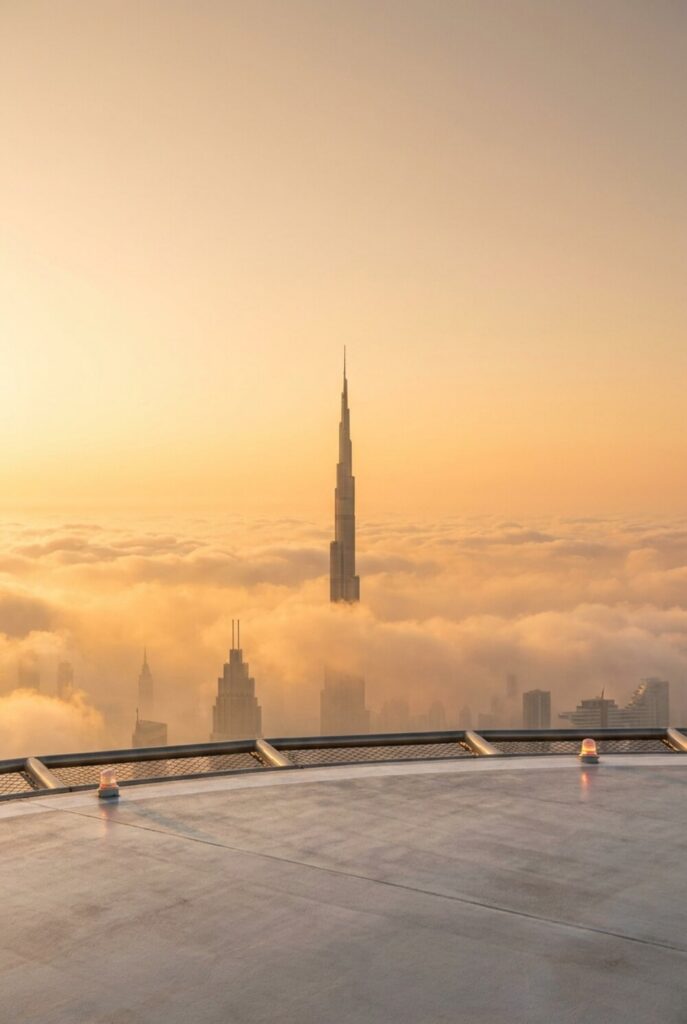
Dubai, United Arab Emirates: Where the Desert Meets the Skyline
Part of our United Arab Emirates travel guide.
Dubai City Guide
📄 Table of Contents
Why Dubai?
Dubai is the largest city in the United Arab Emirates and the commercial engine of the seven-emirate federation, with roughly 3.7 million residents inside the city and around 4 million across the wider emirate as of 2024. The city sits on a crescent of coastline along the Persian Gulf, built around a natural saltwater creek that separated the old trading quarters of Deira and Bur Dubai until the mid-20th century. Its modern form — a 50-kilometre ribbon of glass towers running south-west along Sheikh Zayed Road — was essentially assembled in the 25 years between the opening of the Burj Al Arab in 1999 and the 2020 Expo held at the edge of the desert.
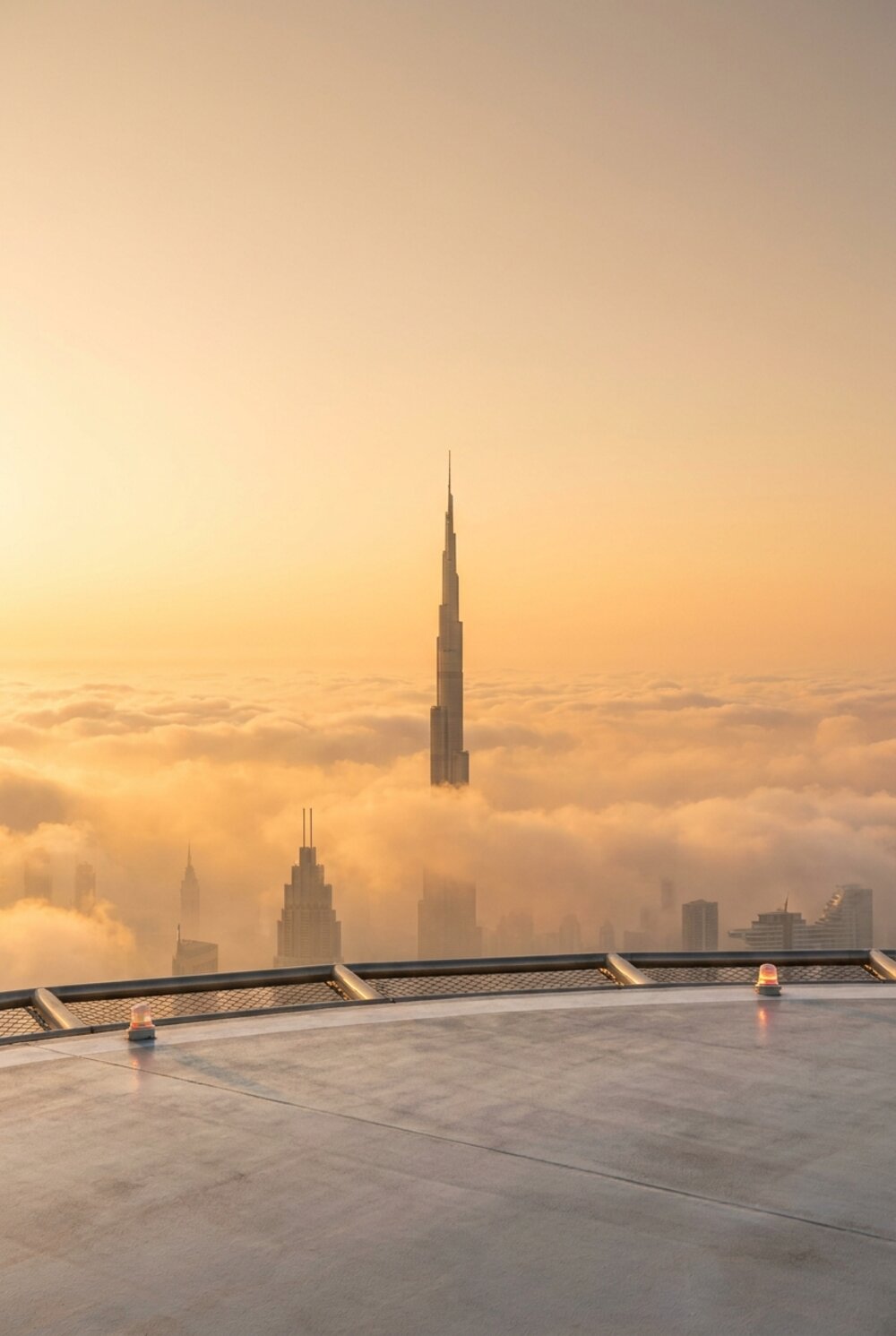
The scale claims are blunt. The Burj Khalifa in Downtown Dubai is 828 metres tall and has held the title of the world’s tallest building since its opening in January 2010. Dubai Mall, connected to the tower by an air-conditioned walkway, is the world’s largest shopping mall by total area (roughly 1.1 million square metres of retail and leisure space) and houses more than 1,200 retailers, a 10-million-litre aquarium, and an Olympic-sized ice rink. In 2024 the city recorded 18.72 million international overnight visitors, making it the most-visited city in the Middle East and one of the top five globally.
The contradiction underneath those numbers is what makes Dubai worth several days rather than a stopover layover. The city is federally Muslim and conservative — alcohol is licensed, public behaviour is governed by a dress and conduct code, and the Islamic calendar drives the public rhythm — yet nearly 90% of its population is non-Emirati, drawn primarily from India, Pakistan, Bangladesh, the Philippines, Egypt, and the rest of the Arab world, producing a food and neighborhood scene that reads more like a cross-section of the Indian Ocean rim than a Gulf monocapital.
Dubai runs at a remarkable density of superlatives: the world’s busiest international airport (DXB handled 92.3 million international passengers in 2024), the longest driverless metro in the world when it opened in 2009, the world’s highest observation deck open to the public, and the largest choreographed fountain system, all within a 30-minute taxi circle. It is also, alongside Singapore and Tokyo, one of the most operationally easy cities in Asia for first-time visitors: English is a default working language, card payment is accepted almost everywhere, and the Metro runs on time.
This guide covers the 10 neighborhoods that define modern Dubai, the food scene behind the city’s Michelin-recognised fine dining and its deep bench of Indian, Lebanese, and Emirati cooking, the cultural and architectural sights from Al Fahidi’s 1890s wind-tower quarter to the Museum of the Future, the day trips that turn Dubai into a base camp for the UAE and the Hajar Mountains, and the transit, budget, dress-code, and Ramadan details that first-time visitors need to plan a trip in any season.
🏙️ Neighborhoods: Finding Your Dubai
📍 Dubai Map: Every Place in This Guide
Dubai is functionally a linear city running south-west from the historic Creek to the Marina, threaded by Sheikh Zayed Road and mirrored by the Red Line of the Dubai Metro. Each district along the line has its own density, dress code, crowd, and reason to visit. The ten below cover the full range from pre-oil heritage quarters to 21st-century master-planned islands. A base on the Red Line (Downtown, Business Bay, Marina, or Mall of the Emirates) puts most of them within a 20–30 minute ride.
Downtown Dubai
Downtown Dubai is the postcard core: the 828-metre Burj Khalifa, the Dubai Mall, the Dubai Fountain, and the Dubai Opera are arranged around a single walkable boulevard that centres on Mohammed bin Rashid Boulevard. At the Top Burj Khalifa tickets start at 179 AED (about $49) for the 124th and 125th floors and rise to 399 AED (about $109) for the SKY level on floor 148 at 555 metres, the highest observation deck in the world open to the public. The Dubai Fountain in front of the tower runs choreographed water-and-light shows every 30 minutes from 18:00 until 23:00 with free public viewing from the fountain promenade, Souk Al Bahar bridge, and the mall waterfront terrace. Dubai Opera’s 2,000-seat dhow-shaped hall programmes international classical, musical, and theatre seasons with tickets typically 150–800 AED (about $41–218).
- Burj Khalifa and At the Top observation decks (levels 124, 125, 148)
- The Dubai Mall with 1,200+ stores and the Aquarium & Underwater Zoo
- Dubai Fountain water shows (every 30 minutes from 18:00)
- Dubai Opera inside the petal-shaped concert hall
- Souk Al Bahar for shisha terraces overlooking the fountain
Best for: first-timers and big-ticket sightseeing. Access: Burj Khalifa/Dubai Mall Metro Station (Red Line) plus a 15-minute linked-bridge walk into the mall.
Dubai Marina
Dubai Marina is a 3-kilometre artificial canal cut inland from the Gulf and lined on both sides by residential towers, waterfront bars, and mid-range hotels. The Marina Walk promenade loops around the canal for about 7 kilometres and is the most comfortable sustained urban walk in the city, shaded by tower podiums and cooled by the water. Pier 7 holds seven restaurants stacked inside a single circular tower, and a constant turnover of yacht charters (typical half-day prices 1,200–2,500 AED, about $327–681) and dhow dinner cruises (150–250 AED, about $41–68) depart from the Marina berths. Ain Dubai, the 250-metre observation wheel on the adjacent Bluewaters Island, is the world’s tallest at its completion in 2021; operating status has varied year to year, with check-before-visit the rule.
- Marina Walk (7 km promenade with restaurants and bars)
- Marina Mall and Pier 7 multi-level restaurant tower
- Ain Dubai observation wheel (250 m) on Bluewaters Island
- Yacht and dhow cruises from Marina Berths 1–7
- JBR beachfront strip within a 5-minute walk
Best for: nightlife, waterfront dining, and longer-stay apartment hotels. Access: DMCC or Dubai Marina Metro (Red Line) and the Dubai Tram connecting to JBR.
Jumeirah Beach Residence (JBR)
Jumeirah Beach Residence, usually abbreviated to JBR, is Dubai’s most straightforward beach experience: a 1.7-kilometre public stretch of white-sand coast backed by a pedestrianised retail strip called The Walk. Beach access is free with public showers, lifeguard posts, and shaded cabanas; rentals (sunbed and umbrella) from beach operators run 75–150 AED (about $20–41) per day. The Walk concentrates more than 300 restaurants and shops over a one-kilometre run, including the Bluewaters pedestrian bridge to Ain Dubai and the sister strip called The Beach at JBR, which adds Reel Cinemas and an open-air events plaza. Skydive Dubai’s Palm drop zone is 800 metres north along the coast, with tandem jumps from 2,199 AED (about $599) overlooking the Palm Jumeirah.
- JBR Beach (1.7 km public beach with showers and lifeguards)
- The Walk at JBR and The Beach at JBR retail strips
- Bluewaters pedestrian bridge to Ain Dubai
- Skydive Dubai Palm drop zone
- Dubai Eye open-top tour bus stop
Best for: beach days and family-friendly dining. Access: JBR 1 and JBR 2 tram stops from Dubai Marina Metro.
Deira
Deira is the older half of Dubai, on the northern bank of Dubai Creek, and preserves the city’s pre-oil streetscape of low-rise shophouses, covered souks, and working wooden trading dhows tied up along the waterfront. The Gold Souk on Sikkat al-Khail Street holds more than 300 retailers trading an estimated 10 tonnes of gold at any given time and is regulated by the Dubai Municipality for purity stamps. The adjacent Spice Souk runs a narrower alley scented with frankincense, saffron, dried limes, and bulk cardamom; the Perfume Souk extends the same network one block further. Abras — traditional wooden water taxis — cross the Creek to Bur Dubai for 1 AED (about $0.27), which remains one of the cheapest scheduled public-transport rides in any major world city.
- Gold Souk (300+ retailers on Sikkat al-Khail Street)
- Spice Souk and Perfume Souk radiating from the Gold Souk
- Dubai Creek abra crossings (1 AED per ride)
- Deira Fish, Meat & Vegetable Market
- Al Ghurair Centre (the UAE’s oldest mall, opened 1981)
Best for: souk shopping and heritage atmosphere. Access: Palm Deira, Baniyas Square, and Union Metro Stations (Red/Green Lines).
Bur Dubai & Al Fahidi
Bur Dubai sits directly opposite Deira on the southern side of the Creek and holds the city’s oldest intact quarter, Al Fahidi (formerly called Bastakiya), a grid of sand-coloured courtyard houses dating from the 1890s. The Dubai Museum, housed inside Al Fahidi Fort built in 1787 and the oldest standing building in the city, has been closed since 2021 for a multi-year renovation; check Visit Dubai before planning a visit. The Textile Souk stretches along the creek edge opposite Deira and sells run lengths of silk, chiffon, and Arab embroidery. The Sheikh Mohammed Centre for Cultural Understanding (SMCCU), based inside Al Fahidi, runs the city’s best cultural-bridge programme — traditional breakfast, lunch, and dinner sessions at 160–185 AED per person (about $44–50), hosted by Emirati volunteers who answer open questions about Islam, Emirati family life, and local customs.
- Al Fahidi Historical Neighbourhood (1890s wind-tower houses)
- Dubai Museum inside Al Fahidi Fort (1787, under renovation)
- Textile Souk along the Creek waterfront
- Sheikh Mohammed Centre for Cultural Understanding heritage meals
- Coffee Museum and Coin Museum in narrow Bastakiya lanes
Best for: cultural context and creek-side walks. Access: Al Fahidi Metro Station (Green Line) and abra crossing from Deira.
Palm Jumeirah
Palm Jumeirah is the most familiar of Dubai’s artificial islands, reclaimed from the Gulf in the early 2000s in the shape of a stylised palm tree with a trunk, 16 fronds, and a 3-kilometre crescent. Each frond is lined with private villas, while resort properties cluster on the trunk and crescent. The Atlantis The Palm and the newer Atlantis The Royal (opened 2023, 795 suites) anchor the crescent; Aquaventure, the adjoining 22.5-hectare waterpark, has day tickets from 359 AED (about $98). The View at The Palm, a 240-metre observation deck on top of Palm Tower near the trunk, offers the clearest aerial photograph of the island’s shape at 100–150 AED (about $27–41) for adult admission. The Pointe and Palm West Beach provide free public access waterfronts with mid-range restaurants, fireworks shows on selected Friday nights, and sandy beach frontage without a resort booking.
- Atlantis The Palm and Atlantis The Royal (795 suites)
- Aquaventure waterpark and Lost Chambers Aquarium
- The View at The Palm (240 m) on Palm Tower
- Nakheel Mall at the centre of the trunk
- The Pointe and Palm West Beach public waterfronts
Best for: resort stays and signature-island sightseeing. Access: Palm Monorail from Gateway Station near the trunk to Atlantis.
Al Quoz
Al Quoz began as a warehouse-industrial district south of Sheikh Zayed Road and has been gradually reoccupied since the mid-2000s by Dubai’s contemporary-art community, specialty coffee roasters, and design studios working inside retrofitted sheds. Alserkal Avenue, the most organised cluster, now houses more than 20 art galleries (including The Third Line, Green Art Gallery, Carbon 12, Isabelle van den Eynde, and Ayyam Gallery), plus Cinema Akil — the UAE’s first fully licensed arthouse cinema — and Concrete, a Rem Koolhaas–designed adaptable exhibition hall opened in 2017. Most galleries open 10:00–19:00 Tuesday through Saturday and are free. The avenue’s food and coffee programme includes Wild & The Moon, Seven Fortunes, Nightjar, and Stomping Grounds. The wider Al Quoz area now includes warehouse outlets, climbing gyms, and indoor trampoline parks.
- Alserkal Avenue (20+ galleries in one warehouse compound)
- The Third Line, Green Art Gallery, Carbon 12, Isabelle van den Eynde
- Cinema Akil independent arthouse theatre
- Concrete adaptable gallery hall (Rem Koolhaas, 2017)
- Specialty coffee at Nightjar, Seven Fortunes, Stomping Grounds
Best for: gallery-goers and design-minded visitors. Access: Noor Bank Metro (Red Line) plus a 10-minute taxi.
Dubai Hills
Dubai Hills is a master-planned community built around an Emaar-managed 18-hole golf course, positioned roughly midway between Downtown and the Marina on Al Khail Road. Dubai Hills Mall opened in February 2022 with more than 650 retailers and an indoor roller coaster (Storm Coaster) at 75 AED (about $20) per ride. The adjacent Dubai Hills Park, the largest urban park opened in the last decade in Dubai, includes a 1.8-kilometre splash pad, a skate park, a dog park, and direct sightline to the Burj Khalifa from its central lawn. The neighborhood is denser with serviced apartments and family-friendly mid-tier hotels than the coastal zones, which makes it a practical base for multi-week visits or visits with children under 10. The Dubai Hills Golf Club runs green fees from 500–1,000 AED (about $136–272) for 18 holes depending on season and tee time.
- Dubai Hills Mall (opened 2022, 650+ stores)
- Storm Coaster indoor roller coaster inside the mall
- Dubai Hills Park with 1.8-km splash pad and skate park
- Dubai Hills Golf Club (Emaar 18-hole course)
- Roxy Cinemas flagship screen
Best for: families and long-stay visitors with children. Access: Equiti Metro (Red Line) plus a 10-minute taxi, or Dubai Hills Mall feeder bus.
Al Barsha
Al Barsha sits on the inland side of Sheikh Zayed Road near Interchange 4 and is anchored by Mall of the Emirates, which opened in 2005 and now houses more than 600 stores plus the 22,500 square metre indoor Ski Dubai slope — the first indoor ski facility in the Middle East. Ski Dubai day passes start at 220 AED (about $60) for a two-hour snow-park entry (mountain gear provided) and 325 AED (about $89) for full-day slope access with lessons available separately. The surrounding area concentrates mid-range 3- and 4-star hotels (ibis, Mercure, Holiday Inn, Novotel, Movenpick) that run 250–550 AED per night (about $68–150), making Al Barsha the most budget-accessible hotel cluster with direct Metro access to Downtown. Mall of the Emirates is connected to Al Barsha Metro by covered pedestrian bridge.
- Mall of the Emirates (600+ stores, opened 2005)
- Ski Dubai indoor snow park (22,500 m²)
- VOX Cinemas flagship Gold and IMAX screens
- Magic Planet family entertainment centre
- Cluster of mid-range 3- and 4-star hotels along SZR exits
Best for: mid-range shopping and quick transit access. Access: Mall of the Emirates Metro Station (Red Line) directly inside the mall.
Jumeirah
Jumeirah is the low-rise residential coastal strip running south-west from the Creek to roughly Madinat Jumeirah, made visually famous by the silhouette of the 321-metre Burj Al Arab Jumeirah sail-shaped hotel standing on its own artificial island. The district combines Kite Beach (free public access, windsurfing and kitesurfing rentals, and a strong food-truck scene), La Mer (a beachfront retail development opened in 2017 with a skate bowl and saltwater lagoon), and Madinat Jumeirah (a purpose-built traditional Arabian souk and hotel complex with waterways navigated by abra). Jumeirah Mosque, opened 1979 and designed in the Fatimid style, runs 75-minute non-Muslim guided visits through the Sheikh Mohammed Centre for Cultural Understanding six days a week at 35 AED (about $10) per person. City Walk, a boulevard retail district on Al Safa Street, has grown into a dining and open-air entertainment hub since 2015.
- Kite Beach and La Mer public beaches (free entry)
- Jumeirah Mosque guided non-Muslim tours (75 minutes)
- Burj Al Arab Jumeirah (321 m sail-shaped hotel, 1999)
- Madinat Jumeirah souk and waterway with abra rides
- City Walk retail and dining district on Al Safa Street
Best for: beach walks and photogenic architecture. Access: Business Bay or Noor Bank Metro, then a short taxi hop to the coast.
🍴 The Food
Dubai is one of the most diverse restaurant cities in the world on a population-adjusted basis, with the 2024 Michelin Guide Dubai — the second edition since the guide launched in the city in 2022 — awarding 19 starred restaurants and dozens of Bib Gourmand selections across cuisines from Indian to Peruvian. Because roughly 90% of Dubai residents are foreign nationals, the city’s deepest food cultures are Indian subcontinental, Levantine (Lebanese and Syrian), Filipino, and Iranian, with Emirati cooking itself occupying a smaller and quieter niche that is rewarding to seek out. The sections below cover the two headline cuisine categories a first-time visitor will encounter most often (Emirati classics and Lebanese/Levantine), a “beyond the headlines” lineup of city-defining dishes and venues, and the distinctive food-format experiences — brunch culture, iftar tents, desert dining — that are harder to replicate elsewhere.
Emirati Classics
Emirati cuisine is hearty, spice-forward, and built on rice, slow-cooked meat, and dried limes (loomi). The cornerstone dish is machboos (also spelled majboos), a rice plate cooked with lamb, chicken, or fish, onions, loomi, cinnamon, cardamom, and baharat spice blend. Luqaimat — small round yeast dumplings fried and drizzled in date syrup — are the default Emirati dessert. Harees (wheat-and-meat porridge), thareed (lamb-and-vegetable stew ladled over thin bread), and balaleet (sweetened saffron vermicelli with egg) round out the standard menu. Several dedicated Emirati kitchens have opened in the last decade to make the cuisine accessible to visitors, and the Sheikh Mohammed Centre for Cultural Understanding runs the most widely recommended on-ramp for travellers.
- Al Fanar Restaurant & Cafe (multiple) — machboos lamb 75 AED (about $20), harees 55 AED (about $15); the kitchen reproduces a 1960s Emirati home with traditional seating.
- SMCCU cultural meals (Al Fahidi) — traditional Emirati breakfast, lunch, or dinner at 160–185 AED per person (about $44–50) including Q&A.
- Milas (Dubai Mall, City Walk) — contemporary Emirati plating, machboos djaj 85 AED (about $23), luqaimat 35 AED (about $10).
- Arabian Tea House (Al Fahidi) — traditional breakfast 65 AED (about $18) in a restored courtyard.
- Logma (Boxpark, Dubai Hills) — Emirati-inspired cafe, karak chai 18 AED (about $5), chebab pancakes 28 AED (about $8).
Lebanese, Syrian & Levantine
Lebanese and Levantine cooking is the default shared-plate cuisine of Dubai. Expect mezze tables of hummus, mutabal, tabbouleh, fattoush, moutabbal, warak enab (stuffed vine leaves), batata harra (spiced potatoes), and charcoal-grilled shish taouk and lamb kafta. Arabic bread (khubz) comes hot from wood or gas ovens at every independent Lebanese kitchen. Syrian restaurants tend to run slightly sweeter mezze and stronger breakfast menus (fattet hummus, manakeesh za’atar); Egyptian koshari shops are the main budget food in older districts. Prices at good Lebanese restaurants run roughly 120–250 AED (about $33–68) per person for a full mezze-to-grill meal with mint lemonade; fine-dining Levantine restaurants can double that.
- Al Nafoorah (Jumeirah Emirates Towers) — Michelin-recommended Lebanese; mezze spread 300 AED (about $82) per person.
- Al Qasr (Madinat Jumeirah) — traditional Levantine grill; mixed grill 230 AED (about $63), dinner for two 600 AED (about $163).
- Zahr el-Laymoun (multiple) — upscale Egyptian-Levantine; koshari 45 AED (about $12), molokhia 75 AED (about $20).
- Operation: Falafel (multiple) — fast-casual Levantine; falafel wrap 24 AED (about $7), mezze platter 65 AED (about $18).
- Em Sherif (DIFC) — set Lebanese mezze menu 420 AED (about $114) per person, drinks extra.
- Reem Al Bawadi (Jumeirah 1) — classic shisha-and-mezze garden, typical dinner 150 AED (about $41).
Beyond Machboos and Mezze
Because Dubai’s resident population skews heavily South Asian, many of the best everyday meals in the city are Indian, Pakistani, and Sri Lankan, and the city has long been a regional destination for Indian fine dining. Iranian kitchens (concentrated in Satwa and Deira) serve chelo kebab and tahdig rice; Filipino canteens in Al Karama and Deira offer strong regional home cooking. The six below cover the widest-used “second tier” dishes that a curious visitor should seek out.
- Biryani and North Indian — Bombay Borough (DIFC) runs Raj-era biryani at 110–180 AED (about $30–49); Trèsind Studio (Nakheel Mall) holds two Michelin stars for modern Indian tasting menus at 795 AED (about $217). Bombay Bungalow (JBR) dishes thalis at 95 AED (about $26).
- South Indian dosa and idli — Saravanaa Bhavan (Karama) and Govinda’s (Karama) serve paper masala dosa from 21 AED (about $6) and full south-Indian thalis from 35 AED (about $10). Open 07:00–23:30, cash and card both accepted.
- Iranian chelo kebab — Special Ostadi (Al Mina Road), operating since 1978, is the most referenced Iranian kitchen in the city; chelo kebab koobideh 55 AED (about $15), tahdig 35 AED (about $10).
- Pakistani karahi — Ravi Restaurant (Satwa) is the city’s most famous late-night Pakistani kitchen, open until 03:00, with karahi chicken at 35 AED (about $10) per half portion and lamb chops at 80 AED (about $22).
- Filipino adobo and sinigang — Lucky’s Kitchen (Deira) and Jollibee (multiple) are the household names; full adobo set 38 AED (about $10).
- Shawarma and manakeesh — Operation: Falafel, Al Mallah, and Allo Beirut are reliable 24-hour chains with shawarma wraps at 18–28 AED (about $5–8) and za’atar manakeesh at 12 AED (about $3).
Fine Dining and the Michelin Scene
Dubai received its first Michelin Guide in 2022. The 2024 edition awarded 19 restaurants with stars, including two-star holders Trèsind Studio (modern Indian tasting, Palm Jumeirah) and St. Regis Gardens flagship FZN by Björn Frantzén (Scandinavian tasting, 1,445 AED / about $394 per person), and one-star holders including 11 Woodfire, Moonrise, Hakkasan, Torno Subito, Row on 45, Avatara, and Ossiano. High-end steakhouses and trophy-chef imports (Nobu, Zuma, La Petite Maison, COYA, Scott’s, Cipriani, 99 Sushi Bar) concentrate on the DIFC, Palm Jumeirah, and Jumeirah coast. Dinner with wine typically runs 650–1,800 AED per person (about $177–491); alcohol is the single largest multiplier in a Dubai fine-dining bill, as all wine and spirits in the UAE are imported at tax and licensing markups that effectively add 150–250% over European supermarket equivalents. Counter omakase and chef’s-table formats at 2- and 3-hour tasting menus are widely available; booking 2–3 weeks out for weekends is standard for starred venues.
Brunch, Beach Clubs, and Desert Dining
Three formats are distinctive to Dubai and do not have direct equivalents in most world capitals. Friday and Saturday brunch is a citywide ritual: large hotels and stand-alone restaurants offer extended open-buffet or sharing-menu brunches at 250–850 AED (about $68–232) per person, usually with an alcohol package option that doubles the headline price. Classic brunch institutions include Bubbalicious (Westin Mina Seyahi), Flooka (Al Habtoor City), Nobu brunch (Atlantis The Palm), Tom & Serg (Al Quoz) for the casual end, and Cû at the Five Palm Jumeirah. Beach clubs — a blend of beach-access hotel day pass and open-air bar — cluster on the Palm (WHITE Beach, Drift, Summersalt) and Jumeirah (Nikki Beach, Azure Beach, Cove Beach); day-pass prices run 250–600 AED weekday, with a substantial share typically creditable to food and drink. Desert dining is the third format: a sunset-to-night package (typical price 350–900 AED per person, about $95–245) combines 4WD dune bashing, camel rides, henna, and a bedouin-style buffet with tannoura and belly-dance entertainment at a Bedouin camp in the Dubai Desert Conservation Reserve; premium operators include Platinum Heritage (historic 1950s Land Rovers, lower volume, higher price) and Arabian Adventures (mainstream volume).
Food Experiences You Can’t Miss
- Old Dubai food walk (Deira & Al Fahidi) — Frying Pan Adventures runs a 4-hour Deira walking tour at 495 AED (about $135) covering 8–10 tasting stops across Iranian bakeries, Indian sweet shops, and Arabic breakfast cafes.
- Karak chai stops — Dubai’s signature strong-spiced tea is sold from drive-through shacks across Satwa, Karama, and Al Qusais at 2–4 AED (about $0.55–1.10) per cup; Karak House and Logma are the sit-down versions.
- Ramadan iftar tents (during Ramadan only) — The Dubai World Trade Centre, Expo City, and most 5-star hotels operate large communal iftar buffets at 150–350 AED (about $41–95) after sunset; Feb 17 to Mar 19 in 2026.
- Spice Souk and Gold Souk market walk (Deira) — free, open 10:00–22:00 daily with an afternoon closure at some shops from 13:00–16:00; finish at a Yemeni bakery like Malas Yemeni Restaurant for mandi lamb.
- Dubai Food Festival (late Apr–early May) — citywide programme of restaurant weeks, beach village pop-ups, and street-food zones including the Hidden Gems trail highlighting under-the-radar neighborhood restaurants.
Markets, Bakeries, and Groceries
Beyond sit-down restaurants, Dubai’s grocery and bakery layer rewards a walk-through on its own. The Waterfront Market in Deira, opened 2017 to replace the old Deira Fish Market, runs a covered fish, meat, vegetable, and spice hall where Gulf hammour, sheri, sultan ibrahim, and kingfish sell at wholesale-adjacent prices from 25–120 AED per kilogram (about $7–33); restaurant vendors on-site grill your selection for 25–40 AED. The Ripe Market (Saturdays at Academy Park in Jumeirah) is the city’s largest organic farmers’ market, featuring UAE-grown produce, honey, dates, and prepared-food stalls from October through May; entry is free. Union Coop, Carrefour, and Spinneys dominate everyday supermarket shopping, while Kibsons and Kitopi Kitchen handle online grocery and meal-kit delivery. For imported Iranian, Filipino, and South Asian staples, Al Karama and Satwa’s independent groceries stock items mainstream chains do not. Bakeries run at a remarkable density: Yemeni-style mandi bakeries, Iranian taftoon flatbread ovens, and Lebanese manakeesh counters all operate neighbourhood delivery within a 10-minute radius. Boxed dates from Bateel (the Dubai-founded luxury date specialist with outlets at Dubai Mall, DIFC, and Mall of the Emirates) run 85–220 AED per 250-gram gift box and are the reliable edible souvenir.
- Waterfront Market (Deira) — fresh Gulf fish 25–120 AED/kg, grill-your-catch service 25–40 AED.
- Ripe Market (Jumeirah, Oct–May Saturdays) — UAE-grown organic produce, free entry.
- Bateel boutiques (multiple) — gourmet date gift boxes 85–220 AED per 250g.
- Al Karama, Satwa independent groceries — Iranian, Filipino, South Asian imported staples.
- Union Coop, Carrefour, Spinneys — mainstream supermarket chains citywide.
🏛 Cultural Sights
Dubai’s cultural sights span four layers: the 1890s Al Fahidi wind-tower quarter and the 1787 Al Fahidi Fort, the mid-20th-century Creek-side trading infrastructure, the signature 1999–2010 mega-projects (Burj Al Arab, Burj Khalifa, Palm Jumeirah), and the post-2020 institutional push into museums, opera, and heritage restoration. The eight below cover the widest range of traveller priorities and are all accessible on public transport or a short taxi hop from the Red Line. Headline attractions require timed tickets booked 1–3 days ahead in peak winter season; founding years and admission prices are listed in each entry.
Burj Khalifa and At the Top
The Burj Khalifa, opened January 4, 2010, is 828 metres tall and has held the title of the world’s tallest building since its opening. The At the Top observation complex offers three levels: levels 124 and 125 at 452 metres (standard ticket, 179 AED / about $49), and the SKY level on floor 148 at 555 metres (399 AED / about $109), which is the highest publicly accessible observation deck in the world. Timed entry is enforced and sunset slots commonly sell out 3–5 days in advance in winter; morning 09:00–11:00 slots offer the best visibility and lowest queues. Allow 60–90 minutes including lift, viewing, and exit.
Dubai Fountain and Dubai Mall
The Dubai Fountain, opened 2009, is the world’s largest choreographed fountain system at 275 metres long, shooting water up to 150 metres high on a 25-acre lake at the base of the Burj Khalifa. Shows run free every 30 minutes from 18:00 until 23:00, plus afternoon sessions at 13:00, 13:30, 14:00. Dubai Mall itself, opened 2008 and expanded multiple times since, is the world’s largest shopping mall by total area with 1,200+ retailers, the Dubai Aquarium & Underwater Zoo (tickets from 95 AED / about $26), Dubai Ice Rink (65 AED / about $18), and KidZania.
Al Fahidi Historical Neighbourhood
Al Fahidi (formerly Bastakiya), settled in the 1890s by traders from the Bastak region of Iran, is the oldest intact quarter of Dubai and preserves the city’s traditional wind-tower (barjeel) courtyard architecture. The quarter covers roughly 300 metres by 200 metres and is free to walk 24 hours a day; individual museums and cafes open 09:00–19:00. Wind towers functioned as passive air-conditioning, drawing hot air up and out while cool air settled into the courtyard. The Sheikh Mohammed Centre for Cultural Understanding is based here and offers a regular programme of traditional meals and mosque visits.
Museum of the Future
The Museum of the Future, opened February 2022 on Sheikh Zayed Road, is a 77-metre stainless-steel torus inscribed with Arabic calligraphy quoting Sheikh Mohammed bin Rashid. The building was designed by Killa Design and uses calligraphic apertures for natural light. Admission is 149 AED for adults (about $41) and 120 AED for seniors and children (about $33); opening hours 10:00–18:00 (last entry 17:00). Seven thematic floors walk visitors through scenarios for climate, space settlement, wellness, and AI in 2071. Same-day tickets often sell out; book 3–5 days ahead.
Dubai Frame
Dubai Frame, opened 2018 in Zabeel Park, is a 150-metre-tall rectangular gold-clad frame that positions old Dubai (Deira and Bur Dubai) on one side and new Dubai (Downtown and the Marina) on the other through its 93-metre-wide opening. The sky deck at 150 metres features a glass floor, and the lower gallery includes a Past-Dubai immersive video hall. Admission is 50 AED for adults (about $14), 20 AED for children (about $5); opening 09:00–21:00 daily.
Jumeirah Mosque
Jumeirah Mosque, opened in 1979 and designed in medieval Fatimid Egyptian style, is the only mosque in Dubai that admits non-Muslim visitors for guided tours. Tours run Saturday to Thursday at 10:00 through the Sheikh Mohammed Centre for Cultural Understanding at 35 AED per person (about $10), including Arabic coffee, dates, and a 45-minute Q&A after the tour portion. Tours last roughly 75 minutes. Women are given abayas and headscarves at the entrance; men must wear long trousers and covered shoulders. No booking required for tours; arrive ahead of the start time.
Etihad Museum
The Etihad Museum, opened January 2017 at Jumeirah 1, traces the formation of the United Arab Emirates from the Trucial States period through the signing of the founding declaration on December 2, 1971, by Sheikh Zayed bin Sultan Al Nahyan, Sheikh Rashid bin Saeed Al Maktoum, and the rulers of the other five emirates. The museum building was designed by Moriyama & Teshima in the shape of a parchment and pen. Admission 25 AED for adults (about $7), open 10:00–20:00 daily. The adjacent Union House, where the 1971 declaration was signed, is preserved as part of the museum complex.
Burj Al Arab Jumeirah
The Burj Al Arab Jumeirah, opened December 1999, is a 321-metre sail-shaped hotel built on a dedicated artificial island 280 metres offshore. The hotel operates 202 duplex suites and describes itself as 7-star (a self-awarded tier above the 5-star standard). Inside tours are available on a limited basis: the Inside Burj Al Arab guided tour runs at 279 AED (about $76) for adults and includes access to public areas and the underwater-tunnel-approach lobby but not to suites. Non-guests otherwise require a restaurant or afternoon-tea booking to pass the security gate at the causeway; the adjacent Skyview Bar afternoon tea runs from 650 AED (about $177) per person.
Palm Jumeirah and The View
Palm Jumeirah, reclaimed in the early 2000s, is the most visible of Dubai’s artificial island projects; the palm-tree form is best appreciated from above. The View at The Palm, opened 2021 at 240 metres inside Palm Tower at the base of the trunk, is the only dedicated observation deck overlooking the island’s full shape. Adult admission is 100–150 AED (about $27–41) depending on time slot; opening hours 10:00–22:00. Allow 45–60 minutes. Sunset slots sell out 1–2 days ahead. The deck is reached via a high-speed lift from Nakheel Mall, which is served by the Palm Monorail.
🎪 Entertainment
Dubai’s entertainment scene is unusually varied for a city its size. The Gulf’s most concentrated cluster of beach clubs sits alongside the region’s biggest waterparks, one of the largest indoor ski facilities in the world, a purpose-built horse-racing track that hosts the richest day in global racing, and a theatre and concert calendar that programmes international arena tours and touring Broadway musicals. The categories below cover the formats first-time visitors search for most, with representative venues, typical pricing, and booking windows.
Waterparks and Theme Parks
Aquaventure Waterpark at Atlantis The Palm is the largest waterpark in the Middle East at 22.5 hectares, with record-slide count and the Poseidon tower 20-metre drop slide as its signature. Day tickets start at 359 AED (about $98) for adults and 309 AED (about $84) for children under 1.2 metres; combined Aquaventure + Lost Chambers Aquarium packages run 449 AED (about $122). Wild Wadi, on the Jumeirah coast opposite the Burj Al Arab, is the older established option at 299 AED (about $81). IMG Worlds of Adventure (near City Centre Zabeel) is the largest indoor theme park in the world at 150,000 square metres with Marvel, Cartoon Network, and Lost Valley dinosaur zones; day tickets 275–315 AED (about $75–86). Motiongate and Bollywood Parks at Dubai Parks & Resorts round out the outer-ring theme-park options.
Ski Dubai
Ski Dubai inside Mall of the Emirates opened in 2005 and is the first indoor ski slope in the Middle East, with 22,500 square metres of skiable area, five slopes, a 400-metre-long main run, and a year-round temperature held at −1 to −2°C. Snow Park (for tubing, bob-sledding, penguin interactions) runs 220 AED (about $60) for two hours with all gear included. Full Slope Access starts at 325 AED (about $89) and opens the slope and chairlift. Private ski lessons run 400–600 AED (about $109–163) per hour; group lessons 250 AED (about $68). Arctic Penguin Encounter from 215 AED (about $59).
Dubai Opera and Concerts
Dubai Opera, opened 2016 in Downtown Dubai, is a 2,000-seat multi-format theatre built in the shape of a traditional dhow. The venue hosts a September–June season of international opera, ballet, classical concerts, jazz, stand-up, and touring Broadway; ticket prices typically 150–800 AED (about $41–218) depending on production and seat. The Coca-Cola Arena in City Walk (opened 2019) is the region’s largest indoor arena at 17,000 capacity and anchors the pop and arena tour circuit; tickets 250–900 AED (about $68–245). The Agenda at Dubai Media City amphitheatre, Expo City Dubai, and Zabeel Park host the larger outdoor concerts and festivals during the cooler October–April season.
Beach Clubs and Nightlife
Licensed nightlife clusters on the Palm, JBR/Marina, Downtown, and the Jumeirah coast. Beach clubs run a split-use model: daytime sunbeds and pool access (typical day pass 250–600 AED / about $68–163 weekday, higher weekend) converting to open-air bars in the evening. Leading venues include WHITE Beach, Summersalt Beach Club, and Drift on the Palm; Nikki Beach on Pearl Jumeirah; Azure Beach, Cove Beach, and Barasti on the Jumeirah coast. Nightclubs inside hotels and the DIFC (e.g. Soho Garden, White Dubai, Base Dubai, Cavalli Club) operate Thursday–Saturday 23:00–04:00 with entry typically 100–300 AED (about $27–82), often reimbursable against drinks. Alcohol is served only in licensed venues — hotels, licensed restaurants, and private clubs — and the drinking age is 21. Dubai Police and the RTA enforce a zero-tolerance drink-driving policy, so taxi or Careem/Uber back to the hotel is the only practical option after drinks.
Horse Racing and Motorsports
The Dubai World Cup, run at Meydan Racecourse on the last Saturday of March, is the single richest day in global horse racing, with $30.5 million in total prize money across 9 races and the headline Dubai World Cup itself running at $12 million. The 2026 edition is scheduled for March 28. General admission is free on most race days at Meydan, with premium paddock and grandstand tickets starting at 350 AED (about $95) and rising to 3,000 AED (about $817) for the Dubai World Cup Apron View. The Dubai Turf Festival Carnival runs from January through Dubai World Cup night. Meydan is a 15-minute taxi from Downtown and is served on race days by shuttle buses. Motorsports-wise, the Dubai Autodrome in Motor City hosts the 24 Hours of Dubai endurance race in January and the Dubai Kartdrome commercial karting facility.
Live Music, Comedy, and Cinema
Live-music venues beyond the opera and arena circuits include The Fridge (Al Quoz, 150–300 AED per show), Music Hall at Zabeel Palace Emerald Palace Kempinski (dinner + show 500–1,200 AED / about $136–327), Blue Bar at Novotel WTC (free entry), and DXBeats open-mic nights. The Dubai Comedy Festival runs annually in October–November with international headliners at the Coca-Cola Arena and Dubai Opera. Cinema chains include VOX Cinemas (multiple), Reel Cinemas (Dubai Mall, The Beach JBR), Roxy (CityWalk, Dubai Hills), and Cinema Akil (Alserkal Avenue, arthouse); standard tickets 45–55 AED (about $12–15), Gold/IMAX 90–140 AED (about $25–38). Dubai hosts the International Film Festival each December.
🚗 Day Trips
Dubai’s central position on the UAE’s western coast and the Sheikh Mohammed Bin Zayed (E311) and Dubai–Al Ain (E66) highways puts the capital, the country’s most conservative city, a UNESCO desert oasis, and the highest peak in the UAE all within a two-hour drive. Etihad Rail passenger service is in phased rollout, but as of 2026 the five day trips below all run on road with taxi, rental car, or intercity bus. None requires an overnight.
Abu Dhabi (1.5 hours by car via E11)
Abu Dhabi, the UAE federal capital and largest emirate by area, sits 140 kilometres south-west of Dubai on Sheikh Zayed Road (E11). Drive time is about 90 minutes off-peak; intercity E100 and E101 buses from Ibn Battuta Metro bus station and Al Ghubaiba bus station run at frequent intervals through the day at 25 AED (about $7) one way. The Sheikh Zayed Grand Mosque, opened 2007 with capacity for more than 40,000 worshippers, is the must-see sight and is free to visit (closed to tourists Friday mornings until 16:30); modest-dress requirements are strictly enforced and complimentary abayas are provided. The Louvre Abu Dhabi on Saadiyat Island (opened 2017, tickets 63 AED / about $17) and the Qasr Al Watan presidential palace (65 AED / about $18) round out the cultural-heavy day. Last intercity bus back to Dubai runs late evening.
Hatta Mountains (90 minutes by car via E44)
Hatta is a mountain exclave of Dubai emirate on the Omani border, 130 kilometres south-east of the city via Sheikh Mohammed Bin Zayed Road (E311) and E44. The area centres on Hatta Dam and Hatta Wadi Hub, an activity village offering kayaking on the turquoise dam waters (75 AED / about $20 per hour, single kayak), mountain biking (30–80 AED / about $8–22 per hour), donkey trekking, and a zipline; check Visit Dubai for current rates and booking. The Hatta Heritage Village reconstructs a traditional mountain settlement of mud-brick houses around a restored 1896 fort; free entry. Temperatures in Hatta run several degrees cooler than Dubai year-round due to elevation, making it one of the few comfortable summer outdoor options. Bring a UAE passport or Emirates ID along the E44 route; one short border-adjacent stretch requires identification at a security checkpoint.
Al Ain Oasis (2 hours by car via E66)
Al Ain, the inland garden city of Abu Dhabi emirate, sits 150 kilometres east of Dubai on the E66 Dubai–Al Ain highway. The Al Ain Oasis, a UNESCO World Heritage palm-date oasis fed by the ancient falaj (traditional irrigation channel) system, is free to enter and open 09:00–17:00 daily. The Al Ain National Museum, Al Jahili Fort (built 1891), Qasr Al Muwaiji (the ancestral fort of the Al Nahyan ruling family), and Hili Archaeological Park (Bronze Age tombs) share free or low-admission (free–20 AED) access. Jebel Hafeet, a 1,249-metre mountain on the Oman border, is climbed by road on one of the most scenic mountain drives in the Middle East; there is no admission fee, and the Mercure hotel terrace near the summit is the standard lunch stop.
Sharjah (30 minutes off-peak by car)
Sharjah, the UAE’s cultural capital (designated UNESCO Cultural Capital of the Arab World in 1998) and the country’s only fully dry emirate, sits directly north-east of Dubai. Off-peak drive time from Deira is 25–40 minutes; peak-commute traffic (Sunday–Thursday mornings Sharjah–to–Dubai and evenings in reverse) routinely doubles that. The Sharjah Arts Area (Al Shuwaiheen and Al Mureijah) hosts the Sharjah Art Foundation’s restored wind-tower courtyard galleries; admission is free. The Sharjah Museum of Islamic Civilization (10 AED / about $3) occupies a 1980s-era former souk and is one of the most comprehensive Islamic-art collections in the Gulf. Souq Al Arsah, dating to the 1820s, is the oldest souk on the UAE coast. Al Noor Mosque runs free guided non-Muslim visits on Mondays and Thursdays. Remember: no alcohol is served or sold anywhere in Sharjah.
Ras Al Khaimah and Jebel Jais (2 hours by car via E311)
Ras Al Khaimah, the northernmost emirate, lies 130 kilometres north-east of Dubai on Sheikh Mohammed Bin Zayed Road (E311). Jebel Jais, at 1,934 metres the highest mountain in the UAE, rises inside the Hajar range along the Oman border and is served by a switchback road completed in recent years. The signature attraction is the Jais Flight zipline, billed as the world’s longest at 2.83 kilometres with a top speed of about 160 km/h; tickets from 650 AED (about $177), advance booking required. The summit viewing platform is free and the drive itself is the draw: an ascent through alternating switchbacks and tunnels with panoramic views. Ras Al Khaimah city itself offers the free Al Jazirah Al Hamra abandoned pearling village, the National Museum (15 AED / about $4), and the Cove Rotana beach resorts.
☀️ Seasonal Guide
Dubai’s climate follows two sharply divided seasons driven by the surrounding Arabian and Rub’ al-Khali deserts: a pleasant cool window from roughly mid-October through mid-April, and a punishing hot summer from June through September when midday outdoor activity becomes impractical. Hotel pricing, flight demand, and the entire event calendar track the heat curve. The notes below cover the city specifically (not the country); the UAE country guide addresses how the eastern Hajar mountains and the Abu Dhabi interior follow slightly different patterns.
Spring (March – May)
Spring runs from comfortable early-March highs of 26°C (79°F) to the first uncomfortable mid-May afternoons at 38°C (100°F), with humidity rising as the season progresses. March is the single most popular month of the year thanks to cooler mornings, blooming desert vegetation after winter rains, and the Dubai World Cup horse-racing carnival at Meydan on the last Saturday of March (2026 edition March 28). The Dubai Food Festival runs late April through early May. Ramadan 2026 falls unusually during this window (February 17 through March 19), which changes restaurant and bar hours significantly; the post-Ramadan Eid al-Fitr holiday (roughly March 20–22, 2026) is a peak domestic travel window with some Dubai hotels raising rates. Expect crowds to drop noticeably from early April as temperatures climb.
Summer (June – August)
Summer daytime highs run 40–45°C (104–113°F) with occasional spikes to 48°C (118°F), and humidity climbs to 60–85% along the coast after July, which pushes the heat index well past 50°C. Outdoor activity between 11:00 and 17:00 is broadly impractical; most malls, museums, and indoor attractions run extended summer hours and discount packages. Hotel rates drop 30–50% compared to the November–February peak, which makes summer the cheapest window of the year. The Dubai Summer Surprises festival (late June–early September) programmes shopping promotions, indoor family events, and hotel-packaged stays. Beach swimming remains viable at sunrise and after 17:00; waterparks run normal hours. Ramadan 2026 has already ended before summer begins; Eid al-Adha falls around the end of May/beginning of June 2026.
Autumn (September – November)
September is still fully in summer mode with highs around 38–40°C (100–104°F) and the last of the humidity; October temperatures drop roughly 1°C per week through the month, reaching pleasantly warm 32°C (90°F) by early November. By late November daytime highs settle at 26–28°C (79–82°F) with low humidity and comfortable evenings at 19–21°C. This shoulder window is widely considered the best value time to visit, with early-autumn hotel rates still discounted and the full outdoor calendar reopening. Key events: UAE National Day on December 2 marks the start of the peak travel season, the Dubai Comedy Festival runs late October–November, and the opening weekends of Meydan Winter Carnival horse racing begin in mid-November.
Winter (December – February)
Winter is Dubai’s peak tourism season and the comfortable outdoor window; daytime highs sit at 22–26°C (72–79°F) and nights at 14–18°C (57–64°F) with clear skies and negligible rainfall, most concentrated in January–February. UAE National Day (December 2) kicks off a fireworks-and-parade programme across Dubai Creek, Expo City, Global Village, and Burj Khalifa. The Dubai Shopping Festival runs mid-December through January with mall-wide discounts. New Year’s Eve fireworks at Burj Khalifa push hotel rates to seasonal peaks — Christmas week and NYE commonly double base November pricing; book months ahead for that window.
🚊 Getting Around
Dubai’s intra-city transport combines one of the most modern fully automated metros in the world, an extensive bus network operated by the Road & Transport Authority (RTA), a tram line along the Marina/JBR coast, abra water taxis across the Creek, and an unusually cheap and reliable metered taxi fleet. Driving is the default mode for many residents but becomes impractical for visitors in peak winter traffic; the Red and Green Metro lines cover the headline sights, and Careem/Uber are the preferred fallback for the last mile to waterfront and non-metro destinations.
The Dubai Metro (Red and Green Lines)
The Dubai Metro opened in September 2009 and was the first urban rail line in the Arabian Peninsula; it remains fully automated and driverless, with the Red Line stretching 52.1 kilometres between Expo City and Creek Harbour (53 stations) and the Green Line covering 22.5 kilometres on 20 stations through Bur Dubai and Deira. Peak service runs every 3–4 minutes, off-peak every 7–8 minutes. Single-ride fares are 3–8 AED (about $0.82–2.20) depending on the number of zones crossed. Operating hours are roughly 05:00–00:00 Saturday–Wednesday, 05:00–01:00 Thursday and Friday, with Friday service starting at 08:00. Gold Class (front car) and Women & Children cars (second car from the front) operate on every train.
Dubai Tram and Buses
The Dubai Tram opened November 2014 and runs 10.6 kilometres along Al Sufouh Road connecting Dubai Marina, JBR, Media City, and Knowledge Village. Single-ride tram fare is 3–6 AED (about $0.82–1.64). The tram connects directly with Dubai Marina Metro (Red Line) and Palm Monorail. Beyond rail, the RTA operates more than 1,500 air-conditioned buses on roughly 150 routes, with single fares of 3–7 AED (about $0.82–1.91); the RTA Dubai app shows real-time schedules and supports route planning. Bus stops along the main arterial roads are fully enclosed and air-conditioned.
Nol Card (IC Transit Card)
The Nol card is a rechargeable smart card required for Metro, tram, public bus, water-bus, and some parking payments. Red Nol (paper, 2 AED) covers one day of Metro rides only and is for short visits; Silver Nol (25 AED including 19 AED credit, about $7) is the standard visitor card for Metro, tram, bus, and water-bus; Gold Nol (25 AED) unlocks Gold Class first-car access at premium fares. Top-ups are available at all Metro stations, RTA customer-service centres, and bus-ticket vending machines. Nol Pay via the RTA Dubai app or Apple/Google Wallet now supports mobile-phone tapping at gates directly, which is the most convenient option for visitors travelling light.
Airport Access
Dubai is served by two airports. Dubai International (DXB) is 5 kilometres east of Downtown on the Red Line. Al Maktoum International (DWC) is 48 kilometres south-west near Expo City, handling low-cost and overflow traffic.
- Dubai Metro Red Line from DXB Terminal 1/3 to Downtown (Burj Khalifa/Dubai Mall) — about 20 minutes, 8 AED (about $2.20).
- Taxi from DXB to Downtown — 15–25 minutes, 60–80 AED (about $16–22) including 25 AED airport surcharge.
- Dubai Airport Limo private transfer from DXB — 150–250 AED (about $41–68) pre-booked.
- Public RTA bus route F55A from DWC to Jebel Ali Metro — 45 minutes, 7 AED (about $1.91).
- Taxi from DWC to Downtown — 55–75 minutes, 140–180 AED (about $38–49).
Taxis and Ride-Hailing
Dubai’s metered taxis are operated under a unified RTA franchise and are among the cheapest in any major global city. Flag-fall is 12 AED (about $3.30) for daytime pickups and 15 AED (about $4.10) after 22:00, with a running rate of about 1.82 AED (about $0.50) per kilometre. Pink-roof taxis are driven exclusively by women for female passengers and families. Careem (the regional Uber subsidiary) and Uber both operate a premium option at 1.3–1.6x the metered fare with app dispatch, card payment, and tipping baked in; Dubai Taxi’s own booking app (Dubai Taxi) matches on-street pricing with 5 AED booking fee.
Navigation Tips
Apps: Google Maps and Apple Maps both handle Dubai Metro, tram, and bus transfers accurately, including real-time delays; the RTA Dubai app adds schedule planning and Nol-Pay integration. The main navigation trap for first-time visitors is that Dubai is effectively a one-way-linear city along Sheikh Zayed Road (SZR), and U-turns on SZR require using signposted interchanges several kilometres apart; a mis-turn costs real time. Pedestrian crossings between mall-adjacent neighbourhoods (Dubai Mall to Burj Khalifa, Marina to JBR) are always via covered sky bridges rather than street level. Crossing SZR on foot is prohibited and enforced.
💵 Budget Breakdown: Making Your Dirham Count
Daily costs in Dubai span roughly an order of magnitude between budget and luxury tiers. USD conversions below use 1 USD = 3.67 AED (FX_DATE 2026-04-19), the UAE dirham’s de facto peg to the US dollar maintained by the Central Bank of the UAE. The table is per person, per day, for a solo traveller; shared hotel rooms reduce per-person sleep costs by 30–45%. Dubai has a reputation as an expensive city, but budget travellers can easily stay under 350 AED (about $95) per day by using Metro and mid-range Indian/Lebanese kitchens.
| Tier | Daily | Sleep | Eat | Transport | Activities | Extras |
|---|---|---|---|---|---|---|
| Budget | 280–400 AED (about $76–109) | 120–200 AED (about $33–54) hostel/budget hotel | 70–120 AED (about $19–33) biryani + shawarma | 20–35 AED (about $5–10) Metro + bus | 40–70 AED (about $11–19) free beaches + 1 paid sight | 30–50 AED (about $8–14) karak, water, snacks |
| Mid-Range | 700–1,400 AED (about $191–381) | 350–700 AED (about $95–191) 4-star hotel | 180–350 AED (about $49–95) sit-down lunch + dinner | 40–90 AED (about $11–25) Metro + taxi | 120–200 AED (about $33–54) At the Top or Museum of the Future | 100–200 AED (about $27–54) cafe, shisha, drinks |
| Luxury | 2,500–6,000+ AED (about $681–1,635+) | 1,500–4,000 AED (about $409–1,090) 5-star resort | 500–1,500 AED (about $136–409) fine dining + wine | 150–400 AED (about $41–109) private car or chauffeur | 300–1,000 AED (about $82–272) Aquaventure, Jais Flight, yacht | 200–600 AED (about $54–163) spa, bars, valet |
Where Your Money Goes
Accommodation is by far the largest line item and the single biggest lever for total cost in Dubai. A mid-tier business hotel (ibis, Novotel, Rove, Premier Inn) runs 250–500 AED per night (about $68–136); a 4-star branded property (Hilton Garden Inn, Marriott Courtyard, Grosvenor) runs 500–900 AED (about $136–245); a 5-star city resort (Madinat Jumeirah, Atlantis, Mandarin Oriental, One&Only, Bulgari) starts at 1,500–2,500 AED (about $409–681) per night in shoulder season and often doubles in peak Christmas/New Year. Food is where Dubai can be surprisingly cheap: Indian and Pakistani kitchens in Karama, Satwa, and Deira serve full sit-down meals for 35–90 AED (about $10–25), and chain shawarma is 18–28 AED per wrap. Transit is predictable and low: a 3-day combined Metro+tram pass is 45 AED (about $12), and daily taxi spend rarely exceeds 80 AED for moderate itineraries. Alcohol, when ordered, is the fastest way to inflate a food bill: a 300 ml beer at a licensed bar typically runs 40–65 AED (about $11–18), a glass of wine 60–110 AED (about $16–30), and a cocktail 65–90 AED (about $18–25).
Seasonal variation compounds these levers. November–February rates are the year’s highest; May–September summer rates are 30–50% lower on the same 4- and 5-star properties. Christmas week and New Year’s Eve at Burj Khalifa push peak-season pricing another 50–100% above mid-December baseline. Advance booking 2–3 months ahead on flights into DXB and 4–8 weeks on hotels produces the single largest cost reduction available to most itineraries. For a 5-day mid-range Dubai trip excluding flights, a budget of 3,500–7,000 AED (about $953–1,907) per person covers hotel, meals, transit, and 5–7 paid attractions including one full day-trip with comfortable margin for shopping.
Money-Saving Tips
- Lunch sets at Michelin-starred venues run 220–395 AED (about $60–108) vs 650–1,445 AED (about $177–394) at dinner; book lunch 3–5 days ahead.
- A 3-day all-Metro Nol card is 45 AED (about $12) vs 60–80 AED per single taxi ride across the city.
- Free public beaches at Kite Beach, La Mer, JBR, and Al Mamzar save 250–600 AED per day vs beach-club day passes.
- Free Burj Khalifa views from Souk Al Bahar bridge and Dubai Mall fountain promenade cover the same panorama as paid observation decks.
- Dubai Shopping Festival (mid-Dec through late January) cuts retail pricing 25–75% at participating malls.
- Ramadan hotel discounts: 20–40% off rack rates at most 4- and 5-star properties during the holy month (Feb 17–Mar 19, 2026).
- Travel during May–September shoulder window for a 30–50% hotel and flight discount vs peak season.
- Book combo tickets on Platinumlist and the Dubai Calendar app for 15–25% off At the Top + Aquaventure bundles.
- Abra Creek crossings at 1 AED (about $0.27) replace taxi rides between Bur Dubai and Deira.
🛠️ Practical Tips
The items below cover practical concerns specific to Dubai rather than the UAE at large; country-level guidance on visa-free-on-arrival rules, the 220V/50Hz three-pin-UK plug standard, and the federal currency lives in the United Arab Emirates country guide. Dubai is comparatively easy to navigate for non-Arabic speakers thanks to English-default signage and service, but several city-specific norms around dress, alcohol licensing, Ramadan observance, and public conduct regularly catch first-time visitors off guard.
Language
Arabic is the sole official language of the UAE, but English operates as the de facto working language across Dubai hospitality, retail, and transit. Signage in the Metro, malls, and government buildings is bilingual Arabic-English. Most taxi drivers, waiters, and hotel staff are expat workers and English is the shared lingua franca. A handful of Arabic phrases smooths interactions: marhaba (hello), shukran (thank you), min fadlak (please), insh’allah (God willing).
Cash vs. Cards
Cashless payment is the default across Dubai. Visa, Mastercard, and American Express are accepted at essentially all hotels, malls, chain restaurants, supermarkets, and the Metro (via Apple Pay/Google Pay and contactless Nol Pay). Cash remains useful for souk haggling (Gold and Spice Souks), small street-food stands, and mosque donation boxes. Carrying 200–400 AED (about $54–109) in cash covers a typical day. Foreign-issued cards work reliably at ATMs across the city; Al Ansari Exchange and UAE Exchange consistently beat airport kiosk rates.
Safety
Dubai is consistently ranked among the safest large cities in the world on global crime indices; personal crime rates against visitors are very low and the city runs a dense network of public-realm CCTV and Smart Police presence. Petty theft in crowded souks and nightlife zones does occur but at low volumes. The main friction points are legal rather than criminal: drink-driving is zero-tolerance with mandatory jail terms, possession of even trace quantities of prescription or recreational drugs is prosecuted aggressively, and public displays of affection beyond holding hands can draw police attention. Discretion is the safe default.
What to Wear
Dubai operates a modest-dress code in public places: shoulders and knees covered is the rule in malls, government buildings, religious sites, and traditional neighbourhoods (Al Fahidi, Deira souks, Sharjah day trips). Beach clubs, hotel pools, and private beaches operate on Western resort norms; swimwear is fine there, and not anywhere else. For mosque visits (Jumeirah Mosque, Sheikh Zayed Grand Mosque) women must cover hair with a scarf and wear ankle-length loose clothing; men wear long trousers.
Cultural Etiquette
Greet with the right hand only; the left is considered ceremonially unclean. Accept Arabic coffee (gahwa) and dates when offered at hotels, souks, and heritage sites. During Ramadan (February 17 through March 19 in 2026), eating, drinking (including water), smoking, and chewing gum in public during daylight hours is prohibited for all residents and visitors, regardless of religion; most restaurants close or screen their windows until iftar. Alcohol is served only in licensed venues; carrying open containers in public is illegal. Photography of locals, government buildings, and airport interiors is broadly restricted; ask before photographing anyone. Same-sex relations are illegal under UAE federal law; LGBTQ+ visitors should exercise discretion in public.
Connectivity
The UAE has two telecom operators: Etisalat (now branded e&) and du. Both run tourist-SIM kiosks at DXB arrivals. A 10 GB / 14-day tourist SIM runs about 99 AED (about $27); 20 GB / 30-day packages from 175 AED (about $48). eSIM options from Airalo, Ubigi, and Holafly activate on arrival. Free public Wi-Fi is extensive at Metro stations, malls, and hotel lobbies. WhatsApp, Skype, and FaceTime voice and video calls are partially restricted by UAE regulation; Botim and HiU are the locally approved VoIP apps.
Health & Medications
The UAE maintains a strict controlled-substances list that includes medications sold over-the-counter or by routine prescription elsewhere: certain pain relievers containing codeine or tramadol; some ADHD stimulants; CBD products of any kind; and some sleep medications. Travellers on prescription medication in those categories must carry an original prescription and, for high-risk classes, apply for advance approval through the Ministry of Health and Prevention. Pharmacies (Aster, Life, Boots) are widespread and carry OTC equivalents for most needs.
Luggage & Storage
Dubai International (DXB) offers left-luggage at Terminals 1, 2, and 3, with rates scaled to bag size and terminal; most central hotels hold bags before check-in and after check-out at no charge. Stasher and LuggageHero operate partner networks inside Downtown and Marina hotels at 20–40 AED (about $5–11) per day. Metro stations do not have public luggage lockers.
❓ Frequently Asked Questions
How many days do I need in Dubai?
A minimum of 4 full days is recommended to cover the headline neighbourhoods (Downtown + Dubai Mall + Burj Khalifa, Marina/JBR, Deira souks, and one of Palm Jumeirah or Al Fahidi) plus one desert or beach-club experience. Five to seven days adds a Hatta or Abu Dhabi day trip and allows deeper exploration of secondary districts like Al Quoz’s Alserkal Avenue or Dubai Hills. First-time visitors often extend to 10 days when combining Dubai with Abu Dhabi (Sheikh Zayed Grand Mosque and Saadiyat Island museums) and a mountain trip to Jebel Jais or Hatta. A 3-day trip is feasible but requires tight prioritisation and typically forces a choice between the desert/heritage circuit and the beach/brunch circuit.
Do I need a visa to visit Dubai?
Nationals of more than 50 countries receive a visa on arrival at DXB, including the US, UK, Canada, Australia, New Zealand, EU member states, and the GCC member states. Stay lengths range from 30 to 90 days depending on passport. Most other nationalities require a pre-approved e-visa arranged by a UAE-based sponsor (hotel, airline, or tour operator); Emirates Airlines and flydubai provide a streamlined pre-approval pathway for their passengers. Passport validity must exceed 6 months from the date of entry. Full current lists are maintained on the UAE government portal.
Is Dubai good for solo travellers?
Dubai is one of the easiest major cities in the world for solo travel. Personal-safety indices place it consistently among the top ten globally, and the city runs 24-hour public transport corridors, dense CCTV, and active community policing. Counter dining at Indian, Lebanese, and Iranian kitchens is routine; hotel bars, beach clubs, and mall food courts all seat solo diners without friction. Solo female travellers benefit from pink-roof women-driven taxis and Women & Children Metro cars, which are widely used and enforced. The main considerations for solo travel are conduct-related rather than safety-related: discretion in public drinking and affection, conservative dress in mall and souk settings, and awareness of the Ramadan daytime-fasting rule when applicable.
Do I need the Dubai Pass?
The Dubai Pass bundles multiple paid attractions (At the Top, Museum of the Future, Dubai Frame, Aquaventure, Lost Chambers, The View at The Palm, dhow cruise) at roughly 25–35% off sticker pricing when 4 or more attractions are used within the validity window. For visitors planning 2 or fewer paid sights, point-to-point tickets via Platinumlist, the attraction’s own site, or Dubai Calendar typically beat the Pass. For 5+ sights in a 3–5 day trip, the Pass comes out ahead. Always compare sticker vs Pass prices for the specific attractions planned before buying, as the Pass line-up rotates and occasional promotions (DSF, Dubai Summer Surprises) outperform the Pass for narrow windows.
What about the language barrier?
It is effectively non-existent in Dubai. English is the default working language across every tourist-facing service; most menus, signs, transit announcements, and attraction ticketing default to English first, Arabic second. Hotel staff routinely speak 3–4 languages (English, Arabic, Hindi/Urdu, Tagalog, and often one of Russian, French, or Mandarin). Even the most traditional Al Fahidi heritage sites provide English-language guided tours. The exceptions are small Iranian and Pakistani kitchens in the older districts where the menu may be Arabic-only; Google Translate’s camera mode handles printed menus instantly after a one-time Arabic-language pack download.
Can I drink alcohol in Dubai?
Yes, in licensed venues. Alcohol is served in hotel restaurants and bars, licensed stand-alone restaurants (most of the Downtown, Marina, Jumeirah, and DIFC circuit), licensed private clubs, and beach clubs attached to licensed hotels. Visitors no longer need a personal liquor licence since 2020. Retail purchase for takeaway is restricted to two bonded stores (MMI and African+Eastern) and duty-free on arrival at DXB (4 litre allowance). Drinking in public — parks, beaches, streets — is illegal. Drink-driving is zero tolerance with jail penalties. The legal drinking age is 21 throughout Dubai; some hotels enforce 25 at high-end bars. In Sharjah (a 25-minute drive away), alcohol is banned entirely — none of the restaurants or hotels sell or serve it.
When is the best time to visit Dubai?
November through March is the comfortable window, with daytime highs of 22–28°C (72–82°F), low humidity, and the full outdoor events calendar running. December and January are the peak of peak season; the Dubai Shopping Festival (mid-December 2025 through late January 2026) and New Year’s Eve fireworks at Burj Khalifa concentrate demand. March is the sweet spot for many visitors, with pleasant weather, fewer crowds than December, and the Dubai World Cup on March 28, 2026 — though Ramadan (February 17–March 19, 2026) overlaps the first half of March and meaningfully alters the city rhythm. April and October are strong shoulder months with hotel rates 25–35% below peak. May through September is the hot season; May and September are borderline comfortable if activities are indoor and the beach day is at sunrise, while June through August are genuinely difficult for outdoor sightseeing.
How should I handle Ramadan if my trip falls during it?
Ramadan 2026 runs from the evening of February 17 through the evening of March 19. Visiting during this window is both more constrained and more culturally interesting than visiting outside it. The rules in practice: no eating, drinking, or smoking in public during daylight (sunrise to sunset), including in taxis and Metro stations; most restaurants close or screen their windows until iftar; live music in public venues is scaled back; alcohol service in licensed hotels and bars typically begins only after 19:00 or is restricted to room service. In exchange, visitors get access to iftar tents (major hotels, Dubai World Trade Centre, Expo City) with multi-course buffets from 150–350 AED (about $41–95), late-night suhoor cafes running until 03:00, the Dubai Ramadan Night Market at Dubai World Trade Centre (17:00–01:00), and hotel rates discounted 20–40% during the first three weeks. Plan sightseeing for the cool mornings, rest through mid-afternoon, and start the evening programme around iftar when the city comes alive.
Ready to Experience Dubai?
Dubai rewards both tightly scheduled first-time trips and open-ended longer stays. The Metro, bilingual service, safe streets, and year-round indoor options combine to make it one of the easiest major cities in the Middle East to travel independently. For the full country context — Abu Dhabi, Sharjah, the Hajar mountains, federal visa rules, and the UAE-wide seasonal calendar — read the United Arab Emirates Travel Guide before booking. Reservations for Burj Khalifa At the Top SKY, Museum of the Future, and the Dubai World Cup at Meydan should be arranged 2–6 weeks ahead in peak winter; most other experiences including desert safaris, beach clubs, and mid-tier dining can be booked 2–5 days out.
Explore More City Guides
Where to Stay
Dubai hotels guide — best neighborhoods for first-time visitors, mid-range business hotels, and luxury resorts on the Palm and Jumeirah coast.
- Abu Dhabi City Guide
- Sharjah City Guide
- Ras Al Khaimah City Guide
- United Arab Emirates Country Guide
- All City Guides
Alex the Travel Guru
Alex is the lead author behind the Facts From Upstairs city and country guides. The FFU editorial desk researches each destination through government tourism boards, transit authorities, Michelin-published data, and independent in-city reporting, then publishes neutral informational guides that are updated on a rolling schedule. All prices, opening hours, and transit rules in this Dubai guide were verified against Visit Dubai, the Dubai Statistics Centre, the Road & Transport Authority (RTA), Dubai Airports, the Burj Khalifa, the Dubai Mall, and the Michelin Guide Dubai edition current at the time of writing.
More city guides you might like
Plan your trip to Dubai
The booking tools we use ourselves. FFU may earn a commission at no extra cost to you.
Plan & book your trip to Dubai
Booking through these searches supports our guides at no extra cost to you.