
City Guide · Andalusia
Granada, Spain: The Alhambra, the Albaicín, Free Tapas and the Last Kingdom of Moorish Spain
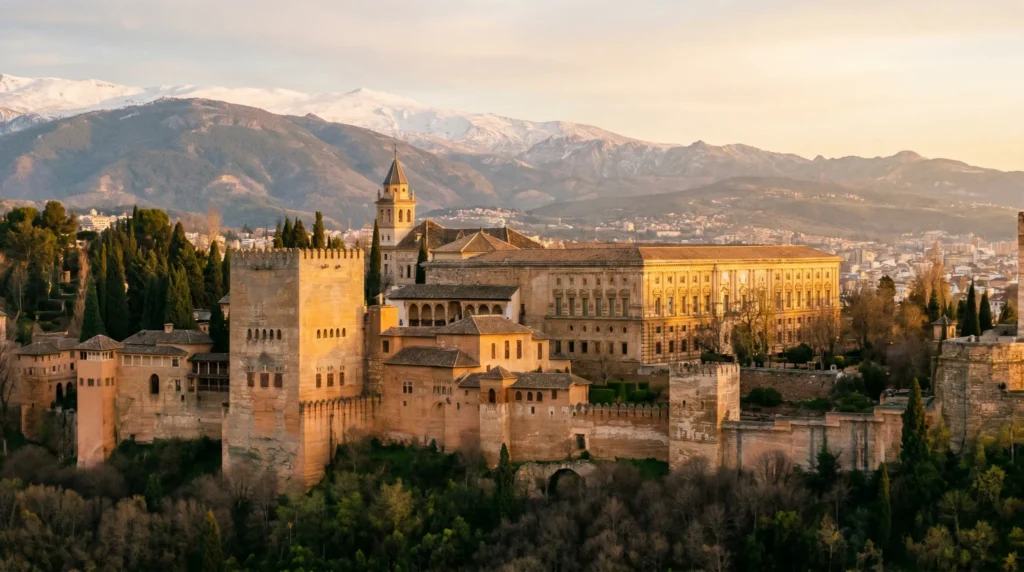
I have watched the sun set over the Alhambra from the Mirador de San Nicolás more times than I can count, and it still stops the conversation every single time. We tell first-time travellers that Granada is smaller than they expect — roughly 227,000 people inside the city, sitting at the foot of the Sierra Nevada at around 738 metres of altitude — yet it punches far above its size because it holds the single most-visited monument in Spain. My favourite Granada ritual is the cheap caña of beer that arrives with a free plate of food, because here, almost uniquely in Spain, tapas are still complimentary with every drink. Treat this guide as the brief I would hand my own family the night before they drove up from the coast: how to actually get an Alhambra timed ticket (they sell out weeks ahead), which Albaicín lanes to climb, where to find honest flamenco in the Sacromonte caves, and how to read the free-tapas game .

Table of Contents
Why Granada?
Granada is the place where Moorish Spain made its last stand, and the city has never quite stopped wearing that history on its surface. It was the capital of the Emirate of Granada, the final Muslim-ruled kingdom on the Iberian Peninsula, which surrendered to the Catholic Monarchs Ferdinand and Isabella on 2 January 1492 — the same year Columbus sailed . The city proper holds around 227,000 residents, with roughly half a million across the wider metropolitan area, and it sits at about 738 metres at the foot of the Sierra Nevada, the highest mountain range in mainland Spain . That altitude and that mountain shadow give Granada a sharper, more continental climate than the rest of Andalusia — genuinely cold winters, and snow visible from the city’s rooftops for much of the year.
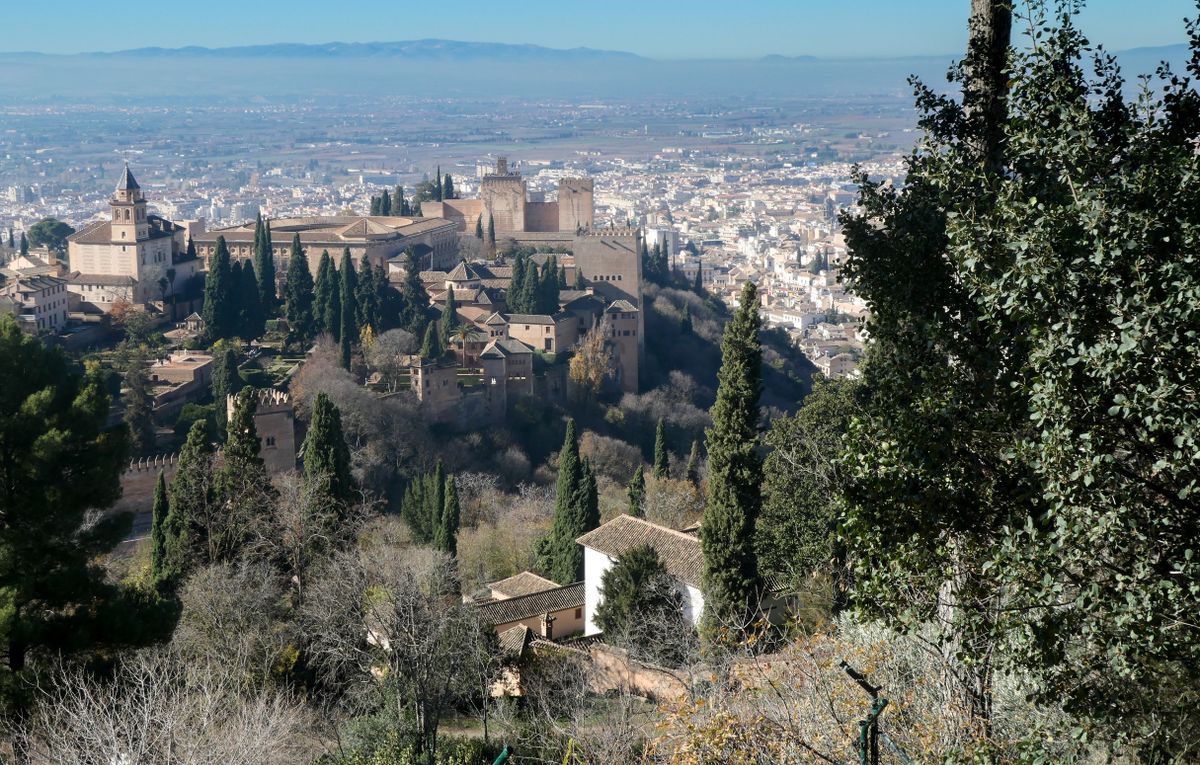
The reason most people come is one building. The Alhambra — a fortified complex of Nasrid palaces, the Generalife summer gardens and the older Alcazaba citadel — is the most-visited monument in all of Spain, drawing well over two million visitors a year, and was inscribed by UNESCO as a World Heritage Site in 1984 alongside the Generalife and the Albaicín quarter . But Granada is not a one-monument city. Facing the Alhambra across the Darro river valley is the Albaicín, the old Moorish quarter, a maze of whitewashed houses and stepped lanes that is itself part of the UNESCO listing. Above it again sprawls Sacromonte, the historic Roma neighbourhood of cave dwellings where flamenco’s zambra tradition still lives.
What makes Granada feel different from Seville or Córdoba is the layering of cultures pressed into a small, hilly footprint. Within a twenty-minute walk you pass from the Nasrid palaces to a Renaissance cathedral built to bury a Christian empire’s founders, to a market street whose name — the Alcaicería — still recalls the Moorish silk bazaar that once stood there, to a tea-house lane, the Caldería Nueva, that smells of mint and shisha. Add a huge, historic university that fills the city with students, cheap rents and a famously irreverent bar culture, and you get a place that is monumental and bohemian at the same time.
This guide covers the neighbourhoods you will actually walk — the Albaicín, Realejo, Sacromonte and the centre — the unmissable monument tier (the Alhambra and Generalife, the Cathedral and Royal Chapel, the Cartuja monastery), the free-tapas culture that genuinely sets Granada apart, the Sacromonte flamenco caves, and the day trips up into the Sierra Nevada and down to the coast that Granadinos take on weekends. It also covers the practical realities that trip up first-timers: Schengen rules, the brutal difficulty of getting an Alhambra ticket on short notice, and the surprisingly cold winters.
One orientation point worth fixing early: Granada is built on hills, and the views are the whole point. The classic move is to climb to the Mirador de San Nicolás in the Albaicín at sunset, when the Alhambra glows gold against the snow of the Sierra Nevada and the call of street musicians drifts across the valley. Front-load your Alhambra visit (with a ticket booked weeks ahead), surrender an evening to that viewpoint, and eat your way through the tapas bars in between, and a Granada trip stops feeling like a monument checklist and starts feeling like the city the poet Federico García Lorca grew up loving. For the wider Spanish context, this guide pairs with our Spain Travel Guide and the sibling Seville and Madrid city guides.
Getting There
Granada-Jaén Airport (GRX), about 15 kilometres west of the city near Chauchina, is small — it handled roughly 1.4 million passengers in 2024 — with mostly domestic links to Madrid, Barcelona, Palma and a handful of seasonal European routes . An airport bus runs into the centre in about 45 minutes for a few euros; a taxi is roughly €30. Many visitors instead fly into Málaga, about 1.5–2 hours away by bus or car, which has far more international flights.
Rail reached a turning point in 2019: the high-speed AVE now links Granada with Madrid in around 3 hours 15 minutes, and with Antequera, Córdoba and beyond, after the line was electrified and upgraded . Granada’s station sits about a 25-minute walk or short bus ride northwest of the centre. Advance AVE fares from Madrid start around €30.
By road, ALSA runs frequent intercity coaches from Madrid, Seville (about 3 hours), Córdoba, Málaga (about 1.5–2 hours) and the Costa del Sol into Granada’s main bus station northwest of the centre . Coaches are the cheapest option and often the most direct from elsewhere in Andalusia, where the rail network is thinner than the road one.
Getting Around
Granada’s historic core is compact and walkable, but it is emphatically not flat — the Albaicín and the Alhambra both sit on steep hills, and the lanes are cobbled, narrow and often stepped. Beyond walking, the city runs a single metro line, a network of red city buses including small minibuses built specifically for the old quarters, and the usual taxis . Most visitors walk inside the centre and use the little Albaicín and Alhambra buses to spare their knees on the hills.
The Metro
The Granada Metro — a light-rail line that opened on 21 September 2017 — runs about 16 kilometres across 26 stops, linking the western suburbs of Albolote and Maracena through the centre to Armilla in the south, and carries millions of riders a year . It is useful for reaching the train station, the university hospital and the southern suburbs, but it does not climb into the historic quarters, so for the Alhambra and Albaicín you are walking or taking a bus. A single fare is around €1.35–€1.50, cheaper with a rechargeable Credibus card.
City Buses and the Alhambra Minibuses
Transportes Rober runs the red city buses. The ones every visitor should know are the small microbuses: the C30 climbs to the Alhambra, the C31 loops through the Albaicín, the C32 connects the Albaicín and the Alhambra, and the C34 heads up to Sacromonte . These nimble little buses are purpose-built for the narrow lanes and save a punishing uphill walk. A single ride is roughly €1.40, and a rechargeable Credibus card brings it well below a euro per trip.
Walking the Hills
Walking is how you actually see Granada, but go in with realistic expectations about the terrain. The Cuesta de Gomeres up to the Alhambra and the Cuesta del Chapiz up into the Albaicín are steep, and the famous Carrera del Darro — the riverside lane below the Alhambra — is beautiful but cobbled and uneven. Wear proper shoes, not sandals, and budget extra time for the climbs. The reward is that almost every turn frames the Alhambra or the Sierra Nevada.
Airport Access
- Airport bus (Autocares José González) to the centre — about 45 minutes, roughly €3
- Taxi GRX to the historic centre — about 25 minutes, roughly €30 by day
Taxis and Rideshare
Licensed Granada taxis are white; fares are municipally regulated, and a typical cross-centre ride runs €6–€10. Taxis are the easiest way up to the Alhambra ticket office or down from a late Sacromonte show. App-based rideshare has only a limited presence in Granada, so the metered street taxi remains the reliable default. Carry small notes, though card payment is increasingly common.
Navigation Tips
The Albaicín’s medieval street plan will defeat your sense of direction within a block — lanes bend, climb, dead-end and rename themselves constantly. Google Maps handles Granada’s transit, but the single most useful trick is to navigate by the Alhambra itself, which is visible from most high points and always orients you across the Darro valley. Driving into the historic core is restricted and strongly discouraged; if you arrive by car, use a peripheral car park and walk in.
Neighbourhoods: Where to Base Yourself
Comparing the Albaicín with bases in Seville or Madrid? See our guide to where to stay in Spain.
📍 Granada Map: Every Place in This Guide
Granada’s character changes hill by hill, and choosing the right barrio shapes the whole trip. The historic core is compact — you can walk it end to end in under half an hour on the flat — but each quarter has its own rhythm, altitude and price point. Below are the neighbourhoods most first-time visitors actually consider, with an honest read on who each suits.


The Albaicín
The old Moorish quarter is the most atmospheric place to stay — whitewashed cármenes (walled villas with gardens), stepped lanes, and the Mirador de San Nicolás on your doorstep. It is also the steepest and the least convenient for luggage, since cars cannot reach most addresses. Stay here for romance and the sunset view; avoid it if you have mobility issues or heavy bags.
Realejo
The old Jewish quarter, on the slope below the Alhambra, is quieter and more residential than the centre, with good tapas bars, street art and the Campo del Príncipe square. It is an easy walk to both the Alhambra and the centre, with prices a little gentler than the Albaicín. A strong all-round first choice.
Centro and the Cathedral Quarter
The flat commercial heart around the Cathedral, the Alcaicería market street and Plaza Bib-Rambla is the most convenient base — central, well-connected, full of shops and tapas bars, and easiest for luggage. It lacks the postcard charm of the Albaicín but puts you minutes from everything and on the level.
Sacromonte and the University Quarter
Sacromonte, above the Albaicín, is the historic cave neighbourhood and the home of zambra flamenco — characterful but remote and steep for a base. The university area west of the centre is cheap, lively and young, full of late-opening student bars; good value if nightlife matters more than monuments being on your doorstep.
Food and Drink: The Free Tapas Capital
Granada’s single most beloved tradition is the free tapa — order a drink in most bars here and a plate of food arrives with it at no extra cost, a custom that has largely died out elsewhere in Spain but thrives in Granada . The game is to bar-hop: a couple of drinks across two or three bars, and you have effectively eaten dinner. The tapas get more generous as the evening goes on, and the best bars rotate what they serve so you cannot pick your plate.
What to Order
- Habas con jamón — broad beans fried with cured ham, a Granada classic.
- Tortilla del Sacromonte — a hearty omelette traditionally made with offal, named for the cave quarter.
- Remojón granadino — an orange, salt cod and olive salad, Moorish in its roots.
- Pescaíto frito — lightly floured, flash-fried fish, the Andalusian staple.
- Piononos — small syrup-soaked sponge pastries from nearby Santa Fe, the local sweet.
Where to Eat
Calle Navas and the streets around Plaza del Carmen hold the densest free-tapas runs; the Realejo and the area around Calle Elvira are the best mix of quality and atmosphere. For Moroccan-style mint tea and pastries, the Caldería Nueva teahouse lane behind Calle Elvira is a sensory experience in itself. The covered San Agustín market near the Cathedral is good for browsing produce and grazing.
Timing and Etiquette
Lunch peaks around 2–4pm and dinner rarely starts before 9pm. With free tapas, you do not order food separately at the bar — you simply order drinks and the kitchen sends out plates. A caña is a small draught beer; a tinto de verano is the locals’ summer wine-and-soda. Tipping is light — rounding up is plenty. Standing at the bar is both cheaper and where the tapas flow most generously.
Cultural Sights: The Alhambra and Beyond
Granada’s UNESCO World Heritage listing — inscribed in 1984 and extended in 1994 — covers the Alhambra, the Generalife and the Albaicín quarter as a single ensemble . Add the Cathedral, the Royal Chapel and the Cartuja monastery and you have two full days of sightseeing within a compact, if hilly, footprint.

The Alhambra and Generalife
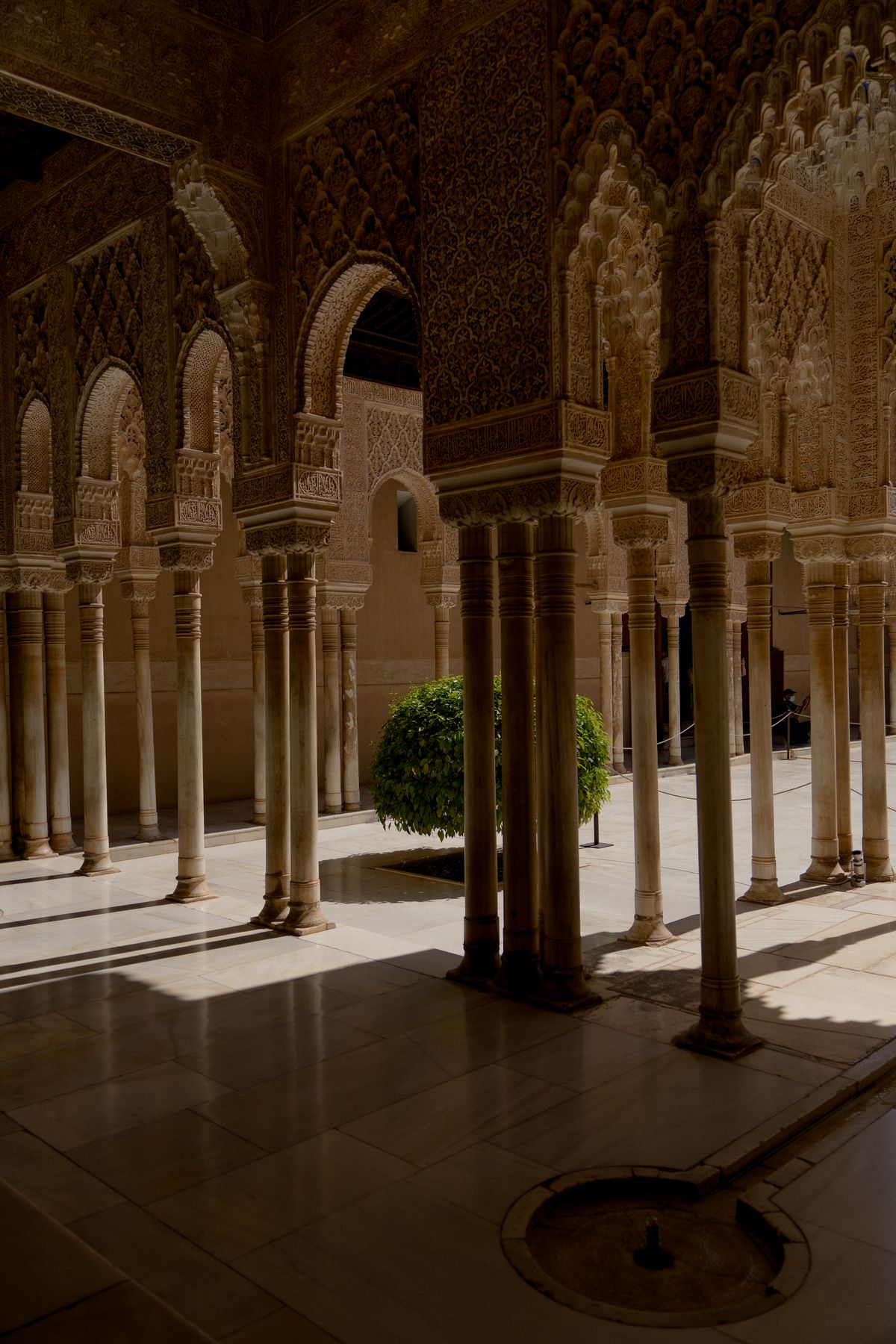
The Alhambra is the reason Granada exists on every traveller’s list. Built largely by the Nasrid dynasty in the 13th and 14th centuries, it combines the military Alcazaba, the exquisite Nasrid Palaces — including the Court of the Lions with its alabaster fountain — and the Generalife, the sultans’ summer estate with its terraced gardens and water channels . Crucially, entry to the Nasrid Palaces is by a strict timed slot, and the whole complex sells a capped number of daily tickets that routinely sell out weeks ahead.
Granada Cathedral and the Royal Chapel

In the flat centre, the Renaissance Granada Cathedral — begun in 1523 on the site of the city’s main mosque — is one of the great Spanish cathedrals, with a soaring white interior. Attached to it, the Royal Chapel (Capilla Real) holds the tombs of the Catholic Monarchs Ferdinand and Isabella, who chose to be buried in the city that completed the Reconquista . The two are visited together and sit beside the Alcaicería market street.
The Albaicín and Mirador de San Nicolás

The Albaicín is a sight in itself: a UNESCO-listed quarter of whitewashed lanes climbing the hill opposite the Alhambra. Its crown is the Mirador de San Nicolás, the viewpoint that frames the Alhambra against the Sierra Nevada and fills with travellers, buskers and the smell of incense at sunset. Wander the Carrera del Darro below, one of the prettiest streets in Spain, on your way up .
The Cartuja and Sacromonte Abbey

For a quieter half-day, the Monasterio de la Cartuja, northwest of the centre, hides one of the most extravagant Baroque interiors in Spain behind a plain facade. Higher up, the Abadía del Sacromonte sits above the cave quarter with sweeping views. Both reward visitors who have already done the headline monuments and want to escape the Alhambra crowds .
Flamenco, Caves and Nightlife
Granada’s flamenco is its own dialect — the zambra, a Roma wedding-dance tradition that grew in the Sacromonte caves and is unique to the city. Flamenco as a whole was inscribed by UNESCO on its Representative List of the Intangible Cultural Heritage of Humanity on 16 November 2010 . Between the cave shows and the student bars of the university quarter, Granada stays up far later than its monument hours suggest.
Zambra in the Sacromonte Caves

The Sacromonte caves — whitewashed dwellings dug into the hillside above the Albaicín — are the home of the zambra. Several historic cuevas stage nightly shows; for the most authentic experience, choose a long-running family-run cave over a bus-tour spectacle, and go for the dancing rather than the dinner. The intimacy of a cave a few metres wide makes even a touristic show electric.
Tablaos and Peñas
Beyond Sacromonte, the Albaicín and centre hold polished tablao venues that stage a serious, musically honest hour of song and guitar. Purists seek out a peña flamenca — a members’ club that occasionally admits visitors — for the unvarnished real thing. Either way, avoid the dinner-and-sangria spectacles that prioritise the meal over the music.
Student Nightlife
Granada’s huge university gives it one of the youngest, cheapest nightlife scenes in Spain. The streets around Calle Pedro Antonio de Alarcón and the Realejo fill with students from late evening; many bars still pour generous free tapas with every drink, so a night out doubles as dinner. The mood is informal and unpretentious — this is a city that drinks well on a budget.
Day Trips From Granada
Granada is wedged between Spain’s highest mountains and its sunny southern coast, which gives it an unusual range of day trips — you can ski in the morning and reach the Mediterranean by afternoon in the right season. If you have more than two days, give one to the Sierra Nevada or the coast.
Sierra Nevada

The Sierra Nevada is mainland Spain’s highest range, topping out at Mulhacén (3,479 metres), and home to mainland Spain’s southernmost ski resort, about 45 minutes by road from the city . In winter it is a ski day trip; in summer it is hiking, with high trails to glacial lakes and peaks. A bus runs from Granada’s bus station up to the resort village of Pradollano in ski season.
Las Alpujarras
The white villages of the Alpujarras — Pampaneira, Bubión and Capileira among them — cling to the southern slopes of the Sierra Nevada about an hour and a half away, with terraced fields, mountain ham and a slower, older Andalusia. They are best with a hire car, though buses reach the main villages.
The Coast: Costa Tropical
Granada province has its own short Mediterranean coastline, the Costa Tropical around Almuñécar and Salobreña, about an hour south by bus or car — quieter, more Spanish beaches than the Costa del Sol’s resort strip.
Córdoba
Córdoba and its great mosque-cathedral, the Mezquita, are reachable in around two hours by bus or train, making a long day return possible for travellers who want to pair Granada’s Alhambra with Andalusia’s other Moorish masterpiece .
When to Visit: A Season-by-Season Guide
Granada’s altitude and its mountain backdrop give it a more extreme climate than coastal Andalusia — hotter summer afternoons, genuinely cold winters, and a ski season most of the region never sees. Here is how the year actually feels on the ground.
Spring (March–May)
Arguably the best season: mild days, the Sierra Nevada still snow-capped behind the city, and the gardens of the Generalife and the Albaicín cármenes coming into bloom. Temperatures sit in the high teens to mid-20s°C. It is also a popular season, so book the Alhambra and rooms well ahead, especially around Easter.
Summer (June–August)
Hot — afternoon highs regularly reach the mid-30s°C, hotter than the coast because of the inland basin — but the dry mountain air cools sharply at night. Sightsee early, retreat through the afternoon, and use the evening, when the Albaicín and tapas bars come alive. Hotels are at their cheapest, and the Sierra Nevada offers a cool high-altitude escape.
Autumn (September–November)
A superb time: the summer heat breaks into warm, clear days, the crowds thin, and prices ease. October in particular gives warm afternoons, crisp evenings and uncrowded monuments — arguably the ideal month to visit if you are flexible.
Winter (December–February)
Cold by Spanish standards — daytime highs of 10–13°C, frosty nights, and snow on the peaks — but with the lowest prices, thinnest crowds, and the bonus of the Sierra Nevada ski season 45 minutes away. The Alhambra under a dusting of snow with no queue is one of Spain’s great low-season experiences. Bring real winter clothes.
Budget Breakdown: What Granada Actually Costs
Granada is one of the best-value cities in Spain, helped enormously by the free-tapas culture that can keep your food bill close to zero. The figures below are per-person daily estimates excluding flights, in euros, based on 2025–2026 prices.
Backpacker (€45–70/day)
A hostel dorm bed runs €15–25; with free tapas, two or three drinks across the evening effectively cover dinner, so food can stay under €15; the old town is free to walk. Budget the Alhambra ticket and you stay comfortably under €70.
Mid-Range (€100–170/day)
A three-star hotel or central apartment is €60–110 for a double; add €25–45 for restaurant meals beyond the free tapas, monument tickets and the occasional taxi or flamenco show. This is the typical comfortable-tourist band.
Luxury (€300+/day)
A four- or five-star room such as a parador or an Alhambra-view hotel runs €200–450+, fine dining adds €70–130, and private Alhambra guides and premium experiences push the day past €300.
Key Fixed Costs
- Alhambra general (Nasrid Palaces, Generalife, Alcazaba) — about €19.09
- Cathedral and Royal Chapel — about €6–€8 combined
- Sacromonte flamenco show — about €25–€35
- Single bus/metro fare — about €1.40
- Airport bus to centre — about €3
Practical Tips and Safety
Granada is a safe, easy and friendly city for visitors, but a handful of practical habits make the difference between a smooth trip and an avoidable headache — chief among them, sorting your Alhambra ticket before you arrive.
Booking the Alhambra
This is the one thing you cannot improvise. The Alhambra caps daily visitors and sells timed Nasrid Palaces slots that routinely sell out two to four weeks ahead in season. Book on the official site the moment your dates are set, bring the named cardholder’s ID and passport, and arrive early for the security check .
Money and Payments
Spain uses the euro; cards are accepted almost everywhere, but small tapas bars and markets still prefer cash for low-value orders, so carry €20–30 in small notes. ATMs are plentiful; avoid the standalone “Euronet” machines, which apply poor exchange rates, in favour of bank ATMs.
Safety and Scams
Violent crime is rare; the realistic risks are pickpocketing in crowds around the Alhambra and the Cathedral, and the “rosemary sprig” women near the Cathedral who press herbs on you and then demand payment. Use a zipped bag worn to the front. The UK and US governments rate Spain a low-risk destination overall .
Practical Essentials
- Language: Spanish; English is common in tourist areas, less so in neighbourhood bars.
- Plugs: Type C/F, 230V — bring an EU adapter.
- Tipping: not expected; rounding up is plenty.
- Footwear: the Albaicín and Alhambra are steep and cobbled — wear real shoes.
- Winters: genuinely cold — pack layers from November to March.
Frequently Asked Questions
How many days do you need in Granada?
Two to three full days is the sweet spot: one for the Alhambra and Generalife; one for the Albaicín, the Cathedral and Royal Chapel, and a Sacromonte flamenco evening; and a third for a Sierra Nevada or coast day trip. Two days covers the essentials at a rush; three lets you slow to the city’s pace.
How do I get tickets to the Alhambra?
Book online through the official Alhambra ticket site as early as you can — the timed Nasrid Palaces slots routinely sell out two to four weeks ahead in season. Bring the passport or ID matching the booking name. If official tickets are gone, a guided tour that includes entry is the only fallback, at a higher price .
What is the best time of year to visit Granada?
Late April–June and September–October offer the best balance of mild weather, the Sierra Nevada still scenic, manageable crowds and reasonable prices. Summer is hot in the afternoons but cool at night and cheapest; winter is genuinely cold but quiet, low-priced and offers nearby skiing.
Is Granada expensive?
No — it is one of the best-value cities in Spain, helped hugely by the free-tapas tradition, where a plate of food comes with every drink. A mid-range trip runs roughly €100–170 per person per day excluding flights, and backpackers can manage on €45–70.
Are tapas really free in Granada?
Yes — in most traditional bars, a free tapa arrives with every drink you order, a custom that has largely vanished elsewhere in Spain but thrives here. You order drinks, not food, and the kitchen sends out plates; the tapas often get more generous as the night goes on. Stand at the bar for the best of it.
What is the Albaicín and is it worth visiting?
The Albaicín is Granada’s old Moorish quarter, a UNESCO-listed maze of whitewashed lanes on the hill facing the Alhambra. It is absolutely worth it — climb to the Mirador de San Nicolás at sunset for the classic view of the Alhambra against the Sierra Nevada. Wear good shoes; the lanes are steep and cobbled.
Can I see flamenco in the Sacromonte caves?
Yes. Sacromonte, the historic cave neighbourhood above the Albaicín, is the home of Granada’s zambra flamenco, and several long-running caves stage nightly shows. Book directly with an established cueva, skip the optional dinner, and go for the dancing — the intimacy of a cave makes it unforgettable.
Is Granada walkable, or do I need public transport?
The flat centre is very walkable, but Granada is hilly — the Albaicín and the Alhambra both involve steep climbs. Most visitors walk in the centre and use the little C30, C31 and C32 microbuses to spare their legs on the hills. The metro is useful for the train station and suburbs but not the historic quarters.
Is Granada safe for tourists?
Yes, very. Violent crime is rare and the main risk is pickpocketing in tourist crowds. Both the UK and US governments rate Spain a low-risk destination. Take the usual precautions with bags around the Alhambra and Cathedral, and watch for the rosemary-sprig scam near the Cathedral.
Was This Guide Helpful?
We update our Granada guide as prices, transit and Alhambra ticketing change. Let us know if it helped — your feedback shapes the next revision.
Ready to Experience Granada? Climb for the View
Granada rewards a traveller who looks up. Its great monument — the Alhambra — is world-class, but the city’s real magic is in the in-between: the whitewashed climb through the Albaicín, a free tapa with a cold caña, a zambra in a Sacromonte cave, the Sierra Nevada catching the last light from the Mirador de San Nicolás. Book the Alhambra first, then leave room to get lost in the hills. For the wider picture, see our Spain travel guide, and pair Granada with Seville and Barcelona for a complete Andalusian and Iberian trip.
Explore More City Guides
Granada is one stop in our growing library of Iberian and European city guides. Keep planning with these companion pages:
More city guides you might like
Plan your trip to Granada
The booking tools we use ourselves. FFU may earn a commission at no extra cost to you.
Plan & book your trip to Granada
Booking through these searches supports our guides at no extra cost to you.