
Kyoto, Japan: The Thousand-Year Capital of Temples, Gardens, and Geisha
Part of our Japan travel guide.
Kyoto City Guide
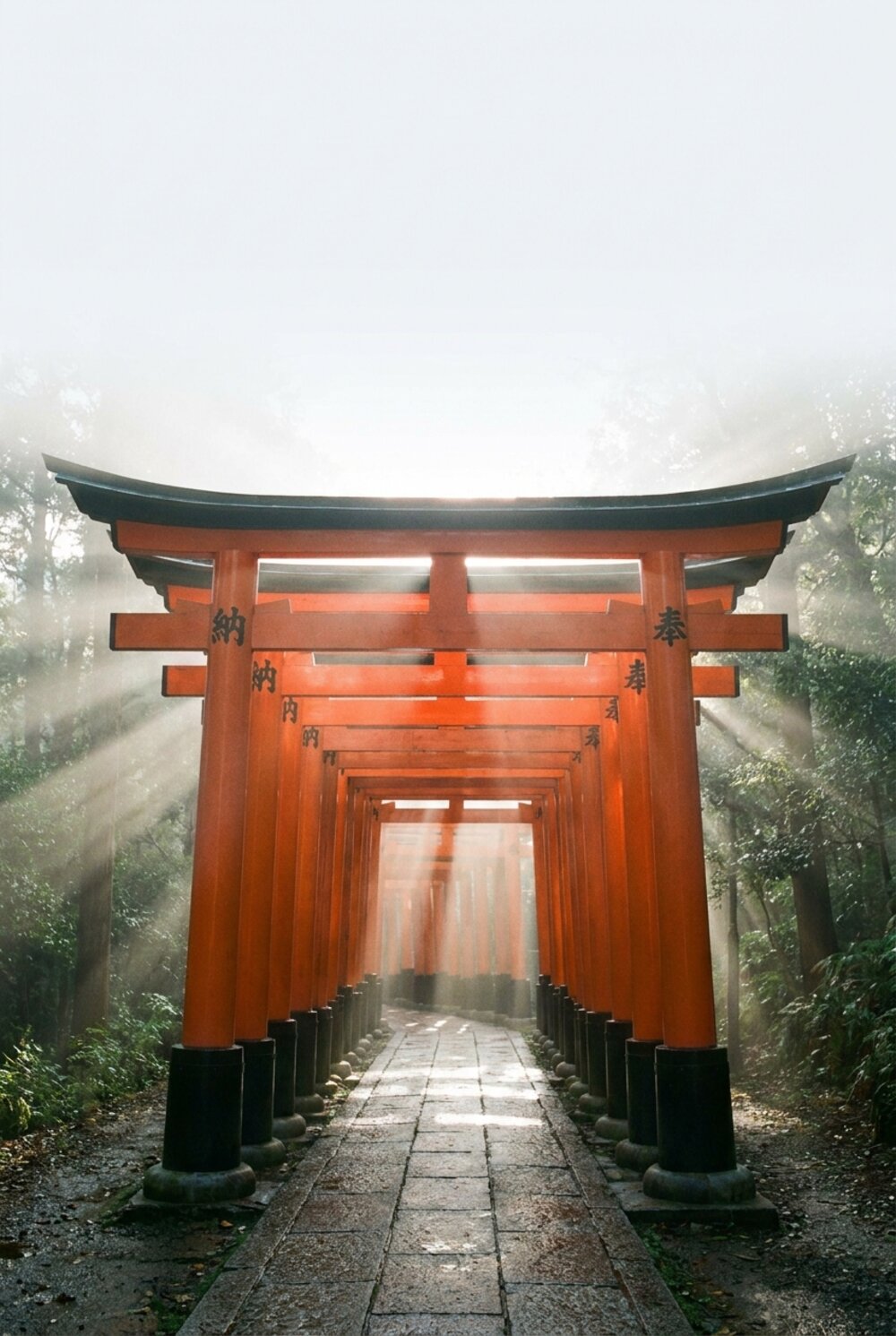
Table of Contents
Why Kyoto?
Kyoto served as the imperial capital of Japan from 794 to 1868, a stretch of more than a thousand years that concentrated the country’s religious, aesthetic, and political culture into a single grid-planned basin at the eastern edge of the Kansai region. The city holds roughly 1.46 million residents in 2024 and spans 827 square kilometres across eleven wards, hemmed in by forested mountains on three sides and threaded by the Kamo and Katsura rivers. The result is a mid-sized Japanese city with an unusually high density of designated cultural assets and one of the most legible historical street plans in East Asia.
The numbers point to that density. Kyoto contains more than 2,000 registered temples and shrines within its municipal boundary, and the Historic Monuments of Ancient Kyoto were inscribed on the UNESCO World Heritage List in 1994 as a single serial property covering 17 component sites across the city and its immediate periphery. Those 17 sites include Kinkaku-ji, Ginkaku-ji, Kiyomizu-dera, Ryoan-ji, Nijo Castle, the Kamigamo and Shimogamo shrines, and Daigo-ji, among others.
The contrasts are what give the city its character. Five geisha districts (hanamachi) continue to operate in Gion, Pontocho, Miyagawa-cho, Kamishichiken, and Gion Higashi, while the Michelin Guide Kyoto awards starred recognition to kaiseki counters, tofu specialists, and tempura rooms across the city. A Zen rock garden at Ryoan-ji sits on the same bus line as a neon arcade in Kawaramachi; the Arashiyama bamboo grove is a fifteen-minute train ride from the Kyoto Tower observation deck.
Kyoto also functions as the most efficient base for exploring the wider Kansai region. Osaka sits 15 minutes away by Tokaido Shinkansen, Nara is 45 minutes by JR Nara Line, and Himeji Castle is reachable in 90 minutes. The Kansai International Airport (KIX) connects to Kyoto Station in about 75 minutes via the Haruka limited express.
As a destination, Kyoto rewards both first-time visitors and returning travellers. First-timers can cover the headline UNESCO temples, Gion, Arashiyama, and Fushimi Inari across a 3–5 day trip without leaving the city-bus fare zone; returning visitors can spend a full week exploring northern Ohara, the Kurama mountain shrines, the Kitayama cedar villages, and the 100+ smaller sub-temples at Daitoku-ji, Myoshin-ji, and Tofuku-ji that do not appear on standard itineraries. Kyoto’s pace is notably calmer than Tokyo’s: the city winds down by 22:00, temple gardens close by 17:00, and early-morning dawn walks at Fushimi Inari or Kiyomizu-dera regularly deliver the quietest cultural experiences available in urban Japan.
This guide covers the nine neighborhoods that anchor the city, the kaiseki, tofu, and matcha traditions behind Kyoto’s food reputation, the UNESCO temples and gardens that define its cultural calendar, the five day trips that make Kyoto a base camp for Kansai, and the transit, budget, and etiquette details that matter most on arrival at Kansai International Airport or Itami.
Neighborhoods: Finding Your Kyoto
Weighing Kyoto against Tokyo or Osaka as a base? Our guide to where to stay in Japan breaks down the best neighbourhoods in each.
📍 Kyoto Map: Every Place in This Guide
Kyoto is organised on a grid derived from the 8th-century Heian-kyo plan, which makes the city unusually easy to navigate once the cardinal directions are oriented. The core sights cluster along the eastern hills (Higashiyama) and the north-west (Arashiyama and Kinkaku-ji), with the flat downtown (Kawaramachi, Pontocho, Nishiki) running north-south through the centre. The nine neighborhoods below cover the widest spread of traveller priorities, from first-time temple itineraries to quiet residential walks and geisha-district evenings. A base near Kyoto Station, Shijo-Kawaramachi, or Gion puts any of them within 20–30 minutes by bus or subway.
Gion
Gion is Kyoto’s most famous geisha district and the heart of the eastern bank of the Kamo River. The narrow streets of Hanamikoji and Shirakawa preserve the wooden machiya townhouses, lantern-lit ochaya (tea houses), and traditional restaurants that have housed geiko and maiko performances for more than four hundred years. A typical early-evening walk between 17:30 and 18:30 along Hanamikoji offers the best odds of spotting a geiko or maiko walking between appointments, though photography on the private alleys has been restricted by signage since 2024 with fines of up to ¥10,000 (~$67) for violations on posted side streets. Yasaka Shrine anchors the eastern end of Gion at the base of Higashiyama; the shrine is free and open 24 hours. Kennin-ji, Kyoto’s oldest Zen temple founded in 1202, sits a short walk south of Hanamikoji.
- Hanamikoji and Shirakawa geisha-district streets
- Yasaka Shrine and the Gion Matsuri central stage
- Kennin-ji Temple (founded 1202)
- Minamiza Kabuki Theatre on Shijo-dori
- Ishibei-koji stone-paved lane
Best for: traditional culture and evening strolls. Access: Gion-Shijo Station (Keihan Main Line) or Kawaramachi Station (Hankyu Kyoto Line).
Arashiyama
Arashiyama is Kyoto’s north-western riverside district, reached in 15 minutes by JR Sagano Line from Kyoto Station. The area centres on the Togetsukyo Bridge across the Hozu River and the Arashiyama Bamboo Grove, a 500-metre pedestrian path beneath twenty-metre-high stalks. Tenryu-ji, a UNESCO-listed Zen temple founded in 1339, borders the grove with a celebrated pond garden designed by Muso Soseki; admission is ¥500 (~$3.30) for the garden and ¥800 (~$5.30) with the main hall. The Sagano Scenic Railway runs a 25-minute open-window train ride along the Hozu River gorge from April through December at ¥880 (~$5.90) one way. The quieter Arashiyama Monkey Park Iwatayama, a twenty-minute climb, houses a troop of roughly 120 wild Japanese macaques and offers a panoramic view back toward Kyoto.
- Arashiyama Bamboo Grove (500-metre path)
- Togetsukyo (“Moon-Crossing”) Bridge over the Hozu River
- Tenryu-ji Temple and Sogenchi Pond Garden (UNESCO)
- Sagano Scenic Railway through the Hozu Gorge
- Okochi Sanso villa and garden (¥1,000 / ~$6.70)
Best for: scenic day walks and temple-and-nature combinations. Access: Saga-Arashiyama Station (JR Sagano Line) or Arashiyama Station (Randen Keifuku tram).
Higashiyama
Higashiyama covers the eastern foothills between Gion and Kiyomizu-dera and holds the single densest concentration of temples, shrines, and preserved streetscapes in Kyoto. The walking route from Yasaka Shrine south through the Ninen-zaka and Sannen-zaka stone-stepped lanes to Kiyomizu-dera runs roughly two kilometres and takes three to four hours with stops. Kiyomizu-dera, founded in 778 and rebuilt in 1633 by the Tokugawa shogunate, charges ¥500 (~$3.30) for adult admission and opens 06:00–18:00 daily. The main hall’s wooden stage projects 13 metres over the hillside and is assembled without a single nail. Kodai-ji (founded 1606) and the small Ryozen Kannon memorial statue sit along the same corridor.
- Kiyomizu-dera Temple (UNESCO, founded 778)
- Ninen-zaka and Sannen-zaka stone-stepped lanes
- Yasaka Pagoda (Hokan-ji)
- Kodai-ji Temple and its night-illumination programme
- Maruyama Park (central hanami viewing site)
Best for: first-time sightseeing and temple-corridor walks. Access: Kiyomizu-Gojo Station (Keihan Main Line) or Higashiyama-Yasui bus stop (Kyoto City Bus).
Kinkaku-ji Area (Kita-ku)
The Kinkaku-ji area covers the north-western quadrant of the city and pairs the Golden Pavilion with two of Kyoto’s best-known Zen rock gardens. Kinkaku-ji (the Temple of the Golden Pavilion), originally built in 1397 as a retirement villa for Shogun Ashikaga Yoshimitsu and burned and rebuilt in 1955, is covered in gold leaf across its top two stories and charges ¥500 (~$3.30) admission, open 09:00–17:00 daily. Ryoan-ji, a twenty-minute walk south-west, contains Japan’s most-photographed karesansui (dry-landscape) rock garden with 15 stones arranged so that at least one is always hidden from any vantage point; admission is ¥600 (~$4). Ninna-ji, a further ten minutes west, is UNESCO-listed and free for the outer grounds with paid halls.
- Kinkaku-ji (Golden Pavilion, UNESCO)
- Ryoan-ji rock garden (UNESCO)
- Ninna-ji Temple and five-storey pagoda (UNESCO)
- Daitoku-ji temple complex (24 sub-temples)
- Kitano Tenmangu Shrine and its plum grove
Best for: Zen gardens and iconic photography stops. Access: Kinkakuji-michi bus stop (Kyoto City Bus 101, 102, 204, 205).
Fushimi Inari & Southern Kyoto
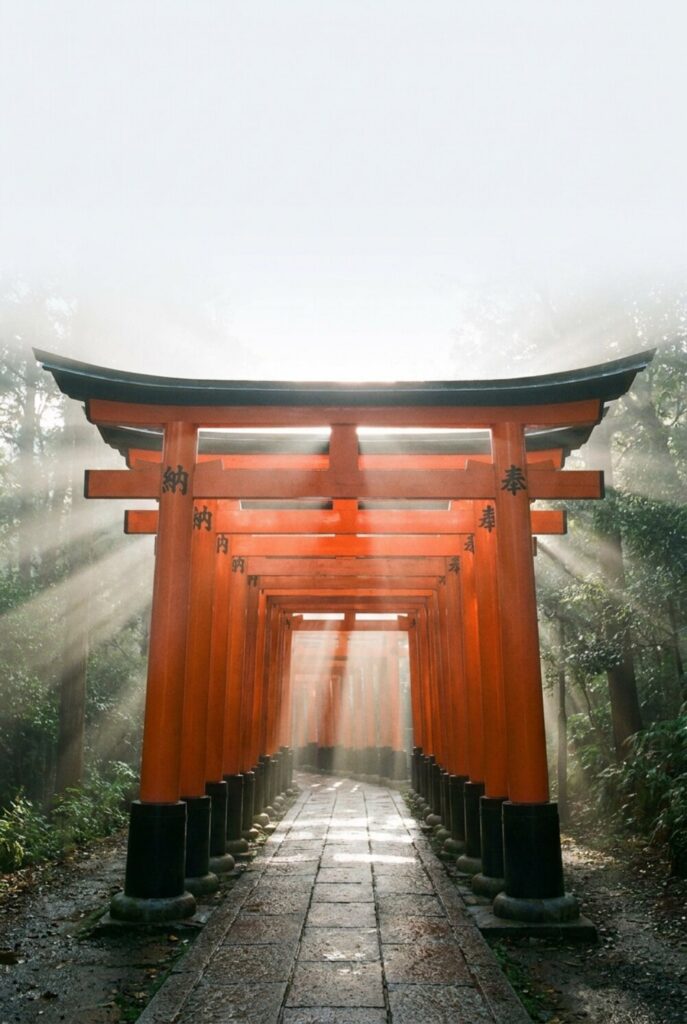
Fushimi Inari Taisha, two stops south of Kyoto Station on the JR Nara Line, is the head shrine of Inari, the Shinto deity of rice and commerce, and is free and open 24 hours. More than 10,000 vermilion torii gates line the 4-kilometre uphill circuit to the summit of Mount Inari (233 metres); the full loop takes two to three hours at a moderate pace. Pre-dawn visits (roughly 05:00–07:00) are the single most-recommended timing for a relatively empty torii tunnel. The surrounding Fushimi district, another 10 minutes south by Keihan Line, is the largest sake-brewing cluster in Japan after Kobe’s Nada, with more than 40 breweries including Gekkeikan and Kizakura operating cellar tours and tasting rooms at ¥500–1,500 (~$3.30–10). The Gekkeikan Okura Sake Museum charges ¥600 (~$4) and opens 09:30–16:30 (closed Mondays).
- Fushimi Inari Taisha and 10,000+ torii gate corridor
- Mount Inari summit circuit (4 km, 2–3 hours)
- Gekkeikan Okura Sake Museum
- Fushimi Sake District brewery tastings
- Tofuku-ji Temple (UNESCO, famous for autumn foliage)
Best for: dawn photography and sake-district sampling. Access: Inari Station (JR Nara Line) or Fushimi-Inari Station (Keihan Main Line).
Downtown (Kawaramachi & Pontocho)
Kyoto’s downtown runs along Shijo-dori between the Kamo River and Karasuma-dori, with Kawaramachi as its retail spine and the narrow Pontocho alley as its most atmospheric dining lane. Pontocho is a 500-metre single-lane strip running parallel to the Kamo River between Shijo-dori and Sanjo-dori and concentrates more than 130 bars, kaiseki restaurants, and yakitori counters behind traditional lantern-lit facades. From May through September, restaurants along the eastern side open their kawayuka river-platforms over the Kamo River, a Kyoto summer tradition in effect for more than four hundred years. Nishiki Market, a 400-metre covered arcade three blocks north, has operated continuously as Kyoto’s central food market for roughly four hundred years and houses more than 120 specialist stalls.
- Nishiki Market (Kyoto’s Kitchen)
- Pontocho dining alley and Kamo-gawa river platforms
- Kawaramachi shopping grid and Teramachi-dori arcade
- Minamiza Kabuki Theatre (at Shijo Ohashi bridge)
- Kamo River pedestrian path (Kamogawa)
Best for: food, bars, and late-evening atmosphere. Access: Kawaramachi Station (Hankyu Kyoto Line) or Sanjo Station (Keihan Main Line).
Philosopher’s Path & Okazaki
The Philosopher’s Path (Tetsugaku-no-michi) is a 2-kilometre canal-side walkway running north from Nanzen-ji to Ginkaku-ji, named after the Kyoto University philosopher Nishida Kitaro (1870–1945) who reportedly used it for daily meditation. Cherry trees line the canal for most of its length, making the path one of the city’s most popular hanami corridors in late March and early April. Ginkaku-ji (the Silver Pavilion), despite its name, was never coated in silver and is famous instead for its moss gardens and raked-sand “Sea of Silver Sand”; admission is ¥500 (~$3.30). Nanzen-ji at the southern end is free to enter for most grounds, with its massive 22-metre Sanmon gate ascent at ¥600 (~$4). The adjacent Okazaki district holds the Kyoto City Zoo, the Heian Shrine’s towering torii, and the National Museum of Modern Art Kyoto.
- Ginkaku-ji (Silver Pavilion, UNESCO)
- Nanzen-ji Temple and Sanmon gate
- Philosopher’s Path canal walk (2 km)
- Heian Shrine and 24-metre vermilion torii
- Kyoto National Museum of Modern Art (¥430 / ~$2.90)
Best for: cherry-blossom walks and Zen gardens. Access: Keage Station (Tozai Subway) or Ginkakuji-michi bus stop.
Nishijin
Nishijin is Kyoto’s traditional textile district, occupying roughly one square kilometre north-west of the Imperial Palace and known for more than five hundred years as the source of Nishijin-ori silk brocades used in kimono and ceremonial garments. The district preserves narrow residential lanes of low machiya townhouses, several weaving workshops open to the public, and the Nishijin Textile Center, which hosts free daily kimono fashion shows (6–7 shows per day, 10:00–16:00) and operates weaving-demonstration stations. Kamigoryo Shrine, one of Kyoto’s oldest (founded 794), sits at the eastern edge of the district. Funaoka Onsen, a 1923 sento (public bath) with carved wooden changing-room panels, offers non-members an entry fee of ¥490 (~$3.30) and is open 15:00–01:00.
- Nishijin Textile Center (free kimono shows)
- Nishijin machiya townhouse streets
- Kamigoryo Shrine (founded 794)
- Funaoka Onsen (1923 traditional sento)
- Raku Museum (ceramics, ¥1,100 / ~$7.30)
Best for: textile culture and quiet residential walks. Access: Imadegawa Station (Karasuma Subway) or Nishijin bus stop (Kyoto City Bus 206).
Kamigyo & Imperial Palace
Kamigyo Ward contains the Kyoto Imperial Palace (Kyoto Gosho) and its surrounding 92-hectare Kyoto Imperial Park (Kyoto Gyoen), the former seat of the imperial family until the 1869 relocation to Tokyo. The palace grounds are free, open 09:00–17:00 from April to August (shorter in winter), and closed Mondays. Entry no longer requires advance application since 2016; a passport and security screen at the Seisho-mon Gate is sufficient. The surrounding park is free and popular for early-April plum and cherry blossoms. Sento Imperial Palace, immediately adjacent, operates on a reservation-only basis with free tours four times daily. The district also holds the Kyoto International Manga Museum (¥900 / ~$6) with a 200,000-volume collection spread across converted school-building halls.
- Kyoto Imperial Palace (Kyoto Gosho, free)
- Kyoto Imperial Park (Kyoto Gyoen, 92 hectares)
- Sento Imperial Palace (reservation tours)
- Shimogamo Shrine (UNESCO, northern park edge)
- Kyoto International Manga Museum
Best for: imperial history and uncrowded walks. Access: Imadegawa or Marutamachi Station (Karasuma Subway).
The Food
Kyoto’s food culture is anchored on vegetarian temple cuisine, multi-course kaiseki, seasonal tofu dishes, and a matcha tradition dating to the 12th century. The city is covered by the Michelin Guide Kyoto, which awards starred recognition across kaiseki, sushi, tempura, and tofu specialists. Prices span from ¥500 (~$3.30) stand-up Nishiki Market skewers to ¥60,000+ (~$400+) three-starred kaiseki dinners. Kyoto cuisine (Kyo-ryori) privileges seasonality, restraint, and vegetable-forward presentation over rich protein; most signature dishes rely on dashi (kombu-bonito stock), soy sauce, and local vegetables such as Kyo-yasai heirloom varieties. The categories below cover the city’s two headline cuisines (kaiseki and tofu), a broader sample of specialities, and four formats distinctive to Kyoto.
Kaiseki (Multi-Course Haute Cuisine)
Kaiseki is Kyoto’s signature fine-dining format, developed from 16th-century tea-ceremony meals (cha-kaiseki) and refined over four hundred years into the reference standard for Japanese haute cuisine. A formal kaiseki dinner runs 8 to 14 courses, each using seasonal ingredients and emphasising the visual composition of the dish as much as its flavour. The canonical course order moves from a light sakizuke appetiser through seasonal sashimi (mukozuke), a simmered nimono, a grilled yakimono, a vinegared sunomono, and closes with rice, pickles, miso soup, and a small sweet. Representative Kyoto kaiseki venues include three-starred ryotei in historic wooden machiya settings and smaller counter alternatives where the chef plates each dish directly in front of the guest. Lunch kaiseki (typically 6–8 courses) is routinely priced at one third to one half of the dinner equivalent and is the most cost-effective entry point for first-time visitors. Dress code at higher-end ryotei leans smart-casual; jackets are not required but shorts and sandals are not accepted.
- Kikunoi Honten (Higashiyama) — three-Michelin-starred ryotei, dinner kaiseki ¥25,000–35,000 (~$167–233), lunch from ¥12,000 (~$80).
- Gion Sasaki (Gion) — three-Michelin-starred counter kaiseki, reservations typically 2–3 months ahead, dinner ¥40,000+ (~$267+).
- Hyotei (Nanzen-ji) — three-Michelin-starred 400-year-old ryotei, famous for Hyotei-tamago breakfast set ¥6,600 (~$44) on weekends, dinner ¥30,000+ (~$200+).
- Ogata (Nakagyo) — two-Michelin-starred modern kaiseki counter, dinner ¥30,000 (~$200).
- Roan Kikunoi (Pontocho) — one-Michelin-starred sister restaurant to Kikunoi Honten, lunch from ¥6,500 (~$43), dinner ¥16,000–22,000 (~$107–147).
- Menami (Kiyamachi) — obanzai-style Kyoto home cooking as a casual kaiseki alternative, set dinner ¥3,500–5,000 (~$23–33).
Tofu & Buddhist Vegetarian Cuisine (Shojin Ryori)
Kyoto has been the centre of Japanese tofu production since the 8th century, when tofu arrived from China alongside Buddhism. Shojin ryori, the strict vegetarian cuisine practised in Zen monasteries, shares many techniques and ingredients with kaiseki but excludes fish, meat, and (in its strictest form) alliums such as garlic and onion. Yudofu (simmered tofu in kombu broth) is the most commonly encountered Kyoto tofu dish and is traditionally eaten along the approach to Nanzen-ji, where several shops have operated continuously for more than three hundred years. Specialist shops age tofu in cold Kyoto spring water and typically produce several grades (silken kinugoshi, firm momen, grilled yakidofu, and yuba soy-milk skin) daily. Yuba, the delicate skin that forms on warm soy milk, is itself a Kyoto speciality and features in multi-course shojin-ryori menus as sashimi-style ribbons, fried sheets, and rolled preparations. Most tofu and shojin venues accept walk-ins at lunch and operate reservation-only at dinner; many close one fixed weekday each week, so confirming opening hours the day before is recommended.
- Okutan Nanzen-ji (Nanzen-ji) — yudofu set meal in a 400-year-old garden ryotei, ¥3,500–5,500 (~$23–37).
- Shoraian (Arashiyama) — mountainside yudofu and tofu-kaiseki, set menu ¥5,000–7,500 (~$33–50).
- Tousuiro (Kiyamachi & Gion) — handmade tofu and yuba counter, set meals ¥3,300–6,600 (~$22–44).
- Shigetsu (Tenryu-ji, Arashiyama) — shojin ryori inside a UNESCO Zen temple, three set menus at ¥3,800 / ¥6,000 / ¥8,000 (~$25 / $40 / $53).
- Yudofu Sagano (Arashiyama) — set yudofu meal in a garden setting, ¥3,800 (~$25).
- Ajiro (Nishijin) — three-Michelin-starred vegetarian shojin, lunch ¥8,800 (~$59), dinner ¥16,500+ (~$110+).
Beyond Kaiseki and Tofu
Kyoto’s wider food scene covers sweets, noodles, pickles, and street-market dishes that define everyday Kyoto eating. The six below are the most common dishes a visitor will encounter outside the fine-dining spectrum, with representative venues and prices.
- Matcha & Wagashi — Kyoto’s Uji region south of the city has been the reference source for powdered matcha since the 12th century, and traditional tea houses pair matcha with wagashi (seasonal rice-flour sweets). Ippodo Tea (Teramachi-dori, since 1717) serves matcha and wagashi sets in its adjoining Kaboku tea room at ¥1,200–2,000 (~$8–13). Tsujiri Gion and Nakamura Tokichi (Uji) offer matcha parfaits at ¥1,300–1,800 (~$9–12).
- Obanzai — Kyoto home-style cooking: seasonal vegetables, simmered tofu, pickled dishes, grilled fish, and rice. Served at small neighborhood counters in the evening. Obanzai Menami (Kiyamachi) and Kamo (Gion) run set menus at ¥2,800–4,500 (~$19–30).
- Nishin Soba — soba noodles with a sweet-simmered herring, a Kyoto Station area speciality. Matsuba (Shijo-Kawaramachi, since 1861) charges ¥1,400 (~$9.30). Regional soba shops across downtown price bowls at ¥900–1,600 (~$6–11).
- Tsukemono (Kyoto Pickles) — Kyoto produces more than two hundred varieties of pickled vegetables including shibazuke (red-shiso aubergine), suguki (turnip), and senmaizuke (thin-sliced daikon). Uchida Tsukemono (Nishijin) and Nishiri (multiple) sell small packs from ¥500 (~$3.30) per variety.
- Yatsuhashi — Kyoto’s signature sweet: thin cinnamon-rice pastry folded over red-bean filling, available both baked-crunchy and raw-soft (nama-yatsuhashi). Shogoin Yatsuhashi (Gion) and Izutsu Yatsuhashi (Kiyomizu) sell small boxes from ¥500 (~$3.30) upward.
- Saba-zushi — pressed mackerel sushi wrapped in kombu kelp, a specialty predating refrigerated rail transport. Izuju (Gion-Shijo, since 1912) sells whole rolls at ¥3,500 (~$23) and individual pieces at ¥400 (~$2.70).
Nishiki Market & Street Food
Nishiki Market (“Kyoto’s Kitchen”) is a 400-metre covered arcade running between Teramachi-dori and Takakura-dori, operating continuously as the city’s central food market for roughly 400 years and now holding more than 120 stalls, restaurants, and specialty shops. Opening hours run 09:00–18:00 with individual stall variations; some stalls close on Sundays or Wednesdays. Photo and eating-while-walking etiquette became stricter from 2023 onwards, with posted signage asking visitors to eat purchased food at the stall or in a designated area rather than walking and eating. Representative stalls include Aritsugu (knives, founded 1560), Konnamonja (hand-made soy-milk doughnuts at ¥200 / ~$1.30 each), Miki Keiran (dashi-rolled tamagoyaki skewers at ¥300–500 / ~$2–3.30), Uchida Pickles, Tsunoki (grilled seafood skewers at ¥300–800 / ~$2–5.30), Tanakaya (dried seafood), and Sawawa (matcha dango at ¥350 / ~$2.30). A morning walk from west to east (starting at Takakura-dori and ending at Teramachi-dori) catches the freshest selection and avoids the heaviest afternoon crowds. A parallel food-tour format runs small-group 2–3 hour walks at ¥8,000–12,000 (~$53–80) per person with six to eight tasting stops. Nishiki’s operating model is unusual for Japan: the market remains organised under a shopkeepers’ cooperative (Nishiki Shotengai Shinkokumiai) rather than a central landlord, which has helped preserve multi-generational family stalls against modernisation pressure.
Coffee, Tea Houses & Japanese Sweets
Kyoto has supported a distinct cafe and tea-room tradition for more than a century, and the city now hosts an unusually dense speciality-coffee scene alongside its matcha and wagashi heritage. Traditional tea houses (kissaten) concentrate in Nakagyo and Higashiyama; Inoda Coffee (since 1940), Smart Coffee (since 1932), and Francois Kissashitsu (since 1934) serve Showa-era-style siphon coffee and hand-cut toast sets from ¥900–1,400 (~$6–9.30). Third-wave coffee roasters include % Arabica (Higashiyama and Arashiyama), Weekenders Coffee (Nakagyo), Kurasu (Shimogyo), and Blue Bottle Kyoto (a converted 100-year-old machiya near Nanzen-ji), with pour-overs at ¥600–900 (~$4–6). Matcha-specialist cafes cluster around Gion, Uji, and the Kyoto Imperial Palace; Ippodo Tea (since 1717) and Fukujuen (since 1790) operate flagship tea rooms that serve graded matcha-and-wagashi sets at ¥1,000–2,200 (~$6.70–14.70). For wagashi (seasonal Japanese confectionery), Kagizen Yoshifusa (Gion, since 1726), Toraya (Ichijo, Tokyo roots but Kyoto atelier), and Kanshundo (Higashiyama, since 1865) sell shaped sweets from ¥400 (~$2.70) per piece, with full lacquer-tray sets at ¥1,500–2,500 (~$10–17).
Food Experiences You Can’t Miss
Kyoto’s food culture extends well beyond restaurant meals. Five format-specific experiences are distinctive to the city and hard to replicate elsewhere. The items below are the most commonly recommended, from a morning tea ceremony to a kawayuka riverside dinner platform.
- Formal tea ceremony (chado) — a 60–90 minute guided session of matcha preparation following the Urasenke, Omotesenke, or Mushakoji-senke schools, typically ¥3,000–5,500 (~$20–37) per person at operator venues such as Camellia Flower (Gion) and Tea Ceremony Ju-An. Several temples including Daitoku-ji and Jotoku-ji host occasional public ceremonies at lower cost.
- Kawayuka riverside dining (May–September) — wooden platforms built over the Kamo River along Pontocho, in effect from May through September since 1670. Typical seating surcharges of ¥2,000–4,000 (~$13–27) per person add to the restaurant bill, with full kaiseki platform dinners at ¥10,000–20,000 (~$67–133).
- Temple morning prayer and breakfast — several Kyoto temples open their grounds from 06:00 and host visitor-accessible meditation sessions at ¥1,000–2,500 (~$7–17) followed by shojin-ryori breakfasts at an additional ¥2,500–4,000 (~$17–27). Shunko-in and Kennin-ji are the most accessible options.
- Sake brewery tour in Fushimi — Fushimi holds the second-largest sake-brewing cluster in Japan with 40+ breweries; Gekkeikan Okura Sake Museum charges ¥600 (~$4) with a tasting flight of three signature sakes. Tokuemon and Kizakura Kappa Country operate similar tours and pair lunch sets at ¥2,500–4,000 (~$17–27).
- Wagashi-making workshop — hands-on seasonal-sweet making at venues such as Kanshundo (near Kiyomizu-dera) and Dochukyo Oshokoan, typically 60–90 minutes at ¥2,500–3,800 (~$17–25) and including three or four handmade wagashi with a matcha tea.
Cultural Sights
Kyoto’s cultural sights span 1,200 years of religious, political, and artistic history, from To-ji’s nine-storey origin (796) to Nijo Castle’s Tokugawa-era nightingale floors (1603). Seventeen of the city’s component sites are inscribed collectively as the UNESCO World Heritage “Historic Monuments of Ancient Kyoto” (1994). Most headline sites charge ¥300–800 (~$2–5.30) admission. The seven below cover temples, shrines, a castle, and a Zen rock garden — roughly in the order that first-time visitors include them in a 3–4 day Kyoto itinerary.
Kinkaku-ji (Golden Pavilion)
Kinkaku-ji was built in 1397 as a retirement villa for the third Ashikaga shogun, Yoshimitsu, and was converted to a Zen Buddhist temple after his death in 1408. The top two storeys are covered in gold leaf and reflect into the surrounding Kyokochi (Mirror Pond); the current pavilion dates to 1955, rebuilt after a 1950 arson fire famously fictionalised in Yukio Mishima’s 1956 novel. Founded 1397; UNESCO-listed 1994. Admission ¥500 (~$3.30). Open 09:00–17:00 daily. Best time: early morning at opening for reflection shots; autumn foliage peaks mid-November.
Fushimi Inari Taisha
Fushimi Inari Taisha is the head shrine of Inari, the Shinto deity of rice, sake, commerce, and prosperity, and is regularly ranked among the most-visited attractions in Japan. The full circuit up Mount Inari covers four kilometres and ascends 233 metres through more than 10,000 vermilion torii gates, each donated by a business or individual as an offering. The shrine itself was founded in 711. Admission is free; the grounds are open 24 hours. Best time: 05:00–07:00 at dawn for the quietest torii-corridor walk, before the arrival of large tour groups around 09:30.
Kiyomizu-dera
Kiyomizu-dera (“Pure Water Temple”) is a Buddhist temple in Higashiyama founded in 778 and affiliated with the Hosso sect. The main hall’s wooden stage projects 13 metres above the hillside and was rebuilt in 1633 by order of Tokugawa Iemitsu; its construction uses zero nails. The Otowa Waterfall beneath the hall divides into three streams (longevity, academic success, and romantic fortune), and visitors drink from a single stream with long-handled cups. Founded 778; UNESCO-listed 1994. Admission ¥500 (~$3.30). Open 06:00–18:00 daily, with special night illuminations in late March (sakura), mid-August (Obon), and mid-November (autumn foliage).
Nijo Castle
Nijo Castle was completed in 1603 as the Kyoto residence of Tokugawa Ieyasu, first shogun of the Tokugawa line, and served as the site of the 1867 declaration that returned power to the Emperor Meiji. The Ninomaru Palace’s “nightingale floors” squeak when walked upon, a deliberate anti-assassination feature built into the floor joinery. Founded 1603; UNESCO-listed 1994. Admission ¥1,300 (~$8.70) for the palace-and-grounds combined ticket; ¥800 (~$5.30) grounds only. Open 08:45–17:00 (last entry 16:00); closed late December through early January.
Ryoan-ji
Ryoan-ji is a Rinzai Zen temple in north-west Kyoto, founded in 1450 on the grounds of a former aristocratic estate. Its signature karesansui (dry-landscape) rock garden measures 25 by 10 metres and contains 15 stones arranged in five clusters on raked white gravel; from any viewing position on the wooden veranda, at least one stone is always hidden from sight, a feature variously interpreted as a meditation on perception and completeness. Founded 1450; UNESCO-listed 1994. Admission ¥600 (~$4). Open 08:00–17:00 (March–November), 08:30–16:30 (December–February). Best time: arrive at opening for uncrowded viewing; the garden is particularly striking after morning rain.
Ginkaku-ji (Silver Pavilion) & Tenryu-ji
Ginkaku-ji, built in 1482 as a retirement villa for the eighth Ashikaga shogun Yoshimasa, was intended as a silver counterpart to Kinkaku-ji but was never coated in silver; the temple is celebrated instead for its raked-sand “Sea of Silver Sand,” its conical Moon-Viewing Platform (Kogetsudai), and its moss gardens. Founded 1482; UNESCO-listed 1994. Admission ¥500 (~$3.30). Tenryu-ji in Arashiyama, founded in 1339 by the first Ashikaga shogun Takauji, contains the Sogenchi pond garden by Muso Soseki and is considered the city’s most important Rinzai Zen monastery. Founded 1339; UNESCO-listed 1994. Admission ¥500 (~$3.30) for the garden, ¥800 (~$5.30) with the main hall. Open 08:30–17:00 (16:30 October–March).
Heian Shrine & To-ji
Heian Shrine, founded in 1895 on the 1,100th anniversary of the city’s establishment as capital, is a five-eighths-scale replica of the original Heian-period Imperial Palace and is entered through a 24-metre vermilion torii that is among the largest in Japan. Founded 1895. Shrine grounds free; Shin’en garden ¥600 (~$4); open 06:00–18:00 (garden 08:30–17:30). To-ji, founded in 796 at the southern entrance to the original capital, holds the tallest wooden pagoda in Japan at 54.8 metres, rebuilt in 1644 after fire damage. Founded 796; UNESCO-listed 1994. Admission ¥500–1,000 (~$3.30–6.70) depending on exhibition; open 08:00–17:00. A monthly flea market (Kobo-san) takes place on the 21st of each month with several hundred stalls.
Entertainment
Kyoto’s entertainment scene leans toward traditional performance and seasonal cultural programmes rather than the late-night bar-and-club density of Tokyo or Osaka. Geisha performances, kabuki theatre, tea ceremonies, and festival calendar events dominate the evening programme, supplemented by Kamo-gawa riverside strolls, Pontocho alley bars, and a modest live-music circuit. The categories below cover the formats most visitors search for, with pricing benchmarks, booking windows, and venue recommendations. Several of these formats (especially geisha performances and major matsuri) are easier to access in Kyoto than in any other Japanese city.
Geisha Performances & Miyako Odori
Kyoto supports five active geisha districts (hanamachi): Gion Kobu, Gion Higashi, Pontocho, Miyagawa-cho, and Kamishichiken. Private ozashiki (tea-house banquets) are accessed through introduction and run ¥50,000–100,000+ (~$333–667+) per person for a 2–3 hour private performance. For visitors without introductions, the district-hosted public dances are the most accessible route: Miyako Odori (Gion Kobu, April), Kyo Odori (Miyagawa-cho, April), Kamogawa Odori (Pontocho, May), Kitano Odori (Kamishichiken, late March–early April), and Gion Odori (Gion Higashi, November). Tickets typically run ¥4,500–6,500 (~$30–43) for general admission and ¥7,000–8,000 (~$47–53) with matcha tea-ceremony inclusion; the Gion Corner evening programme at Yasaka Kaikan presents a 60-minute sampler of tea ceremony, flower arrangement, koto, bunraku puppetry, and geisha dance nightly at ¥5,500 (~$37). Advance booking is recommended in all cases, particularly during the April cherry-blossom window when odori seats sell out 2–6 weeks ahead.
Gion Matsuri & Festival Calendar
Gion Matsuri, the festival of Yasaka Shrine, runs throughout July and is one of Japan’s three largest matsuri. The two parade highlights are the Yamaboko Junko on July 17 (Saki Matsuri, 23 floats) and July 24 (Ato Matsuri, 11 floats), each featuring yama and hoko floats up to 25 metres tall and weighing 12 tonnes, pulled by teams along a three-kilometre route through central Kyoto. The evening Yoiyama nights (July 14–16 and 21–23) turn downtown streets into a pedestrian festival zone with yukata-clad crowds, yakitori stalls, and float illumination. All public viewing is free; paid reserved seating at the Yamaboko Junko runs ¥4,100–6,500 (~$27–43) per seat. Aoi Matsuri (May 15) and Jidai Matsuri (October 22) are Kyoto’s other two major annual festivals and both feature costumed processions from the Imperial Palace; viewing is free.
Kabuki at Minamiza
Minamiza Theatre, on the north-east corner of the Shijo-Kawaramachi intersection, is among the oldest continuously operating kabuki venues in Japan and traces its origins to the 17th-century Edo-period kabuki that first developed in Kyoto. The December Kaomise performance is the theatre’s most famous annual programme and runs the full month with major touring actors. Ticket prices run ¥4,000–28,000 (~$27–187) depending on row and performance, with English-language earphone guides available at rental for ¥700 (~$4.70) per show. Single-act tickets (hitomaku-mi) from ¥1,500 (~$10) are available for some matinee sessions. Booking via the official website opens 1 to 2 months in advance.
Kamo River Walks & Riverside Dining
The Kamo River (Kamo-gawa) runs north-south through the centre of Kyoto and offers a pedestrianised riverbank path (Kamogawa delta to Shichijo-dori, approximately 7 km) popular with joggers, cyclists, and evening strollers. In summer (May–September), dozens of restaurants along the Pontocho and Kiyamachi stretches open their kawayuka wooden platforms over the river, a Kyoto tradition that dates to 1670. Reservations at platform restaurants open in April for the May–September season; expect kaiseki prices of ¥10,000–20,000 (~$67–133) per person including the ¥2,000–4,000 (~$13–27) platform surcharge. The Kamogawa delta at the northern end (Demachiyanagi) is the traditional summer bathing point for children and a fireworks-viewing location on early-August festival nights.
Kyoto Live Music & Cinema
Kyoto’s live-music circuit is modest but distinctive. Taku Taku, a converted sake warehouse in Nakagyo operating since 1974, hosts intimate rock and folk shows at ¥2,500–4,500 (~$17–30) cover; Metro in Marutamachi programmes electronic music nightly from 22:00 to 05:00 at ¥2,500–3,500 (~$17–23) door. Kyoto Concert Hall near Kitayama Station hosts the Kyoto Symphony Orchestra and touring classical acts at ¥3,000–8,000 (~$20–53). For cinema, the Kyoto Cinema (Shijo-Karasuma, 3 screens) and Uplink Kyoto (Shijo-Karasuma, 4 screens) show art-house and international films with English subtitles for roughly ¥1,500 (~$10) per ticket. The Kyoto International Film & Art Festival runs every October at multiple venues.
Arcades & Pontocho Alley
Kyoto’s game centres concentrate in the Kawaramachi-Shijo area. Round1 on Kiyamachi runs five floors of crane games, rhythm machines, and karaoke at ¥100–200 (~$0.70–1.30) per play. Taito Station on Shijo-dori programmes a larger mix of fighting games and photo booths. The Pontocho alley, while primarily a dining strip, also houses a cluster of small members-welcome bars including Kura (since 1956), Bar Rocking Chair (speciality whisky), and L’Escamoteur Bar, with typical drinks from ¥1,200–2,000 (~$8–13). Cover charges (otoshi) of ¥500–1,000 (~$3.30–6.70) apply at many traditional bars regardless of how much the guest drinks.
Day Trips
Kyoto’s position at the centre of the Kansai region makes it a practical base for several of western Japan’s most-visited destinations. The five below are the most practical as same-day round trips, each with at least one named anchor sight and a dedicated regional transit pass available where relevant. Four of the five are covered by the Kansai Thru Pass (¥5,600–7,600 / ~$37–51 for 2 or 3 non-consecutive days), which combines private-rail, subway, and bus travel across the whole Kansai region.
Nara (45 minutes by JR Nara Line)
Nara served as the first permanent capital of Japan from 710 to 784, before the court relocated to Kyoto (then Heian-kyo). The JR Nara Line runs direct from Kyoto Station in about 45 minutes at ¥720 (~$4.80) one way. Nara Park covers roughly 500 hectares and is home to more than 1,000 free-roaming Sika deer, considered messengers of the Kasuga Taisha shrine’s deity and designated a Natural Monument. Vendors sell deer-cracker snacks (shika-senbei) for ¥200 (~$1.30) per bundle. Todai-ji, founded 752, houses the 15-metre bronze Great Buddha (Daibutsu) cast in 751; admission to the main hall is ¥600 (~$4). Kasuga Taisha, founded 768, is known for roughly 3,000 stone and bronze lanterns donated over 1,250 years. All three sites are UNESCO-listed as part of the “Historic Monuments of Ancient Nara” (inscribed 1998). Last trains back to Kyoto run until roughly 23:00.
Osaka (15 minutes by Tokaido Shinkansen)
Osaka sits 39 kilometres south-west of Kyoto and is reachable in as little as 15 minutes by Tokaido Shinkansen (Hikari or Kodama services) at ¥1,450 (~$9.70) one way, or 45 minutes by JR Special Rapid at ¥580 (~$3.90). Osaka Castle, rebuilt in ferroconcrete in 1931 on Toyotomi Hideyoshi’s 1583 original foundation, charges ¥600 (~$4) for museum entry and offers a 55-metre observation deck. Dotonbori, the neon-lit southern entertainment district, concentrates the city’s street-food scene along a 400-metre canal-side stretch; takoyaki (octopus dumplings) from ¥500 (~$3.30) per order and okonomiyaki (savoury pancakes) from ¥1,000 (~$6.70) define the local cuisine. Universal Studios Japan (Yumeshima) and the Osaka Aquarium Kaiyukan are additional draws for longer-day visits. See the dedicated Osaka City Guide for full detail.
Himeji Castle (90 minutes by Tokaido-Sanyo Shinkansen)
Himeji Castle (“White Heron Castle”) is Japan’s largest and best-preserved original-wood castle, with construction completed in its current form in 1609. The Tokaido-Sanyo Shinkansen from Kyoto runs in about 45–90 minutes at ¥5,490 (~$37) one way reserved; a Hikari or Sakura train to Himeji Station is followed by a 20-minute walk to the castle. The keep rises six storeys and 46.4 metres on a 14.8-metre stone plinth, making it the largest original-keep complex in Japan and a UNESCO World Heritage site inscribed in 1993. Admission to the castle is ¥1,000 (~$6.70) for adults; a combined ticket with the adjoining Kokoen Japanese garden is ¥1,050 (~$7). Open 09:00–16:00 (17:00 summer), closed December 29–30. The castle’s cherry blossom bloom typically peaks in the first week of April. The same train corridor also serves Kobe and Okayama for multi-stop days.
Mt. Koya / Koyasan (2 hours by Nankai Line & cable car)
Mount Koya (Koyasan), in Wakayama Prefecture, is the headquarters of Shingon Buddhism, founded by the monk Kukai (Kobo Daishi) in 816 CE. Access from Kyoto requires about 2 hours and involves the JR Nara or Osaka routes plus the Nankai Koya Line limited express from Namba and a five-minute cable-car ascent to the 900-metre plateau. The total fare runs ¥2,500–3,500 (~$17–23) one way depending on the route. Koyasan contains 117 temples across a forested plateau; Okunoin cemetery stretches two kilometres through ancient cedar forest past more than 200,000 stone graves to the mausoleum of Kukai himself. Temple-lodging (shukubo) stays at 50+ participating temples offer vegetarian shojin-ryori dinner, morning prayer service, and tatami accommodation from ¥11,000–18,000 (~$73–120) per person per night. Full UNESCO inscription (2004) covers Koyasan as part of the “Sacred Sites and Pilgrimage Routes in the Kii Mountain Range.” For a same-day trip, allow 8 hours door-to-door minimum; an overnight shukubo stay is the recommended format.
Lake Biwa (30 minutes by JR Biwako Line)
Lake Biwa, the largest freshwater lake in Japan at 670 square kilometres, sits directly north-east of Kyoto in neighbouring Shiga Prefecture. The JR Biwako Line runs from Kyoto Station to Otsu (the lake’s main gateway) in about 10 minutes at ¥200 (~$1.30), and to Hikone in about 50 minutes at ¥1,170 (~$7.80). Miho Museum, designed by I. M. Pei, charges ¥1,300 (~$8.70) admission via a tunnel-and-bridge approach through a valley of cherry trees. Hikone Castle, one of twelve surviving original-wood castles in Japan, charges ¥800 (~$5.30) and is a National Treasure. Michigan paddle-wheel lake cruises run from Otsu Port at ¥3,100–4,200 (~$21–28).
Seasonal Guide
Kyoto has four sharply differentiated seasons inside a basin landscape that intensifies summer humidity and winter cold relative to coastal cities. Hotel pricing and flight demand both track the seasonal calendar closely, with cherry-blossom week and autumn foliage producing the year’s sharpest peaks. The notes below cover Kyoto specifically; elevation, coastal, and northern regions of Japan follow different patterns, which the Japan country guide addresses separately.
Spring (March – May)
Daytime highs rise from about 11°C in early March to 25°C by late May (52–77°F), with generally clear skies and low-to-moderate humidity. Cherry-blossom (sakura) peak bloom in central Kyoto typically falls between late March and the first week of April. Prime viewing sites include the Philosopher’s Path, Maruyama Park, the Kamo River embankment, Heian Shrine’s Shin’en garden, and the Arashiyama Togetsukyo bridge approach. Miyako Odori (Gion Kobu) runs the first three weeks of April with ticket prices of ¥4,500–8,000 (~$30–53). Golden Week (April 29–May 5) brings a surge in domestic travel; hotel rates during cherry-blossom week commonly rise 30–60%, and international flights to Osaka-Kansai frequently sell out 2–3 months ahead. Aoi Matsuri parades through the Imperial Palace on May 15.
Summer (June – August)
June is the rainy season (tsuyu) with daily highs of 24–29°C (75–84°F) and rainfall on roughly half the days. July and August are hot and humid with highs of 31–34°C (88–93°F) and frequent humidity above 80%, intensified by the Kyoto basin’s enclosed geography. Gion Matsuri runs through July, with the Yamaboko Junko parades on July 17 and July 24 as the year’s largest festival events. Kamo-gawa kawayuka river-platform dining (May–September) is at its peak and typically adds a ¥2,000–4,000 (~$13–27) seating surcharge. Daimonji Gozan no Okuribi (August 16) lights five giant bonfires in the shape of Chinese characters on the hills surrounding the city. Air-conditioned temples and museums become the most comfortable midday options; typhoon season begins in August.
Autumn (September – November)
September remains warm (highs around 28°C/82°F) with occasional typhoons through early October. October and November bring the most comfortable weather of the year, with highs of 14–23°C (57–73°F) and low humidity. Autumn foliage (koyo) peak in central Kyoto runs from mid-November to early December, generally about two weeks later than in Tokyo. The most-celebrated koyo sites are Tofuku-ji’s Tsutenkyo bridge, the Eikando Zenrin-ji temple grounds, Arashiyama, Kiyomizu-dera, and the Sagano Scenic Railway. Several temples run evening illumination programmes in mid-to-late November at ¥600–1,200 (~$4–8) admission. Jidai Matsuri (October 22) stages a parade of costumed figures tracing 1,200 years of Kyoto history. Hotel rates drop 10–20% from peak spring pricing but climb again through mid-November for the foliage peak.
Winter (December – February)
Winter highs range from 9 to 11°C and lows from 1 to 3°C (34–52°F); Kyoto averages 4–6 light-snow days per winter, with the surrounding mountains considerably cooler. A snowfall at Kinkaku-ji or Kiyomizu-dera is among the most-photographed winter scenes in Japan but occurs only a handful of days each year. The Kaomise kabuki programme runs the full month of December at Minamiza Theatre. Toji Temple’s Kobo-san flea market on December 21 (the final market of the year) draws roughly 1,000 stalls. Hatsumode New Year shrine visits (January 1–3) concentrate at Fushimi Inari, Yasaka, and Heian Shrine. Late January and February are the year’s cheapest hotel-rate window and the quietest period for temple visits.
Getting Around
Kyoto’s public-transport network is built around a modest two-line subway and an extensive city-bus grid, supplemented by JR and private-rail lines that connect to the surrounding Kansai region. Most sights lie outside the narrow subway catchment, which makes the Kyoto City Bus the single most important mode for first-time visitors. A rechargeable ICOCA, Suica, or Pasmo IC card works across every mode with a single tap at entry and exit. Unlike Tokyo, Kyoto has no single Yamanote-equivalent loop line, and navigating by bus-stop number and bus-route number is the standard practice.
Kyoto City Bus & Raku Sightseeing Buses
Kyoto City Bus operates roughly 80 routes across the city and is the primary mode of transport to most temples, shrines, and UNESCO sites outside the subway footprint. A flat fare of ¥230 (~$1.50) applies to adult passengers within the central fare zone, paid on exit via coin-box or IC card. The 1-Day Kyoto City Bus & Subway Pass at ¥1,100 (~$7.30) covers unlimited bus and subway travel within the city; break-even is four rides. Raku routes 100, 101, 102, 105, 106, 109, and 111 are sightseeing-oriented bus lines running frequently between Kyoto Station and the major temple clusters. Real-time bus arrival information is available via the official Kyoto City Bus app and Google Maps.
Kyoto Subway (Karasuma & Tozai Lines)
The Kyoto Municipal Subway operates two lines: the north-south Karasuma Line (20 stations, Takeda to Kokusaikaikan) and the east-west Tozai Line (17 stations, Rokujizo to Uzumasa-Tenjingawa), which intersect at Karasuma Oike. Single-ride fares range from ¥220 to ¥360 (~$1.50–2.40) depending on distance. Trains run every 5–10 minutes from roughly 05:30 to 23:30. A 1-day subway-only pass is ¥800 (~$5.30) and a combined subway-bus pass ¥1,100 (~$7.30). The subway is particularly useful for the Imperial Palace (Marutamachi), Nijo Castle (Nijojo-mae), Higashiyama (Higashiyama), and Kyoto Station (Kyoto).
IC Cards: ICOCA, Suica & Pasmo
ICOCA, issued by JR West, is the regional IC card of Kansai and is the default for visitors based in Kyoto or Osaka. Suica (JR East) and Pasmo (Tokyo Metro consortium) are fully interchangeable with ICOCA on Kyoto buses, subways, private-rail lines, and JR trains. Mobile Suica and Mobile ICOCA add directly to iPhone Wallet and Android Google Wallet with credit-card top-ups, which is the most convenient option for visitors since mid-2023. Physical cards have been in limited supply since 2023 due to a semiconductor shortage; the Welcome Suica or ICOCA for Visitors (¥0 deposit, 28-day validity) is the physical default and is sold at Kansai Airport, Kyoto Station, and JR West ticket offices.
Airport Access
Kyoto is served by two airports in the neighbouring Osaka prefecture: Kansai International Airport (KIX) for most long-haul international traffic, 75 kilometres south-west, and Osaka Itami (ITM) for domestic flights, 35 kilometres west.
- JR Haruka Limited Express from KIX to Kyoto Station — 75 minutes, ¥3,640 (~$24) reserved ordinary class (discounted ICOCA & Haruka combo from ¥3,200 / ~$21).
- Airport Limousine Bus from KIX to Kyoto Station — 90 minutes, ¥2,800 (~$19).
- Shared taxi (MK Skygate) from KIX to central Kyoto — 90 minutes, ¥4,500 (~$30) per person door-to-hotel.
- Airport Limousine Bus from Itami to Kyoto Station — 55 minutes, ¥1,340 (~$8.90).
- Osaka Monorail + Hankyu rail from Itami to Kyoto — 70 minutes, ¥640 (~$4.30) combined.
Taxis & Rideshare
Taxis are plentiful and metered. The flag-fall for standard Kyoto taxis is ¥500 (~$3.30) for the first 1.0 kilometre, with additional distance charged at about ¥100 (~$0.67) per 255 metres and a 20% surcharge between 22:00 and 05:00. Most vehicles are cashless-capable (IC card, credit card, QR) but carrying cash avoids occasional terminal failures. Apps such as GO and DiDi allow smartphone dispatch with English-language interfaces. Taxis are most useful for short-haul night trips after the last bus (around 22:30), for groups with luggage, and for reaching outlying temple clusters (Daigo-ji, Ohara) in a single run.
Cycling & Navigation
Kyoto is one of the most cyclable major cities in Japan thanks to its flat grid and a dedicated Kamogawa riverside path. Public-facing bicycle rental runs ¥1,000–1,500 (~$6.70–10) per day at operators around Kyoto Station and Arashiyama, and electric-assist models are available at ¥2,000–2,500 (~$13–17). Google Maps, Apple Maps, and Japan Travel by Navitime handle Kyoto bus and subway transfers accurately, including bus-stop numbers and real-time arrivals. Most major bus stops display bilingual Japanese-English signage; smaller residential stops may be Japanese-only.
Budget Breakdown: Making Your Yen Count
Daily costs in Kyoto run roughly 10–15% below Tokyo for equivalent tiers, driven mainly by cheaper accommodation and a less expensive high-end food floor. USD conversions below use 1 USD = 150 JPY (FX_DATE 2026-04-19). The table is per person, per day, for a solo traveller; shared rooms reduce per-person sleep costs by 30–50%. Kyoto’s single biggest cost lever is the cherry-blossom and autumn-foliage peak windows, when mid-range hotels can rise 40–70% above off-season pricing.
| Tier | Daily | Sleep | Eat | Transport | Activities | Extras |
|---|---|---|---|---|---|---|
| Budget | ¥9,000–13,500 (~$60–90) | ¥2,800–4,500 (~$19–30) hostel/capsule | ¥2,500–4,000 (~$17–27) konbini + teishoku | ¥600–1,100 (~$4–7.30) bus-subway 1-day pass | ¥1,500–3,000 (~$10–20) free shrines + 2 paid temples | ¥1,200 (~$8) snacks, matcha |
| Mid-Range | ¥20,000–33,000 (~$133–220) | ¥9,000–18,000 (~$60–120) business hotel/ryokan | ¥5,000–9,000 (~$33–60) lunch kaiseki + dinner | ¥1,500–2,500 (~$10–17) IC + occasional taxi | ¥4,000–7,500 (~$27–50) 3–4 paid sights | ¥2,500–4,500 (~$17–30) tea ceremony, sake |
| Luxury | ¥55,000–120,000+ (~$367–800+) | ¥45,000–100,000 (~$300–667) 5-star ryokan/hotel | ¥25,000–50,000 (~$167–333) kaiseki dinner | ¥5,000–15,000 (~$33–100) private car | ¥10,000–30,000 (~$67–200) private tea ceremony, geisha | ¥5,000–15,000 (~$33–100) sake, bars |
Where Your Money Goes
Accommodation is the single largest line item and the main lever for total cost. A capsule or hostel in central Kyoto runs about ¥3,200 (~$21) per night; a mid-tier business hotel (Mitsui Garden, Dormy Inn Premium, The Gate Hotel, Daiwa Roynet) runs ¥11,000–16,000 (~$73–107); a 5-star Kyoto property (Aman Kyoto, Park Hyatt Kyoto, The Thousand Kyoto, Hotel The Mitsui, Four Seasons Kyoto) starts at ¥70,000+ (~$467+) per night. Traditional ryokan in the Gion and Higashiyama districts run ¥30,000–100,000 (~$200–667) per person per night with a kaiseki dinner and breakfast included. Food costs scale less sharply because konbini and chain options hold quality at the low end (¥500–900 / ~$3–6 for a satisfying meal), while the high-end kaiseki ceiling sits lower than Tokyo’s omakase peaks. Transit costs are predictable: typical daily spend on public transport rarely exceeds ¥1,100 (~$7.30) with the City Bus + Subway pass.
Seasonal variation compounds these levers. Cherry-blossom week (roughly March 25–April 5) and autumn-foliage peak (mid-to-late November) push mid-range hotel rates up by 40–70% and regularly sell out 3–6 months ahead. Late January, February, and early December are the year’s cheapest windows. For a 5-day mid-range Kyoto trip excluding flights, a budget of ¥110,000–175,000 (~$733–1,170) per person covers accommodation, meals, transit, and 5–7 paid sights with moderate margin for shopping and souvenirs.
Money-Saving Tips
- Kaiseki lunch sets run 25–40% of dinner prices at the same starred restaurants; book lunch 1–3 weeks out rather than dinner 2–4 months out.
- The 1-day Kyoto City Bus & Subway Pass at ¥1,100 (~$7.30) breaks even at four rides.
- Many temple outer grounds and all Shinto shrines are free; only main halls and gardens charge admission.
- The Kansai Thru Pass 2-day (¥5,600 / ~$37) covers day trips to Nara, Osaka, and Koyasan.
- ICOCA & Haruka combo drops the KIX airport fare to ¥3,200 (~$21) one way from ¥3,640 (~$24).
- Nishiki Market stalls discount prepared items 20–40% in the final 60 minutes before closing.
- Free morning meditation sessions at several Zen temples (Shunko-in, Kennin-ji) run ¥0–1,500 (~$0–10) versus ¥3,000–5,500 (~$20–37) paid workshops.
- Travelling in late January, February, or early December cuts hotel and flight costs by roughly 30–50% compared to cherry-blossom and autumn peaks.
Practical Tips
The items below cover practical concerns specific to Kyoto rather than Japan at large; country-level guidance on visa rules, national holidays, and Shinkansen logistics lives in the Japan country guide. Kyoto is comparatively easy to navigate for non-Japanese speakers thanks to bilingual signage in transit and major-attraction areas, but several city-specific norms around temple etiquette, photography restrictions in geisha districts, and cash handling at smaller shrines regularly catch first-time visitors off guard.
Rail Passes: JR Pass & Kansai Thru Pass
For Kyoto-only travel, no pass is required. For visitors combining Kyoto with Tokyo and Osaka, the 7-day Japan Rail Pass at ¥50,000 (~$333) now sits above the break-even point for a Tokyo–Kyoto–Tokyo round trip (point-to-point Shinkansen total ~¥28,000 / ~$187). For Kyoto-plus-Kansai itineraries, the Kansai Thru Pass at ¥5,600–7,600 (~$37–51) covers private-rail and bus access to Nara, Osaka, Koyasan, and Kobe. The JR West Kansai Area Pass at ¥2,800 (~$19) for one day covers JR lines to Nara and Osaka. Inside Kyoto city, the 1-day Kyoto City Bus & Subway Pass at ¥1,100 (~$7.30) is the most cost-effective option.
Temple Fees & Etiquette
Most Kyoto temples charge ¥300–800 (~$2–5.30) for main-hall or garden entry; UNESCO-listed sites sit toward the upper end at ¥500–1,300 (~$3.30–8.70). Shinto shrine outer grounds are almost always free. Basic etiquette: bow slightly on entering a temple gate; remove shoes before entering any tatami hall; speak quietly; photography is usually permitted outdoors but often prohibited inside main halls (check for posted signs); leave coins (¥5, the go-en 5-yen piece, is considered most auspicious) in the offering box at shrines. At Shinto shrines, purify hands and mouth at the temizuya basin before approaching; clap twice, bow twice, pray, bow once.
Fushimi Inari Dawn Visits
Fushimi Inari Taisha is free and open 24 hours, which allows visitors to avoid the 09:30–16:30 tour-group peak by arriving at dawn. The 05:00–07:00 window routinely delivers a near-empty torii-gate corridor and the best photography conditions. The first JR Nara Line train from Kyoto Station to Inari runs around 04:50; the first Keihan Main Line train to Fushimi-Inari runs around 05:15. Allow 2–3 hours for the full 4-kilometre summit circuit, or 45–60 minutes to reach the Yotsutsuji mid-mountain viewpoint and return.
Autumn Foliage Crowds
Kyoto’s autumn foliage peak (koyo), generally mid-to-late November, is the single busiest visitor period of the year and rivals cherry-blossom week for hotel demand. Tofuku-ji, Eikan-do, Kiyomizu-dera, and Arashiyama receive the heaviest crowds, with queues of 45–90 minutes at main halls and timed-entry reservations at some temples. Book accommodation 3–6 months ahead and expect mid-range hotel rates 40–70% above baseline. Early-morning (06:30–08:30) and late-afternoon (15:30–17:00) visits to the busiest temples deliver the most comfortable experience; evening illumination programmes (¥600–1,200 / ~$4–8) spread demand but require pre-booking at most venues.
Cash vs. Cards
Cashless payment has expanded steadily since 2020, and Visa, Mastercard, JCB, and the ICOCA/Suica/Pasmo IC cards are accepted at most chains, department stores, mid-to-upper restaurants, and hotels. Cash remains required at many temple and shrine offices, ticket booths, small obanzai counters, traditional ryokan, Nishiki Market stalls, and some sento (public baths). Many temple admission booths post “cash only” signs. Carrying ¥10,000–15,000 (~$67–100) in cash covers a typical day. 7-Eleven ATMs, Japan Post Bank ATMs, and AEON ATMs reliably accept foreign Visa, Mastercard, and American Express cards with on-screen English menus and 24-hour availability at most locations.
Geisha District Photo Etiquette
Since April 2024, photography on the private alleys of the Gion district (notably Hanamikoji’s side streets) has been restricted by local ordinance, with posted signage and fines of up to ¥10,000 (~$67) for violations. The restriction applies only to the private lanes and not to the public sections of Hanamikoji and Shirakawa. Never photograph geiko or maiko without explicit permission; the cultural convention is that uninvited photography is an intrusion on their professional work. Tourist harassment of performers in 2019–2023 drove the current policy. Respectful distance (and lowered cameras) remains the expected norm on all Gion streets.
Connectivity & Language
Pocket Wi-Fi rental (Japan Wireless, Ninja Wifi) runs ¥500–800 (~$3–5) per day with Kansai Airport pickup and return drop-box. eSIM options from Ubigi, Airalo, and Sakura Mobile start at about ¥1,500 (~$10) for 7 days of 5 GB and activate on arrival. Free public Wi-Fi exists at Kyoto Station, convenience stores, Starbucks, and most hotel lobbies. Japanese is the sole official language; English signage is extensive at major temples, JR, subway, and Kyoto Station. Useful phrases: sumimasen (excuse me), arigatou gozaimasu (thank you), onegaishimasu (please), oishii (delicious), eigo no menu arimasu ka (is there an English menu).
Safety & Health
Kyoto is consistently ranked among the safest large cities in the world. Main concerns are heat exhaustion in the July–August 31–34°C (88–93°F) humidity and cobbled-path falls at winter temples. Tap water is safe to drink. Pharmacies (Matsumoto Kiyoshi, Welcia) carry most OTC needs. Japan restricts several medications freely available elsewhere; long-term-use travellers may need a Yakkan Shoumei import certificate arranged before arrival.
Frequently Asked Questions
How many days do I need in Kyoto?
A minimum of 3 full days is recommended to cover the headline UNESCO sites (Kinkaku-ji, Kiyomizu-dera, Ryoan-ji, and either Fushimi Inari or Ginkaku-ji) plus the Arashiyama bamboo grove and one evening in Gion. Four to five days adds a day trip (typically Nara or Osaka), deeper exploration of Higashiyama and the Philosopher’s Path, a tea ceremony or kaiseki lunch, and a Nishiki Market walk. First-time visitors often extend to 7 days if combining Kyoto with Mt. Koya (overnight shukubo), Himeji Castle, and Lake Biwa. A 2-day trip is feasible but requires tight prioritisation and typically limits the visitor to a morning Arashiyama circuit plus an afternoon Higashiyama temple walk, with Fushimi Inari dropped from the itinerary.
Do I need a Japan Rail Pass or Kansai Thru Pass?
For Kyoto-only travel, neither. Inside Kyoto, the 1-day Kyoto City Bus & Subway Pass at ¥1,100 (~$7.30) is considerably cheaper than a JR Pass. The JR Pass at ¥50,000 (~$333) for 7 days becomes cost-effective only for itineraries with at least one long Shinkansen leg such as Tokyo–Kyoto–Tokyo; point-to-point Shinkansen Tokyo–Kyoto is about ¥14,000 (~$93) one way in reserved ordinary class, which leaves most two-city trips slightly cheaper without the pass after the October 2023 price increase. For Kyoto-plus-Kansai day trips (Nara, Osaka, Koyasan), the Kansai Thru Pass at ¥5,600–7,600 (~$37–51) is the more flexible option.
Is Kyoto good for solo travellers?
Kyoto is among the most solo-friendly large cities in Japan. Temple visits, garden walks, Nishiki Market snacking, and counter-dining at ramen, tempura, and obanzai venues operate on an individual-friendly format by default. Capsule hotels and pod-style business hotels cost ¥3,000–4,500 (~$20–30) per night; traditional ryokan accept solo guests with a modest solo surcharge (10–30%). Tea ceremonies, wagashi workshops, and public geisha-district dance performances are open to single-ticket purchase. The city is safe at any hour and shuts down considerably earlier than Tokyo, which suits travellers seeking quieter evenings. Early-dawn temple and shrine visits (Fushimi Inari, Kiyomizu-dera) deliver some of Japan’s best solo experiences.
What about the language barrier?
It is smaller than most visitors expect. Station signage, bus-stop displays, and major temple information are bilingual Japanese-English (often Korean and Simplified Chinese as well at UNESCO sites). Restaurant ordering increasingly uses picture menus, ticket-vending machines, or tablet ordering systems. Google Translate’s camera-translate mode works offline after a one-time Japanese-language pack download and handles handwritten menus reasonably well. A handful of learned phrases (sumimasen, arigatou gozaimasu, oishii) smooths most interactions. The most common friction points are telephone-based reservations at traditional kaiseki restaurants and small family-run obanzai counters with handwritten menus.
When exactly is cherry blossom season in Kyoto?
Central-Kyoto peak bloom (mankai) usually falls between late March and the first week of April, with full bloom lasting about a week before petals begin to fall. Exact dates shift year to year depending on winter temperatures; Japan Meteorological Corporation issues updated forecasts from January onward. Top viewing sites are the Philosopher’s Path (free), Maruyama Park (free), Heian Shrine Shin’en garden (¥600 / ~$4), the Kamogawa embankment (free), Arashiyama’s Togetsukyo bridge (free), and Daigo-ji (¥1,500 / ~$10). Hotel rates during peak week frequently rise 40–70% above off-season pricing, and international flights to Kansai Airport (KIX) sell out 2–3 months ahead. Kyoto blooms a few days after Tokyo on average but within the same week.
Can I use credit cards everywhere?
At most chain restaurants, department stores, hotels, convenience stores, and UNESCO-site gift shops, yes. At many temple and shrine admission booths, small obanzai counters, Nishiki Market stalls, traditional ryokan, and some sento (public baths), no. Visa and Mastercard have the widest acceptance; American Express is accepted less consistently, and Discover is rare. Carrying ¥10,000–15,000 (~$67–100) in cash covers a typical day’s small-vendor purchases including temple admissions. For ATM withdrawals on foreign cards, 7-Eleven, Japan Post Bank, and AEON ATMs are the most reliable and run 24/7 at most locations with English-language menus.
When is Gion Matsuri and is it worth timing a visit around?
Gion Matsuri runs throughout July each year, with the headline Yamaboko Junko parades on July 17 (Saki Matsuri, 23 floats) and July 24 (Ato Matsuri, 11 floats). The Yoiyama evening festival nights on July 14–16 and 21–23 turn central Kyoto into a pedestrian zone with yukata crowds and 25-metre illuminated hoko floats in their assembly positions. The festival is among Japan’s three largest matsuri and offers a visitor experience that is difficult to replicate elsewhere. The downsides: July heat (31–34°C / 88–93°F at 80%+ humidity), hotel rates that rise 30–50% above baseline, and heavy crowding at float viewing. Book 3–6 months ahead for the July 14–17 and 21–24 windows; alternative dates in early or late July miss the parade highlights.
How does Kyoto compare to Tokyo and Osaka?
Kyoto is the smallest of the three in population (~1.46 million in 2024 versus Tokyo’s 14 million and Osaka’s 2.7 million) and the one most oriented toward traditional culture. Tokyo dominates on contemporary art, nightlife, and modern-food density; Osaka dominates on street food and extroverted social energy; Kyoto dominates on temples, gardens, traditional performance, and seasonal programming. Most first-time visitors to Japan include all three cities on a 7–14 day trip, with Kyoto typically allocated 3–5 nights, Tokyo 4–6 nights, and Osaka 1–2 nights plus as a day trip. See the Tokyo City Guide and Osaka City Guide for full detail on the other two cities.
Ready to Experience Kyoto?
Kyoto rewards tightly planned first-time trips and open-ended return visits in equal measure. The grid-plan city, dense UNESCO-temple calendar, bus-plus-subway transit, and comfortable food-price floor combine to make it one of the easiest major cultural capitals in Asia to travel independently. For wider country context — Shinkansen routes, visa rules, the wider Kansai region, Hokkaido, and Okinawa — read the Japan Travel Guide before booking. Reservations at starred kaiseki counters and ryokan in Gion or Higashiyama should be arranged 2–4 months ahead; cherry-blossom and autumn-foliage hotel bookings should be placed 3–6 months ahead. Most daytime sights, including UNESCO temples and the Kyoto Imperial Palace, need no advance booking.
Explore More City Guides
Where to Stay
Kyoto hotels guide — best neighborhoods for first-time visitors, traditional ryokan in Gion and Higashiyama, mid-range business hotels, and luxury properties.
- Tokyo City Guide
- Osaka City Guide
- Hiroshima City Guide
- Japan Country Guide
- All City Guides
- Japan 14-Day Itinerary
Alex the Travel Guru
Alex is the lead author behind the Facts From Upstairs city and country guides. The FFU editorial desk researches each destination through government tourism boards, transit authorities, UNESCO World Heritage documentation, Michelin-published data, and independent in-city reporting, then publishes neutral informational guides on a rolling schedule. All prices, opening hours, and transit rules in this Kyoto guide were verified against the Kyoto City Tourism office, the Kyoto Municipal Subway & Bus authority, JR West, the Japan Meteorological Agency, the UNESCO World Heritage Centre, and the Michelin Guide Kyoto edition current at the time of writing.
More city guides you might like
Plan your trip to Kyoto
The booking tools we use ourselves. FFU may earn a commission at no extra cost to you.
Plan & book your trip to Kyoto
Booking through these searches supports our guides at no extra cost to you.