
City Guide · Andalusia · Costa del Sol
Málaga, Spain: Picasso’s Birthplace, a Moorish Alcazaba Above the Sea, and the Sunniest City on the Costa del Sol
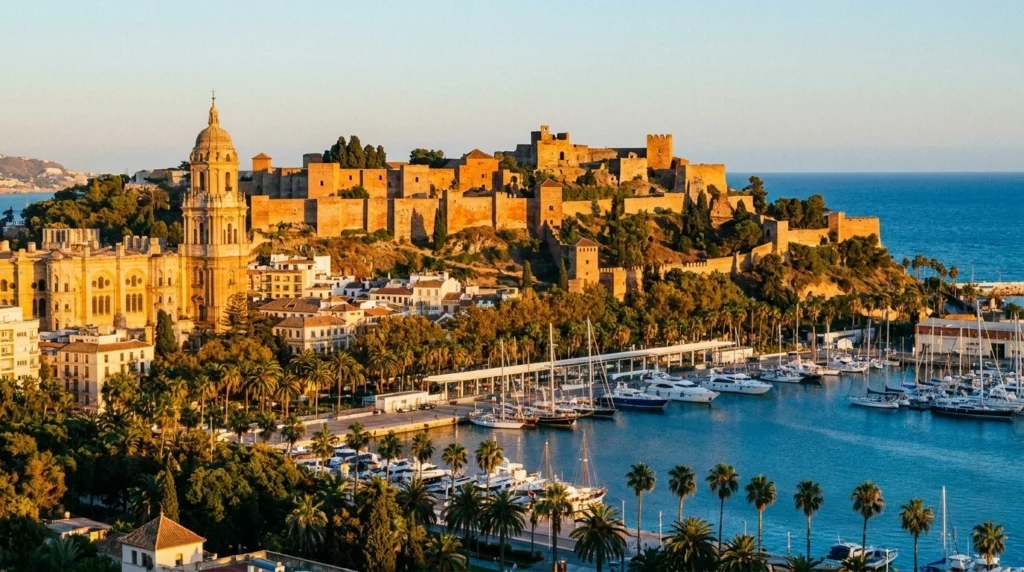
I used to think of Málaga the way too many people still do — as the airport you fly into on the way to somewhere else on the Costa del Sol. I was wrong, and a long weekend here cured me of it for good. We tell first-time travellers that this is a proper Andalusian city of about 591,000 people — the sixth-largest in Spain — with nearly 3,000 years of history layered into a compact, walkable centre, and it has quietly become one of the country’s best city breaks. My favourite Málaga ritual is an early-evening climb to the Gibralfaro ramparts for the sea light, then a slow descent into the old town for a glass of sweet local wine and a plate of espetos, sardines grilled on a cane skewer over driftwood embers on the beach. Treat this guide as the brief I’d hand my own family the night before they landed at Costa del Sol Airport — the Moorish Alcazaba and Roman Theatre stacked at the foot of the castle hill, the Renaissance cathedral known as La Manquita, the Picasso Museum in the painter’s home city, the marble-paved Calle Larios, and the easy train day-trips to Granada’s Alhambra and the cliff-top village of Ronda .

Table of Contents
Why Málaga?
Málaga is the Andalusian city that spent decades being underestimated and has spent the last fifteen years proving everyone wrong. For most of the late twentieth century it was treated as a functional gateway — the airport and rail hub you passed through on the way to the resorts of the Costa del Sol — while travellers chased Seville, Granada and Córdoba inland. Then the city poured investment into culture: the Picasso Museum opened in 2003 in the painter’s home city, the Pompidou and a branch of the St Petersburg Russian Museum followed, and a once-tired port was reborn as the palm-lined Muelle Uno promenade . The result is a genuine city break with beaches attached. Málaga proper holds about 591,000 residents, which makes it the sixth-largest city in Spain and the economic capital of the Costa del Sol .
What surprises first-time visitors is the sheer depth of history packed into a small, flat, walkable centre. Málaga is one of the oldest continuously inhabited cities in the world, founded by the Phoenicians around 770 BC, then Roman, then Moorish for some 800 years . You can stand in a Roman theatre, look up at a Moorish fortress palace, and turn around to a Renaissance cathedral, all within a hundred metres. Above it all sits the Gibralfaro castle on its hill, with the best sea views in the city. And unlike the inland Andalusian capitals, Málaga has the Mediterranean at its feet — city beaches like La Malagueta are a ten-minute walk from the cathedral.
Málaga is also unmistakably, joyfully Andalusian. This is the land of flamenco, of long late dinners, of sweet fortified wine poured from the barrel, and of the espeto — sardines threaded onto a cane skewer and grilled over an open wood fire on the sand at the chiringuito beach bars. The Andalusian dialect swallows consonants and the pace of life slows to match the sun, of which Málaga gets roughly 300 days a year, among the most of any city in Europe . It is a place built for lingering.
This guide covers the neighbourhoods you’ll actually walk, the tapas bars and beach chiringuitos worth seeking out, the marquee sights (the Alcazaba, the Roman Theatre, Gibralfaro castle, the cathedral, the Picasso Museum and the regenerated port), the day trips Malagueños themselves take — above all the Alhambra in Granada and the cliff-top town of Ronda — and the practical realities of Schengen rules, the fierce summer heat, and the city’s giant August Feria. Málaga is compact: nearly everything on a first-timer’s list sits within a 20-minute walk of the cathedral.
One orientation point worth absorbing early: Málaga rewards a slower trip than its reputation suggests. People budget a single afternoon between flight and resort and then wish they’d given it two or three days. Give it the time and you get a museum-dense old town, a Moorish hilltop, a working port reborn as a promenade, genuinely good city beaches, and a base for the whole of inland Andalusia — all without the crowds of Seville or the entrance-ticket scramble of the Alhambra. For the wider Spanish context, this guide pairs with our Spain Travel Guide and the sibling Seville, Madrid and Barcelona city guides.
Getting There

Málaga–Costa del Sol Airport (AGP), about 8 kilometres southwest of the centre, is the busiest airport in Andalusia and the fourth-busiest in Spain, handling roughly 24 million passengers in 2024 . It is a major budget-airline hub with year-round service across Europe on Ryanair, easyJet, Vueling, British Airways, Lufthansa and others, plus domestic links to Madrid and Barcelona. The Cercanías C-1 commuter train runs from the airport into the centre (Málaga Centro-Alameda) in about 12 minutes for under €2; a taxi to the old town is roughly €20–€25.
Rail is excellent. Renfe’s high-speed AVE trains link Madrid to Málaga María Zambrano station in about 2 hours 30 minutes, and run frequently from Córdoba (under an hour) and Seville . The same station is the hub for the regional Cercanías line west along the resort coast to Fuengirola, and for buses to Granada and Ronda. For inland Andalusia, the train is faster and more comfortable than driving.
By road, ALSA and other operators run intercity coaches from Granada (about 1 hour 45 minutes), Seville, Córdoba and along the coast into the bus station beside María Zambrano . Coaches are the cheapest way to reach Granada and Ronda, and Málaga is also a major Mediterranean cruise port.
Getting Around
Málaga is one of the easiest cities in Spain to get around: a compact, flat historic centre you can cross on foot in 20 minutes, a clean two-line Metro de Málaga, an extensive EMT city-bus network, the Cercanías commuter trains, and taxis that are cheap by Western-European standards . Most visitors barely use transit inside the centre — the Alcazaba, cathedral, Picasso Museum, port and La Malagueta beach are all within a short walk of one another — and reserve the trains and buses for the airport, the western beach suburbs and day trips.
Metro de Málaga
The Metro de Málaga opened on 30 July 2014 and now runs two lines that were extended into the city centre to El Perchel and Atarazanas in 2023, connecting the university and western districts to the María Zambrano rail hub and the heart of town . A single fare runs about €1.35 with the rechargeable transport card, a little more in cash. It is genuinely useful for the university and the stadium, but for the historic core walking is faster.
Cercanías and EMT Buses
Renfe’s Cercanías commuter trains are the workhorse for the airport (line C-1, about 12 minutes to the centre) and the western resort coast out to Fuengirola, running every 20 minutes or so . The EMT runs the orange city buses, including the airport Express Line A and night services; a single ride is about €1.40, cheaper with the rechargeable card. Buses are most useful for the Gibralfaro castle (line 35) if you’d rather not walk up the hill.
Walking and Cycling
The centre is the real transport network: pedestrianised Calle Larios, the maze of the old town, the cathedral, the port promenade and La Malagueta beach all link on foot. Málaga also has a flat, well-used bike-share scheme and a riverside cycle path, and the seafront paseo marítimo runs for kilometres along the beaches. For most first-time visitors, this is a walking city full stop.
Airport Access
- Cercanías C-1 train, airport to Málaga Centro-Alameda — about 12 minutes, under €2
- Taxi AGP to the old town — about 15 minutes, roughly €20–€25 by day
Taxis and Rideshare
Licensed Málaga taxis are white with a blue stripe; fares are municipally regulated and reasonable, with a typical cross-centre ride at €6–€10. Uber, Cabify and Bolt all operate in the city and are usually competitive with taxis. Card payment is increasingly standard, but carry small notes for shorter trips and rural day-trip drivers.
Navigation Tips
Málaga is easy to read once you orient to two landmarks: the cathedral tower in the centre and the Gibralfaro castle on its hill to the east. The sea is always south. The old town is a small triangle between Calle Larios, the cathedral and the Alcazaba that you cannot get lost in for long. Google Maps handles the city’s transit well, and street signs are clear; the Andalusian heat means most sightseeing is best done before noon or after five.
Neighbourhoods: Where to Base Yourself
📍 Málaga Map: Every Place in This Guide
Málaga’s character changes street to street, and choosing the right area shapes the whole trip. The centre is compact — you can walk from the cathedral to the beach in ten minutes — but each quarter has its own rhythm, price point and noise level. Below are the neighbourhoods most first-time visitors actually consider, with an honest read on who each suits.


Centro Histórico (Old Town)
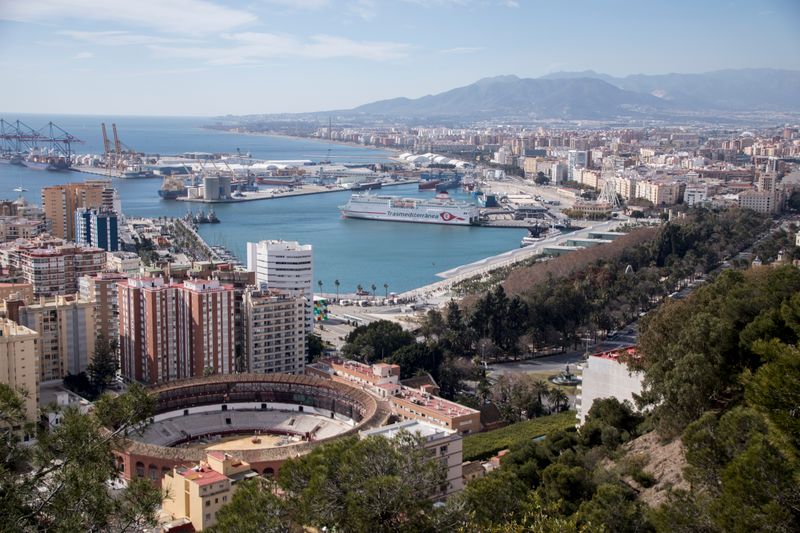
The historic centre around Calle Larios, the cathedral and Plaza de la Merced is the atmospheric postcard Málaga — pedestrian streets, tapas bars, the Picasso Museum and most major sights on your doorstep. Stay here if it’s your first visit and you want everything within a walk; it can be lively and noisy late, especially on weekends and during the Feria.
La Malagueta and the Port
East of the centre, the La Malagueta district sits between the city beach and the regenerated port, with mid-range and upscale hotels, the Muelle Uno promenade and a ten-minute walk back to the cathedral. This is the most convenient base for combining sightseeing with beach time, and the calmest of the central options at night.
Soho and El Ensanche
Just southwest of the centre across the dry Guadalmedina river, the Soho arts district is Málaga’s regenerated creative quarter, full of street murals, galleries, the Centre Pompidou and a younger bar scene, with generally better-value rooms than the old town. It’s a short walk to both the centre and the port.
Pedregalejo and El Palo
For a seaside, local base, the old fishing neighbourhoods of Pedregalejo and El Palo stretch east along the coast, with low-key beaches, the best espeto chiringuitos in the city, and a relaxed, residential feel. They trade old-town buzz for sea air and authenticity, and suit travellers happy to bus or cycle into the centre.
The Food: Espetos, Tapas and Sweet Wine
Andalusian food is a real reason to come to Málaga, and eating here follows its own easy grammar: tapas and raciones shared over a long sit-down, pescaíto frito (lightly fried fish) by the sea, the famous beach espetos, and the city’s sweet Malaga wine poured from the barrel in century-old bodegas. The pace is unhurried — lunch runs to 3pm, dinner rarely before 9pm.

What to Order
- Espetos de sardinas — sardines skewered on a cane and grilled over a wood fire on the beach, the signature Málaga dish.
- Pescaíto frito — a mixed fry of small fish (anchovies, red mullet, squid), light and crisp.
- Porra antequerana — a thick, garlicky cold tomato soup, Málaga’s richer cousin of gazpacho.
- Ensalada malagueña — salad of orange, salt cod, potato, olives and onion.
- Vino de Málaga — the sweet, dark fortified wine, best tasted at the historic Antigua Casa de Guardia bodega.

Where to Eat
The old town around Calle Granada and Plaza de la Merced holds the densest tapas run; the Atarazanas market — a 19th-century iron hall built on a Moorish shipyard gate — is superb for grazing across stalls and its own bars . For espetos, head east to the chiringuitos of Pedregalejo and El Palo, where the fish is grilled over driftwood in old boats filled with sand. For the sweet wine ritual, the Antigua Casa de Guardia, open since 1840, chalks your tab on the wooden bar.
Timing and Etiquette
Tapas bars fill from around 1.30pm for lunch and again from 8.30pm; the espeto chiringuitos run all day in summer. A tapa is a small portion, a media ración bigger, a ración a full sharing plate — order a few to share. Tipping is light: rounding up or leaving a euro or two is plenty. Many places close Sunday evening and Monday.
Cultural Sights: Moorish Fortress to Picasso
Málaga’s sightseeing splits cleanly into the layered ancient core at the foot of the castle hill — Roman, Moorish and Renaissance stacked together — and the modern museum boom that put the city back on the cultural map. The headlines are walkable in a single packed day, but they reward a slower two.

Alcazaba and Roman Theatre
The Alcazaba, begun in the 11th century by the Hammudid rulers, is the best-preserved Moorish fortress palace in Spain — a double-walled citadel of horseshoe arches, courtyards and fountains climbing the hillside, with sweeping views over the port . At its foot lies a Roman theatre from the 1st century BC, rediscovered in 1951 and still used for performances. Admission to the Alcazaba is about €3.50 (a combined ticket with Gibralfaro is around €5.50); the Roman Theatre is free.
Gibralfaro Castle

Connected to the Alcazaba by a walled corridor, the 14th-century Gibralfaro castle crowns the hill above the city. The walk up is steep and hot but short, and the reward is the definitive Málaga panorama — the bullring, the port, the cathedral and the Mediterranean laid out below. Go for sunset, or take bus 35 up and walk down. Admission is a couple of euros, included in the combined Alcazaba ticket.
Málaga Cathedral (La Manquita)
The Renaissance cathedral, built between 1528 and 1782 on the site of a former mosque, is nicknamed La Manquita — “the one-armed lady” — because its second tower was never finished. The interior is vast and richly decorated, and a rooftop tour walks the vaults for close-up city views . Admission is about €8, with the rooftop a little more.
Picasso Museum and Birthplace

Pablo Picasso was born in Málaga in 1881, and the city honours him in two places: the Museo Picasso Málaga, opened in 2003 in the Renaissance Buenavista palace with a collection donated by the family, and the Casa Natal, his birthplace house on Plaza de la Merced . The museum is the city’s cultural anchor; admission is about €12, free in the last two hours on Sundays.
Culture, Flamenco and Nightlife
Málaga’s cultural life runs deeper than its beaches. There’s a dense cluster of museums, a serious flamenco heritage, a famous film festival, and a nightlife rhythm built around long tapas evenings and beachside bars rather than mega-clubs. The city stays up late, but it does so over wine and conversation as much as dance floors.
Museums Beyond Picasso
For its size, Málaga is astonishingly museum-rich. The Centre Pompidou Málaga sits under a glowing glass cube on the port; the Carmen Thyssen Museum holds 19th-century Spanish painting in a restored palace; and the Russian Museum collection and the CAC contemporary-art centre round out a self-styled “city of museums” with more than thirty in total .
Flamenco
Andalusia is the cradle of flamenco, and Málaga has its own intimate tablaos and peñas where you can see live cante, guitar and dance up close — venues such as Kelipe and the Vista Andaluza put on serious shows rather than tourist revues . Book ahead for the smaller rooms, which sell out.
Festivals: Feria and the Film Festival
The August Feria de Málaga is one of Spain’s biggest summer fairs — nine days of daytime street parties in the old town, flamenco dresses, fino sherry and a nighttime fairground at the Cortijo de Torres, marking the 1487 reconquest of the city . In spring, the Málaga Film Festival is the most important showcase of Spanish-language cinema in the country.
Day Trips From Málaga
Málaga is the ideal base for inland Andalusia and the Costa del Sol, with fast trains and buses reaching the region’s headline sights in well under two hours. If you have more than two days, give one to a day trip — the contrast with the coast sharpens what makes each place distinct.

Granada and the Alhambra (about 1 hr 45 min by bus)
Granada is the essential Málaga day trip: the Alhambra, the magnificent Nasrid palace-fortress on its hill, is one of the most beautiful buildings in the world and a UNESCO World Heritage Site . Buy timed Alhambra tickets online weeks ahead — they sell out — and pair the visit with the Albaicín old quarter.
Ronda (about 1 hr 45 min by train)
The cliff-top town of Ronda is split by the dramatic El Tajo gorge, spanned by the 18th-century Puente Nuevo bridge, with one of Spain’s oldest bullrings and sweeping views over the surrounding sierra. The scenic train ride through the mountains is half the experience.
Córdoba and the Costa del Sol (under 1 hr by AVE / Cercanías)
Córdoba’s Mezquita — the great mosque-cathedral — is under an hour north by high-speed train. Closer to home, the Cercanías line runs west to the resort towns of Torremolinos, Benalmádena and Fuengirola for an easy beach day, and the white village of Mijas Pueblo sits in the hills just above.
When to Visit: A Season-by-Season Guide
Málaga’s climate is its great asset: hot, dry summers, mild winters, and roughly 300 days of sun a year, among the most in Europe. The main thing to time around is the fierce July–August heat and the crowds it brings. Here is how the year actually feels on the ground.
Spring (March–May)
Arguably the best season: warm, sunny and not yet hot, with highs climbing from the high teens to the mid-20s°C and the surrounding hills green. Easter’s Semana Santa processions are spectacular and crowded; the Málaga Film Festival lights up the city in spring. Prices and crowds are moderate — an ideal window for both sightseeing and the first beach days.
Summer (June–August)
Hot and busy, with highs regularly in the low-to-mid 30s°C and the beaches at their fullest. This is peak espeto and chiringuito season and the time of the giant August Feria, but it’s also the most expensive and crowded, and midday sightseeing is punishing. Plan museums and the Alcazaba for early morning, and the beach for the afternoon.
Autumn (September–October)
A superb, underrated season: the sea stays warm enough to swim into October, the summer crowds thin, and temperatures ease back into the mid-to-high 20s°C. September in particular offers warm beach days, comfortable sightseeing and lower prices than August — for many travellers, the sweet spot.
Winter (November–February)
Mild and bright by European standards — daytime highs of 16–18°C, plenty of sun, and rarely cold, though evenings cool and there can be rain. The beaches are quiet but the city is lively, with the lowest prices and thinnest crowds of the year, and the Christmas lights on Calle Larios are a genuine spectacle.
Budget Breakdown: What Málaga Actually Costs
Málaga is good value for a coastal Spanish city — cheaper than Barcelona, broadly comparable to Seville, and excellent for the quality of its food and free or cheap sights. The figures below are per-person daily estimates excluding flights, in euros, based on 2025–2026 prices.
Backpacker (€50–80/day)
A hostel dorm bed runs €18–30; tapas and a menú del día lunch keep food to €16–25; the Roman Theatre is free, the Alcazaba is €3.50, and the beaches cost nothing. Budget one paid museum and you stay comfortably under €80.
Mid-Range (€110–190/day)
A three-star hotel or central apartment is €75–125 for a double (more in August); add €35–55 for restaurant meals, €15–25 for museum tickets, and the occasional taxi. This is the typical comfortable-tourist band.
Luxury (€300+/day)
A four- or five-star room such as the Gran Hotel Miramar on the seafront runs €220–450+, fine dining adds €100–220, and private guides or a day with a driver to Granada push the day well past €300.
Key Fixed Costs
- Alcazaba entry — about €3.50, or €5.50 combined with Gibralfaro
- Picasso Museum — about €12 general admission
- Cathedral — about €8, rooftop tour a little more
- Single metro/bus fare — about €1.35–1.40
- Airport Cercanías to centre — under €2
Practical Tips and Safety
Málaga is a safe, easy and welcoming city for visitors, but a handful of practical habits make the difference between a smooth trip and an avoidable headache. None of this is alarming — it’s the ordinary common sense of any popular European destination.
Money and Payments
Spain uses the euro; cards are accepted almost everywhere, including in tapas bars, but carry €20–30 in small notes for markets, beach chiringuitos and the smallest counters. ATMs are plentiful; avoid the standalone “Euronet” machines, which apply poor exchange rates, in favour of bank ATMs.
Safety and Scams
Málaga is a safe city; violent crime is rare and the realistic risk is opportunistic pickpocketing in crowds along Calle Larios, around the Alcazaba and on packed beaches and buses. Use a zipped bag worn to the front and don’t leave valuables on the sand. Both the UK and US governments rate Spain a low-risk destination overall .
Health and Heat
Tap water is safe to drink throughout the city. The real summer hazard is the sun: carry water, wear a hat and sunscreen, and sightsee in the cooler hours. EU visitors should carry an EHIC/GHIC card; everyone else should have travel insurance. Pharmacies (farmacias, green cross) are widespread and competent for minor ailments .
Practical Essentials
- Language: Spanish (Andalusian dialect); English common in tourist areas.
- Plugs: Type C/F, 230V — bring an EU adapter.
- Tipping: not expected; rounding up is plenty.
- Pace: meals run late; dinner rarely before 9pm, and many shops shut for a midday break.
- Heat: in July–August, do outdoor sights before noon or after 5pm.
Frequently Asked Questions
How many days do you need in Málaga?
Two full days covers the city comfortably: one for the Alcazaba, Roman Theatre, Gibralfaro and cathedral; one for the Picasso Museum, the port and a beach afternoon with espetos. Add a third day for a day trip to Granada’s Alhambra or Ronda, which most visitors find essential. If you have a fourth, spend it slowly — a morning tapas crawl through the old town, an hour in the Carmen Thyssen or Pompidou, and a late lunch at a Pedregalejo chiringuito — rather than cramming in another excursion. Málaga rewards lingering far more than it rewards rushing.
What is the best time of year to visit Málaga?
Late April–May and September–October offer the best balance of warm, dry weather and manageable crowds, with the sea still swimmable in autumn. August is hottest and busiest and brings the giant Feria; winter is mild, sunny and cheapest. Málaga gets around 300 days of sun a year, so rain is rarely a worry.
Is Málaga worth visiting, or just a gateway to the Costa del Sol?
It’s well worth two or three days in its own right. The Moorish Alcazaba, the Roman Theatre, the Picasso Museum, the cathedral, the regenerated port and genuinely good city beaches easily fill the time. Many travellers arrive expecting an airport town and leave wishing they’d booked longer.
Is Málaga expensive?
It’s good value for coastal Spain — cheaper than Barcelona and broadly comparable to Seville, with excellent value on food and many free or cheap sights. A mid-range trip runs roughly €110–190 per person per day excluding flights, and backpackers can manage on €50–80. Prices rise during the August Feria.
Do I need to book the Alhambra in advance for a Granada day trip?
Yes — absolutely. Alhambra tickets are timed and sell out weeks ahead, so book online before you travel; never rely on buying at the gate. Granada is about 1 hour 45 minutes from Málaga by bus, making it a long but very doable day trip if you have an early ticket slot. Aim for a mid-morning Nasrid Palaces slot — the one part of the complex with a strictly enforced entry time — and build the rest of the day around it. If the Alhambra is sold out, Ronda makes an excellent plan B and needs no advance booking at all.
How do I get from Málaga airport to the city centre?
The Cercanías C-1 train runs into the centre in about 12 minutes for under €2, while a taxi takes around 15 minutes for €20–25 by day . Málaga–Costa del Sol Airport handled roughly 24 million passengers in 2024 and is the busiest in Andalusia .
Is Málaga walkable, or do I need public transport?
The core is very walkable — the Alcazaba, cathedral, Picasso Museum, port and La Malagueta beach form a compact, flat triangle. Most visitors use the Cercanías and metro mainly for the airport, the western beaches and day trips, and a bus only for the uphill climb to Gibralfaro castle.
What food is Málaga famous for?
Espetos above all — sardines grilled on a cane skewer over a beach fire — plus pescaíto frito (fried fish), porra antequerana (a thick cold tomato soup), and the sweet dark Malaga wine poured from the barrel. Eat the espetos at a seafront chiringuito in La Malagueta or the old fishing quarter of Pedregalejo for the full experience, ideally between May and October when the sardines are at their fattest and the beach fires are lit every evening.
Was This Guide Helpful?
We update our Málaga guide as prices, transit and opening hours change. Let us know if it helped — your feedback shapes the next revision.
Ready to Experience Málaga? Climb, Look, Linger
Málaga rewards the curious traveller. Its headline acts are world-class — the Moorish Alcazaba, Picasso’s home city, a Renaissance cathedral — but the city’s real magic is in the in-between: an espeto and a glass of sweet wine on the sand at dusk, the whole city laid out from the Gibralfaro ramparts, a slow tapas crawl through the old town, the warm sea ten minutes from the cathedral. See the sights, then stay for everything around them. For the wider picture, see our Spain travel guide, and pair Málaga with Seville, Madrid and Barcelona for a complete Spanish trip.
Explore More City Guides
Málaga is one stop in our growing library of Spanish and European city guides. Keep planning with these companion pages:
More city guides you might like

Plan your trip to Málaga
The booking tools we use ourselves. FFU may earn a commission at no extra cost to you.
Plan & book your trip to Málaga
Booking through these searches supports our guides at no extra cost to you.