
Munich, Germany: Bavarian Charm, Alpine Backdrop, and the World’s Biggest Beer Festival
Part of our Germany travel guide.
Munich City Guide
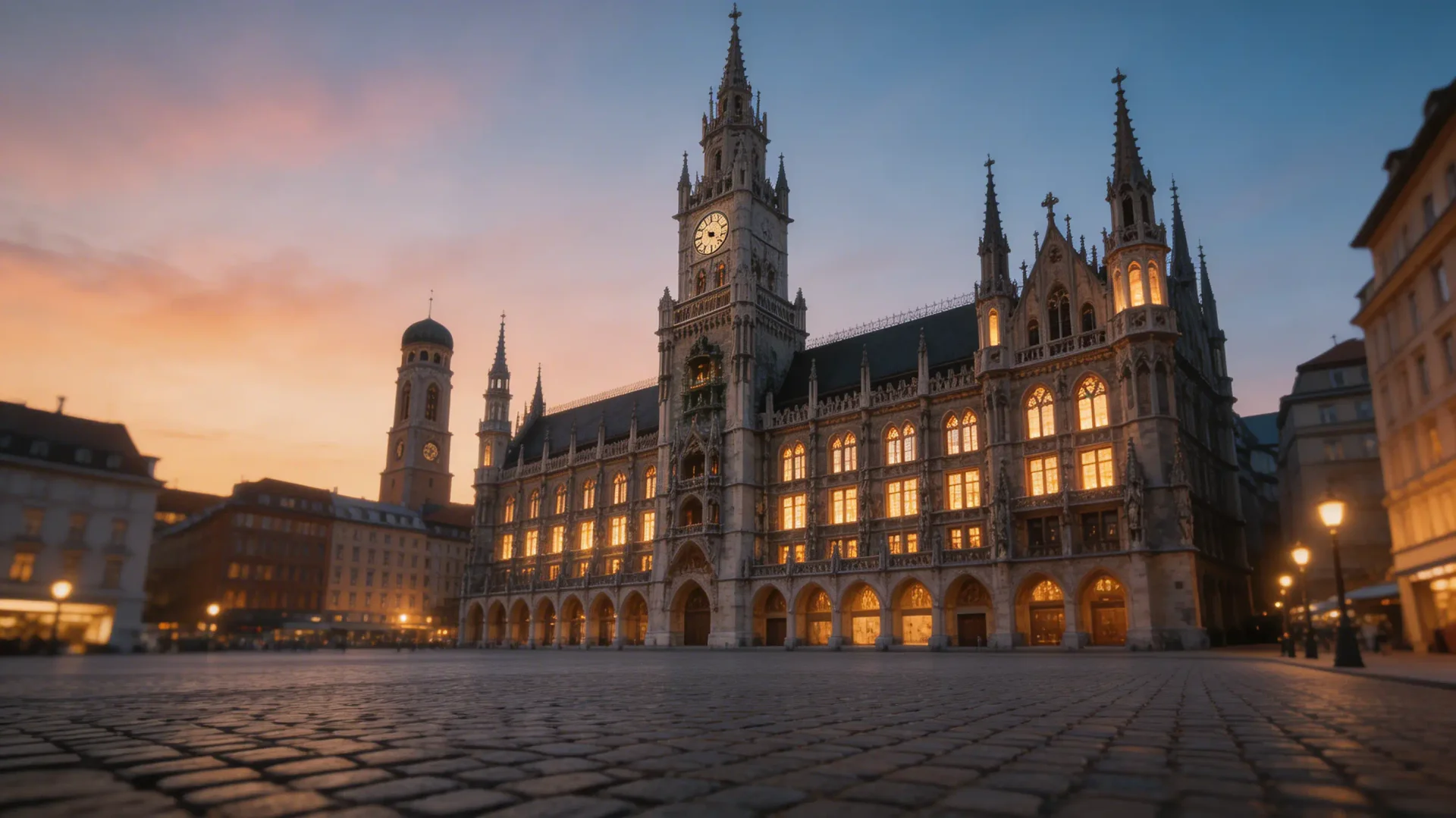
Table of Contents
Why Munich?
Munich is the capital of Bavaria, Germany’s third-largest city with 1.58 million residents in the city proper as of 2024, and the prosperous Alpine-foothill counterweight to the edgier, flatter capital 600 km north. The city sits 530 m above sea level on the Isar river, 90 minutes by car from the Austrian border, and it is visibly more ordered, cleaner, and more conservative than Berlin — more like a wealthy small town that happens to host BMW’s global headquarters, Siemens, Allianz, and the Max Planck Society than like a capital in its own right.
The contrast that defines Munich is that a 16-day folk festival of 6-million-plus visitors empties out to reveal a city whose everyday tempo is closer to Salzburg or Zurich than to Frankfurt. Residents refer to their home affectionately as Millionendorf — the “village of a million” — because the Altstadt is walkable end-to-end in 25 minutes, everyone seems to know the same three beer gardens, and the Alps appear on the southern skyline from any tall building on clear föhn days.
The scale claims run in two directions at once. Munich operates more than 180 traditional beer gardens within the city and immediate surrounds, including Hirschgarten (8,000 seats, the world’s largest) and Augustiner-Keller (5,000 seats under century-old chestnut trees). The Englischer Garten covers 3.7 km², roughly 30% larger than New York’s Central Park, and contains a year-round urban surf spot on the Eisbach standing wave. The Michelin Guide Bayern 2024 edition awarded Munich four three-star restaurants within a 6 km radius, the densest three-star cluster in the German-speaking world.
Munich also sits at one of Europe’s most useful transit hubs. The Hauptbahnhof connects to Berlin in 3h58 by ICE, to Salzburg in 1h30, to Vienna in 4h, to Zurich in 4h, and to Innsbruck in 1h45. Munich Airport (MUC), a 45-minute S-Bahn ride from the centre, is Germany’s second-largest hub with 37 million passengers in 2023 and direct long-haul routes to Newark, JFK, LAX, Bangkok, Tokyo, and Singapore on Lufthansa.
This guide covers the ten neighborhoods that define the city, the beer gardens and Michelin counters behind its food reputation, the palaces and museums anchoring the 700-year Wittelsbach heritage, five day trips from Neuschwanstein and Zugspitze to the Dachau memorial, and the transit, budget, accommodation, and etiquette details that make a first trip run smoothly on arrival at MUC or the Hauptbahnhof.
Neighborhoods: Finding Your Munich
📍 Munich Map: Every Place in This Guide
Munich is compact by the standards of German cities — 310 km² total, and the central ring inside the old city walls measures only 1.3 km across — but its 25 city districts carry sharply different atmospheres. The Altstadt is the tourist-and-Wittelsbach core; Schwabing is bohemian and university-led; Glockenbachviertel is queer and indie; Maxvorstadt is a museum quarter; Bogenhausen and Nymphenburg are genteel; Giesing and Sendling are working-class gentrifying. A base on any U-Bahn line inside the Mittlerer Ring puts every neighborhood below within 15–20 minutes of Marienplatz.
Altstadt (Old Town)
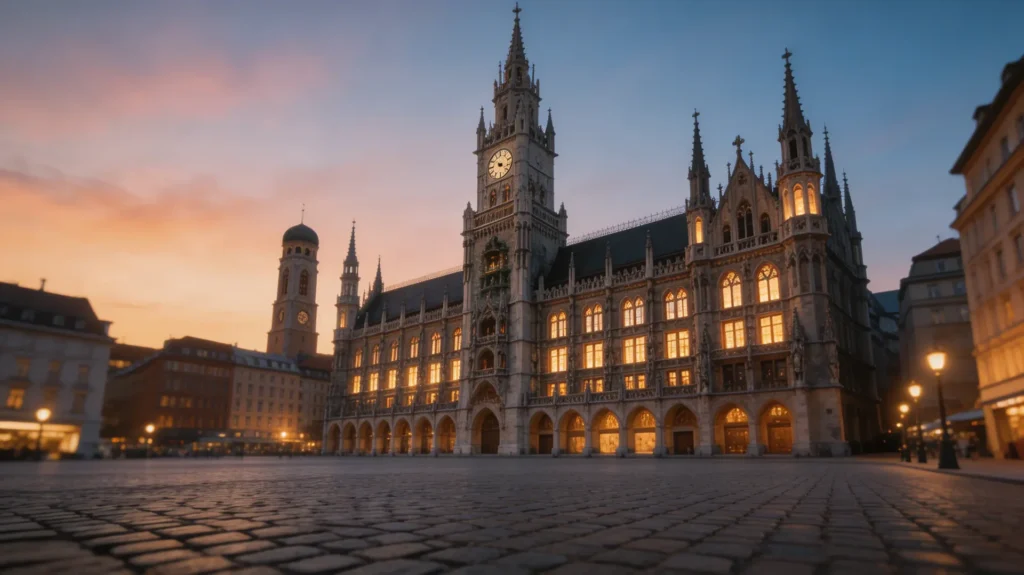
The medieval core, ringed by remnants of the former city walls (Isartor, Karlstor, Sendlinger Tor are the three surviving medieval gates) and centred on Marienplatz — where Munich has held its daily market since 1158 and where the neo-Gothic Neues Rathaus Glockenspiel chimes three times a day. The Altstadt holds Hofbräuhaus (founded as the royal brewery in 1589), the Residenz palace, the twin-domed Frauenkirche, and Viktualienmarkt — a 140-stall open-air food market in continuous operation since 1807. It is the single most-visited kilometre-square in southern Germany and can feel overwhelmed in Oktoberfest and Christmas-market weeks.
- Marienplatz and the Neues Rathaus Glockenspiel (11am, noon, 5pm)
- Frauenkirche twin onion-domed towers (98.57 m)
- Hofbräuhaus beer hall (founded 1589)
- Viktualienmarkt open-air food market (1807)
- Residenz royal palace complex and Cuvilliés Theatre
Best for: first-time visitors and classic Bavarian sightseeing. Access: Marienplatz S-Bahn/U-Bahn (S1–S8, U3, U6).
Schwabing
Munich’s intellectual and bohemian district on the north side of the Altstadt, historically home to Thomas Mann, Rainer Maria Rilke, and Vladimir Lenin (who lived here for a year in 1900–1901 writing for the exile newspaper Iskra). Today Schwabing is a leafy grid of wine bars, independent bookshops, and the sprawling Ludwig-Maximilians-Universität campus that spreads south from Münchner Freiheit toward Odeonsplatz. The Englischer Garten begins on its eastern edge, and the Eisbach standing-wave surf spot draws a crowd of onlookers most Saturday afternoons.
- Englischer Garten (3.7 km², larger than Central Park)
- Leopoldstraße café strip and nightlife corridor
- Seehaus beer garden on Kleinhesseloher See
- Walking Man sculpture by Jonathan Borofsky (17 m, 1995)
- Elisabethmarkt neighbourhood food market
Best for: slow afternoons, café culture, and park surfers. Access: Münchner Freiheit U-Bahn (U3, U6).
Glockenbachviertel
Munich’s LGBTQ+ and indie-nightlife district south of the Altstadt, with the Isar river on its eastern edge and the circular Gärtnerplatz park as its social heart. The district centres on Hans-Sachs-Straße (queer bars and cafes), Müllerstraße (creative agencies), and the Müllersches Volksbad (an art-nouveau public swimming bath from 1901, entry €5.10, ~$4.80). It is visibly younger and more creative than the Altstadt, and on summer evenings the Reichenbachbrücke bridge is the city’s default meeting point for everyone under 40.
- Gärtnerplatz theatre and café circle
- Müllersches Volksbad art-nouveau baths (1901, €5.10)
- Bar Gabányi cocktail lounge (ranked in Top 100 Germany)
- Reichenbachbrücke and Isar-river sunbathing flats
- Hans-Sachs-Straße queer-bar strip
Best for: nightlife, LGBTQ+ travellers, and riverside afternoons. Access: Fraunhoferstraße U-Bahn (U1, U2).
Au-Haidhausen
Often called Munich’s “French Quarter” because its Napoleon-era street grid was laid out in the 19th century with Parisian-style squares (Weissenburger Platz, Wiener Platz, Bordeauxplatz), Au-Haidhausen wraps around the east bank of the Isar from the Deutsches Museum on Museumsinsel up to the Maximilianeum (the Bavarian state parliament, 1874). The district holds the rebuilt Gasteig cultural centre (temporarily relocated to the HP8 campus in Sendling until the main Gasteig reopens, now projected 2028) and the Muffatwerk concert venue in a former electrical substation.
- Deutsches Museum (world’s largest science museum, €15)
- Wiener Platz market hall and maypole (year-round)
- Muffatwerk concert venue and beer garden
- Maximilianeum (Bavarian parliament, 1874, tours on request)
- Müllersches Volksbad on the Isar riverbank
Best for: museum-hopping and a quieter residential base. Access: Rosenheimer Platz S-Bahn and Max-Weber-Platz U-Bahn (U4, U5).
Westend (Schwanthalerhöhe)
Once a working-class quarter built around the former main railway yards, Westend has become the multicultural mid-priced district directly west of the Hauptbahnhof — and its backyard is the Theresienwiese, the 42-hectare meadow that hosts Oktoberfest every September. Outside the Wiesn, the meadow is dominated by the 18 m bronze Bavaria statue (1850) and the Ruhmeshalle Doric colonnade behind it. Westend proper is a mix of Turkish bakeries, Croatian-owned grocery stores, gentrifying wine bars, and the Augustiner-Keller — a 5,000-seat beer garden under 100-year-old chestnut trees.
- Theresienwiese (42-hectare Oktoberfest grounds)
- Bavaria statue and Ruhmeshalle colonnade
- Augustiner-Keller beer garden (5,000 seats)
- Westpark with its Asian gardens (Thai sala, Chinese tea house)
- Verkehrszentrum transport museum (Deutsches Museum annex)
Best for: Oktoberfest proximity and mid-priced accommodation. Access: Schwanthalerhöhe U-Bahn (U4, U5) and Hackerbrücke S-Bahn.
Maxvorstadt
Munich’s museum quarter and academic district, sitting directly north-west of the Altstadt between the Hauptbahnhof and Schwabing. The Kunstareal — a 500-metre-wide district containing three public art museums, a modern-art hall, an antiquities collection, and two universities — is among Europe’s densest gallery clusters. Maxvorstadt is also a student district (LMU and TU Munich together hold 100,000 students), which keeps café prices lower than the Altstadt despite the central location.
- Alte Pinakothek (Old Masters, €7; €1 Sundays)
- Neue Pinakothek and Pinakothek der Moderne (€10)
- Museum Brandhorst (Warhol, Twombly, €7)
- Königsplatz neoclassical square and Antikensammlungen
- Türkenstraße student café strip
Best for: museum lovers and a studious atmosphere. Access: Theresienstraße U-Bahn (U2) and Königsplatz U-Bahn (U2).
Bogenhausen
Munich’s wealthiest and greenest residential district, on the east bank of the Isar north of Au-Haidhausen. Consular villas and large fin-de-siècle townhouses line streets like Maria-Theresia-Straße; the 38 m gilded Friedensengel (Angel of Peace, 1899) column on the riverside bluff is a local landmark and a popular New Year’s fireworks viewpoint. The Prinzregententheater hosts Wagnerian opera, and the Villa Stuck — Franz von Stuck’s self-designed art-nouveau mansion, now a museum — is a hidden highlight.
- Friedensengel (38 m gilded column, 1899)
- Prinzregententheater (Wagner operas, €25–140)
- Villa Stuck art-nouveau mansion museum (€9)
- Arabella Park skyline cluster (1970s high-rises)
- Bogenhauser Friedhof cemetery (Erich Kästner, Kurt Eisner)
Best for: architecture fans and upscale residential strolls. Access: Max-Weber-Platz and Prinzregentenplatz U-Bahn (U4, U5).
Nymphenburg
The western palace district, organised around Schloss Nymphenburg — the Wittelsbach summer residence — and its 200-hectare landscaped park of lakes, pavilions, and follies. Ludwig II was born here in 1845, and the palace’s Gallery of Beauties displays the 36 portraits of women that Ludwig I considered most beautiful, regardless of social rank, between 1827 and 1850. Outside the palace gates, the Hirschgarten beer garden seats 8,000 and runs a resident fallow-deer enclosure visible from the tables.
- Schloss Nymphenburg palace complex (€8 / €15 combo)
- Marstallmuseum royal-carriage collection (inside palace)
- Botanischer Garten München-Nymphenburg (€5.50)
- Hirschgarten beer garden and deer park (8,000 seats)
- Rotkreuzplatz café square and Saturday weekly market
Best for: palace day-trippers without leaving the city. Access: Tram 17 to Schloss Nymphenburg from Hauptbahnhof (18 min).
Giesing
A rapidly gentrifying working-class district south-east of the Altstadt — home to TSV 1860 München (Munich’s “other” football club and the 1966 Bundesliga champion) and to a tight grid of craft-beer pubs, Turkish bakeries, and Rainer Werner Fassbinder’s grave at the Ostfriedhof. The Grünwalder Stadion, a genuinely atmospheric 15,000-seat ground in a residential neighbourhood, stages 1860 home matches every other Saturday from August to May. Giesinger Bräu, Munich’s first new brewery in a century (founded 2006 in a garage), runs a popular tap room that drew a cult following before it became the district’s calling card.
- Grünwalder Stadion (TSV 1860’s 15,000-seat ground)
- Ostfriedhof cemetery (Fassbinder, Valentin, Eisner)
- Giesinger Bräu craft brewery and tap room
- Heilig-Kreuz-Kirche neo-Gothic basilica
- Tela-Post concert venue (former post office)
Best for: football fans and craft-beer drinkers. Access: Silberhornstraße U-Bahn (U1, U2) and Giesing S-Bahn.
Sendling
South-west residential district anchored by the Großmarkthalle (Germany’s second-largest wholesale food market, 1912) and the Flaucher Isar-river gravel flats that function as Munich’s informal summer beach. Nude sunbathing is legal and common on the Flaucher; legal open-fire BBQ zones are signposted along the bank. The Alte Sendlinger Kirche (11th-century, rebuilt 1932) is the oldest surviving church in Munich; the Harras tram interchange is the Sunday-market hub. Sendling feels more residential and less tourist-adjacent than any district in this list.
- Flaucher Isar-river riverbanks (summer beach, legal BBQ zones)
- Großmarkthalle wholesale food market (early morning)
- Alte Sendlinger Kirche (11th century, oldest in Munich)
- Harras tram interchange and Sunday weekly market
- Westpark’s quieter southern edge
Best for: summer Isar-river beach days and a local residential rhythm. Access: Harras S-Bahn and Implerstraße U-Bahn (U3, U6).
Lehel
Often described as the Altstadt’s quieter eastern twin, Lehel sits between the Isar river and the eastern ring of the old town and is officially Munich’s smallest and densest borough. The riverside promenade along the Isar runs the length of the district, from the Deutsches Museum bridge in the south to the Prinzregentenstraße in the north, and the Bavarian National Museum — housed in a 1900 Gabriel von Seidl historicist palace — anchors its cultural life. Lehel also holds the Asam-Kirche (St Johann Nepomuk, 1733–46), a late-baroque interior the Asam brothers built as their private family chapel, and the Haus der Kunst exhibition hall, originally commissioned in 1937 for state-controlled art and reopened after 1945 as a contemporary kunsthalle. Rents inside the inner ring are among the highest in Munich; restaurants skew quiet bistros rather than beer halls.
- Bavarian National Museum (1855 founding, collections 14th–20th century, €7; €1 Sundays)
- Haus der Kunst contemporary exhibition hall (1937 building)
- Asam-Kirche (St Johann Nepomuk, 1733–46)
- Isarpromenade riverside walk (Lehel to Bogenhausen)
- Hofgarten Renaissance court garden (1613) at the Residenz’s eastern edge
Best for: museum-hopping on foot and a calmer Altstadt-adjacent base. Access: Lehel U-Bahn (U4, U5) and Odeonsplatz (U3, U4, U5, U6).
The Food
Munich’s food identity is explicitly Bavarian, explicitly regional, and explicitly different from the cuisines you will encounter in Hamburg, Berlin or Cologne. Pork dominates; the bread is lye-crusted and dense; the dessert is apple-based; and the beer is not a side order but a structural part of the meal. Layered on top is the city’s 85,000-person Italian diaspora (the largest outside Italy), a serious Turkish-German döner scene concentrated around Sendlinger Tor, and — perhaps surprisingly — the densest cluster of three-Michelin-star restaurants in the German-speaking world, with four three-star houses within a 6 km radius of Marienplatz.
Bavarian Classics — Weisswurst, Schweinshaxe, and the Brotzeit Plate
Bavarian food is hearty, pork-forward, and explicitly regional. Weisswurst, the pale veal-and-pork sausage, is eaten before noon with sweet mustard (süßer Senf), a fresh-baked lye pretzel, and a Weissbier (wheat beer). Locals will tell you that the sausages “must not hear the noon bell” — eating Weisswurst after 12:00 is the clearest tourist tell in the city. Schweinshaxe (roast pork knuckle with mahogany crackling) is the beer-hall centrepiece, served with sauerkraut and a fist-sized potato dumpling (Knödel). Brotzeit, literally “bread time”, is the mid-afternoon cold platter of Obatzda (mashed Camembert with paprika and onion), cured sausages, radishes, cheese, and pretzel that bridges lunch and dinner. The portions assume that you have skipped one of the day’s other meals.
- Hofbräuhaus — Schweinshaxe with Knödel (€24.50, ~$23)
- Zum Dürnbräu — Weisswurst breakfast with pretzel and Weissbier (€12.90, ~$12)
- Wirtshaus in der Au — Bavarian Knödel flight (€18.90, ~$18)
- Haxnbauer — charcoal-grilled pork knuckle (€29.80, ~$28)
Beer Garden Culture — Self-Service Under the Chestnut Trees
Munich invented the modern beer garden in the early 19th century. Brewers planted chestnut trees to shade the underground cellars where their beer was stored in summer; when they were forbidden from selling food directly under the trees (to protect the restaurant trade), Bavarian law preserved a unique custom: at any traditional beer garden you may bring your own food and buy only the beer. Look for the “Selbstbedienung” (self-service) half of the garden — that is the bring-your-own side. The other half will be “Bedienung” (table service) where you cannot bring food. A Maß (one-litre stein) runs €10.50–12.50 depending on brewery; a half-litre Helles €5.20–6.20. Standing on the wooden benches or removing shoes is not tolerated; bare shoulders are fine. Order Radler (half beer, half lemonade) if you plan to stay five hours.
- Hirschgarten — world’s largest beer garden, 8,000 seats with a resident fallow-deer enclosure (Maß €11.80, ~$11)
- Augustiner-Keller — 5,000 seats under 100-year chestnut trees beside the Hauptbahnhof (Maß €11.40, ~$11)
- Chinesischer Turm (Englischer Garten) — 7,000 seats around a 25 m pagoda (1790) with live brass bands (Maß €10.90, ~$10)
- Seehaus (Kleinhesseloher See) — lakeside Biergarten with paddle boats (Maß €12.20, ~$12)
Beyond Weisswurst and Schweinshaxe
Bavarian kitchens lean further than the pork-knuckle stereotype. The market stalls, the Italian delis, and the afternoon bakeries fill in the rest of the picture — and the city’s dessert culture is underrated outside Germany. Six items that belong on any Munich food itinerary beyond the classic beer-hall plate:
- Obatzda — mashed ripe Camembert whipped with butter, paprika, onion and caraway, eaten cold with pretzel at any beer garden (€7.50–9.50, ~$7–9)
- Leberkäse — Bavarian meatloaf of finely ground beef, pork, bacon and onion, baked in a bread-loaf tin until crusty and served in a fresh Semmel roll as “Leberkässemmel” (€4.80–6.20, ~$5–6)
- Käsespätzle — hand-scraped egg noodles baked with crispy onions and mountain cheese, the Swabian-Bavarian comfort plate that arrives as a bubbling skillet (€14.80–17.50, ~$14–16)
- Apfelstrudel — paper-thin pastry wrapped around cinnamon apple and raisins, served warm with vanilla sauce (€6.80–8.90, ~$6–8)
- Steckerlfisch — whole mackerel or trout skewered on a stick and grilled over charcoal, a summer beer-garden staple (€13.50, ~$13)
- Radi — giant white radish spiralled into a salt-sprinkled ribbon; the classic accompaniment to a Weissbier (€4.50, ~$4)
Markets, Michelin Stars, and the Italian Layer
The markets are a destination in their own right. Viktualienmarkt, the Altstadt’s 140-stall open-air market, has operated since 1807 and holds the city’s central Maibaum (maypole); its rotating beer garden cycles through each of the six city breweries (Augustiner, Löwenbräu, Paulaner, Spaten, Hofbräu, Hacker-Pschorr) on a two-week schedule. Elisabethmarkt in Schwabing (2019 rebuild, permanent canopies, open Monday–Saturday) and Wiener Platz in Haidhausen (with a year-round Maibaum, open Monday–Friday 8am–6pm plus Saturday 8am–4pm) are the quieter neighbourhood equivalents. Pfortenstadel on Schrannenhalle underneath Viktualienmarkt holds an indoor weekly delicatessen; Schrannenhalle itself (rebuilt 2005 after the 1932 original burned down) is a 400-metre glass-roofed food hall linking Viktualienmarkt to the Sendlinger Straße axis. Munich’s Italian layer shows up at Da Enzo (the Sendlinger-Tor-area aperitivo institution), Trattoria Bei Monica (Schwabing, handmade tagliatelle, mains €16–26), Dante’s Osteria (Maxvorstadt, Sicilian-leaning, mains €18–28), and in the dozens of delis and espresso bars around Sendlinger Straße — Riva (wood-fired Neapolitan pizza from €11.50), Gelateria Rinaldi (a single-counter gelato institution since 1964), and Cafe Pini for after-dinner espresso. The Turkish-German döner circuit around Sendlinger Tor and Hauptbahnhof runs €5.50–7.50 a kebab at hole-in-the-wall counters; Istanbul Imbiss and Asia-Grill are the Altstadt favourites.
At the top of the market, Munich carries the densest three-star cluster in the German-speaking world. Atelier at Bayerischer Hof (Jan Hartwig, three stars), Tantris (classic three-star since 1974, now under chef Benjamin Chmura), Tohru in der Schönen Aussicht (two stars, Japanese fine-dining by Tohru Nakamura), and EssZimmer at BMW Welt (two stars, by Bobby Bräuer) set the fine-dining ceiling. A tasting menu at the three-star houses runs €295–395 (~$278–373) per person, wine pairing extra; book 2–3 months ahead. One tier down, the city holds more than twenty one-Michelin-star restaurants as of the 2024 guide, including Werneckhof Sigi Schelling (nose-to-tail Bavarian fine dining, €180–240 tasting), Showroom in Glockenbachviertel (€145 tasting), Mural at Mandarin Oriental (€165), and Les Déesses (contemporary French, €150). For a mid-price food destination that sits below Michelin but above beer-hall fare, Broeding (Swabian-accented regional German, €59 four-course menu) and Gasthäuser Tattenbach (€26–34 mains) are the reliable bookings.
Bakeries, Coffee Culture, and Sweet Stops
Munich’s bakery culture punches hard, even by German standards where every small town has a proper Bäckerei. A proper Bäckerei opens by 6am and runs until 6pm, and a basic morning order — one Breze (lye pretzel) at €1.20–1.80, one Butterbrezel (pretzel sliced and buttered) at €2.80, and one Semmel (crusty bread roll) at €0.60–0.90 — costs less than a coffee at a Berlin third-wave spot. The city’s signature bakery is Rischart, a ten-branch chain in business since 1883, with its flagship on Marienplatz selling fresh pretzels every 30 minutes; the competition is Ziegler am Dom (more rustic, sourdough-leaning) and Wimmer (more central). For a cake stop, head to Confiserie Rottenhöfer on Residentölle for the Prinzregententorte (a seven-layer chocolate-buttercream cake invented 1886 to honour Prince Regent Luitpold, €5.20 a slice) or Café Luitpold on Brienner Straße for a pre-war Viennese coffee-house atmosphere and an apricot-filled Sachertorte at €6.80. Munich’s third-wave coffee scene is quiet compared to Berlin but well-anchored — Man Versus Machine roasts the city’s best espresso (Thiersch-Straße in Altstadt, Fraunhoferstraße in Glockenbach, flat white €4.60), Roy Social Coffee sits inside a former Glockenbach pharmacy, and Aroma Kaffeebar on Müllerstraße is the creative-industries hangout. The traditional Viennese-style Kaffeehaus survives at Café Tambosi on Odeonsplatz (Munich’s oldest café, founded 1775 by an Italian confectioner) and at Café Reitschule by the Englischer Garten, where a Mélange (espresso with foamed milk) at €4.20 still arrives on a silver tray with a glass of tap water. For an afternoon sweet stop with a beer-garden twist, the Seehaus and the Chinesischer Turm both serve a Kaiserschmarrn (caramelised shredded pancake with rum-soaked raisins and plum compote) at €12.80 that splits comfortably between two.
Food Experiences You Can’t Miss
- Viktualienmarkt morning — arrive 9am at the 140-stall market, buy Obatzda and Bretzel, drink a half-Maß at the rotating beer garden in the centre
- Christmas-market Glühwein circuit (late Nov–23 Dec) — Christkindlmarkt at Marienplatz, medieval market at Wittelsbacherplatz, Pink Christmas at Stephansplatz (each cup €4–5 plus €3–5 deposit)
- Tegernsee monastery brewery day trip — 1-hour BOB train to Tegernsee lake, walk to the Bräustüberl Tegernsee in the Benedictine monastery — Maß at €4.60 (the lowest price in Bavaria, thanks to the monastery’s historic tax status)
- Tollwood summer and winter festival (Theresienwiese and Olympiapark) — organic food stalls from 40+ countries, ticketed concerts (free entry, food €8–16)
- A Michelin three-star tasting — Atelier, Tantris, or Jäger and Lustig (by reservation only, 2–3 months ahead; €295–395 per person, ~$278–373)
Cultural Sights
Munich’s cultural core leans Wittelsbach — the family that ruled Bavaria for 738 years (1180–1918), longer than any other German dynasty — and the city’s key sights are either their palaces, their collections, or the civic buildings their patronage funded. A second layer is civic-postwar: rebuilt churches and a full-block science museum on the Isar island. The eight below cover the must-visit range in a 4-day stay.
Marienplatz and the Neues Rathaus Glockenspiel
Munich’s central square since 1158, when Heinrich der Löwe founded the city at a salt-trade bridge over the Isar. The neo-Gothic Neues Rathaus (built 1867–1908) dominates the north side; its 85 m tower carries a 43-bell, 32-figure Glockenspiel that re-enacts the 1568 wedding of Duke Wilhelm V followed by the plague-ending “dance of the coopers”. Founded 1158 (city charter). Admission free; tower €6.50 (~$6). Glockenspiel chimes at 11am, noon, and 5pm March–October; 11am and noon only November–February.
Frauenkirche (Cathedral of Our Lady)
The symbol of Munich — two 98.57 m red-brick towers with distinctive copper onion domes (added in 1525). The city protected this skyline in a 2004 referendum that caps all new Altstadt buildings at 99 m. Inside, find the Teufelstritt (“Devil’s footstep”), a single black shoeprint in the entry hall where legend says the devil stamped in rage. Founded 1468–1488 (architect Jörg von Halsbach). Admission free; south tower elevator €7.50 (~$7). Open 7:30am–8pm daily; tower 10am–5pm.
Residenz München
Former royal residence of the House of Wittelsbach, ruler of Bavaria from 1180 to 1918. The 130-room palace has ten courtyards, the Schatzkammer (one of Europe’s richest royal treasuries), the Cuvilliés Theatre (rococo, 1751–55) and the 69 m Antiquarium (Europe’s largest Renaissance hall). Allied bombing destroyed much of the complex in 1944; reconstruction continued until 2003. Founded 1385 (original Neuveste fortress). Admission €9 (Residenz only) or €18 combined with Schatzkammer and Cuvilliés Theatre (~$8–17). Open 9am–6pm April–October; 10am–5pm November–March.
Schloss Nymphenburg
The Wittelsbach summer residence, commissioned 1664 by Elector Ferdinand Maria after the long-awaited birth of his heir, and expanded by four generations of rulers into a baroque complex 700 m wide. The Marstallmuseum holds Ludwig II’s fairy-tale sleighs and state coaches; the Gallery of Beauties collects 36 portraits of women Ludwig I found beautiful (1827–50), irrespective of rank. Founded 1664 (commission); 1675 (central pavilion). Admission €8 main palace / €15 combo ticket (~$7–14). Open 9am–6pm April–October; 10am–4pm November–March.
Englischer Garten
One of the world’s largest inner-city parks at 3.7 km² — roughly 30% larger than New York’s Central Park — laid out in 1789 by Sir Benjamin Thompson (Count Rumford) in the English-landscape style that gave it its name. The Eisbach standing wave on its southern edge has been a year-round urban surf spot since the 1970s and was legally permitted in 2010. The grounds also hold the 25 m Chinese Tower (1790), the Monopteros Greek temple, and four major beer gardens. Founded 1789. Admission free; always open.
Deutsches Museum
The world’s largest science and technology museum, founded 1903 by engineer Oskar von Miller. Its 50,000 m² on Museumsinsel span 25 fields from astronomy to nuclear physics, with walk-through coal-mine replica, a full U-1 submarine, the Wright Brothers’ 1909 Europe-tour Flyer, and a working high-voltage demonstration hall. A €500 million renovation is reopening galleries in phases through 2028; check opening status before visiting. Founded 1903. Admission €15 adults, €8 students (~$14–8). Open 9am–5pm daily (last entry 4pm).
Alte Pinakothek
One of Europe’s oldest public galleries, opened 1836 in a neoclassical building by Leo von Klenze, purpose-built to house Wittelsbach royal collections of Old Masters. The 14th-to-18th-century holdings include Dürer’s Self-Portrait (1500), the world’s most-famous early self-portrait; Rubens’s Great Last Judgement (5.4 × 6 m, the collection’s largest canvas); and major rooms of Altdorfer, Cranach, Titian, Rembrandt, Brueghel, and Van Dyck. Founded 1836. Admission €7 (€1 Sundays) (~$7). Open Tue 10am–8:30pm; Wed–Sun 10am–6pm; closed Mondays.
BMW Welt and BMW Museum
Munich’s signature postwar architectural set piece at Olympiapark. BMW Welt (the 2007 steel-and-glass double-cone by Coop Himmelb(l)au) is free and showcases the current lineup; the adjacent BMW Museum (€10) traces the company’s aircraft-engine, motorcycle, and car history from 1916, including the 1955 Isetta bubble car and the full 1972 Munich Olympics fleet. The four-cylinder BMW headquarters tower next door (1973) is closed to the public but sets the skyline. Founded 1972 (museum); 2007 (BMW Welt). Admission BMW Welt free; Museum €10 (~$9). Open 10am–6pm Tue–Sun; closed Mondays.
Olympiapark and Olympic Tower
Built for the 1972 Summer Olympics and preserved in near-original condition, Olympiapark is Munich’s defining postwar landscape — the 85-hectare Frei Otto tensile roof over the stadium and swimming hall (the world’s first large-scale cable-net roof) defined a generation of German architecture. The 291 m Olympiaturm gives the city’s highest public viewpoint on clear föhn days, with the Bavarian Alps visible 80 km south. The park also hosts the annual Tollwood Summer festival and is the finish line for the Munich Marathon each October. Founded 1972. Admission park free; tower €13 adults, €9 students (~$12–9). Open 9am–midnight daily.
Entertainment
Munich’s entertainment calendar is anchored by three global pillars — Oktoberfest, FC Bayern München football, and the Bayerische Staatsoper — with a strong secondary layer of river-summer culture, Christmas markets, and the twice-yearly Tollwood festival. Book ahead for anything tentpole; drop in for anything else.
Oktoberfest and Year-Round Beer Halls
The original Wiesn (founded 1810 to celebrate the wedding of Crown Prince Ludwig and Princess Therese, after whom the Theresienwiese is named) runs 16 days from the Saturday nearest 15 September to the first Sunday in October; 2026 dates are September 19 – October 4. Entry to the festival grounds is free, but a seat in one of the 14 large beer tents is essentially compulsory — either a reservation (opening about nine months ahead on each tent’s website) or arrival by 10am on weekdays, 7am on weekends to claim an unreserved seat. A Maß was capped at €15.30 for 2024 (expect €16–17.50 for 2026); a half-chicken runs €16–19. Outside the festival, Hofbräuhaus (1589), Augustiner am Platzl, Paulaner am Nockherberg, and Löwenbräukeller operate year-round as full beer halls. Typical cost per tent visit at Oktoberfest €60–90 (~$57–85). Book tent reservations 9 months ahead via each tent’s own website.
Classical Music and Opera
The Bayerische Staatsoper at the Nationaltheater is one of Europe’s top three opera houses (with Vienna and Berlin), and the Münchner Philharmoniker plays in the acoustically celebrated Isarphilharmonie (the interim concert hall at HP8 until the full Gasteig reopens, now projected 2028). Ticket prices run €15 for cheap seats to €280 for premium at the Nationaltheater; standing room at the opera is €10 and surprisingly easy to get 90 minutes before the curtain. Philharmonie tickets €25–95. Book opera online up to two months ahead; standing-room same-day at the box office.
Football — FC Bayern München and TSV 1860
FC Bayern plays at the Allianz Arena in Fröttmaning (U6, 20 min from the centre), a 75,024-seat façade that glows red for Bayern matches, blue for 1860 (until 2017), or white for German national-team games. Ticket resale rules are strict; official tickets via fcbayern.com are the only legal route. Bayern home matches cost €35–160 for Bundesliga, €65–300 for Champions League; allocations release three weeks ahead. TSV 1860 München, Munich’s atmospheric second club, plays in the old-school Grünwalder Stadion (15,000 seats) in Giesing for €15–40 and tickets are available the week of the match.
Christmas Markets (Christkindlmarkt)
Munich’s oldest Christmas market (Christkindlmarkt at Marienplatz) has run since the 14th century and opens the Friday before Advent until 23 December. Glühwein is €4–5 in a collectible mug with a €3–5 deposit (keep the mug or return it for the deposit). For a quieter scene, try the Residenz courtyard market (candlelit, 5pm–10pm, €2 entry), Wittelsbacherplatz medieval market (honey mead and fire-spinners), or the Pink Christmas queer market at Stephansplatz. Entry free; Glühwein €4–5 plus deposit €3–5; food stalls €4–12. No tickets; weekends 5–8pm are packed — go mid-morning or after 9pm.
Isar River Summer Culture
From May to September the Isar river transforms Munich into a Nordic-style bathing city. Flaucher (Sendling) has gravel beaches and legal open-fire BBQ zones, and the Eisbach wave in the Englischer Garten carries a year-round standing wave where world-class surfers ride in wetsuits (2010 legalisation after decades of grey-area tolerance). Downstream at Thalkirchen, the river is wide enough for inflatable-raft bar crawls (Isar-Floßfahrten); a six-hour rafting party with beer and music runs €110–140 per person. River access is free; raft trips €110–140 per person. Raft trips book out by April — book in winter.
Tollwood Festival
Munich’s twice-yearly world-music, circus, and organic-food festival runs at Olympiapark for six weeks each summer (late June – late July) and at the Theresienwiese for five weeks each winter (late November – 31 December). The winter edition is the deliberate alternative to Oktoberfest: ~2 million visitors, a Circus-Theatre big top, and a “Markt der Ideen” (Market of Ideas) selling fair-trade crafts. Entry free; concerts €25–95; food €8–16. Concert tickets release three months ahead.
Comedy, Cabaret, and Live Music Clubs
Munich’s intimate live scene runs from classical cabaret at the Lach- und Schießgesellschaft (the country’s oldest political-satire ensemble, founded 1956 at Ursulaplatz, tickets €22–36) to indie rock at Strom in Sendling (capacity 400, €15–30) and Ampere at the Muffatwerk (capacity 500, €18–40). Jazz lives at Jazzclub Unterfahrt in Einstein Kultur (Haidhausen, nightly sets, €18–25) and Mr B’s Jazz Corner in the Altstadt. For world-tour arena shows, the Olympiahalle (capacity 14,000) and Rudi-Sedlmayer-Halle (SAP Garden, opened 2024, 11,500 seats) pull the bigger acts; the Isarphilharmonie holds the Philharmoniker series. Book directly through MünchenTicket or the venue; resellers mark up 30–60%.
Day Trips
Munich is one of Europe’s best base camps for day trips. The Bayerische Alps are 90 minutes south; the Salzburg and Innsbruck frontiers are both under two hours; three regional Alpine lakes (Starnberger, Tegernsee, Chiemsee) sit inside a one-hour radius; and two ICE routes link the city to Nuremberg and Austria in quick 1-hour hops. Five essentials below.
Neuschwanstein Castle (2 hours by regional train + bus)
Ludwig II’s fairy-tale Schwangau castle — the template for Disney’s Sleeping Beauty Castle — sits above Hohenschwangau village in the Allgäu Alps. Take the Regio Allgäu from Munich Hauptbahnhof to Füssen (2h), then RVA bus 73 or 78 (10 min) to Hohenschwangau. Timed-entry tickets (€21, ~$20) sell out months ahead; book on the official ticket centre at hohenschwangau.de, not through third-party resellers. The interior tour is strictly 35 minutes; the free exterior photos from the Marienbrücke bridge are arguably the better payoff. Pair with neighbouring Hohenschwangau Castle (€21) on the same ticket visit. The Bayern-Ticket (€29 for 1, +€10 per extra person up to five) covers the round-trip train fare but check the €10 surcharge for weekday morning trains before 9am.
Dachau Concentration Camp Memorial (45 minutes by S2 + bus)
The first Nazi concentration camp, opened 22 March 1933 — a short 45-minute ride from central Munich on the S2 (20 minutes to Dachau Bahnhof) plus bus 726 (8 minutes to KZ-Gedenkstätte). Entry is free; a 2.5-hour audio guide (€4.50, ~$4) or an English guided tour (€4, 11:00 and 13:15 daily) is strongly recommended. Visitors should approach the memorial with respect: no food, no loud conversation, no photography inside the crematorium. Allow 4–5 hours minimum; the site is intentionally difficult. Closed Mondays in off-season and always closed 24 December. Go early, go sober, read the memorial’s visitor conduct page before you arrive. This is a memorial, not an attraction.
Berchtesgaden and Königssee (2.5 hours by ICE or BRB train)
Bavaria’s deepest lake, Königssee, sits in a fjord-like valley inside Berchtesgaden National Park. Take the ICE or BRB regional to Berchtesgaden Hbf (2h20) then bus 841 to Schönau am Königssee (10 min); electric boats cross the 8 km lake to the St Bartholomä onion-domed chapel for a €22 round-trip (~$21). The darker story is the Eagle’s Nest (Kehlsteinhaus) above Obersalzberg — Hitler’s mountain-top retreat, now a documentation centre (closed Nov–Apr) reached by RVO bus 838 + a rock-tunnel elevator. Bring a fleece: the lake water stays at 8°C even in August. Catch the 9am boat departure to stay ahead of the rush.
Nuremberg (Nürnberg) (1 hour by ICE direct)
Franconia’s capital and Bavaria’s second city — ICE direct from Munich Hauptbahnhof in 1h03 for €39–59 on Sparpreis (~$37–56). The Altstadt is a scar of the Nazi trials: the Memorium Nuremberg Trials at Courtroom 600 (€6, ~$6) is where Göring and 20 other leaders were tried in 1945–46, and the Documentation Centre at Zeppelinfeld preserves the half-ruined Nazi rally grounds (€7.50, ~$7). Lighter counter-programming: bratwurst at Bratwursthäusle (Nürnberger Rostbratwurst, six on a plate for €9.60), gingerbread at Lebküchnerei Schwalb, Albrecht Dürer’s house on Tiergärtner Platz. The Nürnberg+Fürth CityCard (€28 for 48 hours) covers all public transport and 20+ museums — pays for itself in two attractions.
Zugspitze (Germany’s Highest Peak) (1.5 hours to Garmisch + 40 min cable car)
Germany’s highest peak at 2,962 m sits on the Austrian border above Garmisch-Partenkirchen. Take the RB regional to Garmisch (1h20), then the Zugspitzbahn cog railway and cable-car combo (€75 round trip in summer, ~$71, including the Eibsee transfer) to the summit, where a viewing platform, a glacier ski area (Dec–May), and the golden summit cross frame 360-degree views of four countries. End-to-end from Munich: about 2h50 single-direction, comfortably a full day trip. Note the Bayern-Ticket does NOT cover the Zugspitzbahn cog railway — buy that separately at the summit or online. Go mid-week; weekend cable-car queues can run 90 minutes in July and August.
Seasonal Guide
Munich has four sharp seasons — long snowy winters, brief explosive springs, hot Alpine-thunderstorm summers, and the festival-heavy autumn that dominates the city’s calendar. Choosing the right season is more important here than in most European cities, because Oktoberfest, Christmas markets, and the closing of the Alpine day-trip infrastructure in shoulder seasons reshape what’s even possible.
Spring (March – May)
Spring arrives slowly. March averages 3–10°C, April 7–15°C, May 11–19°C, with frequent late-season snow possible until Easter. Frühlingsfest — the small-sister spring Oktoberfest — runs two weeks in mid-April with roughly 100 tents on the Theresienwiese; Maß-prices run €11.50–12.50, about 30% cheaper than the real Wiesn. Beer gardens open their outdoor terraces from late March; the English Garden’s chestnut trees flower by late April. Auer Dult flea market (first week of May at Mariahilfplatz) is a genuine Bavarian treasure of antique porcelain, old books, and ceramic beer steins. Accommodation prices are at their annual low through May 1.
Summer (June – August)
Summer is Munich’s prime season. Highs of 22–26°C in June and July, 21–25°C in August, with periodic Alpine thunderstorms in mid-July that can turn the Isar muddy for a day. The Isar river transforms into a bathing strip at Flaucher and Thalkirchen; beer gardens fill every evening; Tollwood Summer runs six weeks at Olympiapark from late June. Klassik am Odeonsplatz is two free open-air classical concerts by the Munich Philharmonic in mid-July. The downside is accommodation cost (up 40–60% vs. April) and the fact that locals genuinely leave for the Bavarian lakes — the city can feel touristic in early August. Book Alpine day-trip cable-car tickets in advance.
Autumn (September – November)
Autumn is Munich’s signature season and peak demand. Oktoberfest runs 16 days, mid-September to the first Sunday in October (2026: September 19 – October 4). Average temperatures of 8–19°C in September, 4–13°C in October, 0–7°C in November. Accommodation prices double or triple during Oktoberfest and the surrounding weekends; book 9+ months ahead for festival dates. The Kunstareal museums host their major autumn exhibitions; the English Garden’s foliage peaks mid-October with red-gold chestnuts; Tollwood Winter replaces the Oktoberfest tents on the Theresienwiese from late November. November itself is the cheapest month to visit.
Winter (December – February)
Winter is cold (−2 to 4°C daytime in January), frequently snowy, and surprisingly charming. Christmas markets run from the Friday before Advent until 23 December, with more than 20 markets spread across the city. Skiing is one hour away at Garmisch or two hours across the border in Kitzbühel and Innsbruck; Tollwood Winter turns the Theresienwiese into a circus-tent mini-city through 31 December. January and February are the cheapest months of the year to visit — accommodation drops 30–50% vs. summer — and the museums, palaces, and beer halls are genuinely empty. Opera standing-room is routinely available same-day.
Getting Around
Munich runs on the MVV — the Munich Transport and Tariff Association, a single ticketing network covering S-Bahn, U-Bahn, tram, and bus across nine fare zones. MVV tickets validate on any mode; a day ticket for the central zone (M) covers every neighbourhood in this guide. The Hauptbahnhof is the hub for long-distance ICE connections, and MUC airport sits 40 km north-east linked by two S-Bahn lines. The Mittlerer Ring orbital roadway defines the inner city; central Munich inside the ring is highly walkable and heavily bike-friendly.
S-Bahn: The Main-Line Suburban Rail
Munich’s S-Bahn has eight core lines (S1–S8) converging through a single tunnel between Hauptbahnhof, Karlsplatz (Stachus), Marienplatz, Isartor, Rosenheimer Platz, and Ostbahnhof. Trains run every 2–4 minutes on the central tunnel stretch, 10–20 minutes on outer branches, from roughly 4:00 to 1:30 (24h on Friday and Saturday nights). Airport access is via S1 (via Oberschleißheim) or S8 (via Ostbahnhof), both 45 minutes to central Marienplatz. A second central S-Bahn tunnel (Zweite Stammstrecke) is under construction and scheduled to open in 2030 — expect occasional weekend disruptions to the existing tunnel through the 2020s.
U-Bahn: Munich’s Subway
Eight U-Bahn lines (U1–U8) cover the inner city and suburbs on a 103-km network, with trains every 5 minutes off-peak and every 2–3 minutes at rush hour. Core transfer stations: Marienplatz (U3, U6 + S-Bahn), Sendlinger Tor (U1, U2, U3, U6), Odeonsplatz (U3, U4, U5, U6), and Hauptbahnhof (U1, U2, U4, U5 + S-Bahn). The network reaches every neighbourhood named in this guide; the combined S-Bahn + U-Bahn operating timetable covers 97% of the city’s rush-hour transit demand. Operating hours 4:00–1:30 (24h on Fri/Sat nights).
IC Cards / Prepaid Transit
The MVV zone system ties S-Bahn, U-Bahn, trams, and buses onto one ticket. The IsarCard single-day ticket is €9.20 for MVV-M (central zone) or €19.50 for all zones. A 3-day pass is €19.50 central / €42.00 all-zone. A group day ticket (up to five people) is €17.80 central — outstanding value for families. Buy via the MVGO app (the official app, also sells by zone), MVV app, or station vending machines with English menus and contactless card. Validate paper tickets in the blue boxes at platform entry — failing to validate is a €60 fine, even with a valid ticket.
Airport Access
- S1 S-Bahn (via Oberschleißheim) — 45 min to Marienplatz, €13.60 single (~$13)
- S8 S-Bahn (via Ostbahnhof) — 45 min to Marienplatz, €13.60 single (~$13)
- Lufthansa Airport Bus — 45 min to Hauptbahnhof, €11.50 single (~$11)
- Taxi — 35–45 min (traffic dependent), €75–90 (~$71–85)
Taxis
Flag-fall is €5.00 plus €2.00/km in zone 1 (Munich proper). Taxis are hailed on the street, reserved via Taxi München (the local dispatch app) or IsarFunk (+49 89 45 05 40), or found at stands outside hotels and rail stations. Use them for late-night returns after S-Bahn shutdown (1:30am weeknights) and for airport runs with three or more people and luggage — that scenario undercuts three single S-Bahn tickets at €40.80 combined. Uber operates in Munich but typically runs at the same price as regulated taxis.
Navigation Tips
Apps: MVGO (the official MVV app — real-time plus ticket purchase), DB Navigator (for ICE connections beyond the city), Google Maps. The Deutschlandticket (€58/month, €9 for kids) covers all Munich public transport plus regional trains across Germany — if you’re staying two or more weeks or day-tripping extensively by regional train, it is the single best value transit ticket in Europe, but it is a monthly subscription (cancel by the 10th of a month for the next month).
Budget Breakdown: Making Your Euro Count
Munich is Germany’s most expensive city after Frankfurt, about 15–20% above the national average. The biggest swing factor is accommodation: mid-range hotel rooms that run €140 in April triple to €400+ during Oktoberfest. Beer-garden food and public transit remain among Europe’s best values.
| Tier | Daily | Sleep | Eat | Transport | Activities | Extras |
|---|---|---|---|---|---|---|
| Budget | €85–130 (~$80–122) | Hostel €32–48 / budget hotel €80–110 | €22–38 (bakery + beer garden) | MVV day ticket €9.20 | €0–15 (free museums, Marienplatz) | €10 (Maß + snack) |
| Mid-Range | €180–280 (~$170–263) | 3-star hotel €130–200 | €55–90 (sit-down dinners) | €19.50 3-day pass / €30 Bayern-Ticket | €25–45 (2 museums + palace) | €30 (opera standing room + Maß) |
| Luxury | €500+ (~$471+) | 5-star €380–780 (Bayerischer Hof, Mandarin) | €150–300 (Michelin starred) | Taxi / ICE first class €100–220 | €80+ (private guide, opera premiere) | €100+ (champagne beer garden) |
Where Your Money Goes
Accommodation absorbs roughly 45–55% of a typical mid-range Munich budget outside festival weeks, rising to 65–70% during Oktoberfest when a Motel One room that runs €125 in April can break €420. Food is the second line: €55–90 per day at the mid-range corresponds to a Gasthäuser dinner at €28–38 plus breakfast pastries at €4–6 and a Brotzeit cold-platter lunch at €15–22. Transit is the city’s great bargain: the €19.50 three-day pass is lower than a single taxi to the airport, and the €17.80 group day ticket (up to five people) is an outright steal for families. Cultural tickets are mid-priced by European standards: the Residenz at €9 and the BMW Museum at €10 are cheaper than equivalent sites in Paris or Amsterdam.
Money-Saving Tips
- Eat your main meal at lunch — Mittagsmenüs run €10–15 at restaurants that charge €25–35 for the same plates at dinner.
- Bring your own food into any beer garden’s Selbstbedienung half — 19th-century Bavarian law permits it; you only need to buy the beer.
- Shift your dates one week either side of Oktoberfest to save 60% on hotels while still seeing the city at its liveliest (the preceding and following weekends still have a festival buzz but without the price surge).
- For four or more days, buy the IsarCard stripe ticket (€15.80 for 10 rides in central zone, ~$15) instead of single tickets — it cuts per-ride cost by roughly 35%.
- Visit the Alte Pinakothek, Neue Pinakothek, and Pinakothek der Moderne on a Sunday — admission drops from €7–10 to a single €1 Sonntagsticket per museum, the single best cultural-bargain in the city.
- Skip bottled still water at restaurants (€4–6 per 0.75 L) and ask for “Leitungswasser, bitte”; tap water is safe and free, though servers may still charge a token €0.50–1.00 service fee.
- For Oktoberfest, reserve a table in the midsize tents (Schützen-Festzelt, Armbrustschützenzelt, Fischer-Vroni) rather than the three mega-tents — minimum-spend requirements run €55–70 per person instead of €90–120.
- Book ICE trains 3+ months ahead on bahn.de for Sparpreis fares — Munich’s biggest transport saving is €17.90 one-way to Nuremberg vs. €59 walk-up, or €39.90 to Frankfurt vs. €142 walk-up.
- Stay one U-Bahn stop outside the inner ring (Giesing, Schwanthalerhöhe, Neuhausen) for 20–30% lower hotel rates with the same 8–12 minute commute to Marienplatz.
Practical Tips
Language
German is universal. English is widely spoken in central Munich by under-40s, hotel and restaurant staff, and at all major sights — you can travel Munich comfortably with zero German. Bavarian dialect (Boarisch) is prevalent in the speech of older locals and rural day-trip destinations; don’t expect to understand it, but do expect to be greeted with “Grüß Gott” (literally “God’s greetings”) instead of the standard German “Guten Tag” from Passau to the Austrian border. Informal farewell is “Pfiat di” or “Servus”; the Wiesn toast is “Prost!” with eye contact on the clink. Useful phrases: “Grüß Gott”, “Zwei Maß bitte” (two litres of beer, please), and “Die Rechnung, bitte” (the bill, please).
Cash vs. Cards
More cash-friendly than Berlin and considerably more than Paris. Bakeries, kiosks, beer gardens, and small family-run restaurants still routinely refuse cards; public toilets at stations charge €0.50–1.00 in coins only; supermarket shopping trolleys require a €1 or €2 deposit coin. Keep €80–120 in small bills (€5, €10, €20) plus a handful of €0.50, €1 and €2 coins in your pocket. Card acceptance is universal at hotels, Hauptbahnhof, museums, department stores, and mid-range-and-up restaurants. Visa and Mastercard lead; American Express is accepted less reliably than in Berlin.
Safety
Munich is Germany’s safest big city — the 2023 Bundeskriminalamt crime statistics placed it lowest of the top-10 German cities on a per-capita basis. The main risk is Oktoberfest-week pickpocketing around the Theresienwiese and Hauptbahnhof; organised pickpocket teams target drunk tourists with obvious phones and wallets. After midnight, the Hauptbahnhof surrounds and the Sendlinger Tor area can feel unpleasant but are rarely dangerous. Solo female travellers consistently rate Munich in the top three European cities for overall comfort.
What to Wear
Dress code matters in Munich. Beer halls and Oktoberfest welcome (but don’t require) Tracht — Lederhosen for men, Dirndl for women — but authentic pieces start at €220 for Lederhosen and €180 for Dirndls. Cheap costume versions (€40–80 from Amazon or party shops) are instantly recognised as tourist kitsch by locals and earn eye-rolls. Opera and fine-dining demand smart-casual minimum; the Nationaltheater refuses entry in shorts or flip-flops. Shoes matter: wear closed footwear in churches (flip-flops are considered disrespectful inside the Frauenkirche and the Asam-Kirche).
Cultural Etiquette
Greet shopkeepers with “Grüß Gott” on entry and “Auf Wiedersehen” on exit — even at the bakery for a single pretzel. At beer gardens, look for an open seat and ask “Ist hier noch frei?” (“is this still free?”) before joining a communal table; Bavarians will almost always wave you in. “Prost” clinking requires eye contact on the clink — looking away is believed (only half-jokingly) to bring seven years of bad sex. Tipping is rounding up 5–10% and telling the server the total (for example “Zwanzig” on a €17.80 bill) before they process the card. Do not leave cash on the table as tip; it is a Berlin custom, not a Bavarian one.
Connectivity
4G/5G is universal from Deutsche Telekom, Vodafone, and O2. Free Wi-Fi runs on all MVG U-Bahn, tram, and bus vehicles, at Hauptbahnhof and Ostbahnhof, and in every major café chain. eSIMs (Airalo, Holafly) work nationwide; pre-download your chosen eSIM before departure. The MVGO app handles real-time transit and mobile ticketing without a data connection once you log in once. Most hotels offer free Wi-Fi; few still offer in-room Ethernet.
Health & Medications
EU-standard hospitals. Klinikum Großhadern (the university hospital, south-west) and Klinikum Rechts der Isar (east, adjacent to Ostbahnhof) are the two largest; both operate English-speaking emergency departments. Apotheken (green-cross pharmacies) have one open 24/7 on a rotating Notdienst schedule posted on every pharmacy door and at apotheken.de. EHIC cards are accepted for EU residents; non-EU travellers need travel insurance. Tap water (Leitungswasser) is safe and excellent nationwide but must be ordered explicitly in restaurants (“Leitungswasser, bitte”) and may still carry a small service charge.
Luggage & Storage
Hauptbahnhof’s Gepäckaufbewahrung (left-luggage office) charges €6–8 per bag per day; automated lockers at the station and Ostbahnhof run €5–10 depending on size. Most hotels hold bags free both pre-check-in and post-check-out. The S1 and S8 trains from MUC airport have luggage racks at each door; avoid the 7:30–9am peak if you have a large suitcase. For Oktoberfest visitors, the Theresienwiese has a purpose-built Gepäckaufbewahrung at the Messepalast entrance (€2–6 per item).
Frequently Asked Questions
How many days do I need in Munich?
Four days is the sweet spot for first-timers. Day one for the Altstadt core (Marienplatz, Residenz, Viktualienmarkt, Hofbräuhaus), day two for the museum quarter (Maxvorstadt’s three Pinakotheken plus Brandhorst), day three for Nymphenburg palace and a Hirschgarten beer-garden evening, and day four for one full day trip (Neuschwanstein, Salzburg on the cross-border ICE, or Zugspitze). Extend to six days if your visit includes Oktoberfest or Christmas markets — you will want a recovery day mid-stay, and a second day trip (Dachau as a respectful reflection, or Nuremberg as a change of pace) fits naturally into the expanded schedule.
Is Munich good for solo travellers?
Excellent. Beer-garden communal tables are the single easiest way to meet locals anywhere in Germany — it is culturally normal to share a 10-seat bench with strangers, and striking up conversation is welcomed rather than awkward. The city is safe at night, widely English-speaking, and easy to navigate on transit alone. Solo female travellers consistently rate Munich in the top three European cities for comfort on overnight trips. Single-room occupancy is common at Motel One and budget-hotel chains; hostel culture is more developed in Berlin than here, but Wombat’s City Hostel and Euro Youth Hotel both cover Munich well.
Do I need the Deutschlandticket, the Bayern-Ticket, or just day tickets?
For a 3–5 day Munich-only visit, the MVV 3-day pass (€19.50 central) or the group day ticket (€17.80, 2–5 people) beats individual fares. If you will take two or more regional-train day trips (Neuschwanstein, Nuremberg, Salzburg on the EC, Tegernsee), the Bayern-Ticket (€29 for one traveller, +€10 per extra person up to five) pays for itself in one trip and is valid 9am–3am weekdays (all day on weekends). For two or more weeks across Germany with extensive regional-train use, the Deutschlandticket (€58/month) is the best transit deal in Europe, though it is a monthly subscription and does not cover ICE trains.
What about the language barrier?
Negligible for first-timers. Munich hotel and restaurant staff and under-40s speak confident English, and signage at transit, museums, and major sights is bilingual German-English (often Italian and Russian as well at Neuschwanstein and the major palaces). Learn three phrases: “Grüß Gott” (hello, Bavarian-style), “Zwei Maß bitte” (two litres of beer, please), and “Die Rechnung, bitte” (the bill, please). Older generations and rural day-trip destinations (Berchtesgaden, Füssen, Nymphenburg’s back-of-house staff) benefit from a translation app. Google Translate’s offline German pack is 60 MB and handles printed menus instantly.
How far ahead do I need to book for Oktoberfest?
Accommodation: six to nine months. Tent reservations: nine months ahead on each tent’s own website (not via third-party resellers — tent-booking middlemen are widespread scams). The brewery tents — Schottenhamel, Hofbräu, Augustiner, Hacker-Pschorr, Löwenbräu, Paulaner, Schützen, and others — open bookings in January for that September’s Wiesn. A tent reservation comes with a mandatory 2-Maß-plus-half-chicken minimum per person, typically €55–70 all-in. If you do not book a table, arrive at the tent by 10am on weekdays or 7am on weekends to claim an unreserved Selbstbedienung bench seat; afternoon walk-in entry is often refused on sold-out days.
Can I use credit cards everywhere?
Mostly, but not always. All hotels, the Hauptbahnhof, museums, department stores, and mid-range-and-up restaurants accept Visa and Mastercard without issue. Beer gardens, bakeries, kiosks, small family-run restaurants, and food-market stalls are often cash-only. Carry €80–120 in notes of €5, €10, €20, plus a handful of €0.50, €1, and €2 coins for toilets and shopping trolleys. American Express is accepted less reliably than Visa and Mastercard; Discover and Diner’s Club are rare. ATMs at Sparkasse, Deutsche Bank, and Hypo-Vereinsbank accept foreign Visa and Mastercard cards 24/7 and run English-language menus; always decline dynamic currency conversion and choose to be charged in euros.
Should I bring or buy Lederhosen and Dirndl for Oktoberfest?
Only buy if you will use it more than once. Entry-level authentic Lederhosen cost €220–400 and an entry-level Dirndl €180–350; anything cheaper (Amazon costumes, party-shop knock-offs) is instantly recognised by locals as tourist kitsch and is mildly mocked, not admired. Two honest alternatives: rent Tracht at specialty shops in Munich (Angermaier, Lodenfrey) for €80–120 for the week, or wear a plain white shirt and dark trousers and invest the money you would have spent on costume into two more Maß at Hofbräu. Locals themselves often buy a good Dirndl or Lederhosen in their twenties and wear them for the next 20 years.
Is visiting the Dachau memorial appropriate as a “day trip”?
Yes — and it should be treated as a memorial visit, not a sightseeing destination. The KZ-Gedenkstätte Dachau is 45 minutes from central Munich on the S2 + bus 726, free to enter, and takes four to five hours to experience meaningfully. Go early, go sober, don’t take selfies, and read the memorial’s visitor-conduct page before you arrive. The site is closed on Mondays in off-season and always closed 24 December. Its mission is remembrance and education, and it is one of the most important sites of 20th-century European history; visiting thoughtfully matters more than visiting at all. Solo or quiet-companion visits work best — large groups on tight schedules should choose a different day trip.
Ready to Experience Munich?
Whether you come for Oktoberfest, Neuschwanstein, the English Garden surfers, or Bavarian Gemütlichkeit in a 435-year-old beer hall, Munich rewards both the spontaneous first-timer and the repeat visitor who wants a base camp for the Alps. The rail network, walkable Altstadt, and beer-garden price floor make it one of the easiest major European cities to travel independently. For the full country context — ICE routes, Rhine Valley castles, the North Sea coast, and nationwide visa rules — read the Germany Travel Guide. Reservations for Oktoberfest tents and Michelin three-star dinners should be arranged 6–9 months ahead; most other experiences, including palace tours and Alpine day-trip cable cars, can be booked 2–4 weeks out.
Explore More City Guides
Where to Stay
Munich hotels guide — best neighborhoods for first-time visitors, Oktoberfest-week proximity options, and luxury Bayerischer Hof-tier properties.
Alex the Travel Guru
Alex has spent three Septembers on a bench at the Augustiner-Keller, one Christmas-market circuit that ended with a Glühwein hangover at the Residenz courtyard, and one rainy April morning watching teenage surfers ride the Eisbach wave in wetsuits. He writes FFU’s city guides on the assumption that you’ll mispronounce “Weißwurst” your first time and that’s fine. All prices, opening hours, and transit rules in this Munich guide were verified against Bayerisches Landesamt für Statistik, MVV, Munich Airport, and the Bayerische Staatsoper current at the time of writing.
More city guides you might like
Plan your trip to Munich
The booking tools we use ourselves. FFU may earn a commission at no extra cost to you.
Plan & book your trip to Munich
Booking through these searches supports our guides at no extra cost to you.