
Languages of Germany
All languages of Western Europe →fluent beta classical · classes by phone with Maya at ranas.ai/maya
Germany Travel Guide — Castles, Currywurst & the World’s Best Trains
Germany Travel Guide
📋 In This Guide
- Overview — Why Germany Belongs on Every Bucket List
- 🍺 Oktoberfest Munich 2026
- Best Time to Visit Germany (Season by Season)
- Getting There — Flights & Arrival
- Getting Around — Deutsche Bahn & the Deutschlandticket
- Top Cities & Regions
- German Culture & Etiquette
- A Food Lover’s Guide to Germany
- Off the Beaten Path
- Practical Information
- Budget Breakdown
- Planning Your First Trip to Germany
- Frequently Asked Questions
Overview — Why Germany Belongs on Every Bucket List
Germany is a country of neat engineering wrapped around messy history. It sits at Europe’s geographic and economic hinge, sharing borders with nine other nations, anchoring the European Union it helped found in 1957, and funding a traveller’s dream of 357,596 square kilometres of forests, rivers, Alpine peaks and walled medieval towns. With roughly 84.7 million people — the largest population in the EU — it is also Europe’s most-visited country you haven’t properly visited yet.
The geography does the first half of the work. Germany stretches from the grey Baltic and North Sea beaches up north down through the flat agricultural Mitteldeutschland plain, across the wine-terraced middle-Rhine gorges, through the black conifer walls of the Schwarzwald, to the Alpine wall on the Austrian border where the Zugspitze crests at 2,962 metres. You can cross it by train, border to border, in a single long day and pass every major European landscape on the way. Sixteen federal Länder — each with its own parliament, cuisine and dialect — hold that geography together inside one federal republic, the constitutional order that replaced a very different Germany after 1949.
Culturally, Germany runs on productive contradictions. Trains are engineered by Siemens and branded as a national point of pride, then apologised for when they are eight minutes late. Cities are fiercely local: a Kölner and a Düsseldorfer disagree about which beer-style (Kölsch or Altbier) is acceptable, and they live 45 kilometres apart. Sundays are genuinely quiet — supermarkets close, shops shutter — and the country has legally protected that silence since 1919. Cash is still a point of civic identity in a way visitors from China or Scandinavia find astonishing. And yet the same country invented the MP3 file, built the world’s largest industrial software firm (SAP), and printed open-border Schengen travel onto every European passport.
Practically, Germany is one of Europe’s easiest entry points. It is safe (Global Peace Index rank 20, 2024), English is spoken everywhere under 40, the infrastructure mostly works, and the prices are markedly lower than Switzerland, France, or Scandinavia. A U-Bahn day pass in Berlin is €9.90; a litre of beer at a Munich beer garden is about €9; a Currywurst with pommes from a Berlin imbiss costs €6. And waiting at the end of it is the bit nobody mentions until they have been — the Gemütlichkeit of a wood-panelled Gasthaus on a December evening, when half the town is in the same room and every window is fogged with the breath of people enjoying themselves slowly.
🍺 Oktoberfest Munich 2026 — Mark Your Calendar Now
Oktoberfest is the world’s biggest folk festival, not a generic beer party — a 16-day Bavarian public holiday on Munich’s Theresienwiese field that pulls roughly six million attendees every year and pours out about seven million one-litre Maß of beer. Dates for 2026 are locked: Saturday, September 19 through Sunday, October 4. If you want a Stein in your hand in a packed Hofbräu tent this autumn, you need to start booking in May.
- Opening tap: Saturday, September 19, 2026 at noon in the Schottenhamel tent — Munich’s mayor taps the first keg with the traditional shout of “O’zapft is!”
- Peak window: September 19 – October 4, 2026 (16 days, closing on Day of German Unity weekend)
- Festival size: 14 large beer tents + 20+ smaller tents on the 42-hectare Theresienwiese
- Hofbräu-Festzelt: the loudest, most international tent and the one most first-timers want — arrives at capacity by 9am on weekends
- Augustiner-Festhalle: the Munich local’s favourite, last tent still serving beer from wooden kegs
- Oide Wiesn: the €4 entry “old-style” section with slower rides, brass bands and no EDM — the opposite of the main grounds
Best Time to Visit Germany (Season by Season)
Spring (Mar–May)
Shoulder-season sweet spot. Daytime temperatures climb from 8°C to 18°C in the north and centre and reach 20°C by May in the Rhine valley and Baden-Württemberg. Asparagus (Spargel) season is a genuine civic event from mid-April to June 24 (St. John’s Day) — white asparagus with hollandaise and boiled potatoes becomes a seasonal obsession on every restaurant menu. Karneval / Fasching peaks in mid-February (Rosenmontag falls on 16 February 2026) in Cologne, Düsseldorf, Mainz and the Rhineland — essentially Carnival without the Rio weather. Downside: Alpine passes may still be snowbound into late May and the North Sea coast is genuinely cold.
Summer (Jun–Aug)
Peak season and festival season. Temperatures run 18–26°C across most of the country and often spike to 32°C+ in Berlin and the Rhine-Main region (Germany’s summers have measurably hotter since 2019). The Bayreuth Wagner Festival runs late July through August, Cologne’s Christopher Street Day fills July with one of Europe’s largest Pride parades, and beer gardens everywhere are busy until 10pm. Warnings: Munich and Berlin are muggy and under-air-conditioned; pre-book Alpine huts in the Bavarian Alps three months ahead; and a growing number of fire bans in Brandenburg forests now restrict camping.
Autumn (Sep–Nov)
The underrated season. Oktoberfest (September 19 – October 4, 2026) and Stuttgart’s Cannstatter Volksfest dominate late September; Rhine and Moselle wine harvests turn the terraces gold through early October; and forests across Bavaria, Saxony and the Harz burn russet by mid-October. Temperatures drop from 18°C to 6°C over the three months. Post-Oktoberfest October is arguably Germany’s best-value, best-weather travel window: low crowds, open beer gardens, warm enough for walking tours, and Christmas-market construction already visible in the old-town squares.
Winter (Dec–Feb)
Christmas-market country. Nuremberg’s Christkindlesmarkt, Dresden’s Striezelmarkt, Cologne’s cathedral market and Munich’s Marienplatz market run late November through December 23, while ski resorts at Garmisch-Partenkirchen, Oberstdorf and Berchtesgaden operate from mid-December to April. Temperatures run −2°C to 5°C in the cities; the Alps regularly hit −15°C. Beyond New Year’s Day, January and early February are Germany’s off-season — cheap hotels, snowy castles, and the most atmospheric Christmas-market afterglow weeks before Karneval kicks in.
Shoulder-season tip: Early October (Oktoberfest + first autumn colour + open beer gardens + pre-ski pricing) and early May (Spargel + cherry blossoms on the Ruhr + summer hours beginning + pre-peak pricing) are the two windows most first-time travellers miss.
Getting There — Flights & Arrival
Germany has three intercontinental hubs plus a dense regional network — pick your entry by region: Frankfurt (FRA) for the Rhine, Munich (MUC) for the Alps, Berlin (BER) for the east.
- Frankfurt Airport (FRA) — Germany’s largest hub, 61 million passengers in 2023. S-Bahn to Frankfurt Hauptbahnhof in 12 minutes for €5.80, plus direct ICE trains from the Fernbahnhof attached to Terminal 1.
- Munich Airport (MUC) — the Alps and Oktoberfest gateway. S-Bahn lines S1 and S8 reach Munich Hauptbahnhof in 40 minutes for €13.60.
- Berlin Brandenburg (BER) — capital airport since 2020; the Airport Express (FEX/RE) runs to Berlin Hauptbahnhof in 30 minutes for €4.40.
- Düsseldorf (DUS) — Rhine-Ruhr gateway, SkyTrain plus S-Bahn to Düsseldorf Hbf in ~13 minutes.
- Hamburg (HAM) — northern hub, S-Bahn S1 to Hauptbahnhof in 25 minutes.
Flight times: New York–Frankfurt 8 hours; London–Berlin 1 hour 50 minutes; Tokyo–Munich 12 hours 30 minutes; Dubai–Frankfurt 6 hours 30 minutes.
Flag carriers: Lufthansa (Star Alliance), Eurowings, Condor.
Visa / entry: Schengen rules apply — citizens of the US, UK, Canada, Australia, Japan, South Korea and 60+ other countries enter visa-free for up to 90 days in any 180-day window. Beginning late 2026, visa-exempt travellers will need a €7 ETIAS pre-authorisation applied for online.
Getting Around — Deutsche Bahn & the Deutschlandticket
Germany runs on rail. Deutsche Bahn (DB) operates one of Europe’s densest networks, with ICE (InterCity Express) trains hitting top speeds of 300 km/h on dedicated high-speed lines and regional trains reaching every mid-sized town. Cars are useful for the Alps, Moselle and Black Forest loops; everywhere else, the train is faster door-to-door.
- ICE InterCity Express: top speed 300 km/h on Frankfurt–Cologne and Berlin–Munich high-speed lines.
- Berlin → Munich: 3 hours 58 minutes on the direct ICE (opened 2017).
- Frankfurt → Cologne: 1 hour 2 minutes on the ICE Sprinter.
- Hamburg → Berlin: 1 hour 45 minutes by direct ICE.
- Munich → Salzburg: 1 hour 30 minutes by EuroCity regional.
Deutschlandticket: the country-wide monthly public-transit pass — €58 per month in 2026 — covers every regional train, U-Bahn, S-Bahn, tram and city bus in Germany, though not the ICE, IC or EC long-distance trains. Subscription-based (monthly renewing), but you can cancel with 10 days’ notice. For ICE travel, book DB Sparpreis fares 6 weeks ahead for €17.90–€39.90 on most routes.
City transit cards: Berlin (BVG), Munich (MVV), Hamburg (HVV), Cologne (KVB). Single rides €3–4; day passes €8–10. All now accept contactless credit-card tap.
Apps: DB Navigator (the national rail app), Google Maps (excellent for U-Bahn routing).
Top Cities & Regions
📍 Map of Germany: Every Place in This Guide
🐻 Berlin
Germany’s capital since reunification in 1990 — raw, creative, and noticeably cheaper than London or Paris. The Wall ran through Berlin from 1961 to 1989, and the city still navigates its two personalities: the former East in Mitte, Prenzlauer Berg and Friedrichshain, the former West in Charlottenburg and Kreuzberg. Galleries occupy old power stations, clubs run Friday night to Monday morning, and Turkish-German food culture has reshaped what the whole country eats.
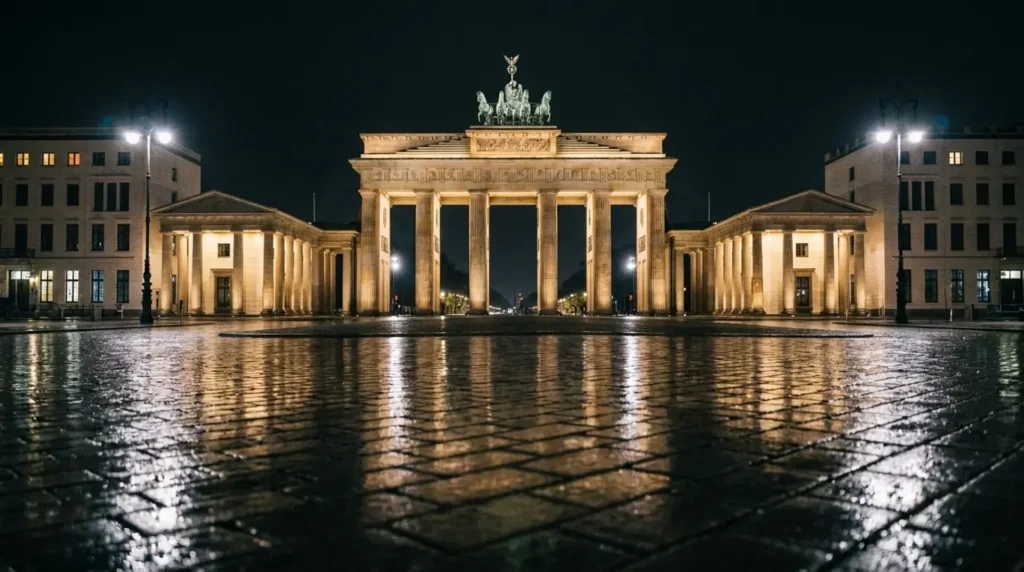
- Brandenburg Gate, Reichstag (Norman Foster glass dome, free with booking), Holocaust Memorial
- Museum Island — 5 museums including the Pergamon, Neues and Alte Nationalgalerie (UNESCO-listed)
- East Side Gallery (1.3 km of painted Berlin Wall), Checkpoint Charlie, Tempelhofer Feld
Signature eats: Currywurst at Curry 36, Döner at Mustafa’s, Berliner Weisse mit Schuss.
🥨 Munich
Bavaria’s capital — royal history, beer-hall culture, and the Alps an hour to the south. Munich operates at a slower tempo than Berlin: breakfast is still taken sitting down, and beer gardens are a civic institution regulated by a 1791 royal decree. The Englischer Garten is larger than New York’s Central Park and has a standing river wave in the middle where surfers queue year-round.
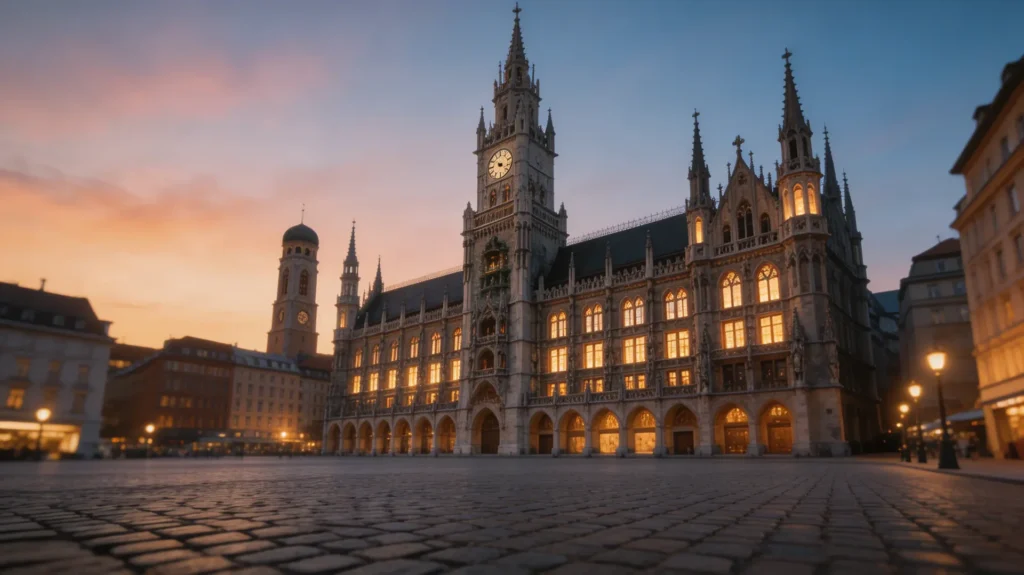
- Marienplatz & the Glockenspiel (chimes 11am, noon, 5pm)
- Englischer Garten (375 hectares, bigger than Central Park, with the Eisbach surfer wave)
- Nymphenburg Palace, BMW Welt & the Deutsches Museum
Signature eats: Weisswurst with sweet mustard and a Brezel (before noon only), Schweinshaxe and Helles at Augustiner-Bräu, Apfelstrudel at Café Frischhut.
⚓ Hamburg
Germany’s second-largest city and biggest port — more canals than Venice, red-brick warehouses, and a maritime identity older than the German state itself. A founding member of the Hanseatic League, it still calls itself the Free and Hanseatic City. The Elbphilharmonie, opened 2017 atop a 1960s cocoa warehouse, is the modern icon; the UNESCO-listed Speicherstadt is the world’s largest integrated warehouse complex.
- Elbphilharmonie concert hall & the Plaza viewing deck (free)
- Speicherstadt & Miniatur Wunderland (world’s largest model railway)
- Reeperbahn nightlife, Sunday Fish Market, harbour ferry line 62
Signature eats: Fischbrötchen (pickled herring in a bread roll) at Brücke 10, Labskaus (corned-beef hash with beet, herring and fried egg), Franzbrötchen cinnamon-sugar pastry.
🏦 Frankfurt
Germany’s financial capital and the one German city with a real skyline — home of the European Central Bank — wrapped around a reconstructed Altstadt completed in 2018. The Museumsufer has 14 museums packed into a short stretch of the Main riverbank.
- Römerberg medieval square & the reconstructed Altstadt (opened 2018)
- Museumsufer (14 museums, incl. Städel art gallery and the German Film Museum)
- Main Tower observation deck (200 m, the only public skyscraper deck in Germany)
Signature eats: Apfelwein (dry local cider served from a bembel jug) in Sachsenhausen, Grüne Soße (seven-herb cold green sauce), Frankfurter Würstchen.
⛪ Cologne
The Rhineland’s cultural capital — Roman-founded in AD 50, dominated by the twin 157-metre spires of the Kölner Dom (Germany’s most-visited landmark) and famously relaxed for a German city. Kölsch is served only in 200 ml glasses, replenished without asking until you put a coaster on top. The Hohenzollern bridge carries an estimated half-million love locks.
- Cologne Cathedral (UNESCO-listed; climb the 533 steps of the south tower)
- Museum Ludwig (Picasso, Pop Art, Warhol) & the Roman-Germanic Museum
- Hohenzollern Bridge love-locks and an Altstadt brauhaus crawl (Früh, Päffgen, Gaffel)
Signature eats: Kölsch in a 200 ml Stange, Himmel un Ääd (black pudding with apple-mashed potato), Halve Hahn (rye roll with cheese, despite the name).
🏰 Romantic Rhine Valley & the Bavarian Alps
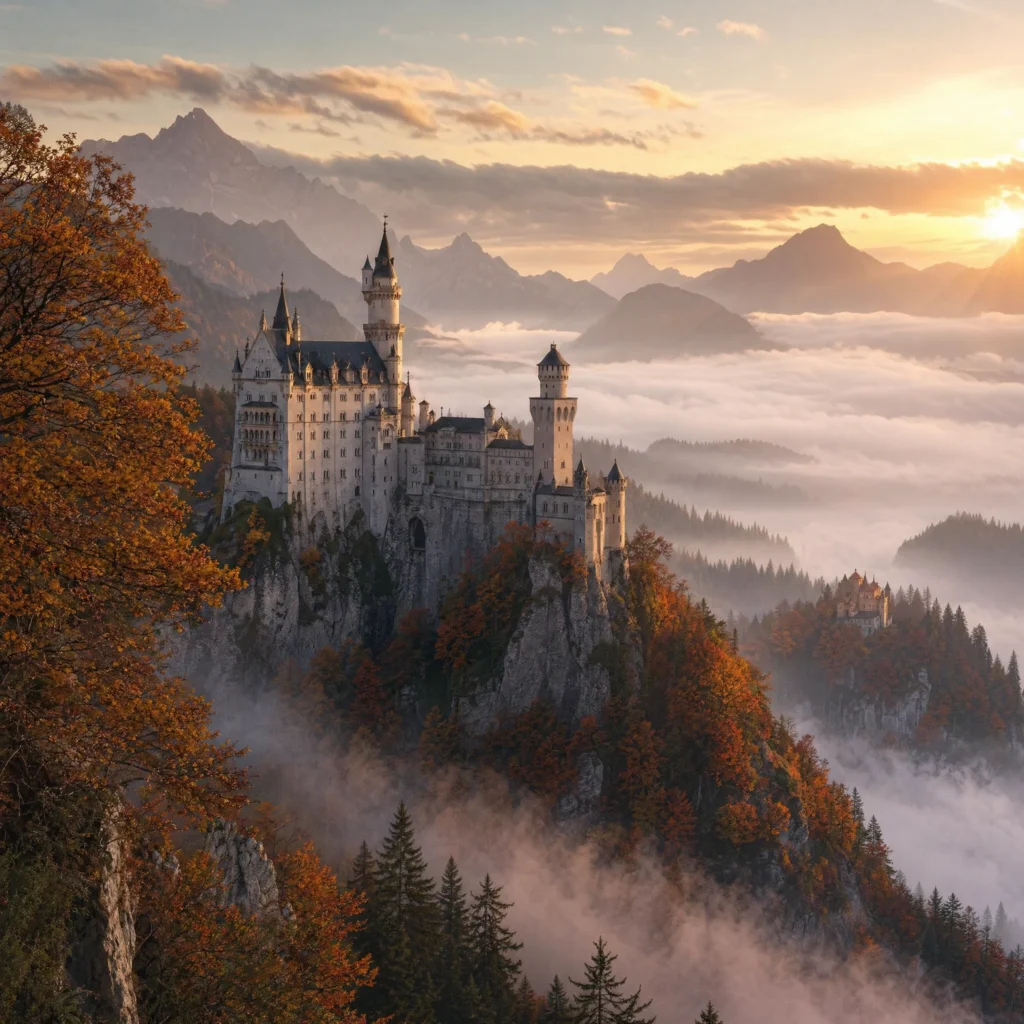
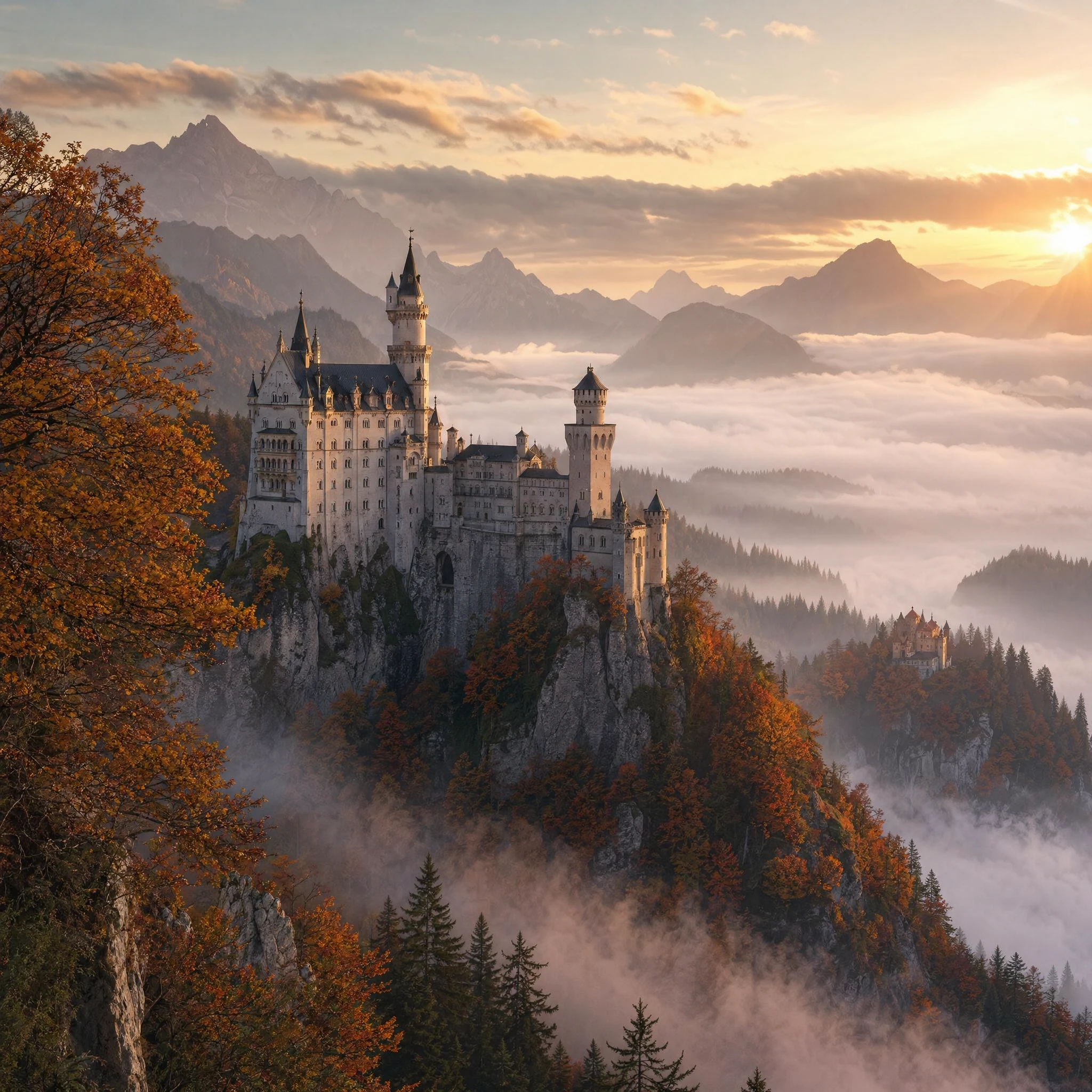
Two regions define the postcard: the 65-km UNESCO Middle Rhine between Rüdesheim and Koblenz, with 40+ castles and the Lorelei rock; and the Bavarian Alps, where Neuschwanstein sits near Füssen and the Zugspitze cable car climbs to Germany’s highest point at 2,962 metres.
- Marksburg Castle (only unconquered Rhine castle) & a Rüdesheim–St. Goar KD Line boat cruise
- Neuschwanstein & Hohenschwangau Castles (pre-book tickets six weeks ahead)
- Zugspitze cable car from Eibsee; Berchtesgaden & the Königssee emerald-water boat ride
Signature eats: Riesling Spätlese from Rüdesheim, Kaiserschmarrn (shredded pancake with plum compote) from an Alpine hut, smoked mountain trout from the Königssee.
German Culture & Etiquette — What to Know Before You Go
German culture rewards directness, rules that are followed, and quiet competence. Regional identity runs deep — a Bavarian and a Hamburger see themselves as different people — but the federal baseline is the same: punctuality matters, rules are rules, and small talk is reserved for people who know each other. Sundays are a legally protected quiet day (Ladenschlussgesetz) — shops close entirely, loud construction is banned, and even mowing the lawn can earn a visit from your neighbour.
The Essentials
- Jaywalking is genuinely frowned upon. Waiting for the green Ampelmännchen on an empty 3am street is normal — crossing early in front of a child can get you scolded out loud.
- Punctuality is not optional. “Five minutes early is on time, on time is late” is the working cultural rule for trains, dinners and business meetings alike.
- Greet with a firm handshake and direct eye contact; use Sie (formal “you”) until invited to switch to du.
- Say hello when you enter a small shop, bakery or lift. A simple “Guten Tag” or regional “Grüß Gott” (in Bavaria) or “Moin” (in the north) is expected.
- Cash is still king in many bakeries, small restaurants and beer gardens. EC-Karte (domestic debit) works everywhere; foreign credit cards still fail in surprising places, so carry €50–100 in small notes.
Sauna & Spa Etiquette
- German saunas are mixed-gender and strictly textilfrei — swimsuits are banned for hygiene reasons. Bring two towels: one to sit on, one to dry off.
- Sit on your own towel with nothing bare touching the wood. Feet on the same towel as the body. Staring at other bathers is the real faux pas.
- Respect the Aufguss ritual — when the Saunameister pours water and essential oils on the stones and waves a towel, nobody leaves until the round ends.
- Phones and chatter stay outside. Sauna is contemplative, not social, and the sign on the door usually says so explicitly.
- Shower before entering and after each round. Drink water between rounds or tip from a metallic Aufguss jug at the fountain.
A Food Lover’s Guide to Germany
German food is regional before it is national. Hamburg seafood, Rhineland sauerbraten, Bavarian schweinshaxe and Berlin Turkish döner are four separate cuisines inside one country, and the Länder defend their specialties the way Italians defend pasta shapes. Beer and wine divide the country almost perfectly along the old Roman limes — the north drinks pilsner and wheat beer, the Rhine and south drink Riesling and Spätburgunder. Every region bakes its own bread — Germany has more than 3,200 varieties.
Must-Try Dishes
| Dish | Description |
|---|---|
| Schnitzel | Thin pounded veal (Wiener Schnitzel, originally Austrian) or pork (Schnitzel Wiener Art) breaded and pan-fried golden in butter. Northern Jägerschnitzel arrives drowned in creamy mushroom gravy; Swabian variants swap rosemary-potato sides for Spätzle egg noodles. |
| Currywurst | Sliced pork sausage bathed in curry-ketchup and dusted with curry powder — invented in 1949 in Berlin by Herta Heuwer and still Berlin’s signature street food. The city alone is estimated to consume about 70 million portions a year, and Volkswagen produces its own branded Currywurst at its Wolfsburg plant. |
| Bratwurst | Grilled pork sausage with hundreds of protected regional variants: Nürnberger Rostbratwurst (finger-sized, served by the half-dozen on a pewter plate), Thüringer (longer, marjoram-forward), Coburger (grilled over pine cones), Weisswurst (Munich, boiled not grilled, eaten before noon). |
| Sauerbraten | Pot roast marinated for four days in red wine, vinegar, peppercorns, cloves and juniper berries, then slow-braised and served with red cabbage and giant potato dumplings (Klöße). The Rhineland version thickens the gravy with gingersnaps and raisins — sweet, dark, unmistakably Cologne. |
| Schweinshaxe | Roasted pork knuckle the size of a small football, with mahogany-coloured crackling you need a steak knife for, served with sauerkraut, a potato dumpling and a dark beer. The definitive plate at Munich beer halls such as Hofbräuhaus and Haxnbauer. |
| Pretzel (Brezel) | Bavarian lye-dipped, coarse-salted bread knot — eaten plain with Weisswurst and sweet Bavarian mustard at breakfast, or split and buttered at midday with a Helles. Protected regional product from Bavaria and Swabia. |
| Döner Kebab | Lamb or chicken shaved from a vertical spit into a fluffy triangular sesame pide with salad, red cabbage and yoghurt-garlic sauce — a Turkish-German invention claimed by Kadir Nurman in West Berlin in 1972, and now genuinely Germany’s favourite fast food, outselling McDonald’s nationwide. |
Bakery & Imbiss Culture
Germany doesn’t have konbini, but it does have the Bäckerei. Every neighbourhood has at least one artisan bakery opening at 6am, serving coffee and warm Brötchen through the morning commute; the country has roughly 10,000 licensed bakeries and the craft is UNESCO-listed intangible cultural heritage. For fast food on the go, the Imbiss — a small kiosk or counter stand — sells Currywurst, Döner, Bratwurst, and Frikadelle (meatballs) for €4–8.
- Chains: Kamps (national bakery), Back-Werk (budget), Edeka supermarket bakery counters. For Imbiss, chains like Tank & Rast rest stops and the ubiquitous local kebab shop.
- Signature items: Brötchen (crusty breakfast rolls), Laugenbrezel (lye pretzel), Franzbrötchen (Hamburg’s spiral cinnamon-sugar pastry), Streuselkuchen (buttery crumb cake), Berliner Pfannkuchen (jam doughnut — just called Berliner outside Berlin, or Krapfen in Bavaria).
At the top end, Germany has more than 300 Michelin-starred restaurants — the second-highest count in Europe after France. A 3-star tasting at Überfahrt (Lake Tegernsee) or Jan in Munich settles around €300 per person with wine, and Berlin has become Europe’s best vegan fine-dining city.
Off the Beaten Path — Germany Beyond the Guidebook
Saxon Switzerland (Sächsische Schweiz)
An hour by S-Bahn south-east of Dresden, this compact national park in the Elbe sandstone mountains is one of Europe’s great hiking and rock-climbing landscapes, with roughly 1,100 freestanding sandstone towers and 700 marked trails. The iron Bastei Bridge, built in 1851 and arching 194 metres above the Elbe between sandstone pillars, is the signature photograph. Across the river lies Königstein Fortress — one of the largest hilltop fortresses in Europe, never captured in its 800-year history. The park continues across the border into Bohemian Switzerland in the Czech Republic.
Sylt & the North Frisian Islands
A 38-km thin spit of dunes, heather moor and thatched Reetdach farmhouses in the North Sea, reached only by train across the 11-km Hindenburgdamm causeway or a short flight from Hamburg. Sylt is where North German money goes on holiday — champagne bars, oysters at Gosch in List, and 40 km of continuous sandy beach you can walk for hours without seeing another person outside July and August. Nearby Föhr and Amrum are quieter, cheaper, and feel like the Dutch Waddensee crossed with a Scottish island.
Bamberg, Franconia
A perfectly preserved medieval UNESCO-listed town on seven hills in northern Bavaria — half-timbered old town, a Rococo town hall marooned on an island in the Regnitz river, and nine active independent breweries inside the town walls. The local specialty is Rauchbier, a smoked lager that tastes like bacon in a glass — Schlenkerla has been brewing it since 1405. Bamberg is 40 minutes by ICE from Nuremberg and somehow stays off most English-language itineraries.
Rügen Island
Germany’s largest island, in the Baltic Sea — chalk cliffs at Jasmund National Park (Caspar David Friedrich painted them in 1818), the narrow-gauge Rasender Roland steam train that has run since 1895, and Prora, a vast abandoned 4.5-km neoclassical seaside colossus that the Nazis began in 1936 to house 20,000 Strength-Through-Joy holidaymakers and never finished. The island’s old seaside spa towns (Binz, Sellin, Göhren) are still lined with filigreed white Bäderarchitektur villas from the 1890s.
Heidelberg & the Neckar Valley
Germany’s oldest university, founded in 1386, sits beneath a red-sandstone ruined castle on the Neckar, with a Philosophenweg path climbing the opposite riverbank. Skip the summer bus-tour crush: come in mid-October when the student bars reopen after the long vacation, the beeches on the Philosophenweg burn orange, and the Altstadt cobbles are silent by 10pm. Pair it with a day in Schwetzingen’s Rococo gardens, 15 minutes west by S-Bahn.
Practical Information
| Currency | Euro (€ / EUR); 1 USD ≈ 0.94 EUR (April 19, 2026) |
| Cash needs | More cash-friendly than France or the Netherlands. Bakeries, kiosks, beer gardens, and many small restaurants still refuse foreign credit cards. Keep €100–150 in small notes and a €0.50 coin for public toilets and supermarket trolleys. |
| ATMs | Geldautomaten ubiquitous at Sparkasse and Deutsche Bank branches. Decline dynamic currency conversion — always choose to be charged in euros for the interbank rate. |
| Tipping | Not automatic. Round up 5–10% by telling the server the total before they process payment (“Zwanzig bitte” for a €18.20 bill). No tipping in bakeries or counter service; €1–2 per bag for hotel porters. |
| Language | German is the national language. English is widely spoken in Berlin, Munich, Hamburg and among under-40s; thinner in small towns and with older generations. Google Translate camera mode handles menus and rail signs. |
| Safety | Very safe — 2024 Global Peace Index rank 20. Petty pickpocketing at Berlin Hauptbahnhof, Cologne Dom station, and Munich Oktoberfest is the main risk. |
| Connectivity | 4G/5G blanket coverage from Deutsche Telekom, Vodafone and O2. eSIMs (Airalo, Holafly) work nationwide and from the moment you land. |
| Power | Type F (Schuko) plugs; 230V / 50 Hz |
| Tap water | Leitungswasser is safe and excellent nationwide, but it is not served automatically at restaurants — ask for “Leitungswasser, bitte” and expect some restaurants to politely charge or redirect you to sparkling water. |
| Healthcare | EU-standard public hospitals; EHIC cards work for EU visitors, others need travel insurance. Green-cross Apotheken have a Notdienst rotation — the 24/7 duty pharmacy is posted on every closed pharmacy’s door. |
Budget Breakdown — What Germany Actually Costs
💚 Budget Traveller
Hostels (A&O, Meininger, Generator, Wombat’s City), Lidl and Aldi grocery stops, a Deutschlandticket for all regional and urban transit, and the occasional long-distance FlixBus in place of ICE. Doable at €75–115 per day (~US$80–120), with Berlin and Leipzig the cheapest big cities and Munich the most expensive. A Brötchen-and-coffee bakery breakfast under €4, a Döner lunch under €7, an Imbiss Currywurst dinner under €8, and a liter of supermarket pilsner under €2.
💙 Mid-Range
3-star hotel or a Vrbo/Airbnb, one sit-down meal and one café/Imbiss meal a day, ICE Sparpreis tickets booked 6 weeks early, and a couple of paid sights (Neuschwanstein: €21, a Rhine cruise: €25). Plan €170–260 per day (~US$180–280). Munich in Oktoberfest and Berlin in peak summer push the top of that range — everywhere else in Germany settles comfortably at €180.
💜 Luxury
5-star hotels (Bayerischer Hof Munich, Hotel Adlon Kempinski Berlin, Brenners Park Baden-Baden), ICE first class, Michelin-starred tasting menus with wine pairings, and private Rhine or Neuschwanstein transfers. Plan €460+ per day (~US$500+). A one-star Michelin dinner in Berlin with paired wines is about €180; a three-star tasting in the Black Forest or at Lake Tegernsee is €300–450 per person. In Oktoberfest season, a confirmed table reservation in a premium tent (with mandatory food and beer vouchers) pushes one evening alone past €80 per person before the taxi home.
| Tier | Daily (USD) | Accommodation | Food | Transport |
|---|---|---|---|---|
| Budget | $80–120 | Hostel €30–45 / budget hotel €70–95 | €20–35/day | Deutschlandticket €58/month or city day pass €8–10 |
| Mid-Range | $180–280 | 3-star hotel €120–200 | €50–80/day | ICE Sparpreis €30–60 intercity |
| Luxury | $500+ | 5-star hotel €350–700+ | €150–300/day | ICE first-class / rental S-class €150–250/day |
Planning Your First Trip to Germany
- Pick your region. Choose ONE of: North (Hamburg, Berlin, Baltic), South (Munich, Alps, Bavaria), or West (Frankfurt, Cologne, Rhine). Two regions fit inside 10 days via ICE; three means most of your trip on trains.
- Book ICE tickets 6 weeks early on bahn.de. Sparpreis fares start at €17.90 for intercity legs — that’s Berlin–Munich in first class for less than a dinner if you’re early.
- Consider the Deutschlandticket (€58/month). If you’re spending more than a few days hopping regional trains, trams, S-Bahn and city buses, a single month covers unlimited nationwide public transit — just not the ICE/IC long-distance trains.
- Lock your seasonal pick. Oktoberfest (September 19 – October 4, 2026) and the Christmas markets (late November – 23 December) are the signature seasons. Both need accommodation booked 6+ months ahead in Munich, Nuremberg and Dresden.
- Pack cash and a €0.50 coin. Public toilets charge, supermarket trolleys need a coin deposit, and many bakeries still refuse foreign credit cards.
Classic 10-Day Itinerary: Days 1–3 Berlin (Mitte, Museum Island, Kreuzberg) · Day 4 ICE to Dresden (Zwinger, Frauenkirche) · Day 5 Saxon Switzerland day trip · Day 6 ICE to Munich · Days 7–8 Munich (Marienplatz, beer gardens, BMW Welt) · Day 9 Neuschwanstein day trip · Day 10 fly home from Munich.
Frequently Asked Questions
Is Germany expensive to visit?
Cheaper than France, the UK or Scandinavia; roughly on par with Spain or northern Italy. Budget travellers get by on €75–115/day with hostels and bakery food; mid-range travellers should plan €170–260/day. Berlin and Leipzig are the affordable big cities; Munich during Oktoberfest is the priciest.
Do I need to speak German?
No. English works almost everywhere among under-40s and in tourist-facing businesses. A little German goes a long way: “Guten Tag”, “Bitte”, “Danke” and “Zahlen bitte” (the bill, please) warm every interaction. In small Bavarian villages and among older generations, English thins out — Google Translate handles the rest.
Is the Deutschlandticket worth it?
Yes for most travellers staying 2+ weeks bouncing around regional trains, U-Bahn and trams. At €58/month it covers unlimited regional trains (RE, RB), S-Bahn, U-Bahn, tram and city bus nationwide — but NOT ICE, IC or EC long-distance trains. For a shorter one-region trip, a local weekly pass usually beats it.
Is Germany safe for solo travellers?
Extremely — Germany ranks 20th in the 2024 Global Peace Index and violent crime against visitors is rare. Solo women report feeling comfortable on urban transit late at night. The main risks are petty pickpocketing at Berlin Hauptbahnhof, Munich Oktoberfest and Cologne Dom station. Keep phones out of back pockets and watch bags on platforms.
When is Oktoberfest?
Oktoberfest 2026 runs Saturday, September 19 through Sunday, October 4 in Munich — 16 days that draw roughly 6 million visitors and pour about 7 million Maß of beer. Book accommodation 6+ months ahead; Tuesday through Thursday mornings are far less crowded than weekends.
Can I get by as a vegetarian or vegan?
Easily. Berlin has been Europe’s unofficial vegan capital for a decade, with dedicated vegan butchers and bakeries; Hamburg, Munich and Cologne are close behind. Even traditional menus usually list Käsespätzle, Maultaschen (Swabian ravioli) and Kartoffelsuppe. Outside the big cities, plant-based thins out — small-town Bavaria remains meat-centric.
Are shops really closed on Sundays?
Yes, and it’s legal protection, not a quirk. Under the Ladenschlussgesetz, nearly all supermarkets, department stores and normal retail close entirely on Sundays and public holidays. Exceptions: main-station kiosks, bakeries open until lunchtime, restaurants, cafés, museums, and four or five “verkaufsoffener Sonntag” weekends a year. Stock the fridge Saturday night.
Ready to Explore Germany?
Germany rewards travellers who let the trains do the work — pick a region, book six weeks ahead, learn five German words, and let the Gemütlichkeit take care of the rest. Start in Berlin for the history, Munich for the beer halls, or the Rhine for the castles.
Explore More
Cities we cover in Germany
Cities to explore in Germany
Deep-dive guides to specific cities, neighbourhoods, and food scenes — written with the same magazine voice.
More country guides you might like
Plan your trip to Germany
The booking tools we use ourselves. FFU may earn a commission at no extra cost to you.
Plan & book your trip to Germany
Booking through these searches supports our guides at no extra cost to you.