
City Guide · Germany · North Rhine-Westphalia
Cologne, Germany: Gothic Spires, Kölsch Culture & the Rhine’s Most Unbuttoned City
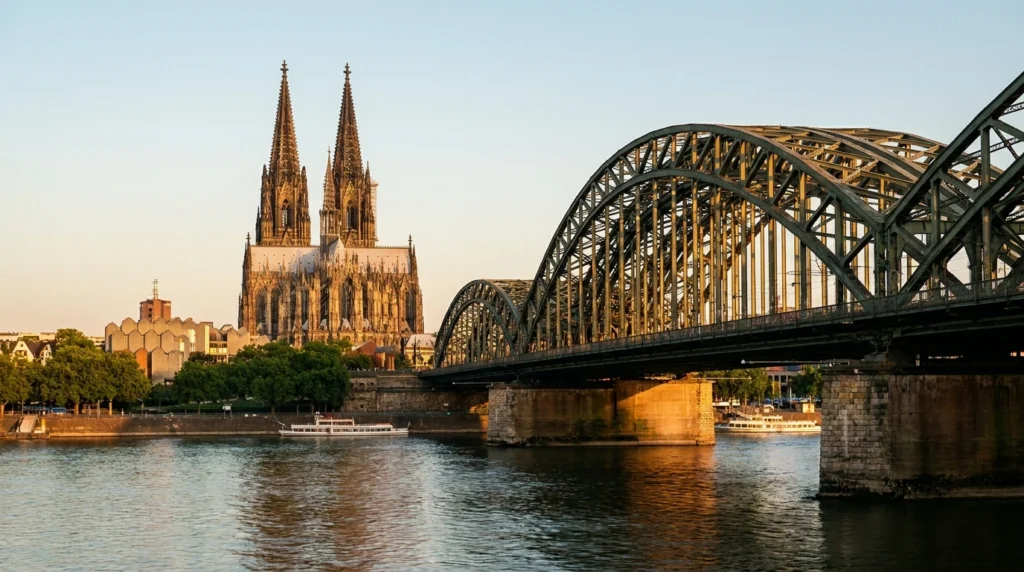
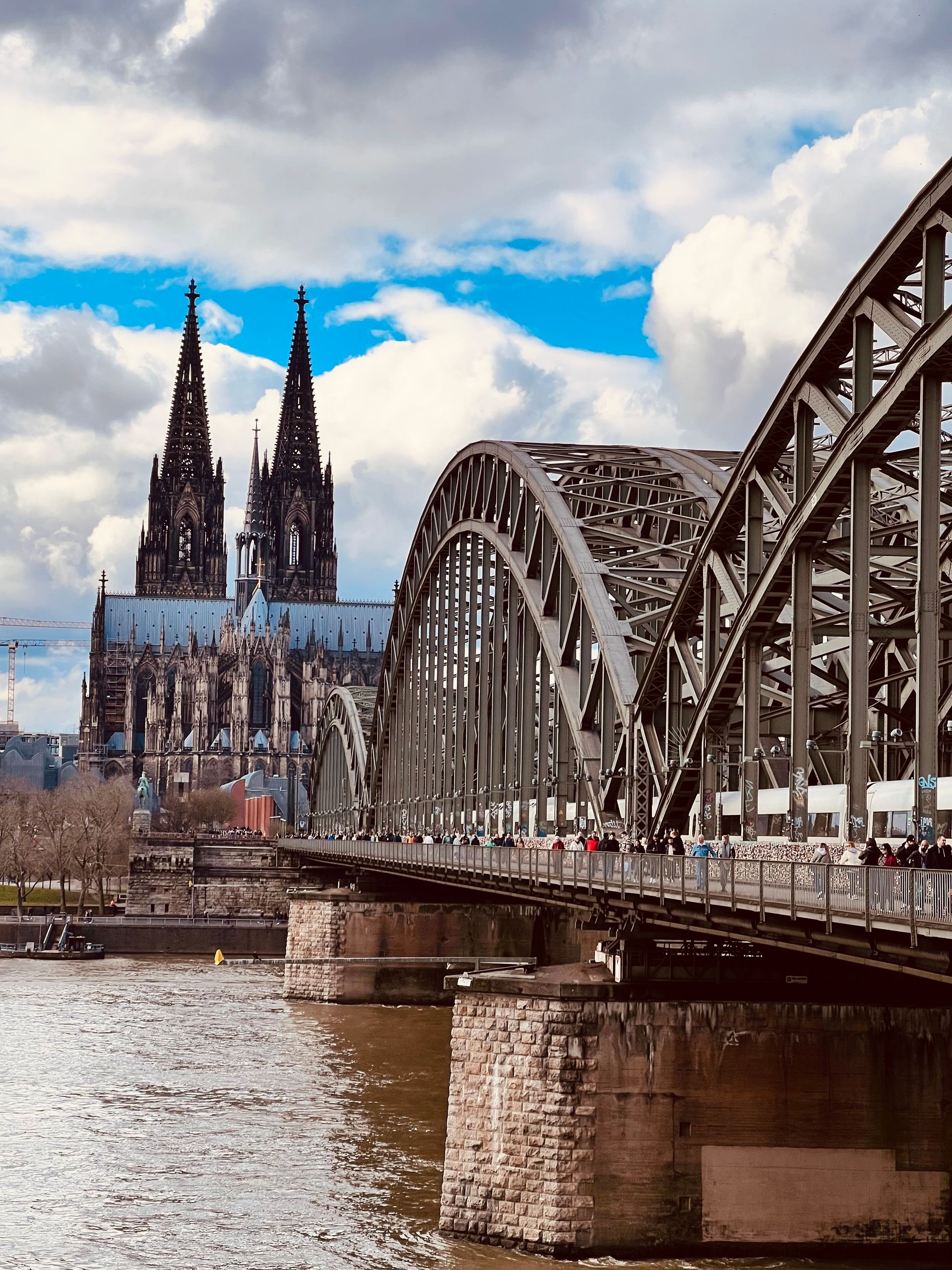
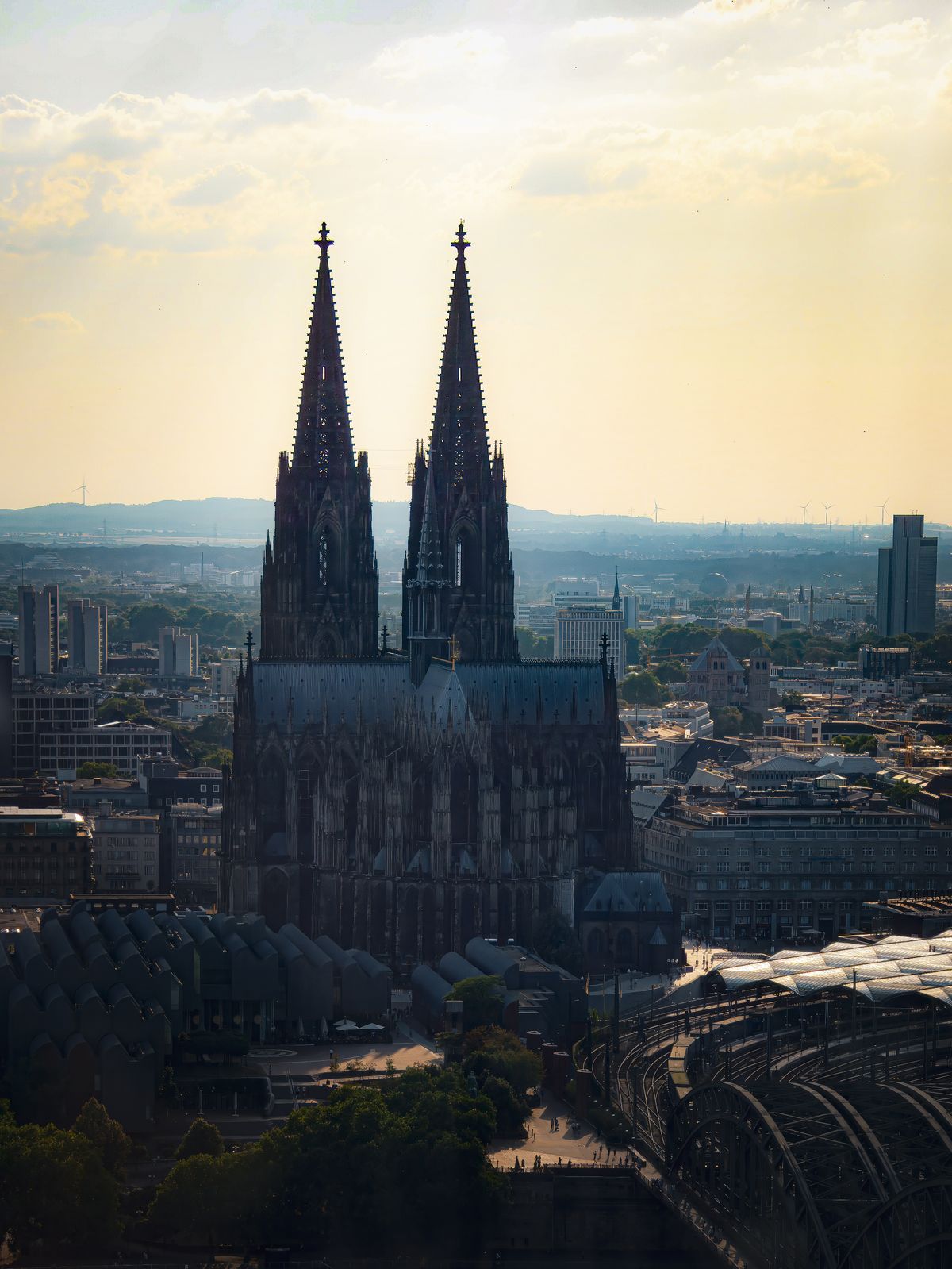
I have arrived in Cologne by train more times than I can count, and the moment never dulls: you step out of the Hauptbahnhof and the Cologne Cathedral is right there, all 157 metres of blackened Gothic stone filling the sky before you have even found your platform exit . No other major German city stages its arrival like this. But the cathedral is a feint — Cologne’s real character is in its loosened collar, the way locals press a thin glass of Kölsch beer into your hand the moment you sit in a brewery, the way Carnival turns the whole city into one costumed street party every February. Treat this guide as the brief I would hand a friend the night before they checked in near the Rhine: two full days minimum, one Rhine cruise, one brewery crawl through the Altstadt, and an honest amount of time just watching the river go by.

Table of Contents
Why Cologne?
Cologne (Köln in German) is the fourth-largest city in Germany and the largest in the state of North Rhine-Westphalia, with roughly 1.09 million residents inside the city limits as of 2024 and around 1.15 million in the immediate metro area — itself the anchor of the wider Rhine-Ruhr region, the most populous urban area in Germany at well over 10 million people . It is also one of the oldest cities in the country: the Romans founded it in 38 CE and elevated it to a colonia — the root of the modern name — in 50 CE, making the Rhine here a frontier of the empire for four centuries .
The contradiction that defines Cologne is that it looks medieval and behaves like nowhere else in Germany. Ninety per cent of the old town was flattened in the Second World War, yet the cathedral survived and was painstakingly restored, and the city rebuilt itself into something looser and warmer than its image suggests . Cologne is famously the most tolerant and outwardly friendly of the big German cities — home to one of Europe’s largest Pride celebrations and to Carnival, the “fifth season” that shuts the city down for a week of costumed street parties every February .
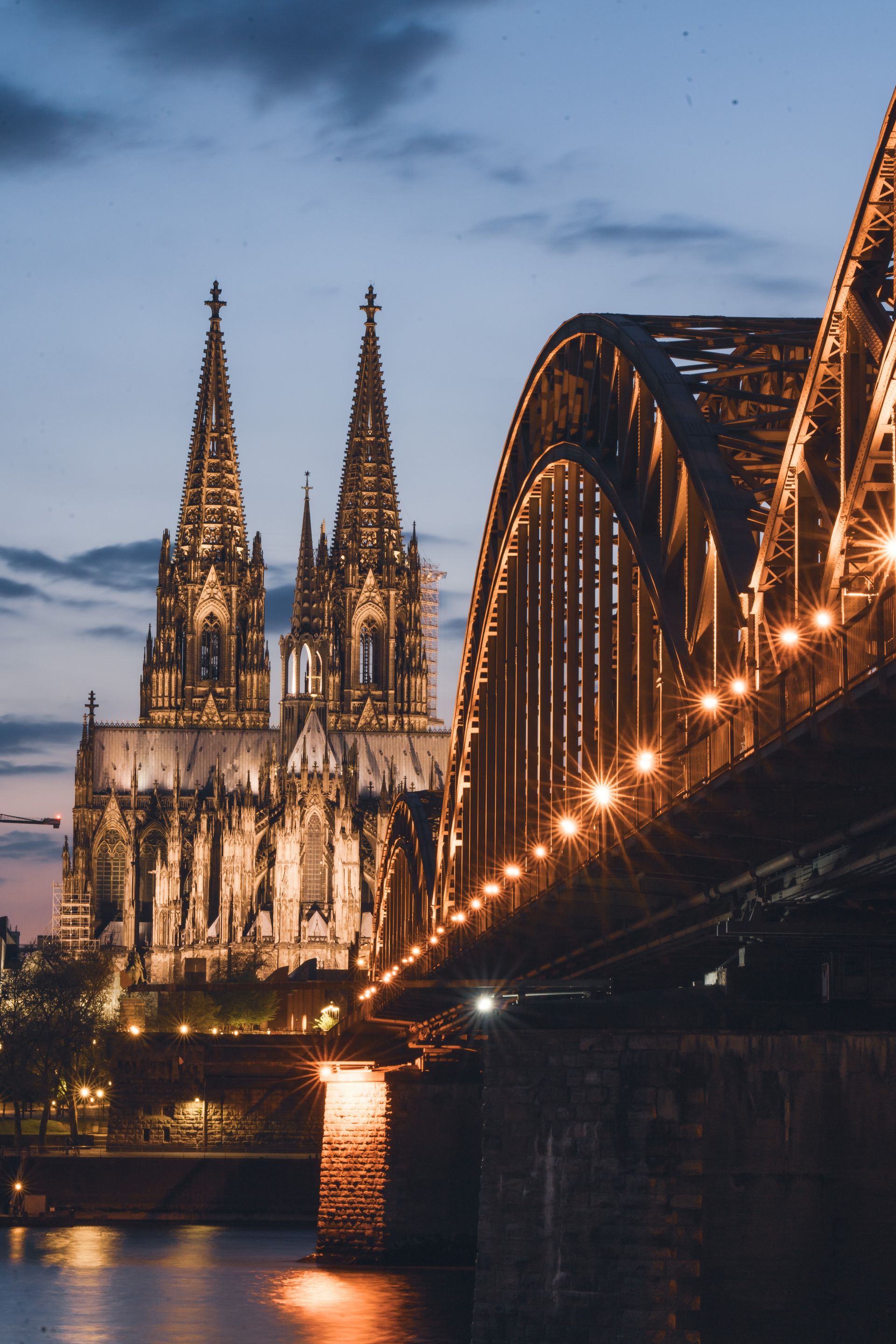
And then there is the superlative everyone comes for: the Cologne Cathedral, at 157 metres the tallest twin-spired church on Earth and Germany’s single most-visited landmark, drawing around 6 million visitors a year . This guide will walk you through that cathedral, the Kölsch breweries of the Altstadt, the love-lock-laden Hohenzollern Bridge, the world-class Museum Ludwig, and the green-cube Belgian Quarter where the city’s creative life actually happens. Pair it with the Germany Travel Guide for country-level context, and read it alongside the Berlin City Guide for the full north-south contrast.

Neighborhoods: Finding Your Cologne
📍 Cologne Map: Every Place in This Guide
Altstadt (Old Town)
The riverside Altstadt is the postcard Cologne — the cluster of pastel houses on the Fischmarkt, the Romanesque Great St Martin church, and the cobbled lanes between the cathedral and the Rhine. Almost all of it is a faithful post-war reconstruction, but it is where every visit begins and where the oldest Kölsch breweries pour. It is touristy and proud of it.
- Fischmarkt & the Great St Martin church
- Heinzelmännchenbrunnen fountain & the old Kölsch brewery lanes
- Rhine promenade and the Altstadt boat landings
Best for: first-timers and brewery crawls. Access: 5-minute walk from Köln Hauptbahnhof, or any tram to Heumarkt/Rathaus.
Belgian Quarter (Belgisches Viertel)
If the Altstadt is the city’s history, the Belgian Quarter is its present tense — the leafy grid of streets west of the ring named after Belgian towns, packed with independent boutiques, third-wave coffee, natural-wine bars and the design studios that give Cologne its creative reputation . The hub is the tree-lined Brüsseler Platz, which fills with people drinking on the church steps on summer evenings.
- Brüsseler Platz on a warm evening
- Independent fashion on Antwerpener and Aachener Straße
- Late-night bars around the Friesenplatz ring
Best for: design lovers, coffee and nightlife. Access: U-Bahn to Rudolfplatz or Friesenplatz.
Ehrenfeld
Cologne’s street-art and music heartland, a former working-class and industrial district north-west of the centre that has become the city’s most exciting quarter for murals, live venues and multicultural food. The Cologne Tourist Board itself flags Ehrenfeld and the Belgian Quarter as the city’s street-art hotspots .
- Street art around Körnerstraße and the railway arches
- Live music at the Helios lighthouse landmark
- Turkish and Balkan grills along Venloer Straße
Best for: street art, indie music, cheap eats. Access: S-Bahn or tram to Ehrenfeld/Venloer Straße.
Südstadt
The relaxed, residential south — tree-lined streets, the Romanesque St Severin church, and the Chlodwigplatz square ringed with neighbourhood bars and bakeries. Südstadt is where Cologne feels most livable, with the Volksgarten park and the Rhine beaches a short walk away.
- Chlodwigplatz cafes and Friday market
- Volksgarten park and its lake
- St Severin, one of the twelve Romanesque churches
Best for: a slower, local day. Access: U-Bahn to Chlodwigplatz.
Deutz & the Right Bank
Cross the Hohenzollern or Deutz bridge and you reach the right bank, home to the Cologne Triangle observation deck — the single best view back at the cathedral and the old-town skyline — plus the trade-fair grounds and the LANXESS Arena. The Rheinpark here hosts the Tanzbrunnen open-air stage.
- Cologne Triangle KranHaus viewing platform
- Rheinpark and the Rheinseilbahn cable car
- LANXESS Arena concerts and ice hockey
Best for: skyline photos, concerts. Access: S-Bahn to Köln Messe/Deutz.
Agnesviertel
A quietly elegant quarter north of the centre around the neo-Gothic St Agnes church, full of art-nouveau apartment buildings, antique shops, galleries and small theatres. It is the most genteel of Cologne’s inner neighbourhoods and rewards an aimless wander.
- St Agnes church and the surrounding Gründerzeit facades
- Antique and design shops on Neusser Straße
- Small fringe theatres and galleries
Best for: architecture and galleries. Access: U-Bahn to Ebertplatz.
Rheinauhafen
The redeveloped harbour south of the old town, where 19th-century brick warehouses sit beside the three landmark Kranhäuser (“crane houses”) — inverted-L glass towers shaped like the harbour cranes they replaced. The Chocolate Museum sits on its own spit of land at the northern end.
- The three Kranhäuser crane-house towers
- Imhoff Chocolate Museum
- Riverside promenade and design showrooms
Best for: modern architecture, a riverside stroll. Access: tram to Severinstraße, then a short walk.
Kwartier Latäng & the University Quarter
The student belt around the Zülpicher Straße (locally “Kwartier Latäng”) is the cheapest and loudest nightlife strip in the city, jammed with bars, döner stands and clubs that run until dawn, especially during Carnival and semester season.
- Bar-hopping along Zülpicher Straße
- Late-night kiosks (“Büdchen”) culture
- Cheap eats around the university campus
Best for: students and budget nightlife. Access: U-Bahn to Zülpicher Platz.
The Food

Cologne’s food culture is Rhenish, hearty and inseparable from its beer. The defining ritual is Kölsch, the pale, bright, top-fermented beer brewed only in and around the city and protected since 1986 by the Kölsch Convention, which restricts the name to Cologne-area breweries . It arrives in a slim 200 ml Stange glass, carried by a blue-aproned waiter called a Köbes who keeps replacing your empty glass — tallying each one with a pencil mark on your coaster — until you lay the coaster on top to signal you are done.
Kölsch Breweries (Brauhaus)
The brewery is Cologne’s living room. Each of the big houses brews its own Kölsch and serves Rhenish staples in a loud, communal, all-ages room. Order the beer by default; food is built to soak it up.
- Früh am Dom — the big traditional house in the cathedral’s shadow; Kölsch & Halve Hahn (€3–14, ~$3–15)
- Päffgen — family brewery on Friesenstraße, pours straight from the barrel (Kölsch ~€2.30, ~$2.50)
- Brauhaus Sion / Gaffel am Dom — central Altstadt houses for a first-night crawl (mains €12–19, ~$13–21)
Rhenish Home Cooking
The classic Cologne plate is sweet-and-sour and unapologetically rich — the food of a region that prized slow-cooked thrift. Try these in any brewery or a Südstadt corner restaurant.
- Rheinischer Sauerbraten — marinated braised beef in a raisin gravy (€16–22, ~$17–24)
- Hämche — slow-cooked pork knuckle with sauerkraut (€15–20, ~$16–22)
- Himmel un ääd — “heaven and earth”: black pudding with mashed potato and apple (€12–16, ~$13–17)
Beyond Sauerbraten and Kölsch
Cologne is also one of Germany’s most multicultural food cities, and the casual snack culture is as important as the sit-down classics. Don’t leave without these.
- Halve Hahn — despite the name (“half a chicken”), a rye roll with aged Gouda and mustard (€4–7, ~$4–8)
- Reibekuchen — crisp potato pancakes with apple sauce, a market and Christmas-market staple (€4–6, ~$4–7)
- Döner kebab — the Ehrenfeld and university-quarter late-night standard (€6–8, ~$7–9)
- Mustard from the Senfmühle — stone-ground mustard from the historic mill near the Chocolate Museum (€5–9, ~$5–10)
Food Experiences You Can’t Miss
- A full brewery crawl through the Altstadt — Früh, Sion and Päffgen in one slow evening, letting the Köbes keep score
- Reibekuchen and Glühwein at the cathedral Christmas market (late Nov–23 Dec)
- The Imhoff Chocolate Museum’s 3-metre chocolate fountain and tasting on the Rheinauhafen
Cultural Sights

Cologne Cathedral (Kölner Dom)
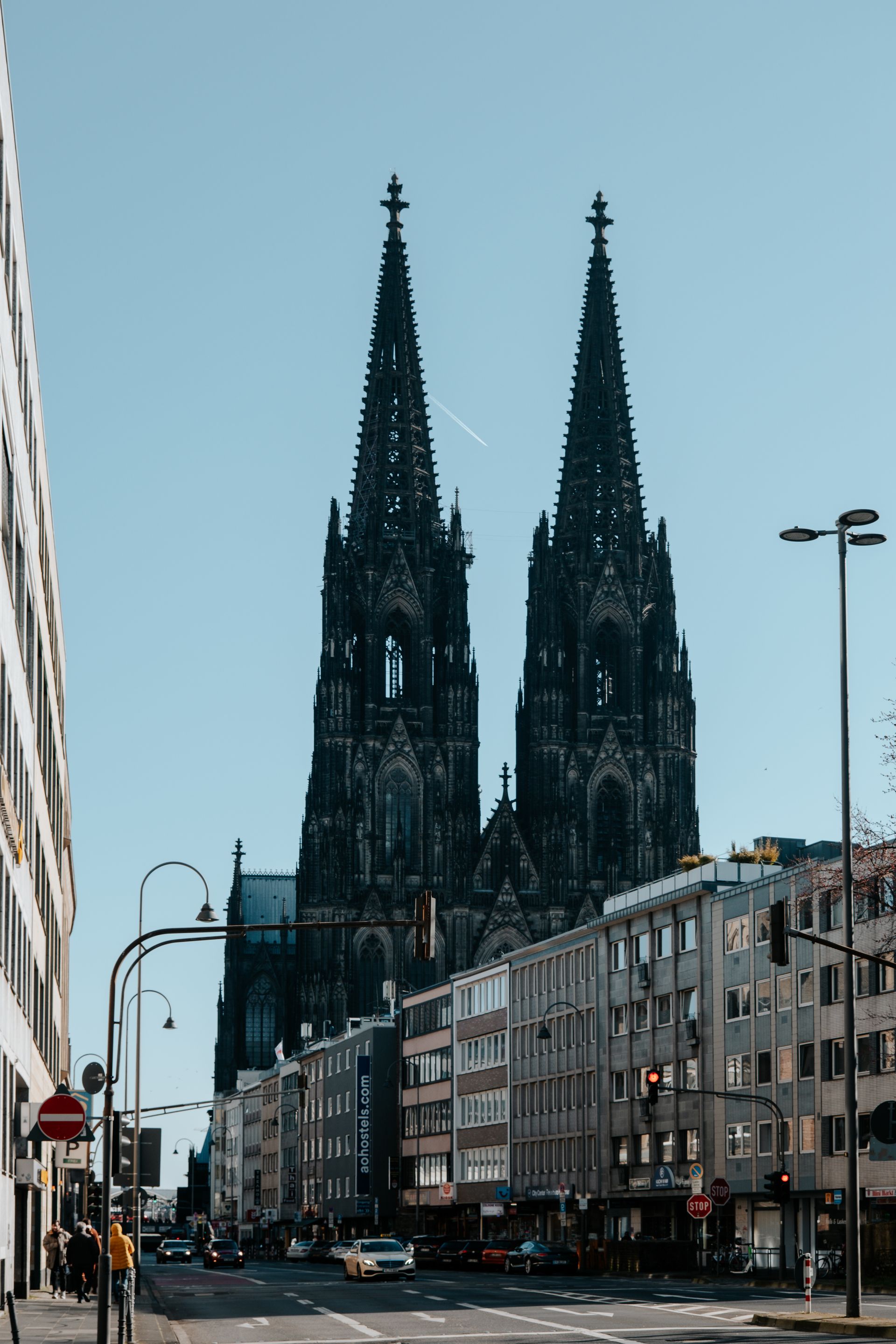
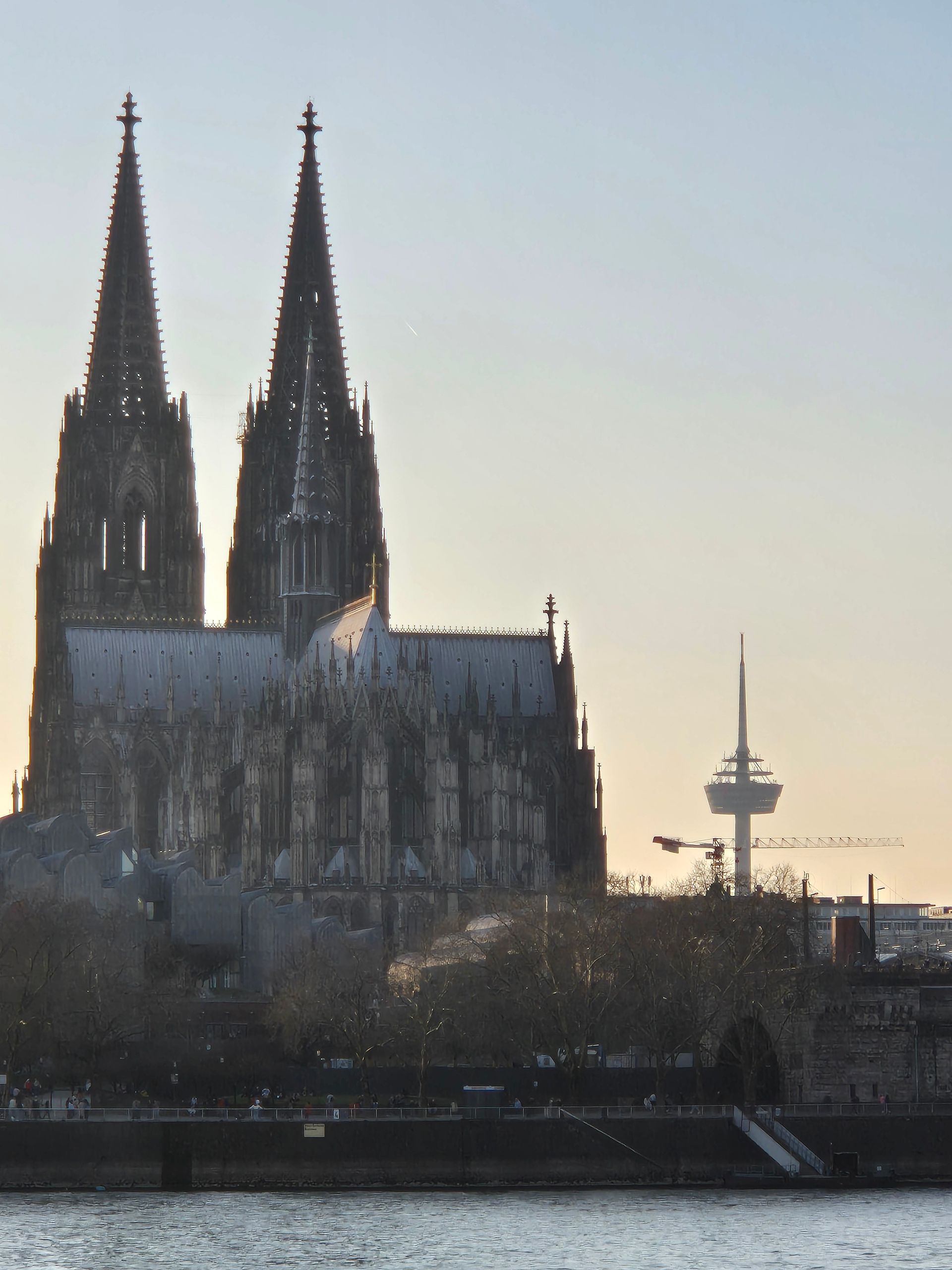
The reason the city exists on the tourist map. Construction began in 1248, stalled around 1560 with the building half-finished, and resumed in the 19th century to be completed in 1880 — 632 years in total . At 157 metres it was briefly the tallest building in the world and is still the tallest twin-spired church anywhere; it was inscribed as a UNESCO World Heritage Site in 1996 . Founded as a cathedral in 1248. Admission to the nave is free; the south-tower climb of 533 steps costs around €8 (~$9). Climb the tower early to beat the queues and the heat.
Museum Ludwig
One of Europe’s great modern-art collections, sitting right beside the cathedral — the largest Pop Art holding outside the United States and a deep Picasso collection. Admission around €13 (~$14). Closed Mondays; free-ish first-Thursday-evening programming runs some months .
Hohenzollern Bridge & the Love Locks
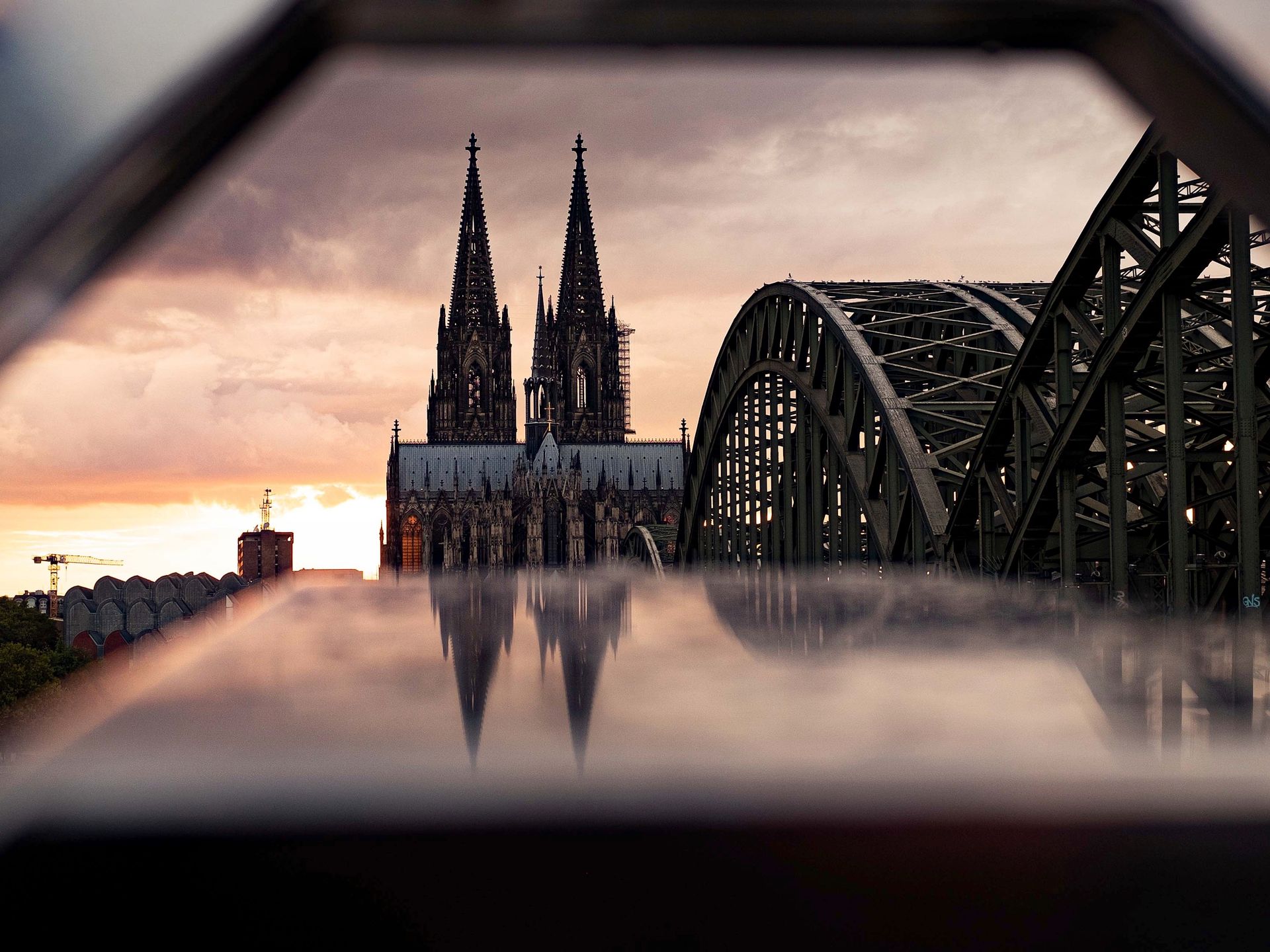
The rail and pedestrian bridge directly behind the cathedral is the most photographed view in the city and carries hundreds of thousands of engraved “love locks” clipped to its fences. Admission free, open always. Walk it at sunset for the cathedral silhouette and the Cologne Triangle deck on the far bank.
Romano-Germanic Museum
Built over a preserved Roman villa floor, this museum holds the Dionysus mosaic and the finest Roman collection on the Rhine, a reminder that Cologne was a frontier capital of the empire. Admission around €9 (~$10). Best visited with the cathedral on the same Roman-Cologne morning.
Great St Martin & the Twelve Romanesque Churches
Cologne preserves twelve great Romanesque churches, more than any other city — Great St Martin, with its distinctive crossing tower over the Altstadt, is the most visible. Founded in the 12th century. Admission free; quiet mornings are best for the interiors.
NS-Dokumentationszentrum (EL-DE Haus)
The former Cologne Gestapo headquarters, now the country’s largest regional memorial to the Nazi period, with the original prison cells and their prisoners’ wall inscriptions preserved in the basement. Admission around €4.50 (~$5). A sobering, essential counterweight to the breweries.
Entertainment

Carnival (Karneval)
Cologne’s “fifth season” is the city’s defining party — a week of costumed street revelry peaking on Rosenmontag (Rose Monday), which falls on 16 February in 2026, when a million-strong parade winds through the centre . Typical cost free to watch. Book any central hotel months ahead; rooms vanish for Carnival week.
Live Music & Clubs
From the LANXESS Arena (one of Europe’s largest indoor venues) to the indie clubs of Ehrenfeld and the Bootshaus techno club, Cologne has a deep live scene. Typical cost €15–70 (~$16–76).
ColognePride (CSD)
One of Europe’s biggest Pride events fills the streets every July, reflecting the city’s reputation as Germany’s most openly tolerant metropolis . Typical cost free.
Rhine Cruises
Hour-long panorama cruises and longer trips up the Rhine valley leave from the Altstadt landings; the KD line is the historic operator. Typical cost €13–20 (~$14–22).
1. FC Köln Football
Bundesliga football at the RheinEnergieStadion is loud and devout; the fans sing the city anthem before kick-off. Typical cost €20–60 (~$22–65).
Theatre & Cabaret
From the Schäl Sick fringe stages to the Volksbühne, Cologne has a lively German-language theatre and cabaret scene clustered in the Agnesviertel and Belgian Quarter. Typical cost €15–45 (~$16–49).
Day Trips
Bonn (25 minutes by regional train)
Beethoven’s birthplace and the former West German capital, with the excellent Haus der Geschichte museum, the Beethoven-Haus, and a riverside old town. Frequent trains from Köln Hbf. A half-day is plenty; pair the Beethoven house with the government-quarter museums.
Düsseldorf (25 minutes by regional train)
Cologne’s great rival up the Rhine — the Altstadt’s “longest bar in the world,” the Frank Gehry buildings of the MedienHafen, and the Königsallee shopping mile. Drink Altbier here, not Kölsch. Trains run every few minutes.
Brühl & Augustusburg Palace (20 minutes by regional train)
The Rococo Augustusburg Palace is a UNESCO World Heritage Site with one of the great Baroque staircases in Europe, plus the Phantasialand theme park nearby . Check palace opening days before you go.
Aachen (35–70 minutes by train)
Charlemagne’s imperial capital, with the octagonal Palatine Chapel — Germany’s first UNESCO World Heritage Site — and the famous Aachener Printen gingerbread. Take the faster ICE if your rail pass allows it.
The Rhine Valley & Koblenz (1 hour+ by train)
The UNESCO-listed Upper Middle Rhine Valley of castles and vineyards begins just south of Bonn; ride to Koblenz and pick up a Rhine-gorge cruise, or stop at Bacharach for the postcard castles. A full-day excursion best done early.
Seasonal Guide
Spring (March – May)
Mild and increasingly green, with daytime highs climbing from around 10°C in March to the low 20s by late May, and the Rhine promenade cafes opening their terraces. Easter markets and the first warm evenings on Brüsseler Platz make May the sweet spot before the summer crowds. Carnival is technically over by Ash Wednesday but the city stays festive into spring.
Summer (June – August)
Peak season — warm 24–28°C days, long evenings, and the Rhine beaches and beer gardens in full swing. ColognePride fills July, and the Tanzbrunnen and Rheinpark host open-air concerts. It can get muggy and occasional thunderstorms roll in off the river, so pack a light layer for the evenings.
Autumn (September – November)
The quietest and arguably loveliest season: crisp 12–18°C days, golden light on the cathedral, and far thinner crowds. The c/o pop and Cologne art-fair calendar runs in autumn, and the breweries feel cosiest as the terraces close. November brings the first cold and the build-up to the Christmas markets.
Winter (December – February)
Cold (often 1–6°C) but magical — Cologne runs several large Christmas markets, the biggest spread out beneath the cathedral, from late November to 23 December. After New Year the city pivots straight into Carnival, which peaks on Rose Monday, 16 February 2026 . February is otherwise the cheapest month for hotels outside Carnival week.
Getting Around
Deutsche Bahn & the Hauptbahnhof
Cologne is one of Germany’s busiest rail hubs — the Hauptbahnhof sits directly beside the cathedral and puts you on ICE high-speed trains to Frankfurt in about 1 hour, to Berlin in around 4.5 hours, and to Brussels and Paris via Thalys/Eurostar . For arrival, nothing beats the train: you walk out into the cathedral plaza.
KVB Stadtbahn, Trams & Buses
The KVB runs the Stadtbahn — a light-rail system that runs underground like a metro in the centre and on the surface like a tram in the outer districts — plus the bus network . A single inner-city ticket (zone 1b) costs around €3.60 and a day ticket about €8 (2026); trains run roughly every 5–10 minutes through the day.
Tickets & the Deutschlandticket
For any stay longer than a few days, the nationwide Deutschlandticket at €58/month covers every KVB tram, bus and regional train across Germany . The KölnCard adds free transit plus up to 50% off many attractions for 24 or 48 hours .
Airport Access
- S-Bahn S19 from Cologne Bonn Airport (CGN) to the Hauptbahnhof — about 15 minutes, around €4.10
- Taxi from CGN (15 km out) to the centre — about 20–25 minutes, roughly €35–45 (~$38–49)
Taxis & Bikes
Flag-fall around €4 plus ~€2/km. Use taxis or ride-hail for late-night cross-river hops after the Stadtbahn winds down. Cologne is flat and very cyclable — the KVB-Rad bike-share and the Rhine-side paths are excellent for getting between neighbourhoods.
Navigation Tips
Apps: KVB-App for live tram times and tickets, DB Navigator for regional and intercity trains. The centre is compact and eminently walkable — cathedral to the Belgian Quarter is a 20-minute stroll — so you will walk more than you ride.
Budget Breakdown: Making Your Euro Count

| Tier | Daily | Sleep | Eat | Transport | Activities | Extras |
|---|---|---|---|---|---|---|
| Budget | ~€65 / $70 | €25–35 hostel | €15 (döner + bakery) | €8 day ticket | €0 (free cathedral & bridge) | €6 Kölsch round |
| Mid-Range | ~€160 / $175 | €90–120 3-star | €40 (brewery dinner) | €8 day ticket | €20 (museum + tower) | €15 cruise |
| Luxury | €350+ / $380+ | €220+ 4/5-star | €90+ fine dining | €30 taxis | €50 private tour | €40 cocktails |
Where Your Money Goes
Cologne is mid-priced for a German big city — cheaper than Munich, on a par with Düsseldorf. The cathedral, the bridge walk and the Rhine promenade are all free, so the big spend is accommodation, which spikes hardest during Carnival, the major trade fairs (Gamescom, Art Cologne) and Christmas-market weekends. Eating in breweries is excellent value; a full Rhenish meal with two Kölsch rarely tops €25.
Money-Saving Tips
- Get the KölnCard for free transit and up to 50% off museums if you plan two-plus paid sights in a day
- Eat your main meal in a brewery, where Rhenish classics are cheap and portions huge
- Avoid trade-fair weeks for hotels — check the Koelnmesse calendar before booking
Practical Tips

Language
German is the language; the local dialect is Kölsch (the same word as the beer), but standard German and English are widely understood across the centre and in all tourist-facing businesses. A “Kölle Alaaf!” — the Carnival rallying cry — will earn you a grin year-round.
Cash vs. Cards
Germany is more cash-loving than its neighbours, and many breweries, kiosks and smaller restaurants are still cash-only or have a card minimum. Carry €30–50 in notes. Cards and Apple/Google Pay are accepted at hotels, larger shops and museums.
Safety
Cologne is a safe city by global standards; the main risks are pickpocketing around the Hauptbahnhof and cathedral and during Carnival crowds. Standard EU travel advice applies — watch your bag in crowds and on packed trams .
What to Wear
Casual and weather-led. Bring a waterproof layer year-round — the Rhineland is one of the rainier corners of Germany. For Carnival, a costume is effectively mandatory; locals dress up for the whole week.
Cultural Etiquette
Cologne is famously open and chatty by German standards, but the brewery rituals matter: don’t order Alt beer, do let the Köbes refill your Kölsch, and cover your glass with the coaster when finished. Punctuality is still valued for tours and reservations.
Connectivity
EU roaming means most European SIMs work at no extra cost; non-EU visitors can buy a cheap German prepaid SIM or eSIM. Free Wi-Fi is common in cafes and the city runs hotspots around the centre.
Health & Medications
EU/EEA visitors should carry an EHIC/GHIC card; everyone else needs travel insurance. Pharmacies (Apotheke) are plentiful and a green-cross sign marks them; tap water is safe to drink everywhere .
Luggage & Storage
The Hauptbahnhof has staffed left-luggage and lockers, ideal for a layover day exploring the cathedral and Altstadt before an onward train.
Frequently Asked Questions
How many days do I need in Cologne?
Two full days covers the essentials — the cathedral and tower climb, Museum Ludwig, a brewery crawl through the Altstadt, the Hohenzollern Bridge and a Rhine cruise — with time to spare. Add a third day for a Bonn or Rhine-valley day trip, or to dig into Ehrenfeld and the Belgian Quarter.
Is Cologne good for solo travellers?
Excellent. It is one of Germany’s most sociable cities, the breweries are communal by design (you will end up talking to the table beside you), the centre is compact and walkable, and it feels safe at night in the main districts. Solo diners are completely normal in a Brauhaus.
Do I need a transit pass, or are single tickets fine?
For one or two days of light sightseeing, single tickets or a KölnCard are fine since the core is so walkable. For three-plus days or any day-tripping to Bonn or Düsseldorf, the Deutschlandticket (€58/month) or an NRW-Ticket pays for itself quickly .
What about the language barrier?
Minimal in the centre. English is widely spoken in hotels, restaurants and at sights, and signage is bilingual on transit. A few German pleasantries go a long way, and locals are forgiving and friendly — this is not Berlin’s brusqueness.
When is Cologne Carnival, and is it worth timing a trip around?
Carnival peaks on Rose Monday, which is 16 February in 2026, with the big week running roughly 12–18 February . It is one of Europe’s great street parties — worth timing a trip around if you love a crowd, but book accommodation months ahead and expect the whole city to be in costume and full party mode.
Can I use credit cards everywhere?
Not quite. Germany still favours cash in breweries, kiosks and smaller eateries, some of which are cash-only or have card minimums. Carry some euros in cash; cards and mobile pay work fine at hotels, museums and larger shops.
Kölsch or Alt — what do I actually order?
In Cologne, always Kölsch — the pale, bright local beer served in a slim 200 ml glass and protected by name to the Cologne region . Alt is Düsseldorf’s darker beer and ordering it in a Cologne brewery is the local in-joke you do not want to be the butt of.
Ready to Experience Cologne?
Step off the train into the cathedral’s shadow, find a brewery, and let the Köbes keep the Kölsch coming — Cologne rewards travellers who slow down and stay a little longer than they planned. For the full country context, read the Germany Travel Guide.
Explore More City Guides
Where to Stay
Alex the Travel Guru
Alex has been writing the Facts From Upstairs travel desk for over a decade, with a particular weakness for river cities and the breweries that line them. Cologne is a personal favourite — a city that wears its Gothic grandeur lightly and would rather buy you a beer than impress you. Every figure in this guide is sourced and dated; when something could not be verified, it was left out rather than guessed.
More city guides you might like

Plan your trip to Cologne
The booking tools we use ourselves. FFU may earn a commission at no extra cost to you.
Plan & book your trip to Cologne
Booking through these searches supports our guides at no extra cost to you.