
Languages of Philippines
All languages of Southeast Asia →fluent beta classical · classes by phone with Maya at ranas.ai/maya
Philippines Travel Guide — Seven Thousand Islands, Fiestas & Pearl-White Beaches
Philippines Travel Guide
📋 In This Guide
- Overview — Why Philippines Belongs on Every Bucket List
- 🎭 Sinulog & Dry-Season Festival Window 2026
- Best Time to Visit Philippines (Season by Season)
- Getting There — Flights & Arrival
- Getting Around
- Top Cities & Regions
- Filipino Culture & Etiquette
- A Food Lover’s Guide to the Philippines
- Off the Beaten Path
- Practical Information
- Budget Breakdown
- Planning Your First Trip to the Philippines
- Frequently Asked Questions
Overview — Why Philippines Belongs on Every Bucket List
The Philippines is a country counted in islands rather than provinces — 7,641 of them according to the most recent national mapping survey, flung in an arc between the South China Sea and the Pacific Ocean and home to roughly 114 million people. It is a place where Spanish baroque churches stand beside jeepneys painted like carnival floats, where a karaoke machine is louder than the surf, and where the distance between an empty white-sand cove and a neon megacity can be measured in a single 45-minute flight.
Geography shapes everything. The archipelago spans about 1,850 km from the Batanes Islands in the north to Tawi-Tawi in the far south, straddling the typhoon belt and the Pacific Ring of Fire. Three broad island groups structure the country: Luzon in the north (home to Manila and the Cordillera rice terraces), the Visayas in the middle (Cebu, Bohol, Boracay, Siargao), and Mindanao in the south (Davao, Siargao, and the autonomous Bangsamoro region). Around 23 active volcanoes rise out of those islands, with Mount Mayon’s perfect cone above Legazpi and Taal’s crater lake south of Manila among the most photographed.
The cultural mix reads like no other Asian country. More than three centuries of Spanish colonial rule (1565–1898), followed by roughly half a century as a United States territory, left the Philippines as Asia’s largest Catholic-majority country — roughly 78.8% Roman Catholic and 6.4% Muslim, most of the latter concentrated in Mindanao and the Sulu Archipelago. English is the lingua franca of government, signage, and tourism alongside Filipino (Tagalog), which alone makes the country unusually easy to travel as a first-time Southeast Asia visitor.
Six UNESCO World Heritage sites anchor the cultural itinerary — the Baroque Churches of the Philippines, the Rice Terraces of the Philippine Cordilleras, Vigan’s Spanish colonial grid, Tubbataha Reefs, Puerto Princesa Subterranean River, and Mount Hamiguitan. Expect food that earns its reputation for love-it-or-hate-it intensity: a whole lechon (roast suckling pig) at a Cebu weekend market for around ₱3,500–5,000, a plate of chicken adobo with rice at a Manila carinderia for ₱150–220, a halo-halo shaved-ice dessert for ₱120–180. Few destinations pair reef, rice terrace, volcano, surf break, and colonial old town inside a single visa — and few depend as heavily on the traveller picking the right season.
🎭 Sinulog & the Dry-Season Festival Window 2026 — The Year to Go
If you are picking dates for the Philippines in 2026, build the trip around two things: the national festival peak in January, and the dry-season window that runs roughly from November 2025 through May 2026 across most of the country. Sinulog in Cebu is the single biggest event — a Santo Niño procession and street-dance competition that draws more than a million people into the city on the third Sunday of January. A week earlier, Kalibo on Panay Island stages Ati-Atihan, the mother of all Philippine fiestas, where revellers blacken their faces with soot and drum through the streets in a near-continuous three-day parade.
- Sinulog Grand Parade (Cebu): 18 January 2026 — Santo Niño procession and street-dance finals
- Ati-Atihan (Kalibo, Aklan): third Sunday of January 2026 — three-day street party
- Dinagyang (Iloilo): fourth weekend of January 2026 — UNESCO-recognised tribal dance competition
- Holy Week (nationwide): 29 March – 5 April 2026 — flights and ferries book out as millions travel home
- Pahiyas Festival (Lucban, Quezon): 15 May 2026 — harvest fiesta of kiping rice-wafer façades
- Dry-season peak: November 2025 – May 2026 for Palawan, Boracay, and Cebu
Holy Week 2026 is the other calendar anchor. The four-day national holiday empties Manila, doubles island-bound airfares, and books out Boracay and Palawan months ahead — but the Pampanga Good Friday re-enactments are experiences you cannot replicate outside Catholic Asia.
Best Time to Visit Philippines (Season by Season)
Dry Cool Season (Dec–Feb)
The peak window for most of the country — sunshine across Palawan, Cebu, Bohol, and Siargao, with daytime temperatures of 25–30°C along the coast and cooler 15–22°C nights in Baguio and the Cordilleras. This is the prime time for Boracay’s northwest-monsoon calm beaches, El Nido island-hopping, and whale-shark encounters in Oslob and Donsol. January brings Sinulog (Cebu), Ati-Atihan (Kalibo), and Dinagyang (Iloilo), the three largest fiestas of the Filipino calendar and the single biggest cultural draw of the year. Expect higher hotel rates across Palawan and Boracay, and book domestic flights at least two months in advance to lock in reasonable fares.
Hot Dry Season (Mar–May)
The hottest stretch of the year, with lowland temperatures climbing to 32–36°C and humidity pushing the heat index above 40°C in Metro Manila on clear April afternoons. Holy Week (late March or early April) is the biggest domestic-travel surge. May triggers the Pahiyas harvest festival in Lucban, Quezon. Escape inland altitude — Baguio, Sagada, and Banaue — or head north to Batanes, which stays cooler year-round.
Southwest Monsoon / Habagat (Jun–Aug)
The western coasts get hammered: Boracay, El Nido, and Manila see heavy afternoon rain, occasional typhoon strikes, and choppy seas that can shut down island-hopping boats without warning. Temperatures stay warm at 26–32°C. Surf season flips in — Siargao’s famous Cloud 9 break peaks in August–September, and the east-coast Pacific islands of Samar and Eastern Visayas still see clear weather when the west is grey.
Typhoon Season Peak (Sep–Nov)
The statistically wettest and most dangerous stretch. An average of 20 tropical cyclones enter Philippine waters each year, with roughly eight making landfall, most concentrated between July and November. Luzon (especially Cagayan Valley and Bicol) and the eastern Visayas are most exposed. Domestic flights are routinely grounded for 24–48 hours. Siargao and Cebu still see excellent surf and diving windows, and prices drop 30–40% outside festival dates.
Shoulder-season tip: Target late April or the first two weeks of November. You will catch the overlap between Visayan dry weather and lower pre-Christmas prices, beat the Holy Week peak, and still have reliable visibility for Tubbataha liveaboards and Bohol diving.
Getting There — Flights & Arrival
Most international visitors arrive at Manila’s NAIA or Cebu’s Mactan, but the Philippines now has five commercially significant international gateways and growing direct service from the Middle East, Australia, North America, and East Asia. Flag carrier Philippine Airlines runs the intercontinental hubs; Cebu Pacific dominates domestic and regional budget service.
- Ninoy Aquino International (MNL) — Manila; 7 km to Makati CBD, 30–90 min taxi depending on traffic
- Mactan–Cebu International (CEB) — Cebu; 15 km to Cebu City, 30–45 min by taxi or MyBus
- Clark International (CRK) — Pampanga; 80 km north of Manila, 2 hr via NLEX or PITX bus
- Francisco Bangoy International (DVO) — Davao; 12 km to centre, 20–30 min taxi
- Kalibo (KLO) — Aklan; 1 hr 45 min by van to Caticlan plus 15-min boat to Boracay
Flight times: Hong Kong–Manila runs about 2 hr 15 min; Sydney–Manila roughly 8 hr 30 min; Los Angeles–Manila is around 14 hr nonstop on Philippine Airlines.
Flag carrier: Philippine Airlines (PR), with Cebu Pacific (5J) and AirAsia Philippines (Z2) covering budget domestic.
Visa / entry: Citizens of 157 countries enter visa-free for stays of up to 30 days. All arriving passengers must register through the official eTravel portal within 72 hours of arrival.
Getting Around — Flights, Ferries & Manila’s Rail Lines
With more than 7,000 islands, every multi-region Philippine itinerary involves at least two domestic flights or a ferry. There is no national rail network; the only passenger rail lines are the LRT-1, LRT-2, and MRT-3 inside Metro Manila. Cebu Pacific, Philippine Airlines, and AirAsia Philippines operate dense domestic networks, and 2GO Travel runs overnight inter-island ferries on long routes.
- Manila LRT/MRT: base fare ₱15 on LRT; MRT-3 fares ₱13–28 depending on distance
- Manila ↔ Cebu: 1 hr 25 min by air; 22 hr by 2GO Travel ferry
- Manila ↔ Puerto Princesa (Palawan): 1 hr 25 min by air (no rail or ferry realistic for most travellers)
- Cebu ↔ Bohol (Tagbilaran): 2 hr by Oceanjet or SuperCat fastcraft ferry from Cebu Pier 1
- Caticlan ↔ Boracay: 15 min on the bangka ferry from Caticlan Jetty Port, plus a short tricycle
Rail / transit pass: No single national rail pass exists. Data unavailable. For Metro Manila, load a Beep card at any LRT/MRT station for ₱20 card fee plus any stored balance.
Ride-hailing apps: Grab dominates Manila, Cebu, and Davao for cars; Joyride and Angkas handle motorbike taxis in Metro Manila. Domestic flight apps: 12Go Asia, Cebu Pacific, Philippine Airlines. Airport Grabs are usually 30–50% cheaper than counter taxis at NAIA and CEB.
Jeepneys, tricycles, and habal-habal: Jeepneys — repurposed wartime US Jeeps stretched into 16-seat minibuses — are the national icon and cost ₱13–20 within most towns. Tricycles and habal-habal cover the last mile on smaller islands. Negotiate fares in advance anywhere off the meter.
Self-drive caution: International Driving Permits are required. Traffic in Manila ranks among Asia’s worst, and provincial roads are frequently unlit. Most visitors hire a car with driver for around ₱3,500–5,000 a day including fuel.
Top Cities & Regions
📍 Map of Philippines: Every Place in This Guide
🏙️ Manila
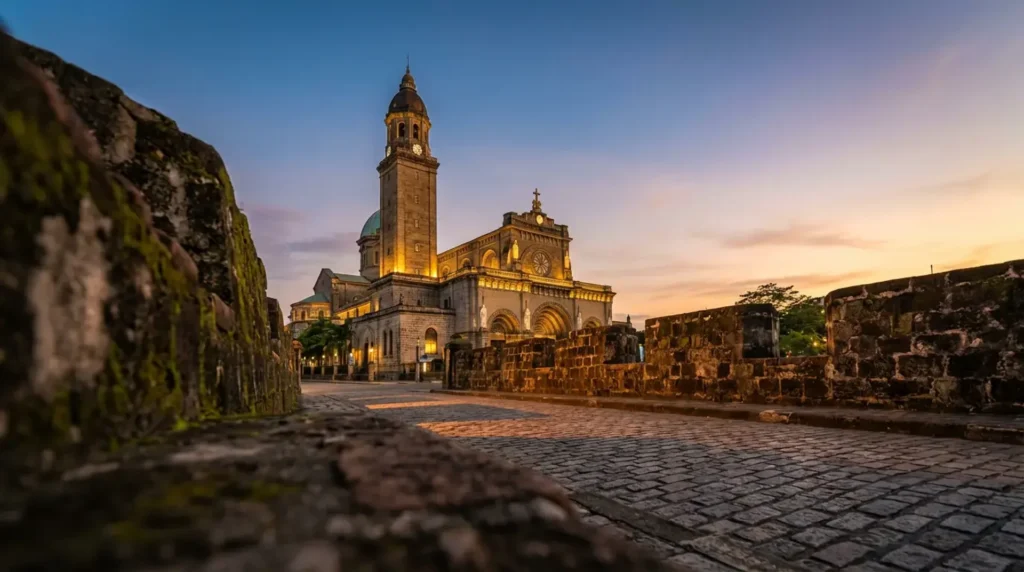
The capital megacity and aviation hub — Metro Manila is home to around 13.5 million people across 16 cities, including the historic core of Intramuros, the financial district of Makati, and the modern skyline of Bonifacio Global City. Humid, chaotic, and culturally dense, Manila rewards one or two days for the Spanish colonial walled city, serious Chinese-Filipino street food in Binondo (the world’s oldest Chinatown, founded 1594), and the country’s best museums. It is also the single largest aviation hub in the archipelago.
- Intramuros walled city, Fort Santiago, and San Agustin Church (UNESCO Baroque)
- Rizal Park, National Museum of Fine Arts, and Binondo Chinatown food walk
- Makati and Bonifacio Global City for rooftop bars, malls, and nightlife
- Signature: chicken adobo, sisig, halo-halo, and Binondo hopia pastries
🏛️ Cebu
The “Queen City of the South” and the country’s second-largest metro — home to Magellan’s Cross (1521), the Basilica Minore del Santo Niño, and the January Sinulog fiesta that draws over a million pilgrims. Cebu works as a base for whale-shark encounters in Oslob, canyoneering in Badian, and ferries to Bohol.
- Magellan’s Cross, Basilica del Santo Niño, and the Taoist Temple
- Oslob whale sharks and Kawasan Falls canyoneering day trips
- Mactan Island resorts and Lapu-Lapu Shrine
- Signature: lechon Cebu (suckling pig), puso hanging rice, and dried mango
🏝️ Palawan (El Nido & Coron)
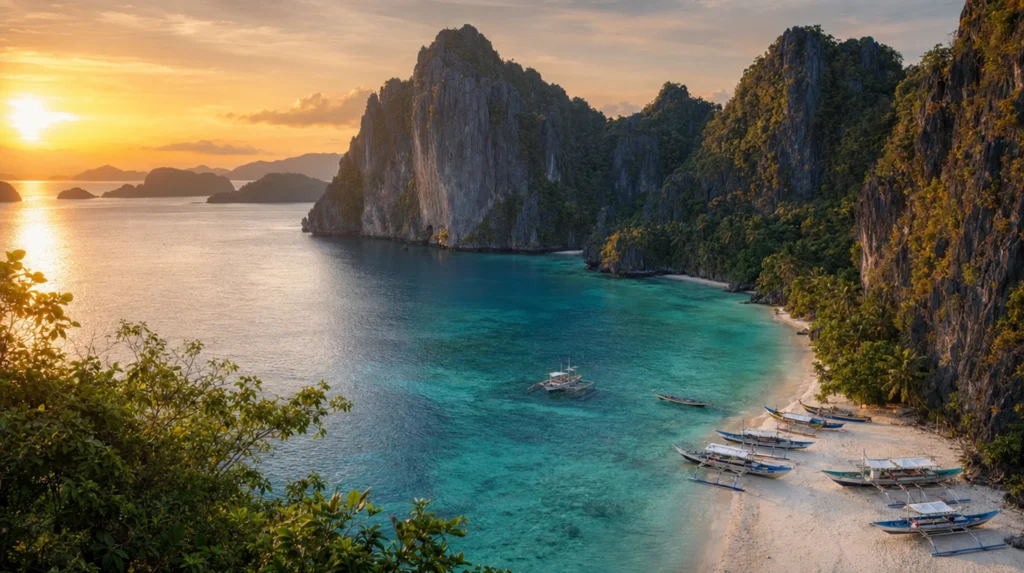
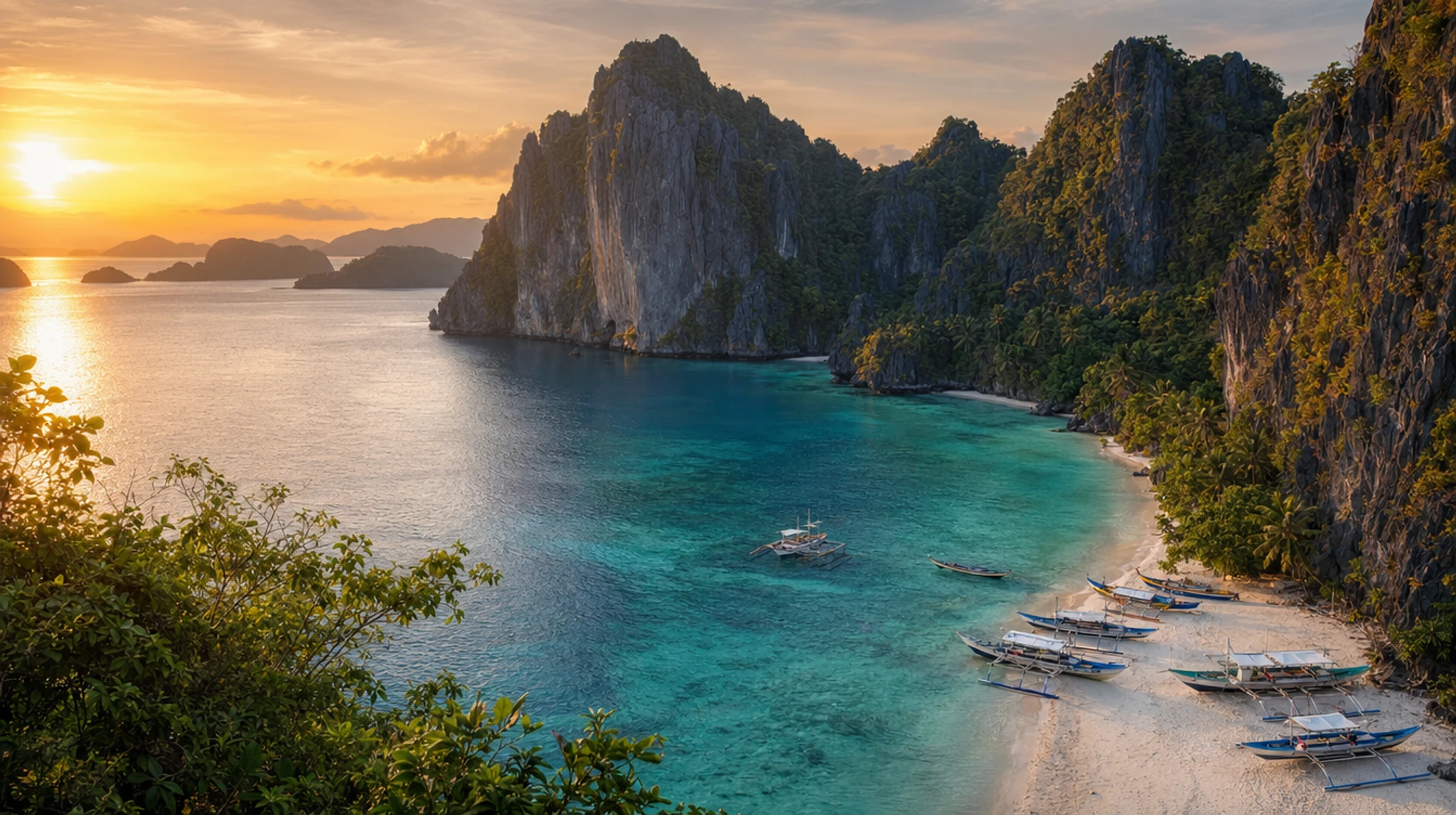
The karst-and-lagoon province that consistently tops the world’s-best-islands lists. El Nido’s limestone cliffs and turquoise lagoons, Coron’s WWII Japanese shipwreck dives, and the UNESCO-listed Puerto Princesa Subterranean River together anchor what most travellers consider the single best island chain in Southeast Asia. Plan at least five days to do it properly.
- El Nido Tours A–D island-hopping lagoons and hidden beaches
- Coron Japanese shipwreck diving and Kayangan Lake
- Puerto Princesa Subterranean River (UNESCO) and Honda Bay
🏖️ Boracay
A 7-km sliver of sugar-white sand off northwest Panay that reopened after a six-month closure in 2018 with strict carrying-capacity rules. White Beach remains one of Asia’s most photographed coastlines, and the post-rehabilitation stretch of sand is cleaner, quieter, and more walkable than at any point in the last two decades. Station 1 is the luxury end, Station 2 the dining and boutique-hotel heart, Station 3 the backpacker strip.
- White Beach, Puka Shell Beach, and Bulabog Beach kitesurfing
- Mount Luho viewpoint and Ariel’s Point cliff diving
- Signature: fresh coconut, calamansi shake, kalamay on the sand
🐒 Bohol
A midsize Visayan island best known for the 1,268 Chocolate Hills and the tarsier — one of the world’s smallest primates, endemic to the island. Add Panglao’s reefs, Loboc River cruise, and the 16th-century Spanish churches of Baclayon and Loay for a complete 3–4 day circuit.
- Chocolate Hills viewpoint at Carmen
- Tarsier Conservation Area, Corella
- Panglao Island beaches and Balicasag dive drop-off
🏄 Siargao
A teardrop island off northeast Mindanao and the country’s undisputed surf capital — Cloud 9 is among Asia’s most famous reef-break right-handers, peaking August through November. Post-Typhoon Odette (Dec 2021) rebuild is largely complete; beach clubs, surf schools, and coconut-lined beaches are back.
- Cloud 9 surf break and annual Siargao Surfing Cup (September)
- Magpupungko Rock Pools and Sugba Lagoon paddleboarding
- Naked, Daku, and Guyam three-island-hopping day
Filipino Culture & Etiquette — What to Know Before You Go
The Essentials
- English works almost everywhere. Filipino (Tagalog) and English are both official; English is the language of signs, menus, airline staff, and most tourism workers, which makes the Philippines unusually easy to navigate.
- Church is central. In this Catholic-majority country, Sunday mass, Holy Week, and Christmas (which begins with carols in September) are cultural anchors — dress modestly inside churches and keep voices low during services.
- “Po” and “opo” show respect. Tagging “po” onto the end of a request (“salamat po” — thank you) and using “opo” for yes to elders is a small courtesy that earns enormous warmth.
- Pointing with lips, not fingers. Pursing the lips in the direction of something (“nganga”) is the local equivalent of pointing. Pointing with a finger at a person is considered rude.
- Tipping is appreciated, not obligatory. A 10% service charge is usually on the bill at mid-range restaurants; tip porters ₱50–100 and round up taxi fares.
Fiesta & Church Etiquette
- Dress covered in churches and mosques. Shoulders and knees covered at Baroque churches (Manila, Paoay, Santa Maria, Miagao); Muslim mosques in Mindanao require head coverings for women.
- Don’t photograph devotees during processions. Sinulog, Ati-Atihan, and Holy Week processions are spiritual acts first and performances second — ask before photographing a penitent or praying person.
- Take off shoes indoors. Most Filipino homes and some Palawan or Siargao guesthouses remove shoes at the door; follow the host’s lead.
- Respect quieter Muslim-majority Mindanao. Dress more conservatively in the Bangsamoro Autonomous Region and avoid alcohol in public around Ramadan; public affection is frowned upon across provincial Mindanao.
A Food Lover’s Guide to the Philippines
Filipino food is the flavour-trifecta of sour, salty, and sweet — often in a single dish. Centuries of Malay foundation, Spanish colonial influence, Chinese trade, and American post-war processed-food culture built a cuisine unlike any neighbour. Expect vinegar and soy in the base sauces (adobo), citrusy calamansi as the national lime, bagoong (fermented shrimp paste) as the umami backbone, and a pig in some form at every fiesta table. Street food is cheap and abundant — you can eat well for under US$3 a meal almost anywhere.
Must-Try Dishes
| Dish | Description |
|---|---|
| Adobo | Chicken or pork simmered in vinegar, soy sauce, garlic, bay leaf, and peppercorns — the unofficial national dish, regional variants run from Pampanga coconut-adobo to Bicol’s spicy version. |
| Lechon | Spit-roasted whole pig, slow-turned over coals until the skin shatters like glass; Cebu lechon is widely considered the best in the country and a centrepiece at every fiesta. |
| Sinigang | Sour tamarind-based soup with pork, prawn, or beef, plus kangkong and radish — a comforting monsoon staple defined by its lip-puckering sourness. |
| Sisig | Sizzling chopped pig’s face, liver, and cheek with calamansi, chilli, and onion; invented in Pampanga and now ubiquitous with a cold San Miguel Pale Pilsen. |
| Kare-kare | Oxtail and tripe stew in thick peanut sauce, served with bagoong shrimp paste on the side for dipping vegetables. |
| Halo-halo | “Mix-mix” dessert of shaved ice, leche flan, ube (purple yam), coconut, red beans, sweetened plantain, and jackfruit — the definitive Filipino summer treat. |
| Pancit | Stir-fried noodle dishes (bihon, canton, palabok) served at birthdays for long life — Chinese-Filipino fusion in its most eaten form. |
Carinderia & Jollibee Street-Food Culture
The carinderia — a family-run canteen with trays of pre-cooked ulam (dish) displayed behind glass — is where Filipinos actually eat. Point at what you want, pair it with rice, pay ₱80–180 for a full meal. Market eateries (turo-turo, “point-point”) work the same way. For late-night eating, follow the smoke to a streetside ihaw-ihaw (grill) stand serving barbecued chicken wings, isaw (grilled chicken intestines), and betamax (grilled chicken blood) on bamboo skewers at ₱15–30 apiece.
- Chains worth knowing: Jollibee, Mang Inasal, Max’s Restaurant, Chowking, Goldilocks, Andok’s
- Signature street items: balut (fertilised duck egg), taho (silken tofu with arnibal syrup), fish balls, kwek-kwek (battered quail eggs), chicharon bulaklak, turon (fried banana lumpia)
Regional food tourism is worth planning around. Pampanga is widely regarded as the culinary capital — sisig, tocino, longganisa, and the king of morcon were perfected there. Bicol in southeastern Luzon cooks everything in coconut milk with siling labuyo chillies (laing, Bicol Express). Iloilo on Panay is the home of La Paz batchoy, a rich beef-bone noodle soup, and Ilocos in the far north is the spiritual home of bagnet (deep-fried crispy pork belly), empanada, and pinakbet.
Off the Beaten Path — Philippines Beyond the Guidebook
Batanes
The northernmost province and geographically the most isolated — ten tiny islands between Luzon and Taiwan, with rolling pastureland, stone Ivatan houses, and a distinctively cool climate (15–25°C year-round). Flights from Manila to Basco run 1 hr 30 min; a two- or three-day motorbike circuit of Batan Island covers most of it. Most travellers never make it this far north.
Banaue & the Ifugao Rice Terraces
Two thousand years of hand-built rice terraces rising 1,500 m up the Cordillera mountains of northern Luzon — often called the “Stairway to the Sky.” The Rice Terraces of the Philippine Cordilleras were inscribed as a UNESCO World Heritage site in 1995 and are best seen from the Batad amphitheatre viewpoint, reached only by a 30-minute hike from the nearest road. Base in Banaue and build two days minimum.
Siquijor
A small teardrop island south of Cebu known in Filipino folklore as the “Island of Fire” for its reputation as a centre of traditional healing (albularyo) and white magic. Today the draw is pristine beaches, old Spanish convents, the 400-year-old balete tree at Lazi, and the freshwater Cambugahay Falls. Ferry from Dumaguete in 1 hr. Rent a scooter, loop the 72-km coastal ring road in a day, stay two nights.
Donsol, Sorsogon
A sleepy Bicol fishing town that became the unlikely world capital of responsible whale-shark tourism. From December through May, butanding (whale sharks) gather in Donsol Bay, and swims are strictly regulated — no touching, no feeding, small groups of six per boat with a BIO (Butanding Interaction Officer). A direct contrast to controversial Oslob feeding encounters in Cebu.
Sagada, Mountain Province
A Cordillera highland town at 1,477 m famous for its hanging coffins — century-old pine caskets suspended on limestone cliffs by the Kankanaey people — and the spelunking expeditions through the Sumaguing-Lumiang cave connection. Cool climate, strong coffee culture, and some of the country’s best hiking. Reach it via a six-hour van or bus ride from Baguio on winding mountain roads.
Practical Information
| Currency | Philippine Peso (PHP / ₱); 1 USD ≈ 57.4 PHP (April 2026) |
| Cash needs | Cards accepted at hotels, malls, and mid-range restaurants; cash still rules markets, jeepneys, tricycles, bangkas, and remote islands. Carry ₱2,000–5,000 for daily outings. |
| ATMs | Plentiful in cities; BDO, BPI, and Metrobank are the most reliable. Most cap at ₱10,000–20,000 per withdrawal; fees on foreign cards run ₱250 per transaction. |
| Tipping | Not obligatory — a 10% service charge is usually on the bill. Tip porters ₱50–100, round up taxis, leave ₱100 for tour-boat crews. |
| Language | Filipino (Tagalog) and English are official; English is widely spoken nationwide including at hotels, airlines, and restaurants, making the Philippines one of the easiest Asian countries for English speakers. |
| Safety | Most tourist areas are safe. The US and Australian governments advise against travel to central and western Mindanao and the Sulu Archipelago; reconsider travel elsewhere in Mindanao. |
| Connectivity | Globe and Smart lead mobile networks; 4G everywhere tourists go, 5G in Metro Manila, Cebu, and Davao. Tourist eSIMs from Airalo or Klook work well. |
| Power | Type A, B, and C plugs, 220V, 60Hz. |
| Tap water | Data unavailable — tap water is generally not potable for visitors; stick to bottled or filtered water nationwide. |
| Healthcare | Metro Manila and Cebu have excellent private hospitals (Makati Medical, St. Luke’s, Chong Hua). Travel insurance with medevac cover is essential for Palawan, Siargao, and remote islands. |
Budget Breakdown — What Philippines Actually Costs
💚 Budget Traveller
Around ₱1,700–2,900 (US$30–50) per day. Hostel dorm beds in Manila, Cebu, and El Nido run ₱600–1,200, carinderia meals are ₱80–180, and a Grab ride across Makati is around ₱150. Domestic Cebu Pacific flights between Manila and Cebu drop below ₱1,500 if booked 6–8 weeks ahead; jeepneys and tricycles are the backbone of cheap local transport.
💙 Mid-Range
Around ₱5,700–10,300 (US$100–180) per day. Three- and four-star hotels or boutique beachfront villas run ₱3,500–9,000 a night; a sit-down restaurant dinner in Manila or Cebu is ₱600–1,500 per person; an El Nido four-island tour runs ₱1,400–2,000 per person with lunch included.
💜 Luxury
From ₱17,000 (US$300) per day upward. Iconic stays like Amanpulo, El Nido Resorts (Lagen, Miniloc, Pangulasian), and Shangri-La Boracay start at ₱25,000–120,000 a night; private island-hopping boats from El Nido run ₱18,000–28,000 a day; Tubbataha liveaboards operate only from mid-March to mid-June and cost US$3,200–5,000 per person for six nights. Fine dining at Metiz, Helm, or Toyo Eatery in Manila is ₱4,500–7,500 per head.
What you’ll actually spend: Two weeks of mid-range travel across Manila, Cebu, Bohol, and Palawan typically lands between US$1,700 and US$2,600 per person excluding international flights, with the single biggest line item almost always the domestic flights to Palawan and the El Nido tours. A two-week budget-backpacker version is achievable at US$600–900 per person with ferries, hostels, and local food.
| Tier | Daily (USD) | Accommodation | Food | Transport |
|---|---|---|---|---|
| Budget | US$30–50 | Hostel dorm ₱600–1,200 | Carinderia & street food | Jeepney, tricycle, Grab |
| Mid-Range | US$100–180 | Boutique ₱3,500–9,000 | Restaurants & cafés | Grab + budget domestic flights |
| Luxury | US$300+ | 5-star resort ₱25,000+ | Fine dining ₱4,500–7,500 | Private transfers & charters |
Planning Your First Trip to the Philippines
- Pick two regions, not five. The classic first-trip combinations are Manila plus Palawan (city-plus-beach), Cebu plus Bohol (Visayan loop), or Cebu plus Siargao (culture-plus-surf). Trying to add Batanes or Mindanao usually ruins the pace.
- Register eTravel before you fly. The official eTravel QR code at etravel.gov.ph is mandatory for all arrivals and is free — complete it within 72 hours of departure.
- Match season to region. Dry season (November–May) for Palawan, Boracay, and most beaches; avoid typhoon season (June–November) on the east coast and Luzon. Don’t fight the habagat.
- Book domestic flights early. Manila–Caticlan and Cebu–El Nido fares double or triple during Holy Week and Christmas — lock in 3–4 months ahead via Cebu Pacific, Philippine Airlines, or AirAsia.
- Pack light and cash-ready. Small bangkas, tricycles, and bungalow-style hotels punish big luggage. Bring reef-safe sunscreen (required in Boracay and El Nido), a dry bag for island-hopping, and ₱10,000–20,000 cash for remote islands.
Classic 14-Day Itinerary: Days 1–2 Manila (Intramuros & Binondo); Days 3–5 Cebu (Sinulog basilica, Oslob, Kawasan); Days 6–8 Bohol (Chocolate Hills, Panglao); Days 9–13 Palawan (El Nido island-hopping + Coron overnight); Day 14 return via Manila. If you have 10 days, cut Bohol and add a rest day in El Nido.
Cities & Regions to Explore
Frequently Asked Questions
Is the Philippines expensive to visit?
No — the Philippines is one of Southeast Asia’s better-value destinations. Budget travellers spend around US$30–50 a day, mid-range travellers US$100–180, and luxury still runs 20–30% less than comparable resorts in Thailand or the Maldives. The real cost drivers are long-haul flights to Manila and domestic hops to Palawan or Siargao. Eat at carinderias, ride jeepneys, and book Cebu Pacific promos to cut on-the-ground costs sharply.
Do I need to speak Filipino?
No. The Philippines is the third-largest English-speaking country in the world — English is a co-official language and widely used in hotels, airlines, signage, and tourism. A few Tagalog phrases (salamat for thank you, magkano for how much, masarap for delicious) are appreciated but not required. In the Visayas you’ll hear Cebuano/Bisaya; in Ilocos, Ilocano — a “salamat” works everywhere.
Is there a national rail pass worth it?
No — the Philippines has no national rail network and no national rail pass exists. Data unavailable. Metro Manila’s LRT-1, LRT-2, and MRT-3 use a stored-value Beep card (₱20 card fee plus balance) but cover only the capital. Inter-island travel is flights (Cebu Pacific, Philippine Airlines, AirAsia) or 2GO ferries.
Is the Philippines safe for solo travellers?
Mostly yes, with clear geographic exceptions. Popular destinations like Palawan, Boracay, Cebu, Bohol, Siargao, and Metro Manila tourist zones are considered safe for solo travellers including women. The US and Australian governments advise against travel to central and western Mindanao and the Sulu Archipelago due to ongoing security concerns. Watch for petty theft in Manila and Cebu transport hubs.
When is the best time to visit the Philippines?
December through May is the dry season and peak window for Palawan, Boracay, Cebu, and most beach destinations. January brings Sinulog and Ati-Atihan; Holy Week (late March/early April) is the biggest domestic travel surge. September through November is the peak typhoon window — lower prices, higher weather risk. The sharpest shoulder sweet spots are late April and early November.
Can I get by as a vegetarian or vegan?
It is harder than in neighbouring Thailand or Indonesia. Filipino cuisine leans heavily on pork, chicken, seafood, and bagoong (shrimp paste), but vegetable sides like pinakbet, ensaladang talong, and ginataang kalabasa are common, and Metro Manila, Cebu, and Siargao now have growing vegan-cafe scenes. Learn “walang karne” (no meat) and “walang patis” (no fish sauce).
Is Mindanao safe to visit?
Parts are; parts firmly are not. Davao City and northern Mindanao (Cagayan de Oro, Camiguin, Siargao) are considered safe with normal precautions. Foreign governments warn against travel to central and western Mindanao and the Sulu Archipelago due to terrorism and kidnap-for-ransom risk. Check current advisories before planning.
Ready to Explore the Philippines?
The Philippines rewards travellers who pick two regions deeply over those who try to stitch together six islands in two weeks. Start with Manila plus Palawan for colonial history and limestone lagoons, add Cebu-plus-Bohol or Siargao for beaches and surf, and come back later for Banaue, Batanes, and the Spice Trail south — this is a country built for repeat visits.
Explore More
Cities we cover in Philippines
Cities to explore in Philippines
Deep-dive guides to specific cities, neighbourhoods, and food scenes — written with the same magazine voice.
More country guides you might like
Plan your trip to Philippines
The booking tools we use ourselves. FFU may earn a commission at no extra cost to you.
Plan & book your trip to Philippines
Booking through these searches supports our guides at no extra cost to you.