
☰ On this page
- 📋 In This Guide
- Why England?
- 🌷 Late-April / Early-May 2026 — The Bluebell Window
- Best Time to Visit (Season by Season)
- Getting There — Flights & Arrival
- Getting Around — Trains, Tube & the Motorway Network
- Top Cities & Regions
- 🗓️ Sample Itineraries
- Culture & Etiquette
- A Food Lover’s Guide
- 📸 Photography Notes
- Off the Beaten Path
- Practical Information
- Budget Breakdown
- ✅ Pre-Trip Checklist
- 🤔 What Surprises First-Timers
- Frequently Asked Questions
- Ready to Explore?
- Explore More
- Cities we cover in England
Languages of United Kingdom
All languages of Northern Europe →fluent beta classical · classes by phone with Maya at ranas.ai/maya
England is the only country in the world where you can stand inside a Roman bathhouse, drink an espresso poured by an Italian barista, walk past a 14th-century guild hall built by a wool merchant, and catch the 17:08 train to Edinburgh — all on the same square mile of pavement in the city of York. The country covers 50,346 square miles, smaller than Alabama, and crams in 56 million people, 91 cathedrals, around 6,000 castles or fortified houses, and a road network that has been arguing with the landscape since the Romans paved Watling Street in AD 47. The result is a country that compresses an extraordinary amount of geography, history and weather into a footprint you can drive across in a long day.
What makes England unusually rewarding for travellers is density. London to Edinburgh is 4h 20m by train; London to Penzance, the country’s southwestern toe, is five. A two-hour ride from King’s Cross drops you in York’s medieval Shambles; from Paddington, in Bath’s Georgian crescents; from Euston, in the Lake District’s slate-and-bracken fells. You can walk a Bronze Age trackway in the morning, eat a Michelin-starred lunch at noon, and be drinking real ale in a pub that has been pouring beer since 1189 by sundown. The cliché that England is “just London” badly undersells everything north and west of the M25.
This guide focuses on England specifically. For Scotland, see our separate Scotland travel guide; the Republic has its own Ireland travel guide; for the principality across the Severn, our Wales travel guide covers Cardiff, Eryri and Pembrokeshire. Day-trip pairings make all four of them legitimate add-ons. For the deeper urban reads, our London city guide and Edinburgh city guide pick up where this country guide hands off.
📋 In This Guide
- Why England?
- 🌷 Late-April / Early-May 2026 — The Bluebell Window
- Best Time to Visit (Season by Season)
- Getting There — Flights & Arrival
- Getting Around — Trains, Tube & the Motorway Network
- Top Cities & Regions
- 🗓️ Sample Itineraries
- Culture & Etiquette
- A Food Lover’s Guide
- 📸 Photography Notes
- Off the Beaten Path
- Practical Information
- Budget Breakdown
- ✅ Pre-Trip Checklist
- 🤔 What Surprises First-Timers
- Frequently Asked Questions
- Ready to Explore?
- Explore More
Why England?
England is the largest of the four nations that make up the United Kingdom — about 84% of the UK’s population and the bulk of its economic centre — but it doesn’t behave like a single place. The country is patchworked into 48 ceremonial counties, each with its own accents, beer styles, cheese traditions, and fierce opinions about everything from the correct way to eat a scone (jam first or cream first depends, infuriatingly, on whether you’re in Devon or Cornwall) to whether the North or the South does Sunday roast better. Drive 50 miles in any direction and you’ll cross at least one cultural border.
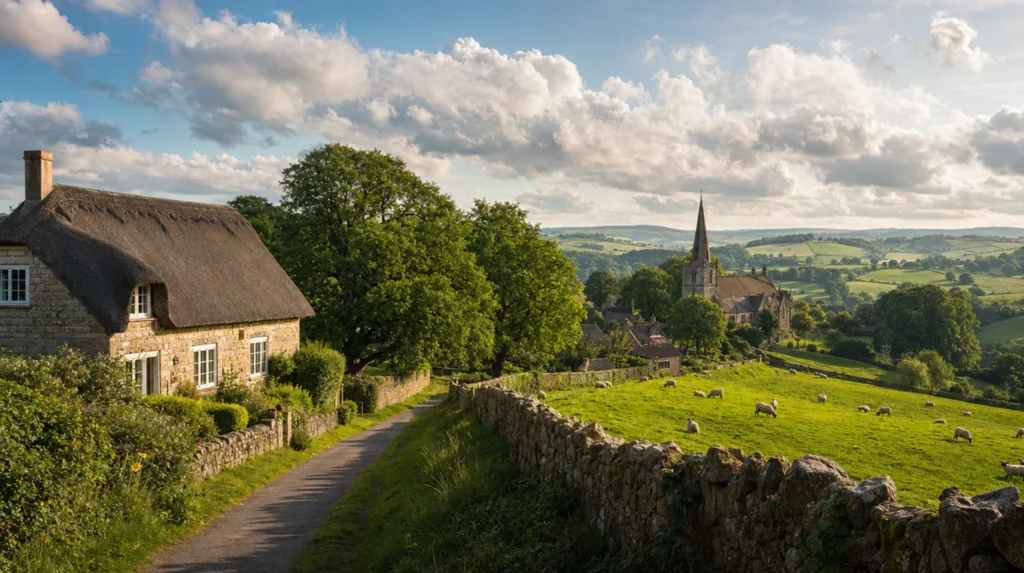
The travel pitch breaks down into roughly four offers stacked on top of each other. First, the cities — London is genuinely one of the world’s great capitals (see our London city guide for the deeper read), but York, Bath, Oxford, Cambridge and Liverpool each carry enough history, food and architecture to anchor a multi-day stay. Second, the countryside — the Lake District, the Cotswolds, the Yorkshire Dales, the Peak District and Dartmoor are all national parks or AONBs (Areas of Outstanding Natural Beauty) crisscrossed by 140,000 miles of public footpaths, the densest right-to-roam network in Europe. Third, the coast — 11,073 miles of it, from the chalk arches of Old Harry Rocks in Dorset to the surf beaches of Polzeath in Cornwall to the bird cliffs of Bempton in Yorkshire. And fourth, the ambient layer cake of history — Roman walls, Saxon churches, Norman castles, Tudor manors, Georgian terraces, Victorian railway stations, all in working condition, often within walking distance of each other.
Practically, England is also one of the easier countries in Europe to travel. English is the working language (with a few accents that take a day or two to tune in to), the rail network reaches almost every town worth visiting, contactless payment works everywhere, and most major museums — the British Museum, National Gallery, Tate Modern, V&A, Natural History Museum — are free. The currency is pound sterling (£), the plug type is G (the chunky three-pin), and the country drives on the left. The new Electronic Travel Authorisation (ETA) is now required for visa-exempt nationalities — see Practical Information below.
🏛️ Historical Context
The Magna Carta — the foundational document of English law and, by descent, of the US Constitution — was sealed by King John under duress on June 15, 1215, in a riverside meadow at Runnymede, 22 miles west of central London. Twenty-five rebellious barons forced the king’s hand; he repudiated the document within ten weeks, but the principle that the sovereign was subject to law had been established. Four original 1215 copies survive — two at the British Library (one of them fire-damaged, one near-pristine), one at Lincoln Cathedral, one at Salisbury Cathedral. The Salisbury copy is on permanent free display in the Chapter House and is the best-preserved of the four. The barons themselves used to argue that John had stolen “the customs and liberties of the kingdom”; that idea — Crown bound by law — runs in a direct line from Runnymede to the 17th-century English Civil War to the US Bill of Rights of 1791.
🎌 Did You Know?
The London Underground is the world’s oldest underground railway, with the first section between Paddington and Farringdon opening on January 10, 1863. Today the Tube runs 11 lines, serves 272 stations across roughly 250 miles of track, and carries about 1.35 billion passenger journeys a year. Despite the name, only about 45% of the network is actually underground — the rest is on the surface or elevated. Meanwhile, the Cotswolds AONB covers 787 square miles across five counties, making it England’s largest Area of Outstanding Natural Beauty and roughly the size of the US state of Rhode Island. The country contains 91 cathedrals — more cathedrals per capita than France — and 36 of them date in some form to before 1300.
🌷 Late-April / Early-May 2026 — The Bluebell Window
The smell in an English bluebell wood at 7 a.m. on April 30 is something between honey and wet beech leaves and is not bottled by any perfume house, despite repeated attempts. If you’re reading this in the last week of April or the first week of May 2026, you’re standing inside one of England’s most photographed and least understood seasonal moments: the native bluebell peak. Hyacinthoides non-scripta, the English bluebell, carpets ancient woodland for roughly 14–18 days each spring, and across most of southern and central England that window falls between about April 22 and May 10. Britain holds an estimated 25–50% of the world’s population of this species, which is why those tunnel-of-blue photographs you see on Instagram every May are almost always shot here, not on the continent.
The two best clusters within easy reach of London are the National Trust’s Ashridge Estate in the Chilterns (Dockey Wood is the famous patch — a 40-minute train from Euston to Berkhamsted, then a 25-minute taxi or 50-minute walk) and the beech woods around the Cotswolds, particularly the Bath Skyline walk and the woods around Slad in Gloucestershire. Further west, Cornwall’s Enys Gardens near Penryn is open daily through “Bluebell Season” until 10 May 2026 — Enys claims to host the largest bluebell field in the southwest and runs paid timed-entry to manage crowds. Up north, Northumberland’s Wallington estate and the woods around Belsay also peak in early May, slightly later than the Home Counties.
Two practical notes. Bluebells are a protected species — picking or trampling them is illegal under the Wildlife and Countryside Act 1981, and the National Trust has put boardwalks and ropes around the most photographed patches. Stick to paths. Second, the light matters: shoot early morning or the hour before sunset. Midday flattens the colour and the woods are usually busy with day-trippers between 11 a.m. and 3 p.m. on weekends.
Pair the bluebells with a second seasonal anchor while you’re here. London cherry blossoms peaked in mid-April this year but late varieties are still going in Greenwich Park and St James’s, and the wisteria on Kensington and Chelsea’s Georgian terraces hits full purple in the first 10 days of May. If you have a full week, you can run bluebells in the Chilterns Tuesday, wisteria in London Friday, and Cornwall coastline by Sunday. The Chelsea Flower Show, the country’s oldest gardening event (running since 1862), opens at the Royal Hospital Chelsea on May 19, 2026.
🧳 Travel Guru Tip — The Tuesday Morning Trick
Skip Dockey Wood on a Saturday between 11 a.m. and 2 p.m. — the Instagram crowd has caught up with it and the National Trust regularly closes the wood once the car park fills. Go on a Tuesday or Wednesday morning, arrive at the Bridgewater Monument car park by 7:45 a.m., and walk fifteen minutes south through the beech canopy. You’ll have the same shot the photographers got, with side-light slanting through the trunks and no one in the frame. Same logic for Enys in Cornwall: book the first 9:30 a.m. slot, not the noon one. Bring a flask of tea and a packet of biscuits — nothing in Berkhamsted opens before 8 a.m.
Best Time to Visit (Season by Season)
England’s weather has a reputation for misery that is roughly 60% earned. London actually receives less annual rainfall (about 23 inches / 585mm) than New York, Tokyo or Sydney — but the rain is spread across more days, and the difference between a sunny morning and a horizontal-drizzle afternoon can be ninety minutes. Plan for layers, pack a compact umbrella, and accept that the best photographs you’ll take will probably involve clouds.
Spring (March – May)
Average temps climb from 8–13°C (46–55°F) in early March to a comfortable 11–17°C (52–63°F) by mid-May. This is the sweet spot for the countryside — daffodils peak in the Lake District in late March, bluebells carpet ancient woodland late April through early May (see above), and the Chelsea Flower Show runs May 19–23, 2026. London cherry blossoms peak in the last week of April. The catch is unpredictability: April averages 10–11 rainy days, and the wettest weeks of spring can produce sustained drizzle that wrecks photography. Book accommodation with cancellation flexibility if you’re chasing bloom timing.
Summer (June – August)
Peak season. London sits at 18–24°C (64–75°F) on average but can spike past 32°C (90°F) in heatwaves — most older buildings and B&Bs do not have air conditioning, so book accordingly. The 40°C reading at Coningsby, Lincolnshire on July 19, 2022 is the highest temperature ever recorded in the country and shut down rail services nationwide. Wimbledon runs June 29 – July 12, 2026; Glastonbury (June 24–28, 2026) sells out the moment registration opens in October 2025. The countryside is at its greenest, daylight runs 16+ hours in late June, and beer gardens become the de-facto national living room. Downsides: peak prices on rail and hotels, Cornish villages clogged with traffic in August, and Cotswolds car parks overflowing by 10 a.m. on weekends.
Autumn (September – November)
Many travellers’ quiet favourite. September averages 13–19°C (55–66°F) and is genuinely the best month overall — warm enough for a pub lunch outside, cool enough for hiking, with September rainfall actually below the May–August average. October gives you the Lake District in full ochre, the New Forest’s deer rut, and London at its photogenic best with low golden light. By November the temperature has dropped to 5–10°C (41–50°F), the clocks have gone back, and London’s Christmas lights flick on around November 13. Bonfire Night (November 5) means fireworks displays nationwide. Book Lake District accommodation 3–4 weeks ahead for autumn half-term week (typically October 26 – November 1, 2026).
Winter (December – February)
Cold and short on daylight (the sun sets around 3:55 p.m. on the December solstice in London, earlier further north), but cheap and atmospheric. Expect 2–8°C (36–46°F), occasional snow in the Pennines and Lake District, and rare but serious cold snaps. Christmas markets run mid-November through December 23 — Bath, Manchester, Birmingham (Frankfurt Christmas Market), Winchester and Lincoln are the standouts. London’s Hyde Park Winter Wonderland runs November 21, 2026 – January 3, 2027. New Year’s Eve fireworks on the Thames need ticketed access (sales open August). January and February are the cheapest months for hotels and flights, but many country attractions close or run reduced winter hours — check before you go.
| Season | Best regions | Avoid | Pricing |
|---|---|---|---|
| Spring (Mar–May) | Cotswolds, Chilterns, London gardens, the South Downs | Lake District peaks above 600m (snow lingers) | Mid-tier; bluebell weekends spike |
| Summer (Jun–Aug) | Cornwall, Lake District, Yorkshire coast, Suffolk | Cotswolds at midday, Cornwall A30 weekends | Peak; book 8+ weeks ahead |
| Autumn (Sep–Nov) | Lake District, New Forest, Peak District, Northumberland | Half-term weeks pack family hotspots | Best value, especially Sep |
| Winter (Dec–Feb) | London markets, Bath, York, Liverpool, ski-style days in Lakes | Coastal villages largely shut, daylight 8 hours | Cheapest of the year |
Getting There — Flights & Arrival
England has six major international airports. London alone has five (Heathrow, Gatwick, Stansted, Luton, City), plus Manchester serves the north and Birmingham handles the Midlands. Heathrow (LHR) is the long-haul giant — it’s the world’s seventh-busiest airport by passenger numbers and your most likely arrival point from North America, Asia, the Middle East and Australasia. Gatwick (LGW) leans toward leisure long-haul and short-haul Europe. Stansted (STN) and Luton (LTN) are budget hubs for Ryanair and easyJet, and London City (LCY) is small, central and convenient for short-haul European business routes.
From the US East Coast, expect 6.5–7.5 hours nonstop to Heathrow on British Airways, Virgin Atlantic, American, Delta, United or JetBlue. West Coast routings run 10–11 hours. Direct fares from New York–JFK to LHR sit around $450–700 in economy off-peak (late January–March, November) and $900–1,400 during summer and Christmas. Manchester (MAN) is increasingly used as a long-haul gateway to the north and saves you a four-hour onward train if your itinerary is Lake District / York / Edinburgh.
From Europe, the Eurostar from Paris-Gare du Nord, Brussels, Amsterdam or Lille runs into London St Pancras in 2h 16m to 4h. Standard fares from Paris start around £52 if booked 60+ days out, climbing to £200+ last-minute. Ferry routes into Dover, Portsmouth, Newhaven, Hull and Harwich serve France, Spain, Belgium, the Netherlands and Scandinavia.
Heathrow into London: The Elizabeth Line (purple line, opened May 2022) is now the best option — about 35 minutes to central London for £12.80 off-peak, runs every few minutes, accepts contactless. The Heathrow Express is faster (15 min to Paddington) but costs £25 advance / £32 walk-up. The Piccadilly Line is cheapest (£5.60 off-peak) but takes nearly an hour. Gatwick: Gatwick Express to Victoria in 30 min (£21.50). Stansted: Stansted Express to Liverpool Street, 50 min (£20.70 advance). All four major airports are accessible by National Express coach for around £10–15 if you don’t mind a longer ride.
⚠️ Important — Driving on the Left, the ETA & the ULEZ
England drives on the left. If you’re hiring a car, factor in 24 hours of mental rewiring — roundabouts unwind clockwise, the rear-view mirror sits to your left, and country lanes are narrower than you think. The UK Electronic Travel Authorisation (ETA) is now required for most visa-exempt nationalities (US, Canada, Australia, NZ, EU members, Japan, Korea, Singapore, etc.) — apply at gov.uk/eta for £16, valid two years, processed in under three days. Central London has a Congestion Charge (£15/day, 7 a.m.–6 p.m. Mon–Fri, 12 p.m.–6 p.m. Sat–Sun) plus the ULEZ (£12.50/day, almost the entire Greater London area) — pay online at tfl.gov.uk/pay-to-drive-in-london within three days or face a £160 fine. The good news: almost all major national museums (British Museum, National Gallery, Tate Modern, V&A, Natural History, Science Museum, Imperial War Museum) are free for general admission. Special exhibitions are ticketed; permanent collections cost nothing.
Getting Around — Trains, Tube & the Motorway Network
England’s rail network is denser and faster than many North American visitors expect. There are roughly 2,500 stations on the National Rail network, all bookable through a single search via National Rail or Trainline. The headline corridors are the East Coast Main Line (London King’s Cross to Edinburgh via York, Durham, Newcastle), the West Coast Main Line (London Euston to Glasgow via Birmingham, Manchester, Liverpool), and the Great Western (London Paddington to Bristol, Bath, Cardiff, Penzance). London King’s Cross to York is 1h 50m at 125 mph; London Paddington to Bath is 1h 25m. The same journey to Edinburgh on LNER’s Azuma fleet takes 4h 19m, with seven daily services that compete directly with the air shuttle.
Pricing is the main thing to understand. Walk-up “Anytime” fares are punishing — London to York at the ticket window can hit £140 one-way. Advance fares booked 8–12 weeks ahead drop the same journey to £25–45 on LNER. Off-Peak Day Returns are flexible and cover most leisure travel after 9:30 a.m. weekdays and any time at weekends. A BritRail Pass or a Two Together Railcard (£30/year, one-third off most fares for any two travellers) pays for itself in 1–2 long journeys. The 16–25 and Senior Railcards are the same price; Two Together is the under-used one.
In London, the Tube, Overground, Elizabeth Line and most National Rail journeys inside zones 1–9 use the same contactless payment cap. Tap in and out with a contactless bank card or phone — you’ll never pay more than the daily cap (£8.90 zones 1–2 in 2026). Avoid paper tickets. Buses are a flat £1.75 per ride with a 60-minute hopper window.
For driving, the motorway network (M-roads, blue signs) is the fastest, but England also has a vast secondary network of A-roads (often single carriageway) that link towns and villages. Speed limits: 70 mph on motorways, 60 mph on dual carriageways and rural A-roads, 30 mph in built-up areas, 20 mph in many city centres including most of inner London. Petrol runs around £1.45/litre as of early 2026, diesel slightly higher. Rental cars are fine for the Cotswolds, Lake District, Yorkshire or Cornwall — but you almost certainly don’t want one in central London.
✨ Pro Tip — Split-Ticketing & the Pre-Boarding eSIM
Two ways to cut UK rail costs that travel agents almost never mention. First, split-ticketing: buying two or three separate tickets for the same single journey is often 30–60% cheaper than one through-ticket — you don’t change trains, you just hold multiple tickets. Sites like Trainsplit and Splitticketing do this automatically; the savings on London–Edinburgh or London–Penzance can be £40+. Second, get an eSIM before you arrive. A 30-day eSIM with 20GB from Saily, Airalo or Holafly costs £14–22 and activates the moment you land. UK roaming on a US carrier post-Brexit is typically $10/day on T-Mobile or AT&T — over a 10-day trip you save real money. Three.co.uk, EE and Vodafone all sell physical SIMs for £20 if you prefer.
Top Cities & Regions
📍 Map of England: Every Place in This Guide
England rewards a mixed itinerary. Most first-time visitors anchor in London for 3–4 nights and pair it with two or three of the picks below. The whole country is small enough that you can base in London and day-trip to Bath, Oxford or Cambridge — but spending at least one night in York, the Lake District or the Cotswolds shifts the experience entirely once the day-tripper coaches leave.
🏙️ London
The bell of St Mary-le-Bow has been ringing inside the same square mile since 1080 — and a “true Cockney” is, by tradition, anyone born within earshot of it. London is the obvious first stop and one of the most rewarding cities in the world for sheer density of stuff. Nine million people live across 32 boroughs and 607 square miles, and the city has been continuously occupied since the Romans founded Londinium in AD 43. The result is a place where a Roman wall sits next to a Norman castle next to a Wren church next to a Foster skyscraper, all within a fifteen-minute walk.
The classic itinerary is Westminster (Parliament, Westminster Abbey, the Cabinet War Rooms), the South Bank (Tate Modern, the Globe, Borough Market), the Tower of London and Tower Bridge, and at least one full afternoon in the British Museum. But the real city lives in its neighbourhoods — Marylebone for Georgian streets and Daunt Books, Shoreditch for Sunday markets and street art, Notting Hill on a Saturday morning at Portobello, Hampstead Heath on any sunny day, Greenwich for the Royal Observatory and the meridian line. Our London city guide is the deeper neighbourhood-level read.
- What to do: British Museum, National Gallery, V&A, Tate Modern, Natural History Museum (all free admission); Tower of London (£35.80), Westminster Abbey (£29), Churchill War Rooms (£32); Borough Market (best weekday lunchtime, closed Sun); Hampstead Heath, Regent’s Park, Kew Gardens (£22); West End theatre — TKTS booth in Leicester Square for half-price same-day.
- Signature eats: A proper Sunday roast at The Camberwell Arms or Blacklock Soho; a curry on Brick Lane or in Tooting; St John in Smithfield for nose-to-tail British cooking; a bacon sandwich and builder’s tea from any decent caff.
- Best for: First-time UK visitors, museum people, theatre, food, walking.
- Access: Heathrow (LHR), Gatwick (LGW), Stansted, Luton, City. Six mainline stations radiate to the rest of the country.
🎓 Oxford & Cambridge
The two ancient universities are the obvious day-trip pair from London — Oxford 55 minutes from Paddington or Marylebone, Cambridge 50 minutes from King’s Cross — and they’re rivals in a way that goes beyond the Boat Race. Oxford is older (teaching documented from c.1096), bigger, more architecturally varied, and feels embedded in a working market town. Cambridge is more compact, prettier on first glance with the Backs and the punting on the Cam, and arguably has the better bookshops. Between them, the two universities have produced 30 British prime ministers, 30 Nobel-Prize-winning alumni from Cambridge alone, and roughly 500 buildings older than the United States.
If you only have one day, pick Cambridge for the punts and Oxford for the colleges and the Bodleian Library tours. Both cities are walkable in a single afternoon, and both reward an overnight stay if you want to see the colleges in the early-morning light without a coach tour blocking the angle.
- Oxford: Bodleian Library and Radcliffe Camera, Christ Church College (the Harry Potter dining hall), the Ashmolean Museum (free, oldest public museum in the UK, founded 1683), University Parks, climb the tower at St Mary the Virgin.
- Cambridge: King’s College Chapel, the Backs, punt the Cam from Magdalene Bridge to Mill Pond (£25–35 self-punt for an hour), Fitzwilliam Museum (free), Kettle’s Yard.
- Both: combine with a Blenheim Palace stop near Oxford or Ely Cathedral 30 min north of Cambridge.
- Signature eats: Oxford — The Turf Tavern (a 13th-century pub down an alley), G&D’s ice cream, brunch at Society Cafe. Cambridge — Fitzbillies (Chelsea buns since 1922), Aromi for Sicilian pizza al taglio.
- Access: Oxford station from London Paddington/Marylebone; Cambridge station from London King’s Cross/Liverpool Street.
♨️ Bath
The Roman bathhouse at Aquae Sulis still produces 1.17 million litres of 46°C mineral water every day, from a spring that has been flowing for 10,000 years. Bath is England’s only entire city designated a UNESCO World Heritage Site (twice — for the Roman remains and the Georgian planning). The Romans came for the hot springs around AD 60; the Georgians came back in the 18th century to build a spa town around them; the result is one of the most architecturally coherent cities in Europe, all golden Bath stone, sweeping crescents, and the only naturally hot springs in the UK. Population just 100,000, walkable end to end, and 90 minutes from London Paddington.
The Roman Baths are the obvious anchor (£28, but pre-book — queues are real), but the Royal Crescent, the Circus and the Pulteney Bridge with its shops over the river are worth as much time. The Thermae Bath Spa lets you actually swim in mineral water from the same springs the Romans used; the rooftop pool at sunset is the photo people fly here for.
- What to do: The Roman Baths (£28); Thermae Bath Spa rooftop pool (£42 for 2 hours); Royal Crescent and No. 1 Royal Crescent museum; Bath Abbey and the climb up the tower (£10); Jane Austen Centre for completists.
- Signature eats: Sally Lunn’s for the buns (operating from a building dated 1482); The Bath Pig for sausage rolls; Menu Gordon Jones for a tasting-menu splurge.
- Best for: Architecture, history, a softer pace, an easy day or overnight from London.
- Access: Bath Spa station, 1h 25m from London Paddington.
🏰 York
York Minster has the largest expanse of medieval stained glass in the world — 128 windows, two acres of coloured light. York is the most complete medieval city in northern Europe and the single best stop for visitors who want layered English history without London-scale crowds. The Romans built it as Eboracum in AD 71; the Vikings ran it as Jorvik for almost a hundred years; the medieval city wall (still walkable, 2.1 miles end to end) circles a tangle of cobbled lanes called the Shambles, where overhanging Tudor buildings nearly meet across the street. Constantine the Great was proclaimed Roman emperor here in AD 306 — there’s a bronze statue of him sitting outside the Minster’s south door, near the spot where it actually happened.
Two days is the sweet spot. Walk the walls in the morning before the day-trippers arrive, do the Minster (£20 incl. tower climb) by lunchtime, then either Jorvik Viking Centre or the National Railway Museum (free) in the afternoon. York is also the gateway to the North York Moors and the Yorkshire Dales — both within an hour by car.
- What to do: York Minster (£20); the Shambles and Shambles Market; city walls walk (free, 2 hours including stops); National Railway Museum (free, genuinely world-class — three Mallards and the only A4 outside the National Collection); Jorvik Viking Centre (£15).
- Signature eats: Bettys Café Tea Rooms (a Yorkshire institution since 1919, expect a 30-minute queue at peak); The Star Inn the City; pies at the Pivni or Brigantes; a Sunday roast at The Whippet Inn.
- Access: York station, 1h 50m from London King’s Cross on LNER.
🌳 The Cotswolds
The 787-square-mile Cotswolds AONB sprawls across five counties (Gloucestershire, Oxfordshire, Warwickshire, Wiltshire, Worcestershire) and is the closest thing England has to a postcard cliché made real. Honey-coloured limestone villages, dry-stone walls, sheep on rolling hills, market towns with names like Chipping Campden, Stow-on-the-Wold, Bourton-on-the-Water. The trade-off: it has been thoroughly discovered, and Bibury and Castle Combe in particular get coach-tour swarms in summer. Bibury has a population of 627; on a July Saturday, 5,000 day-trippers can arrive between 11 a.m. and 3 p.m.
The play is to base in a smaller, less-photographed village — Painswick, Naunton, Blockley or Snowshill — and rent a car for two or three days. Public transport here is sparse and seasonal. The Cotswold Way is a 102-mile National Trail running from Chipping Campden to Bath; even a single day-stretch (Stanton to Broadway is 6 miles) gives you everything the cliché promises.
- What to do: Stow-on-the-Wold and the Slaughters (Lower & Upper); Chipping Campden market hall (1627); Sudeley Castle and gardens (£24); Snowshill Manor (National Trust, £18); Daylesford Organic farm shop and lunch.
- Signature eats: The Wild Rabbit in Kingham (one Michelin star); the Bell at Sapperton; cream tea anywhere with a thatched roof.
- Best for: Slow countryside, walkers, romantic weekends.
- Access: Moreton-in-Marsh or Kingham stations from London Paddington (1h 30m), then taxi or rental car.
🏞️ The Lake District
England’s largest national park (912 square miles), the Lake District is the country’s most concentrated landscape — 16 lakes, 214 named fells (peaks), and the highest mountain in England, Scafell Pike at 978 m. The Romantics — Wordsworth, Coleridge, Beatrix Potter — built their reputations here, and the views still match the prose. Beatrix Potter, when she died in 1943, left 4,000 acres and 14 farms to the National Trust, founding the practice that now protects almost a quarter of the park. Windermere is the obvious base for first visits, but Keswick (further north, less crowded) is the better pick for hikers and Ullswater the most beautiful single lake.
The famous walks are Catbells (a 2.5-hour family-friendly fell with a Disney-ride view of Derwentwater), Helvellyn via Striding Edge (a 7-hour scramble for confident hikers, not for vertigo sufferers), and the gentler Aira Force waterfall and Tarn Hows loop. The Wordsworth pilgrimage runs Dove Cottage in Grasmere (£14) and Rydal Mount, his later home.
- What to do: Catbells fell walk (4.5 km, 2–3 hours); Ullswater steamer (£21 round-trip); Beatrix Potter’s Hill Top farm (£15, pre-book); Derwentwater and a Keswick base; Wast Water — England’s deepest lake, dramatic, the back-of-the-£5-note view.
- Signature eats: Sticky toffee pudding (allegedly invented at the Sharrow Bay Hotel in 1971); Cumberland sausage; The Old Stamp House in Ambleside for fine dining; tea and cake at Chesters by the River.
- Access: Oxenholme or Penrith stations from London Euston (2h 45m–3h 30m), then bus or rental car.
🏖️ Cornwall
The far-southwestern county is its own thing — a Celtic nation with its own (revived) language, the warmest climate in England, and a 422-mile coastline that defines its character. St Ives is the gallery-and-beach town (Tate St Ives, the Barbara Hepworth Museum), Padstow is the Rick Stein-anchored fishing harbour, Polzeath and Fistral are the surf beaches, and the Lizard Peninsula is where you go to feel like you’ve reached the end of the country. The Lizard Point is the southernmost mainland of Britain — geographically, you can stand here and see no land between yourself and the Atlantic horizon for the next 4,000 miles.
Cornwall in August is a parking lot — A30 traffic genuinely backs up by hours on Saturdays. May–June and September are the sweet spots: warm enough to swim (sea temperature around 14–17°C), warm enough for an outdoor lunch, school holidays not yet running. The South West Coast Path is a 630-mile National Trail, and even a single section — Sennen Cove to Land’s End, or the Tintagel-to-Boscastle stretch — delivers the Cornwall you came for.
- What to do: St Ives (Tate, Hepworth, Porthmeor Beach); St Michael’s Mount (tidal causeway); Eden Project near St Austell (£40); Tintagel Castle (King Arthur legend, £18); Land’s End and Cape Cornwall.
- Signature eats: A Cornish pasty (the Cornish Pasty Association protects the geographical name); fish and chips at Rick Stein’s in Padstow; cream tea — and remember, in Cornwall it’s jam first, cream on top.
- Access: Penzance or St Ives stations from London Paddington (5h–5h 30m); the Night Riviera sleeper from Paddington is genuinely excellent (£99 berth).
🎵 Liverpool / Manchester — The Musical North-West
The two great cities of England’s industrial north sit just 35 minutes apart by train and together hold a reasonable claim to having shaped 20th-century popular music more than any other 35-mile corridor on Earth. Liverpool gave the world the Beatles (the Cavern Club, the Beatles Story museum, Penny Lane and Strawberry Field are all walkable in a single day), Echo & the Bunnymen, and a Premier League rivalry between Liverpool and Everton that genuinely structures the city’s social life. The Albert Dock waterfront is a former UNESCO World Heritage Site (granted 2004, delisted 2021 over development concerns, but the buildings remain) and houses Tate Liverpool and the Maritime Museum (free).
Manchester is bigger, scrappier, and arguably the more rewarding city for a longer stay. Joy Division, the Smiths, Stone Roses, Oasis and a thousand smaller bands all came out of its 1976–1995 run; the Northern Quarter is the still-living gig and bar district. The Manchester Art Gallery (free), the Science and Industry Museum (free) and the John Rylands Library are all first-tier. Football pilgrims split between Old Trafford (Manchester United) and the Etihad (Manchester City). Both cities are 2h–2h 15m from London Euston on Avanti West Coast.
- Liverpool: Beatles Story, Cavern Club, Albert Dock, Liverpool FC stadium tour at Anfield.
- Manchester: Northern Quarter, Manchester Art Gallery, Science & Industry Museum, Old Trafford or Etihad tour.
- Combine: spend a night in each, do a Beatles morning in Liverpool and a curry mile (Rusholme) dinner in Manchester.
- Signature eats: Manchester — a curry on the Curry Mile (Rusholme); Mackie Mayor for the food hall; Mughli for proper Punjabi. Liverpool — Scouse stew at Maggie May’s.
- Access: Manchester Piccadilly and Liverpool Lime Street, both ~2h 10m from London Euston.
“This royal throne of kings, this sceptred isle, This earth of majesty, this seat of Mars, This other Eden, demi-paradise…”
— William Shakespeare, John of Gaunt’s speech in Richard II, Act II Scene 1 (1595)
🗓️ Sample Itineraries
England’s smallness is a feature. Below are three templates for trips of different lengths; pick the one that matches your time, then deepen by region rather than widen by miles. Add Edinburgh on the end of any of them by 4h 19m on LNER — see our Edinburgh city guide if you do.
3 Days — London + One Day-Trip
Day 1: Arrive Heathrow morning, Elizabeth Line to central London, drop bags. Walk along the South Bank from Westminster to Tate Modern, dinner in Borough Market. Day 2: British Museum morning, walk through Bloomsbury to Covent Garden, afternoon at the National Gallery, Trafalgar Square pubs, theatre evening (book ahead — TKTS booth in Leicester Square for half-price same-day). Day 3: Day-trip — pick one. Bath (1h 25m from Paddington, Roman Baths morning, lunch at Sally Lunn’s, train back via Bristol). Or Oxford (55 min from Paddington, Bodleian Library tour, Christ Church College, dinner at the Turf Tavern). Or Cambridge (50 min from King’s Cross, King’s College Chapel, punt the Cam, Fitzbillies for Chelsea buns). Heathrow departure morning of Day 4.
7 Days — The Classic Loop
The sweet-spot first England trip. Days 1–3: London (3 nights as above). Day 4: Train to Bath (1h 25m from Paddington), Roman Baths and Royal Crescent in afternoon, dinner in town. Day 5: Train to Moreton-in-Marsh (1h 30m from Bath via Reading), pick up rental car, drive Cotswolds afternoon — Stow-on-the-Wold, Bourton-on-the-Water, sleep in Painswick or Snowshill. Day 6: Cotswolds full day — Chipping Campden market hall, Sudeley Castle, lunch at the Wild Rabbit in Kingham, dinner at the Bell at Sapperton. Day 7: Drive via Oxford (drop rental car at Oxford station), 30 min in Oxford for a quick walk through the colleges, train back to London Paddington in 55 minutes for departure.
14 Days — The Deep Trip + Edinburgh Add-On
The ambitious England-plus trip. Days 1–4: London. Day 5: Train to Cambridge (50 min, half-day), then on to York (1h 50m via King’s Cross). Days 6–7: York — Minster, walls, National Railway Museum, day-trip into the Yorkshire Dales (Settle station, Malham Cove, Gordale Scar). Day 8: York → Lake District (3h via Carlisle), pick up rental car at Oxenholme or Penrith. Days 9–10: Lake District — Catbells walk, Ullswater steamer, sticky toffee pudding at Sharrow Bay. Day 11: Drive to Edinburgh (2h 45m — at this point, see our Edinburgh city guide). Days 12–13: Edinburgh — Castle, Royal Mile, Arthur’s Seat. Day 14: Train back to London King’s Cross (4h 19m on LNER Azuma), evening departure. Variants: swap Edinburgh for the Cotswolds (Days 11–13) and a Welsh detour to Wales via Cardiff (Days 11–13). Or replace the Lake District with Cornwall (Days 8–11) — but Cornwall to Edinburgh is 11 hours, so don’t try both.
🎯 Strategy
If you’re combining England with Scotland, do England first and Scotland second — the rail momentum runs north, and Edinburgh has a stronger evening culture than York or Manchester to absorb the end-of-trip energy. If you’re combining with Wales, do Wales as a 3-night side-trip from Bath via Cardiff — the M4 takes you across the Severn Bridge in under an hour. If you’re including Ireland, treat it as a separate trip; the Holyhead-Dublin ferry is doable but eats a day each way.
Culture & Etiquette
The English are, contrary to the international stereotype, generally chatty and self-deprecating once a conversation gets going — the reputation for reserve is mostly a London-on-the-Tube phenomenon. Get on a train at York or Newcastle and the carriage will be having a single conversation by Doncaster.
The queue is sacred. Whether at a bus stop, a bar or a museum cloakroom, joining the back of the line is a moral act and cutting in front is treated as a small betrayal. The single exception is the pub bar — there’s no formal queue, but the bar staff track who arrived when and will serve in order. Make eye contact and wait your turn. Don’t snap your fingers, ever.
Tipping is lighter than the US. 10–12.5% in restaurants where service isn’t already added (check the bill — most London restaurants now add an “optional” 12.5%). No tipping in pubs unless you’re buying the bartender a drink (“and one for yourself” adds about £1.50 to the round). Cab drivers expect rounding up, not 20%. Hotel housekeeping £1–2/day is appreciated but not standard.
“Sorry” is punctuation. The English say sorry when you bump into them, when they bump into you, when there’s no one within ten feet, and when the train is delayed. Treat it as filler, not as an admission of fault. The 2016 YouGov survey of British apology habits estimated the average adult says “sorry” 2,920 times per year.
Talk about the weather, not money or politics. The weather is always a safe opener; complaining about a cancelled train is the second-safest. Salaries, house prices and Brexit will not bond you to a stranger.
Pubs work on rounds. If you’re drinking with locals, the unspoken rule is that one person buys the round for the whole group, and you take turns. Slipping out before buying your round is a faux pas. If you only want one drink, say so at the start.
💬 The Saying
“Mustn’t grumble.” The national mantra, deployed when asked how you are, when the train is 25 minutes late, when the rain has just started, and when the bill arrives. It’s a deflection rather than a denial — a polite refusal to load your problems onto a passing acquaintance. The phrase is roughly mid-Victorian in origin and sits in the same emotional postcode as the wartime “keep calm and carry on” — a quiet performance of resilience that the speaker doesn’t quite mean and the listener doesn’t quite believe. Use it back, with a small shrug, and you’ve passed an English social test that takes most foreigners a fortnight to recognise as a test at all.
— English everyday vernacularA Food Lover’s Guide
English food has, quietly and over the last twenty-five years, become some of the most interesting in Europe. The clichés — soggy boiled vegetables, grey meat — were a real post-war phenomenon (rationing didn’t fully end until 1954, the longest of any Allied country), but the country is now home to about 200 Michelin-starred restaurants, half of London’s dozen most exciting cooking traditions are migrant — Indian, Bangladeshi, Vietnamese, Caribbean, West African — and the rural pub-restaurant has become genuinely world-class.
Sunday roast. The single best entry point. A proper roast — beef, pork, lamb or chicken, served with roast potatoes, Yorkshire puddings, seasonal vegetables and gravy — is what English Sundays are for. Expect £18–28 in a good gastropub, £35+ in London’s best (Blacklock, the Camberwell Arms, Hawksmoor). Book by Tuesday for the following Sunday in summer.
The full English breakfast. Bacon, sausage, fried egg, baked beans, grilled tomato, mushrooms, black pudding, hash brown, toast. Genuinely a 1,200-calorie commitment but worth doing once. Best at a proper greasy-spoon café (£10–14) rather than a hotel.
Fish and chips. Cod or haddock in beer batter, thick-cut chips, mushy peas, malt vinegar, salt. Coastal towns do it best — try The Magpie in Whitby, Rick Stein’s in Padstow or any chippy with a queue out the door. £10–16. The first recorded fish-and-chip shop opened in Mossley, Lancashire in 1863; there are now around 10,500 in the country.
Curry. Chicken tikka masala was, depending on which historian you ask, invented in Glasgow or Birmingham in the 1960s, and curry is now a load-bearing pillar of British cooking. Birmingham’s Balti Triangle, Manchester’s Curry Mile and Brick Lane in London are the historic strips, but the real best is often a small place in Tooting, Wembley or East Ham.
Cream tea. Scones, jam, clotted cream, a pot of tea. Cornwall serves jam first, cream on top; Devon serves cream first, jam on top; both will tell you the other is wrong. £8–14. The Devon-Cornwall scone war is genuinely litigated in regional newspapers each summer.
Cheese. The UK now produces over 750 named cheeses, more than France by some counts. Stilton, Cheddar (the proper West Country kind, not the orange American version), Lancashire, Wensleydale, Cornish Yarg, Stinking Bishop. Neal’s Yard Dairy in Borough Market or Covent Garden is the temple.
The pub. Real ale (cask-conditioned bitter, served at cellar temperature, not warm — that’s a myth), craft beer, cider, and increasingly excellent wine. A pint of bitter runs £4.50–6.50 outside London, £6–8 in central London. The food in a good gastropub now rivals restaurant cooking — places like The Marksman in Hackney, The Anchor & Hope on the South Bank, the Harwood Arms in Fulham (one Michelin star, in a pub).
📸 Photography Notes
The English light has been studied, painted, and sold to the world by Constable, Turner and Hockney. It is also genuinely changeable enough that the difference between a great photograph and a forgettable one in the same field is sometimes 12 minutes apart. The country sits at 51° N — roughly the same latitude as Calgary — and that low sun angle is why the light feels so different from continental Europe.
Best light by month: April–May 7–9 a.m. for bluebells under sideways beech canopy; June–July 9 p.m.–10 p.m. for the long northern dusk that Constable painted from his Suffolk window; September–October 5–6 p.m. for the country’s best golden hour, when low light hits Cotswolds limestone and turns it the colour of butter; November–February 11 a.m.–2 p.m. for the entire useable daylight window in London, with the Thames at the South Bank an under-shot subject.
Five locations worth the detour:
- Durdle Door, Dorset (50.6213°N, 2.2768°W) — natural limestone arch on the Jurassic Coast. Best at sunrise in May–July when the sun rises directly behind the arch from the east-facing beach.
- Bamburgh Castle, Northumberland (55.6086°N, 1.7095°W) — castle on a basalt outcrop above an empty 3-mile beach. Best at low tide, golden hour, with the castle silhouetted.
- Buttermere, Lake District (54.5408°N, 3.2767°W) — the lone Scots pine on the lake shore, framed against Haystacks. Most-photographed single tree in the UK; arrive at 6 a.m. on a still autumn morning for the reflection.
- Tower Bridge from Butler’s Wharf, London (51.5036°N, -0.0729°W) — the postcard view, with the bridge open if you time it right (timetable at towerbridge.org.uk). Best at 9 p.m. blue hour in late June.
- Malham Cove, Yorkshire Dales (54.0727°N, 2.1513°W) — 260-foot curved limestone cliff with limestone pavement on top. Featured in Harry Potter and the Deathly Hallows Part 1; the on-top angle is easier than it looks.
Drone rules: The UK enforces CAA Open Category rules, broadly aligned with EASA. Drones under 250g (DJI Mini class) require online operator registration (£11.40/year) but no licence. Drones 250g+ require an A1/A3 certificate and the same registration. National parks (Lake District, Peak District, Yorkshire Dales) prohibit drones outright without a permit applied for at least 30 days in advance. National Trust land is a blanket no-fly zone unless commercially permitted. Royal Parks (Hyde Park, Regent’s Park, Greenwich) and central London below 400 feet are restricted airspace. Fines start at £100 for failure to register; up to £2,500 for unauthorised flight near restricted airspace.
✨ Pro Tip — The Two-Hour Light Window
The single highest-value piece of UK photographic local knowledge: in autumn (mid-September to mid-November), England gets a “second golden hour” between 4 p.m. and 6 p.m. when the low sun cuts under cloud cover that has been in place all day. This is the window when Cotswolds limestone, Lake District fells and London river views all light up with side-light at the same time. If you have one slot per day to photograph, stop scheduling sunrise (often grey at this latitude) and instead position yourself for 4 p.m. on a partly cloudy afternoon. Constable knew this. Turner knew it better. Most foreign photographers don’t.
Off the Beaten Path
The hits — London, Bath, Cotswolds, Lake District — earn their crowds. But England has a second tier of landscapes and counties that deliver almost the same scenery and history with a fraction of the visitors. These are the picks worth building a return trip around.
🗿 The Yorkshire Dales — Limestone Scars & Dry-Stone Walls
The Dales are 841 square miles of upland Yorkshire characterised by U-shaped glacial valleys, white limestone scars, and dry-stone walls that run for thousands of miles in patterns dating to the 18th-century Enclosure Acts. This is James Herriot country (he practised in Thirsk, just east of the park) and the landscape that supplied half the BBC’s prestige drama backdrops over the last forty years. The single greatest day-walk in the park is the Malham Cove and Gordale Scar circuit (4 miles, 3 hours) — Malham Cove is a 260-foot curved limestone cliff with a “limestone pavement” on top that featured in Harry Potter and the Deathly Hallows. Base in Hawes (the cheese-making capital, home to Wensleydale Creamery — the same cheese Wallace and Gromit eat) or Settle. Access: Settle station on the Settle–Carlisle line from Leeds, then bus or taxi.
⛰️ The Peak District — Britain’s First National Park
Designated in 1951 as the UK’s first National Park, the Peak District splits into the gentler limestone “White Peak” in the south and the wilder gritstone “Dark Peak” in the north. It sits between Manchester and Sheffield, making it the most accessible national park to England’s industrial north — over 13 million people live within an hour’s drive, and only Mt Fuji has more annual visitors among national parks worldwide. The Mam Tor ridge walk (5.5 miles, 3 hours) gives you a 360-degree view across both halves of the park; Bakewell is the prettiest town and the home of the Bakewell Pudding (not the same as a Bakewell tart — locals will correct you). Chatsworth House, the Duke of Devonshire’s seat, is one of England’s grandest stately homes (£28). Access: Edale station from Manchester or Sheffield (40 minutes either way).
🏰 The Northumberland Coast — Hadrian’s Wall & Holy Island
The far north-east is England’s least-visited corner and arguably its most dramatic coastline. Hadrian’s Wall, completed AD 128 and a UNESCO site, runs 73 miles across the country roughly between Newcastle and Carlisle — the central section near Sycamore Gap (the iconic tree felled by vandals in September 2023, with two men convicted in May 2025), Vindolanda fort and Housesteads is the photogenic stretch. North along the coast, Bamburgh Castle sits on a basalt outcrop above an empty beach; Lindisfarne (Holy Island) is reached by a tidal causeway that floods twice a day (check the safe-crossing times before you go — the AA puts up warning signs but tourists still get caught and an average of one car a month is written off). The Farne Islands offshore host the largest puffin colony in southern Britain (May–July). Access: Berwick-upon-Tweed or Alnmouth on the East Coast Main Line, then car or bus.
🌊 Devon (the South Hams) — Salcombe & Dartmouth
Cornwall gets the headlines but Devon’s South Hams — the rolling hills and drowned river valleys between Plymouth and Torbay — is arguably more rewarding for a slow week. Salcombe sits at the mouth of a long ria (a flooded river valley), full of pastel-painted houses and small sailing boats; Dartmouth is the historic naval town on the Dart estuary; Bantham and South Sands give you Cornish-quality beaches without the Cornish-summer traffic. Inland, Dartmoor National Park (368 square miles) has the highest tors in southern England, semi-wild ponies, and Bronze Age stone rows that predate Stonehenge. Best base: Kingsbridge or Dartmouth itself. Access: Totnes station from London Paddington (3h), then 30-minute bus or taxi to Dartmouth/Salcombe.
🌅 The Isle of Wight — Chalk Cliffs & Osborne House
A 23-mile-long diamond-shaped island off the south coast, reachable by a 22-minute Wightlink catamaran from Portsmouth Harbour or a 40-minute Red Funnel ferry from Southampton. The Isle of Wight feels suspended in a 1950s English summer holiday — pastel beach huts at Ventnor, the chairlift down to Alum Bay’s coloured-sand cliffs, the chalk pillars of the Needles at the western tip. Osborne House at East Cowes was Queen Victoria’s seaside retreat, full of her actual personal effects and the Durbar Room she had built to honour her status as Empress of India (£26). The Isle of Wight Festival (June) and Cowes Week sailing regatta (early August) are the calendar highlights. Access: South West Trains London Waterloo to Portsmouth Harbour (1h 40m), then ferry.
England by Numbers
- 91 — number of cathedrals in England (more per capita than France)
- 140,000 — miles of public footpaths (densest right-to-roam network in Europe)
- 11,073 — miles of coastline including all bays and estuaries
- 2,920 — average times an English adult says “sorry” each year (2016 YouGov)
Practical Information
Currency: Pound sterling (£, GBP). £1 ≈ $1.26 USD as of April 2026 (the rate has bounced between $1.22 and $1.32 over the last twelve months). Contactless payment is universal — even rural pubs and most farm shops accept Apple Pay or a tap card. Cash is rarely needed; a £20 reserve is more than enough for a week.
Plugs: Type G — the chunky three-pin square plug, 230V/50Hz. American devices need a plug adapter; most laptops, phones and modern chargers handle the voltage automatically (check the small print on the brick).
Visas & the ETA: Since the staged 2024–25 rollout, most visa-exempt visitors (US, Canadian, Australian, EU and Japanese passport holders, among others) need an Electronic Travel Authorisation (ETA) before arriving. It costs £16, is valid for two years or until your passport expires, and processes in under three days for most applicants. Apply at gov.uk/eta — never through a third-party site. Irish citizens are exempt under the Common Travel Area.
Health: The NHS treats emergencies for visitors free of charge but charges for non-emergency care; travel insurance with at least £100,000 medical cover is essential. EHIC/GHIC cards still work for EU/UK citizens. Pharmacies (Boots, Superdrug) are well-stocked. Tap water is safe and good throughout the country.
Safety: England is broadly very safe. Violent crime against tourists is rare. The main risks are pickpocketing in tourist-dense parts of London (Oxford Street, Camden Market, the Tube at rush hour), bag-snatching from café chairs in central London, and moped phone-snatching, which spiked in 2018–22 and has since fallen but still happens. Keep your phone in a buttoned pocket, not on the table outside a café.
Time zone: GMT (UTC+0) October–March, BST (UTC+1) late March–late October. Clocks change on the last Sunday of March and the last Sunday of October.
Phones & data: 4G is universal in cities and towns, 5G well-established in major urban areas, but expect dead zones in rural national parks. eSIMs from Saily, Airalo, Holafly run £14–22 for 20GB/30 days. Wi-Fi is free in most pubs, cafés, hotels and train stations.
📋 Regulatory Note — The ULEZ & Driving in London
Greater London is now almost entirely covered by the Ultra Low Emission Zone (ULEZ), expanded in August 2023 to all 32 boroughs. Any vehicle that doesn’t meet Euro 6 (diesel) or Euro 4 (petrol) emissions standards pays £12.50/day, with the Congestion Charge (£15/day) layered on top in central London during charging hours. Most modern hire cars meet ULEZ standards but check before driving in. Pay at tfl.gov.uk/pay-to-drive-in-london within three days; the £160 penalty (reduced to £80 if paid within 14 days) is sent automatically to the rental company, who pass it to you with an admin fee. The strongly preferred move for tourists: don’t drive in central London at all — pick the rental car up from Heathrow’s M25 perimeter or from a regional town like Moreton-in-Marsh once you’re heading into the countryside. Avis, Hertz and Enterprise all have stations along the M25 outside the ULEZ.
Budget Breakdown
England is not a cheap destination — London in particular is one of the world’s most expensive cities for hotels — but the country rewards travellers who plan around its quirks. Booking trains 8+ weeks ahead, using free museums, and choosing pub lunches over restaurants can cut a daily budget by 40% without changing the quality of the trip.
💚 Budget Traveller — £55–95/day (~$70–120)
Hostel dorm beds £25–40/night in London (YHA, Wombat’s, Generator), £18–28 elsewhere. Premier Inn or Travelodge “saver” rates from £40–60 if booked 6+ weeks out, regional. Food: Tesco/Sainsbury’s meal deals (£3.90 for sandwich + drink + snack), pub lunches at £10–14, kebabs and curry by-the-pound at £8–12. Transport: Megabus from London to Manchester from £8 if booked 6 weeks ahead; Advance rail fares London–York from £25; Oyster contactless capped at £8.90/day in London zones 1–2. Real example: 3 nights London hostel (£105) + Megabus to Edinburgh (£12) + 2 nights Edinburgh hostel (£70) + free museums + supermarket meals = under £400 for a 5-day budget run.
💙 Mid-Range — £140–250/day (~$175–315)
Premier Inn or Travelodge in central London £100–160/night; B&Bs in York or Bath £85–140; boutique hotels in the Cotswolds £140–220. Food: a gastropub Sunday roast £18–25, a tasting-menu lunch at a one-Michelin-star £55–75, restaurant dinners £35–55 per person with wine. Transport: split-ticket rail fares London–York around £45 round-trip booked ahead; off-peak day returns London–Bath £55. Real example: 4 nights Premier Inn London Bank (£480) + LNER advance to York return (£50) + 2 nights York B&B (£250) + meals (£45/day) = roughly £1,150 for 6 days.
💜 Luxury — £450+/day (~$565+)
The Savoy, Claridge’s, the Connaught, the Berkeley — £650–1,200/night standard rooms in London; the Royal Crescent Hotel in Bath £400–650; Gravetye Manor or Le Manoir aux Quat’Saisons in the Cotswolds £550–900. Food: The Ledbury, Sketch, Core by Clare Smyth, the Fat Duck — tasting menus £200–350 per person with wine pairings. Transport: First Class LNER London–Edinburgh advance £150–220; Heathrow chauffeur £180; private hire driver around the Cotswolds £450/day. Real example: The Savoy 3 nights (£2,400) + dinner at Sketch (£280pp) + first-class rail to Bath (£120) + 2 nights Royal Crescent Hotel (£900) = roughly £4,500+ for a 5-night flagship trip for two.
| Item | Budget | Mid-range | Luxury |
|---|---|---|---|
| Bed (per night, London) | £25–60 | £100–220 | £400–1,200 |
| Dinner | £10–14 (pub) | £35–55 (restaurant + wine) | £200–350 (tasting + pairing) |
| Daily transport | £8–15 (Megabus / Oyster) | £25–55 (Advance rail) | £150–450 (1st class / private) |
| One activity | £0 (free national museum) | £20–35 (Tower of London, paid museum) | £200+ (West End premium / private guide) |
| Daily total | £55–95 (~$70–120) | £140–250 (~$175–315) | £450+ (~$565+) |
The short comparison: A frugal traveller can do a full week, including London, for under £700 if they hostel and Megabus. A comfortable mid-range week with hotels, advance trains and pub lunches lands at £1,200–1,800. A flagship week with The Savoy, Michelin dinners and first-class rail will pass £6,000 for two without effort. The biggest single lever is rail booking timing — the same London–Edinburgh seat is £29 at 12 weeks out and £180 walk-up.
✅ Pre-Trip Checklist
Most of the work to make an England trip run smoothly is admin done at home, two months out. The country itself is forgiving once you arrive.
- Documents: Passport valid 6 months past return date. ETA approved (gov.uk/eta, £16, 72h processing). Print Eurostar / rail tickets where possible. Save offline copies of bookings.
- Insurance: Travel insurance with £100,000+ medical cover. NHS treats emergencies free for visitors but bills for non-emergency care. World Nomads, AXA, Saga (over-50s) are the standards.
- Reservations to lock 8–12 weeks ahead: Advance rail fares (London–Edinburgh, London–Penzance, London–Lake District); West End theatre (book direct from each show’s site, not third-party); Tower of London timed entry; Lake District summer cottages; Cotswolds boutique hotels for any weekend May–September.
- Reservations 4–6 weeks ahead: Sunday roast at any London gastropub of note (Blacklock, Camberwell Arms, Hawksmoor); the Roman Baths in Bath (queues are real); Westminster Abbey (avoid full-tariff doors by booking online); Stonehenge timed entry; the Eden Project in Cornwall.
- Apps to download: Trainline (rail booking and live updates); Citymapper (London transport); What3Words (rural emergency location reference, used by UK police and ambulance services); BBC Weather; OS Maps (national parks); Trainsplit (split-ticketing). Skip the paper Tube map — Citymapper is the only thing you need in London.
- Layers: A waterproof shell jacket is non-negotiable in any season. Merino base layer for spring and autumn. Compact umbrella small enough to live in a day bag.
- Footwear: Trail runners or light hiking shoes if any countryside is on the itinerary. London-only trips are fine in trainers.
- Cash: £20–30 in £5 and £10 notes for the rare rural pub and the occasional cash-only farm shop.
- Credit card: A no-foreign-transaction-fee Visa/Mastercard with chip and PIN. Amex acceptance is high in London but patchier outside.
- Driver’s licence: Your home licence works for visits up to 12 months. International Driving Permit recommended if not in English. Drive on the left, mirror on your left, roundabouts clockwise.
🤔 What Surprises First-Timers
- Most great museums are free. The British Museum, National Gallery, V&A, Tate Modern, Tate Britain, Natural History Museum, Science Museum, Imperial War Museum, the National Railway Museum in York, the Walker Gallery in Liverpool — all free. Special exhibitions are ticketed; permanent collections cost nothing. Donate £5 if you can; a generation of British schoolchildren grew up assuming museum entry was a human right.
- Sunday lunch is the country’s actual national meal. Not the full English breakfast, not fish and chips. The Sunday roast — beef, lamb, pork or chicken, served between noon and 4 p.m. on Sundays only — is the meal English families gather around. Book by Tuesday for the following Sunday in any gastropub of note.
- Pubs close at 11 p.m. in most of the country. “Last orders” is called at 10:50 p.m., and you have until 11:15 to drink up. London and a few city centres run later licences (1 a.m. or 2 a.m.) but the pub-as-late-night-venue is a London phenomenon, not an English one.
- The trains genuinely don’t run on time. The 2024 punctuality figure for English rail was 67% on-time-to-the-minute. Build in 30 minutes of slack on any connection that includes Birmingham New Street, Crewe or any Sunday departure. Sundays are also when most engineering works happen — check before booking weekend rail.
- Distances are smaller than you think. London to Edinburgh is 393 miles — Pittsburgh to Boston. London to Penzance is 304 miles. The country is genuinely small, which is why the rail network actually works as a tourism engine.
- Cabs and rideshares aren’t always cheaper than the Tube. A black cab in central London now starts at £3.20, climbing fast in traffic; an Uber on a busy night with surge can hit 4x the Tube fare. The Tube and Elizabeth Line, capped at £8.90/day across central zones, are nearly always the right answer for two stops or more.
- Bring a power bank. Train Wi-Fi is patchy, the Tube has spotty signal even after 4G rollout, and London’s tap-to-pay subway turnstiles need a charged phone if you’re using Apple Pay rather than a contactless card. A 10,000 mAh bank is the minimum.
Frequently Asked Questions
Do I need a visa or ETA to visit England?
Most visa-exempt nationalities (US, Canada, Australia, EU, Japan, Korea, Singapore and others) now need an Electronic Travel Authorisation (ETA), introduced in late 2024 and fully rolled out through 2025. It costs £16, lasts two years or until your passport expires, and processes online at gov.uk/eta — usually within three days. Don’t pay a third-party site; the gov.uk version is the only legitimate one. Irish citizens are exempt under the Common Travel Area. Stays are limited to six months at a time for tourism.
Is England expensive?
London is — it consistently ranks in the world’s top 10 most expensive cities for hotels. The rest of England is moderate by Western European standards: a pub meal is £12–18, a pint £4.50–6.50, a city-centre B&B £85–140 outside London. The biggest single cost lever for visitors is rail booking timing — Advance fares booked 8–12 weeks out are 50–75% cheaper than walk-up.
Is it safe to travel solo in England?
Yes. England is one of the easier countries in Europe for solo travel — pub culture is sociable, the rail network reaches almost everywhere, and English is the working language. Solo female travel is broadly safe. The usual urban precautions apply in central London at night (stick to well-lit streets, ignore the unlicensed minicab touts outside clubs, watch your phone in crowded areas). Outside cities, the main risk is hiking-related — file your route with someone if you’re heading into the Lake District or Dartmoor in winter.
Do I need to tip in pubs and restaurants?
No tipping in pubs (you can buy the bartender a drink — “and one for yourself” adds about £1.50 to a round). In restaurants, 10–12.5% is standard if service isn’t already added. Most London restaurants now add an “optional” 12.5% service charge to the bill — you can ask for it removed if service was poor. Cab drivers expect rounding up, not 20%. Hotel housekeeping £1–2/day is appreciated but not standard.
Should I rent a car in England?
Only for the countryside. The rail network covers cities better than driving, parking is expensive, and central London has a £15/day Congestion Charge plus a £12.50/day ULEZ that catches almost all rental cars from outside London. For the Cotswolds, Lake District, Cornwall, Yorkshire Dales or Northumberland, a car genuinely opens up the trip — you can reach villages no bus serves. Pick the car up in a regional town (Moreton-in-Marsh for the Cotswolds, Penrith for the Lakes), not at Heathrow. Remember: drive on the left.
When is the best time to visit?
May, June and September are the sweet spots — long days, mild temperatures (15–22°C), gardens at peak, fewer rainy days than spring or autumn. July–August is hottest and busiest; book months ahead for the Lake District, Cornwall and the Cotswolds. October delivers the best light and autumn colour; February the cheapest hotels and shortest days. Avoid the August Bank Holiday weekend if you want any English coastal town to feel relaxed.
Can I visit Scotland or Wales as a day trip?
Wales yes, Scotland no — and even Wales is better as an overnight. Cardiff is 1h 50m from London Paddington, so a long day-trip works. Edinburgh is 4h 19m by LNER from London King’s Cross — possible as a day-trip but punishing; a two-night stay is much better. From the Lake District, Edinburgh is a 2.5-hour rail ride and works as a sensible add-on. See our Scotland travel guide, our Wales travel guide, and our Edinburgh city guide.
What’s the deal with the British weather?
The reputation is half-earned. London actually averages less annual rainfall (about 23 inches / 585mm) than New York, Tokyo or Sydney. The catch is distribution — rain is spread across more days, often as light drizzle rather than heavy bursts, and the country is genuinely cloudy. Pack layers, bring a compact umbrella, and accept that the weather will turn at least once a day. The flip side: you get those mid-afternoon golden-hour breaks where the light goes electric and every photograph works.
How early should I book trains?
Advance fares release 12 weeks before travel and are usually 50–75% cheaper than walk-up. The single biggest cost lever for any UK trip — book the moment they release. Use Trainline or National Rail to monitor; sign up for fare alerts. London–Edinburgh, London–Penzance, London–Lake District are the routes with the steepest walk-up penalty. Off-Peak Day Returns (after 9:30 a.m. weekdays, all weekend) are flexible and useful for shorter day-trips like London–Bath.
What’s the one thing first-timers always regret skipping?
An overnight outside London. The country is small and London is the obvious anchor, but spending the entire trip inside the M25 means missing the country’s actual texture — a pub fire in a Cotswolds village in April, the way light hits the Lake District fells at 6 p.m. in October, a Sunday morning in York with the cathedral bells going. Even one night in Bath, York or the Cotswolds shifts the whole trip’s centre of gravity. Day-trippers leave at 5 p.m.; the country opens after they go.
Ready to Explore?
England is a country that has been arguing with itself in print for a thousand years, and the result is a place where the layers are everywhere visible. A market town will have a Norman church, a Tudor coaching inn, a Georgian high street and a Victorian railway station, all still in working use. Walk five minutes off any high street and you’re on a public footpath that has carried farmers across the same field since the 1300s. You’ll come for the obvious things — Stonehenge, the British Museum, the Tower, the Cotswolds — and stay for the smaller ones: a Sunday roast in a pub with a fire going, a bookshop in Hay-on-Wye, the way the light slants through beech canopy in May.
For a tailored England trip — including a London-plus-one-region itinerary, a rail-only trip with split-ticketing optimised, or a 14-day deep loop including a Welsh detour or an Edinburgh extension — start with our trip-planning team. We’ll match the right Premier Inn / boutique mix, the train booking moments, and the Sunday-roast bookings to your dates.
Explore More
🏙️ London city guide
The deeper neighbourhood-by-neighbourhood breakdown of the capital — markets, museums, food, the late-night map.
🏴 Scotland travel guide
Edinburgh, the Highlands, Skye and the islands — the natural northern extension by 4h 19m on LNER.
🐉 Wales travel guide
Cardiff, Eryri (Snowdonia), Pembrokeshire and the Wye Valley — two hours from London Paddington.
☘️ Ireland travel guide
Dublin, the Wild Atlantic Way and the west coast — a short flight or a Holyhead-Dublin ferry away.
🏰 Edinburgh city guide
The deeper read on Scotland’s capital — Old Town, New Town, Arthur’s Seat and the Festivals.
🗺️ Plan a custom trip
Tell us when you’re going and we’ll design a day-by-day England itinerary that respects the trains, the weather and the Sunday roasts.
Cities we cover in England
More country guides you might like


Plan your trip to England
The booking tools we use ourselves. FFU may earn a commission at no extra cost to you.
Plan & book your trip to England
Booking through these searches supports our guides at no extra cost to you.