
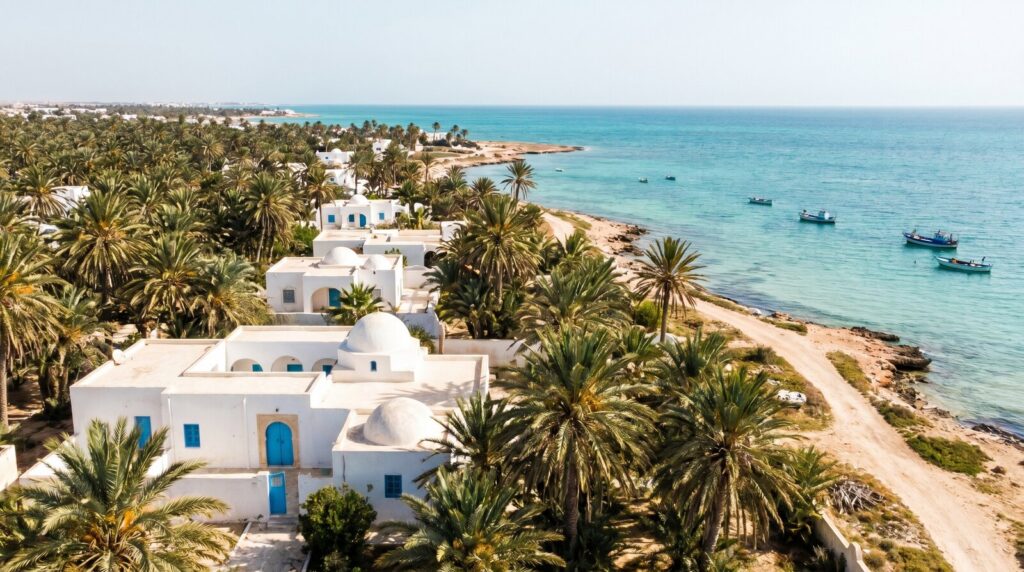
Djerba, Tunisia: Island of Dreams, Ancient Synagogue & Desert Gateway
Island of Dreams, Ancient Synagogue & Desert Gateway
Djerba, Tunisia stands as a gateway to authentic African and island experiences, blending historical heritage with contemporary vibrancy. This destination rewards travelers seeking encounters beyond typical tourist circuits, offering genuine cultural immersion, natural beauty, and transformative travel experiences. Whether exploring ancient architecture, diving into local traditions, or engaging with communities shaping their nations’ futures, Djerba provides singular travel narratives.

The city’s strategic location and historical significance have shaped its evolution across centuries. From ancient trade networks to colonial encounters to contemporary independence, Djerba embodies the broader narratives of its region. Understanding this historical context enriches contemporary experience, revealing how past influences present circumstances, how communities navigate cultural preservation amid modernization, and how travel becomes intercultural dialogue rather than mere sightseeing.
Contemporary Djerba welcomes visitors with improving infrastructure while maintaining the authenticity that distinguishes it from over-touristed destinations. Tourism here supports local economies directly, with accommodation, dining, and guide services predominantly operated by community members rather than international corporations. Traveling responsibly means understanding these dynamics and making choices that benefit local communities economically and culturally.
Table of Contents
Historical Significance & Cultural Heritage
Djerba’s history spans centuries, with layers of cultural, commercial, and political significance accumulating across generations. Ancient trade routes connected this location to distant regions, bringing merchants, ideas, religions, and technologies that shaped local development. Colonial periods introduced new architectural styles, administrative systems, and economic structures that persist in contemporary urban form.
Archaeological sites throughout the region document pre-colonial civilizations, revealing sophisticated societies with complex social organization, trade networks, and cultural achievements. Museums preserve artifacts and historical narratives, though many collections remain incomplete or inadequately documented. Visiting these institutions with critical awareness—understanding what stories are presented, what perspectives are centered, what historical narratives shape contemporary identity—enriches historical understanding.
Colonial architecture in Djerba represents multiple European influences and local adaptations. Stone buildings, administrative centers, and residential structures from colonial periods reflect architectural styles, materials, and engineering knowledge contemporary Europeans brought to African contexts. Walking through older neighborhoods reveals how colonial urban planning created spatial hierarchies reflecting racial and class systems that persist in contemporary geography.
Ancient Traditions
Indigenous societies developed sophisticated cultures predating colonial contact, with artistic, agricultural, and organizational achievements documented through archaeological evidence and oral histories.
Colonial Legacies
European colonization introduced new architectural, administrative, and economic systems that fundamentally transformed local societies and persist in contemporary urban and political structures.
Independence Movements
Anti-colonial resistance movements culminated in independence, reshaping national identity and political systems while communities worked to recover and reestablish cultural practices suppressed during colonialism.
Contemporary Heritage
Modern {city} preserves historical sites while navigating challenges of limited preservation funding, tourist pressures, and development demands competing for urban space and resources.
Natural Wonders & Outdoor Exploration
The regions surrounding Djerba offer natural beauty ranging from pristine beaches to tropical forests to dramatic geological formations. These ecosystems support endemic plant and animal species found nowhere else globally, making natural area visits opportunities for understanding evolutionary processes and ecological adaptation. Responsible tourism practices—staying on marked trails, respecting wildlife, minimizing waste—protect these fragile environments.
Beach experiences near Djerba range from crowded tourist areas to isolated stretches accessible only by boat or hiking. Snorkeling and diving reveal coral reef ecosystems supporting thousands of fish species and other marine organisms. These fragile ecosystems face threats from climate change, pollution, and tourism impacts, making diving practices that minimize harm—maintaining distance from corals, avoiding sunscreen chemicals, not touching marine life—essential components of responsible travel.
Hiking and trekking opportunities throughout the region offer encounters with landscapes and wildlife unavailable in developed nations. Multi-day treks through forests, across plateaus, or along coastal areas require physical preparation but reward participants with immersion in natural beauty and often encounters with local communities living in remote areas.
Local Culture & Community Engagement
The strongest travel experiences in Djerba emerge through engagement with local communities, participation in cultural events, and genuine interaction rather than passive observation of culture as performance. This requires humility, genuine interest in others’ perspectives, and willingness to acknowledge power dynamics and historical injustices shaping contemporary relationships between travelers and communities.
Markets in Djerba remain primary social and commercial centers where locals gather, shop, and socialize. Unlike tourist-focused markets, neighborhood bazaars offer authentic commerce, fair pricing, and opportunities to observe daily life patterns. Learning basic local language phrases demonstrates respect and dramatically improves interactions with vendors and community members.
Religious sites including mosques, churches, temples, and sacred spaces welcome respectful visitors, though appropriate dress and behavior protocols vary. Understanding these protocols—removing shoes in certain spaces, dressing modestly, observing prayer times—demonstrates respect while providing opportunities to observe spiritual practices sustaining communities.
Language & Communication
Learning basic phrases in local languages facilitates interactions, demonstrates respect, and enriches travel experiences substantially. Language barriers become opportunities for creative communication and deeper engagement rather than frustrations.
Food & Hospitality
Sharing meals represents fundamental human connection across cultures. Food traditions reveal how communities adapted to environments, what ingredients sustainability provides, and how cultural values shape culinary practices.
Arts & Crafts
Traditional crafts including textiles, pottery, woodworking, and jewelry preserve cultural knowledge while providing income for artisans. Purchasing directly from creators supports communities economically and ensures fair compensation.
Festivals & Celebrations
Experiencing local festivals immerses travelers in community celebrations while supporting cultural practitioners. Understanding festival meanings and historical contexts enriches appreciation beyond spectacle enjoyment.
Cuisine & Culinary Traditions
Djerba’s cuisine reflects geographical position, historical influences, and local agricultural production. Regional dishes developed over generations, embedding cultural knowledge, seasonal awareness, and flavor preferences particular to communities. Understanding food traditions requires appreciating how geography shapes ingredient availability, how history introduces new crops and cooking techniques, and how communities maintain culinary practices sustaining cultural identity.
Street food in Djerba offers authentic experiences at minimal expense. Vendors cooking near markets, beaches, and transportation hubs serve traditional preparations using time-tested techniques. These food entrepreneurs maintain culinary traditions while supporting families through direct food sales. Purchasing street food supports local economies directly while experiencing authentic cuisine.
Dining in Djerba ranges from upscale restaurants serving contemporary interpretations of traditional cuisine to family-operated establishments maintaining ancestral recipes. High-end restaurants cater to international tourists and wealthy locals, while modest establishments serve primarily local customers. Both extremes offer valuable experiences—refined restaurants demonstrate how chefs recontextualize traditional cuisines, while modest establishments reveal how communities actually eat.
Planning Your Visit
Visiting Djerba requires practical preparation including understanding entry requirements, seasonal considerations, health precautions, and logistical details enabling smooth travel experiences. Research current conditions, local news, and travel advisories before departure, recognizing that information changes and firsthand reports from recent travelers provide valuable current perspectives.
Most visitors require visas, obtainable through embassies, consulates, or online systems. Visa acquisition typically requires several days, so initiate applications well before travel dates. Yellow fever vaccination remains recommended for much of the region, and malaria prophylaxis may be advisable depending on specific destinations. Consult medical professionals specializing in travel medicine for personalized health recommendations.
The optimal visiting season extends from June through October, when rainfall decreases and temperatures remain moderate. Dry seasons (specific months vary by location) offer excellent conditions for outdoor activities and wildlife observation. Rainy seasons bring lush landscapes and fewer tourists, though some activities become challenging. Understanding seasonal patterns enables selecting ideal travel timing.
Accommodations in Djerba range from luxury international hotels to locally-operated guesthouses. Mid-range options offer good value with comfortable conditions and cultural integration. Guesthouses provide opportunities to interact with proprietors who offer local knowledge and travel advice unavailable through international hotel chains. Supporting local accommodation operators ensures economic benefits remain within communities.
Entry & Documentation
Passports must be valid for at least six months beyond travel dates. Visa requirements vary by nationality—research requirements well in advance and obtain necessary documentation before departure.
Health Precautions
Consult travel medicine specialists for personalized health recommendations. Vaccinations, malaria prophylaxis, travel insurance, and basic medical supplies protect health and provide peace of mind during extended travels.
Currency & Money
Local currency remains necessary for bazaar purchases, local restaurants, and transportation. ATMs in city centers provide convenient access to local currency. Credit cards work at upscale establishments but cash remains essential.
Transportation & Movement
Local buses, shared taxis, and ride-sharing apps facilitate urban movement. Hiring experienced drivers for excursions outside cities provides safe transportation and local knowledge. Walking remains feasible for downtown exploration.
Experience Authentic Djerba
Travel to Djerba offers opportunities for meaningful cultural encounters, natural beauty exploration, and personal transformation that transcend typical tourism experiences. This destination welcomes curious travelers seeking authentic engagement with communities, landscapes, and traditions shaping African and island heritage.
Start planning your Djerba adventure today with Facts From Upstairs.
🚕 Getting Around Djerba
Djerba is a relatively compact island, but distances between main attractions warrant some transport planning. Louages (shared minivans) run between Houmt Souk, Midoun, and the Zone Touristique along fixed routes and are the cheapest option — just flag one down on the main road and pay a few dinars. They do not run on fixed schedules, departing when full.
Taxis are plentiful and affordable — insist the driver uses the meter (compteur) or agree on a fare before departing. A ride from Houmt Souk to the Zone Touristique costs approximately 10–15 TND. For more freedom, scooter and car rentals are available in Houmt Souk and the hotel zone, and the flat terrain and quiet roads make self-driving easy. An international driving permit is recommended.
For a memorable way to explore, hire a quad bike for desert-edge excursions or take the Roman Causeway (El Kantara) by car to reach mainland Tunisia and the Saharan gateway towns. Day trips to Matmata (the Star Wars filming location with underground troglodyte homes) and Tozeur (Saharan oasis town) are popular excursions offered by local tour operators, typically running 12–14 hours.
🍽️ Where to Eat & Drink in Djerba
Djerba’s cuisine draws from Tunisian, Berber, and Mediterranean traditions with a heavy emphasis on fresh seafood. Houmt Souk is the culinary heart of the island — wander the streets near the central market for brik à l’oeuf (crispy fried pastry with egg, tuna, and capers), the island’s quintessential street snack. For the freshest catch, the fish market next to the old port lets you select your fish and have it grilled on the spot.
Couscous au poisson (fish couscous) is Djerba’s signature dish — a fragrant stew of grouper or sea bass over steamed semolina, seasoned with harissa and caraway. Restaurant El Fondouk in Houmt Souk serves an outstanding version in a beautifully restored caravanserai. For something more casual, Lella Hadhria near the Djerba Explore complex offers traditional Djerbien meals in a garden setting.
Tunisia produces excellent wine despite being a Muslim-majority country, and Djerba’s restaurants typically serve local labels like Magon and Sidi Saad. The island is also known for its boukha — a fig-based spirit with roots in the Jewish community that has called Djerba home for over 2,500 years. Mint tea remains the social drink of choice, served sweet and foamy in every café around the island.
❓ Frequently Asked Questions About Djerba
What is the best time to visit Djerba in 2026?
April to June and September to November offer ideal conditions — warm beach weather (25–30°C), comfortable evenings, and manageable tourist numbers. July and August bring peak heat (35°C+) and European holiday crowds. Winter (December–February) is mild but can be windy, with some beach hotels closing for the season.
Is Djerba worth visiting?
Absolutely. Djerba offers a rare combination of Mediterranean beaches, ancient Jewish heritage (the El Ghriba Synagogue dates back 2,500 years), excellent street food, and easy access to Saharan adventures. It is far less touristed than coastal Morocco or Turkey, giving you a more authentic North African island experience at much lower prices.
How do I get to Djerba?
Djerba-Zarzis International Airport (DJE) receives direct charter flights from major European cities, especially during summer. From Tunis, you can fly (1 hour) or take a bus/louage via the Roman Causeway (6–7 hours). The Jorf-Ajim ferry connects the mainland to the island’s western shore and runs every 30 minutes, carrying cars and passengers for free.
What should I know about visiting El Ghriba Synagogue?
El Ghriba is one of the oldest synagogues in the world and remains an active place of worship. Visitors are welcome but should dress modestly (shoulders and knees covered). The annual Lag BaOmer pilgrimage (typically in May) draws Jewish visitors from across North Africa and Europe. Photography is allowed in the courtyard but restricted inside the main sanctuary.
How much does a trip to Djerba cost?
Djerba is one of the most budget-friendly Mediterranean destinations. Street food meals cost $1–3 USD, restaurant dinners $8–15, and mid-range beachfront hotels $40–80 per night. A daily budget of $40–60 covers accommodation, food, and transport comfortably. All-inclusive resorts in the Zone Touristique offer competitive packages from European tour operators.
🌍 Explore More Destinations
If Djerba’s island magic and Mediterranean-Saharan blend intrigued you, explore these related guides:
- Ouarzazate, Morocco: Door of the Desert & Film Studios — Another North African desert gateway with cinematic landscapes and kasbahs.
- Corfu, Greece: Venetian Fortress & Ionian Blues — Mediterranean island life with Venetian heritage and azure waters.
- Jerusalem, Israel: Holy City & Three Faiths — Another destination where ancient religious traditions coexist across millennia.
- Petra, Jordan: Rose-Red City & Nabataean Wonder — Desert archaeology and ancient civilizations in the neighboring Levant.