
Goa, India: Golden Beaches, Portuguese Heritage & Spice Plantations
Where ancient trade routes meet modern paradise on India’s Malabar Coast
Goa stands as one of India’s most enchanting and culturally layered destinations, a place where colonial architecture mingles with tropical palm groves and turquoise waters lap against sun-soaked beaches. This small coastal state, located on India’s western Malabar Coast, represents a unique fusion of Indian, Portuguese, and global influences that creates an atmosphere unlike anywhere else in the country. Whether you seek lazy beach days, historical exploration, culinary adventures, or encounters with India’s spice trade heritage, Goa delivers an unforgettable experience.

The story of Goa is inseparable from the sea. For over four centuries, Portuguese merchants established one of Europe’s first colonial strongholds here, fundamentally shaping the region’s culture, cuisine, and architecture. Today, visitors can walk through whitewashed churches, sample unique Goan-Portuguese fusion dishes, and explore spice plantations that supplied the world’s flavor demands during the age of discovery. The result is a destination that captures multiple time periods simultaneously.
Table of Contents
Iconic Beaches & Coastal Gems
Goa’s coastline stretches for over 105 kilometers, dotted with beaches that range from party-focused stretches to pristine hidden coves perfect for solitude and contemplation. Each beach possesses its own personality, shaped by local communities, infrastructure levels, and natural geography. The state’s beaches represent both the relaxation many travelers seek and windows into authentic Goan life.
North Goa’s beaches cater to diverse traveler types. Baga and Calangute rank among India’s most developed beach areas, featuring abundant restaurants, water sports, and evening entertainment. If you prefer a quieter atmosphere with excellent shack food and close proximity to markets, head to Anjuna Beach, where rocky outcrops create natural pools and the vibe remains distinctly bohemian. Vagator Beach offers dramatic cliff views, particularly stunning at sunset when the sky turns shades of orange and pink against the Arabian Sea.
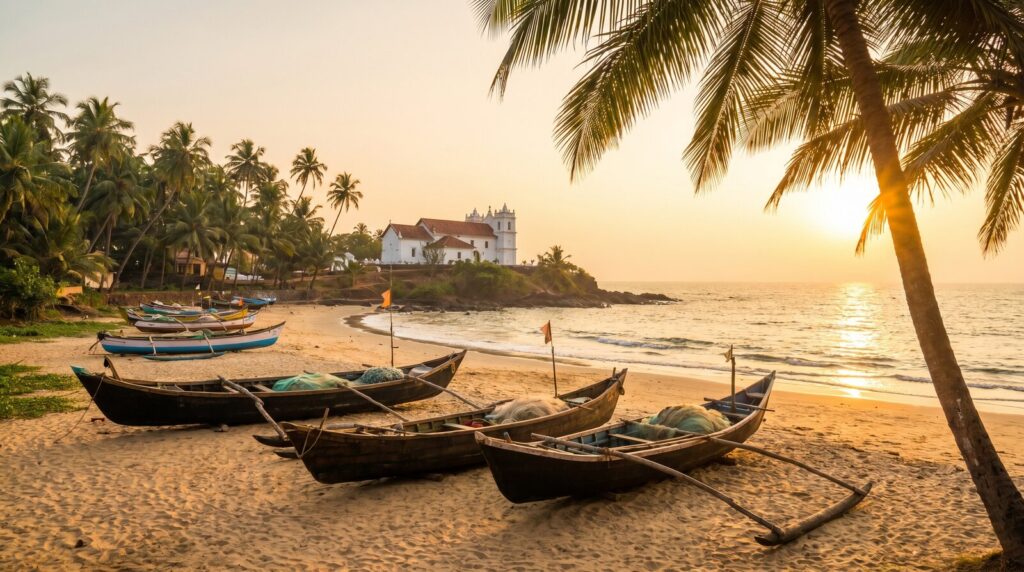
South Goa beaches attract travelers seeking tranquility and natural beauty. Palolem Beach, the southernmost developed beach, forms a perfect crescent surrounded by palms and fishermen’s boats, with a laid-back village atmosphere. Benaulim Beach offers similar charm without the festival crowds, making it ideal for extended stays. Further north, Miramar Beach in Panaji city combines urban accessibility with local authenticity, featuring the historic Mandovi River mouth where Portuguese explorer Vasco da Gama once arrived.
Getting Around Goa
Goa is best explored on two wheels. Renting a scooter or motorbike is the most popular way to get around — expect to pay 300-500 INR/day for a Honda Activa, the workhorse of Goan tourism. An international driving permit is technically required, but enforcement is inconsistent. Ride carefully: Goan roads are a cheerful chaos of cows, buses, stray dogs, and other tourists on scooters. Helmets are mandatory and actually enforced with fines.
If you prefer four wheels, pre-paid taxis from the airport have fixed rates displayed at the counter. Ride-hailing apps like Ola work in Goa but face resistance from the local taxi unions, so availability can be spotty. Local buses run frequently between major towns and beaches and cost just 10-40 INR — they’re crowded and adventurous but an authentic slice of daily life. For beach-hopping along the coast, the Kadamba bus service connects most popular stretches from Panjim to Margao.
Goa Beyond the Beaches
While Goa’s golden coastline draws the crowds, the interior tells a completely different story. Old Goa (Velha Goa), a UNESCO World Heritage Site, is home to stunning Portuguese-era churches including the Basilica of Bom Jesus, which holds the remains of St. Francis Xavier. The crumbling grandeur of these 16th-century churches set against tropical greenery feels like stepping into a forgotten European colony reclaimed by nature.
The spice plantations of Ponda taluka offer guided tours through fragrant cardamom, vanilla, and pepper gardens, usually followed by a traditional Goan lunch cooked with the spices you just walked through. For wildlife, Bhagwan Mahavir Wildlife Sanctuary in the Western Ghats shelters leopards, sloth bears, and over 200 bird species. The Dudhsagar Falls, accessible by jeep from the sanctuary, is a four-tiered cascade that thunders spectacularly during and after monsoon season. The Saturday Night Market at Arpora is worth a visit for its live music, global food stalls, and handcrafted souvenirs — it’s become a Goan institution for travelers and locals alike.
Frequently Asked Questions About Goa
What is the best time to visit Goa?
November to February is peak season — warm, dry days with temperatures around 25-33°C, perfect beach weather, and the liveliest nightlife and markets. March-May gets extremely hot and humid. The monsoon (June-September) transforms Goa into a lush green paradise with dramatic skies and deserted beaches, and prices drop significantly. Monsoon Goa has its own charm if you don’t mind rain.
Is Goa safe for solo travelers?
Goa is generally very safe, especially in the well-touristed beach areas. Solo female travelers should exercise the same common-sense precautions as anywhere — avoid deserted beaches at night, stay in well-reviewed accommodations, and be cautious with drinks. The tourist police presence is visible in popular areas during season. North Goa tends to be livelier and more party-oriented, while South Goa is quieter and more relaxed.
How much does a trip to Goa cost?
Goa can be done on almost any budget. Budget travelers staying in guesthouses and eating at local shacks can manage on 1,500-2,500 INR/day ($18-30). Mid-range travelers in boutique hotels with restaurant meals should budget 5,000-8,000 INR/day ($60-95). Luxury resorts and fine dining can easily exceed 15,000 INR/day ($180+). Beer at a beach shack costs 80-150 INR, a thali lunch runs 150-250 INR, and a seafood dinner at a beachfront restaurant is 500-1,000 INR.
Which is better — North Goa or South Goa?
North Goa (Baga, Calangute, Anjuna, Vagator) is where the action is — bustling beach clubs, flea markets, nightlife, and a backpacker-friendly vibe. South Goa (Palolem, Agonda, Colva) is quieter, more upscale, with pristine beaches and a more laid-back atmosphere. First-timers often prefer North Goa for the social scene; repeat visitors and couples tend to gravitate south. Ideally, spend time in both to experience the full spectrum of Goan life.
Do I need to book accommodation in advance?
During peak season (December-January, especially around Christmas and New Year), advance booking is essential — prices surge and popular places sell out weeks ahead. In the shoulder and off-season, you can often find excellent last-minute deals by walking in, especially at smaller guesthouses. Many long-stay travelers negotiate monthly rates directly with property owners for significant discounts.