
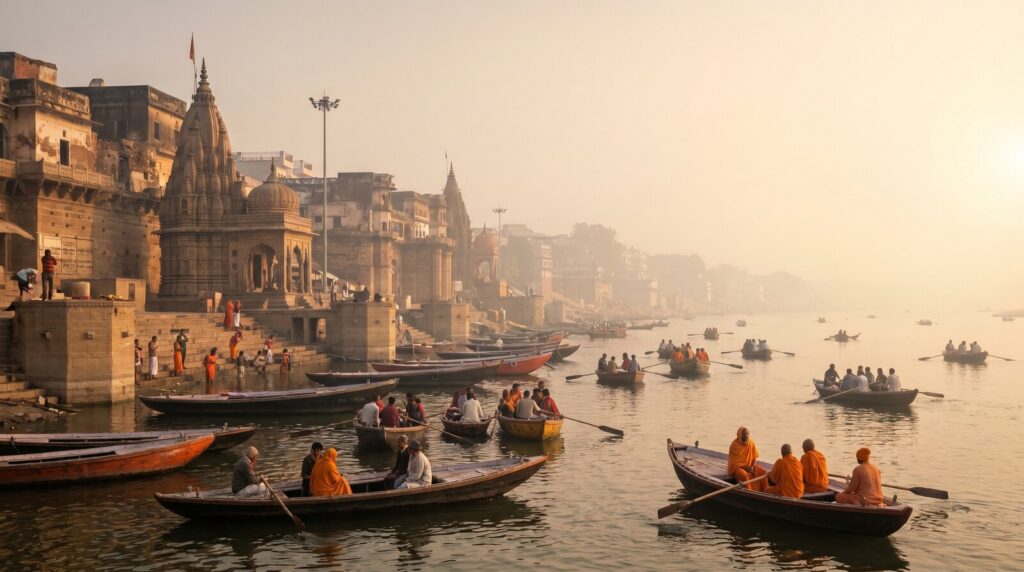
Varanasi, India: Ganges Ghats, Spiritual Ceremonies & India’s Holiest City
Where death becomes a doorway to liberation, the mundane mingles with the sacred, and the Ganges River is India’s living soul
Varanasi is not a city for tourists seeking comfort. It’s a city for seekers—seekers of spiritual truth, seekers of understanding, seekers who want to confront the beautiful and brutal reality of human existence. This ancient city on the Ganges River, sacred in Hinduism and Buddhism, is where pilgrims come to bathe in holy waters, where the dying come to spend their final days, where cremation fires burn continuously along the river’s banks. It’s overwhelming, chaotic, spiritual, and profoundly moving—a place that challenges assumptions and opens hearts. Varanasi isn’t like other Indian cities. It’s a living temple where every moment is sacred, where death is celebrated rather than feared, and where ancient traditions continue unchanged for millennia.

In This Guide
Varanasi: City of Shiva & Sacred Death
Varanasi’s holiness is inseparable from death. In Hindu tradition, the god Shiva is said to reside in Varanasi, blessing those who die here with instant liberation (moksha)—freedom from the cycle of reincarnation. This belief has driven pilgrims to Varanasi for thousands of years. The dying come here to spend their final days, often waiting in death hospices for the moment of liberation. The city’s cremation rituals, performed along the Ganges with fire and water, complete the spiritual cycle—the body is returned to the elements, and the soul is freed.
For visitors unaccustomed to Hindu spirituality, this focus on death can feel morbid. But within the Hindu worldview, death is not an ending but a transformation. The respect shown the dying, the rituals honoring the deceased, and the belief that death here brings liberation creates an atmosphere of sacred inevitability. Life and death, rather than being separated as in Western culture, are understood as part of a continuous cycle.
The city is chaotic by Western standards—narrow lanes congested with pilgrims, cows, rickshaws, and merchants; pollution from pollution and cremation fires; the overwhelming sensory assault of smells, sounds, and sights all at once. Yet within this chaos exists profound order—the daily rituals are performed precisely, the pilgrimages follow ancient patterns, the spiritual practices continue unchanged. Understanding Varanasi requires abandoning expectations of cleanliness, comfort, or logical order, and instead embracing the sensory and spiritual intensity.
The Ghats: Steps to Salvation
The ghats—stone steps leading down to the Ganges River—are the physical and spiritual center of Varanasi. Over 100 ghats line the riverbank, each with distinct character and purpose. Some are pilgrimage destinations for particular Hindu sects. Some serve as cremation sites where bodies are ritually burned. Some are pilgrimage steps where millions bathe daily in water considered holy and purifying. Walking along the ghats, you experience the totality of Hindu spiritual practice—from the ritualistic to the tragic to the transcendent.
Dasaswamedh Ghat, the main ghat, teems with pilgrims, priests, and boat operators. Morning is the most crowded time, when pilgrims arrive to bathe in the sacred waters. The water is polluted by modern standards—sewage, industrial waste, and cremation residue flow constantly into the river. Yet Hindu philosophy teaches that the Ganges itself is sacred and purifying regardless of contamination. Pilgrims bathe fully clothed, ducking their heads beneath the surface, believing the waters cleanse the soul if not the body.
Manikarnika Ghat, the main cremation site, is less visited by tourists but essential to understanding Varanasi’s spiritual significance. Here, bodies are prepared, placed on pyres, and burned according to precise rituals. Ashes are collected and scattered into the Ganges. This cycle continues 24/7—fires burn constantly. For tourists, witnessing cremation is permitted but should be approached with profound respect and sensitivity. This is not entertainment but the most sacred ritual in Hinduism.
⛩️ Key Ghats
Dasaswamedh (main pilgrimage), Manikarnika (cremation), Assi (southern end), Harishchandra (another cremation site)
🚣 Boat Tours
Pre-dawn tours essential. Sunset tours also available. Hire private boats for flexibility. Expect 1-2 hours minimum.
The Ganges River & Spiritual Purification
The Ganges isn’t simply a river—it’s a living deity in Hindu tradition. Ganga is depicted as a goddess, and the river is considered her physical manifestation. The water is believed to contain spiritual power capable of cleansing sins and purifying souls. This belief transcends scientific understanding of water quality and exists in a different realm of understanding—spiritual rather than physical.
Pilgrims travel from across India—and increasingly from around the world—to bathe in the Ganges. The ritual of immersion involves specific movements: wading into the water, ducking entirely beneath the surface, and often repeating this three times (representing purification, spiritual awakening, and liberation). Elderly pilgrims perform this ritual with devotion and visible emotion—for many, the journey to Varanasi and the bathe in the Ganges represents their final pilgrimage before death.
For international visitors, bathing in the Ganges is encouraged by locals and pilgrims—there’s no restriction. However, understanding that this is a sacred act rather than tourism is essential. If you choose to bathe, do so respectfully, observing how pilgrims perform the ritual and following their example. The experience of full immersion in water you know is polluted, yet feeling the spiritual significance of the moment, creates cognitive dissonance that reveals something about the relationship between physical reality and spiritual meaning.
Rituals, Ceremonies & Spiritual Practices
Varanasi is a city in constant spiritual practice. Pujas (worship rituals) occur throughout the day in countless temples and shrines. The most famous ceremony is the Aarti at Dasaswamedh Ghat, performed daily at dusk. In this ceremony, priests wave flaming torches in synchronized patterns while chanting mantras, offering fire to the river. The ceremony combines elements of gratitude, purification, and offering—fire representing transformation and connection between the earthly and divine realms.
Smaller rituals occur continuously—old women circumambulating temples, young men studying sacred texts, priests performing ceremonies for individual pilgrims seeking blessings. The entire city operates as a functioning spiritual laboratory where ancient traditions continue uninterrupted. What might seem chaotic to outsiders actually follows precise patterns refined over millennia.
For visitors interested in deeper spiritual engagement, numerous yoga and meditation centers offer classes and retreats. Many visitors spend days in Varanasi, progressively shedding expectations and opening to the spiritual intensity of the place. The city has a way of quieting the mind and opening the heart—whether through the visible suffering and mortality, the profound spirituality, or simply the overwhelming sensory experience that leaves no space for ordinary thoughts.
Exploring the Old City
Varanasi’s Old City is a labyrinth of narrow lanes (some barely wide enough for one person to pass) filled with temples, shrines, shops, and residences. Getting lost is inevitable and part of the experience. Walking randomly through the Old City, you encounter pilgrims, merchants, sadhus (holy men), and ordinary residents going about daily life. The sensory experience is intense—incense, cooking smells, street animals, honking horns, and chanting all simultaneously.
Kashi Visvanath Temple, the most important temple in Varanasi, is dedicated to Shiva. The temple is small, crowded, and challenging to enter (security requires extensive searches). But standing in the inner sanctum, facing the linga (phallic representation of Shiva) and surrounded by chanting pilgrims, creates a moment of profound spiritual intensity. The temple is one of Hinduism’s 12 jyotirlinga (most sacred Shiva temples), making it a pilgrimage destination of extraordinary importance.
The various neighborhoods have distinct characters. The Mir Ghat area has more tourist infrastructure. The Dashashwamedh area is most commercialized. Deeper into the Old City, tourism fades and you encounter genuine local life. Walking into these deeper areas, you see pilgrims on their final journey, families living multi-generational lives in single rooms, and ancient rhythms continuing largely unaffected by tourism.
Planning Your Varanasi Journey
Varanasi is reached by flights from major Indian cities (Delhi, Mumbai, Kolkata). The airport is modern but flights from international hubs often require connections. Train connections are excellent—the overnight train from Delhi (12 hours) is a quintessential Indian experience. The city itself is organized around the river, with most attractions concentrated along the ghats. Hotels range from budget guest houses to luxury properties.
💰 Budget Guide
Street food: $1-3 | Restaurant meals: $5-15 | Hotels from $30/night | Boat tours: $5-10 per person
🗺️ Getting Around
Boats essential for ghats. Walking necessary for Old City. Rickshaws for longer distances. Guides highly recommended.
Best times to visit are October-March when weather is cool and clear. Summer is brutally hot; monsoon (July-September) brings rain. Most nationalities receive 30-90 day tourist visas on arrival. Indian Rupee is the currency; ATMs accepting foreign cards are available but scattered.
Expect to feel emotions in Varanasi—wonder, sadness, profundity, and confusion often occur simultaneously. The city touches something deep in human consciousness. Many visitors report life-changing experiences. This isn’t guaranteed, but the possibility remains if you approach Varanasi with genuine openness.
Confront Your Mortality in India’s Holiest City
Varanasi is not a place to visit passively. It’s a city to be in, to feel, to allow to transform you. Bathe in the sacred Ganges at dawn with thousands of pilgrims, watch cremation fires burn along the riverbank, witness rituals unchanged for millennia, and understand that death is not an ending but a transition. This is India at its most spiritual and intense—challenging, overwhelming, and ultimately profound.
Start planning your Varanasi journey and prepare to encounter something that will stay with you forever.
Explore More of India
From Varanasi, many travelers continue east to Patna or head west on the Golden Triangle route through Agra, Jaipur, and New Delhi. For a contrast, explore Kerala’s serene backwaters in the south.
- Rajasthan: Desert Kingdom Grandeur
- Mumbai Travel Guide
- Udaipur: Lake Palace and the Venice of the East
Explore More of India
From Varanasi, many travelers continue east to Patna or head west on the Golden Triangle route through Agra, Jaipur, and New Delhi. For a contrast, explore Kerala’s serene backwaters in the south.