
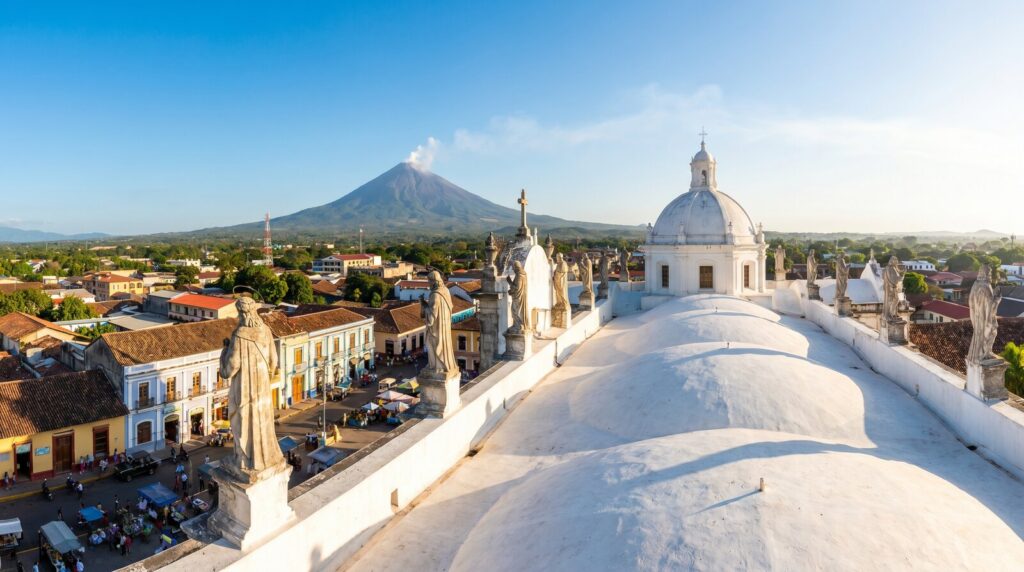
Leon, Nicaragua: Revolutionary City, Volcano Boarding & Cathedral Rooftops
Nicaragua’s revolutionary heart where volcano boarding meets cathedral rooftops
Leon, Nicaragua’s second-largest city, embodies the nation’s revolutionary spirit, artistic energy, and Central American character. Positioned near active volcanoes and surrounded by tropical landscape, the city combines historical significance with contemporary cultural vitality. Leon served as capital until 1852, maintaining cultural importance. The city’s bohemian character, university presence, and artistic community create distinctive atmosphere.

The city’s revolutionary heritage reflects Nicaragua’s twentieth-century political tumult—the Sandinista Revolution, US military intervention, and contemporary democratic development. Revolutionary history permeates through museums, murals, and monuments documenting conflicts and ongoing reconciliation. Understanding Leon requires grappling with this complex history while recognizing peaceful contemporary development.
Leon offers diverse travel experiences—exploring colonial architecture, engaging with revolutionary history, participating in outdoor adventures, and immersing in university town culture. The city maintains authentic local character despite growing tourism, with residents navigating modernity while preserving cultural traditions.
Table of Contents
Colonial Heritage & Cathedral
Leon’s colonial heritage manifests through Spanish colonial architecture reflecting sixteenth-century urban planning. The city features broad streets, central plazas, and religious buildings reflecting colonial settlement patterns. The architectural style balances European preferences with practical adaptations to tropical climate.
Walking cathedral rooftops provides unique perspectives—the dome tops permit pedestrian access offering panoramic city views. From this vantage, surrounding colonial buildings and volcanic landscape become visible simultaneously.
Numerous churches throughout Leon reflect different historical periods and architectural styles. Many remain active religious institutions while functioning as historical landmarks.
Revolutionary History & Politics
Leon symbolizes Nicaragua’s revolutionary struggle—the Sandinista Revolution (1979) overthrew dictatorship. Leon served as cultural capital of the revolutionary period, with artists and intellectuals establishing institutions. Contemporary Leon preserves heritage while transitioning to democracy.
The Museo de la Revolucion documents the Revolution through photographs, artifacts, and oral histories. The museum occupies a former revolutionary command center with spaces retaining occupation evidence.
Sandinista Movement
Socialist revolution attempting radical social transformation
US Intervention
American support for Contra rebel groups
Reconciliation
Post-conflict processes addressing trauma
Contemporary Politics
Ongoing tensions between revolutionary legacy advocates
Volcanoes & Outdoor Adventures
Volcanoes surrounding Leon provide dramatic geological landscapes and memorable experiences. Cerro Negro volcano, just outside the city, enables volcano boarding—sliding down volcanic ash slopes.
Volcano boarding involves climbing approximately 700 meters of volcanic ash slope, then riding wooden boards down steep descent. The activity requires fitness but rewards with exhilarating descent.
Momotombo and Momotombito volcanoes visible from Leon provide hiking opportunities. The volcanoes offer panoramic perspectives without requiring specialized skills.
Artistic Community & University
Leon’s cultural vitality emerges from substantial university presence and thriving artistic community. The National Autonomous University attracts intellectuals. Students, artists, and politically conscious residents create cultural dynamism.
Street art, poetry readings, theatrical performances, and musical events occur throughout the city. The city maintains bohemian character despite commercialization.
Poetry Tradition
Nicaragua’s literary heritage including renowned poets
Street Art
Contemporary muralists engaging with political consciousness
Theater Community
Experimental companies responding to political and social issues
University Culture
Intellectual community generating cultural programming
Planning Your Visit
Leon remains accessible Central American destination with developing infrastructure and affordable accommodations. The city’s college town character creates distinctive positioning within Nicaragua.
Nicaragua’s currency is the Nicaraguan Cordoba, though US dollars remain widely accepted. Nicaragua maintains affordable pricing compared to neighbors.
Rainy season (May-October) brings afternoon precipitation and dry season (November-April) offers predictable weather. Temperatures remain warm year-round.
Getting Around León
León’s colonial center is compact and best explored on foot. The grid layout of streets radiating from the central cathedral makes navigation straightforward. Most hotels, restaurants, museums, and churches are within a 15-minute walk of Parque Central. The sidewalks are narrow and uneven in places, but the flat terrain makes walking easy.
For trips beyond the center—to the Cerro Negro volcano, Pacific beaches like Las Peñitas, or the ruins of León Viejo—local buses depart from the main bus terminal on the northeast edge of town. Buses to the beach cost under $1 and take about 30 minutes. Taxis within León are cheap (around $1–2 for most trips within the city), and motorcycle taxis offer an even cheaper option.
Volcano boarding at Cerro Negro is typically organized through tour operators who provide transport, equipment, and guides as part of the package. Bigfoot Hostel and Quetzaltrekkers are the most established operators. For travel between León and Granada or Managua, chicken buses (repurposed American school buses) run frequently and cheaply, while express minivans offer faster, more comfortable alternatives.
Where to Eat & Drink
León offers excellent food at remarkably low prices. Traditional Nicaraguan cuisine centers on gallo pinto (rice and beans), vigorón (yuca with chicharrón and cabbage salad), and nacatamales (large tamales filled with pork, rice, and vegetables wrapped in banana leaves). Street vendors around the central market serve these staples for under $2.
El Sesteo, near the cathedral, is a popular spot for traditional dishes in a courtyard setting. Cocina de Doña Haydée serves home-style Nicaraguan cooking beloved by locals and travelers alike. For international options, the area around Calle La Calzada has cafes and restaurants serving everything from pizza to smoothie bowls catering to the backpacker crowd.
Flor de Sacúanjo is the local drink—a deep red beverage made from hibiscus flowers, served ice-cold from street carts. Tiste, a cacao and corn-based drink, is another regional specialty. Nicaragua produces excellent rum (Flor de Caña is world-renowned) and a growing craft beer scene is emerging. Toña is the ubiquitous local beer, perfect after a dusty volcano boarding descent.
Frequently Asked Questions
What is the best time to visit León in 2026?
The dry season (November–April) offers the best conditions with sunny skies and lower humidity. December through February is peak season with comfortable temperatures. The rainy season (May–October) brings afternoon downpours but lush green landscapes and fewer tourists. Volcano boarding operates year-round, though dry season provides better visibility.
Is volcano boarding dangerous?
Volcano boarding at Cerro Negro involves sledding down volcanic ash slopes at speeds up to 50–90 km/h. Reputable operators (Bigfoot, Quetzaltrekkers) provide protective suits, goggles, and safety briefings. Minor scrapes are common if you fall, but serious injuries are rare. You control your speed by sitting upright (slower) or lying flat (faster). The 45-minute hike up is actually more demanding than the descent.
How do I get from Managua to León?
León is about 90 kilometers northwest of Managua. Express minivans from the UCA terminal in Managua take about 1.5 hours and cost around $2–3. Regular chicken buses are cheaper but slower (2+ hours). Shared shuttles and private transfers can be arranged through hotels and tour agencies. From Managua’s airport, a private taxi takes about 1.5 hours.
Is León safe for tourists?
León is generally considered safe for tourists, with a relaxed, student-town atmosphere thanks to UNAN university. Standard precautions apply—avoid walking alone late at night in poorly lit areas, keep valuables out of sight, and use ATMs during daylight hours. The central tourist area around the cathedral and Parque Central feels safe day and night.
Can I visit León Viejo ruins?
Yes, León Viejo is a UNESCO World Heritage Site about 30 kilometers east of modern León on the shore of Lake Managua. The ruins of the original colonial city, destroyed by a volcanic eruption in 1610, include foundations of the cathedral, governor’s house, and convent. Local buses or taxis provide access. Allow 1–2 hours for the visit plus travel time.
Explore More Destinations
Experience Leon’s Revolutionary Spirit
Leon invites climbing cathedral rooftops, exploring revolutionary history, boarding active volcanoes, and embracing artistic energy.
Start planning your Leon adventure today with Facts From Upstairs.