
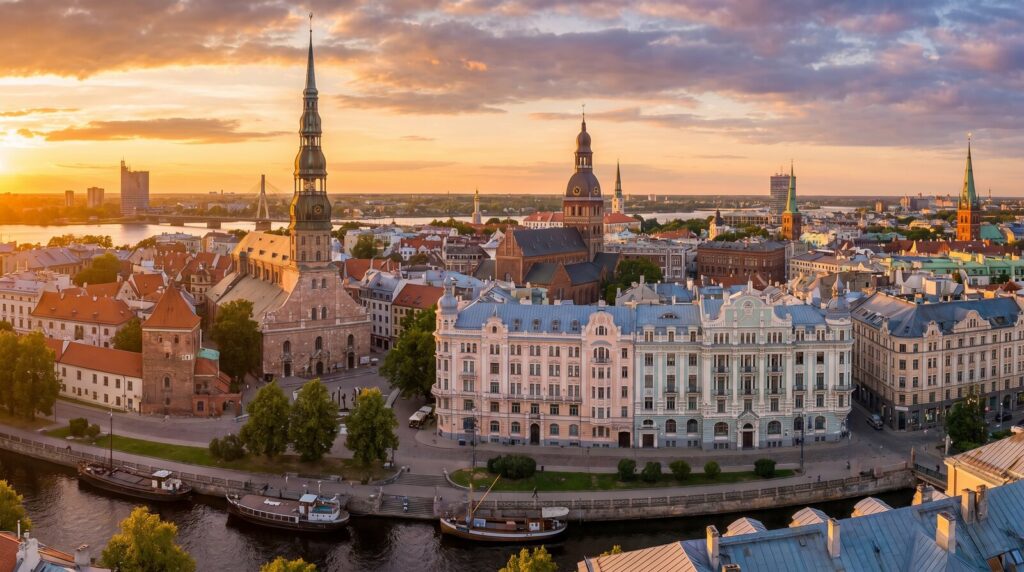
Riga: Art Nouveau Masterpieces, Baltic Nightlife & Latvia’s Vibrant Capital
Discover the grandeur of Eastern Europe’s most stylish city
In This Guide:
- The Art Nouveau Revolution: Why Riga Dominates
- Old Town: Medieval Cobbles & Hidden Courtyards
- Alberta Street: Where Architectural Dreams Come True
- Daugava Riverfront: Rebirth of a City
- Nightlife District: Where Latvia Comes to Play
- Markets & Gastronomy: New Riga Food Scene
- Day Trips: Sigulda Castles & Gauja Valley
- Practical Tips for Your Riga Adventure
The Art Nouveau Revolution: Why Riga Dominates
Riga entered the 20th century as one of Europe’s wealthiest cities. Its merchant class had amassed fortunes from timber, flax, and Baltic trade, and they demanded architecture that matched their ambitions. Between 1895 and 1913, local architects—led by Konstantīns Pēkšēns and Eižens Laube—transformed Riga’s skyline into an Art Nouveau masterpiece. Today, roughly 40% of Riga’s buildings are Art Nouveau—more than any other European city.

Walk Alberta iela (Alberta Street) and you’ll understand why. Façades burst with stucco ornaments, mythological figures, and decorative reliefs. Some buildings feature grotesque faces, mysterious creatures, and intricate floral patterns that seem to shift in the light. Every building tells a story, and every street corner rewards your curiosity.
Old Town: Medieval Cobbles & Hidden Courtyards
Riga’s medieval core hugs the Daugava River and feels caught between time periods. Narrow cobbled streets wind through medieval streets where guild halls face reconstructed townhouses. The Great Guild (1885) and Small Guild (1407) dominate the main square, their facades showcasing the city’s transition from Gothic to Renaissance to modern grandeur.
Explore the courtyards and you’ll discover galleries, cafés, and intimate shops. The Dome Cathedral—Riga’s largest church—looms above with its distinctive single spire. Pro tip: climb the tower for panoramic views across the city’s terracotta rooftops toward the modern architecture district beyond.
Old Town is best explored early morning or late evening. Midday brings cruise ship tourists, but by sunset the streets return to locals sipping craft beer in hidden courtyards.
Alberta Street: Where Architectural Dreams Come True
Alberta iela is a 300-meter street that changed how we think about residential architecture. Walking its length feels like scrolling through an architectural style guide—each building is more elaborate than the last. Numbers 2, 2a, 4, and 8 are the most photographed, their façades covered in stucco masques, mythological creatures, and decorative elements that seem to defy gravity.
Photographer tours start and finish here. Locals joke that Alberta Street has more Instagram mentions than anywhere else in the Baltics. But the crowds are worth it: stand at the street’s bend and the cumulative visual impact is overwhelming—it’s architectural excess perfected.
Daugava Riverfront: Rebirth of a City
Five years ago, the Daugava waterfront was industrial wasteland. Today it’s Riga’s most dynamic zone. The glass-and-steel National Library (opened 2014) has become an icon—its façade mimics the slope of traditional Latvian hills, making architecture visible from across the river. The library alone attracts 200,000+ visitors annually.
The library’s rooftop terrace offers free access to views that rival paid observation decks. Go at sunset to watch the Daugava turn golden while the city lights begin flickering on.
Beyond the library, new parks, restaurants, and cultural spaces have emerged. Kronvalda Parks offers green space and river views. KUGNU—a popular beer hall—sits right on the water. The artificial island of Lucavsala hosts summer markets and concerts.
Nightlife District: Where Latvia Comes to Play
Riga’s nightlife is legendary in the Baltics. The Vecrīga (Old Town) zone thrums with energy after dark, but the real action happens in the Eksporta Kvarāls (Warehouse District) where Soviet-era storage buildings have been converted into clubs, bars, and live music venues. Thursday through Saturday, the district becomes a moving party.
Venues range from sophisticated cocktail lounges (Folkklubs Ala Pagrabs) to electronic dance venues (Club Essential) to live jazz clubs (Glam). The atmosphere is relaxed—Rigans are friendly to visitors and the quality-to-price ratio is exceptional.
Markets & Gastronomy: New Riga Food Scene
Riga’s four central markets sprawl across a massive space where Soviet-era hangars have been repurposed. Viestūres Tirgus and Centraltirgus together form the largest market complex in the Baltics. You’ll find everything: fresh produce, amber jewelry, Soviet relics, and Baltic delicacies.
The restaurant scene has evolved dramatically. Beyond traditional Latvian fare (rye bread, pork knuckle, grey peas), a new generation of chefs is reinterpreting Baltic cuisine. 3 Pavāru Restorāns (3 Chefs’ Restaurant) holds a Michelin star and represents the pinnacle—but equally impressive are casual spots like Folkklubs Ala Pagrabs or Lido (a local fast-casual chain).
Try rupjmaize (Latvian black bread), curing salmon at the markets, and kartupeļi ar gaļu (potato and meat stew). Leave room for Latvian rye bread desserts and Riga Black Balsam—a 45% ABV herbal liqueur that locals claim cures everything.
Day Trips: Sigulda Castles & Gauja Valley
One hour from Riga, the Gauja Valley offers a completely different landscape. Three castle ruins dominate Sigulda: the medieval Sigulda Castle (1207), the Gothic Raiskums Castle, and the romantic Krimulda Castle across the valley. Cable cars traverse the gorge, offering views of red cliffs and dense forests. Hikers can explore trails along the Gauja River—the most picturesque is the Gutmaņa Ala (Gutman’s Cave) path.
Facts About Riga
The Freedom Monument
Standing 42 meters tall, Riga’s Freedom Monument has symbolized independence since 1935. Locals place flowers here on national holidays. It’s become a pilgrimage site for those reflecting on Baltic sovereignty.
Cold War History
The Museum of Occupation tells Riga’s complex Soviet-era story. From Nazi occupation to Soviet annexation, the city experienced incredible hardship. The museum’s honest exhibits are sobering and essential.
Song Festival
Every five years, thousands of Latvians gather to celebrate the International Song Festival. Thousands sing together in a choir—a powerful expression of national identity and unity.
Powder Tower
This 16th-century tower once stored gunpowder and now houses the War Museum. Its thick walls once protected the city; today they protect artifacts from centuries of warfare.
Ready to explore Riga’s Art Nouveau elegance and Baltic energy? Book your trip today and discover why this city is the Baltics’ best-kept secret.