
Languages of Latvia
All languages of Northern Europe →fluent beta classical · classes by phone with Maya at ranas.ai/maya
Latvia Travel Guide — Art Nouveau Spires, Amber Coasts & Pine-Scented Wilderness
I came to Latvia expecting a quick stopover and stayed a week. What hooked me was the contrast: Riga’s Old Town packs more Art Nouveau facades into a few blocks than almost anywhere on Earth, yet drive ninety minutes in any direction and the country dissolves into white-sand Baltic beaches, bog boardwalks and forest that covers more than half the land. We wandered amber markets, soaked in a smoke sauna, and ate rye bread that tasted like it had history baked into it. This is the Baltic at its most underrated — compact, green, soulful and still refreshingly cheap.

In This Guide
- Overview — Why Latvia Belongs on Every Bucket List
- Jāņi Midsummer 2026
- Best Time to Visit Latvia
- Getting There — Flights & Arrival
- Getting Around
- Top Cities & Regions
- Latvian Culture & Etiquette
- A Food Lover’s Guide to Latvia
- Off the Beaten Path
- Practical Information
- Budget Breakdown
- Planning Your First Trip
- Frequently Asked Questions
Overview — Why Latvia Belongs on Every Bucket List
Latvia is the green middle child of the Baltic states — wedged between Estonia and Lithuania on the eastern shore of the Baltic Sea, with Russia and Belarus along its eastern frontier. It is small enough to cross by car in a single day yet endlessly varied, and it remains one of Europe’s quietest, most affordable and most underrated corners. For travellers tired of jostling crowds and inflated prices, it feels like a secret the rest of the continent has somehow overlooked.
The numbers tell a striking story. Around half the country is blanketed in forest, and the population sits at roughly 1.86 million people , most of them clustered in and around the capital. That leaves vast stretches of bog, dune, lake and woodland where you can walk for an hour and meet only storks, beavers and the occasional forester. Riga, meanwhile, holds the largest collection of Art Nouveau architecture of any single European city — entire streets of writhing stone faces, peacocks, sphinxes and screaming masks carved into the facades by architects given free rein at the turn of the twentieth century.
The contrasts are what make it sing. You can spend the morning under chandeliers in a restored merchant’s house and the afternoon barefoot on a 25-kilometre beach with not another soul in sight. Soviet-era concrete boldness rubs shoulders with medieval guild halls and wooden suburbs; a thumping summer festival scene coexists with a deep, almost mystical folk tradition built on dainas — tiny four-line folk songs numbering in the hundreds of thousands and sung en masse at the great Song and Dance Celebration.
Add genuine value — a sit-down meal of grey peas, smoked Baltic fish and dark rye bread still costs a fraction of what you would pay in Western Europe — plus three UNESCO World Heritage Sites and a tourism scene that welcomed 2.7 million accommodation arrivals in 2024 , and you have a destination that punches far above its modest size. It is the rare European country where the landscape, the city and the wallet all pull in the same, very pleasant direction.

Jāņi Midsummer 2026 — Latvia’s Wildest Night
If you visit for one event, make it Jāņi — the midsummer celebration of the summer solstice and by far Latvia’s most beloved holiday. On the shortest night of the year, the entire country empties out of the cities and pours into the countryside to light towering bonfires, weave oak-leaf and wildflower crowns, eat caraway cheese, drink beer and stay awake until dawn in search of the mythical, never-found fern blossom said to bloom only on this one magical night.
It is part pagan ritual, part national release valve, and utterly unlike anything else on the European festival calendar. Men named Jānis are crowned with oak leaves, women with flowers; people leap the embers for luck, sing dainas around the fire, and greet the rising midsummer sun with a swim in a lake or the sea. Outside the cities, daylight barely surrenders — at this latitude the sky stays a deep luminous blue through the small hours, and the celebration simply rolls on until breakfast.
- Jāņi date 2026: the night of 23 June into 24 June (Jāņa diena)
- Peak window: 22–24 June, with public holidays on the 23rd and 24th
- Bonfires: traditionally kept burning all night until sunrise
- Countryside: rural homesteads and open-air sites host the most authentic celebrations
- Riga: markets sell flower crowns, herbs and Jāņi cheese in the days before

Best Time to Visit Latvia (Season by Season)
Spring (Mar–May)
Late spring is a quiet delight as the forests green up and vast flocks of migrating birds pour through the Lake Engure and Cape Kolka wetlands, one of Europe’s great avian flyways. Days lengthen quickly, daytime highs climb from chilly to the high teens Celsius by May, and prices stay reassuringly low before the summer surge arrives. Bring layers — early spring can still bite, and snow lingers into March some years — but by May the café terraces of Riga are open and the city feels reborn.
Summer (Jun–Aug)
The high season and, for most visitors, the obvious choice. June brings the famous white nights and the Jāņi midsummer festival; July and August deliver genuinely warm beach days on the Gulf of Riga, with highs often in the low-to-mid 20s Celsius and occasional spikes higher. This is festival season — the once-every-five-years Song and Dance Celebration falls in summer — and the only time the seaside resorts truly hum. Book accommodation well ahead for Jūrmala and central Riga in July, when both fill up fast.
Autumn (Sep–Nov)
September is a quiet sweet spot — mild, golden and gloriously uncrowded, with the national mushroom-and-berry foraging culture in full swing across the forests. By October the famous Latvian autumn colour peaks in the Gauja National Park, the river valley glowing amber and rust, before the days shorten dramatically and the first hard frosts settle in during November. It is a photographer’s season and a bargain one too.
Winter (Dec–Feb)
Cold, dark and deeply atmospheric. Riga’s Christmas market is genuinely lovely — the city claims to have erected the first decorated public Christmas tree, back in 1510 — snow blankets the cobbled Old Town, and you can ski and toboggan modestly at Sigulda. Daylight is short and temperatures frequently sit well below freezing, so this is strictly a city-break, museum and sauna season rather than a time for the coast and countryside.
Shoulder-season tip: Early September is arguably the best all-rounder — summer warmth lingers, the beaches and national parks are empty, and accommodation drops back to off-peak rates.
Getting There — Flights & Arrival
Nearly everyone arrives through Riga, which has by far the busiest airport in the Baltic states and excellent low-cost connections across Europe. Because the country is so compact, a single arrival point serves the whole of Latvia comfortably, and overland links from the neighbouring Baltic capitals make a multi-country Baltic loop easy to assemble.
- Riga International Airport (RIX) — the largest airport in the Baltics, about 10 km west of the city centre, serving over 100 destinations.
- Liepāja Airport (LPX) — small regional airport on the west coast with seasonal domestic links.
- Tallinn (TLL) & Vilnius (VNO) — easy overland alternatives by bus from neighbouring Baltic capitals.
Flight times: Roughly 2.5–3 hours from London, under 1 hour from Stockholm or Helsinki, and around 3 hours from most of Central Europe. Direct long-haul is rare, so transatlantic visitors usually connect through a European hub.
Flag carrier: airBaltic, the dominant carrier at Riga, plus low-cost Ryanair and Wizz Air.
Visa / entry: Latvia is in the Schengen Area, so many nationalities (including the UK, US, Canada and Australia) can enter visa-free for short stays of up to 90 days in any 180-day period.
Getting Around — Compact, Cheap & Easy
Latvia is small and well-connected, which makes it one of the simplest countries in Europe to explore independently. Riga is the hub for everything: a single, eminently walkable Old Town, an efficient tram, bus and trolleybus network, and inter-city buses and suburban trains fanning out to the coast, the national parks and the regions. You rarely need to plan more than a day ahead, and distances are short enough that almost everywhere is a feasible day trip from the capital.
- Riga public transport: trams, buses and trolleybuses run by Rīgas satiksme; a single ticket bought on board is inexpensive.
- Riga to Jūrmala: about 30 minutes by suburban train
- Riga to Sigulda (Gauja NP): roughly 1 hour by train
- Riga to Cēsis: around 1.5–2 hours by train or bus
Inter-city buses: Operators run frequent, comfortable coaches between every town worth visiting; the central Riga bus station sits beside the Central Market.
Driving: A rental car is the best way to reach the wilder national parks and the far west coast; roads are quiet and well-signed once you leave the capital.
Apps: Bolt (rides, taxis and e-scooters) and the Rīgas satiksme ticketing app cover most day-to-day needs, while standard map apps handle navigation reliably across the country.
Cycling: Riga is flat and increasingly bike-friendly, and shared bikes and scooters make short hops around the centre and out to the parks quick and cheap in the warmer months.
Top Cities & Regions
📍 Map of Latvia: Every Place in This Guide
Riga
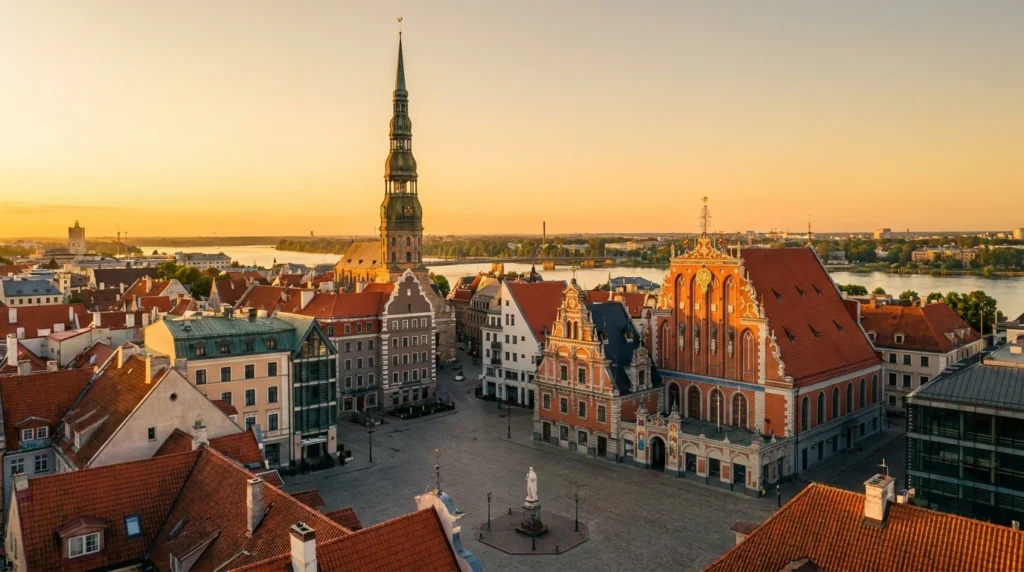
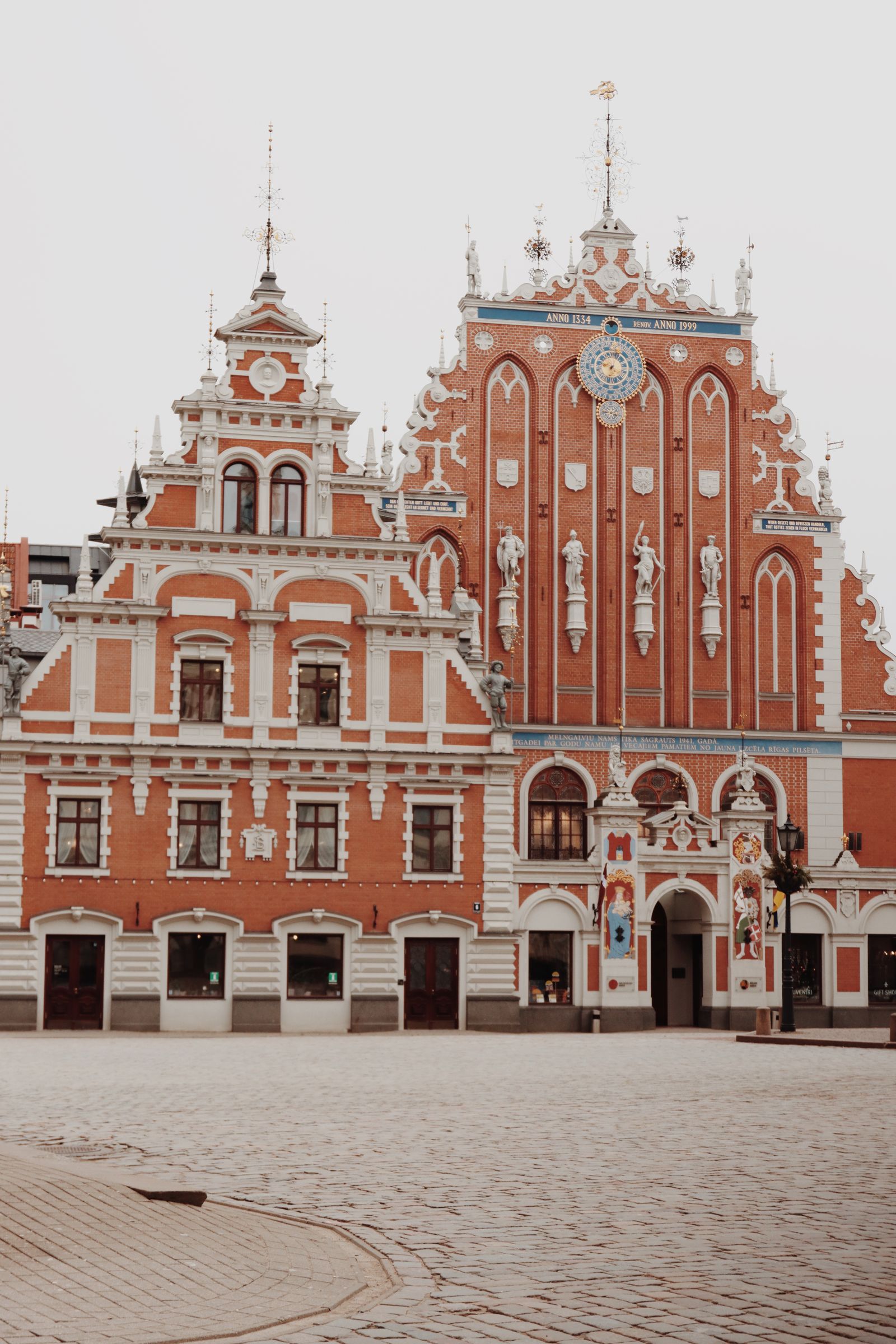
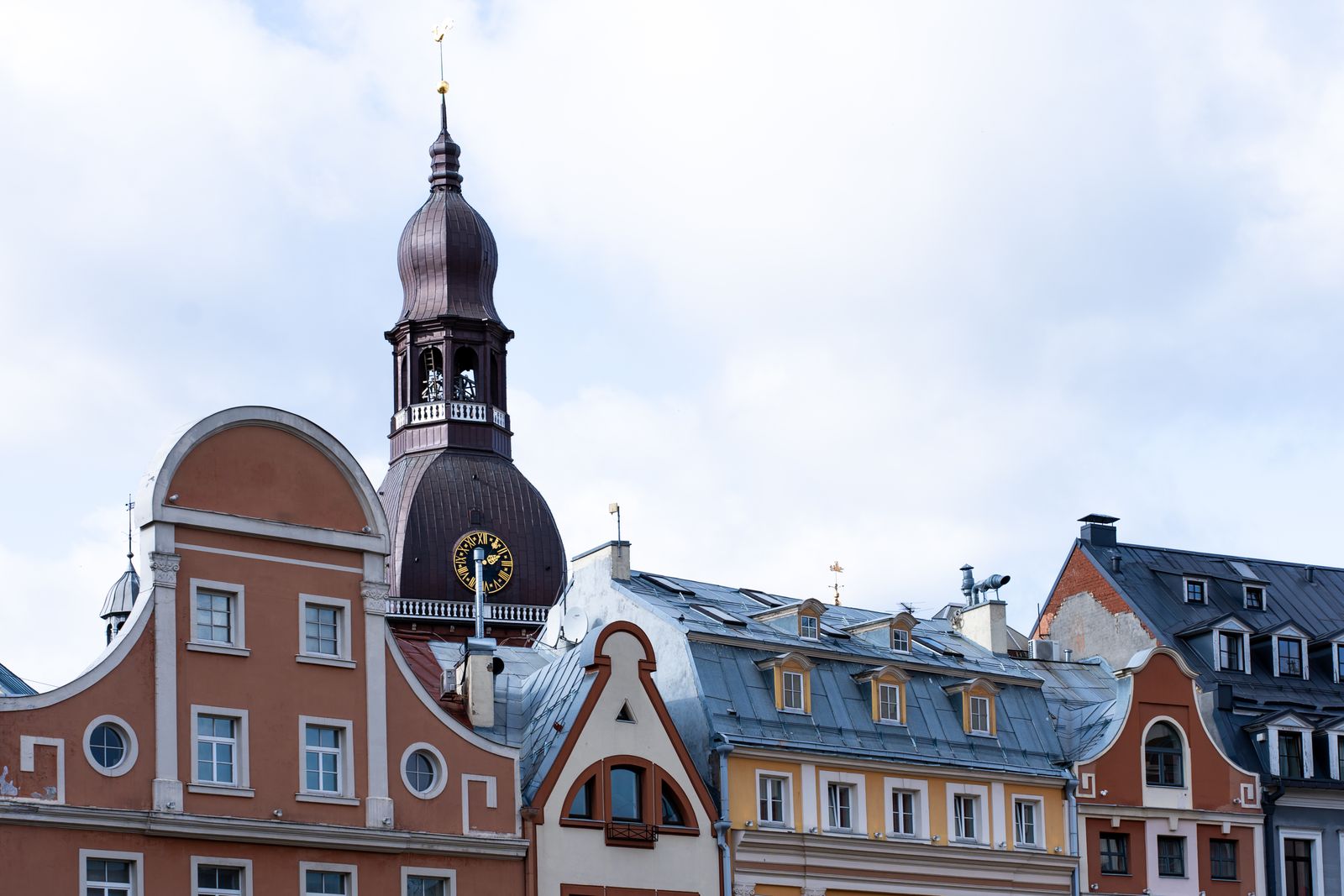
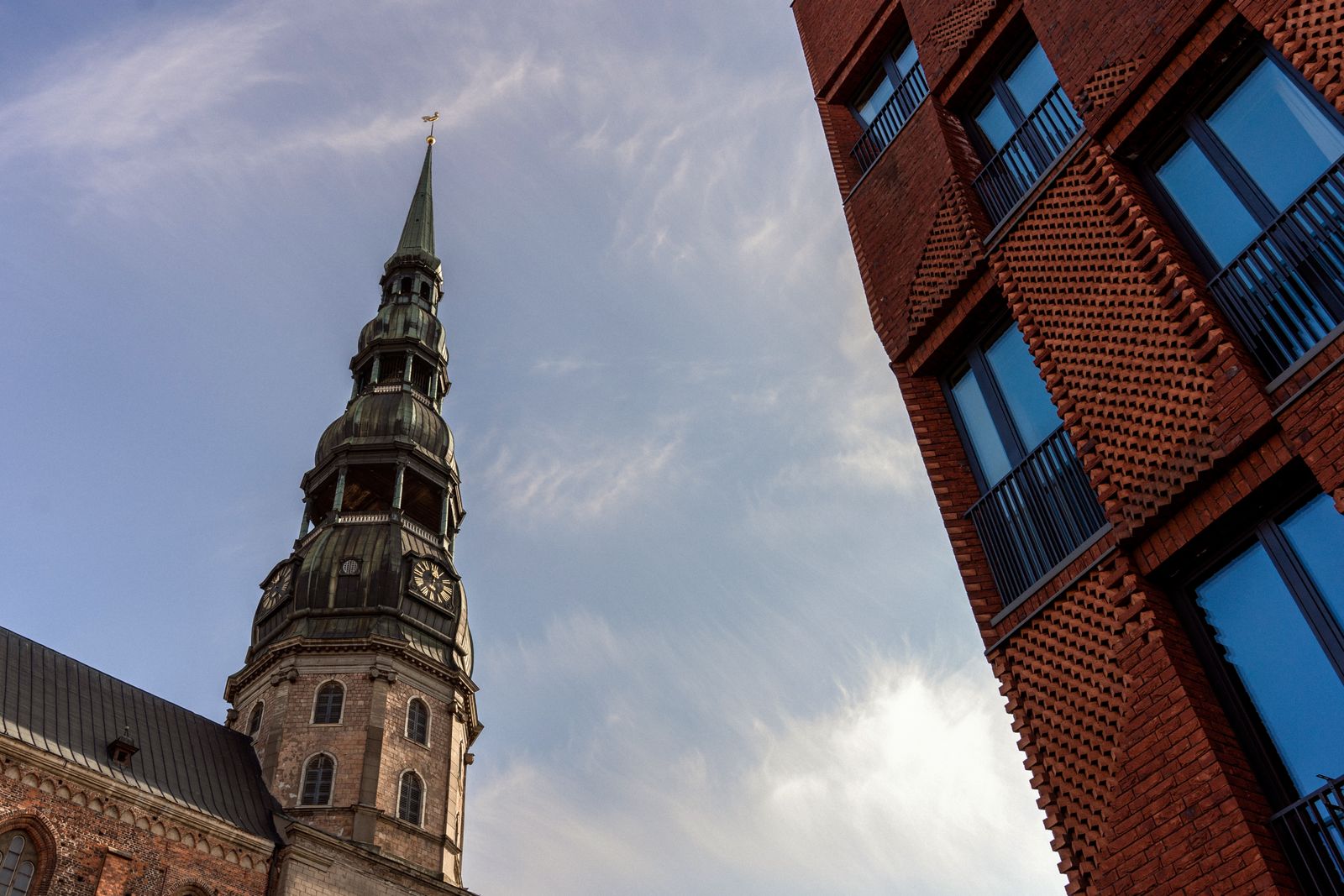
The capital and the Baltics’ largest city is a one-two punch of cobbled medieval Old Town and the world’s densest Art Nouveau district, all ringed by leafy parks, a wide canal and the Daugava River. Most visitors spend the bulk of their trip here, and there is enough to fill several days: museums, markets, churches, rooftop bars and an easy, human-scaled centre you can cross on foot in twenty minutes.
- House of the Blackheads and the Old Town squares
- The Art Nouveau quarter along Alberta and Elizabetes iela
- Riga Central Market in the old Zeppelin hangars
Jūrmala
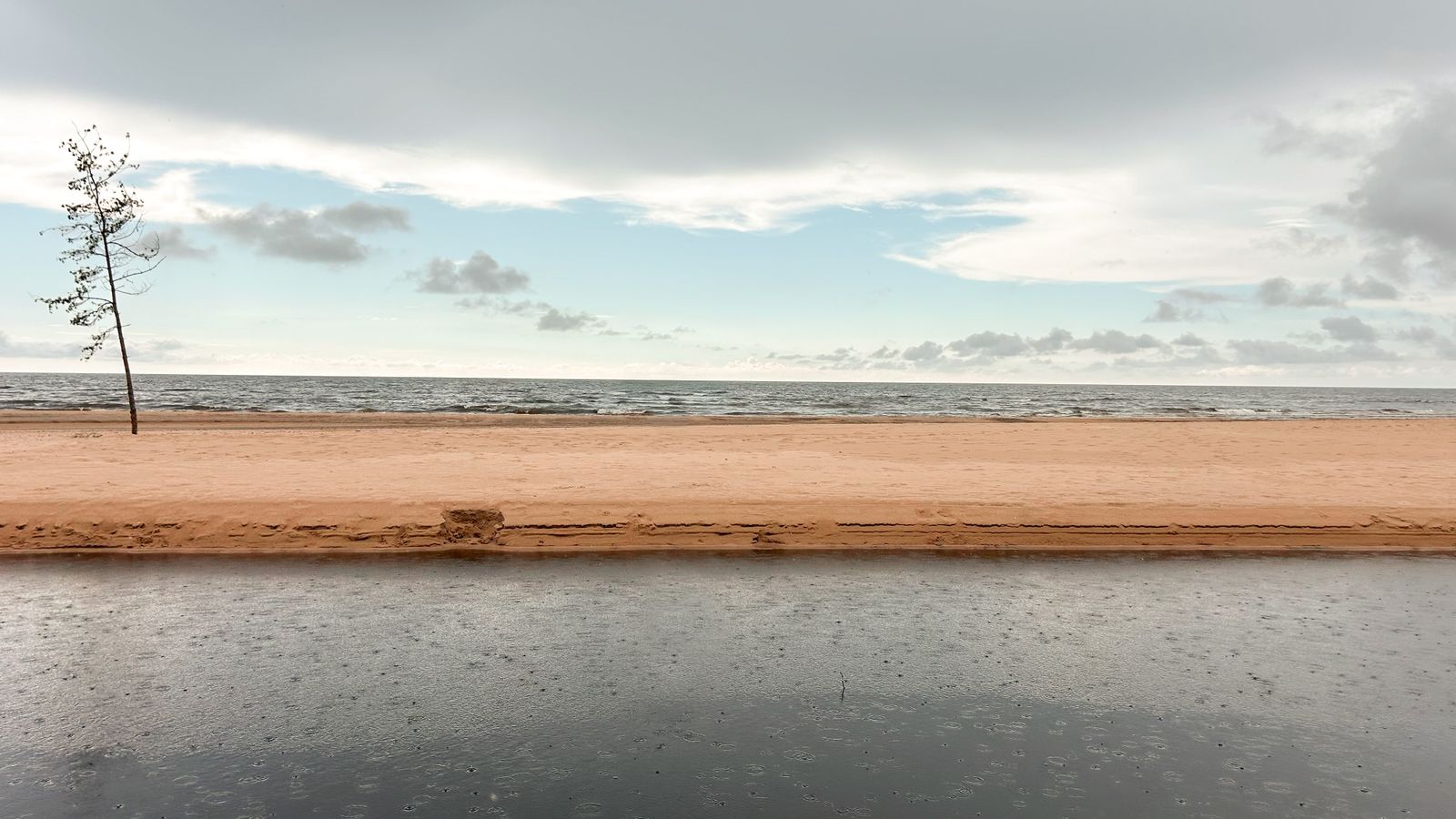
Latvia’s grand seaside resort sits just a 30-minute suburban train from Riga, and makes the easiest day trip in the country. It is famous for its endless kilometres of fine white-sand beach backed by pine dunes, and for a delightful parade of ornate wooden summerhouses, many of them restored Art Nouveau villas. The pedestrian street Jomas iela strings together cafés, ice-cream stands and spa hotels — this is where Rigans come to slow down.
- The long Baltic beach and pine dunes
- Jomas iela’s cafés and historic timber villas
- Ķemeri National Park’s surreal bog boardwalk nearby
Sigulda & Cēsis
These twin towns are the heart of the Gauja Valley, often dubbed the “Switzerland of Latvia” for its forested river gorge. Expect medieval castles, an aerial cable car swinging over the valley, an adrenaline bobsleigh track, and the prettiest autumn colour in the country. Both are easy rail trips from Riga and pair naturally into a single day or an overnight escape into the woods.
- Turaida Castle and its red-brick tower
- Sigulda’s cable car and Olympic bobsleigh track
- Cēsis Medieval Castle ruins and old town
Gauja National Park
Latvia’s oldest and largest national park is a long green corridor of sandstone cliffs, hidden caves and ruined castles strung along the meandering Gauja River. It is the country’s outdoor playground, ideal for hiking, cycling and lazy canoe trips, with quiet trails that see a fraction of the crowds you would find in Western European parks.
- Gūtmaņala, the largest cave in the Baltics
- Hiking, cycling and canoeing the river valley
Kurzeme & the West Coast
The wild western region of Kurzeme is where Latvia gets properly remote — empty beaches, weathered fishing villages, lighthouses and the eerie, half-abandoned Karosta naval fortress at Liepāja. It rewards travellers with a rental car and time to wander, and feels a world away from the polish of Riga.
- Kuldīga’s Venta Rapid, the widest waterfall in Europe
- Cape Kolka, where two seas visibly meet
Latgale & the Lakes
The soulful eastern region of Latgale is the “land of blue lakes,” a gently rolling country dotted with Catholic basilicas, family pottery workshops and the largest and deepest lakes in Latvia. It has a distinct dialect, cuisine and rhythm, and remains the least-visited corner of the country — all the more rewarding for it.
- Aglona Basilica, a major Catholic pilgrimage site
- Lake Rāzna and the Latgale lake district
Taken together, these regions show how much variety Latvia squeezes into a small footprint: a world-class capital, a classic beach resort, a forested adventure valley, a wild Atlantic-feeling coast and a lake-strewn rural east, all within a few hours of one another. Most first-timers never make it past Riga and the Gauja Valley, but those who hire a car and push west or east are rewarded with a Latvia that very few foreign visitors ever see.
Latvian Culture & Etiquette — What to Know Before You Go

Latvian culture is quiet, nature-bound and proud, shaped by centuries under Germanic, Swedish, Russian and Soviet rule and by a hard-won independence restored in 1991. Underneath a famously reserved surface lies a warm, song-loving people with one of the richest folk traditions in Europe. A little awareness of local manners goes a long way, and visitors who show genuine interest in the language, the land and the recent history are met with real warmth.
The Essentials
- Latvians can seem reserved at first — politeness is quiet and understated, and warmth comes with familiarity rather than instant small talk.
- Remove your shoes when entering a Latvian home; it is simply expected, and slippers are often offered.
- Greet with a firm handshake and direct eye contact; save hugs and cheek-kisses for established friends.
- Tipping is appreciated but modest — round up or leave around 10% for good restaurant service.
- Respect the country’s recent history; the Soviet occupation and the path to independence are sensitive, deeply felt subjects.
Sauna (Pirts) Etiquette
The pirts is central to Latvian life, and being invited to one is a real honour. Treat it as the slow, communal ritual it is rather than a quick sweat.
- The traditional Latvian smoke sauna (pirts) is a cleansing ritual, not just a sweat.
- You’ll be gently whisked with a leafy birch or oak besom (slota) to boost circulation.
- Go nude or wrapped in a towel as the host indicates; follow their lead.
- Stay hydrated and cool off between rounds — a cold plunge or lake dip is part of it.
A Food Lover’s Guide to Latvia

Latvian cooking is honest, seasonal and rooted in the forest, the garden and the sea. It leans on dark rye bread, dairy, smoked and pickled fish, pork, root vegetables, wild mushrooms and berries — the food of a northern country that learned to make winters delicious. In recent years a wave of young chefs has reinvented these humble ingredients into a confident New Baltic cuisine, so Riga now offers everything from grandmother’s grey peas to tasting menus built around foraged herbs and local game. Whatever the price point, the produce is fresh and the portions generous.
Must-Try Dishes
| Dish | Description |
|---|---|
| Rupjmaize | Dense, sweet-and-sour dark rye bread — the cornerstone of the Latvian table, also baked into a layered cream dessert. |
| Pelēkie zirņi ar speķi | Grey peas with fried bacon and onion — the unofficial national dish, especially around Christmas. |
| Skābeņu zupa | Tangy sorrel soup, often with a boiled egg — a beloved spring and summer comfort bowl. |
| Smoked fish | Baltic herring, sprats and eel smoked along the coast; tinned sprats are a classic souvenir. |
| Jāņu siers | Caraway-studded fresh “Jāņi cheese” eaten at Midsummer and beyond. |
| Rasols | The hearty potato-and-pea salad with diced sausage and mayo found at every celebration. |
Markets, Bakeries & Black Balsam
Latvian food culture revolves around markets, and the Riga Central Market is the best single place in the country to graze. Housed in five vast former Zeppelin hangars, it devotes whole pavilions to dairy, fish, meat and produce, plus aisles of pickles, honey, smoked sprats and fresh-baked rye — bring an appetite and small change. Beyond the market, look for cosy cellar restaurants serving hearty home cooking and a growing crop of stylish bistros championing local ingredients. Wash it all down with Riga Black Balsam, a fiercely herbal, jet-black liqueur first concocted in the 18th century and drunk neat, stirred into coffee or shaken into surprisingly good cocktails. For something gentler, try kvass, a lightly fermented rye soft drink sold everywhere in summer.
- Markets & classics: Riga Central Market, kvass (rye soft drink), Laima chocolate, fresh berries in summer
- Signature items: dark rye bread, smoked sprats, grey peas with bacon, Black Balsam, caraway Jāņi cheese
Eating in Latvia is also wonderfully affordable, especially if you graze at markets and bakeries between sit-down meals. Lunch deals at city restaurants are a particular bargain, and even an ambitious dinner with wine rarely reaches Western European prices. Save room for dessert, too: the sweet-and-sour rye-bread layer pudding with whipped cream and lingonberry jam is a genuine national treasure, and a fine way to finish almost any meal.
Off the Beaten Path — Latvia Beyond the Guidebook

Kuldīga & Venta Rapid
This sleepy, photogenic western town earned UNESCO World Heritage status in 2023 for its remarkably intact red-brick old town of low timber houses and a venerable brick bridge. It is best known for the Venta Rapid — at over 100 metres across, the widest waterfall in Europe, where locals once strung baskets to “fish in the air” as salmon and vimba leapt upstream each spring. It makes a wonderful, unhurried overnight stop on a west-coast loop.
Karosta, Liepāja
A vast, crumbling former Tsarist and later Soviet naval base on the edge of Liepāja, with a monumental Orthodox cathedral, a sea fort slowly being reclaimed by the waves, and a notorious military prison you can now tour — or even sleep in overnight, locked up, for an unsettling taste of the Soviet experience. It is one of the most atmospheric and offbeat sights in the Baltics.
Cape Kolka
The lonely, windswept northern tip of Kurzeme, where the Gulf of Riga meets the open Baltic Sea. On a breezy day the two bodies of water visibly collide offshore in a line of clashing waves. The surrounding Slītere National Park is wild, sandy and almost deserted, with ancient Livonian fishing villages and forest trails leading down to empty beaches.
Ķemeri Bog Boardwalk
A surreal wooden trail looping for several kilometres across a vast raised bog of mirror-still pools, stunted pines and floating sphagnum, just a short hop from Jūrmala. It is utterly magical at sunrise when mist hangs over the water, and offers a glimpse of the strange, primeval landscapes that still cover much of Latvia.
Aglona & Latgale
The eastern lake district feels like another country entirely — a gleaming white pilgrimage basilica that draws crowds each August, family potteries still firing the dark, distinctive Latgalian ceramics, and Latvia’s deepest, bluest lakes scattered through gentle hills. It is the slow, soulful heart of rural Latvia, and the part most travellers never reach.
Practical Information
A quick reference for the day-to-day practicalities of travelling in Latvia, from money and language to safety and power. In short: it is a modern, well-organised EU country where most things simply work, and where a little cash and a power adapter are the only real preparations a Western visitor needs.
| Currency | Euro (€); Latvia adopted the euro on 1 January 2014, replacing the lats. Prices are clearly displayed and comparable across the country. |
| Cash needs | Cards, including contactless, are accepted almost everywhere; carry a little cash for the Central Market, small rural cafés and tips. |
| ATMs | Widespread in towns and cities; use bank-branded machines where possible and always decline dynamic currency conversion for the best rate. |
| Tipping | Optional and modest; round up the bill or leave around 10% for good service in restaurants. |
| Language | Latvian is the official language; Russian is widely spoken and English is common among younger people and in the tourism trade. |
| Safety | Latvia is a safe, low-crime destination; take the usual big-city care against pickpockets in crowded parts of Riga. |
| Connectivity | Fast, cheap mobile data and near-universal free Wi-Fi in cafés and hotels; EU roaming rules apply for EU SIM cards. |
| Power | Type C and F plugs, 230V, 50Hz — the standard continental European setup. |
| Tap water | Safe and pleasant to drink throughout the country, so bring a refillable bottle. |
| Healthcare | Good standards in cities; the EHIC/GHIC covers EU visitors, while others should carry comprehensive travel insurance. |
Budget Breakdown — What Latvia Actually Costs
Latvia is one of the best-value destinations in the European Union, and your money stretches noticeably further here than in the Nordic countries just across the sea. Whatever your style, expect prices well below the Western European average for comparable quality.
💚 Budget Traveller
Hostel dorms and simple guesthouses, market food, bakery lunches, supermarket picnics and public transport keep costs gratifyingly low — Riga is among the cheapest capitals in the EU. Frugal travellers can have a genuinely good time on around €45 a day, including a hostel bed and a hot meal out.
💙 Mid-Range
A comfortable mid-range trip — a central three-star or boutique hotel, relaxed sit-down dinners with a glass of wine, museum tickets and the odd taxi or guided day trip — runs roughly €110 per person per day, less if you travel as a couple sharing a room.
💜 Luxury
Design-led Old Town hotels, tasting menus built on New Baltic cooking, spa treatments and private excursions push the top tier past €240 a day. Even at this level Latvia remains excellent value, delivering experiences that would cost considerably more in Stockholm or Helsinki.
| Tier | Daily (USD) | Accommodation | Food | Transport |
|---|---|---|---|---|
| Budget | ~$50 | Hostel / guesthouse | Markets & bakeries | Trams & buses |
| Mid-Range | ~$120 | 3-star hotel | Restaurants | Trains & taxis |
| Luxury | ~$260+ | Boutique hotel | Fine dining | Private car |
The single biggest variable is the season: summer and the Jāņi week push hotel prices up sharply, while spring, autumn and winter can be dramatically cheaper for the same rooms. Travelling outside July, booking accommodation a little in advance and leaning on the markets for lunch are the easiest ways to keep a Latvia trip firmly in bargain territory.
Planning Your First Trip to Latvia
Latvia is one of the easiest European countries to plan a first trip to: a single arrival airport, a compact geography and a capital that works as a hub for almost everything. A long weekend covers Riga and one day trip; a full week lets you reach the wild coast and the lakes. Here is the order I would tackle it in.
- Base yourself in central Riga and give the Old Town and the Art Nouveau quarter two unhurried full days, with time for the Central Market and a museum or two.
- Take the cheap suburban train to Jūrmala for a relaxed beach-and-villa day on the Gulf of Riga.
- Add a Gauja Valley day trip from Riga — Sigulda’s cable car, the bobsleigh track and Turaida Castle make a full, scenic day.
- If you have a full week, rent a car and head west to Kuldīga, Cape Kolka and the empty Kurzeme coast for two nights.
- Time your visit for late June if you possibly can, to catch the Jāņi midsummer festival and the long, luminous white nights.
Classic 7-Day Itinerary: Riga (3 nights) → Jūrmala day trip → Sigulda/Gauja (1 night) → Kuldīga & Kurzeme coast (2 nights) → back to Riga.
Frequently Asked Questions
Is Latvia expensive to visit?
No — Latvia is one of the most affordable countries in the EU. Market meals, public transport and even mid-range hotels cost well below Western European prices, with budget travellers managing comfortably on around €45 a day and mid-range trips around €110. Riga offers especially good value on dining and culture.
Do I need to speak Latvian?
No. Latvian is the official language, but Russian is very widely spoken and English is common among younger Latvians and in the tourism trade. You’ll get by easily in Riga and the main destinations; learning “paldies” (thank you) will earn a smile.
Is a rental car worth it in Latvia?
For Riga, Jūrmala and the Gauja Valley, no — trains and buses are cheap and frequent. But to reach the wild west coast, Kuldīga, Cape Kolka or the Latgale lakes, a car transforms the trip, and roads are quiet and easy to drive.
Is Latvia safe for solo travellers?
Yes. Latvia is a safe, low-crime destination and very comfortable for solo and female travellers. Use normal big-city sense in Riga at night and watch for pickpockets in crowded tourist areas, but violent crime against visitors is rare.
When is the best time to visit?
Late May to early September is the sweet spot, with June bringing white nights and the Jāņi midsummer festival and July and August the warmest beach weather. Early September is the quiet all-rounder — warm, golden and uncrowded.
Can I get by as a vegetarian or vegan?
Increasingly, yes. Traditional Latvian food leans meat-and-fish heavy, but Riga has a strong and growing vegetarian and vegan scene, and staples like grey peas, sorrel soup, dark rye and market produce are easy to build meals around.
What are Latvia’s UNESCO World Heritage Sites?
Latvia has three UNESCO World Heritage Sites: the Historic Centre of Riga, inscribed in 1997 for its medieval core and unrivalled Art Nouveau quarter; the transnational Struve Geodetic Arc of 2005, a chain of 19th-century survey points shared with nine other countries; and the picturesque Old Town of Kuldīga, the most recent addition in 2023. All three are worth building a day around, though Riga’s historic centre alone more than justifies the journey.
Explore More
More country guides you might like
Plan your trip to Latvia
The booking tools we use ourselves. FFU may earn a commission at no extra cost to you.
Plan & book your trip to Latvia
Booking through these searches supports our guides at no extra cost to you.