
Languages of Angola
All languages of Middle Africa →fluent beta classical · classes by phone with Maya at ranas.ai/maya
Angola Travel Guide — Kalandula Falls, Desert Canyons & Africa’s Great Unvisited Coast
I get the same reaction every time I bring up Angola: a pause, a squint, and “wait, is that safe to visit?” Understandable — the country spent 27 years in a civil war that only ended in 2002, and it still barely registers on the average traveler’s map of Africa. But that’s precisely what makes it extraordinary right now. Angola has a waterfall wider than Niagara that most people have never heard of, a desert canyon in the south that drops two kilometres in a single view, a UNESCO-listed royal capital that predates European contact, and a coastline of blue-water beaches and shipwrecks running for hundreds of kilometres — almost none of it set up for tourists yet. This is not an easy country to travel independently, and I won’t pretend otherwise: it’s expensive, the visa and vaccination paperwork takes planning, and parts of it carry real security warnings. But if you want to see Africa before the tour buses find it, Angola is one of the last honest answers left.
In This Guide
- Overview — Why Angola Is Africa’s Great Unvisited Coast
- Luanda Carnival — Angola’s Biggest Street Party
- Best Time to Visit Angola (Season by Season)
- Getting There — The New Luanda Airport & Border Crossings
- Getting Around — Distances, Roads & the Lobito Corridor Railway
- Top Regions — Coast, Canyon & Kingdom
- Culture & People — Ovimbundu, Ambundu, Bakongo & Semba
- A Food Lover’s Guide to Angola
- Off the Beaten Path
- Practical Information
- Budget Breakdown — What Angola Actually Costs in 2026
- Frequently Asked Questions
Overview — Why Angola Is Africa’s Great Unvisited Coast
Angola is the seventh-largest country in Africa by area, roughly 1.25 million square kilometres — bigger than France, Spain and Germany combined — with a population of around 37 million, most of it packed into Luanda and a handful of coastal cities while huge stretches of the interior remain sparsely settled. It won independence from Portugal on 11 November 1975, then spent nearly three decades in a brutal civil war that didn’t end until 2002. Everything about traveling here today — the rebuilt roads, the new airport, the still-patchy tourist infrastructure — sits downstream of that history.
What draws travelers now is the sheer range packed into one country: Kalandula Falls in Malanje Province, a 105-metre curtain of water on the Lucala River (a tributary of the Kwanza) roughly 400 metres wide, second in Africa only to Victoria Falls by some measures. In the south, the Tundavala Gap near Lubango drops from a rim above 2,200 metres to a plain a thousand metres below, with views stretching toward the Namibe Desert. In the far north sits Mbanza Kongo, once the political and spiritual capital of the Kingdom of Kongo and, since 2017, Angola’s first and only UNESCO World Heritage Site.
None of this is packaged for mass tourism. Roads outside the capital can be rough, English is rare, and a decade of oil-fuelled inflation has made Luanda one of the more expensive cities on the continent to sleep and eat in. But for travelers who want Africa without the well-trodden safari circuit, Angola delivers landscapes and history that genuinely feel undiscovered — because, by international travel standards, they still are.
Luanda Carnival — Angola’s Biggest Street Party
If you want Angola at its most exuberant, time a trip around Carnival, which in 2026 runs from mid-February with parades along Luanda’s Marginal waterfront avenue, building to the main competitive parade in the days before Ash Wednesday. Samba schools and community groups spend months building costumes and choreography for a Rio-influenced but distinctly Angolan celebration, with separate parade days for children’s groups and competing adult classes.
It’s the single best window into Angolan popular culture in one place: semba and kizomba rhythms — both of which trace their roots to Angola — blasting from sound trucks, elaborate costume work, and a waterfront packed with locals rather than tourists. Book Luanda accommodation well ahead if your dates land on Carnival weekend; hotel rates spike and rooms sell out.
Best Time to Visit Angola (Season by Season)
May – September · Cacimbo (dry season)
The coolest, driest and most road-trip-friendly stretch of the year, with temperatures around 20–25°C in inland and southern areas and reliably clear skies — ideal for the Huíla highlands, Tundavala, Namibe and long overland drives. This is the season most guided 4×4 circuits run.
October – April · Hot, rainy season
Timing varies by region — the north and center see rain from September/October, the south from November, and coastal Luanda stays comparatively dry until February–April. Kalandula Falls is at its most dramatic with higher water volume in these months, but interior roads turn to mud and travel slows down considerably.
February · Carnival window
Falls inside the rainy season but worth planning around if Luanda’s street carnival is a priority — pair it with a few dry, coastal days rather than an ambitious interior loop.
Getting There — The New Luanda Airport & Border Crossings
Angola’s main gateway changed in 2026: the old Quatro de Fevereiro Airport in central Luanda closed to commercial flights on 1 March 2026, with all traffic shifting to the new Dr. António Agostinho Neto International Airport (IATA: NBJ), about 40 kilometres south of the city. National carrier TAAG Angola Airlines runs the bulk of long-haul connections, alongside links via Lisbon, Addis Ababa, Johannesburg, Dubai and a handful of European and US routings — double-check which airport code your ticket actually uses during this transition period.
Overland, Angola borders Namibia to the south, Zambia to the east, and the Democratic Republic of Congo to the north and northeast, with the oil-rich Cabinda exclave separated from the rest of the country by a strip of DRC territory. Border crossings exist at all of these but expect slow, paperwork-heavy processing and plan for daylight-hours crossings only. Whichever way you arrive, carry proof of yellow fever vaccination — it’s checked on entry regardless of where you’re flying from.
Getting Around — Distances, Roads & the Lobito Corridor Railway
Angola’s scale is the first thing to plan around — at 1.25 million square kilometres, driving from Luanda to the southern highlands is a multi-day undertaking, not a day trip. TAAG and smaller domestic carriers connect Luanda to provincial capitals like Lubango, Benguela and Cabinda, and flying is often the only realistic way to cover the country on a normal trip length.
On the ground, main highways between major cities have been substantially rebuilt since the war, but rural and secondary roads remain rough, unlit and best avoided after dark; a hired driver or guided operator is the standard way independent travelers cover the interior. One genuinely exciting development is the restoration of the historic Benguela Railway, now rebranded the Lobito Corridor, which runs from the Atlantic port of Lobito inland toward the Zambian and DRC copper belt — a rare rail option and a story worth following even if passenger service is still limited. In Luanda itself, taxis and ride-hailing apps cover the city, though traffic is heavy and journeys that look short on a map can take an hour.
Top Regions — Coast, Canyon & Kingdom
Luanda
The capital and undisputed center of gravity — a seafront city of roughly 8 million people around its metro area, with the Marginal waterfront promenade, colonial-era churches, the striking Fortaleza de São Miguel, and Ilha de Luanda’s restaurant strip across the bay. It’s also the country’s most expensive city and, per current advisories, its highest-crime one — a base for arrivals and Carnival, not necessarily where you linger.
Mbanza Kongo
In the far north, near the DRC border, this was the political and spiritual capital of the Kingdom of Kongo from roughly the 14th to 19th centuries — one of the largest constituted states in pre-colonial Southern Africa. Its 16th-century cathedral ruins, royal court sites and sacred tree mark Angola’s first entry onto the UNESCO World Heritage List, inscribed in 2017.
Malanje & Kalandula Falls
The province built around Angola’s signature natural landmark — Kalandula Falls, 105 metres high and 400 metres wide, on the Lucala River. Nearby, the Pungo Andongo black rock formations rise dramatically from the savanna, tied to legends of Queen Njinga, one of Angola’s most celebrated historical figures.
Huíla & Tundavala
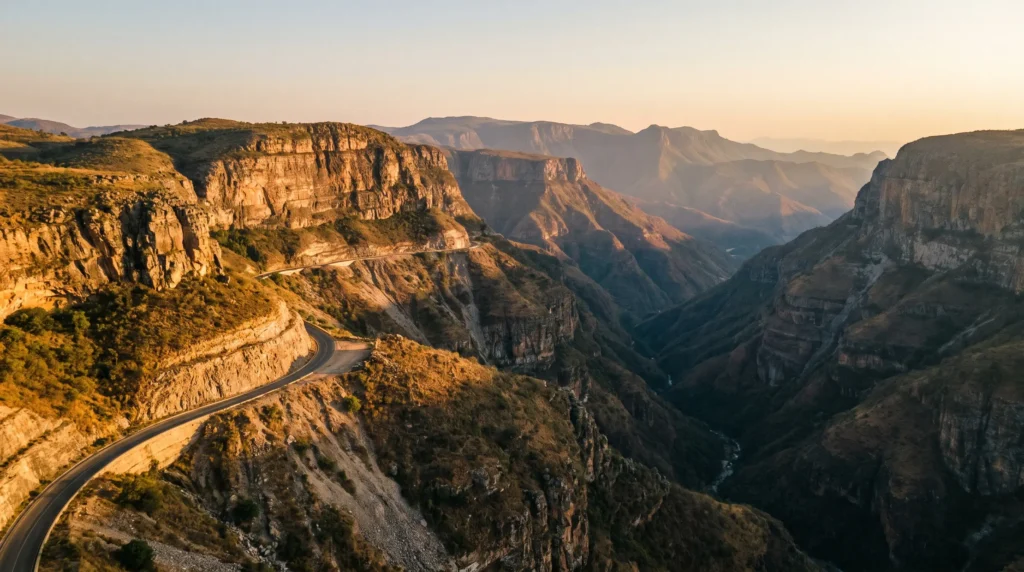
Centered on the highland city of Lubango, this region holds Tundavala Gap, a canyon where the rim tops 2,200 metres and the valley floor sits roughly a thousand metres below, looking out toward the Namibe Desert. The dramatic switchback descent of the Serra da Léba mountain pass connecting Lubango to the coast is a bucket-list drive in its own right.
Namibe & the South
Where the highlands drop into true desert — dune fields, the eerie welwitschia plant that can live over a thousand years, and Iona National Park, Angola’s largest protected area, running along the Namibian border. Desert meets ocean here in a landscape that echoes Namibia’s Skeleton Coast just across the frontier.
Benguela & Lobito
Angola’s most laid-back coastal towns, with Portuguese colonial architecture, sandy beaches, and the historic rail terminus that’s now anchoring the Lobito Corridor’s revival. A calmer alternative to Luanda for a few beach days.
Cabinda
The oil-producing exclave separated from the rest of Angola by a strip of DRC territory. Cabinda city itself sees business travel tied to the oil industry, but both the UK and US governments flag heightened security risk in the wider province outside the city due to occasional separatist activity — treat this as an advanced add-on, not a first-trip stop.
Culture & People — Ovimbundu, Ambundu, Bakongo & Semba
Angola’s population breaks down across several major Bantu-speaking groups: the Ovimbundu of the central highlands are the largest, followed by the Ambundu around Luanda and the Kwanza valley, and the Bakongo in the north near Mbanza Kongo, alongside smaller groups including the Chokwe, Lunda and Ovambo. Portuguese is the official language and the everyday language of Luanda, but Umbundu, Kimbundu, Kikongo and other Bantu languages remain widely spoken at home and in rural areas.
Musically, Angola is a genuine origin point rather than a follower — semba, the guitar-and-percussion genre that predates and directly influenced Brazilian samba, developed here, and kizomba, the slow, sensual partner dance now popular worldwide from Lisbon to Paris, was born in 1980s Luanda. Capoeira’s roots are also widely traced back to Angolan traditions carried across the Atlantic during the slave trade. Expect live semba and kizomba in Luanda’s bars most weekend nights, not just at Carnival.
A Food Lover’s Guide to Angola
Angola’s most widely cited national dish is muamba de galinha — chicken stewed in red palm oil (dendê) with garlic, okra and chili, producing a rich orange-red sauce, traditionally served over funge, a smooth cassava-flour porridge that’s the country’s everyday starch.
Also seek out calulu, one of Angola’s oldest recipes — dried, salted fish slow-cooked with sweet potato leaves, okra, tomato and palm oil until the fish rehydrates into a deep, savory sauce — and kizaka, a cassava-leaf side dish. Coastal towns lean on fresh grilled fish and seafood; Luanda’s café culture runs on strong Angolan-grown coffee, a legacy crop from the colonial era. The local beers, Cuca and Nocal, are on every menu, and Portuguese wine remains the default at nicer restaurants.
Off the Beaten Path
Iona National Park
Angola’s oldest and largest national park, a desert wilderness along the Namibian border with dune landscapes, desert-adapted wildlife and almost no infrastructure — a serious 4×4 expedition, not a casual add-on.
Tchitundo-Hulo Rock Engravings
Ancient rock art sites in Namibe Province, among the least-visited archaeological attractions on the continent, reachable only with a local guide and a proper vehicle.
Pungo Andongo
Towering black rock formations near Malanje tied to the legend of 17th-century warrior-queen Njinga, one of the most significant figures in Angolan and broader African resistance history.
Cabo Ledo
A stretch of coastline south of Luanda quietly becoming known among surfers for its point break — still almost entirely word-of-mouth.
Practical Information
Money. The Angolan kwanza floats freely and has traded around 900–920 to the US dollar through mid-2026. Cards work at upscale Luanda hotels and some restaurants; almost everywhere else, and everywhere outside the capital, is cash-only — plan to carry kwanza and change money at banks or licensed bureaux rather than the street.
Safety. The US State Department rates Angola Level 2 (exercise increased caution), with the greater Luanda metropolitan area flagged for elevated risk of armed robbery, assault and carjacking. The UK’s FCDO separately advises against all but essential travel to Cabinda Province outside Cabinda city, and to areas within about 1km of the DRC border in Lunda Norte Province, citing insecurity and banditry. Stick to daylight travel, licensed drivers and reputable operators, and check current advisories before finalizing an itinerary.
Health. Yellow fever vaccination is required for entry and checked on arrival regardless of departure point. Malaria risk is present countrywide and considered high, with chloroquine-resistant strains — antimalarial prophylaxis is strongly recommended for all travelers. Drink bottled or treated water and carry a basic medical kit; facilities outside Luanda are limited.
Connectivity. Luanda has decent 4G and hotel Wi-Fi; coverage thins out fast in rural provinces. Plugs: European-style Type C/F, 220V. Time zone: WAT, UTC+1, no daylight saving.
Budget Breakdown — What Angola Actually Costs in 2026
Angola is one of the more expensive countries in Africa to travel, a legacy of its oil-boom economy — Luanda in particular has long ranked among the pricier cities globally for imported goods and hotels.
Budget (US$70–130/day): Guesthouses over international hotels, local canteens serving funge and grilled fish, shared taxis and long-distance buses, self-guided city time.
Mid-range (US$180–350/day): Business-class Luanda hotels or provincial lodges, a hired driver for interior circuits (Kalandula, Tundavala), restaurant dining, one or two domestic flights.
Luxury/expedition (US$500+/day): International-brand Luanda hotels, private guided 4×4 expeditions into Iona or Namibe, dedicated drivers and translators for Mbanza Kongo and the far south.
Budget extra for yellow fever vaccination and travel insurance well before departure, and for cash-handling — ATMs are unreliable outside major cities, so carry more kwanza (or USD/EUR to exchange) than you think you’ll need.
Planning Your First Trip to Angola
Most first-timers do best picking one region rather than attempting the whole country: a north loop covers Luanda, Kalandula Falls and Mbanza Kongo in about seven to nine days; a south loop covers Luanda, Lubango, Tundavala and the edge of the Namibe Desert in a similar window. Both require a hired driver or guided operator given road conditions and distances. Confirm your yellow fever certificate and travel insurance before booking flights, and build in slack — schedules here slip. Pair a southern Angola trip with a crossing into Namibia for the Skeleton Coast and Etosha, or extend east from the Lobito Corridor toward Zambia.
Frequently Asked Questions
Is Angola safe for tourists in 2026?
Angola carries a Level 2 US advisory (exercise increased caution), with Greater Luanda flagged for street crime including armed robbery and carjacking, and separate UK advice against all but essential travel to Cabinda Province (outside Cabinda city) and border areas of Lunda Norte. Most visitors sticking to Luanda, Malanje and the Huíla highlands with a reputable driver report straightforward trips — but check current advisories before you go and skip Cabinda and border zones.
Do I need a visa?
US and UK passport holders get visa-free tourist entry for up to 30 days; longer stays or non-tourism purposes require a visa arranged in advance. Your passport needs at least six months’ validity and two blank pages.
Do I really need the yellow fever vaccine?
Yes — it’s a hard entry requirement, checked regardless of where you’re flying from, and malaria prophylaxis is separately recommended countrywide given high transmission risk. Sort both well before departure.
Is Angola as expensive as people say?
For Luanda hotels, imported goods and anything catering to the oil-industry expat crowd, yes — it’s genuinely pricey by African standards. Outside the capital, local guesthouses and canteen food bring costs down considerably, though hired transport for the interior adds up.
What’s the single best first-trip itinerary?
Kalandula Falls and Mbanza Kongo north of Luanda for waterfalls and pre-colonial history, or Lubango and Tundavala Gap in the south for the desert-canyon landscapes — pick one loop rather than both on a first visit.
Angola or Namibia for desert scenery?
Namibia has the tourism infrastructure — lodges, guided dune tours, easy self-drive. Angola’s Namibe Desert and Iona National Park offer similar landscapes with essentially none of that infrastructure, which is either the draw or the dealbreaker depending on the traveler.
Ready to Explore Angola?
A waterfall wider than Niagara that barely makes anyone’s bucket list, a desert canyon dropping two kilometres from a highland rim, and a UNESCO royal capital most of the world has never heard of — Angola rewards travelers willing to plan carefully and drive a long way for a view they’ll have almost entirely to themselves.
Explore More
- Namibia Travel Guide — the Skeleton Coast and desert landscapes just across Angola’s southern border
- Zambia Travel Guide — the copper belt end of the Lobito Corridor railway
- Botswana Travel Guide — pair Southern Africa’s premier safari country with an Angola add-on
- Cape Town City Guide — a well-connected gateway for a wider Southern Africa itinerary
How this guide was built
Published . Built from authoritative sources — Wikipedia’s Angola, Kalandula Falls, Tundavala Gap and Quatro de Fevereiro Airport entity pages, UNESCO’s Mbanza Kongo World Heritage inscription, Britannica’s Angola country and People articles, the US State Department’s Angola travel advisory, the UK FCDO’s Angola travel advice, the US CDC’s Angola traveler health page, and Trading Economics’ Angolan kwanza exchange-rate data. Numeric claims carry inline citations.
Sources cited on this page
- Wikipedia — Angola
- UNESCO — Mbanza Kongo, Vestiges of the Capital of the former Kingdom of Kongo
- Wikipedia — Kalandula Falls
- Wikipedia — Tundavala Gap
- Wikipedia — Quatro de Fevereiro Airport
- Wikipedia — Angolan cuisine
- Britannica — Angola
- Britannica — Angola, People
- US State Department — Angola
- UK FCDO — Angola travel advice
- US CDC — Angola traveler page
- Trading Economics — Angolan Kwanza
- Ver Angola — Luanda Carnival 2026
- Climates to Travel — Angola
More country guides you might like
Plan your trip to Angola
The booking tools we use ourselves. FFU may earn a commission at no extra cost to you.
Plan & book your trip to Angola
Booking through these searches supports our guides at no extra cost to you.