
Languages of Comoros
All languages of Eastern Africa →fluent beta classical · classes by phone with Maya at ranas.ai/maya
Comoros Travel Guide — Perfumed Islands, an Active Volcano & the Indian Ocean’s Least-Visited Corner
I will be upfront about Comoros before you read another word: it is not an easy destination, and anyone who tells you otherwise is selling something. There are no direct flights from Europe or North America, the US State Department has it at Level 2 for crime, unrest and threadbare healthcare, and the country’s post-independence history reads like a highlight reel of coups. And yet — three volcanic islands producing sixty percent of the world’s ylang-ylang, a smoking shield volcano you can hike to the rim of, and a beach on Mohéli where thousands of green sea turtles still haul themselves ashore to nest most nights of the year. I have never met anyone who regretted going. I have met plenty who found it harder than they expected. This guide is for the second kind of traveler — the one who wants both truths before booking the flight to Addis Ababa or Nairobi that gets you there.
In This Guide
- Overview — Why Comoros Is the Indian Ocean’s Least-Visited Country
- The Grand Mariage — Comoros’s Defining Cultural Event
- Best Time to Visit Comoros (Season by Season)
- Getting There — HAH, Addis Ababa & the Long Way In
- Getting Around — Inter-Island Flights, Ferries & Taxis-Brousse
- Top Regions — Ngazidja, Ndzwani & Mwali
- Culture & People
- A Food Lover’s Guide to Comoros
- Off the Beaten Path
- Practical Information
- Budget Breakdown — What Comoros Actually Costs
- Frequently Asked Questions
Overview — Why Comoros Is the Indian Ocean’s Least-Visited Country
The Union of the Comoros is a volcanic archipelago of three main islands — Ngazidja (Grande Comore), Ndzwani (Anjouan) and Mwali (Mohéli) — floating in the Mozambique Channel between Madagascar and mainland Africa, with a fourth island, Mayotte, still administered by France despite Comorian claims to it since a contested 1974 referendum. The whole country covers just 1,659 square kilometres — smaller than London — and holds roughly 944,000 people, almost all of them Sunni Muslim, with Comorian, French and Arabic sharing official status on paper (and Comorian, a Swahili-Arabic hybrid, doing most of the actual talking in markets and villages).
Independence from France arrived on 6 July 1975, and the decades since have been rough: more than twenty coups or coup attempts between 1975 and 2008 earned Comoros an unfortunate nickname, “the country of a thousand coups.” Politics have stabilized considerably since then, but the legacy shows up in thin infrastructure, a healthcare system the US State Department flags as basic outside the capital, and a genuine sense of a place tourism has barely touched.
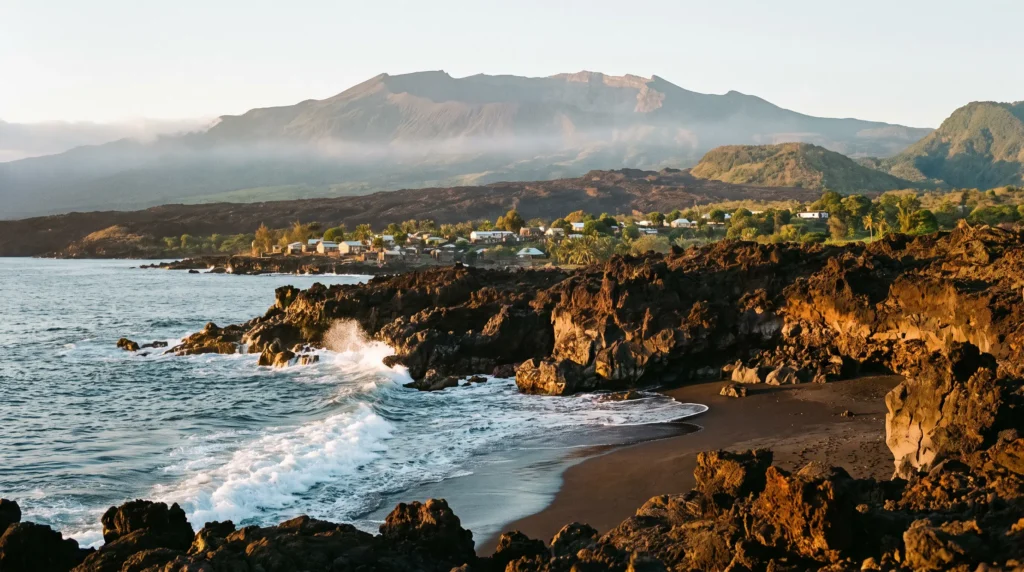
What you get in exchange is scarcity done right. Ngazidja is dominated by Mount Karthala, one of the world’s largest active volcanoes at 2,361 metres, still steaming and still capable of eruption. Anjouan grows the ylang-ylang that perfumes half the world’s high-end fragrances. Mohéli, the smallest and quietest island, shelters one of the Indian Ocean’s largest green sea turtle nesting populations. None of it is inscribed on the UNESCO World Heritage List yet — Comoros has zero sites inscribed, though it has four on its Tentative List and submitted its first-ever nomination dossier in January 2025. Go now and you’re seeing it before that changes.
The Grand Mariage — Comoros’s Defining Cultural Event
If one institution explains Comoros more than any beach or volcano, it’s the anda ya ndrowa, universally known as the Grand Mariage — an elaborate, multi-day customary wedding that families save toward for years and that confers full social standing and traditional titles on the men who host it. Grand Mariages typically cluster around the June–September dry season, when extended family can travel and outdoor celebrations don’t get rained out, and villages across Ngazidja and Ndzwani stage them with processions, drumming, feasting and women in gold jewelry and elaborately hennaed hands.
You won’t find a printed festival calendar with fixed dates — these are private family events, not public festivals — but if you’re on Grande Comore or Anjouan in the dry months and hear drumming and see a village in its best cloth, you’ve stumbled onto one. Ask locally whether outside guests are welcome to observe from a respectful distance before wandering in; Comorians are generally warm about sharing the spectacle, less so about being photographed up close without asking first.
Best Time to Visit Comoros (Season by Season)
June – October · Dry season (best window)
The south-east trade winds bring the coolest, driest, sunniest stretch of the year — the period locals and every credible source agree is the best time to go. Roads are passable, hiking Karthala is realistic, and this is prime Grand Mariage season.
November – mid-April · Hot, rainy, cyclone-exposed
The north-west monsoon brings heat, humidity and the bulk of the year’s rain, with January the wettest month. Comoros sits in the path of Indian Ocean cyclones, most likely from late December through mid-April, and some roads become impassable in downpours. Not a hard no, but check forecasts and build in flexibility.
Year-round
Sea temperatures stay warm enough to swim in every month, ranging roughly 25–29°C, so diving and snorkeling work outside the worst of cyclone season too. Malaria transmission is present year-round, so antimalarial precautions matter regardless of season.
Getting There — HAH, Addis Ababa & the Long Way In
Prince Said Ibrahim International Airport (HAH), also known as Moroni-Hahaya, sits just north of the capital and is effectively the only serious way in. There are no direct flights from North America or mainland Europe: the practical routes connect through Ethiopian Airlines via Addis Ababa or Kenya Airways via Nairobi, with Air Tanzania serving Dar es Salaam, Ewa Air linking to Mayotte (Dzaoudzi), and Turkish Airlines running a seasonal Istanbul service with a Seychelles stop. Expect roughly a dozen or so weekly departures across all these carriers combined — this is not a high-frequency airport, so book ahead and build slack into connections.
All visitors, regardless of nationality, need a visa, but Comoros makes this the easy part: a visa on arrival is issued to everyone at Hahaya for stays of up to 45 days, for roughly €30 (payable in euros or US dollars), against a passport valid at least six months and proof of an onward ticket. Have cash ready — card payment at immigration is not something to count on.
Getting Around — Inter-Island Flights, Ferries & Taxis-Brousse
The three main islands are separated by open Indian Ocean channel, not a causeway or a bridge, so island-hopping means small domestic flights or boats — schedules on both are irregular and worth confirming a day or two ahead rather than trusting a printed timetable. Precision Air and other regional operators fly the Moroni–Anjouan hop; ferries and smaller boats connect the islands too, though sea conditions and maintenance standards vary and travel insurance with medical evacuation cover is genuinely non-negotiable here, a point the State Department underscores explicitly.
On land, shared taxis-brousse (bush taxis) and private taxis cover Grande Comore’s ring road and Anjouan’s interior; roads range from paved to badly potholed, and self-driving is uncommon for visitors — hiring a car with a driver is the norm and the sane choice given the road conditions and lack of signage.
Top Regions — Ngazidja, Ndzwani & Mwali
Ngazidja (Grande Comore) & Moroni
The largest island, the political capital, and home to Mount Karthala, one of the world’s biggest active shield volcanoes at 2,361 metres — a serious but achievable multi-day trek to a crater rim wide enough to swallow a small town. Moroni’s medina and the Ancienne Mosquée du Vendredi (Old Friday Mosque), plus black volcanic-sand beaches at Mitsamiouli in the north, round out the island.
Ndzwani (Anjouan)
The ylang-ylang island — distilleries scenting the air around villages where the flower is grown and pressed for the global perfume industry, Comoros supplying roughly sixty percent of world ylang-ylang oil. Anjouan’s old capital Mutsamudu has a genuine Swahili-sultanate old town and a fortified kasbah; the island’s interior is steep, green and dramatically terraced.
Mwali (Mohéli)
The smallest, least-populated and quietest of the three, and the ecological headline act: Mohéli National Park, created in 2001 as Comoros’s first protected area, centers on Itsamia village, where thousands of green sea turtles nest on community-protected beaches — an estimated 12,000 nesting females use Mohéli’s shores, among the largest concentrations in the Indian Ocean. Offshore islets and a marine park add dolphin-watching and some of the archipelago’s best diving.
Mutsamudu & the Sultanate Sites
Scattered across all three islands, ruins and old towns from five 13th–16th century Swahili sultanate cities form the “Historic Sultanates of the Comoros,” currently on Comoros’s UNESCO Tentative List and the subject of the country’s first-ever nomination dossier, submitted for consideration in 2026.
Culture & People
Comorian identity blends Swahili East African, Arab, Persian, Malagasy and French threads, the product of centuries of Indian Ocean trade and, later, French colonization until 1975. Islam anchors daily and civic life — 99.6% of the population identifies as Muslim, and it is the constitutionally recognized state religion — so mosque calls to prayer punctuate the day, modest dress is expected especially outside resort areas, and Friday carries the weight of a de facto rest day.
The Grand Mariage system (see above) still structures a huge amount of social status and family economics, and matrilineal inheritance customs — property and the family home passing through women — persist in parts of the islands, a genuinely distinctive feature within the wider Muslim world. Greetings matter enormously; take the time for them before getting to business, however small.
A Food Lover’s Guide to Comoros
The dish to order is langouste à la vanille — local spiny lobster in a sauce built on Comoros’s own vanilla (the country is the world’s second-largest vanilla producer), often with garlic and coconut. Coconut milk, cassava, plantain and rice form the backbone of daily cooking: look for m’tsolola (firm white fish stewed with plantain and greens in coconut milk) and matava (cassava leaves simmered in coconut milk, closer to a stew than a side dish).
Street snacks run to fried cassava and banana fritters, grilled brochettes, and mkatra foutra, a layered flatbread eaten with sauce. Fresh tuna, cod and reef fish anchor most seafood menus. Alcohol is scarce outside a handful of hotels, in keeping with the country’s overwhelmingly Muslim population — plan on sodas, fresh juice and exceptional coffee instead.
Off the Beaten Path
Mount Karthala summit trek
A genuine multi-day undertaking with a local guide, climbing through cloud forest to a crater rim overlooking one of the world’s largest active volcanic calderas. Not for casual day-trippers, but unmatched for anyone who wants an active volcano with almost nobody else on it.
Itsamia, Mohéli
Join community turtle patrols on the beaches around this small village at the right time of night and you can watch green sea turtles nest by torchlight — arranged respectfully through the local conservation program, not as a drive-by spectacle.
Lac Salé & Chomoni, Ngazidja
A near-perfectly circular crater lake near Bangoi-Kouni and the black-sand beach at Chomoni nearby, both easy half-day trips from Moroni and both routinely empty.
Mutsamudu’s old town, Anjouan
Narrow lanes, a crumbling fortified kasbah and carved wooden doors that would draw crowds anywhere better-known — here, you’ll likely have them to yourself.
Practical Information
Money. The Comorian franc (KMF) is fixed to the euro at 491.96775:1 under a monetary agreement with France, and has been since 1999. Euros are the most useful hard currency to carry; US dollars are accepted less consistently. Cards barely function outside a couple of Moroni hotels — bring cash and budget generously.
Safety. The US State Department rates Comoros Level 2, “Exercise Increased Caution,” citing common petty crime, occasional piracy risk for small boats, and spontaneous protests concentrated in Moroni that have sometimes turned violent. None of this is exceptional by regional standards, but it’s real: keep valuables low-key, avoid demonstrations, and register with your embassy’s travel program before you go.
Health. Malaria is present islands-wide and antimalarial medication is recommended for all visitors; discuss options with a travel clinic at least a month out. Medical infrastructure is basic and concentrated in Moroni, with essentially no capacity for serious trauma or complex emergencies — comprehensive travel insurance including medical evacuation is a real requirement, not a formality, and there is no full-time US diplomatic presence in-country (consular support runs through the embassy in Madagascar).
Connectivity & logistics. Mobile data is workable in Moroni and patchy elsewhere; don’t count on reliable Wi-Fi outside a few hotels. Plugs: French-style (Type C/E), 230V. Time zone: UTC+3, no daylight saving. Dress modestly given the overwhelmingly Muslim population, particularly away from resort beaches.
Budget Breakdown — What Comoros Actually Costs
There’s no well-developed tourism price ladder here the way there is in better-trodden destinations, so treat these as rough planning bands rather than hard numbers — limited competition and import dependency push costs above what you’d expect from a low-income country.
Budget (roughly US$50–90/day): Simple guesthouses in Moroni or Mutsamudu, local restaurants and street food, shared taxis-brousse over private drivers.
Mid-range (roughly US$120–220/day): A private driver for the day, better hotels, restaurant meals with lobster, a guided Karthala trek or Mohéli turtle excursion.
Top-end (US$300+/day): The handful of nicer hotels and resort-style properties, chartered inter-island transport, private guiding throughout — options thin out fast at this tier compared with more developed Indian Ocean destinations.
Carry cash in euros; budget extra contingency for the inter-island transport delays that are simply part of traveling here.
Planning Your First Trip to Comoros
Ten to fourteen days lets you do this properly without rushing: a few days on Ngazidja around Moroni (medina, Chomoni beach, maybe the Karthala trek if you have the time and legs), a few more on Anjouan for the ylang-ylang villages and Mutsamudu’s old town, and the balance on Mohéli for the marine park and Itsamia’s turtles. Build in flex days around every inter-island flight or ferry — schedules shift, and Comoros rewards travelers who don’t fight it. If you’re routing through East Africa to get here, pair it naturally with our Tanzania guide (Dar es Salaam is a direct flight away) or our Madagascar guide, the nearest major island neighbor and often the easier consular fallback point.
Frequently Asked Questions
Is Comoros safe to visit in 2026?
The US State Department places Comoros at Level 2, “Exercise Increased Caution,” flagging petty crime, occasional piracy affecting small boats, and sporadic protests mostly confined to Moroni. It isn’t a high-danger destination for most travelers, but the bigger practical risk is the thin healthcare system and evacuation logistics — insure accordingly.
Do I need a visa?
Yes, but it’s straightforward: everyone gets a visa on arrival at Hahaya airport, valid up to 45 days, for roughly €30, provided your passport has six months’ validity and you can show an onward ticket.
How do I actually get there?
There are no direct flights from Europe or North America. The standard routes connect through Addis Ababa on Ethiopian Airlines or Nairobi on Kenya Airways, with additional links via Dar es Salaam, Mayotte and a seasonal Istanbul service.
What currency should I bring?
The Comorian franc is pegged to the euro, so euros in cash are the most useful currency to carry and convert on arrival; US dollars work less reliably and cards are hit-or-miss outside a few Moroni hotels.
Can I dive or see the turtles without a big expedition budget?
Mohéli’s turtle-nesting beaches around Itsamia are reachable through community-run conservation programs at modest cost, and snorkeling off Mohéli and Anjouan doesn’t require expedition-level gear or budget — the harder cost is simply getting between the islands.
Comoros or Madagascar or the Seychelles?
Choose Comoros if you want genuinely undertouristed islands, an active volcano and a real cultural deep-end with almost no tourist infrastructure buffering you from it. Choose Madagascar for scale and biodiversity, or the Seychelles for polished beach infrastructure — Comoros is rawer than both, in ways that cut both directions.
Ready to Explore Comoros?
An active volcano you can climb, an entire island scented with ylang-ylang, and a beach where the sea turtles still outnumber the tourists — Comoros doesn’t make itself easy to reach or easy to travel, and that is precisely the point. Go in the dry season, insure yourself properly, and go before the rest of the world catches on.
Explore More
- Madagascar Travel Guide — the nearest major island neighbor across the Mozambique Channel
- Tanzania Travel Guide — the closest mainland gateway, a direct flight from Moroni
- Seychelles Travel Guide — a more polished Indian Ocean island alternative
- Mauritius Travel Guide — another Indian Ocean archipelago, far more developed for tourism
How this guide was built
Published as part of Facts From Upstairs’ country guide series. Built from authoritative sources — the US State Department’s Comoros travel advisory, the US CDC traveler health page for Comoros, UNESCO’s Comoros World Heritage state party page and Tentative List records, Wikipedia entity pages for Comoros, its visa policy, its coup history, the Comorian franc and Prince Said Ibrahim International Airport, Mohéli National Park’s entry, Climates to Travel’s Comoros climate data, FlightConnections’ Moroni route data, and reporting on the ylang-ylang industry via the Borgen Project. Numeric claims carry inline citations; where figures could not be independently verified they are described qualitatively rather than stated as fact.
Sources cited on this page
- US State Department — Comoros Travel Advisory
- US CDC — Comoros traveler page
- UNESCO — Comoros State Party page
- UNESCO — Comoros’ first World Heritage nomination dossier
- Wikipedia — Comoros
- Wikipedia — Visa policy of the Comoros
- Wikipedia — List of Comorian coups d’état
- Wikipedia — Comorian franc
- Wikipedia — Prince Said Ibrahim International Airport
- Wikipedia — Mohéli National Park
- Climates to Travel — Comoros
- FlightConnections — Flights from Moroni (HAH)
- The Borgen Project — Comoros’ Ylang-Ylang Industry
More country guides you might like
Plan your trip to Comoros
The booking tools we use ourselves. FFU may earn a commission at no extra cost to you.
Plan & book your trip to Comoros
Booking through these searches supports our guides at no extra cost to you.