
City Guide · Mekong & Tonlé Sap confluence
Phnom Penh, Cambodia: River-Confluence Capital of Royal Spires, Khmer Plates, and a Hard Recent History
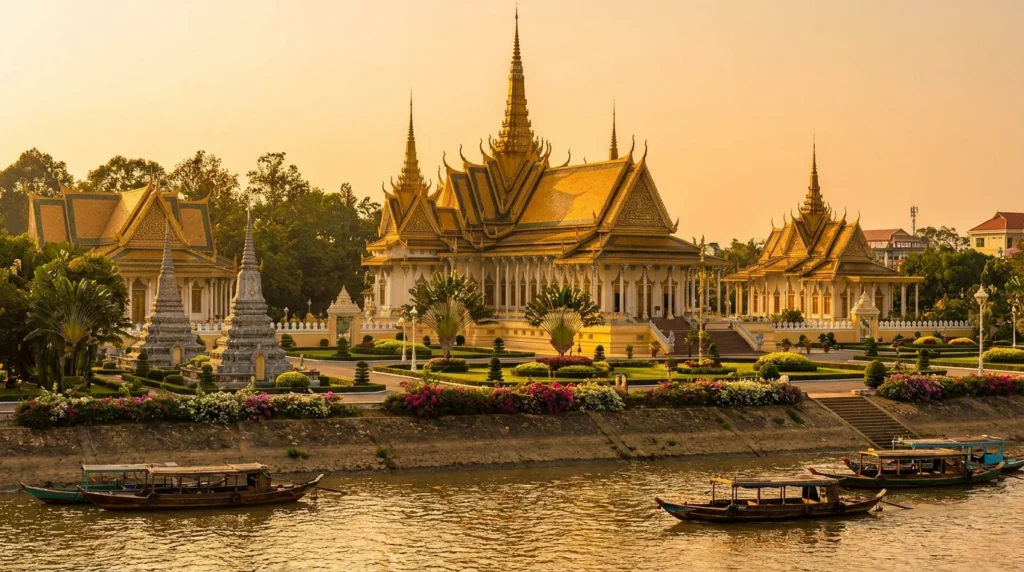
I have spent more mornings than I can count on the Sisowath Quay riverfront in Phnom Penh, watching the brown Tonlé Sap pour into the Mekong while the gilded roofs of the Royal Palace catch the first light a few hundred metres inland. We tell first-time travellers that this is a small capital — roughly 2.3 million people in the wider city, the political, economic and cultural heart of a country of about 17 million — and that the part you will actually walk, between the riverfront, the palace and the Russian Market, fits inside a single afternoon of tuk-tuk hops. My favourite Phnom Penh ritual is a bowl of kuy teav noodle soup from a Street 240 stall before 08:00, a thick iced coffee, and then the long quiet walk up to Wat Phnom before the heat lands. Treat this guide as the brief I would hand my own family the day before they landed at the brand-new Techo International Airport — the riverfront, the palace, the genocide museums you should not skip, the dual-currency cash habit, and the rest .
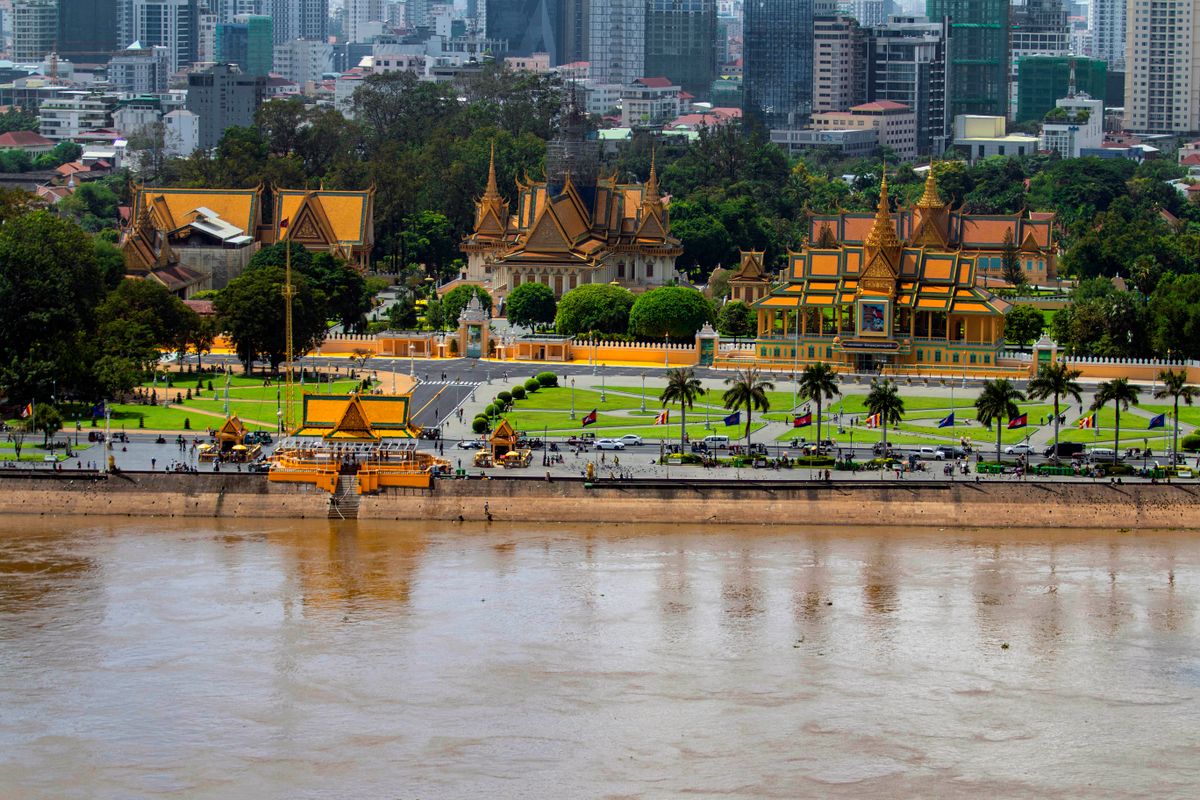
Table of Contents
Why Phnom Penh?
Phnom Penh is the river capital that most South-East Asia itineraries skip in a hurry on the way to Angkor — and the one that rewards the travellers who slow down. It sits at the Chaktomuk, the “four faces,” where the Tonlé Sap meets the Mekong and the Bassac splits off again, a confluence so central to the city’s identity that it appears on the municipal seal . Cambodia’s capital since 1865, it has been a French colonial trading post, the elegant “Pearl of Asia” of the 1920s, an emptied ghost city under the Khmer Rouge from 1975 to 1979, and — since the 2000s — one of the fastest-growing capitals in the region.
The city reads as a study in compression and contrast. About 2.3 million people live in the wider municipality, a fraction of Bangkok or Jakarta, yet the central tourist core fits inside a two-kilometre square: the riverfront promenade, the Royal Palace, the National Museum, Wat Phnom and the Central Market all sit within a short tuk-tuk hop of one another . Around that low-rise colonial-era core, a ring of glass condominium towers has gone up in barely fifteen years, while the Russian Market quarter to the south keeps the lived-in, motorbike-loud texture of an older Phnom Penh.
What makes the city essential rather than optional is its honesty about a hard recent past. The Tuol Sleng Genocide Museum — the former S-21 prison — and the Choeung Ek Killing Fields are not comfortable visits, but they are the most important things you will do here, and Cambodians visit them free of charge to keep the memory alive . To understand modern Cambodia at all, you have to sit with what happened in this city between 1975 and 1979, and Phnom Penh does not look away from it.
But the capital is far from only its grief. It is also a young, fast-moving, genuinely fun city — one with a serious specialty-coffee scene, a riverfront that turns into an open-air gym and kite field every dusk, training restaurants that put your dinner money toward youth education, and some of the cheapest, gentlest, most herb-forward food in South-East Asia. The brand-new Techo International Airport, opened in 2025, has made it easier than ever to reach. This guide covers the riverfront and the seven neighbourhoods worth your time, the Khmer plates and street stalls that define the food, the Royal Palace and the genocide memorials, the five day trips Phnom Penh families actually take on weekends, and the practical realities of dual-currency cash, the new airport, and the relentless tropical heat. Give the city two full days at minimum; it repays the slowness.

Neighborhoods: Finding Your Phnom Penh
📍 Phnom Penh Map: Every Place in This Guide
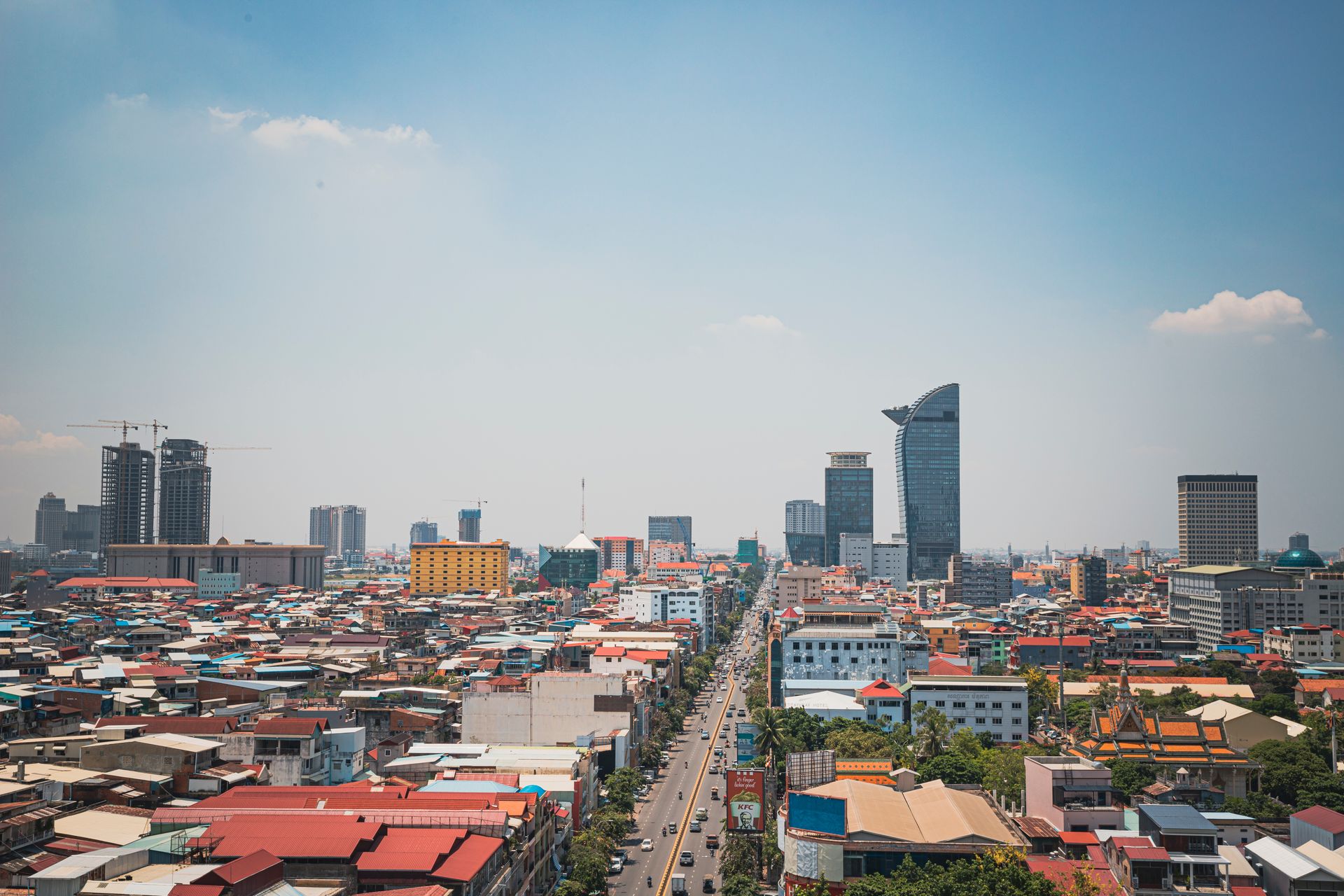
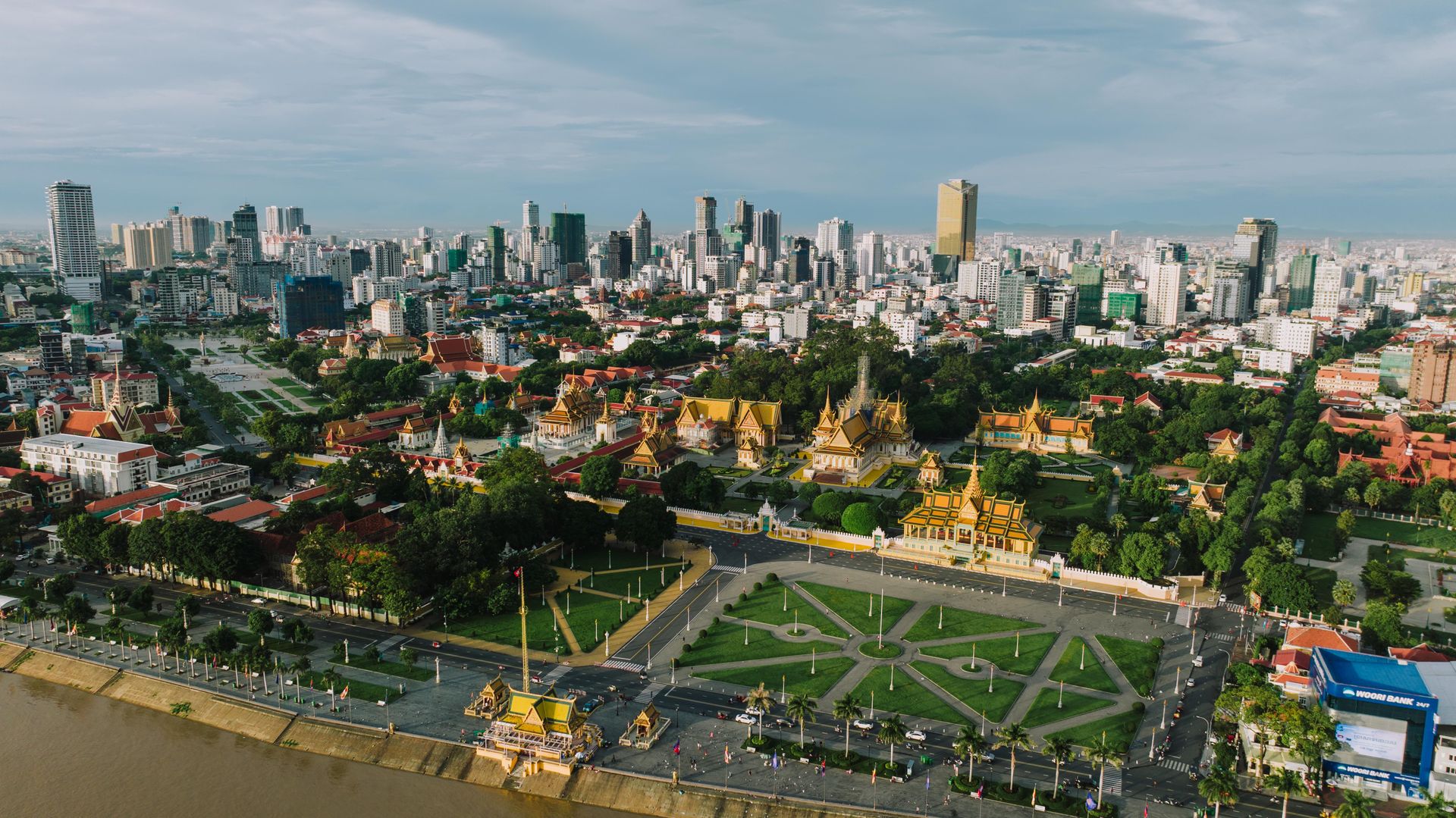
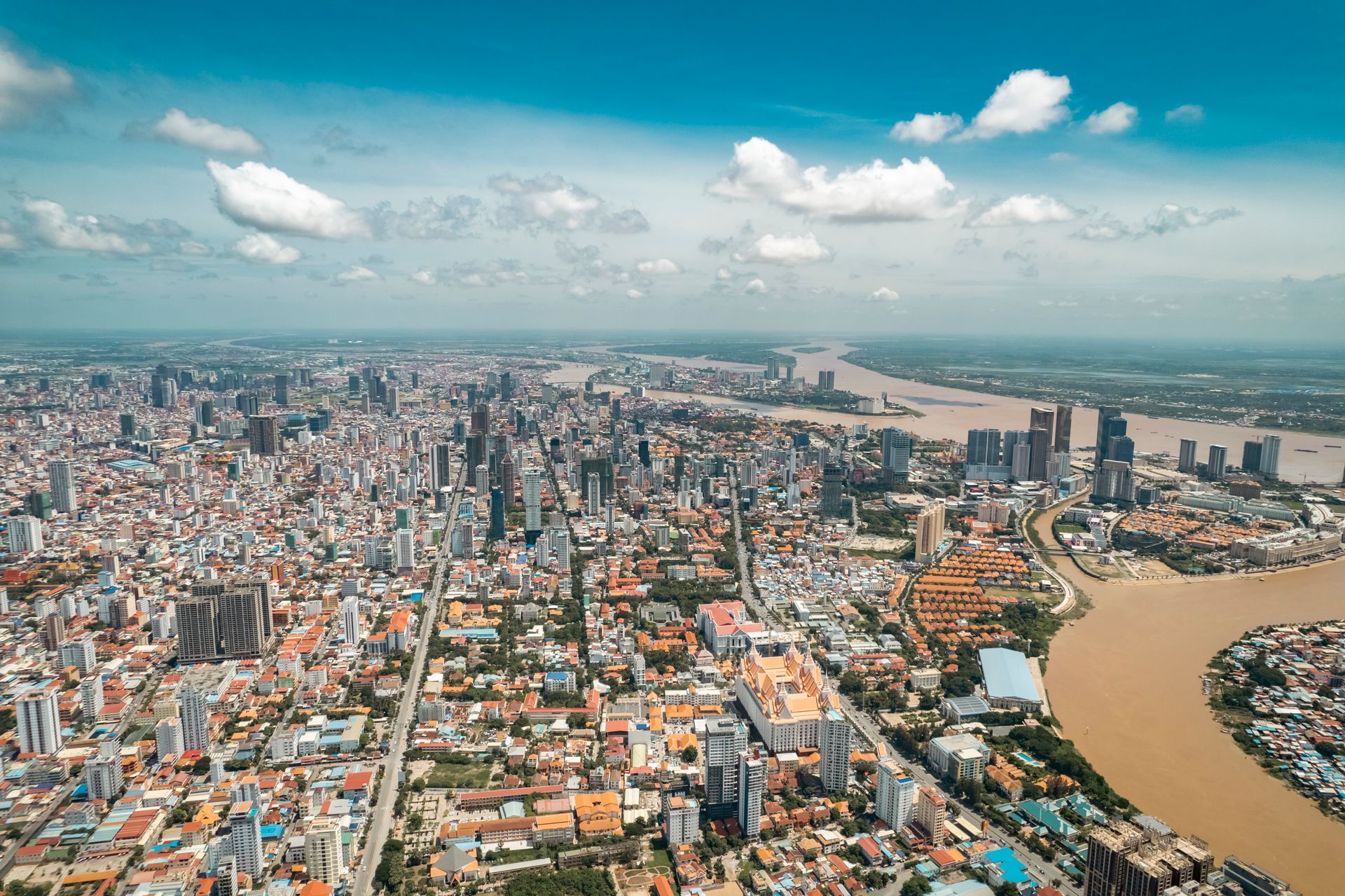
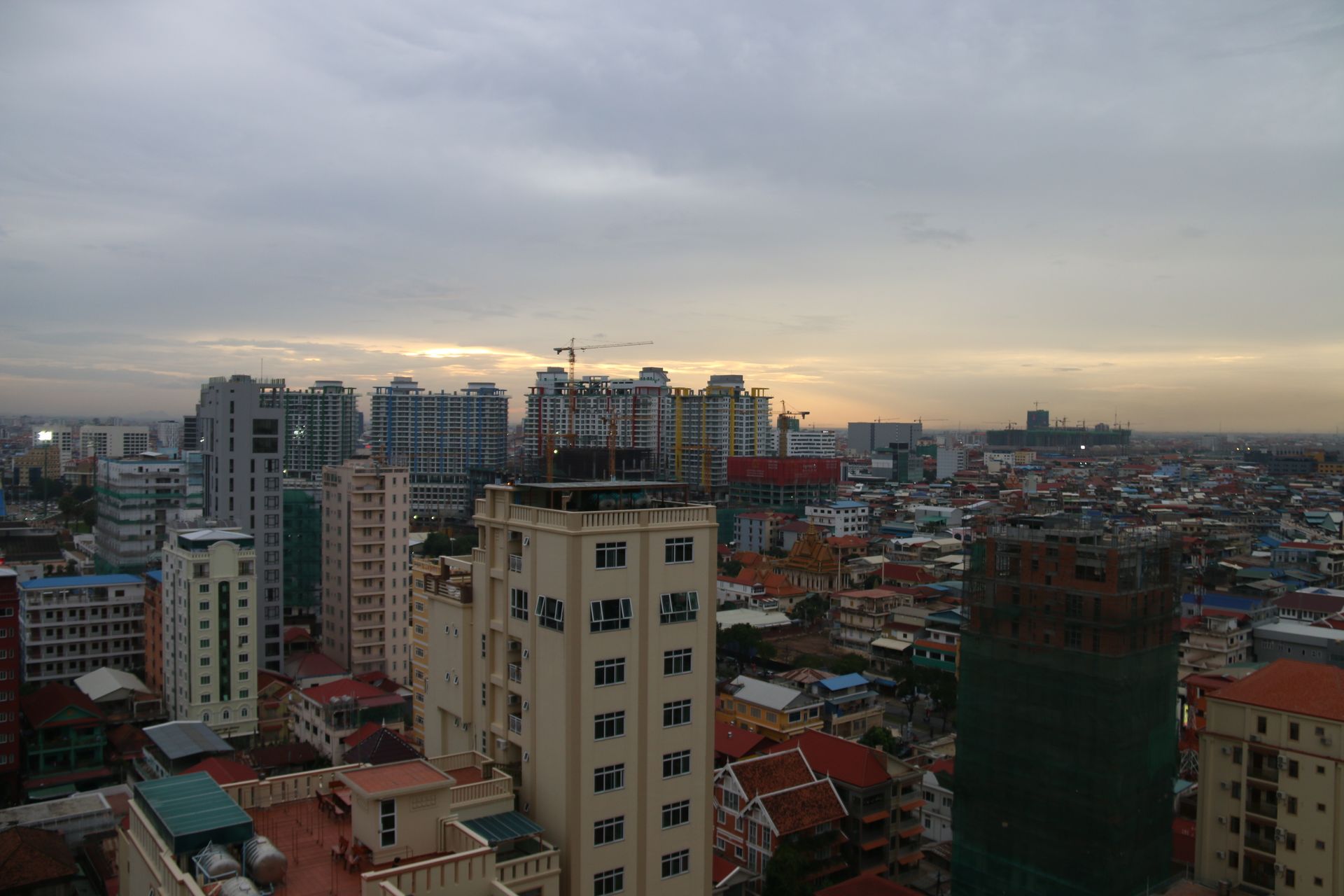
Phnom Penh has no metro and no formal arrondissement system, so travellers navigate by a handful of named quarters strung along the riverfront and the southern boulevards. The central core — Daun Penh and the riverside — holds the palace, the museum and the colonial architecture; BKK1 just south is the leafy expat-and-embassy heart with the best cafés and restaurants; Tonlé Bassac holds the tallest towers and the malls; and the Russian Market quarter (Toul Tom Poung) keeps the lived-in market texture most visitors fall for. Distances are short — almost everything central is a $1–3 tuk-tuk ride apart — so where you base yourself matters less than in a big metro, and most first-time visitors stay along the riverfront or in BKK1 .
A quick mental map helps. Picture the rivers running roughly north–south down the eastern edge of the city; the riverfront promenade and the historic Daun Penh core hug that edge. Push a kilometre or two inland and south and you reach BKK1 and Tonlé Bassac, the green, moneyed districts; keep going south and you hit the Russian Market quarter. The Central Market and Wat Phnom anchor the older commercial and founding heart slightly to the north and west. Because the whole visitor zone is barely a few kilometres across, you can switch quarters several times a day without it ever feeling like a journey — a morning at a southern market, an afternoon coffee in BKK1, and a riverfront sunset are an easy single day’s loop.
This section walks the seven quarters you will actually use, grouped by character: the historic riverfront core (Daun Penh, Riverside), the leafy expat south (BKK1, Tonlé Bassac), the market quarters (Toul Tom Poung, Central Market district), and the older working areas around Wat Phnom and the northern core where the city feels least curated for visitors. For a first trip, base yourself either on the Riverside for atmosphere and easy walking access to the palace and museum, or in BKK1 for the best food, coffee and a quieter night’s sleep — both put you within a few-dollar tuk-tuk of everything else.
Daun Penh (Historic Core)
The administrative and royal heart of the city, named for the founding Lady Penh herself — this is where the Royal Palace, the National Museum and the old French-colonial post office quarter all sit within a few blocks of one another. Streets here keep the low ochre-and-white colonial profile that earned interwar Phnom Penh its “Pearl of Asia” nickname, and the grid is genuinely walkable in the cooler morning hours. This is also where most first-time visitors spend the bulk of their daylight, ticking off the signature sights on foot before retreating from the midday heat. The blocks immediately behind the palace hold restored shophouses, a clutch of galleries and the kind of streetside coffee carts that make an early start worthwhile.
- Royal Palace and the Silver Pagoda
- National Museum of Cambodia (the terracotta-red Khmer building on Street 13)
- Post Office Square and the restored French-colonial blocks
Best for: first-time visitors, history-forward itineraries, walkers. Access: central riverfront; most tuk-tuks reach it from anywhere in the city in under 15 minutes .
Riverside (Sisowath Quay)
The long riverfront promenade running north–south along the Tonlé Sap, lined with bars, guesthouses, travel agents and the FCC (Foreign Correspondents’ Club) terrace. It is the most tourist-facing strip in the city and the easiest place to find a sunset beer or an evening river cruise, though prices run higher than two streets inland. The promenade itself is one of Phnom Penh’s genuine pleasures: at dawn and again at dusk it fills with local families flying kites, vendors selling roasted corn, and rows of synchronised aerobics groups dancing to tinny speakers. Staying here means you can walk to the palace and museum, roll out of bed onto a river cruise, and never be more than a block from a meal — at the cost of some traffic noise and the city’s most persistent tuk-tuk touts.
- Sisowath Quay promenade and the nightly food-and-drink strip
- Sunset boat cruises on the Tonlé Sap–Mekong confluence
- The FCC rooftop and the riverfront temple of Wat Ounalom, seat of Cambodian Buddhism
Best for: first-time visitors, sunset-seekers, easy nightlife. Access: walkable along the river from the Royal Palace.
BKK1 (Boeung Keng Kang 1)
The leafy, tree-lined heart of expat Phnom Penh, just south of Independence Monument — the city’s densest cluster of international restaurants, specialty-coffee cafés, boutiques and embassies. One-bedroom rents here run higher than anywhere else in the city, which tells you where the money and the dining scene have settled . For visitors it is the best base for good coffee, reliable Wi-Fi and a wide spread of cuisines within walking distance.
- Street 308 and Street 57 café-and-bar rows
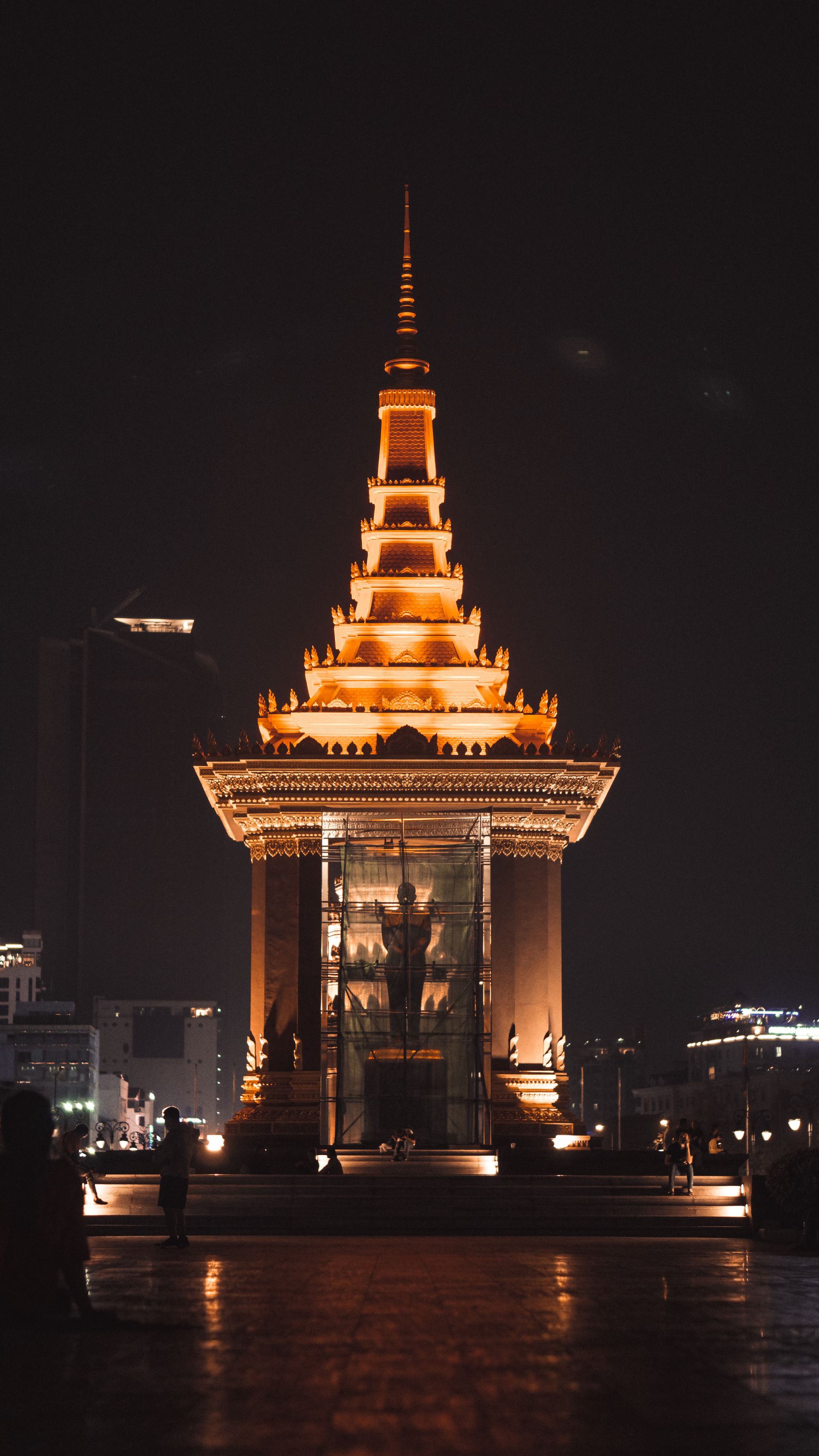
- Independence Monument and the Norodom Sihanouk Memorial
- Boutique hotels and the city’s best brunch spots
It is also the most comfortable base for anyone planning to stay more than a few days: the tree cover genuinely cools the streets, the pavements are walkable, and you are within strolling distance of dozens of restaurants, gyms, co-working spaces and supermarkets. The trade-off is that BKK1 can feel like an expat bubble, a little detached from the rougher, more authentic texture of the city a few blocks in any direction.
Best for: café culture, longer stays, remote workers, dining. Access: south of the palace; 10-minute tuk-tuk from the riverfront.
Tonlé Bassac
The affluent district adjacent to BKK1, home to the city’s tallest skyscrapers, the Aeon Mall, and a string of riverfront condominium developments overlooking the Bassac River. It is the embassy-and-business hub, marked by diplomatic missions and the kind of glass towers that did not exist a decade ago. Less charm than Daun Penh, but the malls, cinemas and rooftop bars here are where modern Phnom Penh socialises .
- Aeon Mall Phnom Penh and the riverfront tower cluster
- NagaWorld entertainment-and-casino complex
- Rooftop bars with Bassac River views
For visitors, Tonlé Bassac is most useful as a contrast and a refuge: when the heat or a downpour makes the streets unappealing, the air-conditioned Aeon Mall, the multiplex cinemas and the rooftop bars are all here, and the district’s wide, newer pavements are easier to walk than the old core. It is where you see most clearly how fast the capital is changing — glass towers rising on plots that held single-storey shophouses a decade ago.
Best for: upscale travellers, mall-and-cinema days, rooftop drinks. Access: south of BKK1 along the Bassac.
Toul Tom Poung (Russian Market quarter)
Named for the Russian expats who shopped here in the 1980s, this southern quarter wraps around the famous Russian Market (Phsar Toul Tom Poung) — a dense covered bazaar of silk, silverware, knock-off electronics and some of the best market-stall food in the city. The surrounding streets have quietly become the city’s most characterful neighbourhood, with independent cafés, boutiques and bars threaded through residential blocks .
- The Russian Market covered bazaar and its food court
- Independent cafés and design boutiques on the surrounding lanes
- Quiet, lived-in residential streets popular with longer-stay visitors
Of all the quarters, this is the one that turns first-time visitors into returners: the mix of a great market, genuinely good independent cafés and bars, and quiet residential lanes gives it a neighbourhood feel that the riverfront lacks. It is a little further from the headline sights, but the daily texture — a morning at the market, an afternoon coffee, an evening drink on a leafy corner — is hard to beat. Budget-conscious longer-stay travellers increasingly skip the riverfront entirely and base themselves here.
Best for: market-lovers, shoppers, budget-conscious diners, returning visitors. Access: 15-minute tuk-tuk south of BKK1.
Central Market District (Phsar Thmei)
The blocks around the striking 1937 Art Deco Central Market — its ochre central dome is one of the largest of its kind in Asia and a landmark in its own right. The surrounding streets are the city’s everyday commercial core: gold dealers, electronics, fabric and a constant tangle of motorbikes. It is loud and unglamorous, but it is where you feel the working pulse of the capital, and the market hall itself is worth a walk-through for the architecture alone.
- Phsar Thmei (Central Market) — the 1937 Art Deco dome
- Street 130 and the surrounding gold-and-fabric trade
- Cheap, authentic Khmer breakfast stalls on the perimeter
Few visitors sleep here, but everyone passes through: it is the most central of the markets, an easy walk from the riverfront, and the surrounding lanes hold some of the cheapest and most authentic Khmer breakfast stalls in the city. Come for the Art Deco hall and the everyday-commerce energy, then retreat to the quieter quarters.
Best for: architecture fans, market browsers, budget shoppers. Access: central, a few blocks inland from the riverfront.
Wat Phnom & the Northern Core
The leafy rise around Wat Phnom — the temple-topped hill that gave the city its name — anchors the northern edge of the historic core, near the railway station and the old French quarter. It is greener and quieter than the riverfront, with the city’s founding legend, a small zoo of resident macaques, and the grand colonial Hotel Le Royal nearby. The neighbourhood thins out into government ministries and the railway-line redevelopment to the north.
- Wat Phnom — the 14th-century founding temple on its 27-metre hill
- The colonial-era railway station and Hotel Le Royal
- Quiet, tree-shaded streets away from the riverfront crowds
Best for: the founding story, quieter walks, colonial architecture. Access: northern end of the central core, walkable from the Central Market.
Choosing Your Base
If this is your first visit and you want to be in the thick of it, stay on the Riverside or in Daun Penh: you will walk to the palace, the museum and the evening river cruises, and never be more than a few minutes from a meal or a tuk-tuk. If you value good coffee, quieter nights and a wider spread of restaurants — and especially if you are staying more than two or three days or working remotely — base yourself in BKK1, accepting that you trade a little atmosphere for comfort. Returning visitors and budget-minded long-stayers increasingly pick the Russian Market quarter for its neighbourhood feel and lower rents. Whatever you choose, the city’s compactness means no single base locks you out of anything; a $1–3 ride reaches the rest. Avoid committing to the far northern or outer districts, which add travel time without adding much you will actually want.
The Food
Khmer food is gentler and more herb-forward than its Thai and Vietnamese neighbours — less chilli heat, more lime, lemongrass, galangal, turmeric and the fermented fish paste prahok that underpins the whole cuisine. Where Thai cooking reaches for fire and Vietnamese for fresh brightness, Cambodian cooking sits in between: aromatic, faintly sweet, built on the kroeung spice paste of lemongrass, galangal, kaffir lime and turmeric that is pounded fresh every morning in kitchens across the city. Phnom Penh, as the capital, gets the fullest version of it: morning noodle soups slurped on plastic stools, the signature fish amok steamed in banana leaf, French-influenced sandwiches and pastries left over from colonial days, and a training-restaurant scene that doubles as social enterprise. Prices are low by any standard — a street bowl runs $1.50–3, a sit-down Khmer meal $6–12 — and the dual-currency habit means you will pay in a mix of dollars and riel change.
The city’s eating geography is simple. The riverfront and BKK1 hold the sit-down Khmer restaurants and the international spread; the markets — Russian Market, Central Market and the riverfront Night Market — hold the cheap, authentic street food; and the morning belongs to the noodle-soup and broken-rice stalls that locals queue at before work. A confident traveller eats best by pointing at what looks busy, but a first-timer can ease in through the training restaurants below before braving the stalls. Either way, the food is one of the genuine pleasures of the city and a large part of why returning visitors keep coming back to a capital that the guidebooks tell you to rush through.
A few practical habits make eating here easier. Carry small riel notes for stalls and markets, since change under a dollar comes back in riel and few carts take cards. Eat your street food where it is busiest and freshly cooked rather than sitting out — turnover is your best guide to safety. Mornings are the great Khmer mealtime, so set an alarm at least once and join the pre-08:00 noodle-soup queue; the stalls often sell out and pack up by mid-morning. And do not let the plastic stools and bare-bulb lighting put you off: in Phnom Penh, as across the region, the cheapest and least polished kitchens routinely serve the best food in the city.
Khmer Classics — Where to Start
The plates that define Cambodian cooking are all easy to find in the capital, and a handful of well-run Khmer kitchens make a reliable introduction without sending you straight to the deep end of street stalls. Start with fish amok — the national dish, a mousse-like coconut-and-kroeung fish curry steamed in banana leaf — and beef lok lak, cubes of seared marinated beef served over rice or salad with a lime-and-Kampot-pepper dipping sauce. From there, branch out into the soups, salads and grilled meats that fill out a Khmer table. The restaurants below run from celebrity-chef polish to social-enterprise training kitchens, all serving genuine Cambodian food rather than the watered-down versions on the riverfront tourist strip.
- Malis — refined fish amok, Kampot-pepper crab and lok lak from celebrity chef Luu Meng, the city’s benchmark for upscale Khmer (mains ~50,000៛, ~$12.50)
- Romdeng — fish amok and the famous fried tarantulas in a colonial villa, a Friends-International training restaurant (mains ~28,000៛, ~$7)
- Eleven One Kitchen — chicken or fish amok and a justly famous beef lok lak burger on a homemade bun (mains ~20,000៛, ~$5)
Street Stalls & Markets
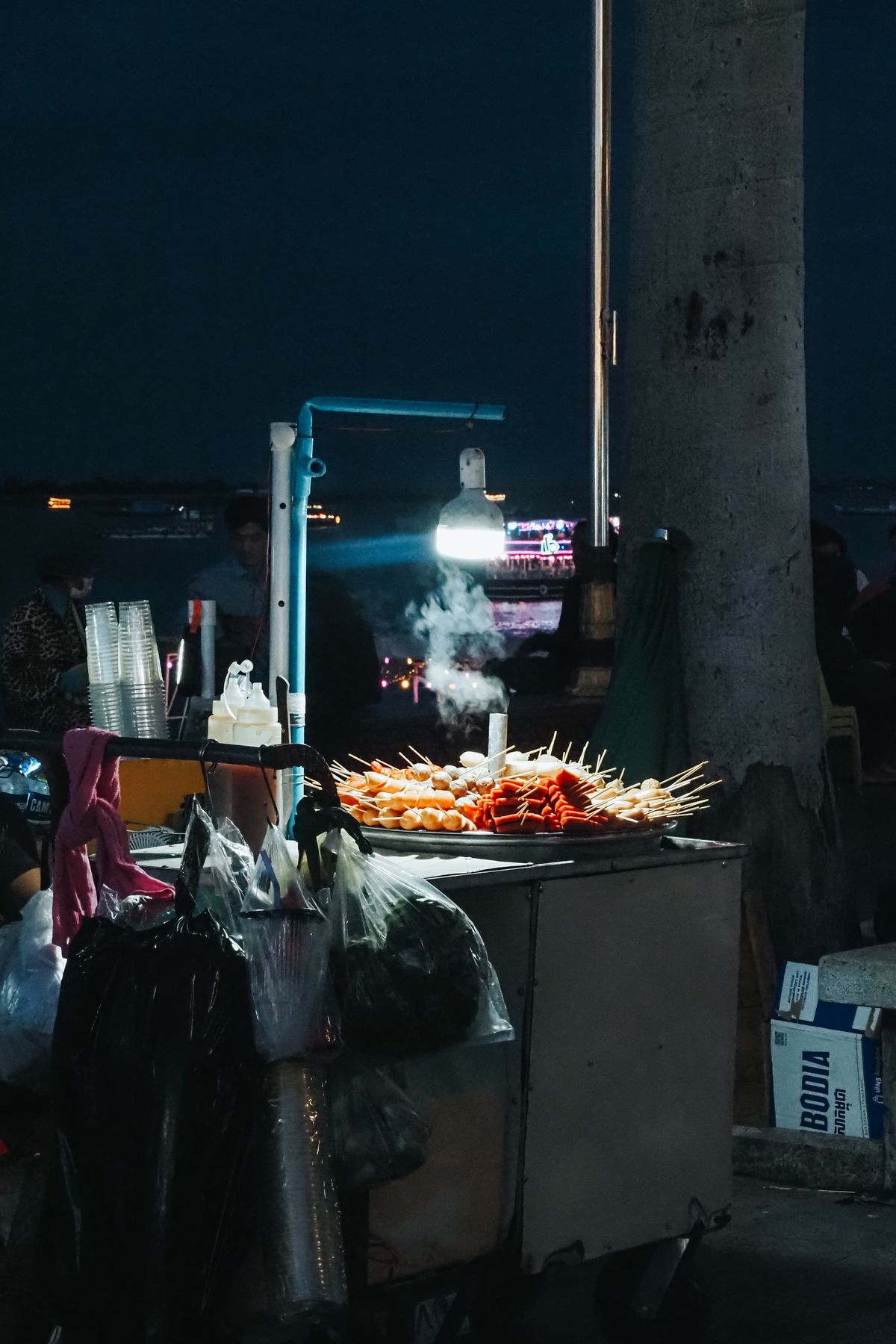
The real eating happens at market food courts and roadside carts, and it is where Phnom Penh’s food is at its cheapest and most honest. The Russian Market food court — a clutch of stalls tucked inside the covered bazaar — is the easiest entry point, with photo menus, communal benches and a dish for every budget; the Central Market perimeter does a brisk breakfast trade in noodle soup and broken rice; and the Street 240 morning stalls draw office workers before 09:00. The riverfront Night Market (Phsar Reatrey) shifts the scene to grilled skewers and desserts on weekend evenings, with mat-seating and a young local crowd. Carry small riel notes for change, point at what looks busy, and do not be put off by plastic stools — the best food in the city is often the cheapest.
- Russian Market food court — kuy teav, num banh chok and grilled meats from a clutch of stalls (dishes ~6,000–12,000៛, ~$1.50–3)
- Street 240 morning stalls — noodle soups and thick iced coffee before 09:00 (~6,000៛, ~$1.50)
- Night Market (Phsar Reatrey) riverfront — weekend grilled-skewer and dessert stalls (~4,000–10,000៛, ~$1–2.50)
Beyond Amok and Lok Lak
Once you are past the headline dishes, the everyday Khmer repertoire opens up — and much of it is breakfast-and-snack food rather than dinner-table cooking. The morning noodle soup kuy teav is the true national breakfast, a clear pork-and-rice-noodle broth dressed at the table with bean sprouts, lime and chilli. Num banh chok — literally “Khmer noodles” — is a cold dish of fresh rice noodles drowned in a green fish-and-lemongrass gravy and piled with raw vegetables, sold from baskets by women who walk the morning streets. And the num pang, the Cambodian baguette sandwich, is the most visible legacy of French colonial rule on the plate: a crisp baguette split and filled with pâté, pickled vegetables, herbs and chilli for a dollar and a half. These are the everyday flavours that define how the city actually eats.
- Kuy teav — clear pork-and-noodle breakfast soup, the city’s default morning meal (~6,000៛, ~$1.50)
- Num banh chok — “Khmer noodles” with a green fish-and-lemongrass gravy, eaten cold (~5,000៛, ~$1.25)
- Num pang — the Cambodian baguette sandwich, a French-colonial legacy with pâté, pickles and herbs (~6,000៛, ~$1.50)
- Bai sach chrouk — grilled pork over broken rice with pickles, the classic street breakfast (~8,000៛, ~$2)
- Cha kdav & samlor korko — stir-fries and the hearty “national soup” of vegetables, fish and roasted-rice powder (~10,000៛, ~$2.50)
Coffee, Cafés & the BKK1 Scene
Cambodia grows its own robusta in the highlands, and Phnom Penh drinks it hard — traditionally as a thick, sweet iced coffee with condensed milk poured from a roadside cart, increasingly as third-wave espresso in the air-conditioned cafés of BKK1. The specialty-coffee scene has exploded in the last decade, with local roasters and design-led cafés on Street 308 and around Toul Tom Poung that would not look out of place in Melbourne or Bangkok. For visitors this matters practically: BKK1 cafés are the city’s most reliable spots for fast Wi-Fi, a quiet table and a flat white when the heat or the riverfront crowds get too much, and many double as all-day workspaces for the city’s growing community of remote workers. Try the same Cambodian bean two ways on the same morning — a sweet, condensed-milk iced coffee from a roadside cart and a clean third-wave pour-over in an air-conditioned café — to taste how far the local coffee culture has travelled in a decade. Expect about $0.75 for a roadside iced coffee and $3–4 for a café espresso drink.
Sweets, Snacks & the Adventurous End
Cambodian desserts lean on the tropical pantry — palm sugar, coconut, sticky rice, jackfruit, durian and the bright-green pandan leaf — rather than dairy or chocolate. Look for num ansom (sticky-rice cakes steamed in banana leaf), cha houy teuk (a jelly-and-coconut-milk dessert drink piled with agar, tapioca and beans, scooped from carts on hot afternoons), and grilled bananas brushed with coconut cream. The markets also sell tropical fruit you may not know — rambutan, mangosteen, longan, the custardy sugar-apple, and in season the famously pungent durian, which Cambodians prize and many hotels politely ban. For the genuinely adventurous, the roadside snack carts of Phnom Penh sell fried crickets, silkworms and the black-pepper tarantulas of Skuon — protein-rich snacks that began as famine food during the Khmer Rouge years and survive today as a crunchy, salty bar snack. None of it is a tourist gimmick; locals eat these by the bagful on long bus journeys.
To drink, beyond the iced coffee, the everyday choice is fresh sugarcane juice (teuk ompov) pressed at the roadside through hand-cranked rollers, often with a squeeze of kumquat, and ice-cold coconut water drunk straight from the husk. Local beer is cheap and ubiquitous — Angkor, Cambodia and Hanuman are the main brands — and the riverfront bars pour them for a dollar or two. Tap water is not safe to drink anywhere in the city; stick to the bottled and filtered water sold on every corner.
Food Experiences You Can’t Miss
- A morning kuy teav at a riverside or Street 240 stall before the heat lands, dressed at the table with lime and chilli
- Dinner at a Friends-International training restaurant (Romdeng or Friends the Restaurant), where your bill funds youth hospitality training
- A grazing loop through the Russian Market food court — point, share, repeat
- A thick Cambodian iced coffee from a roadside cart, then a third-wave espresso in a BKK1 café — the same bean, two centuries apart
Cultural Sights

Phnom Penh’s sights divide cleanly into two registers: the gilded, ceremonial Cambodia of the Royal Palace and the Angkorian treasures of the National Museum, and the unflinching twentieth-century history of the genocide memorials. A complete visit needs both. The royal and religious sights cluster in the walkable Daun Penh core within a few hundred metres of one another, while the two essential Khmer Rouge sites — Tuol Sleng in the city and Choeung Ek on its southern fringe — belong together in a single sober morning. Below, the sights are ordered roughly as you might tackle them, with opening hours and current admission prices.
Royal Palace & Silver Pagoda
The walled royal compound on the riverfront is the city’s signature sight and the working residence of the Cambodian king, so parts are closed to visitors. The 1919 Throne Hall with its 59-metre central spire, the formally laid gardens, and the Silver Pagoda — its floor laid with more than 5,000 solid-silver tiles and home to a small emerald-crystal Buddha and a life-size gold Buddha studded with more than 2,000 diamonds — are the highlights. The complex was built from 1866, when King Norodom moved the capital here from Oudong. Admission 40,000៛ (about $10). Open 07:30–11:00 and 14:00–17:00; dress modestly, with knees and shoulders covered, or you will be turned away at the gate — a scarf or sarong is sold nearby if you forget.
Tuol Sleng Genocide Museum (S-21)
A former high school that the Khmer Rouge converted into the S-21 interrogation and detention centre, where roughly 12,000–20,000 people were imprisoned, tortured and sent to their deaths between 1975 and 1979; only a handful of detainees are known to have survived. It is now a sober, essential museum that preserves the bare cells, the rusting bed frames, and — most hauntingly — the wall after wall of mugshot photographs the regime took of its victims, exactly as found. Allow at least two hours and take the audio guide, narrated in part by survivors. Admission $5 for foreign adults, $3 for ages 10–18, free for Cambodians; the $3 audio guide is strongly recommended. Open daily 08:00–17:00.
Choeung Ek Killing Fields
About 15 km south of the centre , this is the best known of the hundreds of Khmer Rouge execution sites scattered across the country, the place where most of S-21’s prisoners were ultimately killed. A tall glass memorial stupa at the centre holds more than 5,000 skulls arranged by age and sex; the self-guided audio tour that walks you between the excavated mass graves and the infamous “killing tree” is one of the most affecting and important hours you can spend in South-East Asia. Visit S-21 first and Choeung Ek second, in that order, ideally giving the pair a full morning. Admission $6 including the audio guide. Open daily 07:30–17:30.
National Museum of Cambodia
The unmistakable terracotta-red, Khmer-style pavilion next to the Royal Palace holds the world’s finest collection of Khmer art — more than 14,000 objects spanning prehistory through the Funan, Chenla and Angkorian empires, including the serene sandstone sculpture that the Angkor temples themselves have lost to looting and weather. The centrepiece is the reclining bronze fragment of Vishnu and a courtyard garden that offers a cool, contemplative pause. Take the inexpensive audio guide or a docent tour to make sense of the chronology. Admission $10 (with a $5 audio guide). Open daily 08:00–17:00.
Wat Phnom
The founding temple of the city, perched on its 27-metre artificial hill, dating in legend to 1372 and giving Phnom Penh its very name. It is a busy, working temple where locals come to pray for luck — students before exams, businesspeople before deals — making incense offerings and releasing caged birds. Green and shaded, it is a welcome counterpoint to the riverfront bustle. Admission $1. Open daily 07:00–18:00. Watch for the troupe of resident macaques in the surrounding park, and keep food and loose items secured around them.
Independence Monument & Wat Ounalom
The lotus-shaped Independence Monument (1958), designed by the celebrated Cambodian architect Vann Molyvann in the New Khmer Architecture style, marks Cambodia’s 1953 independence from France and anchors the broad BKK1 boulevards; it is floodlit a deep red at night and serves as a focal point for national ceremonies. A short walk away on the riverfront, Wat Ounalom is the seat of Cambodian Buddhism and the residence of the country’s supreme patriarch, founded in the fifteenth century and rebuilt after the Khmer Rouge years. Both are free to view. They are best at dusk, when the monument lights and the riverfront fills with families, joggers and aerobics groups.
Entertainment

Phnom Penh’s nightlife is friendlier and lower-key than Bangkok’s — there is no equivalent of Khao San Road — and it is all the better for it. The action concentrates in two pockets: the Sisowath Quay riverfront, where the crowd is more tourist-and-traveller, and BKK1, where expats and well-off locals fill the cocktail bars and lanes. Everything is cheap by regional standards, distances are short, and a single evening can run from a sunset riverfront beer to a hidden cocktail lane to a late grilled-skewer graze at a night market without ever spending much. What follows are the venues and scenes worth your evenings. A word on getting home: arrange your ride back through PassApp or Grab rather than flagging a street tuk-tuk late at night, when quoted fares climb steeply.
Riverfront Bars & Rooftops
The Sisowath Quay strip and the BKK1 rooftops are the core of Phnom Penh nightlife — the historic FCC (Foreign Correspondents’ Club) terrace overlooking the river, riverfront craft-beer bars, and a growing crop of rooftop cocktail bars in the Tonlé Bassac towers with skyline-and-river views. The FCC in particular is an institution, its colonnaded colonial terrace having hosted war correspondents through the turbulent decades; a drink there at sunset is as much a history lesson as a night out. Typical cost $2–4 for a local Angkor or Cambodia draught, $6–9 for a cocktail. No booking needed for most; arrive before sunset to claim the river-view tables, which fill fast on weekends.
Bassac Lane
A short, hidden lane of tiny independent bars off Street 308 in BKK1 — the closest thing Phnom Penh has to a craft-cocktail row. Each bar occupies a converted shophouse with its own theme, from a motorbike-mechanic aesthetic to a tiki den, and the crowd spills out into the lane itself so that the whole alley becomes one rolling, sociable bar-hop. It is the easiest place in the city to fall into conversation with a mix of expats and travellers. Typical cost $5–8 a drink; no booking, just wander in.
Night Markets
The riverfront Night Market (Phsar Reatrey) runs Friday–Sunday evenings with food stalls, mat-seating where you eat cross-legged on woven mats, and racks of cheap clothes; the Russian Market quarter shifts to an evening street-food scene too. These are family-friendly, alcohol-light affairs — more about grazing grilled skewers and people-watching than drinking — and they are where you will see the most local, least touristy side of a Phnom Penh weekend night. The mat-seating ritual, where strangers share low communal platforms and pass dishes around, is a lovely, unforced way to spend a warm evening. Typical spend $3–6 for a full graze.
Live Music & Cinema
Phnom Penh has a small but genuine live-music scene — jazz, blues and Khmer-pop at riverfront venues and BKK1 bars, with a handful of dedicated music rooms hosting local and visiting acts most weekends. For a quieter night, modern multiplex cinemas at Aeon Mall and Aeon Mall 2 screen current international releases in air-conditioned comfort, a welcome refuge during a wet-season downpour. Typical cost: live music free–$5 cover; cinema tickets around 16,000៛ (about $4).
Apsara Dance & Cultural Shows
Classical Khmer apsara dance — the graceful, gesture-driven temple dance that the Khmer Rouge nearly destroyed by executing the artists who carried it, and that survivors painstakingly revived — is performed at dinner shows around the city. Cambodian Living Arts, the organisation most responsible for that revival, stages performances at the National Museum on select evenings, and it is the most meaningful way to see the tradition. Typical cost $15–25 with dinner; book a day ahead, especially in high season.
NagaWorld
The riverfront NagaWorld complex in Tonlé Bassac is the city’s largest entertainment-and-casino venue, with restaurants, bars, a hotel and shows under one roof. Entry is free and you can spend as little or as much as you like. It is more a curiosity than a highlight — and the site of a long-running, well-publicised labour dispute worth being aware of before you go — but it is a reliable, fully air-conditioned evening when a wet-season storm rules out the riverfront and you simply want to be somewhere dry, bright and busy.
Day Trips
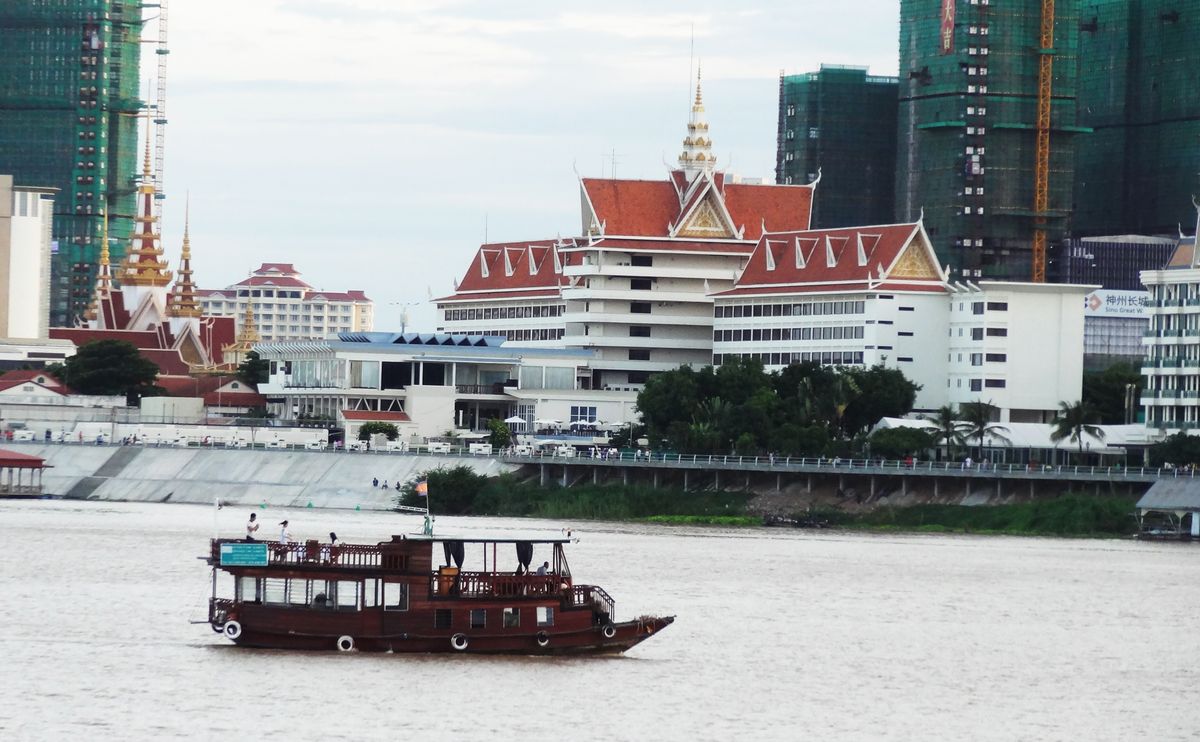
Phnom Penh sits at the centre of a flat, fertile, river-laced plain, and the day trips fan out in two directions: south along National Road 2 toward the genocide memorial, the wildlife sanctuary and the lakeside temples, and out onto the rivers toward the silk-weaving islands. None requires more than a couple of hours each way, so each works comfortably as a half- or full-day excursion. The most efficient approach is to group the southern sights into one hired-car day and keep the river islands for a separate, gentler outing. Below are the five trips Phnom Penh families and visitors actually take, with rough travel times and how to do each.
Choeung Ek Killing Fields (40 minutes by tuk-tuk)
The most important half-day from the city, lying about 15 km south of the centre . Pair it with Tuol Sleng in the morning for the full, sober picture of the Khmer Rouge years — the prison first, the execution site second. A round-trip tuk-tuk with waiting time runs $12–18, or arrange a car through the apps; the self-guided audio tour on site is included in the $6 admission and is genuinely essential to understanding what you are seeing. Go early to beat both the midday heat and the tour-bus crowds, and set aside a quiet hour afterward — it is a heavy visit.
Koh Dach / Silk Island (1 hour by car plus ferry)
A sandy Mekong island roughly 14 km long , reached by a short vehicle ferry from the city’s northern edge, where traditional silk weavers still work upright wooden looms beneath their stilted houses and sell scarves and sampots straight from the loom. It makes a relaxed cycling-and-weaving half-day: rent a bike on the island, pedal between the weaving villages and the riverside sandbars, and watch the dyeing and spinning up close. Best in the dry season, when the riverside tracks are firm and the sandbar “beaches” emerge; in the wet months parts of the island flood.
Oudong (1.5 hours by car)
Cambodia’s royal capital before the court moved to Phnom Penh in 1866, lying about 40 km northwest of the city and crowned by a long ridge of royal hilltop stupas reached by a roughly 500-step climb. The views over the surrounding rice plains are the best near the capital, and the large modern Vipassana Dhura meditation centre at the base draws Cambodian Buddhists for retreats. It is the standout half-day for hilltop temples without the drive to Angkor. Bring plenty of water and go early — the staircase is exposed and the climb is hot by mid-morning.
Phnom Tamao Wildlife Rescue Centre (1.75 hours by car)
About 43 km south of the city , this is a genuine rescue-and-rehabilitation sanctuary — emphatically not a zoo — caring for elephants, tigers, sun bears, gibbons, leopards and birds recovered from the illegal wildlife trade, many of them unable to be returned to the wild. Run with conservation partners, it is the most family-friendly day trip from the capital and a rare chance to see Cambodia’s threatened fauna up close in humane conditions. It sits on the same southern road as Tonlé Bati, so the two combine neatly into one full day. Bring cash for the entry and the optional behind-the-scenes “bear keeper” experiences.
Tonlé Bati & Ta Prohm Temple (1 hour by car)
A lakeside picnic spot about 30 km south of the city with two genuine late-12th-century Angkorian temples — Ta Prohm (not to be confused with its more famous Siem Reap namesake) and the smaller Yeay Peov, both built in the Bayon style under Jayavarman VII — that offer a real taste of Angkorian stonework without the four-hour drive to Siem Reap. The carvings are weathered but atmospheric, and at weekends Cambodian families pack the lakeside platforms for the hammock-and-lunch scene, renting woven sleeping mats over the water. Combine it with Phnom Tamao for an easy southern day out.
Seasonal Guide

Phnom Penh has a tropical monsoon climate with two real seasons rather than four: a cool-dry stretch from roughly November to February and a hot-then-wet stretch from March to October. For visitors the practical takeaway is simple — aim for November to February if you can, accept the heat in March and April, and plan around the predictable afternoon storms of the rainy months. The framing below maps the familiar four seasons onto that pattern, with what to expect from the weather, the festivals and the crowds in each.
Spring (March – May)
The hottest stretch of the year and the run-up to the rains. Daytime highs climb from the low 30s in March to around 37°C in April, the peak of the heat . Khmer New Year (Choul Chnam Thmey), in mid-April, is the biggest holiday of the year — much of Phnom Penh empties out to home villages, many businesses close for several days, and the city stages water-and-powder fights in the streets. Hydrate, plan indoor sights for midday, and expect closures over the holiday.
Summer (June – August)
The early-to-mid wet season. Daytime highs settle around 32–33°C with high humidity and short, heavy afternoon downpours that usually clear within an hour. Rain rarely ruins a day if you plan around the afternoon storms. The countryside greens up beautifully, river levels rise, and hotel rates dip from the dry-season peak. Pack a light rain layer and quick-dry shoes.
Autumn (September – November)
September and October are the wettest months, with rain on 23–28 days and occasional street flooding in low-lying areas . But November is the reward: the rains taper, the air cools, and the Water Festival (Bon Om Touk) — three days of dragon-boat races on the riverfront, in 2026 falling 23–25 November — draws huge, joyful crowds to Sisowath Quay . Book accommodation well ahead for the festival.
Winter (December – February)
The cool-dry season and the best time to visit, hands down. Daytime highs sit in the low 30s, nights drop to a comfortable 22–24°C, humidity falls away, and rain is rare . This is peak tourist season — clear skies for the riverfront and day trips, the most pleasant walking weather of the year, and the busiest, priciest hotels. Christmas and New Year see a further surge of visitors and a few festive events around the malls and big hotels. Book accommodation and any private day-trip driver well ahead for December and January, when the best-value rooms sell out first.
Getting Around
Getting around Phnom Penh is, refreshingly, one of the simplest things about the city: there is no metro to learn, almost everything central is close together, and a smartphone with two ride apps solves nearly every transport problem you will have. The one rule that matters most — flag it now — is to use the apps rather than negotiating with street drivers, both for honesty of pricing and for the logged, traceable route. Below is everything you need, from the workhorse tuk-tuk to the new airport transfer.
Tuk-Tuks & Remorques
Phnom Penh has no metro, no tram and only a limited city-bus network, so the workhorse of getting around is the tuk-tuk — both the classic trailer-style remorque towed behind a motorbike, which seats a family and their luggage, and the smaller, nippier Indian-style auto-rickshaws that the apps dispatch. A short downtown ride costs about $1; almost any cross-town trip stays under $5 . If you flag one on the street rather than using an app, always agree the fare before you set off — and expect a foreigner premium of roughly double until you do. Drivers parked outside hotels and tourist sites quote the highest; one walked a block away is usually cheaper.
Ride-Hailing Apps (PassApp, Grab)
The single best travel hack in Phnom Penh is to download the apps. The locally built PassApp and the regional Grab both dispatch tuk-tuks and cars with fixed, upfront fares — no haggling, a logged route, and roughly half what a street driver quotes a foreigner. PassApp is cheapest for tuk-tuks; Grab is handy for air-conditioned cars. Both take cash, and Grab takes cards .
City Buses & Walking
Phnom Penh’s public bus network runs a handful of numbered routes for a flat 1,500៛ (about $0.40) fare, useful mainly for long straight boulevards but slow, infrequent and not geared to visitors — most travellers never touch it. Walking, on the other hand, is genuinely rewarding in the right hours: the central tourist core — riverfront, palace, museum, Central Market — is compact and flat, and a cool-morning walk between the sights is the best way to feel the city’s colonial-era texture. By mid-morning, though, the combination of heat, dense motorbike traffic and patchy, frequently blocked pavements makes a $1 tuk-tuk the sane choice. Crossing the road is its own skill: step out at a steady, predictable pace and let the motorbikes flow around you rather than stopping and starting.
Airport Access (Techo International Airport)
Cambodia’s brand-new Techo International Airport (code KTI) opened in September 2025, replacing the old Phnom Penh International Airport for all commercial flights; it sits about 20 km south of the city in Kandal Province . Allow 40–60 minutes for the transfer depending on traffic.
- Grab / PassApp car — 40–60 min, ~$13–18
- Airport tuk-tuk via app — 50–70 min, ~$8–15
Taxis
Phnom Penh has no real street-hail metered-taxi culture; the apps have replaced it. Flag-fall for an app car is effectively the upfront fare you see before you confirm. Use Grab or PassApp rather than the unmarked cars that approach arriving foreigners, where quoted fares trend much higher.
Navigation Tips
Apps: Grab, PassApp. The city is laid out on a partial grid of numbered streets — odd numbers run one way, even the other, roughly — but numbering is inconsistent, so pin your destination on the map in the app rather than relying on a street number alone.
Budget Breakdown: Making Your Riel and Dollars Count
| Tier | Daily | Sleep | Eat | Transport | Activities | Extras |
|---|---|---|---|---|---|---|
| Budget | $25–35 | $6–12 dorm/guesthouse | $5–10 street food | $3–6 tuk-tuk | $6–11 museum entries | $3–5 water/snacks |
| Mid-Range | $60–100 | $25–45 private AC room | $15–25 mix of Khmer & Western | $8–15 Grab cars | $15–25 tours/shows | $8–12 drinks |
| Luxury | $180+ | $90–250 four/five-star | $40–70 fine dining | $25–40 private driver | $30–60 private guides | $20+ spa/bar |
Where Your Money Goes
Phnom Penh is one of the cheapest capitals in the region, and the gap between a frugal day and a comfortable one is smaller than almost anywhere else in Asia. Street meals run $1.50–3, museum entries $5–10, and a clean private room with air-conditioning is easy to find under $40. The biggest variable is how you sleep and drink — imported wine and rooftop cocktails carry near-Western prices, while local Angkor draught is under $1 and a thick roadside iced coffee is well under a dollar. Budget travellers can comfortably do the city on $25–35 a day, mid-range travellers on $60–100, and only genuine luxury — a five-star riverfront room, a private guide and a driver — pushes a daily spend past $180 .
The single biggest lever on your daily cost is accommodation. A dorm bed runs $6–12, a private fan room in a guesthouse $15–25, a smart air-conditioned mid-range room $25–45, and the four- and five-star riverfront hotels start around $90 and climb steeply. Food, by contrast, barely moves the needle: even if you eat every meal at a sit-down restaurant you will struggle to spend $30 a day, and if you graze the markets you can eat superbly for under $10. Transport is similarly trivial — most cross-town tuk-tuk rides through the apps cost $1–3, so a whole day of getting around rarely tops $6 unless you hire a private car for a day trip ($45–65). The places that quietly drain a budget are imported alcohol, rooftop cocktail bars and Western-style cafés in BKK1, all of which carry prices closer to Bangkok or Singapore than to the rest of Phnom Penh.
Two structural quirks shape spending here. First, the dual-currency system means small change under a dollar always comes back to you in riel, so you accumulate a pocketful of notes that are easiest to spend at stalls, tuk-tuks and markets — hoard them rather than letting them pile up. Second, card acceptance is patchy: hotels, malls and mid-range restaurants take cards, but the cheapest and best experiences — street stalls, the Russian Market, app tuk-tuks paid in cash — are cash-only, and ATMs dispense US dollars with a $4–6 withdrawal fee. Plan to carry a working float of clean dollar bills and small riel at all times.
Money-Saving Tips
- Use PassApp or Grab for every ride — fixed app fares undercut street quotes by roughly half and remove the haggling entirely
- Eat at market food courts and street stalls; a $2 bowl of kuy teav beats any tourist café and is more authentic besides
- Carry small riel notes — change under $1 always comes back in riel, and spending it down avoids being short-changed
- Withdraw larger amounts less often to spread the fixed $4–6 ATM fee, and always ask for clean, unripped dollar bills
- Drink local — an Angkor or Cambodia draught is under $1, while an imported cocktail can be eight times the price
- Cambodians enter the genocide sites and many temples free; foreigner entries are modest ($5–10), so build them into your daily activity budget rather than treating them as extras
Practical Tips
Language
Khmer is the official language, written in its own distinctive script. English is widely spoken in tourism, hospitality and BKK1, and many older residents still speak some French from the colonial era. A few Khmer phrases — sues-day (hello), aw-kohn (thank you) — go a long way, but you will rarely be stuck for English in the visitor core.
Cash vs. Cards
Cambodia runs on a dual-currency system: US dollars and Cambodian riel circulate side by side, with dollars used for larger amounts and riel for change under a dollar, at a fixed rate of about 4,000៛ to $1 . Carry clean, unripped dollar bills (torn notes are often refused) and keep small riel for stalls and tuk-tuks. Cards work at hotels, malls and mid-range restaurants; ATMs dispense dollars and usually charge a $4–6 fee.
Safety
Phnom Penh is generally safe for visitors, with little violent crime directed at tourists, but petty crime — especially bag- and phone-snatching by passing motorbikes — is the one real and common risk. The classic scenario is a phone held loosely while walking near the kerb, or a bag worn on the road-side shoulder, snatched by a rider who never slows down; injuries from being pulled over follow. Keep bags on the inside away from the road, wear them across the body, never hang a phone or camera loosely, and be especially alert walking at night or stepping out of a bar. Avoid flashing cash, and use the ride apps rather than walking long distances after dark. Your government’s travel advisory is the authoritative source for current conditions and any localised warnings.
What to Wear
Light, breathable, modest clothing for the heat. Cover knees and shoulders for the Royal Palace and temples or you will be refused entry; carry a scarf or light layer. Otherwise the city is relaxed and casual.
Cultural Etiquette
Greet with the sampeah — palms pressed together at chest height with a slight bow — rather than a handshake where appropriate, particularly with elders and monks. Remove your shoes before entering temples and private homes, dress modestly at religious sites, and never touch anyone’s head (considered the most sacred part of the body) or point your feet at people or Buddha images, since feet are the lowest. Women should never touch or hand anything directly to a monk. Above all, dress and behave with quiet respect at the genocide sites: keep your voice down, do not pose for cheerful photographs, and treat Tuol Sleng and Choeung Ek as the places of mourning they are, not as backdrops.
Connectivity
Mobile data is cheap, fast and one of the best deals in the region — a local Cellcard or Smart SIM loaded with generous data costs only a few dollars at the airport or any phone shop, and you will want it for the ride apps and maps from the moment you land. Bring an unlocked phone, or buy a supported eSIM before you arrive; both Cellcard and Smart sell eSIM plans. Coverage is strong across the city, and Wi-Fi is reliable in BKK1 cafés, co-working spaces and hotels, making Phnom Penh a comfortable base for remote workers.
Health & Medications
Do not drink the tap water; bottled water is everywhere and cheap. The CDC recommends routine vaccinations plus typhoid and hepatitis A for most travellers; dengue is present year-round, so use mosquito repellent . Royal Phnom Penh Hospital and a few international clinics handle most issues; serious cases are evacuated to Bangkok.
Luggage & Storage
Most guesthouses and hotels will store bags for free on check-out day, which covers the common case of a late-evening onward flight or bus after you have checked out. The new Techo airport has paid left-luggage, but there is no central downtown left-luggage office, so plan storage around your accommodation rather than expecting a station locker. If you are continuing to Siem Reap or the coast, the long-distance bus and minivan companies will let you stow bags in the hold for the journey.
Frequently Asked Questions
How many days do I need in Phnom Penh?
Two full days is the sweet spot for most visitors. Day one covers the Royal Palace, National Museum and riverfront; day two pairs Tuol Sleng and the Choeung Ek Killing Fields in the morning with the Russian Market and BKK1 cafés in the afternoon. A third day lets you add a day trip — Koh Dach or Oudong — or simply slow down. Many travellers treat Phnom Penh as a one-night stop on the way to Siem Reap, but it rewards a proper two-day stay.
Is Phnom Penh good for solo travellers?
Yes — it is friendly, cheap, and has a well-worn backpacker and expat scene around the riverfront and BKK1 that makes meeting people easy. Solo women travellers generally report feeling comfortable, with the usual caveats: avoid walking alone late at night, use the ride apps rather than street tuk-tuks after dark, and keep bags secure against motorbike snatch-theft.
Do I need to haggle for tuk-tuks, or use an app?
Use the app. PassApp and Grab both give fixed, upfront fares for tuk-tuks and cars that are roughly half what a street driver will quote a foreigner, with no haggling and a logged, traceable route. Download both before you arrive and add a payment method or keep small cash ready; they take cash, and Grab takes cards. If you do flag a tuk-tuk on the street — sometimes faster outside a busy restaurant — always agree the fare first, and expect the opening quote to be roughly double what an app would charge. The apps also solve the address problem: you pin your destination on the map rather than relying on Phnom Penh’s unreliable street numbering.
What about the language barrier?
Minimal in the visitor core. English is widely spoken in hotels, restaurants, shops and tourist areas, many menus carry English and photos, and the ride apps remove most navigation friction by letting you pin a destination on a map. Older Cambodians may speak some French. Outside the central districts and at market stalls you will encounter more Khmer-only situations, but pointing, smiling and a translation app cover the gaps. Learning sues-day (hello) and aw-kohn (thank you) is genuinely appreciated and warmly received, but you will rarely be truly stuck.
Is the new Techo airport far from the city?
Yes, noticeably further than the old one. Techo International Airport opened in 2025 about 20 km south of the centre in Kandal Province , so allow 40–60 minutes for the transfer depending on traffic — more in rush hour. The simplest options are a Grab or PassApp car (around $13–18) or an airport tuk-tuk via app ($8–15). Factor the extra distance into your departure timing, especially for early-morning flights.
When is the best time to visit weather-wise?
November to February — the cool-dry season — has the most pleasant weather: low-30s days, comfortable nights in the low-to-mid 20s, low humidity and little rain. It is peak tourist season for good reason. April is the hottest month, with highs near 37°C, and also the time of Khmer New Year, when much of the city empties to home villages and many businesses close. September and October are the wettest months, with rain on most days and occasional street flooding, though the showers are usually short afternoon bursts rather than all-day rain. November is a sweet spot: the rains have tapered, the air has cooled, and the riverfront Water Festival — three days of dragon-boat racing — is the city’s biggest and most joyful celebration.
Can I use credit cards everywhere?
No — Phnom Penh is largely a cash city. Cards work at hotels, malls and mid-range-and-up restaurants, but street stalls, markets, tuk-tuks and small shops are cash only. Carry clean US dollar bills for larger amounts and small riel notes for change; ATMs dispense dollars with a $4–6 fee.
Should I really visit the genocide museums — are they too disturbing?
They are sober and emotionally heavy, but they are the most important things you can do in Phnom Penh, and visiting respectfully is a way of honouring what happened rather than gawping at it. Tuol Sleng (S-21) and the Choeung Ek Killing Fields are best done together in one morning, with the audio guides, ideally before the afternoon heat — and with a quiet, unscheduled hour afterward to process what you have seen. Children and the very sensitive may find the photographic and physical detail hard; you know your own limits. Cambodians visit free of charge to keep the memory alive, and many survivors and guides have made it their life’s work to ensure the world does not forget; travellers should approach the sites in the same spirit.
Ready to Experience Phnom Penh?
Phnom Penh is the river capital that rewards travellers who slow down for it — give it two full days, eat at the market stalls, sit on the riverfront at dusk, and face its history honestly. For the full country context, read the Cambodia Travel Guide.
Explore More City Guides
Where to Stay
Alex the Travel Guru
Alex has spent two decades on the ground across South-East Asia, from the Mekong delta to the Cambodian highlands, writing the kind of practical, honest guides he wishes he’d had on his own first trips. He believes the best travel days start with a street-stall breakfast and end with a long walk, and that a city like Phnom Penh is best understood slowly, with its history taken seriously.
More city guides you might like
Plan your trip to Phnom Penh
The booking tools we use ourselves. FFU may earn a commission at no extra cost to you.
Plan & book your trip to Phnom Penh
Booking through these searches supports our guides at no extra cost to you.