
City Guide · Transylvania
Sibiu, Romania: Saxon Hermannstadt, the Eyebrow Houses, and Transylvania’s Most Beautiful Old Town
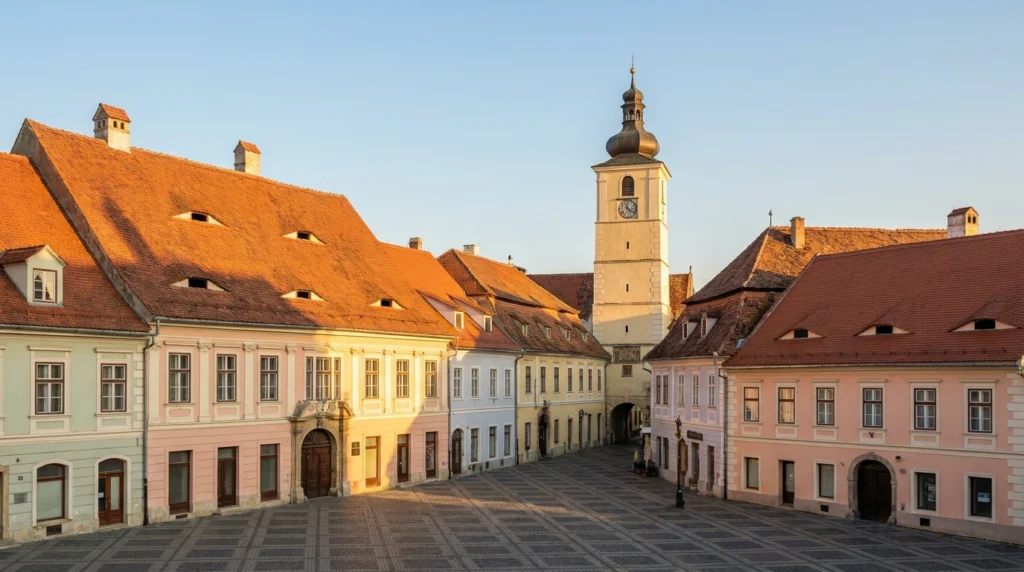
I have walked into Sibiu’s Large Square at dusk a dozen times, and the trick the city plays on you never gets old — the long pastel facades, the slope of the Council Tower, and those half-lidded attic windows that seem to watch you cross the cobbles. We tell first-timers that Sibiu is smaller than its reputation: about 134,000 people inside the city , yet it carries itself like the Saxon capital it once was, the German Hermannstadt that ran Transylvania’s trade for centuries. My favourite Sibiu ritual is a morning coffee on the Small Square before the Brukenthal queue forms, then the slow drop down the Passage of Stairs into the Lower Town, where the streets get quieter and the medieval walls close in. Treat this guide as the brief I would hand my own family the night before they drove up from Bucharest — the Brukenthal collection that predates the Louvre’s public opening, the Bridge of Lies, the ASTRA open-air museum, the Christmas market, and the Transfăgărășan trailheads within striking distance .

Table of Contents
Why Sibiu?
Sibiu is the rare Transylvanian town that has stayed recognisably itself for eight centuries. Founded by German settlers — the Transylvanian Saxons — in the 12th century on the site of an earlier Roman-era settlement, it grew into Hermannstadt, the wealthiest and most powerful of the Saxon towns and the seat of the Sibiu count who governed the whole Saxon community . The city proper holds roughly 134,000 people today, the capital of Sibiu County in the south of Transylvania, sitting in a gentle valley of the Cibin River with the Făgăraș Mountains rising to the south . It is small enough to cross on foot in twenty minutes and dense enough with history to fill several days.
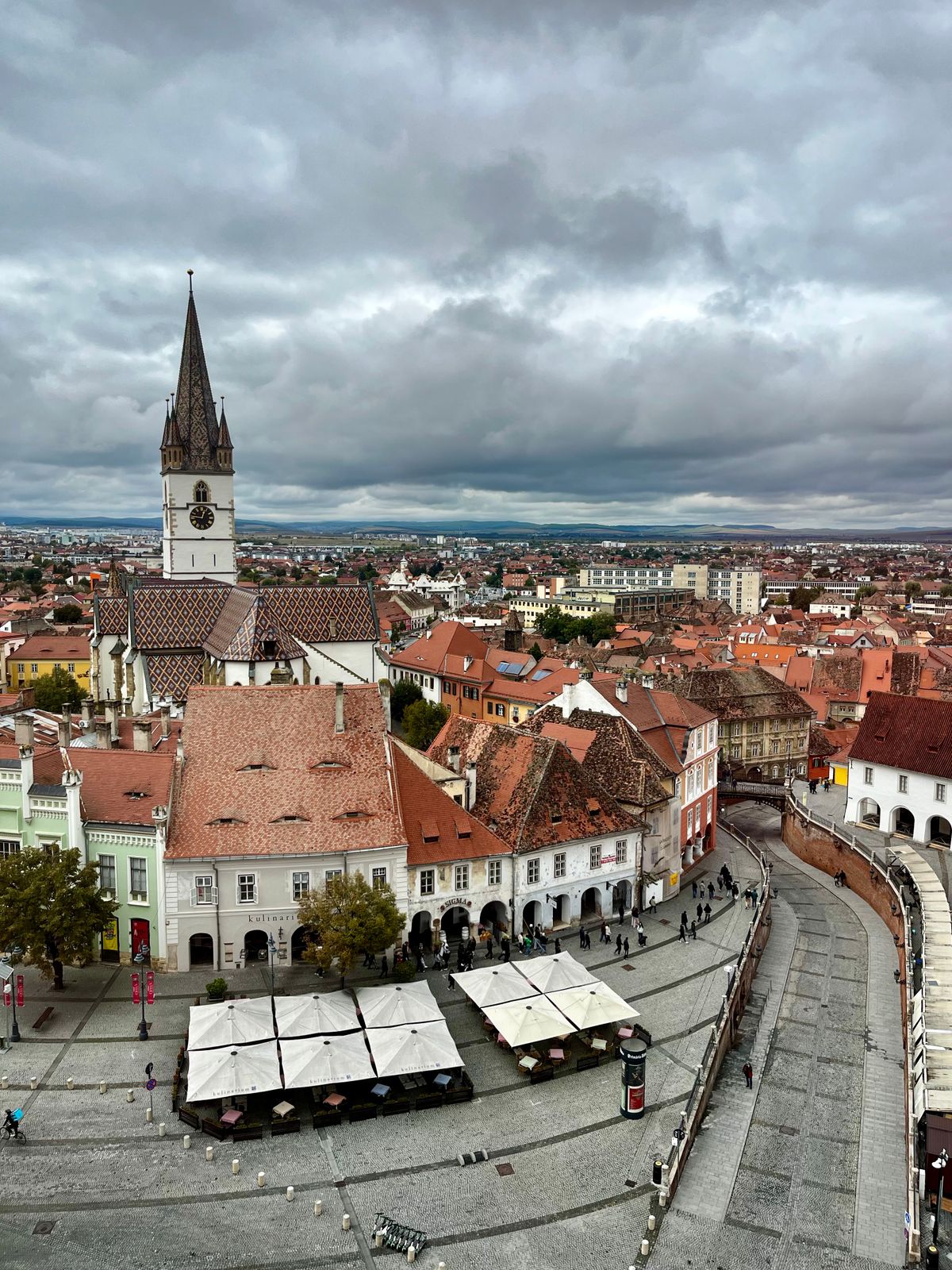
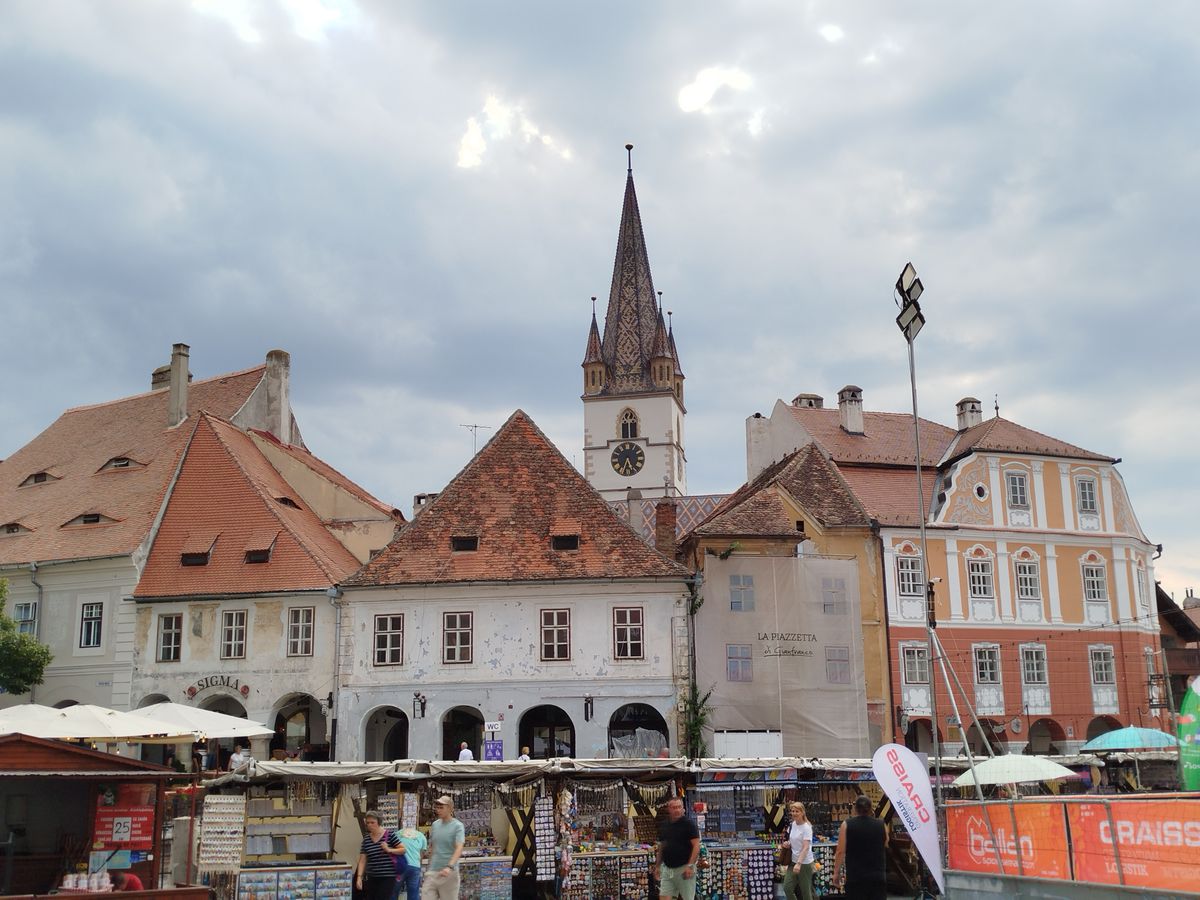
The city reads as a stack of productive contradictions. It is monumental at the scale of its squares — the Large Square (Piața Mare) is one of the grandest in Transylvania, framed by the Brukenthal Palace and the Baroque Roman Catholic church — yet intimate at the scale of the Small Square (Piața Mică) and the Lower Town lanes beneath it. The famous “eyebrow” houses, with their half-closed attic ventilation windows peering out of steep tile roofs, give the whole old town the look of a place quietly watching you . Sibiu was named European Capital of Culture in 2007 jointly with Luxembourg City, a turning point that funded a sweeping restoration of the centre and put the town firmly on Europe’s cultural map .
The density of heritage per square kilometre is unusual even by Transylvanian standards. Sibiu holds Romania’s oldest museum — the Brukenthal, whose palace opened to the public in 1817 around collections amassed by the Habsburg governor Samuel von Brukenthal — alongside intact medieval fortifications, the third-tallest fortified tower in Transylvania, and a Gothic Evangelical cathedral whose spire dominates the skyline . Just outside the centre, the ASTRA open-air museum spreads traditional Romanian village architecture across one of Europe’s largest ethnographic parks. What keeps it all coherent rather than overwhelming is the human scale: the Upper Town’s squares flow into each other, the Lower Town drops away below, and almost everything on a first-timer’s list sits within a fifteen-minute walk of the Council Tower.
This guide covers the neighbourhoods you will actually walk — the Upper Town squares, the Lower Town lanes, the Cetate fortification belt — the Transylvanian-Saxon food worth seeking out, the cathedral-and-palace tier (Brukenthal, the Evangelical Cathedral, the Council Tower, the Bridge of Lies), the day trips Sibienii themselves take on weekends, and the practical realities of getting here from Bucharest, Brașov and Cluj. Sibiu’s calendar peaks twice: the summer festival season — the Sibiu International Theatre Festival is one of Europe’s largest performing-arts events — and December, when the Sibiu Christmas Market in the Large Square is regularly ranked among the best in Europe . Everything else flows from there.
One more orientation point: Sibiu rewards slowness. It is not a tick-box city of must-see monuments so much as a place to wander, climb a tower, lose the crowd in the Lower Town, and end up on a café terrace watching the squares fill. The Upper Town is where the grand set-pieces sit; the Lower Town, reached down the covered Passage of Stairs, is where the medieval city feels most alive and least posed. For visitors, the lesson is simple: do the headline sights in the morning, surrender the afternoon to the lanes, and stay out for the early evening when the eyebrow windows catch the last light. Do that, and a Sibiu weekend stops feeling like a checklist and starts feeling like the Saxon town locals still live in. For the wider Romanian context, this guide pairs with our Romania Travel Guide and the sibling Brașov, Sighișoara and Cluj-Napoca city guides.
Getting There
Sibiu International Airport (SBZ), about 5 kilometres west of the centre, is one of Transylvania’s busiest, with seasonal and year-round links to Germany, Austria, Italy, Spain and the UK on carriers including Wizz Air, Lufthansa and Austrian, plus domestic flights to Bucharest . The airport is close enough that a taxi to the old town runs roughly RON 25–35 and takes under fifteen minutes; city bus line 11 also connects the airport to the centre.
By road, Sibiu sits on the A1 motorway, making the drive from Bucharest about 4.5–5 hours (roughly 280 km) and from Cluj-Napoca about 2.5–3 hours; Brașov is around 2 hours east via the DN1 . Long-distance coaches and minibuses (the autogară network) link Sibiu to all three cities and run frequently; this is often the cheapest and most direct option.
By rail, Sibiu’s main station (Gara Sibiu) is served by Romanian Railways (CFR Călători) with direct trains to Brașov (about 2.5–3.5 hours through spectacular Carpathian scenery), Cluj-Napoca and onward connections to Bucharest, usually via Brașov or Vânători . Trains are scenic but slower than the bus or car on most routes; check timetables before committing, as direct Bucharest services can be infrequent.
Getting Around
Sibiu’s historic centre is built for walking, and the network beyond it is small and easy to read: an extensive Tursib city-bus system, taxis, and the simple fact that the entire old town is pedestrian-friendly and compact . The Upper Town squares, the Lower Town lanes, the Brukenthal, the Council Tower, the cathedral and the Bridge of Lies are all within a fifteen-minute walk of one another, so most visitors barely use public transport inside the core. Transit matters mainly for the airport, the train station, and reaching the ASTRA museum on the southern edge of town.
City Buses (Tursib)
Tursib runs Sibiu’s municipal bus network across the city and its suburbs, including the airport line and routes toward the ASTRA museum and the residential districts . A single ticket is inexpensive — on the order of a few lei — and is cheaper bought in advance or with a rechargeable card than from the driver. For most tourists the bus is useful mainly for the airport, the ASTRA park and the train station; everything in the historic centre is faster on foot.
Walking the Upper and Lower Town
The single most important thing to understand about Sibiu’s geography is the split between the Upper Town (Orașul de Sus), where the grand squares and most monuments sit, and the Lower Town (Orașul de Jos), the older artisan quarter that drops away below. They are linked by stairways and ramps — most famously the covered Passage of Stairs (Pasajul Scărilor) — and the descent is one of the city’s signature short walks. Wear shoes with grip: the cobbles are uneven and slick in the rain.
Cycling
Sibiu is reasonably bike-friendly on its flatter stretches, with cycle paths along the river and toward the Sub Arini park, though the old town’s cobbles and pedestrian zones make a bike more useful for the outskirts than the core. Bike rental is available through several local outfits; for the ASTRA museum, which is large and spread out, a bike is a genuine time-saver once you are inside the park.
Airport Access
- Tursib bus line 11 from the airport to the centre — about 20 minutes, a few lei
- Taxi SBZ to the historic centre — about 10–15 minutes, roughly RON 25–35
Taxis and Rideshare
Licensed Sibiu taxis are metered and cheap by Western European standards; a cross-town ride rarely exceeds RON 20–30. Always use a marked, licensed cab or order by phone or app rather than hailing unmarked cars. Bolt operates in Sibiu and is often the easiest way to get a fair, app-tracked fare, particularly to or from the airport and the ASTRA museum.
Navigation Tips
The old town’s medieval plan is small but disorientating — lanes bend and the Upper and Lower Towns interlock confusingly. Google Maps handles Sibiu well, but the simplest trick is to navigate by the Council Tower and the Evangelical Cathedral spire, both visible across much of the centre and always pointing you back toward the squares. Many central streets are pedestrian-only, so do not plan to drive into the core.
Neighbourhoods: Where to Base Yourself
📍 Sibiu Map: Every Place in This Guide
Sibiu’s character changes between the squares and the lanes below them, and choosing the right area shapes the whole trip. The historic core is tiny — you can walk it end to end in under twenty minutes — but the Upper Town, the Lower Town and the fortification belt each have their own rhythm, price point and noise level. Below are the areas most first-time visitors actually consider, with an honest read on who each suits.


The Upper Town (Orașul de Sus)
The grand half of the old town, built around the Large Square, the Small Square and Huet Square, is the postcard Sibiu — pastel burgher houses, the Brukenthal Palace, the Council Tower and the cathedral all within a few minutes’ walk. It is the most convenient base for a first visit and where most of the boutique hotels sit. Stay here if you want everything on your doorstep; expect some early-evening square noise in summer.
The Lower Town (Orașul de Jos)
Reached down the Passage of Stairs, the older artisan quarter of low houses, small workshops and quieter streets is where the medieval city feels most authentic. Prices run lower than the Upper Town and the evenings are calmer. It is a five-minute climb back up to the squares, which most people find a fair trade for the atmosphere and the value.
The Cetate Fortification Belt
Along the southeastern edge of the Upper Town, the surviving stretch of medieval walls and defensive towers — the Carpenters’, Potters’ and Harquebusiers’ towers among them — backs onto a leafy promenade. Guesthouses here put you a short walk from the squares with a quieter, greener setting and the city’s best surviving fortifications on your doorstep.
Around the Train Station and Beyond
The area near Gara Sibiu and the modern districts beyond the old town are cheaper and more practical for drivers, with easier parking and budget hotels, but they lack the charm of the centre. Useful if you arrive late by train or are passing through with a car; otherwise the ten-minute walk into the old town is worth paying a little more to skip.
Food and Drink: Transylvanian-Saxon Comfort
Sibiu’s table is Transylvanian comfort food with a strong Saxon-German thread — hearty, meat-forward and built for cold mountain winters. The most famous local product is salam de Sibiu, a dry-cured winter salami with EU protected geographical status, but the everyday eating is soups, stews, polenta and grilled meats, washed down with local wine or țuică plum brandy .
What to Order
- Salam de Sibiu — the city’s EU-protected dry-cured winter salami, served sliced thin as an appetiser.
- Ciorbă de burtă / ciorbă rădăuțeană — sour Transylvanian soups, the everyday lunch staple.
- Sarmale — cabbage rolls stuffed with minced pork and rice, served with polenta (mămăligă) and sour cream.
- Bulz / mămăligă — baked polenta with cheese, a mountain-country classic.
- Papanași — fried doughnut-dumplings with sour cream and jam, the standard Romanian dessert.
Where to Eat
The Upper Town squares hold the most visible restaurants — reliable but priced for tourists — while a block or two off the squares the prices drop and the cooking gets more honest. Look for places serving a daily meniul zilei (set lunch) for the best value, and for traditional Transylvanian-Saxon menus rather than international fare. The Lower Town has a handful of well-regarded bistros worth the short climb down.
Timing and Etiquette
Romanians eat lunch around 1–3pm and dinner from about 7pm; restaurants in the centre serve continuously through the afternoon for tourists. Service is unhurried — ask for the bill (nota, vă rog) when you are ready. Tipping around 10% is normal and appreciated. Tap water is safe, but restaurants will offer bottled by default, so specify if you want tap.
Cultural Sights: The Unmissable Core (and More)
Sibiu’s must-see sights cluster tightly around the three squares of the Upper Town, so you can cover the headline list on foot in a single full day without ever taking a bus. The Brukenthal, the Council Tower, the Evangelical Cathedral and the Bridge of Lies sit within a few minutes of one another; the ASTRA open-air museum is the one major sight that needs a short trip out .
Brukenthal National Museum
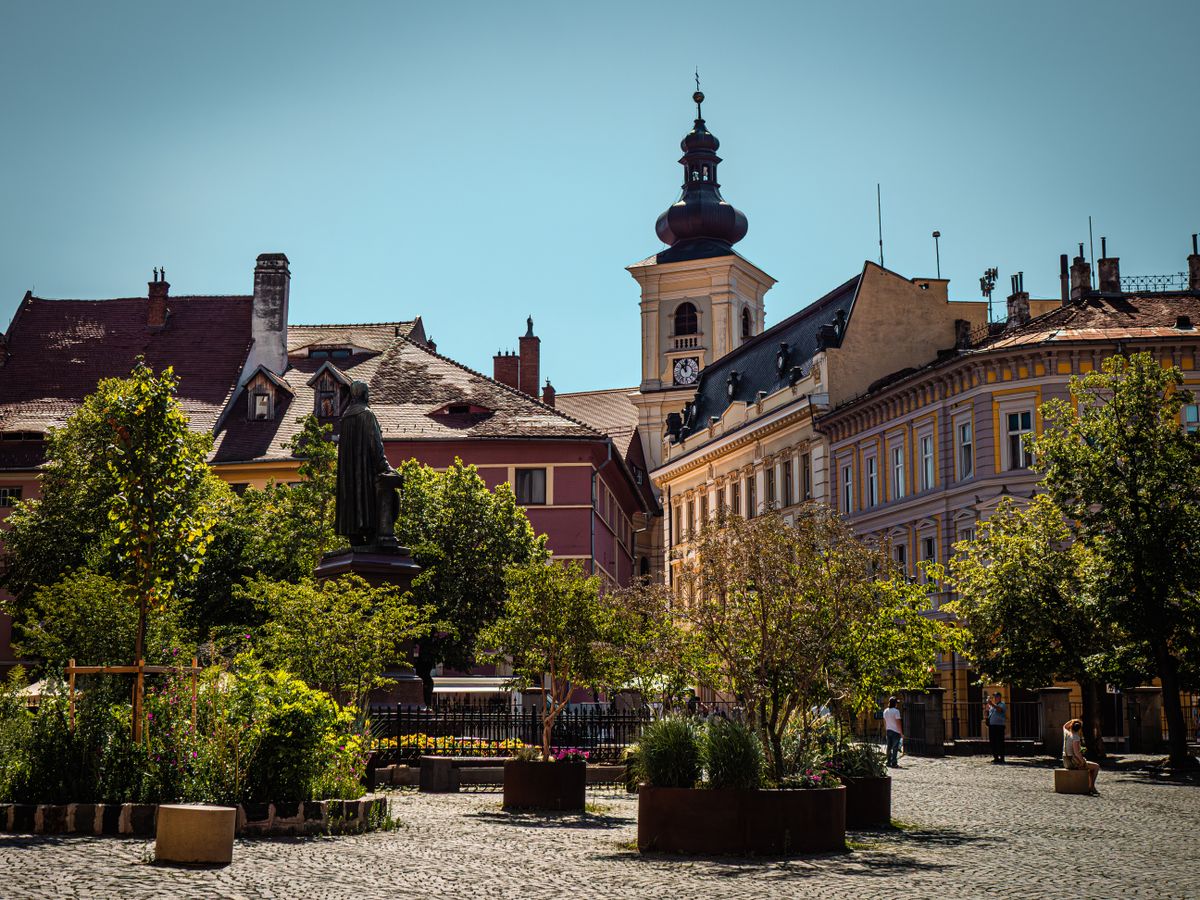
Romania’s oldest museum, the Brukenthal opened to the public in 1817 in the late-Baroque palace of Samuel von Brukenthal, the Habsburg governor of Transylvania, around the art and book collections he assembled from the 1770s. Its European Old Masters gallery is the headline draw, and the palace itself, fronting the Large Square, is one of the finest Baroque buildings in Romania. Allow at least 90 minutes .
The Council Tower (Turnul Sfatului)

The medieval Council Tower stands on the passage linking the Large and Small Squares, first documented in the 13th–14th centuries and rebuilt over the centuries. Climb its narrow internal stairs for a 360-degree panorama over the eyebrow rooftops, the cathedral spire and out to the Făgăraș Mountains — the single best orientation you can get on arrival, and a cheap one .
The Evangelical Cathedral and Huet Square

The Lutheran Evangelical Cathedral of Saint Mary, built between the 14th and 15th centuries on Huet Square, is the city’s most prominent Gothic monument, its spire reaching 73.34 metres — the tallest in Transylvania. The interior holds a monumental fresco and one of Romania’s largest church organs; you can climb the tower in season for another rooftop perspective .
The Bridge of Lies (Podul Minciunilor)

Linking the Small Square to the Lower Town, the Bridge of Lies was cast in 1859 and is reputed to be the first cast-iron bridge in Romania. Legend says it creaks — or even collapses — if a lie is told upon it, a story that has made it Sibiu’s most photographed small monument. Round out a cultural day with the ASTRA open-air museum, one of Europe’s largest ethnographic parks, on the city’s southern edge .
Festivals, Theatre and Nightlife
Sibiu punches far above its size culturally — a legacy of the 2007 European Capital of Culture year that left it with a dense festival calendar and a confident arts scene. The Sibiu International Theatre Festival is one of the three largest performing-arts festivals in Europe, and the December Christmas market is regularly ranked among the continent’s best . Between the big events, the squares and the Lower Town keep a relaxed café-and-terrace nightlife.
Sibiu International Theatre Festival (FITS)
Held each June, the Sibiu International Theatre Festival (FITS) brings hundreds of performances — theatre, dance, circus, street acts and concerts — to venues and squares across the city over ten days, drawing companies and audiences from dozens of countries. It is one of the largest performing-arts festivals in Europe and transforms the whole old town into a stage; book accommodation far ahead if you visit in June .
The Sibiu Christmas Market
The Sibiu Christmas Market, held in the Large Square through December, is the country’s most famous and is regularly listed among Europe’s best, with wooden chalets, mulled wine, an ice rink and a towering tree filling the square. It draws crowds from across Romania and abroad; expect the city’s busiest, most atmospheric few weeks of the year .
Live Music, Bars and the Squares
Outside the festival peaks, nightlife is low-key and pleasant: terrace bars and cafés ring the Large and Small Squares, a cluster of pubs and live-music spots sit in the Lower Town and along the side streets, and summer evenings stay lively until late. This is a city for a long drink on a square rather than a club scene — lean into it.
Day Trips From Sibiu
Sibiu is one of the best bases in Transylvania for day trips, with fortified Saxon villages, the Transfăgărășan mountain road and other historic towns all within easy reach. If you have more than two days, give one to a trip out — the contrast sharpens your sense of what makes Sibiu itself distinct.
Sibiel and the Mărginimea Sibiului (about 30 minutes by car)
West of the city, the Mărginimea Sibiului is a cluster of traditional shepherding villages; the prettiest, Sibiel, holds a celebrated museum of painted glass icons and is a window onto rural Transylvanian life. It is an easy half-day by car or local train, often paired with a farmhouse lunch .
The Transfăgărășan Trailheads (about 1.5–2 hours by car)
The Transfăgărășan, one of the world’s most dramatic mountain roads, climbs the Făgăraș range south of Sibiu to over 2,000 metres past glacial Lake Bâlea. It is only open in the warmer months (roughly July to October, snow permitting); the trailheads and viewpoints make a spectacular full-day drive from Sibiu .
Sighișoara (about 1.5 hours by car)
The UNESCO-listed citadel of Sighișoara, the best-preserved inhabited medieval town in Transylvania and the reputed birthplace of Vlad the Impaler, is an easy day trip and pairs naturally with Sibiu on a Saxon-towns itinerary — see our dedicated Sighișoara city guide .
Biertan and the Fortified Churches (about 1.5 hours by car)
Biertan’s fortified Saxon church, one of seven such churches inscribed by UNESCO as a single World Heritage site, is the grandest of the region’s fortified churches and an easy combine with the back roads toward Sighișoara .
When to Visit: A Season-by-Season Guide
Sibiu has a temperate Carpathian climate — warm summers, cold snowy winters — and the timing of a trip changes its character completely. Here is how the year actually feels on the ground.
Spring (March–May)
A lovely, underrated season: the squares dry out, the café terraces reopen, and May in particular brings warm days in the high teens to low 20s°C with the spring crowds yet to arrive. Some early-spring days are grey and the Transfăgărășan is still closed by snow, but late spring is one of the best windows of the year for the old town itself.
Summer (June–August)
Peak season and festival time. June brings the Sibiu International Theatre Festival; July and August are warm (highs in the mid-to-high 20s°C), busy and the only reliable window for the Transfăgărășan, which usually opens around late June or July. Book ahead for June, and use summer to combine the city with the mountains.
Autumn (September–November)
The connoisseur’s choice: September keeps summer’s warmth without the crowds, the surrounding hills turn gold, and prices ease. October is crisp and beautiful in the old town. By November the weather turns grey and muddy — the least appealing few weeks before the Christmas market arrives.
Winter (December–February)
December is magic: the Christmas market fills the Large Square and the snow-dusted eyebrow roofs are at their most photogenic, though it is the busiest and priciest month. January and February are cold (often below freezing) and quiet, with the lowest prices of the year and the old town at its most serene under snow. Bring serious winter clothing.
Budget Breakdown: What Sibiu Actually Costs
Sibiu is excellent value by Western European standards — one of the cheaper attractive city breaks on the continent. The figures below are per-person daily estimates excluding flights, in Romanian lei (RON), based on 2025–2026 prices.
Backpacker (RON 200–320/day)
A hostel dorm bed runs RON 70–130; cheap eats and a daily set lunch keep food to RON 60–100; the old town is free to walk. Budget one or two paid sights and you stay comfortably in this band.
Mid-Range (RON 450–800/day)
A three-star hotel or central guesthouse is RON 250–450 for a double; add RON 120–200 for restaurant meals, RON 40–80 for museum tickets and the odd taxi, and a drink on the square. This is the typical comfortable-tourist band.
Luxury (RON 1,400+/day)
A four- or five-star room runs RON 700–1,200+, fine dining adds RON 250–450, and private guides, drivers for the Transfăgărășan and premium experiences push the day well past RON 1,400. December festival weeks can lift these figures sharply.
Key Fixed Costs
- Brukenthal National Museum entry — on the order of RON 30–50 per gallery
- Council Tower climb — a few lei, one of the city’s best-value sights
- ASTRA open-air museum entry — roughly RON 25–40
- Single city bus fare (Tursib) — a few lei
- Taxi across the centre — about RON 20–30
Practical Tips and Safety
Sibiu is a safe, easy and welcoming city for visitors, but a handful of practical habits make the difference between a smooth trip and an avoidable headache. None of this is alarming — it is the ordinary common sense of any popular European destination.
Money and Payments
Romania uses the leu (RON), not the euro — do not assume euros are accepted. Cards are taken almost everywhere in the centre, but small market stalls, some Lower Town spots and the Christmas-market chalets prefer cash, so carry RON 100–200 in small notes. ATMs are plentiful; avoid standalone “Euronet” machines, which apply poor rates, in favour of bank ATMs .
Safety and Scams
Sibiu is very safe by European standards; violent crime is rare and the realistic risk is ordinary pickpocketing in crowds during the festival and Christmas-market peaks. Use a marked, licensed taxi or an app rather than unmarked cars, and agree fares for longer trips. The UK and US governments rate Romania a low-risk destination overall .
Health and Water
Tap water is safe to drink throughout Sibiu. EU visitors should carry an EHIC/GHIC card; everyone else should have travel insurance. Pharmacies (farmacii) are widespread and competent for minor ailments. In winter, dress seriously for sub-zero cold and icy cobbles .
Practical Essentials
- Language: Romanian; English is common in tourism, German still spoken among the Saxon community.
- Plugs: Type C/F, 230V — bring an EU adapter.
- Tipping: around 10% in restaurants is normal.
- Footwear: the cobbles are uneven and slick when wet — bring grippy shoes.
- Transfăgărășan: only open roughly July–October; check before planning a drive.
Frequently Asked Questions
How many days do you need in Sibiu?
Two full days is the sweet spot: one for the Brukenthal, the Council Tower, the squares and the Bridge of Lies; one for the ASTRA open-air museum and the Lower Town lanes. A third day lets you add a day trip to Sighișoara, Biertan or the Transfăgărășan. One day covers only the headline squares at a rush.
What is the best time of year to visit Sibiu?
May and September offer the best balance of warm weather, manageable crowds and reasonable prices. December is magical for the Christmas market but busy and pricey; June brings the huge theatre festival; summer is the only reliable window for the Transfăgărășan; January and February are cold, quiet and cheapest.
Is Sibiu expensive?
No — it is one of the better-value attractive cities in Europe, well below Western European prices for food, drink and accommodation. A mid-range trip runs roughly RON 450–800 per person per day excluding flights, and backpackers can manage on RON 200–320. Prices climb during the June festival and the December market.
How do I get to Sibiu from Bucharest, Brașov or Cluj?
From Bucharest, drive about 4.5–5 hours on the A1, or take a coach; direct trains are slower and less frequent. Brașov is about 2 hours by car or 2.5–3.5 hours by scenic train; Cluj-Napoca is about 2.5–3 hours by car or bus. Sibiu airport (SBZ) also has domestic flights from Bucharest .
Is Sibiu walkable, or do I need public transport?
The historic centre is exceptionally walkable — compact, largely pedestrianised, and small enough to cross in twenty minutes. Most visitors use the Tursib bus only for the airport and to reach the ASTRA museum on the southern edge. Everything else, including the Upper and Lower Towns, is best on foot .
What is the deal with the Bridge of Lies?
The Bridge of Lies (Podul Minciunilor), cast in 1859 and reputed to be Romania’s first iron bridge, links the Small Square to the Lower Town. Local legend says it creaks or even collapses if someone tells a lie while standing on it — a story that has made it Sibiu’s most photographed small monument.
Is the Christmas market worth visiting?
Yes — the Sibiu Christmas Market in the Large Square is regularly ranked among Europe’s best, with chalets, mulled wine, an ice rink and the snow-dusted old town at its most atmospheric. The trade-off is December crowds and peak prices, so book accommodation well ahead .
Why is Sibiu also called Hermannstadt?
Hermannstadt is the German name, dating to the Transylvanian Saxons who founded the town in the 12th century and made it their wealthiest and most powerful settlement. The Saxon heritage explains the Central-European look of the squares, the guild towers, the eyebrow roofs and the famous Sibiu salami .
What food is Sibiu famous for?
Above all salam de Sibiu, an EU-protected dry-cured winter salami. The wider Transylvanian-Saxon table runs to sour soups (ciorbă), cabbage rolls (sarmale) with polenta, baked cheese-polenta (bulz) and papanași for dessert, washed down with local wine or țuică plum brandy.
Was This Guide Helpful?
We update our Sibiu guide as prices, transit and opening hours change. Let us know if it helped — your feedback shapes the next revision.
Ready to Experience Sibiu? Walk It Slowly
Sibiu rewards a slow traveller. Its set-pieces are genuine — the Brukenthal, the Council Tower, the cathedral, the Bridge of Lies — but the city’s real magic is in the in-between: the descent of the Passage of Stairs into the Lower Town, a coffee on the Small Square as the eyebrow windows catch the morning light, a Transylvanian stew a block off the tourist run. Plan the headline sights, then leave room to wander. For the wider picture, see our Romania travel guide, and pair Sibiu with Brașov, Sighișoara and Cluj-Napoca for a complete Transylvania trip.
Explore More City Guides
Sibiu is one stop in our growing library of Transylvanian and Romanian city guides. Keep planning with these companion pages:
More city guides you might like

Plan your trip to Sibiu
The booking tools we use ourselves. FFU may earn a commission at no extra cost to you.
Plan & book your trip to Sibiu
Booking through these searches supports our guides at no extra cost to you.