
City Guide · Prahova County · Southern Carpathians
Sinaia, Romania: The Pearl of the Carpathians — Peleș Castle, the Prahova Valley & the Bucegi Sphinx
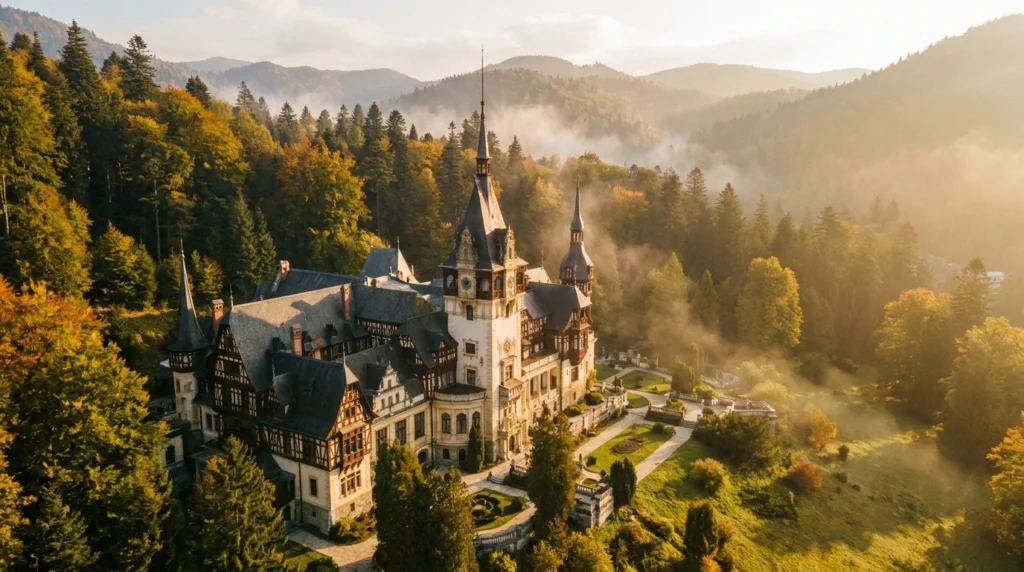
I went up to Sinaia the way most people do — an hour and a half on the train out of Bucharest with a vague plan to “see the castle” — and came back two days later convinced it is the most concentrated mountain day-trip in Eastern Europe. The town itself is tiny: barely 9,000 people strung along the Prahova Valley at 767–860 metres of altitude, and yet it holds Peleș Castle — King Carol I’s 170-room Neo-Renaissance summer palace, begun in 1873 and the first castle in the world fully powered by its own locally produced electricity — the 1695 monastery that gave the town its biblical name, and a cable car that climbs to 2,000 metres on the Bucegi plateau where the wind-carved Sphinx rock sits at 2,216 metres. Mihail Cantacuzino founded the monastery in 1695 and named it after the Saint Catherine monastery on Mount Sinai he had visited on pilgrimage; the town simply borrowed the name. Treat this guide as the brief I would hand my own family before they boarded a CFR train at Bucharest Gara de Nord — and for the wider Romania frame (the leu, the Carpathian geography, Dracula-country logistics) read it alongside our Romania country guide.

Table of Contents
Why Sinaia?
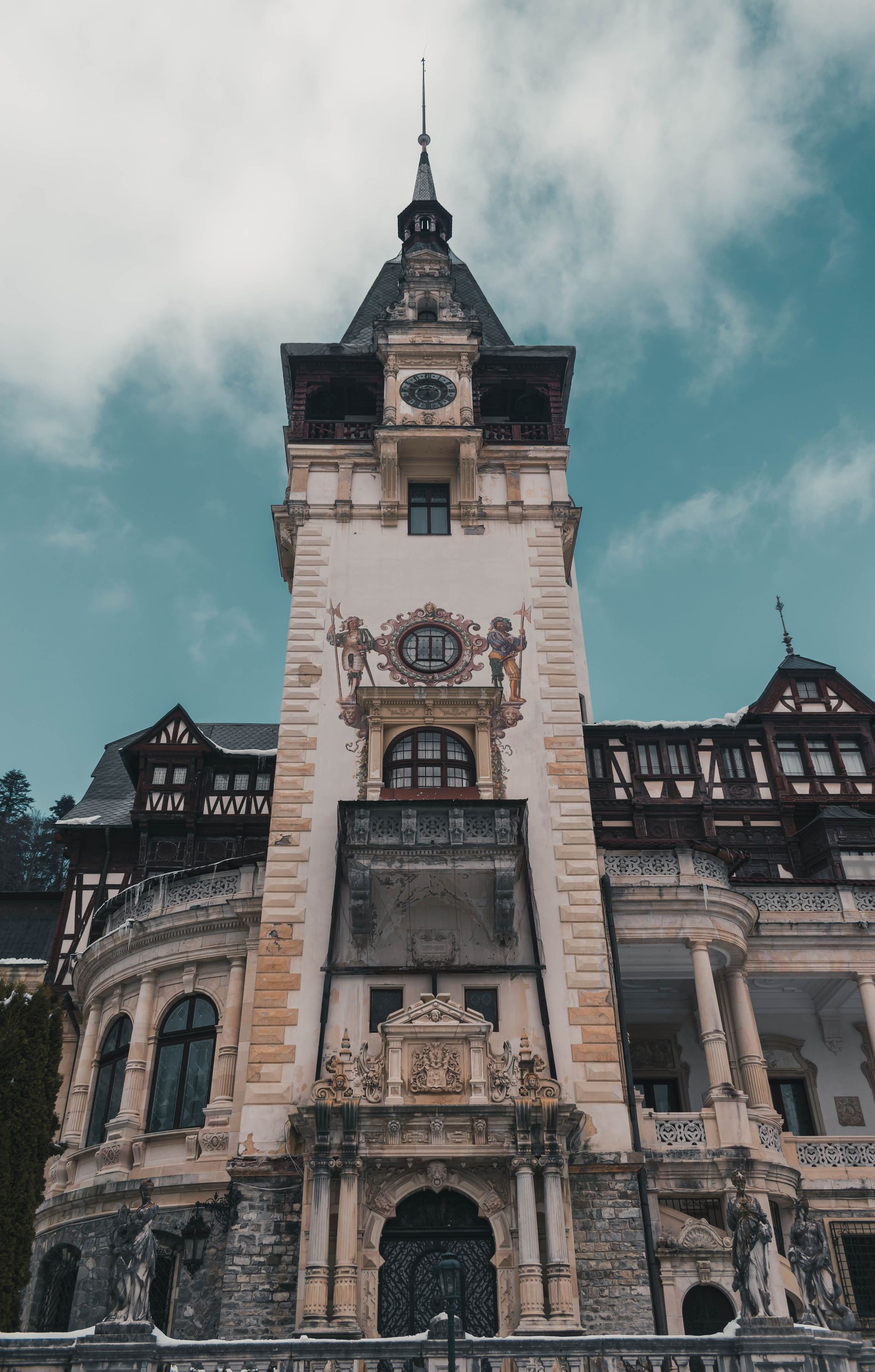
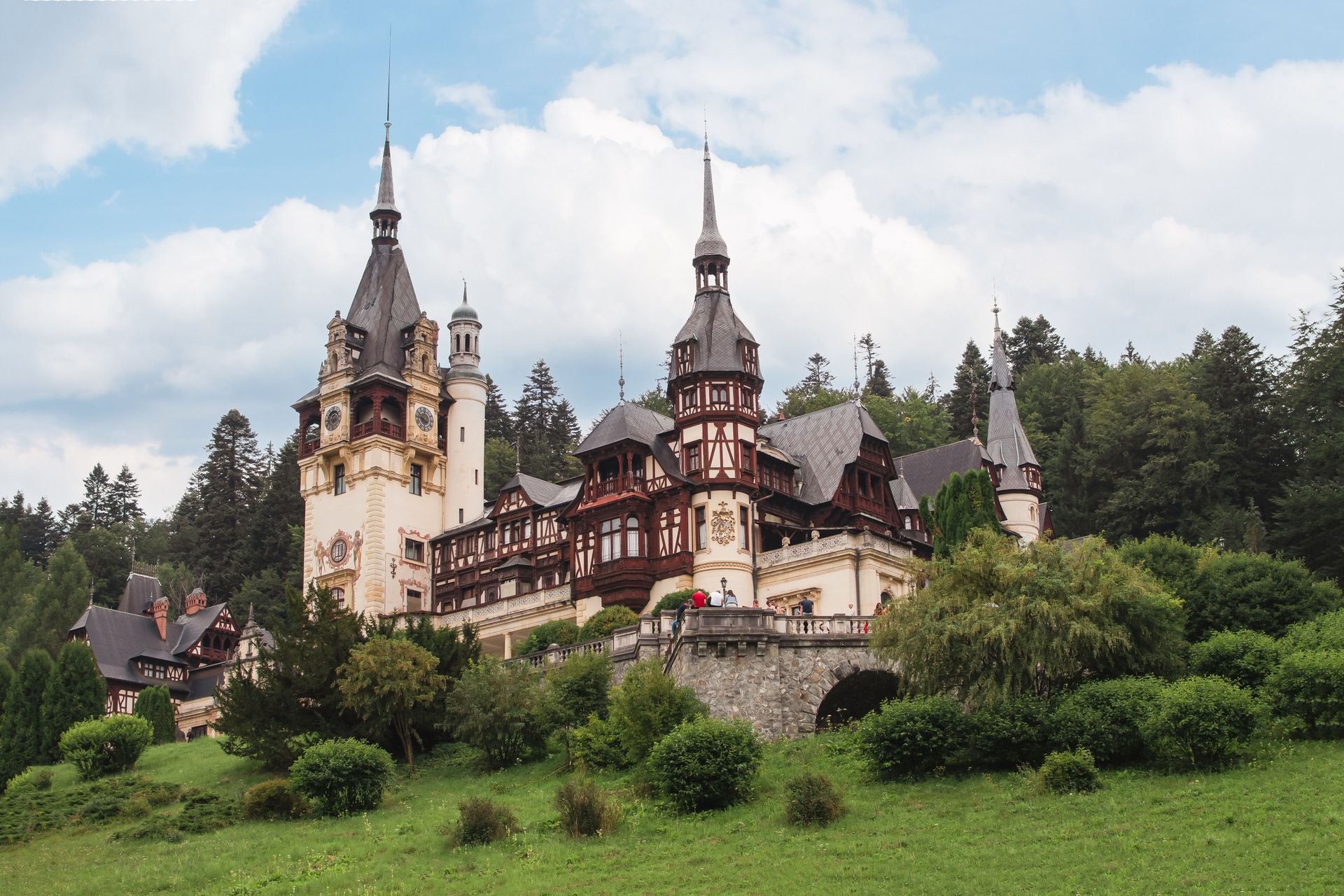
Sinaia is the rare mountain town where the headline attraction genuinely lives up to its postcards. Peleș Castle — commissioned by King Carol I of Romania, the country’s first Hohenzollern king, with construction beginning on 22 August 1873 and the palace inaugurated on 7 October 1883 — is routinely ranked among the most beautiful castles in Europe, a 3,200-square-metre Neo-Renaissance palace of more than 170 rooms whose interiors hold close to 2,000 paintings, Murano crystal chandeliers, German stained glass and Cordoba leather walls. It was the world’s first castle entirely powered by locally produced electricity, and it even has a 60-seat playhouse decorated in Louis XIV style.
But the castle is only the entry point. The town wears two identities at once. It is a royal-era spa resort — the monastery that gave it its name was founded in 1695 by the Wallachian nobleman Mihail Cantacuzino, who named it after the Saint Catherine monastery on Mount Sinai, and the arrival of the royal family in the 1870s turned the village into Romania’s most fashionable Belle-Époque mountain retreat, complete with a casino and grand hotels. And it is a working Carpathian sports town — the Prahova Valley ski slopes and the Sinaia gondola climb toward the Bucegi Mountains plateau, where the wind-carved Sphinx rock formation stands at 2,216 metres and the mushroom-shaped Babele rocks mark the high tableland.
What guidebooks under-rate is the proximity. Sinaia is the easiest serious mountain town to reach in Romania: it sits on the main Bucharest–Brașov railway, roughly 122 km north of the capital, with around 30 train departures a day and a journey of about 1.5 hours from Bucharest and just over an hour from Brașov. You can leave Bucharest after breakfast, walk 35 minutes (or take a short bus or taxi) up to Peleș, tour the castle, ride the gondola, and be back in the capital for dinner — or, far better, stay the night and split the castles from the mountains. This guide covers all three of Sinaia’s signatures: Peleș and Pelișor castles, the Sinaia Monastery, and the Bucegi cable car, Sphinx and Babele.

Neighborhoods: Finding Your Sinaia
📍 Sinaia Map: Every Place in This Guide
Sinaia is not a city of neighborhoods in the usual sense — with barely 9,000 residents it is really a single resort town stacked up the western wall of the Prahova Valley. But it reads as a series of distinct altitude zones, each with its own character, and orienting by them is the single most useful thing a first-time visitor can do. The town climbs from the train station at the valley floor (around 767 metres) up through the Belle-Époque resort core and the monastery to the royal park, and then the gondola carries you far higher again, to 1,400 and 2,000 metres on the Bucegi slopes. Think of it as a vertical city: everything interesting is either a walk uphill from the station or a cable-car ride above it. Below are the eight zones worth knowing, from the royal estate at the top of town to the high alpine plateau and the quiet pockets across the valley. The practical upshot for where to base yourself: the resort core on Carol I Boulevard puts you within a few minutes of trains, food and the castle path and is the right call for most first-timers; the villa belt and Cumpătu trade a little convenience for quiet and character; and the Station Quarter at the bottom is the budget and early-arrival choice. Wherever you sleep, plan your days by altitude — castles and monastery uphill, mountain and Sphinx by gondola above — and you will never feel lost in a town this compact.
Peleș & Pelișor Park (the Royal Estate)
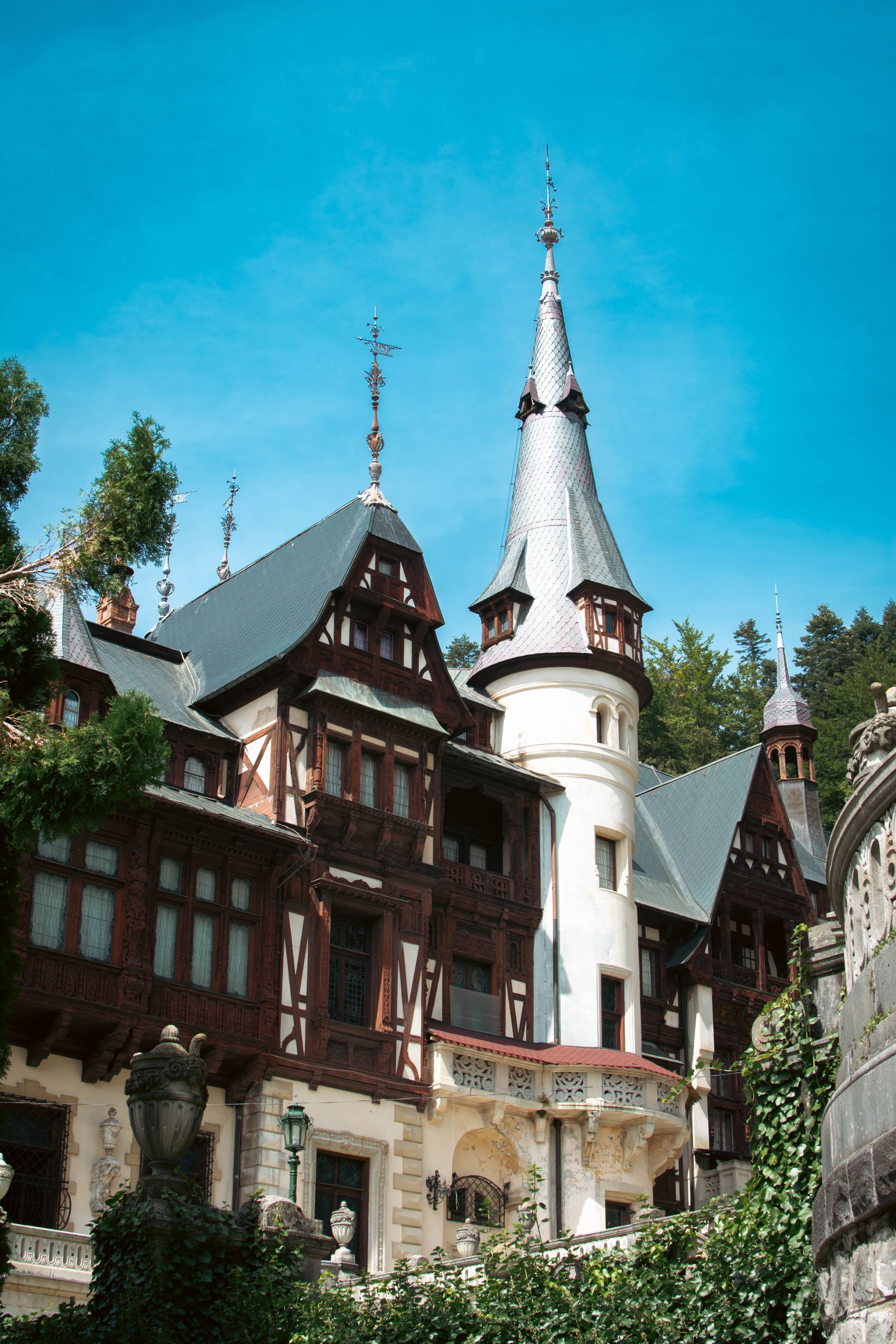
The upper end of town, a forested park 35 minutes’ walk above the train station, is where the royal castles sit and the single reason Sinaia exists on the tourist map. Within a few hundred metres of forested, terraced parkland you have Peleș itself — the 170-room Neo-Renaissance palace King Carol I began in 1873 — the smaller Pelișor next door, the Foișor hunting lodge that served as a royal residence, and the Economat outbuildings, all set among Italian-style terraced gardens, statuary and fountains carved into the Bucegi foothills. It is the most photographed corner of Romania outside Bran, and it rewards lingering: most day-trippers tour Peleș and leave, missing the gardens and Pelișor entirely. Give the estate a half-day rather than a rushed hour — the terraced gardens, the statuary and fountains, and the forest paths between the buildings are free to wander even without a castle ticket, and the late-afternoon light on the timbered facade is the best of the day once the tour groups have thinned.
- Peleș Castle — the main 170-room palace
- Pelișor Castle — the smaller Art Nouveau residence built 1899–1903 for the future King Ferdinand and Queen Marie
- The Foișor lodge and the Economat terraced gardens
Best for: first-timers and castle lovers — this is the unmissable core. Access: 35-minute uphill walk from Sinaia station, or local buses T1/T3 to the Piateta Foișor stop, then a 10-minute walk.
Centru / Carol I Boulevard (the Old Resort Core)
The Belle-Époque heart of town — the spine that runs from the train station up past the casino and the grand hotels toward the monastery. When the royal family made Sinaia fashionable in the 1880s, this is where the resort infrastructure went up: ornate fin-de-siècle villas, terraced cafés, pastry shops, the landmark 1912 casino and the green Dimitrie Ghica Park at its centre. It is the most walkable part of town and where most mid-range hotels and restaurants cluster, the place to base yourself if you want everything — trains, food, the castle path and the gondola lower station — within a few minutes’ stroll. The boulevard is also where Sinaia’s evening life concentrates: the pastry-shop terraces fill in the afternoon, the restaurants come alive after dark, and the green park around the casino is the natural place for a stroll between meals. For most first-time visitors this is simply the right place to sleep, eat and orient from, with the bonus that everything — the train down to Bucharest, the bus up to Peleș, the gondola to the plateau — radiates from here, so you spend less time in transit and more time actually seeing the town.
- Sinaia Casino (1912) — the resort’s landmark gambling hall, now an events and conference venue
- Dimitrie Ghica Park — the central green
- Carol I Boulevard cafés and pastry shops
Best for: strollers, café sitters and people who want everything walkable. Access: the boulevard climbs directly from Sinaia train station.
The Monastery Quarter
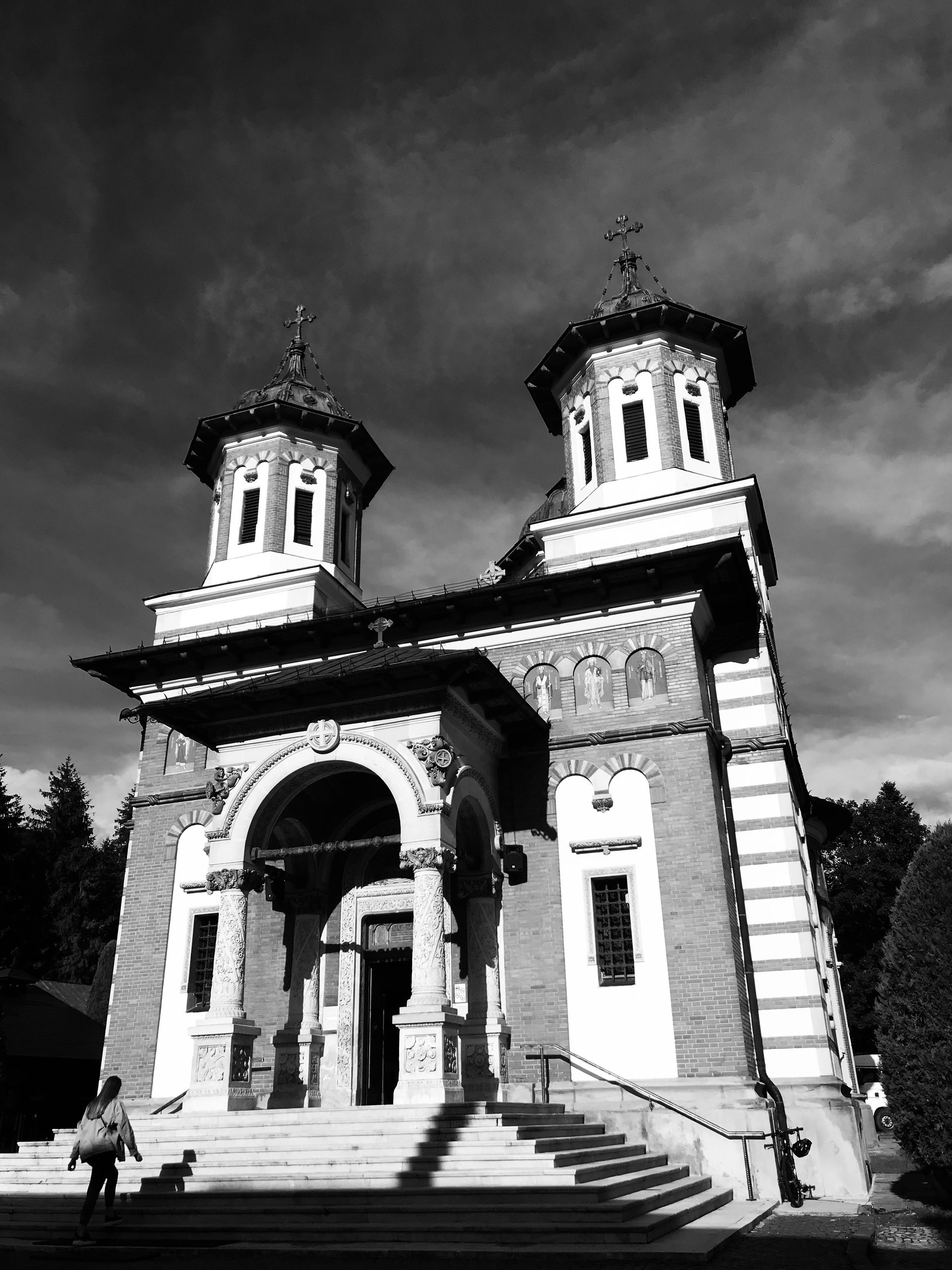
Just above the resort core, on the wooded path toward Peleș, sits the 1695 Sinaia Monastery — the spiritual origin of the whole town and the place it took its name from. The walled complex holds two churches (the small Old Church of 1695 and the larger Great Church of 1846), the monks’ cells around a quiet courtyard, and a museum of early Romanian religious manuscripts and printed books. It is shaded, calm and contemplative, a natural pause between the bustle of the boulevard below and the grandeur of the castles above — and because it is on the walking route up to Peleș, it costs you nothing in detour to stop in.
- The Old Church (Biserica Veche, 1695)
- The Great Church (Biserica Mare, 1846)
- The monastery museum with Romania’s first printed Bible exhibits
Best for: history and a calm pause between castle and cable car. Access: a 10-minute uphill walk from Carol I Boulevard, on the path toward Peleș.
Cota 1400 (Mid-Mountain)
The mid-station of the Sinaia gondola at 1,400 metres — the name simply means “elevation 1400” — is a cluster of mountain chalets, ski-rental shops, a hotel and the foot of the main ski runs. In winter it is the beating heart of the Prahova Valley ski scene, where lifts fan out across the slopes and the chalet restaurants fill with skiers. In summer it switches roles entirely, becoming the launch pad for hikes and the transfer point for the second gondola leg up to the plateau. Either season, the chalet lunches here are the best-value, most authentic mountain meals in Sinaia.
- The Cota 1400 gondola mid-station and chalet
- Lower Prahova Valley ski runs
- Trailheads for the Bucegi ascent
Best for: skiers and hikers staging the mountain ascent. Access: Sinaia gondola from the lower station near the centre, or a winding mountain road by car/taxi.
Cota 2000 & the Bucegi Plateau
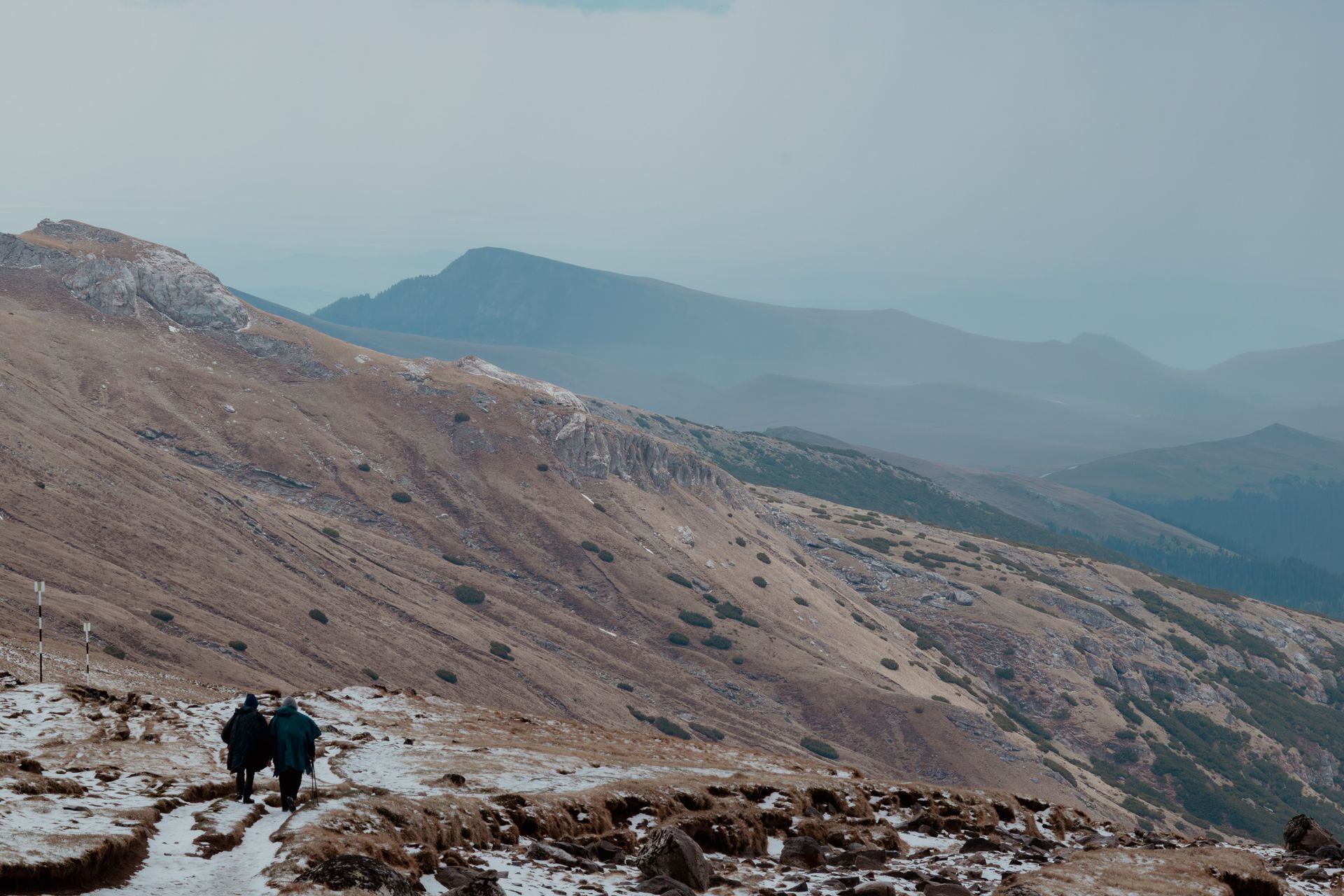
The top of the gondola at roughly 2,000 metres opens onto the high Bucegi tableland, and the change is dramatic: you step out of the cable car above the tree line into genuine alpine terrain — treeless ridge, big skies, grazing sheep in summer and a wind that can turn fierce in minutes. This is the gateway to the plateau’s famous trail network: a moderate walk leads out to the Babele rock formations and the wind-carved Sphinx at 2,216 metres, with panoramas over the Prahova and Ialomița valleys. It is the reason to stay an overnight rather than day-trip: you want a clear morning up here, not a rushed afternoon.
- The Cota 2000 upper station and chalet
- The plateau trail toward Babele and the Sphinx (2,216 m)
- Panoramas over the Prahova and Ialomița valleys
Best for: hikers, photographers and anyone chasing the Sphinx. Access: the upper leg of the Sinaia gondola from Cota 1400.
Furnica & the Villa Belt
The forested residential hillside south of the royal park is threaded with the grand turn-of-the-century villas the Bucharest aristocracy built when Sinaia became the fashionable summer escape. Many of those mansions are now boutique guesthouses and small hotels, set on quiet forest lanes with views across to the castles — a calmer, leafier alternative to the boulevard for travellers who want character and a short uphill walk to Peleș. The Furnica name also attaches to one of the gondola lines climbing into the Bucegi foothills from this side of town.
- Belle-Époque villas turned into pensions
- Quiet forest lanes with castle views
- The Furnica gondola line in the Bucegi foothills
Best for: travellers wanting a quiet boutique base within walking distance of Peleș. Access: a 15-minute walk uphill from the centre.
The Station Quarter (Lower Town)
Around the train station at the bottom of the slope is the practical, slightly workaday part of Sinaia, where buses, taxis and budget guesthouses cluster and where almost every visitor first sets foot. It is not the prettiest zone — everything scenic is uphill from here — but it is the most convenient for early arrivals and day-trippers who want to minimise the climb, and it is where the T1/T3 buses to the castle and the gondola lower station are easiest to reach. Budget travellers often base here and walk or bus up to everything else.
- Sinaia train station (on the Bucharest–Brașov line)
- Bus stops for T1/T3 to the castle
- Budget pensions and quick eateries
Best for: early arrivals, budget stays and day-trippers minimising the climb. Access: this is the arrival point — all trains stop here.
Cumpătu (Across the Valley)
On the eastern bank of the Prahova, reached over the valley from the main town, Cumpătu is a calmer residential and spa-hotel pocket. Its great virtue is the view: from this side you get the best head-on panorama of Sinaia climbing its forested slope, with the castles and the Bucegi ridge behind. It is where the wellness hotels cluster and where couples and spa-seekers come for quiet and a terrace with that view, plus trailheads leading into the eastern forest. A short taxi or a 20-minute walk separates it from the boulevard, so it trades a little convenience for a lot of calm.
- Spa and wellness hotels
- Valley-view terraces looking back at the resort
- Eastern forest walking trails
Best for: couples and spa-seekers wanting quiet and a view. Access: a short taxi or 20-minute walk across the valley from the centre.
The Food

Sinaia eats the way a Carpathian resort should: hearty, meat-and-polenta mountain Romanian cooking, served in timber chalets and grand-hotel dining rooms, with the leu going a long way against Western currencies. Romanian cuisine is Balkan-meets-Central-European — the Ottoman, Hungarian, Saxon and Austrian layers all show up on the same plate — and at altitude the portions get bigger and the stews richer, because this was historically shepherd-and-woodsman food built for cold winters in the mountains. You taste the empire history in the details: the sarmale and the strong sweet coffee are Ottoman inheritances, the schnitzels and tortes are Austro-Hungarian, and the polenta-and-cheese shepherd dishes are pure Carpathian. The result is one of Europe’s more underrated regional cuisines, generous and unfussy, and Sinaia serves it in two registers — rough-and-hearty up at the chalets, polished-and-plated down in the grand hotels. Expect prices well below Bucharest’s and a fraction of an Alpine resort’s: a sit-down dinner for two with wine rarely tops 200 lei (~$43), and a chalet lunch of soup, grilled meat and polenta runs 60–90 lei a head. Because Sinaia is a resort town, menus skew tourist-friendly — most have English translations and photos — but the cooking is the genuine national repertoire rather than a watered-down version, and the best chalets source trout, cheese and game from the surrounding Prahova and Bucegi farms.
The eating geography of Sinaia is vertical. The cheapest, most authentic plates are up on the mountain at the Cota 1400 and 2000 chalets, where skiers and hikers refuel; the smartest mid-range dining is along Carol I Boulevard in the resort core; and the most refined meals are in the Belle-Époque grand hotels around the casino and the royal park. A first-timer should plan to eat a big chalet lunch and a lighter boulevard dinner, rather than the reverse.
Portion sizes deserve their own warning: Carpathian mountain cooking is generous to a fault, and a full chalet order of soup, a grilled-meat main and polenta will defeat most appetites, so consider sharing or ordering one fewer course than instinct suggests. Bread and a small charge for it often appear automatically, as does the țuică, and tipping around 10% is the norm in sit-down restaurants. Tap water is potable in town, but bottled water is what you will usually be offered, still or sparkling.
A note on rhythm and reservations: Romanians eat their main meal in the early afternoon and dine late, so the chalets are at their liveliest from 1 to 3pm and the boulevard restaurants fill from 8pm onward. The town swells on winter ski weekends and through the July–August castle-tourism peak, when day-trippers staying on for the evening can leave the better restaurants fully booked; reserve ahead for the grand-hotel dining rooms in those windows. Out of season and midweek you can usually walk in anywhere. Service is relaxed rather than rushed, and a meal is meant to be lingered over, so build that into the day rather than fighting it.
Mountain Romanian Classics
The core of any Sinaia meal is the national repertoire done in mountain-chalet style: sour soups (ciorbă), grilled and stewed meats, and the polenta (mămăligă) that stands in for bread across the Carpathians. Sarmale — minced pork and rice rolled in cabbage or vine leaves and slow-cooked — is the dish you will see on every menu in town, traditionally served with a dollop of sour cream and a wedge of polenta. The sour soups are the other pillar: ciorbă de burtă (tripe), ciorbă de perișoare (meatball) and ciorbă rădăuțeană (chicken), all soured with borș (fermented wheat bran) and finished with sour cream. These are the dishes you will see on every menu in town, and they are cheapest and most generous up at the chalets. Other Carpathian staples to look for: tochitură, a rich pork stew served over polenta with a fried egg and cheese; mici (or mititei), the skinless grilled minced-meat rolls that are Romania’s great street and beer food; and salată de boeuf, the festive potato-and-vegetable salad bound with mayonnaise that appears at every celebration. The cooking leans hearty and meat-forward by design — this was food built to fuel shepherds and woodsmen through hard Carpathian winters — so vegetarians should flag their needs, though the soups, cheese dishes and bulz offer good meat-free options.
- Bucegi (chalet restaurants on the slopes) — sarmale (cabbage rolls) with mămăligă (45–55 lei, ~$10–12)
- Taverna Sârbului (Carol I Blvd area) — mixed grill platter for two (120–160 lei, ~$26–35)
- Restaurant Bucegi / casa traditions — ciorbă de burtă (tripe sour soup) (28–38 lei, ~$6–8)
Grand-Hotel & Casino Dining
Sinaia’s royal-resort past left a string of Belle-Époque hotels with proper dining rooms — the place to eat if you want white tablecloths, a wine list and a piano rather than a chalet bench. When King Carol I made Sinaia his summer capital, the Bucharest aristocracy followed, and the grand hotels that went up around the casino in the 1890s and 1900s were built to feed them in style. Today those dining rooms serve a more polished version of the national repertoire — the same sarmale and trout, but plated and paired with Romanian wine — and they are where you go for an anniversary dinner or a long Sunday lunch. Reserve ahead on winter ski weekends and in the July–August castle-tourism peak, when the town fills with day-trippers staying on for the evening.
- Restaurant at the Sinaia Casino complex — refined Romanian tasting plates (mains 60–110 lei, ~$13–24)
- Hotel Palace dining room — classic schnitzel and trout (mains 55–95 lei, ~$12–21)
- Rota / boutique-hotel restaurants — modern Romanian (mains 50–90 lei, ~$11–20)
Beyond Sarmale and Mămăligă
Once you have done the headline dishes, the mountain region rewards a wider menu drawn from the surrounding Prahova farms and Bucegi pastures — trout from cold streams, sheep’s cheese matured in fir bark, game in autumn, and the sweets that pair with Romania’s strong coffee-and-pastry culture. The Carpathian shepherding tradition is the through-line: brânză de burduf, the pungent fermented sheep’s cheese pressed into fir-bark tubes, is a protected mountain specialty , and bulz — polenta baked with that cheese, an egg and sometimes a sausage — is the dish shepherds cooked on the high pastures. For dessert, papanași are the national obsession: warm fried doughnuts topped with sour cream and sour-cherry jam, found on every menu and worth ordering even when you are full. Wash it all down with țuică, the Romanian plum brandy that arrives as an aperitif whether you ask for it or not, and a glass of Fetească Neagră, the country’s signature red grape. Romania is one of Europe’s oldest and largest wine producers, yet its bottles are barely known abroad, so a Sinaia dinner is a low-stakes chance to explore an entire wine country — the indigenous Fetească Albă and Băbească alongside the Neagră — at prices that would buy a far lesser glass in the West. Round off a long mountain meal with a coffee and, if you have room, the inevitable papanași.
- Păstrăv la grătar — grilled trout, a Prahova Valley staple (40–60 lei, ~$9–13)
- Bulz ciobănesc — shepherd’s baked polenta with cheese and egg (30–45 lei, ~$6–10)
- Brânză de burduf — pungent sheep’s cheese matured in fir bark (market price, ~15–25 lei / portion)
- Papanași — fried doughnuts with sour cream and jam, the classic dessert (22–32 lei, ~$5–7)
Cafés, Pastries & the Sweet Tooth
Sinaia inherited a serious café-and-pastry culture from its Belle-Époque heyday, when the Bucharest aristocracy demanded the same patisserie they enjoyed in the capital, and Carol I Boulevard still runs on coffee and cake. The terraces here are the natural mid-afternoon pause between a morning at the castle and a gondola ride, and they are where you should order the national obsession: papanași, warm fried doughnuts crowned with sour cream and sour-cherry jam, found on virtually every menu and worth ordering even when you swear you are full. Beyond papanași, look for cozonac (a sweet braided nut-and-cocoa bread), clătite (thin Romanian pancakes filled with jam or sweet cheese), and the Central-European cakes — layered tortes and strudels — that the German and Austrian influence left behind. Romanian coffee is strong and usually taken short; pair it with a glass of water as the locals do, and ask for the țuică if you want to start the meal the Carpathian way.
- Papanași — the must-order fried-doughnut dessert with sour cream and jam (22–32 lei, ~$5–7)
- Clătite — thin pancakes with jam, sweet cheese or chocolate (18–28 lei, ~$4–6)
- Espresso / cafea on a Carol I Boulevard terrace — the classic resort pause (10–18 lei, ~$2–4)
- A shot of țuică — the Romanian plum brandy aperitif (12–20 lei, ~$3–4)
Food Experiences You Can’t Miss
Sinaia’s food is best experienced as part of the mountain day rather than as standalone restaurant-hopping. The rituals below are the ones that make the eating here distinctive — tie them to the gondola, the boulevard stroll and the long Carpathian evenings. The thread running through all of them is that the cooking is inseparable from the landscape: the trout comes from the cold Prahova streams, the sheep’s cheese and bulz from the high Bucegi pastures, the țuică and wine from the lowland orchards and vineyards below. Eat with that geography in mind — mountain food on the mountain, refined plates and Romanian wine down in the grand hotels — and the meals become part of the trip rather than mere refuelling.
- A long lunch at a Bucegi-slope chalet after the morning on the plateau — sarmale, a bowl of ciorbă, polenta and a glass of țuică (plum brandy), eaten with a view back down the Prahova Valley
- Afternoon papanași and a cup of strong Romanian coffee on a Carol I Boulevard terrace, the classic resort-town pause between castle and cable car
- A wine flight of Romanian reds (Fetească Neagră and Băbească) at a grand-hotel dining room, an under-rated wine country most visitors never sample
- A market stop for brânză de burduf and mountain honey to carry up the trail or take home
Cultural Sights

Peleș Castle
The crown jewel, and one of the most beautiful castles in Europe: King Carol I’s Neo-Renaissance summer palace, with construction begun on 22 August 1873 and the castle inaugurated on 7 October 1883, though work on the interiors continued until 1914. Founded 1873. The palace spans more than 170 rooms over a 3,200-square-metre floor plan, its central tower rising 66 metres, and the interiors are a tour through European craftsmanship — close to 2,000 paintings, Murano crystal chandeliers, German stained glass, Cordoba leather walls, an armoury of over 4,000 pieces, and a 60-seat playhouse decorated in Louis XIV style. It was the first castle in the world entirely powered by its own locally produced electricity, and it had central heating, an electric lift and a retractable glass ceiling over the Hall of Honour. Admission around 100 lei (~$22) for the ground-floor and first-floor tour; the visit runs about 1 hour 15 minutes, and from June 2025 daily entry is capped at 2,000 visitors so booking online is essential. Open Wednesday–Sunday, closed Mondays and Tuesdays and for maintenance throughout November.
Pelișor Castle
The smaller, more intimate Art Nouveau residence a short walk uphill from Peleș, built 1899–1903 for Carol I’s heir, the future King Ferdinand I, and his wife Queen Marie. Where Peleș overwhelms, Pelișor charms: it has around 70 rooms decorated in the Viennese Secession style, and Queen Marie — a granddaughter of Britain’s Queen Victoria and a noted aesthete — designed much of the interior herself. Her celebrated gilded Golden Room, with its thistle motifs, is the highlight, and the whole house feels lived-in rather than ceremonial — a personal residence rather than a stage for state ceremony. Most visitors who skip it regret doing so, since it is the more human of the two castles and only a few minutes’ walk uphill from Peleș. Admission around 50 lei (~$11), with the same Wednesday–Sunday hours as Peleș and the same Monday–Tuesday and November closures; a combined Peleș + Pelișor ticket is the smart buy and saves money over two separate entries.
Sinaia Monastery
The 1695 foundation that gave the town its name, built by the Wallachian boyar Mihail Cantacuzino after his pilgrimage to the Saint Catherine monastery at the foot of Mount Sinai. The walled complex holds two churches — the small Old Church (Biserica Veche, 1695) with its faded frescoes, and the larger Great Church (Biserica Mare, 1846) — arranged around quiet courtyards, plus a religious-art museum displaying early Romanian printed books and liturgical objects. It is an active Orthodox monastery, so dress modestly and keep your voice down inside the churches. Admission is a small donation or fee (~5–10 lei), and it is open daily, making it the easy cultural stop on the walk up to the castles.
The Sinaia Casino
The 1912 Belle-Époque gambling hall set in Dimitrie Ghica Park in the centre of town, built when Sinaia was at the height of its fashion as the aristocracy’s summer playground and modelled in spirit on Monte Carlo. It no longer operates as a casino; today it serves as a conference and events venue, but its ornate halls and the surrounding park are a monument to the resort’s gilded heyday and worth a look between functions. Best seen on a stroll through the central park, where it anchors the boulevard.
The Bucegi Sphinx
High on the Bucegi plateau stands the Sphinx, a natural rock formation wind- and frost-carved over millennia into a profile that — from the right angle, particularly when lit at a low sun — resembles a human face. It sits at 2,216 metres and is one of Romania’s most mythologised landmarks, attracting both hikers and a steady stream of esoteric folklore about ancient civilisations and energy. It is free to visit, reached via the Sinaia (or Bușteni) cable car and a moderate plateau walk; go in the morning before the cloud rolls in. The resemblance to a human face is most convincing on 28 November each year, when the setting sun aligns with the profile — a date that draws crowds of the esoterically inclined — but on any clear morning the silhouette and the sweeping views over the Prahova and Ialomița valleys justify the ride up.
Babele
A short walk from the Sphinx, on the same plateau, is Babele — a cluster of mushroom-shaped rock formations whose name means “the old women.” They were carved by differential erosion, the softer rock layers wearing away faster than the harder caps to leave the distinctive top-heavy shapes. The nearby Babele mountain refuge is a useful landmark and rest stop. Free to visit, a few minutes’ walk from the cable-car top stations and usually paired with the Sphinx on the same outing.
Entertainment

Sinaia’s entertainment is mountain-and-heritage rather than nightlife: this is a resort that fills its days with skiing, hiking, castle tours and spa afternoons, then winds down over a long dinner and a glass of țuică. There is no club scene to speak of, and that is the point — people come here to swap the bustle of Bucharest for the slopes, the trails and the gilded calm of the royal estate. The six categories below cover what actually fills a visitor’s day across the seasons, with the gondola tying winter sport and summer hiking together on the same lift.
Skiing & Winter Sports
The Prahova Valley slopes above Sinaia, served by the gondola from town up to Cota 1400 and Cota 2000, are Romania’s best-known ski terrain alongside Poiana Brașov, drawing Bucharest weekenders all winter. The runs span beginner blues at the lower station to steeper reds higher up, and the season generally holds from December into March on the upper slopes. Typical cost: a lift pass runs around 80–130 lei/day (~$17–28) and rentals 60–90 lei. Book rentals early on winter weekends, when Bucharest empties into the valley and the rental shops at Cota 1400 sell out of the popular sizes by mid-morning. Beginners will find ski schools and gentler runs near the lower stations, while the higher terrain rewards stronger skiers; night skiing and après-ski chalets round out the scene, and the snow on the upper slopes is generally reliable from December into March.
Hiking & the Bucegi Plateau
In summer the same gondola becomes the gateway to the high Bucegi tableland and the trail network leading to the Sphinx, Babele and the ridges beyond toward the Omu peak. The plateau walks are moderate and well-marked, opening genuine alpine scenery to anyone willing to ride to 2,000 metres and stroll, while fitter hikers can push on to longer ridge routes. Typical cost: a cable-car return runs around 60–80 lei (~$13–17). Start early to beat the afternoon cloud and thunderstorms that build over the plateau most summer days, and carry layers even in July.
The Sinaia Casino & Events
The landmark 1912 casino, set in Dimitrie Ghica Park in the centre of town, was built when Sinaia was the aristocracy’s summer playground and modelled in spirit on Monte Carlo. It no longer operates as a gambling hall; today its ornate Belle-Époque rooms host concerts, conferences and seasonal cultural events, and the surrounding park is a pleasant stroll. Typical cost: varies by event, with the public areas often free to look into between functions — check what is on when you visit.
Spa & Wellness
Sinaia’s long heritage as a climatic mountain-spa resort — the clean Carpathian air drew convalescents in the royal era — lives on in hotel spas across town and especially over in the quiet Cumpătu pocket across the valley. Saunas, pools and massage treatments make a relaxing counterweight to a hard day on the slopes or the plateau, and the wellness hotels make a good base for couples. Typical cost: day-spa access runs around 80–150 lei (~$17–33), with treatments extra. A spa afternoon pairs naturally with a hard morning on the slopes or the plateau, and the wellness hotels across in Cumpătu offer the best valley-view terraces to recover on; couples in particular tend to build a half-day of pool, sauna and massage into a Sinaia weekend.
Forest Walks & the Royal Park
The terraced Italian-style gardens, statuary, fountains and forest paths around Peleș and Pelișor are free to wander and make a gentle half-day even without a castle ticket. Most day-trippers tour the interior and leave, missing the parkland entirely, so the gardens are often the calmest corner of the estate. Typical cost: free for the gardens and forest paths; castle interior tickets are separate.
Adventure Park & Family Activities
Seasonal adventure parks, zip lines, tobogganing and mountain-bike trails operate around Cota 1400 in the warmer months, making the mid-mountain a good base for families travelling with children. The same area switches to gentle beginner skiing and sledging in winter. Typical cost: around 40–90 lei (~$9–20) per activity, with combined passes sometimes available at the chalet. These are the obvious draws for travellers with kids, turning the mid-mountain into an easy half-day that does not require a full hike or a castle queue.
Day Trips

Sinaia’s greatest hidden asset is its position on the trunk Bucharest–Brașov railway, with around 30 trains a day stopping in town. That puts the whole Prahova Valley and a generous slice of southern Transylvania within a comfortable day’s reach, almost all of it by train and none of it requiring a car. The five trips below run roughly in order of distance, from the next stop up the valley to the capital in the other direction, and any of them slots neatly around a morning at Peleș. The smartest approach is to treat Sinaia as one node on a linear rail corridor rather than a fixed base: you can chain Bușteni, Brașov and Bran into a northbound loop, or simply pick one and be back for dinner. Check the return timetable before each outing, since evening services thin out and you do not want to be stranded a stop or two from your bed.
Bușteni & Cantacuzino Castle (15 minutes by train)
The next stop north, at the foot of the dramatic Caraiman ridge, Bușteni is the easiest and most rewarding half-day from Sinaia. It is the base for the Bușteni–Babele cable car (an alternative route onto the same Bucegi plateau), the towering Caraiman Cross monument visible on the skyline, and the Neo-Romanian Cantacuzino Castle with its terraced gardens, which film fans may recognise from recent television. Trains run frequently, so you can go on a whim and be back in Sinaia for dinner. Day-trip tip: check the return timetable before you set off, as evening services thin out.
Brașov (1 hour by train)
The great Saxon city of Transylvania and the natural overnight pairing with Sinaia — the medieval Council Square, the soaring Gothic Black Church, the narrow Rope Street, and the old town walls beneath Mount Tâmpa. Just over an hour up the same line, it makes either a full day trip or, better, the next leg of a northbound itinerary. Read our Brașov city guide for the full plan; many travellers do Sinaia as a stop on the way and sleep in Brașov. From Brașov you also unlock the rest of southern Transylvania — Bran, Râșnov and the fortified Saxon villages — so it makes the natural hub for the second half of a mountain-and-medieval trip, with frequent trains linking the two towns throughout the day.
Bran Castle (1.5 hours by train + bus)
The cliff-top “Dracula’s Castle” near Brașov — more a creation of Bram Stoker’s novel than a residence of the historical Vlad the Impaler, but a genuinely striking fortress and Romania’s most famous tourist castle after Peleș. Reach it by train to Brașov and then a local bus onward to Bran. Day-trip tip: pair it with Brașov in a single long day, or with the nearby Râșnov fortress, rather than making the trek out for the castle alone. The castle itself is compact and quickly toured, so the journey is the bigger time cost; an organised day tour from Brașov that bundles Bran, Râșnov and sometimes a Saxon village can be the most efficient way to see it without your own car.
Sibiu (3 hours by train)
The former European Capital of Culture, with its pastel old town, cobbled squares and the famous “eyes of Sibiu” rooftop dormer windows that seem to watch the streets below. At three hours each way it is a long day from Sinaia and works far better as a second overnight on a wider Transylvania loop. See our Sibiu city guide for the full picture and the best things to fit into a day.
Bucharest (1.5 hours by train)
Romania’s capital — the colossal Palace of the Parliament, the lively Old Town and the open-air Village Museum — is an easy run south for travellers basing in the mountains who want a day in the big city. Trains are frequent and fast, so a city day from a Sinaia base is entirely doable. See our Bucharest city guide for the highlights.
Seasonal Guide

Sinaia is a true four-season resort, and the season you choose changes the trip entirely — a ski town from December to March, a hiking and castle town from late spring through autumn. The castles are open year-round (bar Mondays, Tuesdays and the November maintenance month), but the mountain above swings from snowfield to alpine meadow across the calendar. If your priority is the castles and easy hiking with thin crowds, aim for late spring or early autumn; if it is skiing, come in deep winter; if it is the full Bucegi plateau in shirtsleeves, come in high summer and accept the crowds. Here is what each season holds.
Spring (March – May)
Shoulder season, with thawing slopes and pleasantly quiet castles. Daytime highs climb from around 8°C in March to roughly 18°C in May, while the upper Bucegi plateau holds snow well into May. Late spring is ideal for the castles before the summer crowds arrive: trails open progressively from April and the royal-park gardens green up. Expect some rain in the valley and lingering mud on the high trails, so pack waterproofs.
Summer (June – August)
Peak hiking season and the busiest months for Peleș. Daytime highs sit at 22–26°C in town and far cooler on the plateau, where a fleece is welcome even in July; the gondola runs full service and the Sphinx and Babele trails are at their best. Book Peleș tickets ahead, since the 2,000-per-day cap bites hard in July–August, and start mountain days early to beat the afternoon thunderstorms that build over the ridge.
Autumn (September – November)
The photographer’s season — the Carpathian beech and fir forests around Peleș turn gold and copper, and the summer crowds thin out after early September. Daytime highs fall from around 20°C in September to near freezing by late November. Remember that Peleș closes the entire month of November for annual maintenance, so target September and October for the best mix of colour, weather and access.
Winter (December – February)
Ski season, and Sinaia’s liveliest, most atmospheric months. Daytime highs hover around 0°C in town with reliable snow on the slopes from December into March, and the gondola serves skiers up to Cota 2000. Weekends fill with Bucharest day-trippers, so book lifts and rentals early, and the snow-dusted castles are at their most fairy-tale. Dress for genuine cold and watch for ice on the steep paths up from the station.
Getting Around

Getting around Sinaia is refreshingly simple once you understand the geography: the town is small, steep and stacked vertically up the western wall of the Prahova Valley, so almost everything is either a walk uphill from the train station or a ride above it on the gondola. There is no metro and no need for one. The key skills are knowing the rail timetable, when to take the local bus rather than walk, and how the cable car connects town to the high plateau.
The Bucharest–Brașov Railway
Sinaia’s lifeline is the main Bucharest–Brașov line, with around 30 trains a day stopping at Sinaia station — roughly 1.5 hours from Bucharest Gara de Nord and just over an hour from Brașov. Operators include CFR Călători, Astra Trans Carpatic, Softrans and Regio Călători; the earliest departure leaves Bucharest around 05:44 and the latest around 21:24. The faster InterCity and InterRegio services are worth the small premium over the all-stops Regio; buy tickets at the station counter, from machines, or online, and validate the time before you board.
Local Buses to the Castle
Sinaia has no metro; the practical local transport is buses T1 and T3, which run from near the train station up to the Piateta Foișor stop, a 10-minute walk from Peleș Castle. They save the steepest part of the climb for a token fare and run frequently in season. Otherwise the castle is a 35-minute uphill walk from the station, scenic but taxing — pleasant on the way down, less so on the way up in summer heat.
The Sinaia Gondola & Cable Car
The gondola climbs from the lower station near the centre up to Cota 1400 and on to Cota 2000 on the Bucegi plateau, and it is the only mechanised way up to the Sphinx and Babele without a long hike. A return runs around 60–80 lei (~$13–17). It serves skiers in winter and hikers in summer, so it is busy on fine weekends — ride up early both for shorter queues and to beat the afternoon plateau cloud.
Airport Access
- Bucharest Henri Coandă (OTP) via train transfer to Gara de Nord, then the Bucharest–Brașov line — ~2.5 hours total, ~40–60 lei
- Private transfer / taxi from OTP direct to Sinaia — ~1.5–2 hours, ~350–500 lei
Taxis
Flag-fall is around 3–5 lei plus roughly 3 lei per kilometre, which makes a ride up to Peleș or across the valley to Cumpătu cheap by Western standards. They are most useful for the steep haul up to the castle if you would rather not walk, for late returns after the buses thin out, and for hauling luggage between the station and a hillside guesthouse. Agree the fare or confirm the meter is running before you set off, and have small lei notes ready since drivers are not always card-equipped.
Navigation Tips
Useful apps: Google Maps for walking directions and the local buses, and Mersul Trenurilor (the CFR national timetable) for trains. The single most useful navigation trick in Sinaia is to orient by altitude rather than by street: the station sits at the bottom of the slope, the boulevard and casino occupy the middle, and the monastery and castles crown the top, with the gondola climbing far above all of it. Once that vertical map clicks, the town is impossible to get lost in — everything is either up or down the hill. Download offline maps before you ride to the plateau, where mobile coverage drops out.
Budget Breakdown: Making Your Lei Count
| Tier | Daily | Sleep | Eat | Transport | Activities | Extras |
|---|---|---|---|---|---|---|
| Budget | $35–55 | Guesthouse $20–35 | $10–15 | Train + walk $5–8 | Castle ticket ~$22 | $5 |
| Mid-Range | $80–140 | 3-star hotel $55–90 | $25–40 | Bus + gondola $20 | 2 castles + cable car ~$45 | $15 |
| Luxury | $220+ | Spa hotel $150+ | $60+ | Private transfer $40 | Private guide + gondola $90+ | $30+ |
Where Your Money Goes
Sinaia is excellent value by Western standards — the leu trades around 4.6 to the US dollar, so the same castle-and-mountain day that would cost a small fortune in the Alps comes in at a fraction of the price here. The two fixed costs that dominate any budget are the castle tickets and the gondola; almost everything else — food, budget lodging, local buses — is genuinely cheap, and the leu’s weakness against the dollar and euro stretches a traveller’s money a long way. A castle-and-mountain day for two rarely tops $120 all-in, and a frugal solo day-tripper can do Peleș and the boulevard for under $50 including the train.
Lodging is where the tiers diverge most. A dorm bed or a simple guesthouse room runs roughly 90–160 lei (~$20–35), a comfortable three-star hotel in the resort core sits around 250–420 lei (~$55–90), and the heritage spa hotels over in Cumpătu and the grand hotels around the casino climb past 700 lei (~$150+) a night in peak ski and summer weeks. The single biggest entrance fee is Peleș at around 100 lei (~$22) for the standard ground-and-first-floor tour, with Pelișor adding roughly 50 lei (~$11) and the gondola a further 60–80 lei (~$13–17) return. Food is the easiest place to economise: a chalet lunch of soup, grilled meat and polenta runs 60–90 lei a head, a sit-down dinner for two with wine rarely tops 200 lei (~$43), and a coffee-and-papanași terrace stop is under 35 lei.
The trade-off most travellers get wrong is staying versus day-tripping. A day trip from Bucharest saves the hotel night entirely — the return train is only about 80–120 lei second class — but it forces a rushed schedule and usually means skipping the mountain. An overnight adds a room but unlocks the Bucegi cable car, the Sphinx and a relaxed second castle, which most visitors find worth the extra outlay.
Money-Saving Tips
- Buy a combined Peleș + Pelișor ticket on site to save versus two separate entries, and skip the optional interior photo permit if you are not shooting
- Day-trip by train from Bucharest or Brașov instead of staying, if budget is tight — second-class CFR fares are a fraction of a hotel night
- Eat the big meal at a mountain chalet at lunch, where portions and value are best, and treat the boulevard dinner as a lighter affair
- Walk up to the castles instead of taking a taxi — it is a free 35-minute climb — and ride the local T1/T3 bus rather than a cab when your legs give out
- Carry small lei notes: chalets, the monastery donation box and local buses are cash-friendly, and paying cash avoids the occasional card surcharge
- Travel shoulder season (May or September–October) for the lowest room rates and thinnest crowds, avoiding the July–August and ski-weekend premiums
Practical Tips
Language
Romanian is the language — an Eastern Romance tongue closer to Italian than to its Slavic neighbours, which makes signs and menus surprisingly guessable for many visitors. English is widely spoken in Sinaia’s hotels and at the castles, where staff deal with international tourists daily; older heritage staff may offer German or French as a legacy of the royal era. A few words — “mulțumesc” for thanks, “bună ziua” for good day — go a long way with locals.
Cash vs. Cards
The currency is the Romanian leu (RON), around 4.6 to the US dollar. Cards are accepted in hotels, restaurants and at the castle ticket office, but carry small lei notes for mountain chalets, T1/T3 bus fares, taxis and the monastery donation box, which are cash-friendly and not always card-equipped. ATMs cluster around the station and along Carol I Boulevard, so it is easy to draw cash on arrival.
Safety
Sinaia is very safe; Romania sits on the lowest-tier travel advisory and petty crime is low even in the tourist crush around the castle. The real hazards here are mountain ones: sudden weather changes on the exposed Bucegi plateau, fog that erases the trail, and slippery castle-park paths after rain. Check the forecast before going up, stick to marked routes, and turn back if cloud closes in.
What to Wear
Layers, always — the plateau at 2,000 metres is far colder and windier than the town below, even on a warm summer afternoon, so pack a fleece and a windproof shell for the gondola day. Sturdy shoes handle the castle-park cobbles and the plateau trails; in winter you want warm gear and grippy, waterproof boots for icy paths around town and on the slopes.
Cultural Etiquette
At the Sinaia Monastery dress modestly — covered shoulders and knees — and keep your voice low inside the active churches. At Peleș you must buy a photo permit if you want to shoot the interiors, and you will be asked to wear the provided felt shoe covers to protect the historic parquet floors. Tipping around 10% is normal in restaurants.
Connectivity
Mobile coverage is good in town and along the rail corridor but patchy to nonexistent on the high Bucegi plateau, so do not rely on a live signal for navigation up top — download offline maps first. EU roaming rules apply for EU SIMs, and prepaid Romanian SIMs (Orange, Vodafone, Digi) are cheap and easy to buy in Bucharest or Brașov if you want local data. Most hotels and cafés in the resort core offer free Wi-Fi, so connectivity is rarely a problem in town; the gap is purely up on the mountain, where you should treat the plateau as off-grid and not rely on a live map or being reachable until you descend.
Health & Medications
Romania’s healthcare is adequate in towns, and Sinaia has pharmacies along Carol I Boulevard for minor needs. Carry the EHIC/GHIC if you are eligible, plus travel insurance that explicitly covers mountain and ski activities, since the standard policies sometimes exclude them. The altitude is modest at around 2,000 metres, so there is no real altitude-sickness risk — the danger is exposure and weather, not thin air. Bring any prescription medication you need with you, as specific brands can be hard to find locally, and pack a small kit for blisters and minor scrapes since the castle cobbles and plateau trails are hard on the feet. The tap water in town is potable, but treat or avoid the untreated mountain springs on the Bucegi trails despite their popularity with hikers.
Luggage & Storage
Sinaia station has only limited left-luggage facilities, so do not count on locking a bag there for the day. The easier option: most guesthouses and hotels will hold your bags on arrival and departure day, letting you do the castles and the mountain unencumbered before catching an evening train onward.
Frequently Asked Questions
How many days do I need in Sinaia?
One full day covers Peleș, Pelișor and the monastery if you arrive early from Bucharest, since the three sit within a short walk of each other at the top of town. To add the Bucegi cable car, the Sphinx and Babele without rushing, stay one night — an overnight lets you split the castles (Day 1) from the mountain (Day 2) and is the pattern we recommend. If you are looping through Transylvania, Sinaia also works as a half-day stop on the way to Brașov: tour Peleș in the morning and continue north on an afternoon train, leaving the mountain for another trip. Two days is the sweet spot for most travellers — enough to see the castles, the monastery and the Bucegi plateau without rushing — while three lets you fold in a Bușteni or Brașov day trip. Beyond that, Sinaia is better used as a base for the wider Prahova Valley than stretched out on its own.
Is Sinaia good for solo travellers?
Yes — it is compact, very safe, well-served by trains, and full of guesthouses, which makes it one of the easiest mountain destinations in Romania to do alone. Solo day-trippers from Bucharest and Brașov are common, and the main mountain trails to the Sphinx are popular enough that you are rarely truly alone on them. The one solo caveat is the high plateau: if you hike beyond Babele, tell your guesthouse your plan and watch the weather, because the Bucegi can turn cold and foggy fast even in summer. For socialising, the chalet lunches and the gondola queues are easy places to fall into conversation with other hikers, and the guesthouses tend to be small and friendly, so solo travellers rarely feel isolated even off-season.
Do I need a car to visit Sinaia?
No. Sinaia sits on the main Bucharest–Brașov railway with around 30 trains a day, the castles are walkable or a short bus ride uphill, and the gondola handles the mountain. A car is genuinely unnecessary and can be a liability: parking near Peleș is limited and the road up to the castle is congested on summer weekends. If you are touring the wider Prahova Valley — Bușteni, Brașov, Bran — the train chains them together far more easily than driving and lets you nap between stops.
What about the language barrier?
Minimal in practice. English is widely spoken in Sinaia’s tourism businesses and at the castles, and Romanian is an Eastern Romance, Latin-based language so menus, signs and place names are often guessable for anyone with a little French, Italian or Spanish. Older heritage staff sometimes offer German or French rather than English, a legacy of the royal era, and a translation app covers anything that slips through. Learning “mulțumesc” (thank you) and “bună ziua” (good day) goes a long way with locals.
When is the best time to see Peleș Castle?
Late spring and early autumn (May, and September–October) balance good weather, open trails and thinner crowds, with the autumn forests around the palace turning spectacular shades of gold and copper. Avoid Mondays and Tuesdays, when Peleș is closed, and the entire month of November, when it shuts for annual maintenance. Book ahead in July–August, when the 2,000-visitors-per-day cap introduced in June 2025 routinely fills on weekends and holidays.
Can I use credit cards everywhere?
In hotels, restaurants and at the castle ticket office, yes — card acceptance is good across the resort core. Carry small lei notes, though, for mountain chalets, local T1/T3 buses, taxis and the monastery donation box, which are cash-friendly and not always card-equipped. ATMs cluster around the train station and along Carol I Boulevard, so topping up cash on arrival is easy.
Can I really hike to the Bucegi Sphinx from Sinaia?
Yes — ride the Sinaia gondola to Cota 2000, then it is a moderate plateau walk to the Sphinx (2,216 m) and the nearby Babele rocks, no technical skill required in good conditions. Start early to beat the afternoon cloud and storms that roll across the plateau, carry layers and water, and wear proper footwear — the terrain is exposed and the weather changes quickly. In winter the route is for equipped, experienced hikers only; casual visitors should keep to the cable-car viewpoints. You can also reach the Sphinx and Babele from neighbouring Bușteni by its own cable car, which some find quicker; either way the two formations sit a short walk apart on the same plateau and are almost always visited together.
Is Sinaia worth visiting in winter?
Very much so — winter is arguably Sinaia at its most magical. The Prahova Valley slopes make it one of Romania’s premier ski destinations alongside Poiana Brașov, the gondola runs skiers up to Cota 2000, and the snow-dusted castles look straight out of a fairy tale. The trade-offs are crowds on ski weekends, when Bucharest empties into the valley, and the need to book lifts, rentals and rooms ahead. Non-skiers still have plenty to do: castle tours, spa afternoons and the gondola viewpoints all run through winter.
Ready to Experience Sinaia?
Sinaia is the easiest way to swap Bucharest’s boulevards for a royal castle and a 2,000-metre mountain plateau in a single day — pack layers, book your Peleș slot, and take the early train. For the full country context, read the Romania Travel Guide.
Explore More City Guides
- Brașov City Guide — the great Saxon city of Transylvania, an hour north on the same line
- Bucharest City Guide — Romania’s capital and the usual gateway, 1.5 hours south
- Sibiu City Guide — the former European Capital of Culture with its pastel old town
- Romania Country Guide — the wider Romanian frame: the leu, the Carpathians, Dracula-country logistics (see also the Romania guide)
- All City Guides
Alex the Travel Guru
Alex has been writing Facts From Upstairs city guides for a decade, with a soft spot for mountain towns and royal follies. He rode the Prahova Valley line for this guide, climbed to the Bucegi Sphinx in a borrowed fleece, and maintains that Peleș is the most underrated palace in Europe. When not on a train he is testing whether any castle café can out-pastry a Sinaia papanași.
More city guides you might like
Plan your trip to Sinaia
The booking tools we use ourselves. FFU may earn a commission at no extra cost to you.
Plan & book your trip to Sinaia
Booking through these searches supports our guides at no extra cost to you.