
City Guide · Provence-Alpes-Côte d’Azur
Marseille, France: Vieux-Port Mornings, Le Panier Lanes, and the Calanques on Europe’s Oldest Mediterranean Doorstep
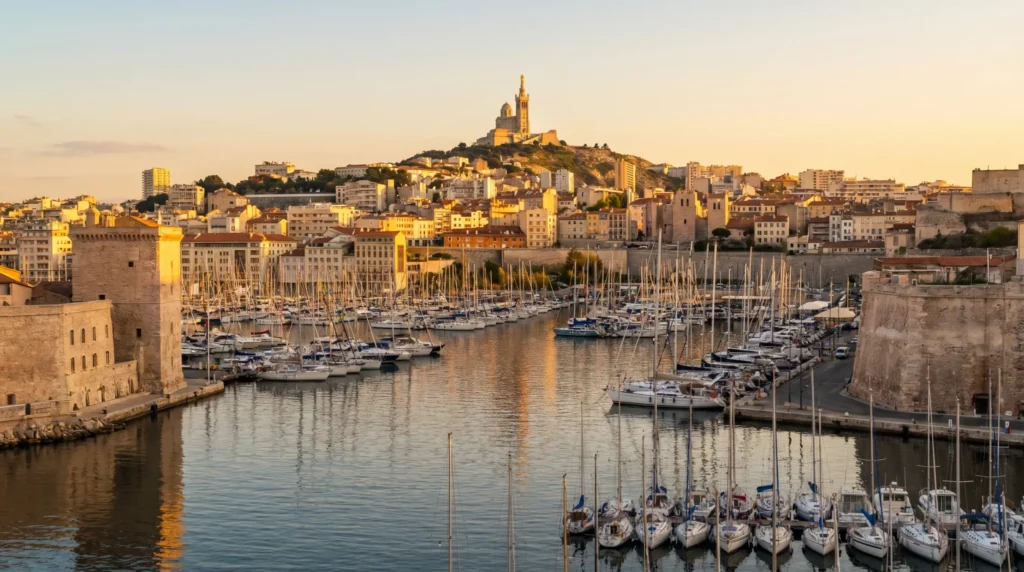
I have come into Marseille by TGV from Paris in barely over three hours, by ferry from Corsica into the early-morning Vieux-Port, and once on a slow regional train hugging the coast from Cassis, and the ritual is always the same: drop the bag, walk down to the old harbour, and buy a coffee facing the fishing boats while the gulls argue over the morning catch. We tell first-time travellers that Marseille is the most misunderstood great city in France — France’s second-largest, founded by Greek sailors around 600 BC, which makes it the oldest city in the country by a clear margin . It is loud, sun-bleached, multicultural, and gloriously unpolished in a way Nice and Aix never are, and that is exactly the point. My favourite Marseille morning is a pastis-coloured sunrise over the Vieux-Port, the fish market on the Quai des Belges, and then the long climb up to Notre-Dame de la Garde for the view that puts the whole city — sea, islands, limestone hills — into one frame. Treat this guide as the brief I would hand my own family before they stepped off the train at Saint-Charles: the harbour, the Panier old town, MuCEM, the Calanques, the bouillabaisse, and the day trips to Cassis and Aix that turn a weekend into a proper week .
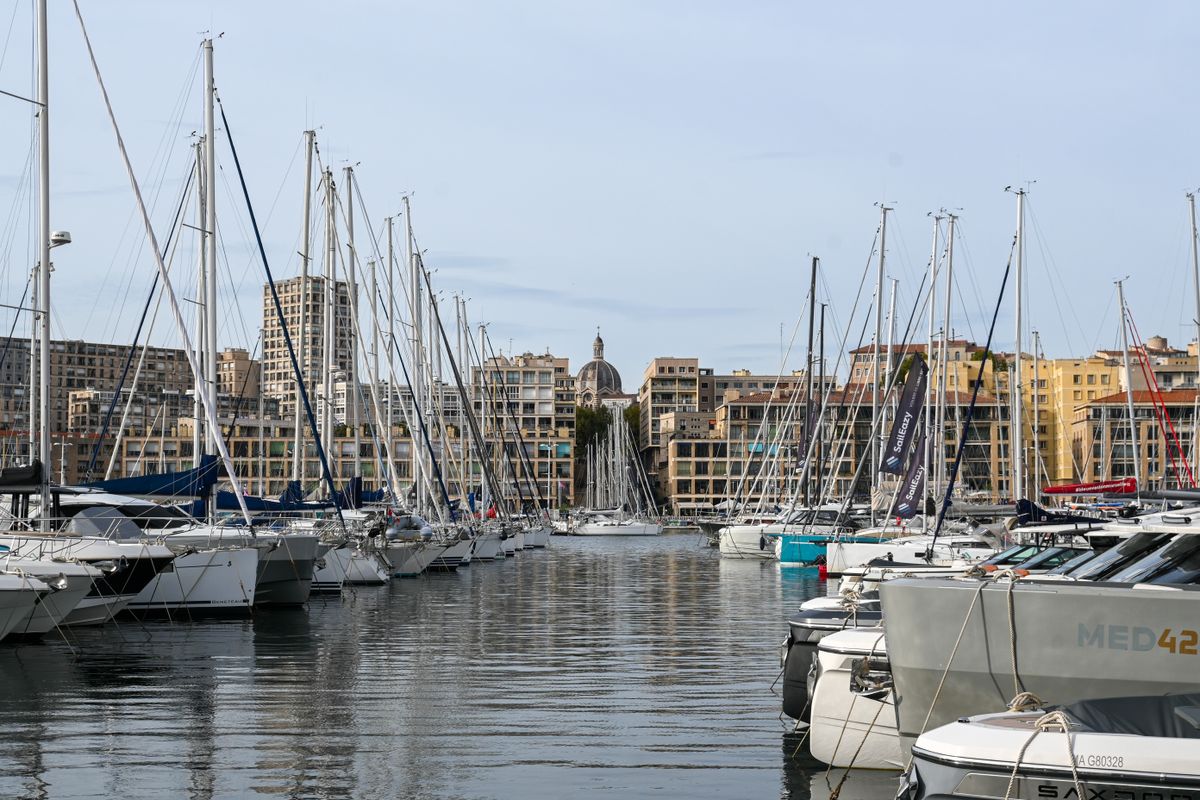
Table of Contents
Why Marseille?
Marseille is France’s oldest city and its great Mediterranean outlier — founded by Greek sailors from Phocaea around 600 BC, more than five centuries before Paris was anything more than a riverside settlement, and still a working port where the sea reaches right into the centre of town . With roughly 873,000 residents inside the city, it is the second-largest in France after Paris, and it wears that scale loosely: this is a sprawling, sun-bleached, multicultural city of distinct villages rather than a tidy museum-piece, and travellers who arrive expecting a polished Riviera resort are reliably wrong-footed .
The city reads as a layered contradiction, and that is its appeal. A 2,600-year-old Greek-Roman port; a 19th-century imperial gateway to North Africa and the Levant whose grand boulevards and the basilica of Notre-Dame de la Garde date from that boom; and a modern Mediterranean melting pot where Comorian, Algerian, Tunisian, Italian, and Armenian communities have layered their food, music, and markets onto the old Provençal base. In 2013 Marseille was European Capital of Culture, the spur for the waterfront MuCEM museum and a wholesale regeneration of the docklands around the old harbour that turned a then-gritty port front into one of the most striking cultural quarters in the Mediterranean .
What makes Marseille worth a full week rather than a stopover is the contrast between the dense, gritty, fascinating city and the wild nature on its very doorstep. The Calanques National Park — France’s only national park bordering a major metropolis — begins at the city’s southern edge, a 20-kilometre stretch of white-limestone fjords, turquoise coves, and clifftop trails reachable by city bus and a hike . Out in the bay, the Château d’If of Dumas’s Count of Monte Cristo and the Frioul islands sit a short ferry ride from the Vieux-Port, and the TER coastal trains put Cassis, Aix-en-Provence, and the wider Provence within an hour.
This guide covers the neighbourhoods you will actually walk, from the Panier’s ochre lanes to the boutique Cours Julien and the seaside Vallon des Auffes; the food that runs from a €7 panisse snack to a €70 bouillabaisse ritual; the sights that justify the climb and the ferry; the day trips locals themselves take at weekends; and the practical realities of the metro, the mistral wind, and the city’s real-but-overstated reputation for petty crime. Everything here flows from the sea and the sun.

Neighborhoods: Finding Your Marseille
📍 Marseille Map: Every Place in This Guide
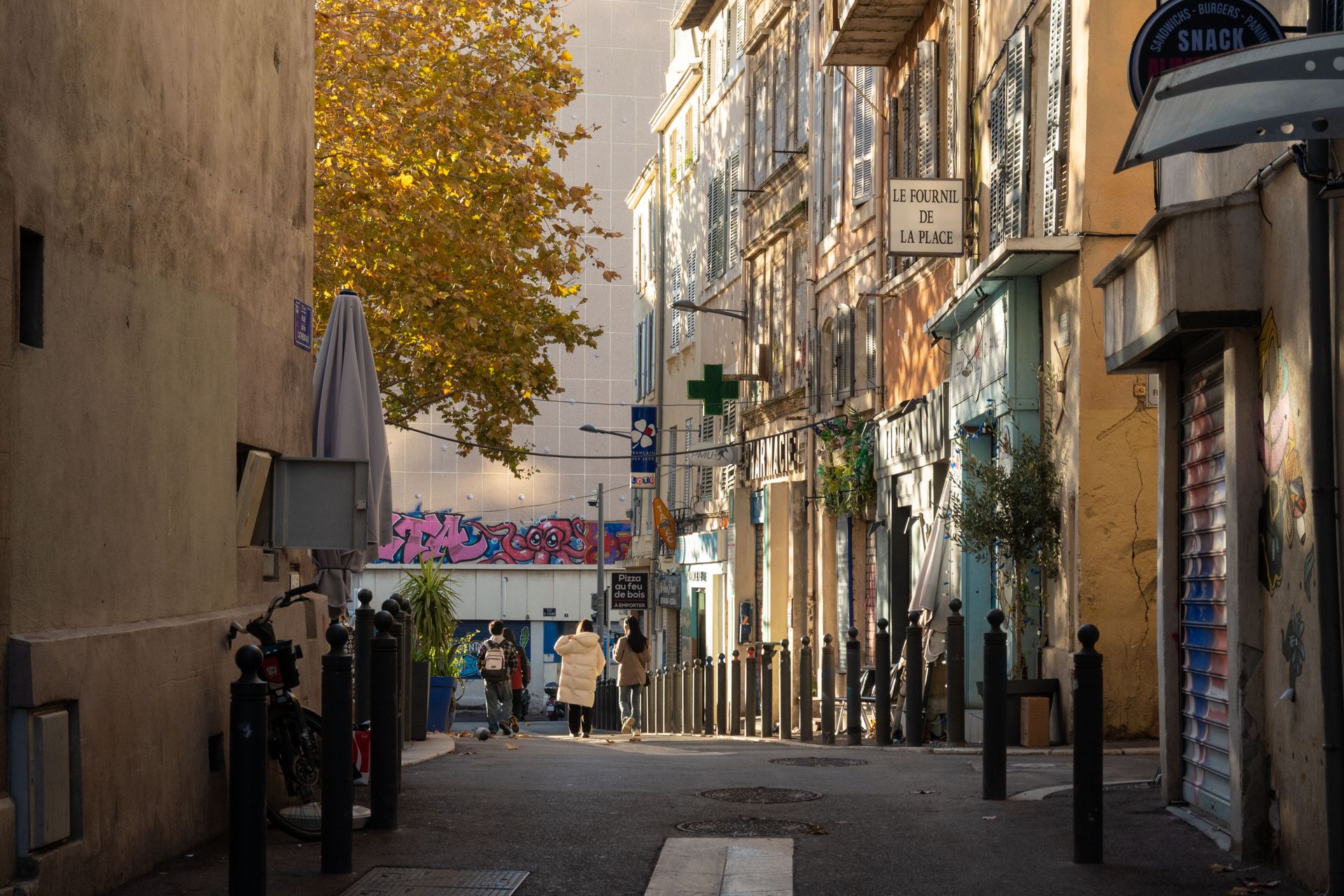
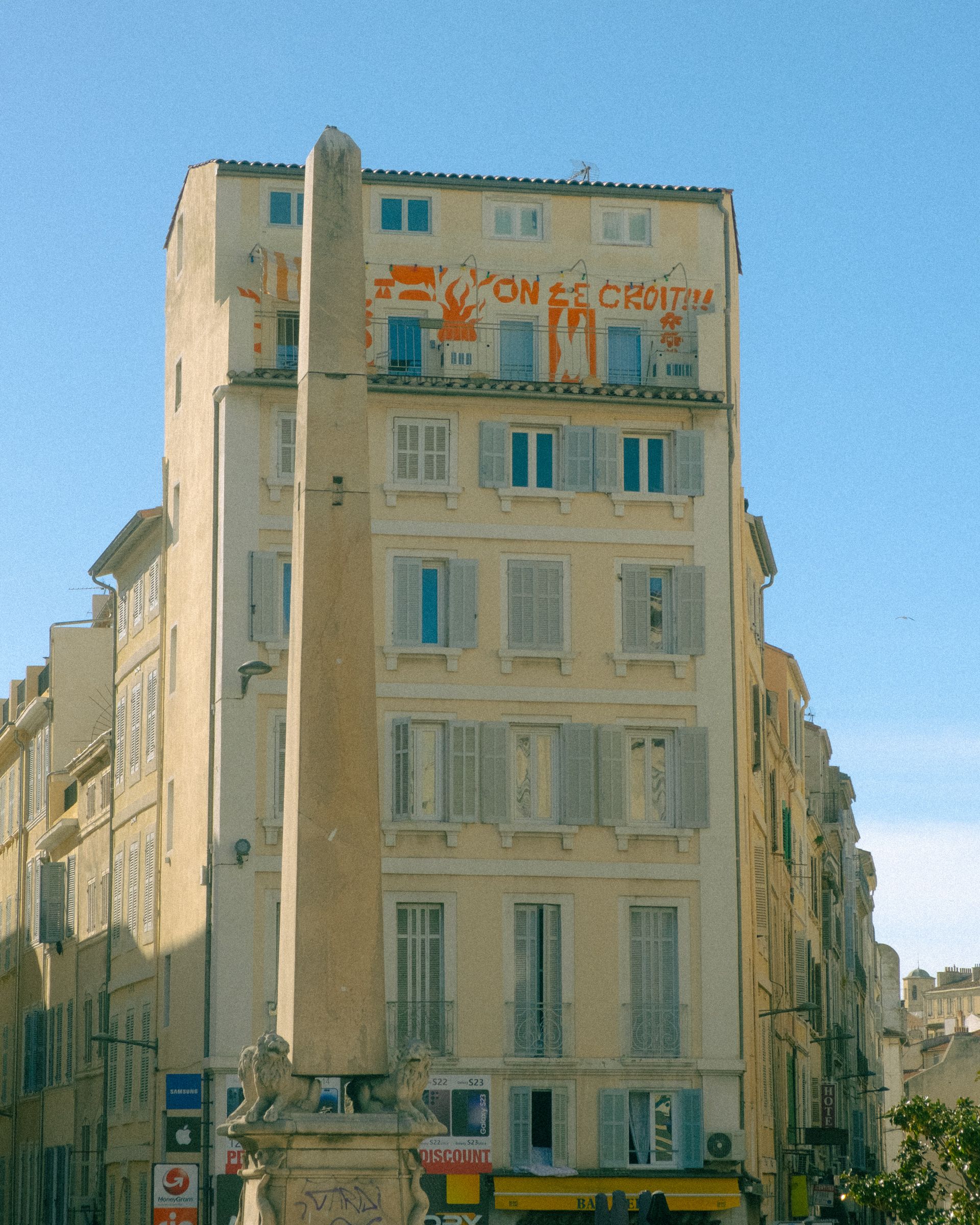
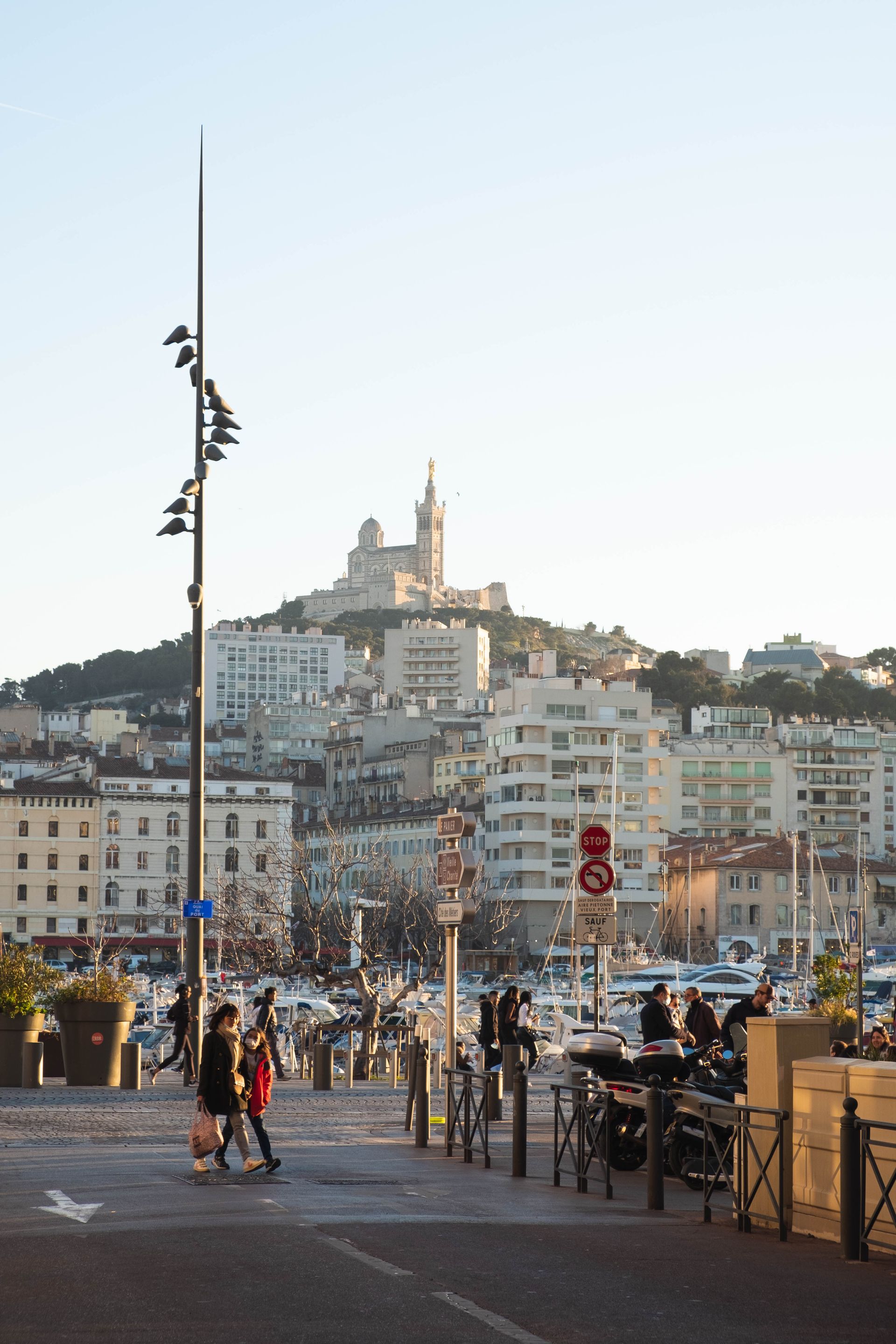
Marseille is not a single compact centre but a patchwork of distinct villages spreading north, south, and east from the Vieux-Port, and that scale is the first thing to understand before you choose where to sleep. The old harbour is the heart and the obvious orientation point: the Panier old town climbs the hill on its north side, the lively Cours Julien and the grand Préfecture quarters sit inland to the east and south, the elegant 19th-century avenues run down toward the sea, and the long Corniche coast road curls south past tiny fishing coves toward the beaches and the Calanques. Stay anywhere between the Vieux-Port and the Cours Julien and you are within a 20-minute walk or a short metro hop of almost everything a first visit needs . The single most useful orientation fact is that the metro, tram, and a dense bus network thread the whole city, so wherever you sleep, the centre is genuinely reachable.
The character shift across those districts is real and worth planning around. The Vieux-Port and the Panier are the most atmospheric and visitor-friendly; the Cours Julien is the bohemian, street-art, late-night quarter; the southern 6th and 8th arrondissements around the Prado are smarter, calmer, and closer to the beaches; and the northern quarters beyond the Joliette docklands are more residential and working-class, rapidly regenerating around MuCEM and the Docks but still rougher at the edges. Returning visitors often trade a first-trip Vieux-Port hotel for a Panier or Cours Julien apartment, or for a quiet seaside base near the Corniche, depending on whether they want buzz or calm. This section walks the districts you will actually use, with the access notes that matter.
One practical note on choosing where to stay: because Marseille is so large, the difference between neighbourhoods here is about both atmosphere and convenience, unlike a compact city where everything is walkable. Decide first what you want your days to feel like — the harbour-front bustle of the Vieux-Port, the artsy energy of the Cours Julien, the calm and beaches of the south, or the regenerated culture quarter of the Joliette — and let that drive the choice, keeping a metro or tram stop within easy reach. The one consistent trade-off is that the most central and seaside districts cost the most, while the inland and northern quarters offer better value at the price of a longer commute to the headline sights.
A useful mental map for first-timers: think of the Vieux-Port as the hinge of the city. North of it climbs the Panier; east of it the streets rise to the Cours Julien and the Plaine; south of it run the grand 19th-century avenues toward the Prado, the beaches, and eventually the Calanques; and west of it the regenerated Joliette docklands stretch along the sea past MuCEM and the cathedral. Two metro lines and three tram lines do most of the heavy lifting, with a single rechargeable RTM ticket covering them all, so a transit pass and comfortable shoes are most of the transport planning you need . Below are the districts you will actually choose between, with the trade-offs that matter.
Le Panier (Old Town)
The oldest quarter in France’s oldest city, the Panier rises on the hill north of the Vieux-Port in a tangle of ochre lanes, washing-strung balconies, street art, artisan workshops, and tiny squares — the closest Marseille comes to a postcard, and far more authentic than that sounds. This was the immigrant landing quarter for waves of Italians, Corsicans, and North Africans, and it still feels lived-in rather than scrubbed for tourists. Mornings are quiet and photogenic, afternoons fill with the soap and ceramic shops, and evenings bring a low-key bar scene around the Place des Moulins and the Vieille Charité. The trade-off is hills and stairs everywhere, and a few lanes still feel edgy after dark, though the core tourist streets are comfortable.
- La Vieille Charité — a 17th-century almshouse turned museum and cultural centre
- The Place des Moulins and the network of car-free hillside lanes
- Artisan soap, santon, and ceramic workshops scattered through the quarter
- Street-art walls and the views back down over the Vieux-Port
Best for: first-time visitors, photographers, atmosphere within walking distance. Access: Metro 1 Vieux-Port or Colbert, then a short uphill walk.
Vieux-Port & the city centre
The old harbour and the streets immediately around it — the Quai des Belges, the Canebière boulevard, and the Opéra quarter — are the most convenient base for a first trip, putting the fish market, the ferries, the metro hub, and the main sights on your doorstep. This is the lively, slightly touristy commercial heart, busy day and night, with hotels across every price band and the city’s transport spine right outside. The Canebière, once the grand boulevard of imperial Marseille, runs inland from the port and is slowly regaining its old polish. The trade-off is noise and crowds, and the immediate port-front restaurants trade on the view more than the cooking, so you eat better a few streets back.
- The Quai des Belges morning fish market and the ferry quays
- The Canebière — the historic main boulevard running inland from the port
- The Opéra de Marseille and the surrounding late-night quarter
- Direct metro, tram, and ferry connections from one central hub
Best for: first-time visitors, convenience, transport access. Access: Metro 1 Vieux-Port.
Cours Julien & La Plaine
East of the centre and uphill, the Cours Julien — “Cours Ju” to locals — is Marseille’s bohemian heart: a leafy square ringed with street-art murals, independent record and vintage shops, terrace bars, music venues, and the most concentrated young nightlife in the city. The adjacent Place Jean Jaurès (La Plaine) hosts a big multicultural market several mornings a week. It is scruffy, creative, and loud, the antithesis of the polished Riviera, and it is where you go to feel the city’s contemporary energy. The trade-off is noise late into the night and a steady churn of redevelopment friction, so light sleepers should choose a courtyard-facing room.
- The Cours Julien square and its ever-changing street-art murals
- Independent record shops, vintage stores, and designer boutiques
- The Place Jean Jaurès (La Plaine) market several mornings a week
- The densest concentration of bars, gig venues, and late terraces in the city
Best for: nightlife, creatives, younger travellers. Access: Metro 2 Notre-Dame-du-Mont / Cours Julien.
Le Prado & the southern beaches (6th & 8th)
South of the centre, the smart 6th and 8th arrondissements around the Prado avenue and the Castellane hub are calmer, greener, and more residential, running down to the long Prado beaches and the Borély park. This is where well-off Marseillais live, with good everyday restaurants, the Vélodrome stadium, and easy access to both the sea and the Calanques. It suits travellers who want quiet, space, and a beach base over old-town buzz, or families needing room. The trade-off is distance from the headline sights, though the metro and the seafront buses make the commute easy.
- The Plages du Prado — the city’s main public beaches and parks
- Parc Borély and its botanical garden and racecourse
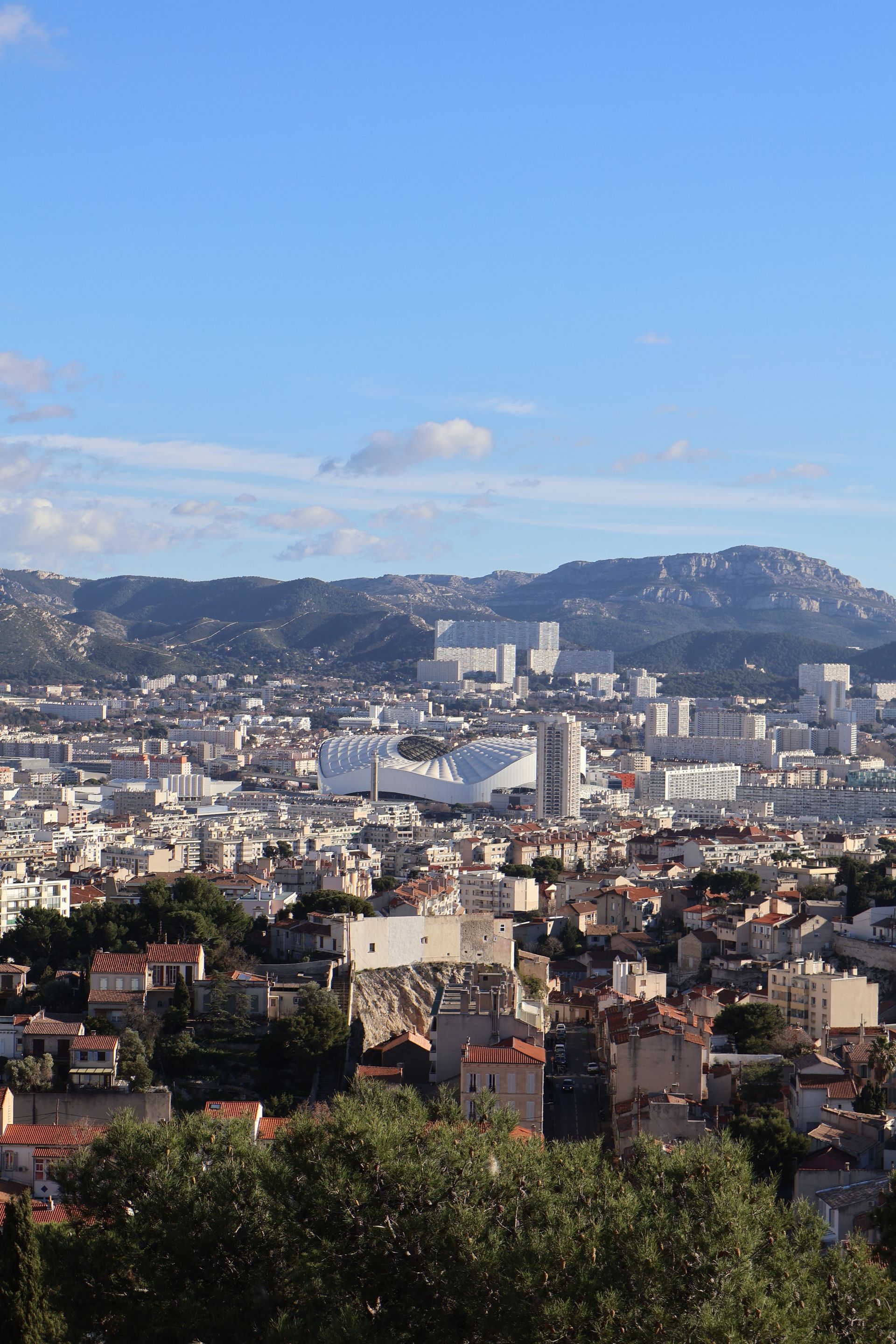
- The Orange Vélodrome, home of Olympique de Marseille football
- Easy bus and metro access to the Calanques trailheads to the south
Best for: beaches, families, quiet stays. Access: Metro 2 Castellane or Rond-Point du Prado.
La Joliette & the Docks (2nd / Euroméditerranée)
West and north of the Panier along the sea, the once-gritty Joliette docklands are the showpiece of Marseille’s regeneration — the MuCEM, the Villa Méditerranée, the restored Cathédrale de la Major, and the converted Docks shopping and office complex now line a reclaimed waterfront. The quarter feels modern, airy, and design-led, a deliberate contrast to the old centre, and is a short tram ride from the Vieux-Port. It makes a good base for culture-focused visitors who want the new museums on their doorstep, though it is quieter at night and less characterful than the old town.
- MuCEM and the J4 esplanade on the reclaimed waterfront
- The Cathédrale de la Major and the Villa Méditerranée
- Les Docks — a 19th-century warehouse converted to shops and offices
- The Terrasses du Port mall and the cruise and ferry terminals
Best for: culture, modern design, museum access. Access: Metro 2 Joliette, or Tram 2/3.
The Corniche & Vallon des Auffes
Following the coast road south from the Vieux-Port, the Corniche Kennedy traces the sea past tiny fishing harbours, swimming spots, and the photogenic Vallon des Auffes — a miniature cove crammed with painted fishing boats and a couple of legendary bouillabaisse restaurants, tucked under a road bridge. This is not really a hotel district but it is one of the most rewarding walks in the city, and a handful of seaside guesthouses make a romantic, quiet base away from the centre. The trade-off is that you will rely on the coastal buses, since it is a long way from the metro.
- The Vallon des Auffes — a tiny fishing cove under a stone bridge
- The Corniche Kennedy seafront promenade and swimming spots
- The Plage des Catalans, the city’s nearest sandy beach to the centre
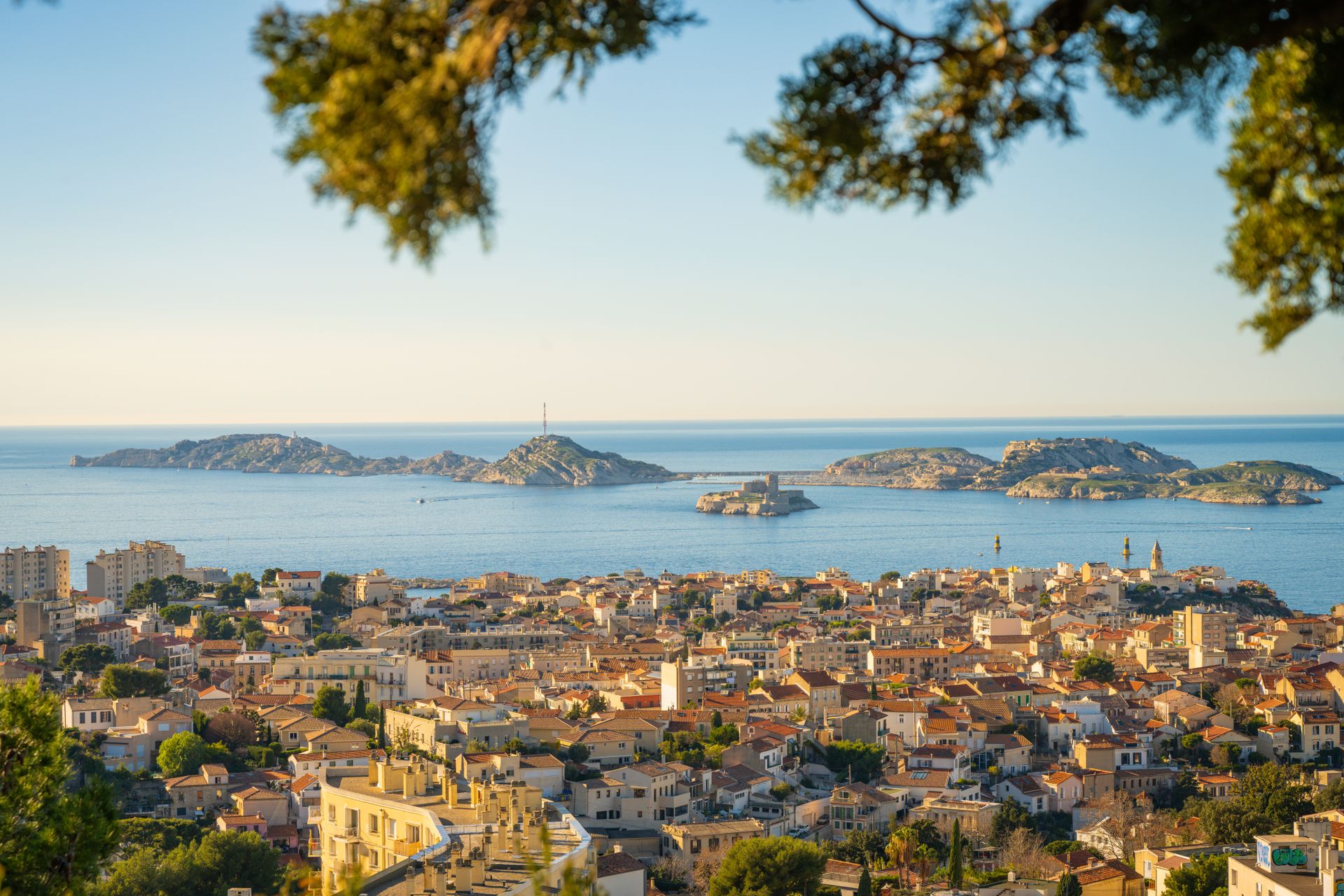
- Sunset views across the bay to the Frioul islands and Château d’If
Best for: sea views, romantic stays, seafood dinners. Access: Bus 83 along the Corniche from the Vieux-Port.
The Food

Marseille’s food is Provençal at its base but layered, after twenty-six centuries as a Mediterranean crossroads, with North African, Italian, Corsican, and Levantine flavours that you will not find inland — and it is built, above all, on the sea. This is a port town, and the daily catch landed at the Vieux-Port still anchors the table: rascasse and other rockfish for the legendary bouillabaisse, mussels and clams, sea urchins in winter, and the grilled whole fish that the seaside restaurants do best. Around that runs the wider Provençal repertoire of olive oil, garlic, tomato, herbs, and the anise-flavoured pastis that is the city’s unofficial drink, plus a vast and genuinely good street-food scene shaped by the city’s immigrant communities . Eating here rewards curiosity over budget far more than it rewards a fat wallet, and the gap between a tourist-trap quayside terrace and a real local table is wider here than almost anywhere in France.
What makes eating in Marseille so rewarding is the spread of price points and origins. You can eat extremely well for under €10 on street food alone — a panisse (fried chickpea-flour chip), a slice of Italian-style pizza, a Comorian or Tunisian snack from the Noailles market quarter, a navette biscuit from a bakery — and you can also sit down to the full bouillabaisse ritual, a multi-course, multi-hour institution that runs €60–80 a head at the serious houses. The market mornings, the immigrant food streets around Noailles, and the seaside fish restaurants of the Vallon des Auffes all reward exploration, and the produce is genuinely local: the sea supplies the fish, the Provençal hills the vegetables and herbs, and the surrounding country the rosé.
It helps to understand the geography of eating here. The Vieux-Port quayside holds the most famous bouillabaisse names but also the most tourist traps, so a little research and the official bouillabaisse charter are your filters. The Noailles quarter behind the Canebière — nicknamed “the belly of Marseille” — is the multicultural market heart, where you eat cheapest and most authentically. The Cours Julien has the city’s most creative young kitchens and natural-wine bars. And the seaside spots of the Vallon des Auffes and the Corniche trade on the view but, at the good ones, also do the freshest fish. Knowing which is which saves both money and disappointment.
Street Food & the Noailles Market
Marseille’s street food is one of the great cheap pleasures of the Mediterranean, and the Noailles quarter behind the Canebière — “the belly of Marseille” — is its beating heart, a dense grid of North African, Comorian, and Middle Eastern grocers, spice stalls, and snack counters. The signature local snacks are panisse (thick fried chickpea-flour chips) and chichi frégi (sugared doughnut fingers, a speciality of the Estaque district), both descended from the same Ligurian chickpea tradition as Nice’s socca. Add to that Tunisian bricks, Comorian samboussas, Algerian mhadjeb, and excellent cheap pizza — Marseille claims France’s oldest pizzerias — and a day’s grazing costs almost nothing.
The vendors who do it best are the no-frills counters and the market stalls where locals queue, not the polished quayside terraces. Eat as the Marseillais do: standing or walking, a paper cone of panisse or a slice of pizza in hand, washed down with a coffee or, later in the day, a pastis cut with water. The Noailles market runs most mornings and is as much a sensory experience — the spice mounds, the Mediterranean fish, the multilingual hawkers — as a shopping trip. It is the single best window onto the city’s multicultural soul.
- Marché de Noailles — the multicultural market quarter behind the Canebière, best in the morning for spices, fish, and cheap snacks
- Panisses and chichi frégi — fried chickpea chips and sugared doughnuts from the Estaque kiosks (a few euros a portion)
- Pizza al taglio — Marseille’s Italian heritage shows in some of France’s oldest and best pizzerias (slices around €3–4)
Bouillabaisse & Seafood
Bouillabaisse is the dish Marseille is famous for, and getting it right matters. Born as a fisherman’s stew of the unsellable rockfish, it has become an elaborate ritual: a saffron-and-fennel broth served first with rouille, croutons, and grated cheese, followed by the poached fish filleted at the table. The real thing takes hours and several species of Mediterranean rockfish, so it is expensive — €60–80 a head at the serious houses — and must usually be ordered a day ahead. Sixteen-odd restaurants signed a “Charte de la Bouillabaisse” promising the authentic recipe; look for it, and ignore the cheap quayside versions that are nothing of the kind.
- Chez Fonfon — a Vallon des Auffes institution for the full charter bouillabaisse, booking essential (around €70 a head)
- Le Miramar — a long-standing Vieux-Port bouillabaisse house and charter signatory (around €75 a head)
- Chez Étienne — a no-frills, cash-only Panier institution for pizza and grilled fish, no reservations (mains €15–25)
Sit-Down Provençal & Modern Marseille
Beyond the bouillabaisse temples, the city has a deep bench of Provençal bistros and a fast-rising modern scene. The classic repertoire runs to grilled daurade and loup de mer, pieds et paquets (slow-cooked tripe and trotters, a true local speciality), aïoli, and ratatouille, while the Cours Julien and the regenerated districts have spawned a wave of young chefs cooking inventive, market-driven, often Mediterranean-fusion menus at a fraction of Paris prices. Expect generous portions, plenty of rosé, and a relaxed pace.
- L’Épuisette — a Michelin-starred seafood table dramatically perched in the Vallon des Auffes (tasting menus from around €90)
- La Cantinetta — a beloved Cours Julien Italian trattoria with a leafy courtyard (mains €16–24)
- Une Table au Sud — a refined Vieux-Port dining room for modern Provençal cooking (menus from around €60)
- Le Café des Épices — an inventive, market-led bistro near the Vieux-Port (lunch menus around €30)
Beyond Bouillabaisse and Pastis
The everyday repertoire is deep and rewards grazing, and many of these are sold by the slice or the piece from bakeries and stalls, so you can work through the lot over a couple of days without ever sitting down to a full meal. Look out too for the seafood side beyond bouillabaisse — the cheaper fishermen’s soupe de poisson, the grilled whole fish, the sea urchins (oursins) eaten raw in winter.
- Pieds et paquets — slow-braised mutton tripe and trotters in tomato and white wine, a true Marseillais classic (€16–22)
- Soupe de poisson — the fishermen’s rockfish soup with rouille and croutons, bouillabaisse’s cheaper cousin (€10–15)
- Navettes — boat-shaped orange-blossom biscuits, a Marseille specialty baked since 1781 at the Four des Navettes (a few euros a bag)
- Aïoli — poached salt cod, vegetables, and snails served with garlic mayonnaise, traditionally a Friday dish (€16–20)
- Pastis — the anise-flavoured aperitif invented in Marseille, served cut with iced water (€3–5 a glass)
Markets & Where to Shop for Food
The Noailles market is the city’s multicultural produce and spice heart, while the daily fish market on the Quai des Belges at the Vieux-Port — fishermen selling that morning’s catch directly off the boats — is one of the great free spectacles of Marseille, even if you buy nothing. The Prado market and the Cours Julien market add bigger general and organic produce options. All are best in the morning, and all make an easy, cheap lunch.
If you are self-catering, the markets are the cheapest and most rewarding way to eat in Marseille. A few euros buys a slice of pizza, a cone of panisse, some olives, and a wedge of cheese that together beat most quayside restaurants, and the stallholders will happily tell you what is in season. Go early — the fish market on the Quai des Belges packs up well before lunch — and bring small cash, as not every stall takes cards. The Noailles quarter in particular is where the city’s immigrant communities shop, so it is also the cheapest and most authentic place to assemble a picnic before a Calanques hike or a ferry to the islands.
Sweets, Pastries & What to Drink
Beyond the savoury repertoire, Marseille has its own sweet traditions. The navette, a hard orange-blossom biscuit shaped like a little boat, has been baked at the Four des Navettes near the Abbaye Saint-Victor since 1781 and is the edible souvenir of the city. The chichi frégi doughnuts of the Estaque, the North African pastries of the Noailles bakeries, and the Italian gelato counters round out the sweet side. To drink, pastis is the icon — the anise aperitif invented here by Paul Ricard in 1932 and still the default afternoon drink, served with a jug of iced water — while the rosés of nearby Provence (Cassis, Bandol, Côtes de Provence) are the wines of choice with almost everything. A chilled rosé or a cloudy yellow pastis is the proper accompaniment to a Marseille afternoon by the water.
Food Experiences You Can’t Miss
- The morning fish market on the Quai des Belges, where fishermen sell the catch straight off the boats at the Vieux-Port
- A full charter bouillabaisse at a Vallon des Auffes house, ordered a day ahead and eaten over several unhurried hours
- A grazing crawl through the Noailles market quarter — spices, Tunisian bricks, Comorian snacks, and cheap pizza
- A pastis cut with iced water on a terrace as the sun drops over the harbour
- A bag of navettes from the Four des Navettes, the city’s oldest bakery, near the Abbaye Saint-Victor
Cultural Sights

Notre-Dame de la Garde
The Neo-Byzantine basilica known affectionately as “La Bonne Mère” (the Good Mother) crowns the highest hill in Marseille at 162 metres and is the city’s defining landmark, its gilded statue of the Virgin visible from almost everywhere below. Completed in 1864 on the site of older chapels, its striped stone, glittering mosaics, and ceiling of model ships and ex-voto offerings from sailors make the interior as memorable as the view. The terrace gives the single best panorama of the city, the sea, and the islands. Entry to the basilica is free; you reach it on foot up a steep climb, by the tourist road-train, or by bus 60 from the Vieux-Port.
MuCEM (Museum of European and Mediterranean Civilisations)
The signature museum of Marseille’s 2013 Capital of Culture year, MuCEM sits on the reclaimed J4 waterfront in a striking concrete-lattice cube by Rudy Ricciotti, linked by a vertiginous footbridge to the restored 17th-century Fort Saint-Jean. Its collections explore the shared cultures of the Mediterranean world, but for many visitors the building, the rooftop, and the free-to-walk fort and gardens are the real draw. Admission to the exhibitions is around €11, and the fort, esplanade, and rooftop terraces are free to roam with some of the best sea views in the city. It is closed on Tuesdays.
Le Panier & La Vieille Charité
The Panier old town is itself the city’s most rewarding sight — a wander through France’s oldest urban quarter, all ochre lanes, street art, and artisan workshops. At its heart, La Vieille Charité is a magnificent 17th-century almshouse built around an arcaded courtyard and a central Baroque chapel by Pierre Puget, now housing archaeology and African-Oceanic art museums and rotating exhibitions. Wandering the quarter is free; the museums inside the Charité charge a modest entry, and the building alone is worth the visit for its serene architecture.

Château d’If & the Frioul Islands
A short ferry from the Vieux-Port reaches the Château d’If, the 16th-century island fortress-prison immortalised by Alexandre Dumas as the cell of his Count of Monte Cristo. The bare stone cells, the dramatic island setting, and the views back to the city make it one of the most atmospheric half-days in Marseille. The same ferry company serves the neighbouring Frioul islands, with their wild coves, swimming spots, and walking trails. Combined boat-and-monument tickets run around €16–18; the crossing takes about 20 minutes, and boats run more often in summer.
Abbaye Saint-Victor
One of the oldest places of Christian worship in France, the fortified Abbaye Saint-Victor on the south side of the Vieux-Port dates in parts to the 5th century, with an atmospheric crypt and catacombs you can descend into. It is best known for the Candlemas (Chandeleur) procession each February, when green-tinted navette biscuits are blessed and sold at the nearby Four des Navettes. Entry to the upper church is free; there is a small charge for the crypt. It pairs naturally with the navette bakery next door and the climb to Notre-Dame de la Garde above.
The Corniche & Vallon des Auffes
Following the sea south from the Vieux-Port, the Corniche Kennedy is one of the most scenic urban coast roads in France, passing tiny fishing harbours, swimming spots, and the photogenic Vallon des Auffes — a miniature cove crammed with painted boats beneath a stone road bridge. The walk is free and best at sunset, when the light turns the limestone gold and the bay fills with the silhouettes of the Frioul islands and Château d’If. It is the city’s loveliest stroll and the gateway to the southern beaches.
Cathédrale de la Major & Les Docks
On the regenerated Joliette waterfront, the vast striped Cathédrale Sainte-Marie-Majeure (“La Major”), built in grand Neo-Byzantine style in the 19th century, anchors a quarter transformed since 2013. Nearby, the 19th-century Docks warehouses have been converted into shops and offices, and the Terrasses du Port mall and the MuCEM complete the new cultural seafront. The cathedral is free to enter, and the whole quarter is an easy, airy walk that shows how dramatically the old port front has been remade.
Entertainment

Beaches & Swimming
Marseille has more coastline than any other French city, and its beaches run from the small Plage des Catalans near the centre to the long, family-friendly Plages du Prado created from reclaimed land in the 1970s, plus countless rocky coves along the Corniche. The water is clean and clear, the swimming season runs roughly June to October, and all the public beaches are free, with showers and summer lifeguards. Typical cost is nothing at all, beyond a bus fare. The Prado beaches are sandy and busiest; the Corniche coves and the Calanques are wilder and quieter. For the most spectacular swimming, the turquoise Calanques inlets south of the city are unmatched, though they take a hike or a boat to reach.
Olympique de Marseille & the Vélodrome
Football is close to a religion in Marseille, and a night at the 67,000-seat Orange Vélodrome to watch Olympique de Marseille is one of the most electric experiences in the city — the Ultras’ choreography and noise are legendary even by European standards. Match tickets start around €25 and rise sharply for big fixtures; the stadium is on Metro line 2 at Rond-Point du Prado. Even outside match days, stadium tours run regularly. Book well ahead for the marquee games, especially the fierce “Classique” against Paris Saint-Germain.
Nightlife in the Cours Julien & the Port
The Cours Julien and the surrounding Plaine are the city’s nightlife heart — a dense, scruffy, creative cluster of bars, natural-wine spots, live-music venues, and late terraces, with drinks running €5–10. The Vieux-Port quays and the regenerated Joliette add more polished cocktail bars and rooftop spots. The scene is lively, unpretentious, and runs late, especially in summer when the whole city stays out past midnight. Rue Sainte, south of the port, holds another strip of bars and clubs. It is best explored on foot, hopping between venues, rather than planned in advance.
Live Music, Festivals & Le Dôme
Marseille has a strong live-music culture, from the hip-hop scene that produced IAM to a busy calendar of summer festivals. Le Dôme and Le Silo host big touring acts, while smaller venues around the Cours Julien carry the underground scene. The summer brings festivals across the city, including the Fiesta des Suds on the docks and open-air concerts in the Borély park and the Calanques. Tickets for big shows run €30–60; many summer events are free. The city’s music identity leans toward rap, reggae, and electronic rather than the chanson of the north.
Boat Trips & the Calanques by Sea
One of the best things to do in Marseille is leave it by water. Boats from the Vieux-Port run to the Château d’If and the Frioul islands, and — most spectacularly — along the Calanques coast to Cassis, threading the white-limestone fjords and turquoise coves that are impossible to reach on foot in a day. A Calanques boat tour runs roughly €25–35 for a few hours; the ferries to the islands are cheaper. For many visitors a half-day on the water is the single most memorable outing of the trip, and the only way to see several of the most dramatic calanques in one go.
Family & Daytime Activities
For families and slower days, the city offers plenty beyond beaches and bars. The Parc Borély has gardens, a lake with pedal boats, and a botanical garden; the Vieux-Port’s ferry boat (the tiny César cross-harbour shuttle) is a cheap thrill for children; and the Calanques and island boat trips suit older kids. The MuCEM’s free fort and rooftop, the Panier’s street art, and the road-train up to Notre-Dame de la Garde all break up museum days easily. Most of these cost little or nothing, and the sea itself — swimming off the coves, watching the fishing boats — is the cheapest entertainment of all in this most maritime of French cities.
Day Trips

The Calanques National Park (from the city’s southern edge)
France’s only national park bordering a major city begins at Marseille’s southern limit — a 20-kilometre stretch of white-limestone cliffs, fjord-like inlets, and turquoise coves running toward Cassis. The classic introductions are the hike or bus-and-walk to the Calanque de Sormiou or Morgiou, or the easier Calanque d’En-Vau from Cassis; reach the trailheads by bus 21 or 22 and then a hike, or take a boat from the Vieux-Port. Wear proper shoes, carry plenty of water, and check the summer fire-risk closures, which shut the trails on the hottest, windiest days.
Cassis (about 30 min by train)
The pretty fishing-and-wine town of Cassis sits just east of the Calanques, with a harbour ringed by pastel houses, a hilltop château, and the surrounding Cassis vineyards producing crisp white wine. It is the best base for boat trips into the most dramatic eastern calanques, including the famous En-Vau and Port-Pin. The TER train reaches Cassis in about 30 minutes, though the station sits some way above the town, so allow for the shuttle bus or a downhill walk. It makes the easiest and most rewarding coastal day trip from the city.
Aix-en-Provence (about 35 min by bus)
Marseille’s elegant, aristocratic neighbour could not be more different — a refined university town of golden mansions, plane-tree boulevards, fountains, and the studios and landscapes of Paul Cézanne. The frequent coach from Marseille Saint-Charles reaches the centre of Aix in about 35 minutes, faster than the train for the town centre. Wander the Cours Mirabeau, the daily markets, and the Atelier Cézanne, and feel the contrast with raw, maritime Marseille. It is the obvious half- or full-day escape inland.
Château d’If & the Frioul Islands (about 20 min by ferry)
The closest of all the day trips, the island fortress of Château d’If and the wild Frioul archipelago sit a 20-minute ferry from the Vieux-Port. The Château d’If is the prison of Dumas’s Count of Monte Cristo; the Frioul islands offer coves, walking trails, and swimming away from the city beaches. Combined boat-and-monument tickets run around €16–18, and you can easily do both in an afternoon. It is the best short escape when you do not have a full day.
Arles & the Camargue (about 1 hr by train)
An hour west by TER, the Roman town of Arles holds a magnificent amphitheatre, the Van Gogh trail, and a UNESCO-listed Roman heritage, and is the gateway to the wild Camargue wetlands of pink flamingos, white horses, and black bulls. It makes a rewarding full-day trip for history and nature lovers wanting something beyond the coast. The train reaches Arles in about an hour; the Camargue itself needs a car or a tour to explore properly.
Seasonal Guide
Spring (March – May)
One of the best windows of the year. Daytime highs climb from the mid-teens in March to the low-to-mid 20s°C by late May, the Calanques and the Provençal countryside are at their greenest, the café terraces are fully open, and the crowds stay light before the summer rush . The sea is still cool for swimming until late May, but the hiking is superb and the light is beautiful. The one wildcard is the mistral, the cold dry north wind that can blow hard for days and drop the temperature noticeably even in spring, so pack a windproof layer. Otherwise spring offers the best balance of warm sun, green hills, and manageable crowds.
Summer (June – August)
High season, and genuinely hot — daytime highs of 28–31°C, a warm swimmable sea, peak crowds on the beaches and at the headline sights, and the priciest accommodation of the year . July and August bring festivals and a buzzing nightlife, but also the highest fire risk in the Calanques, which the park authorities close on the hottest, windiest days, so always check before you hike. Book accommodation well ahead, start outdoor activities early to beat the heat, and save the museums and shaded old-town lanes for the fierce midday hours.
Autumn (September – November)
Arguably the finest time to visit. September keeps the warm summer sea while the crowds thin, the light turns golden through October, and prices ease back from their August peak . The catch is rainfall: Provence gets its heaviest, most concentrated downpours in autumn, when a single storm can drop a remarkable amount of rain in a day, so pack a proper waterproof. Early autumn is ideal for both swimming and hiking; by late November the city tips into its quieter, cooler low season, though the famous sunshine largely continues.
Winter (December – February)
Mild, quiet, and far gentler than most of Europe. Daytime highs hold around 11–13°C, the famous sunshine largely persists, snow is essentially unheard of, and hotel rates drop well below the summer peaks . The sea is too cold to swim, but the Calanques hiking is excellent in the cool air and the museums are blissfully empty. The mistral blows hardest in winter, so a proper windproof coat matters. February brings the Candlemas navette procession at the Abbaye Saint-Victor. Outside that, winter is the cheapest and calmest time to have the city largely to yourself — ideal for a culture-and-food trip if sea swimming is not the point.
Getting Around
Metro, Tram & Bus (RTM)
Marseille’s public transport is run by the RTM and combines two metro lines, three tram lines, and a dense bus network under a single ticketing system. Metro line 1 (blue) and line 2 (red) cross at the Saint-Charles station and the Castellane hub and cover most of the central sights; the trams fill in the gaps; and the buses reach the Corniche, the beaches, and the Calanques trailheads. A single ticket is around €1.70 and covers transfers within a set time, while a 24-hour pass is excellent value for a day of sightseeing . The metro is fast and the simplest way across the centre, though it stops relatively early at night.
Coastal & Regional Rail (TER / TGV)
The Gare de Marseille-Saint-Charles is the main station, a TGV hub linking Paris in about 3 hours 10 minutes and the rest of France, and the start of the TER regional trains that reach Cassis, Aix, Arles, and the coast in well under an hour for a few euros . No advance booking is needed for the regional trains, which makes car-free day trips along the coast and into Provence genuinely easy. Saint-Charles sits at the top of a grand staircase above the centre and is on both metro lines.
Multi-Day & Combined Passes
For a longer stay, the RTM offers multi-day passes, and the City Pass sold by the tourist office bundles unlimited transport with museum entries, the Notre-Dame road-train, and an island ferry — often worth it for a busy sightseeing few days . The single €1.70 fare covers transfers within a set window, so a short chain of hops costs no extra. Day-trippers heading along the coast usually find the TER train cheaper and faster than driving, and parking in the centre is scarce and expensive.
Airport Access
Marseille Provence Airport sits about 27 km northwest of the city, so the transfer takes a little planning .
- Airport shuttle bus to Saint-Charles station — about 25–30 minutes, around €10
- Train via the Vitrolles-Aéroport station — connecting to Saint-Charles, a cheaper option
Taxis & Ride-Hailing
Licensed taxis use regulated metered fares; a ride from the airport to the centre runs roughly €50–60, and in-town rides are metered. Ride-hailing apps operate in Marseille and are often cheaper than street taxis. Taxis are most useful late at night after the metro stops running. Always confirm the fare or insist on the meter, and use the official ranks at the station, the airport, and the Vieux-Port.
Navigation Tips
The essential apps are RTM for local transit and SNCF Connect for the regional trains; both work in English and show live times. The central sights cluster around the Vieux-Port and are walkable, but Marseille is large and hilly, so you will use the metro and buses far more than in a compact city like Nice. A good rule of thumb is to walk the Vieux-Port, Panier, and centre, take the metro for cross-town hops, the bus for the Corniche and Calanques, and the TER train for day trips — that split covers almost every journey and keeps costs to a handful of euros.
Budget Breakdown: Making Your Euro Count
| Tier | Daily | Sleep | Eat | Transport | Activities | Extras |
|---|---|---|---|---|---|---|
| Budget | €70–110 | €25–50 hostel/budget | €18–28 | €5 day pass | €10–20 | €10 |
| Mid-Range | €150–250 | €90–150 hotel | €40–65 | €5–10 | €20–40 | €20 |
| Luxury | €400+ | €250+ design hotel | €100+ | €30 taxis | €60+ | €40+ |
Where Your Money Goes
Marseille is meaningfully cheaper than Paris or Nice and one of the better-value major cities in France — accommodation is the swing cost, peaking in July and August and dropping sharply in the November-to-March low season . Food can be very cheap if you lean on the street-food repertoire: panisse, pizza, a Noailles-market picnic, and a slice of pizza keep a day’s eating well under €20, while a full charter bouillabaisse is the one genuinely expensive meal at €60–80 a head. The €1.70 metro fare and the city’s walkable centre mean transport is a rounding error. Museums are modest — MuCEM around €11, many others under €10 — and the best things are free: the Vieux-Port and its fish market, Notre-Dame de la Garde, the Panier, the Corniche, the beaches, and the Calanques hikes. A realistic budget trip leans hard on those free sights, the cheap street food, the metro, and a low- or shoulder-season room, which together can keep a comfortable day under €110 a head; the same trip in August with a central hotel and restaurant meals easily doubles that. The single biggest lever on the total is when you come and where you sleep, not what you do.
Tipping is not expected the way it is in North America — service is included by law (service compris), and locals simply round up or leave a euro or two for good service, so the menu price is the price you pay. Museum and attraction prices are modest and consistent, and many of the city’s defining experiences cost nothing at all: the morning fish market, the climb to La Bonne Mère, a wander through the Panier, a swim off the Corniche, and a Calanques hike are all free. The main ways a Marseille trip gets expensive are July–August accommodation, the bouillabaisse ritual, and Calanques boat tours — all of which are either avoidable or occasional splurges rather than daily costs.
Money-Saving Tips
- Eat from the Noailles market and the panisse and pizza counters instead of the Vieux-Port tourist terraces — better food for a fraction of the price
- Use the free public beaches and the free Calanques hikes rather than paid boat tours, at least for part of your trip
- Buy an RTM day pass or the tourist City Pass and skip the car — parking in the centre is scarce and costly
- Travel in May–June or September–October, when rates fall below the July–August peak but the weather stays warm
- Order the carafe d’eau (free tap water) and the lunchtime formule menus, far cheaper than à la carte dinner; save bouillabaisse for one planned splurge
Practical Tips
Language
French is the official language, spoken with a distinctive southern accent, and the city’s large immigrant communities add Arabic, Comorian, Italian, and Armenian to the street soundscape. English is spoken across hotels, the bigger restaurants, the museums, and the tourist office, so the practical language barrier is low in tourist areas, though less so in the working-class quarters and markets. Opening any interaction with “bonjour” and a few words of French is genuinely appreciated and changes the tone of the service you get.
Cash vs. Cards
Cards are accepted almost everywhere, including contactless on the metro and in the great majority of shops, restaurants, and museums. The exceptions are the smallest market stalls in Noailles, some bakeries, and a few cash-only institutions like Chez Étienne, so carry €30–40 in small notes and coins. ATMs are plentiful in the centre; use bank machines rather than standalone currency boxes, which give poor rates.
Safety
Marseille has a reputation for crime that is real in parts but heavily overstated for visitors. The serious organised crime is confined to specific northern housing estates that tourists never visit; what travellers actually face is petty theft — pickpocketing and bag-snatching around Saint-Charles station, on the metro, along the Canebière, and in crowded tourist spots. Official advisories rate France as low-risk overall while consistently flagging petty theft in tourist areas . Keep valuables zipped and out of sight, stay alert in metro crushes and at the station, and avoid the quieter back streets of the Panier and around the station late at night. With normal city sense, most visitors have no trouble at all, and the central tourist areas stay busy and comfortable into the evening.
What to Wear
Light, breathable clothing in summer with a hat and sunscreen for the strong sun, plus proper shoes for the Calanques hikes and water shoes for the rocky coves. A windproof layer matters in any season because of the mistral, and a waterproof from October on for the autumn storms. Modest dress — covered shoulders and knees — is required to enter Notre-Dame de la Garde and the churches. Marseille is casual and unpretentious, so smart-casual is plenty for dinner.
Cultural Etiquette
A simple “bonjour” before any request is expected and dropping it is read as rude. Lunch (roughly 12:00–14:00) and dinner (from 19:30 or later) run later than in northern Europe, and many kitchens close between services. Marseillais are famously direct, warm, and proud of their city — show genuine interest and you will be met with real warmth; condescend about the city’s reputation and you will not. The long, relaxed meal is the norm.
Connectivity
EU roaming rules apply for European SIMs, so most European visitors use their home plans at no extra cost, and 4G/5G coverage is strong across the city, though it drops out among the Calanques cliffs. Free public Wi-Fi is common in cafés, the tourist office, and many public spaces; non-EU visitors staying a while may find a local prepaid eSIM cheaper than roaming.
Health & Medications
EU and UK travellers should carry the EHIC or GHIC card for reciprocal care; everyone else needs travel insurance, since French healthcare is excellent but not free to non-residents. Pharmacies, marked by green crosses, are plentiful and the pharmacists advise on minor ailments; a rota stays open at night and on Sundays. The tap water is safe to drink citywide, so refillable bottles are fine — and worth carrying for the Calanques hikes .
Luggage & Storage
The Gare de Marseille-Saint-Charles has staffed left-luggage facilities, and several private bag-storage services near the station and the Vieux-Port hold luggage by the hour or day — useful for day-trippers and for the gap between an early checkout and a late train or flight. Booking a storage slot online in advance is worth it in high summer, when the busiest near-station services can fill up.
Frequently Asked Questions
How many days do I need in Marseille?
Four nights is the practical minimum for the city itself plus a Calanques day and one coastal day trip, and a full week lets you add Cassis, Aix-en-Provence, Arles, and the islands without rushing. Marseille is large and rewards a slow base from which you explore the city’s distinct quarters and the wild coast on its doorstep, rather than a one-night stop. Even a long weekend covers the Vieux-Port, the Panier, MuCEM, Notre-Dame de la Garde, and a single day trip, but you will leave wanting more time — especially for the Calanques, which deserve at least a full day.
Is Marseille safe for tourists?
Yes, with normal city sense. Marseille’s fearsome reputation comes from organised crime in specific northern housing estates that visitors never go near; what tourists actually face is petty theft — pickpocketing around Saint-Charles station, on the metro, and in crowded spots. Keep valuables out of sight, stay alert in transit crushes, and avoid quiet back streets late at night, and you are very unlikely to have any trouble. The central tourist areas, the Vieux-Port, and the Panier stay busy and comfortable into the evening. Millions visit happily every year; the city is far safer for travellers than its reputation suggests.
Is the RTM transit pass worth it?
For most visitors, yes. A single RTM fare is around €1.70 with transfers included, while a 24-hour pass pays for itself after a few rides — easily reached on a sightseeing day given the city’s size. Longer stays should look at the multi-day RTM passes or the tourist City Pass, which bundles transport with museum entry and an island ferry. Because Marseille is large and hilly, you will use transit far more than in a compact city, so a pass usually wins unless you are staying purely in the walkable Vieux-Port core. Work out roughly how many rides and museums you expect and let that decide.
What about the language barrier?
It is modest in the tourist areas. English is spoken across hotels, bigger restaurants, museums, and the tourist office, the signage is clear, and the transit apps work in English. It is less widely spoken in the markets and working-class quarters, where a few words of French go a long way. A polite “bonjour” on entering and “merci” on leaving are genuinely expected and noticeably improve the warmth of the welcome.
When is the best time to visit and avoid crowds?
Late spring (May–June) and early autumn (September–October) are the sweet spots — warm weather, a swimmable sea (especially September), excellent Calanques hiking, and far thinner crowds than the July–August peak. Winter is mild, quiet, and cheap, and great for hiking, though the sea is too cold to swim and the mistral blows hardest. Avoid the hottest, windiest summer days for the Calanques specifically, since the park closes the trails on high-fire-risk days.
Can I use credit cards everywhere?
Almost everywhere, including contactless on the metro and in most shops, restaurants, and museums. The exceptions worth knowing are the smallest Noailles market stalls, some bakeries, and one or two cash-only institutions, so carry €30–40 in small notes and coins as a backup. Use bank-branded ATMs rather than the standalone currency boxes, which give noticeably worse exchange rates.
How do I see the Calanques, and are they hard to reach?
You have three options: hike in from the city’s southern edge (bus 21 or 22 to a trailhead, then a walk of 30 minutes to two hours depending on the calanque); take a boat tour from the Vieux-Port, which threads several coves in a few hours for around €25–35; or base in Cassis to the east and walk or boat to the dramatic En-Vau and Port-Pin. The hikes are free but need proper shoes, plenty of water, and an eye on the summer fire closures, which shut the trails on the hottest, windiest days. For most visitors a boat tour plus one hike is the ideal combination, and it is the single most memorable part of a Marseille trip.
Ready to Experience Marseille?
Pack hiking shoes, learn the word “pastis,” and give yourself a week so the Calanques and the day trips don’t feel rushed. For the full country context, read the France Travel Guide or jump straight to our France hub.
Explore More City Guides
Alex the Travel Guru
Alex has spent two decades writing field-tested travel guides from the road, arriving in Marseille by TGV from Paris, by ferry from Corsica, and by the slow coastal train from Cassis. Every figure in this guide is paired with an authoritative source, and every photo and video is verified before it ships.
More city guides you might like

Plan your trip to Marseille
The booking tools we use ourselves. FFU may earn a commission at no extra cost to you.
Plan & book your trip to Marseille
Booking through these searches supports our guides at no extra cost to you.