Languages of France
All languages of Western Europe →fluent beta classical · classes by phone with Maya at ranas.ai/maya
France Travel Guide — Châteaux, Croissants & the Art of the Long Lunch
France Travel Guide
📋 In This Guide
- Overview — Why France Belongs on Every Bucket List
- 🚴 Tour de France 2027
- Best Time to Visit France (Season by Season)
- Getting There — Flights & Arrival
- Getting Around — The TGV & the Art of French Rail
- Top Cities & Regions
- French Culture & Etiquette
- A Food Lover’s Guide to France
- Off the Beaten Path
- Practical Information
- Budget Breakdown
- Planning Your First Trip to France
- Frequently Asked Questions
Overview — Why France Belongs on Every Bucket List
France is the country most other countries quietly measure themselves against, and it knows it. It is the world’s most-visited nation, Europe’s geographic centrepiece, and the cultural superpower that has spent three centuries exporting the grammar of food, fashion, cinema, philosophy and romance. The stats keep up with the reputation: about 68.4 million people inhabit 643,801 square kilometres of metropolitan and overseas territory, making France simultaneously Western Europe’s largest country by land area and the EU’s second-most-populous after Germany.
The geography is genuinely extraordinary. Mainland France stretches from the chalk-cliff English Channel in the north to the Mediterranean in the south, from the Atlantic at Bordeaux to the Rhine at Strasbourg, with Mont Blanc cresting 4,806 metres on the Italian border. Thirteen metropolitan regions plus five overseas regions (Réunion, Martinique, Guadeloupe, Mayotte, French Guiana) give the country every climate from Alpine to equatorial, with a coastline of roughly 3,427 kilometres running from Dunkirk to Menton and around Corsica. You can wake up in a Paris bistro, be in a Provençal lavender field by early afternoon via TGV, and eat a Marseille bouillabaisse at dinner.
Culturally, France runs on beautifully productive contradictions. It is centralised to an almost imperial degree — everything routes through Paris — yet ferociously regional at the table, where a Lyonnais defends bouchon tripe dishes against a Bordelais defending canelés with the intensity of rival saints. It is officially secular (laïcité is constitutional) and yet the national calendar still follows Catholic holidays from Easter to Toussaint. It invented Michelin dining, haute couture, and the 35-hour work week, then cheerfully strikes when any of them are threatened. A Parisian waiter can be magnificent and dismissive in the same sentence, and you will be expected to find this charming.
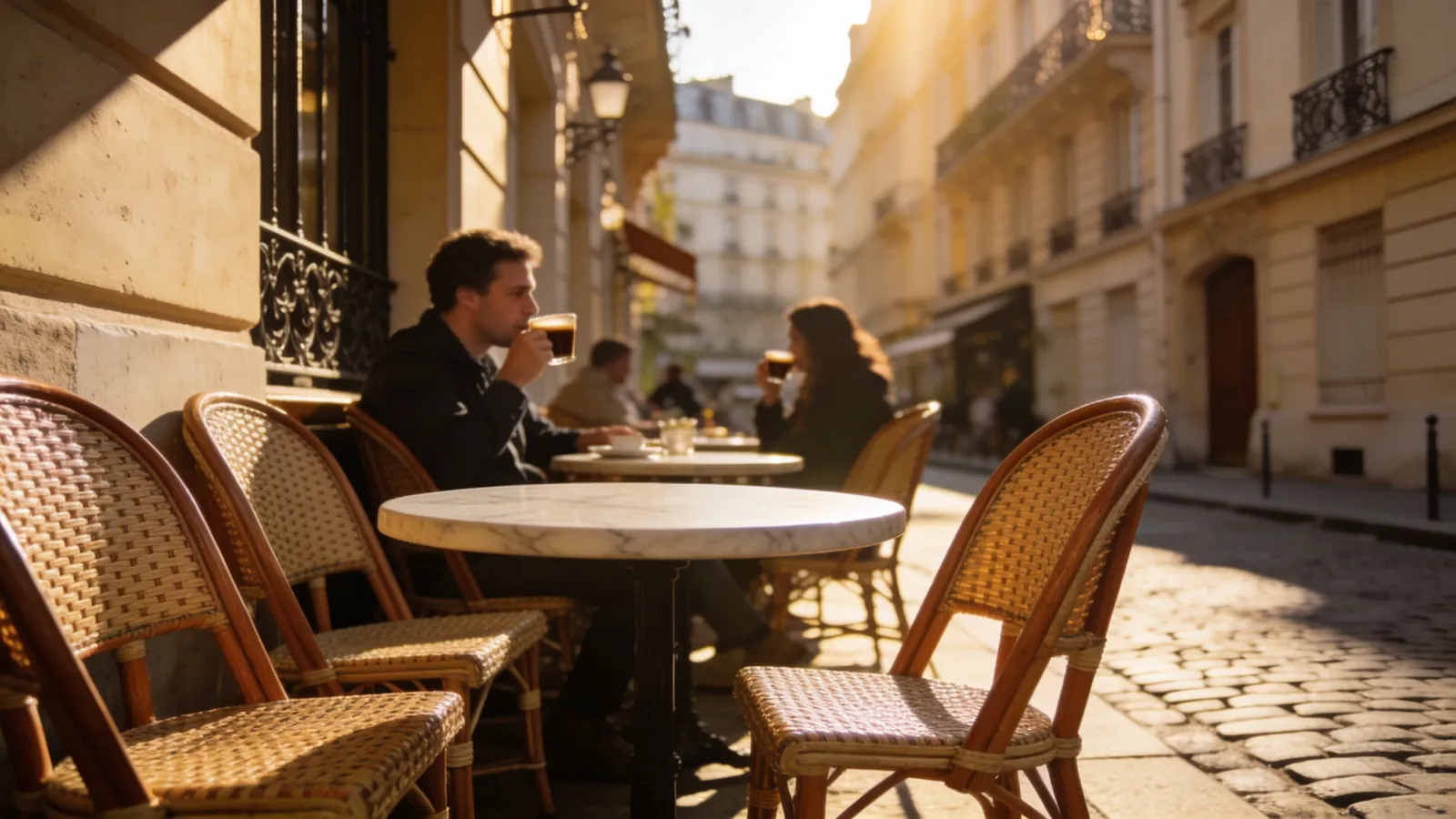
Practically, France is one of the easiest big trips in Europe. The TGV high-speed network crosses the country at 320 km/h, Air France and low-cost rivals blanket every regional airport, and English is reasonably spoken in cities under 40. Prices are middle-of-Europe: a café express at a zinc counter is €1.50, a proper lunchtime formule is €18–22, and a baguette tradition from any neighbourhood boulangerie is still under €1.50. Waiting at the end of all of it is the thing nobody quite prepares you for — the slow, ritualised pleasure of a three-hour French lunch, when the carafe is empty, the cheese plate has just arrived, and nobody at the table has looked at a phone once.
🚴 Tour de France 2027 — The World’s Biggest Free Sporting Event
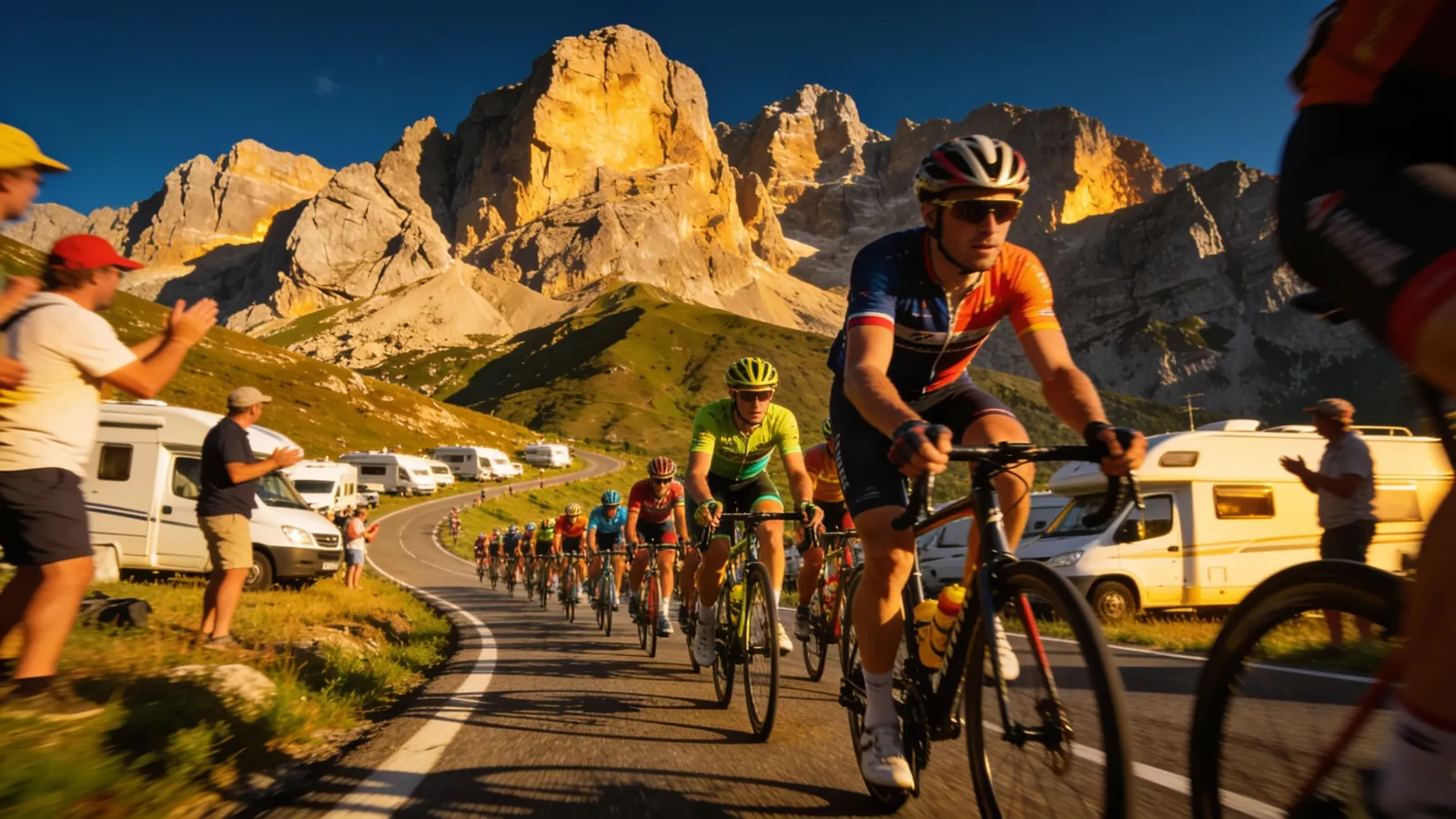
The Tour de France is the largest annual sporting event on Earth that nobody pays to attend — three weeks of bike racing played out as a rolling summer festival through villages, vineyards and mountain passes that draws an estimated 10–12 million roadside spectators every July. The 2027 edition starts on Friday, July 2, 2027 with a Grand Départ in Edinburgh, Scotland, spends three days in Britain, then crosses to France and finishes in Paris on Sunday, July 25, 2027. The full French route is announced in October 2026; this section will be updated when it is. (The 2026 Tour ran July 4–26 from Barcelona.)
- Grand Départ: Friday, July 2, 2027 in Edinburgh — stage 1 to Carlisle, stage 2 from Keswick through the Lake District, stage 3 from Welshpool to Cardiff
- Race duration: July 2 – July 25, 2027 (21 racing stages + 2 rest days)
- Final stage: Sunday, July 25, 2027 in Paris
- Women’s race: the Tour de France Femmes also starts in Britain — Leeds on July 30, 2027, finishing its opening weekend in London on August 1
- Alpine stages: queen stages through the Alps in week two — Alpe d’Huez, Col du Galibier and Col de la Madeleine are the great climbs
- Pyrenees stages: week one or two routing through Tourmalet, Peyresourde, and the Basque Country finishes
- Where to stand: mountain switchbacks for atmosphere (arrive 6+ hours early); village sprint finishes for speed and beer
Best Time to Visit France (Season by Season)
Spring (Mar–May)
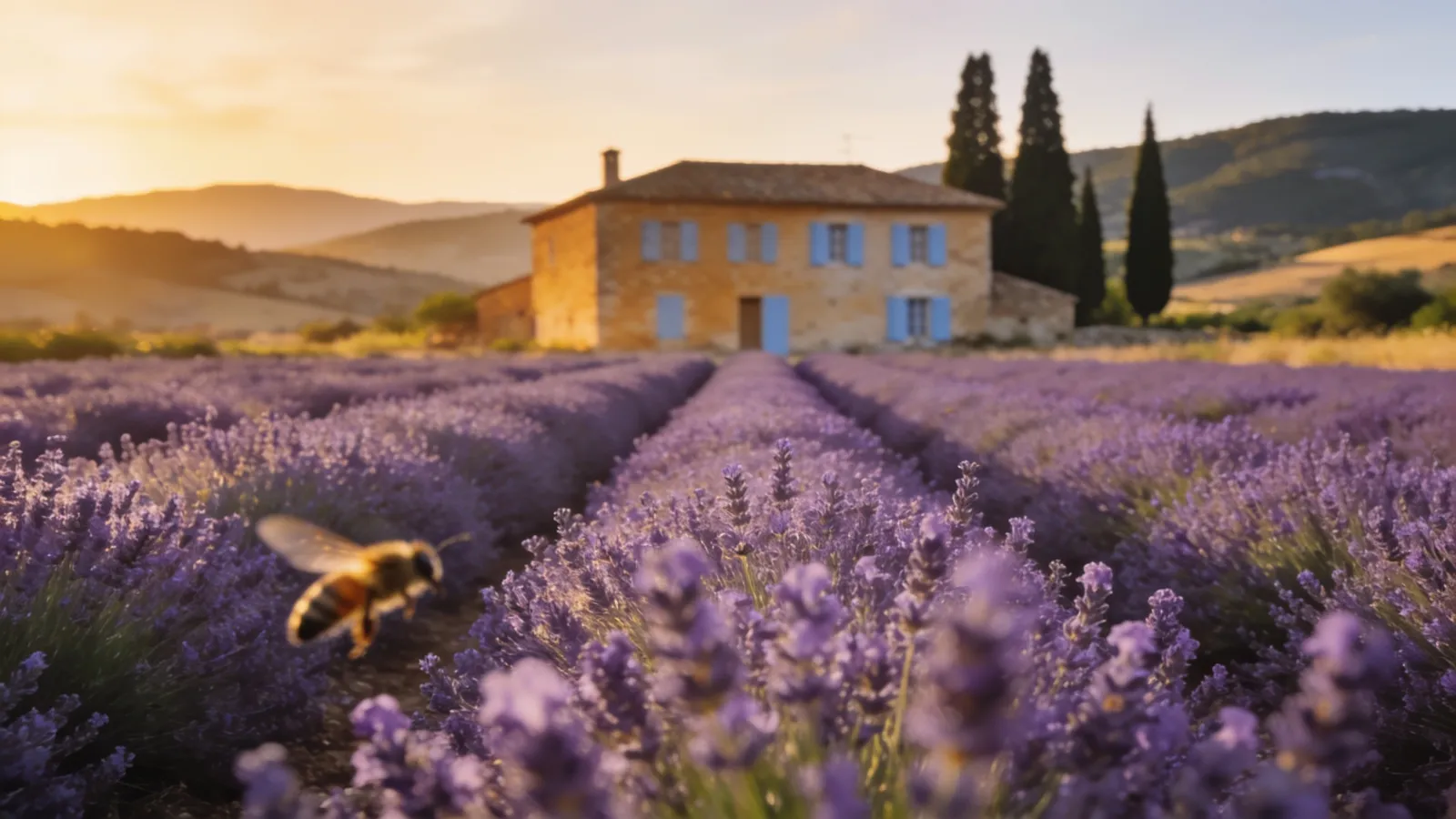
Paris cherry blossoms peak late March through early April at Parc de Sceaux and the Jardin des Plantes, and Provence wakes up slowly — almond trees flower in February, lavender is still brown until June. Temperatures climb from 10°C to 19°C across most of the country and 22°C along the Mediterranean by May. The calendar hits full speed in May: Cannes Film Festival runs mid-month, Monaco Grand Prix the same weekend, and Roland-Garros French Open opens the last Sunday of May through early June. Downside: Paris and the Riviera coincide around the May 1 and May 8 public holidays — museums, banks and many shops close, and May’s “pont” long weekends create travel squeezes.
Summer (Jun–Aug)
Peak tourist season — everywhere. Temperatures run 22–30°C across the mainland and regularly spike to 35°C+ in Paris and the south-west during the now-routine July–August heat domes; Provence and Languedoc cross 38°C. Signature events: Tour de France (July 2–25, 2027), Bastille Day fireworks at the Eiffel Tower on July 14, Avignon Theatre Festival in July, and lavender bloom in Valensole and around Sénanque Abbey from late June through mid-July. Warnings: Paris in August empties of locals (the August exodus is a real thing — shops and restaurants close for two to four weeks), while the Riviera, Biarritz, and Provence book out solidly and quadruple in price.
Autumn (Sep–Nov)
The quiet connoisseur’s season. September is genuinely France’s best month: wine-harvest (vendanges) runs through Bordeaux, Burgundy and Champagne; temperatures slide from 25°C to 10°C across the three months; Paris Fashion Week is the last week of September; and the October Nuit Blanche turns Paris into an all-night free-art city. Beaujolais Nouveau is released at midnight on the third Thursday of November. Post-August, prices drop sharply — hotels in Provence halve, the Riviera calms, and the Loire Valley châteaux reopen at tourist-free scale. November turns wet and grey in the north but the south-west stays walkable.
Winter (Dec–Feb)
Christmas-market country in the east, ski country in the Alps. Strasbourg’s Christkindelsmärik (est. 1570), Colmar’s five-village market, and Reims’ cathedral market run late November through December 24. Alpine ski resorts at Chamonix, Val d’Isère, Courchevel and the Three Valleys open mid-December and run through April. Paris temperatures hover 3–8°C; the Riviera stays mild 8–15°C; the Alps hit −15°C. January is off-season everywhere except the ski slopes — cheap Paris hotels, quiet museums, and Chamonix powder. February half-term (vacances de février) drives up ski prices for two weeks but the shoulders stay a bargain.
Shoulder-season tip: Early September (harvest + warm weather + locals returning) and late April (spring in Paris and Provence, pre-peak prices) are the two windows most first-time travellers miss.
Getting There — Flights & Arrival
France has one intercontinental super-hub at Paris Charles de Gaulle plus dense regional entries — pick CDG for Paris and the north, Nice for the Riviera, Lyon or Marseille for the south.
- Paris Charles de Gaulle (CDG) — France’s largest hub; direct long-haul from North America, Asia, the Middle East and Africa. RER B to Gare du Nord in 25–35 minutes for €11.80.
- Paris Orly (ORY) — Paris’s second airport; Orlyval + RER B to central Paris in ~35 minutes for €14.50.
- Nice Côte d’Azur (NCE) — France’s third-busiest airport; Tram Line 2 to Nice-Ville in 30 minutes for €1.50.
- Lyon Saint-Exupéry (LYS) — Rhône-Alpes hub; Rhônexpress tram to Lyon Part-Dieu in 30 minutes.
- Marseille Provence (MRS) — shuttle to Marseille Saint-Charles in 25 minutes.
Flight times: New York–Paris 7h 30min; London–Paris 1h 15min (or 2h 16min by Eurostar from St Pancras); Tokyo–Paris 13h; Dubai–Paris 7h 30min.
Flag carriers: Air France (SkyTeam), Transavia France, Air Corsica.
Visa / entry: Schengen rules apply — citizens of the US, UK, Canada, Australia, Japan, South Korea and 60+ other countries enter visa-free for up to 90 days in any 180-day window. Coming soon: visa-exempt travellers will need an ETIAS pre-authorisation (expected fee €20). As of September 2026 the EU has not set a start date — expect late 2026 at the earliest and quite possibly 2027, with several months’ notice before launch.
Getting Around — The TGV & the Art of French Rail
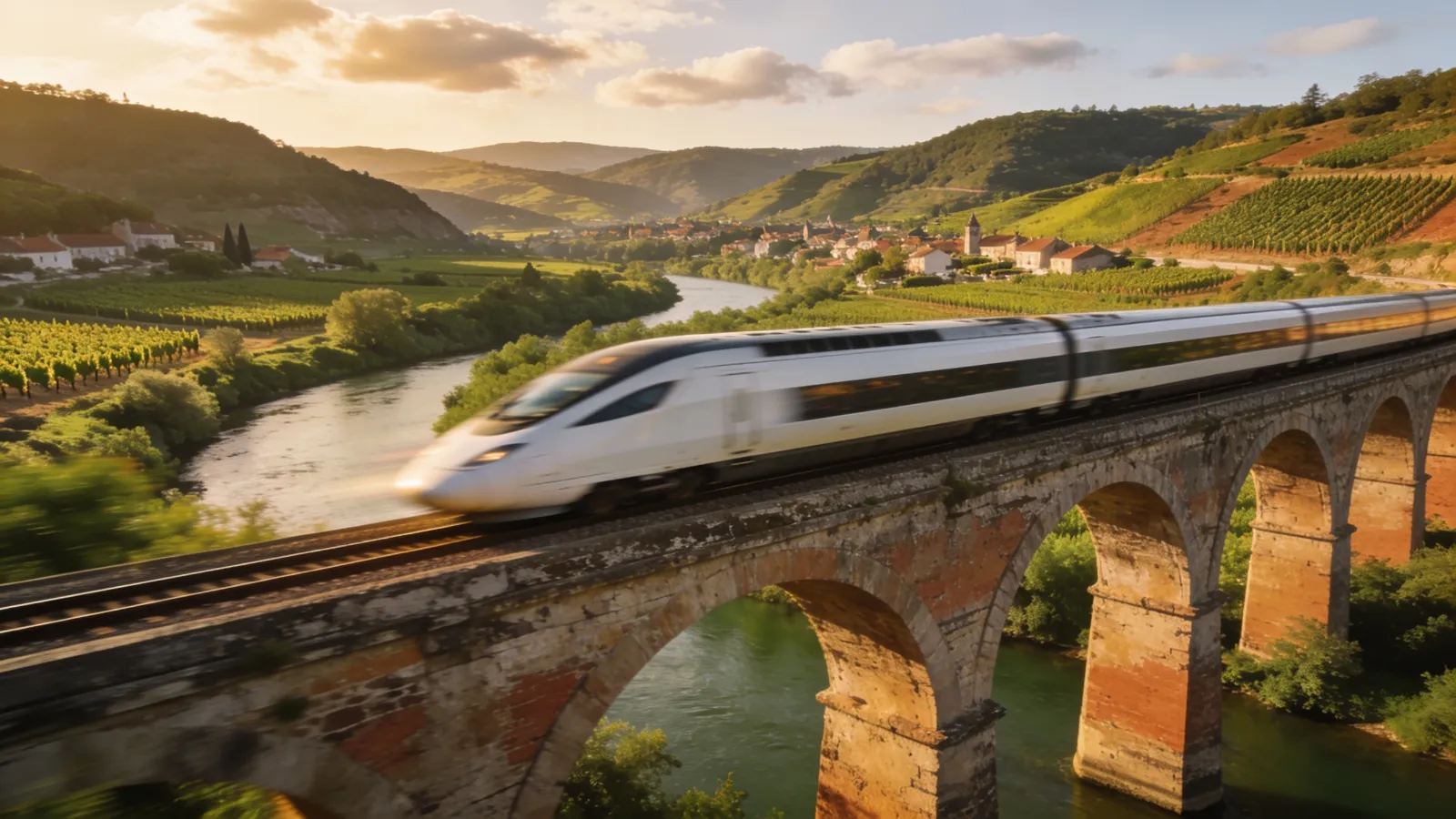
France runs on rail. SNCF operates the TGV (Train à Grande Vitesse) high-speed network, the prototype that inspired every bullet-train line built after it; top speeds hit 320 km/h on the Paris–Marseille, Paris–Bordeaux and Paris–Strasbourg lines, and the network radiates out from Paris to cover the whole country. Cars are useful in Provence, the Loire Valley, Alsace and the Dordogne; everywhere else between cities, the TGV is faster door-to-door than flying.
- TGV InOui: the premium SNCF high-speed service; max speed 320 km/h on dedicated LGV (ligne à grande vitesse) lines.
- Paris → Marseille: 3h 10min by TGV (Gare de Lyon → Saint-Charles).
- Paris → Lyon: 1h 57min by TGV (Gare de Lyon → Part-Dieu).
- Paris → Bordeaux: 2h 4min by TGV (Montparnasse → Saint-Jean).
- Paris → London: 2h 16min by Eurostar direct (Gare du Nord → St Pancras).
TGV Ouigo: SNCF’s low-cost TGV brand on the same high-speed rails — book 2–3 months ahead and Paris–Lyon drops to €19, Paris–Bordeaux €25, Paris–Marseille €29. Ouigo has stricter luggage and boarding rules (no changes, reserved printouts) but runs the same tracks as the €90 premium service.
City transit: Paris Navigo weekly pass €30.75 (Mon–Sun, all 5 zones, valid on metro/RER/bus/tram); Lyon TCL day pass €6.90; Marseille RTM day pass €5.50. All major cities now accept contactless bank-card tap.
Apps: SNCF Connect (national rail bookings), Bonjour RATP (Paris metro), Citymapper (Paris & Lyon).
Top Cities & Regions
📍 Map of France: Every Place in This Guide
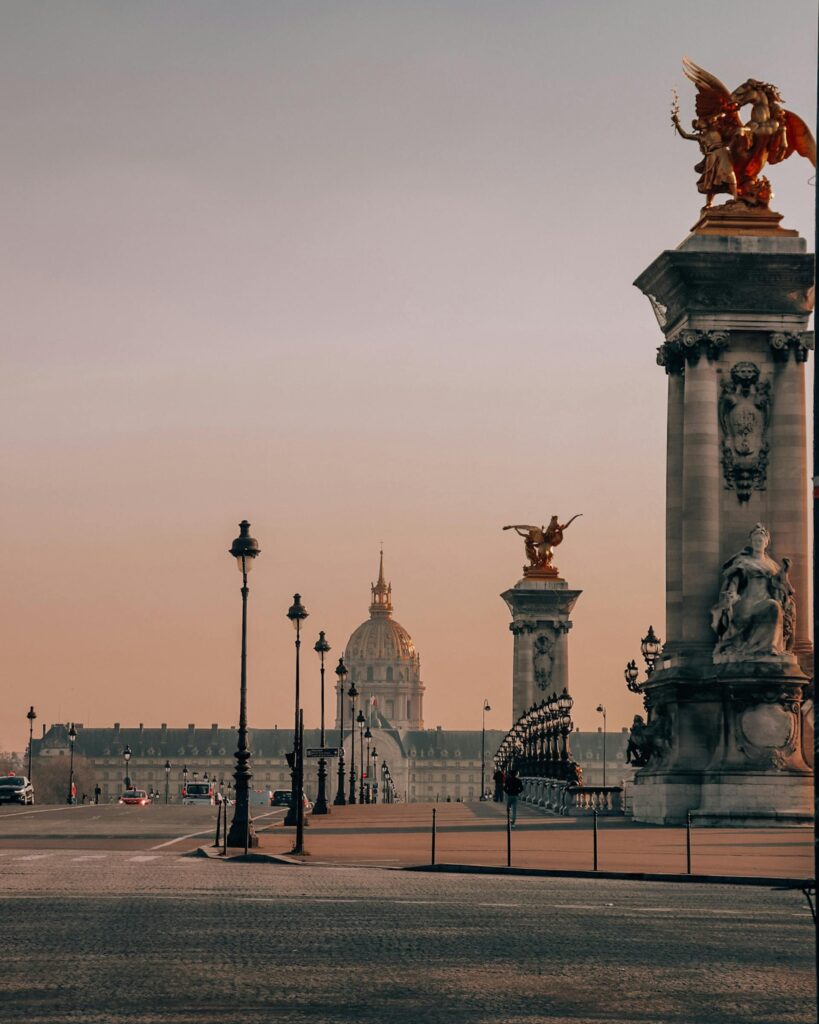
🗼 Paris
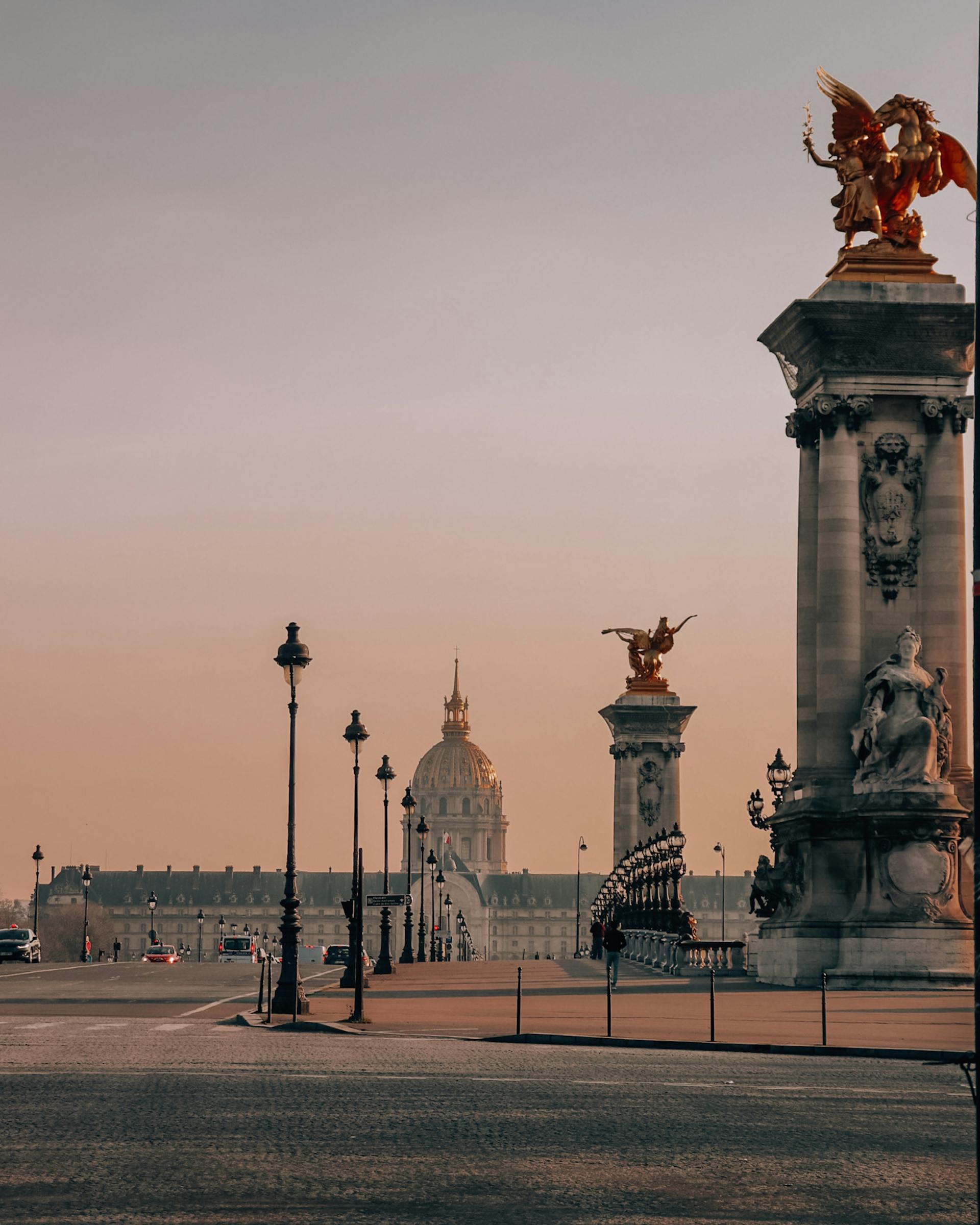
The capital — Haussmann boulevards, twenty arrondissements spiralling outward from the Seine, and the centre of French political, cultural and culinary life since the 12th century. Parisians see themselves as faster, thinner and better-dressed than the rest of France. The rebuilt Notre-Dame reopened December 2024 after the 2019 fire, and the Louvre remains the world’s most-visited museum with roughly 8.7 million annual visitors.
- Eiffel Tower (1889, 330 m) & Champ-de-Mars; Trocadéro for the postcard photo
- Louvre, Musée d’Orsay, Musée de l’Orangerie, Centre Pompidou (closed for 2025–2030 renovation)
- Notre-Dame, Sainte-Chapelle, Sacré-Cœur Montmartre, the Marais, Le Père Lachaise
Signature eats: Steak frites at a Marais bistro, croissants at Du Pain et des Idées, escargots at Allard, jambon-beurre from a boulangerie, crème brûlée at Le Comptoir du Relais.
🌴 Nice & the Côte d’Azur
The Riviera capital — pebble beaches, ochre Italianate old town, and the jumping-off point for Cannes, Monaco and the Corniches. Nice was Italian until 1860 and the accent still shows on every menu. The Promenade des Anglais curves along the Baie des Anges and is UNESCO-listed.
- Promenade des Anglais, Baie des Anges & Colline du Château viewpoint
- Vieux Nice, Cours Saleya flower market, Place Masséna, Cimiez Roman ruins
- Matisse Museum, MAMAC, day trips to Èze, Monte-Carlo, Cannes & Saint-Paul-de-Vence
Signature eats: Socca (chickpea pancake) at Chez Pipo, salade niçoise, pissaladière, pan bagnat, rosé de Provence.
🍷 Lyon
France’s gastronomic capital — a UNESCO-listed Renaissance old town wrapped between the Rhône and the Saône, two thousand years of Roman heritage, and the hometown of Paul Bocuse. Lyon invented the bouchon, the family-run restaurant format that serves the offal-rich dishes of the Rhône Valley.
- Vieux Lyon UNESCO Renaissance quarter & the traboules (hidden courtyard passageways)
- Basilique Notre-Dame de Fourvière & the Gallo-Roman theatre above the old town
- Les Halles de Lyon–Paul Bocuse food hall; Fête des Lumières (December 5–8, four nights)
Signature eats: Quenelles de brochet, saucisson brioché, tablier de sapeur, praline tart, cervelle de canut, Beaujolais by the pichet.
🍇 Bordeaux & the Wine Country
South-west France’s capital — 18th-century stone facades along the Garonne, a tram-calmed centre, and sixty-five AOC appellations ringing the city. Saint-Émilion (UNESCO-listed), the Médoc châteaux and Sauternes are within 90 minutes of Place de la Bourse. Arcachon Bay and the 110-metre Dune du Pilat sit an hour west.
- Place de la Bourse & the Miroir d’eau reflecting pool
- La Cité du Vin wine museum with a panoramic tasting rooftop
- Saint-Émilion, Médoc châteaux (Margaux, Pauillac), Arcachon & the Dune du Pilat
Signature eats: Canelé de Bordeaux, entrecôte à la bordelaise, huîtres d’Arcachon, magret de canard, Sauternes, Saint-Émilion reds.
⛵ Marseille & Provence
France’s oldest city — founded by Greek colonists around 600 BC — and the gateway to Provence. The Vieux-Port, the Calanques National Park, and the Panier district have reset Marseille’s reputation. Inland, Provence delivers the postcard: Aix, Avignon, Arles, the Luberon and lavender from late June through mid-July.
- Vieux-Port, MuCEM, Notre-Dame de la Garde, Le Panier, Cours Julien
- Calanques National Park (cliffs & turquoise coves; boat from Vieux-Port)
- Day trips: Aix, Cassis, Avignon, Arles (Van Gogh), Luberon villages, Pont du Gard
Signature eats: Bouillabaisse, aïoli, pastis, ratatouille, tapenade, pieds paquets, Provençal rosé.
🏰 Loire Valley & Mont Saint-Michel
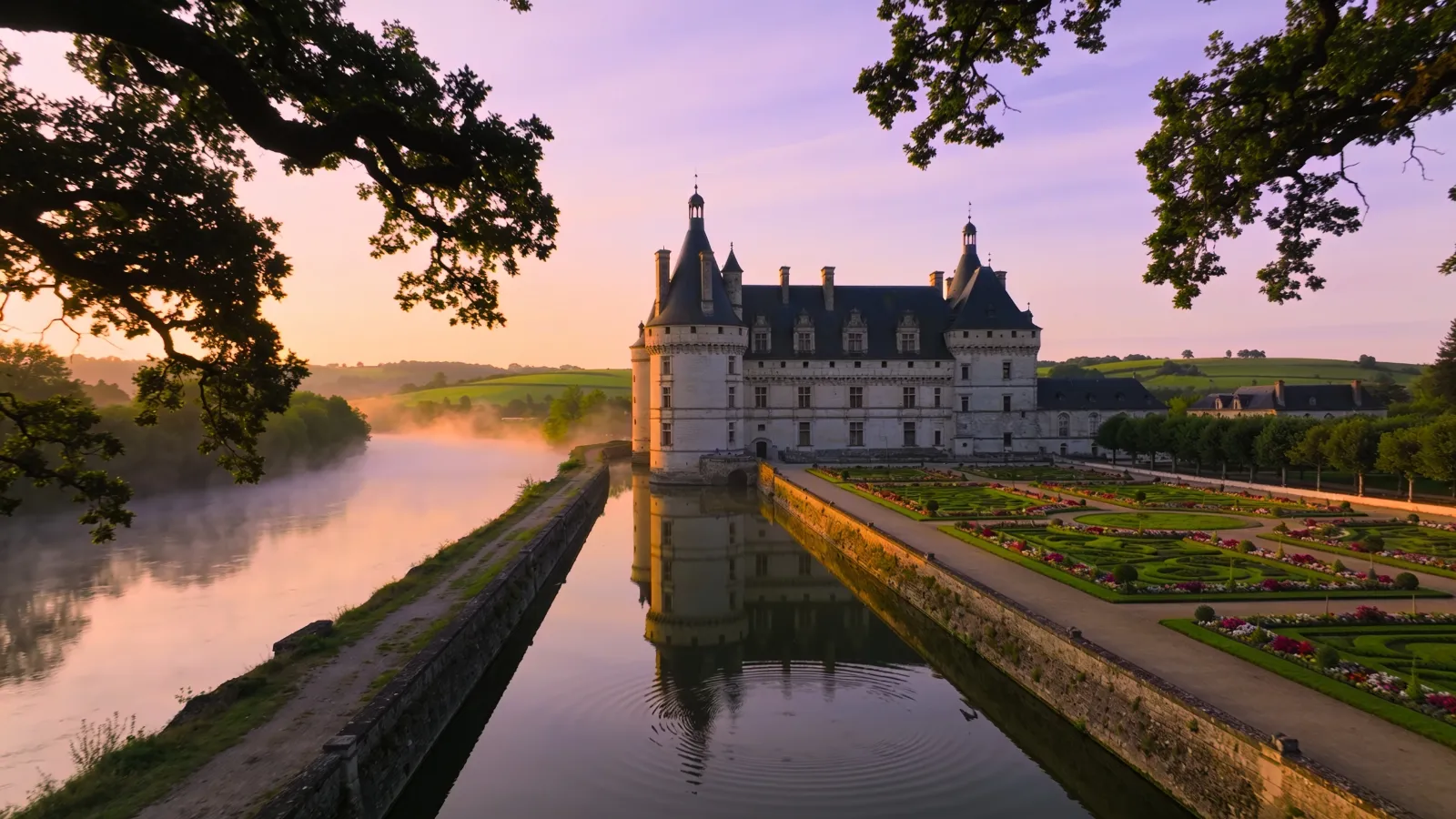
The royal châteaux country. A 280-km UNESCO stretch of the Loire is studded with roughly three hundred castles, including Chambord’s Leonardo-designed double-helix staircase and the river-spanning Chenonceau. Add Mont Saint-Michel — the tidal-island monastery in Normandy — and you have France’s deepest concentration of medieval-to-Renaissance architecture.
- Chambord, Chenonceau, Villandry, Cheverny, Amboise (Leonardo’s tomb at Clos Lucé)
- Tours, Blois or Saumur as a base; bike the 900-km Loire à Vélo greenway
- Mont Saint-Michel UNESCO abbey; Bayeux Tapestry & Normandy D-Day beaches 60 km north
Signature eats: Rillettes de Tours, tarte Tatin, goat cheeses (Crottin, Sainte-Maure), Sancerre, Vouvray, galette bretonne.
French Culture & Etiquette — What to Know Before You Go
French culture rewards formality, patience, and treating a meal as the centrepiece of the day. Regional identity runs deep — a Breton, an Alsatian, a Corsican and a Niçoise see themselves as distinct peoples — but the national baseline is consistent: the greeting, the handshake, the vous form, the proper order of the meal. The Paris–province divide is real: Parisians have a reputation for being faster, more direct, and less patient than the rest of France, broadly accurate and broadly resented outside the périphérique.
The Essentials
- Always open with “Bonjour madame” or “Bonjour monsieur” when entering any shop, bakery, pharmacy, or elevator — skipping the greeting is read as rude, not efficient.
- Use vous (formal “you”) by default. Switch to tu only when invited, or with children and close friends of the same age.
- Lunch is a real meal. Many independent shops, boulangeries and small restaurants close 12h–14h for lunch; plan errands and sightseeing around it.
- Bread is eaten with the meal — broken by hand and placed directly on the tablecloth, not on a bread plate. Dipping a crust in sauce at the end of the plate is the saucer move and is allowed.
- Tipping is not automatic. Service is legally included on every restaurant bill (service compris). Round up €1–€2 at a café, leave 5% at a sit-down dinner, nothing at counter service.
The French Meal Ritual
- Order wine by the glass (un verre) or by the pichet — the small earthenware jug in 25 cl or 50 cl is the locals’ trick and usually a third cheaper than glass pours.
- Apéritif first (kir, pastis, champagne), then starter, main, cheese course, dessert, coffee — coffee never comes WITH dessert, it arrives after.
- Lunch is the business meal. A 2-course formule at midday is €18–22 in the provinces and almost always better value than dinner.
- Ask for “une carafe d’eau, s’il vous plaît” for free tap water — legally obligatory at any food-serving restaurant and never a second-class request.
A Food Lover’s Guide to France
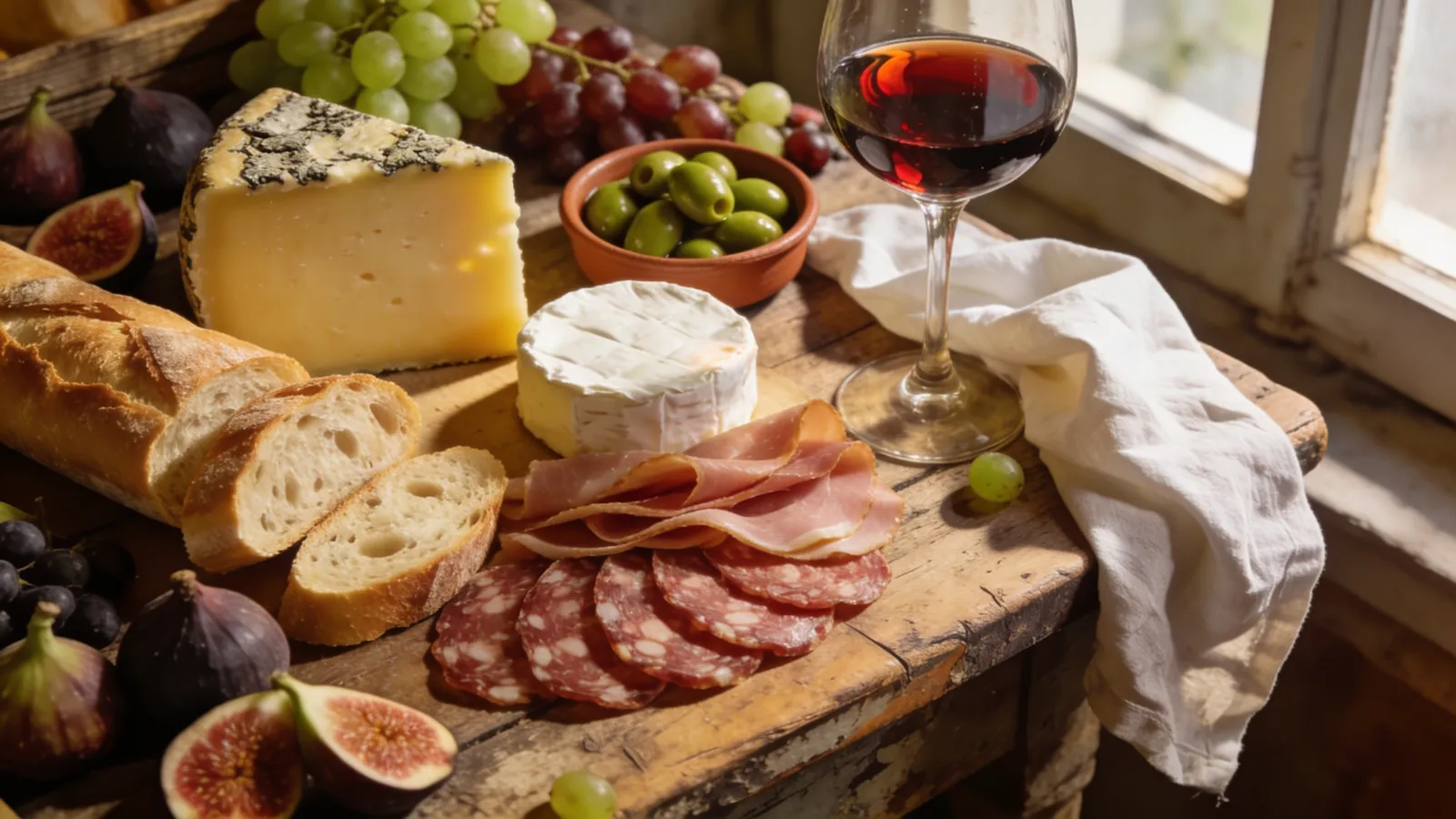
French food is regional before it is national. Breton crêpes, Alsatian choucroute, Lyonnais bouchon offal, Provençal bouillabaisse, south-western cassoulet and Parisian bistro steak frites are six separate cuisines inside one country. The terroir concept underpins the AOC (Appellation d’Origine Contrôlée) system that legally protects more than 300 French products — cheeses, wines, butters, chickens, honeys — from being made anywhere but their protected origin. Michelin, founded in 1900, still lists France as the single most-starred country on Earth.
Must-Try Dishes
| Dish | Description |
|---|---|
| Croissant & Pain au Chocolat | Laminated, all-butter breakfast pastries at any proper boulangerie. A croissant au beurre from a good Paris bakery is €1.30–€1.80; pain au chocolat €1.50–€2.20. A baguette tradition (additive-free, by law) is €1.30–€1.50 and legally made on-premises. |
| Steak Frites | France’s national bistro plate — onglet or bavette steak cooked rare to medium, served with crisp frites and béarnaise or peppercorn sauce. The classic Paris move is Le Relais de l’Entrecôte’s fixed menu: entrecôte, fries, green-herb butter, all you can eat. |
| Coq au Vin | Rooster braised in red Burgundy wine with lardons, pearl onions and mushrooms. A Sunday-lunch dish historically used an older, tougher bird that needed hours of low braising to surrender — modern coq au vin is faster but still built around the dark, reduced sauce. |
| Bouillabaisse | Marseille’s saffron-scented rockfish stew, served in two courses: the broth with rouille and toasted baguette first, the fish second. A proper bouillabaisse uses at least four species of Mediterranean rockfish (rascasse, red mullet, conger, scorpion fish) and takes three hours to build. |
| Cassoulet | Occitan bean-and-meat casserole from Castelnaudary, Carcassonne or Toulouse — white haricot beans slow-simmered with duck confit, Toulouse sausage and sometimes mutton, under a breadcrumb crust. Each town claims the definitive version; the three-way feud is unresolved. |
| Soupe à l’Oignon Gratinée | French onion soup — deeply caramelised onions in beef broth, topped with a baguette crouton and bubbling Gruyère. Originally a 3am porters’ supper at the Les Halles market in Paris; now a bistro staple everywhere. |
| Crème Brûlée | Chilled vanilla-bean custard under a cracked torched-sugar lid, made from cream and egg yolks. The dessert after cheese at every bistro worth the name; the spoon-crack on the caramelised top is the whole point. |
Boulangerie & Market Culture
France has no konbini — it has the boulangerie and the open-air market. Every French neighbourhood has at least one artisan bakery opening before 7am for the morning baguette rush; by law a baguette tradition must be made on-premises from only flour, water, salt and yeast without additives, and Paris runs an annual Grand Prix de la Baguette that picks the city’s best loaf. Outdoor markets (marchés) still anchor food life — Parisian arrondissements host one twice a week, and towns across Provence, the Dordogne and Brittany keep weekly markets that date to the Middle Ages.
- Chains: Paul (national bakery), Maison Kayser, Brioche Dorée.
- Signature items: baguette de tradition (€1.30–€1.50), pain au chocolat, chausson aux pommes, quiche lorraine slice, jambon-beurre sandwich, sandwich grec, a petit café at the zinc counter for €1.50.
At the top end, France has 668 Michelin-starred restaurants in the 2026 Guide (31 of them with three stars) — the highest count in the world. A three-star tasting at Guy Savoy or L’Ambroisie in Paris settles around €500–€700 per person with wine; in the regions, Troisgros outside Roanne and Maison Pic in Valence are cheaper and often better-experienced.
Off the Beaten Path — France Beyond the Guidebook
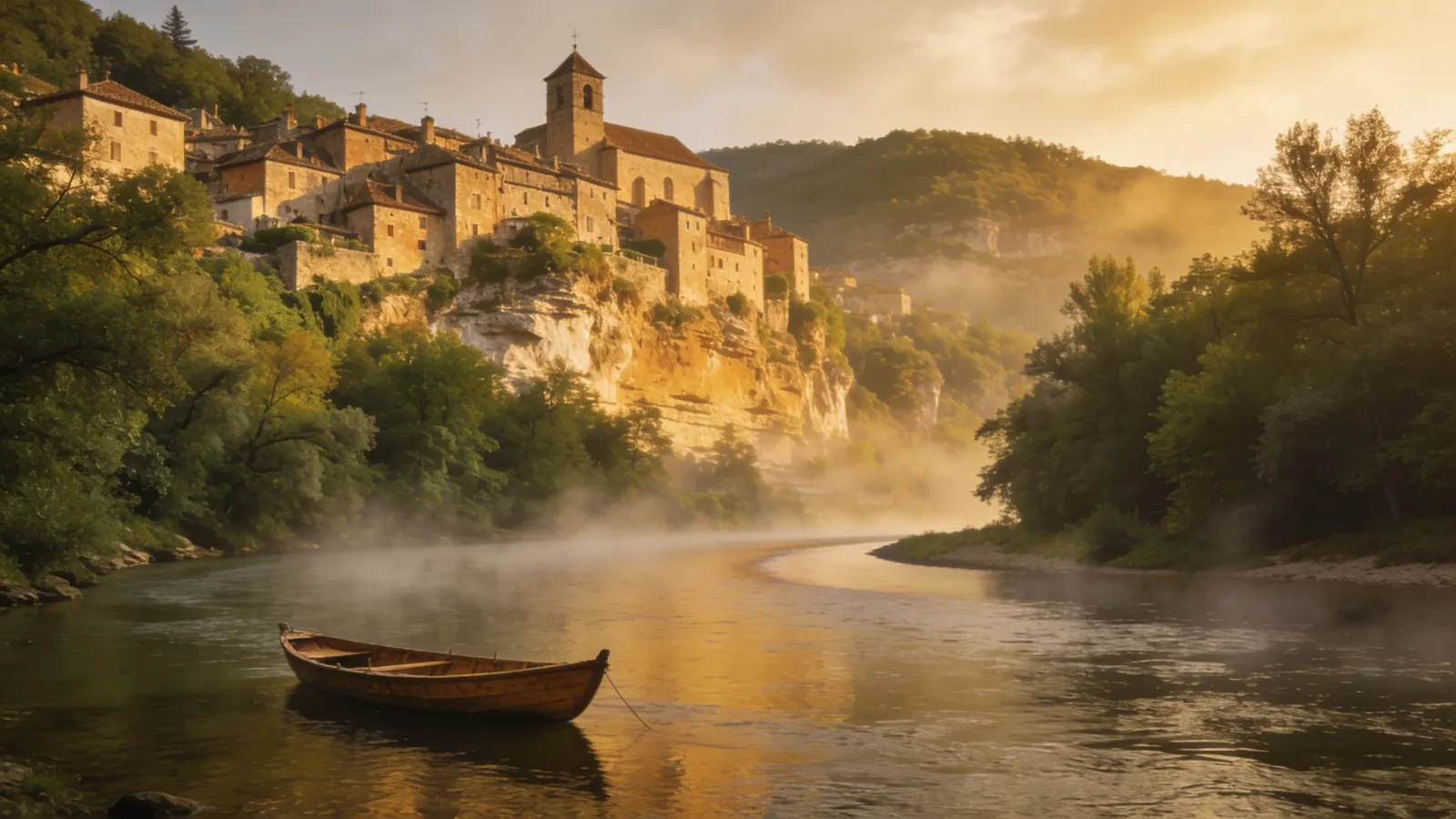
Étretat & the Alabaster Coast, Normandy
The chalk-cliff arches and the 70-metre Aiguille needle at Étretat on the Alabaster Coast are where Monet painted his 1885 ‘Manneporte’ series and where a proper writer’s weekend still works. A two-hour train from Paris Saint-Lazare gets you to Le Havre; a 30-minute bus finishes the trip. Walk the GR-21 clifftop trail at dawn and you’ll have the Porte d’Aval arch to yourself before the day-trippers arrive. Nearby Yport and Fécamp are quieter, cheaper, and full of Normandy cider, Bénédictine liqueur (invented in Fécamp), and salt-scented whiting.
Gordes & the Luberon, Provence
The perched stone villages of the Luberon Regional Natural Park — Gordes, Roussillon (the ochre village), Bonnieux, Ménerbes, Lourmarin — are where Peter Mayle wrote ‘A Year in Provence’ in 1989 and where today’s Parisians buy stone farmhouses. Lavender blooms late June through mid-July; the Sénanque Abbey photo (abbey backed by 10 hectares of lavender rows) is the one you’ve already seen. The summer Roussillon ochre trails feel like walking through a Cézanne palette, and the Apt Saturday market is the single best food market south of Lyon.
Saint-Malo & the Emerald Coast, Brittany
A walled corsair city on the Channel, rebuilt stone-by-stone after 1944 bombing — the granite ramparts are free to walk and the tides here are among Europe’s largest, with 14-metre ranges producing the signature “grandes marées” twice a year. Nearby Dinard (Belle Époque villas), Cancale (oysters at the port stalls, €6 the dozen), and the tidal-island monastery of Mont Saint-Michel are each within 45 minutes by car. Arrive direct from Paris Montparnasse by TGV in 2h 18min.
Annecy & the Haute-Savoie Alps
Lake Annecy, at the foot of the Alps, is officially Europe’s cleanest lake — drinkable tap-quality water, 12-metre visibility — and the old town is a canal-laced miniature Venice that gets overrun in August and empties the other eleven months. Winter skiing at Chamonix, La Clusaz and the Portes du Soleil is 90 minutes by car; summer means lake swimming, paragliding off the Col de la Forclaz (1,150 m) and cycling the 34-km lakeside greenway (Voie Verte du Lac) that loops the whole shoreline.
Collioure & the Catalan South, Occitanie
The bell-tower harbour of Collioure, ten kilometres from the Spanish border, is where Matisse and Derain invented Fauvism in the summer of 1905 — the light here is genuinely different. The village anchors the Vermeille Coast, France’s most southerly and least-English-speaking Mediterranean beaches; drive 20 minutes inland and you’re in the Pyrenean vineyards of Banyuls-sur-Mer and the Côtes du Roussillon. Avoid July–August weekends when everything doubles in price; target May, June, September or October instead for calm water and real prices.
Practical Information
| Currency | Euro (€ / EUR); 1 CAD ≈ 0.62 EUR · 1 USD ≈ 0.87 EUR (September 22, 2026) |
| Cash needs | Visa and Mastercard widely accepted; AMEX patchy outside Paris. Small boulangeries, rural markets and some cafés require a €5–€10 minimum for card or are cash-only. Carry €50–€100 in small notes. |
| ATMs | Distributeur Automatique (DAB) at every bank branch — BNP Paribas, Société Générale, Crédit Agricole, Banque Populaire. Decline dynamic currency conversion to save 3–5%. |
| Tipping | Service compris is included by law on every restaurant bill. Round up €1–€2 at a café; 5% for sit-down service; nothing at counter service, bars, or bakeries. |
| Language | French. English reasonable in Paris and tourist-facing businesses among under-40s; thinner in small towns and among older generations. Google Translate camera mode handles menus and signs. |
| Safety | Generally safe. Pickpocketing at the Eiffel Tower, Gare du Nord, Paris Metro Line 1, and Barbès-Rochechouart is the main tourist risk. |
| Connectivity | 4G/5G coverage from Orange, SFR, Bouygues, Free. EU visitors use home-price roaming; others should buy an eSIM (Airalo, Holafly, Orange Holiday). |
| Power | Type E (French-style, male earth pin) plugs; 230V / 50 Hz |
| Tap water | Safe and free nationwide. Ask for “une carafe d’eau” at any restaurant — it is legally obligatory. |
| Healthcare | EU-standard public hospitals. EU visitors use EHIC/GHIC; others need travel insurance. Green-cross pharmacies are ubiquitous; the on-duty night pharmacy (pharmacie de garde) is posted on every closed door. |
Budget Breakdown — What France Actually Costs
💚 Budget Traveller
Hostels (HI, Generator, St Christopher’s, MIJE Paris), supermarket lunches from Monoprix or Carrefour, Ouigo tickets booked six weeks early, and one museum a day. Doable at €70–€110 per day (~US$75–$120), with Lyon, Bordeaux and Marseille the cheaper big cities and Paris and the Riviera the most expensive. A boulangerie breakfast is €4, a jambon-beurre lunch €6, a crêpe or kebab dinner €10, a supermarket bottle of decent Côtes du Rhône €5.
💙 Mid-Range
Three-star hotel or a boutique B&B, one proper sit-down meal and one café/terrace meal a day, standard TGV tickets booked six weeks ahead, and paid entries to two or three major sights per day. Plan €180–€280 per day (~US$190–$300). Paris and the Riviera in high season push the top of that range; elsewhere in France €180 buys more than you expect — Lyon, Bordeaux and Provence settle comfortably in the middle.
💜 Luxury
Five-star palaces (Le Bristol, Le Meurice, Ritz Paris, Cheval Blanc Paris, Four Seasons George V), TGV first-class (Pro), Michelin-starred tasting menus with wine pairings, and private drivers for Loire or Champagne day trips. Plan €500+ per day (~US$550+). A one-star Michelin dinner in Lyon or Bordeaux with paired wines is €120–€180; a three-star tasting at Guy Savoy, Pic or Troisgros is €300–€600 per person. The Paris palace-hotel minimum in high season is roughly €1,200 per night.
| Tier | Daily (USD) | Accommodation | Food | Transport |
|---|---|---|---|---|
| Budget | $75–$120 | Hostel €35–€55 / budget hotel €65–€95 | €20–€35/day | Ouigo €10–€29; Navigo weekly €30.75 |
| Mid-Range | $190–$300 | 3-star hotel €120–€200 | €60–€100/day | TGV €45–€90 intercity |
| Luxury | $550+ | 5-star palace €1,200–€2,500+ | €200–€500/day | TGV Pro first-class €150–€300; private driver €600+/day |
Planning Your First Trip to France
- Pick your shape. Choose ONE of: Paris + Loire (first-timers), Paris + Lyon + Provence + Riviera (the classic 10-day TGV loop), or Paris + Normandy + Brittany. Three regions means most of your trip on trains.
- Book TGV tickets 6 weeks early on SNCF Connect. Ouigo fares start at €19 on Paris–Lyon and €25 on Paris–Bordeaux; wait a month and it doubles.
- Buy major-site tickets online, timed-entry. Louvre, Eiffel Tower, Versailles, Sainte-Chapelle and Mont Saint-Michel Abbey all require pre-booked slots in high season.
- Lock your seasonal pick. Tour de France (July 2–25, 2027), Cannes (mid-May), Bastille Day, Provence lavender and Strasbourg’s Christmas market are the signature seasons — all need accommodation booked 4+ months ahead.
- Plan around lunch. Many towns shut 12h–14h — museums, pharmacies, independent shops and rural petrol-station boutiques all close.
Classic 10-Day Itinerary: Days 1–3 Paris · Day 4 TGV to Lyon (bouchon dinner) · Day 5 TGV to Avignon, pick up car · Days 6–7 Provence (Luberon, Arles, Pont du Gard) · Day 8 drive to Nice via Aix & Cannes · Days 9–10 Riviera (Èze, Monaco day trip) before flying home from NCE.
Frequently Asked Questions
Is France expensive to visit?
Paris and the Riviera are priced with London and New York; the rest of France is on par with Spain or northern Italy. Budget travellers manage €70–€110 per day with hostels and supermarket picnics; mid-range €180–€280. Lyon, Bordeaux and Marseille are the affordable big cities; Paris in Fashion Week and the Riviera in August are the priciest.
Do I need to speak French?
No, but a few words unlock entire rooms. “Bonjour madame / monsieur” on entry, “merci” on exit, and “l’addition, s’il vous plaît” for the bill cover 80% of interactions. English is reasonable in Paris, the Riviera and tourist sites among under-40s; thinner in small-town bakeries. Google Translate handles menus.
Five minutes, twenty phrases, said out loud. Want to practise them with a real conversation? Book a free phone class with Maya, our AI language coach.
Is a rail pass worth it?
Usually no — advance-purchase TGV tickets (especially Ouigo) beat Eurail on short France-only trips. A France Eurail pass runs €226–€380; six advance-booked TGV legs total €120–€180. Passes pay off only for 8+ long-distance trains across multiple countries, or inside 14 days when fares spike.
Is France safe for solo travellers?
Yes, broadly — violent crime against visitors is uncommon and French cities stay walkable at night in central districts. Main risks: pickpocketing at the Eiffel Tower, Gare du Nord, Paris Metro Line 1 and Barbès-Rochechouart; scams around the Sacré-Cœur steps. Keep your phone out of back pockets and watch bags on cafe terraces.
When is the next Tour de France?
The 2027 Tour de France runs Friday July 2 to Sunday July 25, 2027. It starts in Edinburgh, Scotland, with three stages in Britain before crossing to France, and finishes in Paris. The full French route is announced in October 2026. Alps and Pyrenees mountain stages offer the best roadside atmosphere; book finish-town hotels 4+ months ahead.
Can I get by as a vegetarian or vegan?
In Paris, Lyon, Bordeaux and the university towns — easily. Dedicated vegan bistros are well established and any modern bistro has a vegetarian main. In meat-leaning regions (Alsace, Lyonnais bouchons, cassoulet country) you’ll rely on cheese plates, salade composée and omelettes. Download HappyCow.
What’s with the August shutdown and the strikes?
Two real French things. In August, much of Paris closes — small restaurants and whole neighbourhoods shut for two to four weeks as the city empties. And strikes (grèves) are a long-running feature of public life: expect periodic one-day SNCF and RATP actions that cut rail and Metro service. Check sncf-connect.com the night before travel and carry a Plan B.
Ready to Explore France?
France rewards travellers who slow down — pick a region, book six weeks ahead, learn five French words, and let lunch last two hours. Start in Paris for the monuments, Lyon for the food, Provence for the light, or the Loire for the châteaux.
Explore More
Cities we cover in France
More country guides you might like

Plan your trip to France
The booking tools we use ourselves. FFU may earn a commission at no extra cost to you.
Plan & book your trip to France
Booking through these searches supports our guides at no extra cost to you.