
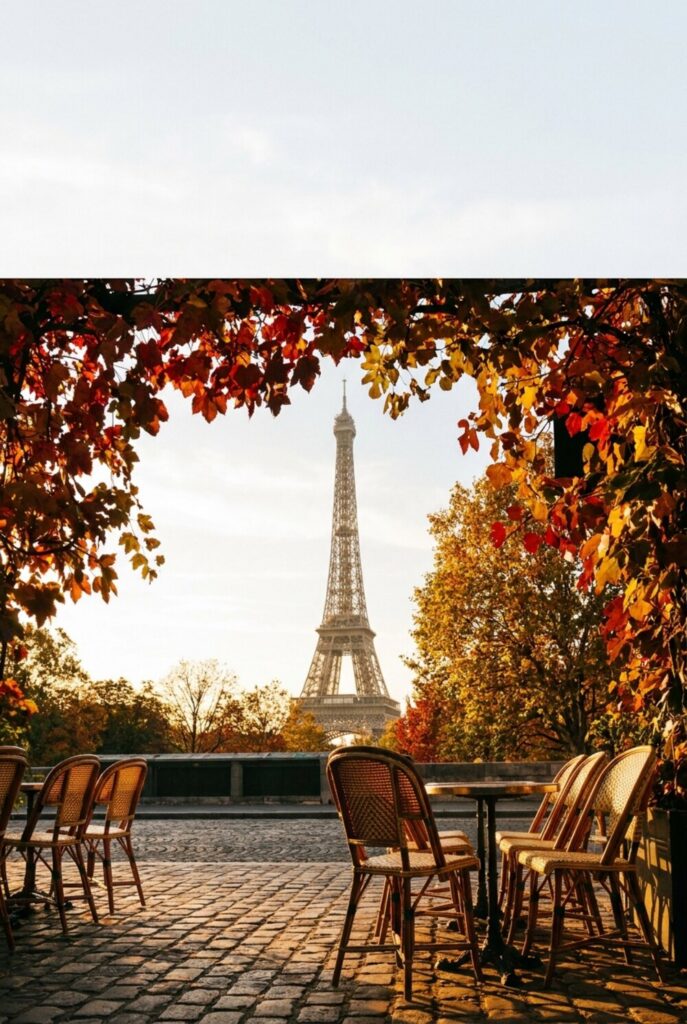
City Guide · Île-de-France
Paris, France: Haussmann Boulevards, Twenty Arrondissements, and the World’s Densest Michelin Map
Part of our France travel guide.
I have walked every one of Paris’s twenty arrondissements at least twice and still leave each visit with a list of bistros I missed. We tell first-time travellers that the city is small — about 2.1 million people inside the périphérique, ringed by an Île-de-France region of roughly 12.3 million — and that the whole 105 square kilometres can be crossed on foot in an afternoon if you skip the museums. My favourite Paris ritual is the 07:45 boulangerie shift on a quiet Marais side-street with a counter espresso and a still-warm pain au chocolat, before the city wakes up and the Métro starts moving four million passenger trips for the day . Treat this guide as the brief I would hand my own family the day before they boarded the RER B from Charles de Gaulle — the post-Olympics city, the restored Notre-Dame, the Navigo-Easy carnet, the long lunch formule and the rest .

Table of Contents
Why Paris?
Paris is the rare world capital that has spent 2,000 years refining a single idea — that a city can be simultaneously a museum, a kitchen, a fashion show, and a functioning 12-million-person metropolis — and it still hands you all four within a single afternoon walk. The Île-de-France region packs roughly 12.3 million residents into the Seine basin, with about 2.1 million inside the 20-arrondissement périphérique boundary itself . Those 2.1 million live at a density of roughly 20,000 per square kilometre — almost three times Tokyo’s, twice Barcelona’s — compressed into 105 square kilometres of Haussmann boulevards, medieval lanes, and 19th-century covered arcades.
The city reads as a series of productive contradictions. It is officially monumental — seven-kilometre Haussmann sightlines, gilded domes, the Arc de Triomphe framing the Grande Arche at La Défense — yet daily life happens in tight two-table café pavements and in the 39 neighbourhood-scale outdoor markets that operate twice a week. It is the world capital of haute cuisine, with more than 119 Michelin stars awarded in 2025, the densest concentration of starred kitchens on the planet — and also the city where a €1.30 baguette, unchanged in price for a decade under a 1993 price cap, is still the single most-sold food item . It is France’s most ethnically diverse city (roughly 20% of residents are foreign-born) and simultaneously the city most associated with a specifically French idea of universalism. Notre-Dame de Paris, closed after the April 2019 fire, reopened its doors on 7 December 2024 after a five-year €700 million restoration .
The density of heritage per square kilometre is unusual even by European standards. The Banks of the Seine between Pont de Sully and Pont d’Iéna have been UNESCO-inscribed since 1991, covering 365 hectares of central riverfront and every monument in between . The Louvre alone drew 8.7 million visitors in 2024, keeping its world-number-one position . You can walk from the Louvre’s Cour Napoléon to the Eiffel Tower in 45 minutes along the riverbank, cross the Seine eight times in that span, and pass six UNESCO-listed sights on the way. What makes it all feel coherent instead of overwhelming is the 16-line Métro: every one of the 20 arrondissements sits within a 400-metre walk of at least one station, a density Île-de-France Mobilités is now extending outward through the Grand Paris Express programme that came partially online in 2024 and continues through 2026 .
This guide covers the ten arrondissements you will actually walk, the bistros and boulangeries worth queueing for, the cathedral-and-museum tier (Louvre, Orsay, Notre-Dame, Sainte-Chapelle, Sacré-Cœur), the five day trips Parisians themselves take on weekends, and the practical realities of ETIAS, tourist tax, pickpockets, and the post-Olympics city. The 2024 Games left a tangible afterlife — wider Champs-Élysées pavements, a swimmable Seine through Île Saint-Louis on summer Sundays, and a Pont d’Iéna esplanade that no longer doubles as a car park . Everything else flows from there.
One more orientation point: Paris is genuinely a 24-hour city in a way that surprises first-time visitors. The Métro runs until 00:40 Sunday-Thursday and 01:40 on weekends, the night-bus Noctilien network covers the gaps, late-night bistros in the 11th and 18th serve until 02:00, and the major boulangeries open by 06:30 for breakfast croissants while the rest of the city is still asleep. The city’s pulse is set by its 2.1 million residents, not its 30+ million annual visitors — and once you find that pulse, a Paris week stops feeling rushed and starts feeling lived in. The four-day itinerary in this guide is a starting point; everything past day three is your own.
Best Time to Visit Paris
Spring (March – May)
Daytime highs move from 11°C in early March to 18°C in late May, with about 50 mm of monthly rainfall . This is the sweet-spot travel season: museum queues are manageable, outdoor café terraces open at the start of April, and the cherry blossoms at the Parc de Sceaux (RER B south, 20 minutes from central Paris) reliably peak mid-April. Roland-Garros (25 May–8 June 2026) — the Grand Slam tennis tournament — packs hotels in the 16th and 15th arrondissements for two weeks . Louvre queues run 60 minutes at midday; always pre-book a timed slot. Easter week (Semaine Sainte) brings domestic French tourism; book 6 weeks out.
Summer (June – August)
High season. Daytime highs 22–26°C, occasional heatwaves past 35°C, humidity around 65% . Accommodation prices peak in June and July, and roughly half of Parisian-owned restaurants close for two weeks sometime in August (fermeture annuelle). The Fête de la Musique on 21 June transforms every arrondissement into a free concert zone; Bastille Day on 14 July brings the morning Champs-Élysées military parade and the night fireworks at the Eiffel Tower, watched by 500,000+ on the Champ-de-Mars. The Tour de France final stage rolls into the Champs-Élysées on Sunday 26 July 2026 — book nothing else that day . Paris Plages installs artificial beaches along the Seine and at La Villette mid-July through late August, and the post-Olympics swimmable-Seine programme keeps Sunday-morning bathing zones open at three points along the central river.
Autumn (September – November)
The best travel window for most visitors. September highs reach 22°C and the light turns golden in the Tuileries, Luxembourg, and Parc Monceau from mid-October. Paris Fashion Week runs for nine days in late September (SS collections) and late February / early March (FW) and floods the 1st, 8th, and 3rd with industry traffic . Nuit Blanche on the first Saturday of October opens 200+ free art installations across the city from 19:00 until 07:00 the next morning. The Montmartre Fête des Vendanges grape-harvest festival, second weekend of October, is the 18th’s biggest neighbourhood moment. November rainfall rises (70 mm average) and light falls to 16:00 sunsets by month-end; tourist volume halves.
Winter (December – February)
Low season in statistical terms, but the holiday programming makes December a major draw. Christmas lights on the Champs-Élysées run 22 November 2026 to 5 January 2027 . The Tuileries Christmas Market, the Grand Palais ice-skating rink, and the La Défense holiday market all run through early January. Snow falls once or twice a winter at most. Daytime highs 5–8°C, overnight lows 1–3°C, rain likely on any given day — bring a proper coat and waterproof shoes. Hotel rates drop 25–40% versus July peaks; museum queues are minimal. The first week of January is arguably the single best time for a quiet Paris trip — post-holiday pricing, cleared-out museums, and the Galette des Rois on every bakery counter.
Getting There
Paris has two major airports plus three main rail stations that handle the cross-Channel and high-speed European inbound traffic. Paris Charles de Gaulle (CDG) sits 30 km northeast and is France’s main international hub, with long-haul service from every major North-American, Asian, African, and Oceanic carrier . Paris Orly (ORY) sits 13 km south and handles more domestic and European budget traffic. Paris-Beauvais (BVA) is 80 km north and is used almost exclusively by the lowest-cost carriers — the €17 coach to Porte Maillot adds 75 minutes each way, so factor it into the fare comparison.
Rail is often the smarter inbound from elsewhere in Europe. SNCF’s sncf-connect.com sells every TGV inOui, Ouigo, and Intercités route to and from Paris’s six terminal stations — Gare du Nord (north and Eurostar), Gare de l’Est (Strasbourg, Munich, Frankfurt), Gare de Lyon (Lyon, Marseille, Geneva, Milan), Gare Montparnasse (Bordeaux, Rennes, Tours), Gare Saint-Lazare (Normandy), and Gare d’Austerlitz (Toulouse). Advance fares from €19 with 30–60-day booking; expect €60–€140 for last-minute peak .
From London, Eurostar runs roughly 16 daily St Pancras International to Gare du Nord services in 2h 16m, with advance fares from £39 one-way and walk-up €240+ . From Brussels, the Eurostar (formerly Thalys) Brussels-Midi to Gare du Nord runs in 1h 22m hourly. From Amsterdam Centraal, direct Eurostar services run in 3h 15m. The cross-Channel service is genuinely competitive with the Heathrow–CDG flight once you account for city-centre arrivals on both ends.
Getting Around
Paris has one of Europe’s densest public-transit networks — 16 Métro lines, 5 RER regional-express lines, 14 tram lines, and roughly 350 bus routes, all operated by RATP and integrated on a single fare system overseen by Île-de-France Mobilités . A single ticket covers transfers across Métro, bus, tram, RER, and Transilien within the same journey for 90 minutes. With 308 Métro stations in 105 km², no address in central Paris sits more than a 400-metre walk from a station.
Métro
Sixteen Métro lines (1 through 14, plus 3bis and 7bis) cover 230 km and carry around 4 million passenger trips per weekday . Trains run approximately 05:30 to 00:40 Sunday–Thursday, and to 01:40 Friday, Saturday, and nights before holidays. Line 1 (yellow) runs east–west along the Seine and passes the Louvre, Champs-Élysées, Concorde, and Bastille — the tourist-favourite line. Line 14 is the fully-automated express backbone, extended in June 2024 to reach Orly airport and the new Saint-Denis–Pleyel hub on the northern side. Announcements are in French, with selected stations in English. Pickpocket reports concentrate on Lines 1, 4, 6, and 9 during morning-rush and late-afternoon tourist hours.
Grand Paris Express (GPE) — 2026 status
The Grand Paris Express, Europe’s largest urban-rail project, brought the first long Line 14 extensions live in 2024 (north to Saint-Denis–Pleyel and south to Aéroport d’Orly via 14 new stations). Line 15 South — the first segment of the new orbital line — opens in stages from late 2025 through 2026, eventually creating an automated ring around Paris that connects the inner suburbs without forcing every trip through Châtelet . For visitors in 2026, the most useful change is that Orly is now a single 25-minute Métro 14 ride from Châtelet for €10.30 — the old €14.50 Orlyval transfer is no longer the only option. Île-de-France Mobilités has also harmonised single-fare zones in 2026 so that a single Métro/bus ticket now costs €2.50 across the network and a single RER fare to either airport is €13 .
Navigo Easy, Paris Visite, and Contactless
Three ways to pay. The single paper ticket (Ticket t+) is being phased out but still works at most stations for €2.15; it’s valid for 90 minutes including transfers. The Navigo Easy card (€2 one-time purchase, rechargeable, no photo required) stores individual tickets or 10-ride carnets (€16.90, 21% cheaper than singles) and is the best option for 1–4 days of transit . The Paris Visite tourist pass at €13.95 (1 day) to €31.30 (3 day, zones 1–3) to €72.85 (5 day, zones 1–5 including both airports) is best only if you’re doing 5+ rides daily and want airport access included. Contactless bank-card tap-to-pay launched in 2024 at most gates for Métro and bus — you tap your card or phone and pay the single-ride fare, no account needed.
RER and Transilien (Regional Rail)
Five RER lines (A, B, C, D, E) connect inner Paris to Île-de-France suburbs, the major airports, Versailles, Disneyland, and Giverny’s jumping-off town Vernon (via Transilien). RER A is the single busiest rail line in Europe at roughly 1 million daily trips. Inside Paris, RER tickets cost the same as Métro (Zone 1); beyond the périphérique, fares rise — Versailles RER C runs €7.30 one-way, CDG airport RER B runs €13 under the harmonised 2026 fare, Disneyland RER A runs €5.50 . Transilien commuter rail shares gates and fares with the RER but runs dedicated lines (H, J, K, L, N, P, R, U) to further Île-de-France destinations .
Airport Access (CDG and Orly)
Both airports are reachable by public transit in 25–45 minutes; taxis are fixed-fare to central Paris.
- CDG — RER B to Gare du Nord / Châtelet, 25–35 min, €13 (2026 harmonised fare)
- CDG — Fixed taxi fare €56 Right Bank / €65 Left Bank
- ORY — Métro 14 (extended 2024) direct to Châtelet, 25 min, €10.30
- ORY — Orlyval + RER B, 35 min, €14.50
- ORY — Fixed taxi fare €36 Left Bank / €44 Right Bank
Taxis and Rideshare
Licensed Parisian taxis are white with a roof-mounted “TAXI PARISIEN” sign; flag-fall is €4.18 and the daytime per-km rate is €1.22 (night and weekend €1.61) . A typical cross-city ride (Bastille to Trocadéro) runs €22–€32. G7, Bolt, Uber, and Free Now all operate and call the same licensed fleet under different apps. The minimum fare is €8, and airport-to-centre rates are regulated at the fixed figures listed above. Card payment is mandatory as of 2023, though some drivers still cite “machine broken” — insist.
Walking, Velib, and Navigation
Central Paris is genuinely walkable — Louvre to Eiffel Tower is a 40-minute Seine-side walk and hits five UNESCO sights en route. Velib Métropole, the city bike-share, runs 20,000+ bikes across 1,400+ stations; a 24-hour tourist pass costs €5 for unlimited 45-minute rides, €3 each after. The 1,400 stations include 43% electric-assist bikes which remove the hill problem in Montmartre and Belleville. Citymapper and Île-de-France Mobilités (IDFM) both give real-time transit routing; Google Maps is reliable for the Métro but occasionally misses Transilien schedules.
Neighborhoods: Finding Your Paris
📍 Paris Map: Every Place in This Guide
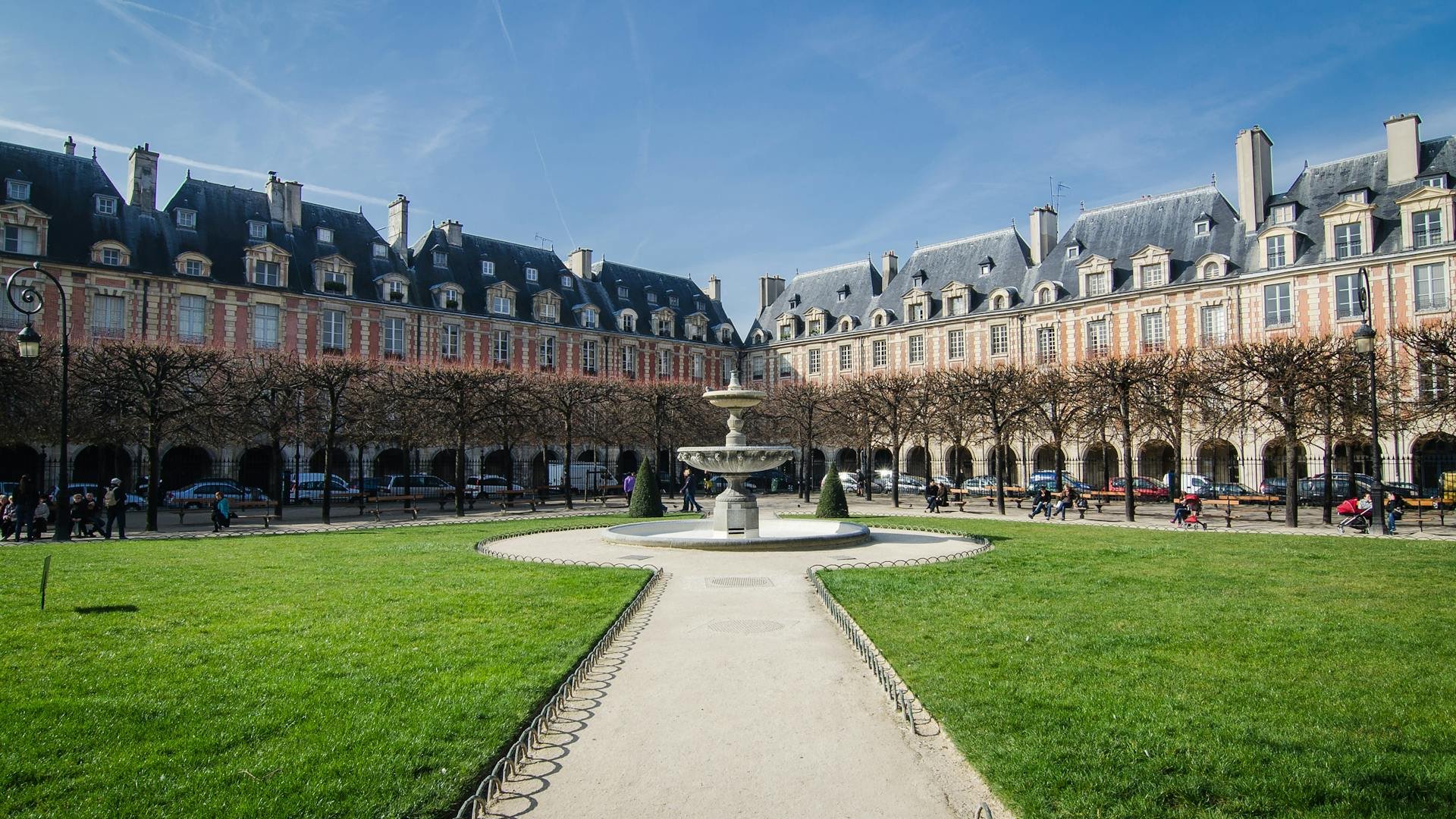
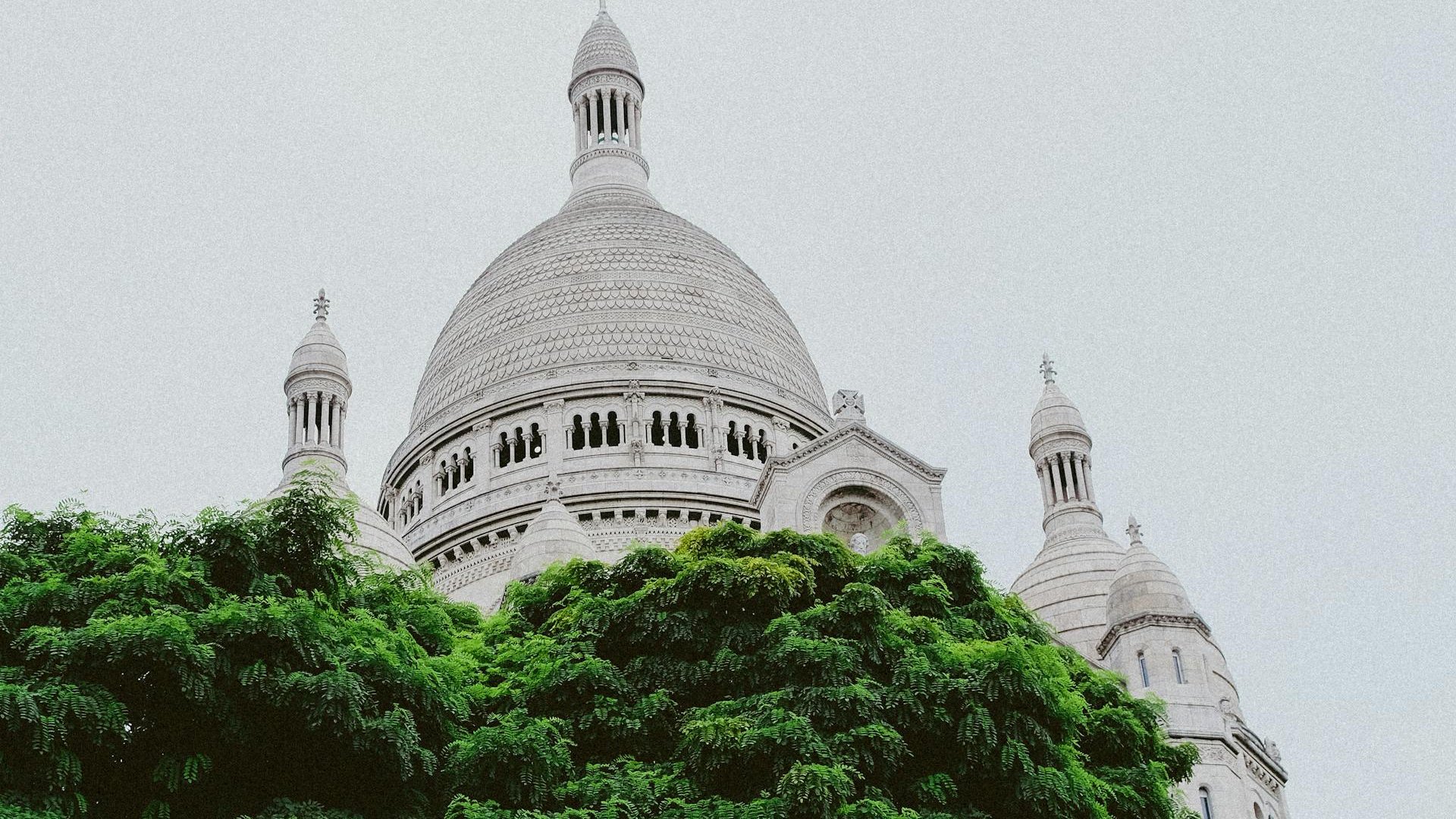
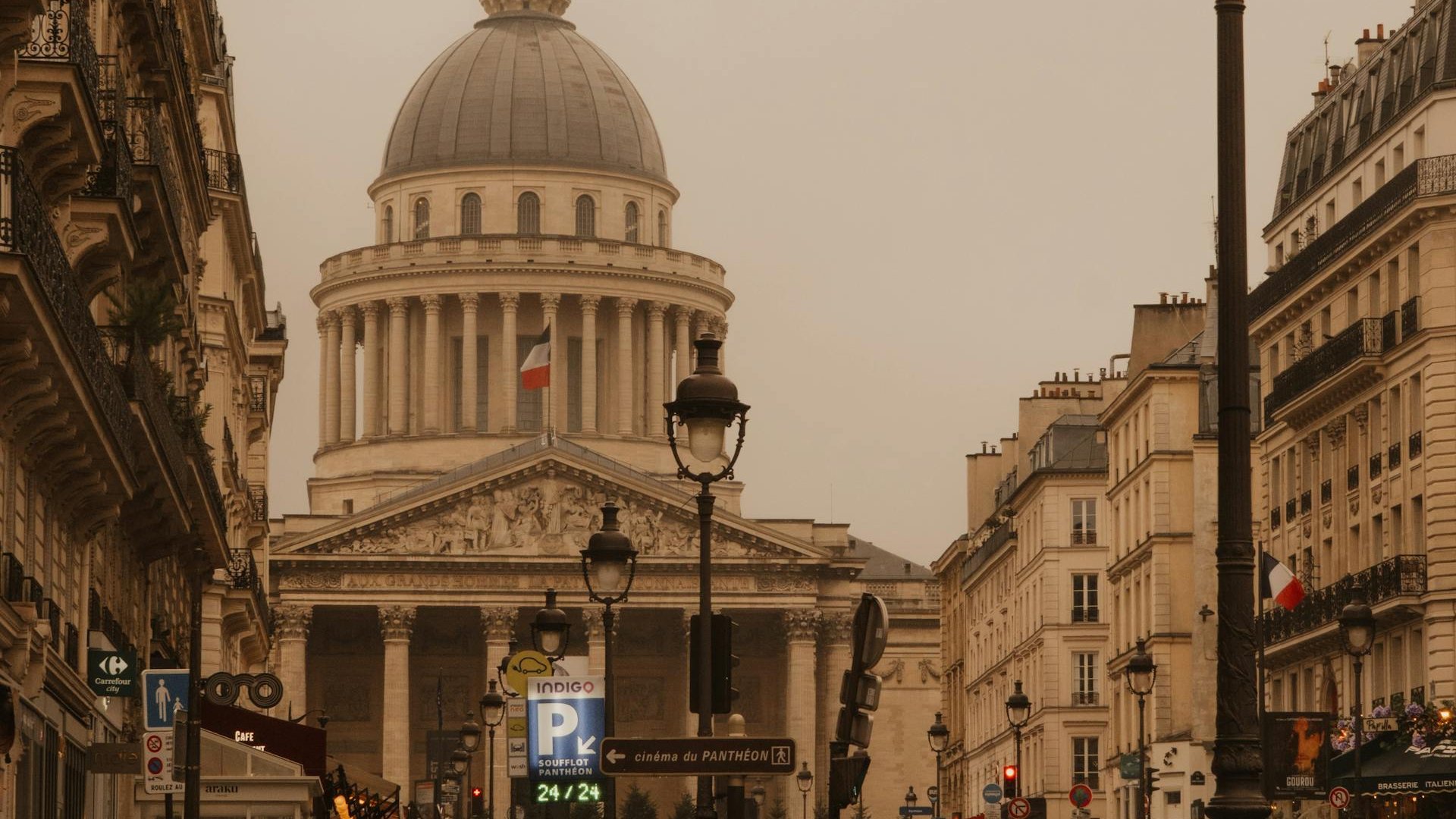
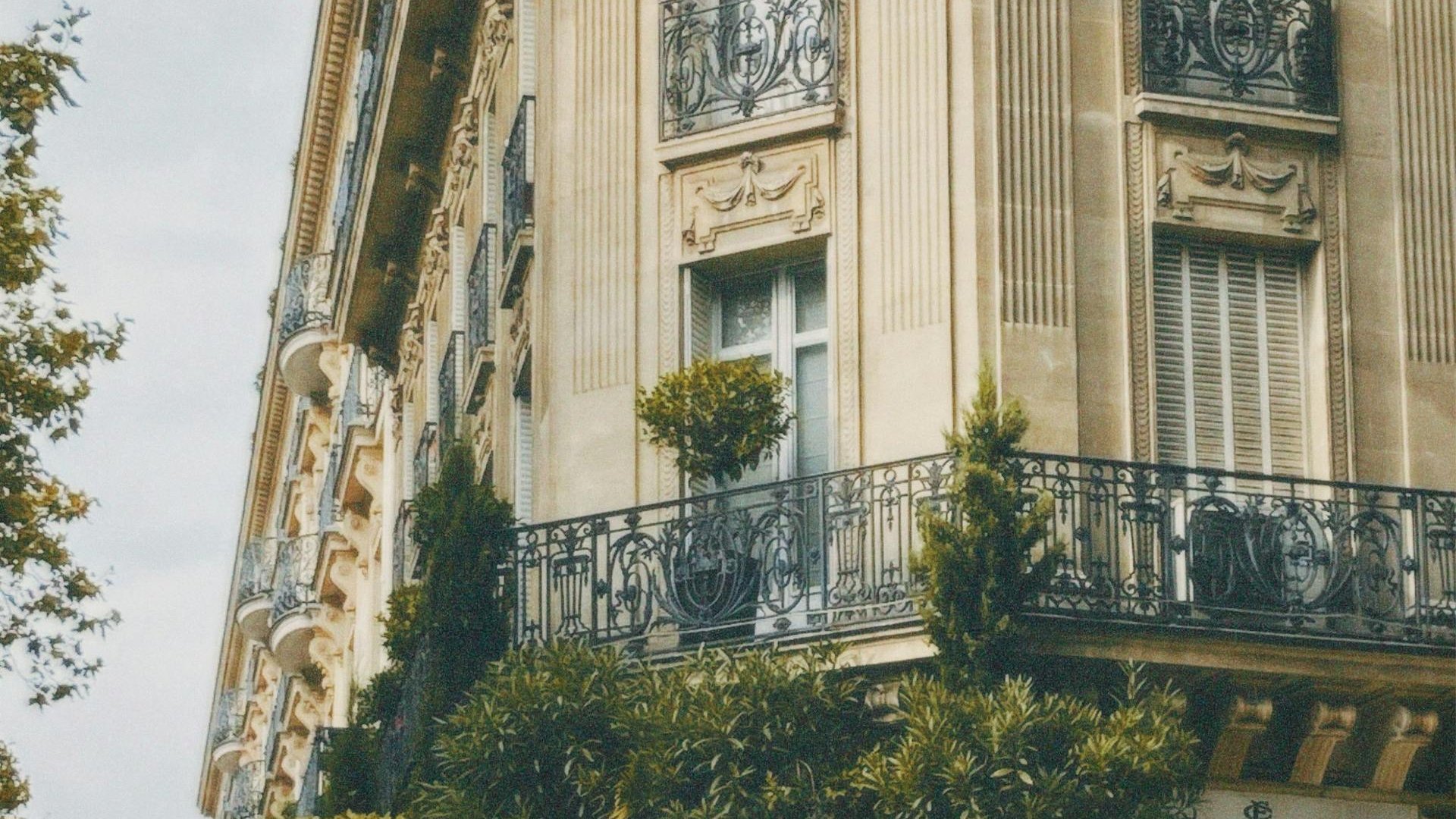
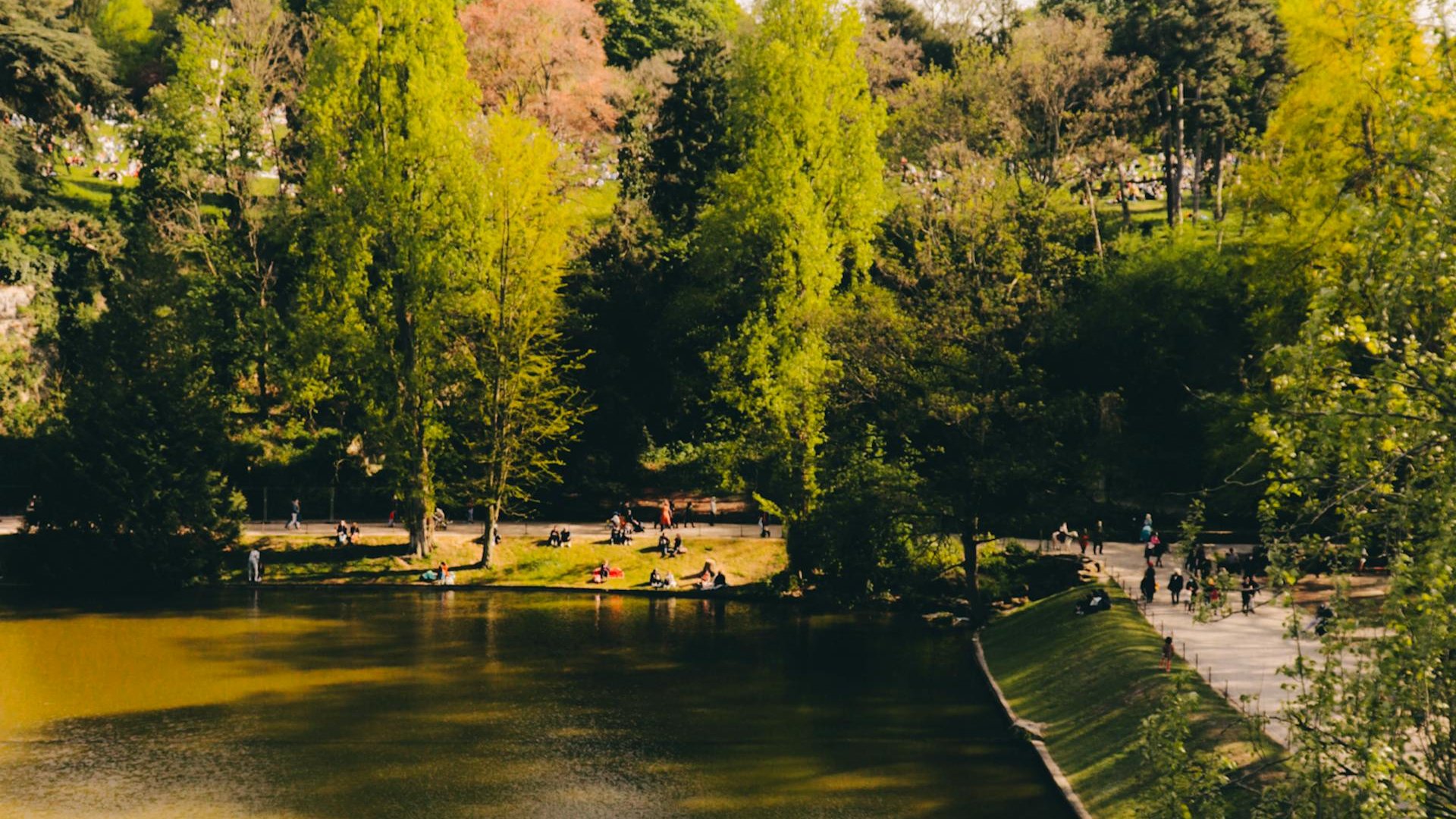
Paris’s 20 arrondissements spiral clockwise outward from the centre like a snail shell, starting at the Louvre (1st) and ending at Père-Lachaise (20th). The single-digit arrondissements (1st–8th) cluster around the Seine and contain the marquee monuments and the highest hotel prices; the 9th through 12th are the inner residential ring with the best-value eating; the 13th through 20th are the outer working neighbourhoods where rents, cafés, and the English-fluency rate all drop a full tier from the centre. Returning visitors usually trade a first-trip 1st or 7th base for the 11th, 18th, or 20th on subsequent trips — the hotels cost 30% less, the baguettes are the same, and you stop feeling surrounded by other tourists. Staying within Zone 1 of the Métro puts you within 25 minutes of every sight on your list regardless of arrondissement .
This section walks the ten arrondissements you will actually use, grouped by character: the central monumental cluster (1, 4, 7, 8), the Latin Quarter and Saint-Germain Left Bank (5, 6), the bistro-and-bar east (11), the Montmartre hill (18), the working outer ring (12, 19, 20), with brief notes on the 12th’s Bercy-village character and the Montparnasse-and-La-Défense outer-loop alternatives that returning visitors sometimes use as quieter bases.
1st Arrondissement (Louvre / Châtelet)
The geographical and symbolic centre — the Louvre, Palais Royal, the Tuileries, Les Halles. This is where most first-time visitors stay and where hotel prices run the highest. The neighbourhood was radically reshaped in the 1970s when the medieval Les Halles market was demolished and replaced by the subterranean Forum des Halles shopping centre and the RER A/B/D interchange, still Europe’s busiest commuter station at roughly 750,000 daily transit trips. Walk the Tuileries from the Louvre’s Pyramid to Place de la Concorde in about 20 minutes; the straight-line axis continues to the Arc de Triomphe and the Grande Arche . The Palais Royal’s two inner courtyards — one hosting the 260 black-and-white striped Buren columns, the other the Jardin du Palais Royal’s linden alleys — are the single best low-tourist photo spot in the arrondissement.
- Musée du Louvre and the glass Pyramid (I.M. Pei, 1989)
- Jardin des Tuileries — André Le Nôtre’s 1664 formal garden, free entry
- Place Vendôme — octagonal 1699 square, high-jewellery row
- Palais Royal and its colonnaded gardens (Daniel Buren columns courtyard)
- Église Saint-Eustache near the former Les Halles
Best for: first-time visitors, museum-heavy itineraries, travellers who want everything in walking distance. Access: Métro 1/7 Palais Royal–Musée du Louvre; RER A/B/D Châtelet–Les Halles.
4th Arrondissement (Le Marais / Île Saint-Louis)
Medieval lanes, 17th-century hôtels particuliers, and the city’s best-preserved pre-Haussmann urban fabric — because Baron Haussmann’s 1850s-1870s boulevard demolitions largely bypassed the Marais for budget reasons, leaving narrow streets that still follow their 15th-century layout. The arrondissement is simultaneously Paris’s historic Jewish quarter (Rue des Rosiers, with falafel counters that have traded since the 1920s), the core of LGBTQ+ Paris since the 1980s, and one of the city’s densest shopping districts. The sister Île Saint-Louis — the smaller of the Seine’s two central islands — keeps a village scale with roughly 2,500 residents on 11 hectares, the ice cream line at Berthillon, and hôtels from the 1640s that still function as apartments.
- Place des Vosges (1612) — Paris’s oldest planned square, Victor Hugo’s house on corner No. 6
- Musée Picasso — €14 admission, in the 17th-century Hôtel Salé
- Rue des Rosiers — the Jewish-quarter spine, falafel and delis
- Hôtel de Ville (City Hall, free rotating exhibitions)
- Berthillon on Île Saint-Louis — ice cream institution since 1954
Best for: shopping, dining, strolling, LGBTQ+ travellers. Access: Métro 1 Saint-Paul or Hôtel de Ville; Métro 8 Chemin Vert.
5th Arrondissement (Latin Quarter)
Student Paris since the 12th century — the Sorbonne dates to 1253 and anchored Latin-language university life in the quarter, which is where the neighbourhood’s name comes from. The medieval street plan survives in patches around Rue Mouffetard, one of the oldest market streets in the city. The 18th-century Panthéon, visible from half the Left Bank, holds the crypts of 81 national figures including Voltaire, Rousseau, Hugo, Zola, Marie Curie, and Simone Veil; admission €13. The Jardin des Plantes (1635, Paris’s oldest botanical garden) and its small but genuinely decent zoo share the eastern edge of the arrondissement. This is where first-time visitors who are also bookshop people should stay — Shakespeare and Company alone justifies a morning.
- Panthéon — €13 admission, rooftop panorama included
- Shakespeare & Company (37 rue de la Bûcherie, 1951 reincarnation)
- Rue Mouffetard — market street, butchers and fromageries at daytime
- Musée de Cluny (Musée National du Moyen Âge) — Lady and the Unicorn tapestries, €12
- Jardin des Plantes and its Grande Galerie de l’Évolution (€13)
Best for: bookish travellers, solo walkers, university-adjacent nostalgia. Access: Métro 10 Cluny–La Sorbonne; RER B Luxembourg.
6th Arrondissement (Saint-Germain-des-Prés)
The Left Bank literary and café capital — Sartre and de Beauvoir at the Café de Flore, Hemingway drinking his way across from Les Deux Magots, and a generation of post-war philosophers at the Brasserie Lipp across Boulevard Saint-Germain. Today that history sits uneasily next to luxury fashion: the neighbourhood’s 11th-century church (the oldest in Paris, founded 558) and its 17th-century Place Saint-Sulpice face boutiques from Hermès to Ralph Lauren. The Jardin du Luxembourg, 25 hectares and technically straddling the 6th and 5th, is the single best park in central Paris for sitting with a book — the green metal chairs are free and move-able, the tennis courts are public, and the 100-odd statues on the terraces are worth an afternoon.
- Jardin du Luxembourg and the French Senate’s Palais du Luxembourg
- Église de Saint-Germain-des-Prés — oldest church in Paris (11th century)
- Les Deux Magots / Café de Flore / Brasserie Lipp — the three-café triangle
- Place Saint-Sulpice — Delacroix murals in the church (free)
- Marché Saint-Germain and Rue de Buci market
Best for: café culture, luxury shopping, literary pilgrims. Access: Métro 4 Saint-Germain-des-Prés; Métro 10 Mabillon.
7th Arrondissement (Eiffel Tower / Invalides)
Monumental Paris compressed into one administrative district — wide Haussmann avenues, the gilded dome of Les Invalides (Napoleon’s tomb is inside), the Musée d’Orsay in its 1900 train-station building, and the Champ-de-Mars lawn running southwest from the Eiffel Tower. It is also a functioning residential district at the edges: the Rue Cler pedestrian market, the Rue Saint-Dominique restaurant row, and the École Militaire quarter have actual Parisians in them. First-time visitors who want everything monumental within walking distance stay here; returning visitors find it quiet, expensive, and a little lacking in the after-11pm rhythm that the 11th or 18th offer.
- Eiffel Tower and Champ-de-Mars — €14.20 second-floor lift, €29.40 summit
- Musée d’Orsay — €16 admission, world’s densest Impressionist collection
- Musée Rodin — €14 admission, outdoor sculpture garden €5
- Les Invalides and Napoleon’s tomb — €15 admission
- Rue Cler market — pedestrian food street, boulangeries and fromageries
Best for: first-time visitors, monument-forward itineraries, upscale travellers. Access: Métro 6 Bir-Hakeim; RER C Champ de Mars–Tour Eiffel; Métro 12 Solférino.
8th Arrondissement (Champs-Élysées / Triangle d’Or)
Grand-avenue Paris — the Champs-Élysées runs 1.9 kilometres from Place de la Concorde to the Arc de Triomphe, completing the Axe Historique that extends all the way to La Défense’s Grande Arche. The avenue was comprehensively renewed before the 2024 Olympics, trading car lanes for wider pedestrian pavements and trees; more work continues through 2027 as part of the city’s pledge to halve car traffic before 2030. The Triangle d’Or — the streets bounded by Avenue Montaigne, Avenue George-V, and the Champs-Élysées — is where haute couture lives. The 8th is a district for a grand-walk afternoon rather than a base; hotel prices are at their peak and the after-hours residential rhythm is thin.
- Arc de Triomphe and its rooftop view — €13, 284 steps or elevator
- Champs-Élysées (renewed 2024, pedestrian-wider)
- Place de la Concorde and the Luxor Obelisk (3,300 years old)
- Grand Palais (reopened 2024 post-Olympics, €16 exhibitions)
- Avenue Montaigne — haute-couture flagships
Best for: luxury shopping, sweeping-avenue walks, haute-couture pilgrims. Access: Métro 1/2/6 Charles de Gaulle–Étoile; Métro 1 Concorde.
11th Arrondissement (Bastille / Oberkampf)
The city’s best-value eating district and its loudest nightlife spine. The 11th is where the neo-bistro movement took hold in the 2000s — Septime, Le Bistrot Paul Bert, Clamato — and where the natural-wine scene still makes its home along Rue Paul-Bert, Rue de Charonne, and Rue de la Roquette. Rue Oberkampf is the late-night spine, bar-dense and loud until 02:00. The Marché d’Aligre covered market, open Tuesday through Sunday, is the most genuinely local produce market in central Paris — its outdoor flea-market half is one of the few places you can still pay cash for a stack of Le Creuset for €30. The arrondissement was the worker-Paris heart of the 1789 Revolution (Bastille sat here) and still maintains a notably political, counter-cultural edge.
- Place de la Bastille and the July Column
- Rue Paul-Bert — bistro row (Le Bistrot Paul Bert, Clamato, Les Enfants Rouges sib.)
- Canal Saint-Martin — on the 10th/11th border, lock walks and picnic quays
- Marché d’Aligre covered food market + flea market
- Rue Oberkampf and Rue Jean-Pierre Timbaud — late-night bar spine
Best for: food-focused travellers, night owls, repeat Paris visitors. Access: Métro 1/5/8 Bastille; Métro 9 Voltaire; Métro 3 Parmentier .
12th Arrondissement (Bercy & Bercy Village)
The 12th gets less attention than the marquee districts but offers one of the cleanest base-locations in the city for a 4–7 night stay: the Coulée Verte René-Dumont (the elevated linear park that became the original inspiration for New York’s High Line) runs 4.7 kilometres from Bastille to the Bois de Vincennes through the heart of the arrondissement. Bercy Village, a converted 19th-century wine warehouse strip on Cour Saint-Émilion, holds restaurants, cinemas, and the Cinémathèque Française. The Marché d’Aligre sits at the western edge. Hotel prices run 25–30% below the central Marais and the Métro 14 connects to Châtelet in 8 minutes .
- Coulée Verte René-Dumont elevated linear park
- Bercy Village and Cour Saint-Émilion (former wine-warehouse street)
- Cinémathèque Française — film museum and rotating retrospectives
- Marché Beauvau (the covered half of Marché d’Aligre)
- Bois de Vincennes — Paris’s largest park, on the eastern edge
Best for: 4–7 night stays, families, film-lovers, value-conscious returning visitors. Access: Métro 14/1 Gare de Lyon; Métro 14 Cour Saint-Émilion.
14th & 15th — Montparnasse and the Outer Left Bank
South-Left-Bank Paris is the city’s quietest residential zone — the Montparnasse train station and tower (the 210-metre 1973 office tower that locals still hold as the worst piece of urbanism in 20th-century Paris) sit at the boundary. The 14th holds the Catacombs (€29 timed entry, 1.5 km of bone-lined tunnel) , the Cimetière du Montparnasse (Sartre, de Beauvoir, Baudelaire, Sontag), and the Fondation Cartier contemporary-art gallery. The 15th is mostly residential with the Parc André Citroën at its western edge — a 1990s park on the former Citroën factory site with hot-air balloon rides over the Seine. Both arrondissements are practical bases for the trade-off of cheaper rooms (€110–€160 for 3-star) versus a 15-minute Métro to the Marais or Saint-Germain. Returning visitors who want quiet evenings often choose this corner.
- Catacombs of Paris (14th) — €29 timed entry, book 7 days ahead
- Cimetière du Montparnasse (14th) — free, 19-hectare cemetery
- Fondation Cartier pour l’art contemporain (14th) — €11
- Parc André Citroën (15th) — tethered hot-air balloon, panoramic view
- Tour Montparnasse panoramic terrace (15th) — €20 rooftop
Best for: quiet residential stays, value-seekers, art-lovers. Access: Métro 4/6/12/13 Montparnasse–Bienvenüe; Métro 8/10 La Motte-Picquet–Grenelle.
18th Arrondissement (Montmartre)
The hill of Sacré-Cœur and the last pockets of working-class-bohemian inner Paris. Montmartre was only annexed to the city in 1860; it held out as a semi-independent artistic-anarchist enclave through the late 19th century, housing Renoir, Toulouse-Lautrec, Picasso, Modigliani, and later Utrillo. The Montmartre you see from the basilica steps is heavily touristed — Place du Tertre’s portrait artists are aggressive, the Sacré-Cœur steps are pickpocket-dense, and Rue des Abbesses at midday is effectively a selfie corridor. The back of the hill, though, is another city entirely: Rue Lepic north of the Moulin de la Galette, Rue Caulaincourt, and the quiet residential blocks around Lamarck–Caulaincourt Métro keep authentic cafés and a genuinely lived-in Parisian pace. The Clos Montmartre, the only working vineyard inside Paris, still harvests roughly 800 kilos of grapes each October.
- Sacré-Cœur Basilica (1875–1914, free entry; €8 dome)
- Place du Tertre — historic painters’ square, now tourist-saturated
- Musée de Montmartre and its Renoir gardens — €15 admission
- Clos Montmartre — Paris’s only working vineyard
- Abbesses Art Nouveau Métro entrance (Hector Guimard, 1900)
Best for: romantics, photographers, travellers who will climb stairs. Access: Métro 12 Abbesses or Lamarck–Caulaincourt; funicular from Anvers (single-ride Métro ticket).
19th Arrondissement (Buttes-Chaumont / La Villette)
Working Paris, and arguably the best value for a 4–7-night stay. The arrondissement is anchored by two huge green spaces — Parc des Buttes-Chaumont (25 hectares, 1867, Haussmann’s most dramatic park, with a cliff-top temple that belongs in a painting) and Parc de la Villette (55 hectares, the city’s largest, built in the 1980s on former slaughterhouse land and including the Cité des Sciences science museum and the Géode IMAX dome). The Canal de l’Ourcq runs east-west through the district, supporting a cluster of riverside bars and, in summer, one of the five Paris Plages artificial-beach installations. Bassin de la Villette is the city’s largest constructed water basin, unusually quiet for a Paris outdoor space. Rents here run 30–40% below the Marais or Saint-Germain, and the Métro 7 line puts you in the Louvre in under 15 minutes .
- Parc des Buttes-Chaumont (1867) — cliff temple, suspension bridge
- Canal de l’Ourcq and Bassin de la Villette (summer Paris Plages beach)
- Parc de la Villette — Cité des Sciences (€12) and the Géode
- Philharmonie de Paris (concert hall, 2015) on the La Villette edge
- Rosa Bonheur guinguette — outdoor Buttes-Chaumont bar since 2008
Best for: families, outdoor-minded travellers, budget-conscious repeat visitors. Access: Métro 7bis Buttes-Chaumont; Métro 5 Laumière; Métro 7 Stalingrad.
20th Arrondissement (Père-Lachaise / Belleville / Ménilmontant)
Multicultural Paris. The 20th is the city’s most ethnically layered arrondissement — a Chinese-Vietnamese spine along Belleville’s Boulevard de Belleville running into the Ménilmontant streets, Algerian and Tunisian cafés on the northern side, a long-standing African community, and the city’s densest street-art corridor along Rue Dénoyez and the approach to Rue Ramponeau. Père-Lachaise, at 44 hectares the city’s largest cemetery, holds Jim Morrison (section 6), Edith Piaf (section 97), Oscar Wilde (section 89, kiss-lipsticked mausoleum behind plexiglass since 2011), Molière, Chopin, and roughly 70,000 others. It is a full half-day visit, genuinely moving, and entirely free. The Parc de Belleville panorama from the top of the hill offers the best free sunset view in eastern Paris.
- Cimetière du Père-Lachaise — free, 1804 founding, 44 ha
- Belleville Chinatown-Vietnamese corridor — pho and banh mi row
- Parc de Belleville panorama — free sunset terrace
- Rue Dénoyez — street-art corridor
- Ménilmontant bars along Rue Oberkampf extension
Best for: independent travellers, Asian-food seekers, cemetery pilgrims. Access: Métro 2/3 Père-Lachaise; Métro 11 Belleville.
La Défense — the outer-loop business district
Not technically a Paris arrondissement (La Défense sits across the Hauts-de-Seine border at the western terminus of the Axe Historique) but worth the half-hour Métro 1 trip for the contrast. The Grande Arche de la Défense — a 110-metre cubic monument framing the Champs-Élysées sightline — opened in 1989 with a rooftop terrace that offers Paris’s single best skyline view back over the city. The district is glass-tower business Paris, weekday-busy and weekend-empty; the surrounding Esplanade has 60 sculptures by Calder, Miró, Caro, Serra, and others scattered free along its length. Worth a 90-minute side trip on a clear afternoon for the panoramic view alone.
The Food

Eating in Paris is the single biggest reason many travellers come — and the one area where the city lives up to its own mythology. With more than 119 Michelin stars awarded in the 2025 France guide, Paris holds the densest concentration of starred kitchens in the world, more than Tokyo and more than New York . Beneath that top layer sits the city’s actual food culture, which is far more democratic than the haute-cuisine headlines suggest: the €1.30 price-capped baguette, the €15 plat du jour, the €6 jambon-beurre, the €4 café-allongé-at-the-counter. The city’s best meals are not all expensive, and the most expensive are rarely the best.
The Parisian meal rhythm matters. Lunch runs 12:00–14:30 and remains the main protected meal of the day — this is when offices genuinely empty out, and when most bistros serve a three-course formule déjeuner at half the price of dinner. The apéro hour runs 18:00–20:00 and is its own institution, with bars pouring €6–€10 glasses of natural wine and small plates (planches) of charcuterie and cheese. Dinner starts at 20:00 and rarely before; kitchens close between 14:30 and 19:30 at most neighbourhood restaurants. Sunday remains the Paris food-lover’s struggle: most bistros close either Sunday entirely or Sunday evening through Tuesday, and the Sunday brunch scene (imported from the 2010s) is the workaround. Prices range from the €9 mains at historic bouillons to €498 tasting menus at three-star Guy Savoy — a spread that makes Paris, despite its reputation, one of the few European capitals where a food-centric week is genuinely possible on a €200-per-person budget.
Classic French Bistro
The bistro is Paris’s oldest restaurant genre — a family-run dining room with a chalkboard menu of 8–12 dishes, a house wine list centred on regions you can drive to in under three hours, and service that expects you to sit for two hours minimum. The canonical plates — steak frites, escargots à la bourguignonne, boeuf bourguignon, soupe à l’oignon gratinée, confit de canard, magret de canard, sole meunière — have not changed in a century at most of the serious addresses. Prices run €24–€45 for a main at a standard bistro, €35–€65 at a starred one, and the house wine is almost always drinkable. The formule (two-course set) or menu (three-course) at lunch is the single best deal in Paris food: €22–€35 for the same kitchen you’d pay €65 for at dinner.
- Le Bistrot Paul Bert (11th) — steak frites and onglet, mains €28-€38
- Chez Georges (2nd) — sole meunière, classic 1964 bistro, mains €35-€55
- Allard (Alain Ducasse, 6th) — duck with olives, escargots, mains €40-€65
- Bouillon Chartier (9th) — historic 1896 bouillon, mains €9-€14, no reservations
- Le Petit Sourire (5th) — neo-bistro formule lunch €28
- Chez Janou (Marais) — Provençal-leaning bistro, mains €22-€34
Boulangerie and Pâtisserie
Paris’s street-level food glory is the boulangerie. A 1993 price-cap regulation keeps the traditional baguette at roughly €1.20–€1.30 across the city; the annual Grand Prix de la Baguette de Tradition crowns one bakery each March to supply the Élysée Palace for a year. The good neighbourhood boulangerie is your cheapest hot breakfast (€4–€6 for a croissant, espresso, and pain au chocolat) and your cheapest lunch (€6–€9 for a jambon-beurre sandwich, a savoury quiche, or a slice of pissaladière). Pastry shops (pâtisseries) operate at a different tier — individual pastries run €4–€9, gâteau slices €7–€12, and the top addresses (Hermé, Ladurée, Pierre Marcolini, Cédric Grolet) push toward €20 per piece.
- Du Pain et des Idées (10th) — pain des amis (€7/half loaf), escargots pastries €3-€5
- Poilâne (6th) — sourdough miche loaves €8-€18, since 1932
- Pierre Hermé — macarons €3 each, Ispahan pastry €7.50
- Cédric Grolet Opéra — trompe-l’oeil fruit pastries €17-€25
- Mamiche (9th) — 2017 new-wave boulangerie, babka €8-€12
- Blé Sucré (12th) — widely-ranked best croissant in Paris, €1.60
- Ladurée (Royale/Champs-Élysées) — macarons €3 each, tea salon
Brunch and Café Culture
The weekend brunch landed in Paris in the early 2010s and stuck hard — most inner-arrondissement cafés now run a 10:00–15:30 Saturday-and-Sunday brunch, with €22–€38 buffet-or-plate formulas that cover eggs, tartines, fresh juices, salads, pastries, and often a cocktail. The café-counter coffee, meanwhile, is its own parallel universe: an espresso au comptoir is €1.40–€2 standing at the zinc bar of any neighbourhood café and €3.50–€5 sitting at a table in the same café. This price gap is legally mandated and visible on the posted tarif comptoir/terrasse. The historic cafés — Café de Flore, Les Deux Magots, Brasserie Lipp, Le Procope — keep their heritage menus (€8–€14 espresso at a table is standard) and are worth a single visit for the atmosphere alone; locals do their daily coffee elsewhere.
- Holybelly (10th) — pancakes with bacon and maple, brunch €18-€25
- Season (Marais) — Mediterranean brunch, €22-€32
- Café de Flore (6th) — historic, omelette/croque-monsieur €18-€26
- Les Deux Magots (6th) — traditional breakfast and lunch, €20-€35
- Ten Belles (10th) — specialty coffee, avocado toast €12
- Télescope (1st) — neighbourhood espresso bar, €3-€4.50
Michelin and Haute Cuisine
Paris holds more than 119 Michelin stars across the 2025 guide, with 10 three-star kitchens — among them Guy Savoy, Alain Ducasse au Plaza Athénée, Le Pré Catelan, Arpège, and Le Cinq at the George V. Reservations at three-star restaurants typically open 60–90 days ahead and fill within minutes; most require a deposit of €100–€300 per person at booking, refundable against the meal. Lunch is the accessible entry — the €145–€195 lunch menus at one- and two-star kitchens are often the same chef’s vision at half the dinner price. The city’s neo-bistro movement (Septime, Clown Bar, Le Servan, Saturne) has been the most interesting trend of the last 15 years — young chefs, ex-haute-cuisine training, €70–€110 tasting menus, natural-wine lists.
- Guy Savoy *** (6th, Monnaie de Paris) — tasting menu €498
- Alain Ducasse au Plaza Athénée *** (8th) — nature cuisine, €450
- Arpège *** (Alain Passard, 7th) — vegetable-forward tasting, €440
- Le Pré Catelan *** (Bois de Boulogne) — tasting €295-€380
- Septime * (11th) — 20-course neo-bistro tasting, €145, 3-week waitlist
- Le Clarence ** (8th) — Domaine Clarence Dillon, €220
- Clown Bar (11th) — casual natural-wine spin-off of Septime, €45-€75
Beyond Bistro and Pastry: Multicultural Paris
Paris is France’s most ethnically diverse city, and its food map reflects that — roughly 20% of residents are foreign-born, with long-established North African (Algerian, Moroccan, Tunisian), Vietnamese, Cambodian, Senegalese, Ivorian, Turkish, and Portuguese communities. The North African couscous houses around Barbès and Belleville have traded since the 1960s — Chez Omar in the Marais is the tourist-reachable version; La Goutte d’Or and Château-Rouge markets are the deeper dive. Belleville and the 13th arrondissement’s Chinatown hold the Vietnamese pho and Cambodian-Chinese lunchtime canteens; Pho 14 on Avenue de Choisy is the canonical €12 bowl. Sub-Saharan African restaurants (Senegalese thieboudienne, Ivorian attiéké, Congolese poulet moambé) cluster in Château-Rouge and Château d’Eau.
- Chez Omar (3rd, Marais) — couscous institution, plates €20-€32
- Le Cambodge (Canal Saint-Martin) — bobun, Cambodian curries, €14-€22
- Pho 14 (13th Chinatown) — Vietnamese pho, large bowl €12-€16
- Waly-Fay (11th) — Senegalese mafé and yassa, €18-€28
- L’Arbre à Cannelle (Passage des Panoramas) — Sri Lankan-French crossover, €14-€24
- Chez Alain Miam Miam (Marché des Enfants Rouges) — globally-influenced sandwich cart, €10-€14
Food Experiences You Can’t Miss
The Paris food ritual is as important as any single plate. Some experiences reward repeat visits: standing at a Marché d’Aligre stall at 10:00 on a Sunday, ordering a half-bottle of Muscadet at apéro, lining up at Du Pain et des Idées for the 07:30 opening, taking the Eurostar-Champagne day trip. The best single-day Paris food itinerary most travellers actually enjoy: café-and-croissant at a neighbourhood boulangerie (07:45–08:30), market shopping at Aligre (10:00–11:30), classic bistro lunch formule (12:30–14:30), afternoon pâtisserie visit (16:00), apéro at a natural-wine bar (18:30–20:00), dinner at a neo-bistro or Bouillon (20:30–22:30). That rhythm, not any single reservation, is the food of Paris.
- Saturday-morning Marché d’Aligre visit — Paris’s most local covered + flea market (08:00–13:30)
- Apéro on a Canal Saint-Martin quay — bottle from Monoprix, €8-€12 total for two
- Galette des Rois during the first week of January — frangipane cake with a hidden fève, €8-€18
- Dégustation (tasting flight) at a wine bar such as La Buvette (11th) or Septime La Cave (11th), €24-€45
- Fromagerie visit to Androuet or Laurent Dubois — cheese plate to go €18-€30
- Cooking class at Le Cordon Bleu or Cook’n with Class — half-day €95-€165
- Sunday brunch at a historic Left Bank café (Flore, Magots) — €28-€45 including coffee
- Natural-wine apéro at La Cave de Septime, Aux Deux Amis, or Le Mary Celeste — €7-€11 per glass
Wine, Apéro, and Natural Wine
Paris’s wine culture reshaped around natural wine in the 2010s — low-intervention winemakers (from the Loire, the Jura, Languedoc, and the Ardèche) now dominate the lists at the 11th, 10th, and 20th’s natural-wine bars. Expect €6–€11 a glass, €32–€65 a bottle. The city’s classical wine scene lives at the traditional bistros and the grand brasseries, with Bordeaux, Burgundy, and Rhône appellations served by the glass at €8–€16. Champagne’s relative proximity (45 minutes by TGV to Reims) keeps flute prices lower than in most European capitals — €8–€14 a glass at a standing bar, €45–€75 a bottle at a bistro. Apéritif-hour glasses of vermouth (Noilly Prat, Dolin), Lillet, Pernod, and the modern apéritif Suze remain a distinctly Parisian pleasure, €5–€9 per glass. The core natural-wine bars to know are Le Verre Volé (10th, caviste-with-tables since 2000), Aux Deux Amis (11th, the scene’s unofficial clubhouse), Septime La Cave (11th, the bottle-shop spin-off), La Buvette (11th, tiny 10-seat room run by Camille Fourmont), and Le Garde Robe (1st, near Louvre for a pre-museum glass).
Markets, Fromageries, and Shopping for Food
Paris runs 82 neighbourhood outdoor markets on a rolling weekly schedule, most operating two mornings a week from 08:00 to 13:30 . The covered markets (Marché des Enfants Rouges in the 3rd, Marché Beauvau in the 12th’s Aligre, Marché Saint-Quentin near Gare de l’Est) run six days a week and combine produce stalls with cheap hot-lunch counters — a €10–€14 Moroccan tagine or Italian plate is standard. Dedicated fromageries (Androuet, Laurent Dubois, Marie-Anne Cantin near Rue Cler, Fromagerie Quatrehomme in the 7th) carry 150–250 French cheeses at any time, and every single one will give you a free taste before committing; budget €18–€30 for a three-cheese plate to take back to your apartment. Similar specialist logic applies to the city’s caviste wine shops, the chocolatiers (Jacques Genin, Patrick Roger, La Maison du Chocolat), and the 300+ traditional boulangeries certified under the boulangerie artisanale label — the one with the hand-kneaded baguette on the counter rather than the frozen par-baked competitor.
Cultural Sights

The Banks of the Seine between Pont de Sully and Pont d’Iéna have been UNESCO-inscribed since 1991, which means almost every headline sight — the Louvre, Notre-Dame, Sainte-Chapelle, Orsay, Invalides, the Eiffel Tower — sits inside a single World Heritage zone . A working cultural itinerary pairs one big museum with one church and one view per day — for example Louvre at 09:00 with a timed ticket, lunch at a Les Halles bistro, Sainte-Chapelle at 15:00, Seine walk to the Île Saint-Louis, and Notre-Dame at 17:30. Avoid stacking three museums in one day: the Louvre alone runs 40,000 m² across three wings and takes 4–6 hours to do half of it properly.
Musée du Louvre
The world’s most-visited museum, drawing roughly 8.7 million visitors in 2024 . Opened to the public in 1793 during the French Revolution (the building is older — it was a 12th-century fortress, then a 16th-century royal palace, before the 1672 move to Versailles freed it for exhibitions). Base admission is €22 with timed online booking, €17 at the door off-peak. Open Wed–Mon 09:00–18:00, late Friday nights to 21:45; closed Tuesdays. The Mona Lisa queue typically runs 30–45 minutes even on off-peak days ; the Denon wing’s Italian painting galleries, Richelieu’s Napoleon apartments, and the Sully wing’s Egyptian collection all reward equal time. The Pyramid entrance from Cour Napoléon is the postcard but the Carrousel underground entrance is faster for ticketed visitors.
Eiffel Tower (Tour Eiffel)
Built for the 1889 Exposition Universelle and originally planned for 20-year demolition, the 330-metre iron tower is still the tallest structure in Paris and one of the most visited paid monuments in the world with roughly 6 million annual visitors . Gustave Eiffel retained a small private apartment just below the summit — now visible behind glass as part of the top-floor tour. Lift to the second floor €14.20; summit by lift €29.40; stairs to the second floor (674 steps) €11.30 — the stairs route is faster on busy days and goes through the historical ironwork up close. Open 09:30–23:45 mid-June to August; reduced hours otherwise. Best photos: Trocadéro terrace directly across the river at sunrise, or the Champ-de-Mars lawn at dusk for the hourly 5-minute sparkle show (every hour on the hour from sundown to 01:00, lasting 5 minutes) .
Musée d’Orsay
Housed in the 1900 Beaux-Arts Gare d’Orsay railway station (converted to a museum in 1986 after a long restoration), the Orsay holds the world’s most complete Impressionist and Post-Impressionist collection — Van Gogh’s self-portraits, Manet’s Olympia, Monet’s series canvases, Cézanne’s apples, Toulouse-Lautrec’s Moulin Rouge posters. Admission €16 at the door, €13 online with timed entry . Open Tue–Sun 09:30–18:00, Thursday to 21:45, closed Mondays. Thursday evenings (18:00–21:45) are the least-crowded window. The 5th-floor Impressionist galleries and the station’s giant clock-face windows on the same floor are the two non-negotiable stops.
Notre-Dame de Paris (reopened 7 December 2024)
The 13th-century cathedral, begun 1163 and structurally complete 1345, reopened on 7 December 2024 after a five-year €700 million restoration following the 15 April 2019 spire-fire. The new timber spire (a faithful replica of Viollet-le-Duc’s 1859 version), the cleaned stone interiors, the restored 8,000-pipe Cavaillé-Coll organ, and the re-hung stained-glass windows are all new to see even if you visited before 2019 . Entry is free but visit slots are rationed through the cathedral’s free app; book 24–72 hours ahead for the busiest periods . Open daily 07:45–19:00 with mass-time closures. The towers are separately ticketed (€13) with a timed reservation that the Paris Museum Pass increasingly handles for 2026 visitors ; the crypt beneath the parvis is €10.
Sainte-Chapelle
Louis IX’s 1248 royal chapel sits inside the Palais de Justice complex on Île de la Cité — a single, vertical Gothic box of coloured glass containing 15 stained-glass windows that together depict more than 1,100 biblical scenes across 600 square metres. The windows are roughly 66% original 13th-century glass. Admission €13 (combined Conciergerie €20), open daily 09:00–17:00 (to 19:00 April–September) . Security is airport-style (you enter the Palais de Justice) so budget 20 minutes for the queue. Visit mid-morning on a sunny day for the light through the windows; on overcast days come closer to midday. Evening candlelit classical concerts run year-round for €30–€55 and are one of the city’s better value cultural tickets.
Arc de Triomphe
Commissioned by Napoleon in 1806 after the Battle of Austerlitz and completed in 1836. The 50-metre arch anchors Place Charles de Gaulle’s 12-street roundabout (the former Place de l’Étoile) and the Champs-Élysées axis. Rooftop access €13 via 284 steps or an accessibility elevator; daily 10:00–22:30 Apr–Sep, to 22:00 Oct–Mar . The Tomb of the Unknown Soldier sits beneath the arch; the eternal flame has been rekindled every evening at 18:30 since 1923. Access to the island under the arch is via a signed underground tunnel from the north side of the Champs-Élysées — do not attempt to cross the roundabout on foot.
Sacré-Cœur Basilica
Built 1875–1914 on the highest natural point in Paris (130 metres, on the Montmartre butte) as a national penitent monument after the 1870 Franco-Prussian War defeat. The white-limestone construction uses a self-cleaning Château-Landon stone that whitens over time — the basilica has become visibly brighter as it has aged. Entry free; the dome climb is €8 for 300 steps leading to Paris’s single best free 360° panorama . Open daily 06:30–22:30; dome 10:00–19:00 April–September. The approach from below via the Abbesses Métro and the Rue Lepic stairs or the Anvers funicular is part of the experience; the carousel-and-tourist-bus side entrance should be avoided.
Centre Pompidou (Closed 2025–2030)
The Renzo Piano and Richard Rogers-designed inside-out museum of modern art (opened 1977) closed in September 2025 for a €300 million five-year renovation, reopening in 2030 for its 50th anniversary. The national modern-art collection is touring during closure, with rotating exhibitions at the Grand Palais, Louvre-Lens, and partner museums across the country . For contemporary-art visits during the closure, substitute the Fondation Louis Vuitton (Bois de Boulogne, €16), the Bourse de Commerce–Pinault Collection (1st, €15), or the Palais de Tokyo (16th, €12), which together cover the same ground. The Musée Picasso (3rd, Marais) and the Petit Palais (8th, free permanent collection) absorb most of the displaced foot traffic for visitors who want a single Pompidou-substitute on a tight day.
Entertainment
Paris’s entertainment rhythm is a late one — dinner at 20:30, first drinks at 22:30, clubs fill at 01:00 and stay open until 06:00. The city permits residential-zone bars to operate until 02:00 weekdays and 04:00 weekends (later in the 11th and 18th entertainment zones). Film, theatre, opera, and live jazz operate at a density that few other cities match — 400+ cinema screens, 150+ theatres, three opera houses, a year-round cabaret scene, and five major music festivals. The Fête de la Musique on 21 June each year transforms every neighbourhood into an open free-concert zone with roughly 3,000 performances across the city — the single best night to arrive in Paris for entertainment value.
Moulin Rouge and Cabaret
Cabaret is a genuinely Parisian 19th-century invention — the Moulin Rouge opened in 1889, Le Lido in 1946 (closed 2022 for renovation), Paradis Latin in 1889, and the Crazy Horse in 1951. Shows are costumed dance-revues with a dinner option; the average ticket runs €110 (show only) to €240 (dinner + show), with champagne-only packages around €180. The Moulin Rouge is the marquee — its “Féerie” show runs 21:00 and 23:00 performances with the same programming since 1999 . Paradis Latin (5th arrondissement, building designed by Gustave Eiffel) is the smaller, more intimate option with a lower tourist density. The Crazy Horse is the most artistically modern, with a topless-female-dancer format and a consistently higher production value; tickets €105–€150.
Opera and Classical
The Palais Garnier (1875) and Opéra Bastille (1989) share the national opera and ballet programming. Garnier is the more magnificent building — Charles Garnier’s gilded Beaux-Arts interior was the direct inspiration for the Phantom of the Opera novel — and holds more ballet; Bastille is the modern 2,700-seat operatic house. Tickets €20–€240; day-of obstructed-view tickets from €10 are regularly available at the box office 90 minutes before curtain . The Philharmonie de Paris at Parc de la Villette (opened 2015) is the city’s main symphonic hall — Orchestre de Paris residency, €15–€80 tickets, and a free Saturday-afternoon rehearsal programme worth knowing about.
Live Music and Jazz
Paris invented the modern jazz club — the Caveau de la Huchette (5th arrondissement, open since 1946, the oldest active jazz cellar in Europe), Duc des Lombards (1st), and Sunset-Sunside (1st) run nightly sets from €20–€35. The city’s rock-and-indie venues cluster at La Cigale (18th, 1,389 capacity), Le Trianon (18th), L’Olympia (9th, where every major postwar act from Piaf to Hendrix has played), and the Zénith (19th). Festival calendar: We Love Green in May (Bois de Vincennes), Lollapalooza Paris in July (Longchamp), Rock en Seine in August (Saint-Cloud), and the Festival d’Automne September–December .
Wine Bars and Nightlife Districts
Three clusters organise Parisian nightlife. The 11th arrondissement (Rue Oberkampf, Rue Jean-Pierre Timbaud, Rue de Charonne) is the natural-wine-bar and indie-club corridor — Aux Deux Amis, Le Mary Celeste, Septime La Cave all sit within a 10-minute walk. The Marais runs the LGBTQ+-dense and cocktail-bar scene (Le Mary Celeste, Candelaria, Little Red Door). Pigalle (9th/18th border) has transformed from its 1980s red-light past into the city’s cocktail-and-speakeasy district: Bar Dirty Dick, Lulu White, Le Mansart cluster along Rue Frochot. The Latin Quarter (5th) keeps its student-bar density along Rue Mouffetard. Cocktails run €14–€18; natural-wine glasses €7–€11; beer €7–€10. The Fnac and Billetreduc platforms carry 30–50% discounted theatre, opera, and cabaret tickets for same-day and next-day shows — this is where Parisians book.

Cinema, Bars, Seine Cruises
Paris has roughly 300 cinema screens inside the city proper — more than any comparable city in the world — and tickets run a reliable €6.50–€14.50, with Monday-evening discounts at most chains and a citywide €5 student rate. Arthouse cinemas (MK2, Christine, Le Champo, Studio 28, Le Grand Action) screen international films in their original language (“VO”). The Cinémathèque Française (12th) runs a rotating retrospective programme . Bateaux-Mouches, Vedettes du Pont-Neuf, and the smaller Marina de Bercy all run 60–90 minute Seine cruises for €15–€25, with dinner-cruise options from €85 . The 21:00 and 22:00 night departures (April–October) pass every illuminated monument and are the city’s single most tourist-efficient evening.
Parks and Outdoor Evenings
Canal Saint-Martin (10th/11th) is where Parisians actually spend summer evenings — bottle-from-Monoprix apéro on the canal quays starting around 18:00, drawing 15,000+ on warm nights. The Bois de Vincennes and Bois de Boulogne (Paris’s two “lungs” at 10th and 11th metro rings) host free concerts and outdoor cinema in summer, including Cinéma en Plein Air at La Villette (late July through August, free). Parc de Belleville in the 20th holds the best free sunset view; the Buttes-Chaumont’s summer-only Rosa Bonheur guinguette runs DJ sets Thursday–Sunday evenings until 00:30. The post-Olympics Pont d’Iéna esplanade has been programmed for free open-air screenings on Friday evenings through summer 2026 — check the City of Paris events calendar for the rotating film and concert programme.
Day Trips

Five destinations account for the majority of weekend-trip traffic out of Paris, each reachable before lunch and returnable before dinner — with one deliberate exception (Mont Saint-Michel) that requires a long day. Transilien regional trains and the RER A–E handle Versailles, Giverny, and Fontainebleau; TGVs from Gare de l’Est and Gare Montparnasse handle Reims and Rennes (the onward point for Mont Saint-Michel). Book TGV tickets 30–60 days ahead for the €19–€29 advance fares; Transilien and RER trips are buy-on-day.
Versailles (40 min by RER C)
Louis XIV’s 1682 royal palace remains the single biggest day-trip draw from Paris. Take the RER C (“Versailles Château–Rive Gauche” branch) from Champ-de-Mars, Saint-Michel, or Musée d’Orsay; journey about 40 minutes, fare €7.30 one-way with a standard RER ticket. Château admission €21, or €32 for the full Passport including the gardens (€11 when the Musical Fountains shows run on weekends), the Trianon palaces, and Marie Antoinette’s Hameau farmstead . Open Tue–Sun 09:00–17:30 (18:30 April–October), closed Monday. The Hall of Mirrors is the photographic marquee; the gardens alone merit a half-day with 800 hectares laid out by André Le Nôtre. Arrive for the 09:00 first entry — the lines for afternoon slots regularly run 90 minutes even with a timed ticket. Pack lunch from a Paris boulangerie; the on-site cafeterias are expensive and mediocre.
Giverny — Monet’s Garden (1.5 hours by SNCF + shuttle)
Claude Monet’s 1883–1926 house and water-lily gardens at Giverny are the single most important site in 19th-century art pilgrimage — the Japanese bridge, the water garden, and the studio where the Nymphéas series was painted. Take an SNCF regional train from Saint-Lazare to Vernon-Giverny (€16 one-way, 50 minutes); from Vernon station, the €10 round-trip shuttle runs to the gardens (7 km) or walk the 1-hour Seine-side path. Gardens admission €13.50 . Open 1 April through 1 November only — the gardens close entirely in winter. Go mid-morning on a weekday; the water-lily pond routinely holds tour-bus crowds by 11:30. Pair with the Musée des Impressionnismes Giverny (€9) a five-minute walk away for a full art-history day.
Fontainebleau (1 hour by Transilien R)
The 16th-century Château de Fontainebleau was a royal residence for eight centuries, from Philip II through Napoleon III — arguably the most continuously-inhabited royal palace in France and, in terms of architectural layering, more interesting than Versailles. Take Transilien R from Gare de Lyon to Fontainebleau-Avon (€9.40 one-way, 40 minutes ), then the local bus 1 to the château (€2). Admission €14, or €17 combined with the gardens and forest trail . Open Wed–Mon 09:30–17:00 (18:00 in summer), closed Tuesday. The 17,000-hectare Fontainebleau forest surrounding the town is a weekend-walker’s destination in its own right — sandstone bouldering has happened here since the 1900s. Eat at a village bistro in Barbizon, a 15-minute bus from the château.

Reims — Champagne Region (45 min by TGV)
Reims, the historic coronation city of the French kings, is where Champagne happens — Taittinger, Veuve Clicquot, Pommery, Ruinart, and Mumm all run cellar tours from the city or its direct surroundings. TGV from Gare de l’Est to Reims in 45 minutes, fares from €19 with 30-day advance booking . The Gothic Notre-Dame de Reims (UNESCO, 1211–1275 construction) is where 33 French kings were crowned and is one of the country’s great cathedrals — free admission, daily. Champagne-house tours run €25–€45 and must be booked 2 weeks ahead in most cases; Taittinger and Pommery are the most visitor-friendly, Ruinart the most exclusive. Pair with lunch at a bistro on Place Drouet-d’Erlon. Return TGV to Paris by 19:00.
Chartres (1 hour by Transilien N)
The 13th-century Notre-Dame de Chartres cathedral — UNESCO-listed, 176 stained-glass windows including the famous “Chartres blue” — is the single most photographed Gothic cathedral in France after Notre-Dame de Paris and a shorter day trip than most travellers expect. Take Transilien N from Gare Montparnasse direct to Chartres (€16 one-way, 1 hour ), then a 10-minute walk uphill to the cathedral. Free admission, open daily 08:30–19:30. The medieval stained glass uses a cobalt-blue tint that has never been successfully reproduced; afternoon light through the rose windows is the photographic marquee. The “Chartres en Lumières” night-projection programme illuminates the cathedral and 23 surrounding monuments after sunset, mid-April through early October.
Mont Saint-Michel (4 hours by TGV + coach) — FLAG: Long Day
The UNESCO-listed island monastery in the Normandy-Brittany border bay is the most dramatic day-trip in France, but it is a 4-hour one-way commitment. TGV Paris–Rennes in 1h 30min from Gare Montparnasse (fares from €35 advance); then a 1h 15min coach transfer to the Mont. Total round-trip with monastery visit is roughly 12 hours — feasible but tiring . The smarter option is to overnight — even a single night in a hotel on the causeway (€120–€220) lets you see the tide come in, dine in the village, and visit the abbey at 08:30 before the day-trippers arrive. Abbey admission €13, open daily 09:30–18:00 (19:00 May–August). If you go as a day trip, take the 06:30 TGV and the last coach back from the Mont at 17:30; the last TGV from Rennes to Paris runs 21:05.
Practical Tips
Language and Bonjour Etiquette
French is the working language of every Parisian transaction, though English is widely understood in tourist-facing venues, hotels, and almost all restaurants in the central arrondissements. The single most important piece of etiquette — and the one tourists most often skip — is the greeting. Always open any interaction with bonjour (or bonsoir after 18:00); walking up to a counter, shopkeeper, or waiter and launching into a question in English without the greeting reads as genuinely rude. Other useful phrases: s’il vous plaît (please), merci (thank you), l’addition, s’il vous plaît (the bill please), pardon (excuse me). Even a failed French attempt is appreciated — the Parisian reputation for coldness largely evaporates after the bonjour.
Cash vs. Cards
Paris is functionally cashless at any hotel, chain, sit-down restaurant, museum, or taxi. Visa and Mastercard work everywhere; Amex is accepted at upper-tier places but not universally, especially at neighbourhood bistros. A card minimum of €10–€15 is common at small boulangeries, tabacs, and neighbourhood cafés — carry €30–€50 in small notes. ATMs (distributeurs) charge €1.50–€4 for foreign cards; BNP Paribas, Société Générale, and LCL generally beat standalone Travelex or Euronet machines which mark up exchange by 5–10%. Contactless tap is the default; most cafés run €20 contactless caps unless you insert-and-PIN.
Safety and Pickpocketing
Violent crime against tourists is rare, but Paris has consistently ranked in the top three European pickpocketing cities for over a decade. Préfecture de Police data and tourist-hotline reports put the peak incident zones on Métro Lines 1, 4, and 6, around the Eiffel Tower ticket queues, the Sacré-Cœur exterior steps, the Louvre Pyramid queue, and the Champs-Élysées–Charles de Gaulle Étoile corridor . Classic scams: the gold-ring pickup, the petition signature, the “friendship bracelet” at Sacré-Cœur, and the distraction pickpocket on packed Métro platforms. Carry a front-pocket wallet or zipped cross-body bag, keep phones off café tables in tourist zones, and never leave a bag unattended. No “helpful” stranger at an ATM is actually helpful. The police emergency number is 17.
ETIAS, EU EES and Schengen Rules
Non-EU visa-free travellers (including US, UK, Canada, Australia passport-holders) will be required to apply for ETIAS (European Travel Information and Authorisation System) online pre-authorisation from late 2026 onward; the authorisation costs €7, is valid for 3 years or until passport expiry, and is separate from the EU Entry/Exit System (EES) biometric registration that is rolling out at Schengen external borders through 2026 . Schengen rules still apply: 90 days in any rolling 180 days, counted across all 29 Schengen countries combined. Overstaying triggers automatic entry bans.
Tipping
Service is always included by French law (15% service compris). The menu price is the price you pay. A small additional tip (pourboire) is a local custom but not an obligation: €1–€2 per drink at a bar, 5–10% on a sit-down dinner if service was good, €1–€2 on a taxi ride, €2–€5 per night to hotel housekeeping. Tipping 15–20% American-style is unusual and will often be politely declined. Always tip in cash — card-machine tipping is not built into most French terminals.
Strikes — what to actually plan for
French industrial action (grève) is part of the operating reality, with national one-day strikes typically called by the CGT and CFDT unions on roughly a quarterly cadence. SNCF and RATP strikes can drop service to 30–50% of normal for the affected day; CDG and Orly air-traffic-control strikes can ground 20–30% of European departures. Dates are normally announced 7–14 days ahead — check the SNCF and RATP press pages and the airline operating calendar. The pragmatic mitigation: avoid critical airport-day connections in the first two weeks of any month, keep a flexible RER-or-taxi backup, and if a Tour de France or Roland-Garros weekend overlaps a planned strike, expect double the price-and-availability hit.
Dress Code
Parisians dress notably more formally than most European capitals. Smart-casual covers 95% of situations; athleisure and workout wear outside of actual exercise reads as visibly tourist. Sit-down dinners at traditional bistros assume long trousers and closed shoes — sandals are acceptable in summer but shorts at dinner are not. Notre-Dame, Sainte-Chapelle, and Sacré-Cœur all enforce covered shoulders and knees for entry. High-end restaurants (Arpège, Guy Savoy, Le Cinq) request jacket for men; they will provide one if you arrive without.
Connectivity
4G and 5G coverage is universal across the city and the Métro (fully signalled since 2023). EU roaming applies for all EU SIMs at no extra cost. Visitors from outside the EU find prepaid SIMs from Orange, Bouygues, SFR, and Free at the airport and at Fnac; a 30-day plan with 50 GB and EU roaming runs €20–€30. eSIMs from Airalo, Holafly, and Ubigi start at €9 for 5 GB on a 30-day plan and activate before you arrive .
Luggage and Storage
Gare du Nord, Gare de Lyon, Gare Montparnasse, and Gare Saint-Lazare all operate lockers (€5.50–€12 per bag per day). The Bounce and Radical Storage networks place luggage drops at roughly 150 participating cafés and shops across the city from €5–€8 per bag per day. CDG T1 and T2 both have left-luggage services at €10–€15 per bag per day .
Budget Breakdown: What Paris Costs in 2026
Paris sits in the top tier of European travel costs — roughly level with London and Amsterdam, more expensive than Barcelona or Lisbon, less expensive than Zurich or Copenhagen. Accommodation is the largest single lever: hotel prices range from €80 hostel-dorm bunks to €1,000+ palace-hotel suites, and the Airbnb short-term-rental market faces increasing regulation (the 2024 tourist-tax hike applies to STRs too). Food costs less than most tourists fear — the €1.30 baguette and €12 plat du jour keep the floor low — but the Paris premium shows up at sit-down dinners and nightcaps.
| Tier | Daily | Sleep | Eat | Transport | Activities | Extras |
|---|---|---|---|---|---|---|
| Budget | €90–€130 (~$97–$141) | Hostel dorm €35–€55 | Boulangerie breakfast €4, jambon-beurre €6, dinner €15–€22 | Navigo Easy 10-carnet €16.90 | Louvre €22, Sacré-Cœur free | Counter espresso €1.40–€2 |
| Mid-Range | €200–€320 (~$216–$345) | 3-star hotel €140–€220 | Bistro dinner €35–€60 + wine | Paris Visite 3-day €31.30, taxi €15–€25 | Eiffel summit €29.40, Orsay €16 | Wine-bar glasses €7–€12 |
| Luxury | €550+ (~$594+) | 5-star €450+ (Ritz, Le Meurice, Bristol €1,000+) | Michelin tasting €220–€498 | Airport private transfer €90, Uber €18–€30/ride | Private Louvre guide €250, Seine yacht dinner €180 | Spa €200–€400 |
Where Your Money Goes
At the budget tier, accommodation swallows 45–55% of your daily spend; at the luxury tier, food overtakes it once tasting menus enter the equation. Paris’s price gradient by arrondissement is real: outer districts (13th, 19th, 20th) run 25–35% cheaper on hotels than Marais/Saint-Germain for effectively the same transit access. Food inflation has been notable post-2022 (bistro plates up about 12% since 2022 per the INSEE CPI restaurant index) but the €1.30 baguette price cap and the bouillon-restaurant chains (Chartier, Pigalle, République) keep the floor honest. Activities are the swing variable: the big five paid sights (Louvre, Eiffel summit, Orsay, Sainte-Chapelle, Arc de Triomphe) bundled together run €94 — but the Paris Museum Pass at €70 for 2 days or €107 for 6 days covers 60+ sights and pays for itself at three visits .
Money-Saving Tips
- Buy the 10-ride Navigo Easy carnet, not singles — break-even at 4 rides, 21% cheaper per ride
- Eat your main meal at lunch (formule €22–€38) and go light at dinner with a market picnic
- First Sunday of each month: most national museums free (Louvre October–March only; Orsay year-round)
- Paris Museum Pass €70 for 2 days — break-even at three paid-entry sights
- Book Eiffel Tower direct at toureiffel.paris; resellers add 30–60% markup
- Counter-standing (comptoir) coffee is €1.40 vs. €4–€5 seated at the same café
- Skip the CDG taxi queue — RER B takes the same 35 minutes for €13 vs. €56
- Use Monoprix and Franprix supermarkets for picnic-ready wine and cheese from €10 total
- Book Châtelet-to-CDG Roissybus only when RER B is on strike — €16.60, slower, and no discount vs. train
- The Carte Paris Musées annual pass (€40 residents only) is not for tourists — the Paris Museum Pass is
Seasonal Price Swings and Accommodation Strategy
Hotel rates swing more across the calendar in Paris than in any other European capital bar London. Peak weeks — Fashion Week, Roland-Garros, Bastille Day weekend, and the 22 November–5 January holiday programme — push 3-star rates 40–80% above the annual average . The cheapest weeks are early January (post-holiday), late August (locals away, heat peaks), and the third and fourth weeks of November. Arrondissement choice is the second lever: a 3-star in the 10th, 11th, 19th, or 20th runs €120–€170 for the same room that costs €210–€280 in the 1st, 4th, 6th, or 7th, and the Métro ride to any central sight is under 20 minutes . Apartments via Airbnb and Plum Guide run €140–€260 a night for a one-bedroom in the 11th, a useful option for groups of four — though 2024 short-term-rental rules cap owner-occupied Paris apartments at 90 rental nights per year, tightening availability from September onward. Youth hostels (Generator, St Christopher’s Canal, The People Paris Marais) offer private doubles from €80–€120 alongside €35–€55 dorm bunks and are the best budget pick for solo travellers under 35.
Frequently Asked Questions
How many days do I need in Paris?
Four full days is the honest minimum for a first-time visit that covers the core museum circuit (Louvre, Orsay, Notre-Dame), the marquee monuments (Eiffel Tower, Arc de Triomphe, Sainte-Chapelle), at least three neighbourhoods (Marais, Latin Quarter, Montmartre), and one evening of genuine Parisian eating. Three days is achievable but forces you to skip either day trips or slow-meal time. Five to seven days opens up Versailles, Giverny or Fontainebleau, a full Montmartre half-day, and the slow-travel time in the 11th, 19th, or 20th arrondissements that makes Paris stop feeling like a greatest-hits reel. Beyond seven days, the city starts rewarding a thematic trip — food-focused, art-focused, historical-focused — rather than a general one.
Is Paris good for solo travellers?
Yes, with caveats. Walkability, reliable 24-hour public transit on weekend nights, and a hostel-dense Latin Quarter / 10th / Montmartre make solo logistics simple. Restaurant bar seating is culturally normal at bistros; dining alone at 20:30 with a book and a carafe of house wine is not unusual. The caveats are pickpocketing (being alone on the Métro with a phone out at a café is a textbook target) and a reserved street culture that can read as unfriendly in the first 24 hours — the bonjour etiquette makes a notable difference in how locals respond. Women travelling alone report Paris as broadly safe with the usual Métro and late-night cautions. LGBTQ+ solo travellers find the Marais one of Europe’s most welcoming districts.
Navigo Easy or Paris Visite — which transit pass?
For 1–3 days of light sightseeing, the Navigo Easy card (€2 once + €16.90 for 10 rides) is the best value — about €1.70 per ride, 21% cheaper than singles . For dense sightseeing days covering 5–7 metro trips plus RER airport access, the Paris Visite pass (€13.95 one day, €31.30 three day in zones 1–3, €72.85 five day in zones 1–5 including both airports) is the right answer. Contactless bank-card tap-to-pay (launched 2024) charges the single-ride €2.15 rate automatically and is fine for occasional rides. The weekly Navigo Découverte (€30.75 Mon–Sun, requires a passport photo) is the cheapest option for stays of 4+ days that include airport and suburb travel.
What about the language barrier?
Minimal for tourist-facing transactions. Menus, museum signage, RATP gates, and hotel desks operate in French, English, and often one additional language (Spanish or Mandarin). Audio guides run in 8–12 languages at the Louvre, Orsay, and Versailles. Where English breaks down: neighbourhood markets, older-generation taxi drivers, pharmacies outside the centre, and any bureaucratic situation (police reports, lost-luggage, préfecture). Google Translate’s camera mode handles handwritten chalkboards adequately. Learning even 10 French phrases (bonjour, s’il vous plaît, merci, l’addition, pardon, je voudrais) changes the tone of encounters throughout the city, especially in Montmartre, the 20th, and the outer arrondissements.
When is the best time to visit?
Mid-April to mid-June and mid-September to late October are the peak-quality windows — warm enough for outdoor cafés, cool enough for walking, smaller queues than July and August, and lower accommodation prices than the summer peak. Mid-September to early October specifically combines the autumn light, the return of Parisians from August vacances (meaning restaurants and bakeries are all open), and the pre-holiday calm. The first two weeks of August are when most neighbourhood restaurants close — plan around that. For festival alignment, aim at Fête de la Musique (21 June), Nuit Blanche (first Saturday of October), or the Christmas Lights programme (22 November onward).
Can I use credit cards everywhere?
Nearly. Visa and Mastercard work at hotels, chain shops, sit-down restaurants, taxis, and all RATP vending machines and Métro gates. Amex is widely accepted at mid-to-upper-tier places but not universal. Contactless tap is the default, often with a €20 or €50 cap before a PIN prompt. You still want €30–€50 in cash for: small tapas and wine bars, the standing-only zinc counters, outdoor market stalls (Marché d’Aligre, Marché des Enfants Rouges), public toilets at stations (€1–€1.50), tips at bistros, and card-minimum-€10 bakeries.
Is Paris safe — what about pickpockets?
Statistically, Paris is safer than most US cities of comparable size. The 2023 homicide rate inside the périphérique was around 1.3 per 100,000 residents . The real concern for tourists is pickpocketing: Paris ranks consistently in the top three European cities for tourist-reported incidents, with peak zones on Métro Lines 1, 4, and 6, the Eiffel Tower approach, the Sacré-Cœur exterior, and the Louvre Pyramid queue. Use a front-pocket wallet or zip cross-body, keep phones off café tables in tourist zones, ignore strangers asking “do you speak English?” as an opening line, and never hand your passport to anyone not behind a ticket-counter window. Licensed taxis (white “TAXI PARISIEN” roof sign) are safe; avoid unmarked private cars at the airport taxi rank.
Has Notre-Dame reopened? What can I see in 2026?
Yes. Notre-Dame de Paris reopened on 7 December 2024 after a five-year €700 million restoration following the April 2019 fire . The 8,000-pipe Cavaillé-Coll organ was restored, the new timber spire (a faithful 1859 Viollet-le-Duc replica) rebuilt, stone interiors cleaned, and the 13th-century stained-glass windows re-hung. Free entry via timed-ticket reservation through the cathedral’s official app — book 24–72 hours ahead for busy windows . The towers (separate €13 ticket) reopen incrementally through 2026 and still run a timed-entry queue; the archaeological crypt beneath the parvis (€10) is open year-round and gives the long Roman-to-Gothic history of the site. Daily mass schedules are posted on the cathedral website and include a free 17:45 evening service most days.
Ready to Experience Paris?
Paris rewards slow mornings as much as packed itineraries — a boulangerie breakfast, an unhurried Louvre afternoon, a natural-wine apéro on the Canal Saint-Martin, a 22:00 bistro reservation. Build in the counter-standing coffee, the long lunch formule, the midnight Métro home. For the broader French context and a ten-day route that pairs Paris with Lyon, Provence, and the Riviera, read the France Travel Guide.
Explore More City Guides
- London City Guide — sibling capital across the Channel
- Barcelona City Guide — sibling Mediterranean walking-capital
- Amsterdam City Guide — sibling cycling-capital
- Berlin City Guide — sibling cultural capital with the densest museum island in Europe
- Lyon City Guide — France’s second city and the gastronomic capital
- Nice & the Côte d’Azur City Guide
- France Country Guide
Alex the Travel Guru
Alex has spent the better part of two decades turning a battered notebook and a tolerance for overnight buses into the FFU city guide archive. In Paris specifically, he has walked every arrondissement at least twice, eaten at three Michelin-starred kitchens and more than forty neighbourhood bistros, climbed the Eiffel Tower’s 674 stairs twice on principle, and been pickpocketed once in 2012 on Line 1 (his own fault — phone on the café table at Châtelet). He writes these guides to answer the questions he needed answered the first time — what to book, what to skip, where locals actually eat, and how to respect a city whose residents are simultaneously fiercely proud of it and newly ambivalent about the volume of visitors it receives.
More city guides you might like

Plan your trip to Paris
The booking tools we use ourselves. FFU may earn a commission at no extra cost to you.
Plan & book your trip to Paris
Booking through these searches supports our guides at no extra cost to you.