
City Guide · Veneto, Northern Italy
Verona, Italy: The Roman Arena, Romeo and Juliet, and the Most Romantic City in the Veneto
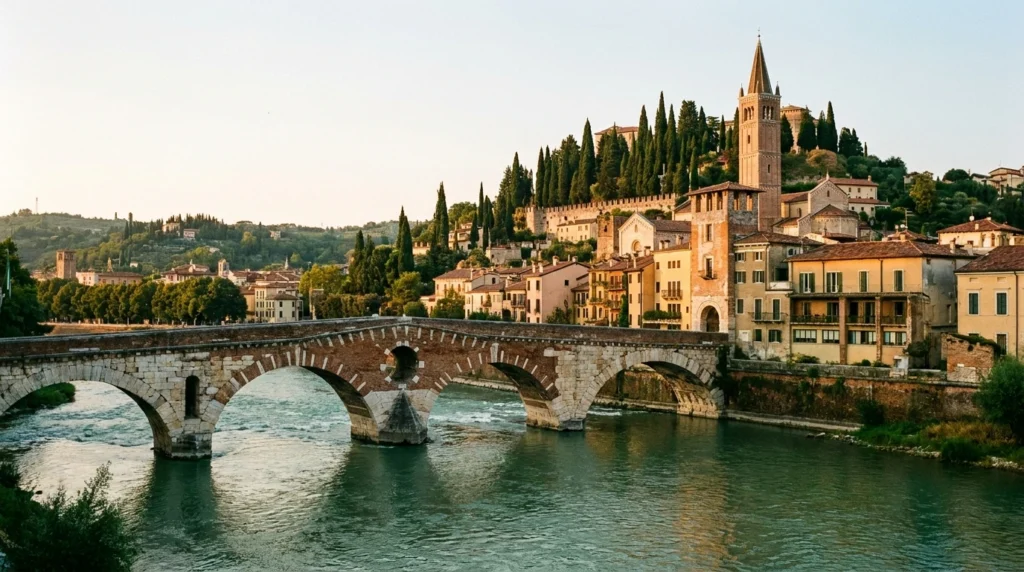
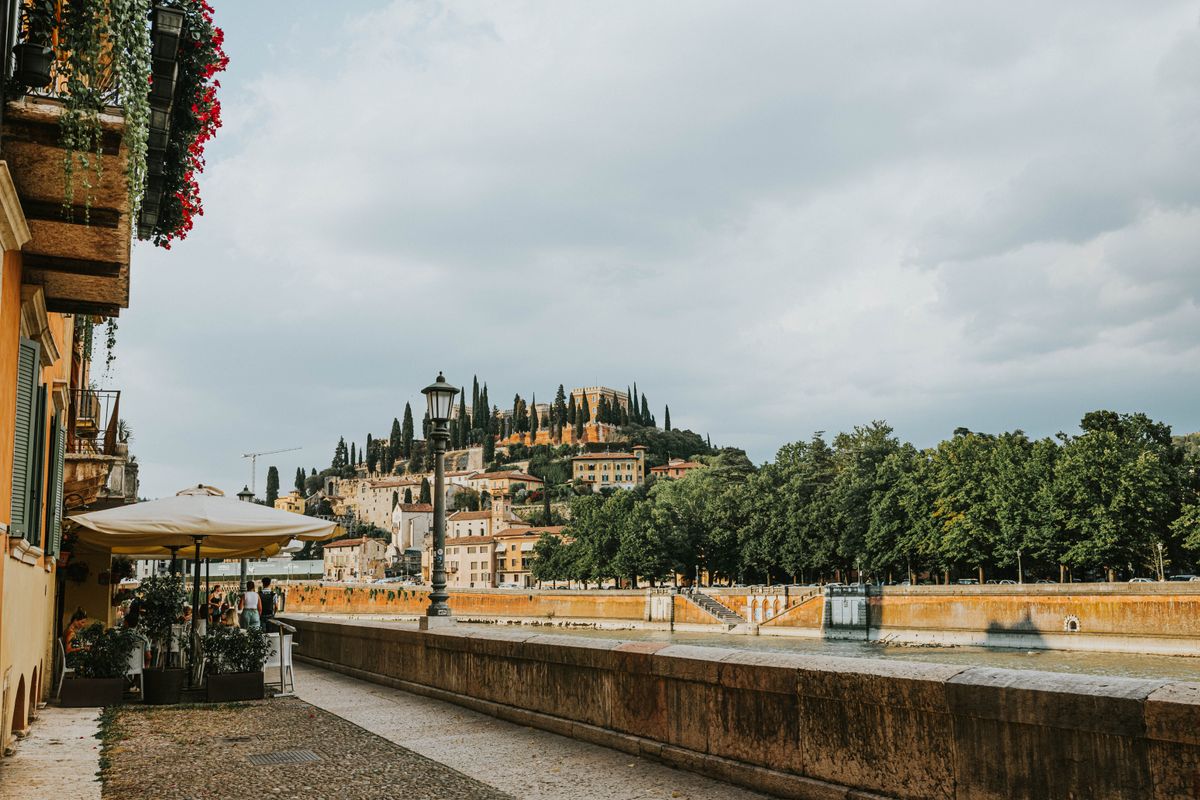
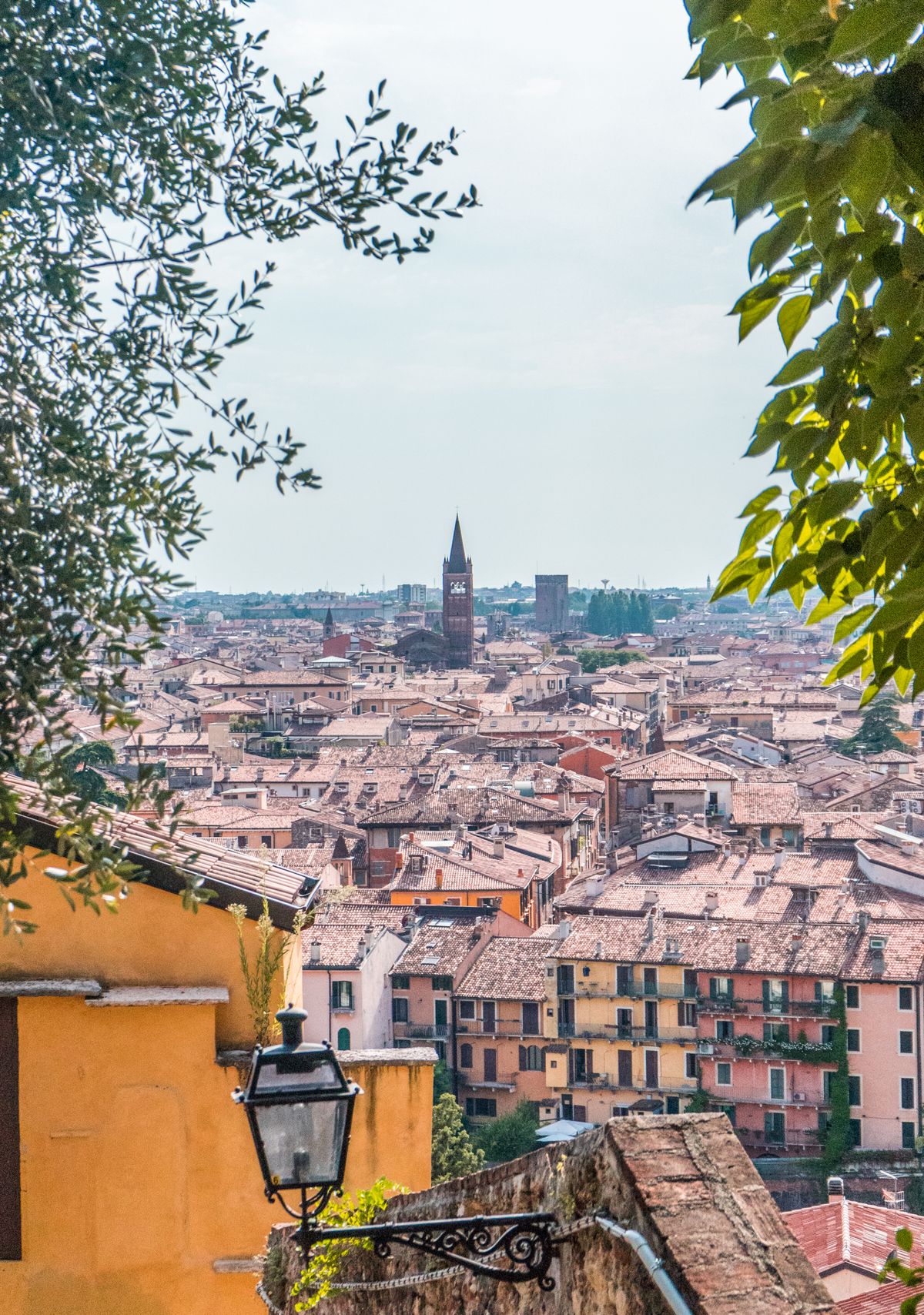
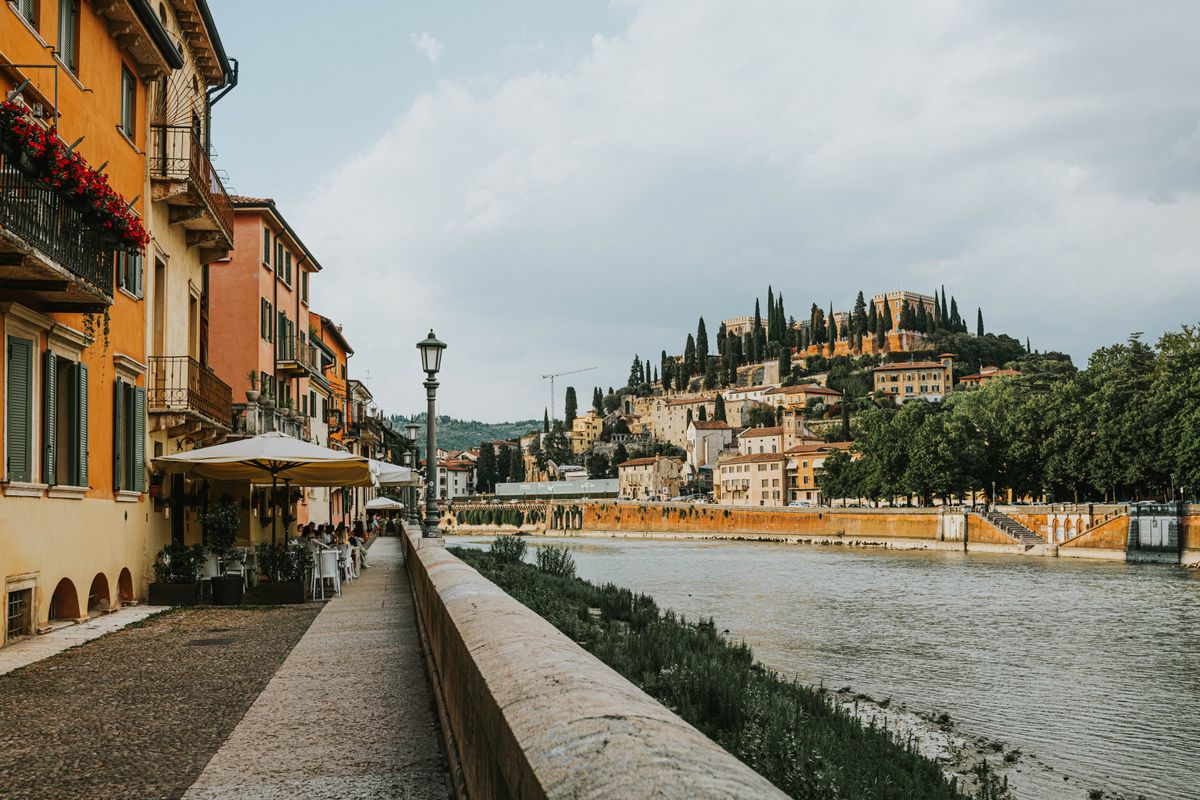
I always tell friends that Verona is the Italian city that gives you everything Venice promises without the crush — an intact Roman amphitheatre that still fills with opera under the stars, a balcony the whole world believes belonged to Juliet, and a pink-marble old town wrapped in a loop of the Adige River. We come for a single night on the way between Venice and Lake Garda and end up staying three, because this is a compact, walkable city of about 256,000 people whose entire historic core was declared a UNESCO World Heritage Site in 2000 . My favourite Verona ritual is a sunset Aperol on Piazza delle Erbe followed by the climb up the Torre dei Lamberti for the rooftops at dusk, then a late dinner of bigoli and Amarone. Treat this guide as the brief I would hand my own family the night before they flew into the region — the Arena and its opera festival, the funicular up to Castel San Pietro, Juliet’s House and the bridges of the Adige, plus the easy day trips to Lake Garda and the wine hills of Valpolicella .

Table of Contents
Why Verona?
Verona is the city that quietly out-charms its famous neighbours. Wedged between Venice an hour east and Lake Garda half an hour west, Italy’s fourth city of the north keeps the marble piazzas, Roman ruins and operatic romance you came to Italy for, while sidestepping the tour-group crush of Venice and the price tags of Milan. The city proper holds about 256,000 residents, with a wider metropolitan area of roughly 714,000 across the Veneto plain . Yet the whole historic centre fits inside a single dramatic loop of the Adige River, walkable end to end in under half an hour.
What surprises first-time visitors is how layered Verona is. Founded by the Romans, it preserves a first-century amphitheatre — the Arena — still in nightly use as one of the world’s great open-air opera houses; a Roman theatre across the river; and gates and a triumphal arch from the same era. Over that the medieval Scaligeri lords stamped the city with crenellated bridges and a riverside castle, and the Venetians layered on Renaissance palazzi. In 2000 UNESCO inscribed the entire city on the World Heritage List, citing two thousand years of continuous, harmonious urban development .
Then there is the romance. Shakespeare set Romeo and Juliet here without ever visiting, and Verona has leaned into the legend with un-ironic enthusiasm: the courtyard of the so-called Casa di Giulietta, with its much-photographed balcony and bronze statue, is one of Italy’s most visited single sights . Whether you find it charming or kitsch, the city around it — pink-marble Piazza delle Erbe, the towers, the river terraces — is the real love letter.
This guide covers the neighbourhoods you will actually walk, the hearty Veronese food — from bigoli pasta to risotto all’Amarone to the local Valpolicella and Soave wines — the marquee sights (the Arena, Juliet’s House, the Torre dei Lamberti, Castelvecchio and Castel San Pietro), the day trips Veronesi themselves take, above all Lake Garda and the Valpolicella wine hills, and the practical realities of Schengen rules, the euro and the opera-festival calendar that shapes a summer visit. Verona is compact: nearly everything on a first-timer’s list sits within a 20-minute walk of Piazza Bra and the Arena.
One orientation point worth absorbing early: Verona is a four-season inland city, not a coastal one. Summers are hot and busy, peaking with the opera festival; winters are cold and atmospheric, with a well-loved Christmas market under the Arena; and the loveliest windows are the warm shoulder months of late spring and early autumn, when the terraces are full and the queues are short. Note too that Verona shares the spotlight in February 2026 as host of the Winter Olympics closing ceremony inside the Arena, a reminder of how completely this Roman building still anchors civic life . For the wider Italian context, this guide pairs with our Italy Travel Guide and the sibling Venice, Florence and Rome city guides.
Getting There
Verona has its own airport, Verona Villafranca (VRN), about 10 kilometres southwest of the centre, with European and seasonal links; the ATV airport bus (line 199) runs to Porta Nuova station in about 15–20 minutes for a few euros . Many visitors instead fly into the larger hubs at Venice (Marco Polo and Treviso), Milan (Bergamo and Malpensa) or Bologna and take a fast train, since Verona sits on the main Milan–Venice line.
Rail is the easiest way in. Verona Porta Nuova is a major junction on Italy’s high-speed network, with frequent Frecciarossa and Italo trains: roughly 1 hour 10 minutes to Venice, around 50 minutes to Milan and about 1 hour to Bologna . The station is about 1.5 kilometres south of the Arena, an easy bus ride or 20-minute walk into the centre.
By road, Verona sits at the crossing of the A4 (Milan–Venice) and A22 (Brenner) motorways, making it an easy stop on a northern-Italy road trip and the natural gateway to Lake Garda. Long-distance coaches run by FlixBus and others serve the bus station beside Porta Nuova .
Getting Around
Verona is one of the easiest Italian cities to navigate: a compact, flat historic centre wrapped in the Adige, a useful network of ATV city buses, and a single funicular up to the Castel San Pietro viewpoint . The core is small — you can walk from Porta Nuova station to the Arena in 20 minutes and across the whole old town in under half an hour — so most visitors walk between the sights and use buses mainly for the station and the airport.
City Buses (ATV)
ATV runs Verona’s urban and suburban buses, the backbone of public transport since the city has no tram or metro . They are most useful for the run between Porta Nuova station and Piazza Bra, and for reaching the airport and outer neighbourhoods. A single urban ticket costs around €1.30–2.00 depending on where you buy it — tickets bought on board cost more than those from a kiosk — so buy from kiosks, tobacconists (tabaccheria) or the ATV app, and remember to validate the paper ticket in the on-board machine when you board, since fare inspectors do check and fines are steep . Buses run frequently through the day but thin out late at night, when a short taxi is the easier option.
Walking the Centro Storico
The historic centre is overwhelmingly walkable and largely pedestrianised, and walking is genuinely the best way to see it. The marble streets between Piazza Bra, Via Mazzini and Piazza delle Erbe are traffic-free, and the riverside paths along the Adige make for lovely strolls between the bridges. Distances are short — the Arena to Ponte Pietra is a 15-minute amble, and you can cross the whole old town on foot in under half an hour — so most visitors barely use transit at all during their stay . Wear comfortable shoes, because the polished marble paving is genuinely slippery in the rain, and watch for the occasional delivery vehicle in the pedestrian zone.
The Funicular to Castel San Pietro
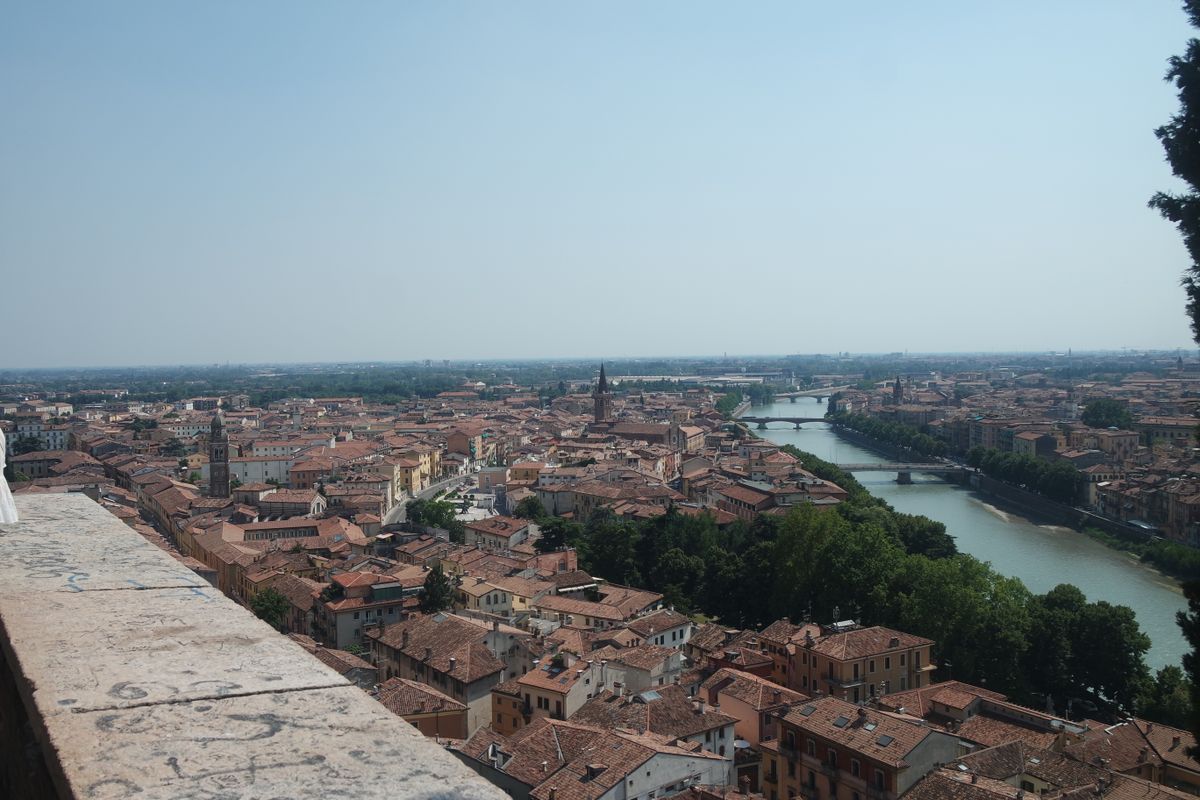
A short funicular climbs from near the Roman Theatre up to the terrace below Castel San Pietro, the city’s premier viewpoint over the river and rooftops . The ride takes barely 90 seconds and costs a couple of euros each way; the stepped path beside it is a quick free alternative if there is a queue.
Airport Access
- ATV airport bus (line 199) to Porta Nuova station — about 15–20 minutes, a few euros one way
- Taxi VRN to the centre — about 15 minutes, roughly €25–€30 by day
Taxis and Rideshare
Verona has metered taxis at ranks by Porta Nuova, Piazza Bra and the main squares; Radiotaxi Verona is the main operator, and fares for a short cross-centre ride run roughly €8–12. App-based rides are less established than in larger Italian cities, so for most trips the taxi rank or a short walk is simplest. Confirm the meter is running before you set off.
Navigation Tips
Verona is easy to read once you orient to Piazza Bra and the Arena at the south end of the centre, with Via Mazzini leading north to Piazza delle Erbe and the river beyond. Google Maps handles the bus network well, and the streets are well signed. The historic core is small enough that you will rarely need transit for sightseeing — save it for the station, the airport and the funicular climb.
Neighbourhoods: Where to Base Yourself
📍 Verona Map: Every Place in This Guide
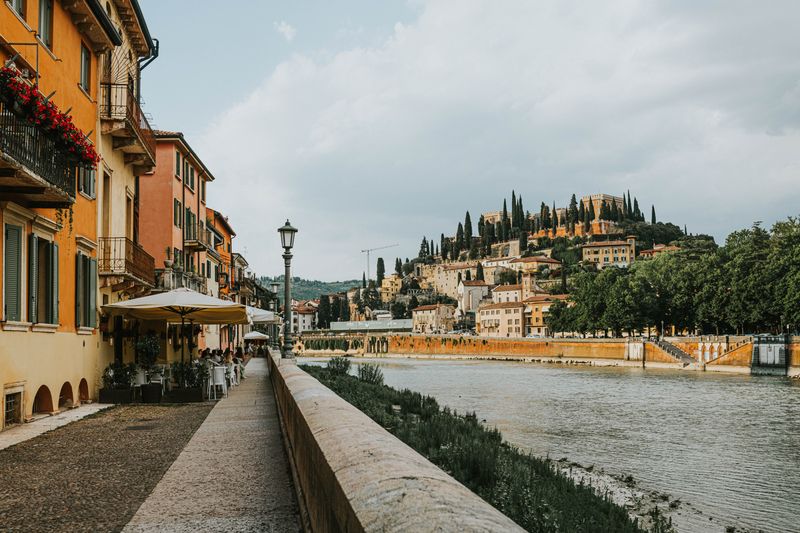
Verona’s character changes street to street, and choosing the right area shapes the whole trip. The centre is compact — you can walk from the Arena to the river in 15 minutes — but each quarter has its own rhythm, price point and noise level. Below are the areas most first-time visitors actually consider, with an honest read on who each suits.


Centro Storico (Around the Arena and Piazza Bra)
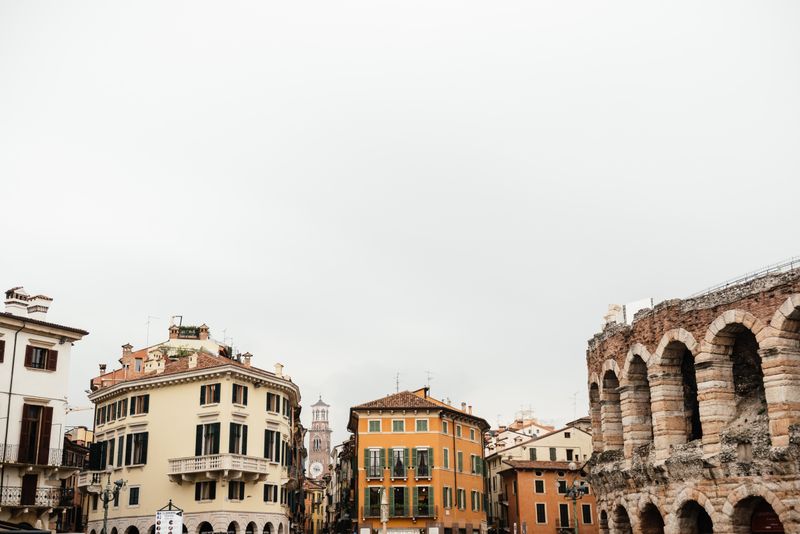
The historic core around Piazza Bra and the Arena is the postcard Verona — marble piazzas, the amphitheatre, the best restaurants and the famous sights all on your doorstep. Stay near here if it is your first visit and you want everything walkable from the door; accommodation is the priciest in the city and the area can be lively and noisy on opera nights, but nothing beats the convenience.
Piazza delle Erbe and Cittadella
The streets around Piazza delle Erbe — the old Roman forum, now a market square ringed with frescoed palazzi — put you in the prettiest, most atmospheric part of the centre, a short walk from Juliet’s House and the river. It is a wonderful base for couples and first-timers who want to be in the thick of the marble old town, with cafe terraces and shops at the foot of the building.
Veronetta (Across the River)
Across the Ponte Nuovo and Ponte Pietra, the Veronetta district climbs towards the Roman Theatre and Castel San Pietro. More residential and student-flavoured thanks to the nearby university, it trades some convenience for lower prices, local trattorias and the city’s best views, and it is still an easy ten-minute walk back over the bridges to the centre.
Borgo Trento and the North
For a quieter, leafier base, the elegant residential district of Borgo Trento on the north bank trades old-town buzz for calm tree-lined streets and a riverside setting, a 15-minute walk or short bus ride from the centre. It suits travellers who want space, families, and anyone happy to commute the short distance in for sightseeing.
Food and Drink: Bigoli, Amarone and Risotto
Verona’s food is hearty Veneto cooking — built on pasta, risotto, horse and donkey meat, polenta and some of Italy’s greatest red wines — and eating here is excellent value by northern-Italian standards. The city sits at the centre of a celebrated wine region, so the glass beside your plate matters as much as the plate itself.
What to Order
- Bigoli con ragu d’anatra — thick hand-rolled wholewheat spaghetti with a rich duck ragu, the Veronese signature pasta.
- Risotto all’Amarone — creamy risotto cooked with the local Amarone red wine, the dish that shows off Verona’s vineyards on a plate.
- Pastissada de caval — a slow-cooked horse-meat stew, the city’s most traditional and divisive main.
- Pandoro — the golden star-shaped Christmas cake invented in Verona in the 19th century.
- Amarone and Valpolicella — the powerful dried-grape Amarone and its lighter cousins, the region’s flagship reds .

Where to Eat
The lanes around Piazza delle Erbe and the Veronetta district across the river hold the most characterful osterie, serving Veneto home cooking and local wine at gentle prices, while Piazza Bra’s arcades are convenient but tourist-priced . For a true local ritual, do an aperitivo at a wine bar: a glass of Valpolicella or a spritz with cicchetti snacks before dinner. The morning market on Piazza delle Erbe is good for picnic supplies.
Timing and Etiquette
Veronesi eat lunch from around 1pm and dinner from 8pm, and aperitivo hour from about 6pm is a serious institution. Many kitchens close between lunch and dinner, so plan around the gap. Tipping is light: rounding up or leaving a euro or two for good service is plenty, and a coperto (cover charge) is usually added to the bill.
Cultural Sights: The Arena and Beyond
Verona’s sightseeing is famously dense for so small a city: a Roman amphitheatre, a riverside castle, a clutch of marble piazzas and the world’s most famous balcony all sit within a fifteen-minute walk. The headlines are genuinely world-class, and the supporting cast — the towers, the bridges and the viewpoints — fills a satisfying two days.
The Arena di Verona
The Arena, built in the first century AD, is the third-largest surviving Roman amphitheatre in the world after the Colosseum and the arena at Capua, with an original capacity of around 30,000 . Extraordinarily well preserved, it has hosted an opera festival almost every summer since 1913 and remains in nightly use; daytime admission to walk the tiers is around €12 . Time a visit for an opera evening if you can.
Casa di Giulietta (Juliet’s House)

The Casa di Giulietta, a 13th-century house tied to the Shakespeare legend, draws crowds to its courtyard balcony and bronze Juliet statue; entry to the house and balcony costs about €12 from 2026, while the courtyard itself is free . Lean into the romance or treat it with a raised eyebrow — either way the marble streets around it are the real reward.
Piazza delle Erbe and the Torre dei Lamberti

Piazza delle Erbe, the old Roman forum, is the city’s living room — a market square ringed with frescoed palazzi and the Madonna Verona fountain . Beside it rises the 84-metre Torre dei Lamberti, the city’s tallest tower, whose lift and stairs lead to the finest rooftop panorama for about €6 .
Castelvecchio and the Scaliger Bridge
The red-brick Castelvecchio, the fortified riverside castle built by the Scaligeri lords in the 14th century, now houses an excellent art museum, and its crenellated Ponte Scaligero spans the Adige in a row of swallowtail battlements . Add the Roman Theatre and Castel San Pietro across the river, and Verona’s two thousand years of building stand within easy reach of one another.
Culture, Festivals and Nightlife
Verona’s cultural life punches far above its size, anchored by one of the world’s great opera festivals and a packed calendar of markets and events. Nightlife is more wine bar and piazza terrace than mega-club — sociable, late and built around the aperitivo — which suits the romantic, unhurried mood of the city.
The Arena Opera Festival
The Arena di Verona Opera Festival is the city’s defining event: a summer season of grand open-air opera staged inside the Roman amphitheatre, running roughly mid-June to mid-September and drawing audiences from around the world . Tickets range from around €28 on the stone steps to several hundred euros for premium seats; the cheap stone-tier tickets, cushion in hand, are an unforgettable bargain.
Festivals and the Christmas Market
Beyond opera, Verona hosts Vinitaly, Italy’s biggest wine fair, each spring, and a much-loved Christmas market that fills Piazza Bra and the streets around the Arena through December with stalls, lights and a giant comet star . The city also marks Shakespeare’s legacy with the Estate Teatrale Veronese summer theatre season at the Roman Theatre.
Nightlife and the Terraces
Nightlife centres on the wine bars and terraces around Piazza delle Erbe and the Veronetta district, with a relaxed, drink-led rhythm that builds slowly through the evening. Craft-cocktail and natural-wine bars cluster in the old town, while the student crowd across the river keeps things livelier and cheaper. It is an easy, unpretentious scene to dip into solo.
Day Trips From Verona
Verona is the ideal base for the Veneto and the lakes, with fast trains and easy roads reaching wine country, lakeshore towns and great cities within an hour or two. With more than two days, give one to a day trip.
Lake Garda and Sirmione (about 30 minutes by train or car)
Italy’s largest lake begins barely half an hour west of Verona, and the photogenic spa town of Sirmione — with its moated Scaligero castle and the Roman ruins of the Grotte di Catullo on a cypress-tipped peninsula — is the classic Garda day trip . Trains run to Peschiera and Desenzano on the lakeshore, with buses and ferries onward; go early in summer to beat the crowds.
Valpolicella Wine Country (about 30 minutes by car)
The green hills of Valpolicella, just north of the city, are the home of Amarone and Valpolicella wines, with cellars and family estates offering tastings among the vineyards . It is best done by car or an organised wine tour, since public transport between the estates is sparse; book tastings ahead, especially at the well-known producers.
Venice, Vicenza and Mantua (about 30–75 minutes by train)
Verona’s position on the high-speed line makes the Veneto’s great cities easy: Vicenza and its Palladian villas are half an hour east, Venice about 1 hour 10 minutes, and Mantua — with its Gonzaga palaces and lakes — about 50 minutes south . Any of them works comfortably as a day trip by train from Porta Nuova.
When to Visit: A Season-by-Season Guide
Verona’s inland climate gives it four genuinely distinct seasons — hot summers, cold winters, and long, lovely shoulder seasons. Here is how the year actually feels on the ground.
Spring (March–May)
Fresh and increasingly warm, with the terraces filling and the wine fair Vinitaly bringing the city to life in April. Temperatures climb from the low teens to the low 20s°C by May, one of the loveliest months — longer days, blossom along the river and reasonable prices before the summer rush. Pack layers; spring weather swings between warm sun and cool showers.
Summer (June–August)
Hot and busy, with highs in the high 20s to mid 30s°C and the Arena opera festival in full swing. It is the city’s headline season — balmy evenings made for opera and aperitivo — but also its most crowded and expensive, and midday heat can be intense. Plan sights for the morning and save the evenings for the Arena.
Autumn (September–November)
Arguably the best balance: September stays warm and the opera festival runs into the month, while October turns golden and far quieter, with the Valpolicella grape harvest under way. Prices ease after summer and the light is beautiful along the river. A superb time for the city and for the wine hills.
Winter (December–February)
Cold and often crisp, with daytime highs near freezing in January — but December transforms Piazza Bra with a much-loved Christmas market and the giant comet star against the Arena. January and February are quiet and cheap, ideal for atmospheric, crowd-free sightseeing. Bring proper winter layers and waterproof shoes for the marble streets.
Budget Breakdown: What Verona Actually Costs
Verona is good value for northern Italy — cheaper than Venice or Milan, though dearer than the Italian south. The figures below are per-person daily estimates excluding flights, in euros, based on 2025–2026 prices .
Backpacker (€60–95/day)
A hostel dorm bed runs €25–40; market food, pizza al taglio and a daily set lunch keep food to €18–28; the piazzas, churches and river walks are free or cheap. Budget one paid sight such as the Arena and you stay comfortably under €95.
Mid-Range (€130–220/day)
A three-star hotel or central apartment is €90–150 for a double; add €35–55 for restaurant meals, €15–25 for sights and the occasional taxi. This is the typical comfortable-tourist band, higher during the opera festival.
Luxury (€350+/day)
A four- or five-star room such as the Due Torri runs €230–450+, fine dining adds €90–180, and premium opera seats, private guides and Valpolicella wine tours push the day well past €350.
Key Fixed Costs
- Arena daytime admission — about €12
- Casa di Giulietta entry — about €12 from 2026
- Torre dei Lamberti — about €6
- Single ATV urban bus ticket — about €1.30–2.00
- Opera festival cheapest stone-step ticket — from about €28
Practical Tips and Safety
Verona is a safe, easy and welcoming city for visitors, but a handful of practical habits make the difference between a smooth trip and an avoidable headache. None of this is alarming — it is the ordinary common sense of any popular Italian city.
Money and Payments
Italy uses the euro; cards are accepted almost everywhere, including small cafes and shops, but carry €20–30 in small notes for markets, the smallest bars and tips . ATMs (bancomat) are plentiful; use bank machines and decline the “conversion” offered by standalone ATMs, which apply poor exchange rates.
Safety and Scams
Verona is among Italy’s safer cities; violent crime is rare and the realistic risk is opportunistic pickpocketing in crowds around the Arena, Piazza Bra and Juliet’s House. Use a zipped bag worn to the front and watch your phone on busy terraces. Both the UK and US governments rate Italy a low-risk destination overall .
Health and Water
Tap water is safe and good to drink throughout the city, including at the historic public fountains. EU visitors should carry an EHIC/GHIC card; everyone else should have travel insurance. Pharmacies (farmacia, marked with a green cross) are widespread and competent for minor ailments .
Practical Essentials
- Language: Italian; English is common in tourist areas and among younger people.
- Plugs: Type C/F/L, 230V — bring an EU/Italian adapter.
- Tipping: light — round up or leave a euro or two; a coperto is often added.
- Weather: four real seasons — pack for summer heat or winter cold accordingly.
- Dress: cover shoulders and knees to enter churches and the Cathedral.
Frequently Asked Questions
How many days do you need in Verona?
Two full days covers the city comfortably: one for the Arena, Piazza Bra and Piazza delle Erbe with the Torre dei Lamberti; one for Juliet’s House, Castelvecchio and the funicular up to Castel San Pietro. Add a third day for a trip to Lake Garda or the Valpolicella wine hills, which most visitors find well worth it.
What is the best time of year to visit Verona?
Late spring (April–June) and early autumn (September–October) offer the best balance of warm weather and manageable crowds. The Arena opera festival runs mid-June to mid-September if that is your goal, December brings a lovely Christmas market, and July–August are hot and busy. Whenever you go, pack for the season — Verona has four genuinely distinct ones.
Is Verona worth visiting, or should I just go to Venice?
Absolutely worth it — and many travellers find it more relaxed than Venice. The Roman Arena, the opera, Juliet’s balcony, the marble piazzas and the easy day trip to Lake Garda easily fill two or three days, and the lighter crowds and lower prices make it a relief. Venice is only 70 minutes away by train, so you can easily do both.
Is Verona expensive?
It is good value for northern Italy — cheaper than Venice or Milan, though pricier in the opera-festival summer. A mid-range trip runs roughly €130–220 per person per day excluding flights, and backpackers can manage on €60–95. Sightseeing is reasonable, with the Arena around €12 and the Torre dei Lamberti about €6.
Do I need public transport, or is Verona walkable?
The historic core is very walkable — the Arena, the piazzas and the river form a compact, mostly flat and largely pedestrianised area. Most visitors use ATV city buses mainly for the run between Porta Nuova station and the centre and for the airport. The only other transit worth taking is the short funicular to Castel San Pietro for the view.
How do I get from Verona airport to the city centre?
The ATV airport bus (line 199) runs from Verona Villafranca (VRN) to Porta Nuova station in about 15–20 minutes for a few euros, while a taxi takes around 15 minutes for roughly €25–30 by day . Many visitors instead arrive by high-speed train, with Venice about 70 minutes and Milan about 50 minutes away .
Can you see an opera at the Arena, and how much does it cost?
Yes — the Arena di Verona Opera Festival stages grand open-air opera in the Roman amphitheatre roughly mid-June to mid-September, and seeing a performance is the city’s defining experience . Tickets start from around €28 on the unreserved stone steps and rise to several hundred euros for premium seats. Book well ahead for popular nights and bring a cushion.
What food is Verona famous for?
Bigoli pasta with duck ragu, risotto all’Amarone cooked with the local red wine, and pastissada de caval (horse-meat stew) are the Veronese signatures, alongside the city’s pandoro Christmas cake. Above all, Verona is wine country — the Amarone, Valpolicella and Soave from the surrounding hills are the region’s pride .
Was This Guide Helpful?
We update our Verona guide as prices, transit and opening hours change. Let us know if it helped — your feedback shapes the next revision.
Ready to Experience Verona? Sit, Sip, Look Up
Verona rewards the curious traveller. Its headline pleasures are grand — the Roman Arena, the opera under the stars, Juliet’s balcony — but the city’s real magic is in the in-between: an Amarone on a Piazza delle Erbe terrace, the rooftops from the Torre dei Lamberti at dusk, the river glowing gold from Castel San Pietro. See the Arena, then stay for everything around it. For the wider picture, see our Italy travel guide, and pair Verona with Venice, Florence and Rome for a complete Italian trip.
Explore More City Guides
Verona is one stop in our growing library of Italian city guides. Keep planning with these companion pages:
More city guides you might like
Plan your trip to Verona
The booking tools we use ourselves. FFU may earn a commission at no extra cost to you.
Plan & book your trip to Verona
Booking through these searches supports our guides at no extra cost to you.