
City Guide · South Florida
Miami, United States: A Bilingual Beach City Where Art Deco Meets the Caribbean
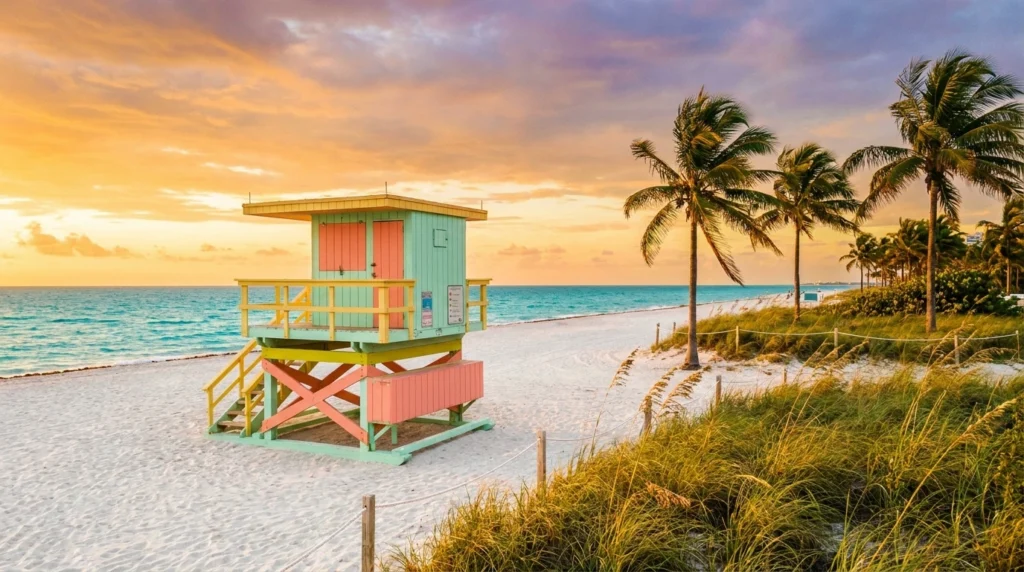
I have flown into Miami International more times than I can count, and the thing I tell every first-timer is that this is not really an American city in the way Chicago or Boston are — it is the unofficial capital of the Caribbean and Latin America that happens to fly a US flag. The city proper holds roughly 487,000 people, but it sits at the heart of a Miami-Dade County of about 2.84 million, where Spanish is spoken as readily as English and Cuban coffee fuels the afternoon . My favourite Miami ritual is the early walk down Ocean Drive before the heat builds, pastel Art Deco hotels glowing in the low light, then a cortadito at a Little Havana ventanita. We tell visitors to resist the urge to treat Miami as one beach: the real city is a string of distinct worlds — South Beach glamour, Wynwood murals, Brickell towers, Little Havana’s domino tables — separated by causeways and a warm bay. Treat this guide as the brief I would hand my own family before they picked up the rental car: the beaches, the Cuban food, the Art Deco history, the hurricane-season timing, and everything else .

Table of Contents
Why Miami?
Miami is the rare American city where you can land at the airport, hear three languages before you reach baggage claim, and order your first coffee in Spanish without anyone blinking — and that bilingual, pan-Caribbean character is the whole point. The city proper holds only about 487,000 people, but it anchors a Miami-Dade County of roughly 2.84 million, where around 70 percent of residents identify as Hispanic or Latino, the highest share of any major US metro . It is a city that thinks of itself less as the bottom of the United States than as the top of Latin America, and learning to read it that way — through its Cuban, Haitian, Colombian, Venezuelan, and Brazilian threads — is the single skill that turns a generic beach trip into a great one.
The city reads as a series of productive contradictions. It is a glamorous beach destination of Art Deco hotels and yacht-lined marinas, yet daily life happens in strip-mall cafeterias serving croquetas, Haitian griot counters in Little Haiti, and the domino tables of Calle Ocho. It is one of the youngest major cities in the US by skyline — downtown Brickell’s glass towers have nearly all risen since 2000 — yet it sits beside the largest concentration of Art Deco architecture in the world, roughly 800 protected buildings packed into a single square mile of South Beach . It is famous for sun and excess, yet it is also a serious art town, home to Art Basel Miami Beach and the murals of Wynwood.
The geography is the secret engine. Miami sits on a low coastal ridge between the Everglades to the west and the Atlantic to the east, with Biscayne Bay separating the mainland from the barrier islands of Miami Beach. That means you can paddle a mangrove channel in the morning, see the city’s skyline reflected in the bay at midday, and watch the sun set over the Everglades sawgrass at night — three distinct ecosystems within an hour of downtown. The warm, shallow bay and the year-round subtropical climate are what made Miami a winter resort in the first place, and they still shape everything from the architecture to the afternoon thunderstorms .
This guide covers the neighbourhoods you will actually spend time in, the Cuban sandwiches and stone crab worth the drive, the museum-and-landmark tier (the Art Deco district, Vizcaya, the Pérez Art Museum, Wynwood Walls), the five day trips Miamians themselves take on weekends, and the practical realities of ESTA, hurricane-season timing, summer humidity, and a transit system anchored by the free Metromover. The beach is the easy part; everything else flows from there.

Neighborhoods: Finding Your Miami
📍 Miami Map: Every Place in This Guide


Miami is not one place but a constellation of neighbourhoods scattered across the mainland and the barrier islands, each with its own language, price point, and reason to exist. The single most common first-timer mistake is to book a South Beach hotel and never leave the sand, missing the Cuban lunch counters, the warehouse murals, and the banyan-shaded villages that make the city worth a return trip. Distances feel short on a map but the bay and the causeways slow everything down, so the smart move is to pick two or three neighbourhoods that match your trip and go deep rather than racing between all of them. Below are the eight areas you are most likely to spend real time in, in roughly the order most visitors discover them.
A useful mental model is to split the city into three bands. First, the barrier islands across Biscayne Bay — South Beach, Mid-Beach, and North Beach — where the sand, the Art Deco, and the resort hotels live, and where most first-timers stay. Second, the mainland urban core — downtown, Brickell, Wynwood, and the Design District — a compact, increasingly walkable cluster knitted together by the free Metromover and a short rideshare hop. Third, the leafy inland villages — Little Havana, Coconut Grove, Coral Gables, and Little Haiti — where the city’s history, immigrant culture, and tree-shaded calm sit furthest from the beach. Knowing which band a place belongs to tells you roughly how it will feel and how long it takes to reach the others, because a crossing from the islands to the inland villages can easily eat the better part of an hour in traffic even though the map says it is only a few miles.
South Beach (SoBe)
The barrier-island strip everyone pictures: Ocean Drive’s pastel Art Deco hotels, the wide white-sand beach, and a 24-hour party energy that peaks on weekends. The Art Deco Historic District here protects roughly 800 buildings in about one square mile, the densest such concentration anywhere . The geography is simple — numbered streets running west off the ocean — which makes it the most walkable part of greater Miami. The trick is to treat Ocean Drive as a photo set rather than a dinner destination: its restaurants are tourist-priced and pushy, so come for the architecture and the swimming, then eat a block or two inland on Española Way or near Lincoln Road where prices and quality both improve. Mornings before the heat builds are the best time to walk the strip; nights belong to the neon and the clubs.
- Ocean Drive & the Art Deco District
- Lincoln Road pedestrian mall
- South Pointe Park at the island’s tip
- Española Way’s Mediterranean lane
Best for: first-timers and beach-and-nightlife travellers. Access: South Beach Local bus loop; rideshare from downtown ~20 min.
Wynwood
A former warehouse district reinvented as an open-air gallery, anchored by Wynwood Walls and dozens of building-sized murals that change constantly. By day it is third-wave coffee, design shops, and street art you can photograph for free; by night it is breweries, taco joints, and crowds with cameras spilling between bars. The transformation began around 2009 when developer Tony Goldman invited international artists to paint the blank warehouse walls, and it remains the most walkable and the most Instagrammed corner of the city. Wear comfortable shoes, plan to wander rather than tick off a list, and remember the murals rotate, so the wall you photographed last year may be something else entirely now.
- Wynwood Walls outdoor mural park
- NW 2nd Avenue gallery strip
- Wynwood Marketplace & craft breweries
- Independent coffee roasters and taco stands
Best for: art lovers, design nerds, and a night out without the South Beach cover charges. Access: free Wynwood trolley; rideshare from downtown ~10 min.
Little Havana
The cultural heart of Cuban Miami, centred on Calle Ocho (SW 8th Street). Old men slap dominoes in Máximo Gómez Park, ventanitas sling cafecito for change, and cigar rollers work shopfront windows in full view of the street. The last Friday of each month, Viernes Culturales fills the street with music, art, and dancing, and the annual Calle Ocho Festival each March is one of the largest Latin street parties in the country . This is the neighbourhood where Miami’s self-image as the capital of the exile Cuban community is most tangible, and it rewards an unhurried afternoon of coffee, music, and a slow lunch far more than a quick photo stop.
- Calle Ocho & Máximo Gómez (Domino) Park
- Ball & Chain live-music bar
- Cuban bakeries, cigar shops, and the Tower Theater
Best for: food, music, and culture seekers. Access: rideshare or the free trolley; ~10 min from downtown.
Brickell
Miami’s glass-tower financial district and its densest urban neighbourhood, where the after-work crowd fills rooftop bars and the Brickell City Centre mall. Nearly all of it has risen since 2000, giving it a clean, vertical, almost Singaporean feel that surprises people expecting only beach. It is the easiest part of the city to enjoy without a car, threaded by the free Metromover and lined with international restaurants reflecting the banking-and-Latin-American-money crowd that lives here. If your trip skews toward cocktails, conferences, and skyline views rather than sand, Brickell is the place to base yourself, and the bayfront walkways give you the postcard skyline from ground level at sunset.
- Brickell City Centre
- Mary Brickell Village dining
- Riverfront and bayfront promenades
Best for: business travellers, cocktail people, and skyline views. Access: free Metromover loops through Brickell from downtown.
Downtown & Bayfront
The civic and cultural core: Bayside Marketplace, the Kaseya Center arena, and the Museum Park holding the Pérez Art Museum Miami and the Frost Science Museum on the water. It has long had a daytime-business, empties-at-night reputation, but a wave of residential towers and the museums have given it more after-dark life than it used to have. The free Metromover makes this the single easiest neighbourhood to explore without a car, looping past the arena, the parks, and the museums, and connecting to Brickell to the south. It is also the jumping-off point for Bayside boat tours of the bay and the celebrity homes on Star Island.
- Bayfront Park & Bayside Marketplace
- Pérez Art Museum Miami (PAMM)
- Frost Museum of Science & the Kaseya Center
Best for: museums, arena events, and car-free days. Access: free Metromover; Metrorail at Government Center.
Coconut Grove
Miami’s oldest neighbourhood, a leafy bayside village of banyan trees, sailing clubs, and sidewalk cafes. It feels a generation slower than South Beach and is home to Vizcaya, the Gilded-Age villa that is the city’s most photographed landmark. Founded by Bahamian and New England settlers in the 1800s, the Grove keeps a bohemian, tree-shaded character that families and couples gravitate to, with the revamped CocoWalk at its centre and the Dinner Key marina along the bay. It is an easy, green half-day that pairs naturally with a Vizcaya visit and a waterfront lunch.
- Vizcaya Museum & Gardens
- CocoWalk dining and shops
- Dinner Key marina waterfront
Best for: couples, families, and a calmer, green day out. Access: Metrorail to Coconut Grove station; ~15 min from downtown by car.
Coral Gables
A planned 1920s Mediterranean-Revival city-within-a-city, all coral-rock arches, banyan-lined boulevards, and the landmark Biltmore Hotel. Developer George Merrick laid it out as one of America’s first master-planned communities, and its strict architectural codes still give it a uniform, elegant feel quite unlike the rest of Miami. Miracle Mile is its upscale shopping and dining spine, the Venetian Pool is a swimming hole carved from an old coral quarry, and the University of Miami sits at its edge. It rewards architecture fans and anyone wanting a refined, walkable lunch away from the beach crowds.
- Miracle Mile
- The Biltmore Hotel
- Venetian Pool & Fairchild Tropical Garden nearby
Best for: architecture fans and a refined, walkable lunch. Access: Metrorail to University station; ~20 min from downtown by car.
Little Haiti & the Design District
Two adjoining worlds that capture Miami’s range in a single short drive: Little Haiti’s Caribbean markets, botanicas, and the colourful Caribbean Marketplace, beside the luxury Miami Design District where Hermès, Cartier, and Louis Vuitton sit among public-art installations and a Buckminster Fuller dome. Little Haiti is the centre of the largest Haitian community in the country, with griot counters and Creole signage; the Design District next door is a curated luxury-and-art enclave built by developer Craig Robins. Visiting both back to back is the quickest way to feel how many Miamis coexist within a few blocks.
- Little Haiti Cultural Complex
- Caribbean Marketplace
- Miami Design District luxury blocks
Best for: culture seekers, foodies, and luxury window-shoppers. Access: rideshare; ~10 min north of downtown.
Mid-Beach & North Beach
North of the South Beach party zone, the barrier island calms down considerably. Mid-Beach holds the grand resort hotels of the 1950s — the Fontainebleau and the Eden Roc — along the “Millionaires’ Row” stretch, plus the leafy Faena District and a beachwalk promenade that runs for miles. Keep going north and you reach North Beach, an unpretentious, residential, increasingly Latin and Eastern-European neighbourhood with a quiet beach and the MiMo (Miami Modern) architecture of North Beach’s Normandy Isle. For travellers who want the sand without the South Beach circus — families, returning visitors, longer stays — this is the sweet spot, with lower prices and a calmer pace just a short ride from the action. The paved beachwalk that runs along the dunes here is one of the best free amenities in the city, letting you jog, cycle, or stroll for miles between the high-rises and the sea without crossing a single road, and it links the resort district to the quieter sands further north. Self-caterers will also appreciate that the further north you go, the more the prices for groceries, parking, and casual meals drop toward everyday Miami rates rather than tourist mark-ups.
- Fontainebleau & Eden Roc resorts
- The Mid-Beach beachwalk promenade
- North Beach’s MiMo district and Ocean Terrace
Best for: families, returning visitors, and calmer beach stays. Access: Collins Avenue buses; rideshare ~15 min from South Beach.
Key Biscayne & Virginia Key
Just across the Rickenbacker Causeway from Brickell lie two barrier islands that feel like a different, slower Florida: Virginia Key with its historic beach and the Miami Seaquarium, and Key Biscayne with Crandon Park’s calm family beach and the wild Bill Baggs Cape Florida State Park at the southern tip, crowned by an 1825 lighthouse. The causeway itself is a favourite of cyclists and joggers for its open skyline views. It is barely fifteen minutes from downtown yet delivers mangroves, calm shallow water, and a genuine island-escape feeling, which makes it the easiest nature break inside the city limits.
- Crandon Park beach
- Bill Baggs Cape Florida State Park & lighthouse
- The Rickenbacker Causeway bike-and-run path
Best for: families, cyclists, and a quick island-nature escape. Access: car or rideshare over the Rickenbacker Causeway (toll); ~15 min from downtown.
The Food

You can eat your way around Latin America in Miami without leaving the county, and that is genuinely the right way to plan your meals here. Cuban cooking is the backbone — cafecito, croquetas, the pressed Cuban sandwich, and slow-braised ropa vieja — but Colombian bakeries, Venezuelan arepa windows, Peruvian ceviche bars, Haitian griot counters, Argentine parrillas, and Nicaraguan fritangas all have their loyal followings, often clustered by nationality in specific suburbs. The seafood is genuinely world-class thanks to the warm Atlantic and the Keys, the stone crab is a seasonal ritual, and the city’s newer wave of chef-driven restaurants has earned it a Michelin guide of its own. The best advice is to eat where the line is in Spanish: the unglamorous cafeteria with a steam table and a ventanita window will almost always beat the photogenic Ocean Drive terrace on both price and flavour. Below are the categories worth planning a meal around, with specific places and prices to anchor expectations.
Cuban Classics
Start here, because Cuban food is to Miami what pizza is to Naples — the everyday, identity-defining cuisine. A cortadito (sweet espresso cut with a little steamed milk) costs about a dollar at any ventanita, the walk-up window built into the side of a cafe, and is meant to be knocked back standing on the sidewalk. A real Cuban sandwich — roast pork, ham, Swiss, pickles, and mustard pressed flat on Cuban bread — is the city’s defining bite, and the croqueta de jamón is its perfect two-bite companion. Lunch counters serve hearty plates of ropa vieja, vaca frita, or lechon asado with white rice, black beans, and sweet plantains for the price of a fast-food combo, and the portions are enormous. Finish with a pastelito (guava-and-cheese pastry) and another cafecito, and you have eaten like a local for under fifteen dollars.
- Versailles Restaurant — the Calle Ocho institution and unofficial town square of Cuban Miami; lechon asado plate (~$18–24, ~$18–24 USD)
- Sanguich de Miami — cult shop making its own bread and ham for a perfected Cuban sandwich (~$15, ~$15 USD)
- El Palacio de los Jugos — chaotic, beloved cafeteria of steam-table plates and fresh tropical juices (~$10–15, ~$10–15 USD)
If you do only one Cuban meal, make it lunch at a no-frills cafeteria rather than a tourist-facing dinner spot — the cooking is the same or better, the portions are bigger, and the bill is a fraction of the price. And whatever you order, end it standing at the ventanita with a colada to share, because that single ritual tells you more about the city than any landmark.
It helps to know the small vocabulary of the ventanita window before you order, because the staff move fast and the menu is rarely written in English. A cafecito is a tiny shot of sweetened espresso; a colada is the same but supersized to share; a cortadito adds a splash of steamed milk; and a cafe con leche is the breakfast version, espresso poured into hot milk and usually paired with a buttered, toasted slab of Cuban bread (tostada) for dunking. For something heartier than a pastelito, ask for an empanada or a papa rellena (a deep-fried, meat-stuffed mashed-potato ball), both staples of the steam-table counter. The cafeterias also do a brisk takeaway trade in whole roast-pork dinners and trays of croquetas for parties, which is why you will often see locals leaving with sagging plastic bags rather than sitting down — the food here is fuel for daily life, not a special occasion, and that everyday-ness is exactly what makes it so good and so cheap.
Stone Crab & Seafood
Florida stone crab is a Miami signature, harvested in season (mid-October to early May) and served chilled with a tangy mustard sauce; only one claw is taken before the crab is returned to the water to regrow it, which is why the season is regulated and the claws are never cheap . Beyond the famous claws, the warm Atlantic and the nearby Keys deliver mahi-mahi, grouper, yellowtail snapper, and pink shrimp, while the Cuban-Spanish tradition gives you the fried-fish sandwich (pan con minuta) and garlicky shrimp. Expect to pay market price for stone crab, which climbs fast for jumbo claws, but a single shared order at the right place is a genuine Miami rite of passage worth budgeting for once during a trip.
- Joe’s Stone Crab — the 1913-vintage South Beach landmark with famous no-reservations lines; medium claws (~$45–65, ~$45–65 USD)
- Garcia’s Seafood Grille — family-run riverfront fish house on the Miami River (~$20–35, ~$20–35 USD)
- La Camaronera — old-school Cuban fried-fish-sandwich counter in Little Havana (~$12–18, ~$12–18 USD)
Stone crab aside, the everyday seafood here is a bargain compared with the headline claws: a fried snapper sandwich, a bowl of conch chowder, or a plate of garlic shrimp will run a fraction of the price and still taste of the warm Atlantic. The Miami River fish houses and the Cuban-Spanish counters are where locals go, far from the beach mark-ups, and they make a perfect lazy lunch between sightseeing. Worth knowing: the stone-crab claw is one of the few genuinely sustainable shellfish you can order, because the crab is returned alive to regrow the harvested claw, so eating it in season is a rare guilt-free splurge rather than a strain on the fishery. If the market price for jumbo claws makes you wince — and during the holidays it climbs steeply — order the “medium” or “select” grade instead, which delivers the same sweet meat and the same ritual of cracking shells and dipping in mustard sauce at a far gentler cost. The fish houses also do a roaring trade in whatever was landed that morning, so it is always worth asking the counter what the fresh catch is before you default to the menu.
Beyond Cuban and Stone Crab
The wider Latin spread is where Miami really shows off, and it tends to cluster geographically: Doral for Venezuelan and Colombian, Little Haiti for Haitian, Wynwood for chef-driven and international. Wander a few blocks in any of them and the menus shift by nationality, often with a ventanita and a cafe con leche to match. This is also where the value is — a stuffed arepa or a plate of griot will fill you for under fifteen dollars and taste of somewhere specific.
- Colombian bandeja paisa — a hearty platter of beans, rice, egg, chicharron, and arepa (~$15–20)
- Venezuelan arepas — griddled corn cakes split and stuffed, like the chicken-avocado reina pepiada (~$8–12)
- Peruvian ceviche — citrus-cured fish with leche de tigre, sweet potato, and corn (~$16–22)
- Haitian griot — twice-cooked fried pork with spicy pikliz slaw and rice (~$12–16)
- Argentine parrilla — grilled steaks and chorizo with chimichurri (~$25–40)
- Nicaraguan fritanga — grilled meats with gallo pinto and fried plantain (~$12–18)
Each of these has its own enclave — Doral is sometimes called “Doralzuela” for its Venezuelan density, while Little Haiti and parts of North Miami are the Haitian heartland — so a food-focused trip can double as a tour of the diaspora map. Don’t overlook the bakeries either: Colombian and Venezuelan panaderias turn out cheese bread, pandebono, and quesillo that make a cheap, delicious breakfast on the go. The geographic clustering is the practical key to eating well here: rather than chasing a single famous restaurant across town, pick a neighbourhood and graze, because the second and third places you stumble into are often as good as the one you came for. A Venezuelan lunch in Doral, a Haitian dinner in Little Haiti, an Argentine asado in the suburbs — each is its own self-contained scene with its own bakeries, butchers, and corner cafes. Many of these communities also run weekend food markets and festivals tied to their home-country calendars, so it is worth a quick search for what is on during your visit; landing in the middle of a Colombian independence-day cookout or a Haitian Flag Day celebration is the kind of happy accident that no guidebook itinerary can plan for you.
The New Wave: Chef-Driven Miami
Miami has shed its old reputation as a city of scene-over-substance restaurants. The Michelin Guide arrived in Florida in 2022 and now stars a clutch of Miami kitchens, and a generation of chefs is reinterpreting Cuban, Caribbean, and South American traditions with serious technique. Wynwood, the Design District, and Coconut Grove are the epicentres of this wave, where you will find tasting menus, natural-wine lists, and modern takes on the croqueta sitting a few blocks from the steam-table cafeterias that inspired them. Reservations are essential at the well-known names, especially in high season and during Art Basel, and prices climb quickly — this is the splurge end of the Miami food spectrum, balancing the cheap-and-authentic counters elsewhere in this section.
- Modern Cuban tasting menus — refined ropa vieja and seafood (~$90–160 per person)
- Design District fine dining — chef-driven and international (~$70–140)
- Wynwood small-plates & natural wine — sharing menus (~$45–80)
Tropical Sweets, Coffee & Drinks
Sweet things and cold drinks are their own food group in the Miami heat. Beyond the guava pastelito, look for tres leches cake, flan, dulce de leche, and the Cuban-American obsession with key lime pie from down in the Keys. Fresh tropical-fruit juices — mango, mamey, guarapo (sugarcane juice) — are sold at juice bars and cafeterias all over the city, and the frozen treats run from Italian-style gelato in the Design District to the Latin American raspado (shaved ice). On the drinks side, the mojito and the daiquiri were both born in nearby Cuba and are everywhere, while the city’s craft-cocktail and brewery scenes have exploded in Wynwood and Brickell.
- Pastelito de guayaba — flaky guava-and-cheese pastry (~$2–4)
- Batido de mamey — thick tropical-fruit milkshake (~$5–7)
- Key lime pie — tart custard pie, a South Florida classic (~$8–10)
- Mojito or craft cocktail — from a Little Havana bar to a Wynwood lounge (~$12–18)
Food Experiences You Can’t Miss
Miami food is as much about ritual and setting as it is about the plate. The best memories tend to come from the small acts — ordering at a window, sharing a colada, eating crab with your hands — rather than from a tasting menu, though the city has those too now. Build at least one of these into your trip and you will eat the way the city actually does.
- Order a cafecito at a Calle Ocho ventanita and drink it standing at the window like a local.
- Split a tray of stone crab claws in season at Joe’s, then walk it off along the beach at South Pointe.
- Do a Wynwood or Little Havana food walk that strings together arepas, croquetas, ceviche, and pastelitos.
- Catch the August Miami Spice promotion, when top restaurants offer fixed-price menus at a steep discount.
- Browse a Latin panaderia at opening time for warm cheese bread and a cafe con leche breakfast.
String two or three of these together over a long weekend and you will have eaten across the whole map of Latin Miami — the cheap and the chef-driven, the seafood and the sweets — which is, in the end, the single best reason to visit the city with an appetite.
Cultural Sights

Miami’s cultural sights are an unusual mix — a whole protected architecture district, a Gilded-Age villa, world-class contemporary art, and living cultural neighbourhoods — reflecting a city that is at once very young and surprisingly layered. None of them takes a full day, so they pair well: an Art Deco morning with a PAMM afternoon, or a Vizcaya visit folded into a Coconut Grove day. Below are the six that best repay a visit, with founding dates, prices, and what to look for once you are there.
What ties these sights together is a single overarching story: Miami is barely a century old, so almost everything you see was either built within living memory or saved from demolition by activists in living memory. That youth is a feature, not a bug — it means the city wears its history lightly and at human scale, and that the people who fought to preserve the Art Deco hotels or who built the Wynwood murals are often still around to tell you why. For visitors used to centuries-old cathedrals and museums, the pleasure here is different: it is watching a culture invent and reinvent itself in real time, with each immigrant wave and each art movement leaving a visible, datable layer on the map. Reading the sights in chronological order — Vizcaya in 1916, the Art Deco boom of the 1930s, the postwar MiMo resorts, and the Wynwood and PAMM renaissance of the 2010s — turns a checklist of attractions into a coherent timeline of how a swampy railroad town became a global city in a single lifetime.
Art Deco Historic District
The most famous sight in Miami is a whole neighbourhood: roughly 800 pastel Art Deco, Mediterranean-Revival, and MiMo buildings concentrated in about a square mile of South Beach, listed on the National Register in 1979 after a grassroots campaign led by activist Barbara Capitman saved them from the wrecking ball. Founded as a district in 1979. Free to walk; the Miami Design Preservation League runs guided and self-guided audio tours from the Art Deco Welcome Center on Ocean Drive for a modest fee. Look for the “rule of three” in the facades, the porthole windows, the racing stripes, and the neon that comes alive after dark. Best in the low golden light of early morning or late afternoon, when the pastels glow and the crowds thin. The district is also a film and fashion-shoot favourite, so don’t be surprised to find a camera crew commandeering a hotel facade; it is all part of the theatre. Spend an hour with the audio tour and the buildings stop being a pretty backdrop and start telling the story of how 1930s tourism and 1980s preservation shaped the city.
Vizcaya Museum & Gardens
James Deering’s 1916 Gilded-Age villa on Biscayne Bay, a European-style estate with formal Italian gardens, a grotto, and a carved stone barge breakwater out in the water — Miami’s most photographed landmark and a popular wedding and quinceañera backdrop. Founded 1916. Adult admission about $25 (~$25 USD); generally open 9:30am–4:30pm, closed Tuesdays. Allow a couple of hours to walk both the house and the gardens, look for the limestone barge sculpture in the bay, and go early to beat both the heat and the photo-shoot crowds.
Pérez Art Museum Miami (PAMM)
The waterfront contemporary-art museum in Museum Park, opened in 2013 in a Herzog & de Meuron building draped in hanging gardens and shaded verandas designed for the climate. Founded (current building) 2013. Adult admission about $18 (~$18 USD); free on the first Thursday evening and second Saturday of many months — check ahead. Beyond the rotating exhibitions of modern and contemporary art with a strong Latin American focus, don’t miss the bayfront terrace, which has one of the best free skyline-and-bay views in the city and a cafe to enjoy it from.
Wynwood Walls
The outdoor mural park that sparked Wynwood’s reinvention, opened in 2009 by developer Tony Goldman, with rotating works by international street artists set around a curated courtyard. Founded 2009. Walking the surrounding streets and photographing dozens of free murals costs nothing; the curated Walls courtyard charges about $12 (~$12 USD). Murals change regularly, so no two visits look the same; go in the morning for clean photos before the crowds, then stay for coffee or a brewery in the surrounding blocks.
Little Havana & Calle Ocho
Less a single sight than a living one: Máximo Gómez (Domino) Park, the historic Tower Theater, family cigar shops, and the Walk of Fame studded with stars for Latin entertainers along SW 8th Street. Free to wander; busiest and most festive during the monthly Viernes Culturales street fair and the enormous annual Calle Ocho Festival each March. Best experienced slowly over an afternoon — a coffee at a ventanita, the click of dominoes, live music drifting from Ball & Chain — rather than as a quick photo stop.
Fairchild Tropical Botanic Garden
An 83-acre tropical garden in Coral Gables, founded in 1938, with rainforest, palm, and tropical-fruit collections, a lowland tropical-plant conservatory, and a seasonal butterfly house, plus large-scale art installations in some years. Founded 1938. Adult admission about $25 (~$25 USD); open daily 9:30am–4:30pm. It is the green antidote to the beach and the neon, best in the cooler dry season; bring water, a hat, and a couple of hours to wander the shaded paths and the lakeside loop. The tram tour is a good orientation if the heat is heavy, and the on-site cafe and plant shop make a pleasant pause. Pair it with nearby Coral Gables for a full, low-key day away from the crowds.
Entertainment

Few American cities take entertainment as seriously as Miami, and it spans the full range from $1,000 bottle-service tables to free salsa on a sidewalk. The city earned its global party reputation in the 1990s and never let it go, but alongside the famous nightclubs there is a deep bench of live Latin music, rooftop cocktail culture, major-league sports, and the simplest entertainment of all — a warm beach that costs nothing. The key is to decide what kind of night you want before you go out, because the city does each of them very well but at wildly different prices.
Timing matters as much as money. Miami runs on a late, Latin-inflected schedule: dinner rarely gets going before 8 or 9pm, the bars fill toward midnight, and the famous clubs do not really come alive until 1am, when the line and the door selectivity peak. If you turn up to a mega-club at 10pm you will find it half-empty and overpaying; arrive after midnight and you will face the velvet rope. The savvier rhythm is to start with sunset cocktails on a rooftop, move to a live-music bar for the band, and only push on to a club if you genuinely want the 3am scene. Equally, the city’s best free entertainment — the beach, a sidewalk salsa lesson, the neon glow of Ocean Drive, a sunset over the bay — happens earlier in the evening, so a great night out here often costs nothing at all if you front-load it and skip the bottle service entirely.
South Beach Nightclubs
Miami is one of the world’s great club cities, and South Beach is its glittering centre — high-energy mega-rooms like LIV and Story draw the biggest international DJs and run until sunrise. This is the scene that put Miami on the global nightlife map, and it remains a spectacle, but it is also expensive and exclusive: cover charges and table minimums are steep, and doors get notoriously selective after midnight. Typical cost: $30–60 cover, and many hundreds more for a bottle-service table. Reserve ahead, dress sharply, and consider going with a promoter or a hotel concierge’s help to smooth entry.
Live Music & Latin Dance
For something more local, soulful, and affordable, Miami’s live-music and Latin-dance scene is unbeatable. Ball & Chain in Little Havana has live salsa, son, and Latin jazz nightly under its pineapple-shaped stage, and the surrounding Calle Ocho bars pull dancers of every skill level. Wynwood’s venues run the indie, hip-hop, and Latin-alternative gamut, and reggaeton and Latin trap are woven through the whole city’s soundtrack. Typical cost: free–$20 cover. Come early for the band and a free dance lesson, then stay as the floor fills up — nobody cares whether you can actually dance.
Rooftop & Cocktail Bars
Brickell’s towers and the beach hotels stack rooftop bars with skyline and ocean views, and sunset is the prime, most-booked slot. The craft-cocktail scene has matured enormously, with serious bars in Wynwood, Brickell, and the Design District mixing rum-forward drinks that nod to the city’s Caribbean roots. Typical cost: $16–22 cocktails, more at the marquee rooftops. Arrive before golden hour to claim a railing seat for the view.
Sports & Arena Events
Miami is a genuine sports town. The NBA’s Miami Heat play at the downtown Kaseya Center, the NFL’s Dolphins and the Formula 1 Miami Grand Prix share Hard Rock Stadium in Miami Gardens, Inter Miami (with global stars) draws football crowds just north of the city, and baseball’s Marlins play at loanDepot Park. Add the Miami Open tennis each spring and there is nearly always a marquee event on. Typical cost: $30–200+ depending on event. Book the F1 weekend and big Heat playoff games months in advance, as they sell out fast.
Beaches & the Outdoors
The free, no-cover form of Miami entertainment is also the best: South Beach for the see-and-be-seen scene, quieter Mid-Beach and family-friendly Crandon Park on Key Biscayne, and Oleta River State Park for kayaking, paddleboarding, and mountain biking through mangroves. Sunrise on the Atlantic and sunset over the bay bookend the day at no charge. Typical cost: free, or $4–8 state-park entry. Bring sunscreen, water, and an umbrella, and you have a full day’s entertainment for the price of parking. Rent a beach chair and umbrella if you want comfort, or simply throw down a towel; either way, the warm, swimmable Atlantic is the city’s most democratic attraction. For something more active, the Oleta River trails and the Key Biscayne shoreline offer kayaking, paddleboarding, and easy snorkelling within the city limits, proving that Miami after dark is only half the story — the daytime outdoors is just as much a part of the entertainment.
Day Trips

One of Miami’s underrated strengths is how easy it is to leave for the day. Within an hour or two you can reach a primordial wetland, a living coral reef, a canal-laced beach city, or a Gilded-Age enclave, and the new Brightline express train means several of them no longer require a rental car. These are the five escapes Miamians themselves make on weekends, in rough order of how different they feel from the city.
A word on logistics before you choose. South Florida traffic is the single biggest variable in any day trip: I-95 north and US-1 south both clog badly at rush hour and on weekends, so the difference between a relaxed outing and a frustrating one usually comes down to leaving early. For the northern trips — Fort Lauderdale, West Palm Beach, Palm Beach — the Brightline express train sidesteps the traffic entirely and drops you in walkable downtowns, which is why it has quietly become the locals’ preferred way to escape the city without a car. For the western and southern trips — the Everglades and the Keys — you will need a rental car, since transit does not reach them, and you should fuel up, pack water, and download offline maps before you go, because phone signal thins out fast once you leave the metro. Pick one direction per day rather than trying to combine them, as the geography fans out in opposite directions from the city.
Everglades National Park (1 hour by car)
The 1.5-million-acre “river of grass” is Miami’s great wild neighbour, a UNESCO World Heritage wetland home to alligators, manatees, wading birds, and the elusive Florida panther. The Shark Valley tram loop (with its observation tower) and the Anhinga Trail at the Royal Palm entrance are the easy, high-reward classics for spotting wildlife, while airboat tours run from operators along the Tamiami Trail. Entry is about $30 per vehicle, valid seven days . Go in the dry season (December to April) when wildlife concentrates around the remaining water and the mosquitoes ease off, and bring water, sun protection, and binoculars.
Key Largo & the Upper Keys (1.5 hours by car)
The gateway to the Florida Keys and to John Pennekamp Coral Reef State Park, the first undersea park in the United States, where snorkelling trips, scuba dives, and glass-bottom-boat tours float over living coral and the famous “Christ of the Abyss” statue. The drive down US-1 across the island bridges is itself part of the experience. Pack swim gear and reef-safe (mineral) sunscreen, which is required to protect the coral, and book reef trips ahead in high season as they fill quickly. A relaxed seafood lunch and a swim make this a satisfying full day.
Fort Lauderdale (45 minutes by car or Brightline)
The “Venice of America” has a long beach promenade, the buzzing Las Olas Boulevard dining-and-shopping strip, and water-taxi and canal boat tours that thread its hundreds of miles of waterways past waterfront mansions. The Brightline express train links downtown Miami and Fort Lauderdale in about 30–40 minutes, which makes it the single easiest car-free day trip from the city . Spend the morning on the beach and the afternoon on a canal cruise, or vice versa.
Key Biscayne (20 minutes by car)
Barely a day trip — just over the Rickenbacker Causeway from Brickell — but it feels like a genuine island escape: Crandon Park’s calm, shallow family beach and Bill Baggs Cape Florida State Park with its restored 1825 lighthouse, the oldest standing structure in Miami-Dade. The causeway crossing offers a stunning skyline view and is beloved by cyclists. Bring cash or a transponder for the causeway toll and arrive early on weekends, when both parks and the limited parking fill up fast with locals doing exactly the same thing.
West Palm Beach & Palm Beach (1.5 hours by car or Brightline)
The northern end of the Gold Coast pairs working West Palm Beach with the manicured island of Palm Beach — Gilded-Age mansions, the excellent Norton Museum of Art, the Henry Flagler museum mansion, and the famously upscale Worth Avenue shopping strip. Brightline reaches it from Miami in around an hour and a quarter, so you can leave the car and the parking headaches behind. It is the most genteel of the five day trips and a nice contrast to the Everglades wilderness.
Seasonal Guide
Miami has really only two seasons — a warm, dry, pleasant winter and a hot, humid, stormy summer — but the shoulders matter, and the calendar of crowds and prices swings hard with them. The single most useful thing to understand is that the weather and the wallet move in opposite directions: the most comfortable months are the most crowded and expensive, while the cheapest months carry real heat, humidity, and storm risk. There is no single “right” time, only the trade-off that suits you — perfect weather at a premium, or genuine bargains if you can handle a daily downpour and keep an eye on the tropics. Here is what each part of the year actually feels like and what is happening in the city.
Spring (March – May)
Warm, increasingly humid, and still mostly dry — highs climb from the mid-20s°C into the low 30s°C as the season goes on. March is peak season with spring breakers crowding South Beach, plus the huge Calle Ocho Festival and the Miami Open tennis at Hard Rock Stadium; April brings the Formula 1 Miami Grand Prix energy. By May the crowds thin and hotel prices ease just before the wet season begins. Late spring is a genuine sweet spot — warm ocean water, long days, and lighter crowds than the winter peak.
Summer (June – August)
Hot, very humid, and stormy — daily highs around 32–33°C with high humidity, near-daily afternoon thunderstorms that usually pass quickly, and the official start of the Atlantic hurricane season on June 1. It is also the cheapest time to visit, with deep hotel deals, the August Miami Spice restaurant promotion, and warm-as-bathwater swimming. Plan beach and outdoor time for the morning, duck inside or shop during the afternoon storms, and keep an eye on tropical forecasts if you travel late in the season.
Autumn (September – November)
September and October sit at the statistical peak of hurricane season and remain hot and wet, so this is the highest-risk and lowest-crowd window. By November, though, the humidity breaks, the rain eases, and the glorious dry season begins — making late autumn excellent value and increasingly pleasant. Art Basel Miami Beach and the design-week crowd arrive in early December at the very tail end. Stay flexible and watch storm tracks in September and October, and aim for November if you want the dry-season feel at shoulder prices.
Winter (December – February)
The prime season and the reason Miami exists as a resort: warm, dry, low-humidity days around 24–26°C, cool pleasant evenings, and a near-zero chance of rain. This is when the snowbirds arrive in force, Art Basel and New Year’s Eve and the South Beach Wine & Food Festival fill the calendar, and hotel rates climb to their annual peak. Book well ahead for December and February, expect the city at its busiest and priciest, and bring a light layer for the occasional cool, breezy night.
Getting Around
Miami is a sprawling, car-shaped city, and that is the first thing to understand about getting around: the postcard neighbourhoods sit far apart across the bay, and public transit, while improving, does not knit them together the way a subway would. The good news is that within the downtown-and-Brickell core you can get by entirely car-free on the free Metromover, and rideshare is cheap and ubiquitous everywhere else. Here is how the pieces fit together.
Metromover (free downtown loop)
The single best transit deal in Miami: a free, fully automated elevated people-mover that loops through downtown, Brickell, and the Arts & Entertainment district every few minutes from early morning until midnight. It connects the museums, the Bayfront, the arena, the shopping at Brickell City Centre, and the Metrorail and bus hubs. For a car-free day around downtown and Brickell, it is genuinely all you need, and it costs nothing — a rarity for a US transit system.
Metrorail & Metrobus
Metrorail is a single elevated heavy-rail line that links Miami International Airport, downtown, Coral Gables, Coconut Grove, and the southern suburbs — very useful along those specific corridors but far from a comprehensive metro, and notably it does not reach Miami Beach. Metrobus fills the gaps with an extensive but slow network. A one-way fare is about $2.25, paid with the EASY Card, EASY Ticket, or a contactless bank card. For most visitors, Metrorail is mainly an airport-to-downtown tool.
EASY Card / Prepaid Transit
Load an EASY Card or EASY Ticket to pay for Metrorail, Metrobus, and free Metromover transfers; a one-day pass is about $5.65 and a weekly pass is available for longer stays. Contactless bank cards and phones now work directly on buses and rail, so many short-stay visitors skip the physical card entirely and just tap. If you are mostly using rideshare and the free Metromover, you may never need a transit card at all.
Airport Access
- MIA Mover automated train + Metrorail (Orange Line) to downtown — ~25 min, ~$2.25
- Rideshare or taxi from MIA to South Beach — ~30–45 min, ~$35–55 depending on traffic
- Rideshare or taxi from MIA to Brickell/downtown — ~20–30 min, ~$25–35
Taxis & Rideshare
Metered taxi flag-fall is about $2.95 plus a per-mile rate, but the overwhelming majority of visitors use Uber and Lyft, which are plentiful, easy, and usually cheaper than cabs. Rideshare is the realistic default for hopping between South Beach, Wynwood, Little Havana, and Brickell, especially at night, and surge pricing aside it is far less stressful than driving and parking. Budget roughly $12–25 for typical cross-town hops.
Driving & Navigation
Apps: Google Maps and Waze (the latter is near-essential for Miami traffic). A rental car is genuinely useful if you plan day trips to the Everglades, the Keys, or Coral Gables, because the city is spread out and transit is thin between neighbourhoods. But parking in South Beach and Brickell is scarce and expensive, traffic on I-95 and US-1 is heavy, and you will pay causeway tolls (handled electronically via SunPass on rentals). Weigh the convenience of a car for excursions against the cost and hassle of using it in the dense core.
The Brightline Train
The biggest recent change in getting around South Florida is Brightline, a higher-speed intercity train that links a station near downtown Miami with Fort Lauderdale, West Palm Beach, and, since 2023, Orlando. For day trips up the coast it is transformative: you skip the I-95 traffic and the parking entirely and step off in a walkable downtown. Within the city itself it is less relevant, but the MiamiCentral hub it serves also connects to Metrorail, Metromover, and Tri-Rail, making it a genuine transport anchor rather than a standalone line.
Walking & Cycling
Miami is not a walking city overall, but several neighbourhoods are a pleasure on foot once you are in them: South Beach’s numbered grid, Lincoln Road, Wynwood’s mural blocks, and Brickell’s bayfront promenades all reward a stroll. Citi Bike docking stations dot the beach and the urban core for short hops, and the Rickenbacker Causeway and the Miami Beach beachwalk are favourites with cyclists and runners for their open water views. Just plan around the heat — walk and ride in the cooler morning and evening hours, carry water, and don’t expect to cover the whole city this way.
Budget Breakdown: Making Your Dollars Count
| Tier | Daily | Sleep | Eat | Transport | Activities | Extras |
|---|---|---|---|---|---|---|
| Budget | $100–160 | $45–80 hostel/motel | $25–35 ventanitas & counters | $6 transit day pass | $0–15 beaches & murals | $10 coffee/snacks |
| Mid-Range | $220–400 | $140–240 3-star hotel | $60–90 sit-down meals | $25–40 rideshare | $25–50 museums/tours | $30 drinks |
| Luxury | $650+ | $350+ beach resort | $150+ fine dining | $60+ car/valet | $80+ clubs/excursions | $60+ cocktails |
Miami is one of the more expensive US cities for visitors, but it is also one where your daily spend can vary enormously depending on choices. The same city offers $1 Cuban coffee and $1,000 club tables, free beaches and $90 resort fees. The table above gives realistic per-person daily ranges (excluding flights); the notes below explain where the money actually goes and how to keep it in check.
The widest swing in any Miami budget is the season. The same hotel room that costs a manageable rate in the slow, humid summer can double or even triple during the December peak, Art Basel week, and big event weekends, and resort fees and valet parking are added on top regardless. That single variable — when you go — will do more for your budget than any number of small economies once you are on the ground. The second-biggest lever is how you split your spending between the two Miamis that coexist here: the cheap, authentic city of ventanita coffee, cafeteria lunches, free beaches, and the no-cost Metromover, and the expensive resort city of club tables, beach-club day beds, boat charters, and fine dining. Most visitors mix the two, and the trick is to be deliberate about it — choose the one or two splurges that matter to you and default to the cheap version of everything else, rather than drifting into resort-tier spending by accident across a whole trip.
Where Your Money Goes
Lodging is the budget killer in Miami — South Beach and Brickell hotel rates swing wildly with the season and the events calendar, and many properties pile on resort fees plus paid parking that can add $50–90 a night before you have spent a cent on fun. The winter peak and Art Basel can double or triple off-season rates for the same room. Food, by contrast, can be very cheap if you eat where locals do: a filling Cuban lunch runs $10–15 and tropical-fruit juices are a few dollars, while a single South Beach club night with bottle service can cost more than three nights of everything else combined. Activities sit in the middle — many of the best things (beaches, murals, the Metromover) are free, while clubs, boat tours, and major sports events are where discretionary money disappears. Tipping (18–20 percent) and the 7 percent sales tax also add up across a trip, so build them into your mental budget.
Money-Saving Tips
- Visit in the off-season (May to early November) for hotel rates a fraction of winter prices — just watch the weather forecast and buy insurance.
- Eat Cuban and Latin: ventanita coffee, cafeteria counter lunches, and arepa windows are delicious, filling, and cheap.
- Lean on the free Metromover and the beaches, both of which cost nothing, and use rideshare rather than a costly-to-park rental car if you are staying in the core.
- Stay in North Beach, Mid-Beach, or near Brickell rather than on Ocean Drive for lower rates within easy reach of the action.
- Catch the August Miami Spice and the off-peak airfares for the best combined savings.
Practical Tips
Language
English is official, but Spanish is the everyday language across much of Miami-Dade, where about 70 percent of residents are Hispanic or Latino. You can get by entirely in English in tourist zones, yet a little Spanish — and Haitian Creole in Little Haiti — goes a long way and is warmly received.
Cash vs. Cards
Cards and contactless payments are accepted nearly everywhere, including on public transit, and the US is broadly a card-first society. Keep a little cash on hand for ventanita coffee, tips, beach vendors, and small family-run counters that may have minimums. Tipping is not optional culturally: 18–20 percent at sit-down restaurants is standard, a dollar or two per drink at bars, and many bills already add an automatic service charge for larger parties, so check before you tip twice.
Safety
Miami is a major city and warrants the usual big-city common sense rather than alarm. The main tourist areas — South Beach, Wynwood, Brickell, the Design District — are well patrolled and generally safe, but watch for petty theft of phones and bags on the beach and around nightlife late at night, and stay aware in quieter areas after dark. Never leave valuables visible in a parked car, a common target. The emergency number is 911, and Miami Beach has its own visitor-friendly police presence.
What to Wear
Light, breathable clothing year-round, with serious sun protection — hat, sunglasses, high-SPF sunscreen — essential given the subtropical sun. Beachwear belongs at the beach and pool only; bring smart-casual outfits for nicer restaurants and especially the South Beach clubs, which enforce dress codes (no flip-flops, no athletic shorts) and turn people away at the door. Pack a light layer or wrap too, both for heavily air-conditioned interiors and for breezy winter evenings.
Cultural Etiquette
Miami runs on a relaxed, social, distinctly Latin clock — dinner often starts at 8–9pm and clubs do not fill until after midnight, so don’t expect a 6pm dinner crowd. Spanish greetings and a little patience with bilingual or Spanish-first service go a long way, and being unhurried is a virtue here rather than a frustration. The city’s Cuban, Haitian, Colombian, Venezuelan, and other communities take genuine pride in their food, music, and traditions; show curiosity and warmth and you will be welcomed in, whereas treating any of it as mere backdrop will fall flat.
Connectivity
Mobile coverage is excellent across the metro and free Wi-Fi is common in hotels, cafes, malls, and the airport. Overseas visitors can use a US travel eSIM or international roaming; an eSIM bought before arrival is usually the cheapest and most convenient option. Remember the US runs on 120 V / 60 Hz with Type A/B sockets, so European and UK travellers need a plug adapter and should check that chargers are dual-voltage (most phone and laptop chargers are, but hairdryers and similar may not be).
Health & Medications
Tap water is safe to drink. The real hazards are sun and heat — hydrate and use high-SPF sunscreen — plus mosquitoes in summer; pack repellent. There is no national health service for visitors, so travel insurance is essential as US medical costs are very high.
Luggage & Storage
Miami International and the cruise port both offer paid baggage storage, and apps like Bounce list storefront lockers around South Beach and downtown — handy on arrival or departure days when your hotel check-in or check-out time leaves you with a gap.
Tipping & Sales Tax
Two costs catch overseas visitors by surprise. First, sales tax is added at the register rather than shown on the shelf price, so the figure you pay is always a little higher than the sticker. Second, tipping is a genuine wage, not a bonus: 18–20 percent at sit-down restaurants is the floor, a dollar or two per drink at bars, and a few dollars for housekeeping and bellhops. Larger groups and many beachside spots add an automatic service charge to the bill, so always read the receipt before adding a second tip on top. Build both into your mental budget and there are no nasty surprises.
Sun, Heat & the Beach
The subtropical sun is no joke, and heat exhaustion is a more realistic risk than crime for most visitors. Reapply high-SPF sunscreen often, wear a hat and sunglasses, and seek shade in the brutal midday hours, especially in summer. Stay hydrated, watch for the lifeguard’s coloured warning flags before swimming (they signal rip currents and jellyfish), and respect them — the warm, inviting Atlantic still has currents that catch people out every year. If a thunderstorm rolls in, get off the open beach promptly, as lightning is a real summer hazard.
Frequently Asked Questions
How many days do I need in Miami?
Three to four days is the sweet spot for a first visit: one day for South Beach and the Art Deco district, one for Wynwood and Little Havana, and one for a day trip out to the Everglades or down to the Keys. Add a fourth day for Coconut Grove, Coral Gables, and the downtown museums if you prefer a slower pace and want to see the leafier, more residential side of the city. A full week lets you fold in the Florida Keys properly, with an overnight in Key Largo or Islamorada, and still leave time to simply enjoy the beach. Two days is enough only if you are passing through and willing to pick just one or two neighbourhoods.
Is Miami good for solo travellers?
Yes — it is sociable, walkable in its key neighbourhoods, and full of hostels, group tours, and bars where it is easy to strike up a conversation, particularly in South Beach and Wynwood. The Latin culture is warm and welcoming, and English plus a little Spanish will get you everywhere. Solo travellers should use the same big-city caution as anywhere: stick to busy, well-lit areas at night, keep an eye on your belongings on the beach and in clubs, and use rideshare rather than walking long distances alone after the clubs close. Plenty of solo visitors have a great, hassle-free time here.
Do I need a car or a transit pass in Miami?
It depends entirely on your plan. If you are staying in South Beach, or basing yourself in Brickell and downtown, you can manage with no car at all: the free Metromover covers the urban core, and Uber or Lyft handle the trips to the beach, Wynwood, and Little Havana cheaply and easily. If you want to explore the Everglades, drive down to the Keys, or roam Coral Gables and the southern suburbs on your own schedule, a rental car becomes genuinely worth it — just budget for pricey and scarce South Beach parking, and expect heavy traffic. Many short-stay visitors skip both the car and the transit card and rely on Metromover plus rideshare.
What about the language barrier?
There isn’t really one for English speakers — English is the official language and is universal in hotels, restaurants, and tourist zones — but Spanish is the dominant everyday language across much of Miami-Dade, so don’t be surprised to be greeted in Spanish first or to overhear it everywhere. A few Spanish phrases, and Haitian Creole in Little Haiti, smooth things along and are warmly received, but you will never be stuck. Think of Spanish here as a bonus that opens doors rather than a barrier that closes them.
When is the best time to visit Miami?
November to April is the prime window: warm, dry, low-humidity weather and the full social and cultural calendar. December and the Art Basel period are the absolute peak — spectacular but the most crowded and expensive, with hotel rates at their highest. May to early November is hot, very humid, and overlaps the Atlantic hurricane season, but it offers the cheapest hotel rates, the August Miami Spice dining deals, and bathwater-warm ocean, so it is a fine choice if you can handle the afternoon storms and the heat and you keep an eye on the forecast. Late November and late spring are excellent shoulder-season compromises.
Can I use credit cards everywhere?
Almost entirely — the US is a card-first economy and contactless cards and phones work nearly everywhere, including on public transit. Carry a little cash for ventanita coffee, tips, beach vendors, and small family-run counters that may have card minimums, but you can comfortably run most of a Miami trip on cards alone. Notify your bank of travel to avoid fraud holds, and be aware that tips are expected and often added automatically for groups.
Is Miami safe during hurricane season?
Generally yes, but it is a real consideration from June through November, peaking in September and October. A direct hurricane strike on Miami in any given week is statistically uncommon, but storms, heavy rain, and flooding can disrupt flights and plans even without a direct hit. If you travel in this window, monitor the National Hurricane Center, choose refundable hotel and flight bookings where possible, and buy travel insurance that explicitly covers weather-related cancellations and interruptions. The city is well prepared and warnings come days in advance, so you will have time to react. Even on storm-free summer days, expect a near-daily afternoon thunderstorm that usually passes within an hour, so plan beach and outdoor time for the morning and keep an indoor option — a museum, a mall, a long lunch — in your back pocket for the wet stretch. Treat hurricane-season travel as a calculated trade-off: you get the lowest prices and warmest water of the year in exchange for accepting some weather uncertainty and booking flexibly enough to absorb it.
Ready to Experience Miami?
Pick two neighbourhoods, eat the Cuban food, and chase the golden hour on the beach — Miami rewards travellers who slow down rather than try to see it all. For the full country context, read the United States Travel Guide.
Explore More City Guides
Where to Stay
South Beach for the scene, Brickell or downtown for a car-free, transit-friendly base, and Coconut Grove or Coral Gables for a calmer, leafier stay.
- New Orleans City Guide
- New York City Guide
- Los Angeles City Guide
- United States Country Guide
- All City Guides
Alex the Travel Guru
Alex has been writing Facts From Upstairs travel guides for the better part of a decade, with a soft spot for cities that don’t fit a single label — and Miami, half American and half Caribbean, is exactly that. Between a cafecito on Calle Ocho and a sunrise walk down Ocean Drive, Alex aims to hand you the brief a local friend would, minus the tourist traps.
More city guides you might like
Plan your trip to Miami
The booking tools we use ourselves. FFU may earn a commission at no extra cost to you.
Plan & book your trip to Miami
Booking through these searches supports our guides at no extra cost to you.