
Antigua & Barbuda Travel Guide — 365 Beaches, a Georgian Naval Harbour & Barbuda’s Pink Sand
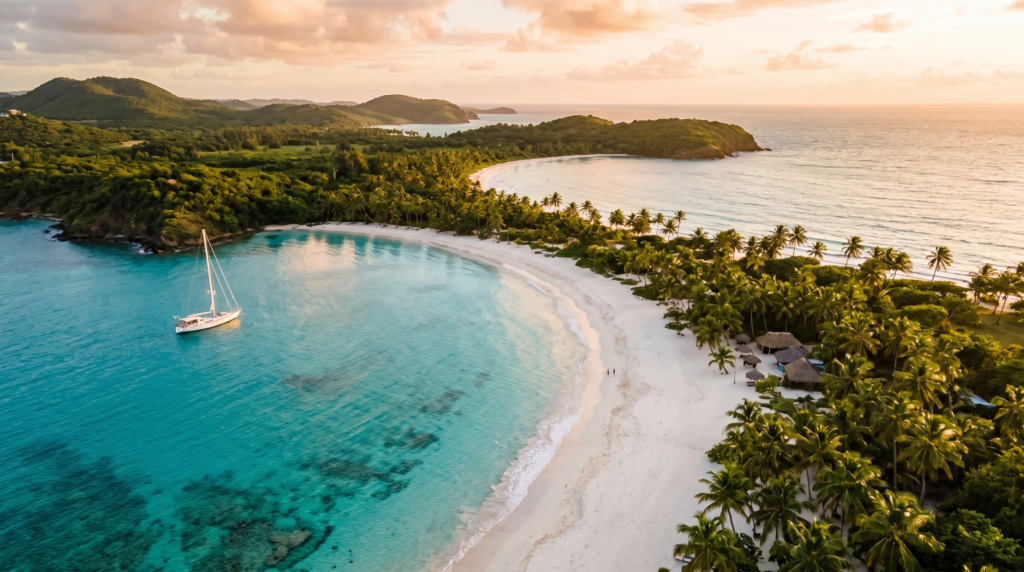
Antigua likes to say it has a beach for every day of the year — 365 of them, fringing a compact, sailing-mad island in the Eastern Caribbean. Add its quieter sister island Barbuda, with 17 miles of pink sand and a frigate-bird colony, and a UNESCO-listed Georgian dockyard where Nelson once served, and you have one of the region’s most rounded twin-island escapes: world-class beaches, real history and a yachting culture that throws one of the Caribbean’s best parties every Sunday at sunset.
📋 In This Guide
- Overview — A twin-island all-rounder
- Antigua Sailing Week & Shirley Heights
- Best time to visit (season by season)
- Getting there
- Getting around & reaching Barbuda
- Where to go — beaches, English Harbour & Barbuda
- Culture & people — cricket, calypso & sailing
- A food lover’s guide to Antigua
- Off the beaten path
- Practical information
- Budget breakdown — what Antigua costs in 2026
- Planning your first trip
- Frequently asked questions
Overview — A Twin-Island All-Rounder
Antigua and Barbuda is a two-island nation in the heart of the Eastern Caribbean. Antigua, the larger and busier island, is all about beaches — reputedly 365 of them — plus a deep sailing heritage centred on English Harbour. Barbuda, a 90-minute boat ride north, is the wild, low-slung opposite: a single small village, miles of empty pink-sand beach, and one of the world’s largest frigate-bird colonies.
What sets Antigua apart from the “just a beach” islands is its history. English Harbour’s Nelson’s Dockyard is the only continuously working Georgian-era naval dockyard on Earth, now a UNESCO World Heritage Site. Combine that with calm, swimmable water, a yacht-fuelled social scene, and an easy, English-speaking culture, and you get an island that suits honeymooners, sailors, history buffs and beach-loungers alike.
Antigua Sailing Week & Shirley Heights
Antigua’s social calendar peaks each spring with Antigua Sailing Week (late April–early May), one of the world’s premier regattas, when English Harbour fills with yachts and the island parties for a week. Even outside regatta season, don’t miss the Shirley Heights Lookout Sunday-evening party — steel pan and reggae bands, a barbecue and rum punch, and a sunset view over English and Falmouth Harbours that’s among the best in the Caribbean. It’s the one fixed date to build your week around.
Best Time to Visit Antigua (Season by Season)
December – April — Peak (dry, sunny, sailing season)
Warm 26–30°C days, minimal rain and reliable sun, peaking with the spring regattas. It’s the busiest and priciest stretch (rates up 20–30%); book ahead, especially around Sailing Week.
May & June, November — Shoulder (best value)
Still hot and largely sunny with fewer crowds and better deals on flights and rooms — the sweet spot for weather-to-price balance.
July – October — Low/hurricane season
Hot, humid and the wettest, with hurricane risk; the odds of disruption are small, and room prices can fall by half or more. Travel insurance is wise.
Getting There
V.C. Bird International Airport (ANU) is a regional hub with nonstop flights from the US (Miami, New York, Atlanta, Charlotte), Canada and the UK, plus connections across the Eastern Caribbean.
- Passport: must be valid for at least 180 days beyond your departure date; bring proof of onward travel and accommodation.
- From the airport: St John’s and the main beach areas are 15–40 minutes by taxi (fixed government rates).
- Cruise: ships dock at Heritage Quay and Redcliffe Quay in St John’s.
Getting Around & Reaching Barbuda
- Rental car: the most flexible way to reach Antigua’s scattered beaches and English Harbour; driving is on the left, and a local permit is issued with hire.
- Taxis: plentiful with fixed rates — confirm the fare and whether it’s quoted in US or EC dollars.
- Buses: cheap minibuses run from St John’s to many villages, but not reliably to the resort beaches.
- To Barbuda: a fast ferry (about 90 minutes) or a short hop on a light aircraft from ANU; most visitors come as a day trip or overnight for the pink-sand beaches and frigate-bird sanctuary.
Where to Go — Beaches, English Harbour & Barbuda
The Beaches
Take your pick: Dickenson Bay and Runaway Bay in the busy northwest; Half Moon Bay, a wild crescent on the east; Darkwood and Ffryes on the calm southwest; and Pigeon Point near English Harbour. Many are reachable on a hire-car loop in a day.
English Harbour & Nelson’s Dockyard
The island’s historic heart: the restored Georgian dockyard, Shirley Heights Lookout, and a yacht-filled harbour ringed by hilltop forts — a UNESCO World Heritage Site and the best half-day in Antigua.
St John’s
The colourful capital, with the twin-towered cathedral, the markets and shopping at Heritage and Redcliffe Quays, and a window into everyday island life.
Barbuda
The quiet sister island: 17 miles of pink-tinged sand, the Codrington Lagoon frigate-bird sanctuary, and a single laid-back village. Still recovering from 2017’s Hurricane Irma, it’s the Caribbean at its most untouched.
Culture & People — Cricket, Calypso & Sailing
Antiguan culture runs on three loves: cricket (the island has produced legends like Sir Viv Richards), Carnival’s calypso and soca in late summer, and sailing. The twin-island nation gained independence from Britain in 1981 and keeps strong British-Caribbean traditions alongside a relaxed island pace.
English is the official language, and the welcome is famously easygoing. The yachting scene around English Harbour gives the south an international, slightly glamorous edge, while St John’s and the villages stay firmly local. Sunday is for church, beach and the Shirley Heights party.
A Food Lover’s Guide to Antigua
- Fungie & pepperpot — the national dish: cornmeal dumplings with a rich, slow-cooked meat-and-vegetable stew.
- Saltfish & Antiguan-style seafood — saltfish for breakfast, plus snapper, lobster and conch from the day’s catch.
- Roti & ducana — curried roti from the island’s Caribbean mix, and ducana, a sweet grated-sweet-potato dumpling.
- Black pineapple & rum — Antigua’s famously sweet black pineapple, and English Harbour and Cavalier rums for the sundowner.
Eat at the beach shacks and the Friday-night gatherings; the seafood straight off the boats beats most resort menus.
Off the Beaten Path
- Barbuda’s pink sand & frigate birds — miles of empty, blush-coloured beach and a vast seabird colony at Codrington Lagoon.
- Half Moon Bay — a wild, perfect crescent on the wind-blown east coast, often nearly empty.
- Devil’s Bridge — a natural limestone arch and blowholes carved by the Atlantic on the eastern point.
- Stingray City — a shallow sandbar where you can wade and snorkel with friendly southern stingrays.
- Hike to Shirley Heights early — beat the Sunday crowds for the harbour view, then stay for the party.
Practical Information
- Money: the East Caribbean dollar is fixed at US$1 = EC$2.70 and US dollars are widely accepted (change may come in EC dollars). Cards work in hotels and restaurants; carry cash for taxis and shacks.
- Driving: on the left; a temporary local permit is required (sold with car hire).
- Tipping: 10–15%; a service charge is often added — check the bill.
- Power: a mix of 110V and 230V — many hotels offer US-style outlets, but bring an adapter to be safe.
- Safety: generally safe; use standard precautions with valuables on the beach and in St John’s at night.
- Hurricane season runs June–November — travel insurance is sensible for summer trips.
Budget Breakdown — What Antigua Costs in 2026
Antigua spans backpacker guesthouses to ultra-luxury resorts. Rough per-person, per-day estimates in USD:
| Style | Accommodation | Food | Total / day |
|---|---|---|---|
| Budget | $70–130 guesthouse | $25–40 (local) | $100–150 |
| Mid-range | $160–300 hotel | $45–80 | $200–350 |
| Luxury | $450–1,200+ | $90–180+ | $600–1,500+ |
Round-trip flights from US hubs average $400–800. Biggest savers: a self-catering apartment, eating local, exploring beaches by hire car, and travelling in shoulder season.
Planning Your First Trip
A balanced week: base near the northwest beaches or English Harbour, rent a car for two or three days of beach-hopping, build the week around the Sunday Shirley Heights party, and set aside a full day for Barbuda’s pink sand and frigate birds. Bring proof of onward travel, confirm whether prices are quoted in US or EC dollars, and don’t over-plan — with 365 beaches, the best days are the ones you leave open.
Frequently Asked Questions
Do US citizens need a visa for Antigua and Barbuda?
No visa is required for stays of up to 30 days. You need a passport valid for at least 180 days beyond departure, plus proof of onward travel and accommodation.
When is the best time to visit?
December to April for dry, sunny peak-season weather and the spring sailing regattas, or May–June and November for warm weather at lower prices.
Can I use US dollars?
Yes — US dollars are widely accepted at the fixed rate of US$1 = EC$2.70, though change may be given in East Caribbean dollars. Always check which currency a price is quoted in.
Is it worth visiting Barbuda?
If you want the Caribbean at its emptiest — 17 miles of pink sand and a huge frigate-bird colony — yes. Go by fast ferry (~90 minutes) or a short flight, as a day trip or overnight.
Antigua or another Eastern Caribbean island?
Choose Antigua for the sheer number of beaches, sailing culture and Georgian history. For a single dramatic landscape, compare it with St Lucia or our other Caribbean guides.
Ready to Explore Antigua & Barbuda?
A beach for every day, a sunset party every Sunday, and pink sand a short hop away. Tell us your dates and travel style and we’ll help you build the perfect twin-island week. Plan your trip →
Explore More
How This Guide Was Built
Researched and written by the Facts From Upstairs team, last updated . Prices and entry rules change — always confirm current details with official sources before you travel.
More country guides you might like

Plan your trip to Antigua & Barbuda
The booking tools we use ourselves. FFU may earn a commission at no extra cost to you.
Plan & book your trip to Antigua & Barbuda
Booking through these searches supports our guides at no extra cost to you.